Get 20% OFF All Premium 3D & STL Models!

In the dynamic realm of digital content creation, the demand for high-quality 3D assets is insatiable. From breathtaking cinematic sequences to immersive virtual reality experiences and hyper-realistic game environments, the foundation of excellence lies in meticulously crafted 3D models. For automotive enthusiasts and professionals alike, the challenge is often finding models that not only capture aesthetic beauty but also meet stringent technical requirements for diverse applications. It’s a blend of artistry and engineering, where every polygon, texture map, and material definition contributes to the overall fidelity and functionality of the asset.
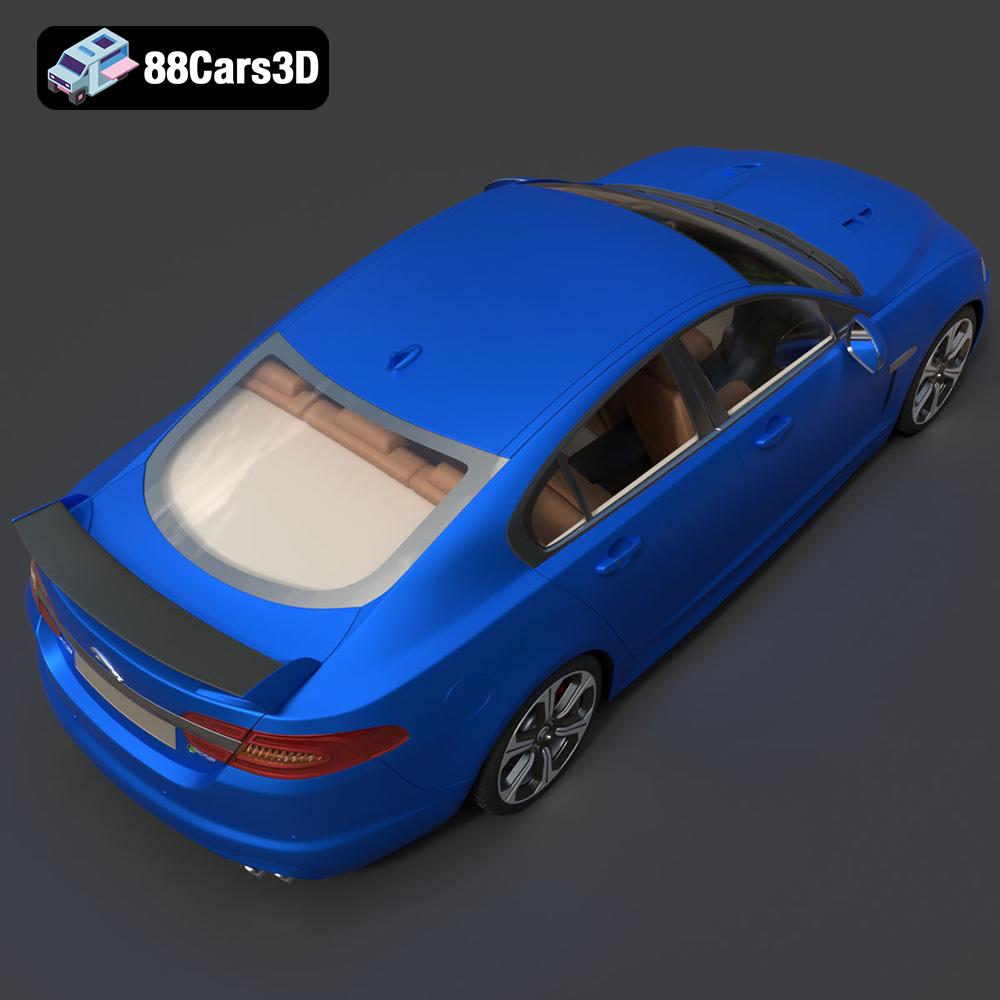
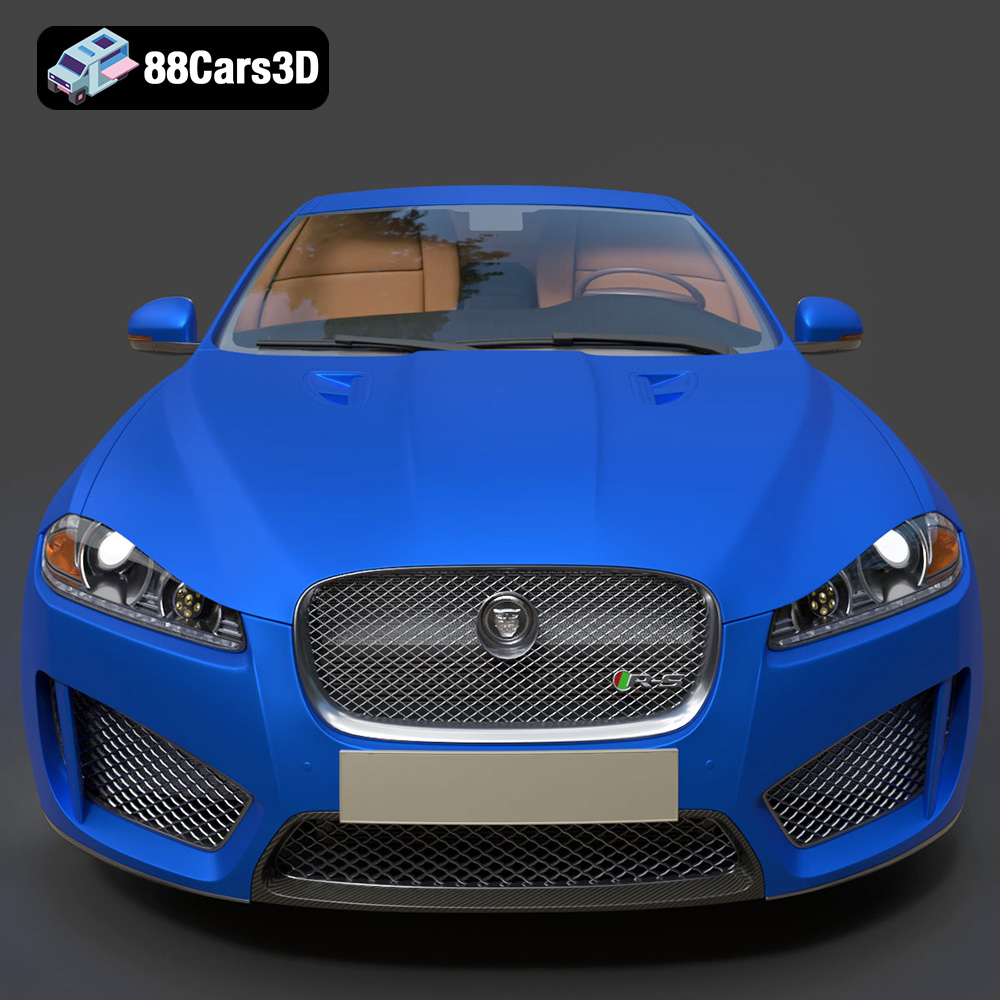
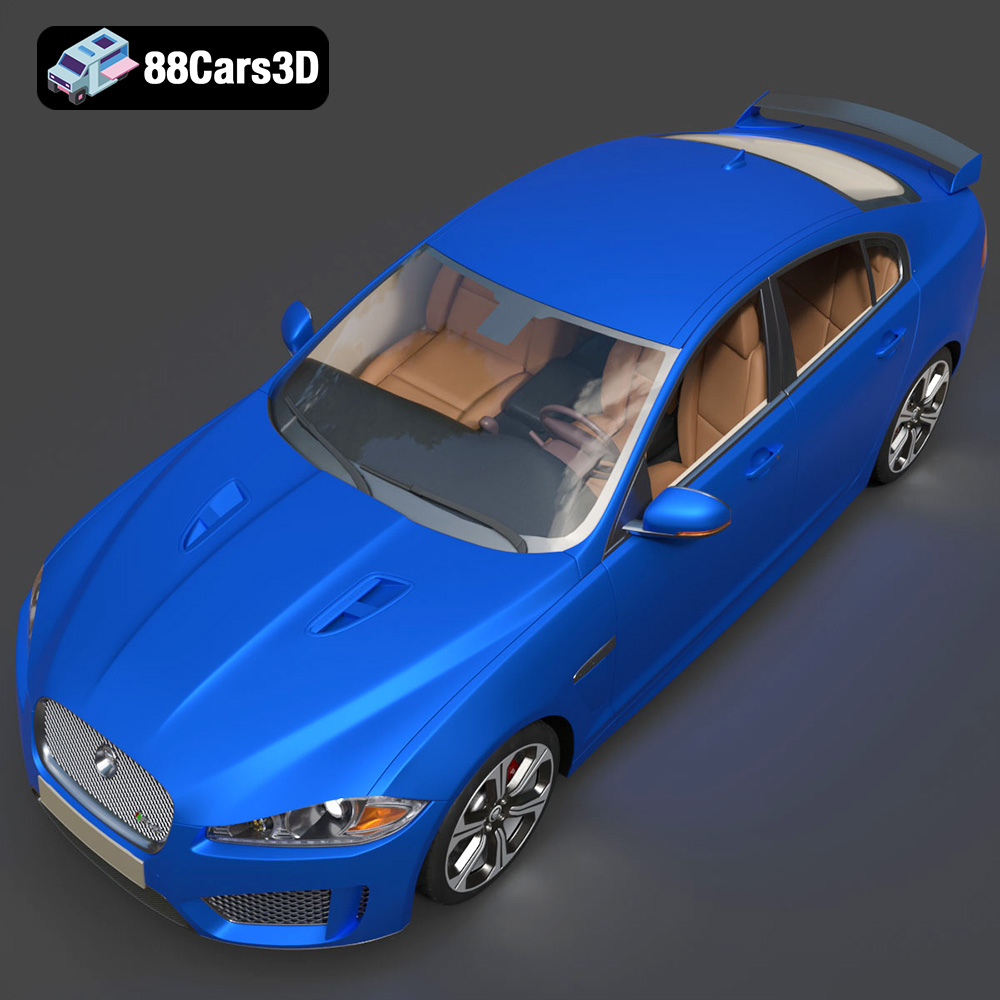
Today, we’re diving deep into the world of premium 3D car models, using the exceptional Jaguar XFR-S 2014 3D Model as our focal point. This particular model, available on 88cars3d.com, exemplifies the pinnacle of automotive 3D design, offering a versatile and highly detailed asset perfectly suited for a wide array of professional pipelines. Whether you’re an architectural visualizer aiming to populate a scene with a luxury vehicle, a game developer seeking a high-performance in-game asset, or a filmmaker needing photorealistic car models for a CGI sequence, understanding the nuances of such assets is paramount.
The selection of the correct file format is a critical first step in any 3D project. Each format serves a specific purpose, offering unique advantages in terms of compatibility, data retention, and optimization for particular workflows. The Jaguar XFR-S 2014 3D Model comes with a comprehensive suite of formats, ensuring maximum flexibility for artists and developers.
The .blend format is the native file type for Blender, a powerful and increasingly popular open-source 3D creation suite. When you receive a .blend file, you’re getting a fully editable Blender scene. This typically includes the raw mesh data, all materials (often using Blender’s Principled BSDF for PBR workflows), lighting setups, camera positions, and even animation data if present. For users deeply integrated into the Blender ecosystem, this format offers unparalleled flexibility for customization, material tweaks, animation rigging, or simply rendering out of the box. It’s an excellent choice for artists who need to modify the asset extensively or integrate it into an existing Blender project with minimal fuss.
.fbx (Filmbox) is an Autodesk-owned proprietary file format that has become an industry standard for exchanging 3D data between different software applications. Its strength lies in its ability to store a wide range of 3D data, including mesh geometry, materials, textures, animations, rigging, and even camera and light information. This makes it incredibly versatile, especially for game development where it’s the go-to format for importing assets into engines like Unreal Engine and Unity. For the Jaguar XFR-S 2014, the .fbx version is optimized for game engines, meaning it typically has efficient poly counts, properly set up UVs, and PBR-ready materials, ensuring seamless integration and optimal real-time performance.
The .obj (Object) format is one of the oldest and most widely supported 3D file formats. It’s known for its simplicity and universality, making it an excellent choice for basic mesh exchange between virtually any 3D software. An .obj file primarily stores geometry data (vertices, normals, texture coordinates, and faces) and can reference an accompanying .mtl (Material Template Library) file for basic material properties like color and texture maps. While it doesn’t support complex features like rigging or animation, its broad compatibility makes the .obj version of the Jaguar XFR-S 2014 ideal for users who need a clean mesh to start from, regardless of their preferred modeling software.
.glb (GL Transmission Format Binary) is the binary version of the glTF format, designed for efficient transmission and loading of 3D scenes and models by applications. It’s an open standard specifically optimized for web-based 3D, AR (Augmented Reality), and VR (Virtual Reality) applications. A .glb file packages all necessary data—geometry, materials, textures, and animations—into a single compact file, making it perfect for quick deployment on platforms like Sketchfab, Microsoft’s 3D Viewer, or custom web applications. The Jaguar XFR-S 2014 3D Model in .glb format ensures a smooth, high-fidelity experience in real-time AR/VR environments with minimal load times.
The .stl (Stereolithography) format is the ubiquitous standard for 3D printing. It represents a 3D model as a collection of unconnected triangles, defining only the surface geometry of an object without any color, texture, or material information. For designers looking to prototype or create physical models of the Jaguar XFR-S 2014, the .stl file ensures a watertight, manifold mesh ready for slicing and printing. Precision in the source model’s geometry is critical here, as any imperfections can lead to printing errors.
.ply (Polygon File Format or Stanford Triangle Format) is a file format for storing 3D data, often generated from 3D scanners. It supports properties such as color, transparency, surface normals, texture coordinates, and data confidence values, which are not typically available in .stl. It can store data as a list of polygons or as a point cloud. For applications requiring precise mesh data for scientific analysis, reverse engineering, or integration into CAD (Computer-Aided Design) workflows, the .ply version of the Jaguar XFR-S 2014 offers a robust and detailed representation.
The .unreal format signifies assets specifically prepared and packaged for use within Unreal Engine. This isn’t a single file extension in the traditional sense, but rather a collection of files and configurations within an Unreal project structure. It implies that the model has been imported, optimized, and set up with appropriate materials, collision meshes, LODs (Levels of Detail), and perhaps even basic physics assets within Unreal Engine itself. This pre-configuration saves significant development time, allowing users to drop the Jaguar XFR-S 2014 directly into their Unreal project and begin using it immediately.
Finally, the .max format is the native file type for Autodesk 3ds Max, a leading software in architectural visualization, motion graphics, and game development. Similar to .blend, a .max file contains the complete scene, including geometry, materials, textures, lighting, cameras, animation, and scene settings. It provides the highest degree of editability and integration for users working in 3ds Max, allowing for complex rendering setups with engines like V-Ray or Corona, detailed animation sequences, and intricate scene compositions. The .max version of the Jaguar XFR-S 2014 is ideal for professional rendering and animation projects where maximum control over every aspect of the scene is desired.
What truly sets a premium 3D car model apart from an average one? It’s a confluence of artistic skill and technical precision, ensuring the model not only looks stunning but also performs flawlessly across different applications. The Jaguar XFR-S 2014 3D Model exemplifies this synthesis.
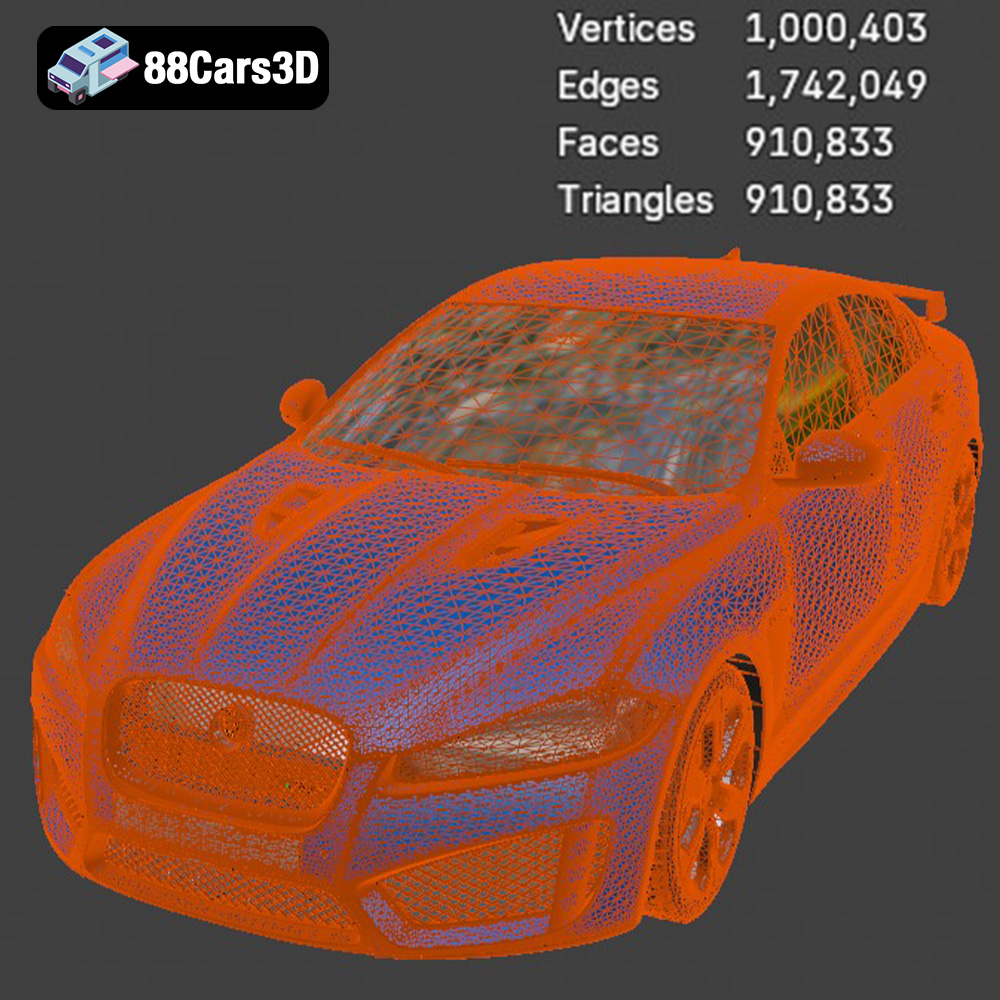
At the heart of any high-quality 3D model is its geometry. For a realistic automotive rendering or game asset, clean topology is non-negotiable. This means optimized polygon counts – sufficient detail for close-up shots without bogging down real-time performance – and excellent edge flow. Good edge flow ensures that the model deforms correctly if animated and renders smoothly with subdivision surfaces. The Jaguar XFR-S 2014 boasts a meticulously crafted mesh, free from non-manifold geometry or excessive triangulation, allowing for flawless subdivision and predictable shading across its aggressive curves and sharp lines.
Beyond the mesh, materials and textures breathe life into a 3D car model. Modern rendering relies heavily on Physically Based Rendering (PBR) workflows, which mimic how light interacts with real-world surfaces. This involves intricate maps for diffuse color (albedo), metallic properties, roughness, normal details, and ambient occlusion. A premium model, like the Jaguar XFR-S 2014 3D Model, features highly detailed, PBR-compliant materials that accurately represent the car’s paint, chrome, glass, tires, and interior fabrics. Furthermore, proper UV unwrapping ensures that textures are applied without stretching or distortion, maximizing visual fidelity.
A truly versatile 3D car model offers comprehensive detail. The Jaguar XFR-S 2014 excels here with a fully modeled interior that includes dashboards, seats, steering wheel, and intricate controls, mirroring the luxury and performance ethos of the real vehicle. This level of detail is crucial for close-up renders, VR experiences where users can “sit” inside the car, or even for cinematic shots that peer through windows. The exterior, of course, receives the same treatment, capturing every aerodynamic vent, badge, and light fixture with pinpoint accuracy, making it suitable for any viewing distance.
A single 3D model often needs to serve multiple masters. What works for a high-end cinematic render might be too heavy for a mobile AR application. Professional 3D car models are often designed with optimization in mind. This might involve different Levels of Detail (LODs) for game engines, where lower-poly versions are automatically swapped in at greater distances. It also includes efficient material setups that can be easily adapted to various rendering engines. The design of the Jaguar XFR-S 2014 takes this into account, providing an optimized polygon count and clean materials that ensure professional-grade performance whether it’s rendering in 3ds Max or running in Unreal Engine.
The true value of a premium 3D car model like the Jaguar XFR-S 2014 lies in its seamless integration into diverse professional production pipelines.
For high-end automotive visualization and cinematic rendering, software like Autodesk 3ds Max and Blender, paired with renderers such as V-Ray, Corona Renderer, or OctaneRender, are industry staples. The .max and .blend formats of the Jaguar XFR-S 2014 provide artists with complete control over lighting, materials, and animation. Imagine showcasing an architectural project with this sleek sedan parked gracefully in front, or animating a dynamic commercial demonstrating its powerful lines. The high-fidelity geometry and PBR materials allow for photorealistic output, making it an invaluable asset for advertising, design reviews, and film productions.
In game development, efficiency and realism go hand-in-hand. Game engines like Unreal Engine and Unity demand optimized assets that maintain visual quality without compromising frame rates. The .fbx and .unreal formats of the Jaguar XFR-S 2014 are specifically tailored for this purpose. The model’s optimized polygon count, clean UVs, and pre-configured materials mean developers can quickly integrate it as an in-game vehicle, a background prop, or even for driving simulators. Its robust construction ensures it can be rigged for physics, collision detection, and realistic damage modeling, providing an authentic driving experience.
The emerging fields of Augmented Reality and Virtual Reality present unique challenges for 3D assets, primarily concerning file size and real-time performance. The .glb format of the Jaguar XFR-S 2014 is specifically designed to meet these demands. Its single-file packaging and optimization for web-based delivery make it ideal for interactive product showcases, virtual showrooms, or embedding realistic car models directly into web applications. Imagine clients exploring a virtual garage with this stunning Jaguar, walking around it, and even stepping inside, all rendered smoothly in real-time.
Beyond digital displays, physical prototyping remains crucial in automotive design. The .stl format provided for the Jaguar XFR-S 2014 allows designers and hobbyists to bring the digital model into the physical world through 3D printing. Whether for scale models, concept verification, or educational purposes, the accuracy of the original 3D model ensures that the printed output precisely reflects the iconic design. The clean geometry of the source model translates into a watertight mesh, essential for error-free 3D printing.
The investment in a high-quality 3D car model pays dividends across various industry sectors, accelerating production and elevating visual standards.
For automotive brands and advertising agencies, premium 3D car models like the Jaguar XFR-S 2014 are transformative. Instead of costly photoshoots and video productions with physical cars, agencies can create hyper-realistic visuals in a controlled digital environment. This allows for endless variations in lighting, environment, paint colors, and camera angles, all without moving a single physical vehicle. It’s cost-effective, time-efficient, and opens up creative possibilities previously unimaginable, from animated commercials to interactive product configurators on websites.
Simulation is a powerful tool in training, research, and entertainment. Whether it’s a professional driving simulator for race car drivers or a virtual reality training module for emergency services, realistic vehicle models are fundamental. The Jaguar XFR-S 2014, with its detailed interior and accurate exterior, provides a perfect base for creating highly immersive driving simulations. The precise representation of the vehicle ensures that users interact with a digital counterpart that feels authentic, enhancing the training or entertainment value significantly.
Automotive designers rely heavily on 3D models throughout the design process. High-fidelity models facilitate rapid iteration and visualization of design changes before any physical prototypes are built. By incorporating a detailed 3D car model such as the Jaguar XFR-S 2014 into design tools, designers can analyze aerodynamics, test new body kits, or experiment with different wheel designs virtually. This accelerates the design cycle, reduces development costs, and allows for more informed decisions early in the product lifecycle.
Beyond aesthetics, the technical specifications and build quality of a 3D car model profoundly impact its performance and versatility in production.
In game development and real-time visualization, performance is paramount. A poorly optimized 3D car model, with excessively high polygon counts or inefficient material setups, can severely impact frame rates, leading to a choppy and unsatisfying user experience. The Jaguar XFR-S 2014 3D Model is crafted with optimization in mind, ensuring a balance between visual fidelity and real-time efficiency. Clean topology reduces draw calls, efficient UVs allow for texture atlasing, and PBR-ready materials render consistently and quickly, all contributing to smooth performance even in complex scenes.
Investing in a high-quality 3D asset means investing in a scalable and future-proof solution. A model with clean geometry and PBR materials can be easily adapted to new rendering technologies, software versions, or even entirely new platforms (e.g., from PC games to mobile AR). The modularity and technical robustness of assets like those found on 88cars3d.com ensure that they remain valuable assets for years to come, capable of being retargeted, retextured, or re-optimized as industry standards evolve.
Time is a critical resource in any production. Creating a highly detailed and optimized 3D car model from scratch can take hundreds of hours of a skilled artist’s time. By purchasing a pre-optimized, professional-grade asset like the Jaguar XFR-S 2014 3D Model, studios and individual artists can save significant development costs and accelerate their production timelines. The immediate availability of multiple file formats, clean geometry, and ready-to-use materials translates directly into faster project completion and higher quality output from day one.
The world of 3D modeling for automotive applications is incredibly demanding, requiring a perfect blend of artistic realism and technical precision. High-quality 3D car models are not just static images; they are versatile, performant assets that drive innovation across industries. The Jaguar XFR-S 2014 3D Model stands as a testament to this, offering an exceptionally detailed and optimized solution for everything from cinematic rendering and game development to AR/VR experiences and 3D printing.
Understanding the intricacies of file formats, the importance of clean geometry, and the power of PBR materials is crucial for any professional in this field. By choosing expertly crafted assets, such as those available on 88cars3d.com, you empower your projects with unparalleled visual fidelity and technical robustness, ensuring your creations not only look spectacular but also perform flawlessly in any digital environment. Elevate your automotive visualization and game development projects with assets that meet the highest professional standards.
The Jaguar XFR-S 2014 3D Model delivers an exceptionally realistic representation of the iconic performance sedan. Designed with precision, this asset captures the aggressive styling, aerodynamic profile, and distinct characteristics of the XFR-S. Featuring clean geometry, meticulously crafted realistic materials, and an optimized polygon count, this model ensures professional-grade performance. The fully modeled interior and detailed exterior make it versatile for close-up shots and expansive scenes. Perfectly suited for game development, architectural visualization, cinematic rendering, and AR/VR applications, it provides a seamless integration into any production pipeline.
$39.99
.arvr
.blend
.car3dmodel
.fbx
.gameasset
.glb
.jaguar
.luxurycar
.max
.obj
.ply
.rendering
.sedan
.simulation
.sportssedan
.stl
.unreal
.xfrs