Get 20% OFF All Premium 3D & STL Models!

In the fast-evolving landscape of digital design, entertainment, and visualization, the demand for exceptionally detailed and versatile 3D models is greater than ever. Whether for photorealistic automotive rendering, immersive game development, cutting-edge AR/VR experiences, or even precision 3D printing, the quality of a 3D asset forms the bedrock of a successful project. Italian engineering, particularly in the realm of superbikes, has always been synonymous with breathtaking design and performance. Imagine capturing that essence, that raw aggression and elegance, in a digital form that can be manipulated, rendered, and experienced in countless ways.
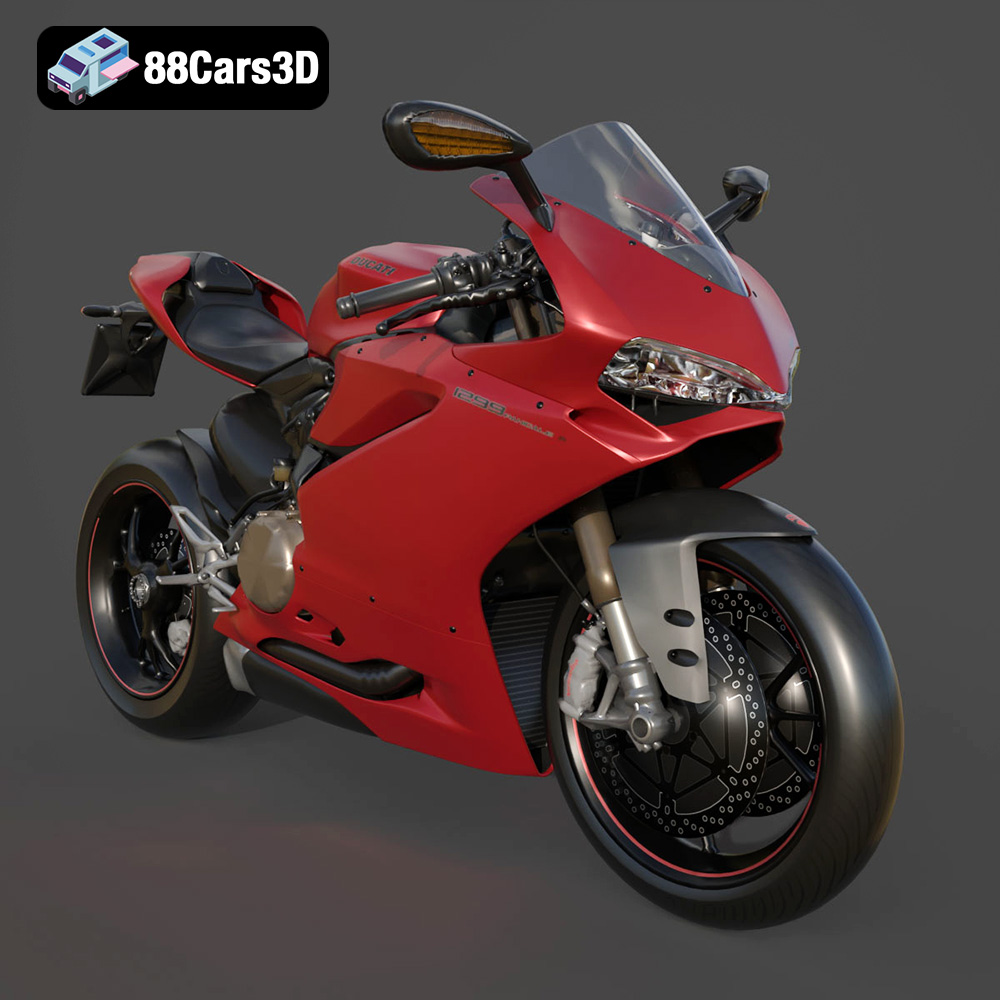
This is precisely where expertly crafted 3D models like the Ducati 1299 Panigale S 2017 3D Model from 88cars3d.com come into play. This isn’t just a collection of polygons; it’s a meticulously engineered digital replica, ready to accelerate your creative projects. From its iconic aerodynamic fairings to the intricate Superquadro L-twin engine, every detail of this legendary superbike has been translated into a high-fidelity, optimized 3D asset, opening up a world of possibilities for professionals across various industries.
The flexibility and utility of any 3D model are intrinsically linked to the file formats it supports. Different stages of a project, from initial design to final deployment, often require specific formats optimized for particular software, engines, or applications. Understanding these distinctions is crucial for seamless workflow integration and maximizing the potential of a high-quality asset like the Ducati 1299 Panigale S 2017 3D model.
The .blend format is the native file type for Blender, the powerful open-source 3D creation suite. When you receive a .blend file, you’re getting a complete Blender scene, often including cameras, lights, animation data, and most importantly, fully editable materials and shaders. This format is ideal for users who wish to dive deep into the model’s construction, make extensive modifications, re-rig, or leverage Blender’s comprehensive suite of modeling, sculpting, and rendering tools. Its technical advantage lies in preserving all aspects of the Blender scene, ensuring maximum flexibility for artists working within that ecosystem.
.fbx (Filmbox) is arguably the most widely adopted proprietary 3D exchange format, developed by Autodesk. It excels at transferring 3D model data between different software applications and is especially favored in game development for engines like Unreal and Unity, as well as real-time pipelines. An FBX file can encapsulate a vast array of data, including mesh geometry, materials (though sometimes simplified), textures, animations, skinning, and even camera and light information. Its strength lies in its robust support for animation and rigging, making it the go-to choice for dynamic assets.
The .obj (Wavefront OBJ) format is a simple, universal geometry definition file. It’s an excellent choice for cross-software compatibility when the primary concern is transferring static mesh data. An OBJ file typically contains vertex positions, UV coordinates, normals, and face definitions. While it’s widely supported and very reliable for geometry, it generally lacks support for animation, rigging, or complex material definitions (materials are usually referenced in a separate .mtl file). It’s a workhorse for foundational mesh transfer.
.glb (GL Transmission Format Binary) is the binary version of the glTF format, specifically designed for efficient transmission and loading of 3D scenes and models by engines and APIs. It’s become the de facto standard for web-based 3D, AR (Augmented Reality), and VR (Virtual Reality) experiences due to its compactness and efficiency. A GLB file packs all necessary data—geometry, materials, textures, animations—into a single, self-contained binary file, minimizing HTTP requests and speeding up load times. This makes it perfect for interactive viewers or deploying assets on platforms like Sketchfab or within mobile AR applications.
.stl (Stereolithography) is the most common file format for 3D printing. It represents a 3D model as a collection of unconnected triangular facets, defining only the surface geometry of an object without color, texture, or other CAD attributes. While simple, its ubiquity makes it essential for any model intended for physical manifestation. When working with an STL, focus is on manifold geometry (watertight meshes) and appropriate resolution for the target print size and detail.
The .ply (Polygon File Format) is another popular format for storing 3D data, particularly useful for capturing and transferring data from 3D scanners. It can store a variety of properties including color, transparency, surface normals, texture coordinates, and data confidence values, in addition to XYZ coordinates. It’s often used in CAD, reverse engineering, and scientific applications where precise mesh information and additional per-vertex or per-face attributes are critical. Its flexibility in storing additional data makes it valuable for analytical purposes.
While not a standard open format, including .unreal implies an asset that has been specifically prepared and optimized for direct import or even pre-packaged as a native Unreal Engine asset. This might involve optimized material setups, LODs (Levels of Detail), collision meshes, and potentially even blueprint integrations or animation sequences configured to Unreal Engine’s specifications. This format signifies an asset that can be dropped directly into an Unreal project with minimal setup, saving significant development time.
Finally, the .max format is the native file type for Autodesk 3ds Max, a leading software for 3D modeling, animation, rendering, and visualization. Similar to .blend for Blender, a .max file contains the entire scene data, including complex modifier stacks, advanced material setups (V-Ray, Corona, Arnold), lighting rigs, character animation, and intricate scene hierarchies. It offers the highest level of editability and control for professionals deeply entrenched in the 3ds Max ecosystem, enabling comprehensive customization and rendering excellence.
The inclusion of all these formats for the Ducati 1299 Panigale S 2017 3D model highlights its versatility, ensuring it’s ready for any professional workflow, from high-end rendering to real-time game development and even physical prototyping.
The allure of the Ducati 1299 Panigale S 2017 lies not only in its real-world performance but also in the precision with which its digital counterpart has been engineered. This 3D model exemplifies the highest standards of asset creation, balancing breathtaking visual fidelity with the pragmatic demands of real-time performance and diverse application.
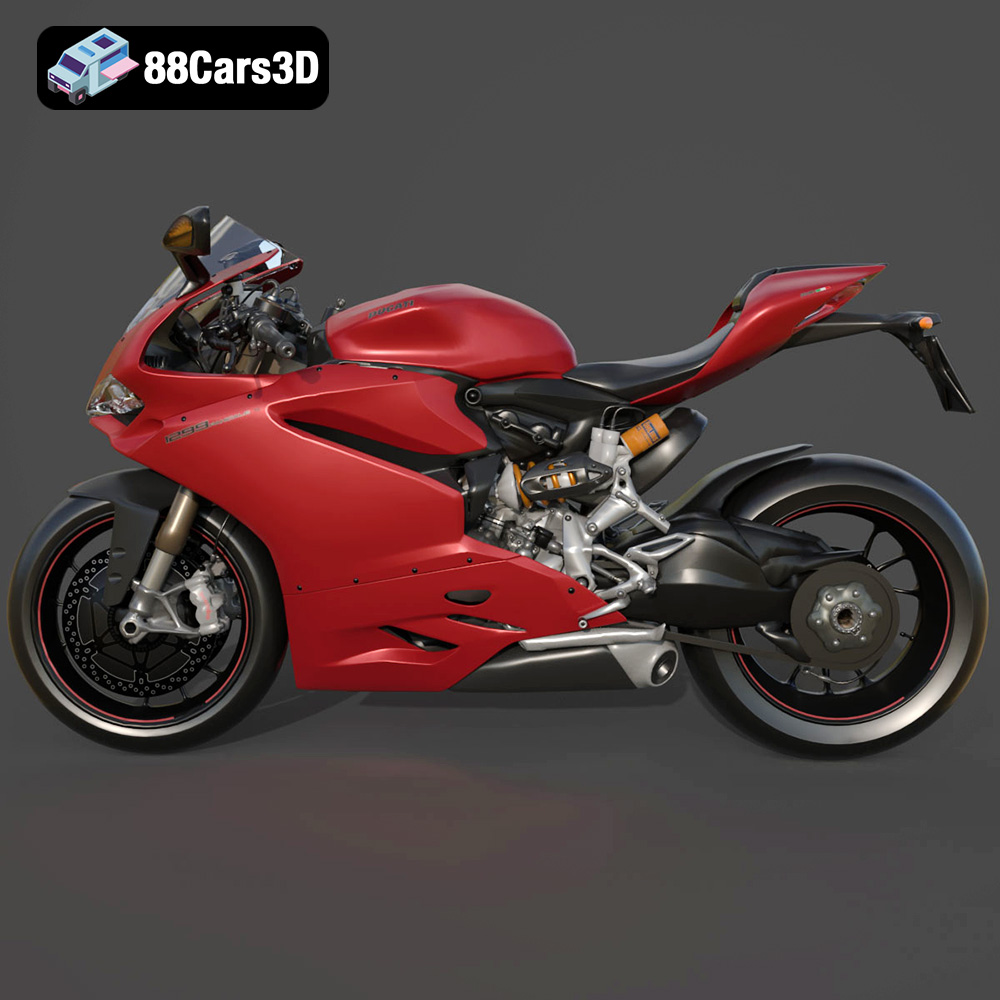
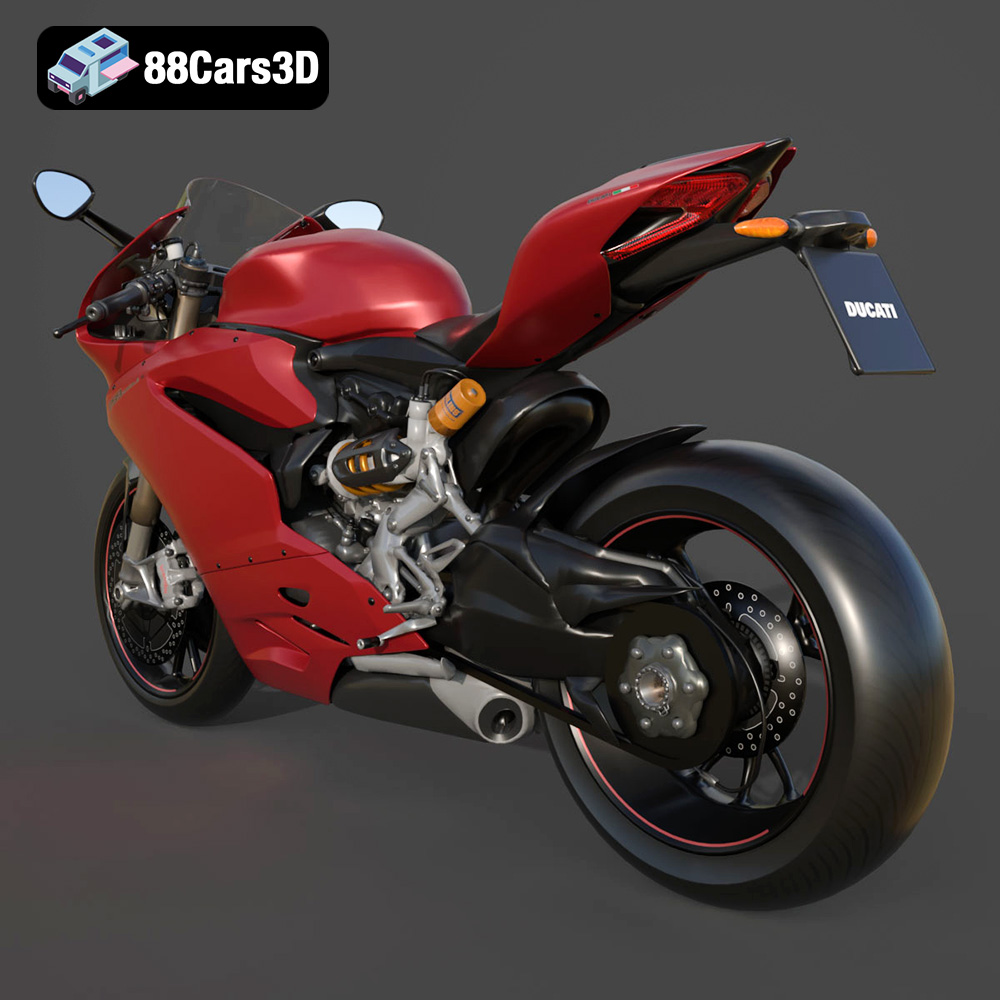
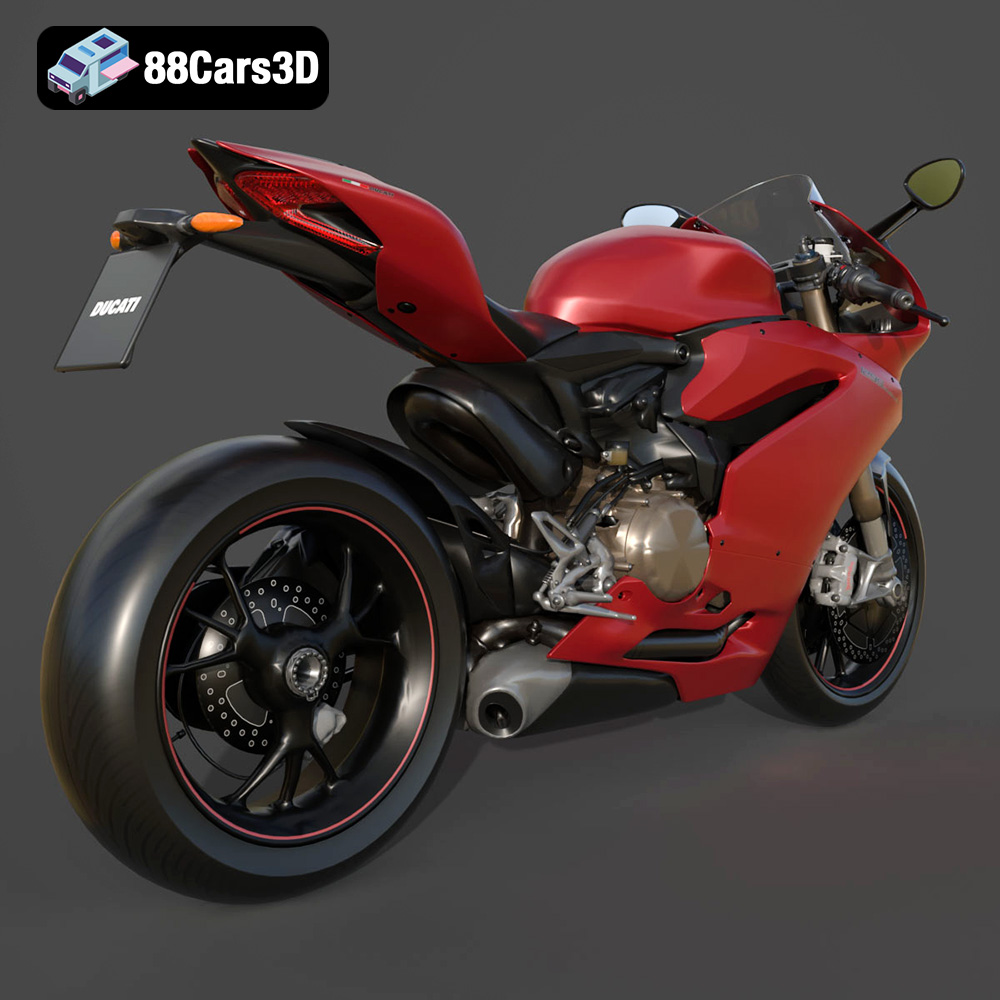
Every curve and component of the iconic Ducati 1299 Panigale S has been meticulously replicated. The aerodynamic fairings, a signature element of Ducati’s design philosophy, are accurately modeled, conveying both speed and elegance. Beneath the surface, the famed Superquadro L-twin engine block and its mechanical components are rendered with impressive detail, a testament to the model’s commitment to authenticity. Distinctive features such as the aggressive split LED headlights, the single-sided swingarm, and the under-engine exhaust system are all present and accounted for, reflecting the raw aggression and engineering prowess of the physical motorcycle. The forged alloy wheels, styled after Marchesini designs, are wrapped in sport-profile tires, and the Öhlins electronic front forks and rear shock suspension are also highly detailed. Crucially, elements like the wheels, suspension, and steering assemblies are separated and configured for seamless animation, essential for dynamic scenes or interactive applications.
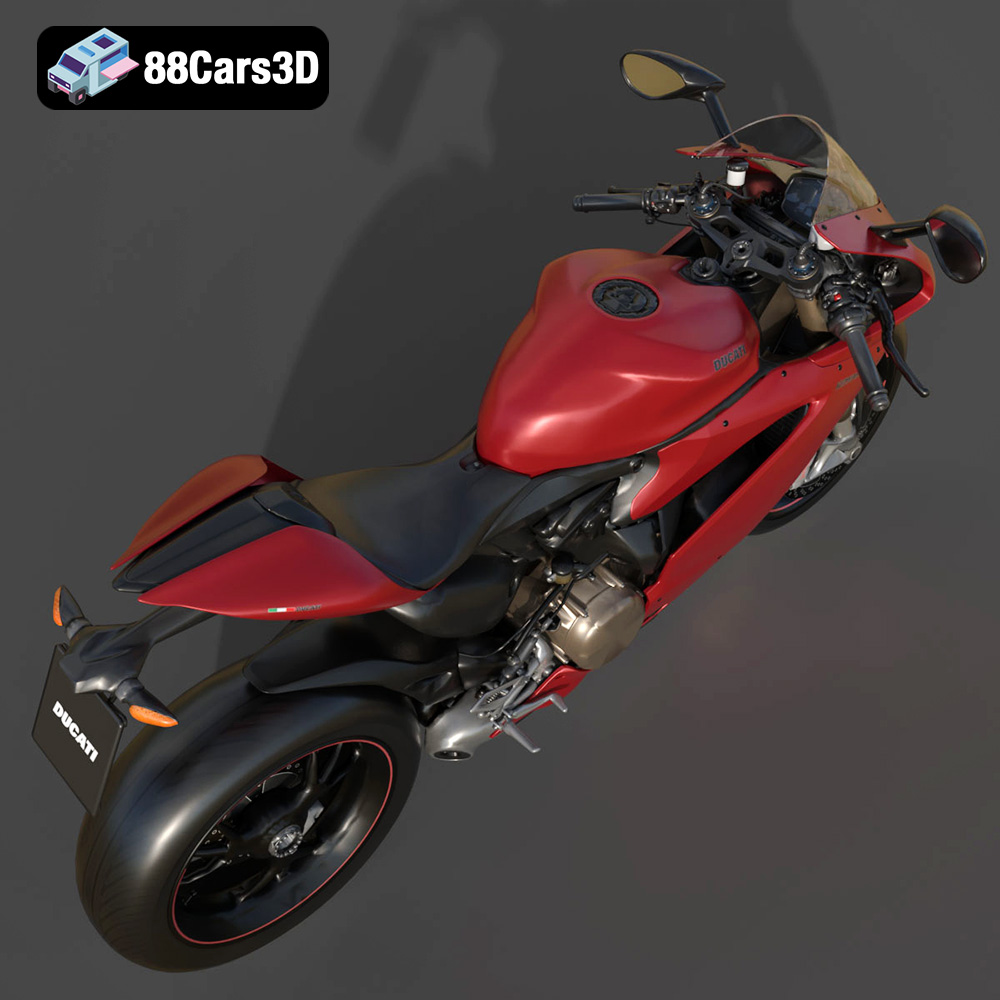
The detail extends beyond the exterior to create a truly immersive experience. The cockpit features an authentic contoured rider saddle with precise stitching, track-oriented clip-on handlebars complete with detailed grips and switchgear, and a replicated TFT full-color digital instrument cluster. Control details, including clutch and brake levers, rearsets, and the gear shifter, are accurately rendered. This level of internal detail is paramount for first-person perspective views in gaming or VR, allowing users to feel truly connected to the digital superbike. The optimized geometry ensures that even these intricate areas maintain performance without sacrificing visual quality.
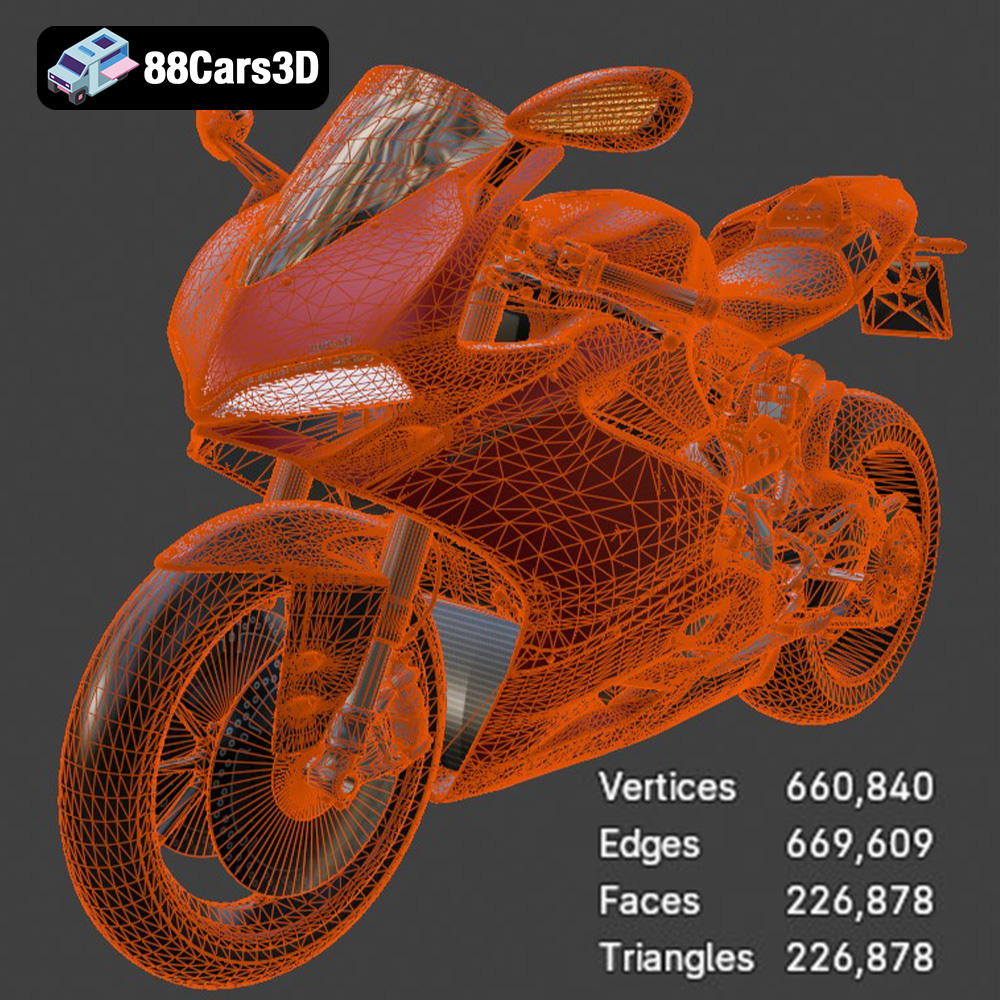
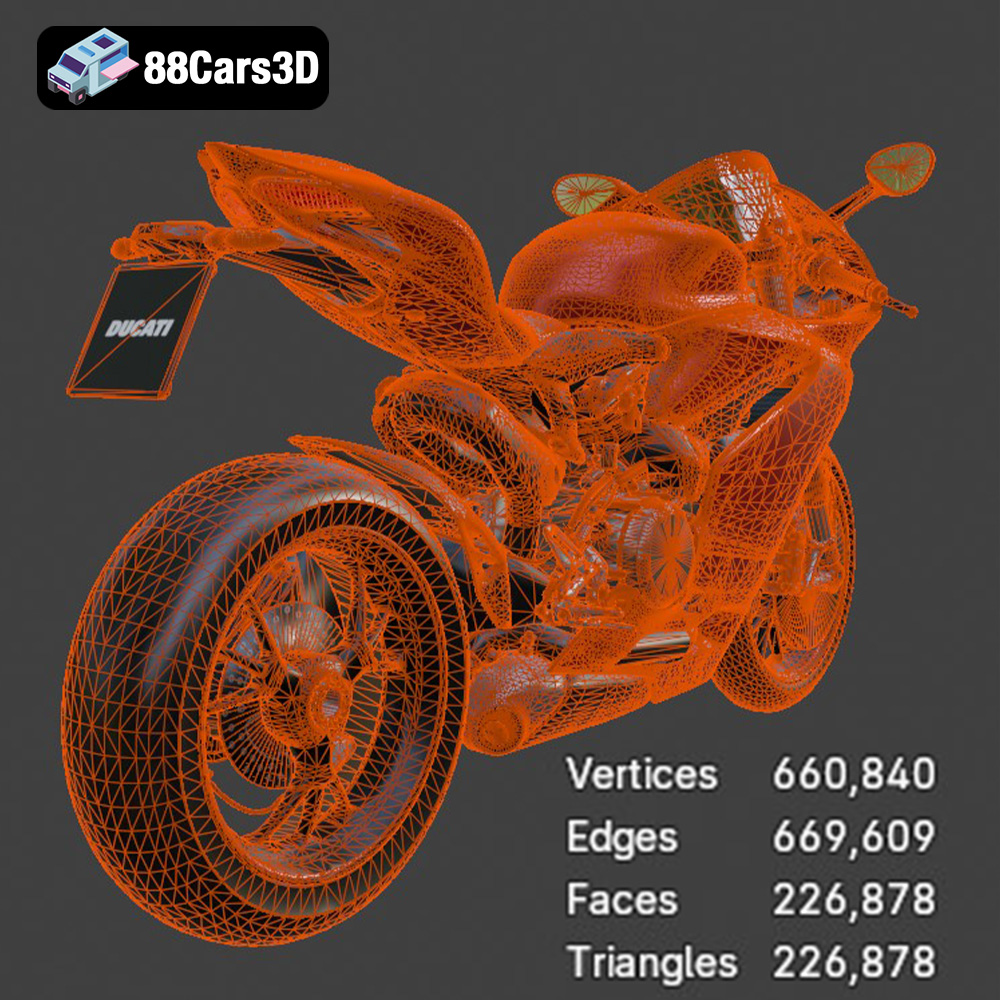
Perhaps one of the most significant advantages of this Ducati 1299 Panigale S 2017 3D Model is its “game-ready” optimization. With approximately 280,000 triangles, the model strikes an ideal balance, delivering high-end visual realism crucial for automotive rendering while remaining highly efficient for real-time engines like Unreal and Unity. This optimized polycount, combined with real-world scale accuracy based on the actual vehicle’s chassis and wheelbase, ensures that the model integrates seamlessly into any digital environment. Furthermore, proper pivot setups for steering, wheel rotation, and dynamic suspension travel are already configured, significantly reducing setup time for animators and game developers. This holistic approach to asset creation makes it an invaluable resource for demanding professional projects.
The versatility of the Ducati 1299 Panigale S 2017 3D model makes it an exceptional asset across a spectrum of professional digital workflows. Its optimized topology and wide range of supported file formats ensure it can be seamlessly integrated into various software and platforms, from high-end cinematic rendering to interactive real-time applications.
For game developers, this Ducati model is a dream come true. Its ~280k triangle count is perfectly optimized for modern game engines, allowing for stunning visual quality without sacrificing framerate. Importing the .fbx or .unreal file into Unreal Engine or Unity is straightforward. Developers can then focus on implementing physics-based materials, setting up advanced collision meshes, and creating dynamic suspension and wheel animations. The model’s real-world scale ensures accurate handling and visual consistency within a game environment. For high-octane racing titles or open-world games, this asset provides an instant, high-quality vehicle that is ready for track day simulations or realistic in-game cinematics. Integrating LODs (Levels of Detail) would further optimize performance, allowing the bike to look great up close and maintain efficiency at a distance, making it a truly game-ready asset for next-gen titles.
In the realm of automotive rendering and visualization, the Ducati 1299 Panigale S 3D model shines. Whether using 3ds Max (.max) with renderers like V-Ray or Corona, or Blender (.blend) with Cycles or Eevee, artists have full control. The detailed geometry allows for exquisite close-ups, highlighting the bike’s intricate design. Professionals can utilize the comprehensive material separation to apply physically based rendering (PBR) textures, simulating realistic paint finishes (like iconic Ducati Red with metallic flake), carbon fiber accents, and finely tuned metallic components. Setting up studio lighting or placing the bike in a dynamic lifestyle scene becomes an exercise in creativity, yielding stunning photorealistic images and animations suitable for marketing campaigns, product showcases, or architectural visualizations. The ability to animate separate components like wheels and suspension enables dynamic renders that convey movement and performance even in static images.
The immersive potential of the Ducati 1299 Panigale S 3D model extends powerfully into AR (Augmented Reality) and VR (Virtual Reality). Using the optimized .glb format, developers can create stunning virtual showrooms where customers can walk around the bike, inspect details, and even customize colors in real-time. For AR, the model can be placed in a user’s real-world environment via a mobile device, offering an interactive, scaled representation. Imagine a prospective buyer projecting the Ducati onto their driveway to see how it looks, or an enthusiast exploring its mechanics in a virtual reality experience. The model’s optimized geometry ensures smooth performance on various AR/VR platforms, making it ideal for vehicle configurators, interactive educational tools, or unique brand activations. This capability transforms a static image into a dynamic, experiential engagement.
The utility of a premium 3D vehicle model extends far beyond digital screens. For enthusiasts, collectors, and even professional prototypers, the ability to translate a digital asset into a tangible object offers an exciting dimension. Furthermore, the inherent flexibility of 3D models allows for extensive customization, tailoring the asset to specific creative visions.
The inclusion of the .stl format for the Ducati 1299 Panigale S 2017 3D model directly addresses the growing community of 3D printing hobbyists and professional model makers. Transforming this digital marvel into a physical display piece is an incredibly rewarding process. For best results, resin printing is highly recommended due to its ability to capture the fine aerodynamic curves, intricate engine details, and delicate components like the exhaust, mirrors, footpegs, and clip-on handlebars. Recommended scales like 1:12, 1:18, or 1:24 offer a balance between detail and manageable print size. Careful consideration of print settings, such as a layer height between 0.04-0.12 mm, ensures high fidelity. Supports will be crucial for overhangs, and print orientation—for instance, printing the frame angled for structural integrity and wheels/swingarm separately—will optimize print success and detail preservation. Post-processing with sanding, primer, and authentic factory colors like Ducati Red, often with metallic finishes, will bring the model to life, creating a stunning replica for display or collection. This capability underscores the multi-faceted value of such a detailed 3D asset.
One of the most powerful aspects of working with a professional 3D model like the Ducati 1299 Panigale S 2017 is the boundless potential for customization. Artists and designers are not confined to the default appearance; instead, they have the freedom to adapt the model to suit any creative brief or stylistic choice. Changing body and fairing colors is just the beginning – imagine applying custom racing liveries, experimenting with matte or high-gloss finishes, or even transforming sections into realistic carbon fiber. Tire textures can be swapped between slick track variants for a race simulation or grooved street tires for a casual render. Material finishes across all components, from anodized metals to various plastic textures, can be finely tuned to achieve specific aesthetic goals. Furthermore, the model’s design allows for adaptation of lighting arrays, enabling the creation of dramatic studio setups or realistic outdoor lighting conditions. This level of customization ensures that the Ducati 3D model can be an infinitely adaptable tool in any artist’s arsenal, allowing for unique visualizations and personalized projects every time.
In a saturated market of digital assets, discerning professionals understand that quality, optimization, and versatility are paramount. Investing in premium 3D models from a trusted source like 88cars3d.com isn’t just about acquiring a file; it’s about acquiring a reliable foundation for success in demanding projects.
The Ducati 1299 Panigale S 2017 3D model perfectly encapsulates the advantages of professional-grade assets. It’s not merely a visually appealing object; it’s a meticulously engineered digital product designed with real-world applications in mind. The optimized topology, around 280,000 triangles, ensures that it performs exceptionally well in real-time environments without compromising on visual fidelity—a critical balance for game developers and AR/VR creators. Its adherence to real-world scale and accurate pivot setups significantly reduces preparation time, allowing artists and developers to focus on creative execution rather than tedious foundational work. This level of attention to detail and technical precision sets professional models apart, preventing costly reworks and ensuring seamless integration into complex pipelines. When deadlines are tight and quality is non-negotiable, having an asset that is truly “game-ready” and “render-ready” from the outset is invaluable.
Beyond the technical specifications, the breadth of included file formats—.blend, .fbx, .obj, .glb, .stl, .ply, .unreal, and .max—guarantees compatibility across virtually any 3D software or engine. This comprehensive package means you won’t be scrambling for conversions or dealing with incompatible assets, regardless of your preferred workflow. Whether you’re a Blender enthusiast, a 3ds Max power user, an Unreal Engine developer, or an AR/VR innovator, this model is designed to integrate effortlessly. This commitment to versatility ensures that the Ducati 1299 Panigale S 2017 3D model from 88cars3d.com becomes a flexible and indispensable tool in your creative arsenal, empowering you to tackle any project with confidence and efficiency. The quality and accessibility of such a comprehensive package make 88cars3d.com a go-to source for high-quality 3D vehicle models.
The digital realm offers unprecedented opportunities for artists, designers, and developers to bring their visions to life. At the heart of many groundbreaking projects lies the quality and versatility of their 3D assets. The Ducati 1299 Panigale S 2017 3D model stands as a testament to meticulous craftsmanship and technical optimization, offering a truly exceptional asset for a wide range of applications.
From the nuanced curves of its aerodynamic fairings to the intricate mechanics of its Superquadro engine, every detail of this legendary superbike has been digitally replicated with precision. Its game-ready optimization, boasting a sensible triangle count of approximately 280,000, makes it a star performer in real-time engines for cutting-edge racing games and immersive AR/VR experiences. Simultaneously, its high fidelity and full editability across various native formats ensure it excels in high-end automotive rendering, yielding breathtaking visualizations for advertising and design showcases.
Furthermore, the comprehensive file format support, including .stl for 3D printing enthusiasts and .glb for web-optimized AR, demonstrates its remarkable adaptability. This single asset empowers professionals to seamlessly transition between different workflows, customize to their heart’s content, and deliver stunning results across diverse mediums. For anyone seeking to elevate their projects with a high-quality, versatile 3D motorcycle model, the Ducati 1299 Panigale S 2017 3D model from 88cars3d.com offers an unparalleled solution, ready to accelerate your creative journey.
Experience the apex of Italian engineering with this highly detailed 3D model of the Ducati 1299 Panigale S 2017. Renowned for its stunning aesthetics and blistering track performance, this superbike boasts iconic visual elements such as its aerodynamic fairings, monocoque chassis structure, and the legendary Superquadro L-twin engine. Distinctive features like the aggressive split LED headlights, single-sided swingarm, and under-engine exhaust system have been meticulously modeled to capture the raw aggression and elegance of the physical motorcycle.
$19.99
.2017
.blend
.ducati
.fbx
.glb
.max
.obj
.ply
.rendering
.sportbike
.stl
.superbike
.unreal
1299-panigale-s
game asset
game-ready
low-poly
motorcycle-3d-model
optimized
VR/AR