Get 20% OFF All Premium 3D & STL Models!

In the rapidly evolving landscape of digital content creation, the demand for hyper-realistic and functionally robust 3D assets has never been higher. From blockbuster video games to cinematic architectural visualizations, and from immersive virtual reality experiences to intricate 3D prints, precision is paramount. Automotive models, in particular, stand at the intersection of design, engineering, and artistic expression, serving as critical components in countless projects. A truly exceptional 3D car model doesn’t just look good; it embodies accurate geometry, optimized topology, and versatile integration capabilities.
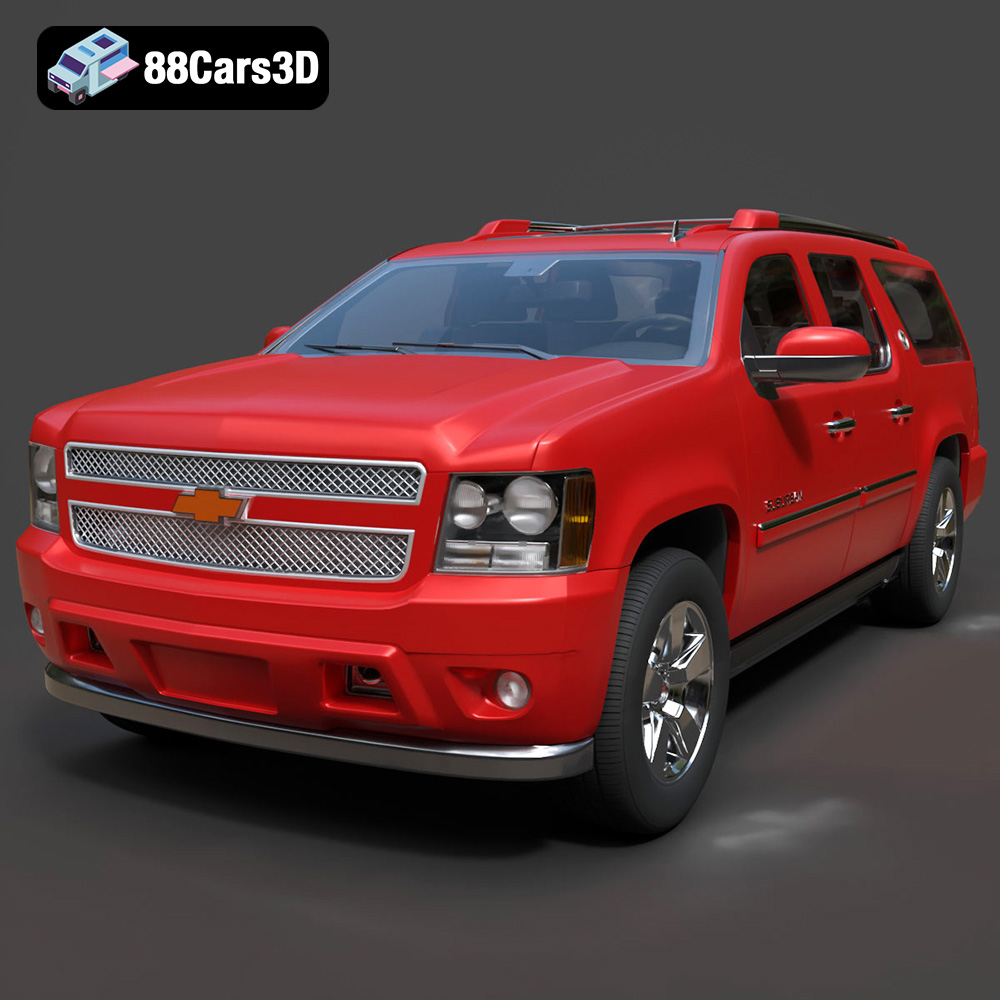
Consider an icon like the Chevrolet Suburban. For 75 years, this full-size SUV has been a cornerstone of American automotive design, known for its imposing presence, spaciousness, and reliability. Capturing such a legacy in a digital format requires immense skill and attention to detail. This is where a model like the Chevrolet Suburban 75th Diamond 3D Model truly shines. It’s not merely a visual representation; it’s a meticulously engineered asset, ready to be integrated into the most demanding professional workflows, providing an unparalleled foundation for any project requiring this legendary vehicle. It represents the kind of quality and versatility that creative professionals seek when sourcing their digital assets.
The digital age has fundamentally transformed how vehicles are designed, marketed, and experienced. Automotive companies now rely heavily on 3D models for everything from concept validation and aerodynamic simulations to virtual showrooms and interactive marketing campaigns. For independent creators, game studios, and visualization artists, accessing high-quality 3D car models is a gateway to producing stunning, professional-grade content without the monumental effort of building complex assets from scratch.
At every stage of a vehicle’s life cycle, from its initial sketch to its market launch, 3D models play a pivotal role. Designers use them to iterate on forms and functions, engineers use them for structural analysis, and marketing teams leverage them for compelling visuals. In the gaming industry, photorealistic cars are no longer a luxury but an expectation, demanding models with optimized polygon counts and clean UV mapping to perform efficiently in real-time engines. For architectural visualization, a vehicle like the Chevrolet Suburban 75th Diamond can provide crucial context, animating a scene and adding a touch of lifestyle to an otherwise static building rendering.
The quest for realism in digital environments is relentless. Consumers expect to see vehicles that behave and appear as they would in the real world. This means not just accurate exteriors, but also detailed interiors, functional components (like independent wheels and suspension), and properly set up materials. A high-fidelity 3D model like those found on 88cars3d.com ensures that creators can achieve this level of realism, whether for a high-octane racing game, a calming architectural fly-through, or an interactive AR experience where the vehicle appears right in your driveway.
Choosing the right 3D model file format is crucial for seamless integration into your project workflow. Each format serves specific purposes, offering unique advantages in terms of compatibility, data retention, and optimization for particular applications. Understanding these distinctions is key to maximizing the utility of premium 3D assets, such as the Chevrolet Suburban 75th Diamond model, which is available in a comprehensive suite of formats to cater to diverse professional needs.
The .blend format is native to Blender, the powerful open-source 3D creation suite. When you download a .blend file, you’re getting a fully editable Blender scene, complete with all its associated data: mesh geometry, materials, textures, lighting setups, cameras, animations, and even physics simulations. This format is ideal for artists and studios who primarily use Blender and require maximum flexibility for modifications, retopology, or integrating the model directly into a larger Blender-based project. It allows for deep customization of the Chevrolet Suburban, from adjusting its paint finish using Blender’s Eevee or Cycles renderers to modifying its interior details.
.fbx (Filmbox) is arguably the most widely adopted proprietary 3D exchange format, developed by Autodesk. It’s a binary format that supports a vast array of 3D data, including geometry, materials, textures (often embedded or referenced), animations, rigging, and even lights and cameras. Its strength lies in its excellent compatibility across major 3D software packages (like 3ds Max, Maya, Blender, Cinema 4D) and, critically, real-time game engines like Unreal Engine and Unity. For game developers or animators, the .fbx version of the Suburban model ensures that all animated components like wheels, suspension, and steering maintain their pivot information and relationships when imported, making it ideal for real-time pipelines.
The .obj (Wavefront Object) format is a simple, universally recognized geometry definition file format. It’s text-based and primarily stores mesh data (vertices, normals, texture coordinates, and faces) along with references to external material files (.mtl). While it doesn’t support animation or rigging, its widespread compatibility makes it an excellent fallback for cross-software transfers when other formats fail. If you need a clean mesh of the Chevrolet Suburban for sculpting, retopology, or simply as a static prop in any 3D application, .obj is a reliable choice.
.glb (GL Transmission Format Binary) is the binary equivalent of glTF, a royalty-free specification for the efficient transmission and loading of 3D scenes and models by applications. It packages geometry, materials, textures, and animation data into a single, self-contained file. This makes .glb highly optimized for web-based applications, AR/VR experiences, and mobile platforms, where file size and quick loading times are paramount. For showcasing the Chevrolet Suburban 75th Diamond in a virtual showroom or integrating it into a mobile AR app, the .glb format offers unparalleled performance and ease of deployment.
.stl (Stereolithography) is the de facto standard file format for 3D printing. It represents a 3D object as a series of connected triangles, defining only the surface geometry without color, texture, or other CAD attributes. While simple, its ubiquity in the 3D printing world means that if you plan to physically manifest the Chevrolet Suburban 75th Diamond, the .stl version is what you’ll feed into your slicer software. The product description specifically highlights its suitability for display-scale hobbyists and provides recommended print settings, making this format invaluable for tangible outputs.
The .ply (Polygon File Format, also Stanford Triangle Format) is a versatile file format designed to store 3D data from 3D scanners. It supports a wider range of data than .obj, including color, transparency, surface normals, and various object properties. While less common for general 3D asset exchange, it’s often used in academic and research settings, or for high-precision applications like reverse engineering or CAD workflows. For specialized analyses or integrating the Suburban model into a technical design pipeline, .ply offers a robust data foundation.
The .unreal format, typically referring to Unreal Engine assets packaged for direct import or project files, offers the most streamlined integration for projects developed within Epic Games’ powerful real-time engine. This format can mean a pre-configured asset with materials, collisions, and possibly Blueprints already set up, significantly reducing setup time. The “game-ready” optimization of the Chevrolet Suburban 75th Diamond model, with its ~150,000 triangle count, is perfectly aligned with the performance requirements of Unreal Engine, making the .unreal file a valuable time-saver for game developers and real-time visualization artists.
Finally, the .max format is the native file format for Autodesk 3ds Max, a leading software for 3D modeling, animation, rendering, and compositing, particularly strong in architectural visualization and product design. A .max file retains all scene data, including geometry, complex material setups (V-Ray, Corona, Arnold), lighting, cameras, animation timelines, and modifiers. For professionals using 3ds Max for high-end rendering of the Chevrolet Suburban 75th Diamond in a luxury home scene or integrating it into a detailed animation sequence, the .max file provides complete access to the model’s structure and render-ready configurations, allowing for deep customization and seamless integration with existing scenes.
The Chevrolet Suburban 75th Diamond 3D Model is more than just a digital replica; it’s a testament to expert 3D craftsmanship. Designed for creators who demand both aesthetic accuracy and technical performance, this model encapsulates the essence of the iconic vehicle while being optimized for a variety of digital applications.
From its prominent front grille to the distinctive Diamond styling elements that celebrate its 75th anniversary, every aspect of the Chevrolet Suburban 75th Diamond’s exterior has been meticulously recreated. The model boasts accurate frame geometry and proportions, ensuring that its imposing presence and muscular stance translate perfectly into the digital realm. Details like the precisely modeled exhaust system, high-fidelity headlamps, fog lights, and taillight enclosures, along with exclusive Diamond Edition wheel and tire details complete with accurate tread patterns, showcase an unwavering commitment to realism. Furthermore, the inclusion of realistic suspension details and separate components for animation—wheels, suspension, and steering—means it’s ready for dynamic scenes and interactive experiences.
The attention to detail doesn’t stop with the exterior. The model features a detailed premium seating arrangement, reflecting the spacious and luxurious cabin of the actual vehicle. An accurate steering wheel, steering column, high-resolution instrument cluster, and a center console geometry, along with precise control details like pedals, levers, and a column shifter, are all present. This level of interior fidelity is crucial for first-person POV in gaming or for close-up shots in cinematic renderings, offering a truly immersive experience whether the viewer is inside or outside the vehicle.
One of the standout features of this model is its highly optimized topology, boasting approximately 150,000 triangles. This specific poly count strikes an ideal balance, providing high-end visual realism without burdening real-time engines like Unreal and Unity. This “game-ready” attribute is critical for maintaining smooth frame rates in demanding applications such as open-world driving games, virtual configurators, and immersive VR environments. The real-world scale accuracy and proper pivot setup for steering, wheel rotation, and suspension travel further enhance its usability, making it a reliable and efficient asset for any professional pipeline.
The versatility of a well-crafted 3D car model, such as the Chevrolet Suburban 75th Diamond from 88cars3d.com, allows for seamless integration into a multitude of professional creative workflows. Its design considerations directly address the needs of different industries, offering efficiency and quality.
In game development, time and optimization are precious. A game-ready asset like this Chevrolet Suburban model can dramatically accelerate production timelines. With its optimized ~150,000 triangle count, it can be dropped into an Unreal Engine or Unity project with minimal processing. Developers can utilize its separate, animated components for realistic driving mechanics, collision systems, and visual damage. Imagine the Suburban as a primary vehicle in an open-world RPG, a robust NPC vehicle in an urban simulator, or even as a backdrop element in a racing title. Its accurate real-world scale and pivot setup mean less time spent on rigging and more on gameplay refinement, providing a solid foundation for dynamic interactions.
For architectural visualization (ArchViz) and cinematic projects, realism is paramount. The high fidelity of the Chevrolet Suburban 75th Diamond model makes it an excellent choice for adding a touch of authentic lifestyle and scale to a rendered scene. Picture this detailed SUV parked elegantly in front of a modern home, or driving past a newly designed commercial complex. Its detailed exterior and interior can stand up to close-up shots, and the ability to customize colors and material finishes allows artists to integrate it perfectly into the mood and palette of their renderings. Using its .max or .blend format, artists can leverage advanced rendering engines like V-Ray, Corona, or Cycles to achieve photorealistic results that truly elevate their visualizations.
The rise of Augmented Reality (AR) and Virtual Reality (VR) demands assets that are not only high-quality but also performant and easily deployable. The optimized geometry and inclusion of the .glb format make the Chevrolet Suburban 75th Diamond 3D model an ideal candidate for immersive applications. Developers can use it to create virtual car configurators, allowing potential buyers to explore the SUV’s features in 3D, change colors, and even virtually “sit inside.” For mobile AR experiences, users could place the Suburban in their real-world driveway or street, enabling a compelling and interactive product preview that blurs the line between the digital and physical.
Beyond digital screens, the Chevrolet Suburban 75th Diamond 3D Model also opens up avenues for tangible creation through 3D printing. This application allows hobbyists, designers, and enthusiasts to hold a physical representation of this iconic vehicle, making it a truly versatile asset.
The availability of the model in .stl format is specifically tailored for 3D printing. However, translating a digital model into a successful physical print involves more than just selecting the right file. It requires an understanding of print settings and model preparation. The product description provides excellent guidance, recommending scales like 1:12, 1:18, or 1:24, which are popular for display models. Layer height, wall thickness, and infill percentages are crucial for achieving structural integrity and detail. For intricate details, especially on a complex model like a car with an engine block and suspension, resin printing is often recommended over FDM for its superior resolution and smoothness. Additionally, the advice to print parts like the frame angled and wheels separately is a strategic approach to optimize print quality and minimize support structures.
Once printed, the journey from raw plastic to a showroom-quality miniature requires diligent post-processing. This includes carefully removing supports, sanding to smooth out layer lines, and applying primer for a uniform base. The customization options mentioned—changing body colors and adjusting material finishes—translate directly to physical painting techniques. Applying authentic factory colors with metallic finishes can bring the printed Chevrolet Suburban to life, mirroring its real-world counterpart. This blend of digital precision and physical craftsmanship allows for the creation of truly unique collectibles or prototypes, showcasing the full potential of high-quality 3D car models.
The world of 3D content creation thrives on quality, versatility, and efficiency. Whether you are building the next big video game, visualizing a stunning architectural project, crafting an immersive AR/VR experience, or bringing a digital design to life through 3D printing, the foundational assets you choose are critical to your success. The Chevrolet Suburban 75th Diamond 3D Model exemplifies what a premium digital asset should be: a meticulously detailed, optimized, and format-rich solution ready to integrate into any professional workflow.
From its accurate exterior and interior details to its game-ready topology and broad software compatibility, this model provides an invaluable resource for creators across industries. By providing a comprehensive suite of file formats—from .blend and .max for complete scene control to .fbx and .unreal for real-time engines, and .stl for tangible outputs—it ensures that professionals have the right tool for every job. Investing in such high-quality 3D car models from trusted sources like 88cars3d.com not only saves precious development time but also elevates the overall fidelity and impact of your projects. Embrace the power of precision and drive your digital dreams forward with assets that truly deliver.
Experience the grandeur of the Chevrolet Suburban 75th Diamond Edition, a celebration of the longest-running nameplate in automotive history. This special edition full-size SUV features exclusive Diamond styling elements, a prominent front grille, and commemorative touches that set it apart. Our meticulously crafted 3D model captures the imposing presence, muscular stance, and luxurious heritage of this iconic vehicle, complete with a detailed exterior trim and highly accurate front fascia. Engineered for premium digital performance, this model features a highly optimized topology of approximately 150,000 triangles, ensuring seamless integration into real-time engines without sacrificing visual fidelity. Whether you are developing next-generation video games, creating immersive VR experiences, or rendering high-end architectural visualizations, this game-ready asset provides the perfect foundation for realistic automotive representation.
$19.99
.blend
.chevrolet
.fbx
.glb
.max
.obj
.ply
.rendering
.stl
.unreal
car-3d-model
full-size-suv
game asset
game-ready
low-poly
optimized
suburban-75th-diamond
SUV
VR/AR