Get 20% OFF All Premium 3D & STL Models!

In the vibrant world of 3D visualization, where photorealism meets interactive design, the demand for high-fidelity 3D car models has never been greater. From cinematic automotive rendering to immersive game development and sophisticated AR/VR applications, a meticulously crafted vehicle asset forms the cornerstone of any compelling digital experience. These aren’t just decorative elements; they are complex digital sculptures that demand precision, technical expertise, and an understanding of diverse software ecosystems.
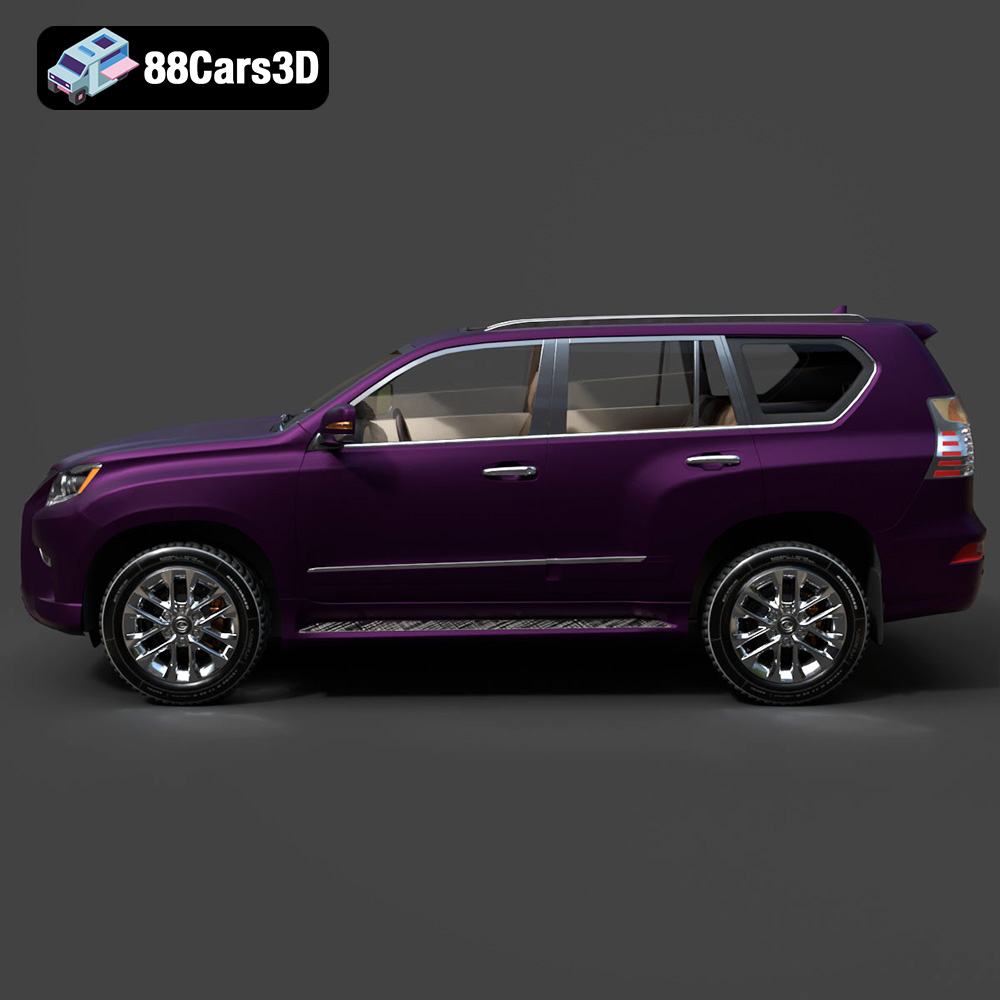
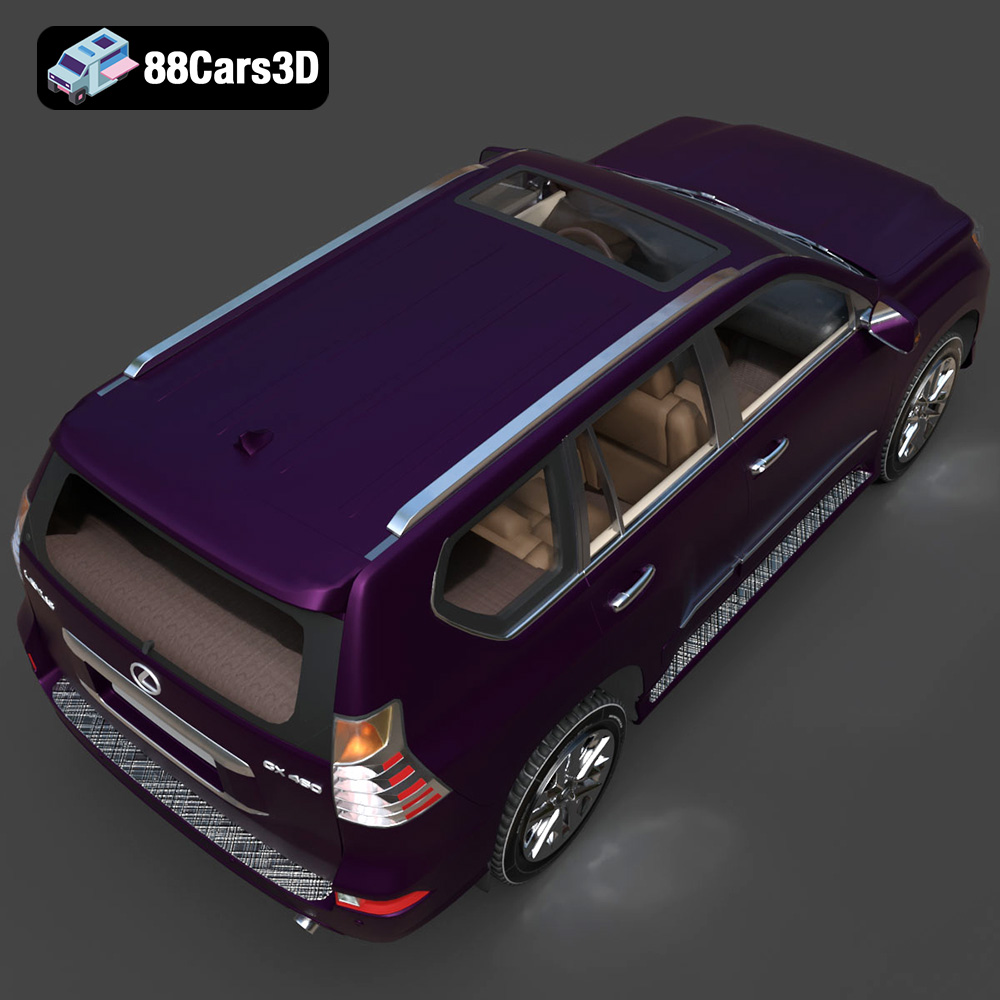
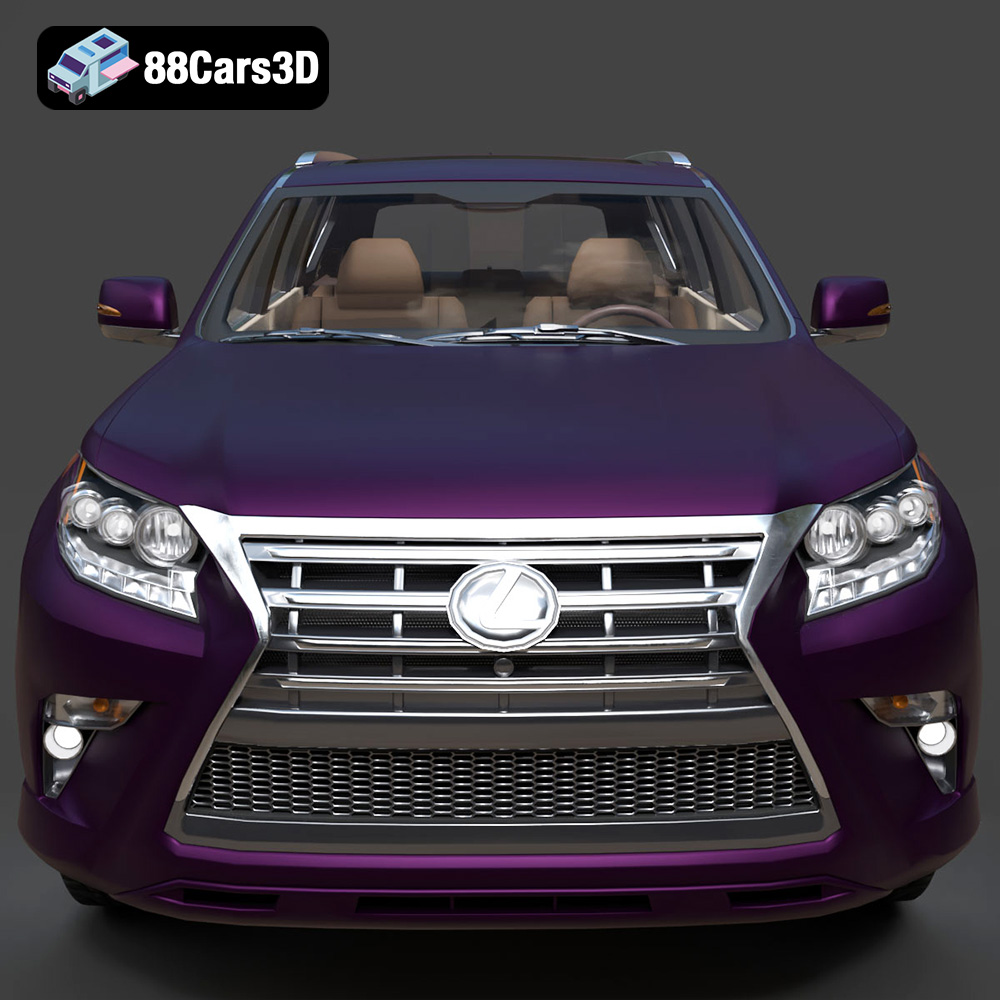
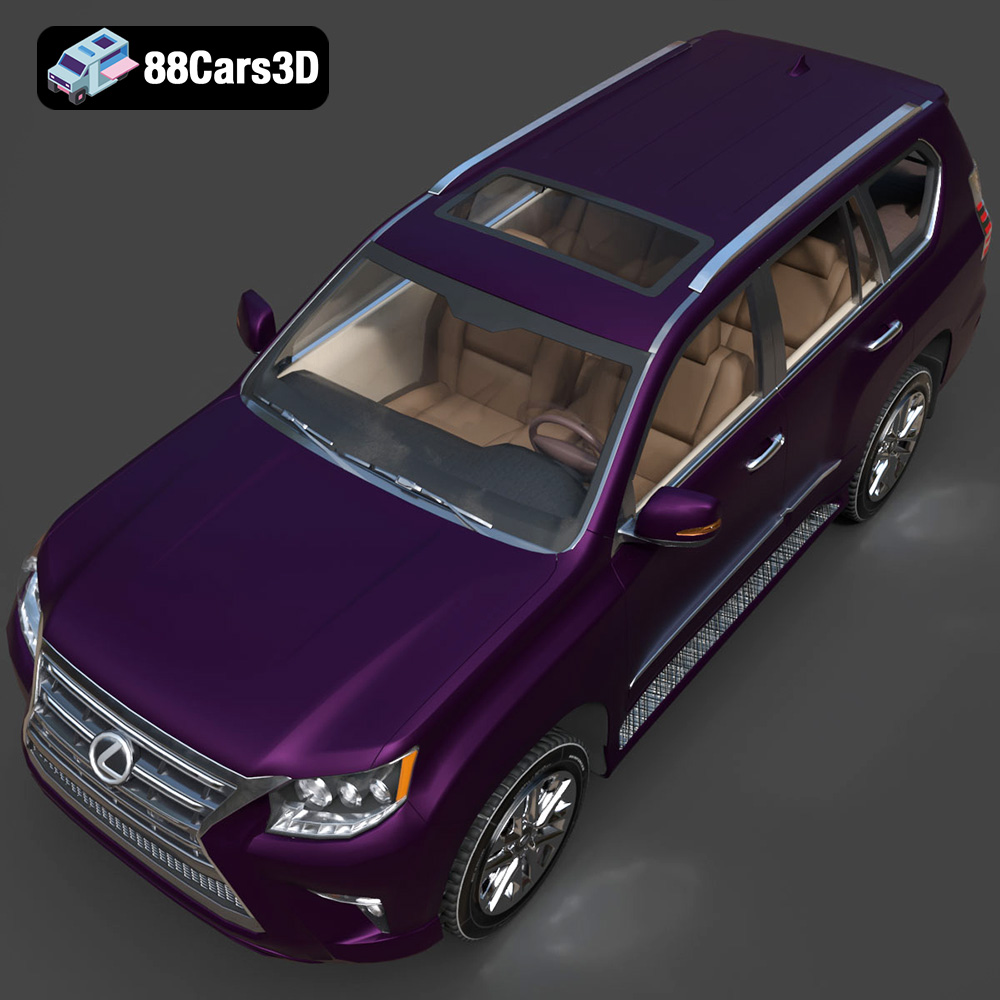
Today, we delve into the intricate details that define a truly professional 3D car model, exploring its critical role across various industries. We’ll examine the technical specifications, file formats, and workflow considerations that make an asset not just beautiful, but also incredibly versatile and production-ready. As a prime example of such excellence, we’ll frequently reference the Lexus GX460 2014 3D Model available on 88cars3d.com. This exceptional digital asset perfectly replicates the powerful stance and luxurious design of the iconic SUV, making it an outstanding addition to any professional’s digital library.
The success of any project involving vehicles in a digital environment hinges significantly on the quality of its 3D car models. Poorly optimized or inaccurately modeled assets can quickly break immersion, cause performance issues, and ultimately detract from the overall user experience. Conversely, high-quality models provide a seamless, believable foundation that allows artists and developers to achieve stunning results.
For automotive studios, marketing agencies, and architectural visualization firms, photorealistic rendering is paramount. When presenting a new vehicle concept, showcasing an SUV in a luxurious setting, or visualizing an architectural design with vehicles, the realism of the 3D car models directly impacts perception. Clients and audiences expect every curve, reflection, and material property to mimic reality flawlessly. A model like the Lexus GX460 2014, with its clean geometry and realistic materials, ensures that renders are not just attractive, but also technically accurate and convincing, reflecting true-to-life details.
Beyond aesthetics, high-quality 3D car models serve as crucial tools for design validation and prototyping. Engineers and designers can utilize these assets in simulations to test aerodynamics, interior layouts, or user interaction before physical prototypes are ever built. This allows for rapid iteration and significant cost savings. The precision inherent in a professional 3D model ensures that these simulations are based on accurate representations, making the digital model a vital bridge between conceptualization and tangible product development.
Time is a valuable commodity in any production pipeline. Investing in a pre-built, high-quality 3D car model saves countless hours that would otherwise be spent on modeling, texturing, and optimization from scratch. A production-ready asset, like those found on 88cars3d.com, comes fully textured and with optimized polygon counts, ready for immediate deployment. This efficiency allows artists to focus on creative direction, scene composition, and lighting, rather than wrestling with foundational asset creation, ultimately accelerating project timelines and reducing overheads.
The ability of a 3D model to integrate seamlessly into diverse software environments is largely determined by the file formats it supports. Each format is designed with specific use cases in mind, offering unique advantages regarding compatibility, data preservation, and performance. Understanding these distinctions is crucial for selecting the right asset for your project, ensuring maximum efficiency and minimal headaches. The Lexus GX460 2014 3D Model is provided in a comprehensive package of industry-standard formats, showcasing its versatility.
The .blend format is native to Blender, a powerful open-source 3D creation suite. A .blend file typically includes the full Blender scene, encompassing not just the mesh data but also materials, textures, lighting setups, cameras, animations, and even physics simulations. This makes it an incredibly robust format for users working within Blender, offering full editability and the preservation of all scene data. For projects requiring extensive customization or further development within Blender, starting with a .blend file (like that included with the Lexus GX460 2014 3D Model) provides a complete, ready-to-tweak environment.
.fbx (Filmbox) is an Autodesk proprietary file format widely adopted as a standard for exchanging 3D data between various software applications, particularly in game development and real-time visualization. It supports geometry, materials, textures, animations, and rigging, making it ideal for transferring complex scenes. Its robust support in game engines like Unreal Engine and Unity makes .fbx the go-to choice for creating game assets. When a 3D car model is described as “game-engine ready,” it often implies careful optimization and structuring within the .fbx format to ensure efficient performance and correct import into these engines.
The .obj (Wavefront OBJ) format is one of the oldest and most universally supported 3D file formats. It primarily stores 3D geometry data, including vertices, UV coordinates, vertex normals, and polygonal faces. While it doesn’t typically embed animations or complex scene data, its simplicity makes it exceptionally compatible across virtually all 3D software. For simple mesh exchange or when you need a clean, unadorned model that can be imported and re-textured in any application, .obj is an excellent choice. It serves as a reliable fallback for cross-software compatibility, ensuring your 3D car models are accessible regardless of your primary tools.
.glb (GLB format) is the binary representation of the glTF (GL Transmission Format), an open standard for 3D scenes and models. Designed specifically for efficient transmission and loading of 3D scenes and models by applications, it is quickly becoming the “JPEG for 3D” due to its optimization for web-based, AR (Augmented Reality), and VR (Virtual Reality) experiences. A .glb file packages all necessary assets (geometry, materials, textures, animations) into a single, self-contained file, making it incredibly easy to share and integrate into web viewers or AR/VR platforms. For interactive product showcases or metaverse projects, using the .glb version of the Lexus GX460 2014 3D Model would be highly beneficial.
.stl (Stereolithography) is perhaps the most widely used file format for 3D printing. It represents a 3D object as a series of connected triangles, describing only the surface geometry of a 3D object without any color, texture, or material information. Its simplicity makes it perfect for additive manufacturing, where the focus is solely on physical form. For creating a physical prototype of the Lexus GX460, the .stl format is indispensable.
.ply (Polygon File Format or Stanford Triangle Format) is another format used to store 3D data, particularly from 3D scanners. It can store a wider range of information than .stl, including color, transparency, normals, texture coordinates, and scalar values, making it suitable for scientific data or high-fidelity geometric analysis. While less common for everyday artistic rendering, it offers a precision mesh format valuable for CAD or analysis workflows.
The .unreal format refers to assets specifically configured and optimized for direct import and use within Unreal Engine. This often implies pre-applied materials, collision meshes, LODs (Levels of Detail), and correct scale, streamlining the integration process significantly. Having a .unreal file, like the one for the Lexus GX460 2014, means less setup time and more focus on scene composition in your Unreal projects.
Similarly, .max is the native file format for Autodesk 3ds Max, one of the leading 3D modeling, animation, and rendering software packages. Like .blend, a .max file stores the complete scene data, including geometry, modifiers, materials, lights, cameras, and animations. It provides full editability within 3ds Max, making it ideal for artists whose primary workflow revolves around this powerful software for high-end automotive rendering and animation.
A truly valuable 3D asset is one that integrates seamlessly into a variety of professional workflows. The Lexus GX460 2014 3D Model, with its comprehensive file format support, is designed to be a versatile workhorse, adapting to diverse production pipelines.
For artists focused on high-end automotive rendering, the .max and .blend files of the Lexus GX460 2014 offer immense flexibility. In 3ds Max, users can leverage powerful renderers like V-Ray or Corona to create breathtakingly realistic images. The .max file would typically include properly set up materials, often PBR-compliant, which react accurately to light. Artists can then place the GX460 within an environment, adjust lighting rigs, and fine-tune camera angles to produce stunning marketing visuals or detailed product showcases. Similarly, Blender users can take advantage of the Cycles or Eevee render engines. The .blend file, with its embedded materials and lighting, allows for immediate rendering out-of-the-box or provides a solid foundation for further artistic refinement, like adding custom paint finishes or dynamic weather effects. This streamlined workflow enhances efficiency for any automotive rendering project.
Game developers and real-time visualization artists will find the .fbx and .unreal files of the Lexus GX460 2014 invaluable. For Unreal Engine, importing the optimized .unreal asset means the model is already scaled correctly, likely has appropriate collision meshes, and potentially even LODs (Levels of Detail) set up. This dramatically reduces the preparation time for integrating the SUV into an interactive environment, such as an open-world driving simulator or a configurator application. Artists can then apply specific shaders, add dynamic lighting, and integrate it into the gameplay mechanics without needing extensive re-work, making it a true plug-and-play game asset.
The increasing prevalence of AR/VR and web-based 3D experiences necessitates assets optimized for these platforms. The .glb format of the Lexus GX4460 2014 3D Model is specifically tailored for this. For AR/VR, the compact, self-contained .glb file ensures fast loading times and efficient rendering on mobile devices or headsets. This allows for immersive vehicle walkthroughs in AR apps or interactive showrooms in VR. On the web, embedding a .glb model allows for interactive 3D viewers directly in a browser, offering customers a dynamic way to explore the vehicle’s design from all angles. These optimized formats are crucial for delivering engaging, high-performance experiences across modern digital touchpoints.
What truly sets a premium 3D car model apart from a basic one lies in its underlying technical craftsmanship. It’s not just about visual appeal but about the structural integrity and optimization that ensures versatility and performance.
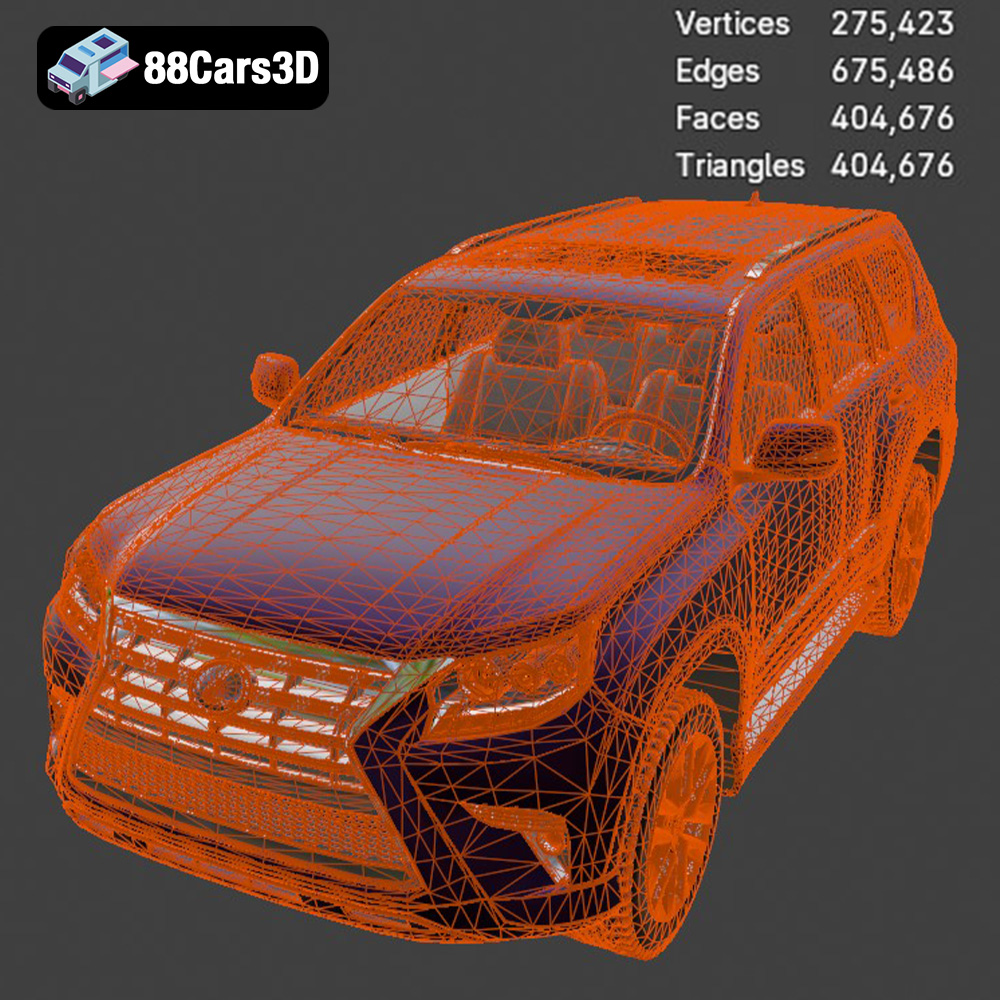
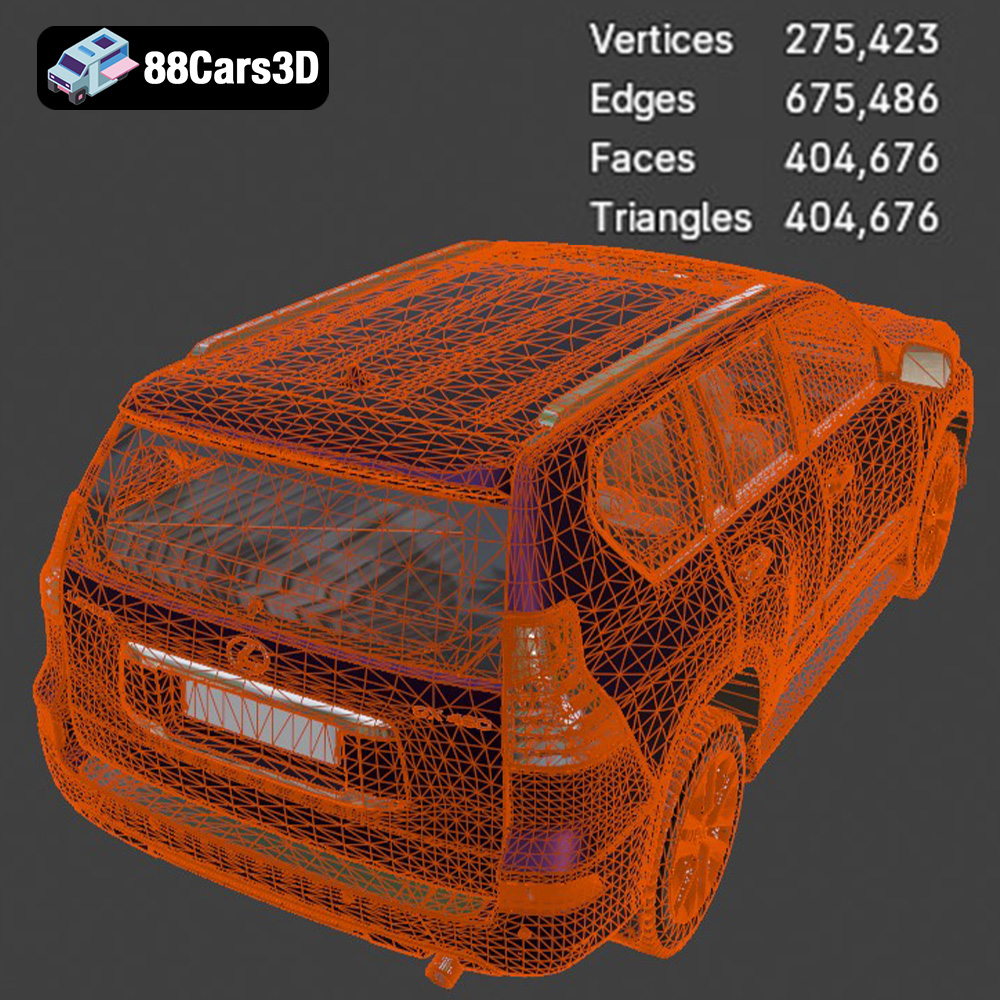
A professional 3D car model, like the Lexus GX460 2014, boasts clean geometry and optimized topology. “Clean geometry” refers to meshes without non-manifold edges, isolated vertices, or overlapping faces, which can cause rendering artifacts and issues during animation or sculpting. “Optimized topology” means the polygon flow follows the contours of the vehicle’s design, making deformations smooth and facilitating easy edge selection for modifications. Polygon count is another critical factor. While high poly counts allow for incredible detail, they can bog down real-time applications. A good model strikes a balance, providing sufficient detail for close-up renders while offering lower-poly versions (or easily created LODs) for performance-critical scenarios. The Lexus GX460 2014 is designed with an optimized polygon count, ensuring flexibility across diverse applications.
Modern rendering relies heavily on Physically Based Rendering (PBR) workflows. This means materials are defined by properties like base color (albedo), roughness, metallicness, normal maps, and ambient occlusion, which accurately simulate how light interacts with surfaces in the real world. A premium 3D car model includes high-resolution, PBR-compliant textures that meticulously replicate paint finishes, chrome details, glass, tire rubber, and interior fabrics. These textures are not just visually accurate but also technically correct, ensuring consistent results across different rendering engines and lighting conditions. The Lexus GX460 2014 features realistic materials that contribute significantly to its photorealistic qualities.
UV mapping is the process of flattening the 3D surface of a model onto a 2D plane, creating a set of UV coordinates that tell the renderer how to apply textures. Flawless UV mapping is essential for seamless texture application, preventing stretching, warping, or visible seams. For complex objects like cars, careful UV unwrapping is crucial, often involving multiple UV sets for different material layers (e.g., body paint, decals, interior fabrics). High-quality models feature well-organized UV layouts that maximize texture resolution and simplify texture creation or modification, further enhancing their value as a game asset or rendering component.
The utility of high-quality 3D car models extends far beyond simple imagery, impacting multiple industries with tangible benefits.
Automotive manufacturers and dealers frequently leverage 3D car models for compelling marketing materials. Instead of costly physical photoshoots, models like the Lexus GX460 2014 can be placed in endless virtual environments—from bustling cityscapes to serene off-road trails—without ever moving a physical vehicle. This allows for dynamic advertisements, interactive website configurators, and virtual brochures. This approach saves significant time and money, offers unparalleled creative freedom, and ensures brand consistency across all digital touchpoints. High-quality 3D car models are an indispensable asset for any modern automotive marketing strategy.
In the realm of video games, realistic 3D car models are fundamental to creating immersive driving experiences. Racing games, open-world adventures, and even simulation titles rely on detailed vehicle assets to engage players. The Lexus GX460 2014 3D Model, optimized as a game asset, provides developers with a production-ready vehicle that can be easily integrated into game engines. This allows for realistic physics, damage models, and customizable paint jobs, enhancing player immersion and interaction. From asset production to in-engine implementation, the quality of the 3D car models directly correlates with the game’s overall appeal and performance.
Beyond entertainment, 3D car models play a critical role in the automotive industry itself. Designers use them to iterate on new concepts, visualize interior ergonomics, and conduct virtual safety tests. Engineers employ these models in sophisticated simulations to analyze aerodynamics, crashworthiness, and component interactions, drastically reducing the need for expensive physical prototypes. The precision and detail of models available from marketplaces like 88cars3d.com enable advanced research and development, accelerating innovation and bringing new vehicles to market faster and more efficiently. The Lexus GX460 2014 could be used in a similar fashion for compatibility studies or environmental impact assessments within a simulated environment.
The journey through the world of 3D car models reveals a landscape where artistic vision meets rigorous technical execution. From the foundational importance of clean geometry and PBR materials to the strategic choice of file formats for diverse applications, every detail contributes to the overall value and versatility of a digital asset. High-quality 3D car models are not merely visual representations; they are powerful tools that drive innovation, enhance user experiences, and streamline professional workflows across rendering, game development, AR/VR, and even industrial design.
The Lexus GX460 2014 3D Model stands as a testament to this commitment to excellence. Its meticulous craftsmanship, combined with support for an extensive range of industry-standard file formats (.blend, .fbx, .obj, .glb, .stl, .ply, .unreal, .max), ensures it is ready for any challenge you might throw at it. Whether your goal is a breathtaking automotive rendering, an engaging game asset, or an interactive AR/VR experience, this model provides the quality and flexibility needed to achieve professional results. Explore this model and many others at 88cars3d.com, your trusted source for premium 3D automotive assets.
Discover the exceptional realism and precision of the Lexus GX460 2014 3D Model. Crafted with meticulous attention to detail, this digital asset perfectly replicates the powerful stance and luxurious design of the iconic SUV, making it an outstanding addition to your digital library. Designed for optimal performance, this model features clean geometry, realistic materials, and an optimized polygon count. Every exterior curve and interior element has been modeled to deliver professional quality results. The asset is fully textured and ready for immediate deployment in your chosen software. Whether you are developing an immersive video game, creating photorealistic architectural visualizations, producing interactive AR/VR experiences, or conducting automotive simulations, this versatile 3D model adapts seamlessly to any demanding production environment. This comprehensive package includes multiple industry-standard file formats to ensure maximum compatibility: .blend – Editable Blender file with materials and lighting setup; .fbx – Game-engine ready format for Unreal Engine and Unity; .obj – Standard 3D model format compatible with all major software; .glb – Optimized for AR/VR and web-based visualization; .stl – Suitable for 3D printing and prototyping; .ply – Detailed polygon mesh for analysis and visualization; .unreal – Pre-configured for Unreal Engine use; .max – Editable 3ds Max file for rendering and animation.
$39.99
.arvr
.blend
.car3dmodel
.fbx
.gameasset
.glb
.gx460
.lexus
.luxury
.max
.obj
.offroad
.ply
.rendering
.simulation
.stl
.unreal
SUV