Get 20% OFF All Premium 3D & STL Models!

In the dynamic world of digital content creation, the demand for high-fidelity 3D assets is ever-increasing. From captivating game environments to photorealistic product visualizations and immersive AR/VR experiences, meticulously crafted 3D models form the bedrock of compelling digital narratives. Automotive design, in particular, stands as a testament to the blend of artistic vision and technical precision required to translate real-world marvels into their virtual counterparts. A truly exceptional 3D car model isn’t just a visual representation; it’s a versatile digital tool engineered for performance, realism, and seamless integration across diverse platforms.
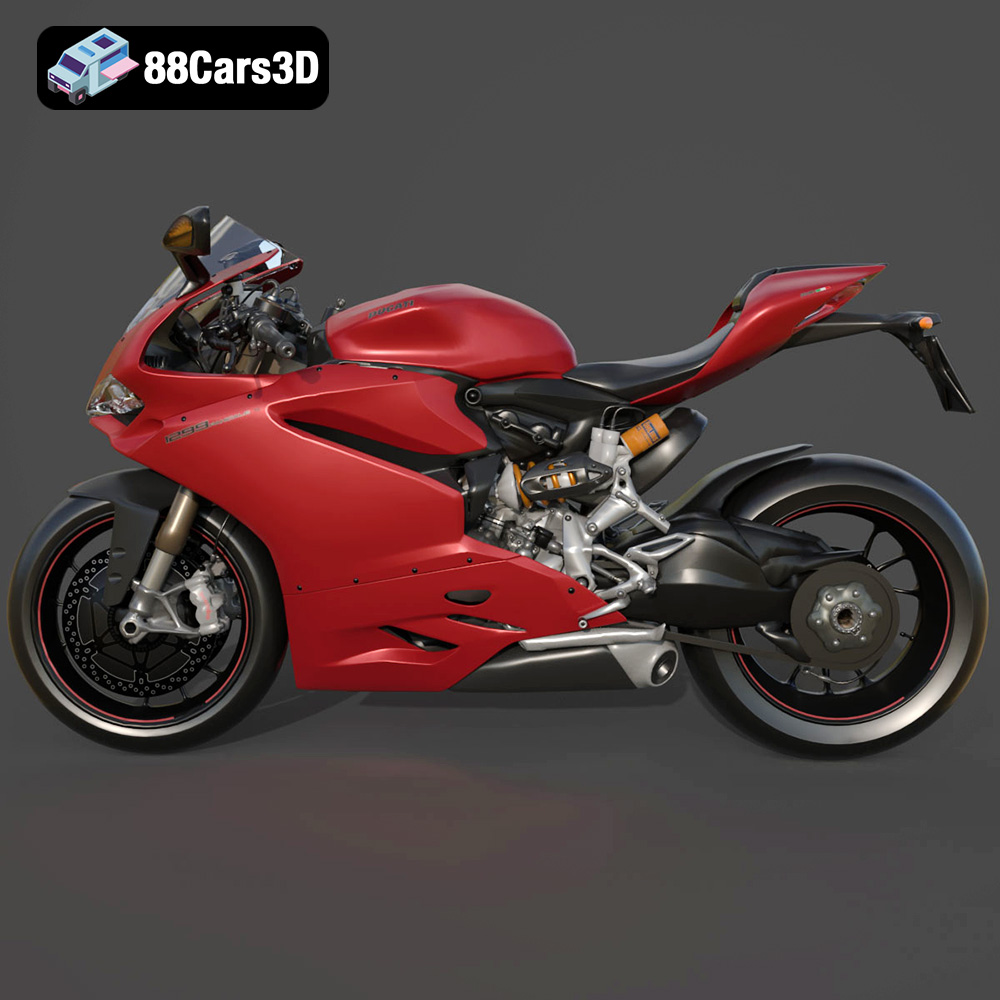
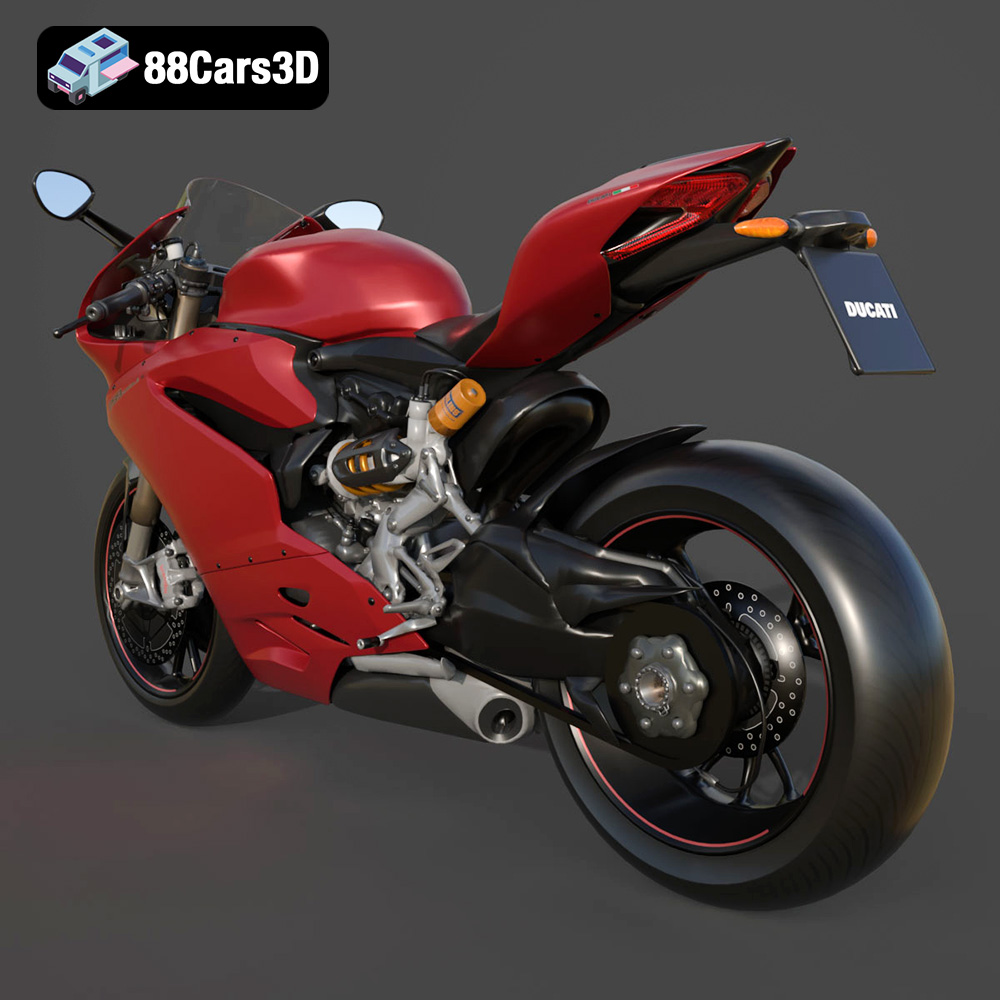
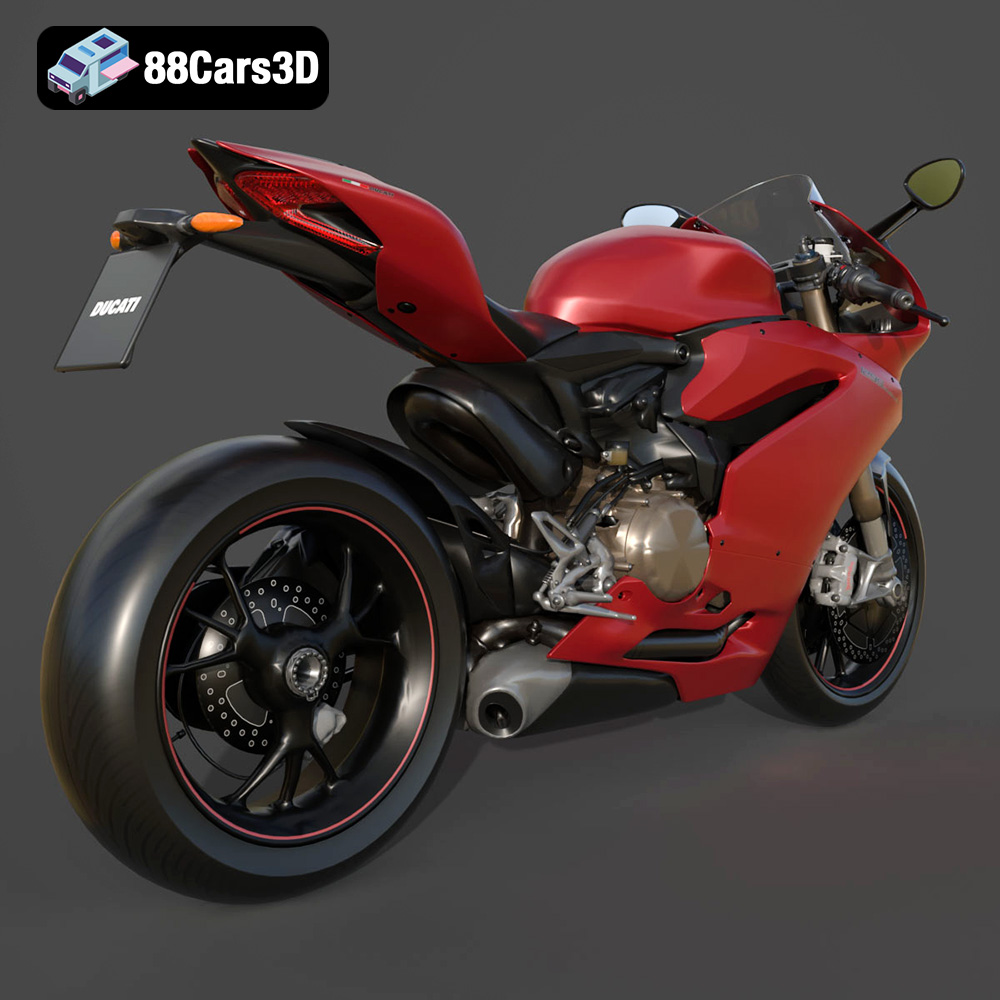
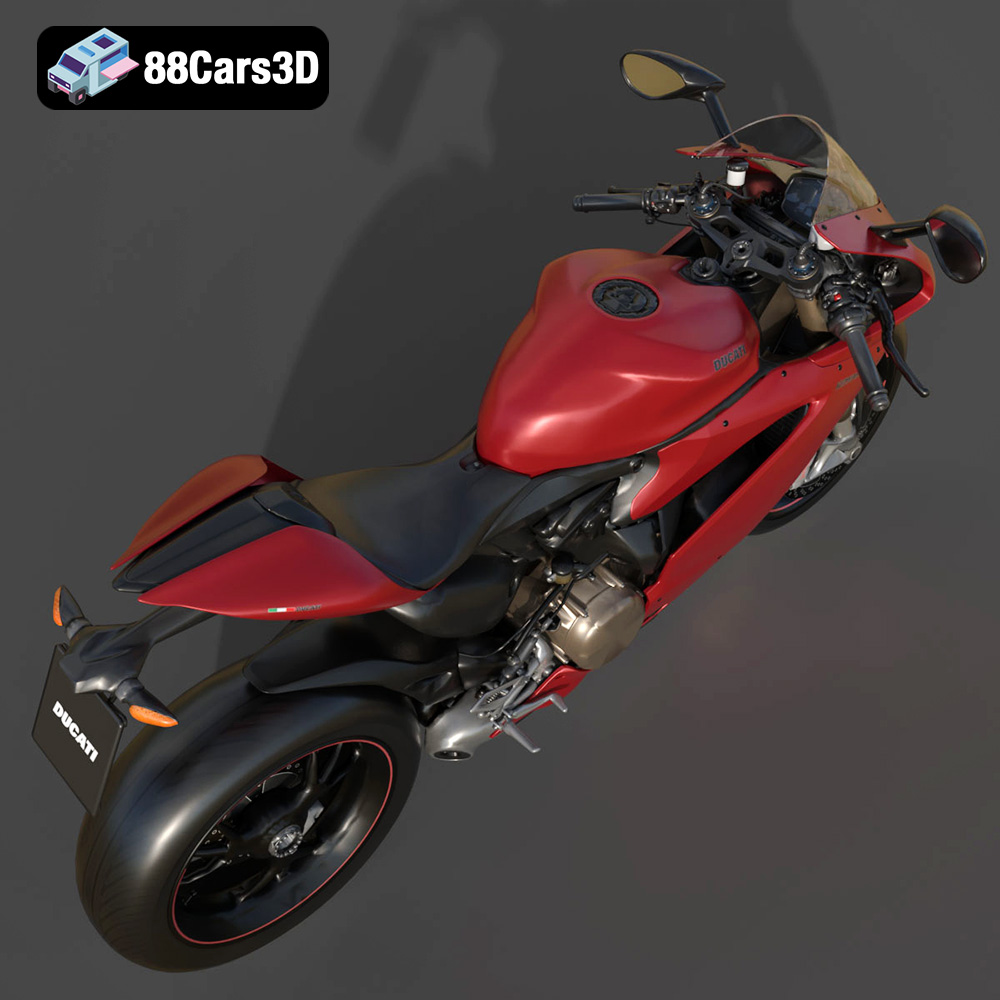
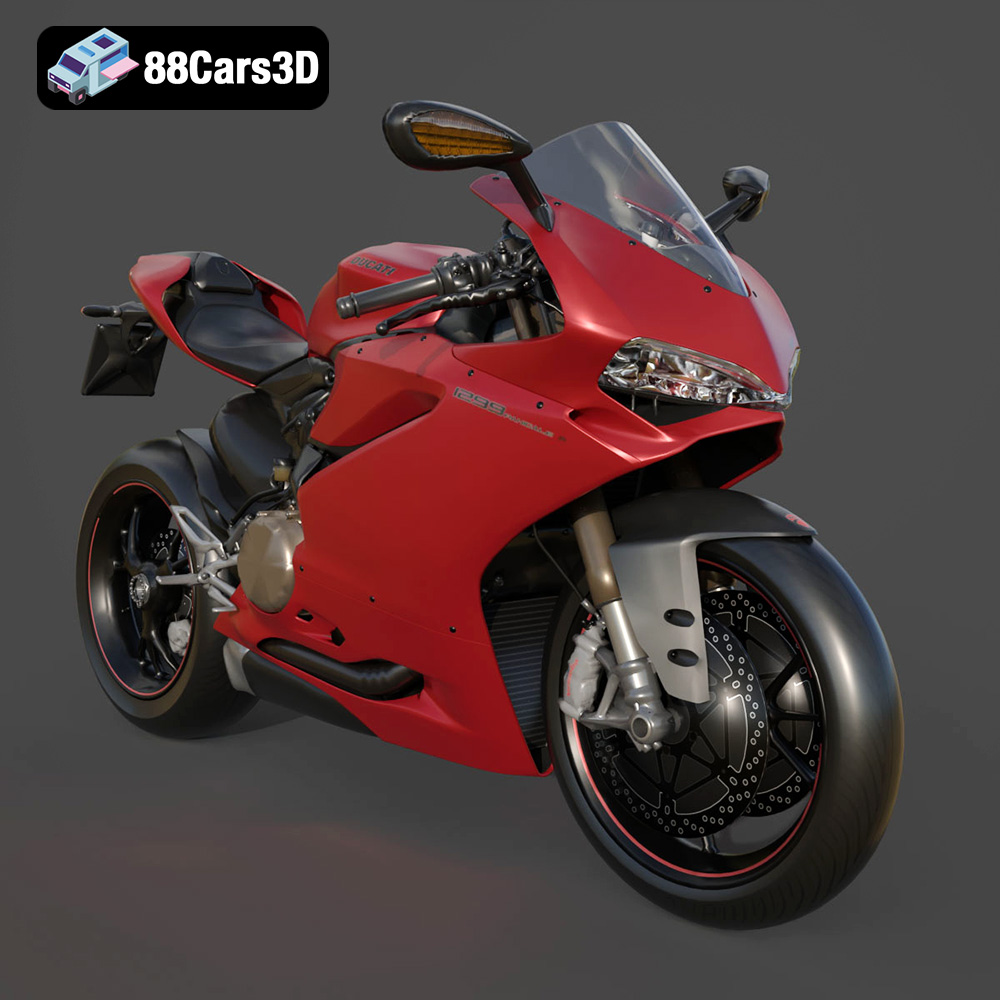
Today, we’re diving deep into what makes a premium 3D vehicle asset truly stand out, using a prime example that embodies excellence in both form and function: the Ducati 1299 Panigale S 2017 3D Model. This superbike, renowned for its stunning aesthetics and blistering track performance, serves as an ideal case study to explore the intricate details and technical considerations that go into creating a professional-grade 3D car model.
Choosing the correct file format for your 3D assets is paramount for ensuring compatibility, optimizing performance, and achieving your desired artistic or technical outcome. Different formats are engineered for specific purposes, offering unique advantages depending on your workflow and target platform. For the Ducati 1299 Panigale S 2017 3D Model, a comprehensive suite of formats is provided, ensuring maximum flexibility for creators.
The .blend format is the native file type for Blender, the popular open-source 3D creation suite. When you download a .blend file, you’re not just getting the mesh; you’re getting the entire Blender scene. This includes all the materials, textures, lighting, camera setups, and even any modifiers, rigging, or animation that might be present. For artists working primarily in Blender, this is invaluable as it allows for immediate, full editability. You can inspect the topology, modify materials, adjust UVs, or even re-rig components with ease, giving you complete control over the asset. It’s the most flexible option for deep customization within the Blender ecosystem.
Autodesk’s .fbx (Filmbox) format is arguably the most widely adopted interchange format in the 3D industry, especially for game development. It excels at transferring 3D model data, including meshes, materials, textures, animations, and skeletal data, between different software applications like Maya, 3ds Max, Blender, and crucially, game engines such as Unreal Engine and Unity. Its strength lies in its robustness and ability to carry complex scene data efficiently. For the Ducati Panigale S, an .fbx file ensures that the optimized mesh, real-world scale, pivot points for wheels and steering, and material assignments are perfectly translated for real-time environments, making it a “game-ready” asset right out of the box.
The .obj (Wavefront OBJ) format is a foundational, non-proprietary file type primarily used for exchanging 3D geometry data. It stores vertex positions, UV coordinates, normals, and material references (often in an accompanying .mtl file). While it doesn’t support animation or advanced scene data like .fbx, its simplicity and widespread support make it a universal format for pure mesh transfer. If you need to import the Ducati model into a specialized rendering engine, CAD software, or any application that might not support .fbx, .obj is a reliable fallback that guarantees geometric accuracy across almost any 3D software.
.glb (GLB, the binary version of glTF) is a relatively newer format specifically designed for efficient transmission and loading of 3D scenes and models on the web and in AR/VR applications. It packages all necessary data—geometry, materials, textures, animations—into a single, self-contained file, reducing overhead and improving load times. This format is crucial for interactive virtual showrooms, mobile AR experiences, and browser-based 3D viewers where the Ducati model can be showcased directly without complex setups. Its optimization for lightweight, real-time display makes it perfect for interactive visualization on various devices.
The .stl (Stereolithography) format is the de facto standard for 3D printing. It represents a 3D model as a series of connected triangles, defining only the surface geometry of an object without color, texture, or other advanced attributes. When converting the Ducati model to .stl, the focus shifts from digital realism to physical manufacturability. This format is essential for hobbyists or collectors who wish to bring the digital Ducati into the physical world through 3D printing, enabling them to create display-scale replicas with high precision, especially for intricate parts like the engine and fairings.
.ply (Polygon File Format) is another format for storing 3D data, often used in scientific and engineering applications, as well as 3D scanning. It can store a variety of properties, including color, transparency, and surface normals, for each vertex or face. While less common for general 3D asset exchange, it’s a robust format for models that require precise geometric representation and additional per-vertex data, making it suitable for CAD integration or detailed analysis of the Ducati’s complex surfaces.
The inclusion of a dedicated .unreal asset signifies a model specifically prepared and potentially imported into Unreal Engine. While typically assets are imported via .fbx, a direct .unreal file implies a pre-packaged asset with materials, collision, and possibly blueprints already configured within the engine’s structure. This saves significant setup time for developers using Unreal Engine, allowing them to drop the Ducati Panigale S directly into their projects, knowing it’s already optimized for the engine’s rendering pipeline and physics system.
Similar to .blend for Blender, the .max format is the native file type for Autodesk 3ds Max. This format offers the highest level of editability and preserves all scene information specific to 3ds Max, including object hierarchy, modifiers, materials, lights, cameras, and potentially animation data. For professionals working within the 3ds Max ecosystem, the .max file for the Ducati provides the ultimate flexibility for advanced rendering, animation, and scene integration, allowing for deep customization and leveraging 3ds Max’s powerful toolset.
The provision of such a wide array of formats for the Ducati 1299 Panigale S 2017 3D model highlights its versatility and the foresight of the creators at 88cars3d.com, ensuring it fits seamlessly into virtually any professional 3D workflow.
Creating a 3D car model like the Ducati 1299 Panigale S 2017 isn’t merely about replicating its appearance; it’s about understanding its underlying structure, engineering, and visual presence. It’s a meticulous process that balances aesthetic fidelity with technical efficiency, crucial for both high-end rendering and real-time applications.
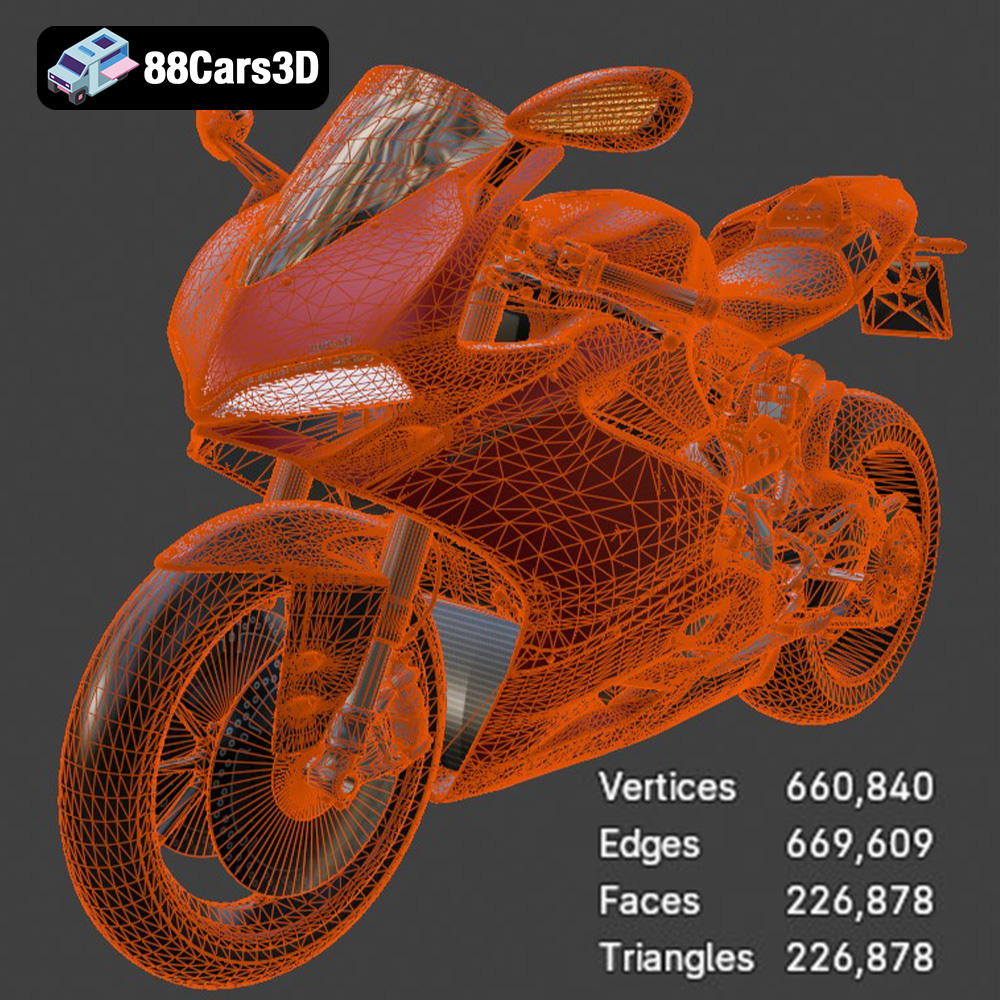
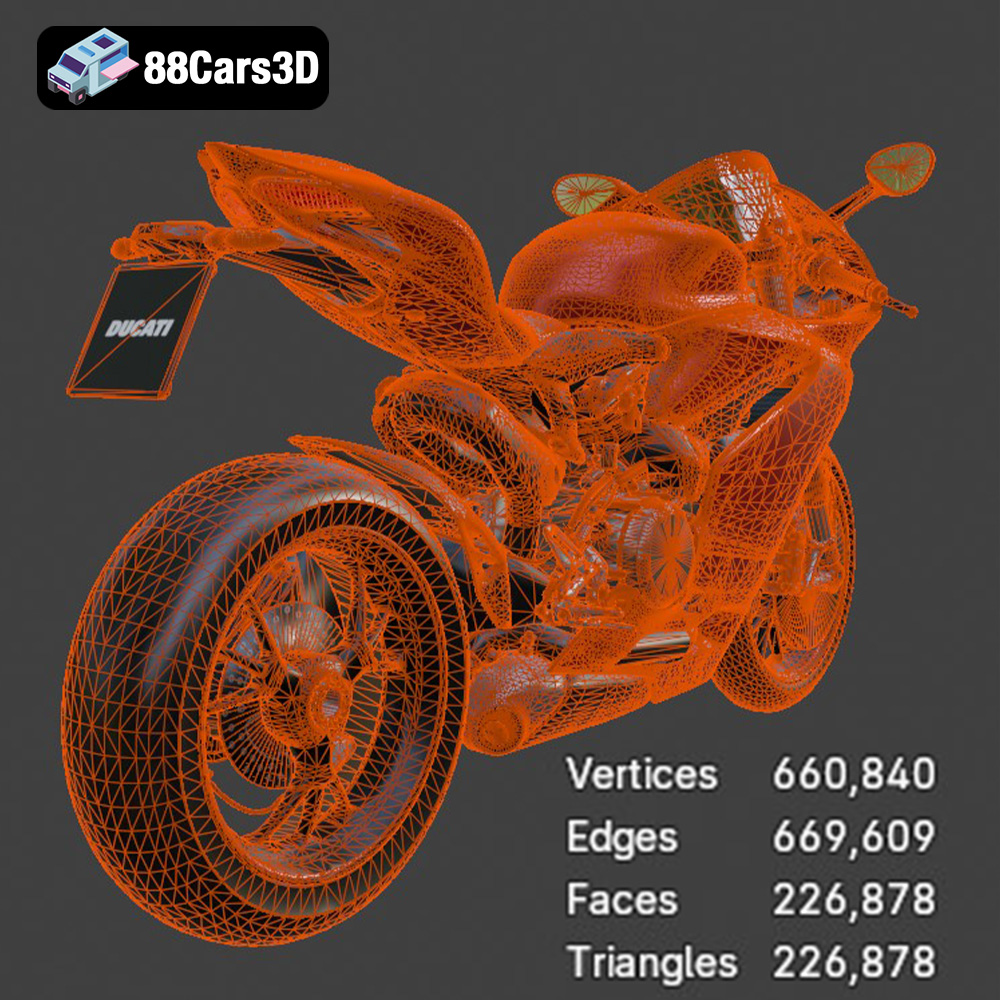
The foundation of any great 3D model is its geometry and topology. For the Ducati Panigale S, this means accurately capturing the elegant curves of its aerodynamic fairings, the intricate details of its monocoque chassis, and the powerful stance of the Superquadro L-twin engine. The product description highlights an optimized topology of approximately 280,000 triangles. This specific poly count is a deliberate choice. It’s high enough to maintain breathtaking visual fidelity, ensuring that every subtle curve and sharp edge of the superbike is accurately represented, from the aggressive split LED headlights to the distinctive under-engine exhaust system. Yet, it’s low enough to qualify as a “game-ready” asset, allowing it to perform efficiently in real-time engines like Unreal and Unity without bogging down frame rates. This balance is a hallmark of professional 3D car models.
True realism comes from attention to detail and adherence to real-world specifications. The Ducati model boasts separate wheels, suspension components, and steering assemblies, all configured for seamless animation. This isn’t just for show; it’s a practical necessity for interactive experiences. Imagine a racing simulation where the suspension compresses, the wheels turn accurately, and the steering responds naturally – these elements are only possible with properly separated and pivoted components. Furthermore, the model’s adherence to real-world scale, based on the actual vehicle chassis and wheelbase, is critical for realistic scene integration, ensuring that the bike fits naturally alongside other assets in an environment, whether it’s a virtual showroom or an expansive game world.
The true value of a versatile 3D asset lies in its ability to be seamlessly integrated into various professional workflows. The Ducati 1299 Panigale S 2017 3D model is specifically designed for this purpose, offering robust compatibility and optimization across multiple platforms.
For game developers, the Ducati 1299 Panigale S 2017 is a prime candidate for open-world games, racing titles, and motorcycle simulators. Its optimized ~280k triangle count strikes a perfect balance between visual fidelity and real-time performance. In a game engine like Unreal Engine or Unity, performance is paramount. A model with excessive polygons can cause significant slowdowns, but this Ducati model is engineered to be lightweight without sacrificing detail. The proper pivot setup for steering, wheel rotation, and dynamic suspension travel means that implementing realistic physics and animation is a straightforward process. Game designers can quickly integrate the model, apply custom materials, and even adapt lighting arrays to match their in-game environments, creating truly immersive and high-octane racing experiences.
The rise of augmented and virtual reality has opened new avenues for showcasing products. The Ducati Panigale S is perfect for creating immersive virtual showrooms, vehicle configurators, and interactive mobile AR experiences. Its optimized geometry and high-resolution material separation translate beautifully into VR headsets and AR applications, allowing users to inspect every detail of the superbike as if it were right in front of them. The .glb format is particularly beneficial here, offering efficient loading and display in web-based or mobile AR/VR platforms.
Beyond interactive applications, the Ducati 1299 Panigale S 3D model excels in high-end rendering and visualization. For brand campaigns, lifestyle scenes, or dramatic studio lighting setups, the model’s detailed geometry, authentic materials, and real-world scale are indispensable. Artists can utilize software like 3ds Max or Blender to create stunning photorealistic images and animations that are indistinguishable from real-life photographs.
The versatility of a well-crafted 3D model extends beyond digital screens. The Ducati 1299 Panigale S 2017 3D Model is also suitable for 3D printing, opening up new avenues for hobbyists, collectors, and designers to bring this iconic superbike into the physical world.
Converting the digital Ducati to an .stl format for 3D printing allows enthusiasts to create tangible replicas. This process requires specific considerations to ensure the physical model accurately reflects its digital counterpart.
A professional 3D model is not a rigid entity; it’s a foundation for creative exploration. The Ducati model offers extensive customization options, allowing users to adapt it to specific project needs or personal preferences.
The Ducati 1299 Panigale S 2017 3D Model exemplifies the quality and versatility that professional creators seek. When investing in 3D car models, the benefits of choosing a reputable source like 88cars3d.com become clear. Their focus on highly detailed, optimized assets with broad file format compatibility ensures that you receive a product ready for immediate use in demanding production pipelines. Whether it’s for automotive rendering, game asset development, or advanced visualization, a premium model saves countless hours of modeling, texturing, and optimization, allowing artists and developers to focus on creativity and project execution.
The meticulous modeling of exterior and cockpit features, coupled with precise technical specifications like real-world scale and proper pivot setups, guarantees not just visual fidelity but also functional accuracy. This attention to detail is what transforms a simple 3D object into a powerful, adaptable asset that can drive innovation across industries.
The world of 3D modeling continues to push boundaries, and high-quality 3D car models like the Ducati 1299 Panigale S 2017 are at the forefront of this evolution. From its optimized ~280k triangle count for real-time game environments to its detailed components ready for animation and its wide array of file formats including .blend, .fbx, .obj, .glb, .stl, .ply, .unreal, and .max, this model is a testament to sophisticated digital craftsmanship. It offers unparalleled flexibility for game development, AR/VR experiences, cinematic rendering, and even physical 3D printing.
By understanding the technical nuances of geometry, file formats, and application-specific optimizations, creators can leverage such assets to bring their visions to life with stunning realism and efficiency. The Ducati 1299 Panigale S 2017 3D Model from 88cars3d.com is more than just a digital replica; it’s a meticulously engineered tool designed to empower artists and developers in their quest for digital excellence. Embrace the power of premium 3D assets and elevate your projects to the next level.
Experience the apex of Italian engineering with this highly detailed 3D model of the Ducati 1299 Panigale S 2017. Renowned for its stunning aesthetics and blistering track performance, this superbike boasts iconic visual elements such as its aerodynamic fairings, monocoque chassis structure, and the legendary Superquadro L-twin engine. Distinctive features like the aggressive split LED headlights, single-sided swingarm, and under-engine exhaust system have been meticulously modeled to capture the raw aggression and elegance of the physical motorcycle. Constructed with an optimized topology of approximately 280,000 triangles, this game-ready asset delivers breathtaking visual fidelity without compromising real-time performance. Designed specifically for next-gen workflows, the model features high-resolution material separation and precise real-world scaling, making it exceptionally suited for game development, AR/VR experiences, high-end animation, and architectural or studio visualization. Perfect for track day racing simulations, immersive virtual showrooms, high-octane gaming titles, and dynamic lifestyle rendering scenes.
$19.99
.2017
.blend
.ducati
.fbx
.glb
.max
.obj
.ply
.rendering
.sportbike
.stl
.superbike
.unreal
1299-panigale-s
game asset
game-ready
low-poly
motorcycle-3d-model
optimized
VR/AR