Get 20% OFF All Premium 3D & STL Models!

The automotive industry has always been a beacon of innovation, pushing the boundaries of design, engineering, and performance. Today, much of this innovation begins not on the factory floor, but within the intricate digital canvases of 3D modeling software. From conceptualization to marketing, and increasingly in interactive media like video games and virtual reality, high-fidelity 3D car models are the bedrock upon which future experiences are built. They allow designers to visualize, engineers to simulate, and enthusiasts to interact with vehicles that might only exist as prototypes or even pure flights of fancy.
In this landscape of digital automotive artistry, the quality of a 3D model is paramount. It dictates the realism of a render, the performance within a game engine, and the precision required for additive manufacturing. We delve into the technical intricacies and creative potential unlocked by meticulously crafted assets, exemplified by a standout creation: the Lamborghini Terzo Millenio 2017 3D Model. This visionary hypercar, a collaboration between Lamborghini and MIT, embodies the future of electric performance and aerodynamic design, and its digital counterpart stands as a testament to what’s possible with expert 3D modeling. Whether you’re an automotive renderer, a game developer, or an AR/VR innovator, understanding the nuances of such an asset is crucial for producing compelling, cutting-edge digital content.
In the world of 3D modeling, selecting the correct file format is as crucial as the modeling process itself. Each format is designed with specific use cases, compatibility, and data retention in mind. When you invest in high-quality 3D car models, such as the Lamborghini Terzo Millenio 2017 3D Model available at 88cars3d.com, understanding these formats ensures you can seamlessly integrate the asset into your professional workflow.
The .blend file is Blender’s native format, renowned for its comprehensiveness. It stores not just the mesh geometry, but also materials, textures, lighting setups, animations, cameras, and even custom scripts. For artists working primarily in Blender, this format offers the most flexibility. You gain full access to the model’s construction, allowing for extensive modifications, re-texturing, or the creation of complex animations. Technical users appreciate the non-destructive workflow often associated with Blender projects, making it ideal for iterative design and detailed customization of the Terzo Millenio model.
Autodesk’s Filmbox (.fbx) format has become an industry standard for data exchange, particularly between different 3D software and real-time game engines like Unreal Engine and Unity. It efficiently encapsulates geometry, materials, textures, rigging, and animation data in a single file. Its widespread adoption ensures excellent compatibility and streamlined import/export processes. For game developers or those creating interactive experiences, the .fbx format for the Lamborghini Terzo Millenio is often the go-to choice due to its robust support for game engine requirements, including proper scaling, pivot points, and UV mapping.
The Wavefront OBJ (.obj) format is one of the most widely supported and simplest 3D file formats. It primarily stores geometric data (vertices, normals, UVs, faces) and references to external material files (.mtl). While it doesn’t support animation or rigging, its universal compatibility makes it an excellent choice for basic mesh exchange between almost any 3D software application. If you need to bring the Terzo Millenio into a less common renderer or a legacy pipeline, .obj provides a reliable, albeit simpler, transfer method.
GL Transmission Format Binary (.glb) is the binary version of .gltf, an open standard for 3D scenes and models. It’s designed for efficient transmission and loading of 3D content, especially in web-based applications, augmented reality (AR), and virtual reality (VR) environments. A single .glb file contains the model’s geometry, textures, and animation data, making it incredibly self-contained and easy to deploy. For interactive configurators or AR showcases of the Lamborghini Terzo Millenio, .glb offers unparalleled performance and ease of use on various platforms.
Stereolithography (.stl) is the standard file format for 3D printing. It represents a 3D model as a collection of unconnected triangles, forming the surface geometry of the object. While it lacks color, material, or texture information, its simplicity makes it ideal for rapid prototyping and additive manufacturing. When preparing the Lamborghini Terzo Millenio for physical display or hobbyist projects, the .stl format is essential, ensuring the model’s geometry is precisely translated for the 3D printer.
The Polygon File Format (.ply), also known as the Stanford Triangle Format, is primarily used for storing 3D data from 3D scanners and for CAD applications. It can store various properties beyond geometry, such as color, transparency, and even specific data per vertex or face. While less common for general-purpose 3D assets, its ability to store detailed mesh data with precision makes it valuable for scientific visualization, reverse engineering, or specific engineering analyses of the Terzo Millenio’s complex forms.
While not a standard generic 3D file format in the same vein as FBX or OBJ, an “.unreal” file often refers to an asset specifically prepared or packaged for direct import or use within Unreal Engine. This might be a pre-configured static mesh asset, a blueprint, or a package containing all necessary textures and materials optimized for Unreal’s rendering pipeline. Receiving the Lamborghini Terzo Millenio in this format ensures minimal setup time and maximum compatibility within an Unreal project, leveraging its PBR material system and specific optimizations.
The .max file is the native project format for Autodesk 3ds Max, a leading software for 3D modeling, animation, and rendering in professional visualization and game development. Similar to .blend for Blender, a .max file contains all scene data—geometry, lights, cameras, animations, and materials—specific to 3ds Max. For users whose primary workflow revolves around 3ds Max, this format offers the highest level of detail and editability for the Lamborghini Terzo Millenio, allowing for advanced rendering setups with V-Ray or Corona, complex rigging, or intricate animation sequences.
The Lamborghini Terzo Millenio is more than just a concept car; it’s a bold statement about the future of performance and sustainability. Its 3D model, therefore, must do justice to this radical vision, capturing every extreme angle and innovative feature. This model excels in translating that visionary design into a usable digital asset.
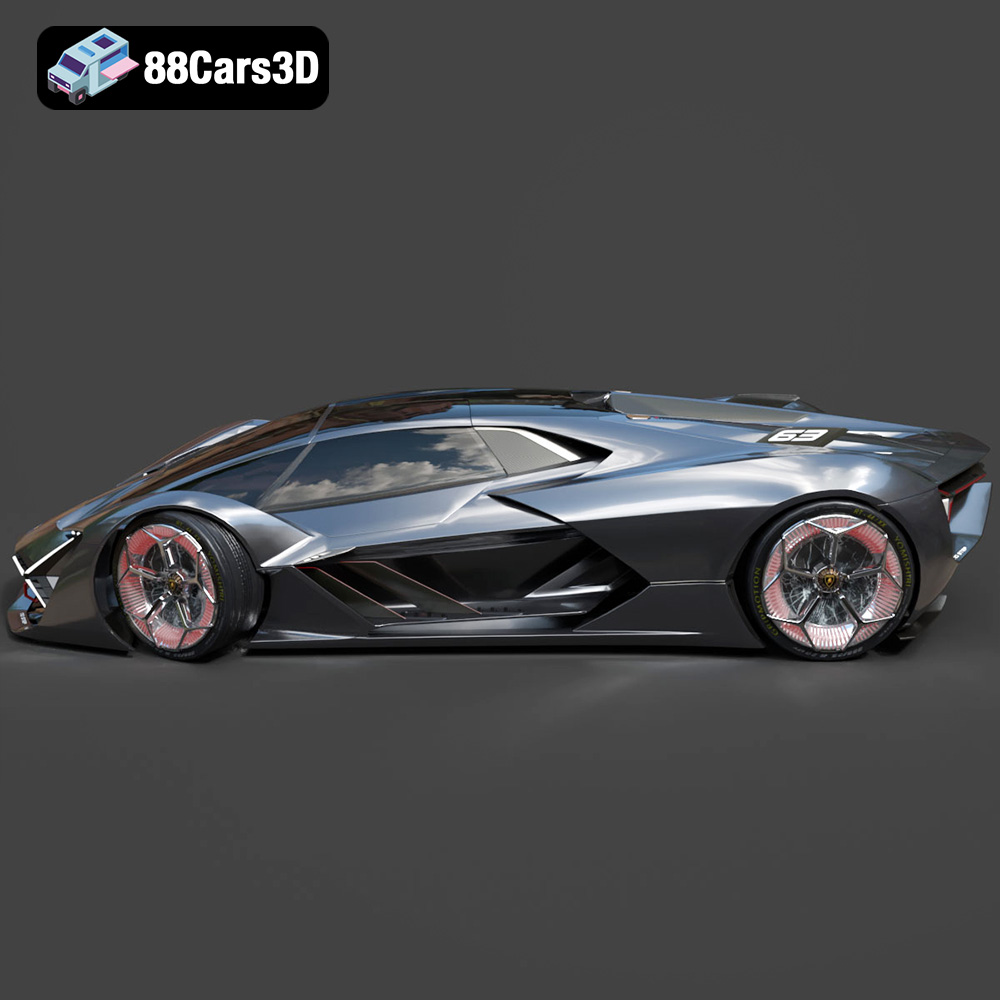
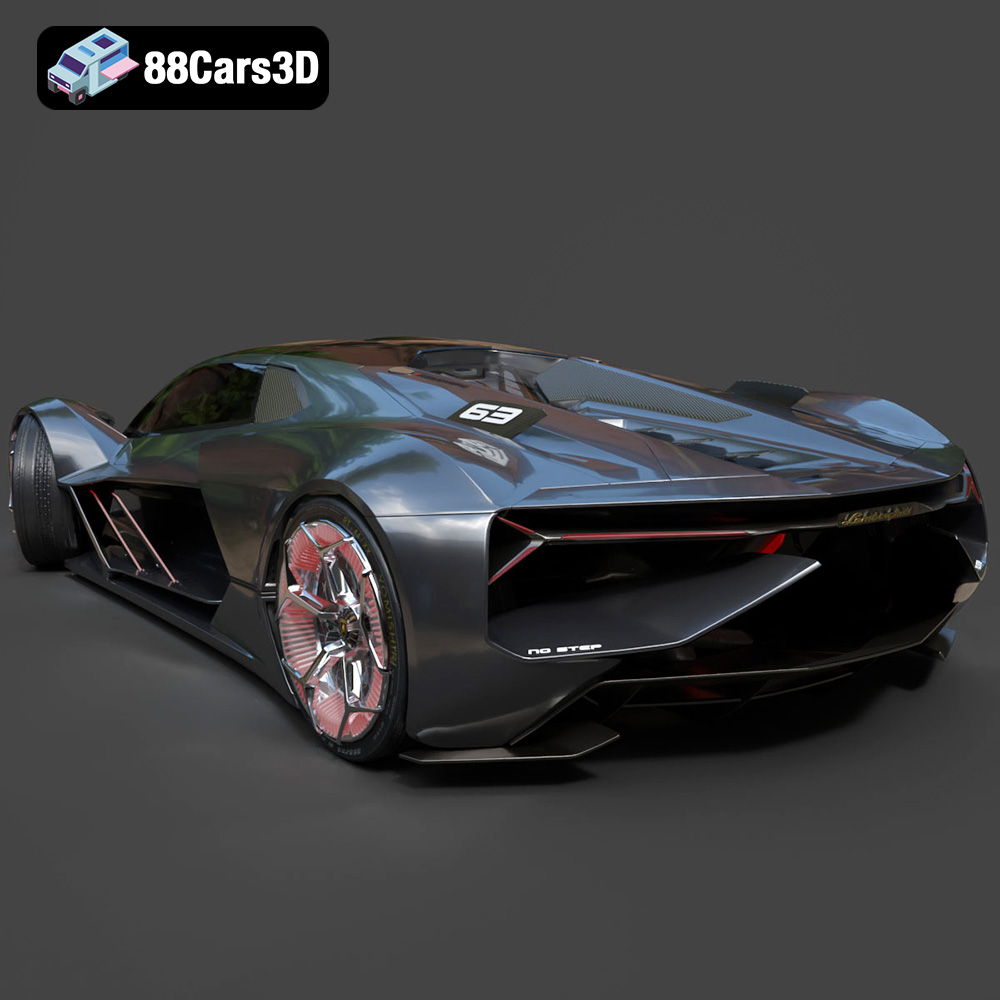
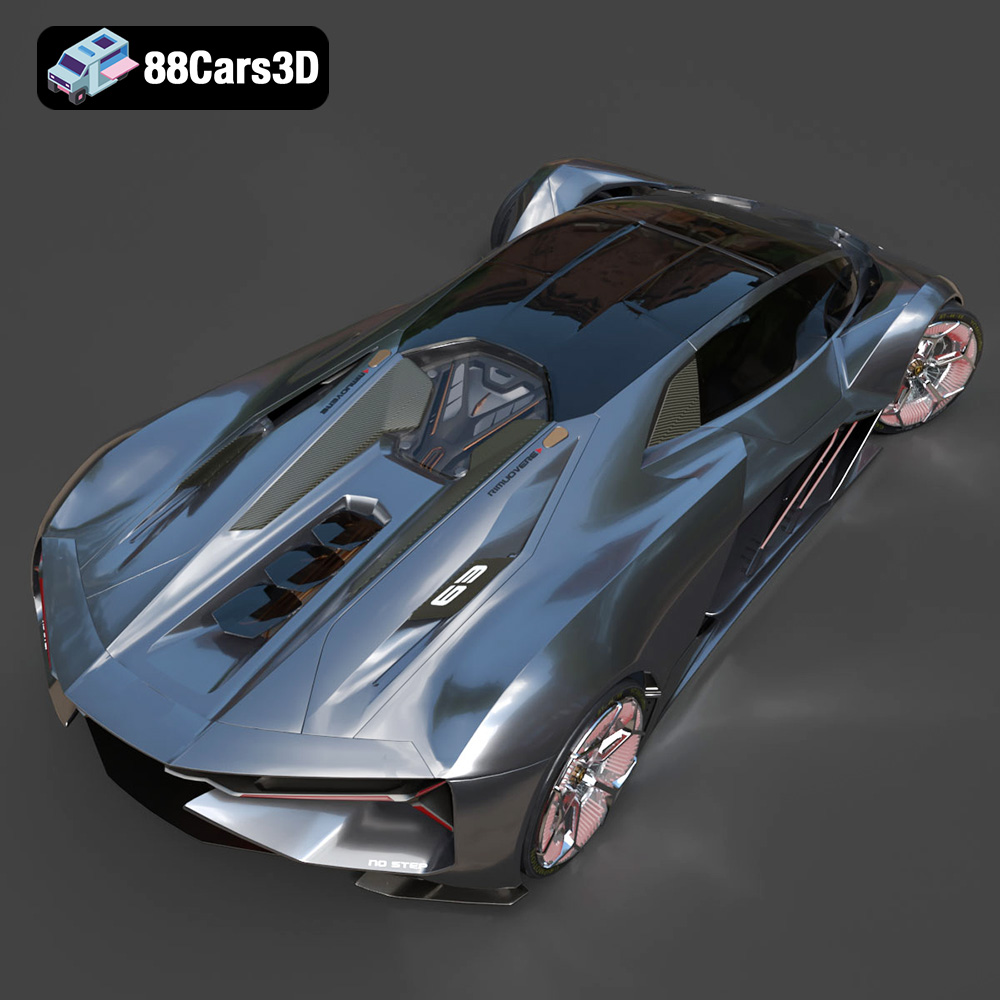
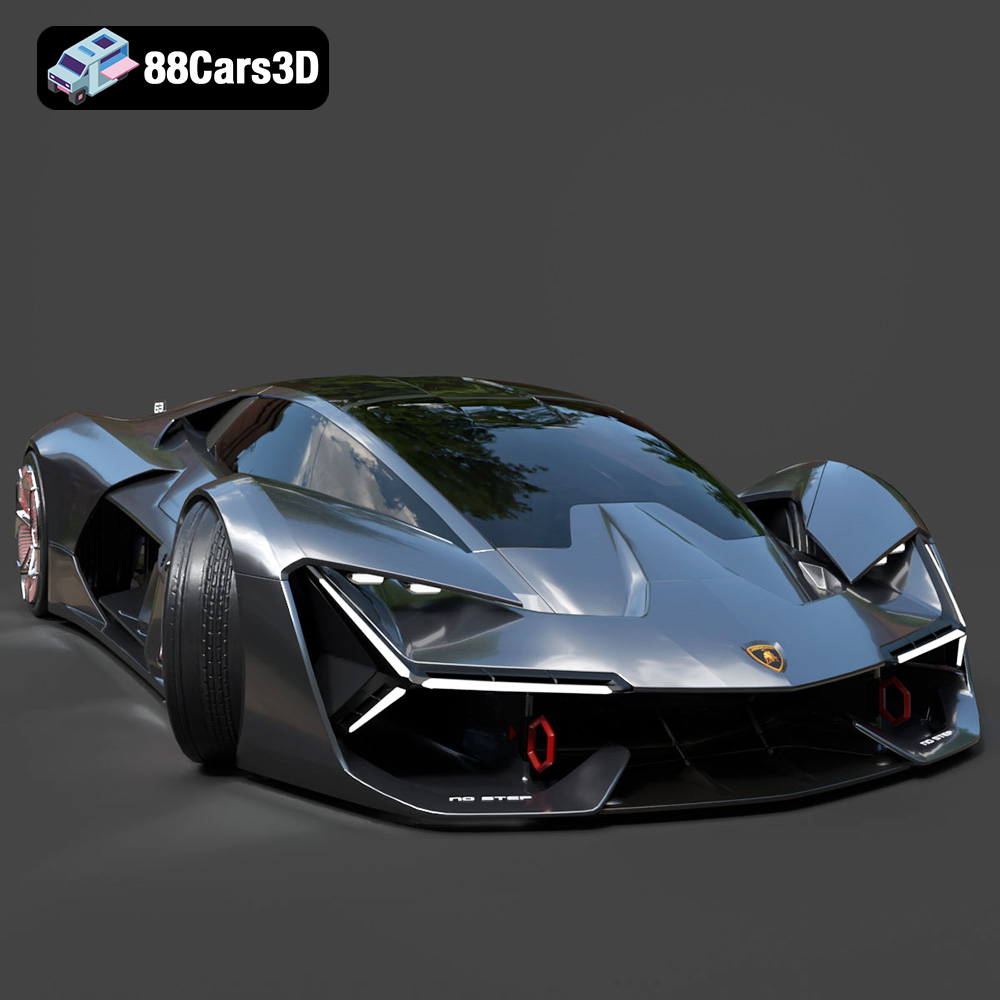
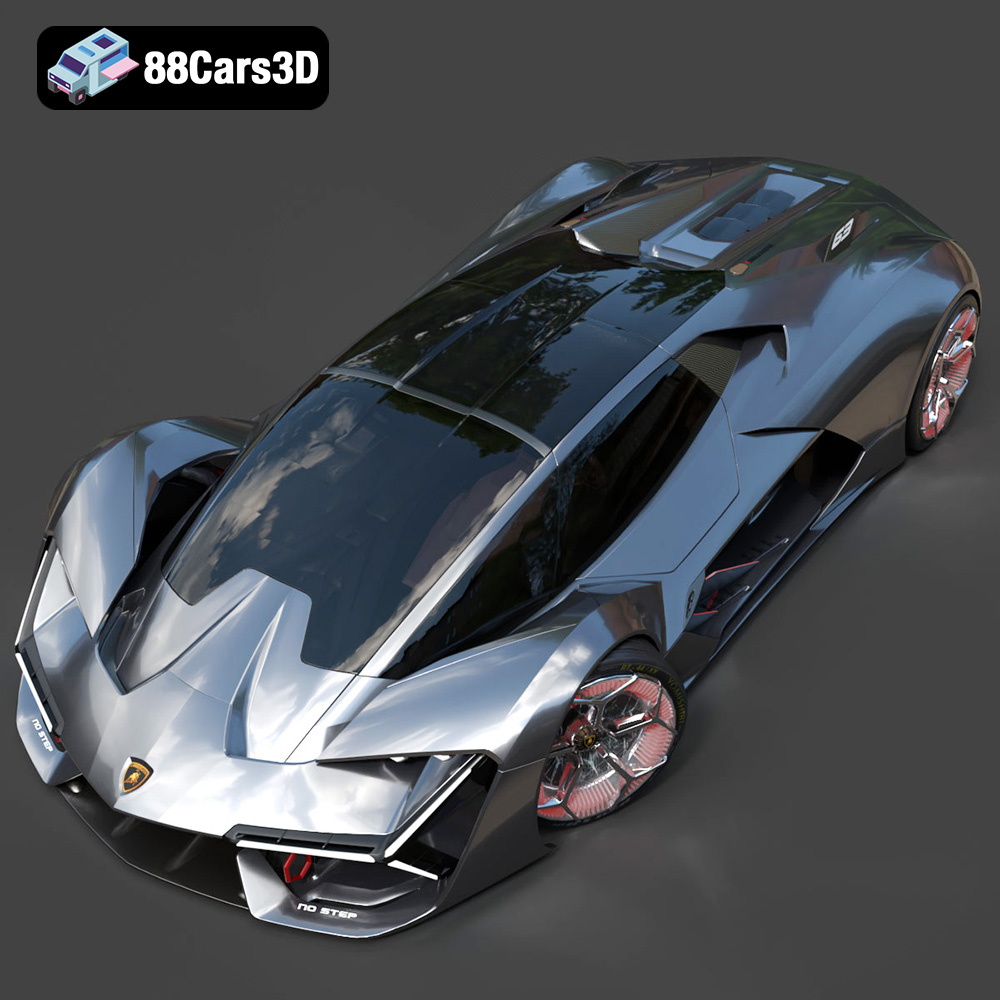
The core of the Terzo Millenio’s identity lies in its hyper-aerodynamic, aggressive carbon-fiber monocoque. The 3D model accurately replicates these features, from the massive air channels sculpted directly into the bodywork – designed to generate unprecedented downforce – to the glowing LED Y-shaped signature headlights that define its futuristic face. Every curve, vent, and exposed active aerodynamic element is meticulously recreated, providing a faithful representation of the original concept. The model even includes detailed in-wheel electric motor representations and an aggressive rear diffuser, making it suitable for close-up renders and detailed technical visualizations. The concept wheels with aerodynamic covers and low-profile tires further emphasize its performance pedigree.
Stepping into the digital cockpit of the Terzo Millenio reveals an equally innovative design. The 3D model features futuristic two-seater racing shell seats, an F1-style racing steering yoke, and a minimalist digital instrument cluster with HUD details. Integrated control pedals and driving mode selectors complete the experience. The optimized geometry for first-person POV makes this model particularly valuable for immersive experiences in gaming or VR. Every component is crafted to enhance the feeling of being in a truly next-generation vehicle, offering a detailed and believable interior environment for digital users.
In today’s interactive digital landscape, raw visual fidelity isn’t enough; performance is paramount. A 3D car model needs to strike a delicate balance between graphical richness and computational efficiency, especially when deployed in real-time environments like video games or AR/VR applications. The Lamborghini Terzo Millenio 2017 3D Model is engineered precisely with this balance in mind.
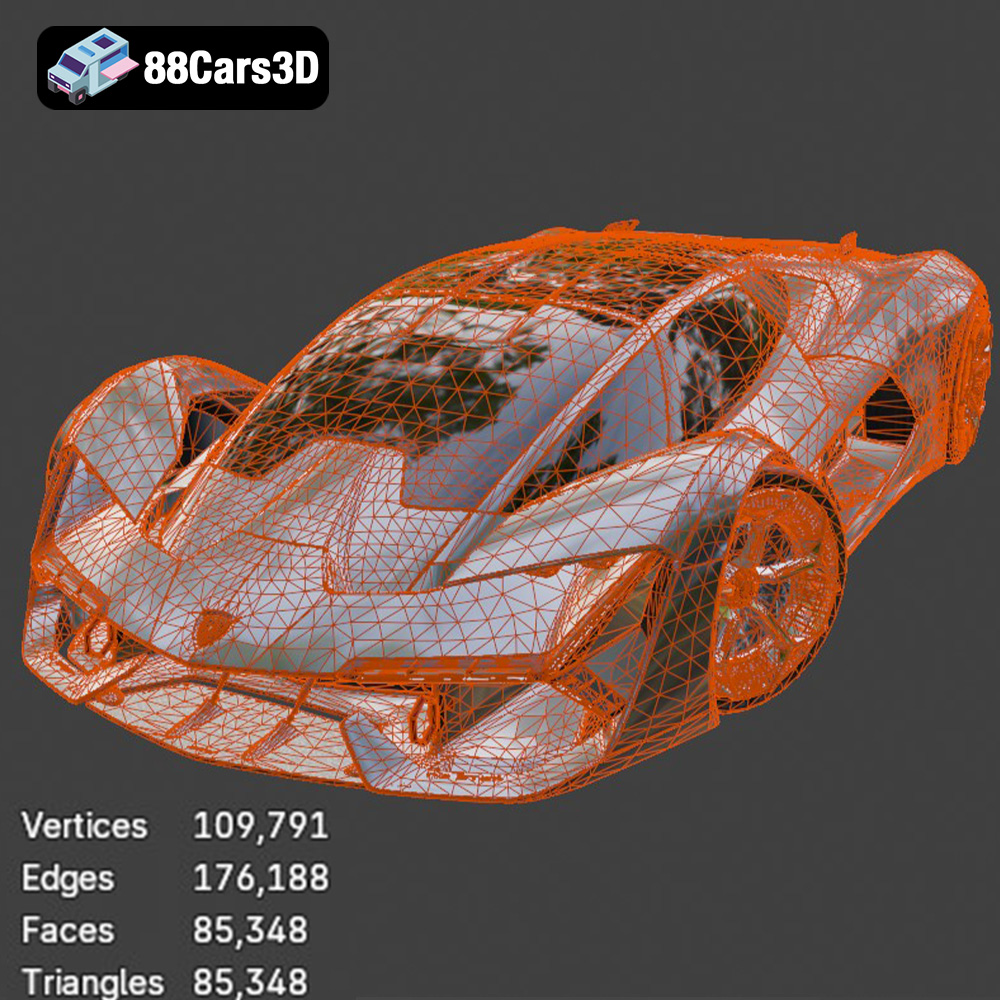
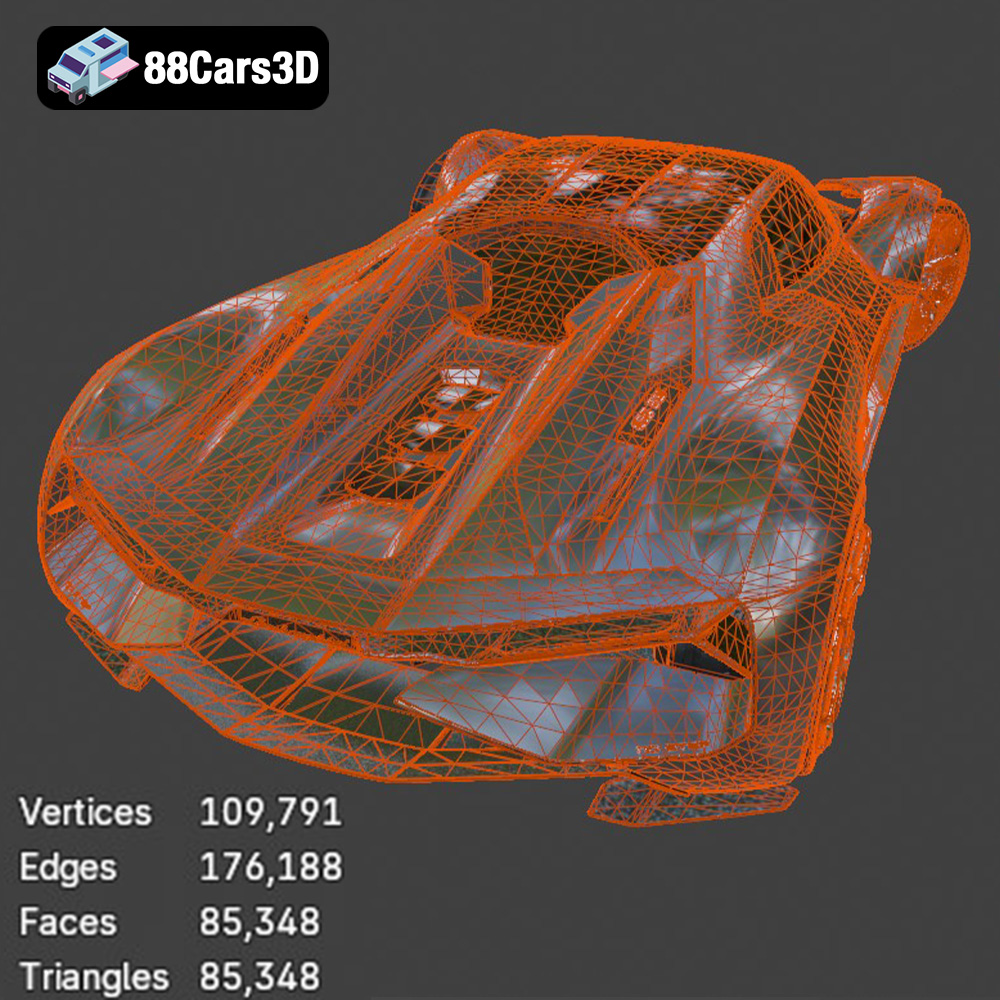
One of the most critical technical specifications for a real-time asset is its polygon count. The Terzo Millenio model boasts approximately 350,000 triangles. This figure represents a sweet spot: it’s high enough to maintain exceptional visual realism and capture the complex, radical geometry of the concept car, preventing a “low-poly” appearance. At the same time, it’s optimized enough to ensure smooth frame rates in demanding real-time engines such as Unreal Engine and Unity. This careful optimization avoids unnecessary geometry while preserving the integrity of the design, making it fully game-ready without sacrificing visual impact. Furthermore, its real-world scale accuracy, based on actual vehicle chassis dimensions, ensures seamless integration into larger digital environments without scaling issues.
Beyond polycount, proper setup is vital for any game asset. This model features proper pivot setup for crucial animated components like steering, wheel rotation, and suspension travel. These pre-configured pivots significantly reduce the development time for game designers and animators, allowing for quick implementation of realistic vehicle dynamics. The separate wheels, suspension, and steering components are ready for independent animation, offering full control over vehicle movement and interaction. With compatibility across major 3D software platforms and real-time rendering engines, this Lamborghini Terzo Millenio 3D model is a robust foundation for open-world games, racing titles, and high-fidelity simulators, allowing developers to focus on gameplay mechanics rather than extensive asset preparation.
While game development often drives innovation in 3D asset optimization, the utility of high-quality 3D car models extends far beyond interactive entertainment. The Lamborghini Terzo Millenio 2017 3D Model demonstrates remarkable versatility, making it an invaluable asset for a broad spectrum of professional applications.
Augmented Reality (AR) and Virtual Reality (VR) are transforming how we interact with digital content, offering immersive experiences that blur the lines between the real and virtual. For automotive brands and enthusiasts, this means virtual showrooms, interactive configurators, and mobile AR experiences where users can “place” a hypercar like the Terzo Millenio in their driveway. The model’s optimized geometry and inclusion of formats like .glb make it perfect for these applications. Its fidelity ensures a convincing visual presence, while its optimization guarantees smooth performance even on mobile AR devices. Imagine a potential customer exploring every angle of this futuristic vehicle, opening doors, and even sitting inside virtually – all powered by a precisely engineered 3D asset from 88cars3d.com.
For advertising, marketing, and architectural visualization, high-end rendering is crucial. The Lamborghini Terzo Millenio model excels in this domain, providing an excellent foundation for brand campaigns, lifestyle scenes, and studio lighting setups. Its exceptional topology and material readiness mean artists can achieve photorealistic results with minimal effort. Whether it’s showcasing the vehicle in a dramatic urban landscape, a sleek studio environment, or an abstract sci-fi setting, the model’s detailed geometry and accurate proportions allow for breathtaking cinematic renders. Renderers can leverage the detailed exterior and interior to create compelling visuals that highlight the car’s innovative design and luxurious appeal, pushing the boundaries of automotive visualization.
The journey of a 3D model doesn’t always end on a screen. For many, the ultimate goal is to bridge the digital and physical realms through 3D printing. The Lamborghini Terzo Millenio 2017 3D Model is designed with this in mind, offering a detailed and structurally sound basis for creating physical replicas.
Converting the highly detailed digital model into a tangible object requires careful consideration of 3D print settings. The recommended scales (1:12, 1:18, 1:24) offer a balance between detail preservation and manageable print size. For capturing the intricate details of the Terzo Millenio, such as its complex aerodynamic channels and Y-shaped headlights, resin printing is highly recommended due to its ability to achieve finer layer heights (0.04–0.12 mm) compared to FDM printers. While FDM is possible, resin will yield a superior finish. Important structural considerations include a wall thickness of 1.2–2.0 mm for durability and an infill of 20–30% for balance between strength and material usage. Supports are required for delicate parts like exhaust vents, mirrors, and specific underbody components, ensuring structural integrity during the printing process.
Successful 3D printing is often followed by meticulous post-processing to achieve a professional finish. For the Terzo Millenio model, print orientation is key; printing the main frame angled can enhance structural integrity and minimize support marks in visible areas. Wheels are typically printed separately for optimal detail. After printing, steps like sanding, priming, and painting are essential. To achieve an authentic look, applying factory colors with metallic finishes can truly bring the model to life, replicating Lamborghini’s signature aesthetic. This process transforms a digital file into a display-scale collectible, perfect for hobbyists or as a unique desk ornament celebrating automotive design.
Professional 3D artists and studios rarely use assets exactly as they are downloaded. The ability to customize and integrate a 3D model seamlessly into an existing workflow is paramount. The Lamborghini Terzo Millenio 3D Model offers robust features that cater to advanced customization and flexible integration within various production pipelines.
The model’s structure is designed for easy modification. Users can effortlessly change body and tank colors, applying anything from authentic factory hues to custom, vibrant finishes or even experimental material variations like matte, gloss, or metallic looks. This flexibility extends to tire textures, allowing for quick swaps between street variants for sleek renders and off-road textures for more adventurous game scenarios. The underlying UV mapping is clean and optimized, ensuring that custom textures and decals can be applied without distortion, a critical feature for branding or specific project themes. Lighting adaptability is also a significant advantage; the model’s materials respond well to different environmental lighting setups, enabling artists to create diverse moods and atmospheres, from a sun-drenched showroom to a neon-lit cyberpunk street.
With included file formats like `.blend` for Blender and `.max` for 3ds Max, professionals have direct access to the model’s native project files. This isn’t just about simple tweaks; it allows for deep integration. Animators can leverage the separate components (wheels, suspension, steering) to create complex, realistic vehicle animations for cinematics or interactive demonstrations. For those needing to integrate the model into a larger scene, the organized hierarchy within these native files facilitates quick scene assembly and rendering optimization. Experienced users can even delve into the model’s topology, making minor adjustments for extreme close-ups or optimizing it further for niche performance requirements, ensuring the Lamborghini Terzo Millenio is not just an asset, but a flexible toolkit for endless creative possibilities.
The world of 3D modeling continues to evolve, empowering creators across industries to bring their most ambitious visions to life. From the captivating realism required for automotive rendering and visualization to the intricate optimizations demanded by game assets and immersive AR/VR experiences, the foundation of any successful project lies in the quality of its 3D models. The Lamborghini Terzo Millenio 2017 3D Model stands as a prime example of such excellence, meticulously crafted to meet the diverse and stringent demands of professional workflows.
Its balanced polycount, detailed features, versatile file formats, and game-ready optimization make it an invaluable asset for developers, designers, and enthusiasts alike. Whether you’re animating futuristic racing sequences in Unreal, crafting a stunning marketing visual in 3ds Max, or bringing a scaled replica to life through 3D printing, this model provides the technical precision and aesthetic fidelity needed to excel. By understanding the nuances of 3D model formats and the specific advantages offered by a premium asset like the Terzo Millenio, you unlock a realm of creative possibilities. Explore this and other exceptional 3D car models at 88cars3d.com, and drive your digital projects into the future.
The Lamborghini Terzo Millenio is a futuristic electric concept car representing the pinnacle of hypercar design and innovation. Developed in collaboration with MIT, this visionary masterpiece features an ultra-aerodynamic, aggressive carbon-fiber monocoque, glowing LED Y-shaped signature headlights, and exposed active aerodynamic elements. Its design is characterized by extreme, low-slung proportions and massive air channels sculpted directly into the bodywork to generate unprecedented downforce.
This meticulously crafted 3D model features exceptional topology and an optimized triangle count, ensuring it is fully game-ready without sacrificing visual fidelity. The model captures the complex, radical geometry of the concept car, making it the perfect asset for high-end rendering, interactive configurators, and real-time engines.
Perfect for futuristic racing games, high-end automotive visualizations, sci-fi cyberpunk environments, and virtual reality showrooms.
.blend, .fbx, .obj, .glb, .stl, .ply, .unreal, .max
Tags:
lamborghini, terzo-millenio, hypercar, concept-car, electric-car, supercar, game-ready, low-poly, optimized, car-3d-model, game-asset, rendering, vr-ar, blend, fbx, obj, glb, stl, ply, unreal, maxMercedes Benz CLS 500 3D Model 3D Printable STL
$19.99
.blend
.fbx
.glb
.hypercar
.lamborghini
.max
.obj
.ply
.rendering
.stl
.supercar
.unreal
car-3d-model
concept-car
electric-car
game asset
game-ready
low-poly
optimized
terzo-millenio
VR/AR