Get 20% OFF All Premium 3D & STL Models!

In the fast-evolving landscape of digital content creation, the demand for realism and precision is paramount. From breathtaking cinematic sequences and immersive game worlds to accurate architectural visualizations and cutting-edge AR/VR experiences, the quality of 3D assets directly impacts the final output. Among these, meticulously crafted 3D car models stand out as critical components, often serving as focal points that demand impeccable detail and optimized performance. These aren’t just decorative elements; they are complex digital blueprints that bring virtual environments to life, influence user perception, and convey a strong sense of authenticity.
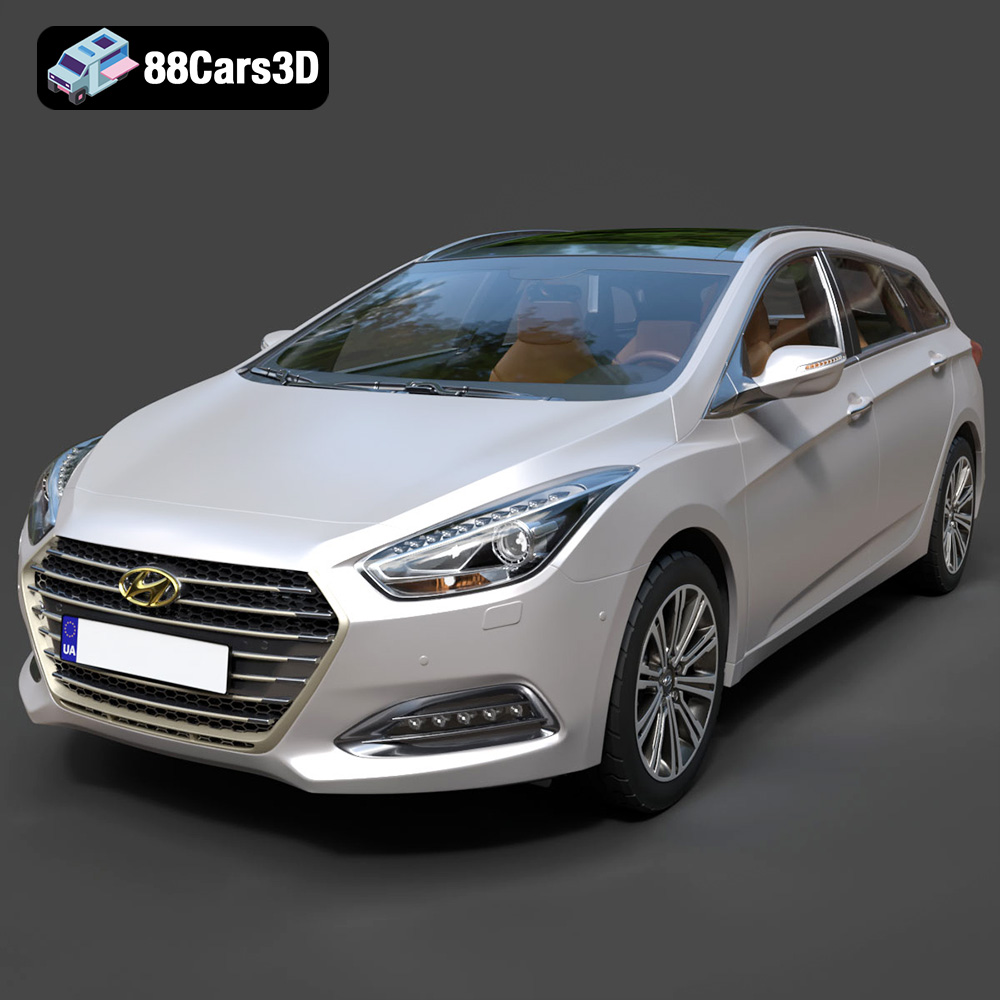
Imagine a scene where a sleek vehicle glides through a bustling city street, or a virtual showroom where customers can explore every angle of their dream car. The success of such a vision hinges on the underlying 3D model. It must perfectly capture the essence of its real-world counterpart, boasting accurate proportions, intricate surface details, and robust technical foundations. This level of quality is precisely what creators seek, and it’s embodied beautifully by assets like the Hyundai i40 Wagon 2015 3D Model. This particular model, available at 88cars3d.com, is a prime example of a professional-grade asset designed to meet the rigorous demands of various industries, providing a versatile and true-to-life representation of the popular estate vehicle, ready to elevate any project.
The pursuit of realism in 3D visualization is an endless journey, and 3D car models are often at the forefront of this quest. A premium model is not merely a collection of polygons; it’s a carefully engineered digital replica that requires extensive artistic skill and technical expertise. When selecting assets for a project, creators must prioritize models that offer clean geometry, accurate materials, and efficient optimization, ensuring they integrate seamlessly into complex pipelines without compromising performance or visual integrity.
For automotive design studios, marketing agencies, and product configurators, a 3D car model is the ultimate tool for showcasing vehicles before physical prototypes even exist. High-fidelity models allow for photorealistic rendering, enabling designers to explore variations in color, material, and trim with unprecedented speed and accuracy. The Hyundai i40 Wagon 2015 3D Model, with its “sleek contours and practical elegance,” provides a digital canvas for such detailed examinations. Every curve, every panel gap, and every light fixture must be precisely modeled to convey the designer’s intent and evoke the desired emotional response from viewers. Imperfections in a car model are far more noticeable than in other assets, as viewers are generally familiar with real vehicles.
Beyond static renders, the demand for 3D car models in real-time applications like video games, interactive simulations, and AR/VR experiences is immense. In these environments, performance is critical. Models must be optimized for efficient rendering, often requiring multiple levels of detail (LODs) to maintain smooth frame rates without sacrificing visual quality at close range. This involves intelligent polygon reduction, efficient UV layouts, and PBR (Physically Based Rendering) material setups that are both visually stunning and computationally lightweight. The Hyundai i40 Wagon 2015 3D Model is described as having “optimized performance,” indicating it’s structured to deliver an uncompromising visual experience while remaining suitable for dynamic interactive simulations.
Marketplaces like 88cars3d.com play a crucial role in providing access to such professional-grade assets. They curate collections of models that adhere to industry best practices, saving artists and developers countless hours of modeling and texturing from scratch. When you acquire a model from a reputable source, you’re not just buying geometry; you’re investing in quality assurance, technical correctness, and a head start on your project, ensuring your creative vision can be realized with efficiency and excellence.
The versatility of a 3D car model is often defined by the range of file formats it supports. Each format is designed with specific use cases and software ecosystems in mind, offering unique advantages for different stages of a production pipeline. Understanding these formats is crucial for any 3D professional to ensure smooth interoperability and optimal results. The Hyundai i40 Wagon 2015 3D Model is provided in a comprehensive suite of formats, guaranteeing maximum compatibility.
The .blend format is Blender’s native file type. It’s a complete package, capable of storing not just the mesh data but also materials, textures, lighting setups, animations, physics simulations, and even scene organization. For artists working primarily in Blender, this format offers the most flexibility. When you download a .blend file like that for the Hyundai i40 Wagon 2015, you get a fully editable scene, allowing you to tweak every aspect from the ground up—adjusting shaders, reorganizing scene collections, or even modifying the mesh itself. This format is ideal for artists who want to render directly within Blender using Cycles or Eevee, or for those who need to integrate the model into a larger Blender-based project with minimal setup time.
The .fbx (Filmbox) format, originally developed by Kaydara and now owned by Autodesk, has become an industry-standard for exchanging 3D data between different software applications and game engines. It supports not only geometry but also materials, textures, animations, skinning, and camera data. This makes .fbx incredibly versatile for real-time pipelines, particularly with game engines like Unreal Engine and Unity. When a model like the Hyundai i40 Wagon 2015 is provided as .fbx, it’s typically “game-engine ready,” meaning it’s been optimized for efficient import and performance.
The .obj (Wavefront OBJ) format is one of the oldest and most widely supported 3D formats. It’s a universal standard for cross-software compatibility, primarily storing geometric data (vertices, normals, texture coordinates, and faces). While it supports basic material information via an accompanying .mtl file, it doesn’t carry animation or advanced scene data. Its strength lies in its simplicity and ubiquity, making it an excellent choice for transferring mesh data between virtually any 3D software application for modeling, sculpting, or rendering. If you need a clean mesh to start with in a new environment, .obj is a reliable choice.
The .glb (GL Transmission Format Binary) is a relatively newer format gaining traction, especially for web-based 3D, AR (Augmented Reality), and VR (Virtual Reality) applications. It’s a binary version of the .gltf format, which means all assets (geometry, textures, animations) are bundled into a single, self-contained file. This makes .glb extremely efficient for transmission over networks and optimized for quick loading in browser-based viewers, mobile AR apps, and lightweight VR experiences. Its compact size and ease of deployment make it perfect for showcasing models like the Hyundai i40 Wagon 2015 directly on a website or in an interactive AR product viewer.
The .unreal designation typically refers to assets that are either specifically packaged for direct import into Unreal Engine projects or have been pre-configured within Unreal Engine itself. This might mean the model has already been imported, its materials set up, collision meshes generated, and LODs configured within an Unreal project structure. For developers working with Unreal Engine, an .unreal asset can be a massive time-saver, bypassing the tedious initial setup phase and allowing for immediate integration into real-time environments.
The .stl (Stereolithography) format is the de facto standard for 3D printing. It represents a 3D model as a series of connected triangles, describing only the surface geometry of an object without color, texture, or other CAD attributes. While simple, its universal acceptance by 3D printers and slicer software makes it indispensable for physical prototyping or creating scale models of the Hyundai i40 Wagon 2015.
The .ply (Polygon File Format or Stanford Triangle Format) is a precision mesh format used to store 3D data, often from 3D scanners. It can store a wide range of properties beyond geometry, including color, transparency, surface normals, and even confidence values. While less common for general 3D asset exchange, it’s invaluable for scientific visualization, CAD analysis, or when dealing with highly accurate scanned data where preserving fine details and additional per-vertex information is crucial.
Finally, the .max format is the native file type for Autodesk 3ds Max, one of the most powerful and widely used 3D software packages for architectural visualization, game development, and animation. Similar to .blend files, .max files contain the entire scene data—geometry, materials, textures, lighting, cameras, animation, and complex modifiers. For professionals entrenched in the 3ds Max ecosystem, acquiring the Hyundai i40 Wagon 2015 in .max format means gaining full access to an editable project, ready for high-end rendering with engines like V-Ray or Corona, or for integration into complex animation sequences. This provides the highest level of control for detailed customization and professional output.
The true value of a versatile 3D asset like the Hyundai i40 Wagon 2015 3D Model lies in its adaptability across various professional applications. Its clean geometry and realistic materials make it a cornerstone for diverse projects.
For automotive marketing and advertising, photorealistic renders are essential. Agencies often use 3D models to create stunning visuals for brochures, online campaigns, and television commercials. Using the .max or .blend files for the Hyundai i40 Wagon 2015, artists can import the model into their preferred rendering software (e.g., 3ds Max with V-Ray/Corona, Blender with Cycles) and set up studio lighting, realistic environments, and intricate camera angles. They can simulate different paint finishes, rim options, and interior details, generating countless variations without the need for expensive photoshoots of physical vehicles. The precise contours of the Hyundai i40 Wagon 2015 allow for dynamic reflections and highlights that are crucial for conveying a premium feel.
Game developers require highly optimized assets that maintain visual fidelity while running smoothly in real-time. The .fbx and .unreal formats of the Hyundai i40 Wagon 2015 3D Model are ideal here. Developers can import the model into Unreal Engine or Unity, setting up collision meshes, adjusting material instances for performance, and even creating multiple Levels of Detail (LODs) to ensure the game runs efficiently across various hardware configurations. This model could serve as a drivable vehicle in an open-world game, a static prop in a racing simulator’s environment, or a customizable asset in a virtual showroom experience where players can inspect the car’s features up close.
In architectural visualization (ArchViz), vehicles are often used to populate scenes, adding scale, realism, and a sense of life to proposed buildings and urban landscapes. The Hyundai i40 Wagon 2015, being a common sight, is perfect for contextualizing renders of new housing developments, commercial complexes, or street scenes. Architects and planners can use the .obj or .max formats to integrate the model into their scene (e.g., in 3ds Max, SketchUp, or Lumion), instantly adding a touch of everyday realism that helps clients visualize the finished project. It helps ground the scene and gives viewers an immediate sense of scale and proportion.
The burgeoning fields of Augmented Reality (AR) and Virtual Reality (VR) demand lightweight yet detailed models for immersive experiences. The .glb format of the Hyundai i40 Wagon 2015 3D Model is perfectly suited for AR applications on mobile devices or interactive VR showrooms. Imagine an AR app that lets you place the i40 Wagon in your driveway, or a VR training simulation for car sales where the trainee can walk around and interact with the virtual vehicle. The optimized nature of the .glb file ensures these experiences are smooth, responsive, and visually engaging, providing a true-to-life automotive presence in a digital overlay or fully virtual world.
What truly elevates a 3D car model from a mere prop to a professional-grade asset are the underlying technical specifications and meticulous attention to detail during its creation. The Hyundai i40 Wagon 2015 3D Model exemplifies these qualities.
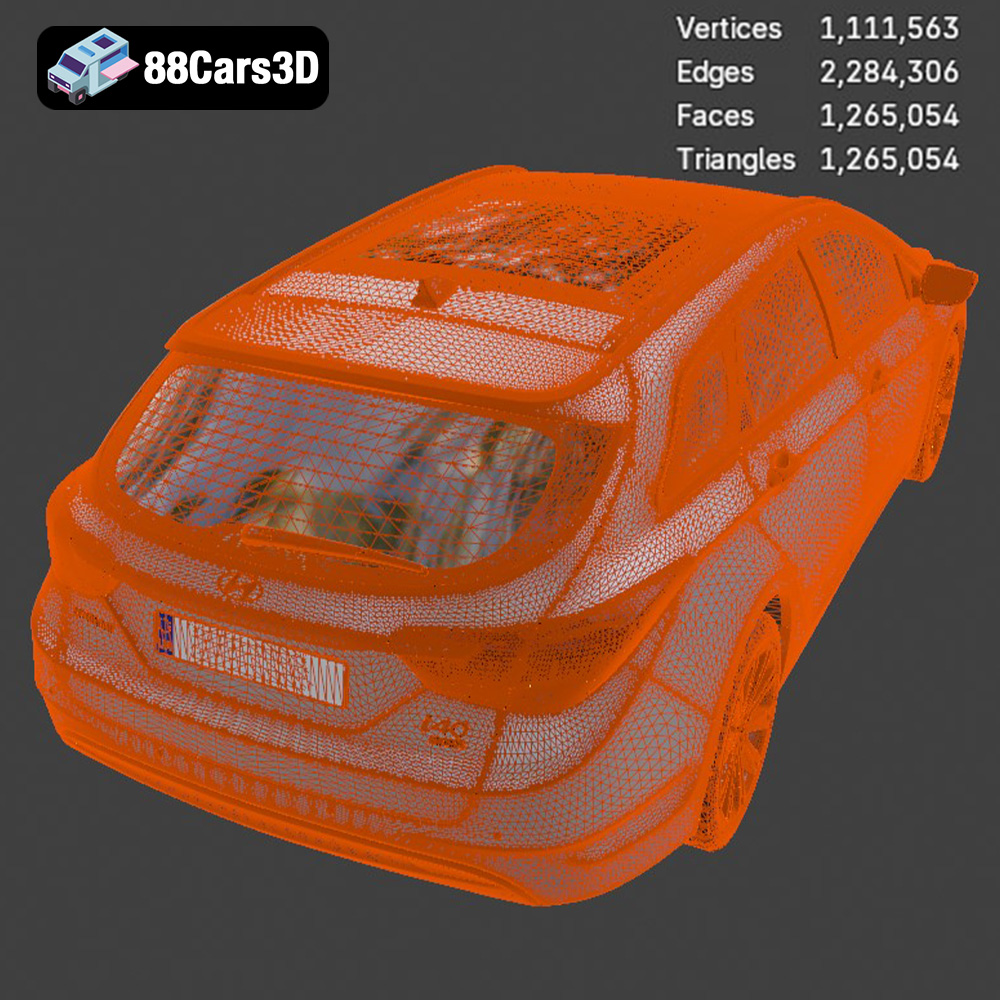
A premium 3D car model boasts clean, quad-based geometry, free from n-gons or excessive triangulation (unless for specific, optimized purposes). This clean topology is crucial for smooth subdivision, deformation, and general editing. While a high-resolution model for cinematic renders might have 150,000 to 250,000 polygons or even more for extreme close-ups, an optimized game asset would feature a significantly lower poly count, perhaps 50,000-80,000 for the main body, with additional polygons for wheels and interior. The “clean geometry” of the Hyundai i40 Wagon 2015 implies that its mesh is well-structured, allowing for easy manipulation and consistent shading without artifacts, regardless of the target application. Essential details like panel gaps, headlight housing, and intricate grille patterns should be accurately modeled rather than faked with normal maps, especially for high-detail renders.
Modern rendering demands Physically Based Rendering (PBR) materials, which accurately simulate how light interacts with surfaces in the real world. A professional 3D car model will include a suite of PBR textures:
These maps, meticulously crafted for the Hyundai i40 Wagon 2015, contribute to the “realistic materials” that ensure it looks authentic under various lighting conditions, whether in a dark studio render or a bright outdoor scene.
Effective UV mapping is just as critical as geometry. UVs are 2D coordinates that tell a 3D renderer how to apply a 2D texture onto a 3D model’s surface. A high-quality model will feature clean, non-overlapping UV layouts that maximize texture resolution and minimize distortion. Different parts of the car (body, windows, tires, interior elements) will often have their own UV maps or be organized into efficient UV islands on a single map. This ensures that textures—from the metallic sheen of the paint to the subtle texture of the tire rubber—are displayed accurately and with high fidelity. The “meticulously detailed exterior” and “well-proportioned dimensions” of the Hyundai i40 Wagon 2015 confirm that such care has been taken, allowing for professional texturing and shading workflows.
The practical applications of high-quality 3D car models are incredibly diverse, spanning numerous industries and creative endeavors. Let’s explore a few scenarios where assets like the Hyundai i40 Wagon 2015 3D Model prove invaluable.
In film and television, 3D car models are routinely used for visual effects (VFX) shots, whether it’s for digital doubles of real cars in dangerous scenes, custom modifications that would be impossible or too costly to achieve physically, or entirely CG sequences. A prime example would be using the Hyundai i40 Wagon 2015 to populate a virtual city street in a chase scene, or even creating an entirely digital advertisement showing the car performing stunts. VFX artists utilize the .max or .blend files for maximum control, integrating the model into complex scene graphs, applying advanced destruction effects, or animating precise mechanical movements, ensuring seamless integration with live-action footage.
Beyond entertainment, 3D car models are fundamental to professional driving simulators used for driver training, automotive research, and even autonomous vehicle development. These simulators require incredibly accurate vehicle dynamics and visual representations. The Hyundai i40 Wagon 2015, provided in game-engine ready formats like .fbx or .unreal, can be integrated into such a simulator, allowing for realistic handling characteristics and visual feedback during training exercises. This helps drivers practice various scenarios, from everyday commuting to emergency maneuvers, in a safe and controlled virtual environment, all while experiencing the precise visual characteristics of the actual vehicle.
Online car configurators have become a standard feature on automotive manufacturer websites, allowing potential buyers to customize vehicles and see them rendered in real-time. Similarly, e-commerce platforms increasingly use interactive 3D viewers to showcase products. The .glb format of the Hyundai i40 Wagon 2015 is perfect for this. Companies can integrate this optimized model into their web pages, enabling customers to rotate the car, zoom in on details, and even change colors or wheel types interactively in their browser. This significantly enhances the online shopping experience, providing a much richer understanding of the product than static images alone, and bridging the gap between digital presence and real-world purchasing decisions.
The role of high-quality 3D car models in today’s digital landscape cannot be overstated. They are the backbone of photorealistic renderings, engaging interactive experiences, and crucial development tools across industries. Whether you’re an automotive designer striving for precision, a game developer building immersive worlds, or an architect populating a scene, the demand for assets that combine visual fidelity with technical optimization is constant.
The Hyundai i40 Wagon 2015 3D Model stands as an exemplary product, meticulously crafted to meet these diverse and demanding requirements. Its availability in a comprehensive range of file formats—from editable native Blender and 3ds Max scenes to game-engine ready .fbx and .unreal files, and web-optimized .glb—ensures it fits seamlessly into any professional workflow. At 88cars3d.com, creators can find a curated selection of such premium 3D car models, empowering them to bring their most ambitious visions to life with confidence and unparalleled realism. Investing in such a high-quality asset is not just a purchase; it’s an investment in efficiency, quality, and the ultimate success of your digital projects.
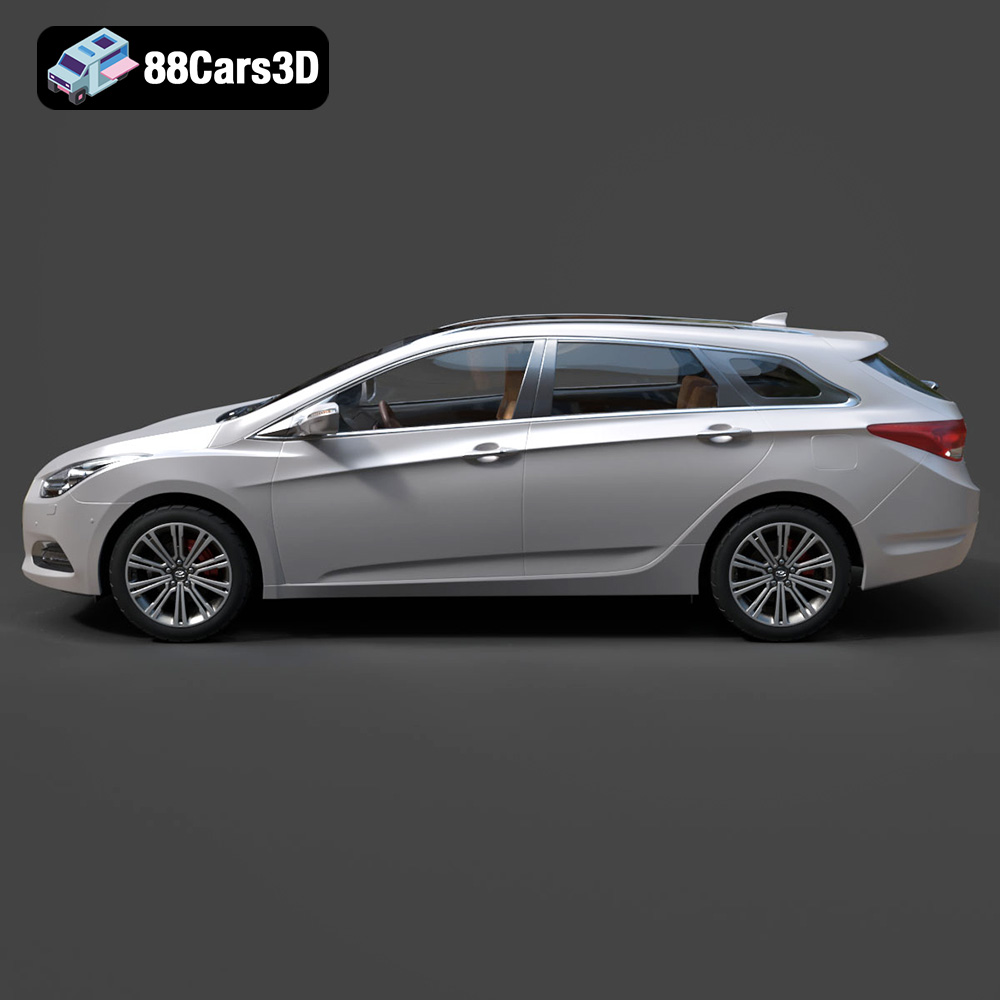
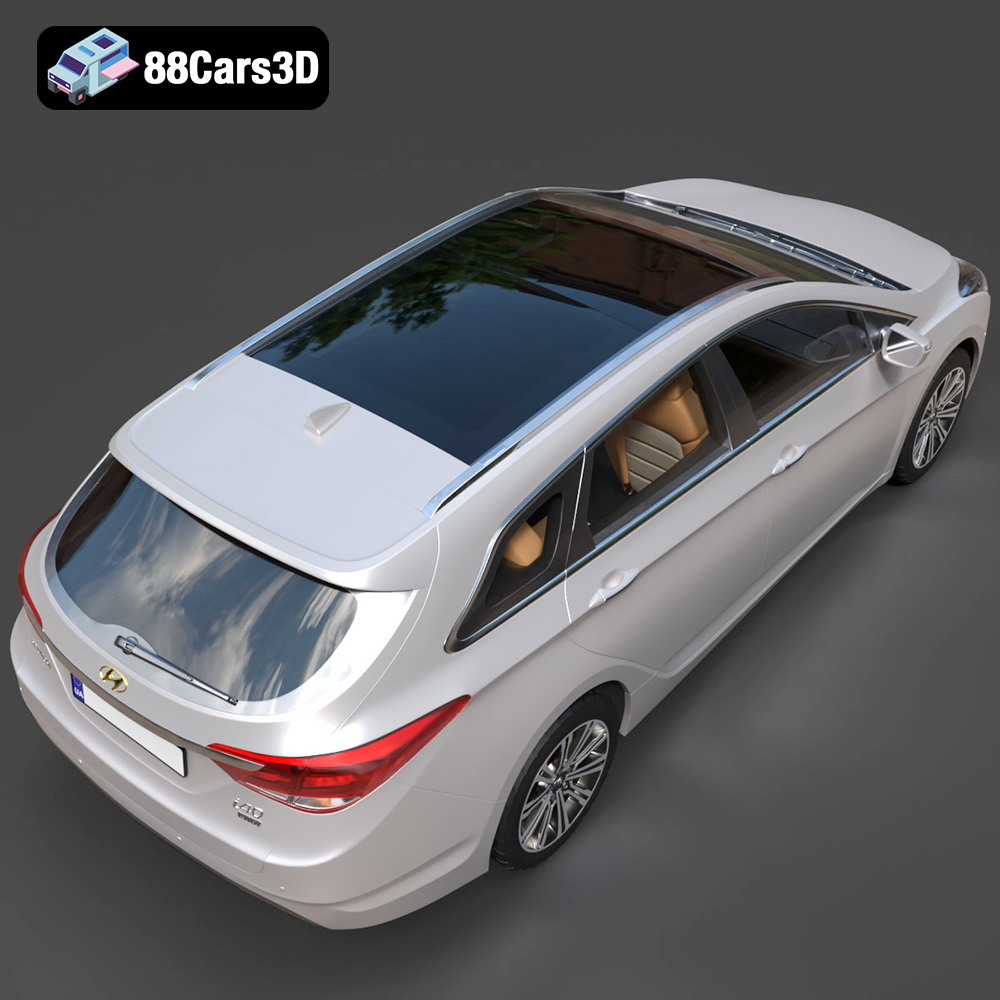
Experience true-to-life automotive design with the Hyundai i40 Wagon 2015 3D Model. Carefully crafted to represent the sleek contours and practical elegance of this popular estate vehicle, this digital asset delivers exceptional realism for any demanding project.Constructed with professional precision, the model features clean geometry and realistic materials. The meticulously detailed exterior and well-proportioned dimensions ensure seamless integration into digital environments, offering an uncompromising visual experience while maintaining optimized performance.Perfectly suited for a wide range of professional applications, this vehicle asset is ideal for game development, cinematic rendering, architectural visualization, and immersive AR/VR experiences. Whether deployed in dynamic interactive simulations or static professional renders, its versatile design meets the rigorous standards of 3D artists and developers.Available in a comprehensive suite of file formats to guarantee compatibility across diverse software pipelines:
Tags: .hyundai, .i40, .wagon, .stationwagon, .estate, .familycar, .car3dmodel, .rendering, .simulation, .gameasset, .arvr, .blend, .fbx, .obj, .glb, .stl, .ply, .unreal, .max
$39.99
.arvr
.blend
.car3dmodel
.estate
.familycar
.fbx
.gameasset
.glb
.hyundai
.i40
.max
.obj
.ply
.rendering
.simulation
.stationwagon
.stl
.unreal
.wagon