Driving Innovation: The Essential Role of Premium 3D Car Models in Modern Digital Design
In the fast-evolving landscapes of digital media, from immersive video games to hyper-realistic architectural visualizations and groundbreaking augmented reality experiences, the demand for high-fidelity 3D assets has never been greater. Among these, 3D car models stand as a cornerstone, embodying complex design, intricate engineering, and a powerful sense of aesthetic. A vehicle is often more than just transportation; it’s a character, a statement, and a crucial element in creating believable digital worlds.
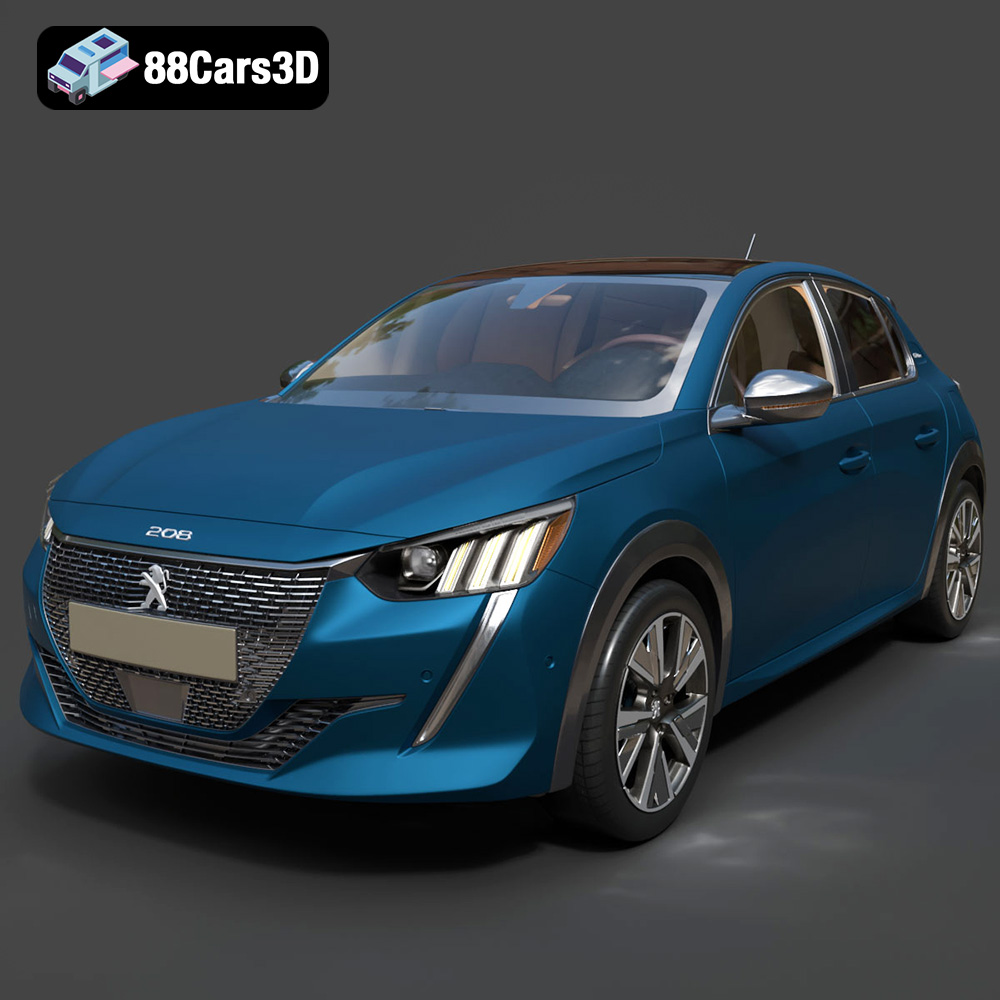
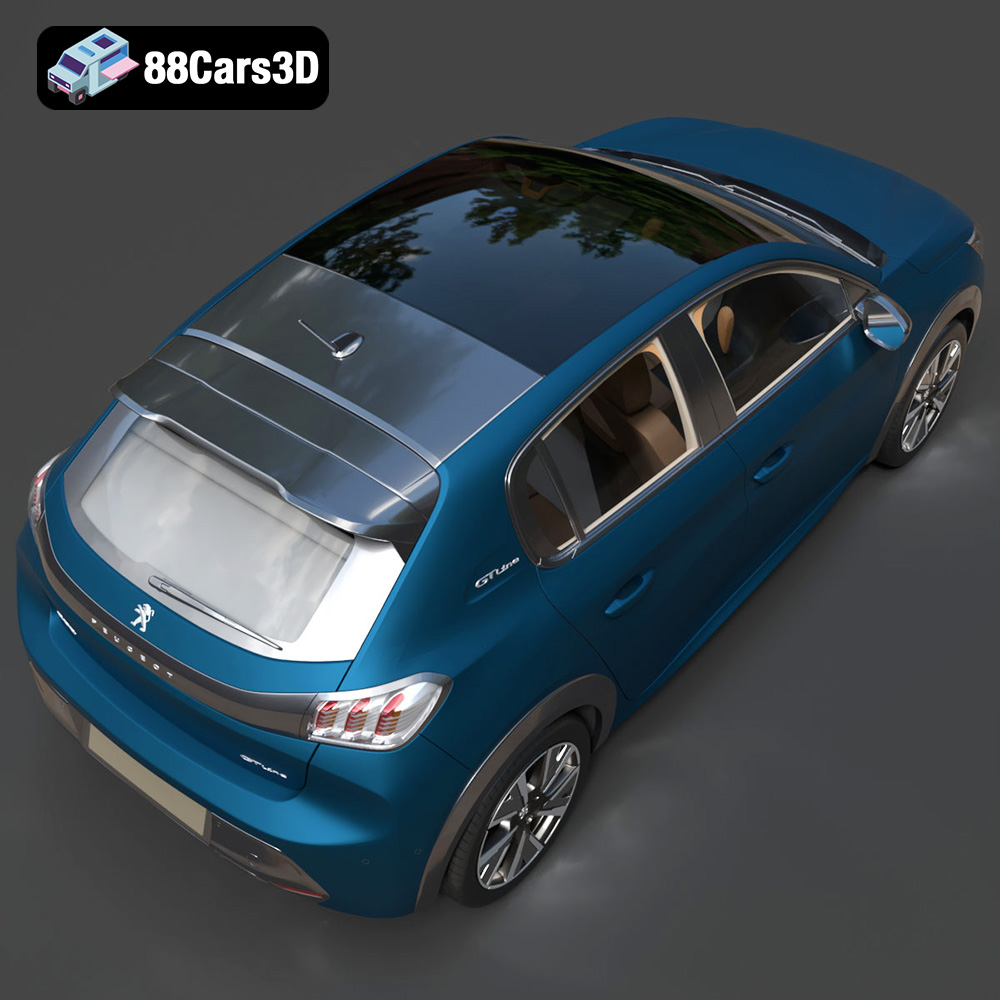
Today’s creative professionals require more than just a basic mesh; they need meticulously crafted models that are optimized for performance, visually stunning for cinematic renders, and versatile enough to integrate seamlessly across diverse software platforms. This is where specialized marketplaces like 88cars3d.com become indispensable, offering a curated selection of assets that meet these rigorous standards. Take, for instance, the Peugeot 208 2020 3D Model – an exemplar of modern compact car design, translated into a digital asset that perfectly captures its bold styling and sporty proportions. With its signature ‘saber-tooth’ LED daytime running lights and muscular sculpted hood, this digital rendition is a testament to what a professional-grade 3D car model can bring to any project, from bustling city driving games to elegant commercial lifestyle renders.
Understanding 3D Model File Formats: The Backbone of Digital Automotive Assets
The versatility of a 3D car model largely hinges on the array of file formats it supports. Each format serves a specific purpose, catering to different software ecosystems, project requirements, and optimization goals. Understanding these distinctions is critical for any professional working with digital assets, ensuring compatibility and maximizing workflow efficiency. The Peugeot 208 2020 3D Model, for instance, comes equipped with a comprehensive suite of formats, highlighting its adaptability across the entire production pipeline.
.blend – The Blender Powerhouse
The .blend format is native to Blender, the popular open-source 3D creation suite. When you download a .blend file, you’re getting a fully editable Blender scene. This means all the original geometry, materials, textures, lighting, camera setups, and even animation data are preserved. For artists deeply integrated into the Blender ecosystem, this format offers unparalleled flexibility. You can modify the mesh, adjust shaders, fine-tune UV maps, and even dismantle components for bespoke animations or re-texturing. It’s the go-to for those who need complete control and wish to leverage Blender’s powerful modeling, sculpting, and rendering capabilities, especially with Cycles or Eevee.
.fbx – The Industry Standard for Interoperability
.fbx (Filmbox) is arguably the most widely adopted format for exchanging 3D data between different software applications. Developed by Autodesk, it excels at preserving complex scene information, including geometry, materials, textures, bones, skinning, and animation. For game development, particularly with engines like Unreal Engine and Unity, .fbx is the gold standard. Its robust support for skeletal animation and its ability to maintain scene hierarchy make it ideal for exporting animated vehicles or complex rigged assets. While it can preserve materials, it’s often prudent to re-create PBR materials directly within the target game engine for optimal real-time performance and visual fidelity.
.obj – The Universal Geometry Carrier
The .obj (Wavefront Object) format is a universal standard, renowned for its simplicity and wide compatibility. It primarily stores geometry data – vertices, normals, UV coordinates, and faces – in a plain text file, often accompanied by a .mtl (material library) file for basic material properties. While .obj doesn’t support animation or rigging, its widespread support makes it an excellent choice for cross-software compatibility. If you need to import a mesh into almost any 3D application for static rendering or further modeling, .obj is a reliable fallback. It’s clean, efficient, and ensures that the core visual structure of the Peugeot 208’s design is preserved.
.glb – Optimized for AR, VR, and Web
.glb (GL Transmission Format Binary) is the binary version of glTF, a royalty-free specification for the efficient transmission and loading of 3D scenes and models by applications. Optimized for AR, VR, and browser-based display, .glb packs geometry, textures, and animation into a single compact file. It’s becoming the go-to format for interactive 3D content on the web, offering fast loading times and efficient rendering. For virtual showrooms, mobile AR apps, or embedding the Peugeot 208 model directly into a website, .glb offers a streamlined solution, providing a visually rich experience without heavy resource demands.
.stl – The Gateway to 3D Printing
.stl (STereoLithography) is the native file format for stereolithography CAD software and is the de facto standard for 3D printing. It represents a 3D model as a series of connected triangles, essentially describing the surface geometry of the object without color, texture, or other CAD attributes. While simple, its ubiquity in the 3D printing world means that if you want to bring the Peugeot 208 into the physical realm, .stl is your essential format. The product description explicitly mentions its suitability for 3D printing hobbyists, making the .stl version crucial for those looking to create a tangible replica.
.ply – Precision Mesh for CAD or Analysis
The .ply (Polygon File Format) is another widely used format for storing 3D data, especially from 3D scanners. It can store various properties beyond just geometry, such as color, transparency, surface normals, and texture coordinates. While less common for general asset exchange than .fbx or .obj, it’s valued for its precision and comprehensive data storage in fields like scientific visualization, CAD, and 3D scanning. For highly detailed analysis or specific engineering applications of the Peugeot 208 model, .ply can offer a robust and accurate representation.
.unreal – Engine-Ready for Real-Time Environments
The .unreal format, often referring to assets already integrated and configured within an Unreal Engine project, signifies an engine-ready asset. This isn’t a standalone file format in the same way .fbx or .obj is, but rather a package or specific configuration tailored for immediate use within Unreal Engine. This means materials are set up with appropriate PBR shaders, collision meshes are generated, and LODs (Levels of Detail) might be configured, allowing for seamless drag-and-drop integration. For professionals leveraging Unreal Engine’s powerful rendering capabilities for games, cinematics, or virtual production, having a pre-optimized ‘.unreal’ version of the Peugeot 208 saves immense setup time and ensures optimal performance.
.max – The 3ds Max Master File
The .max format is the proprietary file type for Autodesk 3ds Max, a powerhouse in architectural visualization, animation, and game content creation. Like .blend for Blender, a .max file preserves the entire scene, including complex hierarchies, modifiers, animation data, lighting, and rendering settings. For users deeply embedded in a 3ds Max workflow, this offers complete control over every aspect of the Peugeot 208 model, from detailed mesh edits to advanced V-Ray or Corona renders. It’s the ultimate format for customization and high-end production within the 3ds Max environment.
The Anatomy of a High-Quality Automotive 3D Model: The Peugeot 208 Case Study
A truly professional 3D car model goes far beyond merely replicating a vehicle’s shape. It involves meticulous attention to detail, efficient optimization, and a deep understanding of how the asset will be used in various pipelines. The Peugeot 208 2020 3D Model exemplifies these principles, offering a benchmark for quality and versatility.
Precision in Exterior Design and Geometry
- Authentic Proportions and Styling: The model accurately captures the distinctive features of the 2020 Peugeot 208, from its aggressive stance to the sculpted hood and the iconic ‘saber-tooth’ LED DRLs. This fidelity is critical for architectural visualization and brand campaigns where visual accuracy is paramount.
- High-Resolution Details: Features like the front grille with the Peugeot lion emblem, intricate headlight and taillight housings with realistic reflectors, and aerodynamic alloy wheels are rendered with exquisite detail. Even the brake calipers and disc rotors are accurately modeled, a crucial touch for close-up shots or interactive vehicle configurators.
- Optimized Topology: With an approximate poly count of 120,000 triangles, the model strikes a perfect balance. It’s dense enough to maintain high-end visual realism for detailed renders, yet optimized for flawless game-ready performance. This ensures smooth framerates in real-time engines without sacrificing crucial visual fidelity.
Immersive Interior and Cockpit Detailing
- i-Cockpit Replication: The interior features a detailed rendition of Peugeot’s ergonomic i-Cockpit layout, including the compact steering wheel, digital 3D instrument cluster, and modern infotainment display. This level of detail is vital for virtual showrooms or first-person driving experiences in games.
- Realistic Textures and Materials: Detailed seating with realistic fabric and leather texture mapping enhances the sense of realism. The central console, gear shifter, and tactile control buttons are accurately modeled, allowing for immersive interaction and convincing visual fidelity even in close-up interior shots.
- Optimized for Interaction: The interior geometry is optimized specifically for first-person viewpoints in gaming, ensuring that the visual performance remains high even when the player is inside the vehicle. This attention to detail drastically improves the player’s sense of presence.
Technical Advantages and Real-World Scale
- Game-Ready Optimization: The ~120k triangle count is a sweet spot for modern game engines, providing enough detail for visual impact while keeping the performance footprint low. This allows for multiple instances of the vehicle in a scene without significant performance drops.
- Real-World Scale Accuracy: The model adheres to real-world scale based on the actual vehicle chassis, which is fundamental for accurate scene composition in architectural visualization and for precise physics simulations in driving games.
- Animation-Ready Components: Separate wheels, suspension, and steering components, coupled with proper pivot setups, mean the model is ready for realistic animation straight out of the box. This drastically reduces setup time for animators aiming for authentic vehicle motion.
Integrating 3D Car Models into Professional Workflows
The true power of a high-quality 3D car model, such as the Peugeot 208 from 88cars3d.com, lies in its seamless integration into diverse professional pipelines. Its multi-format availability and optimized structure make it a versatile asset for various industries.
Game Development: Creating Immersive Driving Experiences
- Real-Time Performance: For open-world games, racing titles, and simulators, the optimized ~120k triangle count of the Peugeot 208 2020 3D Model is paramount. It allows developers to populate virtual cities with authentic vehicles without compromising frame rates. Its engine-ready formats like .fbx and the pre-configured .unreal versions streamline the import process, letting artists focus on gameplay.
- Physics and Animation: With separate wheels, suspension, and steering components, and proper pivot setups, game developers can easily integrate realistic physics engines and create dynamic vehicle animations. Imagine the Peugeot 208 navigating tight city streets with accurate suspension compression and wheel rotation, adding a layer of realism to the player’s experience.
- Interior for First-Person Views: The detailed interior geometry is crucial for games that offer a first-person perspective, providing players with an immersive cockpit experience. This level of detail elevates a game from merely functional to truly engaging.
Architectural Visualization: Enhancing Urban and Lifestyle Scenes
- Scene Realism: In architectural visualization, vehicles are often essential contextual elements, bringing life and scale to street scenes, parking lots, or driveways. A high-fidelity model like the Peugeot 208, with its crisp reflections and accurate ambient occlusion, ensures that the vehicle complements the environment rather than detracting from it.
- Contextual Storytelling: Placing a modern, stylish car like the Peugeot 208 in an architectural render can communicate a sense of lifestyle, target demographic, and even the project’s contemporary nature. It helps tell a story about the space and its potential inhabitants.
- Seamless Integration: Formats like .max (for 3ds Max) and .blend (for Blender) allow visualization artists to import the model, adjust materials for specific renderers (V-Ray, Corona, Cycles), and integrate it flawlessly with their existing scene assets and lighting setups.
AR/VR Experiences: Virtual Showrooms and Interactive Configurators
- Immersive Showrooms: For automotive brands, virtual reality showrooms offer an unparalleled way for customers to explore vehicles. The Peugeot 208 model, optimized for real-time engines and available in .glb for web-based AR/VR, can be placed in a virtual environment, allowing users to walk around it, open doors, and even sit inside.
- Interactive Configurators: Augmented reality applications can project the Peugeot 208 directly into a user’s driveway, allowing them to visualize it in real-world scale. The model’s customization options—changing body colors, adjusting material finishes—make it ideal for interactive configurators, letting potential buyers personalize their virtual car before making a purchase.
- Performance for Mobile AR: The optimized polycount and efficient textures are vital for smooth performance on mobile AR devices, ensuring a seamless and engaging user experience without lag.
Mastering Automotive Rendering Techniques with Premium 3D Models
Achieving photorealistic automotive renders is an art form, demanding not only a powerful rendering engine but also a meticulously prepared 3D model. The Peugeot 208 2020 3D Model provides an excellent foundation, allowing artists to focus on lighting, materials, and composition to produce stunning visuals.
Understanding Physically Based Rendering (PBR)
- Material Purity: Modern rendering relies heavily on PBR workflows. This means creating materials that accurately simulate how light interacts with surfaces in the real world. The Peugeot 208 model, designed for high-end rendering, is built with clean UVs and efficient topology, making it straightforward to apply PBR textures for paint, glass, rubber, and chrome.
- Texture Maps: Leveraging maps like Albedo (Base Color), Metallic, Roughness, Normal, and Ambient Occlusion is key. The model’s inherent detail allows these maps to shine, creating crisp reflections, subtle surface imperfections, and realistic depth, particularly on elements like the detailed front grille and tire treads.
- Engine Compatibility: Whether you’re using V-Ray or Corona in 3ds Max, Cycles in Blender, or the real-time ray tracing capabilities of Unreal Engine, the model’s clean structure facilitates easy setup of complex PBR shaders, ensuring consistent visual quality across different platforms.
Lighting for Impact and Realism
- Studio Lighting Setups: For product shots and commercial campaigns, studio lighting is paramount. Utilizing softboxes, area lights, and HDRI (High Dynamic Range Image) environment maps can dramatically enhance the car’s contours and reflections. The Peugeot 208’s aerodynamic profile benefits immensely from well-placed rim lights that highlight its sleek lines.
- Environmental Lighting: For exterior scenes, environmental lighting, often driven by HDRI maps captured from real locations, provides realistic ambient light and reflections. This is crucial for integrating the Peugeot 208 into architectural street scenes, making it appear as if it truly belongs in that environment.
- Interactive Lighting: In real-time engines, dynamic lighting is key. The model’s optimized geometry and materials ensure that it responds accurately to changes in light, casting realistic shadows and receiving accurate reflections, vital for immersive game experiences or VR showrooms.
Post-Processing and Compositing
- Enhancing the Render: Even the best raw render can be improved with post-processing. Techniques like color grading, adding subtle depth of field, bloom effects for headlights, and lens flares can dramatically elevate the final image. These touches can transform a good render of the Peugeot 208 into a stunning, magazine-quality visual.
- Multi-Pass Rendering: For ultimate control, rendering separate passes (e.g., diffuse, reflection, specular, Z-depth) allows for precise adjustments in compositing software. This non-destructive workflow provides flexibility to fine-tune every aspect of the Peugeot 208’s appearance post-render.
Beyond the Screen: 3D Printing and Physical Prototyping
While the digital realm offers limitless possibilities, the ability to bring a 3D model into the physical world is a powerful extension of its utility. The inclusion of an .stl format for the Peugeot 208 2020 3D Model opens doors for enthusiasts and professionals alike to create tangible replicas.
The .stl Format: Your Gateway to Physical Models
- Simplicity and Compatibility: The .stl format simplifies the geometry into a tessellated surface of triangles, making it universally compatible with 3D printing software (slicers). This ensures that the Peugeot 208’s shape is accurately translated for printing.
- Recommended Scales: The product suggests scales like 1:12, 1:18, or 1:24, offering options for display-scale hobbyists. These common model car scales ensure that the printed result is a recognizable and well-proportioned representation of the actual vehicle.
- Material Choice: For fine details, resin printing is often recommended over FDM (Fused Deposition Modeling). Resin printers can achieve much finer layer heights (0.04–0.12 mm as suggested) and intricate details, which is crucial for capturing the Peugeot 208’s delicate features like side mirrors and grille patterns.
Considerations for Successful 3D Printing
- Supports are Essential: Due to the Peugeot 208’s complex geometry with overhangs (like side mirrors, exhaust tips, and even the steering wheel), supports will be necessary during printing. Proper support placement minimizes damage upon removal and ensures structural integrity.
- Print Orientation: The advice to print the frame angled for structural integrity and wheels separately is a critical insight for successful outcomes. This optimizes strength and allows for cleaner prints of individual components.
- Post-Processing: After printing, post-processing is key to achieving a professional finish. This typically involves sanding to smooth layer lines, applying primer for an even surface, and then painting with authentic factory colors, potentially with metallic finishes, to truly replicate the look of a real Peugeot 208.
Maximizing Your Investment: Customization and Future-Proofing
A truly valuable 3D asset is one that offers flexibility and longevity. The Peugeot 208 2020 3D Model provides extensive customization options, ensuring it remains relevant and adaptable for future projects and evolving creative needs.
Unleashing Creative Freedom
- Color Transformation: The ability to easily change body colors is fundamental for any car model. Whether it’s to match a brand’s palette, test different factory options like Faro Yellow or Elixir Red, or simply fit a scene’s aesthetic, this customization is straightforward thanks to clean material setups.
- Material Adjustments: Beyond color, modifying material finishes (e.g., matte, gloss, metallic, pearlescent) significantly alters the perceived quality and mood of the vehicle. This allows artists to experiment with different looks, from a sleek, polished showroom vehicle to a rugged, everyday city car.
- Tire Texture Variants: The inclusion of realistic tire treads is a detail often overlooked. The ability to modify tire textures, perhaps for summer versus all-season variants, adds another layer of realism and context, especially in games or detailed simulations.
Adapting to Diverse Environments and Updates
- Environmental Adaptability: A robust 3D model should perform well under various lighting conditions. Adjusting lighting for different environments – from a sunny outdoor scene to a dimly lit underground parking garage – is easily achieved with the Peugeot 208 model, thanks to its accurate material properties and efficient geometry.
- Future-Proofing for Engines: With its optimized polycount and multiple file formats, the model is inherently future-proof. It’s ready for current-generation game engines and rendering software, and its clean topology means it can be easily adapted or upgraded as new technologies and rendering techniques emerge. This makes it a sound investment for any digital artist or studio.
- Modularity for Specific Needs: The separation of components like wheels and suspension allows for modular modifications. If a project requires custom rims, different tire profiles, or even specialized suspension systems, these elements can be swapped out without affecting the entire model, saving valuable production time.
Conclusion: The Undeniable Value of Expertly Crafted 3D Automotive Assets
The digital creative landscape thrives on quality, efficiency, and versatility. For any project involving vehicles, from high-stakes game development and architectural visualization to cutting-edge AR/VR experiences and even tangible 3D prints, the foundation lies in meticulously crafted 3D car models. The Peugeot 208 2020 3D Model stands as a prime example of such an asset, embodying the perfect blend of visual fidelity, technical optimization, and multi-format compatibility.
From its accurate exterior and detailed interior to its game-ready polycount and comprehensive file format support—including .blend, .fbx, .obj, .glb, .stl, .ply, .unreal, and .max—this model is engineered to meet the stringent demands of professional workflows. It empowers artists and developers to create stunning renders, immersive game worlds, and interactive experiences, all while minimizing production bottlenecks.
By investing in premium assets like the Peugeot 208 2020 3D Model available at 88cars3d.com, professionals gain a significant advantage, freeing up valuable time to focus on creativity and innovation rather than grappling with asset creation from scratch. It’s more than just a model; it’s a catalyst for bringing your most ambitious digital visions to life, ensuring your projects stand out with unparalleled realism and performance.
Featured 3D Model
Peugeot 208 2020 3D Model Download STL FBX OBJ GLB Blend
The 2020 Peugeot 208 redefined the modern compact hatchback segment with its bold, aggressive styling and sporty proportions. Featuring the striking ‘saber-tooth’ LED daytime running lights, a muscular sculpted hood, and an elegant gloss-black rear light cluster fascia, this vehicle stands out in any urban setting. Its dynamic stance and streamlined profile perfectly capture the essence of contemporary European car design. This meticulously crafted 3D model boasts an optimized topology of approximately 120k triangles, ensuring flawless game-ready performance without compromising visual fidelity. Designed for high-end rendering and real-time engines, it delivers crisp reflections, accurate ambient occlusion, and an immaculate flow of polygons tailored for both performance and close-up cinematic shots. Perfect for modern city driving games, architectural visualization street scenes, VR automotive showrooms, and commercial lifestyle rendering.
$39.99
View This Model
Related Tags
.2020
.208
.blend
.fbx
.glb
.hatchback
.max
.obj
.peugeot
.ply
.rendering
.stl
.unreal
car-3d-model
city-car
compact-car
game asset
game-ready
low-poly
optimized
VR/AR