Get 20% OFF All Premium 3D & STL Models!

In the dynamic world of digital design, the need for high-fidelity 3D assets is paramount. From breathtaking automotive renders that blur the lines between virtual and reality, to immersive game environments that transport players to new worlds, and even intricate models destined for physical 3D printing, the quality of your foundational assets dictates the success of your project. Professional artists and developers constantly seek models that combine historical accuracy with technical optimization, ready for integration into diverse pipelines.
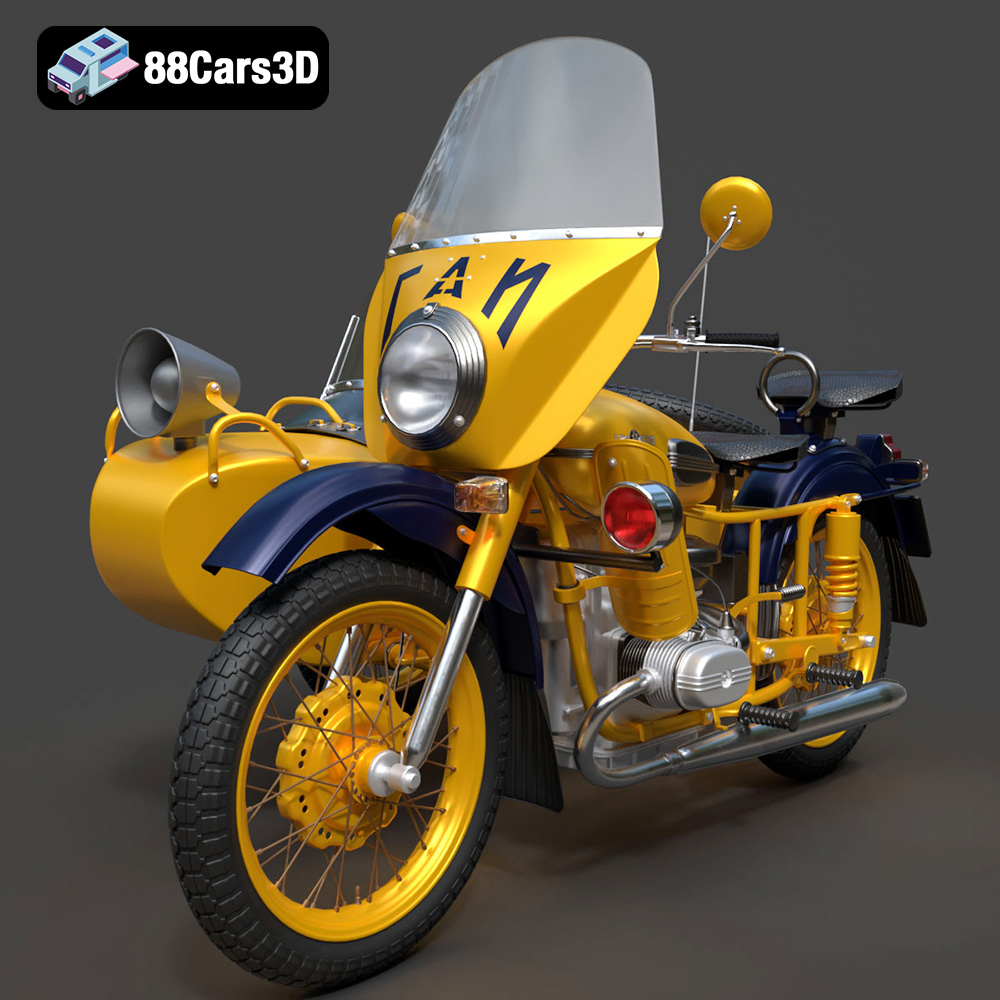
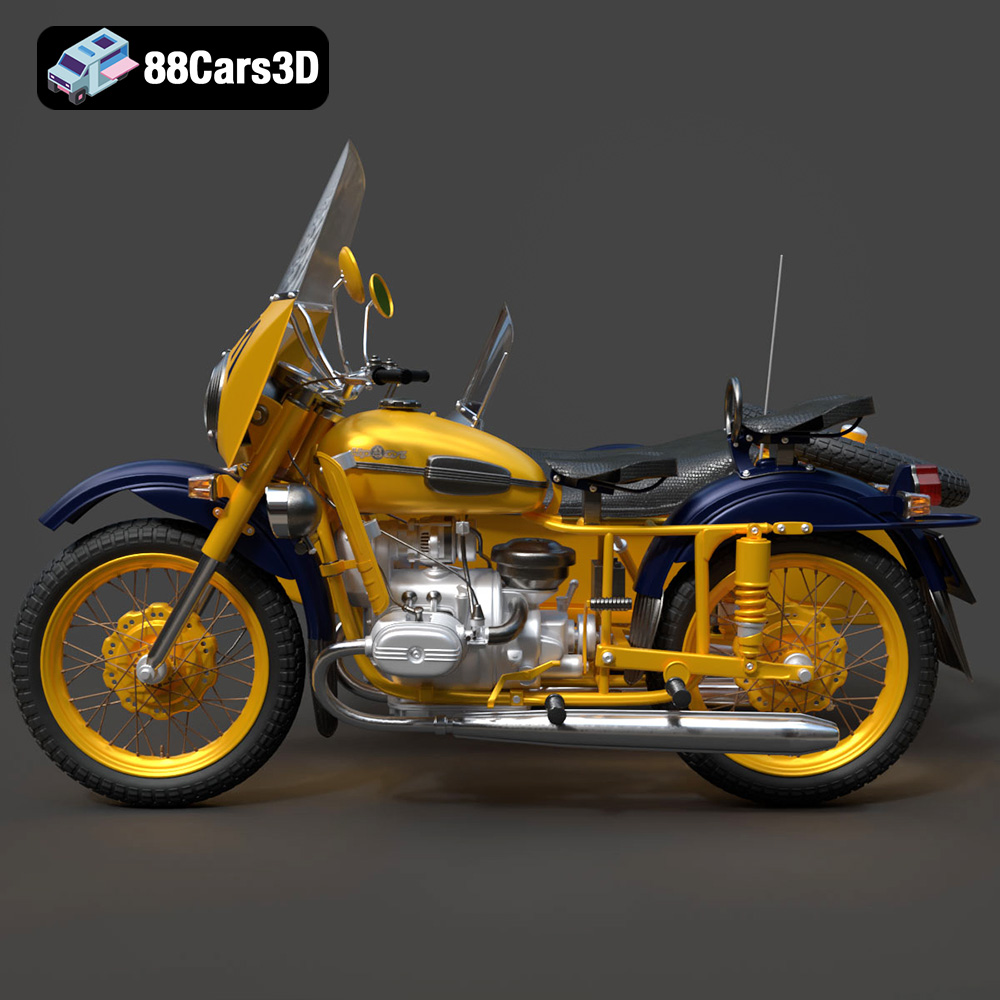
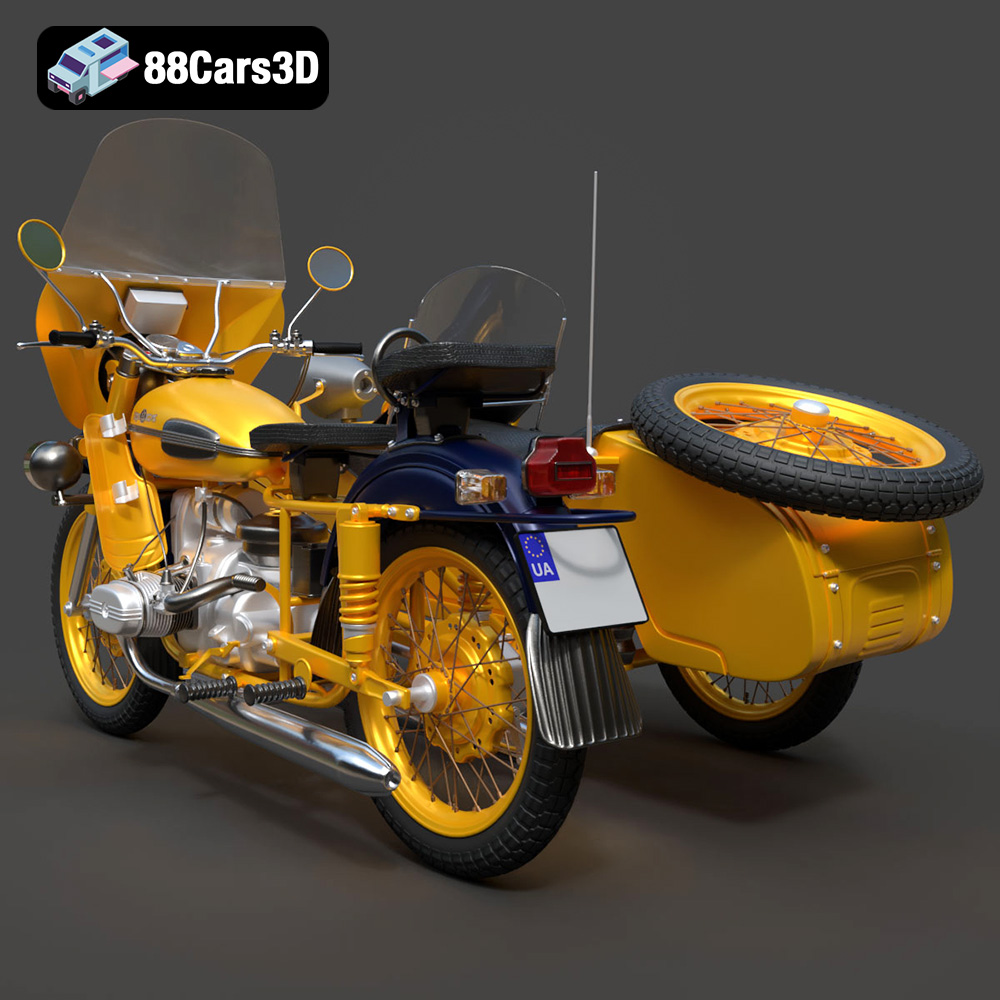
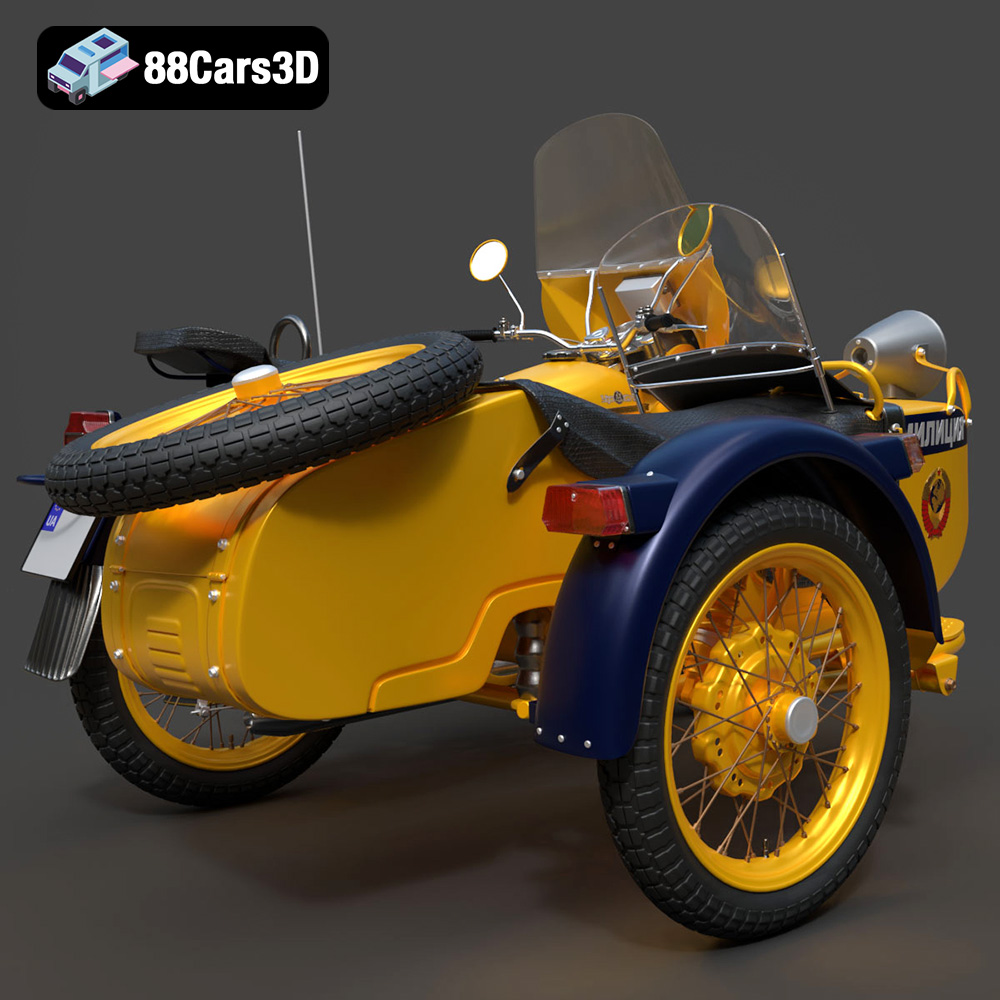
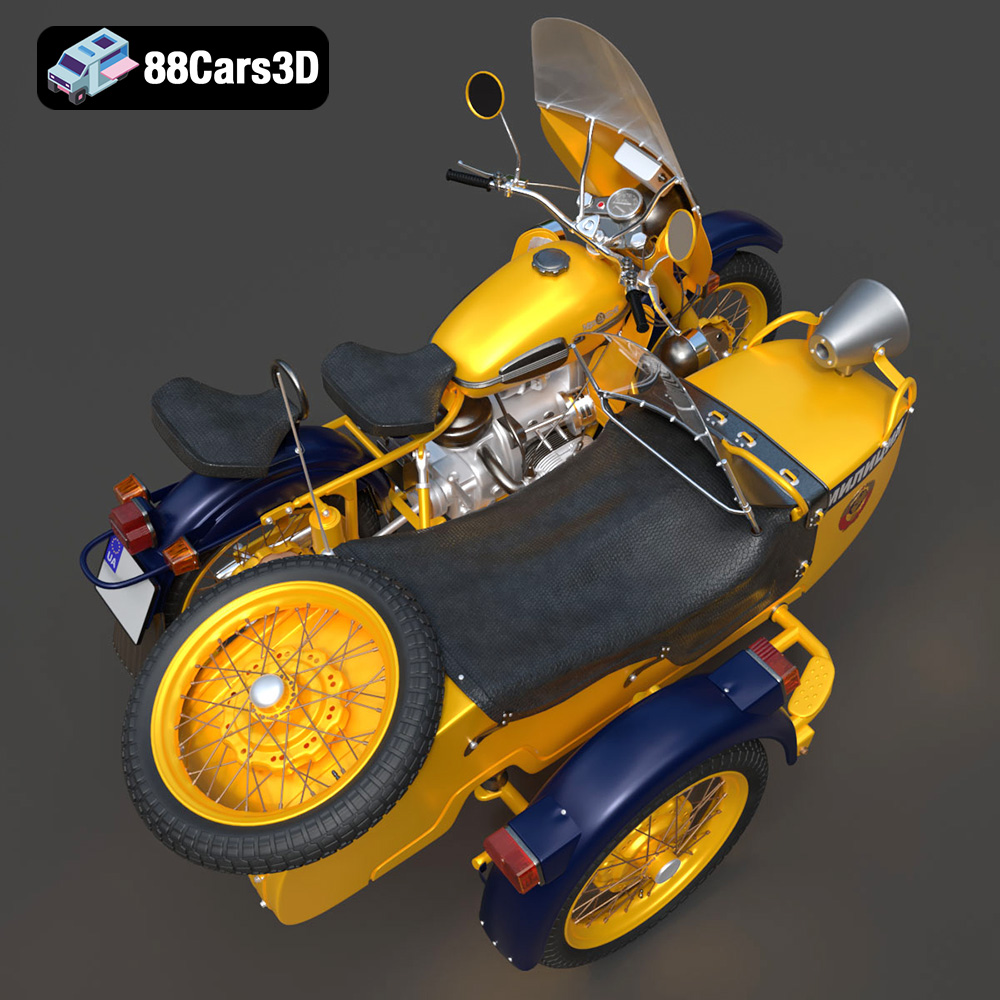
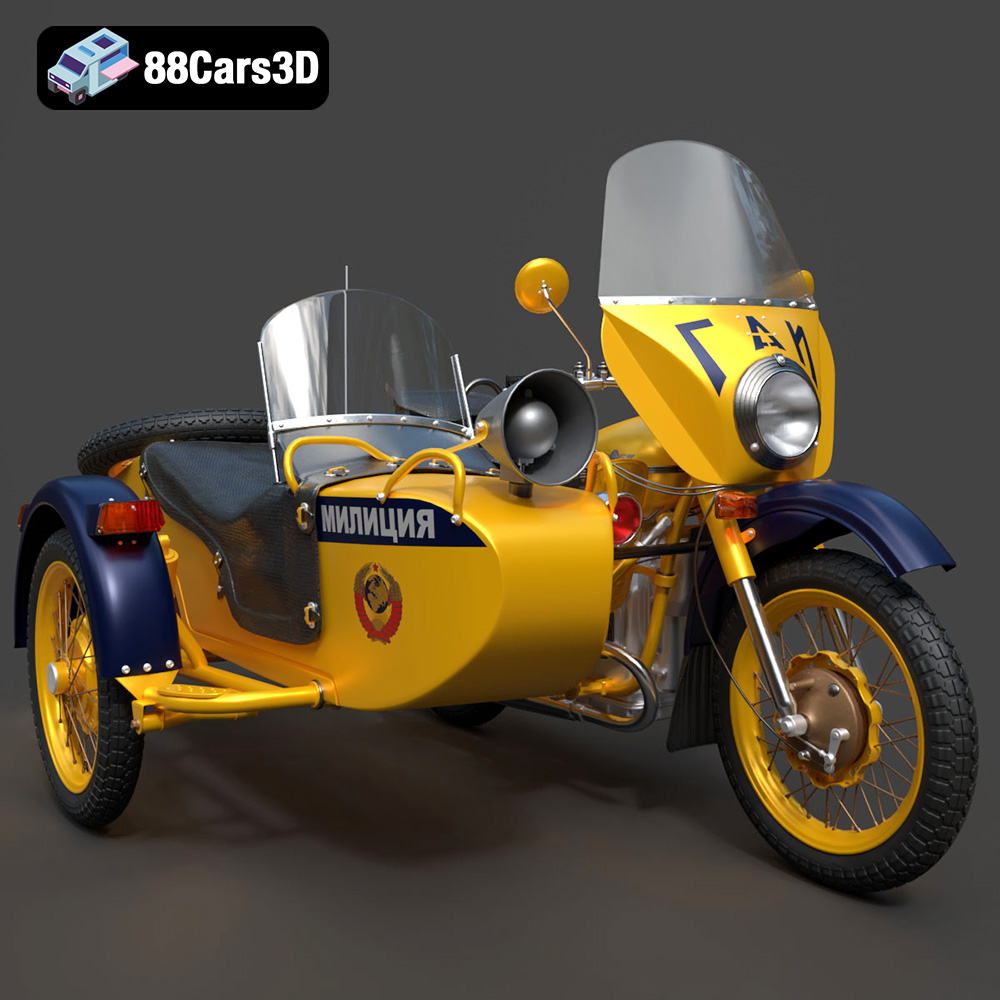
Today, we’re diving deep into an exemplary asset that embodies these qualities: the Ural M67-36-P 1976 3D Model. This legendary Soviet-era motorcycle, renowned for its rugged durability and distinctive styling, has been meticulously recreated as a game-ready 3D model. It’s not just a model; it’s a gateway to historical realism, offering unparalleled detail for automotive rendering, robust performance for game development, and the versatility required for AR/VR applications and beyond. Understanding how such a detailed asset fits into various professional workflows is key to unlocking its full potential.
The versatility of a 3D model often hinges on the file formats it supports. Different formats are optimized for specific uses, software compatibility, and performance considerations. When acquiring a premium 3D model, especially one as intricate as the Ural M67-36-P 1976, understanding these formats is crucial for seamless integration into your project pipeline. The Ural M67-36-P 1976 3D Model comes with an extensive suite of formats, ensuring maximum utility for any professional workflow.
The .blend file is Blender’s native format and is ideal for users who primarily work within this powerful open-source 3D suite. It stores an entire Blender scene, including all 3D data (meshes, materials, textures, animations, cameras, lights, and scene settings). For the Ural M67-36-P 1976, this means you get a fully editable Blender scene where you can dissect the model, understand its construction, modify materials, adjust rigging, or even re-texture it directly within Blender’s environment. It offers the most flexibility for customization and advanced manipulation.
.fbx (Filmbox) is a proprietary file format developed by Autodesk, widely recognized as the industry-standard interchange format for 3D data. Its strength lies in its ability to store a comprehensive range of 3D data, including geometry, materials, textures, animations, and even skeletal deformation, making it ideal for transferring assets between different 3D software applications and, critically, into game engines like Unreal Engine and Unity. For the Ural M67-36-P 1976, the .fbx ensures that all its optimized topology, proper pivot setups for animation, and material assignments are preserved when moving from a modeling package to a real-time environment, making it a cornerstone for game assets.
.obj (Wavefront OBJ) is one of the oldest and most widely supported 3D file formats, making it a truly universal choice for cross-software compatibility. It primarily stores geometry (vertices, normals, texture coordinates, and faces) and references external material files (.mtl) and texture images. While it doesn’t typically support animation or rigging, its simplicity and ubiquitous support make it excellent for importing static meshes into virtually any 3D application, from ZBrush for sculpting to Keyshot for rendering, or even older software pipelines. For the Ural M67-36-P 1976, the .obj provides a reliable fallback for foundational mesh data.
.glb (GL Transmission Format Binary) is the binary version of glTF, a royalty-free specification for 3D scenes and models. It’s designed for efficient transmission and loading of 3D content in web, AR, and VR applications. A single .glb file can contain model data, animations, and PBR (Physically Based Rendering) materials, making it a highly optimized and self-contained package. For AR/VR experiences featuring the Ural M67-36-P 1976, the .glb format is invaluable for its small file size and quick loading times, crucial for immersive virtual showrooms or mobile AR experiences.
.stl (STereoLithography) is the most common file format for 3D printing. It represents a 3D model as a series of connected triangles (a tessellated surface) without color, texture, or other CAD attributes. Its simplicity makes it universally compatible with 3D printers and slicing software. When preparing the Ural M67-36-P 1976 for physical fabrication, the .stl format is the go-to, enabling hobbyists and professionals alike to bring the classic motorcycle into the real world. The product description for this model even includes specific 3D print settings, highlighting its readiness for this application.
.ply (Polygon File Format, also known as Stanford Triangle Format) is a format designed to store 3D data from 3D scanners, particularly point clouds and meshes. It can store various properties beyond geometry, such as color, transparency, and normal vectors for each vertex or face. While less common for direct game asset use, .ply is valuable for precise mesh analysis, scientific visualization, or as an intermediate format in complex CAD or reverse engineering workflows. For the Ural M67-36-P 1976, this format offers a highly precise representation of the mesh, suitable for detailed technical inspection or further engineering applications.
The .unreal format, or more accurately, assets packaged for Unreal Engine, implies that the model has been specifically prepared and exported for the Unreal Engine environment. This usually means the FBX file has been correctly imported, materials set up with PBR textures, collision meshes generated, and potentially Blueprints created for interactive elements. While not a standalone file format in the same sense as FBX or OBJ, its inclusion signifies that the Ural M67-36-P 1976 3D Model is optimized and ready for immediate use within Unreal Engine, saving developers significant setup time and ensuring engine-native performance.
The .max file is the native project file for Autodesk 3ds Max, a leading software for 3D modeling, animation, and rendering. Similar to .blend for Blender, a .max file contains the complete scene, including geometry, lights, cameras, materials, modifiers, and animation data. For professionals using 3ds Max, having the Ural M67-36-P 1976 in this format provides the ultimate flexibility for advanced rendering setups, complex animations, or integrating the model into existing 3ds Max projects with minimal fuss. It allows full access to the original scene construction and parameters.
Automotive visualization is a specialized field where the accuracy and aesthetic quality of 3D car models are paramount. Whether for advertising, design reviews, or cinematic sequences, the goal is to create photorealistic imagery that evokes emotion and communicates design intent. The Ural M67-36-P 1976 3D Model is an exceptional asset for this purpose, offering the meticulous detail required to stand up to intense scrutiny.
The appeal of classic vehicles lies in their unique history and design language. Recreating this digitally requires a deep understanding of the original vehicle’s features. The Ural M67-36-P 1976 3D Model excels here, boasting accurate frame geometry and proportions, a detailed 649cc OHV air-cooled boxer engine block, twin chrome exhaust pipes with authentic vintage silencers, and period-correct lighting. These granular details are critical for achieving historical authenticity in renders. Every rivet, every curve, and every material choice contributes to an undeniable sense of realism that transports the viewer back to 1970s Eastern Bloc engineering.
Leveraging a high-quality model like the Ural M67-36-P 1976 in a professional rendering suite such as 3ds Max (supported by the .max file) opens up a world of possibilities. Artists can implement advanced rendering techniques using engines like V-Ray or Corona Renderer. This involves precise material calibration for painted metal, chrome, rubber, and leather, ensuring that reflections, refractions, and diffuse properties react accurately to light. Dynamic studio lighting setups, environment HDRIs, and intricate camera work can further enhance the realism. The model’s clean topology and excellent UV mapping allow for seamless texture application and advanced shader creation, ensuring every rendered image showcases the motorcycle with stunning fidelity.
For game developers and creators of interactive experiences, the challenge lies in balancing visual fidelity with real-time performance. High-poly models, while beautiful for renders, can cripple frame rates in interactive environments. This is where optimized 3D car models, such as those found on 88cars3d.com, prove invaluable. The Ural M67-36-P 1976 3D Model is specifically designed with this balance in mind.
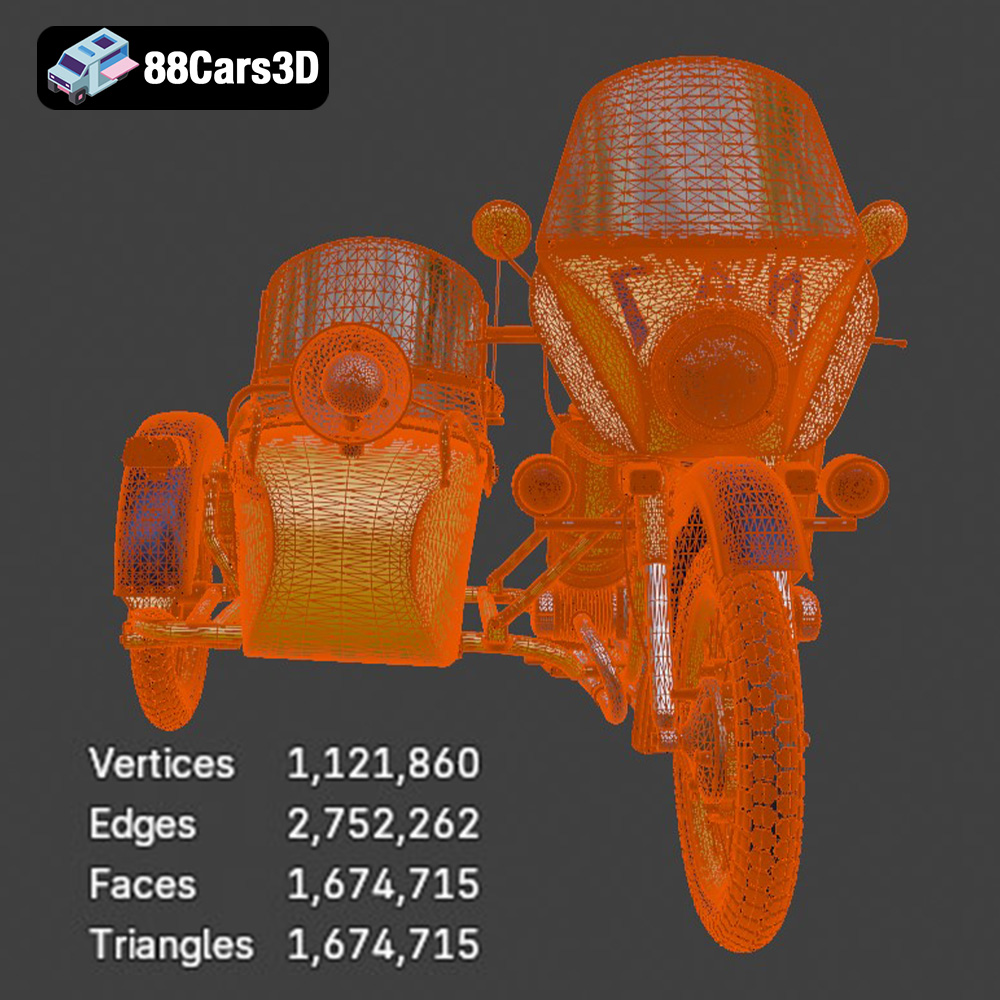
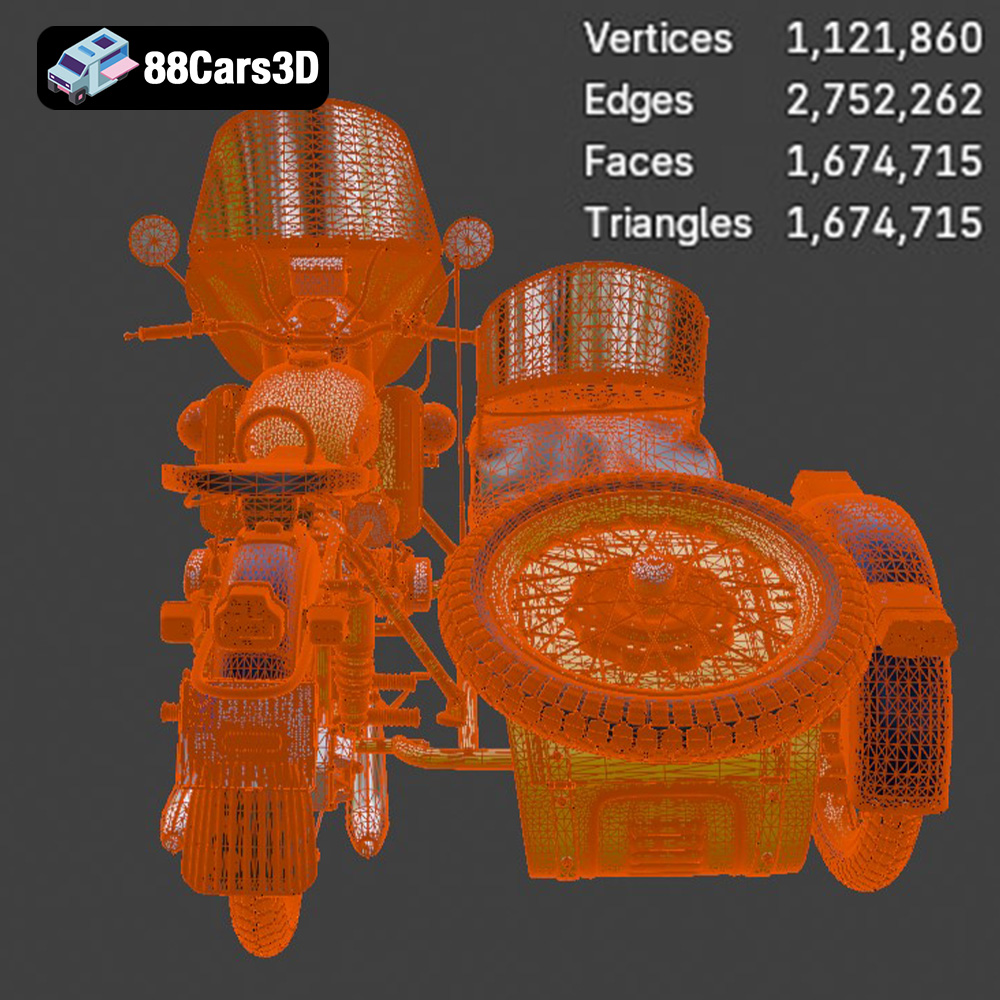
The Ural M67-36-P 1976 3D Model boasts an optimized topology of approximately 85,000 triangles, striking a perfect balance for real-time engines. This polycount delivers maximum visual fidelity without compromising performance, making it ideal for open-world games, racing titles, and simulators. With included .fbx and .unreal formats, integration into popular game engines like Unreal Engine and Unity is streamlined. Developers can import the FBX, which includes proper pivot setups for steering, wheel rotation, and suspension travel, allowing for immediate animation and physics implementation. PBR material setups are pre-configured, minimizing the work required to achieve realistic visuals within the engine’s lighting pipeline. This game-ready nature significantly reduces development time and resources.
Augmented Reality (AR) and Virtual Reality (VR) applications demand extreme optimization due to the high frame rate requirements and often limited processing power of mobile devices. The Ural M67-36-P 1976 3D Model’s efficient polycount and the inclusion of the .glb format make it an excellent choice for immersive AR/VR experiences. Whether it’s a virtual showroom allowing users to explore the motorcycle in a 3D space, a historical VR museum exhibit, or a mobile AR experience placing the classic bike in the user’s real-world environment, the model is designed to perform. Its lightweight nature ensures smooth interaction and fast loading times, crucial for maintaining immersion and user engagement.
The journey of a 3D model doesn’t always end on a screen. For many enthusiasts and professionals, the ultimate goal is to bring a digital design into the physical world through 3D printing. The Ural M67-36-P 1976 3D Model is uniquely prepared for this transition, offering the .stl format and specific printing guidelines to ensure successful physical reproductions.
Transforming a digital 3D model into a tangible object requires careful preparation. The provided .stl format for the Ural M67-36-P 1976 is the starting point. This file is loaded into a slicing software, where it’s prepared for the 3D printer. The product description offers detailed recommendations: a scale of 1:12, 1:18, or 1:24, layer height between 0.04-0.12 mm (with resin printing recommended for fine details), wall thickness of 1.2-2.0 mm, and 20-30% infill. Critical for complex models like motorcycles, specific instructions for supports (especially for exhaust, mirrors, and handlebars) and print orientation (frame angled for structural integrity, wheels printed separately) are provided. This detailed guidance ensures hobbyists and professionals can confidently produce high-quality physical models.
The choice between FDM (Fused Deposition Modeling) and resin (SLA/DLP) 3D printing significantly impacts the final quality, especially for intricate details. For a model as detailed as the Ural M67-36-P 1976, resin printing is often recommended due to its ability to produce incredibly fine details and smooth surfaces, perfect for capturing the motorcycle’s small components, engine fins, and spokes. FDM can still be used for larger, less detailed prints or if cost-effectiveness is a primary concern, but some of the finer elements might be lost or require more post-processing. Post-processing, including sanding, priming, and painting with authentic factory colors and metallic finishes, is crucial to achieving a collectible-quality physical replica.
One of the greatest advantages of working with professional 3D car models is the inherent flexibility they offer for customization. Artists and designers rarely use an asset completely “off the shelf.” Instead, they integrate it into their unique vision, adapting it to specific scene requirements, branding guidelines, or artistic styles. The Ural M67-36-P 1976 3D Model from 88cars3d.com is built with this flexibility in mind, offering a robust foundation for creative exploration.
The Ural M67-36-P 1976 model provides ample opportunities for customization. Imagine changing the body and tank colors to factory specifications or custom finishes to match a particular brand campaign. Tire textures can be swapped between rugged off-road variants for an adventurous scene or sleek street versions for urban visualization. Material finishes can be adjusted from matte to gloss or metallic, altering the bike’s perceived age or condition. Adapting lighting for different environments—be it a sun-drenched desert road, a moody nighttime city, or a pristine studio setup—further enhances scene composition and storytelling. These customization options ensure the model remains relevant and versatile across a wide array of projects.
In any production pipeline, time is a precious commodity. Starting with a meticulously crafted, game-ready asset like the Ural M67-36-P 1976 3D Model significantly reduces development cycles. Instead of spending weeks on modeling, texturing, and optimizing a complex vehicle from scratch, designers can focus on creative direction, scene composition, animation, and unique customization. This efficiency is a core benefit of utilizing high-quality 3D car models from marketplaces like 88cars3d.com. It empowers small studios and large development teams alike to achieve professional results faster, enabling them to tackle more ambitious projects and meet tight deadlines without compromising on visual quality.
The journey from concept to a stunning 3D visualization, an immersive game experience, or a tangible physical model relies heavily on the quality and versatility of your assets. The Ural M67-36-P 1976 3D Model stands as a testament to meticulous craftsmanship and technical excellence, providing a solid foundation for a vast range of digital and physical applications. Its historical accuracy, optimized topology, comprehensive file format support (from .blend to .unreal and .stl), and inherent customizability make it an indispensable tool for professionals in automotive rendering, game development, AR/VR, and 3D printing. By choosing premium 3D car models from trusted sources like 88cars3d.com, artists and developers can significantly enhance their workflows, save valuable time, and consistently deliver projects that exceed expectations, bringing the raw spirit of this classic motorcycle to life in every medium.
The 1976 Ural M67-36-P is a legendary Soviet-era motorcycle, renowned for its rugged durability, classic utilitarian styling, and historic patrol heritage. Featuring its iconic opposed-twin (boxer) engine, robust dual exhaust system, and sturdy frame design, this classic workhorse captures the absolute essence of 1970s Eastern Bloc engineering and heavy-duty performance. This highly detailed, game-ready 3D model boasts optimized topology (approximately 85,000 triangles) to deliver maximum visual fidelity without compromising real-time performance. Designed for seamless integration into modern digital pipelines, the model ensures highly accurate geometry and excellent material setup, making it an outstanding asset for high-end automotive visualization, game development, and AR/VR applications.
$39.99
.blend
.fbx
.glb
.max
.obj
.ply
.rendering
.stl
.unreal
.ural
1976
classic-motorcycle
game asset
game-ready
low-poly
m67-36-p
motorcycle-3d-model
optimized
soviet-motorcycle
vintage-bike
VR/AR