Get 20% OFF All Premium 3D & STL Models!

In the dynamic world of 3D visualization, the demand for hyper-realistic and functionally versatile assets is continually growing. From blockbuster film productions and immersive video games to cutting-edge architectural visualization and advanced product design, high-quality 3D car models are indispensable tools. These digital representations are far more than just pretty pictures; they are complex engineering marvels that require meticulous attention to detail, robust topology, and flexible material setups to truly shine in diverse applications.
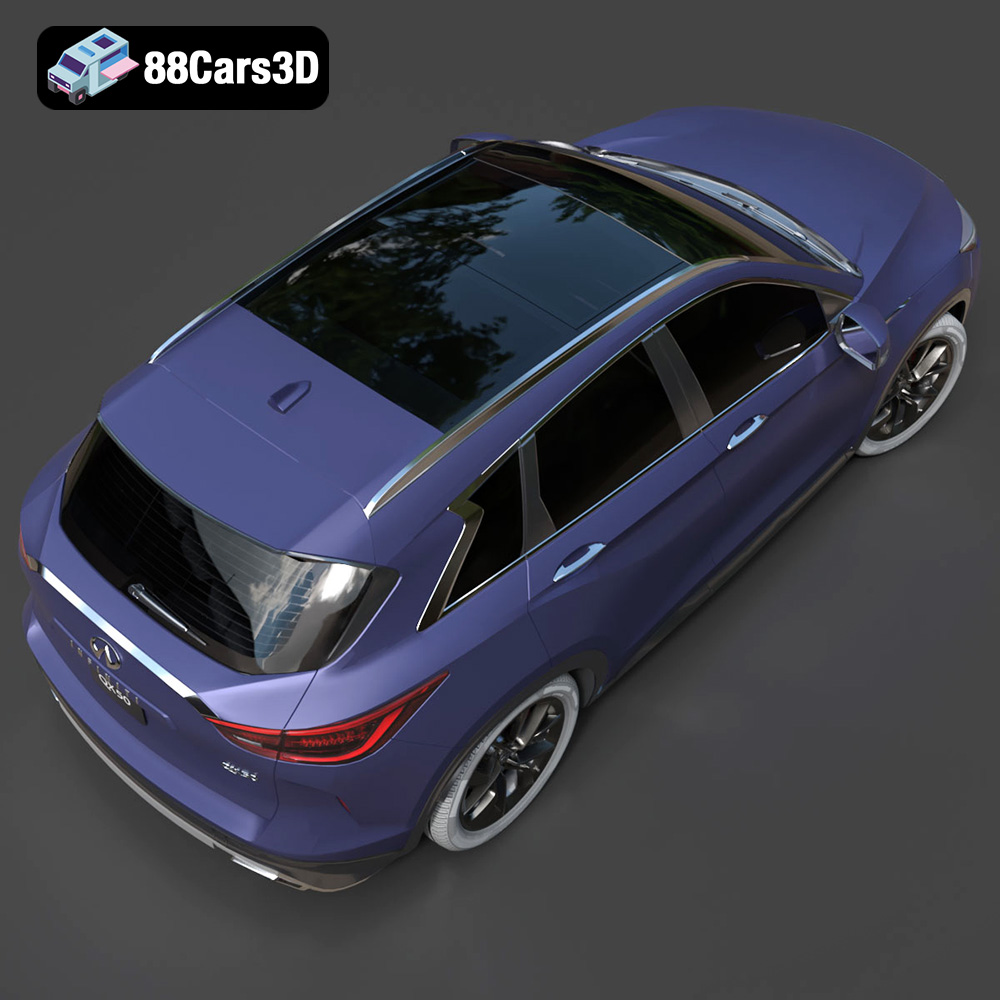
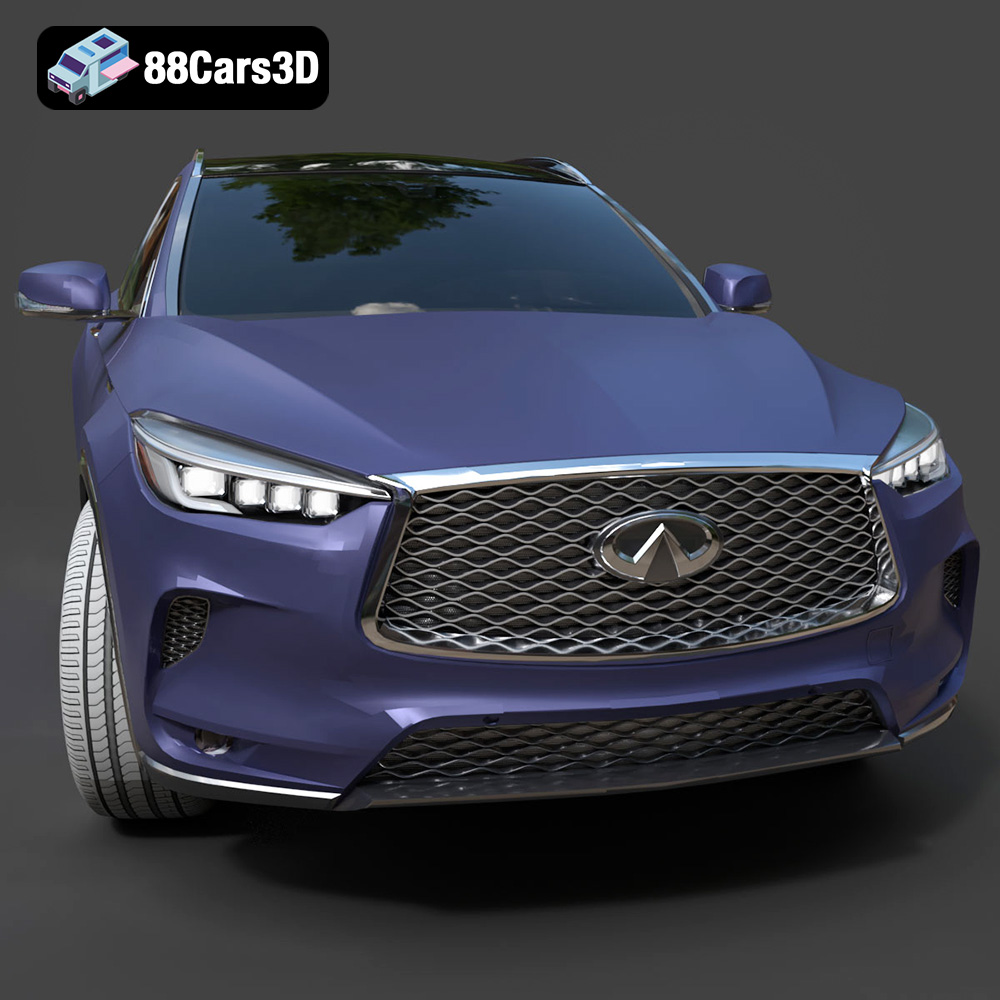
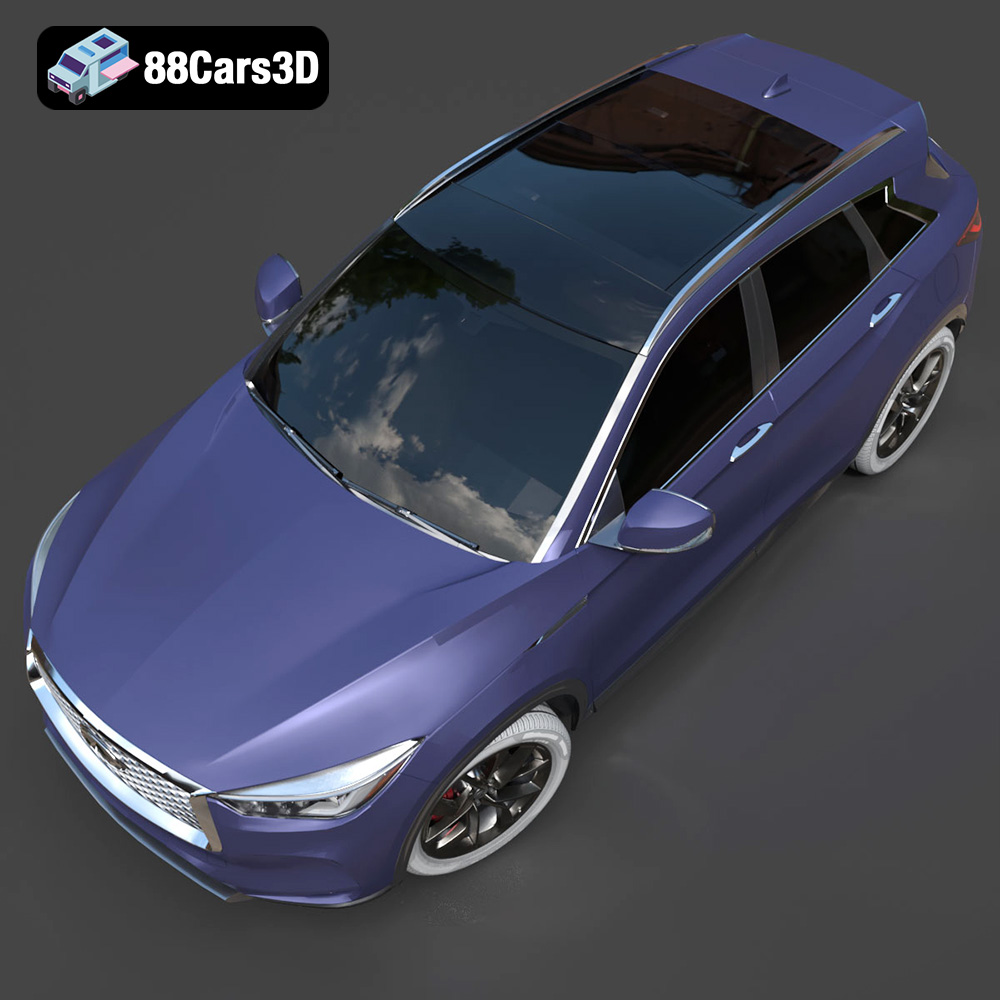
The ability to integrate a meticulously crafted vehicle into any scene, whether for a pristine showroom render, a chaotic action sequence in a game, or an interactive AR experience, hinges on the quality of the underlying 3D asset. Today, we’ll explore the intricate aspects of professional 3D car models, examining the technical specifications, workflow considerations, and diverse applications that elevate a good model to an exceptional one. As a prime example of such excellence, we’ll frequently reference the Infiniti QX50 2019 3D Model available on 88cars3d.com, a platform dedicated to providing premium automotive 3D assets for discerning professionals.
A truly professional 3D car model goes far beyond a simple visual likeness. It’s a carefully constructed digital sculpture designed for maximum flexibility, performance, and accuracy across various demanding scenarios. The Infiniti QX50 2019 3D Model exemplifies these characteristics, offering a foundation that artists and developers can trust.
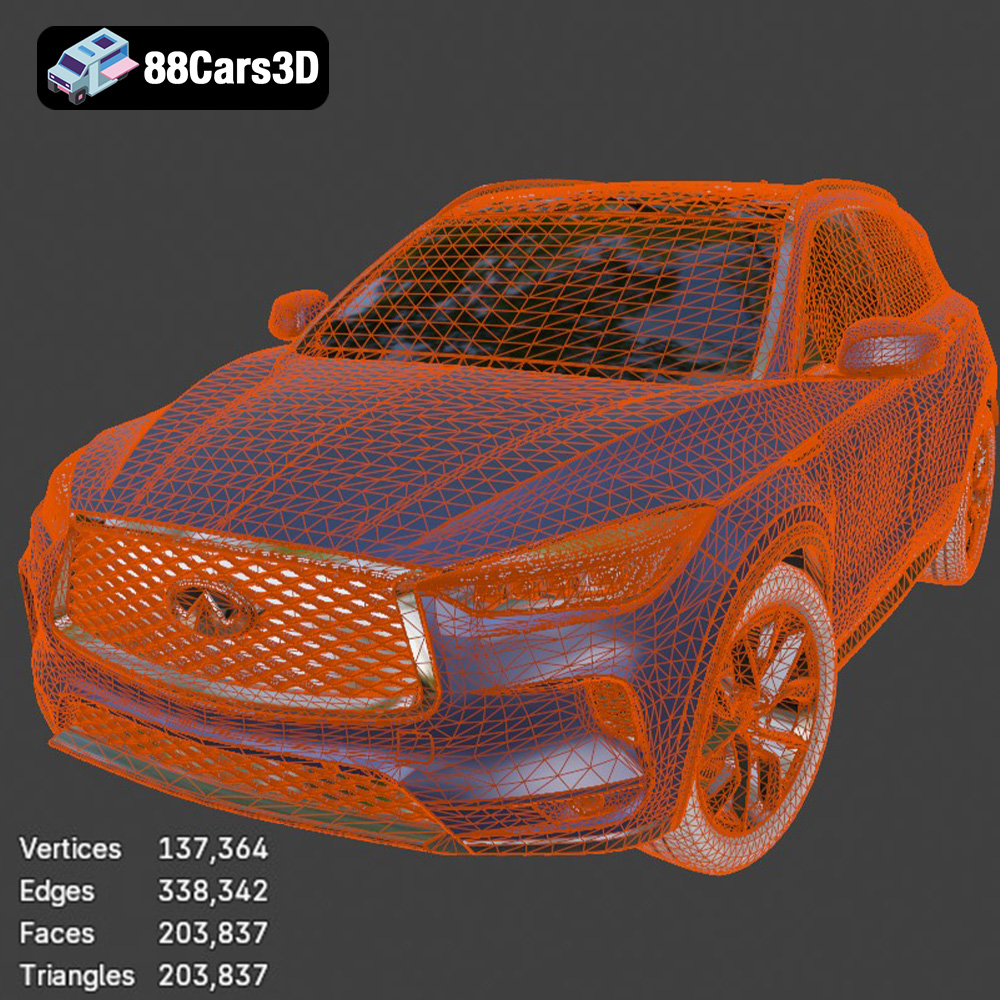
The bedrock of any high-quality 3D asset is its geometry and topology. For automotive models, this means curves are smooth and continuous, panels align perfectly, and every detail, from shut lines to intricate grilles, is accurately represented. “Clean geometry” isn’t just an aesthetic preference; it’s a technical necessity. It ensures that the model deforms predictably during animation, subdivides smoothly without artifacts, and renders efficiently. Professional-grade topology typically involves quad-based polygons, minimizing triangles and N-gons that can cause shading issues or hinder sculpting and rigging. This attention to underlying mesh structure is critical for achieving the exceptional realism seen in the Infiniti QX50 2019 3D Model.
Beyond the mesh, materials and textures are what breathe life into a 3D car. Premium models feature physically based rendering (PBR) materials that accurately simulate how light interacts with different surfaces – paint, glass, chrome, rubber, leather. This involves detailed maps for albedo (color), roughness, metallic, normal, and displacement. A well-prepared material setup ensures the model performs outstandingly under varied lighting conditions, from soft studio setups to harsh outdoor sunlight. The Infiniti QX50 2019 3D Model boasts realistic materials that are designed to react credibly within modern rendering engines, contributing significantly to its stunning aesthetics.
A versatile 3D car model must be scalable. This means it can be optimized for real-time applications like games or AR/VR experiences, or it can be used at full fidelity for high-resolution cinematic renders. Often, this involves having multiple levels of detail (LODs) or a clean base mesh that can be easily decimated or subdivided as needed. High-polygon counts are crucial for close-up detail in cinematic renders, while optimized low-polygon versions are essential for maintaining smooth frame rates in interactive environments. The clean geometry and well-defined structure of a model like the Infiniti QX50 2019 allow for straightforward optimization without sacrificing visual integrity.
The world of 3D modeling is rich with diverse software ecosystems, each with its own preferred file formats. A professional 3D asset, especially one as detailed as the Infiniti QX50 2019 3D Model, must offer compatibility across these platforms to be truly versatile. Understanding the nuances of each format is crucial for artists and developers to choose the right tool for the job. Here’s a breakdown of the formats often included with premium 3D car models:
The .blend format is the native file type for Blender, an incredibly popular open-source 3D creation suite. A .blend file typically includes the full Blender scene: the 3D model, its materials, textures, lighting setup, cameras, and even animation data. For users working within Blender, this format offers maximum editability, allowing for seamless modifications to topology, UVs, materials, and scene composition. It’s ideal for artists who want to delve deep into the model’s construction, make custom adjustments, or integrate it into their existing Blender projects with minimal effort. The Infiniti QX50 2019 3D Model’s .blend file provides a complete, editable scene ready for immediate use or customization.
.fbx (Filmbox) is a proprietary file format developed by Autodesk, widely recognized as the industry standard for exchanging 3D data between various applications, especially for game development. It excels at preserving complex data like meshes, materials, textures, animations, and skeletal data. This makes it ideal for pipelines involving Unreal Engine, Unity, and other real-time environments. An .fbx file ensures that your model, with its hierarchy and basic material assignments, can be imported with high fidelity into these engines, ready for further optimization and integration. For the Infiniti QX50 2019, the .fbx variant is game-engine ready, facilitating a smooth transition into interactive projects.
The .obj (Wavefront OBJ) format is one of the oldest and most universally supported 3D file formats. It’s a simple, text-based format that primarily stores geometry data (vertices, normals, texture coordinates, and faces) and can reference external .mtl (material) files for basic material properties. While it doesn’t support advanced features like animation or rigging, its widespread compatibility makes it a safe choice for cross-software transfers. If you need to import the Infiniti QX50 2019 into a niche 3D application or simply need a clean geometric mesh, .obj is an excellent choice for universal access.
.glb (GLB format, a binary form of glTF – GL Transmission Format) is an increasingly important format optimized for efficient transmission and loading of 3D scenes and models, particularly in web-based applications, AR (Augmented Reality), and VR (Virtual Reality). It packages 3D model data, textures, and animations into a single, self-contained binary file, making it incredibly easy to share and deploy. Its efficiency and widespread support across various platforms make the .glb version of the Infiniti QX50 2019 perfect for interactive digital experiences and mobile applications.
.stl (Stereolithography) is the de facto standard file format for 3D printing. It represents a 3D model as a collection of unconnected triangular facets, without color, texture, or other CAD attributes. While simple, its ubiquity in prototyping and manufacturing makes it essential for physical output. If your project involves bringing the Infiniti QX50 2019 into the physical realm, perhaps for creating scale models or design prototypes, the .stl file is the go-to format for accurate 3D printing output.
.ply (Polygon File Format or Stanford Triangle Format) is a file format for storing 3D data from 3D scanners. It can store a variety of properties, including color, transparency, surface normals, and range data, alongside the standard vertices and faces. It’s often used for precision mesh data, particularly in scientific, engineering, or CAD applications where detailed analysis and reconstruction are required. The .ply variant of the Infiniti QX50 2019 3D Model is suitable for precise measurements, simulations, or integration into CAD workflows.
The .unreal format, or more accurately, an asset specifically configured for Unreal Engine, implies a highly optimized and pre-configured asset designed for direct import and use within Unreal Engine. This means materials are often set up with Unreal’s PBR shaders, textures are correctly packed, and the model might include specific LODs or collision meshes tailored for the engine’s requirements. This pre-configuration saves significant time and effort for game developers and real-time visualization artists, ensuring that the Infiniti QX50 2019 can be dropped into an Unreal project with minimal fuss.
.max is the native file format for Autodesk 3ds Max, another industry-leading 3D modeling, animation, and rendering software. Similar to .blend, a .max file contains the complete scene, including geometry, materials, lighting, cameras, and animation data. For professionals working primarily in 3ds Max, this format offers the highest level of editability and ensures all scene-specific settings, like V-Ray or Corona Renderer materials, are preserved. The editable 3ds Max file of the Infiniti QX50 2019 is invaluable for complex rendering and animation projects, providing a robust starting point for high-end visualizations.
The availability of such a comprehensive array of file formats for the Infiniti QX50 2019 3D Model underscores its versatility and the commitment of 88cars3d.com to professional workflows.
Photorealistic automotive rendering is an art form that blends technical proficiency with an keen eye for aesthetics. Leveraging advanced software like 3ds Max or Blender, artists can transform a static 3D model into an image indistinguishable from a photograph. The Infiniti QX50 2019 3D Model provides the perfect foundation for achieving this level of realism.
For many professional rendering studios, 3ds Max, coupled with powerful renderers like V-Ray or Corona, is the cornerstone of their workflow. The .max file for the Infiniti QX50 2019 is pre-configured to integrate seamlessly into these environments. Artists can immediately benefit from the model’s clean topology and robust material definitions. The focus then shifts to crafting sophisticated lighting scenarios, choosing dynamic camera angles, and fine-tuning material properties like paint flake, reflectivity of chrome, and translucency of glass to achieve stunning realism. The “fully modeled interior” of the Infiniti QX50 2019 is a distinct advantage here, allowing for breathtaking interior shots or dynamic external renders that showcase cabin details through windows.
Achieving photorealism is heavily dependent on accurate lighting. Utilizing HDRI (High Dynamic Range Image) maps for global illumination, coupled with targeted area lights or spotlights, can recreate any environment – from a sunny parking lot to a moody studio. The materials on the Infiniti QX50 2019, designed for outstanding performance under varied lighting conditions, react correctly to these setups, ensuring accurate reflections, shadows, and color shifts. Understanding how light bounces off different surfaces and affects perception is key to making the digital model truly believable.
Even the most perfect render benefits from post-production. Software like Adobe Photoshop or After Effects allows artists to add subtle atmospheric effects, color grading, lens flares, depth of field, and motion blur to enhance the final image. This stage refines the render, giving it that cinematic polish that makes it pop. The inherent quality of the Infiniti QX50 2019 3D Model ensures that the raw render output is already of such a high standard that post-production can focus on artistic enhancements rather than correcting fundamental flaws.
The interactive nature of game development and real-time visualization places unique demands on 3D assets. Performance, optimization, and seamless integration are paramount. The Infiniti QX50 2019 3D Model is engineered to excel in these high-stakes environments.
Game engines like Unreal Engine and Unity are at the forefront of real-time rendering. The .fbx and .unreal file formats of the Infiniti QX50 2019 are specifically tailored for these platforms. This means the model’s geometry is often optimized with appropriate polygon counts, UVs are clean for texture baking, and PBR materials are correctly set up to leverage the engine’s rendering capabilities. Developers can quickly import the model, apply physics, and integrate it into their game world, whether as a drivable vehicle, an environmental prop, or part of a cinematic sequence. The precise detailing and sophisticated design of this luxury crossover SUV translate beautifully into interactive experiences.
In real-time applications, managing performance is crucial. This is where Level of Detail (LOD) comes into play. A single high-resolution model would cripple frame rates if rendered at every distance. Professional game assets include multiple versions of the model, each with progressively lower polygon counts, designed to swap in and out based on the camera’s distance. The clean topology of the Infiniti QX50 2019 facilitates the creation of these LODs without noticeable visual pops, ensuring smooth gameplay and efficient resource utilization.
AR (Augmented Reality) and VR (Virtual Reality) demand real-time performance combined with the utmost visual fidelity to create convincing immersion. Models need to be optimized for mobile chipsets (for AR) or high-refresh-rate VR headsets. The .glb format, included with the Infiniti QX50 2019, is particularly well-suited for these applications due to its efficient packaging and broad compatibility. Imagine placing the Infiniti QX50 2019 in your driveway via an AR app or exploring its fully modeled interior in a virtual showroom – these experiences are made possible by such meticulously crafted and optimized 3D car models.
The utility of a high-quality 3D car model extends far beyond visual entertainment. It serves as a foundational asset for various industrial and scientific applications, from physical prototyping to complex simulations. The Infiniti QX50 2019 3D Model, with its diverse file format offerings, is a versatile tool for these advanced uses.
For designers and engineers, sometimes a physical representation is necessary. The .stl format provided with the Infiniti QX50 2019 is specifically geared towards 3D printing, enabling the creation of scale models for design reviews, aerodynamics testing, or even promotional giveaways. The precision of the digital model translates directly into the accuracy of the physical print. Similarly, the .ply format offers a detailed polygon mesh suitable for further analysis or integration into CAD (Computer-Aided Design) software, enabling engineers to study the model’s structure, perform simulations, or even reverse-engineer components for manufacturing.
In fields like automotive engineering, safety testing, and autonomous driving development, 3D car models are crucial for simulations. They act as “digital twins” of real-world vehicles, allowing engineers to test scenarios, predict performance, and refine designs in a virtual environment without the cost and risk of physical prototypes. A highly accurate model like the Infiniti QX50 2019 can be integrated into physics engines to simulate crash dynamics, aerodynamic flows, or vehicle handling characteristics. This level of detail and accuracy is vital for generating reliable data and making informed design decisions.
In an industry where time is money and quality is paramount, investing in professional-grade 3D assets is not merely a convenience; it’s a strategic advantage. The Infiniti QX50 2019 3D Model from 88cars3d.com encapsulates the value proposition of such assets.
Creating a 3D car model from scratch, especially one with the meticulous detail and clean topology of the Infiniti QX50 2019, is an incredibly time-consuming and resource-intensive endeavor. It requires expert 3D modelers, texture artists, and a significant investment in software and hardware. By purchasing a ready-made, high-quality asset, studios and individual artists can drastically cut down on development time and costs, allowing them to focus their efforts on creative direction, scene assembly, animation, or other value-adding tasks. This efficiency is a critical factor in meeting tight deadlines and staying within budget.
When you acquire a model like the Infiniti QX50 2019 3D Model from a reputable source like 88cars3d.com, you are guaranteed a product that adheres to the strictest industry standards. This means clean geometry, optimized topology, accurate scale, and professional material setups that ensure outstanding performance across various software and rendering engines. Such reliability prevents unforeseen technical hurdles, rendering artifacts, or performance issues that can plague projects using lower-quality assets. The “strictest industry standards” commitment ensures that this model is ready for any professional challenge.
The sheer number of included file formats – .blend, .fbx, .obj, .glb, .stl, .ply, .unreal, .max – makes the Infiniti QX50 2019 3D Model incredibly versatile. Whether your project is an architectural visualization, a high-end commercial, a video game, an AR/VR experience, or a 3D print, this single asset provides a reliable solution. This cross-platform compatibility ensures that the investment in a premium 3D car model pays dividends across multiple projects and integrates seamlessly into diverse professional applications.
The world of 3D visualization thrives on quality, precision, and efficiency. High-fidelity 3D car models are central to this ecosystem, serving as the backbone for everything from cinematic automotive rendering to interactive game environments and industrial simulations. The Infiniti QX50 2019 3D Model stands as a testament to what a professional-grade asset should be: meticulously detailed, expertly optimized, and universally compatible.
Its clean geometry, professional topology, realistic materials, and comprehensive array of file formats empower artists and developers to achieve stunning visual results and streamline their workflows across a myriad of applications. Whether you’re a seasoned professional seeking to enhance your next project or an aspiring artist looking for a solid foundation, embracing high-quality 3D car models like the Infiniti QX50 2019 from 88cars3d.com is a definitive step towards excellence in digital automotive design and visualization.
Discover the exceptional realism and precision of the Infiniti QX50 2019 3D Model. Crafted with meticulous attention to detail, this premium digital asset accurately reflects the stunning aesthetics and sophisticated design of the renowned luxury crossover SUV.
This model features exceptionally clean geometry, professional-grade topology, and realistic materials that ensure outstanding performance under varied lighting conditions. Every element, from its bold exterior curves to its fully modeled interior, has been constructed to meet the strictest industry standards for professional 3D design.
Designed for unparalleled versatility, this 3D vehicle is ready to be integrated seamlessly into a wide range of professional applications. Whether you are working on advanced game development, creating photorealistic architectural renders, building immersive AR/VR experiences, or producing cinematic visual effects, this asset delivers reliable and visually striking results.
$39.99
.2019
.arvr
.blend
.car3dmodel
.crossover
.fbx
.gameasset
.glb
.infiniti
.max
.obj
.ply
.qx50
.rendering
.simulation
.stl
.unreal
SUV