Get 20% OFF All Premium 3D & STL Models!

In the vibrant world of digital creation, a high-quality 3D automotive model is far more than just a virtual object; it’s a meticulously crafted asset that brings visions to life. From photorealistic advertisements to immersive game environments and groundbreaking AR/VR experiences, the demand for authentic, technically sound vehicle models has never been greater. Enthusiasts and professionals alike seek out assets that not only look stunning but are also engineered for seamless integration into diverse pipelines.
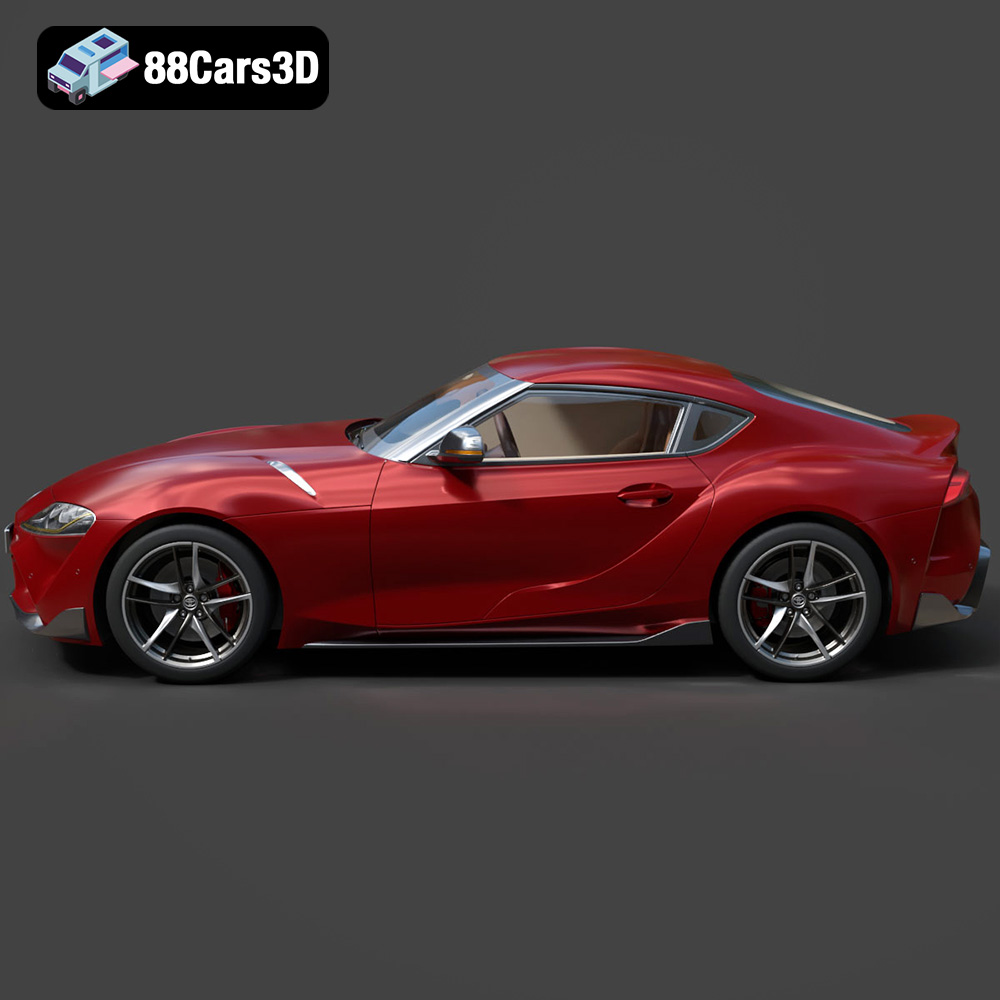
Among the pantheon of iconic sports cars, the Toyota Supra has always held a special place. Its return with the 2020 model marked a triumphant fusion of heritage and modern performance, characterized by an aggressive aerodynamic profile, signature double-bubble roof, and a powerful B58 3.0L turbocharged inline-six engine. Capturing this essence in a digital format requires an unparalleled attention to detail and a deep understanding of 3D modeling principles. This is precisely what the Toyota Supra 2020 3D Model offers, providing creators with an asset that embodies both aesthetic fidelity and technical robustness, ready for any professional application.
The versatility of a 3D automotive asset often hinges on the range of file formats it supports. Each format serves a specific purpose, catering to different software ecosystems, project requirements, and end-use scenarios. Knowing which format to choose is crucial for an efficient workflow and optimal results. The Toyota Supra 2020 3D Model, for instance, offers a comprehensive suite of formats, ensuring maximum compatibility.
The .blend file is Blender’s native format, renowned for its open-source nature and powerful feature set. When you acquire a .blend file, you’re getting a fully editable scene, complete with materials, textures, lighting setups, and even animation data if present. For users of Blender, this format offers the most flexibility for customization, allowing artists to delve into the model’s modifier stacks, adjust UV mapping, reconfigure shaders, or modify geometry at a fundamental level. It’s the go-to for artists who want to tweak every aspect of the Supra model’s appearance or integrate it deeply into a Blender-centric project.
.fbx (Filmbox) is arguably the most widely used proprietary 3D file format for interchanging data between various 3D software applications and game engines like Unreal Engine and Unity. Developed by Autodesk, FBX can store comprehensive scene information, including models, materials, textures (often embedded or referenced), animations, cameras, and lights. Its robustness and broad support make it ideal for pipelines where assets need to move seamlessly between different stages of production. For the Supra model, an FBX ensures reliable import into a real-time environment, preserving critical data like pivot points for wheel rotation or suspension articulation, and ensuring that its optimized ~250,000 triangle count is maintained.
The .obj (Wavefront Object) format is a fundamental, universally compatible file type that primarily stores geometry data – vertices, normals, UV coordinates, and faces. While it’s excellent for cross-software compatibility, it typically references external material definition (.mtl) files and texture images. OBJ files are known for their simplicity and widespread support, making them a safe choice when compatibility is paramount, especially for older software or when you only need the raw mesh data of the Toyota Supra 2020 before applying your own materials.
.glb (GL Transmission Format Binary) is the binary version of glTF, a royalty-free specification for the efficient transmission and loading of 3D scenes and models by applications. GLB files package all assets (geometry, materials, textures, animations) into a single file, making them highly optimized for web-based 3D viewers, AR/VR applications, and mobile experiences. Its compact size and ease of integration make it perfect for showcasing the Supra in a virtual showroom on a website or deploying it quickly into a mobile AR configurator.
.stl (Stereolithography) is the de facto standard format for 3D printing. It represents a 3D model as a series of connected triangles, defining only the surface geometry without color or texture information. While simple, it’s universally accepted by slicing software. For hobbyists or professionals looking to physically manifest the Toyota Supra 2020 3D Model, an STL file is essential. The product description’s detailed print settings for recommended scale (1:12 / 1:18 / 1:24), layer height, and support requirements are specifically tailored for generating a high-quality physical replica.
The .ply (Polygon File Format) is another widely supported format primarily used for storing 3D data from 3D scanners. It can store not only geometry but also color, transparency, and sometimes even surface normal information per vertex or per face. While less common for typical automotive design asset delivery, it’s a robust format for precision mesh data, useful in applications requiring accurate surface analysis or when integrating scanned data with a CAD model of the Supra.
The .unreal designation often refers to an asset that has been specifically prepared and perhaps packaged within an Unreal Engine project structure or a format that directly imports and configures within Unreal with minimal setup. This might involve pre-configured materials, collision meshes, LODs (Levels of Detail), and blueprint setups. An “engine-ready” asset like the Supra in this format significantly accelerates development time for game developers, allowing immediate deployment into a real-time environment without complex material conversion or setup.
Similar to .blend for Blender, .max is the native file format for Autodesk 3ds Max, a leading software in architectural visualization, broadcast, and game development. A .max file provides the full scene with all its components, including modifiers, animation keys, material graphs, and complex rendering setups. For studios relying on 3ds Max, having the Supra model in this format grants complete control for high-end cinematic rendering, detailed animation sequences, or integration into a sophisticated architectural visualization project.
For game developers, integrating a vehicle model into an engine like Unreal or Unity presents a unique set of challenges and opportunities. The Toyota Supra 2020 3D Model is specifically designed with these environments in mind, offering critical optimizations that streamline the development process.
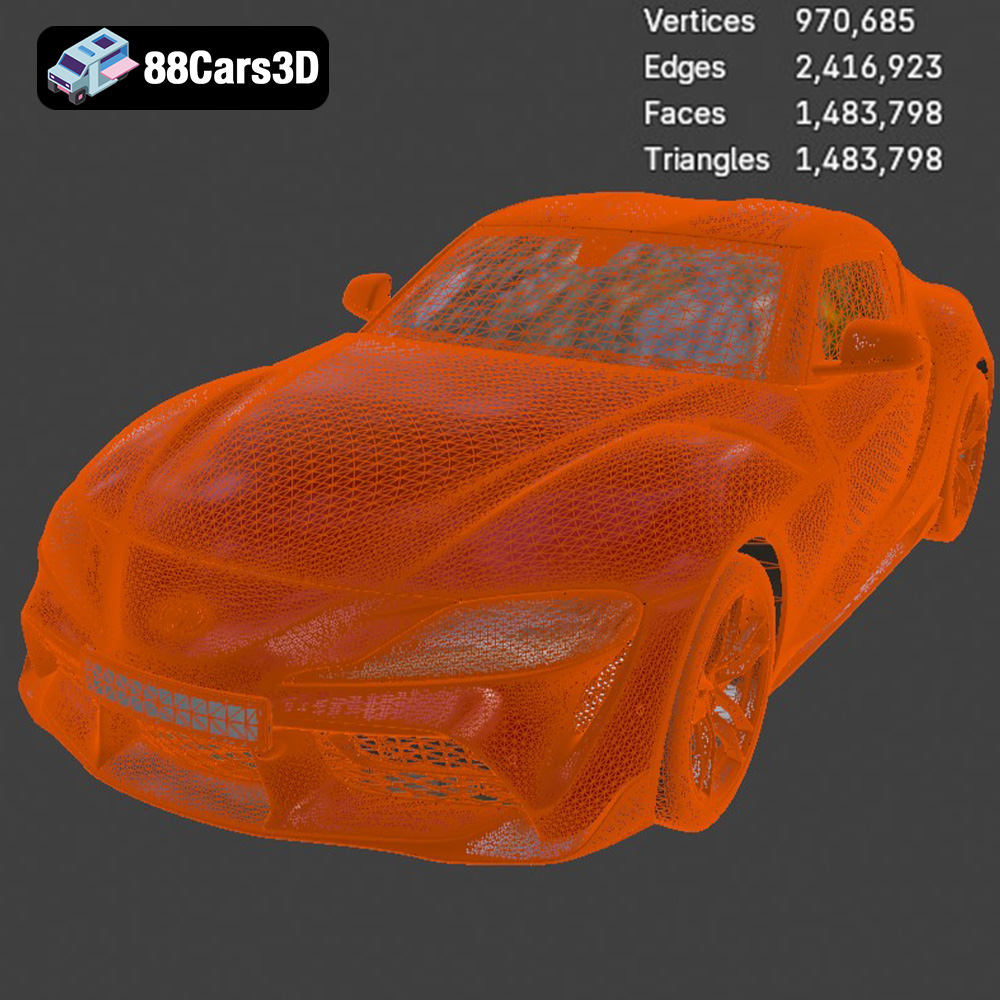
One of the primary concerns in game development is performance. Every asset contributes to the overall polygon budget of a scene. The Supra model’s approximately 250,000 triangles strikes an excellent balance, providing high visual fidelity without overburdening the rendering pipeline. This “game-ready” optimization is crucial for maintaining smooth frame rates, especially in open-world games or racing titles where multiple vehicles might be on screen simultaneously. Clean geometry and intelligent material separation further aid in efficient rendering, ensuring that the engine can process the model’s various components with minimal overhead.
Beyond static representation, interactive vehicle models require careful setup for animation and physics. The Supra model comes with separate wheels, suspension, and steering components, each with proper pivot setups. This enables realistic wheel rotation, suspension travel simulation, and accurate steering behavior – all vital for an authentic driving experience. Developers can easily integrate this into vehicle physics systems, whether it’s a simple arcade racer or a complex simulation. The model’s real-world scale accuracy also ensures that physics calculations behave predictably within the game engine’s environment.
While the model provides a solid base, game engines require specific material setups to leverage their rendering capabilities. The provided clean geometry and material separation allow for easy assignment of PBR (Physically Based Rendering) materials within Unreal Engine or Unity. Developers can customize body colors (e.g., authentic factory colors or custom finishes), adjust tire textures for different terrains, and modify material finishes (matte, gloss, metallic) to match the game’s aesthetic or provide player customization options. This flexibility is key for creating diverse car fleets or allowing players to personalize their Supra.
High-end automotive rendering demands a level of detail and precision that few 3D assets can deliver. For advertising, product configurators, or architectural visualization, the Toyota Supra 2020 3D Model stands out as a premium choice, offering features that enable stunning photorealistic results.
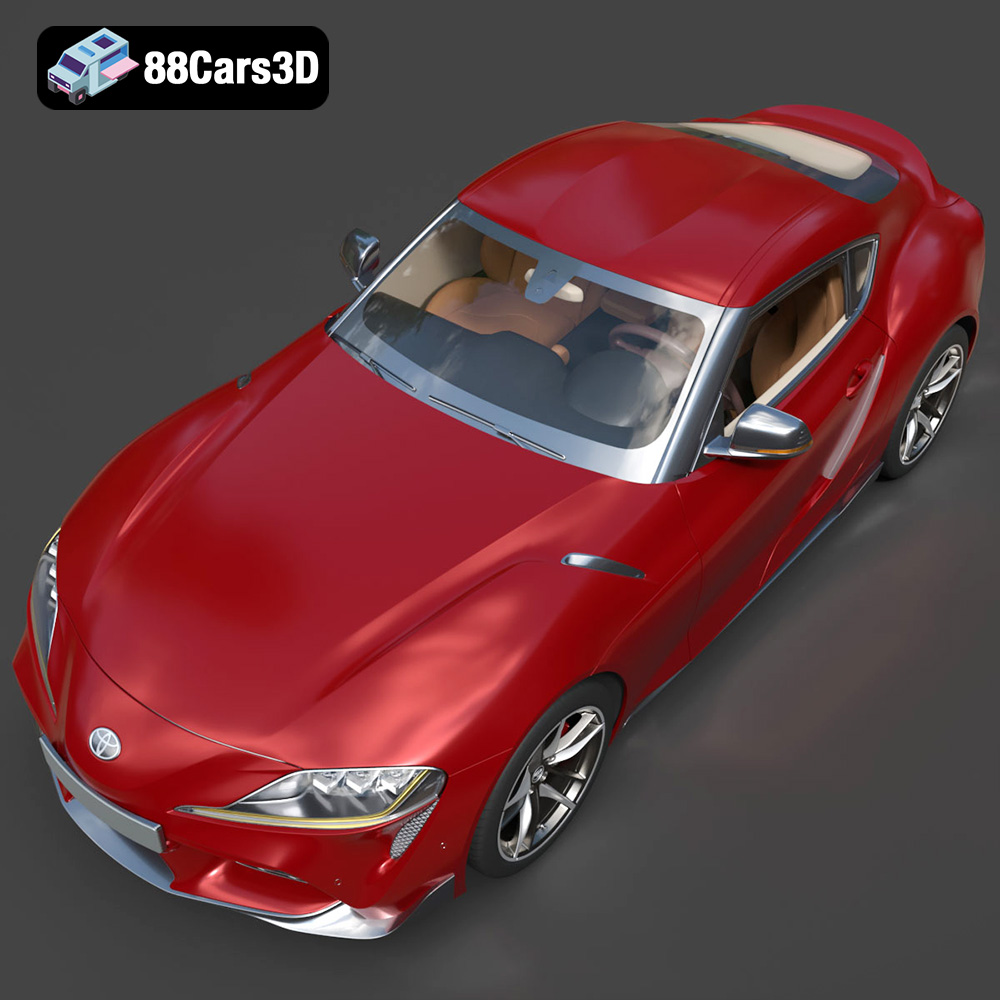
The model’s detailed product description highlights its faithful recreation of the Supra’s most iconic features: the accurate frame geometry, aerodynamic proportions, high-resolution front LED headlamps, distinctive taillight assemblies, and precision-modeled alloy wheels with realistic low-profile performance tires. But the attention to detail extends to the interior, with highly detailed sports bucket seats, an accurate leather-wrapped steering wheel, a high-fidelity digital instrument cluster, and an intricate center console. This level of realism ensures that whether the camera is sweeping over the exterior in a cinematic shot or focusing on the cockpit for a first-person perspective, the model holds up under scrutiny.
In rendering software like 3ds Max or Blender, artists can take full advantage of the model’s clean topology to create exquisite materials. Using V-Ray, Corona Renderer in 3ds Max, or Cycles/Eevee in Blender, artists can apply complex metallic flake paints, simulate realistic tire rubber, render intricate reflections on chrome accents, and illuminate the detailed interior with emissive displays. The “intelligent material separation” allows for precise control over each surface, enabling realistic wear, grime, or custom liveries. The ability to adapt lighting for different environments – from a studio setup to an exterior street scene – transforms the Supra into a versatile canvas for visual storytelling.
Imagine a virtual car configurator where potential buyers can explore every angle of the Toyota Supra 2020, change its paint color in real-time, inspect the stitching on the seats, and even see how different wheel options look. The optimization and fidelity of this 3D model make such applications feasible. In architectural visualization, placing a photorealistic Supra in the driveway of a modern home renders the scene more dynamic and appealing, adding a touch of lifestyle and aspiration. For companies looking for top-tier 3D car models for these high-stakes projects, 88cars3d.com offers a curated selection designed for maximum impact.
The rise of Augmented Reality (AR) and Virtual Reality (VR) has opened up new frontiers for 3D content. Automotive models are particularly suited for these immersive platforms, enabling everything from virtual test drives to interactive product showcases. The Toyota Supra 2020 3D Model is ideally poised for these cutting-edge applications.
AR/VR experiences demand extreme optimization due to the need for high frame rates and the processing limitations of mobile or standalone VR headsets. The Supra model’s game-ready ~250,000 triangle count is a significant advantage, allowing it to render efficiently in real-time AR/VR engines without sacrificing visual quality. Its inclusion of the .glb format further underscores its readiness for web-based and mobile AR/VR deployments, where efficiency and single-file packaging are paramount.
Imagine wearing a VR headset and being able to walk around the Supra 2020 in a virtual garage, opening doors, sitting inside, and even customizing its features with hand gestures. Or envision an AR experience where you can place a life-sized Supra in your driveway using your smartphone. These interactive scenarios are becoming increasingly common, driven by high-quality 3D assets. The Supra model’s separated components (wheels, suspension, steering) facilitate these interactions, allowing for dynamic visual changes and simulated movements within the immersive environment.
AR/VR applications extend beyond consumer entertainment. In professional settings, the Supra model could be used for mechanic training simulations, allowing technicians to virtually explore the detailed B58 3.0L engine bay and practice maintenance procedures. Automotive designers could use it in a VR environment for collaborative design reviews, identifying potential issues or refining aesthetics in a spatially accurate context long before physical prototypes are built. The precision and detail of the model provide a robust foundation for such critical industrial applications.
While digital visualization is powerful, the ability to bring a virtual model into the physical world through 3D printing offers a unique form of engagement. The Toyota Supra 2020 3D Model is not just for screens; it’s designed to be a tangible collectible.
The inclusion of the .stl format makes the Supra model directly compatible with 3D printers. This format simplifies the complex mesh into a printable triangulated surface. However, preparing a 3D model for physical printing involves more than just selecting a file type; it requires careful consideration of structural integrity, detail reproduction, and post-processing.
The provided print settings are invaluable for hobbyists and professionals alike:
Post-processing, including sanding, priming, and applying authentic factory colors with metallic finishes, elevates a raw print into a display-worthy replica. This attention to physical production details ensures that the quality evident in the digital model translates directly to the physical realm.
The digital landscape for automotive enthusiasts and professionals is constantly evolving, driven by innovation in rendering, game development, and immersive technologies. At the heart of this evolution are high-quality 3D models that serve as foundational assets across myriad applications. The Toyota Supra 2020 3D Model exemplifies this versatility, offering a meticulously crafted asset that excels in everything from real-time game engines to photorealistic cinematic renders and even physical 3D prints.
Its optimized geometry, comprehensive file format support (.blend, .fbx, .obj, .glb, .stl, .ply, .unreal, .max), and precise recreation of the Supra’s iconic features make it an indispensable tool for any digital artist or developer. Whether you’re building the next great racing game, designing a virtual showroom, creating stunning visualizations, or bringing a detailed miniature to life through 3D printing, this model provides the technical foundation and visual fidelity required for professional results. For those seeking premium 3D car models that truly deliver on their promise, exploring the curated selection at 88cars3d.com is a crucial step towards unlocking new creative possibilities.
The Toyota Supra 2020 marks the triumphant return of a legendary sports car icon. Fusing a rich heritage with modern engineering, this masterpiece boasts an aggressive aerodynamic profile, signature double-bubble roof, and a meticulously detailed B58 3.0L turbocharged inline-six engine bay. Every curve, from the striking LED headlight clusters to the prominent rear lip spoiler and dual-branch exhaust system, has been faithfully recreated to capture its powerful stance and dynamic aesthetics.
Crafted with premium visual fidelity, this 3D model features a highly optimized topology of approximately 250,000 triangles, making it exceptionally game-ready without sacrificing extreme detail. Its clean geometry and intelligent material separation ensure seamless integration into real-time rendering pipelines, making it a top-tier asset for game development, AR/VR applications, high-end animation, and architectural visualization.
Perfect for street racing environments, virtual showrooms, digital car configurators, and cinematic automotive animations.
.blend, .fbx, .obj, .glb, .stl, .ply, .unreal, .max
Tags:
toyota, supra-2020, sports-car, coupe, jdm, game-ready, low-poly, optimized, car-3d-model, game-asset, rendering, vr-ar, blend, fbx, obj, glb, stl, ply, unreal, maxVespa VNB 125-B 3D Model 3D Printable STL
$39.99
.blend
.coupe
.fbx
.glb
.jdm
.max
.obj
.ply
.rendering
.sports car
.stl
.toyota
.unreal
car-3d-model
game asset
game-ready
low-poly
optimized
supra-2020
VR/AR