Get 20% OFF All Premium 3D & STL Models!

In the rapidly evolving world of digital content creation, the demand for high-fidelity 3D assets continues to surge. From cinematic automotive advertisements to immersive open-world video games and cutting-edge architectural visualizations, a meticulously crafted 3D car model is often the linchpin of a successful project. Professionals in these fields understand that the quality of their digital vehicles directly impacts the realism, performance, and overall impact of their work.
Today, we’re diving deep into the technical intricacies and creative possibilities offered by a prime example of such an asset: the Mercedes-Benz GLB-Class Mk1 AMG Line 2019 3D Model. This particular model, available on 88cars3d.com, exemplifies the meticulous attention to detail and optimization required for professional-grade 3D car models, making it an invaluable resource for automotive rendering specialists, game developers, and AR/VR creators alike. Join us as we explore the journey from concept to rendered masterpiece, highlighting how a well-engineered asset can elevate your projects.
Navigating the diverse landscape of 3D software and platforms necessitates a solid grasp of various file formats. Each format serves a specific purpose, offering unique advantages for different stages of a project, from initial modeling to real-time deployment and even physical fabrication. Understanding when and why to use each one is crucial for efficient workflow and compatibility.
The .blend file is Blender’s native format, encapsulating an entire scene, including mesh data, materials, textures, animations, cameras, lighting, and even modifiers and physics simulations. For users of Blender, this is the most comprehensive and editable format. When you download a .blend file like that of the Mercedes-Benz GLB-Class, you gain full access to the model’s construction, allowing for granular adjustments to topology, PBR materials, UV maps, and any included rigging. It’s ideal for artists who want to customize every aspect of the model, integrate it deeply into a Blender-centric pipeline, or extract specific components for other projects.
FBX (Filmbox) is a proprietary file format owned by Autodesk, widely recognized as the industry standard for 3D data exchange. It excels at transferring geometry, materials (with some limitations), textures, animations, and rigs between different 3D software applications and game engines like Unreal Engine and Unity. Its robust support for skeletal animations and complex scene data makes the .fbx format for the GLB-Class model incredibly valuable for game development and cinematics. It ensures that the hierarchical structure, pivot points, and any pre-setup animation for elements like wheels or steering are maintained across platforms.
OBJ (or Wavefront OBJ) is one of the oldest and most universally supported 3D file formats. It primarily stores geometric data – vertices, normals, UV coordinates, and faces – along with references to external material files (.mtl). While it doesn’t support animation or complex scene information, its widespread compatibility makes it an excellent choice for basic mesh exchange between almost any 3D software. The .obj version of our featured 3D car model is perfect for users who need a clean mesh for sculpting, retopology, or integrating into applications with limited format support, offering a reliable backbone for cross-software workflows.
GLB (GL Transmission Format Binary) is the binary version of glTF, a royalty-free specification for the efficient transmission and loading of 3D scenes and models by applications. It’s designed for performance and compactness, embedding all assets like textures, animations, and materials directly into a single file. The .glb format is rapidly becoming the go-to for web-based 3D, augmented reality (AR), and virtual reality (VR) experiences due to its optimized nature and ease of integration into browsers and mobile applications. For showcasing the Mercedes-Benz GLB-Class in a virtual showroom or an interactive mobile app, the .glb format is unparalleled.
STL (STereoLithography) is the de facto standard file format for 3D printing. It represents a 3D model as a series of connected triangles, defining only the surface geometry without color, texture, or other CAD attributes. While not ideal for rendering or animation, its simplicity and ubiquitous support among 3D printers and slicing software make it indispensable for physical fabrication. The .stl version of the GLB-Class model allows hobbyists and professionals to bring the digital design into the physical world, creating scale models with recommended settings for layer height, infill, and supports.
PLY (Polygon File Format or Stanford Triangle Format) is another format that describes 3D objects, commonly used for storing data from 3D scanners, CAD applications, and scientific visualization. It can store a wide range of properties, including color, transparency, surface normals, and even confidence values for each vertex. While less common for general animation or game development, the .ply format for the Mercedes-Benz GLB-Class model can be useful for precision engineering, reverse engineering, or integrating the model into specialized analysis software where mesh integrity and data attributes are paramount.
While not a distinct file extension in the same way as others (it typically refers to an imported FBX or similar asset within the Unreal Engine project structure), the inclusion of “.unreal” signifies that the model has been specifically prepared and tested for optimal performance within Unreal Engine. This often implies proper scaling, collision setups, level of detail (LODs) implementations, and materials configured to Unreal’s physically-based rendering (PBR) system. For developers using Unreal Engine, this pre-optimized asset can drastically reduce setup time and ensure the Mercedes-Benz GLB-Class looks and performs flawlessly in a real-time environment.
Similar to .blend for Blender, .max is the native project file format for Autodesk 3ds Max. It stores the entire scene, including geometry, materials, lighting, cameras, animations, and any modifiers or rigging applied within 3ds Max. For artists working in a 3ds Max pipeline, this format offers the highest level of editability and allows access to the full construction history and setup of the GLB-Class model. It’s an excellent choice for those who need to integrate the model into complex 3ds Max scenes, perform detailed animation, or leverage 3ds Max’s powerful rendering capabilities.
Creating a truly convincing 3D car model is an intricate process that demands both artistic vision and technical prowess. It involves translating complex real-world aesthetics and engineering into a digital format that can be manipulated, rendered, and interacted with across various platforms. The Mercedes-Benz GLB-Class Mk1 AMG Line 2019 3D Model exemplifies this synthesis, offering a highly detailed and optimized digital replica.
The GLB-Class, with its distinctive boxy silhouette and aggressive AMG Line styling, presents a unique challenge for digital artists. Accurate replication begins with meticulous attention to reference materials – blueprints, photographs, and real-world measurements. The model available on 88cars3d.com boasts accurate frame geometry and proportions, ensuring that the digital vehicle authentically mirrors its physical counterpart. This isn’t just about visual appeal; correct proportions are critical for realistic interactions in simulations and for seamless integration into architectural visualizations where scale is paramount.
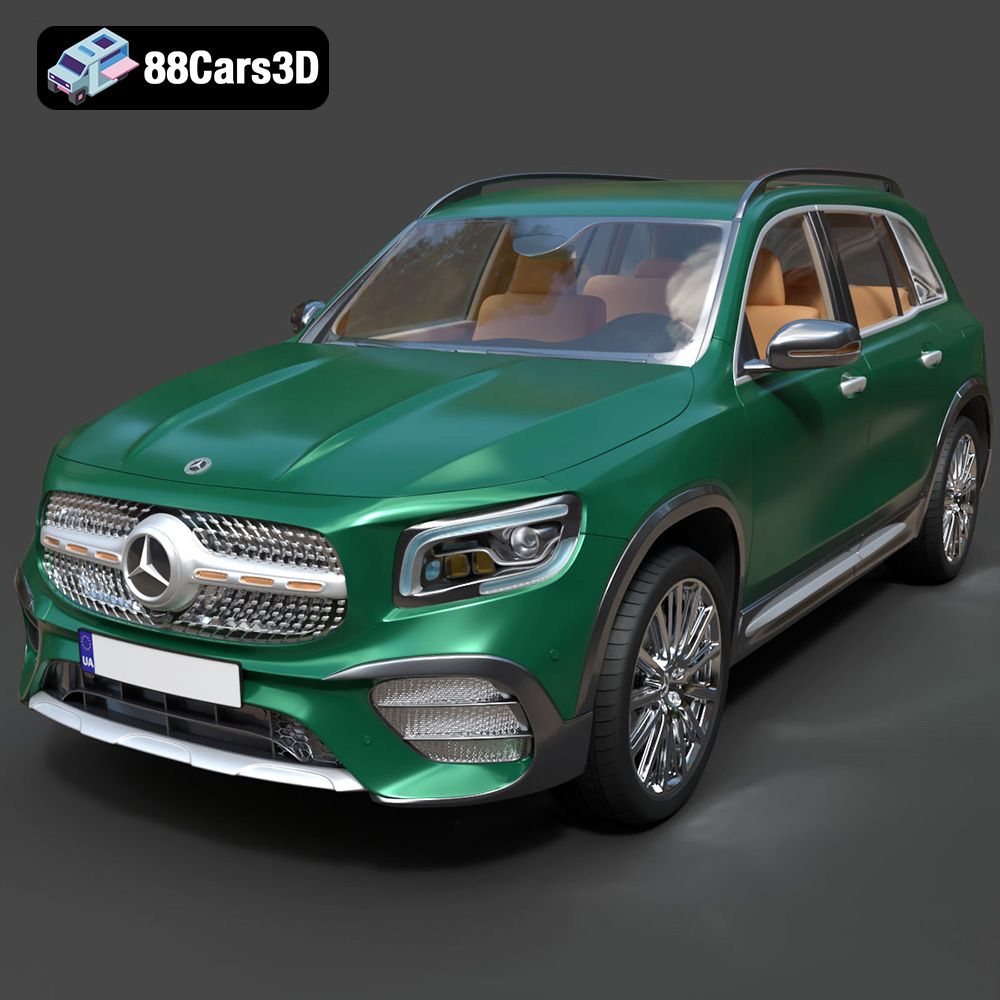
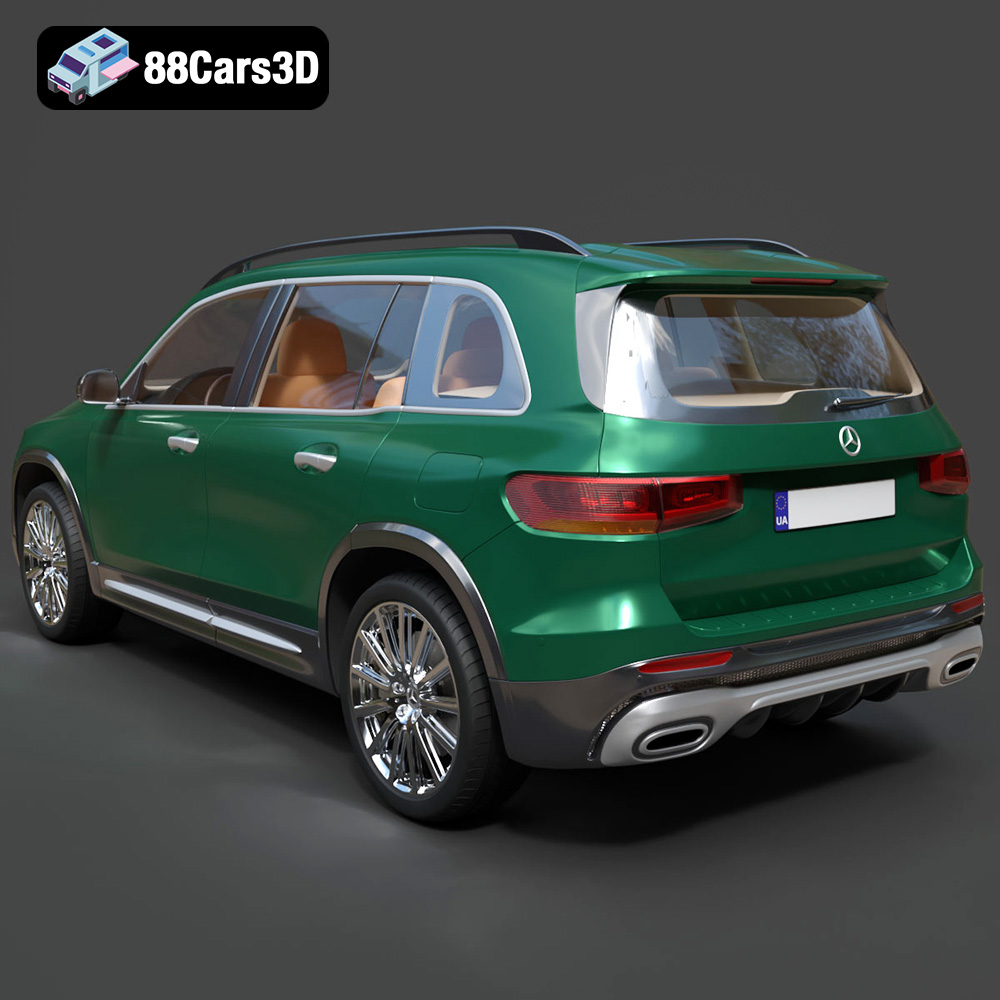
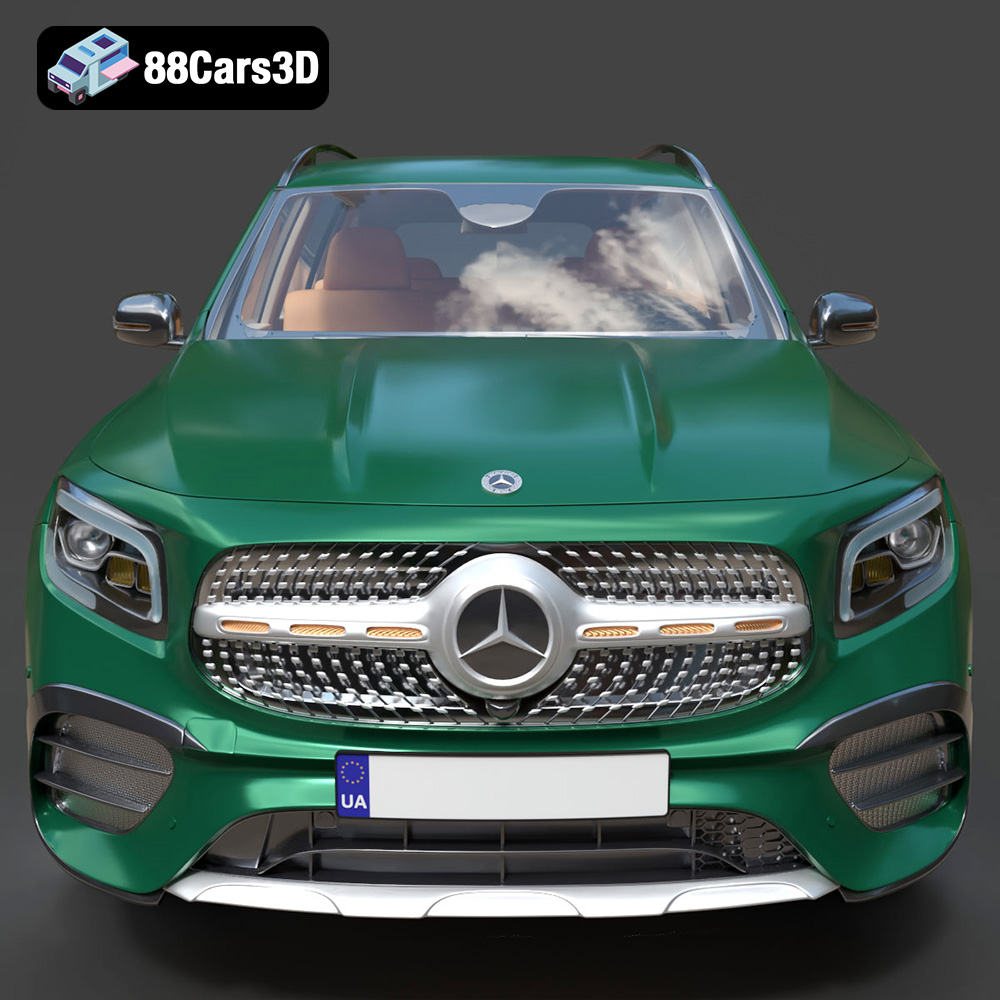
Beyond the overall form, the devil is in the details. The model includes specific AMG styling cues: the signature diamond radiator grille, sporty front aprons, and the prominent dual exhaust system. High-detail LED High Performance headlamps and distinctive taillight clusters are also faithfully recreated. These elements, often composed of multiple sub-objects and intricate material setups, are crucial for the model’s high-end visual realism, especially in close-up renders or cinematic sequences.
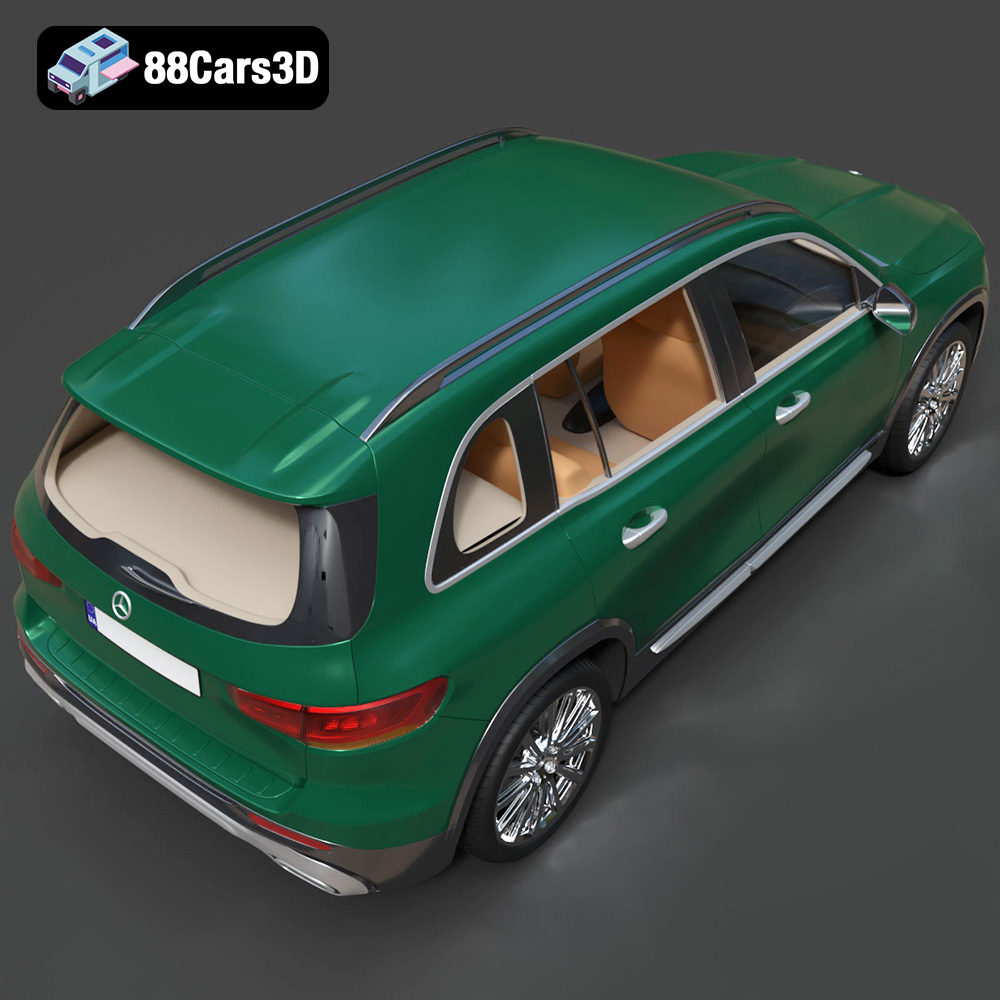
A truly professional 3D car model doesn’t stop at the exterior. The Mercedes-Benz GLB-Class Mk1 AMG Line 2019 3D Model extends its meticulous craftsmanship to the cockpit. Detailed sport seating with intricate stitching and contouring, a Nappa leather multifunction sports steering wheel with precise switchgear, and the accurate MBUX dual-screen digital instrument cluster and infotainment system are all carefully modeled. This level of interior detail is vital for first-person POV experiences in gaming, virtual tours, and even for showcasing the vehicle’s luxury features in a marketing context. Each button, vent, and display panel is represented with optimized geometry, ensuring a balance between visual quality and performance.
On the exterior, the model features authentic AMG 5-twin-spoke light-alloy wheels and performance tires, complete with realistic tread patterns. Even the sport-tuned suspension detailing and intricate engine block components are present, offering a comprehensive representation that holds up under scrutiny from all angles. For game developers, the separate wheels, suspension, and steering components are invaluable, as they facilitate seamless animation and realistic physics simulations.
High visual fidelity is only half the battle; a professional 3D asset must also be optimized for performance, especially when targeting real-time applications like games or AR/VR. This balance between realism and efficiency is a hallmark of truly valuable 3D car models.
The Mercedes-Benz GLB-Class model is advertised as “game-ready” with approximately 250,000 triangles. This polycount is a critical specification. For high-end cinematic rendering, one might use millions of polygons. However, for a real-time game engine like Unreal or Unity, 250,000 triangles strikes an excellent balance. It’s detailed enough to look fantastic in modern engines, even for close-up shots, but efficient enough to be rendered alongside other complex assets without bogging down frame rates. This optimized topology ensures smooth deformation during animation and minimizes rendering overhead.
This careful optimization allows the model to be deployed across a wide range of hardware, from high-end PCs to mobile devices for AR experiences. Developers can further optimize by implementing Level of Detail (LOD) systems, where lower-polygon versions of the model are swapped in when the car is further from the camera, but the base model provides a robust foundation for this.
The model’s inclusion of PBR texturing is another key technical advantage. PBR materials simulate how light interacts with surfaces in a physically accurate way, resulting in incredibly realistic reflections, refractions, and shading across different lighting conditions. This means the metallic paintwork of the GLB-Class will realistically gleam under sunlight, and the interior leathers will show appropriate specularity and roughness. PBR workflows typically involve a suite of texture maps (Albedo/Base Color, Metallic, Roughness, Normal, Ambient Occlusion) that define a material’s properties. Proper PBR setup ensures that the model will look consistent and high-quality whether rendered in V-Ray, Corona, Blender’s Cycles/Eevee, or Unreal Engine’s PBR renderer.
The quality of UV mapping is intrinsically linked to PBR texturing. The PBR texturing implies clean, non-overlapping UVs that allow textures to be applied without distortion, maximizing detail and realism. This attention to UV layout significantly contributes to the model’s professional appeal and ease of use.
A high-quality 3D car model is more than just a pretty render; it’s a versatile asset that empowers professionals across numerous industries. The Mercedes-Benz GLB-Class Mk1 AMG Line 2019 3D Model from 88cars3d.com serves as an excellent example of how such an asset integrates into diverse professional pipelines.
For game developers, the GLB-Class model is a ready-to-integrate asset for racing titles, open-world adventures, and driving simulators. Its optimized polycount and game-ready status mean less time spent on optimization and more on core gameplay. The separate, pivot-enabled components for wheels, suspension, and steering are crucial for accurate vehicle physics and animation setup. Developers can easily import the .fbx or .unreal versions into Unreal Engine or Unity, apply custom shaders, and rig the vehicle for realistic driving mechanics, crashes, and visual effects.
Imagine the GLB-Class navigating a bustling urban environment in a driving simulator, or becoming a configurable vehicle in a role-playing game. Its detailed interior even supports first-person camera views, enhancing player immersion significantly. The included tags like “game-ready,” “low-poly,” and “optimized” are not just buzzwords; they represent hours of dedicated work to ensure the model performs optimally in demanding real-time environments.
Augmented Reality (AR) and Virtual Reality (VR) are revolutionizing how consumers interact with products. The GLB-Class model, particularly in its .glb format, is perfectly suited for creating immersive virtual showrooms or interactive configurators. Users can “place” the car in their driveway via AR on a smartphone, explore its exterior and interior in a VR headset, or customize its paint color and wheel options in real-time. The model’s real-world scale accuracy is paramount here, ensuring a believable sense of presence and size in AR/VR applications.
These applications are becoming indispensable tools for automotive brands to engage potential buyers, allowing them to visualize the car in various configurations before it even leaves the factory floor. The optimized geometry ensures smooth performance even on mobile AR platforms, delivering a high-quality, responsive user experience.
High-end rendering is where the model’s visual fidelity truly shines. Marketing agencies use such 3D car models for compelling brand campaigns, creating stunning lifestyle imagery, and producing photorealistic animations without the need for expensive physical photography shoots. Architectural visualization (Arch-Viz) artists frequently populate their scenes with realistic vehicles to add scale, context, and life to their rendered buildings and environments. A GLB-Class model, accurately scaled and textured, can transform a sterile building render into a vibrant, believable scene.
Using the .max, .blend, or .fbx formats, artists can easily import the model into their preferred rendering software (3ds Max, Blender, Cinema 4D, Maya), set up studio lighting, and achieve breathtaking photorealistic results. The PBR materials ensure consistent appearance under diverse lighting conditions, from a bright sunny day to a dramatic night scene with artificial illumination.
A professional 3D car model provides an exceptional starting point, but its true versatility often lies in the degree to which it can be customized and adapted to specific project requirements. The Mercedes-Benz GLB-Class model offers significant avenues for creative modification.
The ability to customize a 3D car model is invaluable. The GLB-Class model allows for easy modification of body colors, replicating Mercedes-Benz’s official palette (Mountain Grey, Cosmos Black) or introducing completely custom finishes like a matte wrap or a unique metallic sheen. Beyond color, artists can modify tire textures – swapping between street variants for urban scenes or winter treads for challenging environments. Adjusting material finishes, such as transitioning from gloss to matte accents or incorporating carbon fiber elements, provides further aesthetic control.
Furthermore, adapting the lighting setup to suit different daytime or night-time environments is fundamental to automotive rendering. The model’s proper PBR texturing means it will react correctly to any lighting scenario, allowing artists to achieve a wide array of moods and atmospheres, from a dramatic sunset drive to a sleek, neon-lit urban night scene.
For hobbyists, educators, and even product designers, the inclusion of the .stl format opens up the exciting possibility of 3D printing a physical replica of the Mercedes-Benz GLB-Class. The product description provides practical 3D print settings, including recommended scales (1:12, 1:18, 1:24), layer heights, and infill percentages. It also wisely suggests resin printing for finer details and outlines the necessity of supports for complex parts like the exhaust system or mirrors.
The guidance on print orientation – printing the frame angled for structural integrity and wheels separately – reflects an understanding of physical manufacturing challenges. Post-processing advice, such as sanding, priming, and applying authentic factory colors with metallic finishes, ensures that the printed model can achieve a professional, display-worthy quality, bridging the gap between digital asset and tangible object.
The world of 3D modeling demands precision, performance, and aesthetic excellence. As we’ve explored through the lens of the Mercedes-Benz GLB-Class Mk1 AMG Line 2019 3D Model, a truly professional asset is a meticulously crafted digital artifact designed to meet the rigorous demands of various industries. From its accurate geometry and PBR materials to its optimized polycount and diverse file format compatibility, this model stands as a testament to the value of high-quality 3D car models.
Whether you’re a game developer seeking realistic vehicles for your next title, an automotive rendering specialist aiming for photorealistic marketing visuals, an AR/VR creator building immersive experiences, or even a hobbyist looking to 3D print a detailed replica, an asset like this provides an indispensable foundation. It saves countless hours of modeling and optimization, allowing you to focus on creativity and project execution. For professionals looking to elevate their digital content, sourcing premium 3D assets from reputable marketplaces like 88cars3d.com is a smart and efficient investment in quality and efficiency.
Experience the perfect blend of rugged versatility and premium luxury with our meticulous 3D model of the Mercedes-Benz GLB-Class (Mk1) AMG Line 2019. This compact crossover SUV stands out with its distinctive boxy silhouette, commanding stance, and aggressive AMG Line styling cues, including the signature diamond radiator grille, sporty front aprons, and prominent dual exhaust system. Designed to encapsulate the modern elegance and muscular heritage of the Mercedes-Benz brand, this digital replica captures every striking curve and sophisticated detail.
This high-fidelity, game-ready 3D model is meticulously crafted with optimized topology (~250,000 triangles), striking an impeccable balance between exceptional visual realism and efficient real-time performance. Designed for maximum versatility, the model features PBR texturing and precise structural proportions, making it a premium asset for game engines, high-end rendering, and immersive interactive media.
Perfect for urban racing games, luxury vehicle configurators, architectural visualizations, and mobile AR experiences.
.blend, .fbx, .obj, .glb, .stl, .ply, .unreal, .max
Tags:
mercedes-benz, glb-class, amg-line, 2019, compact-suv, luxury-suv, game-ready, low-poly, optimized, car-3d-model, game-asset, rendering, vr-ar, blend, fbx, obj, glb, stl, ply, unreal, maxVespa VNB 125-B 3D Model 3D Printable STL
$39.99
.2019
.blend
.fbx
.glb
.luxury suv
.max
.obj
.ply
.rendering
.stl
.unreal
amg-line
car-3d-model
compact-suv
game asset
game-ready
glb-class
low-poly
mercedes-benz
optimized
VR/AR