Get 20% OFF All Premium 3D & STL Models!

The world of 3D modeling is a dynamic fusion of art and engineering, constantly pushing the boundaries of visual realism and interactive experiences. At its core, the ability to accurately and efficiently represent real-world objects in digital space is paramount, especially when it comes to intricate subjects like automobiles. For designers, game developers, architects, and visualization artists, having access to high-quality, pre-optimized 3D car models can dramatically accelerate workflows and elevate project outcomes. This deep dive explores the technical considerations, practical applications, and creative potential unlocked by meticulously crafted automotive assets, with a special focus on a standout example: the Ford Fairlin 3D Model.
This stunning representation of mid-century American motoring isn’t just a static render; it’s a versatile digital asset designed for a spectrum of uses, from high-fidelity rendering to real-time game environments. We will explore how such a model serves as a cornerstone for projects demanding realism, performance, and aesthetic appeal, providing insights into its technical merits and how it integrates into diverse professional pipelines.
Recreating a classic vehicle in 3D is a meticulous process that demands a keen eye for historical accuracy and a profound understanding of 3D geometry. The Ford Fairlin, with its iconic heritage and distinctive styling, presents a unique challenge and opportunity for digital artists. A premium 3D model like the one available at 88cars3d.com doesn’t merely approximate the vehicle; it precisely replicates its character.
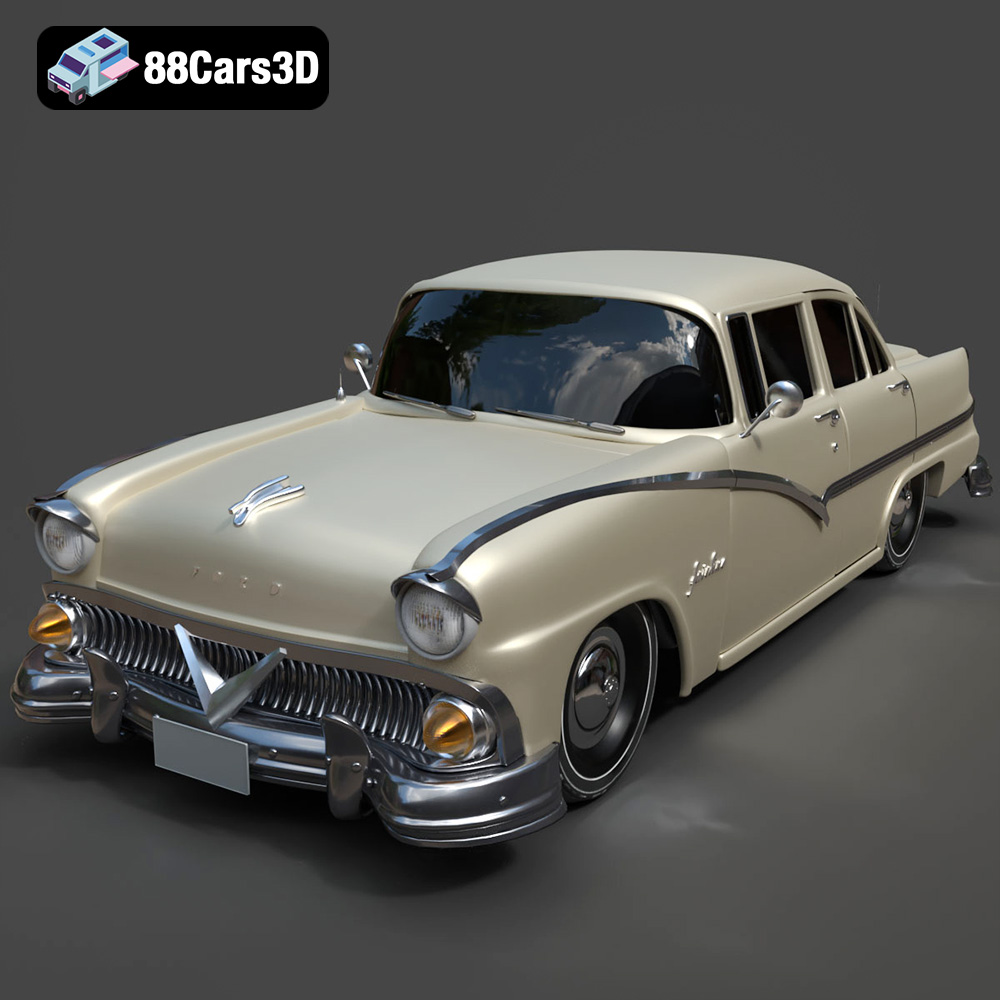
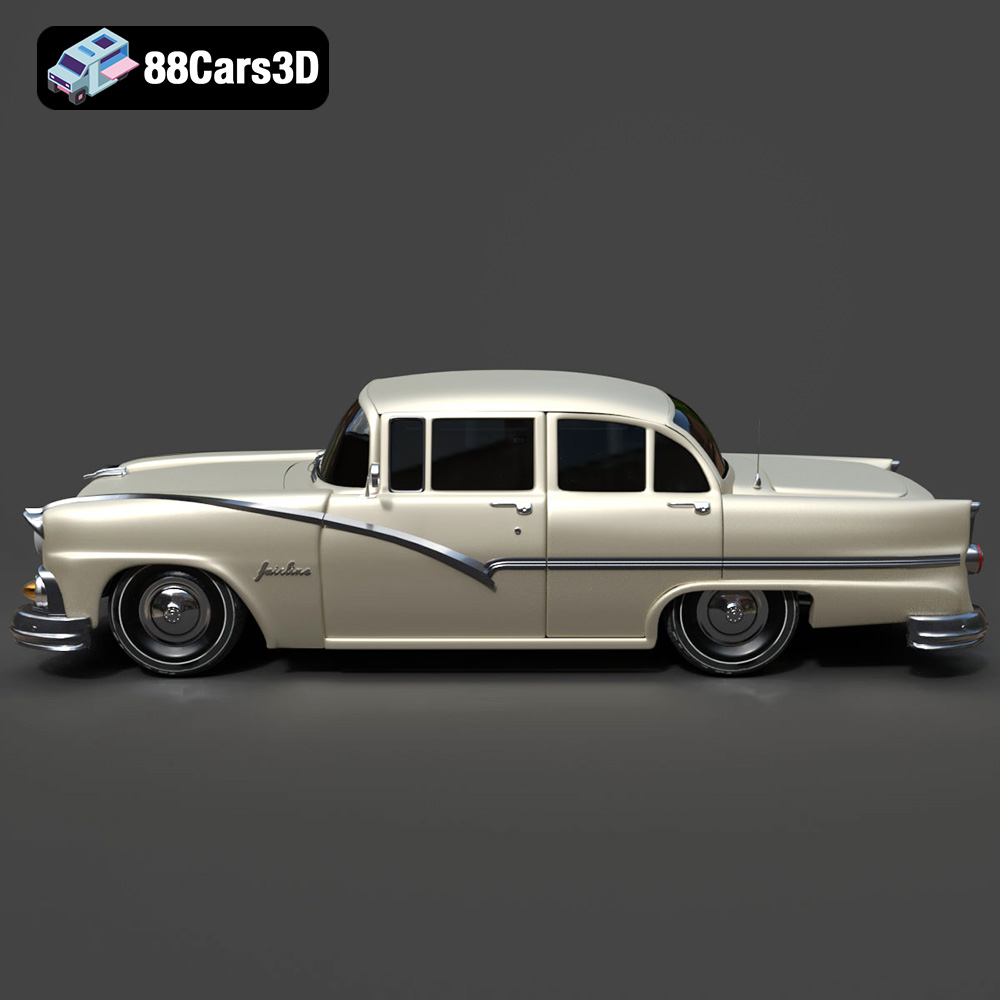
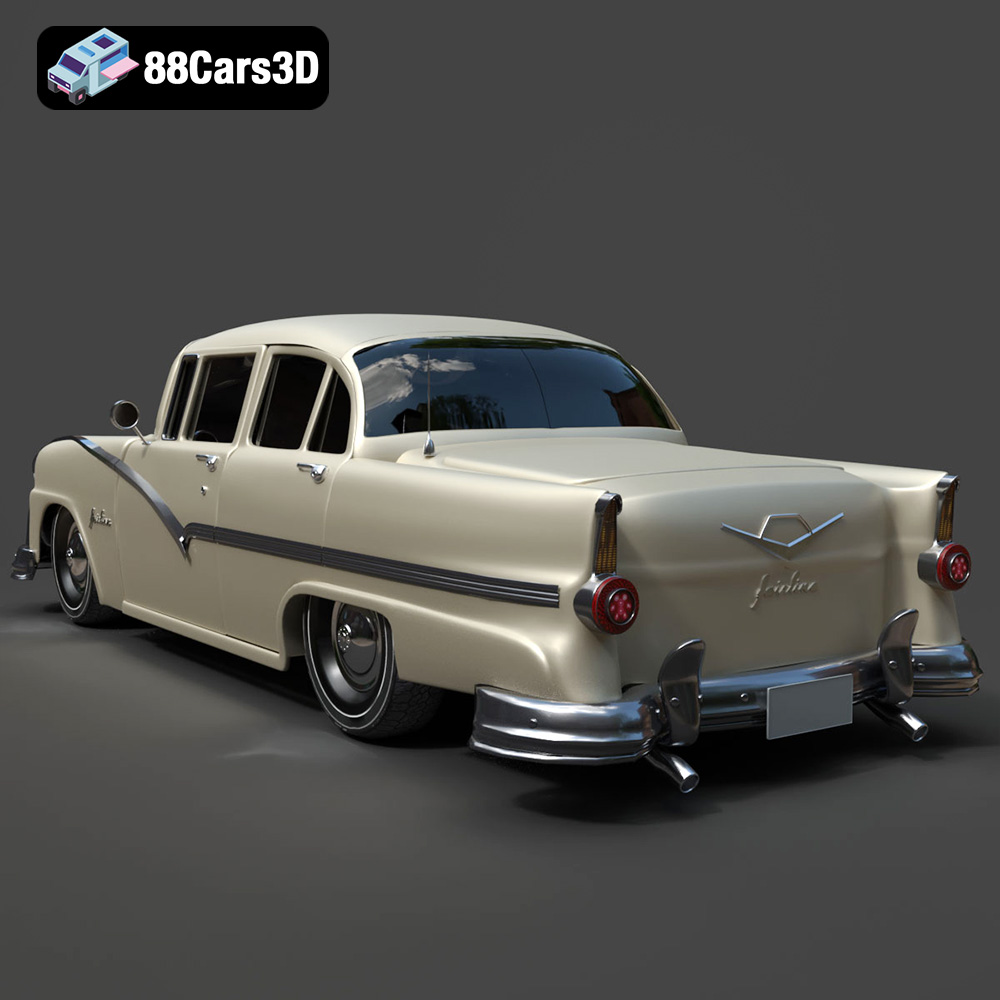
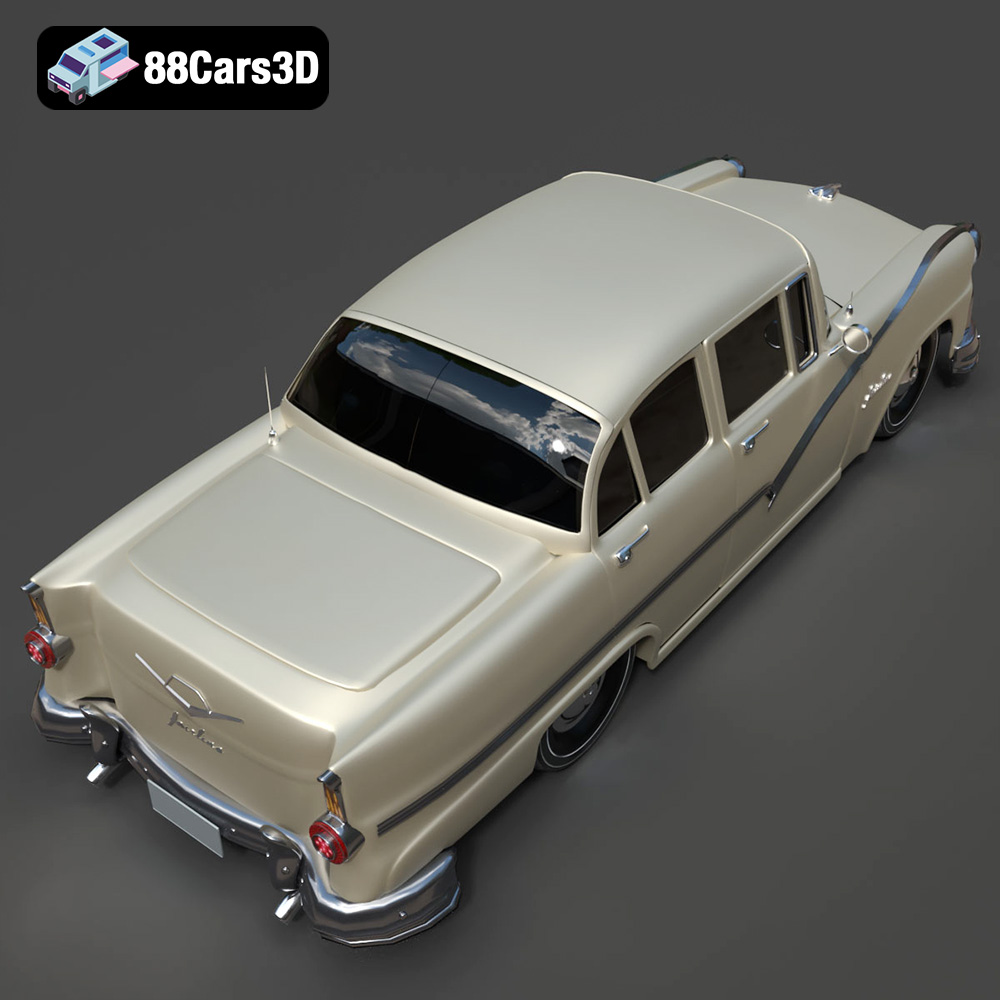
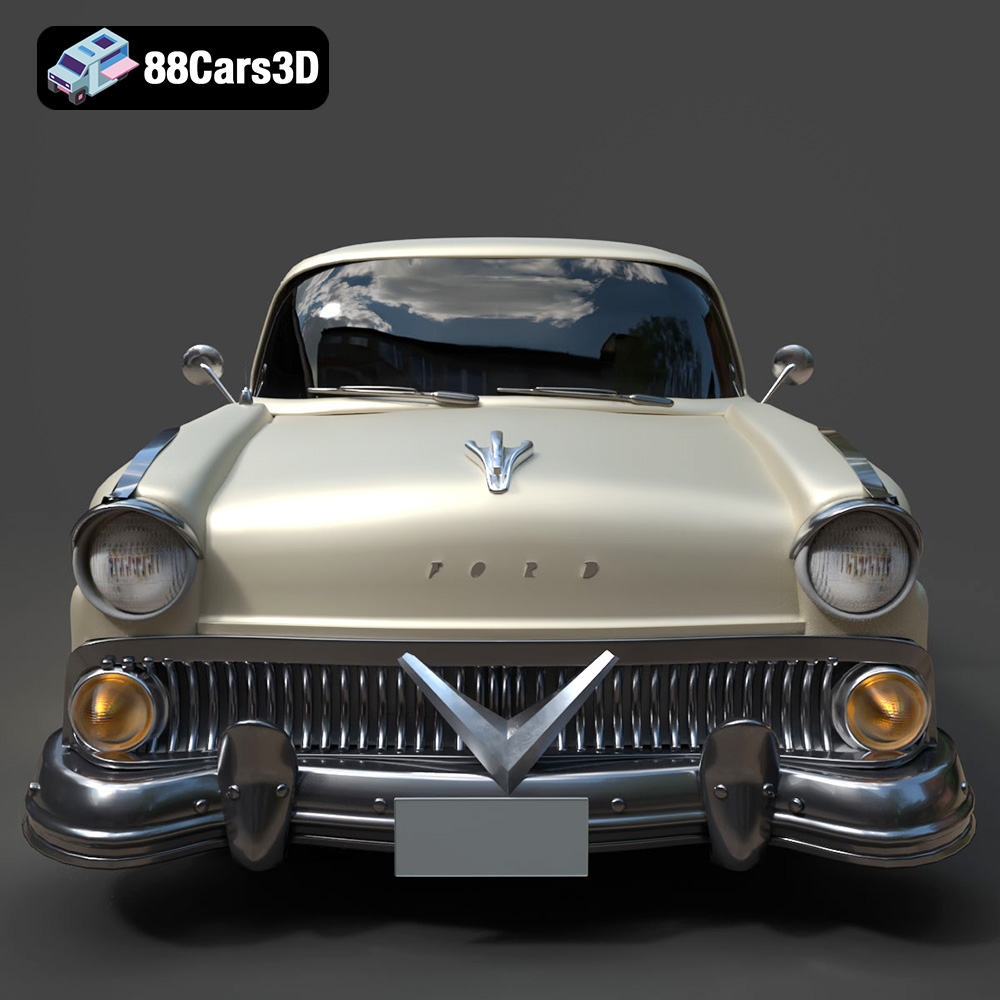
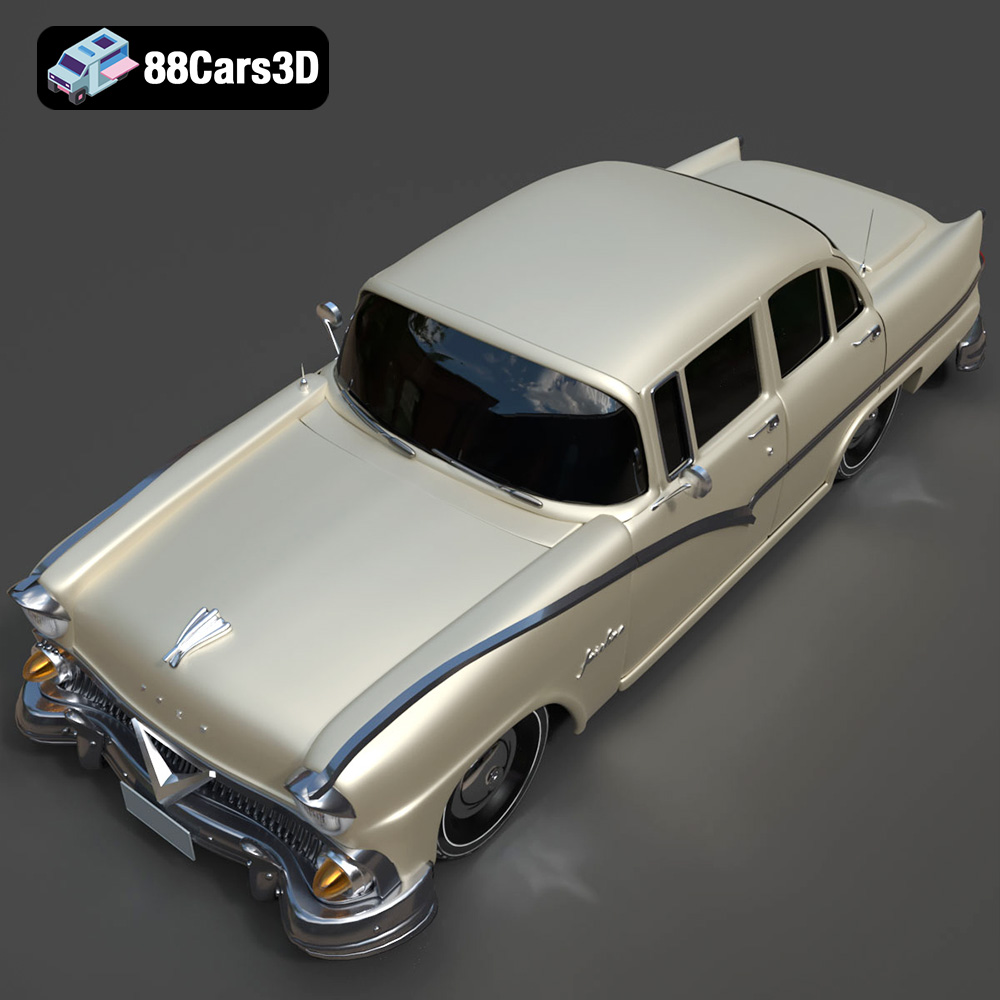
The true essence of a classic car lies in its distinctive features, and the Ford Fairlin is no exception. A high-quality 3D model meticulously captures these details. We’re talking about expansive chrome bumpers that catch the light just so, the sweeping bodyline that defined an era, and the classic V8-inspired front grille that radiates power. The vintage appeal is not just skin deep; it extends to perfectly proportioned exterior lines and a painstakingly recreated exhaust system, complete with authentic dual chrome tailpipes. Even the period-correct lighting, featuring classic round headlights and signature taillights, contributes to an undeniable sense of authenticity.
Beyond the exterior, the interior is equally critical for immersive experiences, especially in gaming or AR/VR. The Ford Fairlin model boasts an authentic vintage bench seat with highly detailed upholstery, a classic thin-rimmed steering wheel with its distinctive chrome horn ring, and a retro analog instrument cluster with accurate gauge detailing. Period-correct control details, including the column shifter and pedals, ensure that even from a first-person perspective, the user is fully immersed in the classic driving experience. This attention to detail isn’t just cosmetic; it ensures the model is suitable for close-up shots and interactive environments.
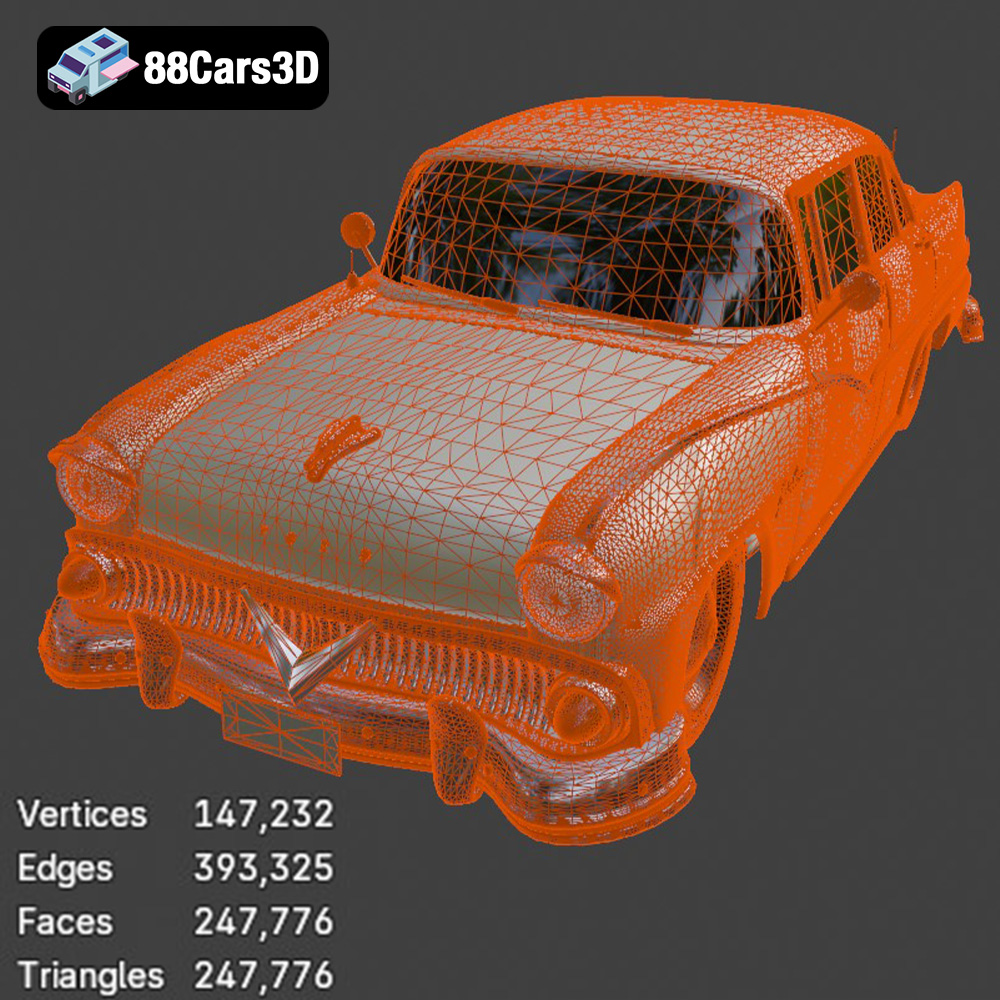
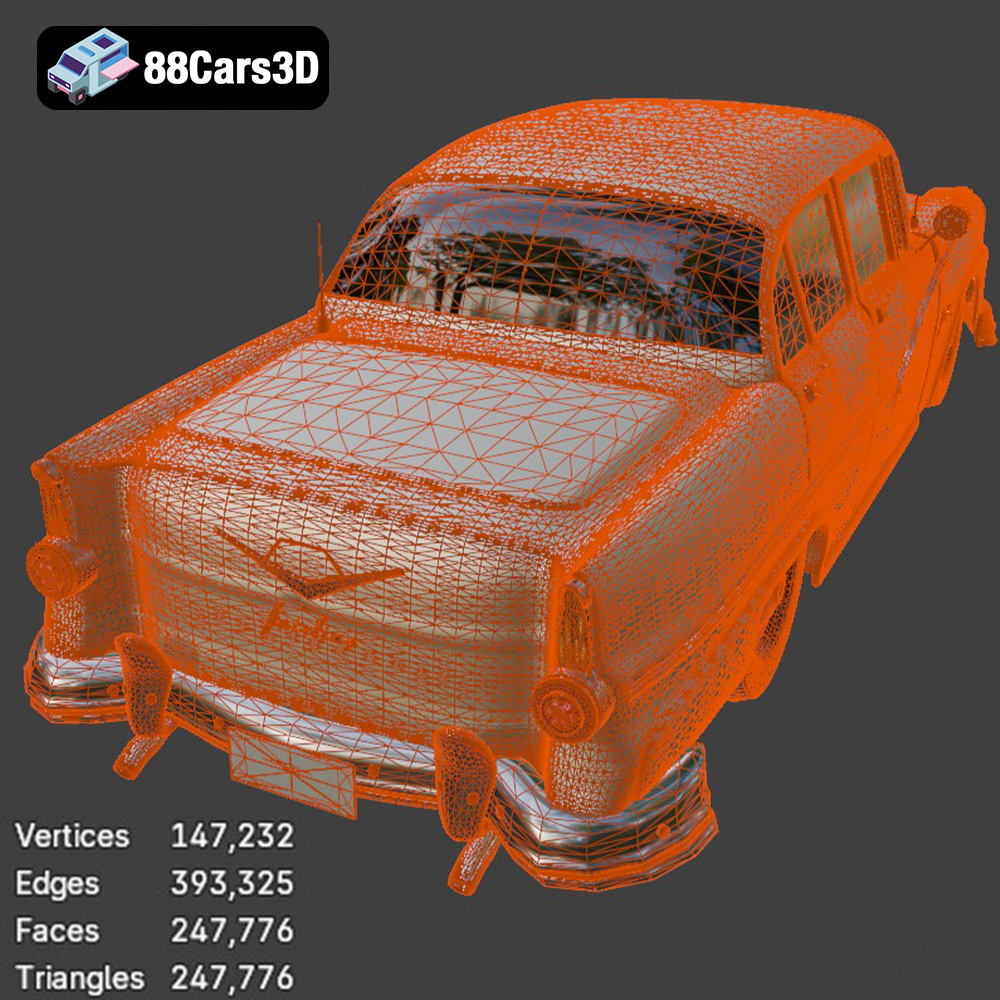
The foundation of any high-quality 3D model is its topology – the arrangement of vertices, edges, and faces that form the mesh. For the Ford Fairlin 3D model, exceptional topology is key to its versatility. With an optimized triangle count of approximately 150,000, it strikes an ideal balance, ensuring maximum visual fidelity without compromising game-ready performance. This moderate polycount allows for smooth subdivision for high-end renders while remaining efficient enough for real-time engines like Unreal Engine and Unity.
Real-world scale accuracy is another non-negotiable aspect. The model is built to actual vehicle chassis dimensions, making it suitable for architectural visualization, engineering simulations, or integration into existing real-world digital environments. Furthermore, proper pivot setups for steering, wheel rotation, and suspension travel are implemented. This technical detail is crucial for animators and game developers, allowing for immediate and accurate vehicle dynamics without the need for extensive rigging from scratch. The detailed undercarriage and suspension setup, along with separate wheels, suspension, and steering components, further enhance its animation potential, enabling realistic simulations of movement and interaction.
Navigating the landscape of 3D production often involves working with various software and pipelines, each with its preferred or optimized file formats. Understanding these formats is crucial for ensuring compatibility, maintaining data integrity, and maximizing efficiency. The Ford Fairlin 3D model package, by offering a comprehensive array of formats, demonstrates its readiness for any professional workflow. This breadth of options ensures that whether you’re working in a specific native application, aiming for broad compatibility, or targeting specialized outputs like AR/VR or 3D printing, you have the right tool for the job.
The provision of such a comprehensive suite of file formats for the Ford Fairlin model highlights its adaptability and the foresight of its creators at 88cars3d.com, ensuring it meets the diverse demands of today’s digital artists and developers.
The true test of a 3D asset’s quality often lies in its performance within real-time environments. Game development and AR/VR applications demand a delicate balance between visual fidelity and computational efficiency. The Ford Fairlin 3D model is specifically engineered to excel in these demanding scenarios.
For game developers, the phrase “game-ready” signifies an asset that can be dropped into an engine like Unreal or Unity with minimal fuss and maximum performance. The Ford Fairlin model, with its ~150,000 triangle count, achieves this balance perfectly. This polycount is sufficiently detailed for modern game engines to produce high-end visuals, while remaining optimized enough to not cripple frame rates, even in expansive open-world games or racing titles where multiple vehicles might be present.
Key to its game-ready status are the technical specifications: real-world scale accuracy ensures it fits seamlessly into environments built to scale, and proper pivot setups for steering, wheel rotation, and suspension travel are critical for implementing realistic vehicle physics and animation. Developers can easily hook into these pre-configured pivots to drive complex vehicle systems, saving countless hours of rigging and setup. Furthermore, the detailed undercarriage and suspension setup means that even in crash sequences or camera angles from below, the model maintains its integrity and visual realism.
Workflow Example (Unreal Engine): A game studio could import the Ford Fairlin’s .fbx or .unreal file directly into Unreal Engine. Its pre-configured pivots and materials, potentially using a PBR (Physically Based Rendering) workflow, would allow artists to quickly set up material instances to change body colors, adjust metallic finishes, or swap out tire textures. The separate components (wheels, suspension, steering) mean that vehicle blueprints in Unreal can be built with accurate physics and animation without needing to break apart the mesh or re-rig.
Augmented Reality (AR) and Virtual Reality (VR) are transforming how we interact with products, offering immersive virtual showrooms, interactive configurators, and mobile AR experiences. The Ford Fairlin 3D model is an ideal candidate for these applications due to its optimized geometry and detailed features.
Imagine a VR garage configurator where users can walk around, open doors, inspect the interior, and even customize the classic Ford Fairlin in real-time. The optimized geometry ensures a smooth, high-frame-rate experience crucial for preventing motion sickness in VR. For AR applications, like placing the car virtually in your driveway via a smartphone, the .glb format becomes invaluable. Its single-file, optimized nature makes it perfect for fast loading and rendering on mobile devices, allowing users to interact with a high-fidelity model without significant performance overhead.
Case Study: An automotive enthusiast club might commission an AR application where members can view and customize classic cars like the Ford Fairlin on their tablets. Using this model, developers could rapidly deploy an app allowing users to change paint colors, inspect the V8 engine block, and view the authentic interior, bringing history to life in an interactive, personal way.
While optimized for real-time, the Ford Fairlin 3D model’s exceptional topology and detailed craftsmanship also make it perfect for projects where visual fidelity is paramount – high-end rendering and visualization. This is where the model truly shines in showcasing its aesthetic potential.
For brand campaigns, lifestyle advertisements, or cinematic sequences, rendering software like 3ds Max, Blender (Cycles/Eevee), or V-Ray can leverage the Ford Fairlin’s robust geometry and detailed textures to produce stunning, photorealistic images and animations. The model’s accurate Ford Fairlin frame geometry and classic proportions provide a solid foundation, allowing artists to focus on artistic direction rather than extensive model cleanup.
Artists can utilize the .max or .blend files to access comprehensive material setups, allowing for sophisticated shader networks that accurately depict metallic paint finishes, chrome reflections, and realistic tire rubber. With advanced lighting techniques, studio lighting setups can highlight the car’s sweeping bodylines and chrome accents, creating images indistinguishable from actual photography. The separate components – wheels, suspension, and steering – are invaluable for animators, enabling realistic driving sequences, nuanced suspension compression, or detailed camera movements around moving parts.
Architectural visualization (ArchViz) frequently incorporates vehicles to add scale, context, and a sense of realism to renders of buildings and environments. A classic car like the Ford Fairlin can inject character and a specific aesthetic into a scene, transforming a generic streetscape into a vibrant, period-accurate setting or a luxurious modern garage. Its real-world scale ensures it integrates seamlessly without appearing disproportionate.
Consider a visualization of a mid-century modern home. Placing the Ford Fairlin in the driveway or garage immediately establishes the desired era and lifestyle. For luxury property developers, a high-quality 3D car model can elevate the perceived value and aspiration of their projects. Similarly, in product visualization, the Ford Fairlin could be a backdrop for showcasing vintage-inspired clothing, accessories, or even modern electronics, creating a compelling narrative and enhancing brand storytelling.
The versatility of a well-crafted 3D model extends beyond digital screens. For enthusiasts, collectors, or designers who need physical prototypes, the ability to 3D print a model offers a unique dimension to its utility. The Ford Fairlin 3D model provides .stl format support, making this transition from virtual to tangible straightforward.
Converting a high-detail rendering model into a printable file requires careful consideration of physical tolerances and printer capabilities. The provided .stl format indicates that the model has been optimized for this purpose. Recommended scales (1:12, 1:18, 1:24) cater to various display-scale hobbyists, allowing for desktop models that capture the essence of the original vehicle.
Technical aspects for printing are crucial:
These detailed guidelines are not merely suggestions; they are critical instructions for achieving a successful and high-quality physical replica.
The journey from a raw 3D print to a display-worthy model involves significant post-processing. This typically includes sanding to remove layer lines, applying primer to create a smooth, even surface for paint, and then meticulously painting with authentic factory colors, often with metallic finishes to replicate the Ford Fairlin’s original luster. The ability to print components separately, such as wheels, simplifies the painting process and allows for more precise detailing, like the classic whitewall tire detailing mentioned in the product description. The resulting physical model stands as a testament to both digital craftsmanship and traditional modeling skills.
A truly versatile 3D model isn’t just a static representation; it’s a flexible foundation for creative expression. The Ford Fairlin 3D model offers extensive customization options, allowing artists and developers to tailor its appearance and functionality to specific project needs.
The ability to easily modify material properties is a core advantage. Users can change the body and tank colors to replicate factory finishes, experiment with custom paint jobs, or apply unique graphic designs. Adjusting material finishes—from a glossy showroom sheen to a matte, worn-out texture, or a shimmering metallic—can dramatically alter the car’s mood and context. Tire textures can be swapped to represent off-road variants for a rugged look or classic street variants with whitewalls for a more period-accurate feel. These modifications are typically straightforward in most 3D software and game engines, leveraging the model’s clean UV mapping and material organization.
Workflow Example (Blender): In Blender, an artist could load the .blend file of the Ford Fairlin. Using Blender’s node-based shader editor, they could quickly adjust the base color of the car paint, modify the metallic values to control chrome reflectivity, or even add grunge maps to create a weathered appearance. The organized material slots allow for independent control over different parts like the body, chrome, glass, and tires.
Beyond static renders, the Ford Fairlin model is built for animation. The separate wheels, suspension, and steering components are not just for visual detail; they are fully articulable elements. This means artists can easily rig the model for complex animations, whether it’s a simple wheel rotation, realistic suspension travel over uneven terrain, or a full steering mechanism. This level of preparation significantly reduces the time and effort required to bring the classic car to life in dynamic scenes, making it a valuable asset for cinematic sequences, driving simulators, or interactive product showcases.
For example, in a marketing campaign, the Ford Fairlin could be animated driving down a picturesque road, showcasing its sweeping lines and the glint of chrome. The accurate pivot points for its various components ensure that these animations look authentic and professional, adding a layer of realism that elevates the entire production. The robust structure and clean geometry facilitate deformation and secondary animations, allowing for detailed interactions like door openings or even engine component movement, depending on the level of desired complexity.
The Ford Fairlin 3D Model stands as a prime example of a premium automotive asset, meticulously crafted to meet the rigorous demands of modern digital production. Its exceptional topology, real-world scale, and detailed feature set make it an invaluable resource for game development, AR/VR experiences, high-end rendering, and even 3D printing. From its game-ready optimization to its cinematic rendering potential, and the comprehensive suite of included file formats, this model ensures adaptability across virtually any professional workflow.
Whether you are a developer looking for a performance-optimized asset, an artist aiming for photorealistic renders, or a hobbyist seeking to bring a classic car to life through 3D printing, the Ford Fairlin model offers both the technical specifications and the aesthetic appeal to elevate your projects. Investing in high-quality 3D car models like this, available at 88cars3d.com, is not just about acquiring an asset; it’s about gaining a foundation for creativity, efficiency, and unparalleled visual quality in your digital endeavors.
Experience the timeless elegance and power of the classic Ford Fairlin, a stunning representation of mid-century automotive design. Known for its heritage and iconic presence, this vehicle features signature styling cues including expansive chrome bumpers, a sweeping bodyline, and a classic V8-inspired front grille. Its vintage appeal is highlighted by perfectly proportioned exterior lines and a meticulously recreated exhaust system that captures the essence of classic American motoring.
This premium 3D model boasts exceptional topology with an optimized triangle count of approximately 150,000, ensuring maximum visual fidelity without compromising game-ready performance. It is expertly crafted for a variety of demanding applications, providing flawless geometry and stunning realism for game development, AR/VR applications, high-end animation, and architectural visualization.
Perfect for classic car showcases, period-accurate racing games, VR garage configurators, and cinematic renders.
.blend, .fbx, .obj, .glb, .stl, .ply, .unreal, .max
Tags:
ford, fairlin, fairlane, classic-car, vintage-car, retro, car-3d-model, game-ready, low-poly, optimized, game-asset, rendering, vr-ar, blend, fbx, obj, glb, stl, ply, unreal, maxVespa VNB 125-B 3D Model 3D Printable STL
$19.99
.blend
.fairlane
.fbx
.ford
.glb
.max
.obj
.ply
.rendering
.retro
.stl
.unreal
car-3d-model
classic-car
fairlin
game asset
game-ready
low-poly
optimized
vintage-car
VR/AR