Get 20% OFF All Premium 3D & STL Models!

In the rapidly evolving landscape of digital content creation, the demand for high-fidelity 3D assets has never been greater. From cinematic automotive renders that blur the line between virtual and reality, to immersive game environments and groundbreaking AR/VR experiences, the quality of a 3D model forms the bedrock of a compelling visual narrative. Creators across industries understand that subpar assets can undermine even the most ambitious projects, leading to costly rework and a compromised final product.
This pursuit of perfection drives the need for meticulously crafted 3D models – assets that are not just visually appealing but also technically robust. Today, we delve into what makes a 3D model truly professional-grade, exploring the technical nuances, workflow integrations, and diverse applications that elevate digital assets from mere objects to indispensable tools. Our journey will highlight the exceptional quality embodied by models such as the Ural Solo sT 3D Model, a prime example of a digital asset designed to meet the rigorous demands of modern creative pipelines.
Whether you’re an automotive designer seeking to visualize a new concept, a game developer building realistic open worlds, or an architect integrating contextual elements into your arch-viz scenes, understanding the anatomy of a superior 3D model is crucial. Join us as we explore the technical foundations that empower creators to push the boundaries of digital realism.
The visual fidelity of a 3D model directly impacts its effectiveness in conveying realism and engaging an audience. For automotive subjects, this is particularly true, where discerning eyes can instantly spot inaccuracies. High-quality 3D car models are not just about aesthetics; they are about engineering precision, functional integration, and long-term usability.
For designers and advertisers, automotive rendering is a critical stage. A high-quality model, like the Ural Solo sT 3D Model, provides the intricate details necessary for photorealistic renders. This includes accurate panel gaps, realistic material shaders for paint, chrome, and rubber, and precise proportions that faithfully represent the real-world vehicle. Without this foundational accuracy, even the most sophisticated rendering engines and lighting setups will fall short, producing results that lack conviction. The clean geometry and accurate proportions mentioned in the Ural Solo sT’s description are paramount for achieving stunning visual output that can be mistaken for actual photography.
In game development, the balance between visual quality and performance is a constant challenge. High-quality 3D car models are optimized to deliver stunning visuals without bogging down game engines. This involves efficient polygon counts, well-structured topology, and carefully crafted UV maps that prevent texture stretching and allow for efficient material application. Models designed with game engines in mind, often delivered in formats like FBX or Unreal-native files, ensure seamless integration and smooth frame rates, even in complex scenes. The Ural Solo sT, with its game-engine ready formats, exemplifies this balance, allowing developers to populate virtual worlds with believable and performant vehicles.
Augmented and Virtual Reality demand a different level of optimization and detail. Users in AR/VR environments are often much closer to the models, making any imperfections or low-resolution elements immediately apparent. High-quality models for AR/VR are typically optimized for real-time rendering, feature efficient draw calls, and are often provided in formats like GLB, which is designed for web and immersive experiences. The authentic structural precision of a model like the Ural Solo sT ensures that even under close inspection in an AR/VR headset, the user’s immersion remains unbroken, providing a truly compelling experience.
Choosing the correct 3D model file format is a critical decision that influences compatibility, performance, and the scope of manipulation within your chosen software. Professional 3D marketplaces like 88cars3d.com often provide a wide array of formats to ensure maximum flexibility for their users. Understanding each format’s strengths and typical use cases is essential for an efficient workflow, especially when working with versatile models such as the Ural Solo sT 3D Model.
The .blend file format is Blender’s native project file. It encapsulates not just the 3D mesh data but also all associated materials, textures, lighting setups, cameras, animations, physics simulations, and even custom scripts. This makes it an incredibly powerful format for Blender users, offering a complete, editable scene. When you acquire a .blend file for a model like the Ural Solo sT, you’re getting a fully rigged, textured, and lit environment ready for immediate rendering or further customization within Blender. Its primary use case is for artists and studios who use Blender as their primary DCC (Digital Content Creation) tool, allowing for deep dives into the model’s construction and scene elements.
Autodesk’s .fbx (Filmbox) format has become an unofficial industry standard for 3D data exchange between various software packages, particularly for real-time pipelines. It can store not only geometric data (vertices, faces, UVs) but also materials (though often simplified), textures, animations, bones, and even camera data. FBX is ideal for transferring assets between applications like 3ds Max, Maya, Cinema 4D, and game engines such as Unreal Engine and Unity. Its widespread support makes it invaluable for collaborative projects and for ensuring models like the Ural Solo sT can be easily imported and used across different professional workflows, often requiring minimal setup after import, especially for game development.
The .obj (Wavefront Object) format is one of the oldest and most universally supported 3D file formats. It is a simple, text-based format primarily used for transferring geometric data, including vertices, normals, UV coordinates, and polygons. Material information is typically stored in a companion .mtl (Material Template Library) file. While it doesn’t support animation or rigging, its simplicity and widespread compatibility make it an excellent choice for basic mesh transfer between virtually any 3D software. For the Ural Solo sT, an .obj file guarantees that the core mesh can be opened and worked on in almost any 3D application, serving as a reliable fallback or a starting point for sculpting and retopology.
.glb (GL Transmission Format Binary) is the binary version of glTF, a royalty-free specification for 3D scenes and models. Optimized for web-based applications, AR, and VR, GLB packages all model data – geometry, materials, textures, animations – into a single, compact file. This “all-in-one” nature makes it incredibly efficient for streaming and displaying 3D content directly in browsers or mobile AR applications without requiring multiple file requests. For the Ural Solo sT, providing a .glb file means it’s immediately ready for showcasing on a website, embedding in an interactive configurator, or deploying in an immersive AR experience, offering a lightweight yet visually rich solution.
The .stl (Stereolithography) format is the de facto standard for 3D printing. It represents a 3D model as a series of connected triangles, defining only the surface geometry of an object without color, texture, or other model attributes. While basic, its ubiquity in the 3D printing world means that if you want to physically manifest your digital creation, an .stl file is what your 3D printer will understand. For the Ural Solo sT, an .stl option indicates that the model has been prepared with manifold geometry and accurate scaling, making it suitable for prototyping or creating physical replicas of this iconic motorcycle.
The .ply (Polygon File Format, or Stanford Triangle Format) is another format that can store 3D data, including vertices, faces, normals, color, and even properties like transparency. It’s often used for storing data from 3D scanners, CAD applications, and for scientific visualization or analysis due to its ability to store detailed mesh information. While less common for general artistic asset transfer than FBX or OBJ, its presence for the Ural Solo sT suggests a model prepared with high geometric integrity, potentially useful for engineering analysis, precise measurement, or specialized visualization tasks where detailed polygon information is crucial.
The .unreal format, or rather assets specifically packaged for Unreal Engine, means the model has been pre-configured and optimized for direct import and use within Unreal Engine projects. This often includes proper material setups using Unreal’s PBR workflow, collision meshes, LODs (Levels of Detail), and sometimes even blueprint components. This drastically reduces the setup time for game developers and real-time visualization artists. For the Ural Solo sT, a .unreal file ensures a seamless drag-and-drop experience into an Unreal project, preserving all visual fidelity and making it instantly ready for real-time environments and interactive simulations.
The .max file format is the native scene file for Autodesk 3ds Max, a powerful 3D modeling, animation, and rendering software widely used in architectural visualization, product design, and game development. Similar to .blend files for Blender, a .max file contains the complete scene data, including geometry, materials, textures, lighting, cameras, animation, and scene settings. Providing a .max file for the Ural Solo sT means users of 3ds Max can immediately open, inspect, modify, animate, and render the model with all its original settings intact, making it ideal for high-fidelity rendering projects and complex animation sequences within a professional studio environment.
The true value of a versatile 3D asset lies in its seamless integration into diverse professional workflows. The Ural Solo sT 3D Model, with its array of available file formats and professional-grade construction, is engineered precisely for this purpose. Let’s explore how it fits into some of the industry’s leading software environments.
Blender has become a powerhouse for 3D artists, offering a comprehensive suite of tools for modeling, sculpting, animation, and rendering. When working with the Ural Solo sT 3D Model in its native .blend format, artists gain immediate access to a fully prepared scene. This means materials are already set up using Blender’s Cycles or Eevee render engines, often with PBR (Physically Based Rendering) textures applied, and potentially even a basic lighting rig. Artists can:
The “editable Blender file with materials and lighting setup” ensures that even those new to 88cars3d.com assets can hit the ground running, saving countless hours on initial setup.
Unreal Engine is at the forefront of real-time rendering, powering everything from AAA games to virtual production. The Ural Solo sT 3D Model, with its .fbx and dedicated .unreal formats, is perfectly poised for game development integration. For .fbx, developers can import the model, apply PBR materials (often provided as separate texture maps), and set up collision meshes. The .unreal package takes this a step further, providing a pre-configured asset that likely includes:
This “game-engine ready format” significantly accelerates the development process, allowing teams to focus on gameplay and environment design rather than asset preparation. This is crucial for projects needing realistic game assets.
Autodesk 3ds Max remains a cornerstone in many professional studios, particularly for architectural visualization, product design, and high-end animation. The .max file for the Ural Solo sT 3D Model offers 3ds Max users a complete scene with the model fully integrated. This means:
The “editable 3ds Max file for rendering and animation” ensures that professionals can exploit the full power of this software to produce breathtaking automotive rendering projects.
Beyond file formats and software compatibility, the intrinsic quality of a 3D model is defined by its technical craftsmanship. The Ural Solo sT 3D Model exemplifies these characteristics, ensuring it performs optimally across various demanding applications.
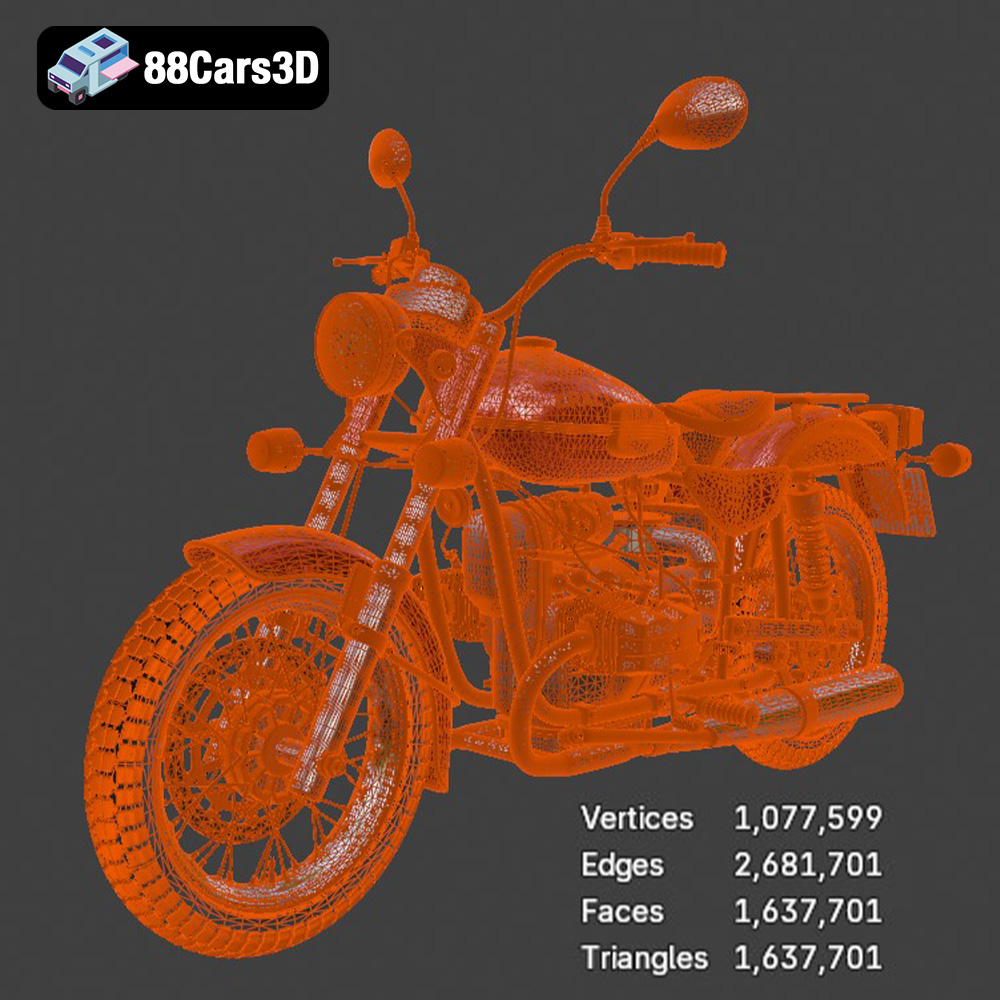
Professional 3D models boast clean geometry and optimized topology. This means:
This attention to detail in the mesh construction is what allows the Ural Solo sT to be “ideal for both close-up shots and expansive environments,” maintaining visual integrity at any distance or resolution.
Effective UV mapping and realistic materials are crucial for believability:
The Ural Solo sT 3D Model’s “realistic materials” and readiness for various render setups directly benefit from these principles, allowing artists to achieve stunning visual effects.
A professional-grade model is designed with scalability and performance in mind:
The description of the Ural Solo sT 3D Model as being “ideal for both close-up shots and expansive environments” and ensuring “smooth performance” speaks to these optimization strategies, making it a versatile asset for any pipeline requiring efficient 3D car models.
The versatility and high quality of the Ural Solo sT 3D Model make it suitable for a broad spectrum of professional applications. Here are a few hypothetical case studies demonstrating its real-world impact.
Scenario: An architectural firm is designing a new boutique hotel in a rustic, industrial-chic style. They want to showcase the outdoor common areas, which include a stylized cafe and a small motorcycling enthusiast’s display.
Application: The Ural Solo sT 3D Model is imported into the firm’s 3ds Max scene (using the .max file). Its rugged, classic aesthetic perfectly complements the design theme. The model is positioned outside the cafe, perhaps leaning against a brick wall, providing a focal point and adding character to the environment. With its accurate proportions and realistic materials, the model integrates seamlessly with the high-fidelity render, enhancing the overall narrative of the space. The architects can easily adjust its position and lighting to create compelling marketing imagery for their client.
Scenario: A vintage apparel brand is launching a new line of rugged outdoor gear. They want to create a series of digital advertisements and catalog images featuring their products in an authentic, adventurous setting, without the cost and logistical challenges of a physical photoshoot.
Application: The Ural Solo sT 3D Model (using the .blend or .fbx format) is placed into a custom 3D environment depicting a scenic mountain road or a wilderness camp. Digital mannequins wearing the new apparel are positioned around the motorcycle. The high detail of the Ural Solo sT allows for close-up shots that emphasize its iconic presence, lending authenticity to the campaign. The brand can render countless variations of angles, lighting, and product pairings, creating a rich visual library for their marketing efforts, from social media to print advertisements, all without ever stepping foot outside a studio.
Scenario: A company specializing in vehicle safety training wants to develop an interactive simulator for motorcycle riders, focusing on off-road handling and maintenance.
Application: The Ural Solo sT 3D Model, provided in its game-engine ready .fbx or .unreal format, is integrated into an Unreal Engine-based simulator. Its clean geometry and well-structured topology ensure smooth performance and realistic physics interactions within the simulated environment. The model can be made interactive, allowing users to inspect components, practice virtual maintenance tasks, or even take it for a simulated ride through challenging terrain. The model’s “authentic structural precision” is vital here, as it ensures that trainees are interacting with a visually and functionally accurate representation, enhancing the realism and effectiveness of the training.
The journey through the intricate world of 3D asset creation reveals a clear truth: quality is paramount. From the foundational precision of clean geometry and optimized topology to the strategic choice of file formats for diverse workflows, every technical detail contributes to the success of a digital project. High-quality 3D car models are not just visual embellishments; they are robust tools that empower artists, designers, and developers to realize their creative visions with unparalleled realism and efficiency.
The Ural Solo sT 3D Model stands as a testament to this commitment to excellence. Its careful craftsmanship, accurate proportions, realistic materials, and availability across a comprehensive range of industry-standard file formats (.blend, .fbx, .obj, .glb, .stl, .ply, .unreal, .max) make it an incredibly versatile and valuable asset. Whether your goal is stunning automotive rendering, seamless game asset integration, immersive AR/VR experiences, or precise 3D printing, this model is engineered to exceed expectations and streamline your production pipeline.
Investing in professional-grade assets like the Ural Solo sT from 88cars3d.com is an investment in your project’s success. It means less time spent on rework, more consistent results, and the ability to focus your creative energy where it matters most: on bringing your digital worlds to life with breathtaking realism. Explore the extensive collection at 88cars3d.com and discover how high-quality 3D models can transform your next endeavor.
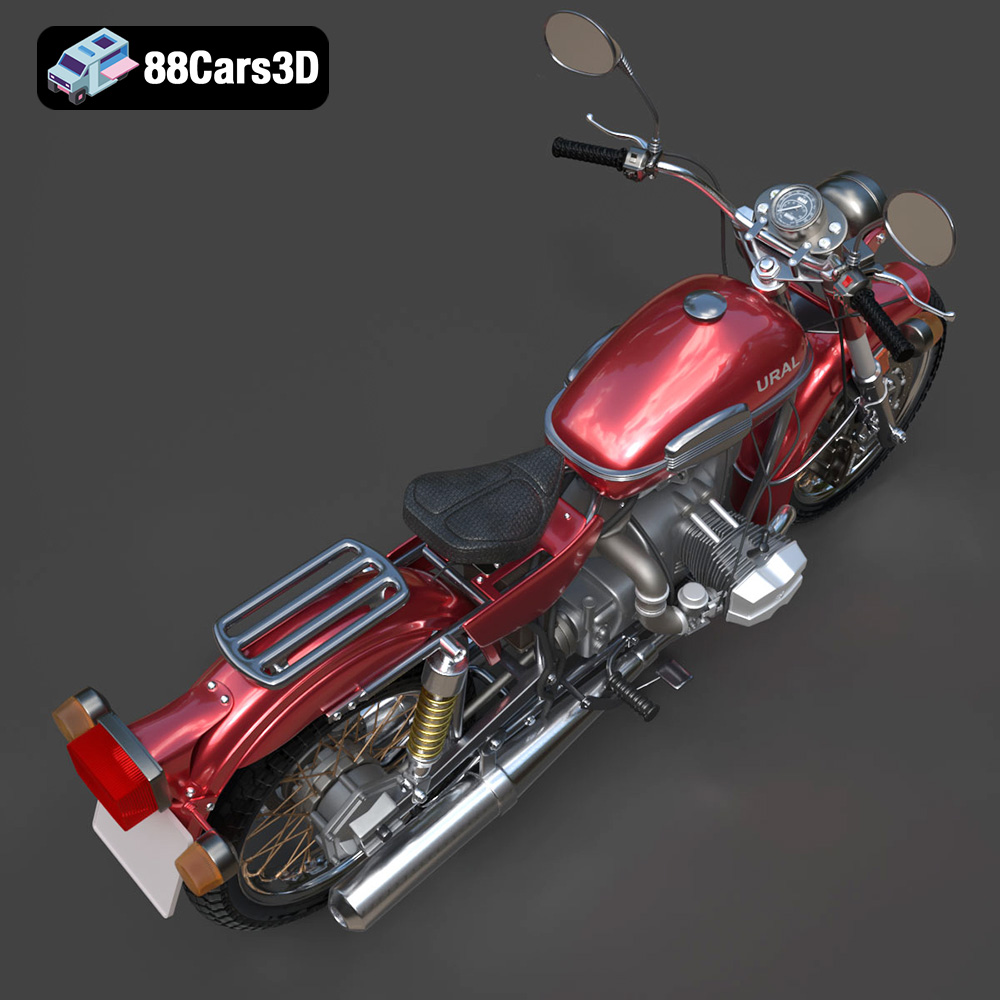
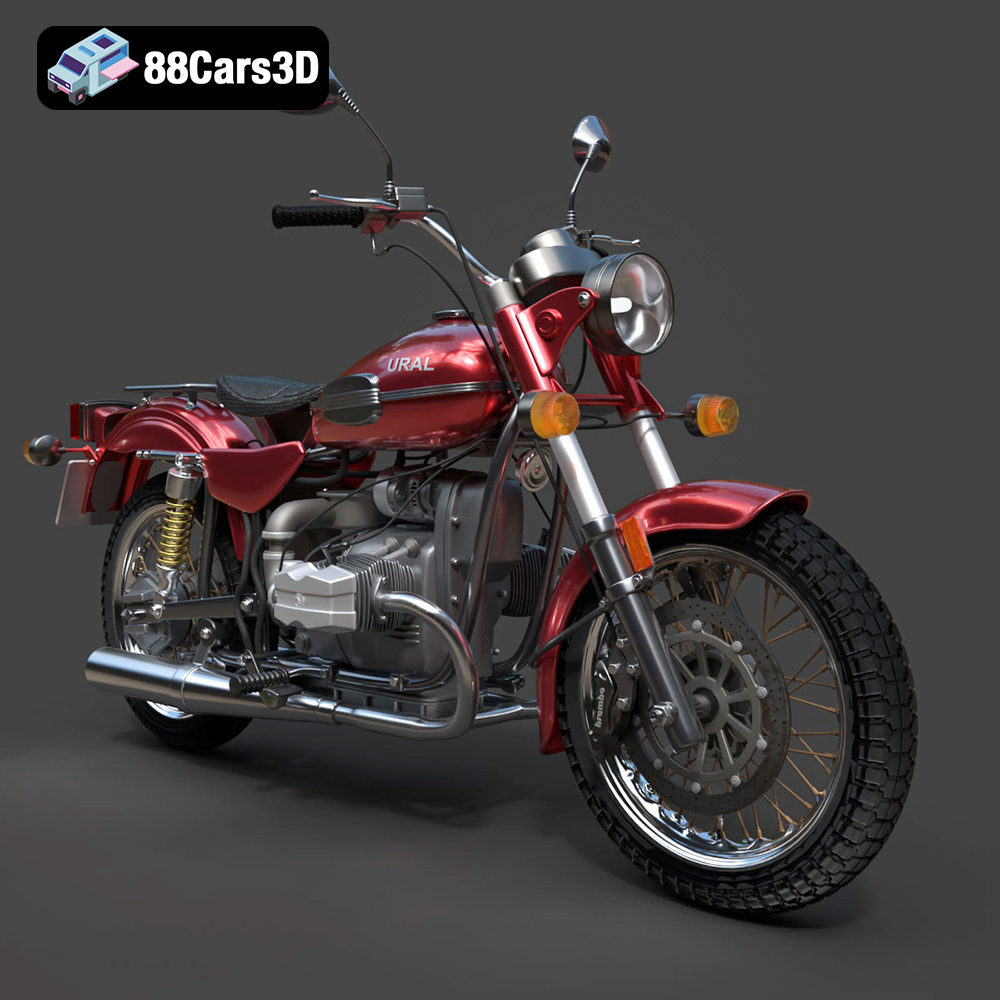
Experience true realism with the Ural Solo sT 3D Model. This carefully crafted digital asset captures the rugged design and iconic presence of the Ural Solo sT, delivering exceptional detail for your projects. Ideal for both close-up shots and expansive environments, this model brings authentic structural precision to any scene.
Built with professional quality in mind, the model features clean geometry, accurate proportions, and realistic materials. The well-structured topology ensures smooth performance and flawless subdivision, making it an excellent choice for a variety of demanding digital pipelines and rendering setups.
This versatile 3D model is perfect for diverse applications, including game development, automotive rendering, AR/VR experiences, and simulation visualization. It integrates seamlessly into your workflow, providing a ready-to-use solution for creators, designers, and developers alike.
$39.99
.arvr
.blend
.car3dmodel
.cruiser
.fbx
.gameasset
.glb
.max
.motorcycle
.obj
.ply
.rendering
.simulation
.solost
.stl
.unreal
.ural