Get 20% OFF All Premium 3D & STL Models!

In the dynamic worlds of automotive design, game development, cinematic visualization, and real-time simulations, the quality of your 3D assets is paramount. It dictates the fidelity, realism, and overall impact of your project. From the sleek lines of a modern supercar to the robust utility of a vintage scooter, meticulously crafted 3D car models are the bedrock upon which immersive digital experiences are built. They save countless hours of development, accelerate production pipelines, and ensure a consistent level of excellence across diverse applications.
Imagine needing to populate a vibrant urban scene, develop a realistic racing game, or even prototype a physical product. Starting from scratch with every asset is often impractical, costly, and time-consuming. This is where high-quality, pre-made 3D models become indispensable. They offer a ready-to-integrate solution that meets professional standards, enabling artists and developers to focus on creativity and innovation rather than the tedious details of initial model creation. It’s about leveraging expertise to elevate your own work, ensuring that every component, down to the smallest bolt, contributes to the overall realism and narrative.
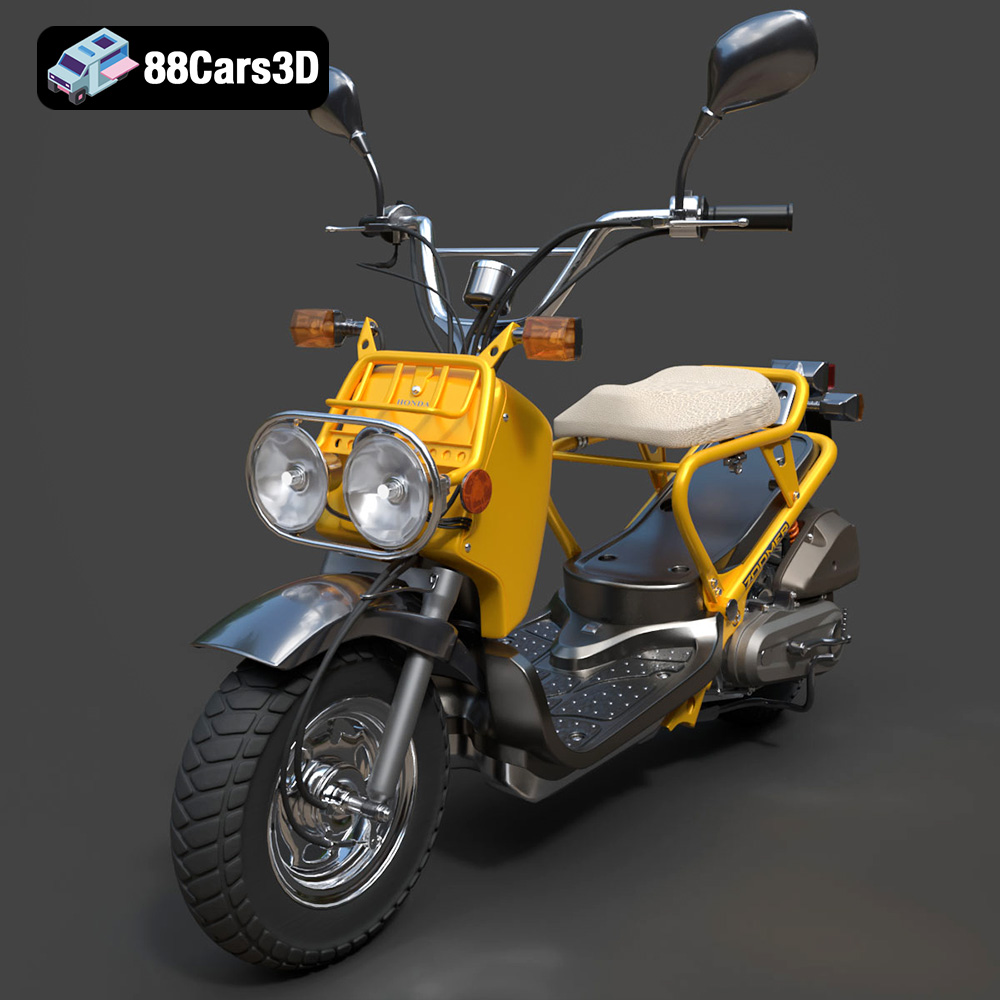
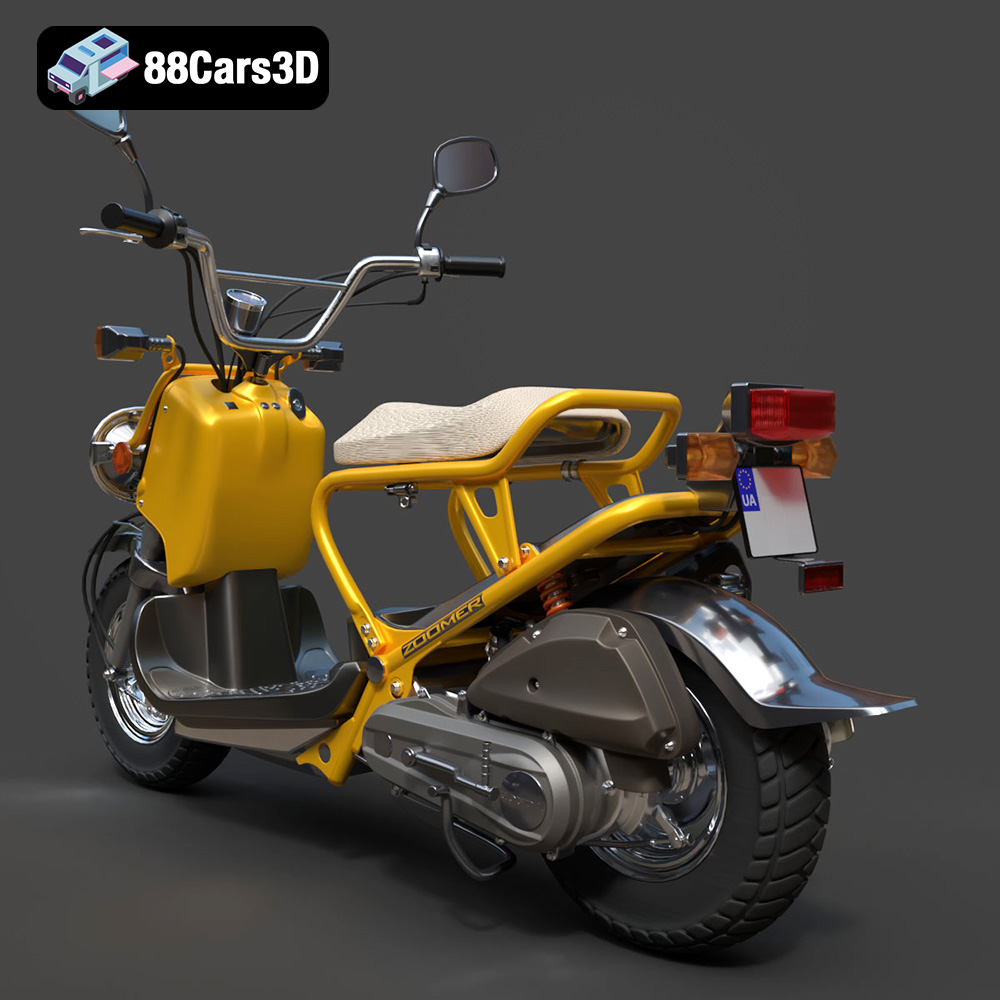
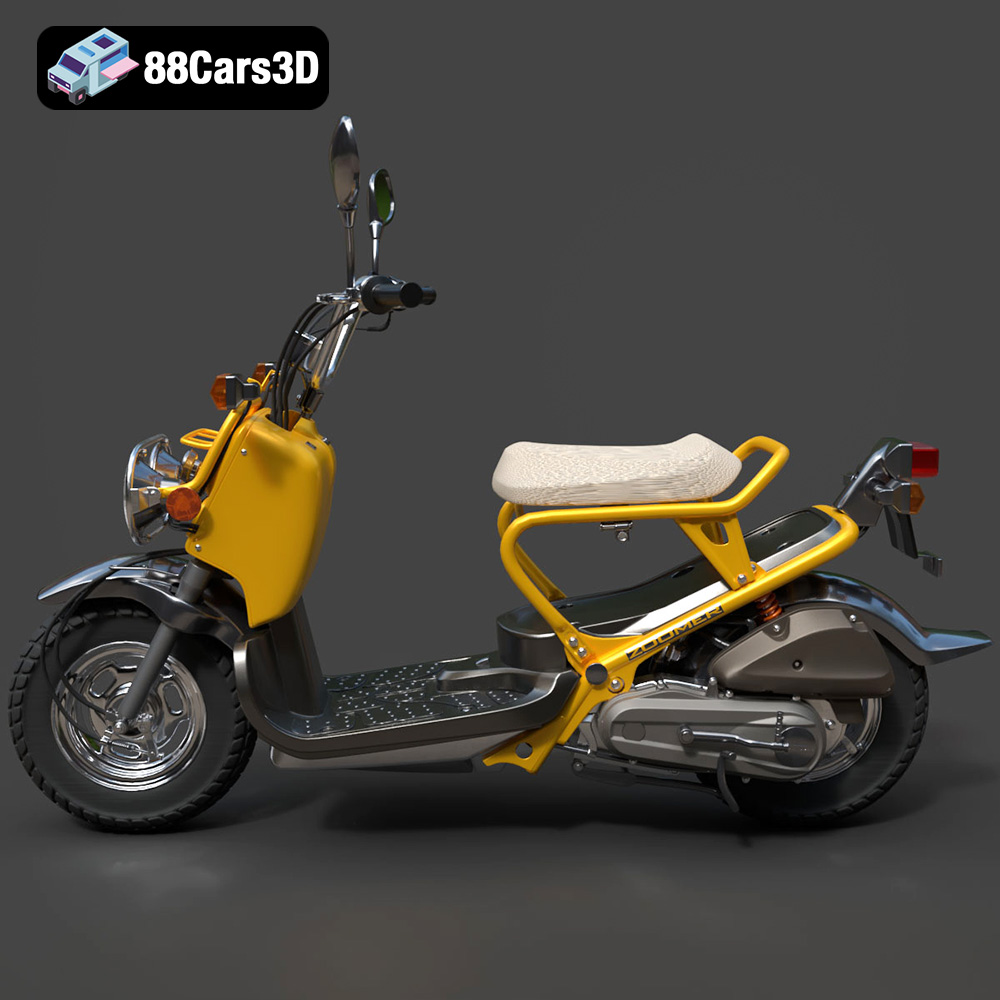
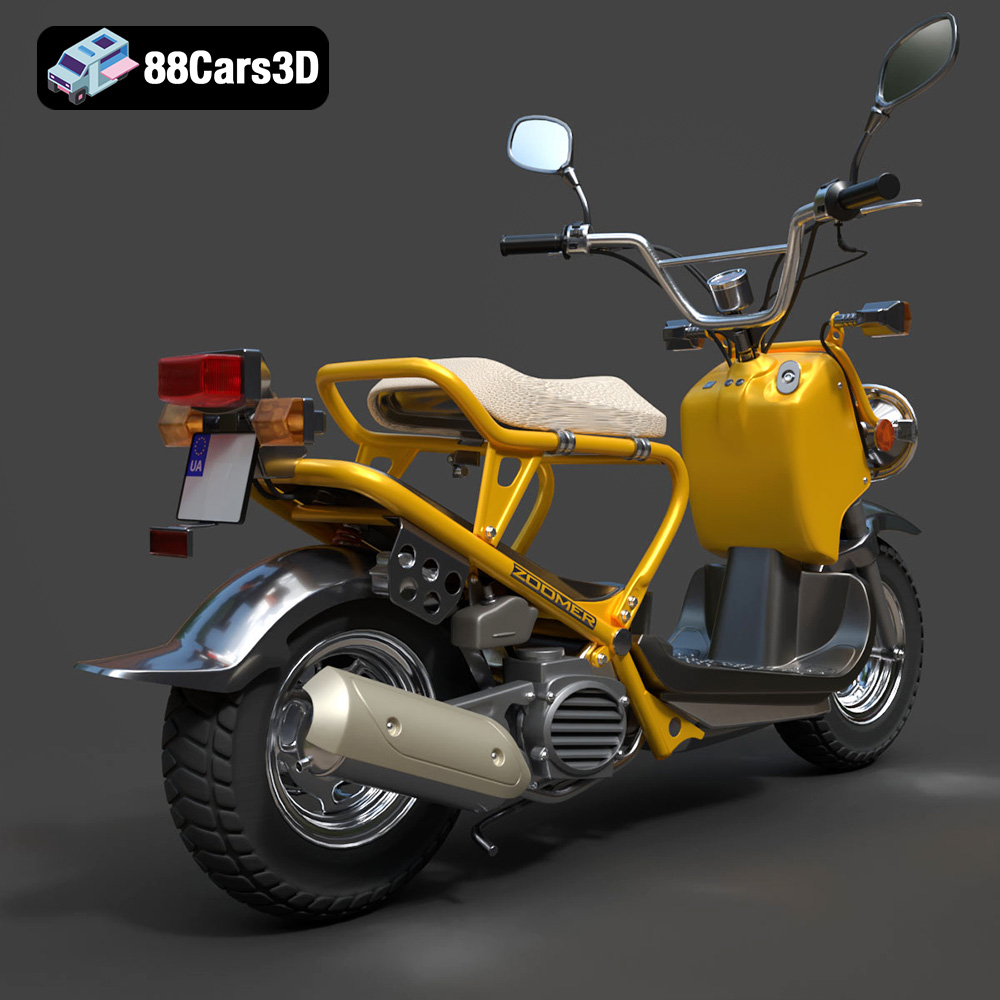
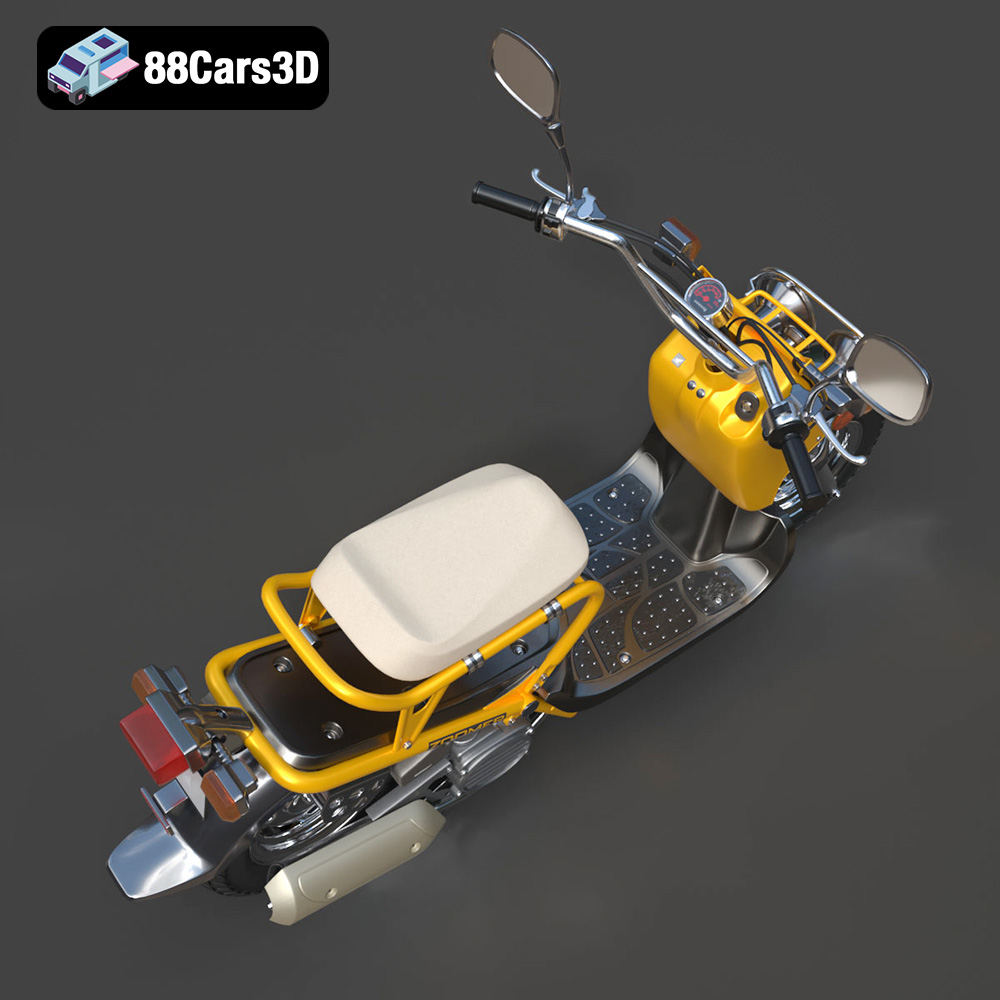
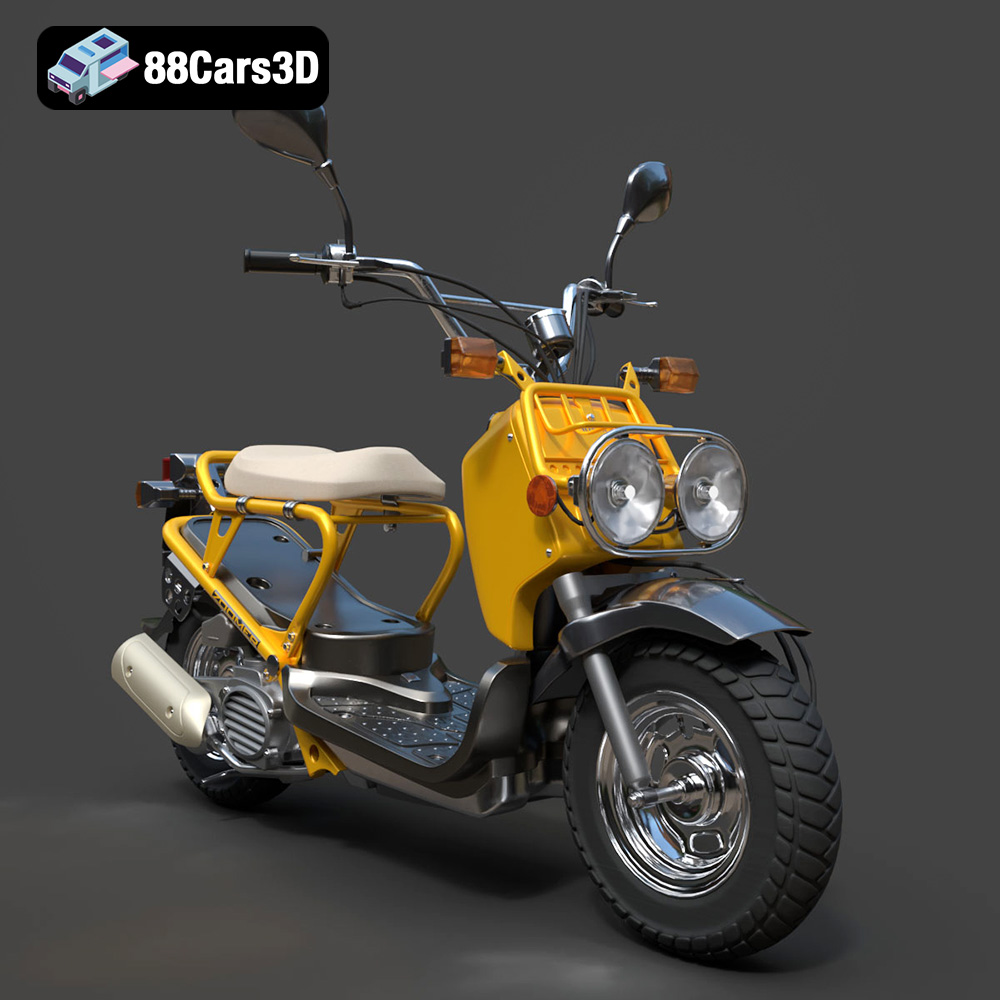
A prime example of such an asset is the Honda Zoomer 50 2005 3D Model. This particular model isn’t just a basic representation; it’s a testament to detailed craftsmanship, offering unparalleled precision for those seeking to integrate a recognizable, rugged scooter into their projects. Its realistic materials, clean geometry, and professional construction make it a versatile asset for a multitude of scenarios, from intricate architectural visualizations to fast-paced game environments. The availability of such high-fidelity 3D car models allows creators to bring their visions to life with speed and confidence, knowing they are starting with a solid, reliable foundation.
The journey from a conceptual sketch to a fully realized digital environment is fraught with technical challenges. High-quality 3D models act as crucial intermediaries, translating abstract ideas into tangible, interactive objects. They allow designers to visualize and iterate rapidly, game developers to populate vast worlds with authentic vehicles, and architects to present contextualized renders. The ability to quickly integrate a detailed vehicle like the Honda Zoomer 50 2005 3D Model into a scene can dramatically shorten production cycles and enhance the overall storytelling.
For instance, an automotive designer might use a similar model to quickly test scale and presence within a proposed urban environment render, without having to wait for a custom model to be built. This agility is a significant advantage in competitive industries where time-to-market and iterative design are key.
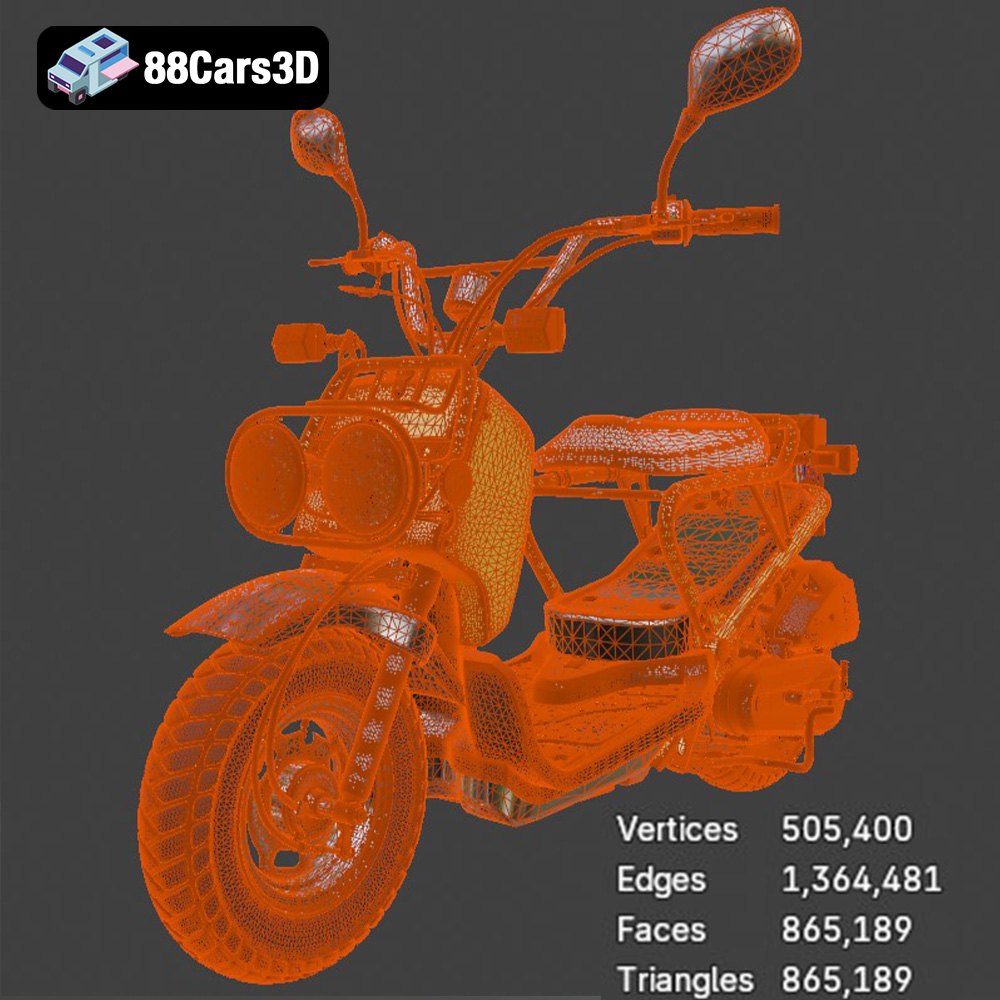
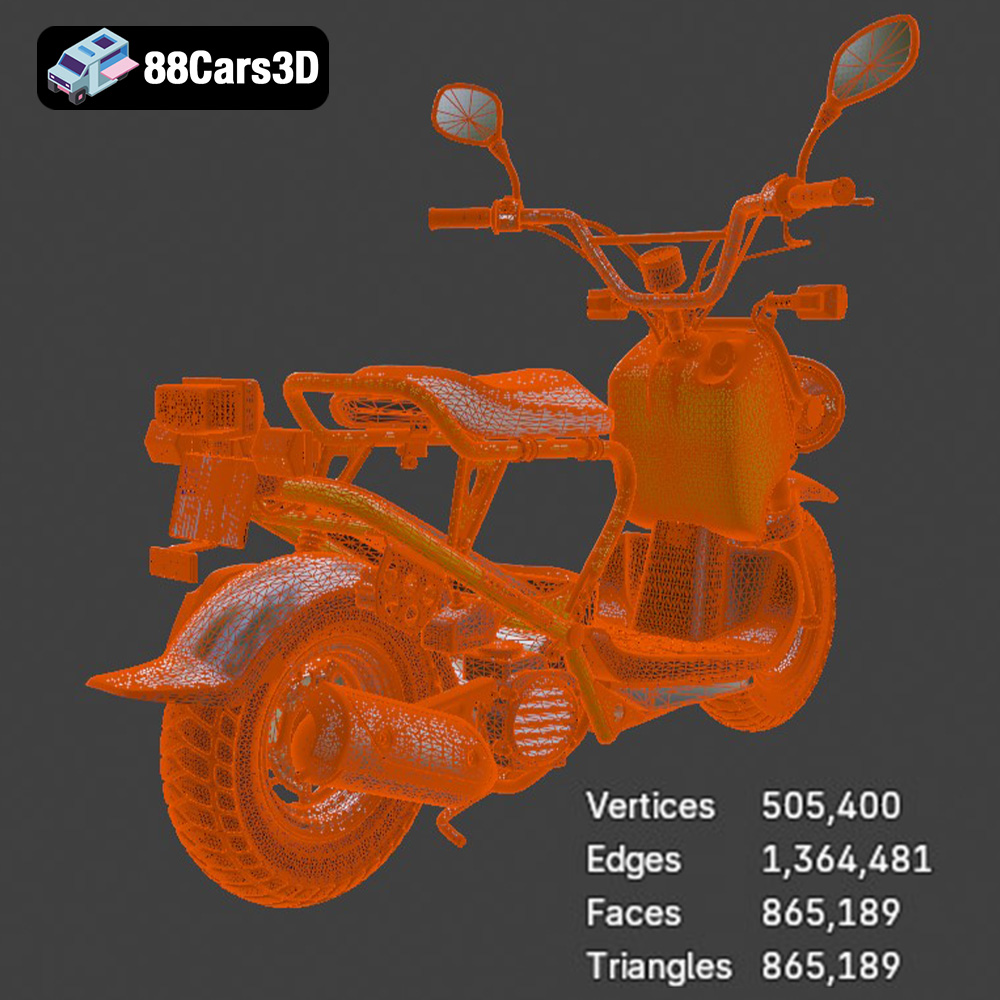
With the continuous advancement of rendering technologies and real-time engines, the expectation for visual fidelity has never been higher. Users now expect photorealistic graphics in games, cinematic quality in VR experiences, and immaculate precision in product visualizations. This demand necessitates 3D models that are not only accurate in form but also rich in detail, with properly set up materials, clean UV mapping, and optimized topology. A model like the Honda Zoomer 50 2005 3D Model, with its “meticulously crafted” and “professional quality construction” promises to meet these rigorous demands, providing a solid foundation for achieving stunning results.
Selecting the correct file format for your 3D model is a critical decision that impacts workflow efficiency, software compatibility, and the ultimate deployment of your project. Each format is designed with specific use cases and technical considerations in mind, making it essential to understand their strengths and limitations. The Honda Zoomer 50 2005 3D Model, like other premium 3D car models available on 88cars3d.com, offers a comprehensive range of formats to ensure maximum versatility across various professional pipelines.
The choice of format should always align with your end goal. For general compatibility and basic geometry, .obj is a safe bet. For game development, .fbx and the .unreal specific asset are invaluable. Artists working within Blender or 3ds Max will appreciate the respective native .blend and .max files for full flexibility. For web and AR/VR, .glb is the clear winner, and for physical models, .stl is non-negotiable. Understanding these distinctions ensures a smoother, more efficient workflow for any project involving high-quality 3D car models, including the detailed Honda Zoomer 50 2005 3D Model from 88cars3d.com.
Automotive rendering is an art form that merges technical precision with creative vision. The goal is to produce images so realistic they are indistinguishable from photographs, or to create stylized visuals that evoke a specific emotion or brand identity. Achieving this level of quality relies heavily on the underlying 3D models, their materials, lighting, and the renderer itself. Premium 3D car models, such as the Honda Zoomer 50 2005 3D Model, are designed with rendering excellence in mind, providing the necessary foundation for stunning visual output.
Modern rendering relies heavily on Physically Based Rendering (PBR) workflows. PBR materials accurately simulate how light interacts with surfaces in the real world, producing realistic reflections, refractions, and diffuse properties. This involves carefully crafted textures for parameters like albedo (base color), roughness, metallicness, normal maps (for surface detail), and ambient occlusion. The “realistic materials” promised by the Honda Zoomer 50 2005 3D Model description suggest it’s built with PBR in mind, meaning it will react authentically to various lighting conditions.
Artists typically use software like Substance Painter or Quixel Mixer to create these intricate PBR texture sets, which are then applied to the 3D model in a renderer like V-Ray, Corona, Arnold (for offline rendering), or within game engines like Unreal Engine and Unity (for real-time rendering). The clean UV mapping on the Zoomer model ensures these textures wrap around the geometry without distortion, preserving the gritty details of its frame or the subtle sheen of its plastic components.
The choice of rendering engine significantly impacts the workflow and final output.
The Honda Zoomer 50 2005 3D Model, available in formats like .max and .blend for offline renderers, and .fbx and .unreal for real-time engines, offers the flexibility to excel in both paradigms.
Consider a marketing campaign for an urban apparel brand, requiring a stylish, street-level setting. The Honda Zoomer 50 2005 3D Model could be the perfect prop. Using 3ds Max or Blender with an offline renderer, an artist would import the Zoomer model, ensuring its PBR materials are correctly assigned. They would then set up an HDRI (High Dynamic Range Image) environment for realistic global illumination and add targeted lights to highlight specific features or create dramatic shadows. The “meticulously crafted” geometry would hold up under extreme close-ups, showcasing details like brake calipers, engine components, or tread patterns on the tires. The result would be a stunning, photorealistic image where the Zoomer looks as though it’s physically present, enhancing the overall aesthetic and narrative of the marketing material. This level of detail and quality is what sets premium 3D car models apart.
In the realm of game development, vehicles are often central to the player experience, whether as essential modes of transport, combat machines, or interactive environmental elements. The demand for highly realistic and performant 3D car models is higher than ever, pushing the boundaries of what real-time engines can achieve. A model like the Honda Zoomer 50 2005 3D Model, designed with “clean geometry” and “professional quality construction,” is specifically suited to meet the rigorous requirements of modern game pipelines.
Unlike offline rendering, game engines must render dozens or even hundreds of frames per second. This necessitates significant optimization of 3D models. Key optimization techniques include:
The availability of the Honda Zoomer 50 2005 3D Model in .fbx and .unreal formats indicates its readiness for such optimization processes, providing a strong starting point for game artists.
Beyond visual optimization, game vehicles require additional layers of technical data:
A professional 3D car model, such as those found on 88cars3d.com, often provides a base mesh suitable for easy generation of these additional components, significantly accelerating game development.
Imagine the Honda Zoomer 50 2005 3D Model integrated into an open-world urban game. Its distinct, rugged aesthetic makes it perfect for player character transport in a post-apocalyptic setting, a non-player character (NPC) vehicle in a bustling city, or even a customizable asset in a simulation game. With its “clean geometry” and “professional quality construction,” a game artist can quickly import the .fbx or .unreal version, set up LODs, assign collision meshes, and integrate it into the game’s physics system. The realistic materials would hold up under various lighting conditions, from bright daylight to moody night scenes, adding to the game’s immersion. Furthermore, its modular design implies that different components could be swapped out, allowing for player customization or damage states, further enhancing its utility as a game asset.
The utility of high-quality 3D car models extends far beyond traditional rendering and game development. With the rise of Augmented Reality (AR), Virtual Reality (VR), and accessible 3D printing, these digital assets are finding new and exciting applications, transforming how we interact with and create physical objects. The Honda Zoomer 50 2005 3D Model is particularly well-suited for these emerging technologies, offering versatile capabilities across different platforms.
AR and VR environments demand 3D models that are both visually rich and optimized for real-time performance. In VR, users can explore vehicles in a fully immersive 360-degree space, examining details from every angle. This is invaluable for automotive configurators, virtual showrooms, or training simulations where engineers or mechanics can interact with virtual models before working on physical prototypes. For AR, vehicle models can be overlaid onto the real world via smartphone cameras, allowing potential buyers to “see” a new car in their driveway or designers to visualize concepts in a physical space. The Honda Zoomer 50, with its “clean geometry” and “realistic materials,” is perfectly positioned for this, especially with its .glb format optimized for web and AR/VR.
Imagine a user using a smartphone app to project the Honda Zoomer 50 2005 3D Model onto their living room floor. They could walk around it, change its color, and even “sit” on it virtually. This kind of interactive experience requires models that are efficient to load and render, characteristics inherent in the .glb format of the Zoomer model from 88cars3d.com.
3D printing bridges the digital and physical worlds. Engineers, product designers, and hobbyists use 3D models to create tangible prototypes, miniatures, or functional parts. For this, the .stl file format is standard. A high-quality 3D model, like the Honda Zoomer 50 2005, when provided in .stl, can be precisely translated into a physical object. This is particularly useful for:
The “structural components are modeled with strict attention to detail” means that the printed version would retain accurate proportions and distinct features, making it a valuable asset for both functional and aesthetic physical output.
Think about automotive repair and maintenance. Technicians could use AR overlays to visualize parts, identify issues, or follow repair instructions directly on a physical scooter. The Honda Zoomer 50 2005 3D Model could be the core of such an application. By loading its .glb version into an AR app, a mechanic could see a virtual rendition of its engine or suspension system superimposed perfectly over the real one, making complex tasks simpler and more intuitive. This blend of digital precision and real-world interaction is a powerful testament to the versatility of well-constructed 3D assets.
Acquiring a high-quality 3D model like the Honda Zoomer 50 2005 is just the first step. The true value lies in effectively integrating it into your existing production pipeline and maximizing its potential. This involves understanding how to utilize the various file formats, adjust materials, and prepare the model for specific rendering or game engine environments. Professional 3D artists and developers aim for seamless workflows that prioritize efficiency and quality.
For users of industry-standard 3D software, the provided native files are a huge advantage:
The ease of direct integration saves valuable time that would otherwise be spent on importing generic formats and manually recreating material networks or cleaning up geometry.
For real-time projects, especially in game development and interactive experiences, Unreal Engine is a dominant force. The availability of the Honda Zoomer 50 2005 3D Model in .fbx and .unreal formats is crucial:
This “plug-and-play” capability dramatically reduces the setup time, allowing developers to drop the Honda Zoomer 50 into their level and immediately begin gameplay or visualization work, directly leveraging the “game-engine ready format” mentioned in its description.
A high-quality 3D car model, particularly one with “clean geometry,” lends itself well to customization. Artists might need to change the scooter’s paint color, add decals, modify certain components, or even animate specific parts like wheels, handlebars, or suspension.
This adaptability ensures that the Honda Zoomer 50 2005 3D Model remains a valuable asset across many projects, providing flexibility beyond its initial intended use.
In the competitive landscape of digital content creation, having access to reliable, high-quality assets is a non-negotiable requirement for professionals. 88cars3d.com stands as a premier online marketplace dedicated to providing precisely that: a curated selection of exceptional 3D car models, like the Honda Zoomer 50 2005 3D Model, designed to meet the rigorous demands of diverse industries. The emphasis on “meticulously crafted” and “professional quality construction” isn’t just marketing; it’s a commitment to empowering creators with assets that perform flawlessly, saving time and elevating final project output.
The true value of a premium 3D model extends far beyond its visual appeal. It encompasses the underlying technical integrity:
These technical virtues mean that models from 88cars3d.com are not just pretty pictures; they are robust tools ready for immediate deployment in demanding professional pipelines. They are assets that stand up to close scrutiny in high-resolution renders and maintain performance in real-time environments.
Every minute saved in a production pipeline translates directly to cost savings and increased efficiency. By providing “game-engine ready format[s]” and models with “realistic materials,” 88cars3d.com simplifies several critical stages:
For projects ranging from marketing visualizations and AR/VR experiences to full-scale game development, investing in premium 3D car models from 88cars3d.com provides a significant competitive advantage. The Honda Zoomer 50 2005 3D Model is a prime example of the quality and versatility that empower artists and developers to achieve their creative and technical goals with confidence and efficiency.
The world of 3D content creation is continuously evolving, driven by an insatiable demand for visual fidelity and immersive experiences. At the core of this evolution are high-quality 3D models – the essential building blocks that empower artists, developers, and designers to realize their most ambitious visions. From the intricate details of automotive rendering to the optimized performance required for game development and the groundbreaking applications in AR/VR and 3D printing, the technical integrity and versatility of your assets are paramount.
We’ve explored how a carefully crafted 3D model, exemplified by the Honda Zoomer 50 2005 3D Model, can seamlessly integrate into diverse professional workflows. Its availability across a comprehensive range of file formats, from native .max and .blend files for full editability, to game-engine ready .fbx and .unreal assets, and even specialized formats like .glb for AR/VR and .stl for 3D printing, underscores its adaptability. Such a model not only saves invaluable time and resources but also serves as a robust foundation for achieving stunning visual results, whether in a photorealistic advertisement or a dynamic interactive simulation.
Ultimately, success in today’s digital landscape hinges on making smart choices about your foundational assets. By opting for meticulously crafted 3D car models like the Honda Zoomer 50 2005 3D Model, available at 88cars3d.com, you are investing in quality, efficiency, and the power to transform your creative concepts into compelling realities. Explore the possibilities and elevate your next project with assets designed for excellence.
Discover the realistic Honda Zoomer 50 2005 3D Model, meticulously crafted to represent the iconic rugged scooter. This model delivers unparalleled precision, making it an excellent choice for detailed visualizations and dynamic projects. Key features include clean geometry, realistic materials, and professional quality construction. The structural components are modeled with strict attention to detail, ensuring seamless integration into varied environments. This 3D model is perfect for diverse applications, including game development, rendering, AR/VR experiences, and visualization. Whether used in a street scene simulation or a dedicated showcase, it provides exceptional results. Available file formats include: .blend – Editable Blender file with materials and lighting setup, .fbx – Game-engine ready format for Unreal Engine and Unity, .obj – Standard 3D model format compatible with all major software, .glb – Optimized for AR/VR and web-based visualization, .stl – Suitable for 3D printing and prototyping, .ply – Detailed polygon mesh for analysis and visualization, .unreal – Pre-configured for Unreal Engine use, .max – Editable 3ds Max file for rendering and animation.
$39.99
.arvr
.blend
.car3dmodel
.fbx
.gameasset
.glb
.honda
.max
.moped
.motorcycle
.obj
.ply
.rendering
.scooter
.simulation
.stl
.unreal
.zoomer50