Get 20% OFF All Premium 3D & STL Models!

In the dynamic world of digital content creation, the foundation of any stunning visual or immersive experience lies in the quality of its 3D assets. From the intricate details of an automotive rendering to the sprawling environments of a AAA game, precision and fidelity are paramount. Crafting these assets from scratch is a time-consuming and resource-intensive endeavor, often requiring specialized skills and extensive hours. This is where professionally pre-built 3D models become invaluable, offering a shortcut to excellence without compromising on visual integrity.
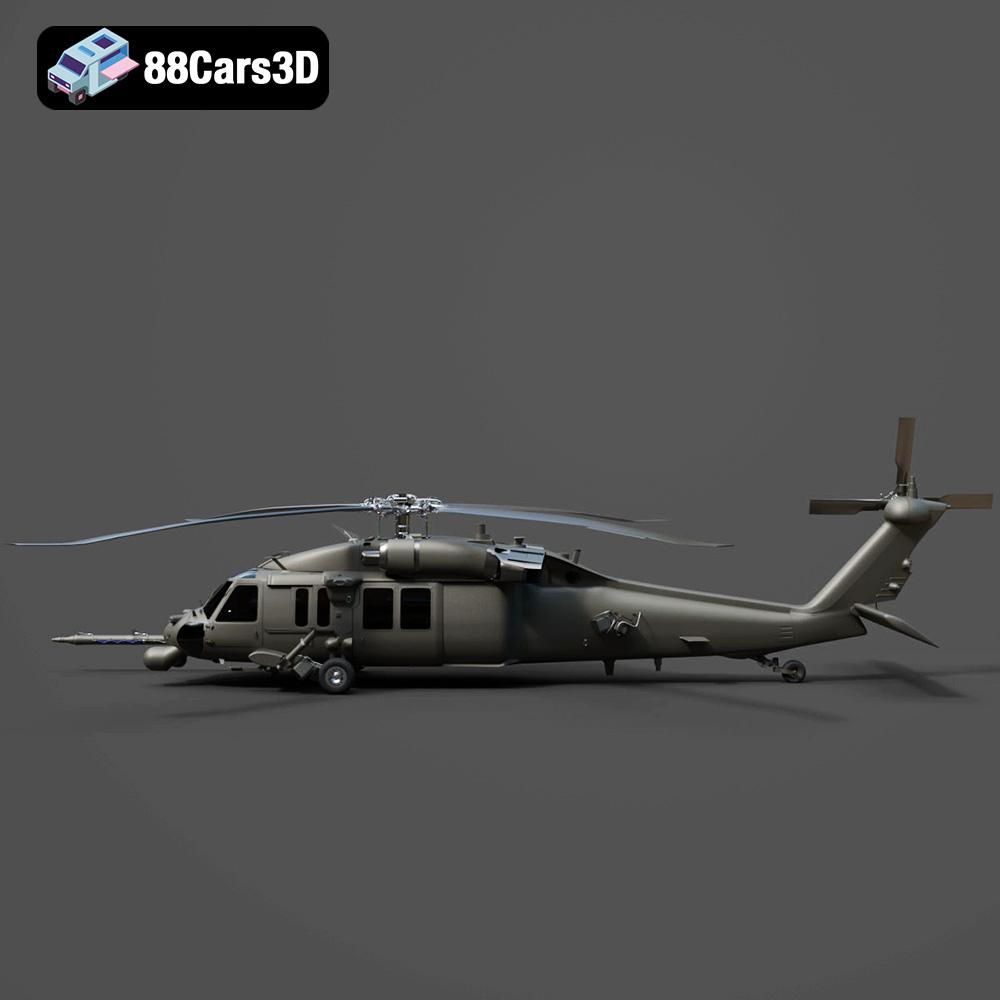
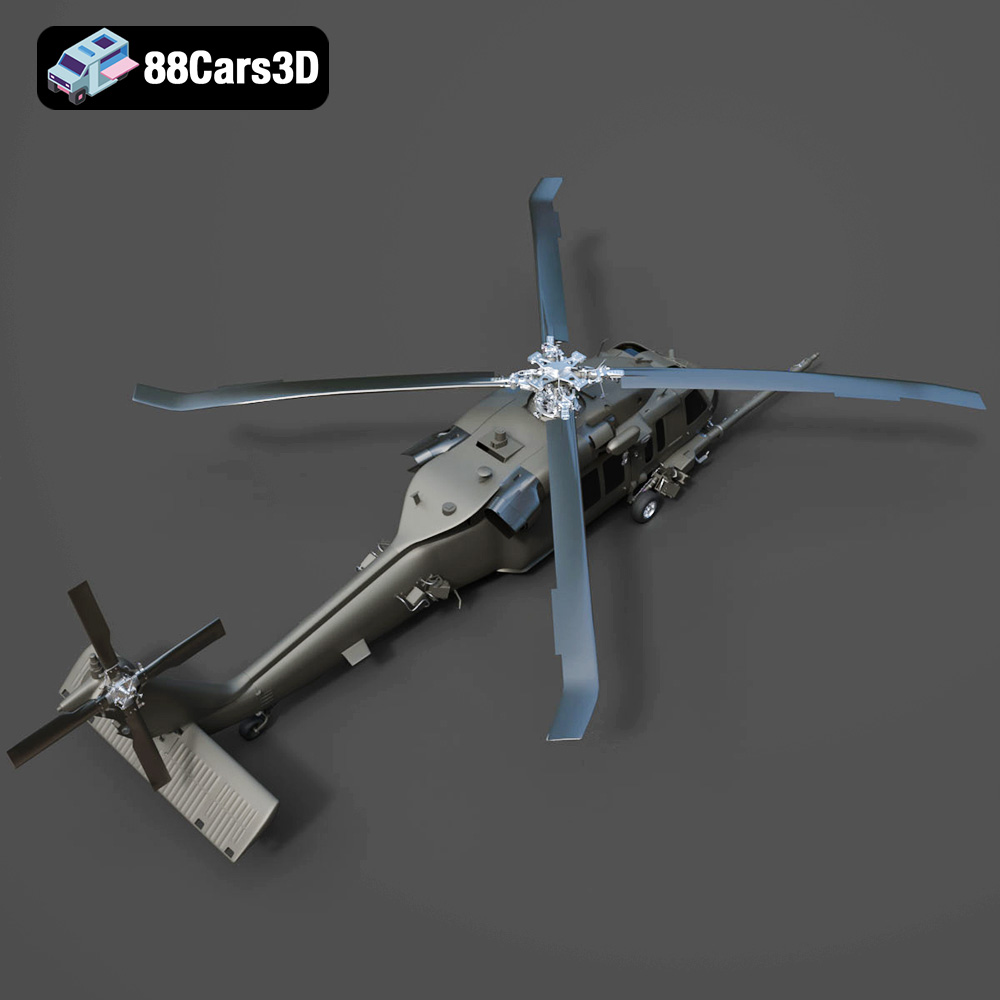
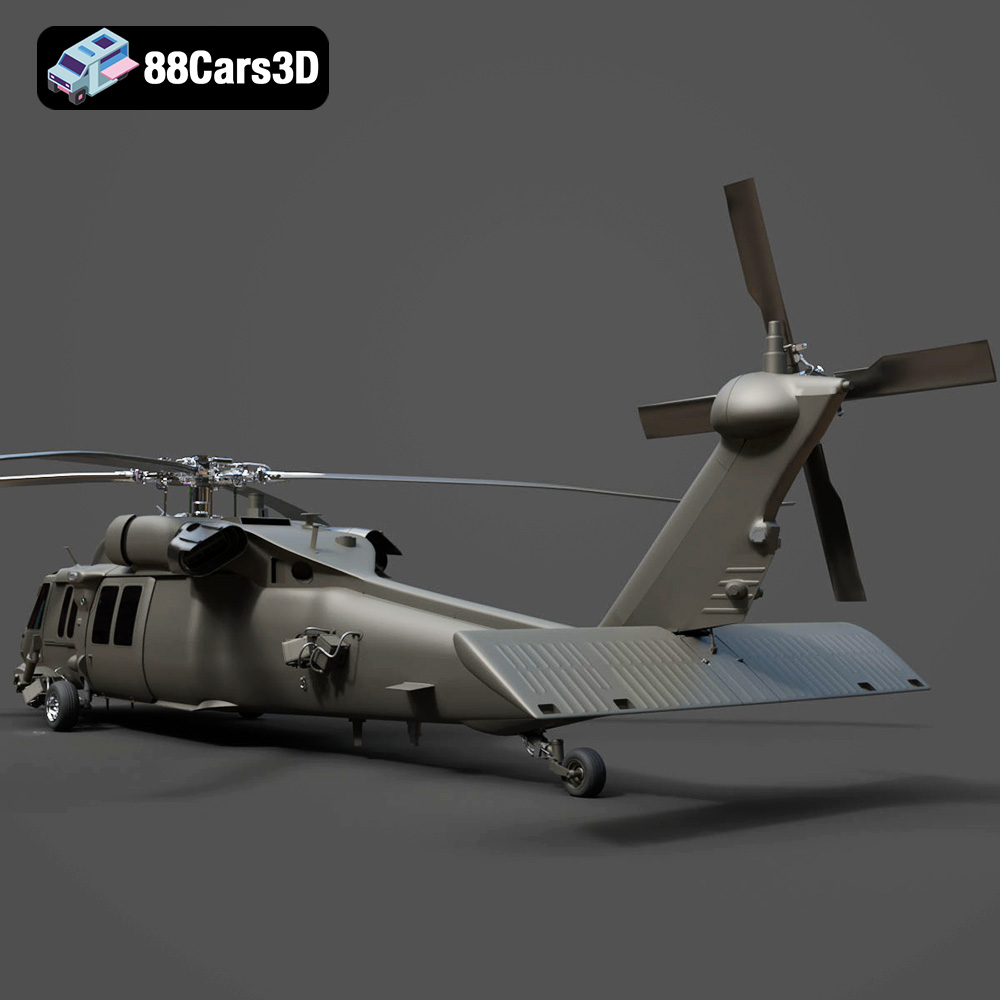
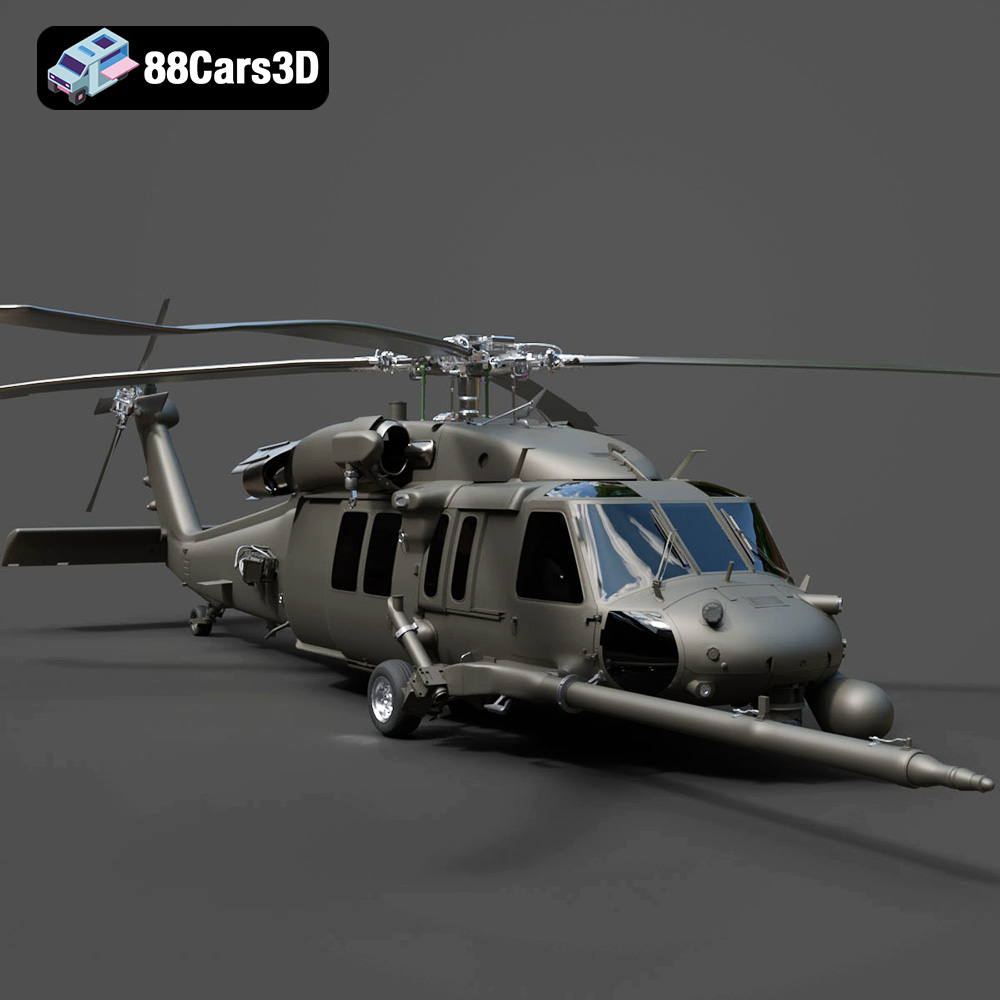
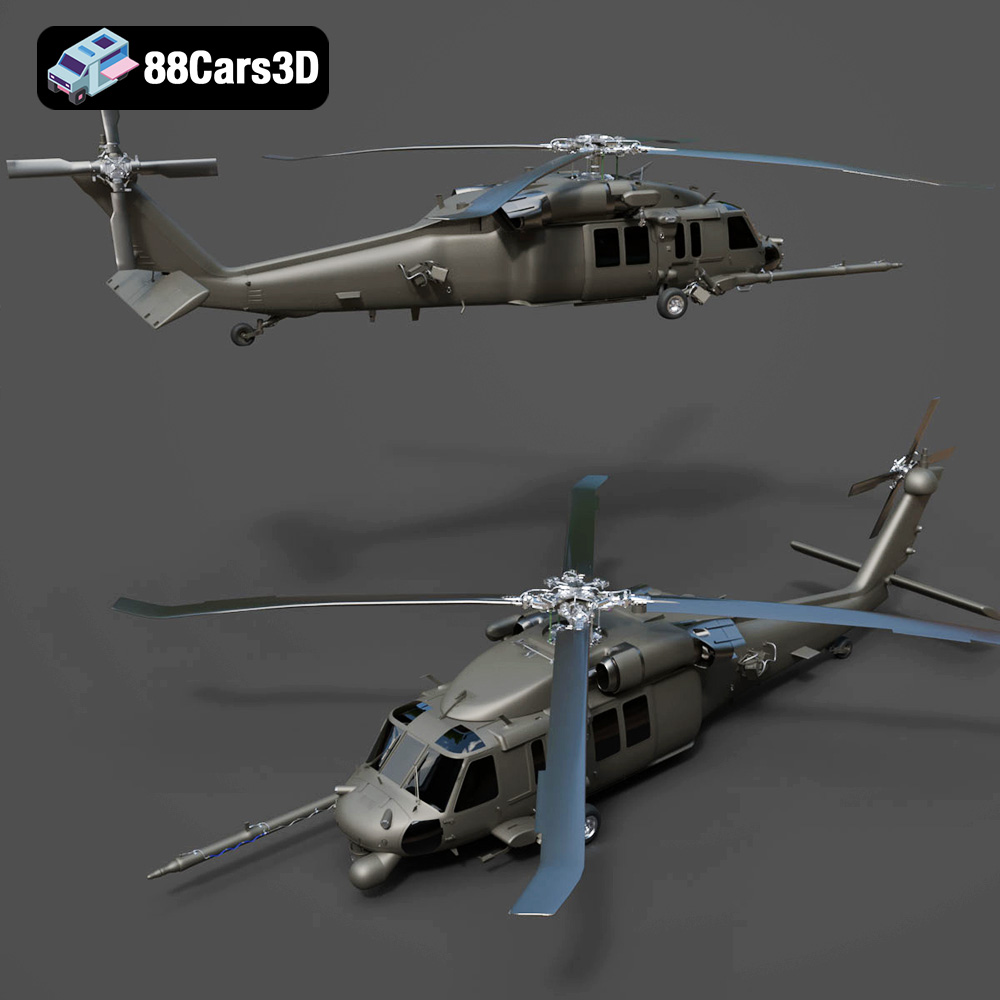
Imagine the challenge of perfectly replicating a complex piece of machinery, like a military helicopter, with all its mechanical intricacies and aerodynamic contours. The process demands meticulous attention to detail, optimized topology for diverse applications, and accurate material representation. It’s a task that can halt production timelines and inflate budgets if not handled efficiently. High-quality assets, such as the Helicopter UH-40 3D Model, available at 88cars3d.com, are engineered to seamlessly integrate into various pipelines, from cinematic rendering to real-time simulations. This model, with its precise structural accuracy and fully modeled interior, exemplifies the kind of asset that empowers artists and developers to focus on creativity rather than the painstaking minutiae of foundational asset creation.
This article delves into the technical facets of leveraging premium 3D models, exploring their applications across different industries, and highlighting how a well-crafted asset can transform your projects. We’ll examine the specific workflows that benefit from such models, the technical considerations for optimal integration, and ultimately, how to achieve breathtaking results with efficiency and confidence.
The choice of a 3D model’s file format is far more than a technical formality; it’s a critical decision that dictates compatibility, functionality, and performance across different software and platforms. A versatile asset, such as the Helicopter UH-40 3D Model, provides a comprehensive suite of formats, ensuring it meets the diverse demands of professional workflows. Understanding each format’s strengths and typical use cases is essential for maximizing your project’s efficiency and visual fidelity.
The .blend format is Blender’s native file type, storing an entire scene with all its data: meshes, materials, textures, lighting, cameras, animations, physics, and even user interface layouts. For Blender users, this format offers maximum editability and flexibility. When you acquire a .blend file for the UH-40 model, you’re getting a fully set up scene, ready for immediate rendering or further customization. Artists can easily adjust materials, modify geometry, or integrate the model into a larger Blender project without any data loss or conversion artifacts. It’s the ideal choice for deep customization and leveraging Blender’s powerful toolset.
As Autodesk’s proprietary format, .fbx has become an unofficial industry standard for exchanging 3D data between different applications and game engines. It supports geometry, materials, textures, animations, rigging, and even basic lighting. For assets like the UH-40, an .fbx file is perfect for importing into Unreal Engine, Unity, or other 3D software due to its robust support for skeletal animations and PBR (Physically Based Rendering) material setups. While highly compatible, it’s crucial to check import settings in your target application to ensure materials and scale translate correctly.
The .obj (Wavefront OBJ) format is one of the oldest and most widely supported 3D file formats. It primarily stores geometric data (vertices, normals, texture coordinates, and faces) and can reference external material files (.mtl). Its universality makes it a safe bet for cross-software compatibility, ensuring that the core mesh of the UH-40 can be opened in virtually any 3D application. However, .obj files do not inherently store animations or advanced material properties, meaning textures and complex shading networks often need to be re-linked or rebuilt in the target software. It’s excellent for static mesh exchange.
Derived from the GL Transmission Format (glTF), .glb is a binary format that efficiently bundles 3D models, textures, and animations into a single file. It’s specifically optimized for web-based applications, augmented reality (AR), and virtual reality (VR) experiences due to its compact size and quick loading times. For showcasing the UH-40 in a browser-based viewer or integrating it into an AR app, .glb offers an unparalleled combination of visual quality and performance. It supports PBR materials, making it ideal for realistic rendering in real-time web environments.
The .stl (STereoLithography) format is the ubiquitous standard for 3D printing. It represents a 3D model as a collection of unconnected triangles (a tessellated surface). While simple, this format effectively describes the surface geometry necessary for additive manufacturing processes. When preparing the UH-40 for 3D printing, the .stl file ensures that the physical dimensions and structural details are accurately translated. It’s important to note that .stl files do not store color, texture, or material information; they are purely about form.
The .ply (Polygon File Format) is another common format for storing 3D data, particularly useful for scanned data, CAD models, and scientific applications where precision and detailed mesh information are crucial. Unlike .stl, .ply can store a wider range of properties, including color, transparency, normals, texture coordinates, and even reliability information. For technical visualization or analysis of the UH-40’s geometry, the .ply format offers a robust option for preserving nuanced mesh details, often used in reverse engineering or quality control workflows.
The .unreal format, or more accurately, assets provided in a pre-configured Unreal Engine project, signifies a significant time-saver for developers. This means the Helicopter UH-40 3D Model comes as an asset pack already imported, with materials correctly set up using Unreal’s PBR shader system, collisions generated, and potentially even LODs (Levels of Detail) configured. This format bypasses the often-complex import process, allowing immediate drag-and-drop integration into your Unreal Engine project, making it truly engine-ready for game development and high-fidelity real-time rendering.
Similar to .blend for Blender, the .max format is the native file type for Autodesk 3ds Max. It contains all scene data, including geometry, materials, textures, lighting, cameras, animation, and scene settings. For 3ds Max users, this provides the highest level of control and flexibility. An editable .max file of the UH-40 allows for comprehensive adjustments, complex animation setups, and integration with 3ds Max’s extensive plugin ecosystem, making it ideal for high-end rendering, architectural visualization, and intricate animation sequences.
By offering this diverse range of formats, the Helicopter UH-40 3D Model ensures that whether your pipeline involves detailed rendering in Blender, real-time interactivity in Unreal Engine, or prototyping with 3D printing, you have the right tools at your disposal, saving countless hours in conversion and re-setup.
The demands of real-time rendering, particularly in game development and AR/VR, are incredibly stringent. Assets must not only look fantastic but also perform flawlessly, maintaining high frame rates without sacrificing visual fidelity. The Helicopter UH-40 3D Model is specifically designed with these requirements in mind, offering optimized topology and clean geometry.
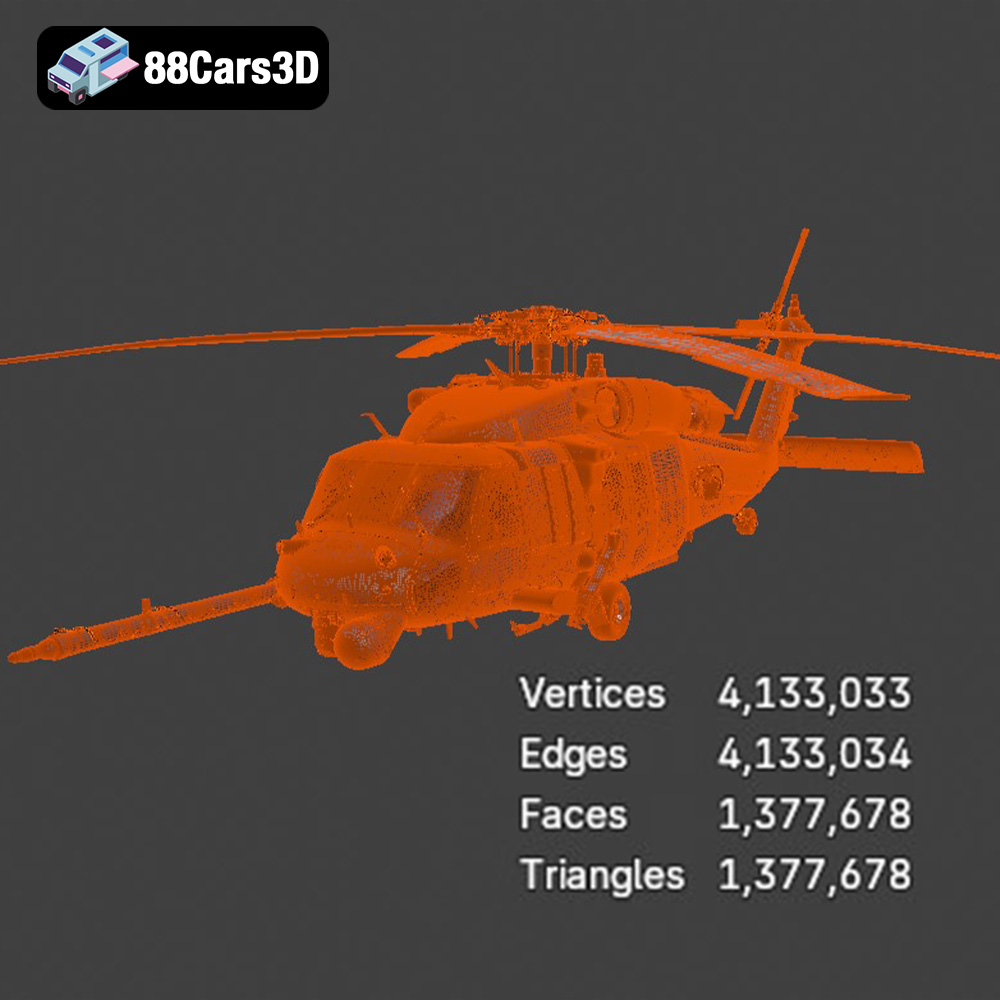
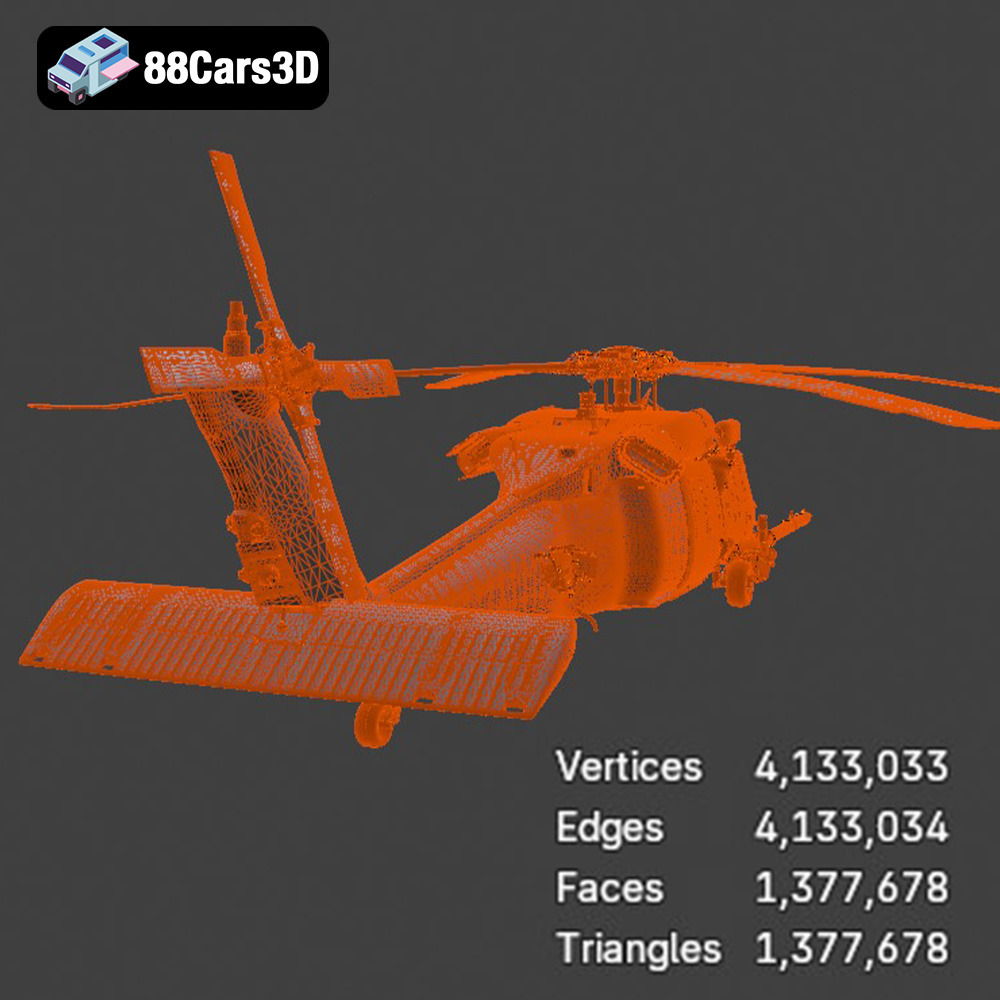
For game engines like Unreal Engine and Unity, polygon count is a critical factor. An overly dense mesh can cripple performance, especially on mobile devices or during complex scenes. The UH-40 model features optimized topology, meaning its polygon count is carefully balanced to retain structural accuracy and detail while keeping performance overhead low. This involves using quads (four-sided polygons) for clean deformation, minimizing triangles where possible (except for export to game engines which triangulate meshes anyway), and ensuring efficient edge flow. This optimization translates directly to smoother gameplay and more responsive AR/VR environments. Furthermore, efficient UV mapping is crucial for applying textures without distortion and for maximizing texture atlas utilization, which is vital for reducing draw calls in real-time applications.
The provision of .fbx and .unreal file formats for the Helicopter UH-40 3D Model is a game-changer for developers. The .fbx format, with its support for PBR materials, makes the initial import into Unity or Unreal a streamlined process. PBR materials ensure that the model reacts realistically to lighting, providing a consistent look across different environments. The .unreal format goes a step further, delivering a pre-configured asset that often includes correctly set up materials, texture maps (albedo, normal, roughness, metallic, ambient occlusion), and even initial collision meshes. This significantly reduces the development overhead, allowing teams to rapidly prototype and integrate the helicopter into their projects, whether it’s a high-octane military simulation or a detailed interactive training module.
AR/VR experiences demand extremely low latency and high visual quality to prevent motion sickness and maximize immersion. The .glb format for the UH-40 is tailor-made for these platforms. Its efficiency in bundling all necessary data into a single, compact file makes it ideal for streaming or rapid loading in web-based AR/VR viewers or dedicated applications. Developers can leverage the UH-40 to populate virtual cockpits, create interactive training scenarios, or enhance real-world environments with a realistically rendered digital overlay. The optimized nature of the model ensures that even on mobile AR platforms, the helicopter maintains its visual depth and precise structural accuracy without compromising performance.
For cinematic sequences, high-end product visualization, or architectural renderings where every pixel counts, photorealism is the ultimate goal. The Helicopter UH-40 3D Model provides the detail and material fidelity required to meet these exacting standards, making it an excellent base for stunning visual productions.
The “realistic materials” mentioned in the UH-40’s description are key to achieving photorealism. Modern rendering engines (V-Ray, Corona, Cycles, Octane, Redshift) rely heavily on Physically Based Rendering (PBR) workflows. This means materials are defined by properties like albedo (base color), roughness, metallic, normal, and ambient occlusion maps. A high-quality model like the UH-40 comes with meticulously crafted PBR textures, often at 4K or even 8K resolution, ensuring that details like paint chips, panel lines, and material wear are accurately represented. Artists can easily import these into their renderer of choice, knowing that the materials will react correctly to light, shadows, and reflections, bringing the helicopter to life with incredible realism.
While the model itself provides the visual foundation, realistic lighting is what truly sells a photorealistic render. With a detailed model like the UH-40, artists can experiment with complex lighting setups: HDRI (High Dynamic Range Image) environments for realistic global illumination, volumetric fog to simulate atmospheric effects, and targeted area lights to highlight specific mechanical details or create dramatic shadows. The clean geometry of the UH-40 ensures that light bounces and refracts accurately, avoiding rendering artifacts and enhancing the sense of depth and realism. Whether it’s showcasing the helicopter under a harsh desert sun or in a dimly lit hangar, the model’s quality ensures every lighting scenario looks authentic.
Beyond the raw render, the final polish often comes through post-processing and compositing. A high-quality base model allows artists to push visual boundaries in tools like Adobe Photoshop, After Effects, or Nuke. Elements like depth of field, motion blur, lens flares, and color grading can be added without revealing underlying model imperfections. The “fully modeled interior” of the UH-40 is particularly valuable here, allowing for dynamic camera angles and close-up shots that would otherwise be impossible or require significant extra work. This level of detail elevates the model from a simple asset to a central element in a compelling visual narrative.
The utility of professional 3D models extends far beyond digital rendering and real-time interactive experiences. For engineers, designers, and enthusiasts, the ability to translate a digital asset into a physical object or use it for precise technical analysis opens up a new realm of possibilities. The Helicopter UH-40 3D Model, with its detailed structural accuracy, is perfectly suited for these applications.
The inclusion of the .stl file format for the UH-40 model is crucial for 3D printing applications. STL files represent the surface geometry of a 3D object as a collection of triangles, making them the universal language for additive manufacturing. Engineers and hobbyists can use this format to create physical prototypes, scale models, or even functional parts of the UH-40. The “precise structural accuracy” of the digital model ensures that the printed object will faithfully reproduce the intricate details of the real helicopter. Before printing, the model might require scaling and slicing in a dedicated slicer software, but the clean and manifold mesh provided in a professional asset minimizes common printing errors and ensures a smooth transition from digital to physical.
For industries requiring rigorous analysis, the .ply format offers a robust solution. This format can store a rich array of data beyond simple geometry, including vertex colors, normals, and even confidence values, making it ideal for high-precision technical visualization. Whether it’s for aerodynamic studies, stress analysis simulations (FEA – Finite Element Analysis), or detailed assembly instructions, a meticulously crafted model like the UH-40 serves as an accurate digital twin. This allows engineers to visualize potential issues, test modifications, or demonstrate complex mechanisms with unparalleled clarity, significantly streamlining design and validation processes. The clean geometry ensures that simulations run efficiently and produce reliable results.
Beyond physical prototypes, professional 3D models are transformative for technical documentation and training. Imagine an interactive exploded view of the UH-40, allowing technicians to virtually dismantle and reassemble components, or a simulator where pilots can train on accurate controls and instruments within the fully modeled interior. These applications leverage the model’s detailed internal and external structure to provide realistic, hands-on learning experiences that are both cost-effective and highly engaging. The versatility of formats like .fbx and .glb makes it easy to integrate these detailed visualizations into custom software or web-based training platforms, providing an invaluable resource for military, aviation, and emergency services.
Time is a valuable commodity in any production pipeline. Investing in high-quality, pre-made 3D models like the Helicopter UH-40 3D Model from 88cars3d.com is a strategic decision that offers substantial returns in terms of efficiency, quality, and creative freedom.
Creating a highly detailed, game-ready or render-ready 3D model from scratch is an incredibly resource-intensive process. It requires expert modelers, UV artists, texture artists, and often, rigging and animation specialists. This can take weeks or even months for complex assets like the UH-40. By purchasing a professional model, teams can bypass this entire initial phase, saving hundreds of hours of labor and significant financial investment. This allows artists and developers to allocate their expertise to more creative tasks, such as scene composition, animation, coding, or environmental storytelling, rather than foundational asset creation. For studios with tight deadlines, this time-saving aspect is invaluable.
Relying on professionally developed assets guarantees a consistent level of quality that might be challenging to maintain with in-house productions, especially for smaller teams or independent creators. Models from reputable marketplaces like 88cars3d.com adhere to industry best practices in terms of topology, UV mapping, and PBR material setup. This consistency ensures that all your assets look cohesive, perform optimally, and integrate smoothly into your chosen software, whether you’re working on automotive rendering, an architectural visualization, or a game asset library. The detailed Helicopter UH-40 3D Model, for instance, provides a benchmark for quality, ensuring that its inclusion elevates the overall fidelity of your project.
With the core assets handled, artists gain the freedom to experiment and innovate. Instead of spending time on modeling a complex helicopter, they can focus on artistic direction, exploring different lighting moods, animation sequences, or interactive elements. This shift allows for a more iterative and experimental creative process, leading to more unique and compelling final products. The availability of multiple file formats for the UH-40 also broadens possibilities, enabling creators to deploy the same high-quality model across diverse platforms, from cinematic trailers to AR applications, maximizing its value and reach.
Choosing the right source for your 3D assets is as important as selecting the assets themselves. 88cars3d.com distinguishes itself by offering a curated selection of high-quality 3D vehicle models, including the exceptional Helicopter UH-40 3D Model, designed to meet rigorous professional standards across various industries.
At 88cars3d.com, the emphasis is on delivering assets that are not just visually appealing but also technically robust. This means models feature clean, optimized topology, ensuring smooth deformations and efficient rendering. The materials are typically set up using modern PBR workflows, complete with high-resolution texture maps (Albedo, Normal, Roughness, Metallic, AO) that guarantee realistic interactions with light in any rendering engine or game environment. For example, the Helicopter UH-40 3D Model’s description highlights its “optimized topology,” “clean geometry,” and “realistic materials” – these aren’t just buzzwords but technical specifications that translate into tangible benefits for your projects. This attention to detail reduces the need for extensive cleanup or re-texturing, allowing for quick integration and immediate use.
One of the most significant advantages of sourcing models from 88cars3d.com is the streamlining of your production pipeline. Each product, including the Helicopter UH-40 3D Model, comes with a comprehensive suite of industry-standard file formats (.blend, .fbx, .obj, .glb, .stl, .ply, .unreal, .max). This eliminates compatibility headaches and ensures that regardless of your preferred software (Blender, 3ds Max, Unreal Engine, Unity) or end-use (rendering, game development, AR/VR, 3D printing), you have an immediately usable asset. For instance, the provision of a pre-configured .unreal file means developers can skip the entire asset import and setup process, dropping the UH-40 directly into their Unreal project ready for action. This multi-format support saves valuable developer time and ensures a smooth workflow from download to deployment.
While this article focuses on the magnificent Helicopter UH-40, 88cars3d.com offers a diverse range of professional 3D vehicle models, including top-tier 3D car models and other complex machinery. This breadth of choice means creators can find high-quality assets for nearly any project, maintaining consistent quality across their entire digital hangar. Whether you’re working on an automotive rendering project, a flight simulator, or an interactive virtual experience, the reliability and technical excellence of assets from 88cars3d.com provide a solid foundation for achieving exceptional results.
The journey from concept to final render or interactive experience is paved with countless technical and creative challenges. High-quality 3D models serve as a powerful catalyst, accelerating production, elevating visual fidelity, and freeing artists and developers to focus on innovation. The Helicopter UH-40 3D Model stands as a testament to what professional assets can offer: meticulous detail, optimized performance, and unparalleled versatility across a myriad of applications, from game development to advanced architectural visualization, and even precise 3D printing.
By understanding the nuances of different file formats, leveraging PBR materials, and recognizing the benefits of optimized topology, creators can make informed decisions that significantly impact their project’s success. Assets like the UH-40, with its fully modeled interior and extensive format support, eliminate the need to reinvent the wheel, allowing for seamless integration into complex workflows and delivering breathtaking results with efficiency.
Whether you’re crafting an immersive military simulation, producing a cinematic animation, or pushing the boundaries of AR/VR, the right 3D asset is your most potent tool. Explore the possibilities and enhance your digital library with professional-grade models, ensuring your creations not only meet but exceed expectations. For a comprehensive selection of high-quality 3D car models and other vehicle assets that are engineered for performance and visual excellence, look no further than 88cars3d.com.
Enhance your digital hangar with the detailed Helicopter UH-40 3D Model. Designed to meet the demands of visualizers and developers, this model delivers precise structural accuracy. The exterior captures the robust aerodynamics of the UH-40 aircraft, while the internal layout provides a fully modeled interior, ensuring it stands up to close-up renders and immersive experiences. Built with optimized topology, this model features clean geometry and realistic materials that integrate seamlessly into your workflow. Whether you are crafting cinematic sequences, producing military simulations, or developing interactive applications, this versatile asset elevates the visual fidelity of your projects. Ideal for game development, rendering, AR/VR experiences, and detailed technical visualization, the Helicopter UH-40 3D Model is optimized for performance without sacrificing visual depth. It includes a comprehensive suite of industry-standard file formats.
$39.99
.aircraft
.arvr
.aviation
.blend
.car3dmodel
.fbx
.gameasset
.glb
.helicopter
.max
.military
.obj
.ply
.rendering
.simulation
.stl
.uh40
.unreal