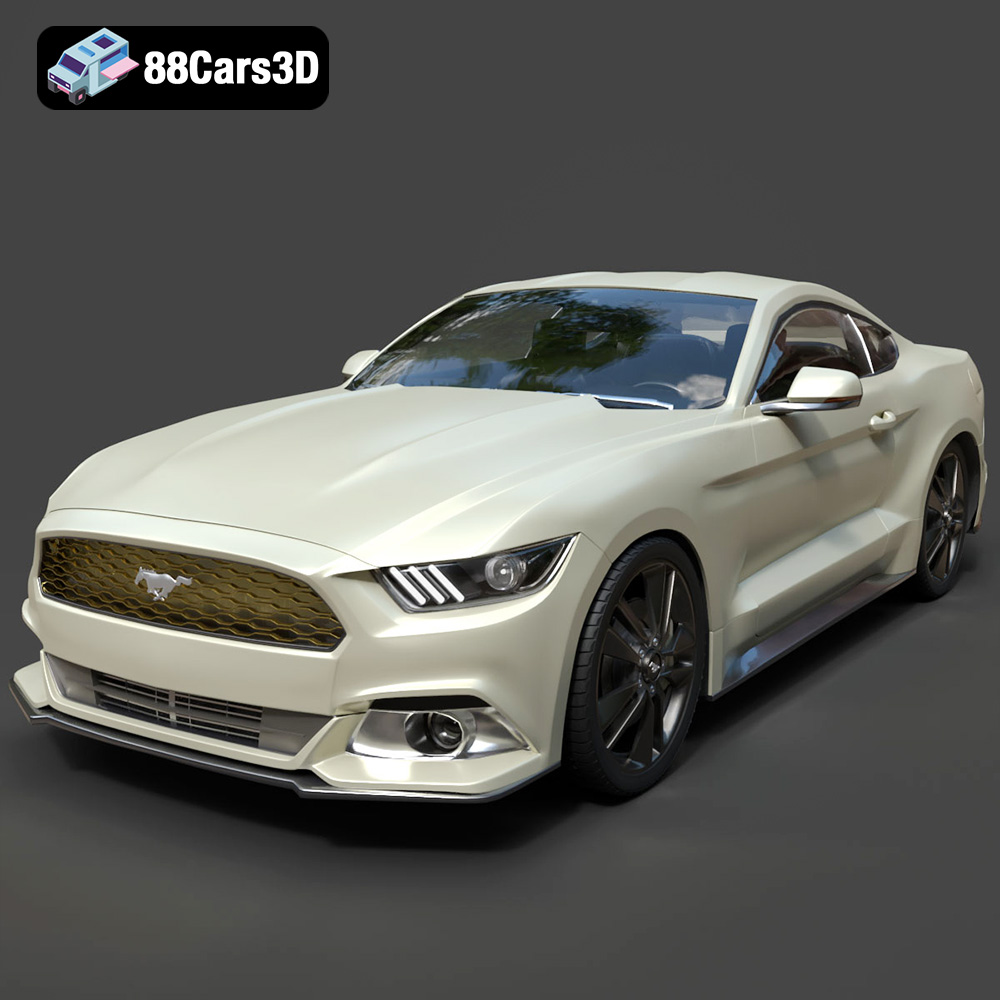
Get 20% OFF All Premium 3D & STL Models!

In the fast-paced world of digital creation, the demand for high-quality, authentic assets is constant. From hyper-realistic automotive visualizations and immersive game environments to groundbreaking AR/VR experiences and even precise 3D prints, the foundation of any successful project lies in its core assets. Few subjects captivate audiences and challenge digital artists quite like the automobile – a complex fusion of engineering, design, and raw power.
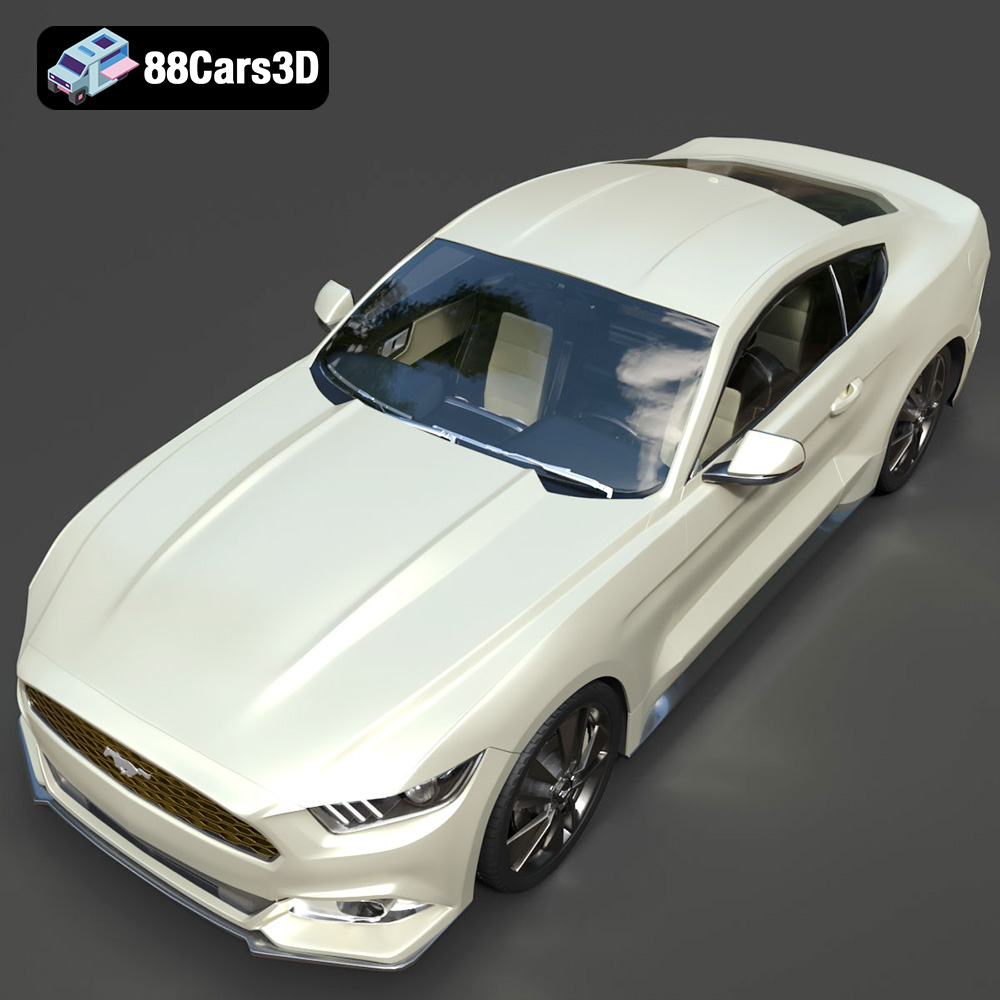
Among the pantheon of automotive icons, the Ford Mustang GT stands as an enduring symbol of American muscle, a legend revered for its aggressive stance, commanding presence, and visceral performance. Capturing this essence digitally requires a meticulous approach, demanding models that not only look the part but are also technically robust and versatile. This is where a meticulously crafted 3D model like the Ford Mustang GT 3D Model from 88cars3d.com becomes an indispensable tool. It offers creators a gateway to integrate this automotive legend into their projects with unparalleled detail and optimization, ensuring seamless integration across various platforms and applications.
Navigating the diverse landscape of 3D modeling requires a fundamental understanding of various file formats, each tailored for specific workflows, software, and applications. The right format ensures compatibility, preserves data integrity, and optimizes performance, especially when dealing with complex assets like high-fidelity 3D car models. The Ford Mustang GT 3D Model from 88cars3d.com comes equipped with an extensive suite of formats, catering to a wide spectrum of professional needs. Let’s delve into each one:
The .blend format is the native file type for Blender, the popular open-source 3D creation suite. When you download a .blend file, you’re getting a fully editable Blender scene, complete with the model’s geometry, materials, textures, lighting, cameras, and even animation data if present. This format is ideal for artists who primarily work in Blender, allowing for direct manipulation, customization, and integration of the Ford Mustang GT into existing Blender projects. It provides maximum flexibility for tweaking the model’s appearance, adjusting its topology, or setting up complex rendering scenes within Blender’s powerful Cycles or Eevee render engines.
.fbx (Filmbox) is arguably the most widely adopted proprietary file format for 3D content exchange, particularly within game development and animation pipelines. Developed by Autodesk, FBX supports geometry, materials, textures, animations, skeletons, and blend shapes, making it a robust choice for transferring complex models between different software applications like 3ds Max, Maya, Cinema 4D, and critically, game engines like Unreal Engine and Unity. For a game-ready asset like the Mustang GT, the .fbx format is often the preferred choice for exporting into a real-time environment, ensuring all crucial data, from mesh to pivots, is preserved.
The .obj (Wavefront OBJ) format is a simple, universal 3D data format that is supported by nearly every 3D application. It stores geometry (vertices, normals, texture coordinates, and faces) and references external .mtl (material library) files for material definitions. While .obj doesn’t support advanced features like animation or rigging, its widespread compatibility makes it an excellent choice for cross-software transfers where pure mesh data is paramount. It’s often used as a fallback or for importing models into software that might not fully support .fbx. For the Ford Mustang GT, the .obj provides a clean, raw mesh for general 3D work.
.glb (GL Transmission Format Binary) is the binary version of glTF, a royalty-free specification for the efficient transmission and loading of 3D scenes and models by applications. GLB files package all assets (geometry, textures, animations) into a single, self-contained binary file, making them highly optimized for web-based 3D, augmented reality (AR), and virtual reality (VR) applications. Its small file size and quick loading times make it perfect for displaying the Mustang GT in web configurators, mobile AR apps, or lightweight VR experiences without compromising visual quality.
.stl (Stereolithography) is the de facto standard file format for 3D printing. It represents a 3D model as a series of connected triangles, defining only the surface geometry of an object without color, texture, or other CAD attributes. While simple, its ubiquity in the 3D printing world is unmatched. The Mustang GT’s availability in .stl format means enthusiasts can directly prepare it for fabrication on FDM or resin 3D printers, transforming the digital model into a tangible collectible or prototype. The product description highlights recommended settings for successful printing, underscoring its print-readiness.
.ply (Polygon File Format, also known as Stanford Triangle Format) is another format used to store 3D data, particularly from 3D scanners. It can store a variety of properties including color, transparency, normals, texture coordinates, and scalar values. PLY is often favored in scientific and engineering applications, as well as for precise mesh analysis and CAD workflows. While less common for general artist use than FBX or OBJ, its inclusion for the Mustang GT provides an option for highly technical applications requiring detailed polygonal data.
The inclusion of an .unreal file (or an Unreal Engine-specific asset package/project) signifies that the model is delivered in a format that is directly optimized and often pre-configured for use within Unreal Engine. This could mean pre-setup materials, proper collision meshes, level of detail (LOD) groups, and pivot points, reducing the setup time dramatically for game developers. For a game-ready asset like the Ford Mustang GT, this directly translates to faster integration into racing games, open-world environments, or architectural visualization projects within Unreal Engine, leveraging its powerful real-time rendering capabilities.
Finally, the .max format is the native scene file for Autodesk 3ds Max, a powerful 3D modeling, animation, rendering, and compositing software. Similar to .blend, a .max file contains the entire project, including all geometry, textures, materials (often V-Ray or Corona specific), lights, cameras, and animation data. This format is invaluable for professional visualization studios that rely on 3ds Max for high-end rendering and complex animation sequences. It provides full editable access to the Ford Mustang GT model within its original creation environment, enabling artists to build cinematic automotive renders or intricate animations with ease.
This comprehensive array of file formats ensures that the Ford Mustang GT 3D Model is not just a high-quality asset, but a highly adaptable one, ready for virtually any digital workflow.
Automotive rendering is an art form that blends technical precision with creative vision. The goal is to produce photorealistic images and animations that evoke emotion and highlight the vehicle’s design. A premium 3D model like the Ford Mustang GT is the perfect canvas for this, allowing artists to push the boundaries of digital realism.
For artists working in 3ds Max or Blender, the provided .max and .blend files offer a robust starting point. The workflow typically begins by importing the model and setting up a virtual studio environment. This involves creating a seamless backdrop, positioning studio lights (often using HDRI maps for realistic reflections and illumination), and configuring a high-quality render engine like V-Ray, Corona, Cycles, or Octane.
Beyond static images, the Ford Mustang GT 3D Model excels in animated sequences. Imagine a virtual commercial showcasing the car’s aggressive rear diffuser or a slow pan across its detailed sport bucket seats and digital instrument cluster. Its optimized geometry and proper pivot setups for steering, wheel rotation, and suspension travel make it inherently animation-ready.
The detailed 5.0L V8 engine block and brake calipers also lend themselves to compelling “exploded view” animations or technical breakdowns, providing an in-depth look at the Mustang’s engineering prowess, ideal for educational content or marketing collateral.
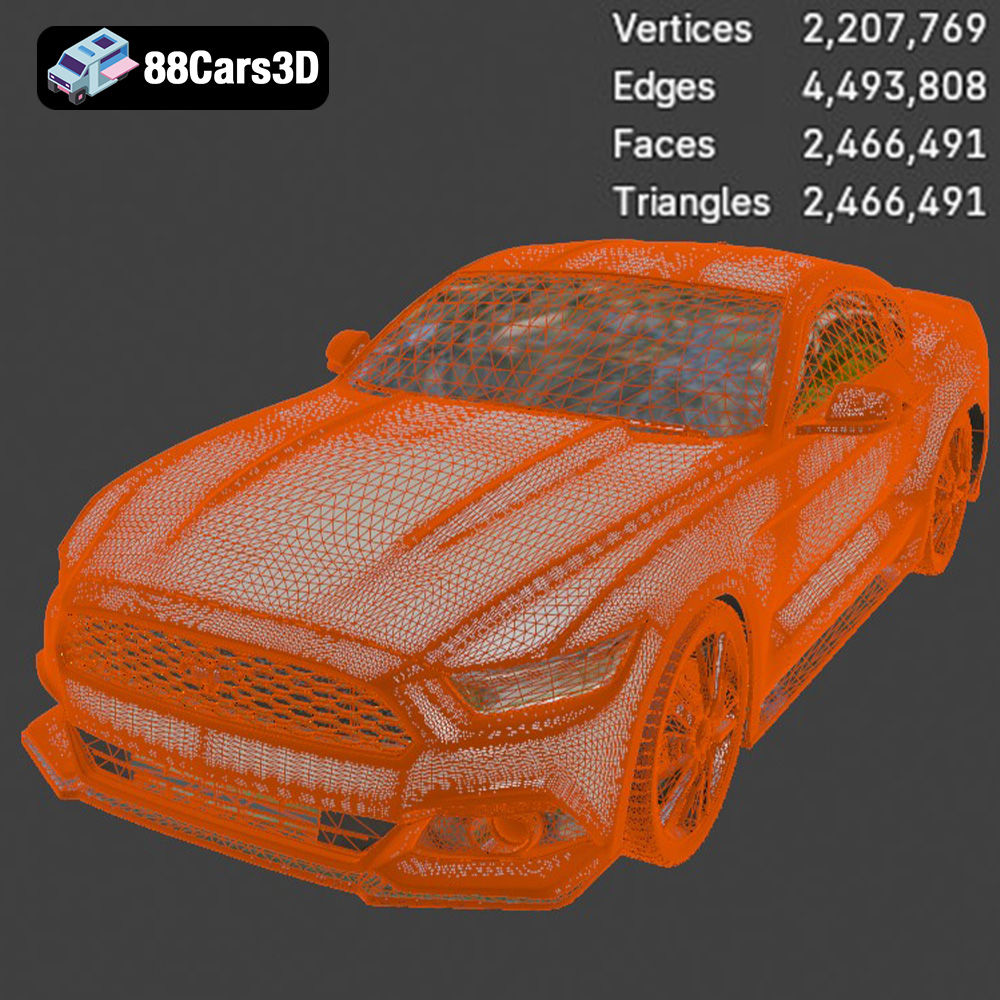
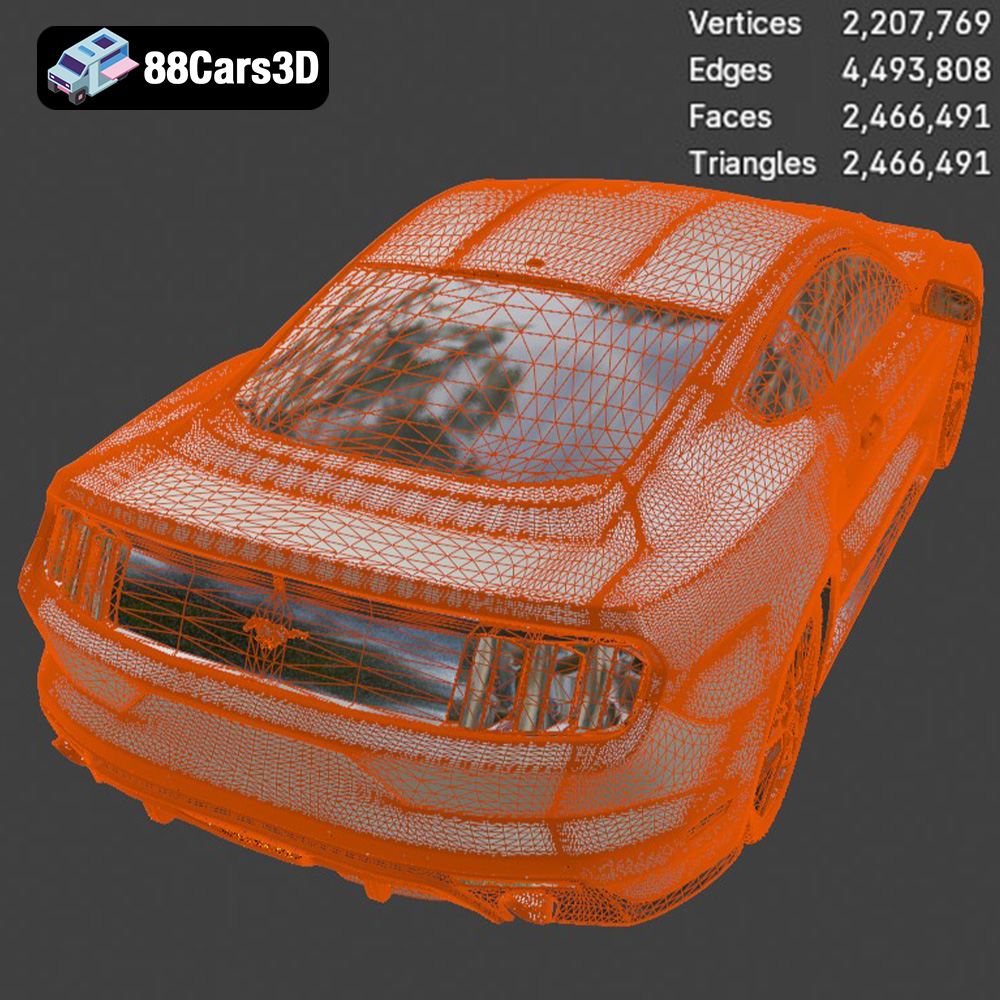
For game developers, the quality and optimization of 3D car models are paramount. The Ford Mustang GT 3D Model from 88cars3d.com is specifically engineered as a game-ready asset, striking a critical balance between visual fidelity and real-time performance, thanks to its ~200,000 triangle count.
Integrating the Mustang GT into game engines like Unreal Engine or Unity is streamlined by its optimized geometry and included .fbx and .unreal formats. The process typically involves importing the model, setting up materials, and configuring physics. The provided .unreal file specifically hints at an even smoother integration, potentially offering pre-configured assets.
The detailed interior features – from the sport bucket seats and multifunction steering wheel to the digital instrument cluster and infotainment screen – are specifically optimized for first-person POV in gaming. This allows for immersive cockpit views, enhancing the player’s connection to the vehicle.
The efficiency and detail of this game-ready Ford Mustang GT model make it an invaluable asset for any studio looking to inject an iconic American muscle car into their next blockbuster title.
The versatility of a high-quality 3D model extends far beyond traditional rendering and gaming. The Ford Mustang GT 3D Model’s comprehensive file format support and technical specifications open doors to a multitude of emerging and specialized applications.
Augmented Reality (AR) and Virtual Reality (VR) are transforming how consumers interact with products, especially in the automotive sector. The Ford Mustang GT model, particularly in its .glb format, is perfectly suited for these immersive experiences.
The inclusion of the .stl format, alongside detailed 3D print settings, transforms the digital Mustang GT into a tangible object. This opens up opportunities for hobbyists, collectors, and even professional designers to create physical models.
Beyond advertising, 3D models are vital for internal design reviews, engineering simulations, and sales presentations. The Ford Mustang GT 3D Model, with its real-world scale accuracy and meticulous detailing, is perfect for these professional applications.
The true value of a premium 3D car model like the Ford Mustang GT lies not just in its visual appeal, but in its underlying technical excellence. This model is a testament to meticulous craftsmanship, balancing high fidelity with critical optimization.
A significant technical advantage of this model is its optimized topology, featuring approximately 200,000 triangles. This figure is carefully chosen:
Accuracy is paramount in automotive visualization and simulation. The Ford Mustang GT model adheres to real-world scale, based on actual vehicle chassis dimensions.
Furthermore, the separate wheels, suspension, and steering components are not merely visual details; they are distinct, animatable parts. This modularity is a mark of a professionally prepared asset, allowing for sophisticated animation rigs and detailed interaction without complex mesh surgery.
In any professional creative pipeline, time is money. Leveraging pre-made, high-quality 3D assets is a powerful strategy for optimizing workflows, accelerating project timelines, and ensuring consistent excellence. The Ford Mustang GT 3D Model from 88cars3d.com exemplifies how such assets can be integrated to boost productivity.
Creating a high-fidelity car model from scratch is an incredibly time-consuming and resource-intensive endeavor. It demands expert modeling skills, a deep understanding of automotive design, intricate texturing, and meticulous optimization. By utilizing a pre-made asset:
Not all 3D models are created equal. A premium asset, such as this Ford Mustang GT, comes with guarantees of quality and technical integrity.
While ready-to-use, the Ford Mustang GT model also offers extensive customization options, further enhancing its value in professional workflows.
This blend of out-of-the-box readiness and inherent flexibility makes the Ford Mustang GT 3D Model an invaluable asset for anyone serious about automotive digital content creation.
The digital realm offers unprecedented opportunities for creativity, but the quality of the raw materials determines the quality of the final output. In the specialized niche of automotive visualization, gaming, and immersive experiences, a truly exceptional 3D car model is the foundation of success. The Ford Mustang GT, an icon of raw power and aggressive design, demands nothing less than a meticulously crafted digital twin.
The Ford Mustang GT 3D Model featured on 88cars3d.com stands out as a prime example of such an asset. With its optimized topology (~200,000 triangles), real-world scale accuracy, and comprehensive suite of industry-standard file formats (.blend, .fbx, .obj, .glb, .stl, .ply, .unreal, .max), it is engineered for peak performance and visual fidelity across a wide range of applications. Whether you are aiming for photorealistic renders in 3ds Max, building an immersive racing game in Unreal Engine, crafting an AR car configurator, or even 3D printing a detailed replica, this model provides the essential tools.
It embodies the perfect synergy of technical precision and creative potential, allowing artists and developers to save valuable time, maintain professional quality, and focus on bringing their unique visions to life. Invest in premium assets from 88cars3d.com and unleash the full potential of your digital projects with the legendary Ford Mustang GT.
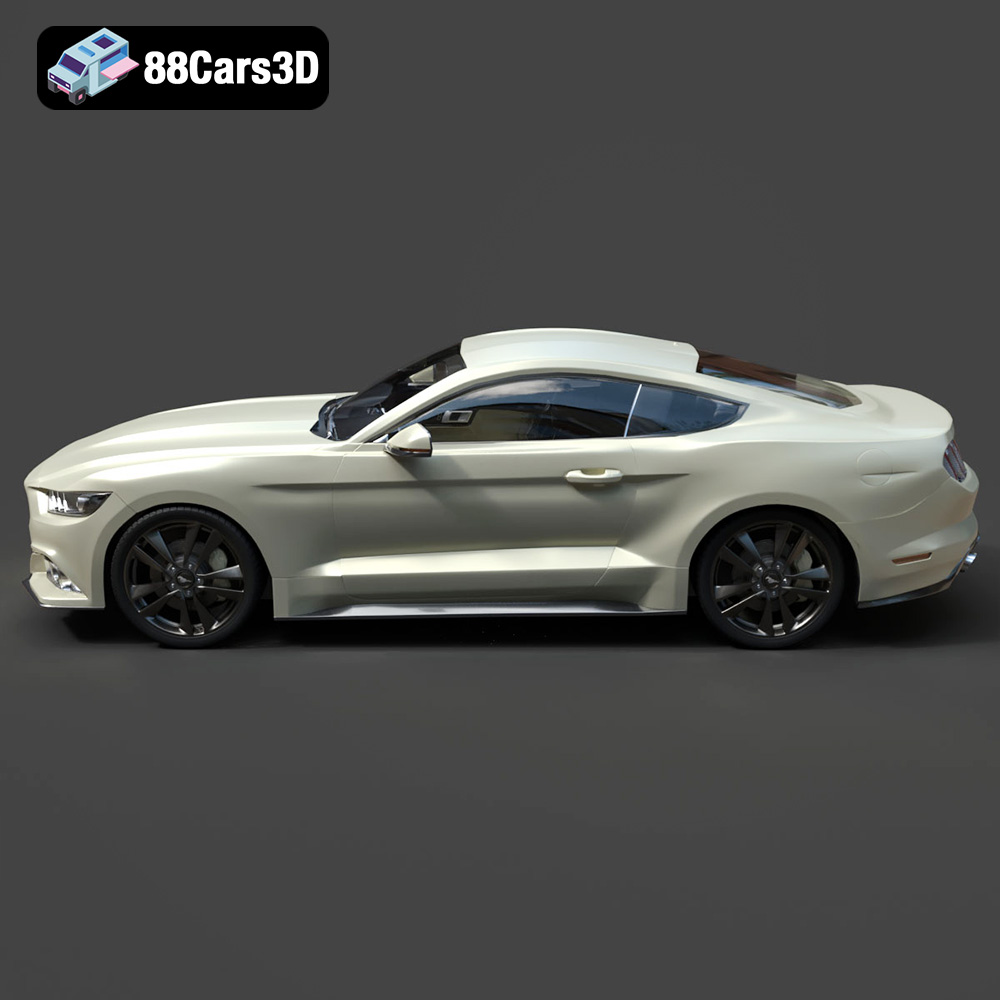
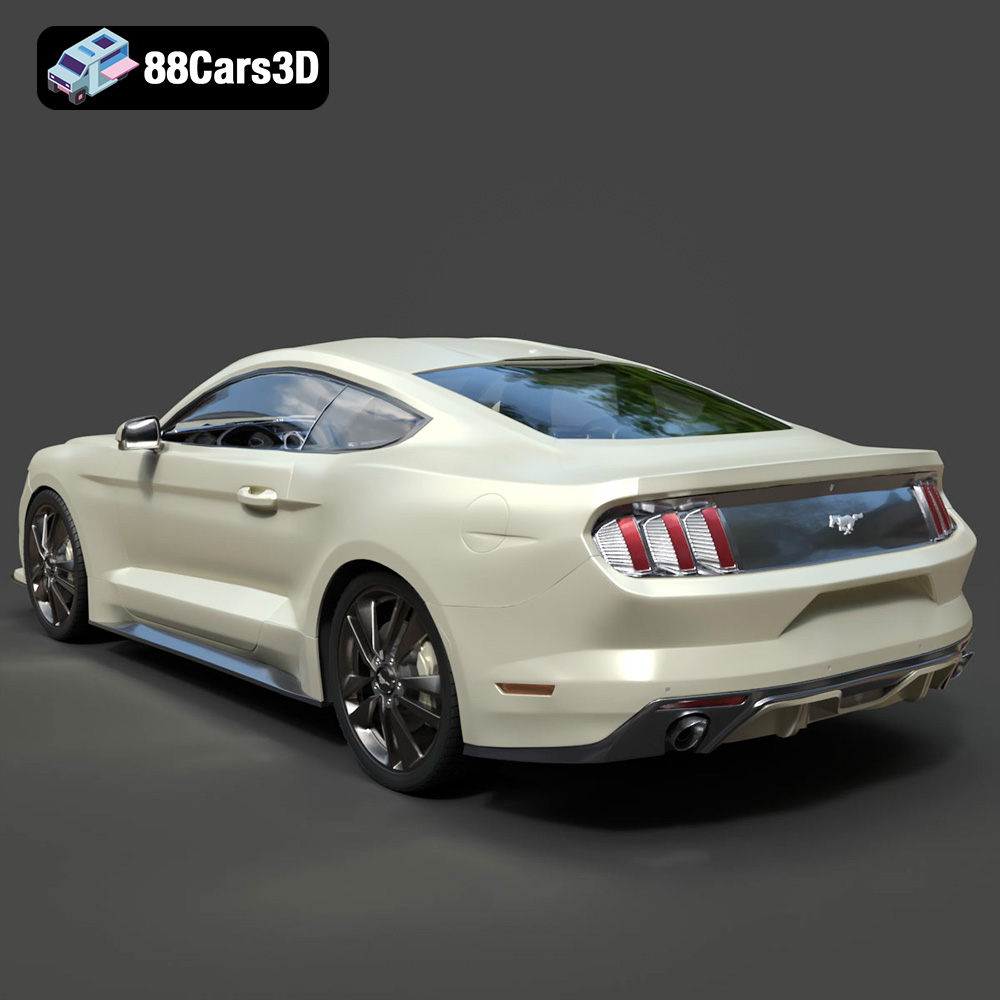
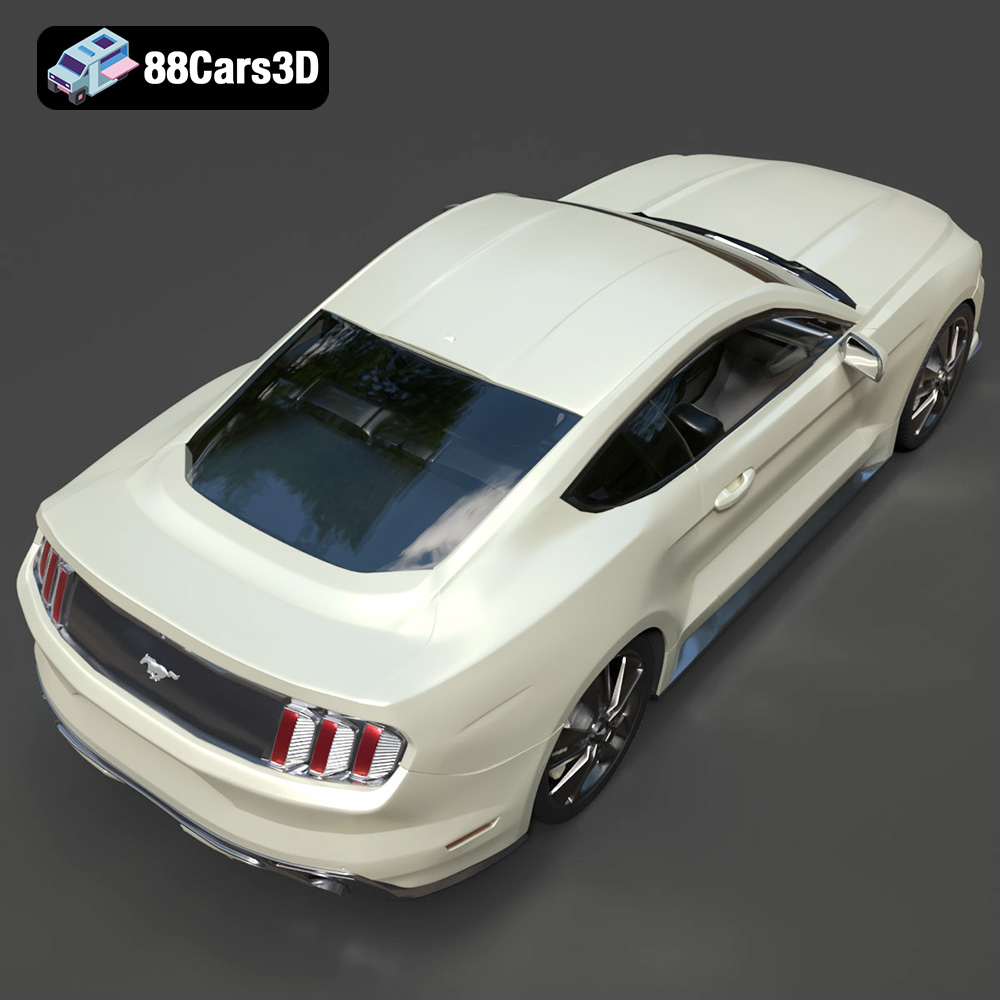
The Ford Mustang GT is an enduring icon of American muscle, celebrated for its aggressive aesthetic, legendary heritage, and raw power. This incredibly detailed 3D model captures the unmistakable styling cues of the modern Mustang GT, from its signature long hood and fastback roofline to the imposing front grille, quad-tip exhaust system, and raw 5.0L V8 engine bay details. Engineered for premium digital performance, this model features an optimized topology with approximately 200,000 triangles, delivering exceptional game-ready performance without sacrificing visual fidelity. The meticulously crafted geometry ensures seamless integration into game development workflows, high-end AR/VR experiences, cinematic animations, and professional automotive visualization. Perfect for open-world racing games, virtual automotive showrooms, cinematic renders, and high-performance car configurators.
$19.99
.blend
.fbx
.ford
.glb
.max
.obj
.ply
.rendering
.sports car
.stl
.unreal
car-3d-model
game asset
game-ready
low-poly
muscle-car
mustang-gt
optimized
VR/AR