Get 20% OFF All Premium 3D & STL Models!

In the rapidly evolving landscape of digital content creation, the demand for hyper-realistic and meticulously crafted 3D assets has never been higher. From blockbuster video games and immersive virtual reality experiences to high-stakes automotive marketing campaigns and detailed architectural visualizations, the quality of a 3D model can significantly impact the overall professionalism and effectiveness of a project. Automotive models, in particular, stand as complex and iconic subjects, requiring an extraordinary level of detail and technical precision to accurately convey their real-world counterparts.
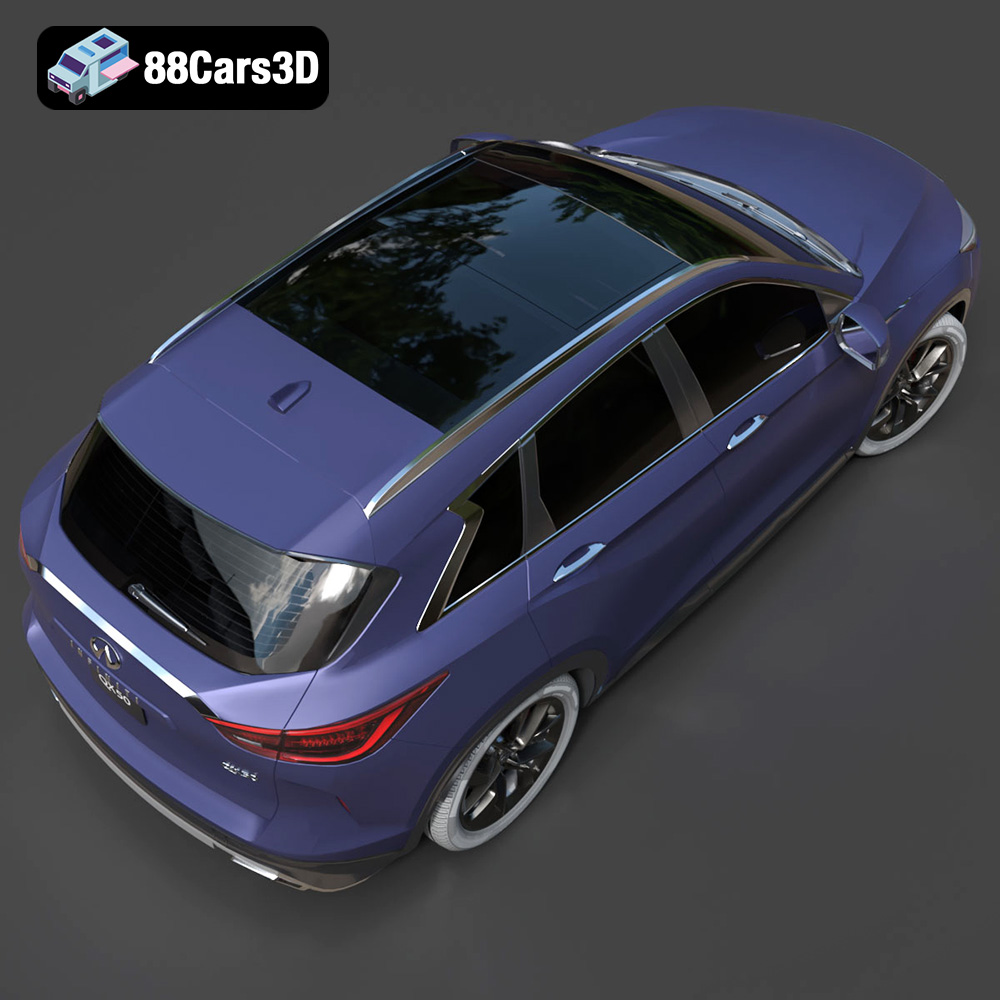
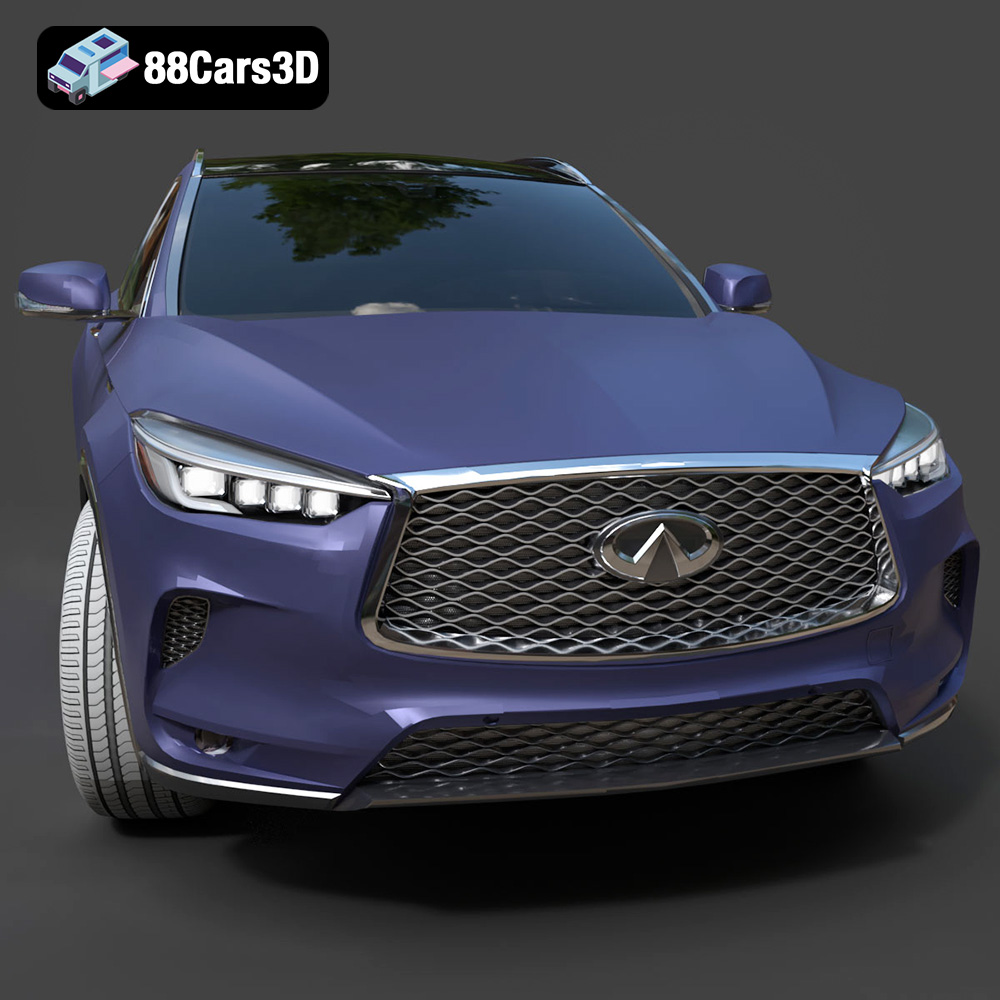
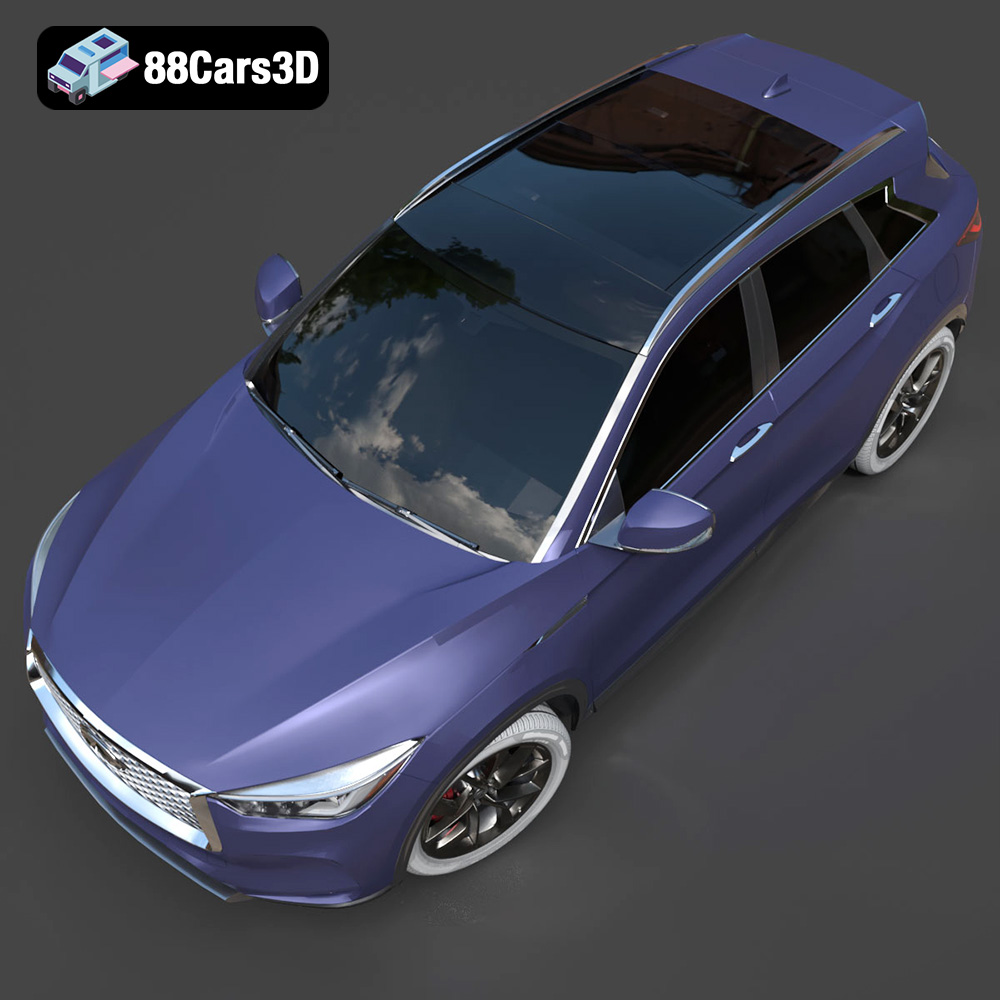
This article delves into the critical importance of utilizing professional-grade 3D car models and explores how such assets seamlessly integrate into diverse industry workflows. We’ll examine the technical intricacies that define a superior model, discuss the various file formats that dictate their utility, and illustrate their practical applications through real-world scenarios. Central to our discussion will be the Infiniti QX50 2019 3D Model, an exemplar of the quality and versatility that discerning professionals seek. This model, available on 88cars3d.com, encapsulates the very essence of precision engineering translated into a digital format, offering an unparalleled foundation for any project requiring a sophisticated luxury crossover SUV.
The visual fidelity of a 3D car model is not merely about aesthetics; it’s about conveying authenticity, driving engagement, and delivering a believable experience. In an era where consumers and clients expect photorealistic renders and seamless interactive environments, generic or poorly modeled assets simply won’t suffice. Premium 3D car models are purpose-built to meet these exacting standards, providing a robust and optimized starting point for any creative endeavor.
Whether it’s a car configurator on a manufacturer’s website, a cinematic advertisement, or a training simulation, authenticity is paramount. A high-quality 3D model, like the Infiniti QX50 2019 3D Model, is not just a shell; it’s a digital twin. It captures the subtle curvatures, intricate panel gaps, precise lighting reflections, and material properties that define a vehicle’s unique character. This level of authenticity is crucial for:
The investment in a premium asset pays dividends by elevating the perceived value of the final output and ensuring that the digital representation holds up under close scrutiny.
For designers and artists, a high-fidelity 3D car model acts as a powerful bridge between an abstract concept and a tangible digital reality. It allows for creative exploration within realistic constraints, enabling experimentation with different environments, lighting conditions, and material finishes without the need for expensive physical prototypes. This iterative process is essential for:
The Infiniti QX50 2019 3D Model exemplifies this bridge, offering a fully realized digital asset that is ready to be placed into any scene, instantly grounding it in reality.
The versatility of a 3D model is heavily dependent on the file formats it supports. Different formats are optimized for different stages of the production pipeline, from initial modeling and texturing to real-time rendering and physical output. The Infiniti QX50 2019 3D Model provides a comprehensive suite of formats, ensuring maximum compatibility and utility across a vast range of professional applications. Understanding each format’s strengths is key to an efficient workflow.
The .blend format is native to Blender, a powerful and increasingly popular open-source 3D creation suite. When you acquire a .blend file, you’re getting a complete Blender project, which often includes not just the raw mesh data but also materials, textures, lighting setups, camera angles, and even animation data. For the Infiniti QX50 2019 3D Model, this means a fully editable scene, allowing artists to delve deep into the model’s structure, modify materials, adjust lighting, or even re-rig the vehicle for custom animations. It’s ideal for artists who primarily work in Blender and want complete creative control without any loss of data during conversion.
The .fbx (Filmbox) format is an industry-standard 3D interchange format developed by Autodesk. It is widely supported across various 3D software and, crucially, is the preferred format for game engines like Unreal Engine and Unity. FBX can store not only mesh data but also materials, textures, animations, skinning, and camera information, making it incredibly robust for complex scene transfers. Its binary nature typically results in smaller file sizes and faster loading times compared to ASCII formats, which is a significant advantage in real-time environments. For game developers or those creating interactive experiences with the Infiniti QX50 2019 3D Model, .fbx is the go-to choice for seamless integration.
The .obj (Wavefront Object) format is one of the oldest and most universally supported 3D formats. It’s an excellent choice for basic mesh data exchange between different 3D applications, as almost every 3D software can import and export OBJ files. While it doesn’t support advanced features like rigging or animation directly, it’s superb for transferring geometric data and can reference external material (.mtl) files for basic shading information. The Infiniti QX50 2019 3D Model in .obj format is perfect for users who need a foundational mesh that can be easily imported into any 3D package for further refinement or rendering.
The .glb (GL Transmission Format Binary) is a relatively newer format, gaining traction for its efficiency and capability to encapsulate all assets (geometry, materials, textures, animations) into a single, self-contained binary file. It’s specifically optimized for web-based 3D applications, augmented reality (AR), virtual reality (VR), and efficient loading on various devices. Its compact size and single-file nature make it ideal for quick deployment. When utilizing the Infiniti QX50 2019 3D Model for AR apps or web configurators, the .glb format ensures a smooth, high-quality viewing experience with minimal load times.
The .stl (Stereolithography) format is the de facto standard for 3D printing. It represents a 3D model as a series of connected triangles, describing only the surface geometry of an object without color, texture, or other CAD attributes. While it lacks visual data, its simplicity makes it universally compatible with 3D printers and slicing software. For prototyping or creating physical scale models of the Infiniti QX50 2019, the .stl file provides the necessary data to bring the digital design into the physical world.
The .ply (Polygon File Format or Stanford Triangle Format) is another format that stores 3D data, often used for scanned 3D objects. It can store a variety of properties including color, transparency, surface normals, and texture coordinates, beyond just geometry. PLY files are particularly useful in scientific, engineering, and CAD applications where precise mesh data for analysis or reconstruction is required. While less common for general rendering, its inclusion for the Infiniti QX50 2019 3D Model caters to highly specialized applications requiring detailed polygonal mesh information.
The .unreal format, or more accurately, assets imported and configured within an Unreal Engine project, signifies a model that has been specifically prepared for the Unreal Engine environment. This typically means the asset has optimized meshes, properly configured PBR (Physically Based Rendering) materials, LODs (Levels of Detail) for performance, and potentially collision meshes or blueprints for interactivity. The inclusion of a .unreal ready asset for the Infiniti QX50 2019 means significant time savings for game developers and real-time visualization artists, as much of the tedious setup work has already been completed.
The .max format is the native file type for Autodesk 3ds Max, one of the leading software packages for 3D modeling, animation, and rendering. A .max file provides a complete 3ds Max scene, including all geometry, materials, lighting, cameras, and potentially animation data. This offers users working in 3ds Max full control over the model, allowing for advanced rendering setups with engines like V-Ray or Corona, custom animations, or detailed environment integration. For automotive rendering specialists, the .max version of the Infiniti QX50 2019 3D Model is invaluable for producing top-tier photorealistic visuals.
The true value of a versatile 3D asset, such as the Infiniti QX50 2019 3D Model, lies in its ability to seamlessly integrate into diverse professional pipelines. Its high-quality construction ensures it performs optimally whether you’re aiming for cinematic realism or interactive experiences.
For architectural visualization studios and advertising agencies, photorealistic automotive rendering is a cornerstone. Using the .max file of the Infiniti QX50 2019, artists can load the model directly into 3ds Max. The model’s clean topology and pre-applied PBR materials mean minimal setup time. Artists can then:
The detailed interior of the Infiniti QX50 2019 further enhances this, allowing for captivating shots through windows or even interior fly-throughs, adding another layer of realism to any automotive rendering project.
In the world of game development, performance and visual quality must go hand-in-hand. The .unreal and .fbx formats of the Infiniti QX50 2019 3D Model are specifically designed for this purpose. Developers can import the model directly into Unreal Engine, where it will likely come with optimized meshes and PBR textures already configured. This allows for:
The professional-grade topology of the model ensures it can be easily adapted for real-time deformation or destruction effects, making it a robust asset for any modern game.
Augmented Reality (AR) and Virtual Reality (VR) applications, along with interactive web experiences using WebGL, require highly optimized assets that can render efficiently on various devices. The .glb format of the Infiniti QX50 2019 3D Model is tailor-made for these environments. Its single-file, optimized nature allows for:
This allows businesses to offer engaging product presentations directly on their websites or through dedicated AR applications, providing a powerful marketing tool.
What truly distinguishes a premium 3D car model from a generic one lies beneath the surface. It’s the meticulous attention to technical details that ensures versatility, performance, and future-proofing. The Infiniti QX50 2019 3D Model embodies these principles, reflecting the high standards expected from resources like 88cars3d.com.
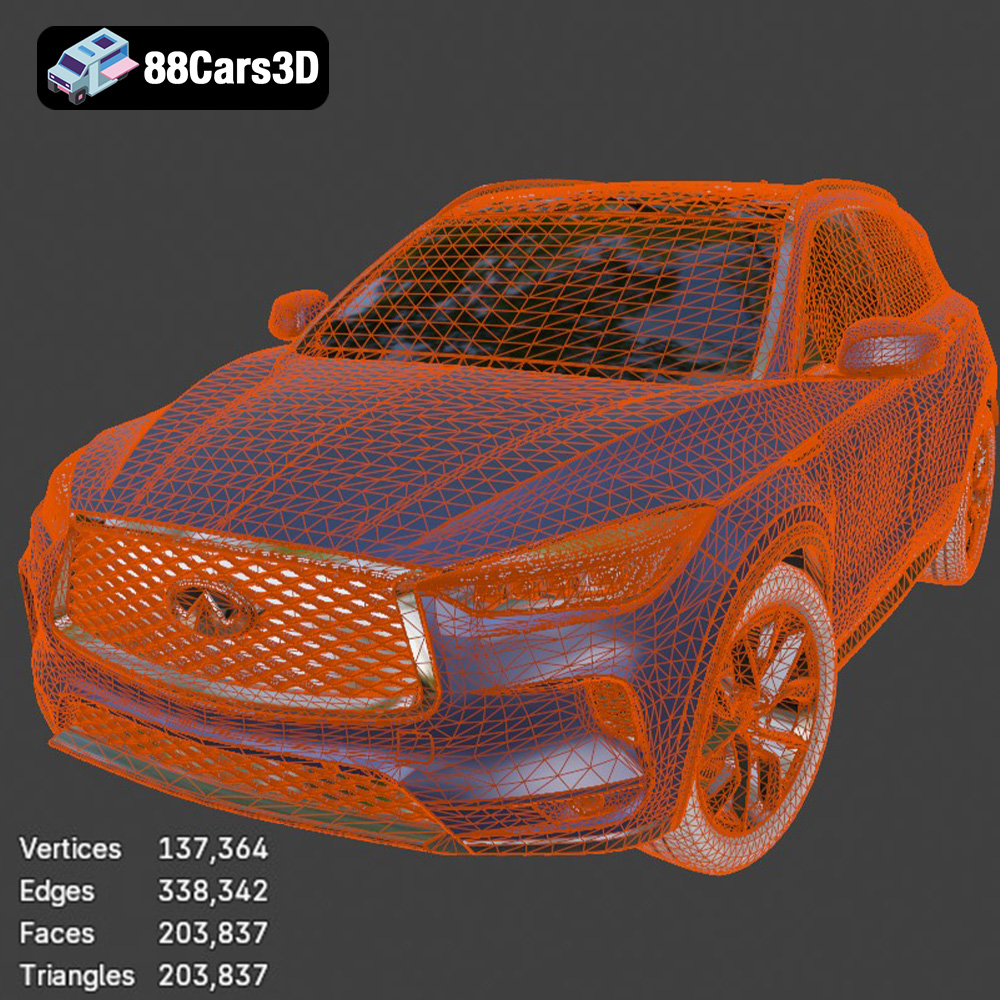
A “clean geometry” and “professional-grade topology” are not just buzzwords; they are fundamental requirements for any professional 3D asset. This means the model’s mesh:
This level of precision in the Infiniti QX50 2019 model allows for effortless subdivision for extreme close-ups, smooth animation, and efficient performance in real-time engines. Poor topology, conversely, leads to rendering artifacts, difficult UV mapping, and complex animation challenges.
Realistic materials are crucial for achieving photorealism. The Infiniti QX50 2019 3D Model comes with “realistic materials” that are typically based on Physically Based Rendering (PBR) workflows. PBR materials simulate how light interacts with surfaces in a physically accurate way, taking into account properties like:
These expertly crafted PBR textures and materials ensure that the Infiniti QX50 2019 looks stunning and consistent under varied lighting conditions, from a bright studio setup to an overcast outdoor scene, whether rendered offline or in a real-time engine.
True premium models don’t just focus on the exterior; the interior is equally important for a complete, believable asset. The Infiniti QX50 2019 3D Model features a “fully modeled interior,” which is critical for:
This attention to both external contours and internal components ensures the model is versatile for any visual requirement, enhancing the overall immersion and believability of the final output.
High-quality 3D car models are not just abstract digital creations; they are practical tools that drive innovation and efficiency across various industries. The Infiniti QX50 2019 3D Model can serve as a cornerstone in numerous professional applications.
Imagine a global car manufacturer preparing for the launch of a new luxury crossover. Instead of relying solely on expensive photo shoots and physical prototypes, they can leverage the Infiniti QX50 2019 3D Model to:
This approach significantly reduces marketing costs and accelerates time-to-market, providing immense flexibility for last-minute design changes.
For professional driver training or research and development in autonomous driving, realistic simulators are invaluable. The Infiniti QX50 2019 3D Model, with its detailed geometry and PBR materials, is perfectly suited for such applications:
The accuracy of the model ensures that the simulation provides meaningful and transferable experience.
Architectural visualization often requires more than just buildings; it needs context. Placing realistic vehicles in a street scene or a parking lot significantly enhances the realism and scale of the render. The Infiniti QX50 2019 3D Model can be integrated into arch-viz projects to:
The detailed model ensures that even secondary elements like cars contribute positively to the overall visual impact of the architectural presentation.
Beyond visual fidelity, a professional 3D car model is designed with workflow efficiency in mind. Time is a precious commodity in any production, and high-quality pre-built assets are a critical component in maximizing productivity.
A well-optimized 3D model, like the Infiniti QX50 2019, offers inherent scalability. This means the same core asset can be adapted for various performance requirements without sacrificing visual integrity. For high-end cinematic renders, full detail and resolution can be utilized. For real-time applications like games or AR/VR, the model’s clean topology and included formats like .fbx and .glb facilitate:
This flexibility allows artists and developers to use one primary asset across an entire project, streamlining asset management and ensuring visual consistency.
Modeling a complex vehicle like the Infiniti QX50 2019 from scratch can take hundreds, if not thousands, of hours for a skilled 3D artist. This includes research, blueprint matching, meticulous poly-modeling, UV unwrapping, texturing, and material setup. By leveraging a ready-to-use, professional-grade 3D car model from 88cars3d.com, studios and freelancers can:
The cost-effectiveness and efficiency gained by acquiring a model like the Infiniti QX50 2019 3D Model are undeniable, making it an intelligent investment for any professional seeking to elevate their digital content quickly and reliably.
In the competitive world of 3D visualization, the quality of your assets directly reflects the quality of your output. Premium 3D car models are not just commodities; they are essential tools that empower artists, designers, and developers to create stunning, authentic, and performant digital experiences. The Infiniti QX50 2019 3D Model stands as a testament to this philosophy, offering unparalleled realism, meticulous detail, and broad compatibility across all major professional workflows. Whether your goal is a photorealistic render, an immersive game environment, or an engaging AR/VR application, this model provides the robust foundation needed to achieve excellence.
By understanding the technical nuances of file formats, appreciating the importance of clean topology and PBR materials, and recognizing the practical applications in various industries, professionals can make informed decisions that significantly impact their project’s success. Investing in high-quality 3D assets, such as those found on 88cars3d.com, is an investment in efficiency, fidelity, and ultimately, in the power of compelling digital storytelling.
Discover the exceptional realism and precision of the Infiniti QX50 2019 3D Model. Crafted with meticulous attention to detail, this premium digital asset accurately reflects the stunning aesthetics and sophisticated design of the renowned luxury crossover SUV. This model features exceptionally clean geometry, professional-grade topology, and realistic materials that ensure outstanding performance under varied lighting conditions. Every element, from its bold exterior curves to its fully modeled interior, has been constructed to meet the strictest industry standards for professional 3D design. Designed for unparalleled versatility, this 3D vehicle is ready to be integrated seamlessly into a wide range of professional applications. Whether you are working on advanced game development, creating photorealistic architectural renders, building immersive AR/VR experiences, or producing cinematic visual effects, this asset delivers reliable and visually striking results.
$39.99
.2019
.arvr
.blend
.car3dmodel
.crossover
.fbx
.gameasset
.glb
.infiniti
.max
.obj
.ply
.qx50
.rendering
.simulation
.stl
.unreal
SUV