Get 20% OFF All Premium 3D & STL Models!

In the dynamic realms of automotive design, game development, cinematic visualization, and virtual reality, the quality of 3D assets is paramount. A meticulously crafted 3D model doesn’t just represent an object; it embodies history, performance, and an aesthetic vision that captivates audiences. Among the pantheon of automotive legends, the 1968 Ford Mustang Hardtop stands as an undeniable icon, its lines, stance, and roar etched into the collective memory of car enthusiasts worldwide. When such a legendary vehicle is translated into a digital asset with uncompromising detail and technical precision, it becomes an invaluable tool for creators across various industries.
This is precisely what makes premium 3D car models so vital. They are more than just digital replicas; they are foundational elements that enable developers to build immersive worlds, designers to render stunning visuals, and animators to bring history to life. Today, we delve deep into the technical intricacies and creative potential offered by truly exceptional assets, focusing on how a model like the Ford Mustang Hardtop 1968 3D Model from 88cars3d.com serves as a prime example of excellence in digital automotive representation. From its game-ready optimization to its multi-format compatibility, this model opens doors for a vast array of professional applications, ensuring that creators have the flexibility and fidelity needed to push the boundaries of their projects.
The journey of a 3D model from its creation to its final application involves navigating a landscape of diverse file formats, each with specific strengths, compatibilities, and intended uses. Choosing the right format is critical for an efficient workflow, optimal performance, and successful integration into various software environments. The Ford Mustang Hardtop 1968 3D Model, in particular, offers an extensive suite of formats, catering to virtually every professional need.
The `.blend` format is Blender’s native file type, containing a complete scene with all objects, meshes, materials, textures (packed or linked), lights, cameras, animations, and even modifiers. It’s the most flexible format for Blender users, offering full editability and preserving all scene-specific settings. When working with the Ford Mustang Hardtop 1968 3D Model in Blender, the `.blend` file allows for seamless customization, material adjustments, or scene composition without any data loss. It’s ideal for artists who primarily work within Blender and require full control over the asset.
FBX (Filmbox) is a proprietary file format owned by Autodesk, widely recognized as the most robust format for inter-application data exchange in the 3D industry. It excels at preserving complex scene data including meshes, materials (often as basic properties or PBR setups), textures, animations, skinning, and even camera and light data. For real-time engines like Unreal Engine and Unity, `.fbx` is the go-to format for importing game assets, including detailed 3D car models. Its ability to maintain hierarchy and animation data makes it indispensable for character rigs, vehicle setups, and complex animated scenes. The Mustang model’s `.fbx` variant is perfectly suited for direct import into these engines, ensuring its optimized polycount and pivot setups translate correctly.
The `.obj` (Wavefront OBJ) format is one of the oldest and most universally supported 3D file formats. It’s a simple, text-based format that primarily stores geometric data (vertices, normals, texture coordinates, faces) and can reference material definitions (.mtl file). While it doesn’t support animation or complex scene data like `.fbx`, its widespread compatibility makes it an excellent choice for basic mesh exchange between different 3D software applications when fidelity of geometry is the main concern. If you need to bring the Ford Mustang Hardtop 1968 into an uncommon 3D package, `.obj` is often the safest bet.
`.glb` (GL Transmission Format Binary) is the binary version of glTF, a modern, open-standard file format designed for the efficient transmission and loading of 3D scenes and models by applications. It’s rapidly becoming the “JPEG of 3D” due to its optimization for web-based, AR, and VR applications. A single `.glb` file embeds all necessary data – geometry, materials, textures, animations – making it incredibly lightweight and fast to load. For creating immersive virtual showrooms, AR experiences, or web-based configurators featuring the Ford Mustang Hardtop 1968, the `.glb` format provides unmatched performance and ease of deployment.
`.stl` (Stereolithography) is almost exclusively used for 3D printing. It represents a 3D model as a series of connected triangles, describing only the surface geometry of an object without color, texture, or other properties. While simple, it’s the standard input for most 3D printers and slicing software. The Ford Mustang Hardtop 1968 3D Model’s availability in `.stl` format allows hobbyists and professionals to physically manifest this classic car, turning a digital asset into a tangible collectible or prototype, following the recommended 3D print settings provided with the product.
`.ply` (Polygon File Format, or Stanford Triangle Format) is another format that describes a 3D object as a collection of polygons. It can store a wider range of properties than `.obj` or `.stl`, including color, transparency, and sometimes even data from 3D scanners. While less common for general-purpose rendering or game development, `.ply` is valuable in scientific, CAD, and historical preservation contexts where precise mesh data with additional attributes is required. For detailed analysis or specialized CAD applications of the Mustang model, `.ply` offers a robust solution.
While not a universally recognized open standard, a `.unreal` file (often referring to a specific asset or package tailored for Unreal Engine) signifies that the asset has been specifically pre-packaged or optimized for direct import and use within the Unreal Engine ecosystem. This might involve optimized material setups, collision meshes, LODs (Levels of Detail), and blueprint configurations. For game developers leveraging Unreal Engine, the `.unreal` variant of the Ford Mustang Hardtop 1968 3D Model offers an expedited workflow, minimizing setup time and ensuring engine-native performance from the outset, making it a true game asset.
Similar to `.blend` for Blender, `.max` is the native project file format for Autodesk 3ds Max. It contains the complete 3ds Max scene, including all models, materials, textures, lights, cameras, animations, and render settings. For artists and studios heavily invested in 3ds Max for architectural visualization, animation, or high-fidelity rendering, the `.max` file of the Ford Mustang Hardtop 1968 provides maximum flexibility for customization, advanced rendering techniques with V-Ray or Corona, and complex animation sequences.
This comprehensive array of file formats ensures that the Ford Mustang Hardtop 1968 3D Model isn’t just a visually stunning asset, but also a highly versatile and workflow-friendly solution for any professional undertaking, solidifying its place as a top-tier offering on 88cars3d.com.
Creating a truly high-fidelity 3D car model, especially for an iconic vehicle like the 1968 Ford Mustang Hardtop, is an intricate process that balances artistic skill with rigorous technical understanding. It’s about more than just replicating shapes; it’s about capturing the essence of the vehicle while ensuring it functions flawlessly within various digital environments. The journey from reference images to a game-ready asset involves meticulous attention to detail at every stage.
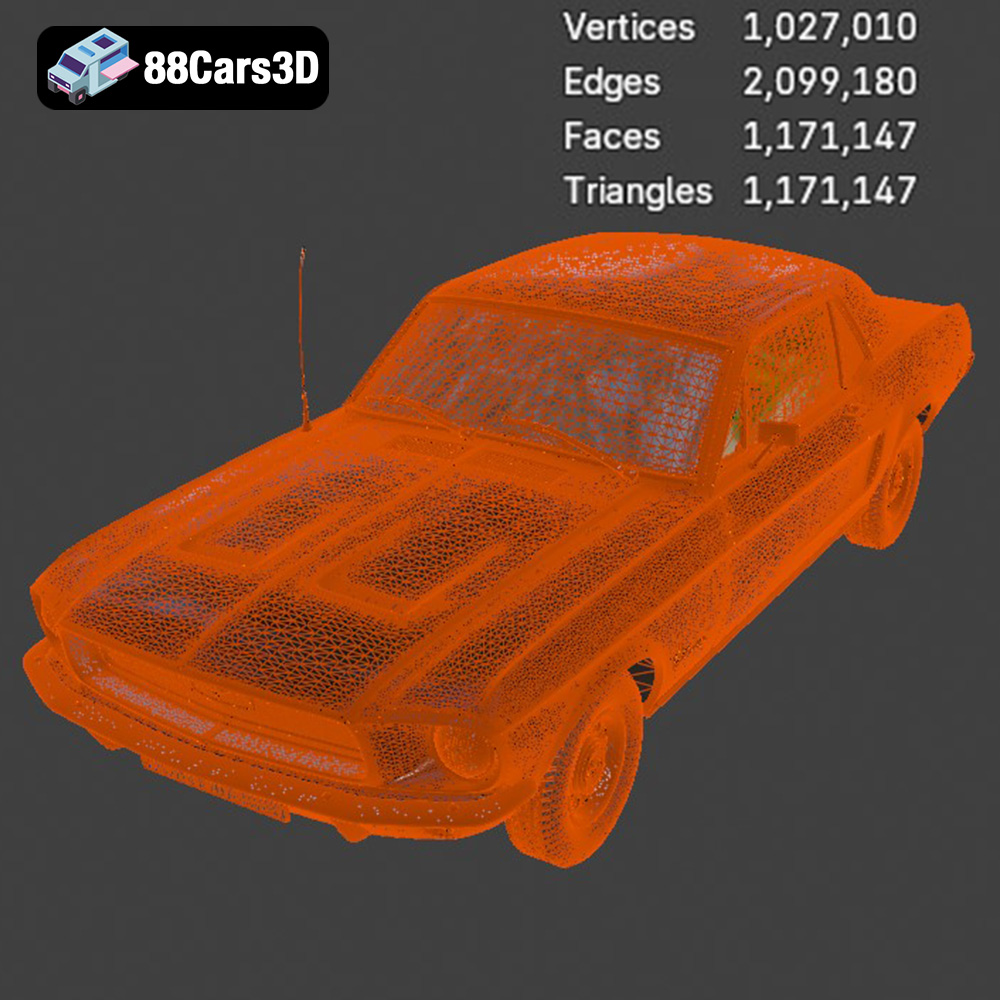
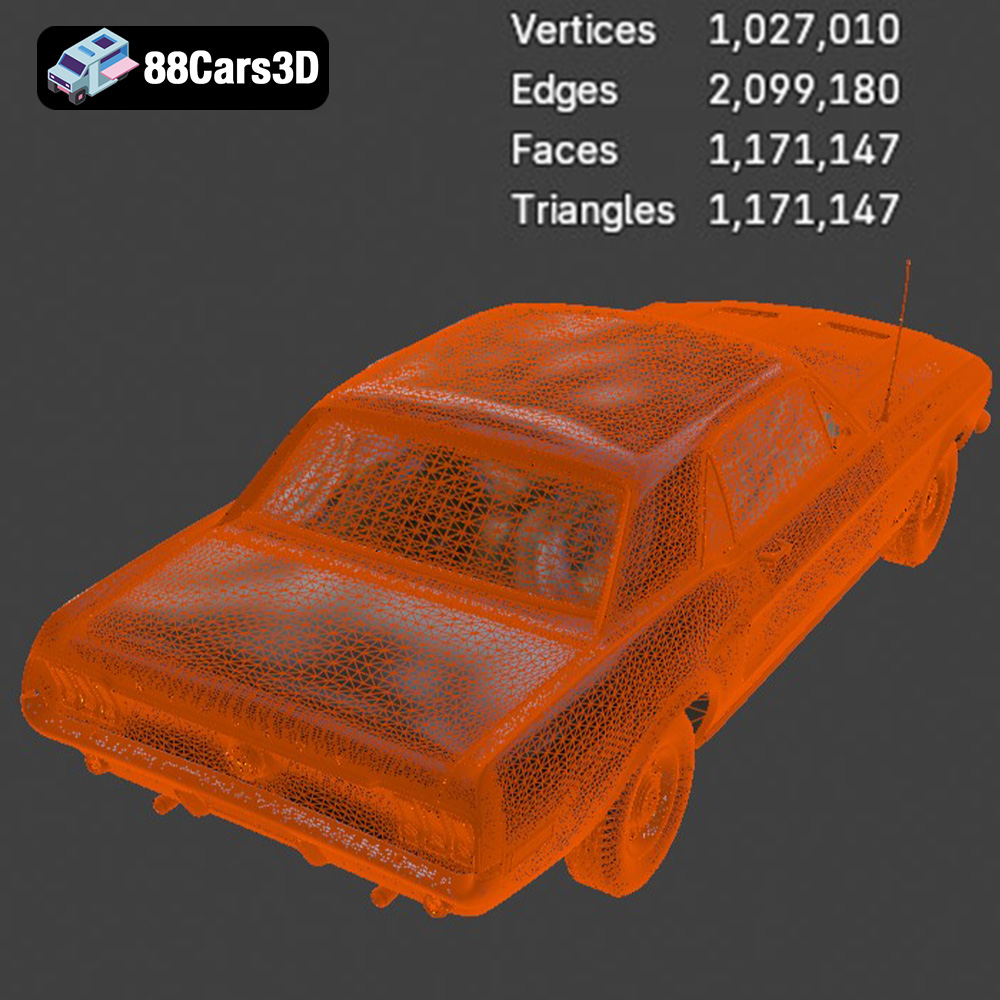
The foundation of any superior 3D model lies in its geometry. For a classic car like the Mustang, this means achieving accurate frame geometry, panel gaps, and the characteristic pony car proportions that define its legendary status. The Ford Mustang Hardtop 1968 3D Model exemplifies this with its exceptional topological flow and an optimized polycount of approximately 350,000 triangles. This isn’t an arbitrary number; it’s a carefully chosen balance that provides stunning visual fidelity for close-up renders and cinematics, without creating an excessive performance burden for real-time applications.
Good topology, characterized by clean edge loops and quad-based geometry, is crucial. It ensures smooth deformations during animation, prevents shading artifacts, and allows for efficient UV mapping. For a vehicle with distinct curves and sharp lines like the ’68 Mustang, precise topology is what allows for the graceful reflections on its metallic surfaces and the crisp definition of its sculpted side coves. The model’s detailed engine block, accurate leaf-spring and coil suspension, and period-correct dual exhaust system are all testimonies to this level of geometric precision.
While geometry provides the form, materials and textures breathe life into a 3D car model. Modern rendering pipelines, particularly Physically Based Rendering (PBR), demand highly accurate material definitions to simulate how light interacts with surfaces in the real world. This means carefully crafting textures for diffuse color, metallic properties, roughness, normal maps for fine details, and ambient occlusion.
For the Ford Mustang Hardtop 1968 3D Model, this translates to authentic steel wheels with detailed classic hubcaps, era-appropriate tire treads, and brilliant chrome accents that catch the light realistically. The paint finish, whether it’s a factory color or a custom metallic sheen, is designed to react to environmental lighting with convincing reflections and highlights. Furthermore, the interior benefits from detailed vinyl stitching patterns on the bucket seats and the retro analog instrument cluster on the twin-cove dashboard, all brought to life through carefully authored PBR materials. Effective UV unwrapping – the process of flattening the 3D mesh into 2D space for texturing – is also critical, ensuring that textures are applied without distortion and utilize texture space efficiently. A game-ready asset implicitly suggests well-optimized UVs for performance.
The true measure of a professional 3D car model lies in its ability to meet the demands of various high-stakes production environments. The 1968 Ford Mustang Hardtop 3D Model is not just a beautiful replica; it’s engineered from the ground up to be a versatile and robust game asset, ready for integration into the most demanding interactive and visual projects.
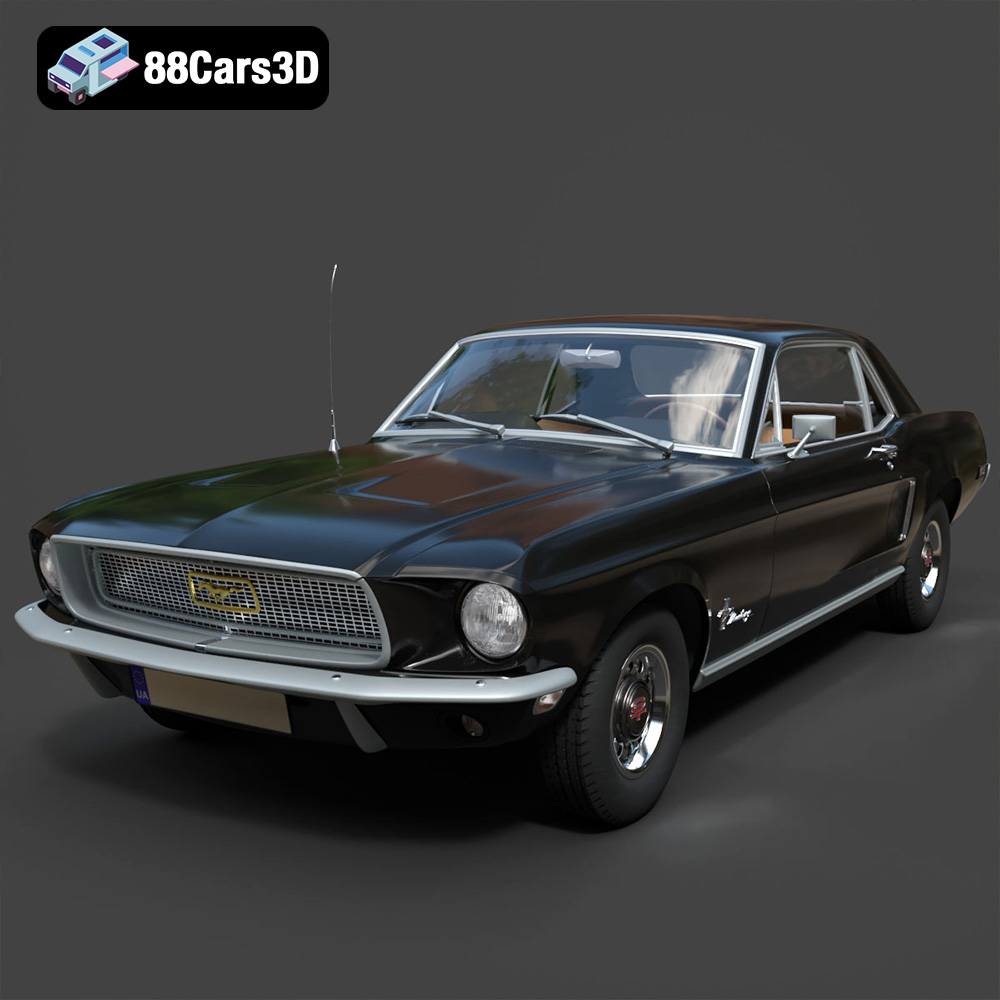
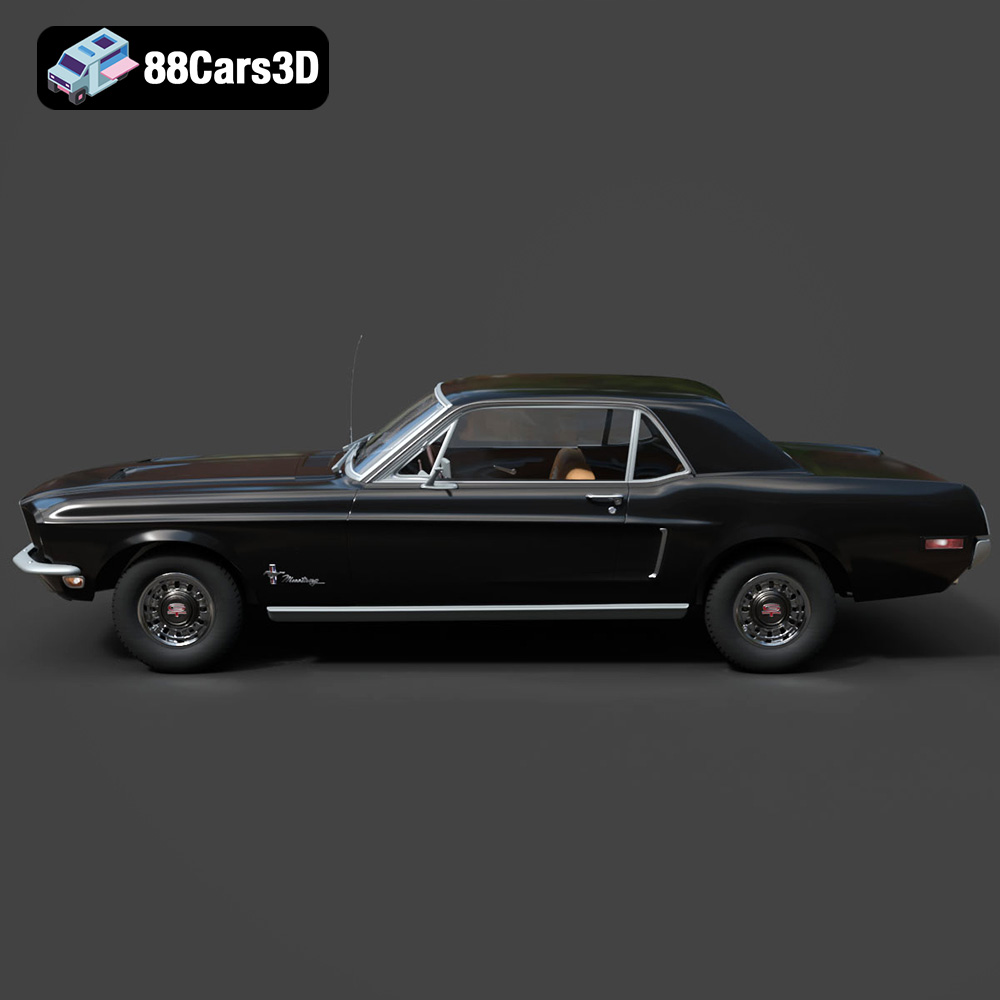
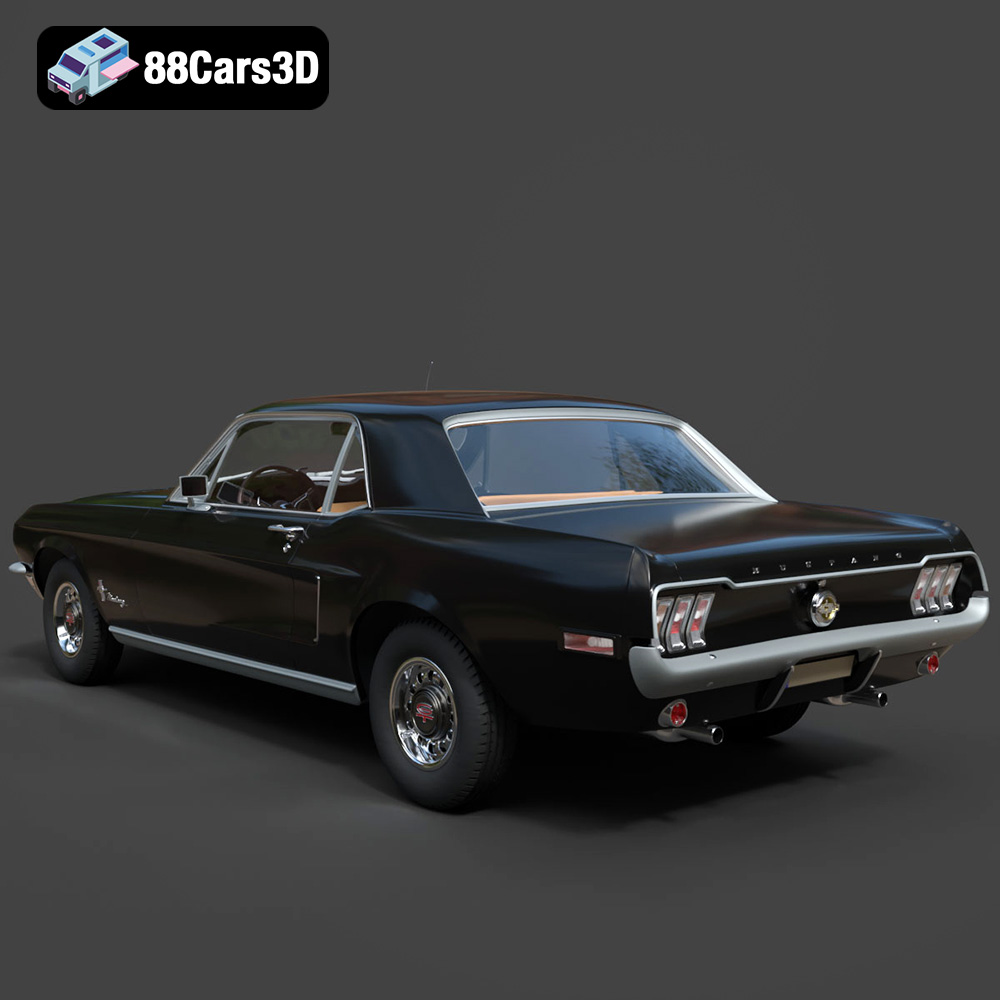
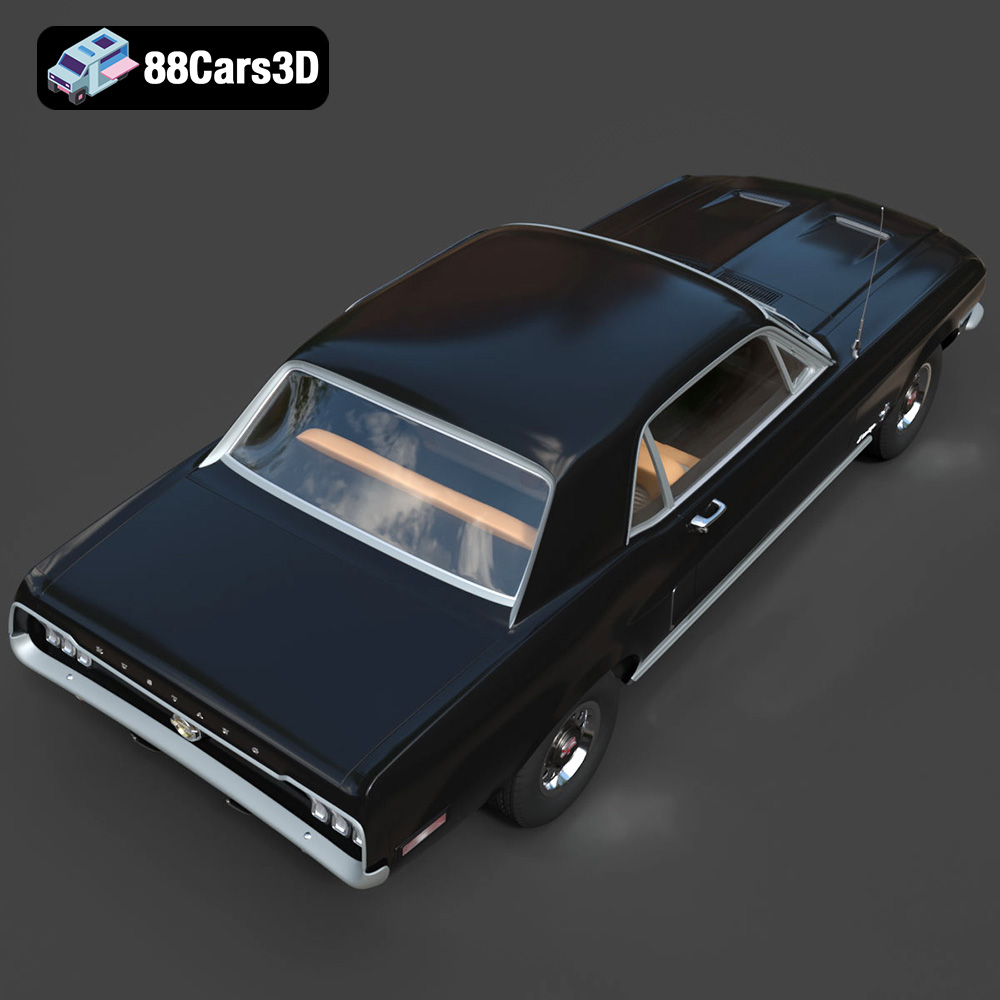
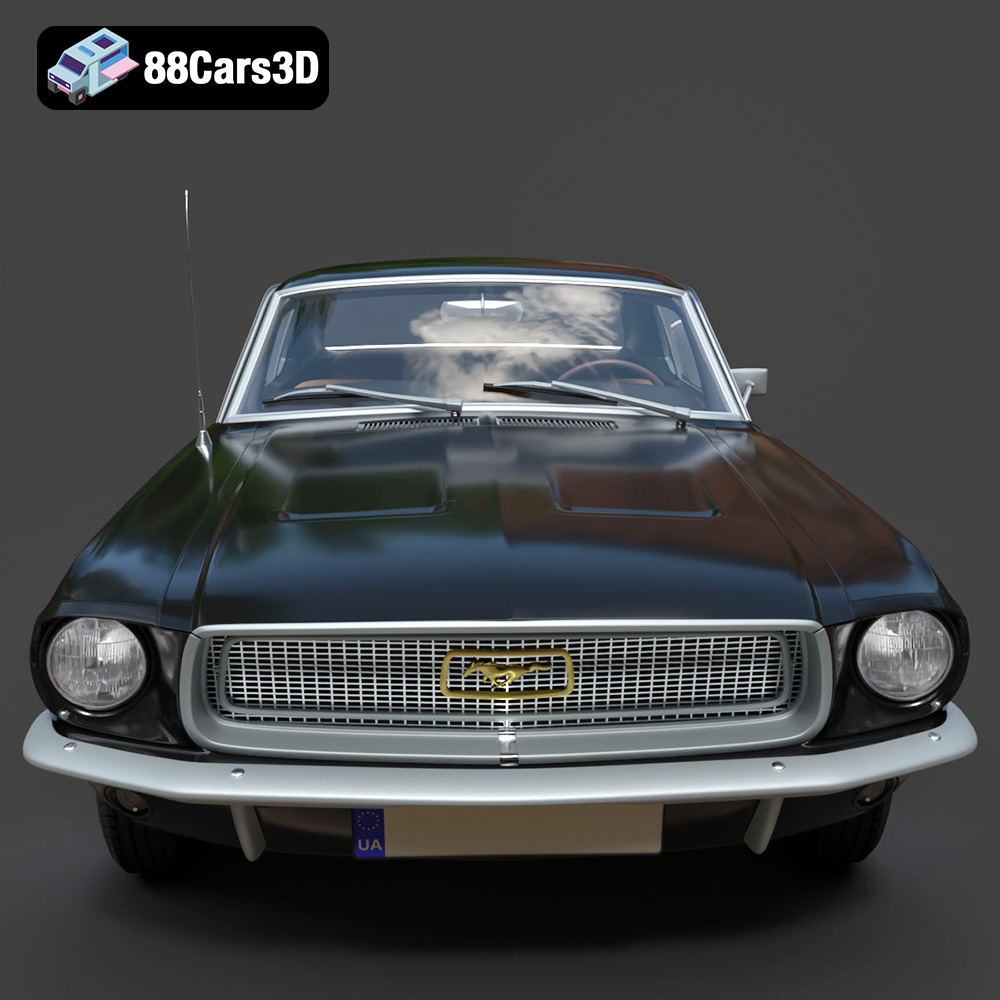
Every curve and contour of the 1968 Ford Mustang Hardtop has been faithfully recreated to capture its iconic “pony car” essence. From the unmistakable galloping pony grille emblem to the signature tri-bar taillights and classic round headlamps, the exterior details are painstakingly accurate. The model includes an opening hood revealing a detailed V8 engine block, period-correct dual exhaust system with undercarriage routing, and authentic steel wheels.
Crucially for interactive applications, the model features separate components for animation. The wheels, suspension, and steering are distinct entities, allowing animators and game developers to easily set up realistic rotation, steering articulation, and suspension travel. Proper pivot setups ensure that these components behave physically correctly, whether the Mustang is tearing down a virtual race track or gracefully navigating an open-world environment. This level of granular control is essential for creating dynamic and believable driving experiences.
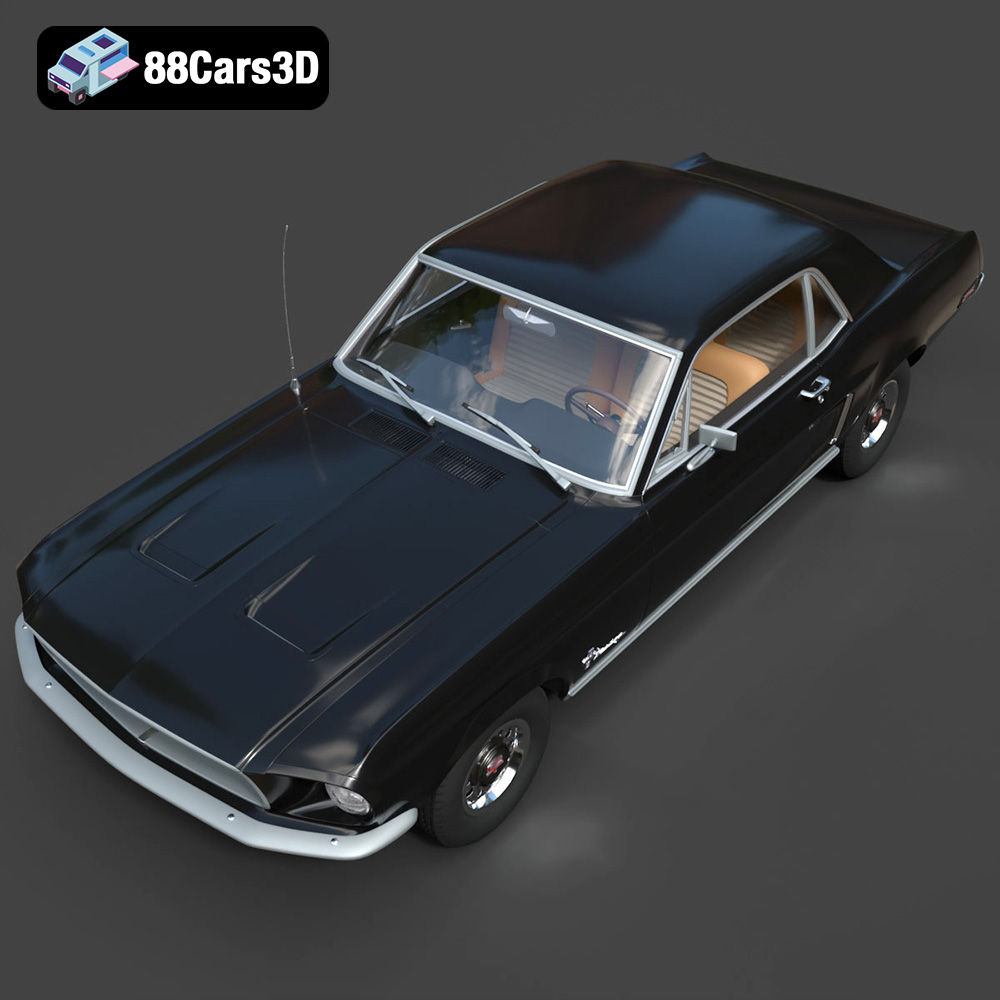
While a stunning exterior draws initial attention, a detailed interior is vital for truly immersive experiences, especially in game development where first-person perspectives are common. The Ford Mustang Hardtop 1968 3D Model excels in this regard, offering a meticulously crafted cockpit that invites interaction. Authentic vintage bucket seats with their distinct vinyl stitching patterns provide a tactile feel, while the classic three-spoke deep-dish steering wheel and floor-mounted shifter evoke the driving experience of the era.
The accurate twin-cove dashboard, complete with a retro analog instrument cluster and period-correct pedals, is optimized for first-person POV in gaming. This attention to interior detail ensures that players and viewers alike can fully appreciate the historical accuracy and craftsmanship, whether they’re peering through the window or “sitting” behind the wheel. Such fidelity makes the model perfect for realistic racing simulators, virtual reality garage experiences, or cinematic sequences where the interior needs to hold up to close scrutiny.
The true value of a versatile 3D asset like the Ford Mustang Hardtop 1968 3D Model becomes apparent in its seamless integration into diverse professional pipelines. Developers, artists, and designers rely on robust file formats and optimized geometry to streamline their projects, whether for high-end rendering, real-time interactive experiences, or emerging AR/VR applications.
For traditional rendering and visualization, software packages like Autodesk 3ds Max and Blender are industry staples. The Ford Mustang Hardtop 1968 3D Model, available in both `.max` and `.blend` formats, offers immediate access to these powerful ecosystems.
In 3ds Max, artists can leverage advanced renderers like V-Ray or Corona to produce photorealistic images and animations. The `.max` file ensures all scene data, including materials and object hierarchy, is preserved, allowing for immediate setup of studio lighting, environmental HDRIs, and complex camera movements. Designers can easily change body colors, adjust material finishes from matte to metallic, and experiment with different lighting scenarios to showcase the Mustang in various moods and settings. This is ideal for automotive rendering in advertising, product visualization, or architectural walkthroughs where the car acts as a lifestyle element.
Similarly, in Blender, the `.blend` file allows full utilization of its Cycles or Eevee render engines. Artists can dive straight into customizing the model, whether it’s modifying tire textures to switch between white-wall and street variants, or adapting the lighting to integrate the Mustang into a naturalistic or abstract scene. Blender’s robust animation tools also mean the Mustang can be rigged for cinematic sequences, driving through digital landscapes, or performing dynamic stunts, all while maintaining its high visual fidelity thanks to the optimized topology and PBR materials.
The gaming industry demands assets that are not only visually stunning but also highly optimized for performance within real-time engines. The Ford Mustang Hardtop 1968 3D Model shines as an exceptional game asset, particularly for Unreal Engine and Unity. Its inclusion of `.fbx` and `.unreal` formats directly addresses these needs.
When importing the `.fbx` file into Unreal Engine, developers can immediately leverage its game-ready optimizations. The ~350k triangle count is a perfect balance for high-end gaming, allowing for detailed visuals without significant frame rate drops. The proper pivot setup for steering, wheel rotation, and suspension travel means that the vehicle blueprints can be easily configured for realistic driving physics. Developers can implement LODs (Levels of Detail) to further optimize performance at various distances, ensuring the Mustang looks great up close and doesn’t hinder performance when viewed from afar. The pre-packaged `.unreal` asset further streamlines this process, potentially offering pre-configured materials, collision meshes, and even basic control setups, cutting down on development time significantly for open-world games, racing titles, or simulators. Similar advantages apply when importing into Unity, allowing for the creation of engaging and performant interactive experiences.
The burgeoning fields of Augmented Reality (AR), Virtual Reality (VR), and browser-based 3D experiences require assets that are extremely lightweight and efficient to transmit and render. The `.glb` format of the Ford Mustang Hardtop 1968 3D Model is specifically designed for these applications.
Its single-file, embedded nature makes it perfect for immersive virtual showrooms, where users can walk around, inspect, and even customize the classic Mustang in a VR environment. For mobile AR experiences, the `.glb` model can be quickly loaded and accurately placed in the real world via smartphone or tablet cameras, allowing potential buyers or enthusiasts to visualize the car in their driveway. WebGL applications, powering interactive car configurators on websites or engaging 3D presentations, benefit immensely from the `.glb`’s optimized structure, ensuring smooth loading and real-time interaction without requiring heavy client-side processing. This versatility truly underscores the forward-thinking design of the 3D car models offered by 88cars3d.com.
The digital realm offers unparalleled flexibility, but sometimes, there’s nothing quite like holding a physical representation of an iconic object. The Ford Mustang Hardtop 1968 3D Model bridges this gap by providing an `.stl` format, making it suitable for 3D printing and bringing this classic muscle car into the tangible world. This capability opens avenues for hobbyists, collectors, and even educational purposes, transforming a virtual asset into a desktop display piece.
3D printing involves a unique set of considerations that differ significantly from digital rendering. The `.stl` format, which represents the model as a series of triangles, is the universal language for 3D printers. The product description provides clear recommendations for scale (1:12, 1:18, 1:24), layer height (0.04–0.12 mm, with resin printing recommended for fine details), and wall thickness (1.2–2.0 mm). These parameters are crucial for achieving a high-quality print that captures the intricate details of the Mustang.
Supports are an essential aspect of 3D printing complex geometries, and the product explicitly states they are required for parts like the exhaust, mirrors, and steering wheel. Proper print orientation—with the frame printed angled for structural integrity and wheels separately—ensures successful prints and minimizes deformation. Understanding these preparatory steps is key to translating the digital fidelity of the Ford Mustang Hardtop 1968 3D Model into a robust physical model.
The ability to 3D print the Ford Mustang Hardtop 1968 extends its utility beyond mere display. For design studios or automotive enthusiasts, it can serve as a rapid prototyping tool, allowing for physical evaluation of scale, form, and proportion before committing to larger, more expensive physical models. Educators can use printed models to teach automotive history or design principles in a hands-on manner.
For collectors, the model offers the unique opportunity to create a personalized, display-scale replica. Post-processing, including sanding, priming, and painting with authentic factory colors and metallic finishes, transforms the raw print into a stunning collectible. This fusion of digital accuracy and physical craftsmanship provides a rewarding experience, allowing owners of this 3D car model to truly own a piece of automotive history in both virtual and tangible forms.
A truly professional 3D car model is not a static object but a flexible foundation for creative expression. The Ford Mustang Hardtop 1968 3D Model excels in this regard, offering extensive customization options and inherent versatility that empowers artists and developers to tailor it precisely to their vision. This adaptability is what transforms a generic asset into a bespoke element within any project.
The ability to easily modify aesthetic parameters is critical for integration into diverse narratives and visual styles. With the Ford Mustang Hardtop 1968, creators have the freedom to:
* Change body/tank colors: Whether replicating an authentic factory color from the 1960s or applying a bold, modern custom finish, the material setup allows for quick color adjustments. This is invaluable for showcasing different trim levels, personalized designs, or simply matching a specific brand palette within an advertisement.
* Modify tire textures: The option to switch between classic white-wall tires and more contemporary street variants adds another layer of period authenticity or modern customization, allowing the Mustang to fit perfectly into different historical contexts or contemporary scenes.
* Adjust material finishes: From a showroom-gloss metallic paint to a rugged, matte finish or perfectly gleaming chrome accents, the material properties can be fine-tuned. This control over reflectivity and roughness enables artists to create unique visual appeals, from a pristine classic to a battle-hardened racing machine.
These customization options ensure that the 3D car model can be repurposed across countless scenarios without requiring extensive re-modeling, saving significant time and resources in production.
Beyond surface aesthetics, the versatility of the Ford Mustang Hardtop 1968 3D Model extends to its seamless integration into dynamic scenes and varying environments:
* Adapt lighting for different environments: The PBR materials are designed to react realistically to any lighting setup, be it a sun-drenched outdoor scene, a moody urban night, or a pristine studio environment. This means the model will consistently look convincing, regardless of the scene’s ambiance.
* Integration into diverse backdrops: Whether placing the Mustang in a bustling city street for a game, a serene desert landscape for a cinematic render, or a futuristic virtual showroom for AR/VR, its optimized geometry and clean topology ensure it sits naturally within any backdrop.
* Animation-ready components: As mentioned, the separate wheels, suspension, and steering components facilitate complex animations. This allows for dynamic sequences like drifting, rough-terrain driving, or even full disassembly animations for educational or diagnostic purposes.
This comprehensive range of customization and adaptability makes the Ford Mustang Hardtop 1968 3D Model an exceptionally powerful tool for any creative professional seeking to bring a legendary vehicle to life in their projects. It’s a testament to the quality and foresight found in the premium 3D car models available at 88cars3d.com.
The journey through the intricacies of the 1968 Ford Mustang Hardtop 3D Model reveals the profound impact of high-quality digital assets on modern creative industries. From automotive rendering to game development, AR/VR experiences, and even 3D printing, a meticulously crafted 3D car model is far more than just data; it’s a meticulously engineered tool that drives innovation and enables compelling visual storytelling.
We’ve explored how its exceptional topological flow, optimized ~350k triangle polycount, and game-ready design make it perfectly suited for real-time engines and cinematic visualizations. The model’s stunning exterior authenticity, complete with detailed engine and accurate suspension, combined with an immersive, first-person-optimized interior, ensures it stands up to the closest scrutiny. Furthermore, the comprehensive suite of included file formats—.blend, .fbx, .obj, .glb, .stl, .ply, .unreal, .max—demonstrates an unparalleled commitment to versatility and cross-platform compatibility, empowering creators to seamlessly integrate this classic into any professional workflow.
Whether you are an architect placing a classic car in a visualization, a game developer building an open-world racer, or an artist rendering a nostalgic scene, the Ford Mustang Hardtop 1968 3D Model offers the fidelity, flexibility, and performance required to elevate your work. It’s a prime example of the caliber of 3D car models available at 88cars3d.com, providing not just an asset, but a catalyst for creative excellence. Invest in precision, optimize your workflow, and bring your visions to life with assets that truly stand the test of professional demands.
The 1968 Ford Mustang Hardtop represents the pinnacle of the classic American pony car era. Renowned for its iconic long hood, short deck profile, and aggressive stance, this legendary muscle car features the unmistakable galloping pony grille emblem, sculpted side coves, and signature tri-bar taillights. Whether equipped with the classic inline-six or the roaring V8 engine, the ’68 Mustang captures the spirit of 1960s automotive design with its brilliant chrome accents, distinct dual exhaust setup, and timeless silhouette. This premium 3D model boasts exceptional topological flow and a meticulously optimized polycount (~350k triangles), ensuring stunning visual fidelity without compromising real-time performance. Designed as a game-ready asset, it features highly detailed exterior and interior geometry, making it perfect for close-up renders, cinematic animations, and interactive applications. From the carefully modeled chrome bumpers to the precise interior dashboard layout, every element is crafted for maximum realism. Perfect for open-world racing games, period-accurate film visualizations, high-end virtual showrooms, and AR/VR garage experiences.
$19.99
.1968
.blend
.fbx
.ford
.glb
.hardtop
.max
.mustang
.obj
.ply
.rendering
.stl
.unreal
car-3d-model
classic-car
game asset
game-ready
low-poly
muscle-car
optimized
pony-car
VR/AR