Get 20% OFF All Premium 3D & STL Models!

In the dynamic world of digital content creation, where photorealism and performance are paramount, the demand for meticulously crafted 3D assets continues to skyrocket. Whether you’re a game developer striving for immersive historical accuracy, an automotive renderer aiming for stunning cinematic visuals, or an AR/VR innovator building interactive experiences, the quality of your foundational models dictates the ultimate success of your project. High-fidelity 3D car models and vehicle assets are not just decorative elements; they are critical components that convey authenticity, enhance user engagement, and streamline production.
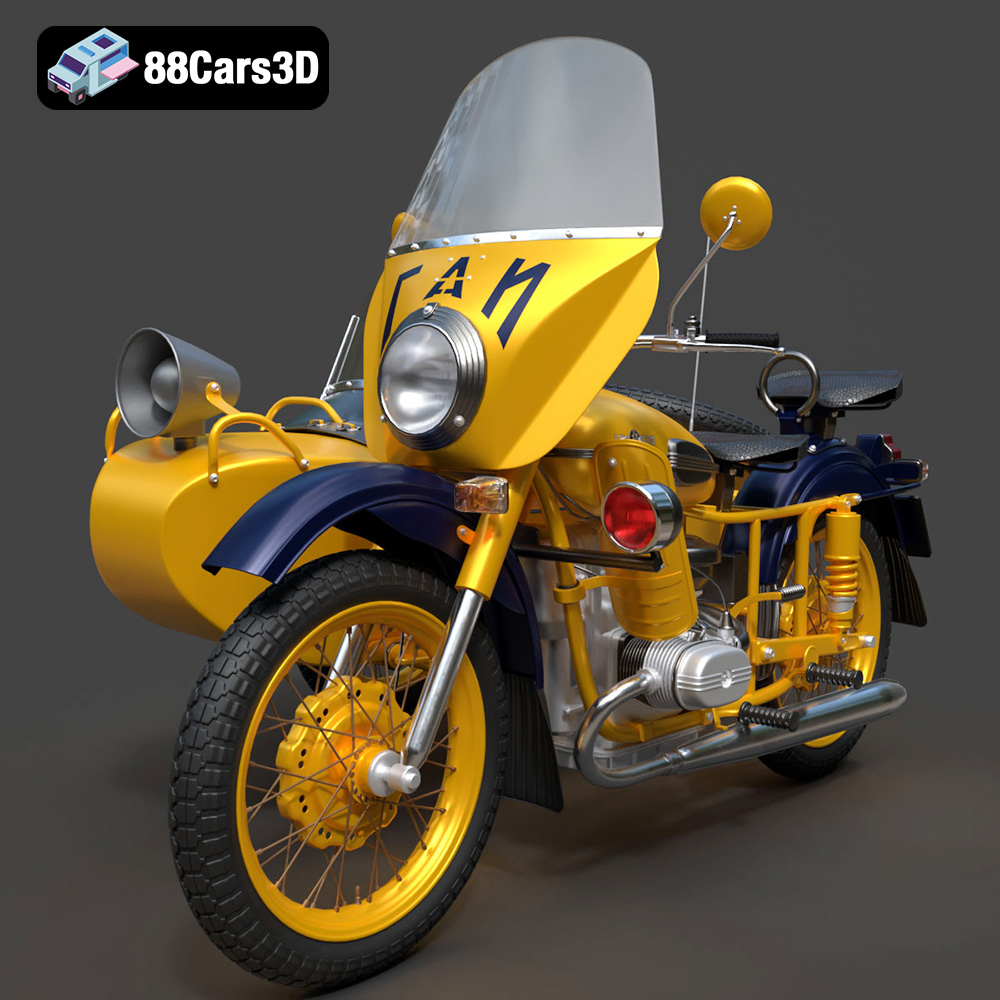
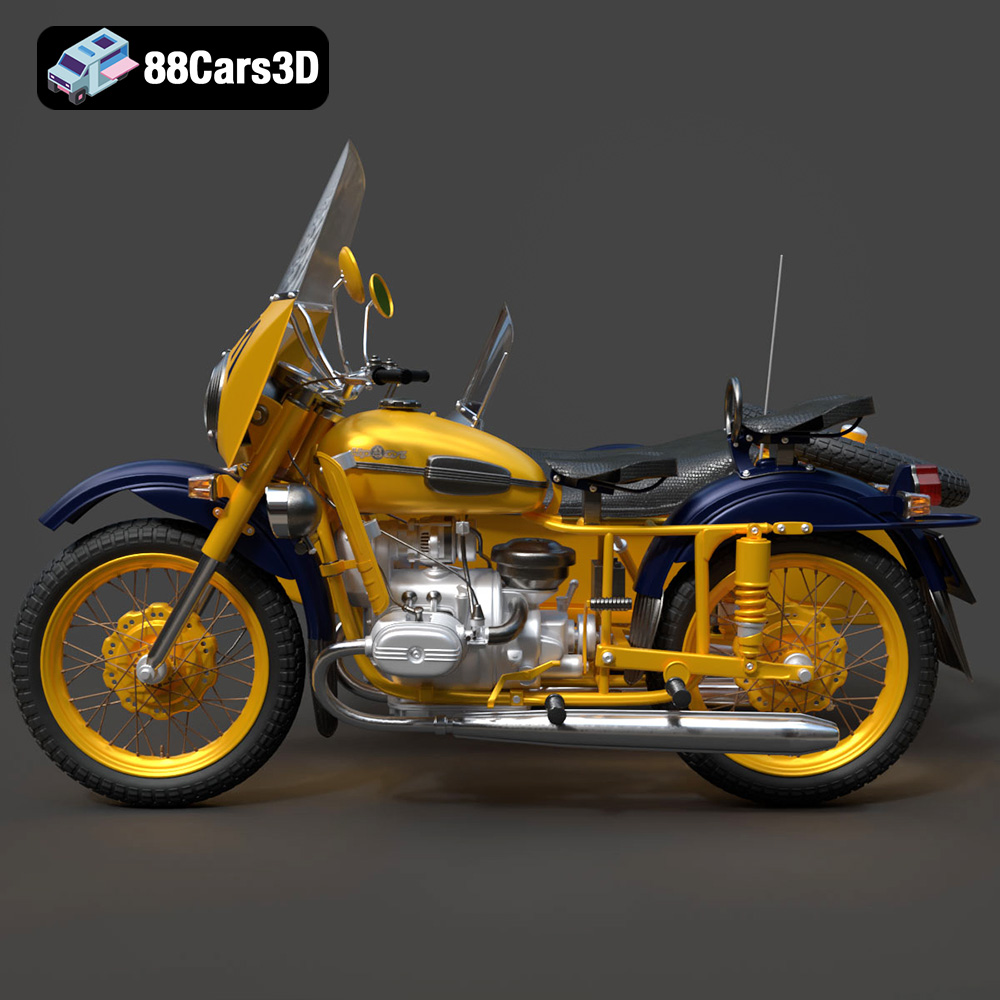
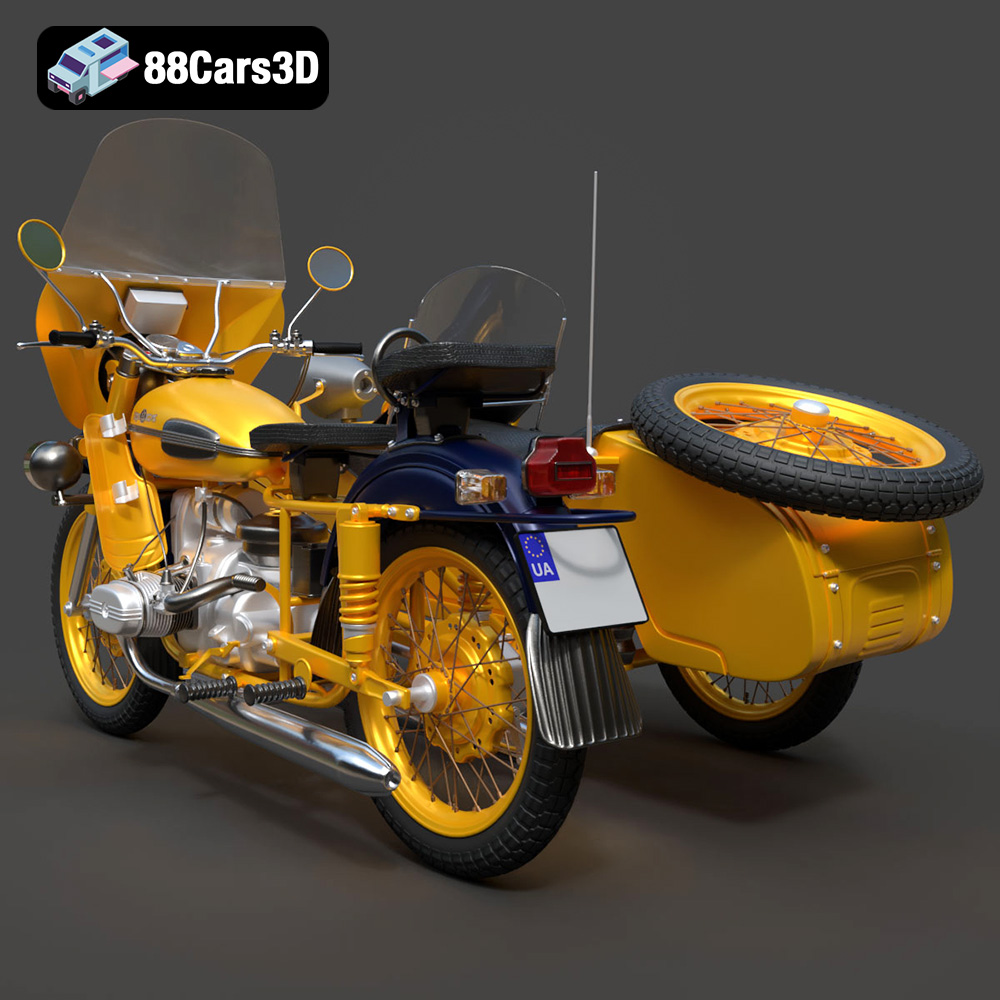
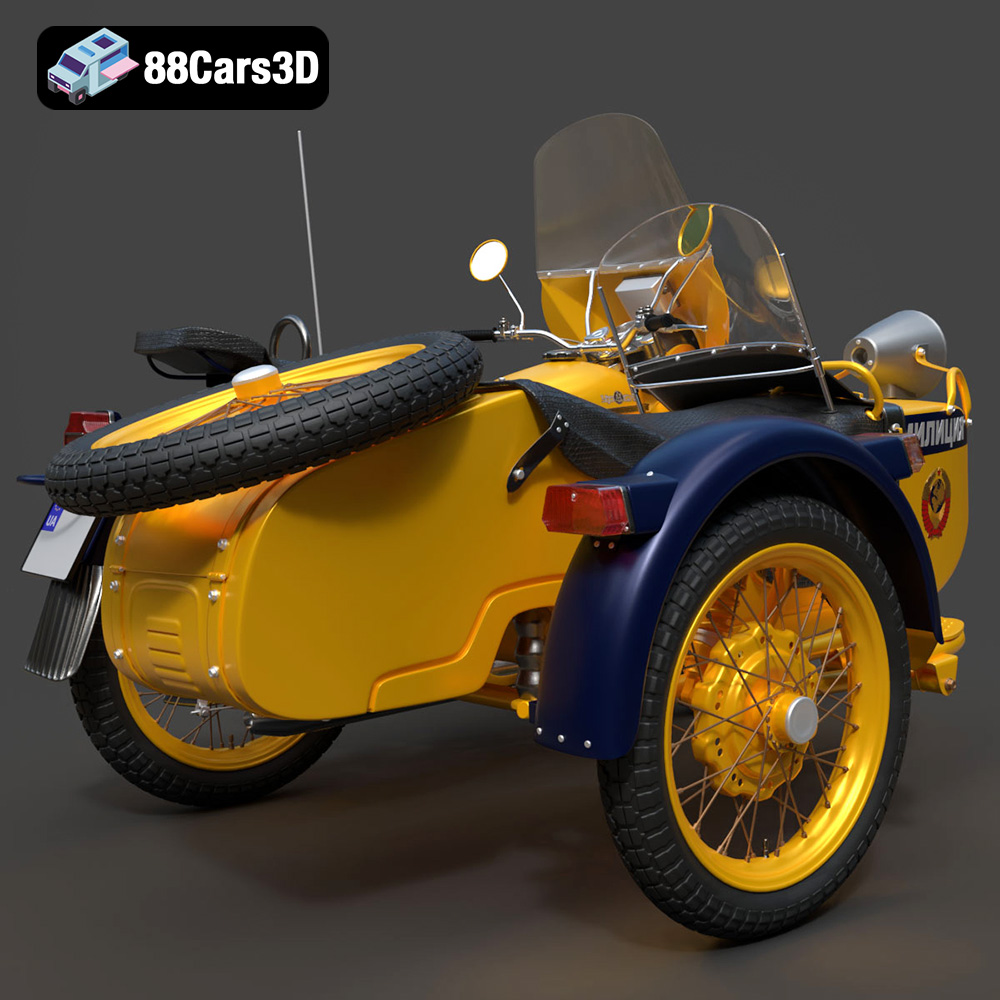
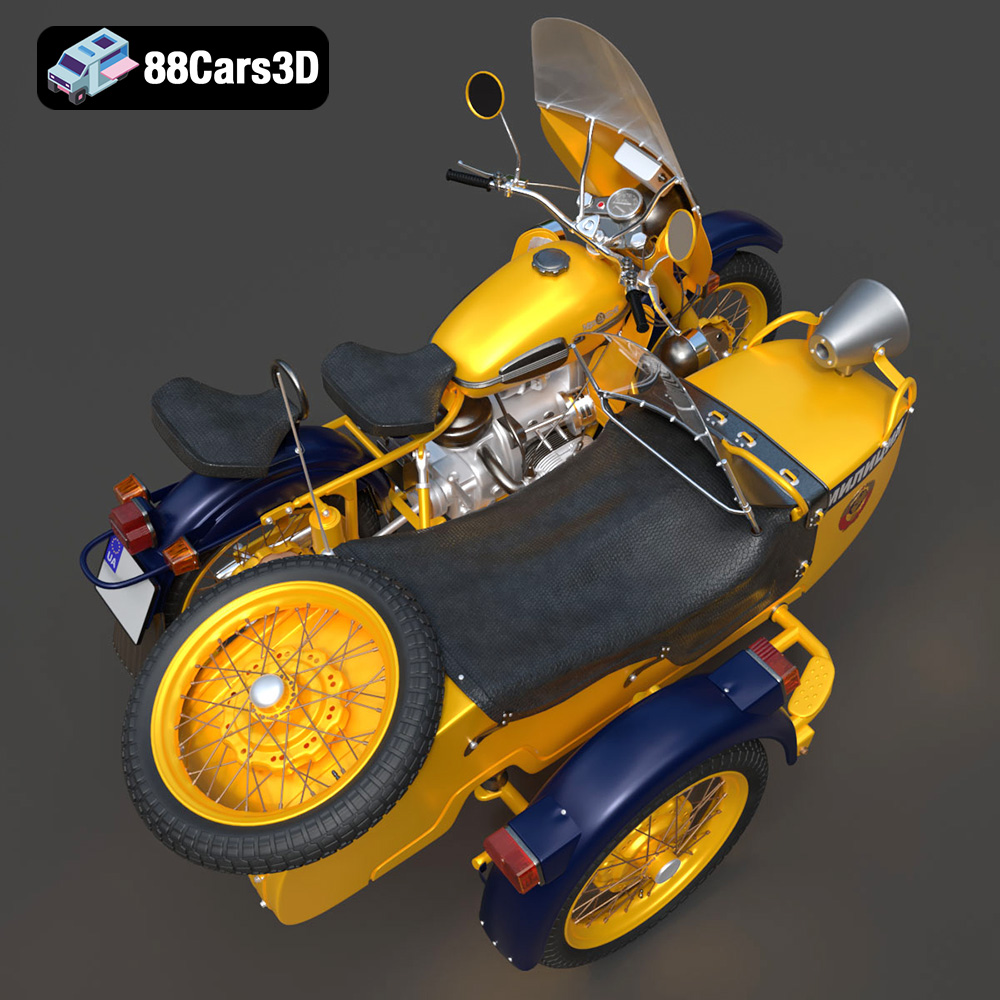
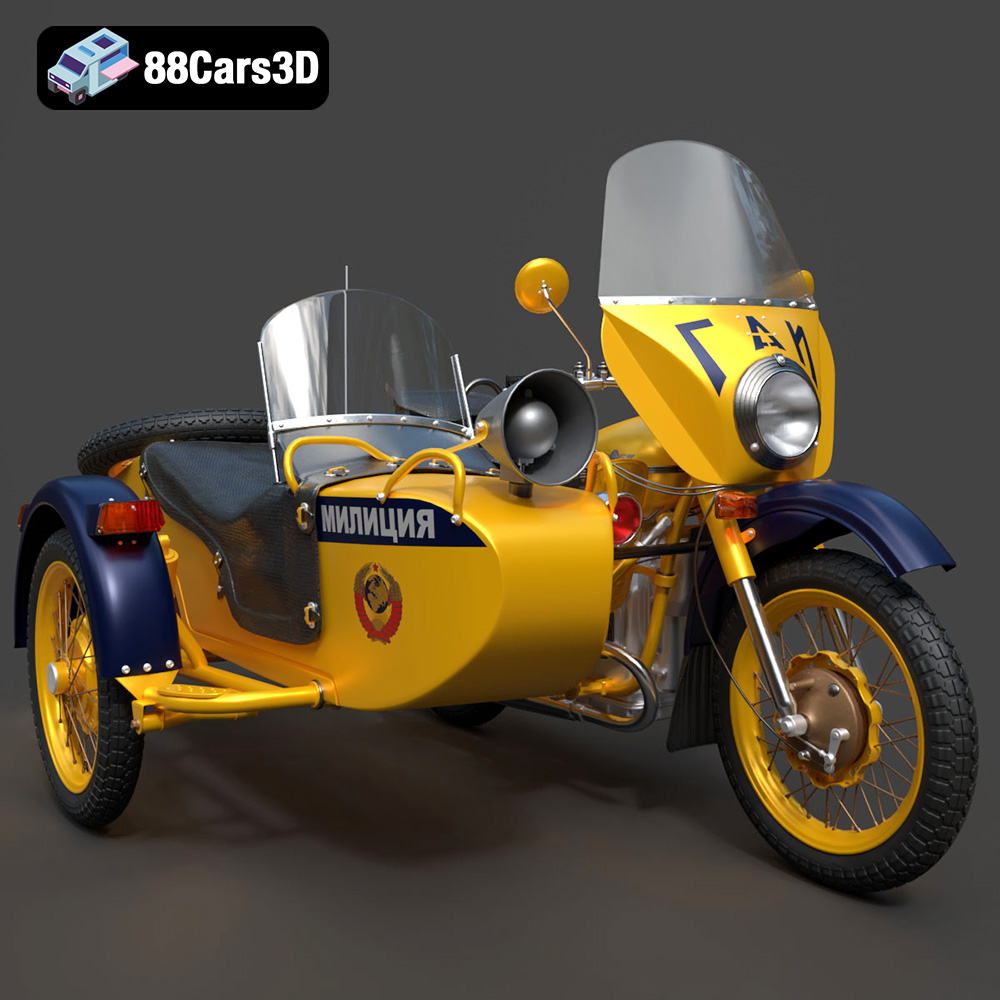
Today, we delve into an exemplary asset that bridges the gap between historical charm and modern digital demands: the Ural M67-36-P 1976 3D Model. This legendary Soviet-era motorcycle, a testament to rugged durability and utilitarian design, has been expertly digitized to serve a multitude of professional applications. From its iconic opposed-twin engine to its sturdy frame, every detail of this classic workhorse has been captured with precision, making it an invaluable addition to any creative pipeline looking for exceptional game assets or stunning automotive rendering solutions.
Classic vehicles, and motorcycles in particular, hold a unique allure. They represent a blend of engineering heritage, stylistic evolution, and a certain romanticism that transcends generations. Incorporating such historical elements into digital projects adds depth, character, and a touch of nostalgia that resonates deeply with audiences. The Ural M67-36-P 1976, with its distinctive silhouette and robust character, offers a rich narrative potential, perfect for period-specific games, detailed virtual museums, or nostalgic marketing campaigns. Its inclusion instantly elevates the visual storytelling, providing a tangible link to the past through the power of cutting-edge 3D technology.
The versatility of a 3D model often hinges on its availability across various file formats, each serving distinct purposes and catering to specific software and pipelines. When acquiring a high-quality asset like the Ural M67-36-P 1976 3D Model, understanding these formats is crucial for seamless integration and optimal use. The 88cars3d.com marketplace ensures that its products come in a wide array of formats to maximize compatibility and utility for professionals across different disciplines.
The .blend format is the native file type for Blender, the renowned open-source 3D creation suite. A .blend file typically encapsulates an entire Blender scene, including mesh data, materials, textures, lighting setups, cameras, animations, and even physics simulations. For artists and studios primarily operating within Blender, this format offers unparalleled flexibility. Users can open the Ural M67-36-P directly within Blender, accessing all its underlying data, modifiers, and node-based material setups. This allows for extensive customization, re-topology, animation adjustments, and rendering using Blender’s powerful Cycles or Eevee engines without any loss of information during conversion.
.fbx (Filmbox) is an Autodesk proprietary format that has become the de facto standard for exchanging 3D data between different software applications, especially in game development and animation. It’s renowned for its robust support for mesh geometry, material definitions (often using physically based rendering, or PBR, workflows), animation curves, skeletal data, and even embedded textures. For real-time engines like Unreal Engine and Unity, the .fbx format is often the preferred choice for importing complex models with animations. The Ural M67-36-P 3D Model in .fbx format ensures that all its separated components for animation (wheels, suspension, steering) and its optimized topology are preserved, ready for immediate rigging or cinematic sequencing.
The .obj (Wavefront OBJ) format is one of the oldest and most widely supported 3D file formats. It’s a universal choice for simple mesh data, primarily storing geometry (vertices, faces, normals, UV coordinates). While it doesn’t support complex features like animation, rigging, or advanced material setups directly within the file (it typically references a separate .mtl file for basic material properties), its strength lies in its widespread compatibility. Almost every 3D software application can import and export .obj files. For static renders, 3D sculpting, or when you need a pure geometric representation of the Ural M67-36-P to begin a new texturing or rigging process in a specific software, .obj is an excellent foundational choice.
.glb is the binary version of glTF (Graphics Language Transmission Format), designed for efficient transmission and loading of 3D scenes and models by engines and applications. It’s highly optimized for web-based 3D, AR (Augmented Reality), and VR (Virtual Reality) applications due to its compact size and single-file structure (geometry, textures, and animations are all embedded). For immersive experiences or interactive product viewers on the web, the Ural M67-36-P in .glb format offers a streamlined solution, ensuring quick loading times and broad browser compatibility, making it perfect for virtual showrooms or mobile AR apps.
The .stl (Stereolithography) format is the standard for 3D printing. It represents a 3D model as a series of connected triangles, describing only the surface geometry of an object without color, texture, or material information. While simplistic, its ubiquity in the 3D printing world is unmatched. The Ural M67-36-P 3D Model, when provided in .stl, can be directly sent to a slicing software for preparation, enabling hobbyists and professionals to bring the digital model into the physical realm. This format is crucial for rapid prototyping, creating scale models, or even producing custom parts based on the digital design.
The .ply (Polygon File Format) is another widely used format, particularly in applications dealing with 3D scanning, scientific visualization, and CAD. Unlike .obj, .ply can store a broader range of properties associated with the mesh, including color per vertex, surface normals, and even transparency, in addition to geometry. It’s a more versatile format for representing precise meshed data and is often preferred when the model’s appearance relies heavily on vertex attributes or when integrating with engineering or analysis software. For detailed inspection or reverse engineering workflows of the Ural M67-36-P, .ply can provide richer data than .obj.
When an asset is described as being in .unreal format, it typically signifies that it has been specifically prepared or packaged for direct import and optimal performance within Unreal Engine. While the underlying data might originate from an .fbx, the .unreal designation implies that the asset comes with pre-configured materials, textures, and potentially even Blueprints, LODs (Levels of Detail), and collision meshes, making it a true “engine-ready” asset. This saves considerable time for game developers by providing a drop-in solution, minimizing the need for extensive post-import setup for the Ural M67-36-P within the Unreal environment.
The .max format is the native file type for Autodesk 3ds Max, a leading software for 3D modeling, animation, rendering, and visualization. Similar to .blend, a .max file contains comprehensive scene data, including geometry, modifiers, materials (V-Ray, Corona, Arnold), lighting, cameras, and animation tracks. For professionals using 3ds Max, the .max version of the Ural M67-36-P allows for full editability, leveraging all the powerful tools and renderers available within the software for high-end automotive rendering or complex animation sequences.
The availability of the Ural M67-36-P 1976 3D Model in such a comprehensive suite of formats from 88cars3d.com underscores its adaptability and value, ensuring that artists and developers can integrate it into virtually any professional workflow with confidence.
The true value of a premium 3D asset lies not just in its visual appeal but in the meticulous technical execution that underpins it. The Ural M67-36-P 1976 3D Model is a prime example of this philosophy, engineered to meet the stringent demands of modern digital production pipelines. Its design strikes a perfect balance between high visual fidelity and optimized performance, making it suitable for both static renders and real-time interactive experiences.
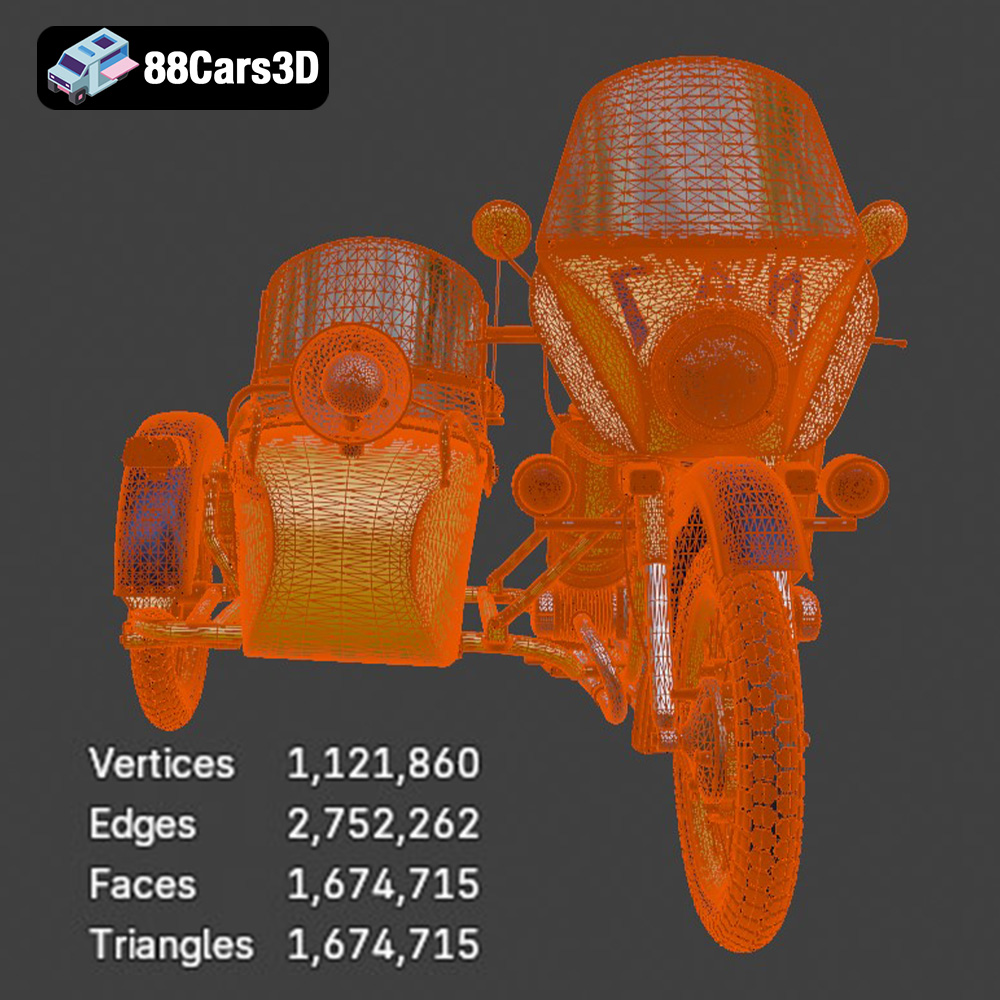
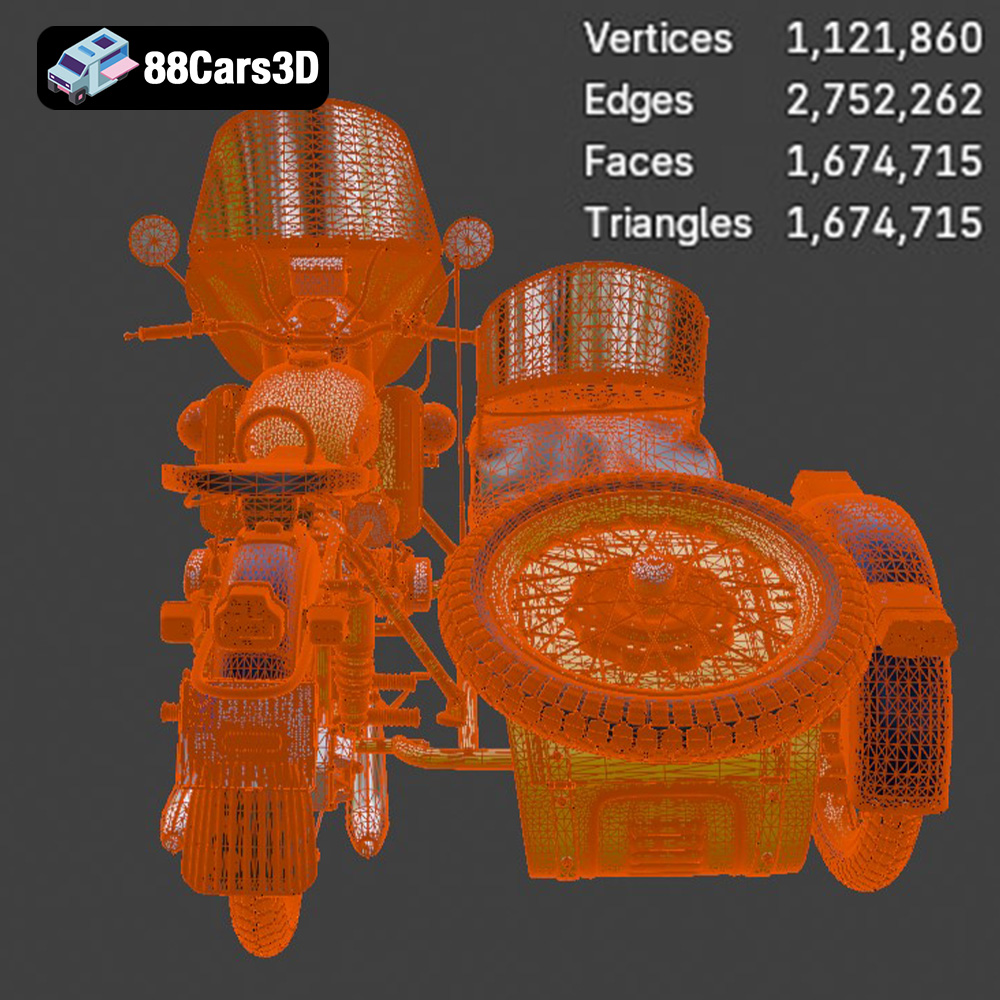
At the heart of any high-performing 3D model is its geometry and topology. The Ural M67-36-P boasts an optimized topology with approximately 85,000 triangles. This specific polycount is not arbitrary; it represents a carefully considered sweet spot. For game development, 85,000 triangles deliver significant visual detail without burdening the real-time engine’s performance budget. It allows for crisp silhouettes, smooth surfaces, and intricate details like the engine block fins and exhaust pipes to be clearly defined, even up close. In contrast to extremely high-poly models which require extensive optimization for real-time, or overly simplified low-poly models that lack detail, this model provides an ideal balance for modern engines like Unreal and Unity.
The clean quad-based topology (where applicable before triangulation for export) is also crucial for seamless UV mapping, texturing, and subdivision if higher detail is required for cinematic close-ups. This attention to underlying structure ensures the model is not only beautiful but also production-ready and easy to work with.
The essence of a classic vehicle lies in its unique characteristics and historical accuracy. The Ural M67-36-P 3D Model meticulously reproduces these details:
The cockpit, often a neglected area in many models, also receives due attention. Features like the classic sprung solo or dual bench seat, vintage wide handlebars with authentic grips, a minimalist retro instrument cluster with an analog speedometer, and accurate foot pegs and hand levers are all present and optimized for first-person POV in gaming scenarios.
Beyond static fidelity, the model is built for motion. Its separate wheels, suspension components, and steering elements come with proper pivot setups, making them immediately ready for animation. This is critical for game development (e.g., dynamic vehicle physics, player-controlled steering) and for rendering cinematic sequences where realistic movement is essential. Furthermore, the model is built to real-world scale accuracy, based on actual vehicle chassis dimensions. This ensures that when imported into a scene, it fits seamlessly alongside other real-world scaled assets, maintaining consistent proportions and preventing scaling issues in engine environments.
The true measure of a high-quality 3D asset is its seamless integration into diverse professional pipelines. The Ural M67-36-P 1976 3D Model excels in this regard, offering adaptability for game development, automotive rendering, and immersive AR/VR experiences.
For game developers, performance and visual fidelity are a constant balancing act. The Ural M67-36-P 3D Model, with its optimized 85,000-triangle polycount, is ideally suited for demanding real-time engines like Unreal Engine and Unity. When importing the .fbx or .unreal format:
Its robust design makes it perfect for open-world games where players might traverse diverse terrains, racing titles, or even historical simulators, adding a layer of authentic immersion.
For advertising, concept visualization, or cinematic sequences, photorealistic automotive rendering is key. The Ural M67-36-P 3D Model provides an excellent foundation for achieving stunning visuals in industry-standard renderers like V-Ray, Corona, Arnold (via 3ds Max or Blender), or Cycles/Eevee (via Blender):
The .max and .blend formats offer the most flexibility for these high-end rendering tasks, enabling artists to leverage the full power of their preferred rendering engines and workflows for the Ural M67-36-P 1976 3D Model.
Augmented and Virtual Reality demand highly optimized yet visually compelling assets. The Ural M67-36-P is well-suited for these emerging platforms:
Integrating this model into platforms like Sketchfab for web-based AR, or dedicated AR/VR engines, is straightforward, enabling rich, immersive interactions with this classic vehicle.
Beyond the digital screen, the Ural M67-36-P 1976 3D Model offers the exciting possibility of physical manifestation through 3D printing. The availability of the model in .stl format caters directly to hobbyists and professionals looking to create tangible replicas, showcasing the beauty of its design in the real world.
The .stl format, while simple, is the industry standard for 3D printing. When preparing the Ural M67-36-P for print, several considerations come into play to ensure a successful outcome:
Achieving a high-quality physical model requires careful attention to print settings and post-processing:
Through this meticulous process, the digital Ural M67-36-P 1976 3D Model can be transformed into a beautiful, tangible display piece, a testament to both digital craftsmanship and physical fabrication.
A truly professional 3D asset provides a robust foundation, but also allows for extensive customization to meet specific project needs. The Ural M67-36-P 1976 3D Model is designed with this versatility in mind, offering artists and developers significant creative control over its final appearance and integration.
The model’s clean UV mapping and PBR-ready materials make it incredibly flexible for texture and shader adjustments:
This level of material and texture control ensures that the Ural M67-36-P can adapt to a wide array of visual styles and specific requirements, from pristine showroom condition to a battle-hardened survivor.
How a 3D model interacts with its environment is crucial for believability. The Ural M67-36-P 3D Model is designed to respond realistically to diverse lighting conditions:
This inherent versatility allows the Ural M67-36-P 1976 3D Model to serve not just as a static object, but as a dynamic narrative element that responds to and enhances its digital surroundings, further solidifying its status as a high-value asset from 88cars3d.com.
The digital realm thrives on detail, authenticity, and technical excellence. The Ural M67-36-P 1976 3D Model embodies these principles, offering a meticulously crafted asset that is ready to be deployed across a spectrum of professional applications. From its historically accurate geometry and optimized topology to its comprehensive file format support, this model is a testament to what high-quality 3D car models should be.
We’ve explored how its thoughtful design makes it a prime candidate for game development, balancing visual fidelity with real-time performance. We’ve seen its potential for breathtaking automotive rendering, capable of standing up to the scrutiny of cinematic close-ups and high-end visualizations. Its adaptability for AR/VR experiences opens doors to immersive virtual showrooms and interactive educational content. Furthermore, its provision in .stl format offers a tangible bridge to the physical world through 3D printing, enabling creators to hold a piece of digital history in their hands.
The availability of multiple file formats—from .blend and .max for comprehensive editing to .fbx and .unreal for game engines, and .glb for web/AR/VR, alongside .obj, .stl, and .ply for universal compatibility and specialized applications—ensures that professionals have the right tools for every job. This versatility, combined with the model’s inherent quality and animation readiness, positions the Ural M67-36-P 1976 as an exceptional investment for any creative project.
For those seeking not just any 3D asset, but a reliable, high-performance, and historically rich model, the Ural M67-36-P 1976 3D Model is an unparalleled choice. Discover this and other premium 3D car models and vehicle assets by visiting 88cars3d.com, your trusted source for professional-grade digital content that truly elevates your projects.
The 1976 Ural M67-36-P is a legendary Soviet-era motorcycle, renowned for its rugged durability, classic utilitarian styling, and historic patrol heritage. Featuring its iconic opposed-twin (boxer) engine, robust dual exhaust system, and sturdy frame design, this classic workhorse captures the absolute essence of 1970s Eastern Bloc engineering and heavy-duty performance. This highly detailed, game-ready 3D model boasts optimized topology (approximately 85,000 triangles) to deliver maximum visual fidelity without compromising real-time performance. Designed for seamless integration into modern digital pipelines, the model ensures highly accurate geometry and excellent material setup, making it an outstanding asset for high-end automotive visualization, game development, and AR/VR applications. Perfect for historic period games, classic motorcycle configurators, VR museums, and cinematic renders.
$39.99
.blend
.fbx
.glb
.max
.obj
.ply
.rendering
.stl
.unreal
.ural
1976
classic-motorcycle
game asset
game-ready
low-poly
m67-36-p
motorcycle-3d-model
optimized
soviet-motorcycle
vintage-bike
VR/AR