Get 20% OFF All Premium 3D & STL Models!

In the world of 3D visualization, few things capture the imagination quite like a meticulously crafted vehicle. From sleek modern supercars to rugged off-road beasts, 3D automotive models serve as the backbone for everything from high-fidelity game environments to stunning cinematic sequences. Today, we turn our attention to an icon that transcends generations – the Harley Davidson Knucklehead. This legendary motorcycle, revered for its distinctive engine and timeless aesthetic, represents a pinnacle of design that demands an equally high standard in its digital representation.
For professionals in game development, architectural visualization, AR/VR experiences, and cinematic rendering, acquiring a pre-built, high-quality 3D asset can dramatically accelerate production while maintaining an unparalleled level of detail. The Harley Davidson Knucklehead 3D model available on 88cars3d.com is a prime example of such an asset. It brings the intricate mechanics and sweeping lines of this vintage masterpiece to your digital workspace with professional-grade precision, clean geometry, and optimized performance. Whether you’re a seasoned artist seeking efficiency or a studio demanding realism, understanding the nuances of such a model and its compatible formats is crucial for seamless integration into your project pipeline.
Creating a truly exceptional 3D model, especially for complex subjects like classic motorcycles or 3D car models, is a blend of artistic vision and technical mastery. It involves meticulous attention to detail, a deep understanding of real-world physics, and foresight into how the asset will be utilized across various platforms.
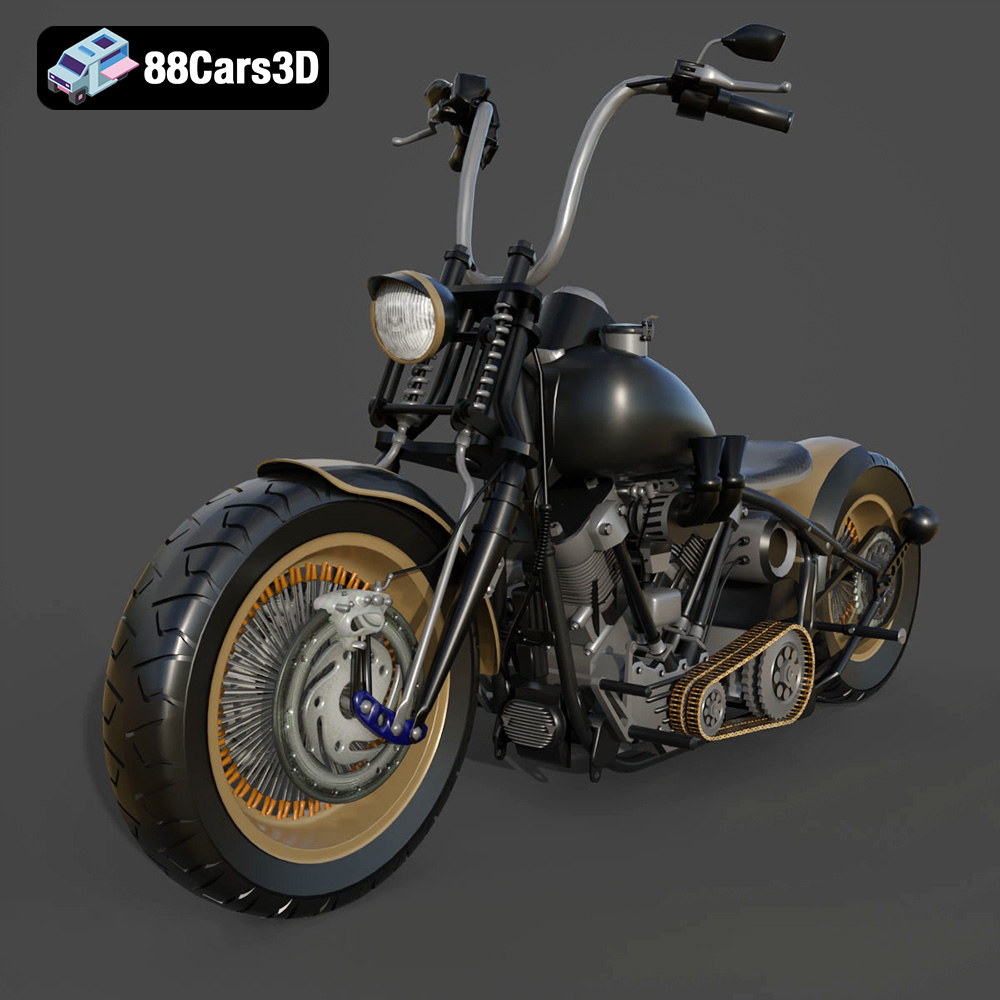
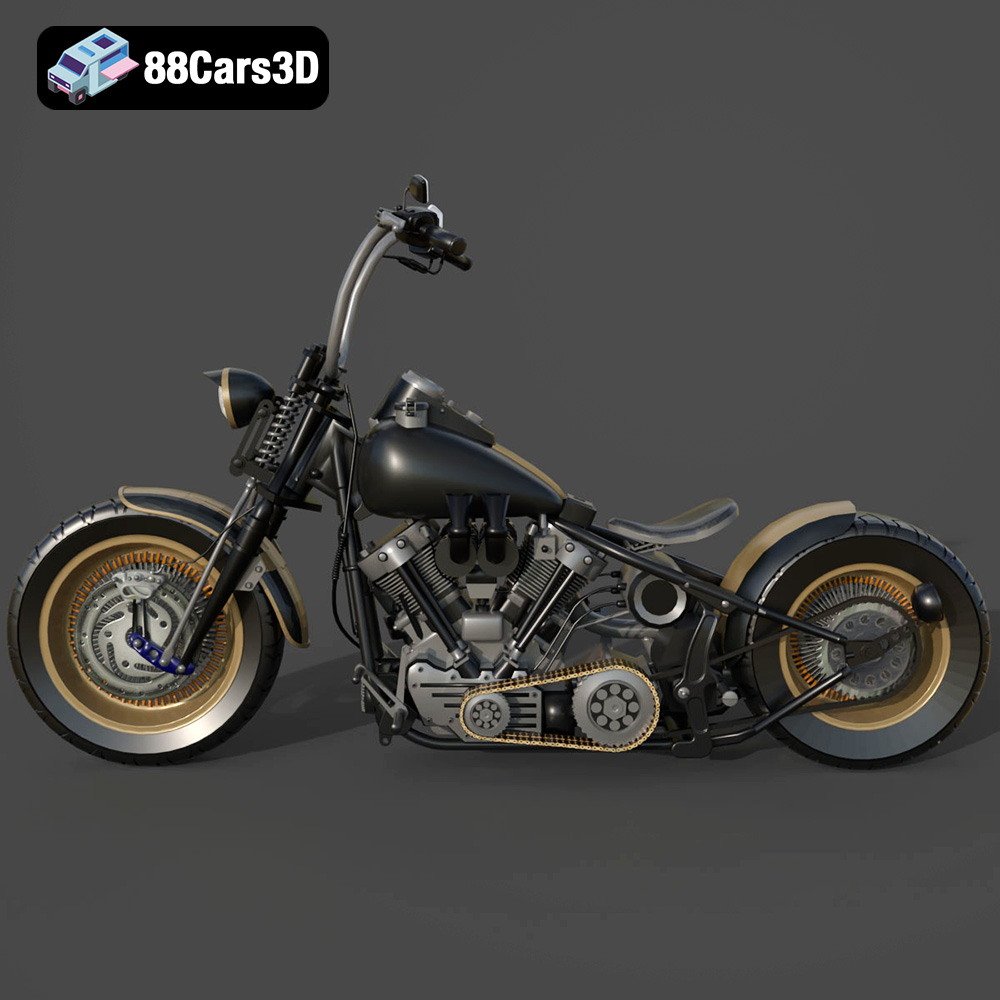
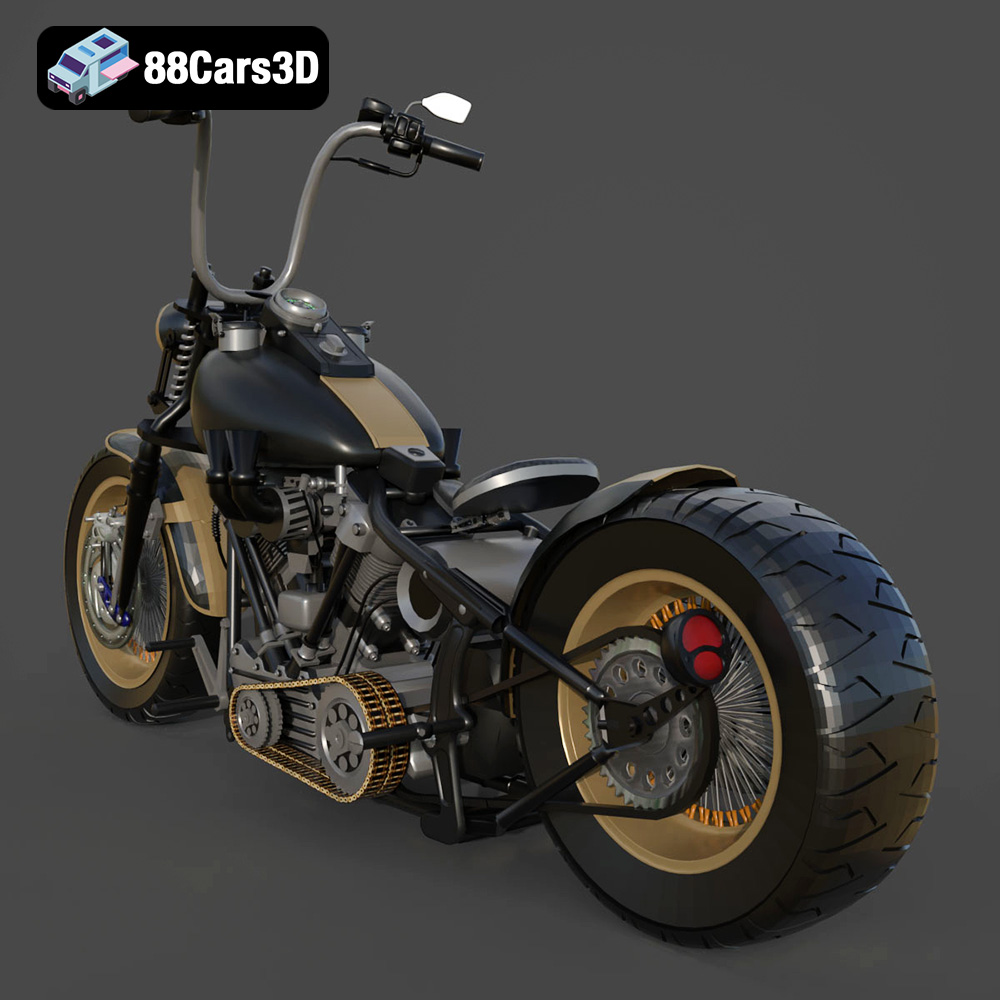
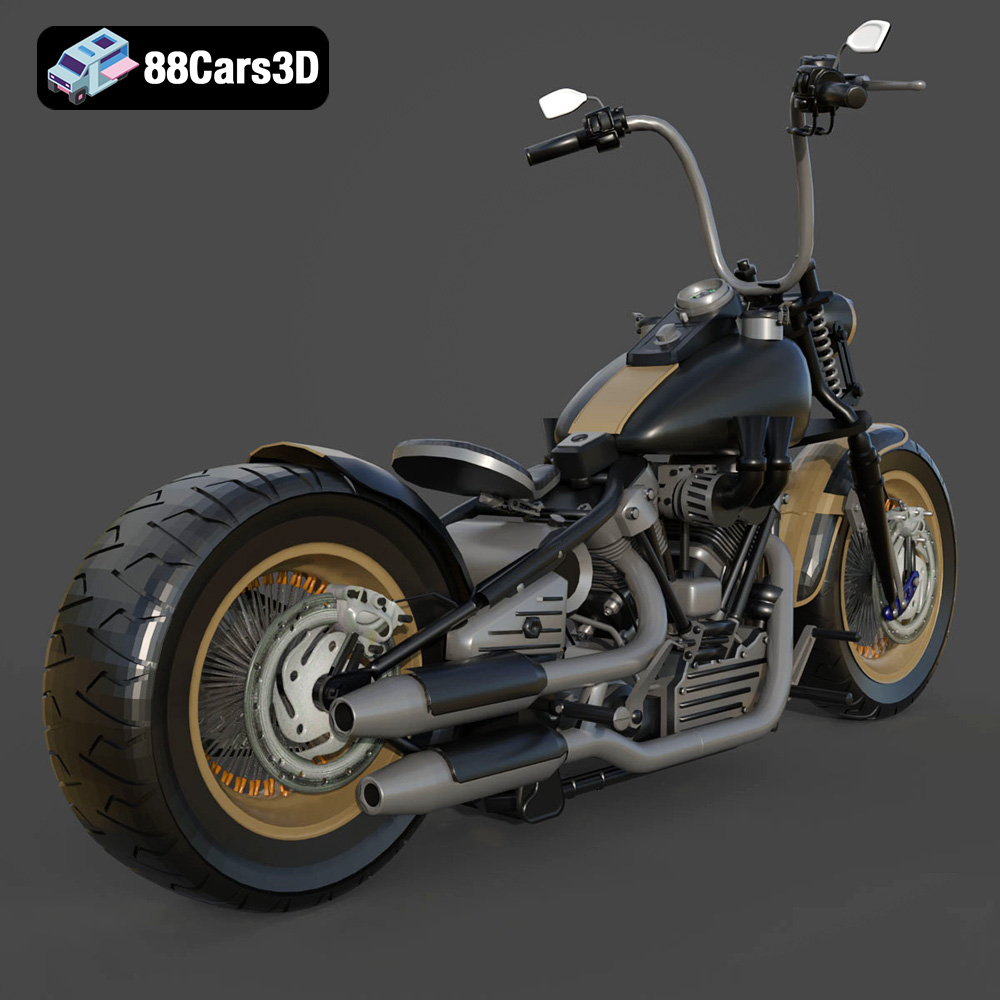
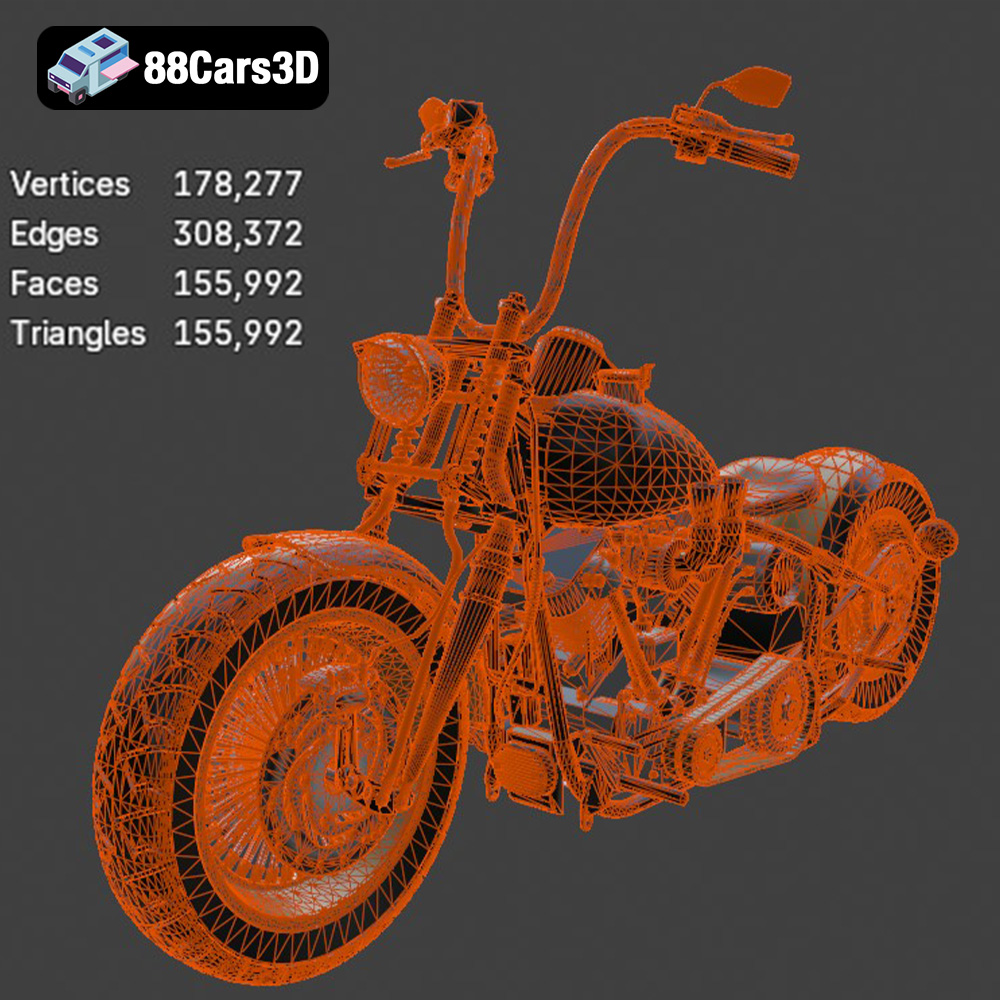
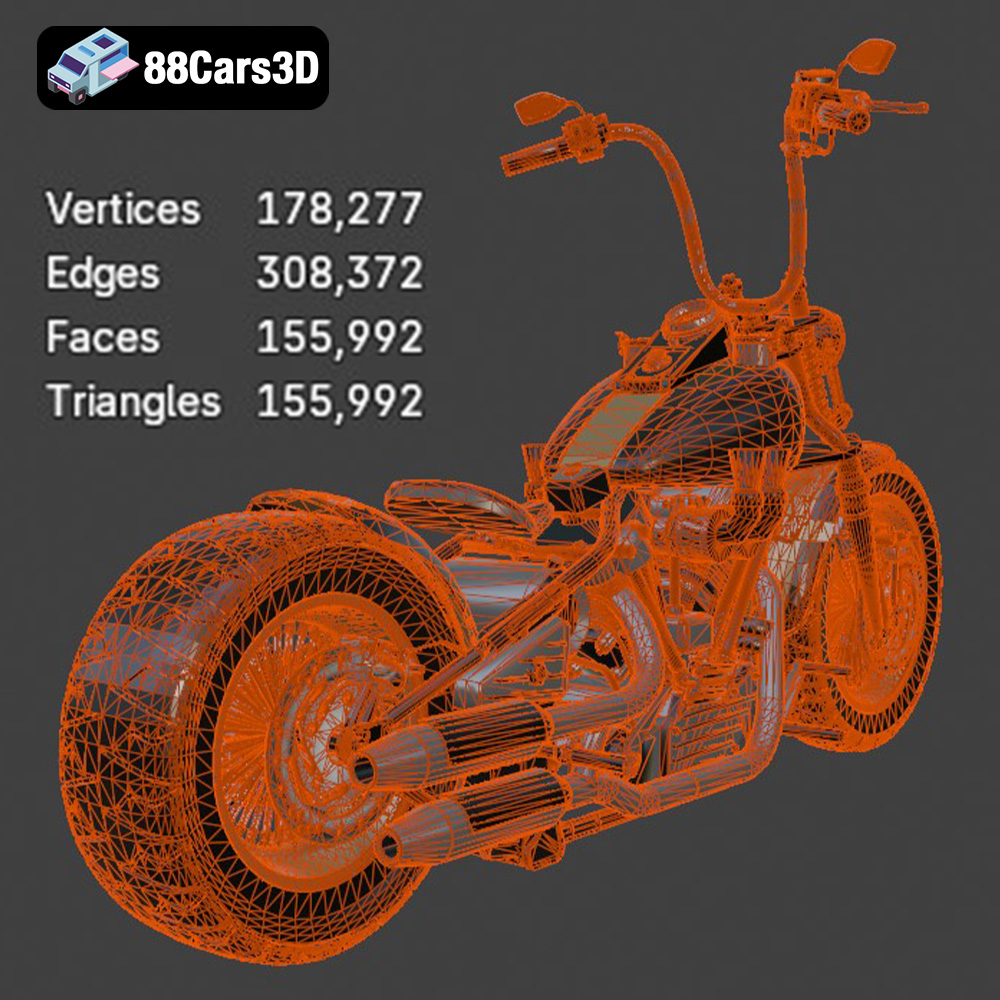
The foundation of any high-quality 3D asset lies in its mesh. For a subject like the Harley Davidson Knucklehead, this means replicating every curve, bolt, and engine component with photographic accuracy. Professional models boast clean, efficient geometry, meaning polygons are used judiciously to capture detail without unnecessary overhead. This includes maintaining proper topology – the arrangement of polygons – to ensure smooth deformation during animation and clean subdivisions for high-resolution renders. Furthermore, the model’s UV maps are meticulously laid out, allowing textures to be applied without stretching or distortion. This attention to detail is evident in the Knucklehead model, where elements like the distinct knuckle valve covers, detailed chassis, and instrumentation are precisely replicated, making it an outstanding asset for automotive rendering.
While realism is paramount, performance cannot be ignored. A truly professional 3D model strikes a delicate balance between visual fidelity and computational efficiency. An “optimized polygon count” means the model provides sufficient detail for close-up shots while remaining performant enough for real-time applications like game development or AR/VR. This often involves creating multiple Levels of Detail (LODs), where simpler versions of the model are swapped in at greater distances from the camera. Materials are also “meticulously configured,” using PBR (Physically Based Rendering) workflows to ensure consistent and realistic appearance under various lighting conditions across different rendering engines. For a classic motorcycle like the Harley Davidson Knucklehead, this optimization ensures that its vintage charm translates flawlessly from cinematic renders to interactive virtual environments.
The versatility of a 3D model often hinges on the range of file formats it supports. Each format serves a specific purpose, offering unique advantages for different stages of a production pipeline, from initial modeling to final deployment in real-time engines or physical manufacturing. Understanding these formats is crucial for professionals leveraging assets like the Harley Davidson Knucklehead 3D model, ensuring seamless integration and optimal performance in diverse projects.
The .blend format is Blender’s native file type. It’s a comprehensive package, containing not just the mesh data, but also materials, textures, lighting setups, camera positions, animations, and even scene nodes. For users immersed in the Blender ecosystem, a .blend file offers maximum flexibility. You can easily modify geometry, tweak materials, adjust lighting, or even dissect the original artist’s scene organization. For the Harley Davidson Knucklehead, the .blend file provides a fully editable Blender scene, making it ideal for those who wish to deeply customize the model or integrate it into existing Blender projects with minimal fuss. Similarly, .max is the native project file for Autodesk 3ds Max. Like .blend, it encapsulates an entire scene, including model data, materials, textures, rigging, animation, and rendering settings. It offers unparalleled control and is crucial for professionals whose workflows are centered around 3ds Max, especially for high-end automotive rendering and animation. An included .max file for the Knucklehead allows for full artistic freedom within this industry-standard software.
.fbx (Filmbox) is arguably one of the most widely supported interchange formats in the 3D industry. Developed by Autodesk, it’s designed for interoperability between different 3D software applications and, critically, game engines like Unreal Engine and Unity. An .fbx file can store not only geometry and materials but also animations, rigs, and camera data. Its strength lies in its ability to transfer complex scene information relatively intact. For game development and real-time pipelines, the .fbx version of the Harley Davidson Knucklehead is often the go-to choice due to its robust support for game-engine-ready assets. .obj (Wavefront Object) is another universal format, known for its simplicity and wide compatibility. It stores geometry (vertices, normals, texture coordinates, and faces) and can reference an accompanying .mtl (Material Template Library) file for basic material properties. While it doesn’t support animation or rigging, its widespread acceptance makes it an excellent choice for basic model exchange between virtually any 3D software. The .obj version of the Knucklehead ensures cross-software compatibility for artists regardless of their primary tool. Lastly, .ply (Polygon File Format or Stanford Triangle Format) is a precision mesh format primarily used for storing 3D data from 3D scanners or for CAD and analysis purposes. It can store a variety of properties, including color, normals, and texture coordinates. While less common for direct rendering, it provides a highly accurate polygonal representation, making it suitable for engineering or detailed inspection tasks of the Harley Davidson Knucklehead model.
.glb (GL Transmission Format Binary) is an increasingly important format optimized for AR, VR, and web-based display. It packages 3D model data, textures, and animations into a single, self-contained binary file, making it incredibly efficient for streaming and loading in real-time environments. Its adoption by platforms like Google’s 3D Viewer and various AR/VR SDKs makes the .glb version of the Knucklehead perfect for immersive experiences or showcasing the model directly in a browser. .stl (Stereolithography) is the standard format for 3D printing. It represents a 3D model as a series of connected triangles, describing only the surface geometry without color, texture, or material information. For designers and enthusiasts looking to bring the iconic Harley Davidson Knucklehead into the physical world through 3D printing, the .stl file is indispensable. Finally, the .unreal format refers to assets specifically configured and optimized for direct import and use within Unreal Engine. This often implies pre-applied materials, optimized meshes, and potentially even blueprint configurations, significantly streamlining the workflow for game developers and real-time visualizers utilizing Epic Games’ powerful engine. The .unreal package of the Knucklehead saves considerable time in setup, allowing immediate deployment into a virtual world.
Automotive rendering is an art form that demands realism, and a high-fidelity asset like the Harley Davidson Knucklehead 3D model provides the perfect canvas. Professionals leverage advanced rendering techniques to transform digital models into photorealistic masterpieces.
For cinematic-quality renders, industry-standard software like 3ds Max, paired with powerful renderers such as V-Ray or Corona Renderer, is often the choice. The .max file provided with the Knucklehead model allows for direct integration into these sophisticated environments. Artists can load the model, apply advanced physically-based materials (PBR) that accurately simulate chrome, paint, leather, and rubber, and then set up complex lighting scenarios. This includes studio lighting, high-dynamic-range imaging (HDRI) environments for realistic reflections, and volumetric effects like fog or dust to add atmosphere. Every glint of chrome on the Knucklehead’s engine, every subtle scratch on its paint, can be meticulously crafted to evoke a sense of history and authenticity, elevating the final output beyond mere visualization.
Photo-realism isn’t just about good modeling; it’s about believable lighting and materials. The Knucklehead model’s meticulously configured materials are designed to react accurately to light, thanks to PBR texture sets (Albedo, Normal, Roughness, Metallic, AO). In 3ds Max or Blender (using Cycles/Eevee), artists fine-tune light sources, mimicking natural sunlight, artificial studio lights, or even complex interior illuminations. The interplay of light and shadow, combined with accurate reflections and refractions on chrome and glass surfaces, is what sells the realism. Post-production in tools like Adobe Photoshop or DaVinci Resolve further enhances the final render. Color grading, depth of field, motion blur, lens flares, and subtle imperfections can be added to create a truly immersive and believable image or animation of this classic motorcycle, making it indistinguishable from a real photograph.
In the fast-paced world of game development, high-quality game assets are a non-negotiable requirement. The Harley Davidson Knucklehead 3D model is designed to be “game-engine ready,” offering solutions for seamless integration into interactive environments where performance and visual fidelity must coexist.
The .fbx and .unreal formats provided for the Knucklehead model are specifically tailored for leading game engines like Unreal Engine and Unity. When importing into Unreal Engine, the .unreal file can often be dropped directly into the content browser, complete with optimized meshes, UVs, and pre-configured materials. For Unity, the .fbx file offers similar ease of integration. Developers can import the model, apply the provided PBR texture maps, and set up collisions, ensuring the motorcycle interacts realistically with the game world. The clean geometry and optimized polygon count mean fewer draw calls and better frame rates, which are critical for immersive gameplay experiences. Whether it’s a racing simulation, an open-world adventure, or a historical narrative, this iconic motorcycle can become a star vehicle within the virtual realm.
Achieving visual fidelity in real-time applications requires smart optimization. For complex vehicle 3D models like the Knucklehead, this involves several techniques. Beyond the optimized base mesh, game developers can implement Levels of Detail (LODs) to dynamically swap in lower-polygon versions of the model when it’s further from the camera, significantly reducing rendering overhead. Efficient UV mapping allows for texture atlasing, combining multiple small textures into one larger sheet to minimize texture calls. Furthermore, careful consideration of material complexity and shader instructions ensures that the model renders efficiently across a range of hardware specifications. The professional-grade construction of the Harley Davidson Knucklehead model takes these considerations into account, providing a solid foundation for game developers to build upon without sacrificing the stunning visual detail that makes the model truly stand out.
The utility of a meticulously crafted 3D model extends far beyond traditional rendering and game development. The Harley Davidson Knucklehead model, with its diverse format offerings, unlocks possibilities across emerging and established visualization fields.
Augmented Reality (AR) and Virtual Reality (VR) are transforming how we interact with digital content, and 3D models are at their core. The .glb format, optimized for AR/VR and web-based visualization, makes the Knucklehead model an ideal candidate for immersive experiences. Imagine placing the classic Harley Davidson in your driveway using an AR app on your phone, examining its details from every angle as if it were truly there. Or picture yourself in a VR showroom, able to walk around and even “sit on” the legendary bike. These applications require highly efficient, self-contained models that load quickly and perform smoothly in real-time. The .glb version of this classic motorcycle allows manufacturers, enthusiasts, and educators to create engaging, interactive content that blurs the lines between the digital and physical worlds.
For enthusiasts, collectors, or even product designers, the ability to physically hold a miniature replica of the Harley Davidson Knucklehead is a tangible connection to its legacy. The .stl format provided is specifically “suitable for 3D printing and prototyping.” This file converts the model’s surface geometry into a triangulated mesh, the universal language for 3D printers. While the digital model captures every intricate detail, the .stl file translates that precision into a printable format, allowing for the creation of physical models. This capability is invaluable for educational purposes, collectible manufacturing, or even for engineers wishing to study the bike’s mechanical components in a physical form before actual manufacturing processes begin. The inclusion of an .stl ensures the Knucklehead’s iconic form can transcend the digital realm.
Architectural visualization (ArchViz) often benefits from realistic props that populate scenes and convey a sense of scale and lifestyle. Placing a classic Harley Davidson Knucklehead in a modern garage interior, an industrial loft, or even an exterior street scene instantly adds character, realism, and a focal point. Its historical significance and distinctive design make it a compelling element in conveying a specific atmosphere or narrative within an architectural render. Similarly, in product visualization, the motorcycle can be presented in various contexts, from studio glamour shots to dynamic lifestyle scenes, showcasing its aesthetic appeal and engineering prowess. The clean geometry and high-quality textures of the 88cars3d.com Knucklehead model ensure it holds up to scrutiny in these diverse and demanding visualization applications, enhancing the overall impact of any scene it graces.
In today’s fast-paced creative industries, time is often the most valuable commodity. Professional-grade 3D assets, like the Harley Davidson Knucklehead model, offer significant advantages that go beyond mere convenience, impacting efficiency, quality, and ultimately, project success.
Building a highly detailed, optimized 3D model from scratch is an incredibly labor-intensive process, often requiring hundreds of hours of work from skilled artists. For a complex subject like the Harley Davidson Knucklehead, this includes extensive research, meticulous modeling, UV unwrapping, texturing, and optimization for various platforms. By purchasing a ready-made, professional asset from a reputable source like 88cars3d.com, studios and individual artists can save an immense amount of time and resources. This allows them to focus on the more creative aspects of their projects – scene composition, animation, lighting design, and storytelling – rather than getting bogged down in the foundational asset creation. It’s an investment that pays dividends in terms of project turnaround and efficiency.
Pre-built professional 3D car models and vehicle assets come with the assurance of quality. They are typically created by experienced artists who adhere to industry best practices regarding topology, material setup, and optimization. This means you get clean geometry, accurate UVs, and PBR-ready materials that perform consistently across different renderers and game engines. Such consistency is vital for large projects or teams where multiple assets need to integrate seamlessly. The Harley Davidson Knucklehead model, with its “professional-grade precision” and “meticulously configured materials,” eliminates the guesswork and potential inconsistencies that can arise from developing assets in-house or from less reliable sources. It provides a reliable foundation, ensuring that the iconic design maintains its visual integrity, whether it’s destined for a cinematic close-up or a real-time game environment.
The demand for high-quality 3D assets continues to grow across an ever-expanding range of industries, from film and gaming to augmented reality and product design. As we’ve explored, a meticulously crafted 3D model, such as the Harley Davidson Knucklehead, serves as a powerful tool for creative professionals, offering unparalleled realism, versatility, and efficiency.
Understanding the intricacies of asset creation, the nuances of various file formats like .fbx, .obj, .glb, and .blend, and the specific workflows for different applications, empowers artists and developers to fully leverage these digital treasures. Whether you’re aiming for breathtaking automotive rendering, immersive game environments, interactive AR/VR experiences, or even physical 3D prints, a well-prepared model provides the critical foundation for success.
The Harley Davidson Knucklehead 3D model stands as a testament to what’s possible when technical precision meets artistic passion. Its availability across multiple formats ensures that its legendary design can be seamlessly integrated into any professional pipeline, saving valuable time and guaranteeing a level of detail that will captivate any audience. For this iconic motorcycle and a vast array of other premium 3D car models and vehicles, 88cars3d.com offers a curated selection designed to meet the highest industry standards.
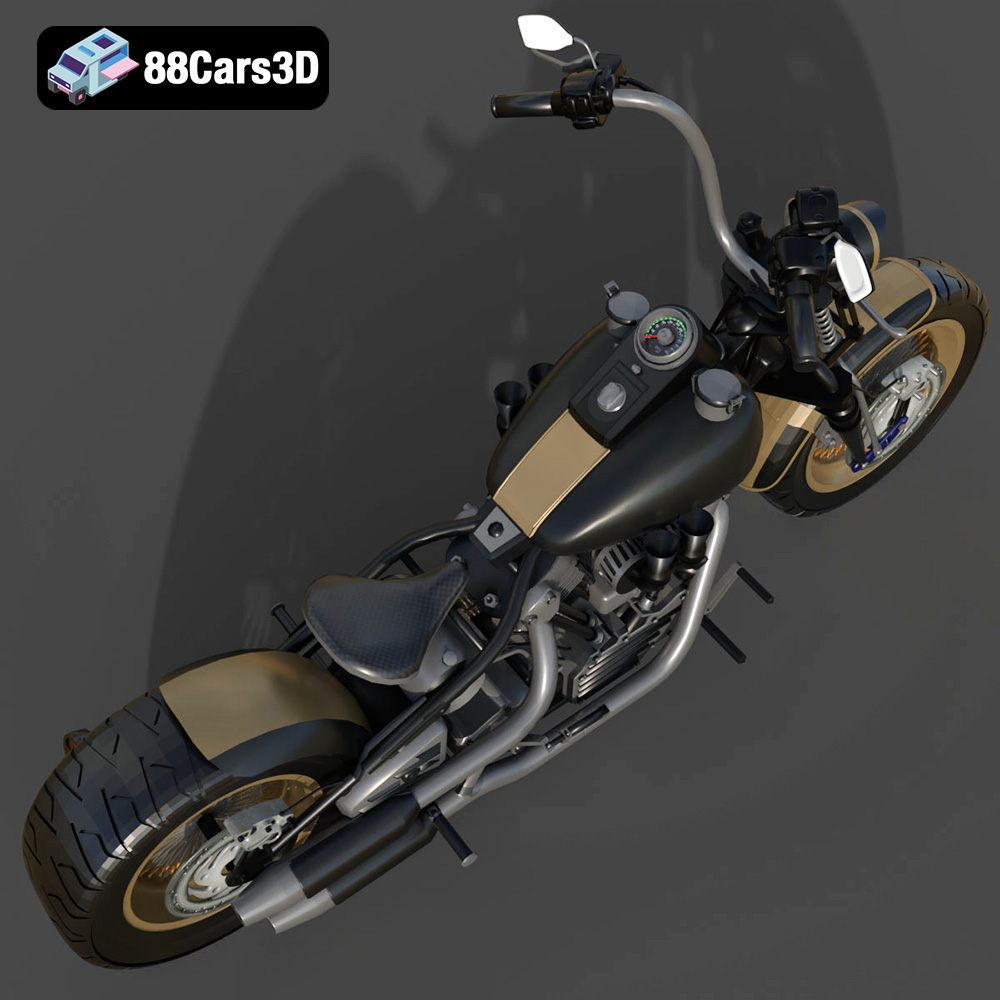
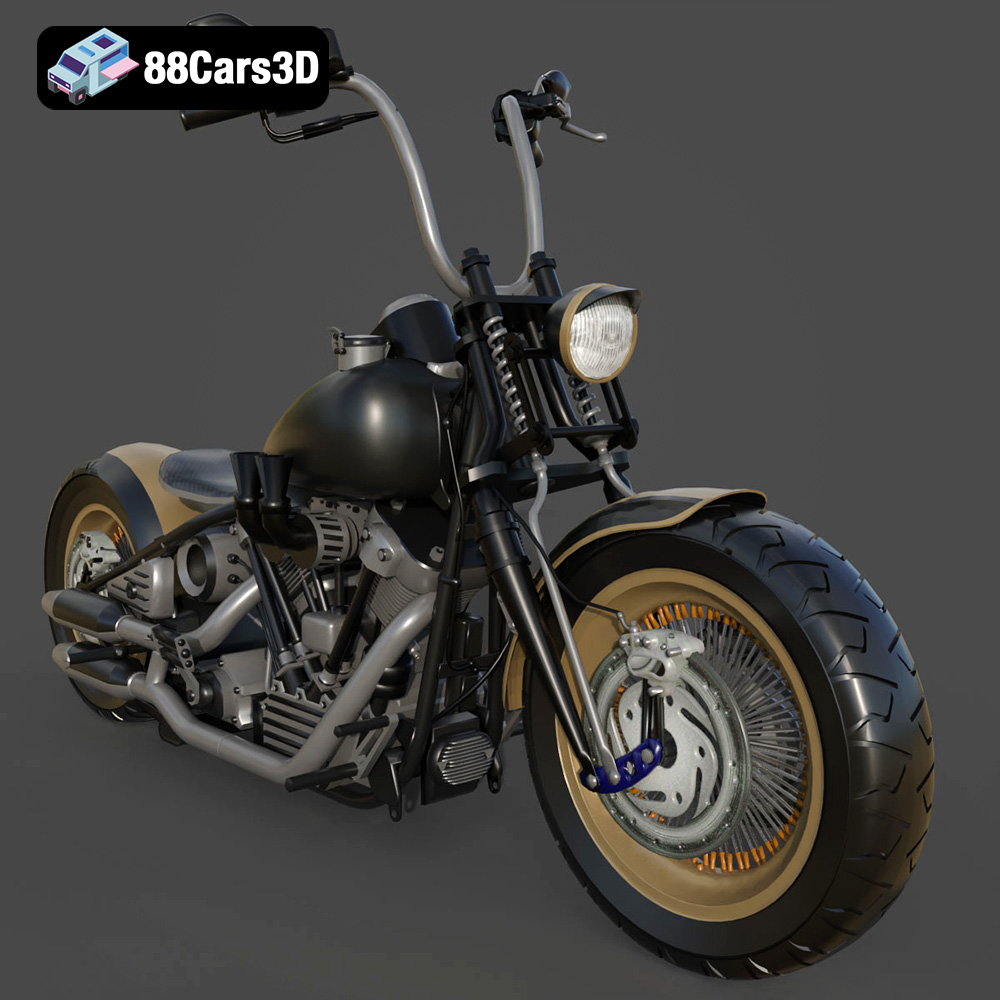
Experience the iconic design of the classic American motorcycle with the Harley Davidson Knucklehead 3D model. Designed for exceptional realism, this asset perfectly replicates the legendary engine, sweeping lines, and mechanical intricacies that make this vintage bike a timeless masterpiece.
Built with professional-grade precision, the model features clean geometry, an optimized polygon count, and meticulously configured materials. Every component, from the distinct knuckle valve covers to the detailed chassis and instrumentation, has been crafted to deliver maximum visual fidelity without compromising performance.
This versatile 3D model is ideal for a wide range of applications, including AAA game development, cinematic rendering, architectural visualization, and immersive AR/VR experiences. The carefully structured meshes and UV maps ensure seamless integration into any professional production pipeline.
Tags: .harleydavidson, .knucklehead, .motorcycle, .classicmotorcycle, .cruiser, .car3dmodel, .rendering, .simulation, .gameasset, .arvr, .blend, .fbx, .obj, .glb, .stl, .ply, .unreal, .max
Tags:
.harleydavidson, .knucklehead, .motorcycle, .classicmotorcycle, .cruiser, .car3dmodel, .rendering, .simulation, .gameasset, .arvr, .blend, .fbx, .obj, .glb, .stl, .ply, .unreal, .maxMercedes Benz CLS 500 3D Model 3D Printable STL
$39.99
.arvr
.blend
.car3dmodel
.classicmotorcycle
.cruiser
.fbx
.gameasset
.glb
.harleydavidson
.knucklehead
.max
.motorcycle
.obj
.ply
.rendering
.simulation
.stl
.unreal