Get 20% OFF All Premium 3D & STL Models!

In the fast-evolving landscape of digital content creation, the demand for hyper-realistic and functionally robust 3D assets has never been higher. From blockbuster video games that push the boundaries of immersion to cinematic visualizations that blur the line between virtual and reality, high-quality 3D models are the foundational elements. Automotive design, in particular, stands as a pinnacle of this craft, requiring precision, artistic flair, and technical mastery to translate iconic vehicles into the digital realm.
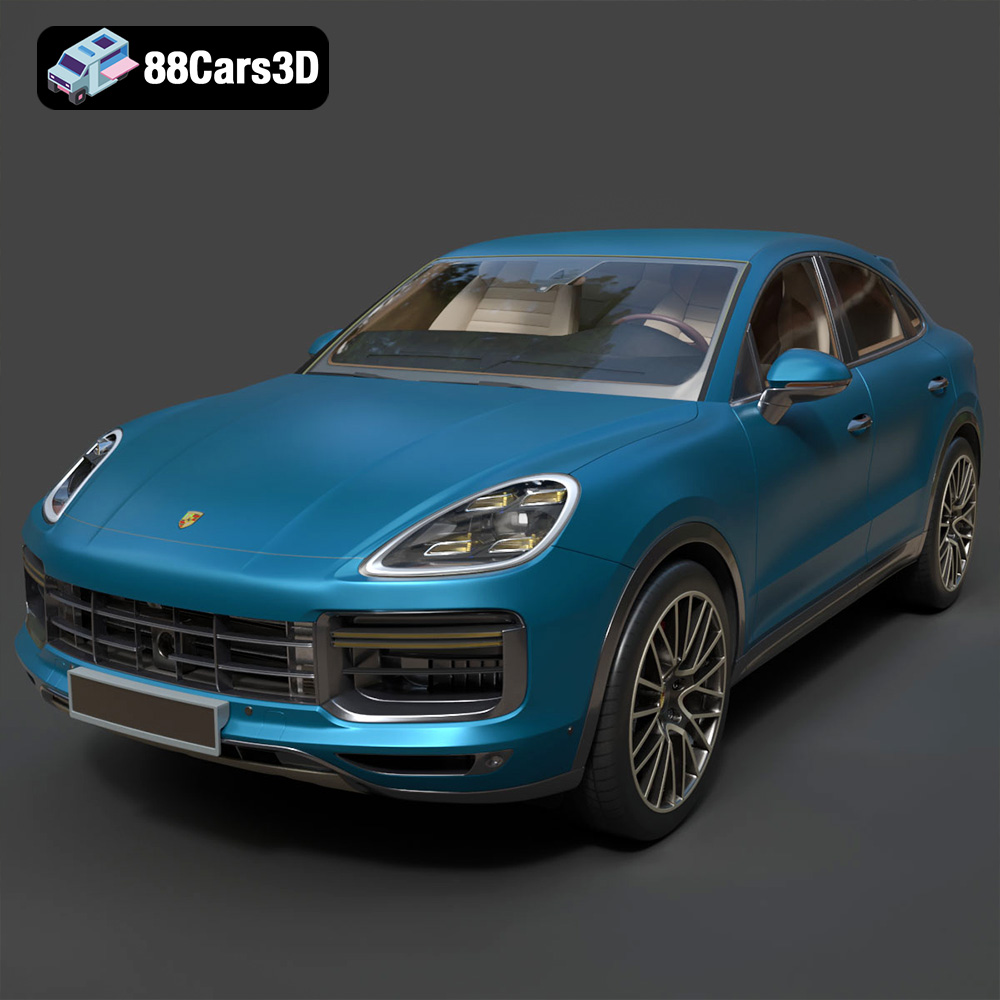
Imagine bringing the thrill of a luxury performance SUV to life within your next project. We’re talking about the Porsche Cayenne Turbo Coupe 2020 – a vehicle that embodies both raw power and sophisticated elegance. Capturing its distinctive silhouette, aggressive stance, and luxurious details in a 3D model is a significant undertaking, one that demands an understanding of complex geometry, advanced texturing, and intelligent optimization. Such a model isn’t just a static object; it’s a versatile digital asset designed to integrate seamlessly into a multitude of professional workflows, offering unparalleled realism and performance across various applications, from game development to high-end architectural visualization and even 3D printing. It represents the ultimate fusion of sports car performance and SUV versatility, now available as an exceptional 3D model at 88cars3d.com.
The choice of a 3D model file format is a critical decision that dictates compatibility, functionality, and performance across different software and pipelines. A high-quality asset, like the Porsche Cayenne Turbo Coupe 2020 3D model, is often provided in multiple formats to ensure maximum versatility. Understanding when and why to use each format is essential for any professional working with 3D content.
The .blend format is the native file type for Blender, an increasingly popular open-source 3D creation suite. A .blend file typically contains a complete Blender scene, including the 3D model, its materials (shader networks, textures), lights, cameras, animations, rigging, and even modifiers. It’s ideal for artists who primarily work in Blender, offering full editability and access to all the original scene data. This allows for deep customization, tweaking of topology, modifying materials, or extending animations without losing any fidelity. For the Porsche Cayenne model, receiving it in .blend format means having a fully editable, ready-to-render scene right out of the box for Blender users.
.fbx (Filmbox) is arguably the most widely adopted proprietary file format for 3D asset exchange, developed by Autodesk. Its strength lies in its ability to store not only geometry but also animation, rigging, materials (basic properties), lights, and cameras in a single file. This makes .fbx indispensable for pipelines involving multiple software packages, especially for game development (Unreal Engine, Unity), film VFX, and real-time applications. When working with the Porsche Cayenne Turbo Coupe 2020 model, .fbx is your go-to for importing into game engines or other DCC (Digital Content Creation) software like 3ds Max or Maya, ensuring that animations like wheel rotation or active spoiler deployment are preserved.
The .obj (Wavefront OBJ) format is a venerable and universally supported text-based format primarily used for transferring mesh data. It’s excellent for geometry transfer, supporting vertex positions, UV coordinates, normals, and material groups. However, .obj files typically do not store animation, rigging, or advanced material properties within the file itself (materials are often referenced by a separate .mtl file). Despite this limitation, its widespread compatibility makes it a safe choice for basic model exchange when fidelity of complex scene data isn’t paramount. For the Porsche Cayenne, an .obj ensures virtually any 3D software can open the mesh, making it a reliable fallback.
.glb (GLB format for glTF) is a relatively newer, but rapidly gaining traction, format optimized for efficient transmission and loading of 3D scenes and models in web and real-time applications. It’s a binary version of glTF (Graphics Language Transmission Format), designed to be a “JPEG for 3D.” .glb files pack all assets (geometry, textures, animations, and PBR materials) into a single, self-contained binary file, making it incredibly efficient for AR/VR experiences, online configurators, and browser-based 3D viewers. The Porsche Cayenne model in .glb is perfect for embedding in a website or deploying quickly into a mobile AR application, offering a streamlined workflow.
.stl (Stereolithography) is the de facto standard file format for 3D printing. It represents a 3D model as a collection of unconnected triangular facets, making it suitable for describing the surface geometry of an object. While it doesn’t store color, texture, or internal structure, its simplicity and widespread adoption by slicer software make it essential for physical prototyping. The Porsche Cayenne Turbo Coupe 2020 3D model in .stl format enables hobbyists and automotive collectors to bring the digital design into the physical world through 3D printing, following recommended print settings for optimal results.
.ply (Polygon File Format or Stanford Triangle Format) is another format for storing 3D data, particularly useful for scanned data, CAD applications, and scientific analysis. Like .obj, it defines an object as a list of polygons, but it can also store additional properties such as color, transparency, normals, texture coordinates, and even reliability information for each vertex and face. It’s a more flexible and precise mesh format than .obj in some contexts, offering a robust solution for detailed geometric analysis or complex data sets. For a detailed automotive model like the Cayenne, .ply might be used for specific technical evaluations or specialized rendering pipelines.
The .unreal format typically refers to assets packaged specifically for Unreal Engine, often as a UAsset. While not a direct file extension you’d commonly find as an import option in other DCCs, providing a model as “.unreal” implies it’s been pre-prepared and optimized for direct integration into an Unreal Engine project. This would include proper material setup (often PBR based), correct scale, collision meshes, LODs (Levels of Detail), and pivot points configured for animation. For the Porsche Cayenne, an .unreal package would mean a near plug-and-play experience for game developers, saving significant setup time.
Finally, the .max format is the native scene file for Autodesk 3ds Max, a leading software for 3D modeling, animation, and rendering in the architecture, engineering, and entertainment industries. Similar to .blend, a .max file contains all scene information, allowing full editability, complex rigging, advanced material setups (V-Ray, Corona, Arnold), and animation sequences. For artists and studios heavily invested in the 3ds Max ecosystem, the Porsche Cayenne model in .max format offers the highest degree of flexibility for customization, high-end rendering projects, or integrating into existing scenes with advanced lighting and effects.
Creating a truly premium 3D car model goes far beyond simply replicating a vehicle’s shape. It involves a meticulous balance of artistic detail, technical accuracy, and strategic optimization. The Porsche Cayenne Turbo Coupe 2020 3D model exemplifies this philosophy, crafted to meet the rigorous demands of professional production environments.
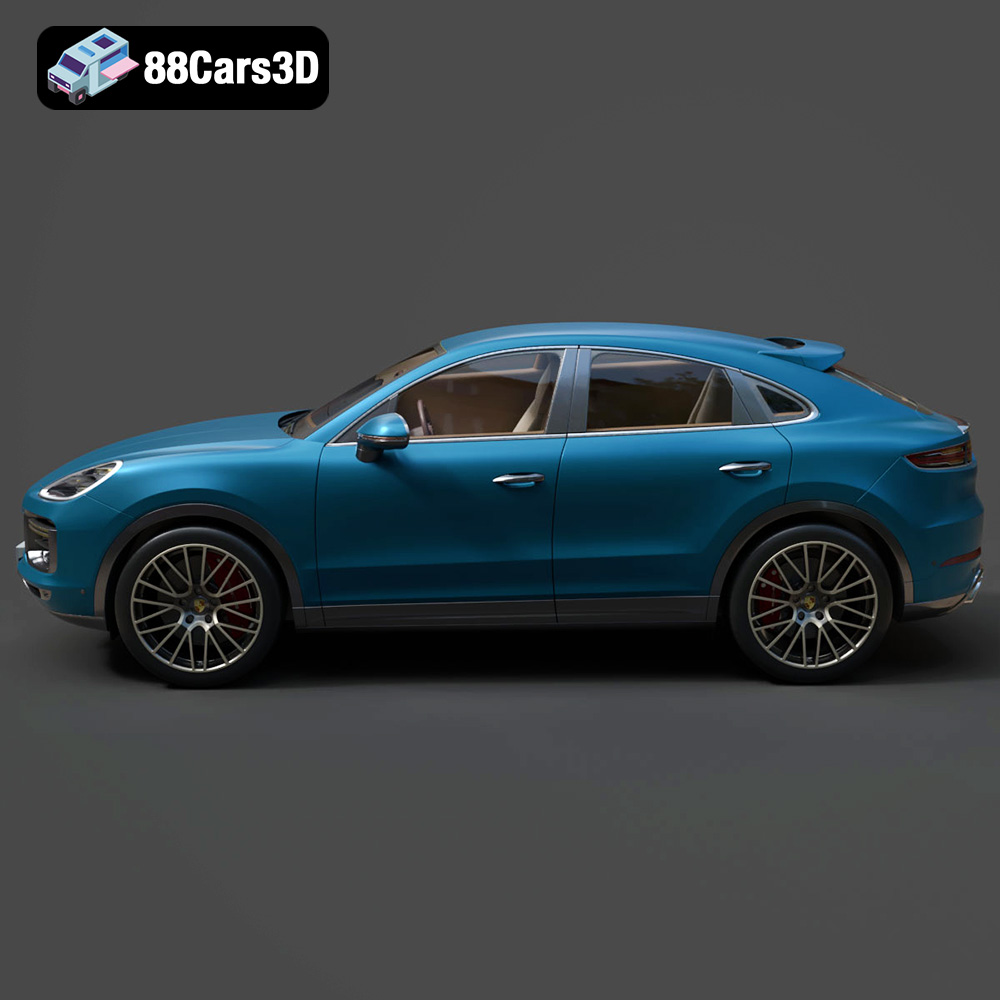
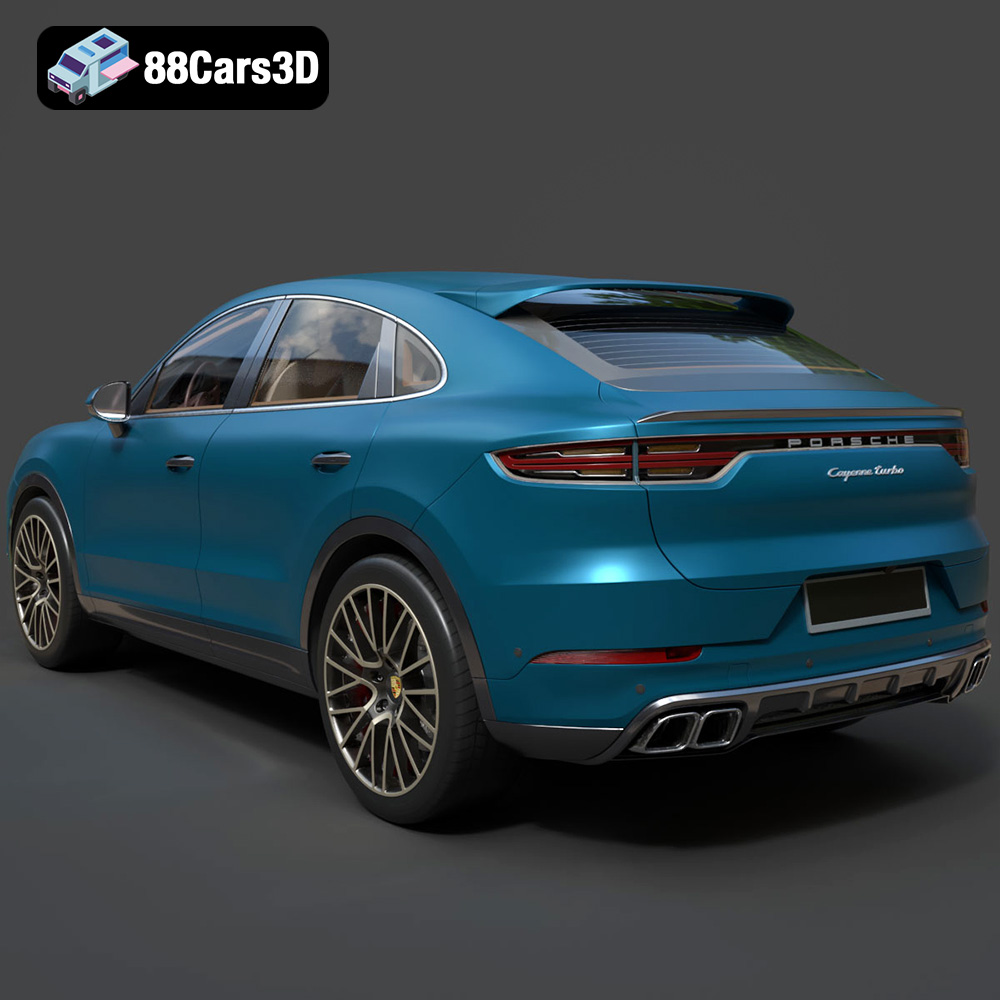
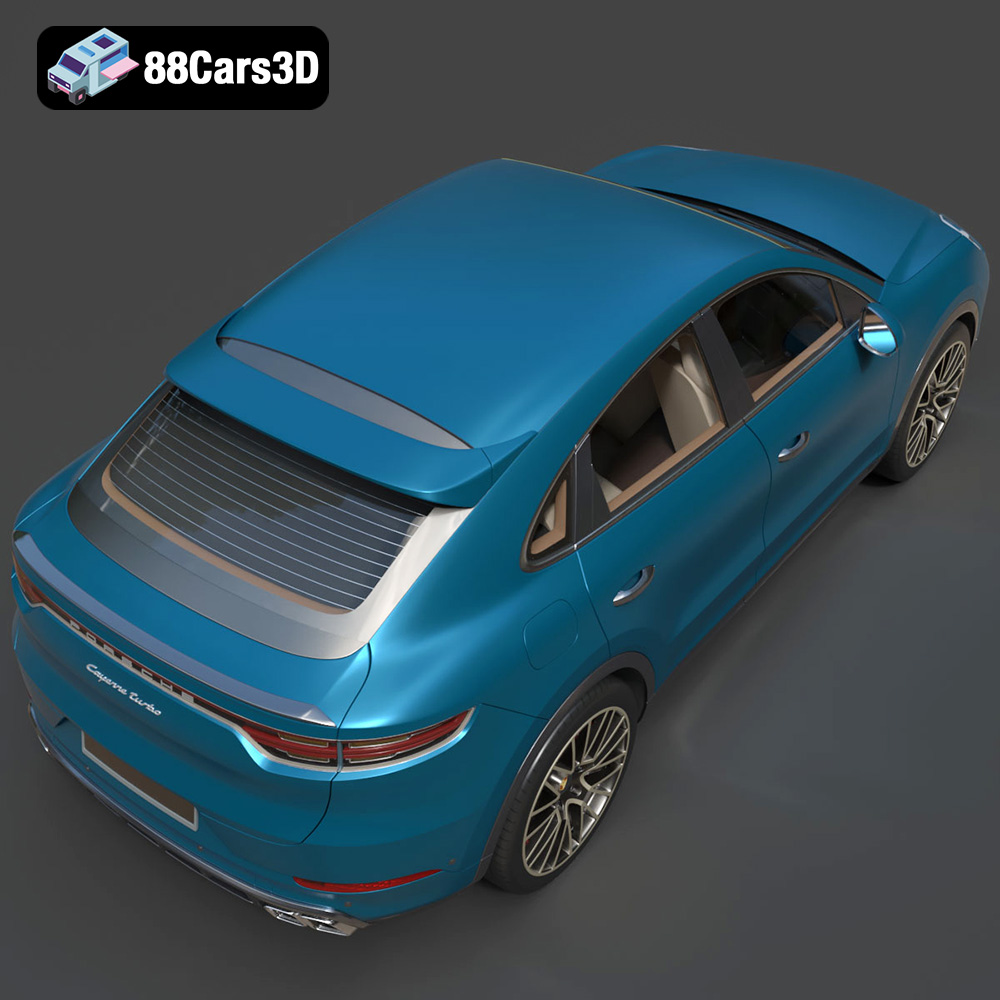
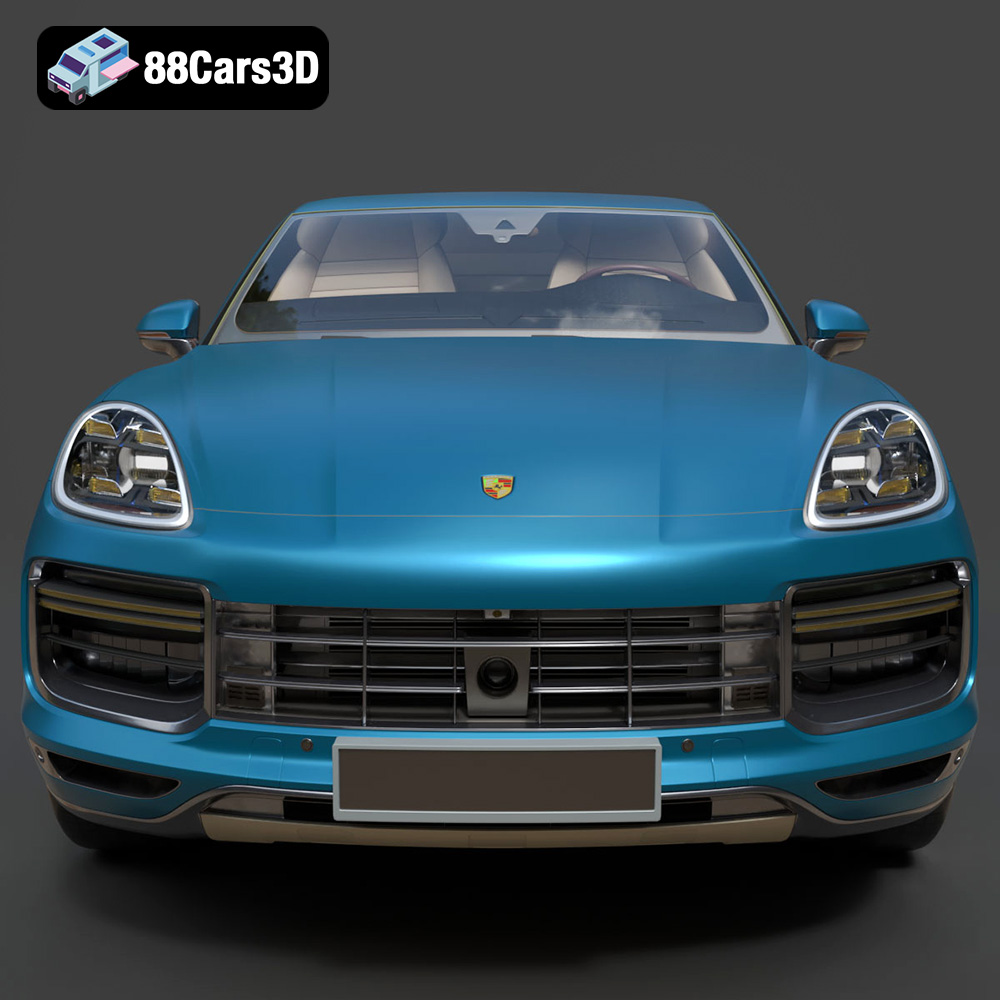
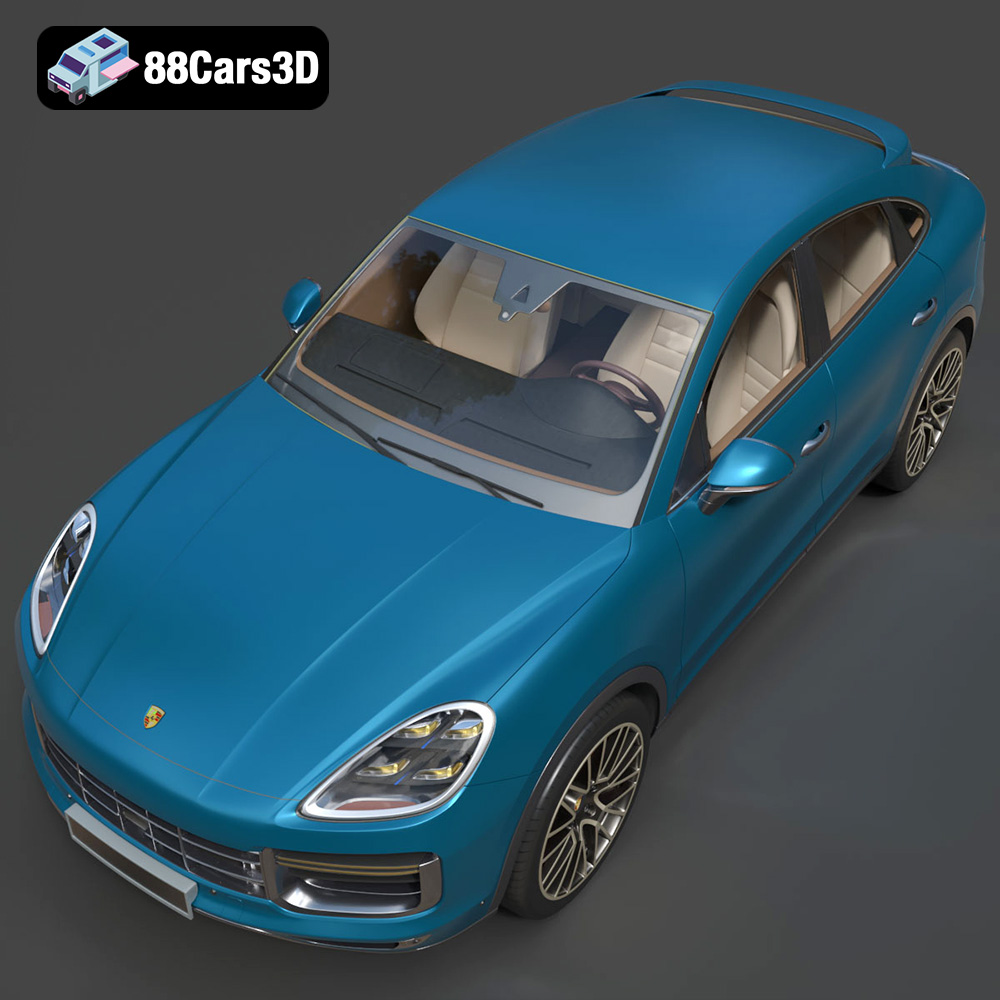
The exterior of the Porsche Cayenne Turbo Coupe 2020 is instantly recognizable, characterized by its athletic stance, dynamically sloping roofline, and signature Porsche design elements. This 3D model meticulously recreates every iconic visual element. From the prominent front air intakes that hint at the twin-turbo V8 beneath, to the aggressive rear diffuser and signature quad exhaust system, no detail is overlooked. The high-fidelity LED Matrix headlights and the continuous rear taillight bar are accurately modeled, ensuring realistic light scattering and reflections. Even the distinctive 22-inch alloy wheels, complete with highly detailed brake calipers and cross-drilled rotors, are rendered with precision. Furthermore, accurately modeled air suspension components and the undercarriage provide authenticity for close-up shots or even advanced physics simulations. The foresight to provide separate wheels, suspension, steering components, and the active rear spoiler allows for seamless animation, critical for showcasing dynamic vehicle behavior in games or cinematic sequences.
Stepping inside the virtual Porsche Cayenne Turbo Coupe 2020 reveals an equally impressive level of detail. The cockpit features authentic 18-way adaptive sport seats, complete with intricate stitching details that convey luxury and craftsmanship. The GT sports steering wheel, with its integrated drive mode selector, is faithfully reproduced. The Porsche Advanced Cockpit, including the detailed digital instrument clusters and infotainment screens, provides an immersive experience. The accurate center console, with its modeled shift lever, buttons, and climate controls, ensures that even close-up first-person views in gaming or virtual reality applications feel authentic. This optimized interior geometry is not just for show; it’s structured to perform efficiently in real-time environments while maintaining a high visual standard.
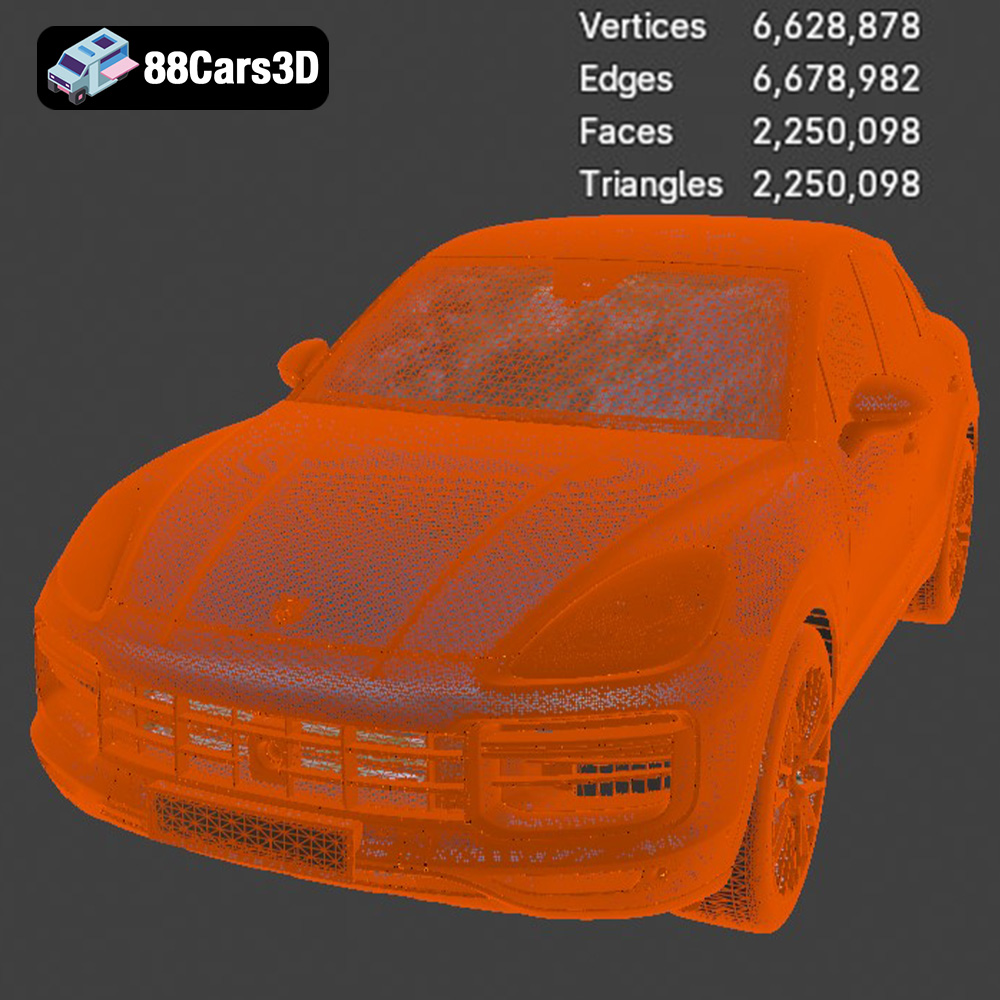
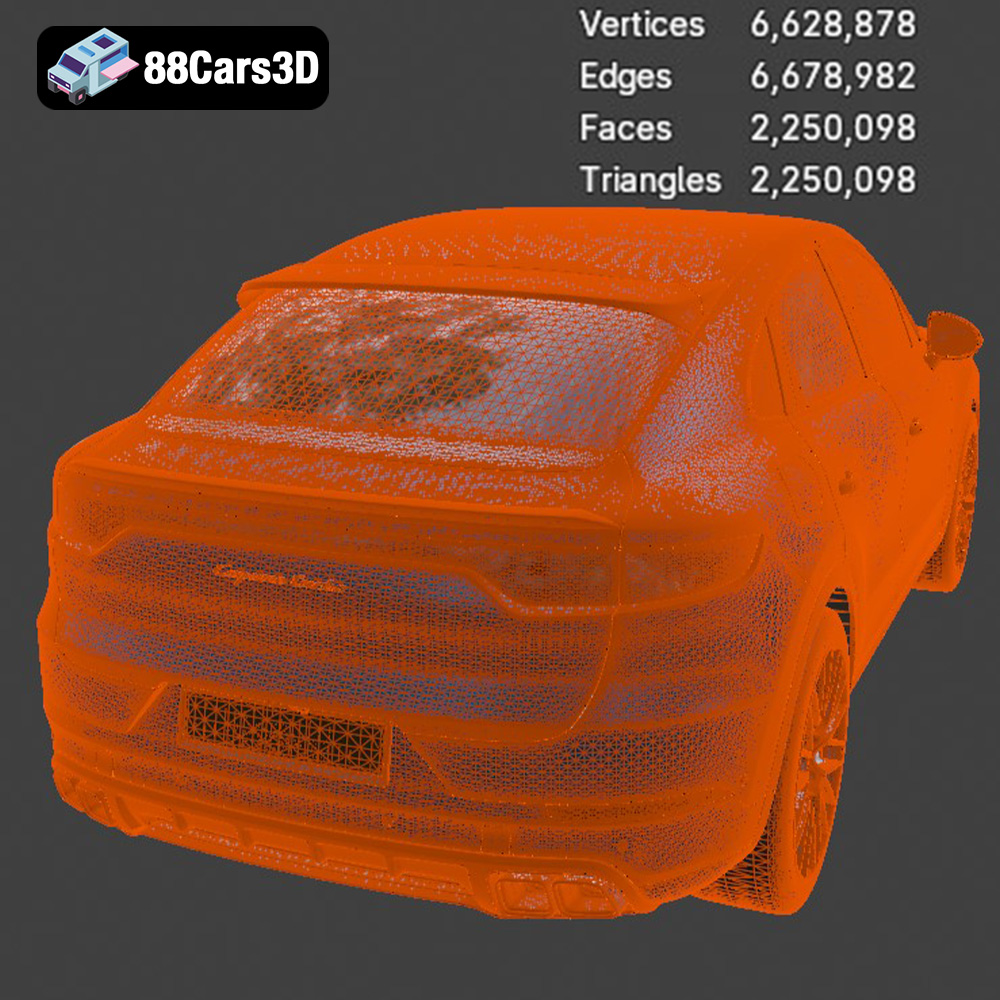
A truly professional 3D car model must strike a delicate balance between visual fidelity and performance. The Porsche Cayenne Turbo Coupe 2020 3D model achieves this with a game-ready and optimized triangle count of approximately 450,000. This polycount is strategically chosen to deliver spectacular visual realism in modern real-time engines like Unreal and Unity, without causing significant performance bottlenecks. Crucially, the model boasts real-world scale accuracy, based on the actual vehicle chassis, ensuring correct proportions and integration into any scene. Proper pivot setups for steering, wheel rotation, suspension travel, and active aero deployment are already configured, simplifying the animation process for animators and developers. This level of technical consideration ensures the model is fully compatible with major 3D software platforms and modern real-time rendering pipelines.
The world of game development demands assets that are not only visually stunning but also optimized for real-time performance. The Porsche Cayenne Turbo Coupe 2020 3D model is specifically engineered to excel in this demanding environment, making it an ideal choice for racing titles, open-world games, and vehicle simulators.
For developers utilizing Unreal Engine or Unity, integrating the Porsche Cayenne model is streamlined thanks to its robust .fbx and .unreal formats. The optimized ~450,000 triangle count is a sweet spot, allowing for high visual quality without crippling frame rates. Proper UV mapping (implied by high-quality models) ensures textures can be applied efficiently, and PBR (Physically Based Rendering) materials can be set up to react realistically to light. The separate, pivot-ready components (wheels, suspension, steering, active spoiler) are invaluable. In Unreal, these can be quickly set up with skeletal meshes or control rigs for dynamic suspension, steering, and active aerodynamic behaviors. Similarly, Unity’s robust physics and animation systems can leverage these individual components to create highly realistic and interactive vehicle dynamics. Developers can easily implement custom shaders for paint, glass, and intricate interior materials, taking advantage of the model’s clean topology to achieve photorealistic results even in real-time. This efficiency translates directly into faster development cycles and superior in-game experiences.
Beyond raw polycount, true game optimization involves several layers. The Porsche Cayenne model’s intelligent geometry ensures efficient light baking and shadow casting, critical for performance in complex game environments. Developers can also implement various Levels of Detail (LODs) to further optimize the model for different distances from the camera. For instance, a simpler mesh might be swapped in when the car is far away, preserving performance without sacrificing visual quality up close. Collision meshes, essential for realistic physics interactions, can be generated from the clean base mesh. Furthermore, the model’s accurate real-world scale is vital for consistent physics simulations and correct integration into existing game worlds. Whether populating a bustling open-world city with believable traffic or serving as the hero vehicle in a high-stakes racing simulator, this 3D model is built for prime performance.
In architectural visualization (arch-viz) and high-end commercial rendering, every detail contributes to the overall narrative and perceived realism. A stunning vehicle can transform a static scene into a dynamic, luxurious, and aspirational image. The Porsche Cayenne Turbo Coupe 2020 3D model is a perfect fit for these demanding applications.
Artists working in 3ds Max can leverage the included .max format, which provides a fully editable project, ready for advanced rendering with V-Ray, Corona Renderer, or Arnold. The model’s premium topology is engineered to reflect light precisely, creating breathtaking highlights and realistic surface distortions on its curved panels. This is crucial for capturing the unique sheen of automotive paint and the subtle reflections of surrounding environments. Blender users, similarly, can take advantage of the .blend file to integrate the model seamlessly into their Cycles or Eevee rendering workflows. Advanced material setups, incorporating intricate PBR textures for paint, glass, chrome, and carbon fiber accents, can be applied to achieve unparalleled photorealism. Imagine the Cayenne parked elegantly in front of a modern minimalist villa, its glossy surface reflecting the sunset, or driving dynamically through a bustling city street in a commercial animation. The model’s intricate interior also allows for stunning close-ups, perfect for depicting a luxurious lifestyle.
For brand campaigns and high-end lifestyle visualizations, the Porsche Cayenne Turbo Coupe 2020 3D model offers immense flexibility. Artists can easily change body colors to match iconic Porsche factory paints like Carmine Red or Lava Orange, or even apply custom wraps to suit specific branding requirements. Modifying tire textures between high-performance street tread and winter variants can adapt the scene to different seasons or narratives. Material finishes can be adjusted from matte to gloss, metallic, or carbon fiber accents, providing endless customization options to tailor the vehicle to any creative vision. Lighting can be adapted for daytime running lights, nighttime beams, and braking scenarios, adding dynamic realism to static renders or animated sequences. This level of detail and customization is essential for creating compelling visual narratives that resonate with target audiences, offering a compelling centerpiece for any luxury visualization project. Such high-quality 3D car models are available at 88cars3d.com, ensuring your projects stand out.
The utility of a meticulously crafted 3D model extends beyond traditional screen-based rendering and gaming. Emerging technologies like Augmented Reality (AR), Virtual Reality (VR), and 3D printing unlock entirely new possibilities for interaction and physical manifestation.
The Porsche Cayenne Turbo Coupe 2020 3D model is perfectly suited for immersive AR/VR experiences, thanks to its optimized geometry and support for formats like .glb. Imagine an interactive virtual showroom where prospective buyers can walk around the Cayenne, open its doors, explore the detailed interior, and even customize its features in real-time, all from the comfort of their home. Mobile AR experiences could allow users to place the virtual Cayenne in their driveway, seeing it rendered in real-world scale through their smartphone camera. The optimized interior geometry is particularly valuable for close-up first-person POV in VR applications, allowing users to sit inside the virtual cockpit and interact with the detailed digital instrument clusters and infotainment screens. These applications provide unprecedented levels of engagement and product understanding, making the Cayenne model an invaluable tool for automotive marketing and sales.
The versatility of the Porsche Cayenne Turbo Coupe 2020 3D model extends to the physical realm through 3D printing. The inclusion of the .stl format makes it readily convertible for display-scale hobbyists and automotive collectors who wish to bring this digital masterpiece into their tangible collections. To achieve the best results, specific print settings are recommended: a scale of 1:12, 1:18, or 1:24 provides a good balance between size and detail. For capturing the fine exterior details, resin printing is highly recommended over filament-based FDM methods. A layer height between 0.04–0.12 mm, wall thickness of 1.2–2.0 mm, and an infill of 20–30% are good starting points. Supports will be required for intricate parts like the exhaust, side mirrors, wheels, and aerodynamic features. For structural integrity, it’s best to print the main frame angled, with wheels and the active spoiler printed separately. Post-processing involving sanding, primer, and authentic Porsche factory colors with gloss or metallic finishes will elevate the printed model to a true display piece, a testament to the digital craftsmanship.
One of the most significant advantages of a professionally developed 3D model like the Porsche Cayenne Turbo Coupe 2020 is the inherent flexibility it offers for customization and creative expression. This isn’t just a static representation; it’s a dynamic canvas for artists and designers.
The core of customization lies in the ability to adapt the model to specific project needs. For the Porsche Cayenne model, this means effortlessly changing body colors to match iconic factory paints, or even applying unique custom wraps that align with a particular brand identity or artistic vision. Imagine a vibrant Lava Orange Cayenne for a high-energy racing game, or a sophisticated Chalk Grey for an architectural visualization. Beyond color, the model allows for detailed material adjustments. Artists can modify material finishes to create everything from a stealthy matte appearance to a dazzling metallic sheen or the intricate patterns of carbon fiber accents, instantly changing the vehicle’s character. Tire textures can be swapped between high-performance street treads for a sporty look or rugged winter tire variants for a more adventurous scene, reflecting different environments or narratives.
The flexibility extends to lighting scenarios. The model allows for the adaptation of lighting elements to simulate daytime running lights, realistic nighttime beams, and dynamic braking scenarios. This control over light interaction is crucial for conveying mood, time of day, and vehicle status in renders or real-time applications. Furthermore, the separate, animatable components—wheels, suspension, steering, and the active rear spoiler—provide a robust foundation for creating compelling animations and interactive experiences. Whether it’s demonstrating the Cayenne’s adaptive suspension in a virtual configurator or animating its active aerodynamics in a cinematic sequence, the model provides the necessary elements to bring these complex functionalities to life. This level of detailed design and modularity empowers artists to push creative boundaries and deliver highly engaging and realistic visual content.
The world of 3D modeling for automotive assets is a confluence of artistic vision and technical precision. A truly exceptional 3D car model, such as the Porsche Cayenne Turbo Coupe 2020, transcends mere visual representation, becoming a versatile, game-ready, and render-optimized asset capable of driving innovation across diverse industries. From hyper-realistic game environments to breathtaking architectural visualizations, immersive AR/VR experiences, and even tangible 3D prints, the quality and flexibility of the underlying 3D data are paramount.
This premium model, with its meticulously recreated exterior and interior features, intelligently optimized geometry, and comprehensive file format support (including .blend, .fbx, .obj, .glb, .stl, .ply, .unreal, and .max), is designed to accelerate professional workflows. It offers a perfect balance of visual fidelity and performance, empowering artists and developers to create compelling, high-impact content without compromise. For those seeking to elevate their projects with unparalleled realism and efficiency, investing in such a high-caliber 3D car model from reputable sources like 88cars3d.com is a decision that pays dividends in quality and creative freedom. Unleash the power of professional 3D car models and bring your automotive visions to life.
Experience the ultimate fusion of sports car performance and SUV versatility with the Porsche Cayenne Turbo Coupe 2020. This exceptional 3D model captures the striking athletic stance, the dramatically sloping coupe-style roofline, and the legendary Porsche design DNA. From its prominent front air intakes to the dynamic active rear spoiler and signature continuous LED taillight strip, every iconic visual element has been meticulously recreated to honor this high-performance luxury powerhouse.
Crafted with premium topology and an optimal triangle count, this 3D model delivers spectacular visual fidelity while maintaining exceptional game-ready optimization. The geometry is intelligently structured to reflect light precisely across its curved surfaces, making it a highly versatile asset for developers and artists. Whether you are building an interactive configurator or placing background traffic in a cinematic sequence, the model’s efficient polycount ensures smooth performance in modern real-time engines.
Perfect for open-world racing games, luxury architectural visualizations, high-end commercial rendering, and immersive virtual reality showrooms.
.blend, .fbx, .obj, .glb, .stl, .ply, .unreal, .max
Tags:
porsche, cayenne-turbo-coupe-2020, luxury-suv, performance-suv, car-3d-model, game-ready, low-poly, optimized, game-asset, rendering, vr-ar, blend, fbx, obj, glb, stl, ply, unreal, maxBMW 328 Mille Miglia Touring Coupe 3D Model 3D Printable STL
$39.99
.blend
.fbx
.glb
.luxury suv
.max
.obj
.ply
.porsche
.rendering
.stl
.unreal
car-3d-model
cayenne-turbo-coupe-2020
game asset
game-ready
low-poly
optimized
performance suv
VR/AR