Get 20% OFF All Premium 3D & STL Models!

In the dynamic world of digital content creation, the demand for highly detailed, professional-grade 3D assets continues to surge. From cinematic automotive advertisements to immersive virtual reality experiences and hyper-realistic video games, the foundation of compelling visual content often rests on the fidelity of its core models. Automotive design, in particular, requires an unparalleled level of precision and realism, pushing the boundaries of 3D modeling technology.
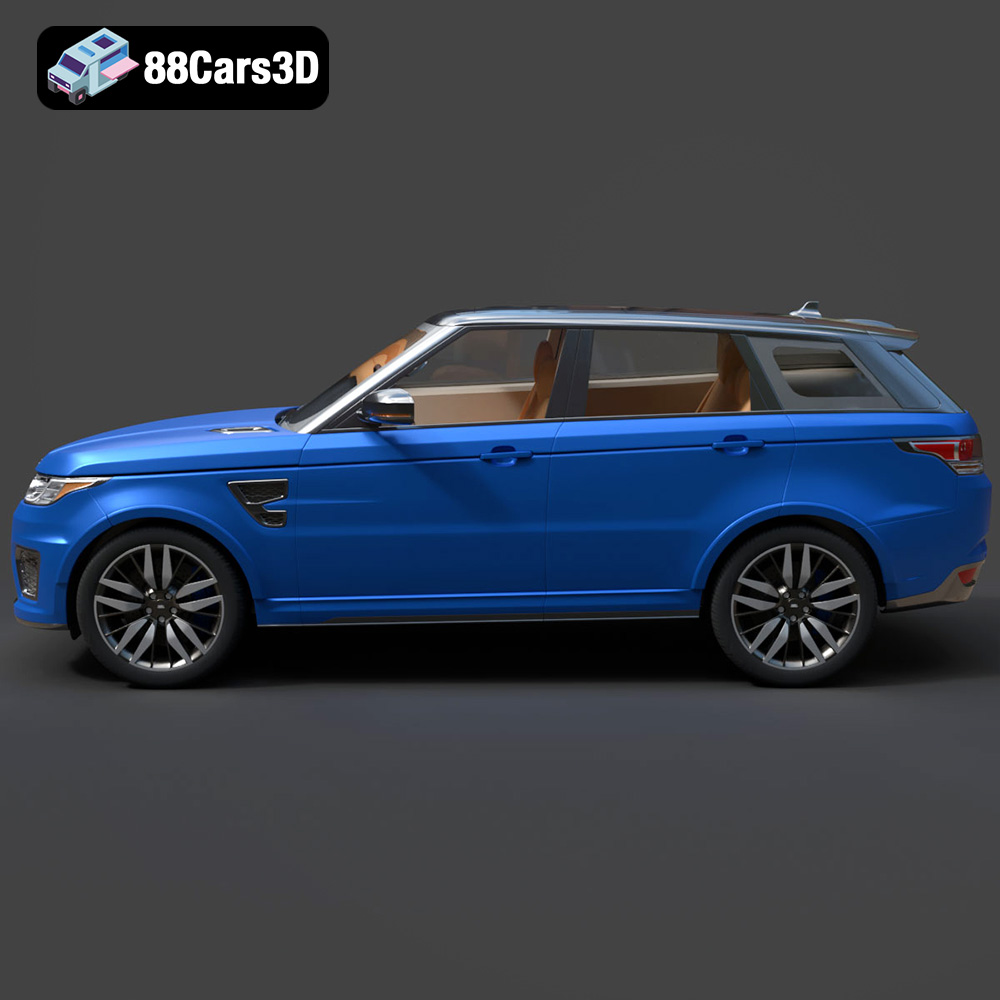
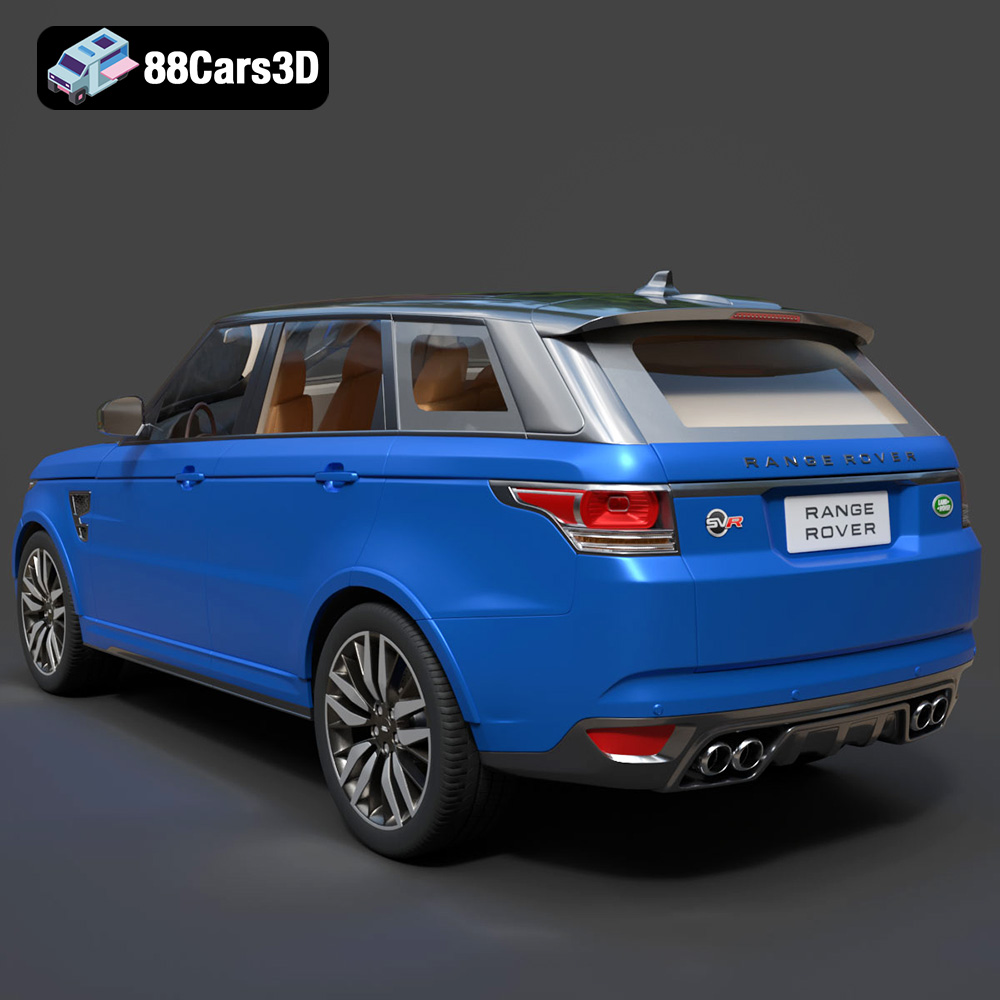
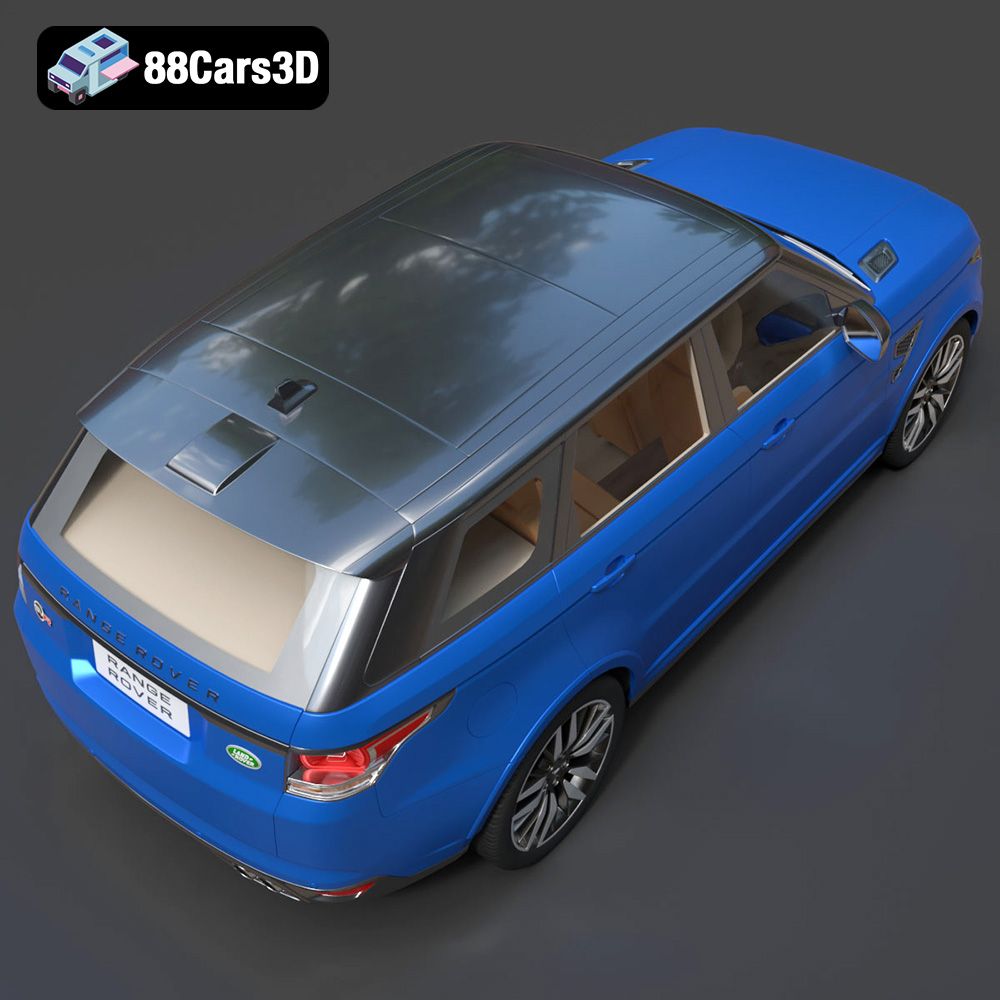
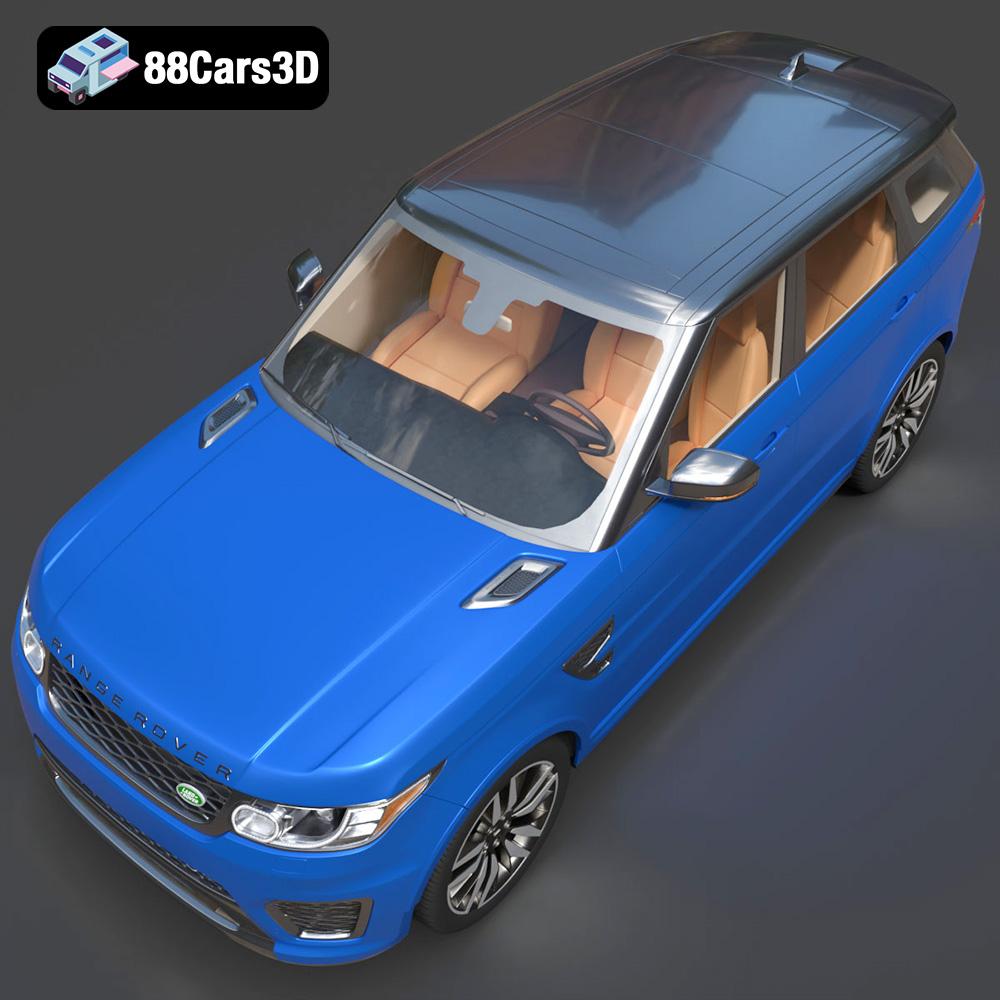
Among the myriad of vehicles that capture the imagination, the Land Rover Range Rover Sport SVR 2015 stands out as an icon of performance and luxury. Recreating such a vehicle in a digital environment demands meticulous attention to detail, ensuring every curve, every surface, and every interior element is faithfully represented. A truly exceptional 3D car model, like the Land Rover Range Rover Sport SVR 2015 3D model available on 88cars3d.com, is not just a visual replica; it’s a versatile foundation engineered for demanding professional applications.
This article will delve into the technical intricacies, diverse applications, and workflow advantages of incorporating premium 3D car models into your projects. We’ll explore how such assets empower creators across various industries, from achieving stunning automotive rendering to building robust game assets and interactive AR/VR experiences, ultimately streamlining production and elevating visual quality.
The versatility of any professional 3D asset, especially a complex one like a high-fidelity car model, is significantly determined by the range and quality of its available file formats. Each format is designed with specific use cases and technical considerations in mind, making it crucial to understand their strengths and limitations. The Land Rover Range Rover Sport SVR 2015 3D model, for instance, comes equipped with a comprehensive suite of formats, ensuring compatibility across virtually all professional pipelines.
The .blend format represents a complete Blender project file. This is ideal for users who primarily work within Blender and require full access to the model’s structure, materials, lighting, and animation setups. It offers maximum flexibility for modifications, custom rigging, and integrating the model seamlessly into existing Blender scenes. A .blend file typically includes the mesh data, UV layouts, PBR (Physically Based Rendering) materials, textures, and even camera and lighting configurations, providing a ready-to-render scene out of the box. This format is the cornerstone for artists looking to extend or adapt the model to specific artistic visions within the Blender ecosystem.
.fbx (Filmbox) is arguably the most widely adopted exchange format in 3D production, particularly for game development and real-time applications. It excels at transferring 3D models, animation, and scene data between different software packages like 3ds Max, Maya, Blender, Unity, and Unreal Engine. An .fbx file can encapsulate mesh data, skeletal animation, skinning, blend shapes, lights, cameras, and material assignments. Its robust support for hierarchies and transformations makes it perfect for integrating complex animated assets into game engines, where performance and data integrity are paramount. For the Land Rover SVR model, an .fbx offers a game-engine ready solution.
The .obj (Wavefront OBJ) format is a fundamental and widely supported format for exporting and importing geometric data. It primarily stores vertex positions, UV coordinates, normals, and polygon faces. While it doesn’t typically embed animation or complex material node setups, its simplicity and universal compatibility make it an excellent choice for cross-software model transfers when the focus is purely on the mesh geometry. Most 3D applications can import and export .obj files, making it a reliable fallback for ensuring broad accessibility of the Land Rover Range Rover Sport SVR 2015 3D model across various software platforms.
.glb (GLB, a binary version of glTF) is a relatively newer format specifically designed for efficient transmission and loading of 3D scenes and models in web browsers, AR (Augmented Reality), and VR (Virtual Reality) applications. It packs all necessary data—mesh, materials, textures, animations—into a single, self-contained file, minimizing HTTP requests and maximizing load speed. This optimization makes .glb an indispensable format for interactive web experiences, product configurators, and mobile AR apps, where performance and streamlined delivery are critical. For showcasing the Land Rover SVR in a web viewer or an AR experience, .glb is the go-to format.
.stl (Stereolithography) is the de facto standard format for 3D printing. It describes only the surface geometry of a 3D object using a collection of interconnected triangles. Unlike other formats, .stl files do not contain color, texture, or material information. Their primary function is to translate a 3D model into a format that 3D printers can interpret to fabricate a physical object layer by layer. For designers interested in rapid prototyping or creating physical scale models of the Land Rover Range Rover Sport SVR 2015, the .stl format is essential.
.ply (Polygon File Format) is another format for storing 3D data, particularly suited for representing scanned data from 3D digitizers. It can store not only the geometry but also properties like color, transparency, normals, texture coordinates, and confidence values associated with each vertex or face. It’s often used in scientific, engineering, and CAD applications where precise mesh data for analysis or reconstruction is required. While less common for general visualization than .fbx or .obj, its ability to store detailed mesh properties can be invaluable for specific technical applications.
The .unreal format, or more precisely, assets pre-configured for Unreal Engine, signifies a model that has been specifically processed and optimized for direct integration into Epic Games’ powerful real-time engine. This often means the model comes with proper material setups using Unreal’s PBR system, correct UV channels for lightmapping, appropriate collision meshes, and sometimes even LOD (Level of Detail) setups. This dedicated format greatly reduces the setup time for developers, allowing them to drag and drop the Land Rover Range Rover Sport SVR 2015 3D model directly into their Unreal projects and begin working immediately.
The .max format is the native file type for Autodesk 3ds Max, a leading software for 3D modeling, animation, and rendering in architectural visualization, automotive design, and film. Like .blend for Blender, a .max file preserves all scene information, including geometry, modifiers, materials (often V-Ray or Corona setups), lighting, cameras, and animation keyframes. It offers the highest level of fidelity and editability for artists working within the 3ds Max environment, making it perfect for complex rendering setups, detailed animations, and integration into existing 3ds Max pipelines.
The availability of these diverse formats for the Land Rover Range Rover Sport SVR 2015 3D model ensures that whether you’re building a game, rendering a cinematic shot, developing an AR experience, or even 3D printing a prototype, you have the right version of the asset optimized for your specific needs.
A high-quality 3D car model, such as the Land Rover Range Rover Sport SVR 2015 available on 88cars3d.com, is far more than just a visually appealing mesh. It’s a meticulously engineered digital asset built on a foundation of clean geometry, optimized topology, and expertly crafted materials, all designed for robust performance across various demanding applications.
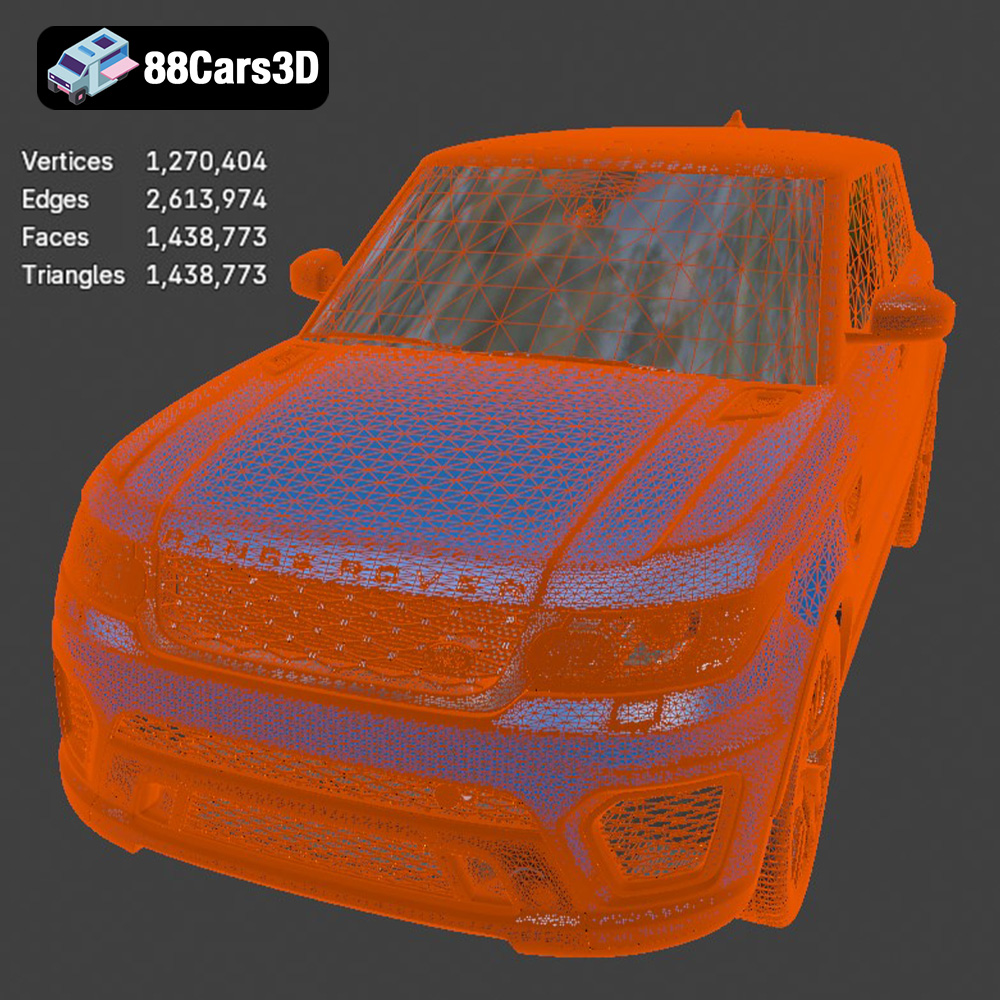
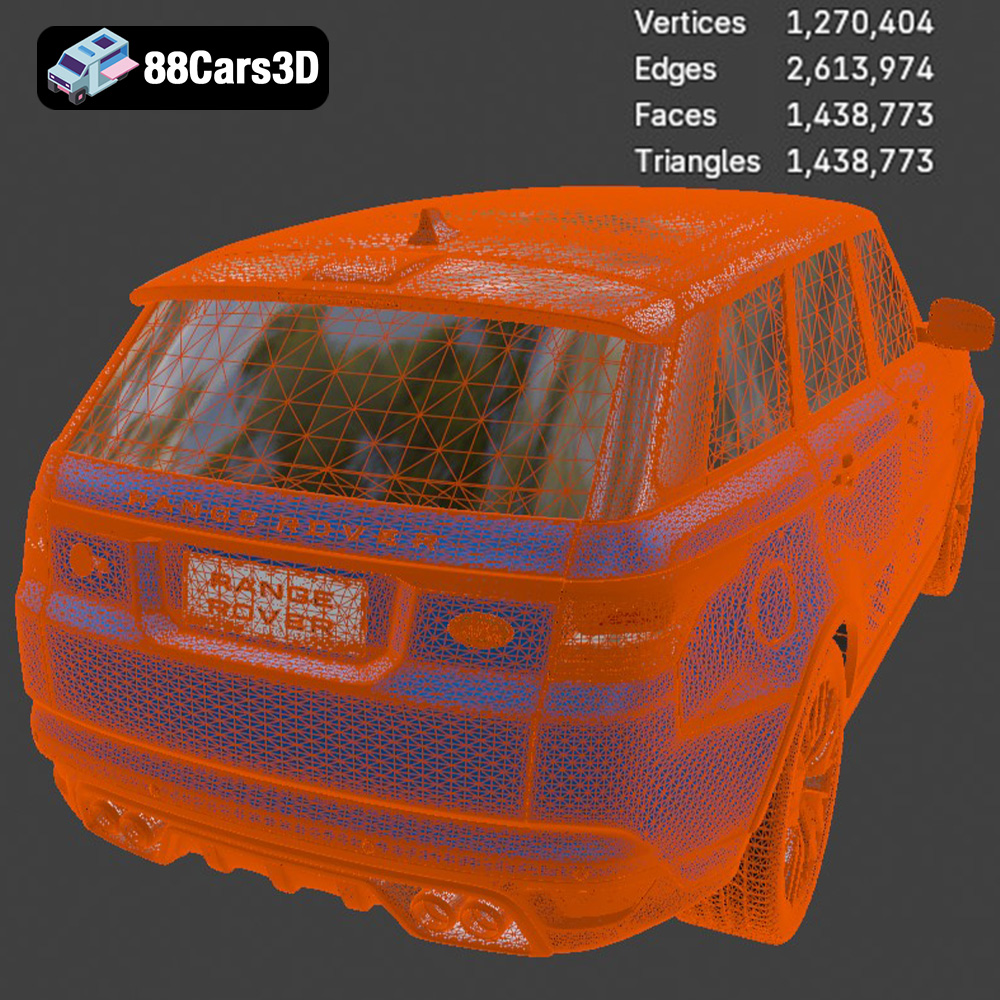
At the heart of any professional 3D model is its geometry. “Clean geometry” refers to a mesh that is free from artifacts like non-manifold edges, inverted normals, or overlapping faces, which can cause rendering issues or problems during export. More importantly, “optimized topology” means the arrangement of polygons (faces, edges, vertices) is efficient and structured. This typically involves a quad-based workflow, where surfaces are composed primarily of four-sided polygons. This ensures smooth subdivision, predictable deformation for animation, and clean UV unwrapping.
For a complex object like a car, optimized polygon count is crucial. While a highly detailed model needs a significant number of polygons to capture intricate curves and sharp edges, excessive poly counts can cripple real-time performance and increase rendering times. A professional model strikes a balance, providing enough detail for close-up shots while remaining performant. The Land Rover Range Rover Sport SVR 2015 3D model is crafted with this balance in mind, ensuring it looks stunning without being overly heavy.
UV unwrapping is the process of flattening the 3D surface of a model into a 2D space, allowing textures to be accurately applied. For a vehicle with complex surfaces, proper UV mapping is critical for preventing texture stretching or distortion. Good UVs are organized, non-overlapping, and efficiently utilize the texture space. This is essential for applying realistic paint finishes, detailed logos, and interior textures.
Realistic materials, especially Physically Based Rendering (PBR) materials, elevate a model’s visual fidelity. PBR materials simulate how light interacts with real-world surfaces by using maps like albedo (base color), roughness, metallic, normal, and ambient occlusion. These maps, combined with the underlying geometry and proper lighting, allow for flawless reflections, accurate light scattering, and lifelike surface qualities, whether it’s the glossy car paint, the matte plastic trim, or the reflective chrome elements of the Range Rover SVR.
Professional car models often feature modular components, allowing for easy separation and manipulation of parts like doors, wheels, and headlights. This modularity is invaluable for animation, customization, or damage simulation. Furthermore, for interactive applications or cinematic sequences, the ability to rig components (e.g., steering, suspension) is a significant advantage. While a base model might not come rigged, its clean topology makes rigging a straightforward process for experienced users.
Automotive rendering is an art form that blends technical proficiency with artistic vision. It demands the highest quality 3D car models to achieve photorealism, and assets like the Land Rover Range Rover Sport SVR 2015 3D model are specifically engineered to meet this challenge head-on.
For many automotive visualization studios, 3ds Max remains a cornerstone, often paired with rendering engines like V-Ray or Corona Renderer. The .max file format provides a native, fully editable scene within 3ds Max, allowing artists complete control over every aspect. The workflow typically involves:
The Land Rover Range Rover Sport SVR 2015 3D model’s clean geometry and realistic materials ensure that these rendering processes yield flawless reflections and accurate lighting interactions, essential for compelling visual storytelling.
Blender has emerged as a formidable contender in the rendering space, with its powerful Cycles and real-time Eevee engines. The .blend file for the SVR model allows Blender artists to dive straight into a ready-to-render setup. The process mirrors 3ds Max:
Whether for high-end marketing visuals or detailed engineering reviews, a professional 3D car model from 88cars3d.com provides the fidelity necessary to produce breathtaking automotive renders.
The world of interactive entertainment and real-time visualization demands 3D assets that are not only visually impressive but also highly optimized for performance. High-quality 3D car models are central to creating believable virtual worlds, and the Land Rover Range Rover Sport SVR 2015 3D model is built with these exacting standards in mind.
Game development requires a careful balance between visual quality and computational efficiency. Assets need to be “game-ready,” meaning they are optimized to run smoothly at high frame rates. For the Land Rover SVR model, this optimization includes:
The provision of game-engine ready formats like .fbx and .unreal with the Land Rover Range Rover Sport SVR 2015 3D model significantly accelerates the integration process for game developers, allowing them to focus on gameplay and user experience rather than asset preparation.
Augmented Reality (AR) and Virtual Reality (VR) push the boundaries of immersion, demanding highly optimized and visually convincing 3D content. A detailed car model like the SVR becomes a centerpiece for various AR/VR applications:
The .glb format, optimized for web and mobile AR/VR, ensures that the Land Rover Range Rover Sport SVR 2015 3D model can be efficiently deployed across these platforms, delivering stunning realism within the performance constraints of mobile devices and VR headsets.
While often associated with stunning visuals, the utility of high-fidelity 3D car models extends far beyond rendering and real-time graphics. Precision models like the Land Rover Range Rover Sport SVR 2015 are invaluable tools in engineering, simulation, and even physical prototyping.
In product development and engineering, 3D models serve as critical components for visualization, analysis, and simulation. Although a model optimized for rendering might not be a CAD-perfect representation, its clean geometry and accurate proportions make it highly suitable for various technical applications:
The meticulous detail of the Land Rover Range Rover Sport SVR 2015 3D model ensures it meets the demanding requirements of such technical projects, providing a robust base for visual simulation and analysis.
The advent of accessible 3D printing has opened new avenues for designers and enthusiasts alike. A well-constructed 3D model can be transformed from a digital asset into a tangible object, offering significant benefits:
The inclusion of the .stl format specifically caters to 3D printing. It ensures that the model is ready to be processed by slicing software, bridging the gap between the digital and physical realms and allowing creators to bring the iconic SVR design into reality.
The journey from concept to a polished final product in 3D content creation is often fraught with challenges, not least of which is the time-consuming process of asset creation. Building a high-fidelity car model from scratch can take hundreds of hours for even experienced artists, involving extensive blueprint research, detailed modeling, complex UV mapping, and intricate material development. This is where specialized marketplaces like 88cars3d.com prove invaluable.
By providing pre-made, professionally crafted 3D car models, 88cars3d.com empowers studios and individual artists to dramatically accelerate their production pipelines. Instead of dedicating precious time and resources to asset creation, creators can acquire ready-to-use models, allowing them to focus on the more artistic and technical aspects of their projects—lighting, animation, scene composition, and interactive elements.
The Land Rover Range Rover Sport SVR 2015 3D model is a prime example of the quality and versatility offered. It arrives with clean geometry, optimized for various uses, and includes a comprehensive suite of file formats (.blend, .fbx, .obj, .glb, .stl, .ply, .unreal, .max) to ensure compatibility with virtually any professional workflow. Whether you’re a game developer needing a high-performance asset for your latest title, an architectural visualizer integrating vehicles into a scene, or an automotive studio requiring realistic models for rendering, investing in a high-quality asset from 88cars3d.com is a strategic decision that saves time, reduces costs, and elevates the final output.
This commitment to quality and flexibility allows professionals to spend more time iterating on creative ideas and less time on foundational modeling, ultimately leading to more polished and impactful digital experiences.
In the evolving landscape of 3D content creation, the demand for precision and realism is unwavering. High-quality 3D car models are not merely decorative elements; they are foundational assets that drive innovation across industries. From producing breathtaking automotive rendering and dynamic game assets to creating immersive AR/VR experiences and facilitating engineering simulations, a well-crafted digital vehicle like the Land Rover Range Rover Sport SVR 2015 3D model is indispensable.
Understanding the technical specifications—from clean geometry and optimized poly counts to diverse file formats and PBR materials—is key to harnessing the full potential of these assets. By leveraging expertly pre-built models, artists and developers can streamline their workflows, save valuable time, and achieve unparalleled visual fidelity in their projects.
For those seeking to elevate their digital creations with premium automotive assets, 88cars3d.com offers a curated selection of high-quality 3D car models, including the iconic Land Rover Range Rover Sport SVR 2015. Investing in such an asset is an investment in efficiency, quality, and the boundless possibilities of digital design.
Experience unparalleled realism with the Land Rover Range Rover Sport SVR 2015 3D model. Designed to meet the demanding requirements of modern digital environments, this asset delivers an exceptionally accurate representation of the iconic performance SUV, capturing its aggressive styling, aerodynamic contours, and detailed interior. Built with professional quality in mind, the model features clean geometry, an optimized polygon count, and realistic materials. Every curve and surface has been meticulously crafted to ensure flawless reflections and lighting interactions, making it suitable for close-up shots and demanding technical projects. This versatile 3D model is perfect for a wide range of professional applications, including game development, automotive rendering, AR/VR experiences, simulation environments, and commercial visualizations. Available file formats include: .blend – Editable Blender file with materials and lighting setup; .fbx – Game-engine ready format for Unreal Engine and Unity; .obj – Standard 3D model format compatible with all major software; .glb – Optimized for AR/VR and web-based visualization; .stl – Suitable for 3D printing and prototyping; .ply – Detailed polygon mesh for analysis and visualization; .unreal – Pre-configured for Unreal Engine use; .max – Editable 3ds Max file for rendering and animation.
$39.99
.arvr
.blend
.car3dmodel
.fbx
.gameasset
.glb
.landrover
.luxurysuv
.max
.obj
.ply
.rangerover
.rendering
.simulation
.sport
.sportSUV
.stl
.svr
.unreal
SUV