Get 20% OFF All Premium 3D & STL Models!

In the exhilarating world of 3D design and digital content creation, the demand for highly detailed, performance-optimized, and versatile assets is ever-growing. From the hyper-realistic environments of AAA games to immersive virtual showrooms and cinematic automotive visualizations, the quality of a 3D model can make or break a project. Among the myriad of digital vehicles, few command as much attention and passion as the Ford Mustang GT. It’s a symbol of raw power, iconic design, and a testament to American muscle engineering. Capturing this essence in a digital format requires precision, expertise, and a deep understanding of modern 3D pipelines.
Today, we’re diving deep into what makes a premium 3D car model truly exceptional, using the Ford Mustang GT 3D Model available at 88cars3d.com as our prime example. This isn’t just a static mesh; it’s a meticulously crafted digital twin designed to accelerate your projects, whether you’re developing a cutting-edge racing game, rendering a striking brand campaign, or even exploring the possibilities of 3D printing. We’ll explore the technical intricacies, workflow integrations, and creative potential that such a high-fidelity asset unlocks for professionals and enthusiasts alike.
The choice of file format is often the first critical decision when working with 3D car models. Each format serves specific purposes, offering unique advantages in terms of compatibility, data preservation, and workflow efficiency. Understanding these distinctions is paramount for any professional dealing with automotive rendering, game assets, or advanced visualization.
The .blend format is the native file type for Blender, the popular open-source 3D creation suite. When you download a .blend file, you’re not just getting a mesh; you’re receiving a fully editable Blender scene. This includes all materials, textures, lighting setups, cameras, animations, rigging, and even modifiers applied to the model. For artists deeply integrated into the Blender ecosystem, this offers unparalleled flexibility. You can dissect every aspect of the Ford Mustang GT 3D Model, understanding its construction, material hierarchy, and how its PBR (Physically Based Rendering) textures are applied. It’s ideal for those who want to tweak, re-rig, animate, or render directly within Blender, leveraging its robust Cycles or Eevee render engines.
.fbx (Filmbox) is a proprietary file format owned by Autodesk and is arguably the most widely adopted format for exchanging 3D data between different software applications, especially in game development and animation. It’s particularly ideal for Unreal Engine, Unity, and other real-time pipelines because it efficiently stores not only geometry but also crucial data like animations, rigs, skinning, blend shapes, lights, and cameras. The Ford Mustang GT 3D Model in .fbx format is perfect for direct import into game engines, preserving crucial information such as proper pivot points for wheels and steering, allowing for immediate integration into vehicle physics systems. Its binary nature makes it fast to load and process.
The .obj (Wavefront OBJ) format is a universal standard known for its simplicity and wide cross-software compatibility. It primarily stores geometry (vertices, normals, texture coordinates) and references to external material (.mtl) files. While it doesn’t support advanced features like animation or rigging, its widespread support makes it an excellent choice for basic mesh exchange when you need maximum compatibility. If you’re importing the Ford Mustang GT 3D Model into a less common 3D application or simply need the raw geometry for sculpturing or retopology, .obj is a reliable fallback.
.glb (GLB format, derived from glTF 2.0) is a relatively newer, but rapidly growing format optimized for AR (Augmented Reality), VR (Virtual Reality), and browser-based display. It’s a binary container that bundles geometry, materials, textures, and even animations into a single file, making it incredibly efficient for web delivery and real-time applications where file size and load times are critical. For showcasing the Ford Mustang GT 3D Model in an interactive web viewer or deploying it in a mobile AR experience, .glb offers superior performance and integration capabilities.
.stl (Stereolithography) is the de facto standard file format for 3D printing. It represents a 3D model as a collection of unconnected triangles, defining only the surface geometry without color or texture information. While it’s not suitable for rendering or animation, its simplicity makes it universally compatible with 3D slicers and printers. The Ford Mustang GT 3D Model in .stl format is specifically designed for physical output, allowing hobbyists and professionals to bring the digital design into the real world. Precise clean-up and manifold geometry are crucial for successful .stl prints.
.ply (Polygon File Format or Stanford Triangle Format) is another popular format for storing 3D data, particularly useful for scanned data, CAD, and scientific analysis. Like .obj, it can store geometry, but it also supports additional properties like color per vertex, transparency, and even specific types of textures. It’s often used where precision and additional data attributes beyond basic geometry are required. For engineers or designers needing to perform specific analyses on the Ford Mustang GT’s structure, .ply can be a robust option.
The .unreal format isn’t a standalone file type but rather indicates an asset that is specifically prepared and optimized for direct import into Unreal Engine. This often implies that the .fbx or source files have been meticulously organized, scaled, and configured with Unreal’s specific import settings in mind, potentially including pre-configured materials, collision meshes, or even basic blueprints. When a model is provided in an “Unreal-ready” state, it drastically reduces setup time, allowing developers to immediately integrate the Ford Mustang GT into their real-time environments with minimal fuss.
Finally, .max is the native project file format for Autodesk 3ds Max, a leading software in architectural visualization, animation, and game development. Similar to .blend, a .max file contains the complete scene, including geometry, materials, lighting, cameras, animation, and any scene-specific settings. For users of 3ds Max, having the Ford Mustang GT 3D Model in this format offers the highest level of editability and allows access to all the original scene setups, modifiers, and rendering configurations, making it ideal for high-fidelity automotive rendering and complex animation projects.
The true value of a premium 3D car model lies in its meticulous attention to detail, accurately replicating every curve, component, and characteristic of its real-world counterpart. The Ford Mustang GT 3D Model from 88cars3d.com exemplifies this principle, offering a digital rendition that is both visually stunning and technically precise.
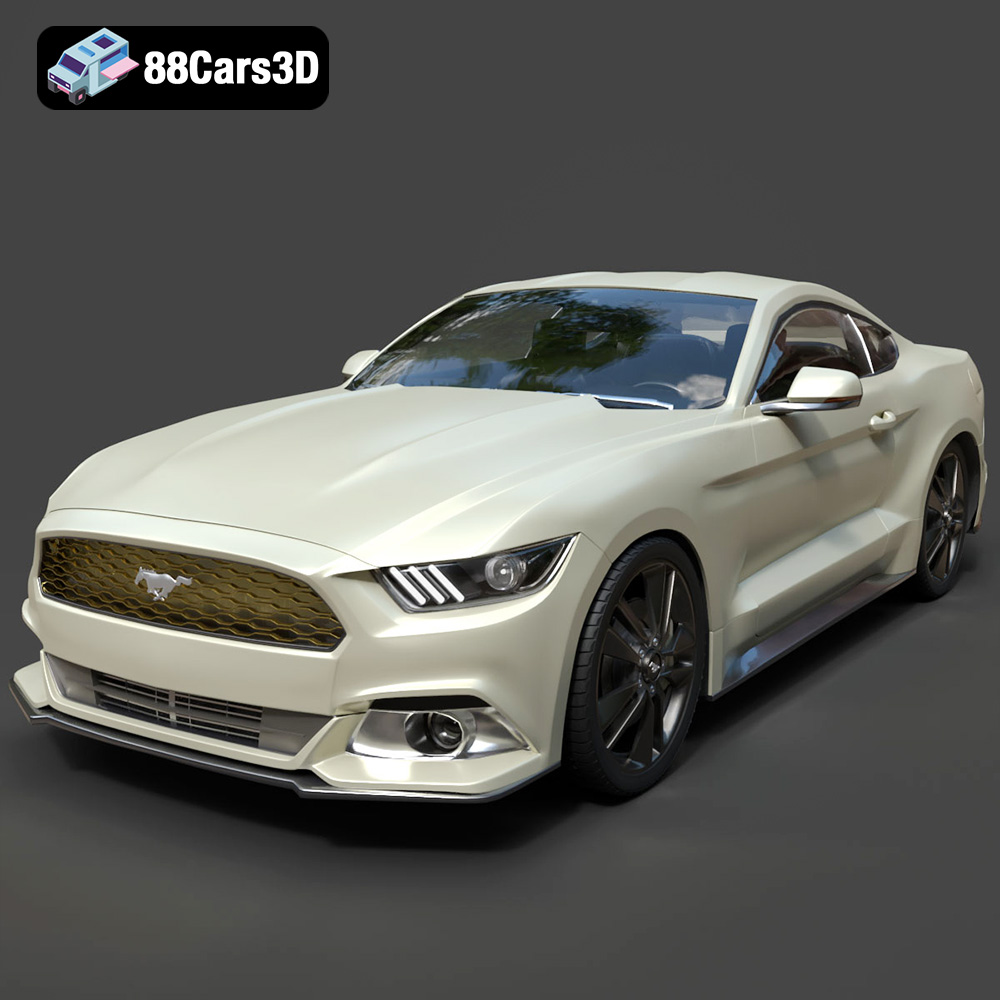
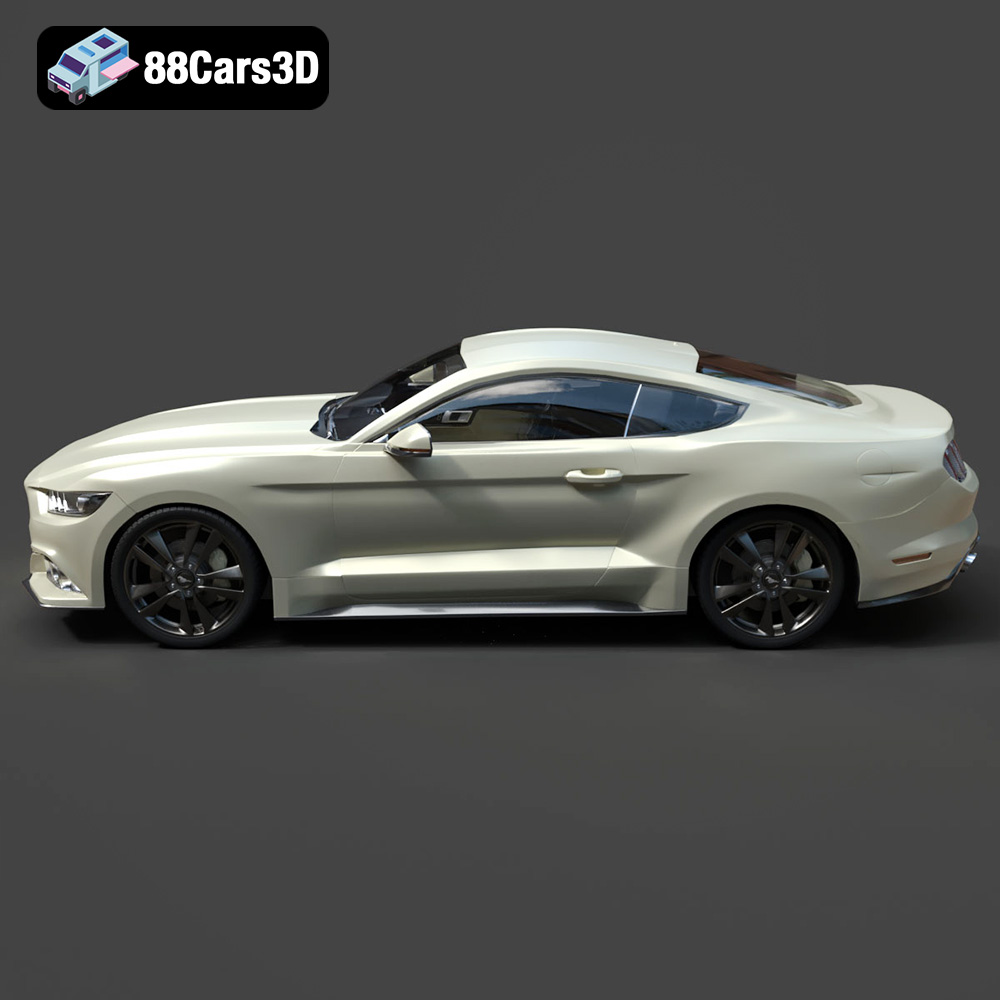
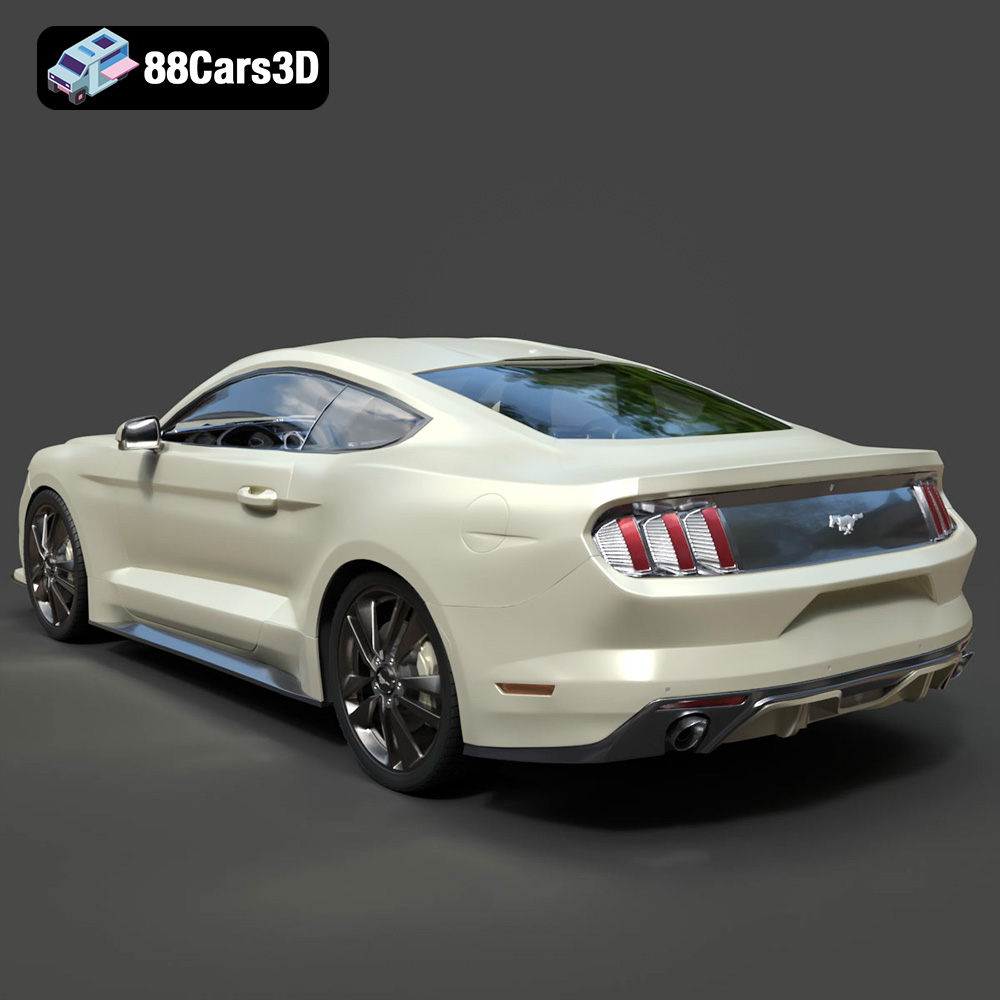
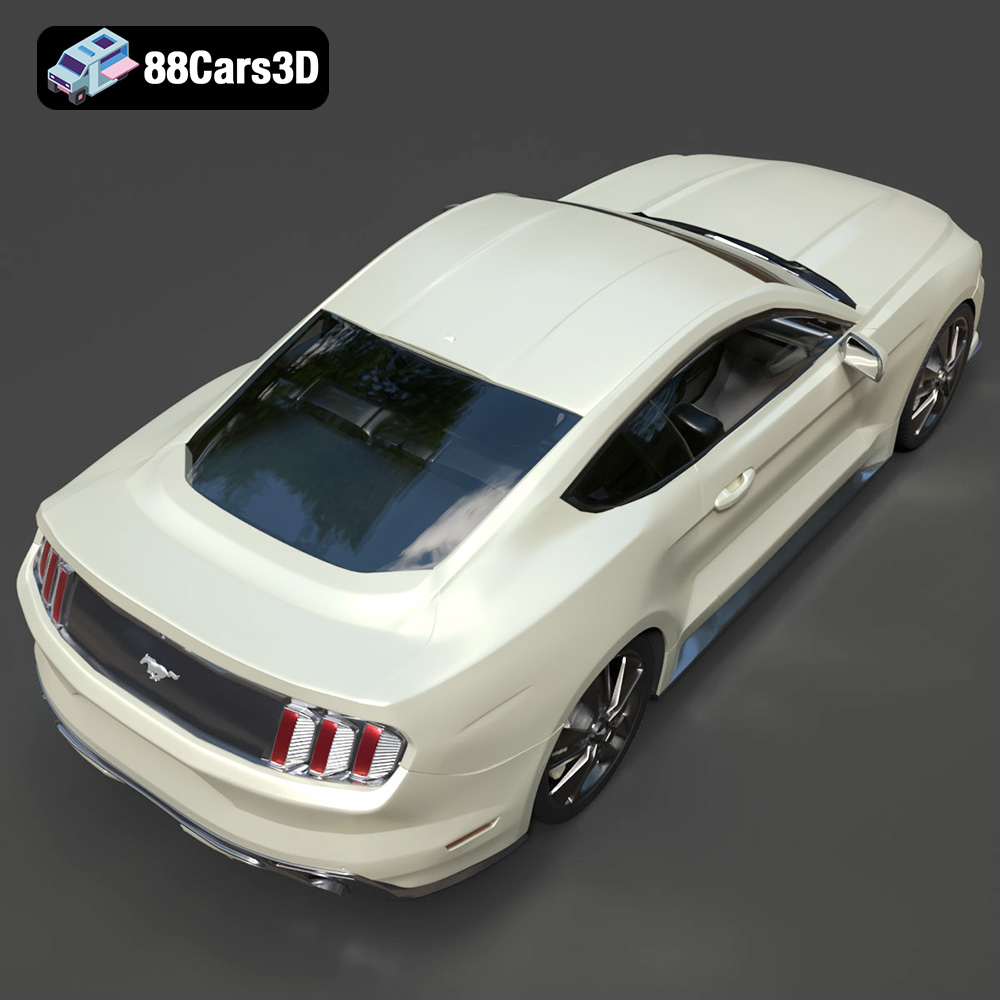
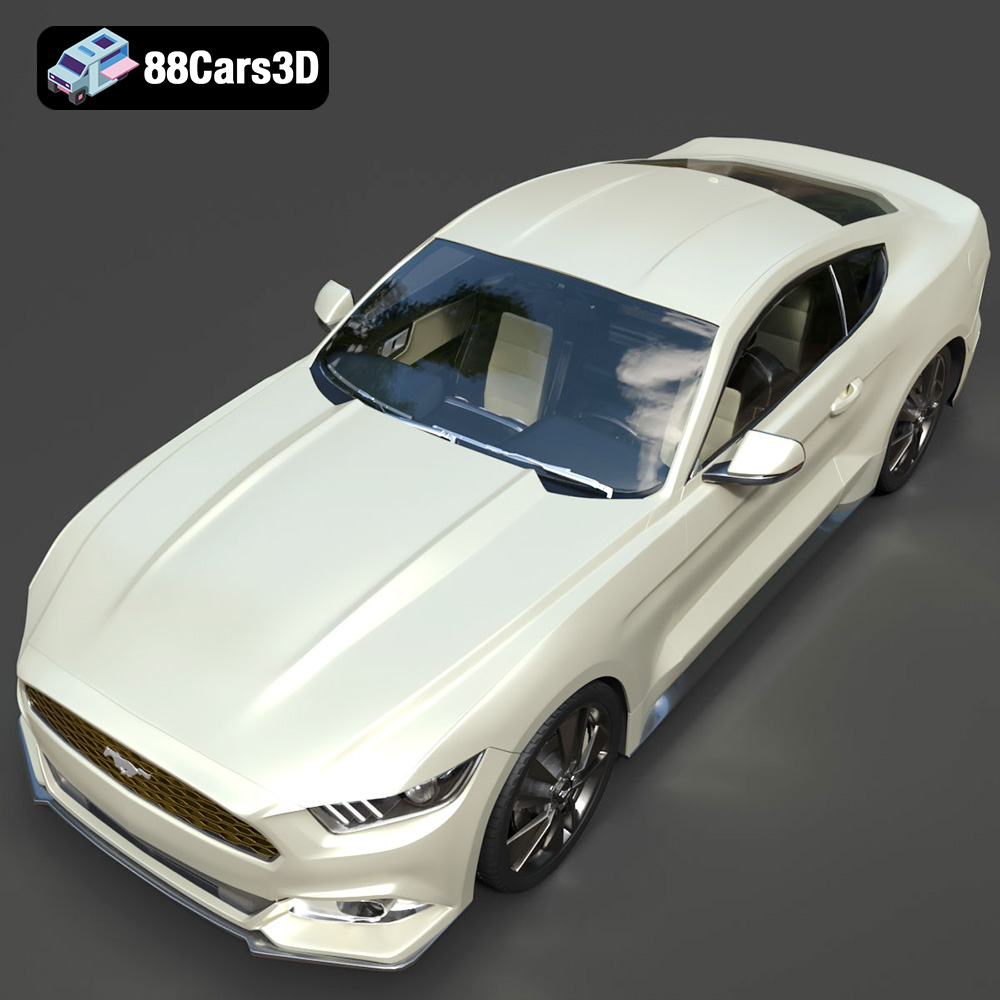
The exterior of this Ford Mustang GT 3D Model is a testament to accurate digital craftsmanship. The model precisely captures the iconic GT frame geometry and proportions, from its aggressive stance to the distinctive fastback roofline. Every significant exterior feature has been replicated with care: the imposing front grille, the signature tri-bar LED headlights, and the sequential taillights that define its rear presence. The model boasts a detailed engine block representing the legendary 5.0L V8, visible upon closer inspection, adding an extra layer of realism for close-up renders or virtual engine bay explorations. Furthermore, the aggressive rear diffuser and quad-tip performance exhaust system are faithfully modeled, showcasing the power and character of the GT. The high-performance alloy wheels are accurately reproduced, complete with detailed tire tread patterns and precise brake calipers, rotors, and performance suspension components. Crucially for animation and game physics, the wheels, suspension, and steering components are separated with proper pivot setups, allowing for realistic rotation, suspension travel, and steering articulation.
The interior of a vehicle 3D model is often where attention to detail can significantly elevate the user experience, especially for first-person perspectives in games or virtual showrooms. The Ford Mustang GT 3D Model delivers a highly detailed cockpit, starting with the sport bucket seats featuring realistic stitching lines, providing both comfort and visual authenticity. The leather-wrapped multifunction steering wheel is meticulously crafted, as are the modern digital instrument cluster and infotainment screen, which are ready for texture-based display of gauges and navigation. The accurate center console, complete with climate controls, pedals, and shifter, further enhances the sense of immersion. All interior elements are optimized geometry-wise, ensuring that whether viewed from a distance or up close in a first-person POV, the detail remains consistent without compromising performance.
Beyond visual fidelity, a professional 3D car model must be optimized for performance across a spectrum of digital applications. The Ford Mustang GT 3D Model strikes an impressive balance, making it suitable for high-end rendering and real-time environments alike.
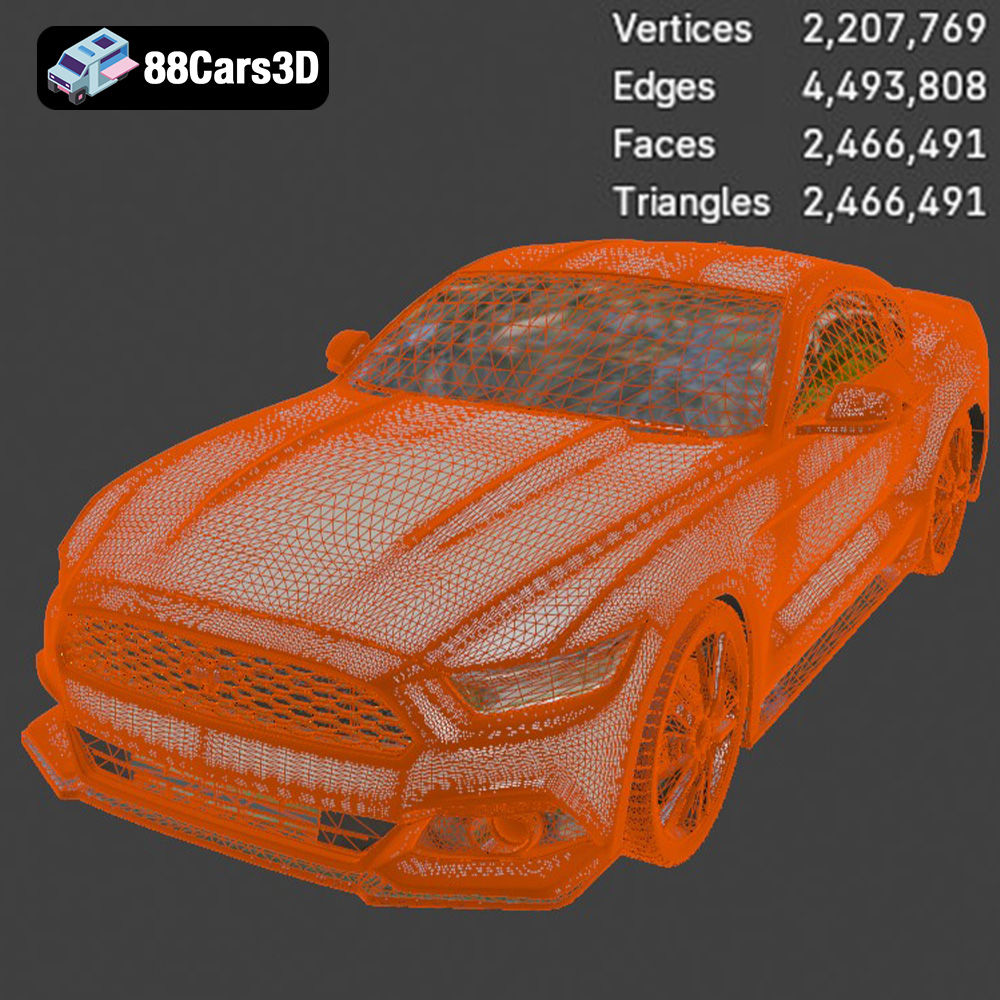
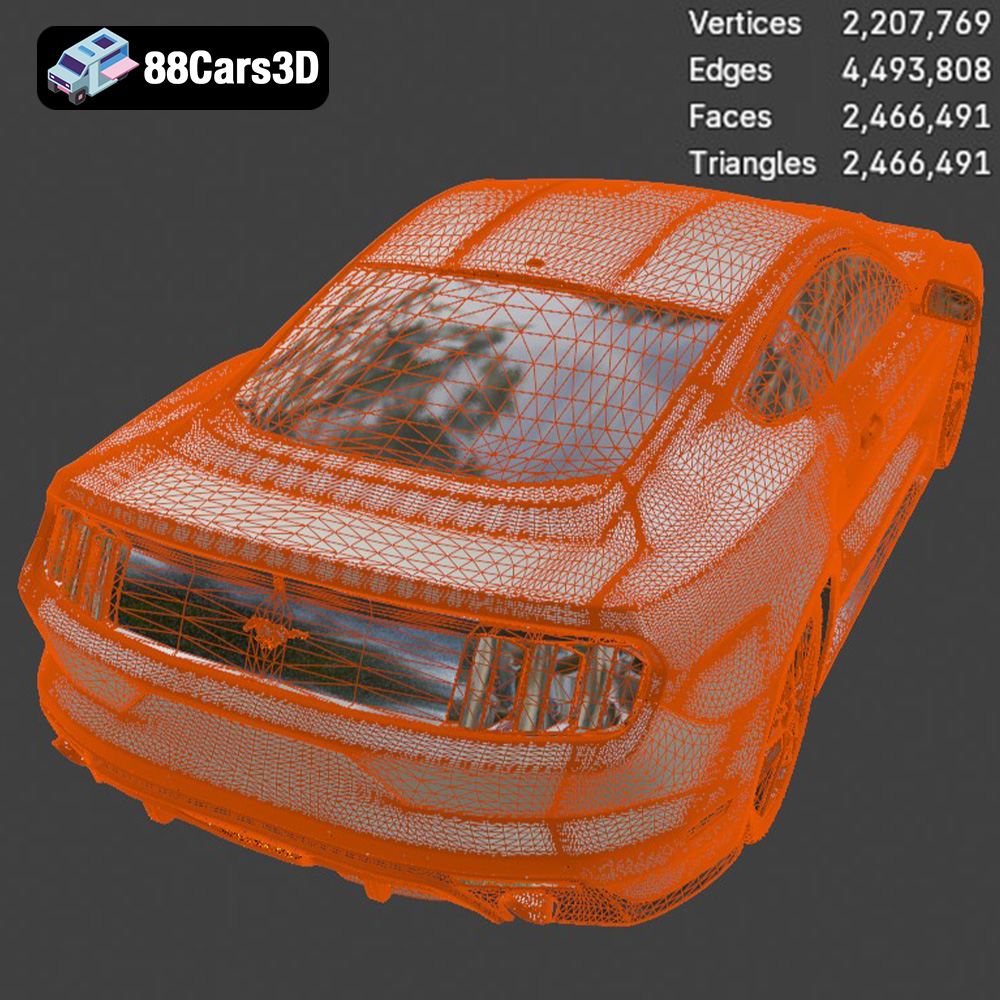
For game developers, the holy grail is a model that looks fantastic but doesn’t bog down the engine. This Ford Mustang GT 3D Model achieves this with an optimized topology featuring approximately 200,000 triangles. This polycount is strategically chosen to deliver exceptional visual realism without creating a heavy load on real-time engines like Unreal and Unity. Such optimization ensures smooth frame rates in open-world racing games, high-speed simulations, and cinematic in-game sequences. The model’s clean mesh and proper UV mapping (implied by its high quality and game-ready status) allow for efficient texture baking and material application, crucial for PBR workflows in modern game engines. Furthermore, its real-world scale accuracy and proper pivot setup for animated components mean less time spent on setup and more on development.
The rise of AR/VR technologies has created new avenues for automotive visualization. Imagine walking around the Ford Mustang GT in a virtual showroom, customizing its color, rims, and interior in real-time. This model is perfectly suited for such immersive experiences. Its optimized geometry and efficient material setup mean it can be rendered smoothly on various VR headsets and AR-enabled mobile devices. The ability to customize colors, modify tire textures, and adjust material finishes directly translates into powerful interactive configurators, allowing potential buyers or enthusiasts to explore every facet of the car in a dynamic and engaging way.
For professional automotive rendering and visualization projects – think high-impact brand campaigns, lifestyle scenes, or detailed studio lighting setups – the Mustang GT model provides an exceptional foundation. The high level of detail, from the engine bay intricacies to the interior stitching, allows for stunning close-up shots and photorealistic renders. The compatibility with major 3D software platforms like 3ds Max and Blender, coupled with its robust geometry, enables artists to apply advanced lighting techniques, complex material shaders, and sophisticated environmental effects to produce images that are virtually indistinguishable from real-world photography. The separated components also open up possibilities for complex animations, such as demonstrating suspension articulation or opening doors for a virtual walkthrough.
A truly versatile 3D car model is one that integrates seamlessly into diverse professional pipelines. The Ford Mustang GT 3D Model, with its array of included file formats, ensures compatibility across the industry’s leading software and real-time engines, streamlining complex automotive rendering and game asset development workflows.
For artists working in design and animation powerhouses like 3ds Max and Blender, the provided .max and .blend files are invaluable. In 3ds Max, importing the .max file grants immediate access to the original scene, allowing for direct manipulation of the model’s geometry, materials, and any pre-configured elements. Artists can leverage 3ds Max’s robust modeling tools for further customization, its powerful animation capabilities for cinematic sequences, or its various render engines (like V-Ray or Corona) for photorealistic outputs. Similarly, the .blend file provides a complete Blender scene, giving users full control over the model’s structure, PBR materials, and textures within Blender’s intuitive interface. This allows for straightforward material adjustments, lighting setups using Cycles or Eevee, and even re-rigging for custom animations, ensuring that the Mustang GT can be adapted to any creative vision.
The journey from a static model to a dynamic game asset in Unreal Engine is crucial for modern game development. The Ford Mustang GT 3D Model excels here, particularly with its .fbx and “Unreal-ready” designations. When importing the .fbx file into Unreal Engine, developers will find the model’s optimized polycount (~200,000 triangles) and proper pivot setups facilitate a smooth transition. Unreal Engine’s robust import pipeline allows for automatic generation of collision meshes, skeletal meshes (if applicable), and initial material instances. Artists can then fine-tune PBR materials using Unreal’s powerful node-based shader editor, apply custom tire textures and body colors, and implement advanced lighting scenarios. For dynamic vehicle behavior, the separated wheels and suspension components, combined with Unreal’s vehicle physics and blueprint systems, allow developers to create realistic driving mechanics and animations, making it an ideal candidate for any racing title or open-world game that demands high-quality game assets.
The utility of a high-quality 3D car model extends beyond the digital realm. The inclusion of the .stl format, alongside detailed print settings, means the Ford Mustang GT 3D Model can transcend the screen and become a tangible collectible or prototype through 3D printing.
3D printing the Mustang GT requires careful consideration of settings to achieve the best results. The recommended scales (1:12, 1:18, 1:24) offer a good balance between detail and print size. For optimal fidelity, especially for fine details like the quad-tip exhaust, side mirrors, and aerodynamic splitters, resin printing is highly recommended over FDM, allowing for layer heights between 0.04-0.12 mm. Wall thickness should be maintained between 1.2-2.0 mm for structural integrity. A 20-30% infill is typically sufficient. Supports will be essential for overhangs and intricate components. Print orientation is also critical; printing the frame angled can enhance structural integrity, while wheels should generally be printed separately for finer detail and easier post-processing. Adhering to these guidelines ensures a successful print that faithfully captures the digital model’s nuances.
Once printed, the journey isn’t over. Post-processing is where the model truly comes to life. This involves careful removal of supports, sanding to smooth out layer lines (especially with FDM prints), and applying a good quality primer to prepare the surface. The real magic happens with painting: achieving authentic factory colors with metallic finishes can transform a raw print into a stunning display piece. Hobbyists can explore various painting techniques, from airbrushing to hand-painting, to replicate the Mustang GT’s showroom shine or even create custom liveries. The ability to iterate on physical prototypes also makes this a valuable tool for designers looking to evaluate a vehicle’s form in a tangible way.
The true power of owning a versatile 3D car model lies in the freedom it gives artists and developers to customize and adapt it to their specific needs. The Ford Mustang GT 3D Model offers extensive opportunities for personalization, pushing creative boundaries in automotive rendering and game development.
One of the most immediate and impactful customization options is the ability to change body colors. Users can apply authentic factory colors, experiment with custom finishes like matte or chrome, or even create unique two-tone paint jobs. Beyond color, modifying tire textures allows for differentiation between track-ready slicks and everyday street variants, adding another layer of realism and narrative potential. Adjusting material finishes—from gloss and metallic to satin or even aged effects—can dramatically alter the car’s perceived value and context. Lighting is another powerful tool; adapting the car’s lighting setup for different environments, be it a sun-drenched desert road, a moody nighttime city, or a pristine studio showroom, completely transforms its presentation and emotional impact. This flexibility ensures that the Mustang GT can fit into any scene or artistic vision.
The detailed and optimized nature of this 3D model also lends itself well to further modding and expansion. Creative individuals might want to develop aftermarket body kits, add custom spoilers, or integrate performance upgrades not included in the base model. For game developers, this could mean creating different trim levels, police car variants, or even futuristic interpretations of the Mustang GT. The clean topology and accessible separated components make such modifications relatively straightforward, allowing artists to expand upon the foundational asset. This potential for ongoing customization and expansion makes the Ford Mustang GT 3D Model not just a finished product, but a springboard for endless creative possibilities in automotive rendering and beyond.
The digital automotive landscape demands assets that are not only visually captivating but also technically robust and highly adaptable. The Ford Mustang GT 3D Model epitomizes these qualities, offering a meticulously detailed, performance-optimized, and versatile solution for a wide range of applications. From its accurately replicated exterior and immersive interior to its game-ready polycount and extensive file format compatibility, this model is engineered to accelerate professional workflows in game development, AR/VR, cinematic rendering, and even 3D printing.
Whether you’re crafting the next big racing title, designing an interactive virtual showroom, or producing stunning marketing visuals, this Ford Mustang GT provides a powerful foundation. Its thoughtful optimization and comprehensive feature set minimize setup time and maximize creative potential, allowing you to focus on bringing your visions to life. For those seeking premium 3D car models that truly deliver on their promise of quality and versatility, exploring the offerings at 88cars3d.com is a clear choice. Elevate your projects and unleash the full potential of digital automotive design with assets built for excellence.
The Ford Mustang GT is an enduring icon of American muscle, celebrated for its aggressive aesthetic, legendary heritage, and raw power. This incredibly detailed 3D model captures the unmistakable styling cues of the modern Mustang GT, from its signature long hood and fastback roofline to the imposing front grille, quad-tip exhaust system, and raw 5.0L V8 engine bay details. Engineered for premium digital performance, this model features an optimized topology with approximately 200,000 triangles, delivering exceptional game-ready performance without sacrificing visual fidelity. The meticulously crafted geometry ensures seamless integration into game development workflows, high-end AR/VR experiences, cinematic animations, and professional automotive visualization. Perfect for open-world racing games, virtual automotive showrooms, cinematic renders, and high-performance car configurators.
$19.99
.blend
.fbx
.ford
.glb
.max
.obj
.ply
.rendering
.sports car
.stl
.unreal
car-3d-model
game asset
game-ready
low-poly
muscle-car
mustang-gt
optimized
VR/AR