Get 20% OFF All Premium 3D & STL Models!

In the dynamic world of digital content creation, the demand for high-fidelity 3D assets, particularly realistic 3D car models, continues to accelerate. From breathtaking automotive rendering for marketing campaigns to immersive game assets for the latest racing simulators, the quality and versatility of these digital vehicles are paramount. Whether you’re an architect visualizing a luxury home with a car in the driveway, a game developer populating an open-world environment, or an AR/VR designer crafting an interactive showroom, the foundation of a compelling visual experience lies in the precision of your 3D models.
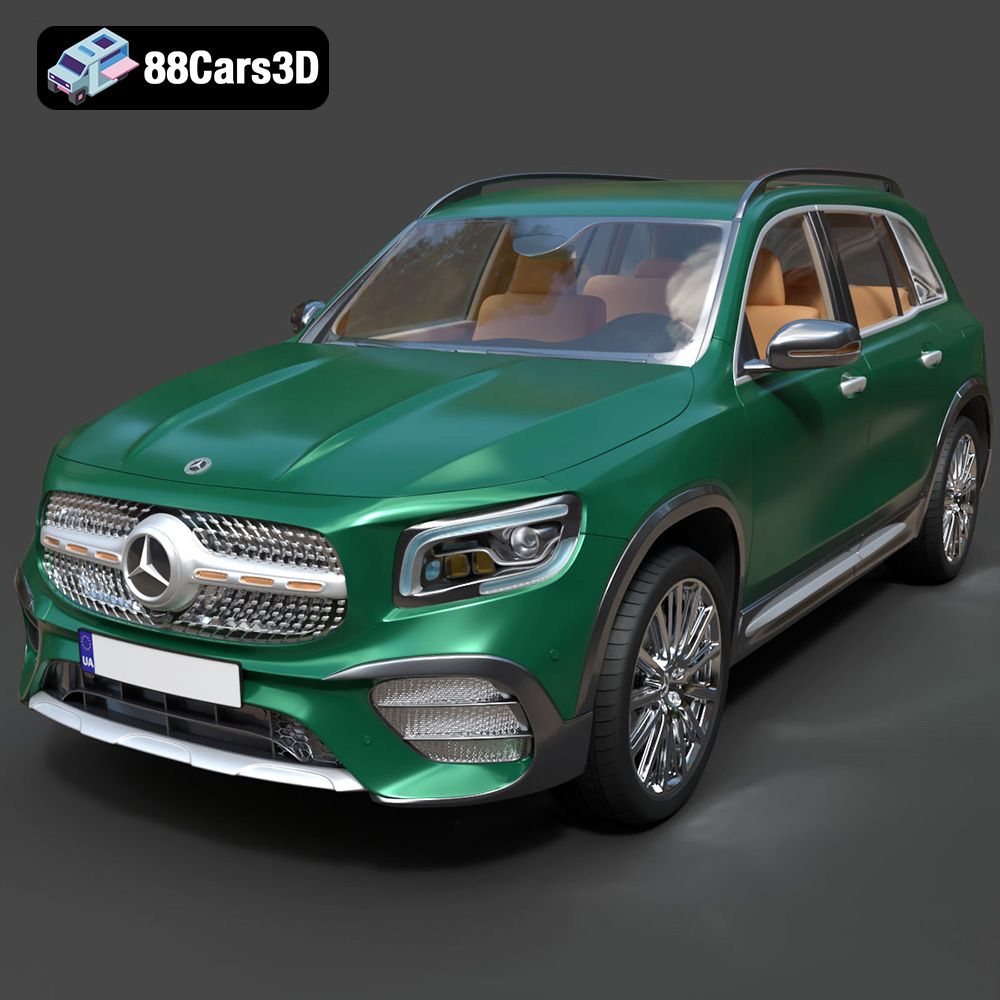
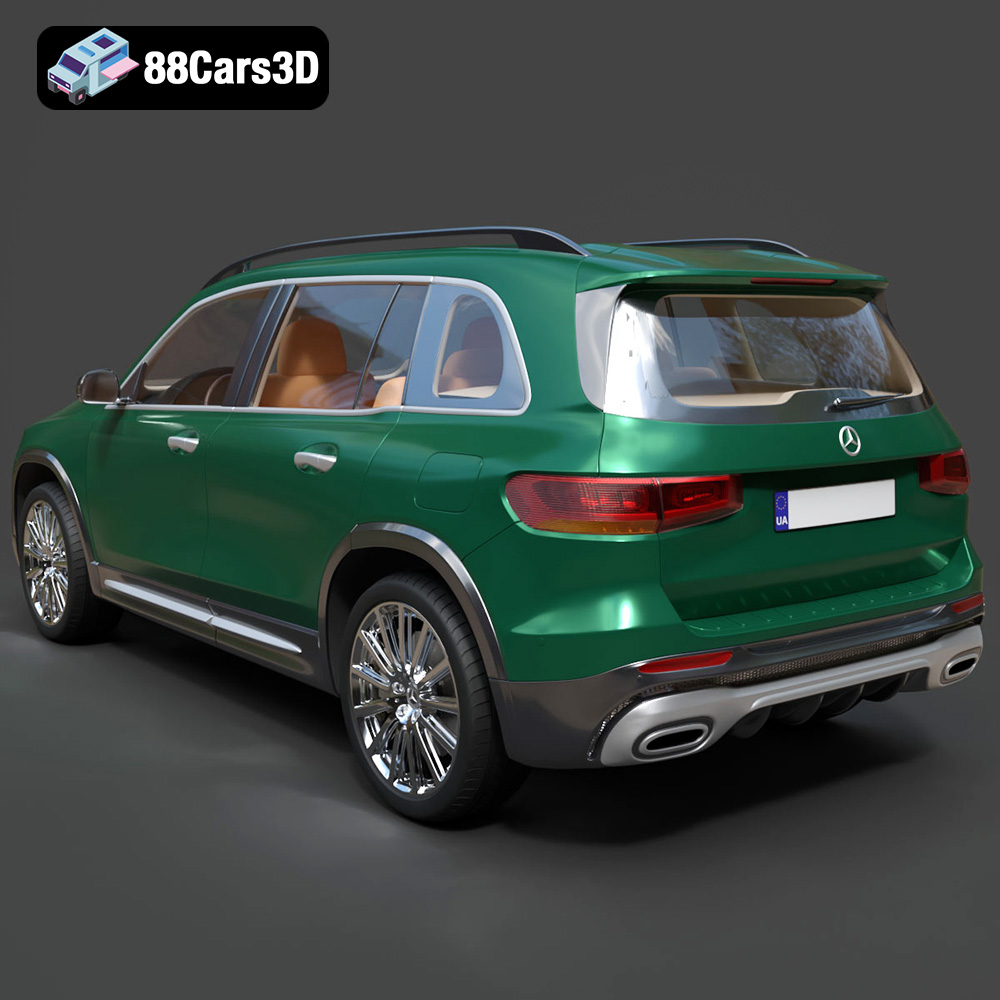
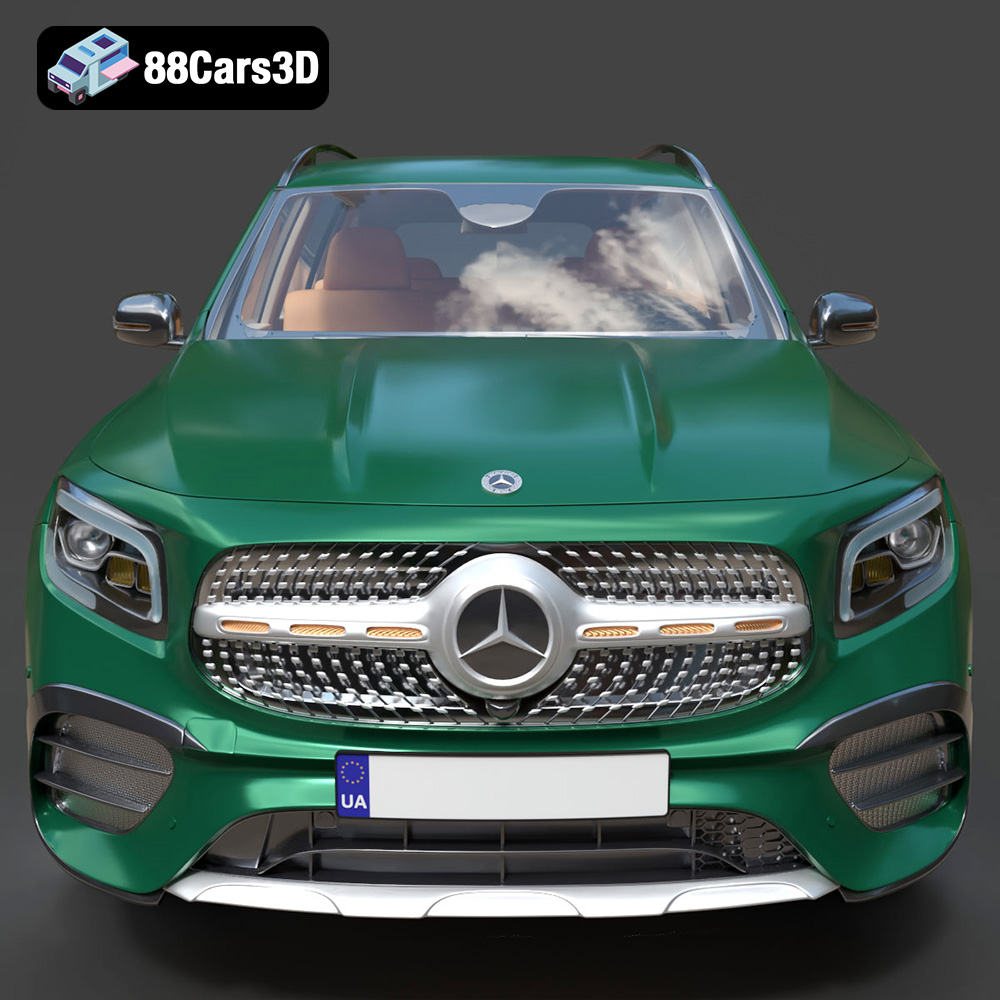
Today, we’re taking a closer look at a prime example of such excellence: the Mercedes-Benz GLB-Class (Mk1) AMG Line 2019 3D Model. This meticulously crafted asset perfectly encapsulates the blend of rugged versatility and premium luxury that defines its real-world counterpart. With its distinctive boxy silhouette, commanding stance, and aggressive AMG Line styling cues—including the signature diamond radiator grille, sporty front aprons, and prominent dual exhaust system—this digital replica captures every striking curve and sophisticated detail. It’s a testament to the intricate work involved in creating models that not only look authentic but also perform flawlessly across diverse digital platforms.
The world of 3D modeling relies heavily on a multitude of file formats, each designed with specific purposes, compatibilities, and data-carrying capabilities. Choosing the correct format is crucial for workflow efficiency and ensuring your 3D car models function as intended, whether for high-end rendering, game development, or 3D printing. Understanding these distinctions is fundamental for any professional working with digital assets.
The .blend file format is the native format for Blender, a powerful open-source 3D creation suite. When you download a .blend file, you’re not just getting a mesh; you’re receiving a complete Blender scene. This includes all geometry, materials, textures, lighting setups, cameras, animations, rigging, and even scene configurations. This format is ideal for users who work predominantly in Blender and require full editability and access to every aspect of the model. For assets like the Mercedes-Benz GLB-Class, a .blend file allows artists to delve deep into the model’s construction, modify PBR materials, adjust animation curves for wheels or suspension, or even re-rig components with ease.
.fbx (Filmbox) is arguably the most widely adopted proprietary 3D file format for interchange between different software applications and game engines. Developed by Autodesk, it excels at carrying comprehensive scene data, including geometry, materials (with texture references), animation, skeletons, and blend shapes. Its robust nature makes it the go-to choice for pipelines involving Unreal Engine, Unity, 3ds Max, Maya, and Cinema 4D. For complex animated models or game assets that need to transition smoothly between modeling, rigging, and game engine integration, .fbx is invaluable. The Mercedes-Benz GLB-Class 3D model in .fbx format ensures seamless import into real-time environments, preserving animation pivots and PBR material assignments.
The .obj (Wavefront OBJ) format is a universal standard, widely supported across virtually all 3D software. It primarily stores geometry (vertices, faces, normals, UVs) and can reference external material (.mtl) and texture files. While it doesn’t support animation, rigging, or scene data, its simplicity and widespread compatibility make it excellent for basic mesh exchange. If you need a clean, poly-accurate model to bring into a new software package for re-texturing or custom rigging, .obj is a solid, reliable choice. It provides the core mesh of the GLB-Class without any software-specific dependencies.
.glb (GL Transmission Format Binary) is the binary version of glTF (Graphics Language Transmission Format), designed for efficient transmission and loading of 3D scenes and models in web and real-time applications, especially for augmented reality (AR) and virtual reality (VR) experiences. It packages all necessary data—geometry, materials, textures, animations—into a single, self-contained file, making it incredibly easy to share and embed. Its focus on PBR materials and compact size makes it perfect for interactive viewers on websites or mobile AR apps showcasing the GLB-Class 3D model.
.stl (Stereolithography) is the most common file format for 3D printing. It represents a 3D model as a series of connected triangles, defining only the surface geometry without any color, texture, or material information. While it lacks visual data, its simplicity makes it universally compatible with 3D printers and slicing software. For hobbyists or professionals looking to bring the Mercedes-Benz GLB-Class from the digital realm into a tangible collectible, the .stl format provides the necessary topological data for successful printing, often requiring careful consideration of scale and support structures.
The .ply (Polygon File Format) is a versatile format often used for storing 3D data from 3D scanners, CAD systems, and scientific applications. It can store a wide range of properties for each vertex and face, including color, transparency, surface normals, and texture coordinates, making it more comprehensive than .obj in certain aspects. While not as common for general asset exchange, its ability to store precise geometric and attribute data makes it valuable for analytical purposes or when working with highly accurate scan data for models like the GLB-Class.
While not a standalone file extension in the traditional sense like .fbx or .obj, .unreal often refers to a packaged, engine-ready asset specifically configured for Unreal Engine. This typically means an .fbx file that has been imported, had its materials set up, collisions generated, and potentially blueprints or other engine-specific logic applied within an Unreal project. When a model is provided in an “Unreal-ready” state, it implies that significant optimization and configuration work has already been done, saving developers immense time and effort when integrating the GLB-Class into their Unreal-powered projects.
Similar to .blend, the .max file is the native project file for Autodesk 3ds Max. It contains the complete 3ds Max scene, including all geometry, modifiers, materials, textures, lighting, cameras, animation, and rigging. This format offers full editability within 3ds Max, making it ideal for professional studios that use 3ds Max for architectural visualization, advanced animation, or high-fidelity automotive rendering. The .max version of the Mercedes-Benz GLB-Class allows artists to leverage 3ds Max’s powerful rendering engines like V-Ray or Corona for photorealistic output or to further customize animations and scene setups.
By providing a model like the Mercedes-Benz GLB-Class in such a diverse array of formats, 88cars3d.com ensures maximum compatibility and utility for professionals across various industries, from game development to architectural visualization and 3D printing.
Creating a truly convincing 3D car model is an intricate balance between artistic vision and technical precision. It demands an eye for detail, a deep understanding of manufacturing design, and mastery of digital sculpting and texturing techniques. The Mercedes-Benz GLB-Class 3D model exemplifies this fusion, offering a high-fidelity representation that caters to both visual splendor and performance efficiency.
Photorealistic automotive rendering hinges on the quality of its materials, and that’s where Physically Based Rendering (PBR) texturing shines. PBR materials simulate how light interacts with surfaces in a physically accurate way, taking into account properties like roughness, metallicness, normal maps, and ambient occlusion. For the GLB-Class, this means the paintwork shimmers authentically under varying lighting conditions, the chrome accents reflect their environment with subtle realism, and the tire rubber exhibits its characteristic matte texture. This level of detail is critical for marketing visuals, virtual showrooms, and any scenario where visual authenticity is paramount, providing a foundational layer of realism that allows the model to look fantastic in any engine or renderer.
Beyond visual fidelity, practical application often demands performance. This is particularly true for game assets and real-time interactive experiences. Optimized topology refers to the strategic arrangement of polygons (triangles) that form the 3D mesh. The GLB-Class model, with its ~250,000 triangles, strikes an impeccable balance. This polycount is sufficiently detailed to maintain high-end visual realism, capturing the intricate curves and sharp edges of the AMG Line, while remaining efficient enough for real-time engines like Unreal or Unity. This careful optimization prevents performance bottlenecks, ensuring smooth frame rates and responsive interactions, a critical factor for any professional game developer or AR/VR experience creator.
Accuracy is non-negotiable in automotive 3D modeling. The GLB-Class model is built to real-world scale, based on actual vehicle chassis and design specifications. This ensures that its dimensions, proportions, and every feature, from the placement of the headlights to the contour of the door handles, are geometrically correct. Such precision is vital for architectural visualizations where scale matters, for vehicle configurators where dimensions need to match real-world accessories, and for simulations where physical accuracy affects dynamics. It also means that accessories or environments designed for a real GLB-Class can be accurately integrated with this 3D model.
The utility of a high-quality 3D car model extends across a multitude of industries, each leveraging its unique features for specific purposes. The Mercedes-Benz GLB-Class model, available on 88cars3d.com, is designed with this versatility in mind, making it an invaluable asset for various professional workflows.
For cinematic quality automotive rendering, studios often turn to software like 3ds Max paired with industry-leading renderers such as V-Ray or Corona. These powerful tools allow artists to create photorealistic images and animations that are virtually indistinguishable from real-life photography. The GLB-Class 3D model, especially in its native .max format, integrates seamlessly into these workflows. Artists can set up intricate studio lighting, craft dynamic environments, and fine-tune PBR materials to produce stunning brand campaigns, lifestyle scenes, or detailed product showcases. Imagine the GLB-Class perfectly positioned in a snowy mountain landscape or gleaming under the spotlights of a virtual showroom – these are the kinds of visual narratives made possible by high-quality assets and advanced rendering techniques.
The gaming industry is a primary consumer of optimized 3D car models. Modern game engines like Unreal Engine and Unity demand assets that are not only visually impressive but also perform efficiently in real-time. The GLB-Class model, provided in game-ready formats like .fbx and with an optimized polycount, is perfectly suited for this environment. Its proper pivot setup for steering, wheel rotation, and suspension travel is crucial for realistic vehicle physics and animation in racing titles, open-world adventures, or driving simulators. Game developers can easily integrate this vehicle, set up collision meshes, and add custom scripts to bring the GLB-Class to life as a playable or AI-driven asset, enhancing player immersion and gameplay dynamics.
Augmented Reality (AR) and Virtual Reality (VR) are transforming how consumers interact with products, and automotive brands are at the forefront of this revolution. High-quality 3D car models are the bedrock of immersive virtual showrooms, interactive configurators, and mobile AR experiences. The GLB-Class model, particularly in the compact .glb format, is ideal for these applications. Customers can virtually “walk around” the vehicle, explore its interior, change colors, and even place it in their driveway using AR on their smartphones. This provides a highly engaging and personalized buying experience, allowing potential buyers to visualize the car in their own context before making a purchase. It’s a powerful tool for marketing and sales in the digital age.
The difference between a generic 3D model and a professional-grade asset lies in the minutiae. The Mercedes-Benz GLB-Class (Mk1) AMG Line 2019 3D Model exemplifies this dedication to detail, ensuring both visual accuracy and technical robustness.
Beyond the overall silhouette, the GLB-Class model boasts a wealth of exterior details that contribute to its realism. The aggressive AMG specific dual exhaust system and rear diffuser are meticulously recreated, reflecting the performance-oriented styling. High-detail LED High Performance headlamps and distinctive taillight clusters are accurately modeled, complete with realistic light-emitting surfaces for compelling night renders. The authentic AMG 5-twin-spoke light-alloy wheels and performance tires are not just textures, but fully realized 3D elements with accurate tread patterns and sidewall details. Even the sport-tuned suspension detailing and engine block/undercarriage components are present, offering an unprecedented level of depth for close-up shots, engineering visualizations, or even simulated vehicle maintenance scenarios.
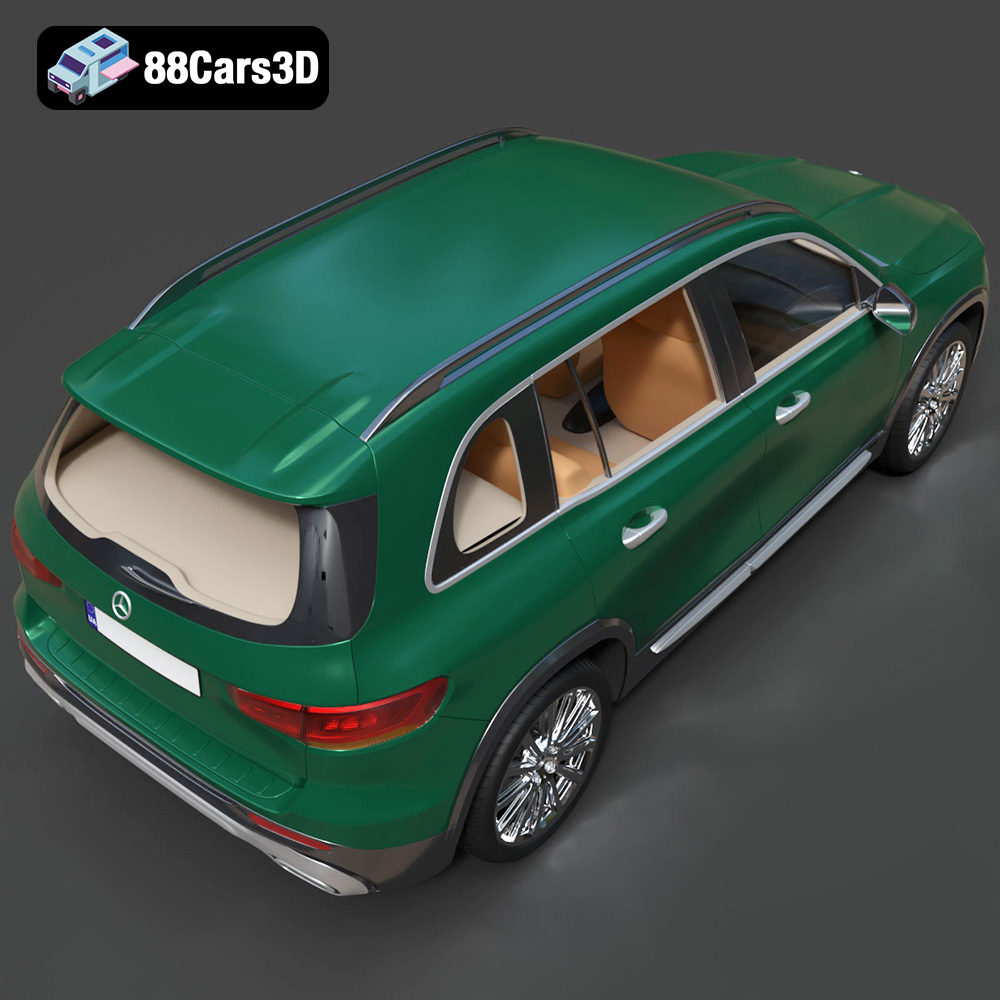
A truly comprehensive 3D car model doesn’t stop at the exterior. The GLB-Class interior is just as meticulously crafted. Detailed sport seating features intricate stitching and contouring, mirroring the luxury and comfort of the real vehicle. The Nappa leather multifunction sports steering wheel, complete with precise switchgear, is ready for interactive controls. The accurate MBUX dual-screen digital instrument cluster and infotainment system are modeled with care, allowing for custom screen displays or interactive UI elements in game or VR applications. The central console, air vents, and pedals are all present and optimized. This level of interior detail is crucial for first-person POV in gaming and VR simulations, creating a sense of immersion where the user truly feels inside the vehicle.
For dynamic applications, static models are insufficient. The GLB-Class 3D model is designed with animation in mind. Its separate wheels, suspension, and steering components are not merely detached meshes; they feature proper pivot setups. This means that rotating the wheels along their correct axis, simulating suspension travel over bumps, or animating steering inputs is straightforward and accurate. This pre-configured readiness significantly reduces the setup time for game developers or animators, allowing them to quickly integrate the model into a rigged vehicle system within Unreal, Unity, or other animation software, ensuring realistic movement and interaction.
The versatility of a high-quality 3D car model like the Mercedes-Benz GLB-Class extends beyond digital displays, bridging the gap between virtual and tangible realities. It also offers immense flexibility for artistic interpretation and project-specific adaptation.
For enthusiasts, designers, or anyone wanting a physical representation of their favorite vehicle, 3D printing offers an exciting avenue. The GLB-Class model is convertible to .stl format, making it suitable for display-scale hobbyists. However, achieving excellent results requires attention to detail in the printing process. Recommended scales like 1:12, 1:18, or 1:24 balance size with printability. For fine details, resin printing is often recommended over FDM, along with layer heights between 0.04–0.12 mm. Specific print orientations (e.g., frame angled for structural integrity, wheels printed separately) and the strategic use of supports for delicate parts like exhaust systems, mirrors, and the steering wheel are critical. Post-processing, including sanding, priming, and applying authentic factory colors with metallic finishes, can elevate a printed model into a stunning collectible, a miniature testament to the digital craftsmanship.
One of the greatest advantages of working with a robust 3D model is the potential for customization. The GLB-Class model is designed to be highly adaptable to various creative visions:
This level of customization empowers artists and developers to tailor the GLB-Class model precisely to their project’s unique requirements, maximizing its utility and visual impact.
In a fast-paced digital production environment, time is a precious commodity. Creating high-quality 3D car models from scratch is an incredibly time-consuming and specialized endeavor. This is where a marketplace like 88cars3d.com proves invaluable.
Investing in pre-made, professional-grade 3D assets offers significant advantages. Firstly, it drastically cuts down on production time. Instead of spending weeks or months modeling, texturing, and optimizing a vehicle, developers and artists can acquire a ready-to-use asset. Secondly, it’s often more cost-effective than hiring a dedicated 3D artist for custom work, especially for individual projects or smaller studios. Thirdly, assets from reputable sources like 88cars3d.com come with the assurance of quality, technical correctness, and proper optimization, minimizing potential issues down the line. For complex models such as the Mercedes-Benz GLB-Class, where accuracy and game-readiness are paramount, a reliable pre-made asset is a strategic choice.
88cars3d.com specializes in providing high-quality 3D car models that meet the rigorous demands of professional workflows. The Mercedes-Benz GLB-Class (Mk1) AMG Line 2019 3D Model is a prime example of the caliber of products available. Each model is meticulously crafted with optimized topology, PBR texturing, and accurate real-world scale, ensuring it performs exceptionally well whether in an intensive automotive rendering pipeline, a real-time game engine, or an interactive AR/VR experience. The availability of multiple file formats—from .blend and .max for full editability to .fbx for universal compatibility and .glb for web/AR—ensures that artists and developers have the flexibility they need for any project. For those seeking premium 3D car models that offer both visual fidelity and technical efficiency, 88cars3d.com stands as a reliable partner.
The journey of a 3D car model from concept to a fully realized digital asset is a testament to the blend of artistic skill and technical mastery. The Mercedes-Benz GLB-Class (Mk1) AMG Line 2019 3D Model exemplifies this journey, offering a versatile, high-fidelity asset suitable for a myriad of applications. Whether your project demands breathtaking automotive rendering, efficient game assets, immersive AR/VR experiences, or even a tangible 3D print, this model is engineered to deliver. Its optimized topology, PBR texturing, and accurate real-world scale, coupled with broad file format compatibility, make it an indispensable tool for any digital creator. Investing in quality assets like this not only elevates your projects but also streamlines your workflow, allowing you to focus on unleashing your creative vision. Explore this and other exceptional 3D car models at 88cars3d.com and drive your digital creations to new heights.
Experience the perfect blend of rugged versatility and premium luxury with our meticulous 3D model of the Mercedes-Benz GLB-Class (Mk1) AMG Line 2019. This compact crossover SUV stands out with its distinctive boxy silhouette, commanding stance, and aggressive AMG Line styling cues, including the signature diamond radiator grille, sporty front aprons, and prominent dual exhaust system. Designed to encapsulate the modern elegance and muscular heritage of the Mercedes-Benz brand, this digital replica captures every striking curve and sophisticated detail.This high-fidelity, game-ready 3D model is meticulously crafted with optimized topology (~250,000 triangles), striking an impeccable balance between exceptional visual realism and efficient real-time performance. Designed for maximum versatility, the model features PBR texturing and precise structural proportions, making it a premium asset for game engines, high-end rendering, and immersive interactive media.Perfect for urban racing games, luxury vehicle configurators, architectural visualizations, and mobile AR experiences.
$39.99
.2019
.blend
.fbx
.glb
.luxury suv
.max
.obj
.ply
.rendering
.stl
.unreal
amg-line
car-3d-model
compact-suv
game asset
game-ready
glb-class
low-poly
mercedes-benz
optimized
VR/AR