Get 20% OFF All Premium 3D & STL Models!

In the expansive and meticulously detailed world of 3D visualization, the demand for truly exceptional automotive models is constant. Whether for high-octane game development, breathtaking architectural renders, or immersive virtual reality experiences, the quality of a 3D car model can significantly elevate an entire project. It’s not just about polygon count; it’s about the fidelity, the optimization, and the sheer artistic integrity that captures the essence of a real-world vehicle. Among the pantheon of automotive legends, few command attention like a Rolls-Royce, and specifically, the Ghost EWB 2018 stands as a testament to unparalleled luxury and engineering prowess.
For professionals seeking to infuse their projects with a touch of bespoke elegance and ultra-premium design, a meticulously crafted 3D model of such a vehicle is indispensable. This is precisely where the Rolls-Royce Ghost EWB 2018 3D Model shines. It offers not just a digital representation but a comprehensive asset designed for peak performance across various demanding creative pipelines. From its iconic Pantheon grille to its self-righting wheel caps and the promise of a whisper-quiet V12, every detail of this digital recreation from 88cars3d.com is engineered to impress, providing a foundation for stunning visuals and seamless integration.
This article will delve deep into the technical intricacies, practical applications, and creative potential unlocked by high-quality 3D car models, using the Rolls-Royce Ghost EWB 2018 as our prime example. We’ll explore why choosing a well-optimized model is crucial, how different file formats serve specific purposes, and walk through professional workflows to maximize its impact in your projects.
The journey of a 3D model from its creation to its final application often involves traversing a landscape of diverse file formats, each with its unique strengths, compatibilities, and intended uses. Understanding these formats is critical for any 3D artist, developer, or visualization specialist, as choosing the right one can significantly impact workflow efficiency, model fidelity, and ultimate project success. The Rolls-Royce Ghost EWB 2018 3D model, for instance, is offered in a comprehensive suite of formats, ensuring maximum flexibility across various professional pipelines.
The .blend format is native to Blender, the popular open-source 3D creation suite. When you download a .blend file, you’re not just getting the mesh; you’re getting a fully editable Blender scene. This includes the model’s geometry, materials, textures, lighting setups, cameras, animation data, and even modifiers. It’s the ideal format for users working within Blender, offering full control over every aspect of the asset. Artists can easily modify materials, tweak topology, add custom animations, or render directly using Cycles or Eevee. This complete scene preservation makes it invaluable for detailed customization and fine-tuning.
.fbx (Filmbox) is a proprietary file format developed by Autodesk, serving as one of the most widely adopted exchange formats in the 3D industry. Its strength lies in its ability to store a vast amount of 3D data, including mesh, materials, textures, animations, skinning, and even camera and lighting information, in a single file. This makes .fbx exceptionally versatile and the go-to format for interoperability between different 3D software packages (e.g., 3ds Max, Maya, Blender, Cinema 4D) and, crucially, for real-time game engines like Unreal Engine and Unity. For the Rolls-Royce Ghost EWB model, the .fbx variant is optimized for seamless import into these engines, typically pre-configured with appropriate pivots and UVs for game-ready performance.
.obj (Wavefront OBJ) is a foundational and universal 3D model format, known for its simplicity and wide compatibility. It primarily stores geometric data such as vertices, UV coordinates, and normals, often accompanied by an .mtl (material) file for basic material properties. While .obj doesn’t typically store advanced features like animation or rigging, its widespread support across virtually all 3D software makes it an excellent choice for basic mesh exchange and cross-software compatibility. It’s a robust option when you need a clean, unadorned mesh to start building materials and animations from scratch in your preferred software.
.glb (GL Transmission Format Binary) is the binary version of the glTF format, designed for efficient transmission and loading of 3D scenes and models by applications. It’s increasingly popular for web-based 3D viewers, augmented reality (AR), and virtual reality (VR) applications due to its compact size, single-file packaging (embedding textures and other data), and PBR (Physically Based Rendering) material support. For the Rolls-Royce Ghost EWB 2018, the .glb format is perfect for showcasing the model in a virtual showroom, an interactive web configurator, or integrating it into a mobile AR experience, offering high visual quality with minimal loading times.
.stl (STereoLithography) is the de facto standard file format for 3D printing. It represents a 3D model as a series of connected triangles, describing only the surface geometry without color, texture, or other advanced attributes. When downloading the Rolls-Royce Ghost EWB 3D model in .stl, it’s specifically prepared for additive manufacturing, ensuring a manifold mesh suitable for slicing software. This allows hobbyists and professionals to bring the digital luxury car into the physical world, creating detailed scale models for display.
.ply (Polygon File Format or Stanford Triangle Format) is another widely supported format, often used for storing 3D scanner data and meshes. It can store a variety of properties beyond simple geometry, including color, transparency, surface normals, and texture coordinates for each vertex or face. While not as universally used for general asset exchange as .fbx or .obj, .ply is valuable for applications requiring precise mesh data, such as reverse engineering, scientific visualization, or certain CAD workflows where detailed surface information is critical.
The .unreal format, or more accurately, assets specifically packaged and optimized for Unreal Engine, represents a significant advantage. While typically .fbx is imported into Unreal, an “.unreal” package implies a pre-configured asset that might include material instances, blueprint setups, optimized LODs (Levels of Detail), and collision meshes. This ‘engine-ready’ designation means the Rolls-Royce Ghost EWB model has been specifically tailored to meet Unreal Engine’s specifications, drastically reducing setup time and ensuring optimal performance and visual fidelity within real-time environments. It means less time troubleshooting imports and more time creating stunning scenes.
Similar to .blend for Blender, the .max format is the native file type for Autodesk 3ds Max. This format contains the complete 3ds Max scene, including geometry, materials, textures, lighting, cameras, animation, and any modifiers or plugins used. For professionals working within 3ds Max, receiving the Rolls-Royce Ghost EWB model as a .max file provides the highest level of editability and direct access to the original project structure, making it perfect for complex rendering setups, animation sequences, and integration into existing 3ds Max scenes.
Recreating a vehicle as iconic and sophisticated as the Rolls-Royce Ghost EWB 2018 in 3D is a task that demands both technical precision and an artist’s eye for detail. This model is not merely a collection of polygons; it’s a digital homage to luxury, designed to deliver exceptional visual fidelity and a true sense of the vehicle’s majestic presence. The development process behind such a high-quality 3D car model from 88cars3d.com involves painstaking attention to every curve, every reflection, and every interior appointment.
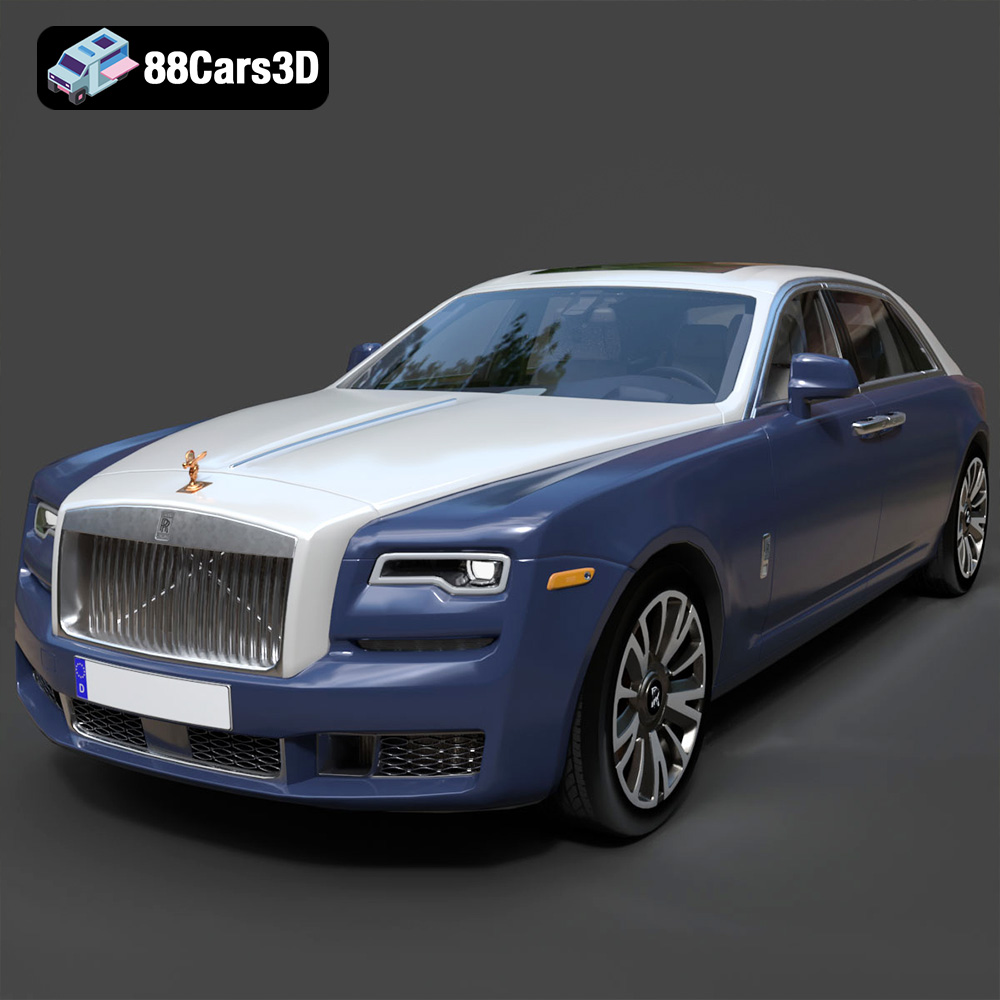
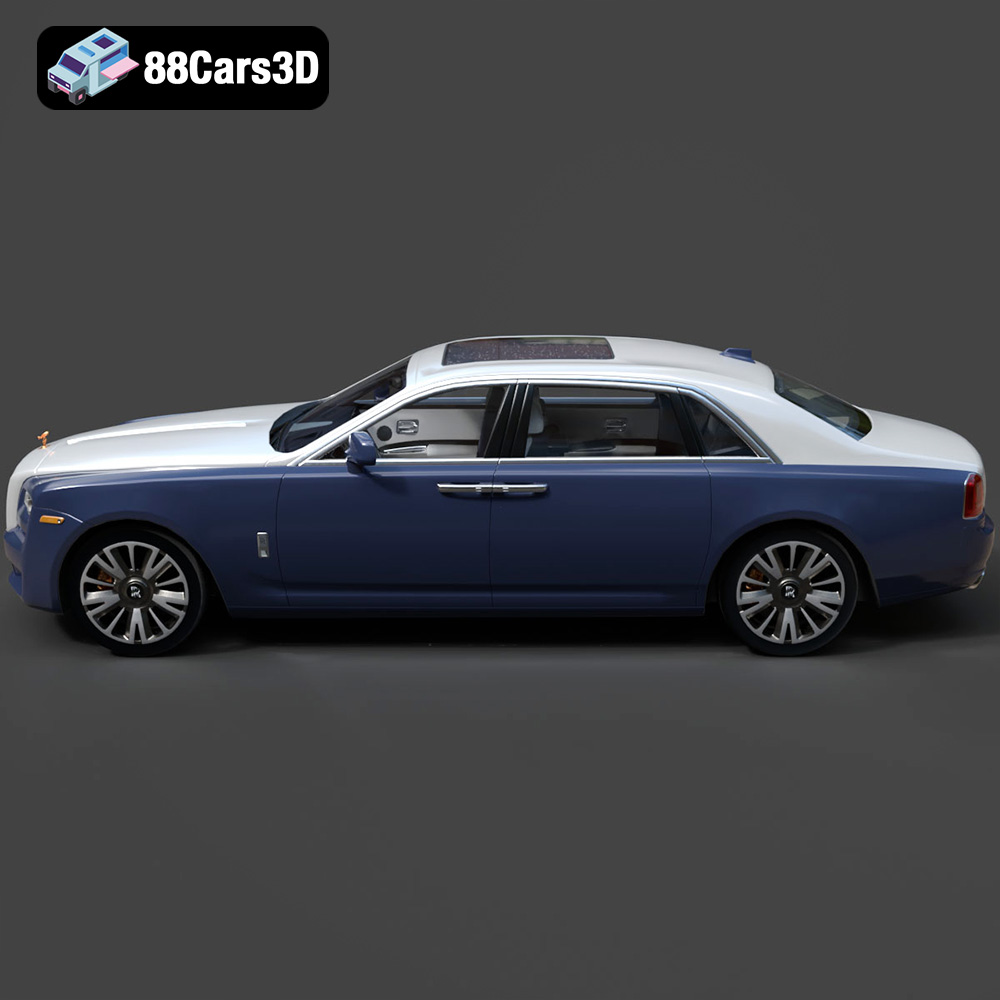
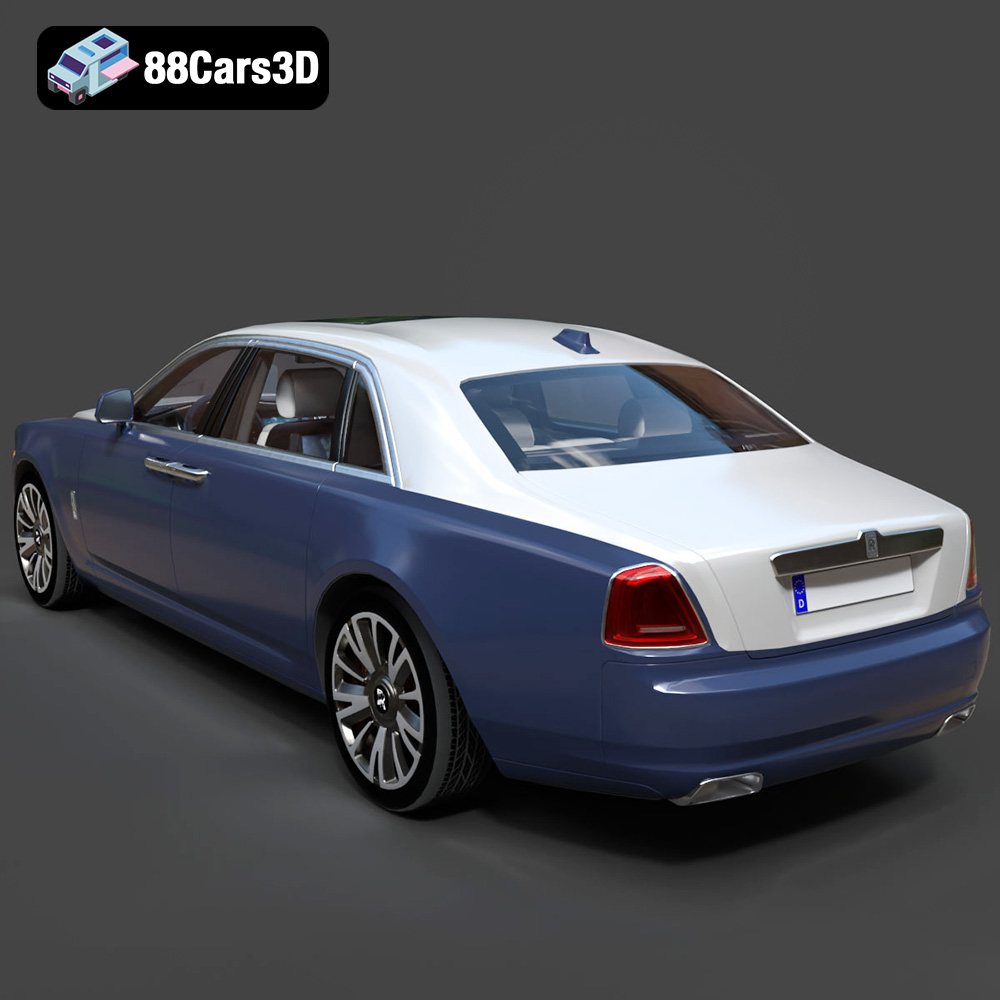
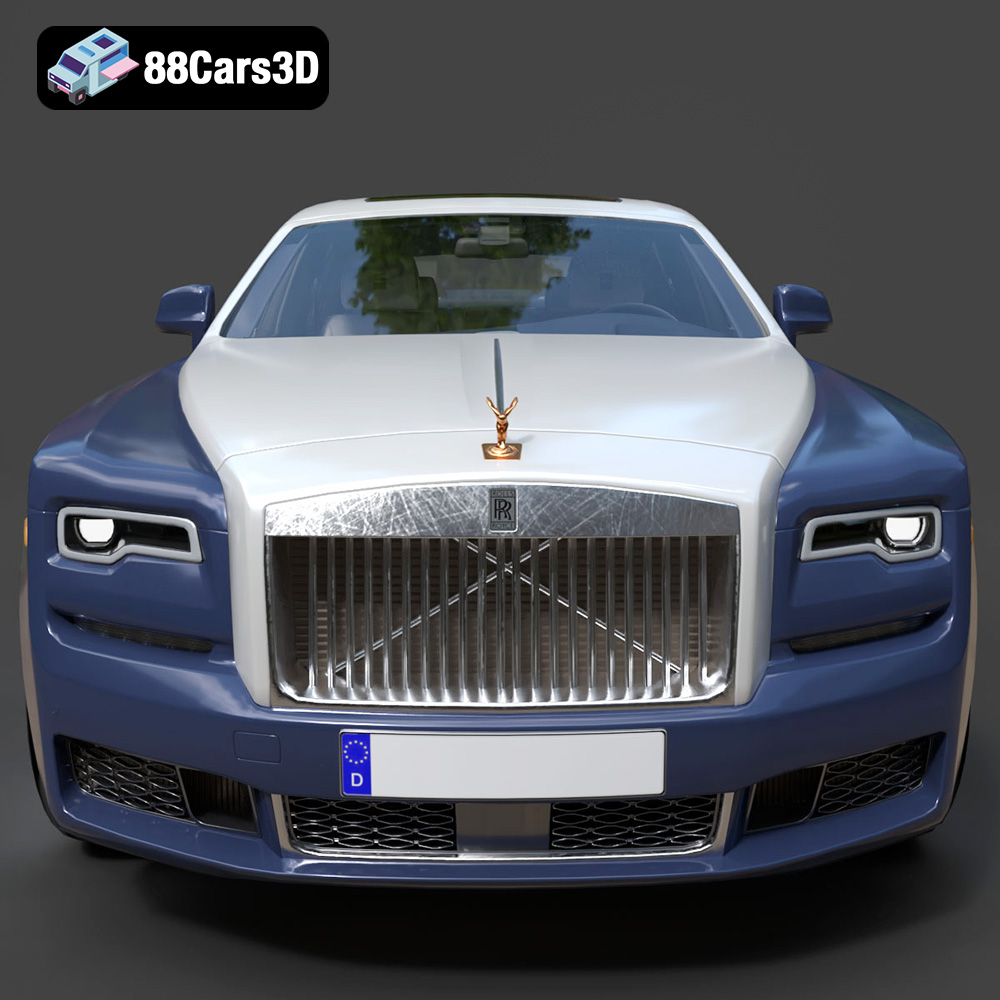
The very first impression of the Rolls-Royce Ghost EWB is its undeniable road presence, characterized by sweeping lines, an extended chassis, and perfectly balanced proportions. The 3D model faithfully replicates these aspects, ensuring that whether viewed from a distance or up close, it exudes the same stately elegance as its real-world counterpart. This includes the iconic Pantheon grille, a signature element that instantly identifies it as a Rolls-Royce. The intricate LED headlights and elegantly styled taillight clusters are modeled with precision, capturing the complex light diffusion and refraction found in modern automotive lighting. Even subtle features like the self-righting wheel center caps and premium multi-spoke alloy details are meticulously recreated, showcasing the model’s commitment to authenticity. The representation of the multi-link air suspension is also included, adding another layer of realism and allowing for accurate vehicle dynamics in simulations or animations.
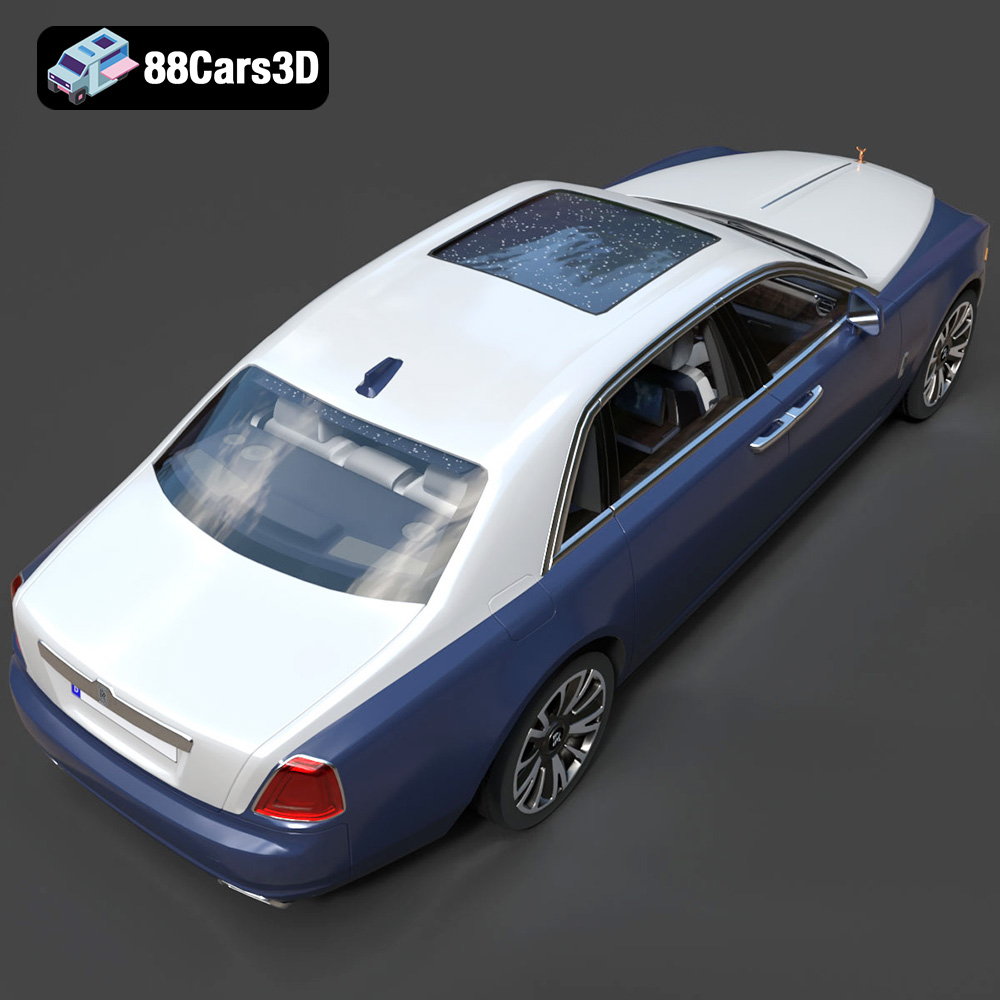
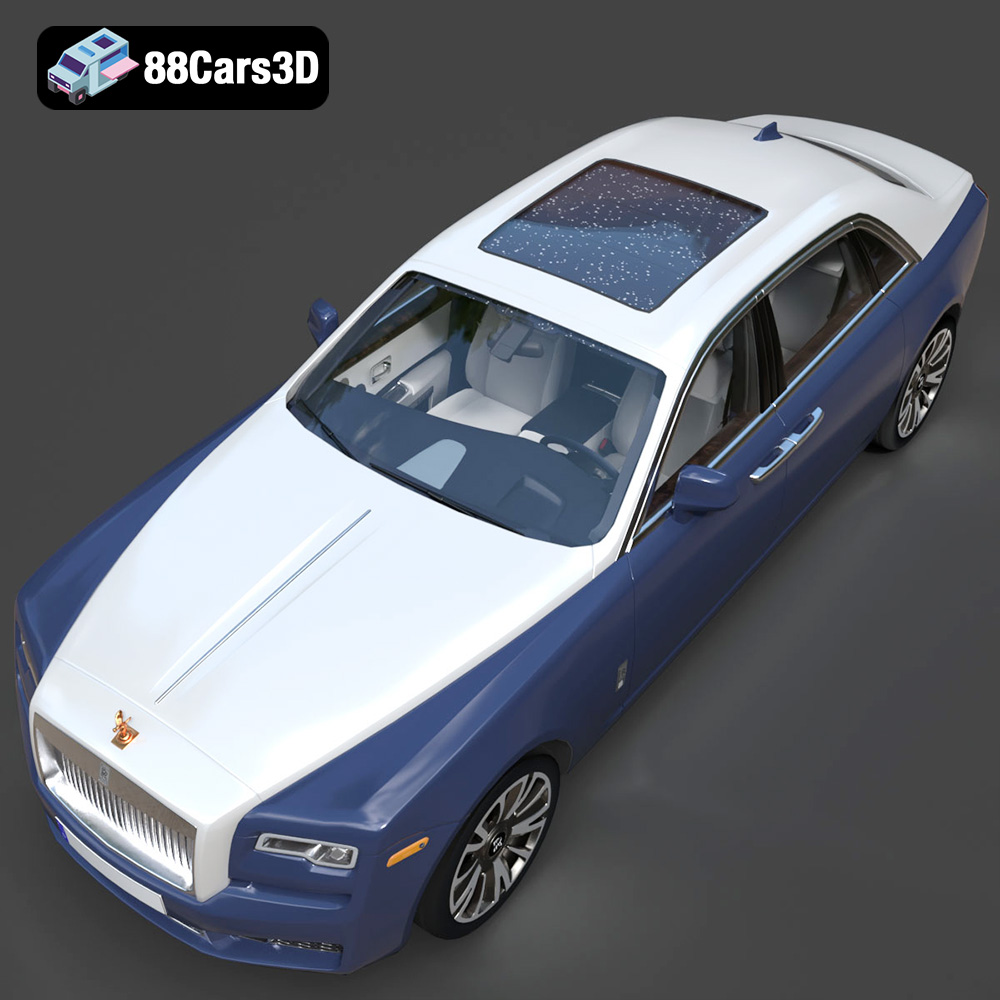
Stepping inside a Rolls-Royce Ghost EWB is an experience in itself, defined by ultra-luxurious materials and bespoke craftsmanship. The 3D model extends this fidelity to the interior, presenting a cockpit and rear cabin that are optimized for both visual realism and interactive experiences. The spacious rear cabin, a hallmark of the EWB variant, features accurate executive seating details. The elegant classic steering wheel boasts meticulous leather and wood veneer texturing, crucial for high-end rendering. The bespoke analog instrument cluster and central infotainment screen are detailed, providing accurate visual feedback for virtual tours or driving simulations. Hints of the starlight headliner, a celebrated Rolls-Royce feature, are thoughtfully included, along with a detailed center console featuring polished metal switches. This level of interior detail makes the model perfect for first-person POV experiences in gaming and VR, offering users a truly immersive sense of luxury.
Beyond aesthetic appeal, the true measure of a professional 3D car model lies in its technical specifications and how seamlessly it integrates into various performance-driven applications. The Rolls-Royce Ghost EWB 2018 3D model is engineered not just for stunning renders but for practical, efficient use in game development, AR/VR, and complex simulations, balancing visual fidelity with optimal performance.
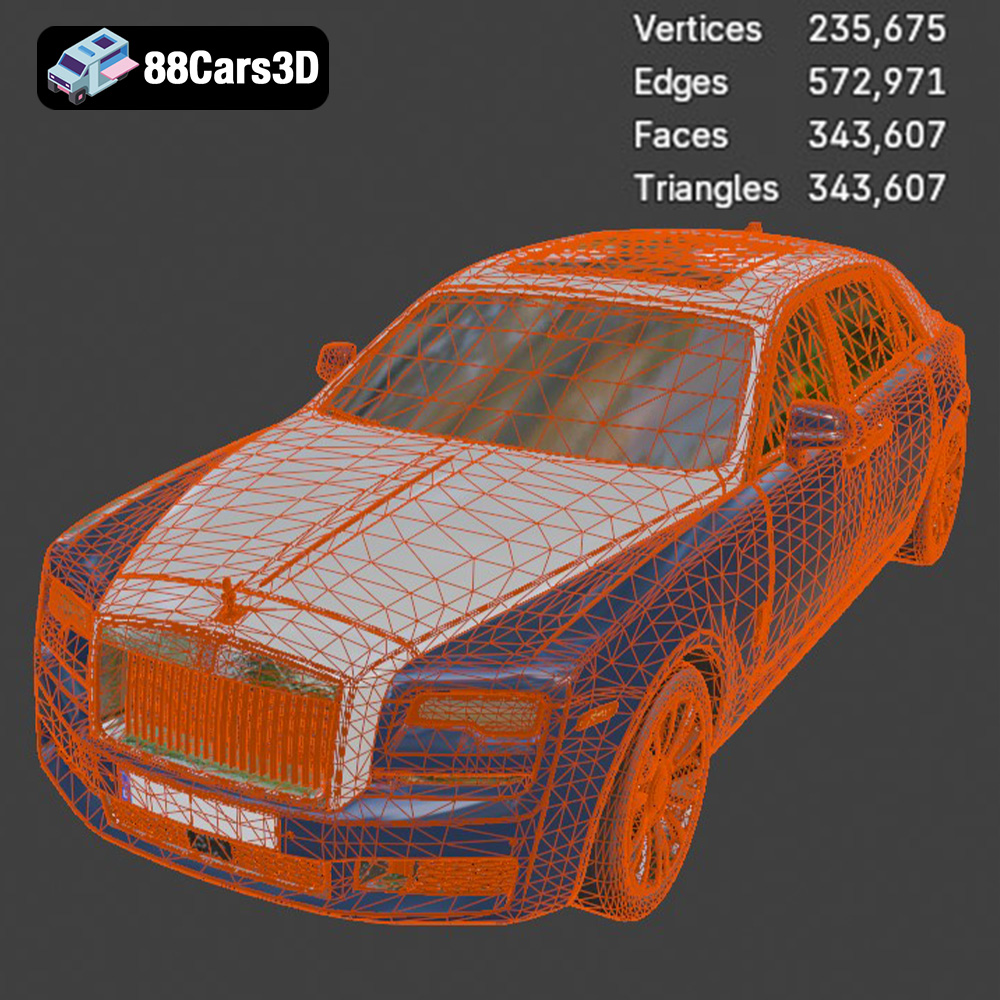
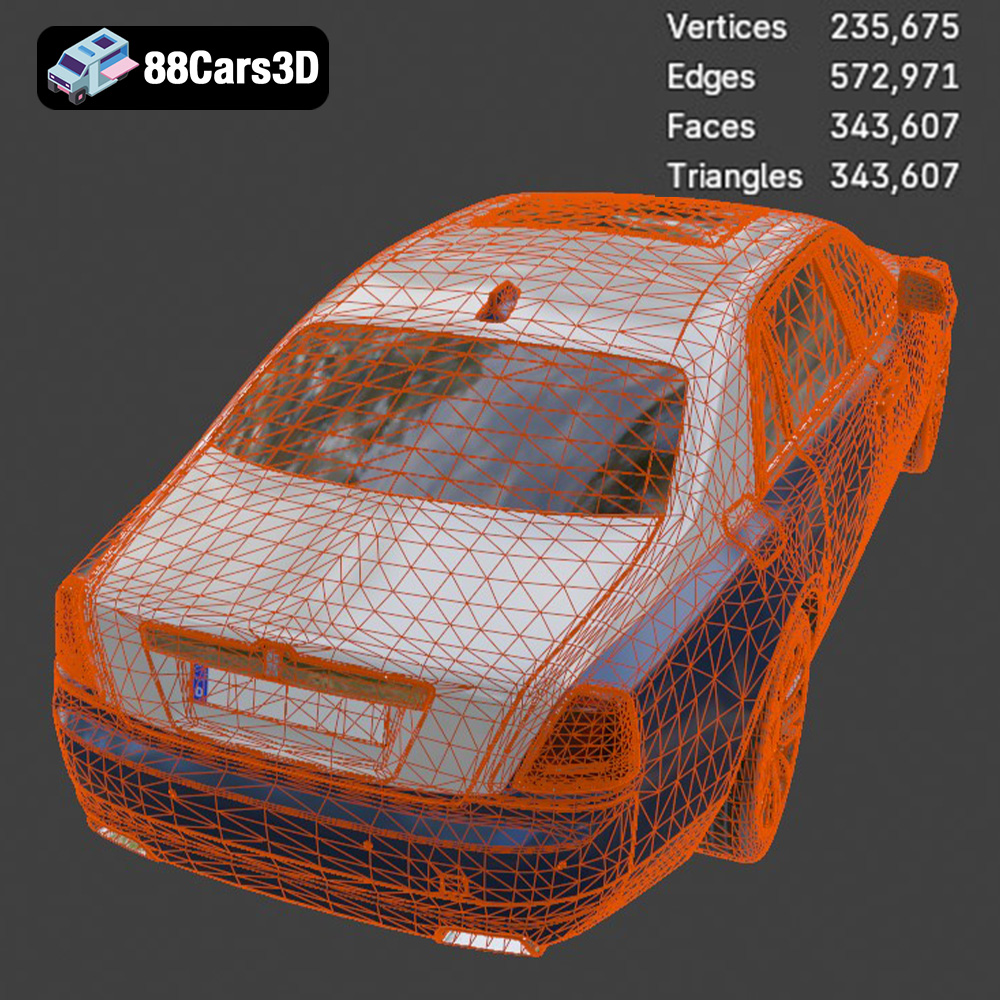
One of the critical technical advantages of this model is its optimized triangle count of approximately 250,000. This figure represents a sweet spot: it’s high enough to capture the complex curves and intricate details of the Ghost EWB, ensuring premium visual realism for close-up shots and high-resolution renders, yet simultaneously efficient enough to be considered “game-ready.” In real-time engines like Unreal Engine and Unity, managing polygon budgets is paramount for maintaining smooth frame rates. A model with 250k triangles can be comfortably integrated into a scene without bogging down performance, often serving as a hero asset that doesn’t require drastic LOD reductions for mid-distance viewing. This careful optimization saves developers countless hours that would otherwise be spent on retopology or manual decimation.
Technical precision extends to the model’s fundamental setup. The Rolls-Royce Ghost EWB 2018 3D model is built to real-world scale accuracy, based on actual vehicle chassis dimensions. This is crucial for consistent scene integration, particularly in architectural visualization or mixed-reality applications where scale must be perfect. Furthermore, the model features proper pivot setups for key animated components: steering, individual wheel rotation, and suspension travel. These correctly aligned pivots are essential for realistic animation, whether for driving simulations, cinematic sequences, or interactive vehicle configurators. The separation of wheels, suspension, coach doors, and steering components means artists don’t have to spend time detaching and re-parenting elements, streamlining the animation process and allowing for dynamic interactions right out of the box.
The true value of a premium 3D asset like the Rolls-Royce Ghost EWB 2018 model from 88cars3d.com lies in its adaptability across a diverse range of professional applications. Its optimized geometry and comprehensive file format support ensure it can transition effortlessly from one demanding creative pipeline to another, serving as a versatile cornerstone for various projects.
For game developers, the Rolls-Royce Ghost EWB model is an ideal asset for integrating luxury into virtual worlds. Its optimized ~250,000 triangle count strikes a perfect balance, making it suitable for open-world games, high-fidelity racing titles, or even realistic simulators. The game-ready nature means it can be dropped into engines like Unreal and Unity with minimal setup, leveraging its proper pivot setups for steering, wheel rotation, and suspension travel for accurate vehicle dynamics. Imagine this opulent vehicle cruising through a virtual city or becoming a reward car in a high-stakes racing game. The clean topology also ensures efficient material application and shadow casting, critical for achieving realistic visuals within the constraints of real-time rendering.
The burgeoning fields of AR and VR demand highly optimized yet visually appealing 3D models. This Rolls-Royce Ghost EWB model is perfect for creating immersive virtual showrooms, where potential customers can explore the car in a photo-realistic environment. It’s also excellent for sophisticated virtual reality configurators, allowing users to customize paint, interior trims, and wheel options in real-time. For mobile AR experiences, the included .glb format is particularly beneficial, ensuring efficient loading and display on handheld devices, making luxury accessible in a new dimension. Optimized geometry for first-person POV ensures that users exploring the interior in VR will experience accurate scale and detail, enhancing immersion.
In the realm of offline rendering and visualization, the model truly shines. It’s an excellent choice for luxury brand campaigns, high-end architectural renders (where the car adds a touch of aspirational lifestyle), or studio lighting setups. Its pristine reflections and accurate shading ensure that V-Ray, Corona Renderer, or Cycles produce stunning, photorealistic results. For cinematic animations, the separate components (wheels, doors, steering) allow for dynamic sequences, such as the famous coach doors gracefully opening or the suspension responding to uneven terrain. Whether it’s a product showcase, a film sequence, or an advertisement, this model provides the visual fidelity required to make a lasting impact.
Beyond digital applications, the Rolls-Royce Ghost EWB model is also convertible to the .stl format, making it suitable for 3D printing. This opens up avenues for display-scale hobbyists and collectors to bring the digital design into the physical world. The product description provides specific print settings, recommending resin printing for fine details, appropriate layer heights, wall thickness, and infill percentages. Guidance on supports and print orientation, especially for intricate parts like the Spirit of Ecstasy and exhaust, ensures successful physical reproduction. This dual-use capability – digital and physical – further extends the model’s versatility and appeal.
Integrating a complex 3D car model into a professional project requires a clear understanding of specific software workflows. The Rolls-Royce Ghost EWB 2018 3D model, with its array of file formats and optimized structure, is designed to streamline this process across industry-standard applications like 3ds Max, Blender, and Unreal Engine.
For users of Autodesk 3ds Max, utilizing the native .max file or an .fbx import offers immense flexibility. Once imported, the model’s pre-separated components (doors, wheels, steering) immediately facilitate animation. For photorealistic rendering, materials can be quickly adapted for renderers like V-Ray or Corona. Start by converting the model’s standard materials to your chosen renderer’s native material type. Assign PBR textures (Albedo/Base Color, Metallic, Roughness, Normal maps) to achieve realistic metallic sheen on the bodywork and subtle reflections on the glass and chrome. Leveraging 3ds Max’s robust scene management, you can easily set up studio lighting (e.g., dome lights with HDRI maps, area lights) to highlight the Ghost EWB’s elegant form. animating the coach doors opening or the wheels turning for a detailed product showcase becomes intuitive, thanks to the accurate pivot points. The model’s clean topology ensures smooth subdivision if further detail is required for extreme close-ups without introducing artifacts.
Blender users benefit greatly from the dedicated .blend file, which often comes with pre-configured materials and possibly even a basic lighting setup ready for Cycles or Eevee. Upon opening, verify the material setup and adjust Principled BSDF shaders to fine-tune reflection, metallic, and roughness values for the body paint, glass, and interior elements. For advanced realism, particularly with the vehicle’s paint, consider using a layered shader approach in Cycles to simulate clear coat depth. The separated mesh components in the .blend file allow for straightforward animation using Blender’s robust rigging and animation tools. Integrating the Ghost EWB into a larger scene – perhaps an architectural visualization – involves simply appending or linking the car model to your environment. Leveraging Blender’s real-time viewport with Eevee, artists can quickly iterate on lighting and material adjustments before committing to a final Cycles render, making the workflow highly efficient for diverse visualization tasks.
For real-time applications, particularly in game development or virtual production with Unreal Engine, the .fbx or specifically optimized .unreal package is the format of choice. Import the .fbx file into Unreal Engine, ensuring “Combine Meshes” is deselected if you want to retain individual component control. Unreal’s PBR material system is highly compatible with the model’s design. Create master materials for car paint, glass, and interior fabrics, then instance them for each part of the Ghost EWB. This allows for quick color changes and material variations without recompiling shaders. Key steps include setting up collision meshes (either auto-generated by Unreal or custom simplified meshes), configuring appropriate LODs (Levels of Detail) to ensure optimal performance at varying distances, and creating a vehicle blueprint. The blueprint can incorporate the separate wheel meshes, enabling realistic wheel rotation, suspension compression, and steering animations driven by physics or player input. This optimized integration makes the Rolls-Royce Ghost EWB 2018 3D model a powerful asset for creating immersive and visually stunning real-time experiences.
A truly professional 3D model isn’t just about accurate geometry; it’s about the flexibility it offers for customization and integration into a broader creative vision. The Rolls-Royce Ghost EWB 2018 3D model provides extensive options for tailoring its appearance, allowing artists to adapt it to any scene or narrative requirement, and then enhance it further through post-production techniques.
The customization options for the Ghost EWB model are vast. One of the most immediate visual changes is body color. Artists can easily modify the paint material to replicate signature two-tone factory paints, unique bespoke finishes, or entirely custom colors to match a brand’s aesthetic or a specific scene’s mood. Beyond color, the material finishes themselves can be adjusted. This includes tweaking the metallic flake, glossiness, and clear coat depth of the paint, refining the reflection properties of chrome trim, or altering the appearance of glass for different levels of tint or refraction. Interior elements, such as wood veneers, leather textures, and stitching, can also be modified to create a truly bespoke cabin environment, aligning with the Ghost EWB’s reputation for unparalleled personalization. For realistic tire appearance, existing textures can be modified or new ones applied to represent luxury street radials with subtle sidewall details and tread patterns, further enhancing the model’s believability.
Beyond the model itself, its versatility extends to how it interacts with its environment. Artists can adapt the lighting to suit different scenarios, from the stark clarity of a studio setup to the warm glow of a sunset urban street, or the diffused light of an overcast day. This involves adjusting HDRI maps, primary light sources, and bounce light to create accurate reflections and shadows that ground the car within its virtual world. In post-production, software like Adobe Photoshop, After Effects, or Nuke can elevate the rendered output even further. Techniques such as color grading to match a desired aesthetic, adding subtle lens flares or depth of field for cinematic effect, enhancing reflections and highlights, or compositing the vehicle into live-action footage can transform a good render into an exceptional visual. The clean render passes achievable with a well-built model like the Rolls-Royce Ghost EWB allow for precise control over these post-processing elements, enabling artists to achieve a final image or animation that truly resonates with their creative intent and client expectations.
The journey through the intricacies of the Rolls-Royce Ghost EWB 2018 3D model reveals more than just a detailed digital asset; it showcases the convergence of art, engineering, and digital craftsmanship. From its meticulously recreated exterior lines and luxurious interior details to its optimized technical specifications and versatile file format support, this model stands as a prime example of what a high-quality 3D car model should be.
We’ve explored how a carefully balanced polygon count of ~250,000 triangles ensures both visual fidelity and game-ready performance. We’ve delved into the specific strengths of various file formats – .blend for Blender users, .fbx for universal exchange and game engines, .obj for broad compatibility, .glb for web and AR/VR, .stl for 3D printing, .ply for precision, .unreal for engine-ready integration, and .max for 3ds Max users – demonstrating the critical role each plays in a professional workflow. We also outlined how these models are integrated into diverse applications, from cinematic rendering and automotive visualization to immersive AR/VR experiences and even tangible 3D prints, all while offering extensive customization options to meet any creative brief.
In a world where visual excellence is paramount, having access to such a refined and technically sound asset is invaluable. Whether you are a game developer crafting a new virtual world, an architect populating a photorealistic render, a marketer creating a compelling campaign, or a designer building an interactive configurator, the Rolls-Royce Ghost EWB 2018 3D model provides a robust and elegant foundation. For those seeking to elevate their projects with premium 3D car models, 88cars3d.com offers a curated selection of assets designed to meet the highest industry standards, empowering artists and developers to achieve stunning, professional results with efficiency and confidence.
Experience the pinnacle of automotive luxury with this meticulous 3D model of the 2018 Rolls-Royce Ghost EWB (Extended Wheelbase). Renowned for its unparalleled elegance, whisper-quiet V12 engine, and majestic road presence, the Ghost EWB represents the ultimate in bespoke craftsmanship. This model faithfully recreates the vehicle’s sweeping lines, iconic Pantheon grille, and signature rear-hinged coach doors, capturing the essence of modern British luxury.
This premium 3D model features exceptional topology and an optimized triangle count, ensuring a seamless blend of high visual fidelity and game-ready performance. Carefully crafted to maintain pristine reflections and accurate shading, the geometry is perfectly suited for demanding real-time environments and high-end offline rendering applications.
Perfect for luxury lifestyle visualizers, high-end architectural renders, cinematic animations, and sophisticated virtual reality configurators.
.blend, .fbx, .obj, .glb, .stl, .ply, .unreal, .max
Tags:
rolls-royce, ghost-ewb, 2018, luxury-car, sedan, limousine, car-3d-model, game-ready, low-poly, optimized, game-asset, rendering, vr-ar, blend, fbx, obj, glb, stl, ply, unreal, maxMercedes Benz CLS 500 3D Model 3D Printable STL
$19.99
.2018
.blend
.fbx
.glb
.limousine
.max
.obj
.ply
.rendering
.sedan
.stl
.unreal
car-3d-model
game asset
game-ready
ghost-ewb
low-poly
luxury car
optimized
rolls-royce
VR/AR