Get 20% OFF All Premium 3D & STL Models!

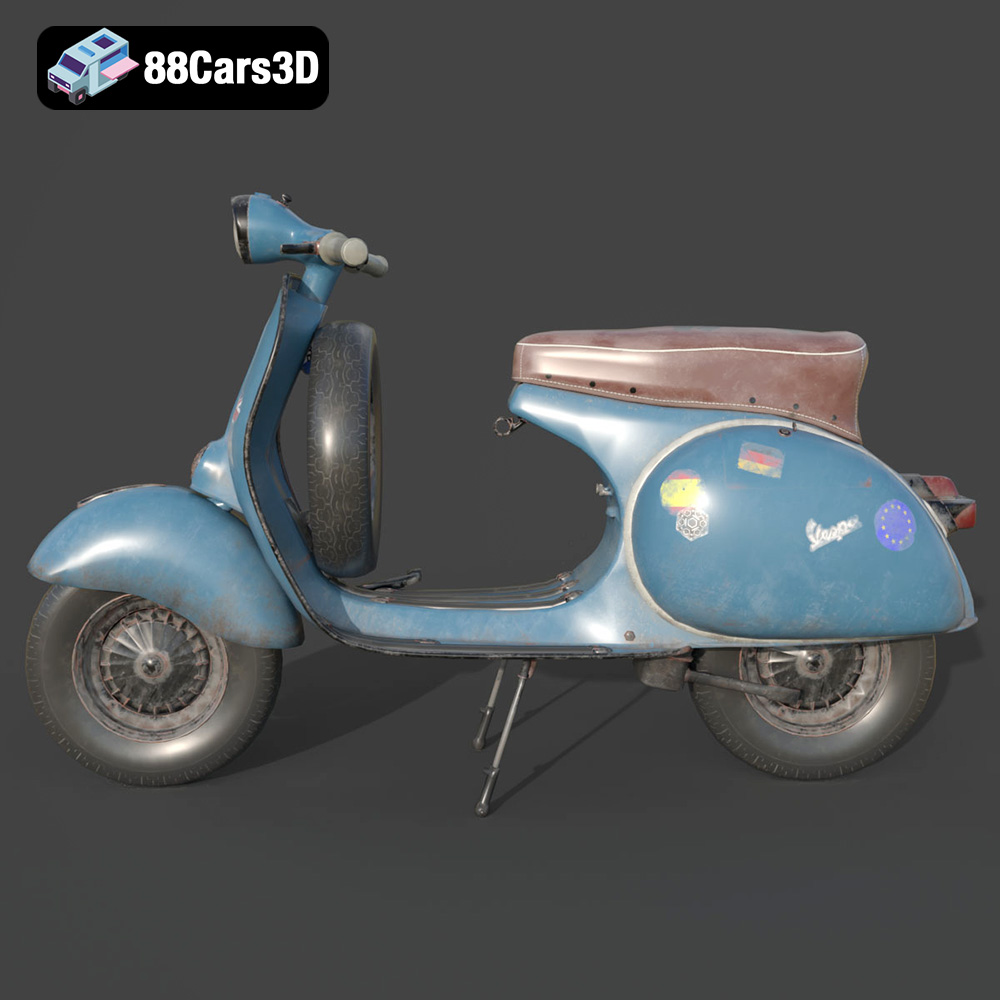
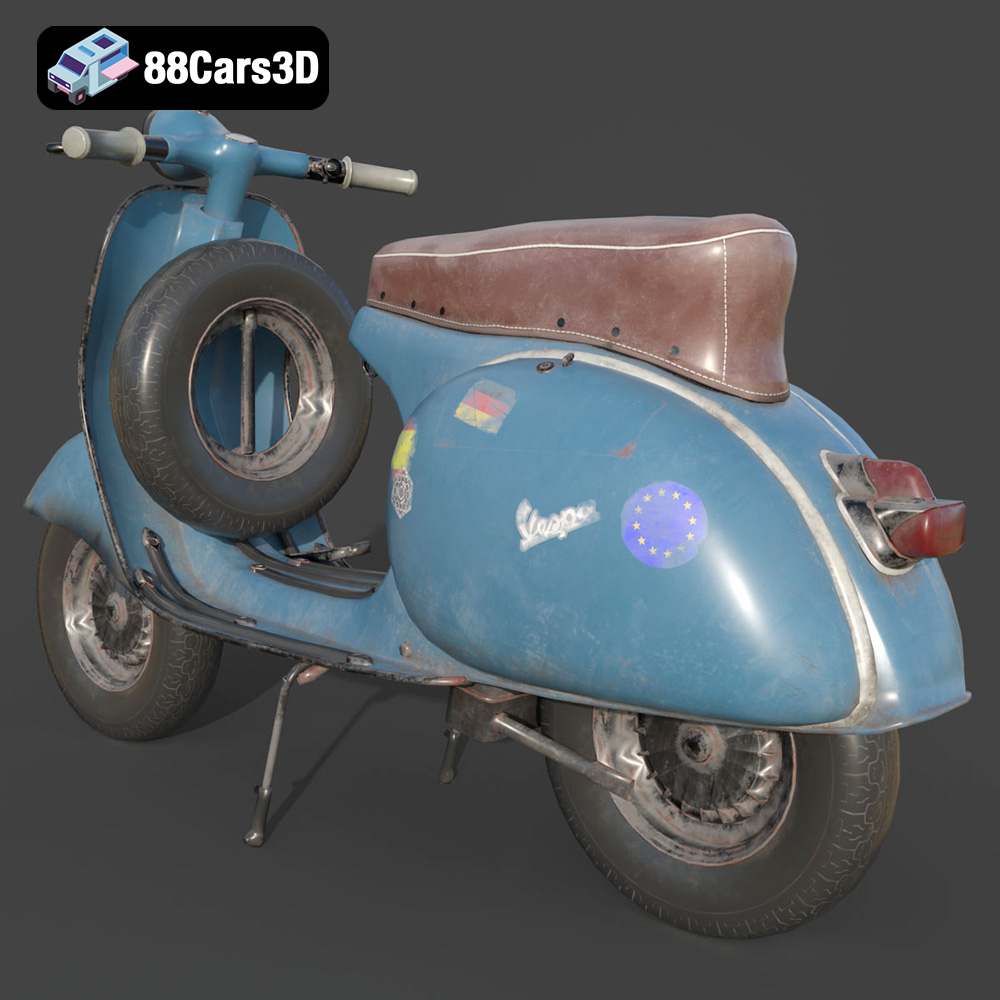
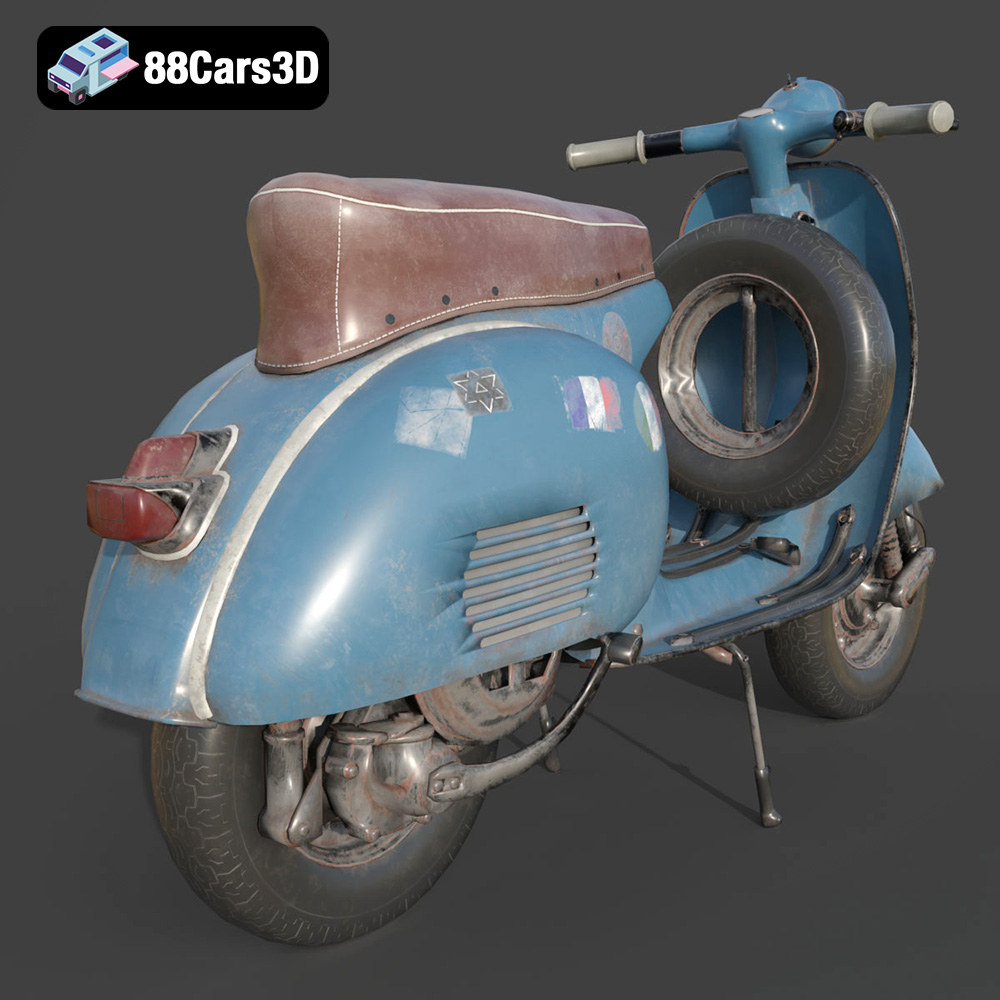
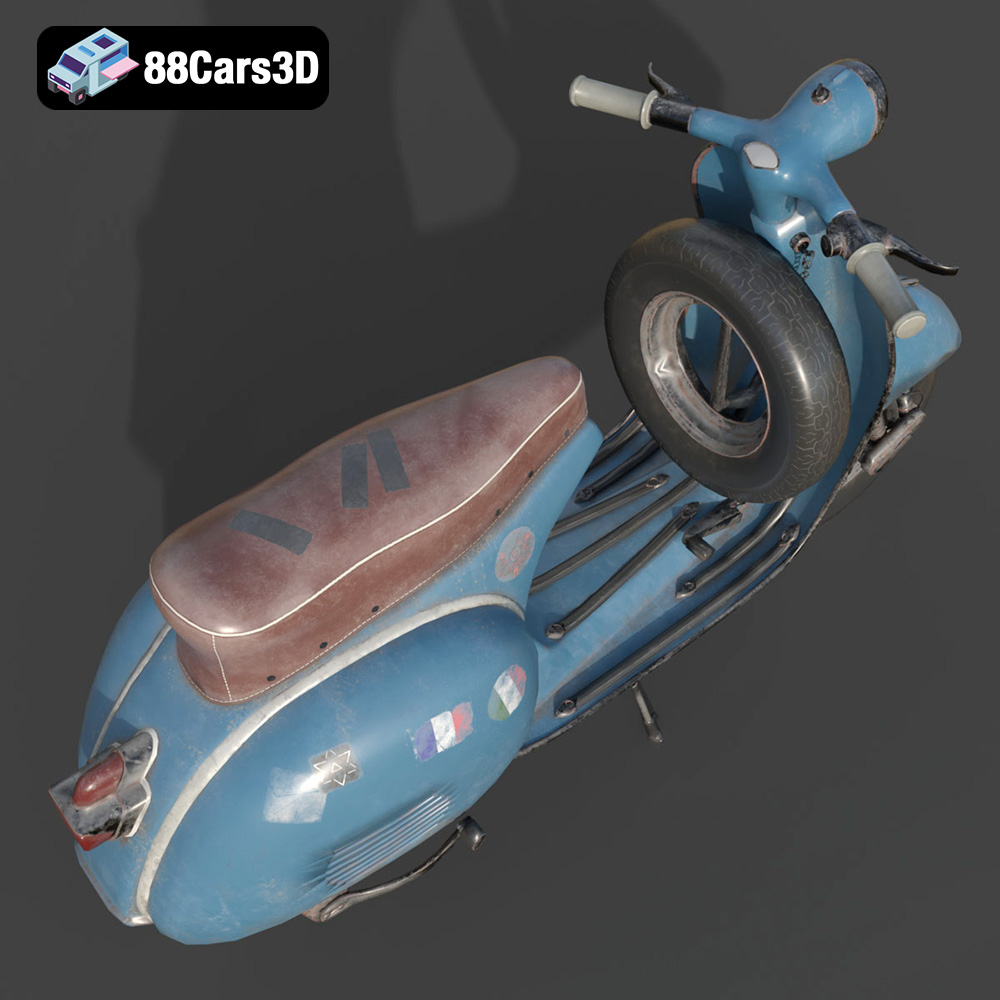
The world of 3D visualization and real-time graphics is constantly evolving, demanding increasingly detailed, optimized, and versatile assets. For automotive enthusiasts, designers, game developers, and visualization artists, the allure of perfectly replicated vehicles in digital form is undeniable. Whether it’s for an immersive virtual reality experience, a blockbuster game title, a high-fidelity architectural visualization, or even a detailed 3D print, the foundation lies in exceptional 3D car models. These aren’t just pretty pictures; they are complex data structures designed for specific purposes. Today, we’ll delve deep into the technical aspects of high-quality automotive 3D assets, using a truly iconic example: the Vespa GS 150 3D model, available for download on 88cars3d.com.
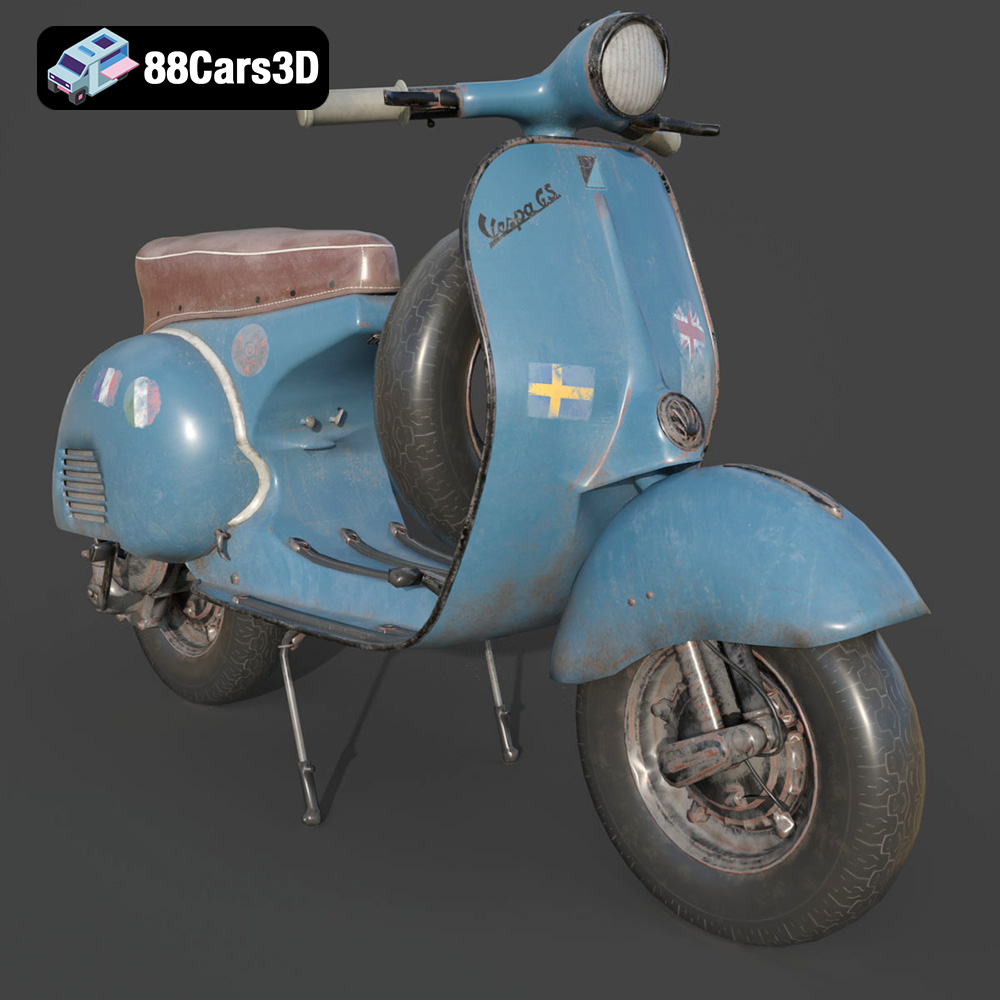
The Vespa GS 150 (Gran Sport) is more than just a scooter; it’s a design legend, a symbol of post-war Italian elegance and freedom. Its graceful aerodynamic curves, historical significance as the first mass-market sports Vespa, and unparalleled styling have cemented its place in automotive history. Recreating such a masterpiece in 3D requires meticulous attention to detail, balancing historical accuracy with modern technical demands. The particular Vespa GS 150 3D model we’re exploring offers exactly this blend, boasting an optimized topology and a suite of features perfect for a diverse range of professional applications, from game development to stunning close-up renders. Understanding the intricacies of such a model is key to maximizing its potential in any project.
The versatility of a 3D model is often defined by the range of file formats it supports. Each format serves a specific purpose, excelling in different stages of a 3D pipeline, from initial design and animation to real-time rendering and physical output. The Vespa GS 150 3D model, for instance, comes with a comprehensive set of formats, ensuring broad compatibility and utility across various industries. Grasping the nuances of each is crucial for any professional working with 3D car models.
The `.blend` format is the native file type for Blender, a powerful open-source 3D creation suite. When a model is provided in `.blend` format, it means you’re getting a fully editable Blender scene. This typically includes the raw mesh data, materials, textures, lighting setups, cameras, and any animation data or modifiers applied during the creation process. For a model like the Vespa GS 150, this is invaluable for artists who wish to delve into the model’s construction, modify its geometry, tweak its materials at a granular level, or even re-rig components for custom animations within Blender. It offers the most flexibility for in-depth customization and pipeline integration if Blender is your primary tool.
The Filmbox (`.fbx`) format is arguably the most widely adopted proprietary file format for 3D data exchange, particularly prevalent in game development (Unreal, Unity) and animation pipelines. It supports geometry, materials, textures, animation, skeletal data, and more in a robust, structured manner. The `.fbx` of the Vespa GS 150 is ideal for real-time engines because it efficiently packages all necessary asset components, allowing for seamless import and proper interpretation of pivots, hierarchies, and animation data. Its broad support across major DCC (Digital Content Creation) tools like 3ds Max, Maya, Blender, and ZBrush makes it a cornerstone for collaborative workflows.
The Wavefront Object (`.obj`) format is a simple, open standard primarily used for transferring 3D geometry data. It stores vertex positions, UV coordinates, normals, and material definitions (via an accompanying `.mtl` file). While it doesn’t support animation or rigging, its simplicity and widespread compatibility make it an excellent choice for basic mesh exchange between virtually any 3D software. For the Vespa GS 150, the `.obj` ensures that the core mesh and its UVs can be opened and worked on in almost any 3D application, serving as a reliable fallback or for use in pipelines where only static mesh data is required.
The GL Transmission Format (`.glb`) is a binary version of `.gltf` (GL Transmission Format), designed for efficient transmission and loading of 3D scenes and models by web applications, augmented reality (AR), and virtual reality (VR) experiences. It packages the model’s geometry, textures, and animations into a single file, making it incredibly easy to integrate into browser-based viewers, mobile AR apps, or WebGL projects. The `.glb` format for the Vespa GS 150 is perfect for creating immersive virtual showrooms, configurators, or integrating the scooter into a mobile AR experience where performance and file size are critical.
The Stereolithography (`.stl`) format is the de facto standard for 3D printing. It represents a 3D model as a series of connected triangles (a tessellation) defining its surface geometry, without any color, texture, or material information. For hobbyists and professionals looking to produce physical replicas of the Vespa GS 150, the `.stl` file is precisely what a 3D printer needs. It’s critical that the source model is watertight and manifold for a successful print, which a well-prepared `.stl` ensures. The Vespa’s inclusion of specific 3D print settings further enhances its utility in this realm.
The Polygon File Format (`.ply`) is often used for storing 3D data from 3D scanners, CAD software, and scientific applications. It supports both triangular and polygonal meshes, and can store additional properties such as color, transparency, surface normals, and even data like range and confidence of a scan point. While less common for everyday artistic exchange than FBX or OBJ, the `.ply` format for the Vespa GS 150 could be valuable for precise engineering analysis, conversion into CAD formats, or integration into specialized simulation environments where high-precision mesh data is required beyond simple visual representation.
The `.unreal` designation, while not a strict file extension in the same way as others, typically implies an asset that is pre-packaged or specifically prepared for direct import and optimal performance within the Unreal Engine. This often means the model has been thoroughly checked for appropriate scale, pivot points, LODs (Levels of Detail), collision meshes, and material setups compatible with Unreal’s Physically Based Rendering (PBR) pipeline. For a game-ready asset like the Vespa GS 150, an “Unreal-ready” version saves significant time and effort for developers, ensuring it drops into a scene and behaves as expected without extensive post-import optimization.
The `.max` format is the native scene file for Autodesk 3ds Max, a leading software for 3D modeling, animation, rendering, and compositing. Like `.blend` for Blender, a `.max` file provides the full project data, including editable geometry, materials, textures, lighting, cameras, rigging, and animation. This offers the ultimate flexibility for 3ds Max users to modify the Vespa GS 150 model to their exact specifications, whether it’s adjusting the mesh, creating custom animations, or integrating it into complex architectural or product visualization scenes. It’s perfect for those deeply embedded in the 3ds Max ecosystem, offering complete control over the asset.
Creating a truly excellent 3D car model is a delicate balance of artistic vision and technical precision. It’s not just about making something look good; it’s about making it perform well across diverse applications while maintaining authenticity. The Vespa GS 150 3D model exemplifies this philosophy, showcasing a thoughtful approach to both aesthetics and technical specifications.
The first challenge in recreating a classic like the Vespa GS 150 is absolute accuracy. The model meticulously replicates the scooter’s accurate unibody frame geometry and proportions, from the signature swept-back leg shield to the rounded side panels. This requires extensive reference gathering, often involving blueprints, historical photographs, and even physical measurements of the actual vehicle. Details like the classic sweeping exhaust system, authentic round headlamp, sleek teardrop taillight, and the distinctive 10-inch wheels with classic tread patterns are all carefully crafted. This attention to fidelity ensures that the digital model truly captures the essence of the original, making it suitable for historical visualizations or detailed product showcases.
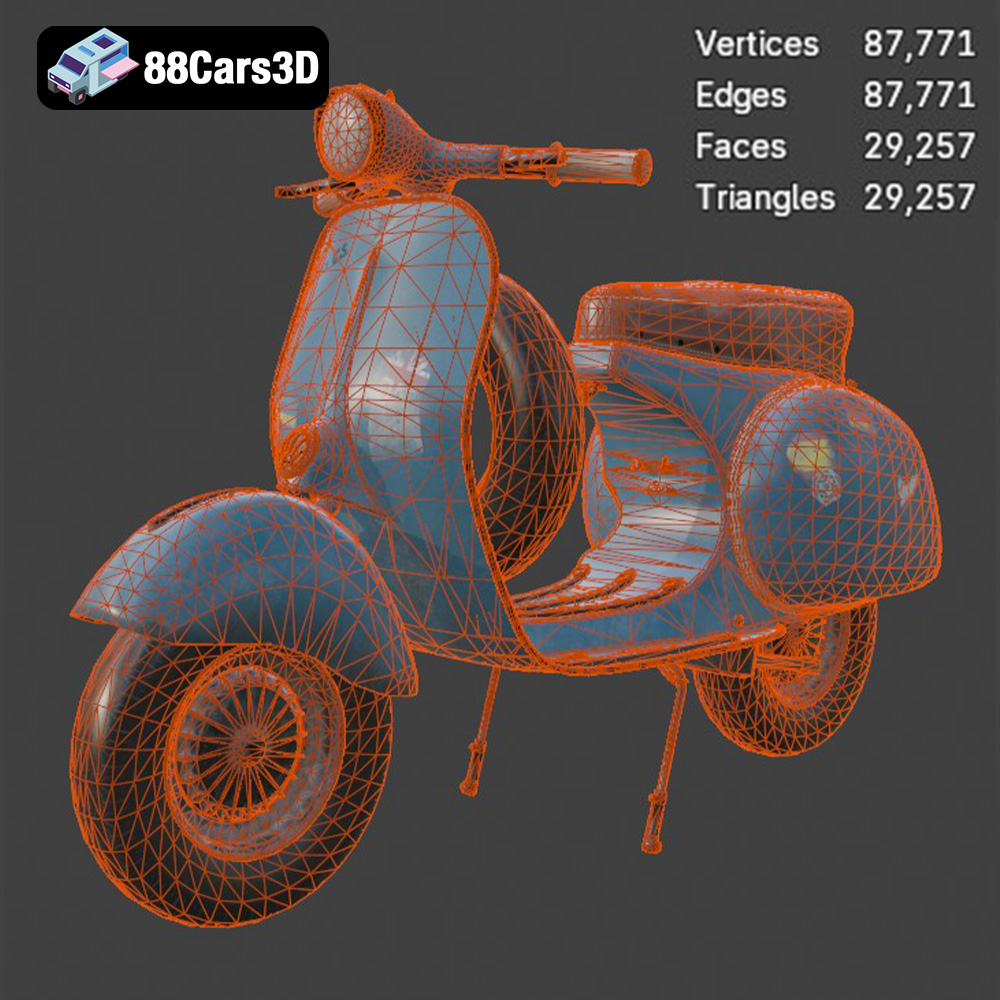
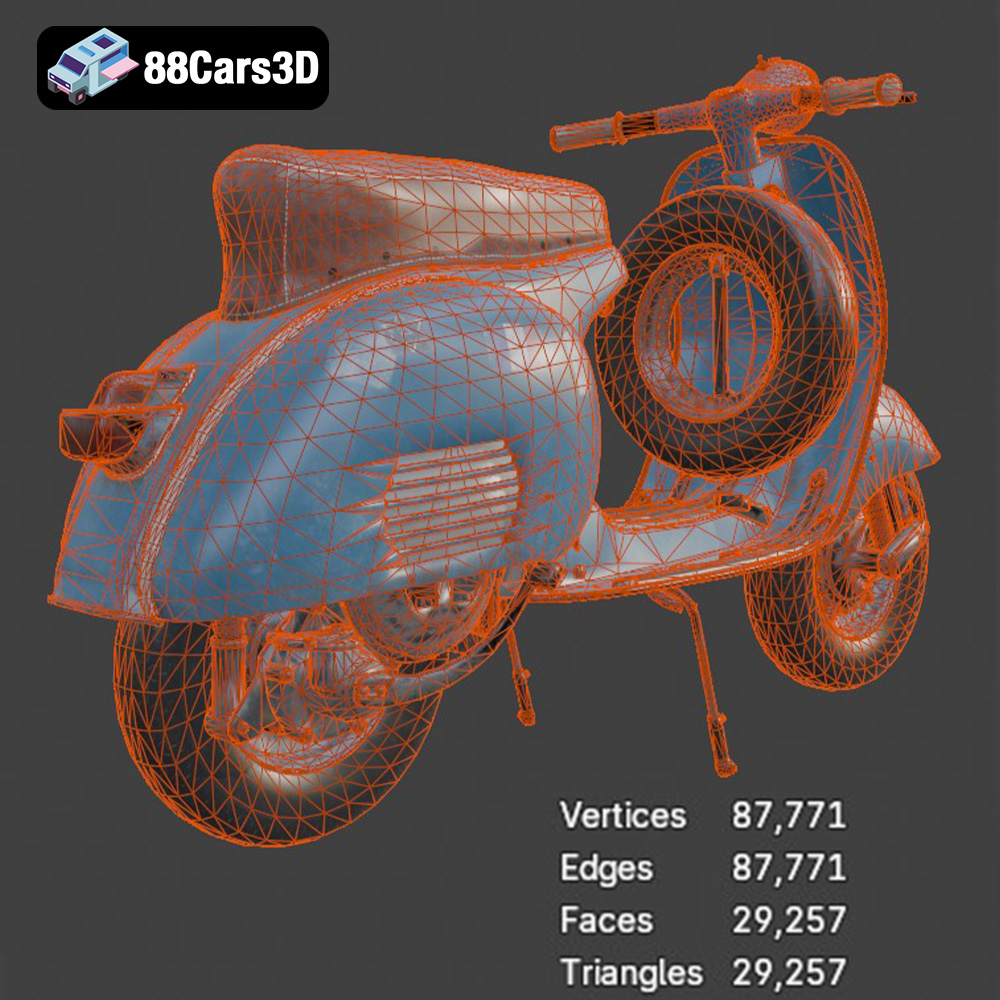
One of the most critical technical aspects of any 3D model, especially for real-time applications, is its topology. The Vespa GS 150 3D model features a “well-optimized topology (~200,000 triangles),” which strikes a perfect balance. A model with too many polygons (triangles) can cripple game performance or render times, while too few can result in blocky, unrealistic visuals. This polycount is a sweet spot: high enough to ensure exceptional visual fidelity for close-up renders and detailed environment populating, yet optimized enough to maintain game-ready performance in engines like Unreal or Unity. The mesh is likely structured with efficient edge flow, clean quads (which are then triangulated for rendering), and minimal non-manifold geometry, crucial for smooth deformation and efficient shading.
The product description highlights “separate wheels, suspension, and steering components for animation.” This modularity is a hallmark of professional-grade 3D car models. By separating these elements, artists and developers gain immense flexibility. The proper pivot setup for steering, wheel rotation, and suspension travel is also explicitly mentioned, indicating that the model is ready to be rigged and animated with minimal fuss. This saves countless hours in a production pipeline, allowing animators to quickly simulate driving dynamics, suspension compression, or steering maneuvers without having to manually dissect and set up the model hierarchy. Furthermore, separating components simplifies customization, allowing for individual texture changes, material variations, or even swapping out parts.
High-quality 3D car models like the Vespa GS 150 are incredibly versatile tools that find applications across numerous professional disciplines. Their carefully crafted details and optimized technical specifications make them indispensable for creating compelling digital experiences.
For game developers, the demands are rigorous: models must be visually appealing, performant, and easily integrated into engine pipelines. The Vespa GS 150 3D model is explicitly designed to be “Game-Ready & Optimized,” with its ~200,000 triangles making it ideal for open-world games, racing titles, and simulators. In Unreal Engine or Unity, a model of this caliber would typically be imported via `.fbx` or the specific `.unreal` package. Developers would then apply PBR (Physically Based Rendering) materials, potentially set up LODs (Levels of Detail) for performance scaling, and integrate the separate animated components into the game’s physics and animation systems. Imagine this classic scooter populating a bustling European street in an open-world RPG or featuring as a unique vehicle in a retro racing game – its optimized geometry ensures it won’t be a drain on system resources.
Augmented Reality (AR) and Virtual Reality (VR) represent the cutting edge of immersive digital experiences. For these applications, models need to be lightweight, high-fidelity, and capable of rendering smoothly on various devices, including mobile. The Vespa GS 150 model, especially in its `.glb` format, is “perfect for immersive virtual showrooms, configurators, and mobile AR experiences.” In a VR showroom, users could walk around the Vespa, inspect its details up close, and even change its color in real-time. For AR, the model could be projected into a real-world environment via a smartphone, allowing potential buyers or enthusiasts to see the scooter in their driveway or living room. The optimized polycount and real-world scale are crucial here, ensuring a believable and fluid experience without motion sickness or performance hitches.
Beyond real-time, 3D car models are central to high-end rendering and visualization for marketing, advertising, and architectural projects. The “exceptional visual fidelity” of the Vespa GS 150 model makes it “excellent for brand campaigns, lifestyle scenes, and studio lighting setups.” Artists working in 3ds Max (using the `.max` file) or Blender (using the `.blend` file) can leverage advanced rendering engines like V-Ray, Corona, Arnold, or Cycles to produce photorealistic images. This involves setting up complex studio lighting, creating realistic reflections on the scooter’s polished surfaces, and integrating it into richly detailed environments, perhaps a cobblestone street in Italy. The accurate unibody geometry and detailed engine block ensure that even in extreme close-ups, the model holds up, providing the realism needed for high-impact visual content.
The utility of a high-quality 3D model extends beyond purely digital realms. With advancements in additive manufacturing, 3D printing has become an accessible way to bring virtual objects into the physical world. The Vespa GS 150 3D model explicitly supports this, with a dedicated `.stl` format and detailed 3D print settings, making it an excellent candidate for physical display models or prototypes.
When converting a digital model for 3D printing, several factors become critical. The `.stl` format, provided with the Vespa, is the universal language for 3D printers. However, for a successful print, the mesh needs to be “watertight” (no holes or gaps in the surface) and “manifold” (every edge connected to exactly two faces). A professionally prepared `.stl` ensures these conditions are met, preventing errors during slicing. The product description also specifies that the model is “Convertible to .stl format for display-scale hobbyists,” which implies the digital asset has been designed with physical manufacturing in mind.
The provided 3D print settings are invaluable. Recommendations like “Recommended scale: 1:12 / 1:18 / 1:24” guide users towards sizes that balance detail retention with reasonable print times and material usage. “Layer height: 0.04–0.12 mm (Resin printing recommended for fine details)” is a crucial tip, indicating that FDM printers might struggle with the intricate curves and small parts, while resin (SLA/DLP) printers excel in capturing the Vespa’s delicate features. “Wall thickness: 1.2–2.0 mm” ensures structural integrity, preventing parts from being too fragile. The need for “Supports: Required for detailed parts like exhaust, mirrors, handlebars” is standard for complex overhangs. Finally, “Print orientation: Frame printed angled for structural integrity; wheels printed separately” demonstrates an understanding of how to optimize prints for strength and detail, minimizing print failures and maximizing quality. Post-processing steps like “Sanding, primer, and authentic factory colors with metallic finishes” bridge the gap between a raw print and a beautiful, display-ready miniature.
A professional 3D asset isn’t just a static model; it’s a foundation for endless creative possibilities. The Vespa GS 150 3D model is designed with customization in mind, allowing artists and developers to tailor it to their specific project needs, adding unique flair or adapting it to diverse scenarios.
The ability to “Change body/tank colors (e.g., factory colors, custom finishes)” is fundamental for any automotive model. This is achieved by adjusting the material properties within your 3D software or game engine. Using the `.max` or `.blend` files gives the most granular control, allowing artists to modify base colors, metallic properties, roughness, and clear coat simulations. Similarly, “Modify tire textures (off-road vs. street variants)” and “Adjust material finishes (matte, gloss, metallic)” provide avenues for significant visual differentiation. This level of control allows the same base model to appear as a pristine showroom piece, a weathered vintage scooter, or even a custom hot rod Vespa, simply by altering its surface properties. This flexibility is a huge time-saver compared to needing a completely new model for each variation.
Beyond visual aesthetics, customization extends to environmental integration. “Adapt lighting for different environments” allows the Vespa GS 150 to convincingly exist in a sunny Italian piazza, a moody night scene, or a brightly lit studio. This involves not just placing light sources but also adjusting the model’s materials to react appropriately to different lighting conditions. For instance, a highly reflective metallic paint will look dramatically different under a direct sun versus diffuse overcast lighting. The separated components also enable scenario-specific changes, such as removing the saddle for a cargo setup, or adding accessories for a touring variant. This iterative approach to asset use maximizes the value of the initial investment in a high-quality 3D car model, providing a robust base for a multitude of creative outcomes.
In the fast-paced world of 3D content creation, the difference between an average project and an outstanding one often comes down to the quality of its foundational assets. A truly professional 3D car model, like the Vespa GS 150 offered on 88cars3d.com, is much more than a collection of polygons; it’s a meticulously engineered digital twin, built for performance, versatility, and visual excellence across an array of applications.
We’ve explored how its optimized topology (~200,000 triangles) strikes a perfect balance for game-ready performance and high-fidelity rendering, and how its accurate proportions capture the iconic essence of the classic scooter. The availability across multiple crucial file formats—`.blend`, `.fbx`, `.obj`, `.glb`, `.stl`, `.ply`, `.unreal`, and `.max`—ensures compatibility with virtually any professional workflow, from game development and AR/VR experiences to photorealistic rendering and precise 3D printing. The detailed features, from the engine block to the cockpit, along with the provision for animation and customization, empower artists and developers to integrate this model seamlessly and elevate their projects.
Investing in high-quality 3D car models from reputable sources like 88cars3d.com is a strategic decision that saves time, ensures technical integrity, and ultimately allows creative professionals to focus on crafting immersive and visually stunning experiences. The Vespa GS 150 3D model is a testament to the power of thoughtful design and technical precision, ready to bring a touch of timeless Italian elegance to your next digital masterpiece or physical creation.
The Vespa GS 150 (Gran Sport) is widely regarded as one of the most beautiful and iconic scooters ever produced. Known for its elegant aerodynamic curves, historical significance as the first mass-market sports Vespa, and unparalleled Italian styling, this classic masterpiece defined a generation. It features the signature swept-back leg shield, rounded side panels, and the distinctive 150cc two-stroke engine layout.
This high-quality 3D model features a well-optimized topology (~200,000 triangles), ensuring exceptional visual fidelity while maintaining game-ready performance. The model is meticulously crafted to capture the essence of the classic scooter, making it a perfect asset for close-up renders, real-time engines, and detailed environment populating.
Perfect for classic European street scenes, retro lifestyle visualizations, virtual showrooms, and historic racing games.
.blend, .fbx, .obj, .glb, .stl, .ply, .unreal, .max
Tags:
vespa, gs-150, scooter, classic-scooter, retro-scooter, game-ready, low-poly, optimized, scooter-3d-model, motorcycle-3d-model, game-asset, rendering, vr-ar, blend, fbx, obj, glb, stl, ply, unreal, maxVespa VNB 125-B 3D Model 3D Printable STL
$39.99
.blend
.fbx
.glb
.max
.obj
.ply
.rendering
.scooter
.stl
.unreal
.vespa
classic-scooter
game asset
game-ready
gs-150
low-poly
motorcycle-3d-model
optimized
retro-scooter
scooter-3d-model
VR/AR