Get 20% OFF All Premium 3D & STL Models!

In the rapidly evolving landscape of digital content creation, the demand for high-fidelity 3D assets has never been greater. From cinematic automotive rendering to immersive game environments and cutting-edge AR/VR experiences, the quality of a 3D model can significantly impact a project’s overall success. Professionals across various industries consistently seek assets that offer both aesthetic realism and technical robustness, capable of seamlessly integrating into diverse production pipelines.
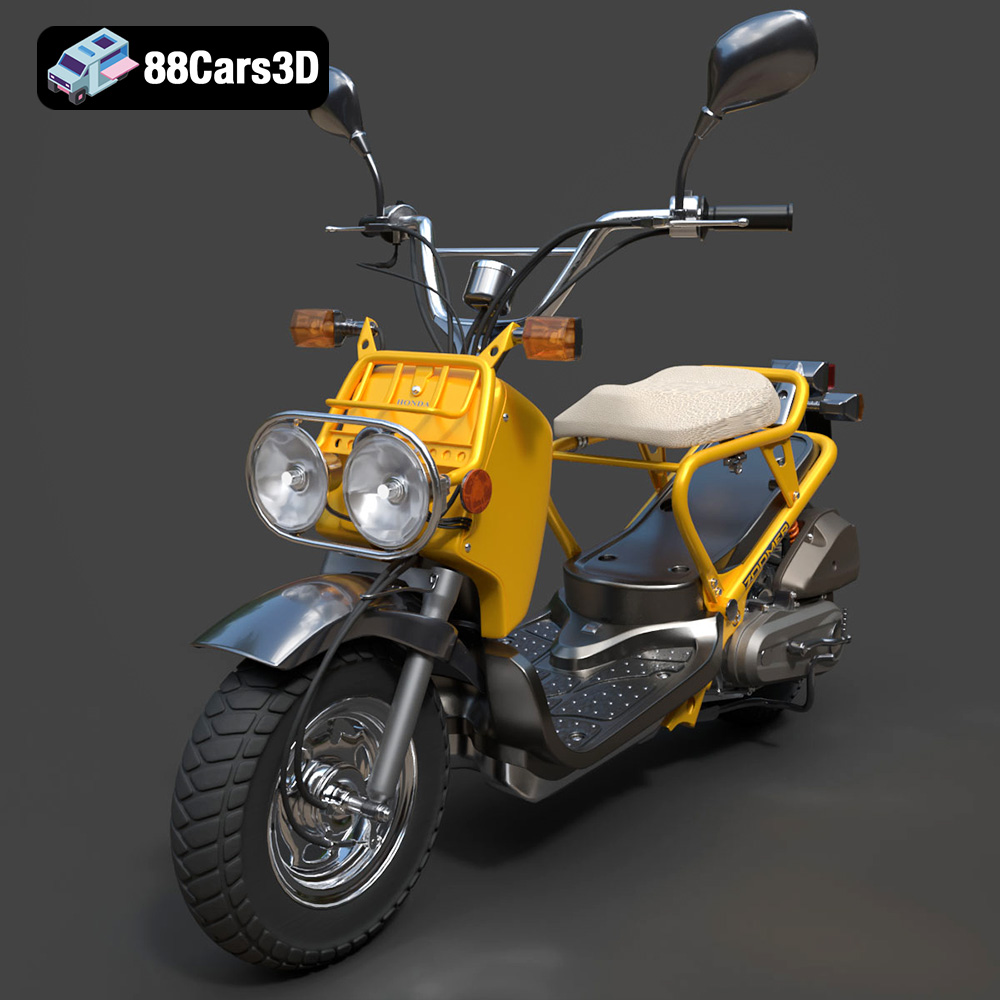
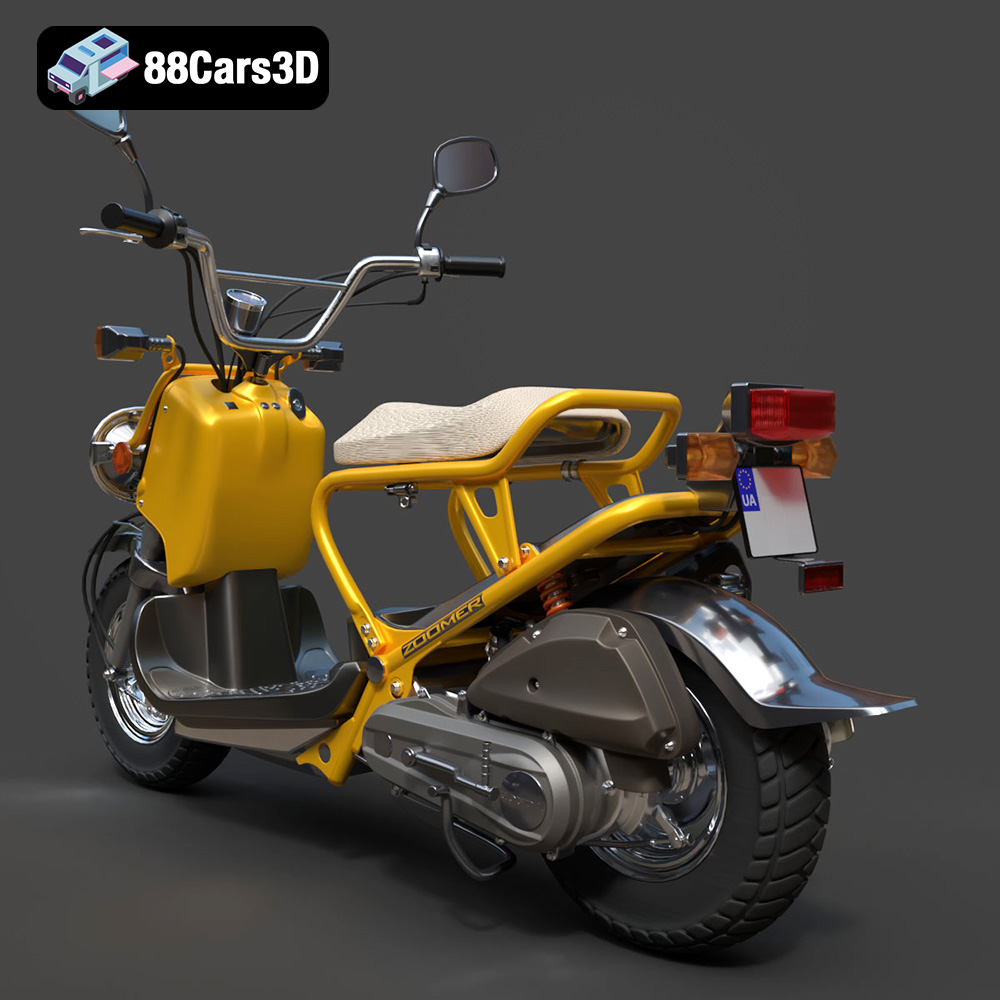
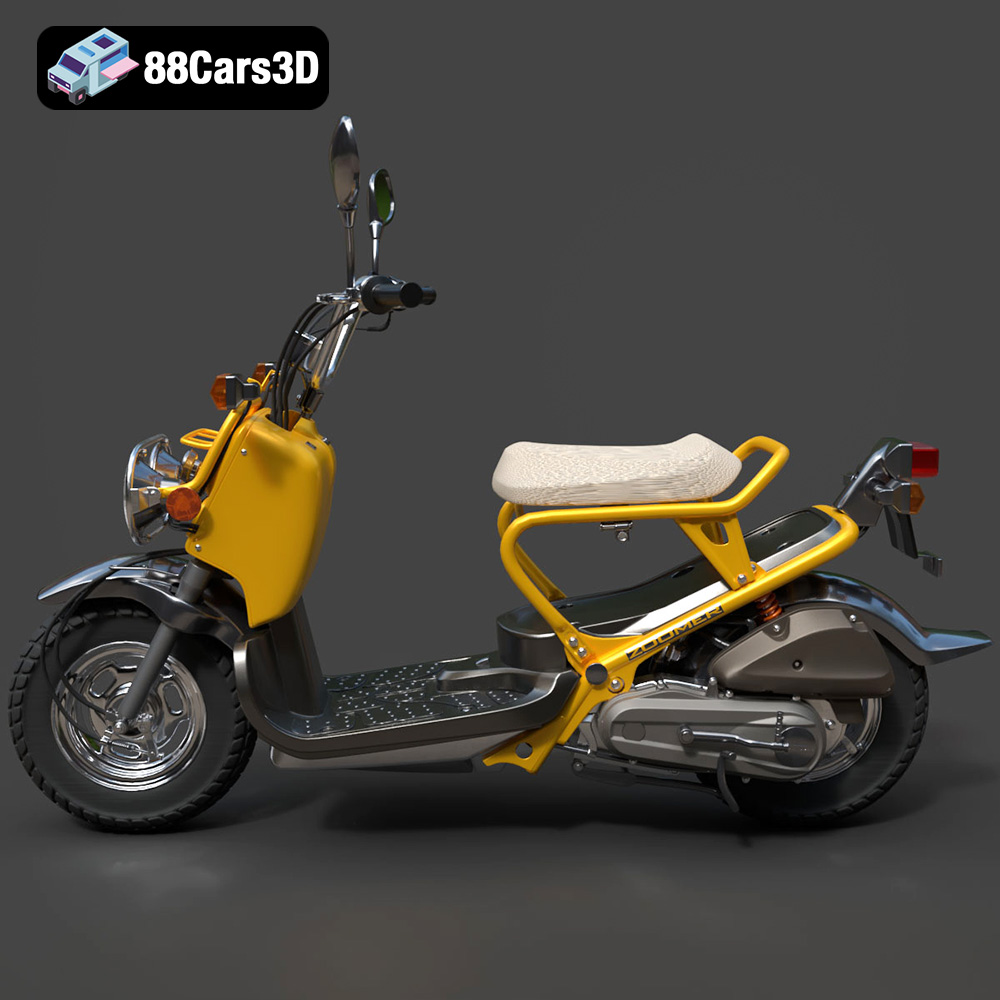
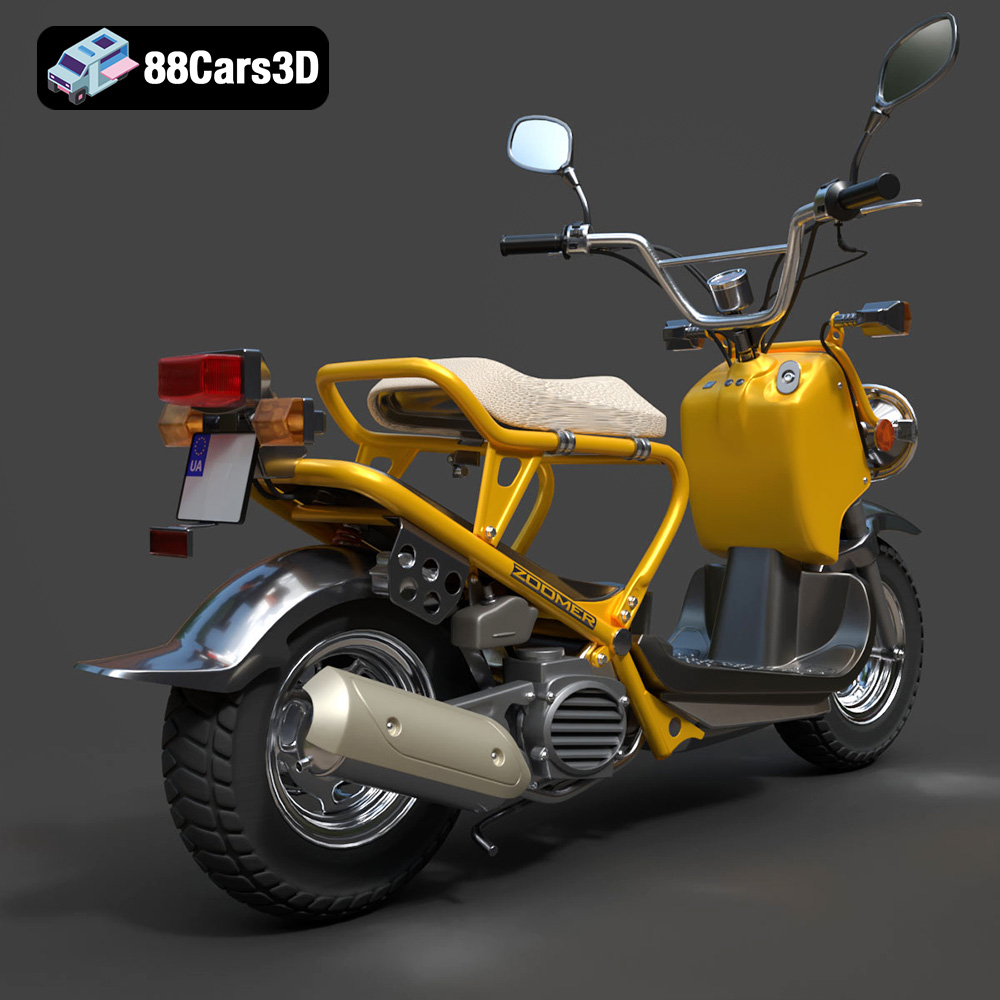
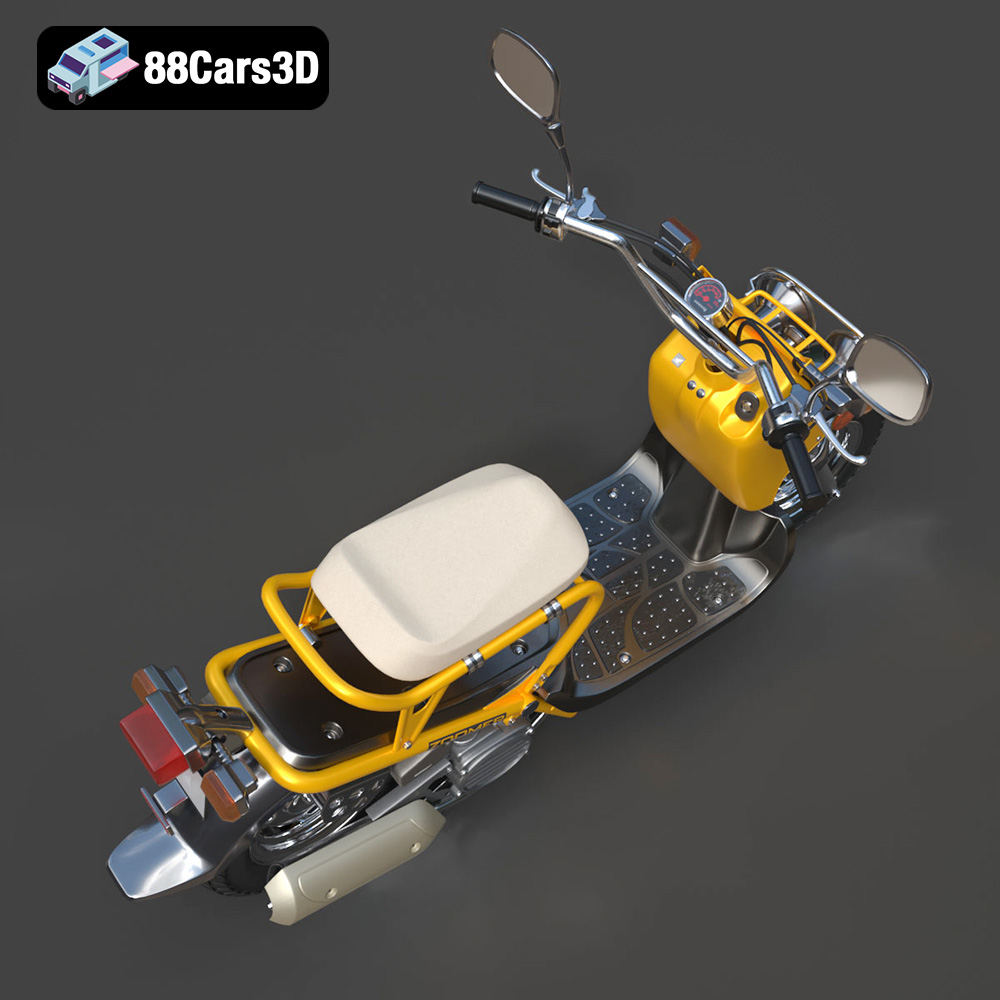
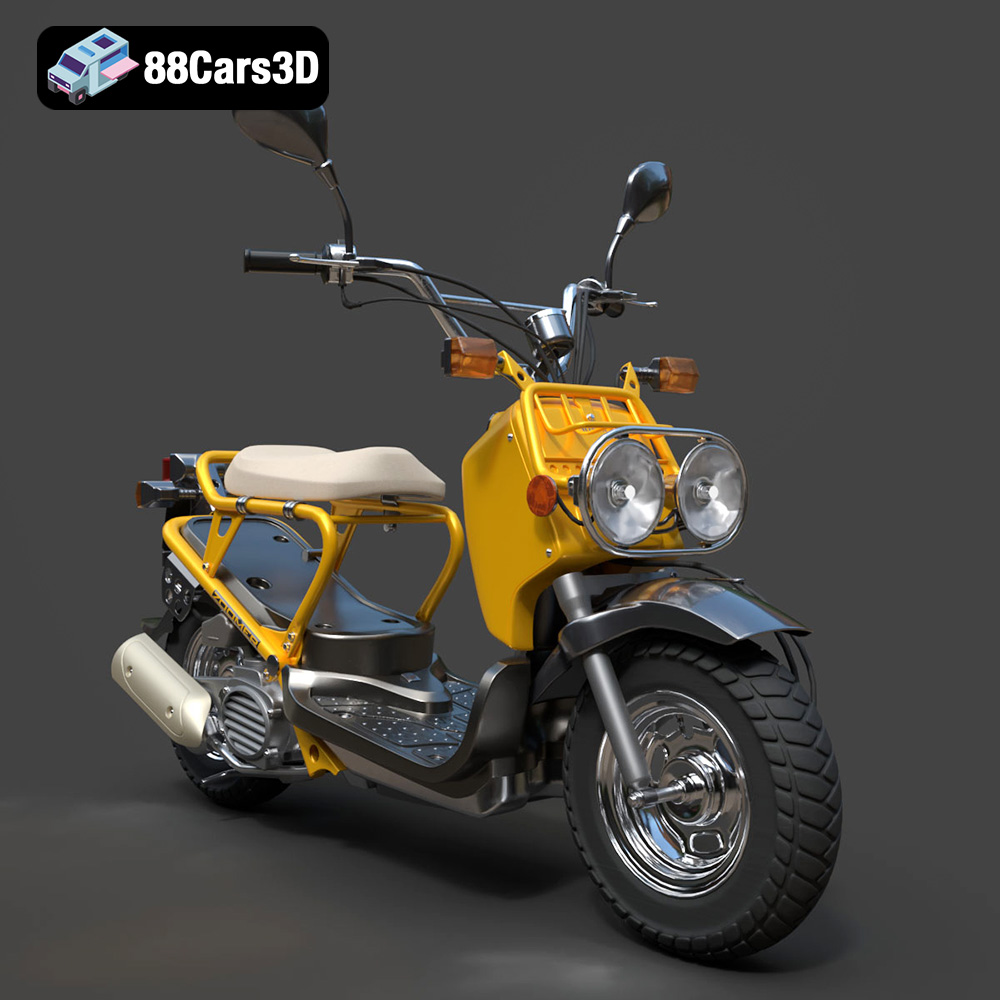
Understanding this critical need, we delve into the characteristics that define a truly professional 3D asset, using a prime example: the Honda Zoomer 50 2005 3D Model. This meticulously crafted asset from 88cars3d.com represents the iconic rugged scooter with unparalleled precision. Its clean geometry, realistic materials, and professional construction make it an exceptional choice for detailed visualizations and dynamic projects, demonstrating the benchmark for quality in the digital automotive space. This article will explore the technical nuances of working with such high-quality 3D car models, highlighting their application across a spectrum of professional workflows.
The versatility of a 3D model often hinges on its availability in various file formats, each designed to serve specific purposes and software environments. A truly professional asset, like the Honda Zoomer 50 2005 3D Model, provides a comprehensive suite of formats to ensure maximum compatibility and utility across different workflows. Understanding these formats is crucial for any 3D artist or developer.
The .blend format is Blender’s native file type, offering a complete and editable scene. When you receive a .blend file, you’re not just getting the model; you’re often getting the entire project setup, including materials, textures, lighting, camera angles, and even animation data. For the Honda Zoomer 50, a .blend file means artists working in Blender can immediately dive into rendering or further customization with the original creator’s material and lighting setups as a starting point. This provides an excellent foundation for automotive rendering projects and offers full creative control.
FBX (Filmbox) is a proprietary file format developed by Autodesk, widely regarded as the industry standard for exchanging 3D data between different software applications. Its strength lies in its ability to store a vast array of information, including geometry, materials, textures, animations, and rigs, in a relatively compact package. For game development, particularly with engines like Unreal and Unity, .fbx is indispensable. An .fbx version of the Honda Zoomer 50 is typically “game-engine ready,” meaning it’s been optimized for real-time performance with appropriate UV mapping and material assignments, making it an ideal game asset.
OBJ (Object) is one of the oldest and most widely supported 3D file formats. It’s a simple, universal format that stores only geometry (vertices, normals, texture coordinates) and group information. While it doesn’t support complex scene data like rigging or animation directly, its plain text nature and broad compatibility make it a reliable choice for cross-software transfers. If you need a clean mesh of the Honda Zoomer 50 for a software that might not fully support .fbx or .blend, .obj is a dependable fallback for importing the raw geometry.
.glb (GL Transmission Format Binary) is an increasingly important format, especially for AR (Augmented Reality), VR (Virtual Reality), and web-based 3D applications. It’s a binary version of the glTF format, designed for efficient transmission and loading of 3D scenes and models by web applications. A .glb file of the Honda Zoomer 50 would be highly optimized, typically containing textures embedded within the single file, ensuring quick loading times and seamless integration into interactive web viewers or AR apps. This makes it crucial for showcasing 3D car models directly in browser environments.
STL (Standard Tessellation Language or Stereolithography) is the de facto standard for 3D printing. It represents a 3D model as a collection of triangular facets, defining the surface geometry without color, texture, or other model attributes. For anyone looking to physically prototype or 3D print the Honda Zoomer 50, an .stl file is essential. It needs to be a “watertight” mesh, meaning it has no holes, to ensure a successful print.
PLY (Polygon File Format) is another format for storing 3D data, particularly useful for scanned data or models with complex geometry and color per vertex. It can store a wider range of properties than .obj, including color, transparency, normals, and even confidence values. While less common for general asset exchange, a .ply file of the Honda Zoomer 50 could be valuable for scientific visualization, reverse engineering, or high-precision analysis in CAD software.
The .unreal format, or more accurately, assets imported and configured within an Unreal Engine project, signifies an asset specifically optimized and ready for deployment within Epic Games’ powerful real-time engine. This implies not just the raw model, but also pre-configured materials, collision meshes, LODs (Levels of Detail), and potentially even basic blueprints for interactivity. A dedicated .unreal asset for the Honda Zoomer 50 from 88cars3d.com means significant time savings for developers, as the heavy lifting of optimization and engine setup has already been performed, ensuring seamless integration into real-time environments.
.max is the native file format for Autodesk 3ds Max, a long-standing powerhouse in 3D modeling, animation, and rendering. Similar to .blend, a .max file contains the complete scene, including geometry, materials, lighting, cameras, and animation data. For professionals using 3ds Max, having the Honda Zoomer 50 in this format offers the highest level of editability and allows for deep customization, advanced animation rigging, and integration into complex architectural or product visualization scenes.
Automotive rendering is a specialized field that demands extreme attention to detail, material fidelity, and sophisticated lighting. High-quality 3D car models like the Honda Zoomer 50 2005 3D Model are the foundation upon which stunning visualizations are built. Whether for advertising, product showcases, or simulations, photorealistic rendering is paramount.
Modern rendering relies heavily on Physically Based Rendering (PBR) workflows. This involves creating materials that accurately simulate how light interacts with surfaces in the real world. For the Honda Zoomer, this means meticulously crafted textures for its rugged plastic panels, the gleam of its chrome exhaust, the matte finish of its tires, and the intricate details of its engine components. Each material layer—base color, metallic, roughness, normal maps, and displacement maps—contributes to the authenticity. A professional model from 88cars3d.com ensures these PBR materials are correctly set up and ready to be used in renderers like V-Ray, Corona Renderer, Arnold, or Cycles.
Effective lighting is crucial for showcasing the form and design of an automotive model. Studio lighting setups, often utilizing HDR (High Dynamic Range) environment maps, can simulate professional photo studios or real-world locations. For the Honda Zoomer, this could involve recreating a gritty urban street scene with natural daylight and subtle reflections, or a pristine showroom environment with softbox lighting to highlight its design lines. Global Illumination (GI) and caustics play a significant role in achieving realism, simulating how light bounces and refracts within the scene. Understanding how to manipulate these elements within 3ds Max, Blender, or other DCCs (Digital Content Creation tools) is key to producing compelling automotive rendering.
A raw render is rarely a final image. Post-production in software like Adobe Photoshop or Nuke allows for further refinement. This includes color grading, depth of field adjustments, adding lens flares, subtle atmospheric effects, and sharpening. Multi-pass rendering, where different elements (reflections, shadows, diffuse, specular) are rendered separately, provides maximum control during compositing. For the Honda Zoomer 50, this could mean enhancing the subtle grunge on the tires or adding a vignette to draw the viewer’s eye to the scooter’s distinctive features.
In game development, the challenge lies in balancing visual fidelity with real-time performance. Game assets, including 3D car models, must be highly optimized to run smoothly across various hardware while still looking impressive. The Honda Zoomer 50 2005 3D Model, when optimized for game engines, provides a robust foundation for interactive experiences.
Game-ready models typically undergo rigorous optimization. This involves creating multiple Levels of Detail (LODs), which are simplified versions of the model that automatically switch based on distance from the camera. This drastically reduces poly counts for objects further away, saving crucial rendering resources. For the Honda Zoomer, this means reducing geometry for engine internals or intricate panels when it’s not the primary focus. Additionally, efficient UV mapping for texture atlases and robust collision meshes are vital. The .fbx and .unreal formats provided by 88cars3d.com are specifically tailored for this purpose, offering developers a streamlined integration process.
For vehicles in games, rigging is essential. This involves creating a skeletal structure that allows for dynamic movement, such as wheel rotation, suspension compression, and steering. While the Honda Zoomer 50 is a scooter, it still benefits from a properly rigged wheel and steering mechanism for realistic physics and animation. Game engines typically handle the physics simulation, but a well-structured rig ensures that the model responds correctly to these forces. Animation of elements like a kickstand or turning handlebars can further enhance realism and player interaction.
Once optimized and rigged, the Honda Zoomer 50 can be imported into game engines like Unreal Engine or Unity. Here, game-specific materials are applied, often using shader graphs to create realistic paint, reflections, and wear. Collision meshes define the physical boundaries of the scooter, allowing it to interact with the environment and other objects. The inclusion of an .unreal format for this model is a significant advantage, providing a pre-configured asset ready to drop into an Unreal Engine project, complete with proper scale, pivot points, and material instances. This vastly accelerates development cycles for studios seeking high-quality game assets.
Augmented Reality (AR) and Virtual Reality (VR) are transforming how we interact with digital content, offering immersive experiences that blend the physical and virtual worlds. High-quality 3D car models are central to these technologies, providing realistic objects for users to interact with. The Honda Zoomer 50 2005 3D Model is well-suited for such applications, particularly with its .glb format support.
Performance in AR/VR is even more critical than in traditional gaming due to the need for high frame rates to prevent motion sickness. This means aggressive poly count optimization, efficient draw calls, and streamlined textures. The .glb format is specifically designed for these constraints, providing a compact, single-file solution that loads quickly and performs efficiently across various AR/VR platforms, including web-based AR solutions. For the Honda Zoomer 50, this means a balanced model that retains visual fidelity while ensuring a smooth, responsive immersive experience.
Imagine placing the Honda Zoomer 50 2005 3D Model directly in your living room via an AR app, allowing you to walk around it, change its paint color, or even see its engine components in detail. In VR, it could be part of an interactive driving school simulation or a virtual showroom experience. Businesses can leverage such models for product visualization, allowing potential customers to interact with a product before it even exists physically. For training, a detailed 3D model of the Zoomer could be used to teach maintenance procedures in a safe, virtual environment, reducing costs and risks associated with physical prototypes.
WebAR and WebVR allow immersive experiences to be accessed directly through a web browser, eliminating the need for dedicated apps. The .glb format is the cornerstone of this technology. By providing the Honda Zoomer 50 in .glb format, 88cars3d.com ensures that creators can easily integrate this model into web-based AR configurators, virtual tours, or interactive marketing campaigns. This accessibility significantly broadens the potential reach and application of the 3D model, making it a powerful tool for modern digital marketing and engagement.
While often associated with digital display, high-quality 3D models also serve as blueprints for physical creation. 3D printing and rapid prototyping are increasingly common applications, transforming digital assets into tangible objects. The Honda Zoomer 50 2005 3D Model, with its .stl and .ply formats, offers excellent potential for this.
For 3D printing, the model needs to be “watertight” – meaning it has no holes or gaps in its mesh. This ensures that the printer understands the solid volume to be produced. The .stl format is universally recognized by 3D printing software (slicers) and is specifically designed for this purpose. Depending on the desired print quality and scale, the model might need to be further optimized or subdivided to capture intricate details, or simplified for faster, less detailed prints. For the Honda Zoomer 50, this could mean printing a scale model for collectors, a component for a custom motorcycle build, or a physical prototype for design review.
Using a 3D printable version of the Honda Zoomer 50 allows designers to quickly create physical prototypes to assess ergonomics, scale, or aesthetic appeal before committing to expensive manufacturing. In educational settings, a 3D printed model can be an invaluable tool for teaching principles of mechanical engineering, design, or even as a visual aid for automotive history classes. The .ply format, with its ability to store precise mesh data, can also be useful for creating highly accurate physical representations, especially when exact dimensions and surface characteristics are paramount for engineering analysis or reverse engineering.
In a competitive digital landscape, time is money, and quality is non-negotiable. Relying on expertly crafted 3D assets can dramatically streamline production workflows and elevate the final output. The Honda Zoomer 50 2005 3D Model exemplifies the benefits of sourcing premium 3D car models.
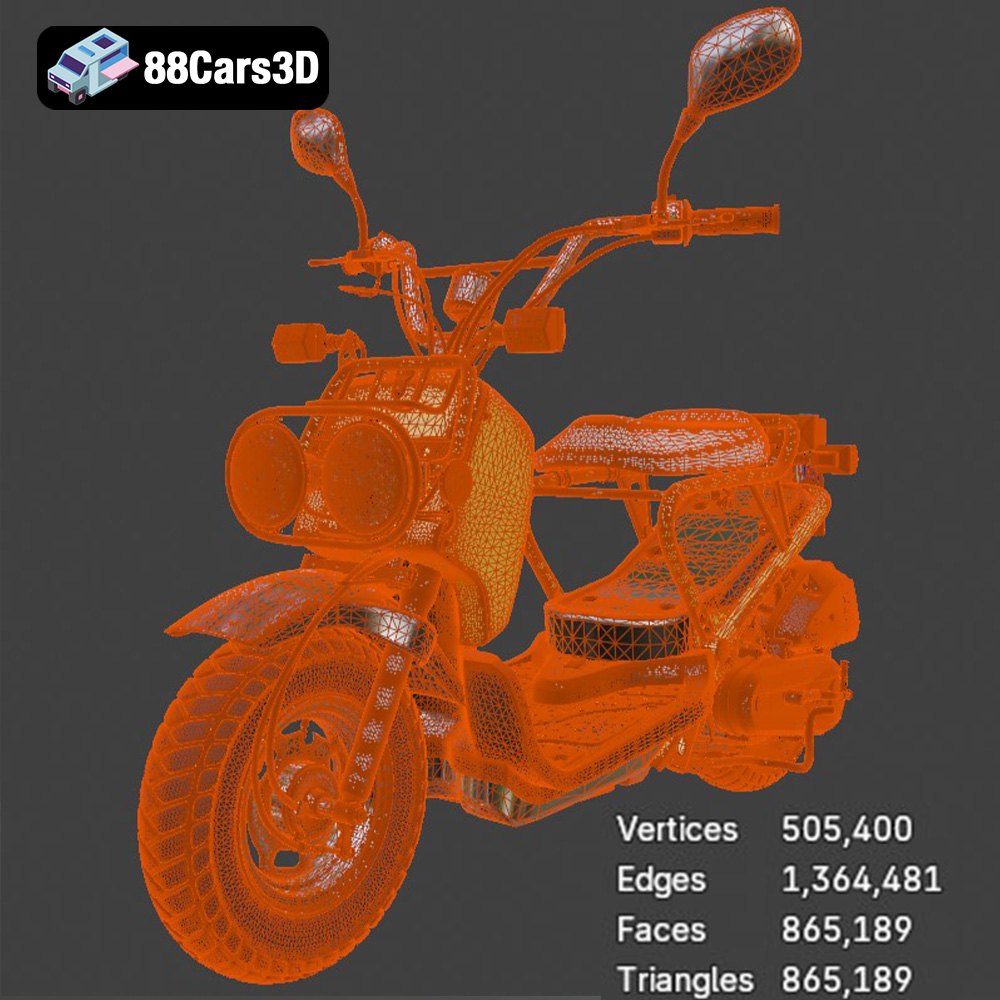
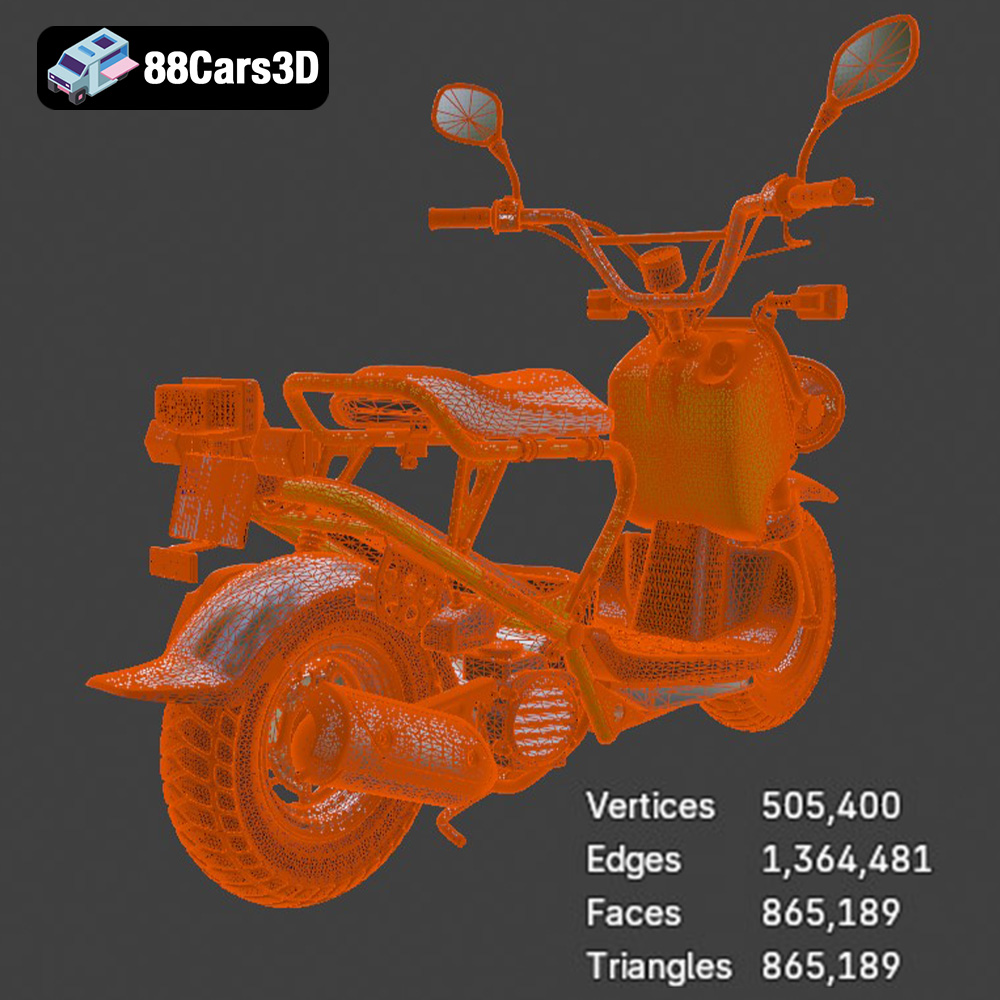
Creating a highly detailed 3D vehicle from scratch is an incredibly time-consuming and labor-intensive process, requiring specialized skills in modeling, texturing, and optimization. By leveraging a pre-made, professional-grade asset like the Honda Zoomer 50 from 88cars3d.com, artists and developers can significantly reduce their production timelines. This allows teams to focus their resources on other critical aspects of their projects, such as scene development, animation, or interactive logic, rather than reinventing the wheel.
One of the primary advantages of purchasing assets from a reputable marketplace like 88cars3d.com is the assurance of quality. These models are typically built by experienced artists, adhering to industry best practices for clean topology, accurate UV layouts, and realistic PBR materials. This consistency ensures that the Honda Zoomer 50 3D Model will perform predictably across different software and rendering engines, minimizing compatibility issues and unexpected errors. The range of file formats available further guarantees that the asset can be seamlessly integrated into virtually any professional pipeline.
88cars3d.com positions itself as a reliable source for a wide array of high-quality 3D car models. Whether you need a classic scooter like the Honda Zoomer 50, a sleek sports car, or a rugged off-roader, the platform provides assets that meet the rigorous demands of professional projects. This focus on quality and versatility makes it an invaluable resource for automotive rendering specialists, game developers, AR/VR content creators, and anyone requiring detailed vehicle models for visualization and simulation.
From breathtaking automotive rendering to dynamic game assets and immersive AR/VR experiences, the impact of high-quality 3D models is undeniable. The technical intricacies of creating and utilizing these assets are vast, spanning across diverse software, file formats, and optimization techniques. As we’ve explored through the lens of the Honda Zoomer 50 2005 3D Model, a professionally crafted asset is more than just geometry; it’s a versatile tool meticulously engineered for performance, realism, and seamless integration into any demanding creative pipeline.
The availability of such a model in multiple formats—from editable .blend and .max files to game-ready .fbx and .unreal, web-optimized .glb, and print-ready .stl—underscores its value. It empowers creators across industries to accelerate their workflows, maintain high standards of quality, and push the boundaries of visual fidelity. For those seeking reliable, high-precision 3D car models to elevate their projects, exploring the extensive collection at 88cars3d.com is an essential step towards achieving digital excellence.
Discover the realistic Honda Zoomer 50 2005 3D Model, meticulously crafted to represent the iconic rugged scooter. This model delivers unparalleled precision, making it an excellent choice for detailed visualizations and dynamic projects. Key features include clean geometry, realistic materials, and professional quality construction. The structural components are modeled with strict attention to detail, ensuring seamless integration into varied environments. This 3D model is perfect for diverse applications, including game development, rendering, AR/VR experiences, and visualization. Whether used in a street scene simulation or a dedicated showcase, it provides exceptional results.
$39.99
.arvr
.blend
.car3dmodel
.fbx
.gameasset
.glb
.honda
.max
.moped
.motorcycle
.obj
.ply
.rendering
.scooter
.simulation
.stl
.unreal
.zoomer50