Get 20% OFF All Premium 3D & STL Models!

In the rapidly evolving landscape of digital creation, the demand for high-quality, meticulously crafted 3D assets has never been greater. From cinematic automotive visualizations that captivate audiences to immersive open-world games and realistic virtual showrooms, the backbone of any successful project is often the fidelity and flexibility of its core assets. Among these, 3D car models stand out as particularly complex and critical, requiring a blend of artistic vision and technical precision.
The allure of an iconic vehicle, translated flawlessly into the digital realm, can elevate a project from good to extraordinary. Few vehicles embody rugged capability and refined luxury quite like the Toyota Land Cruiser. For decades, it has set the standard for off-road prowess and enduring design. Now, imagine bringing that legend into your digital pipeline with unparalleled detail and optimization. This is precisely what the Toyota Land Cruiser 300 3D Model offers, providing a comprehensive solution for professionals seeking a robust and versatile automotive asset.
This article will explore the intricate world of high-fidelity 3D car models, using the Land Cruiser 300 as a prime example. We’ll delve into technical specifications, professional workflows across various industries, and the critical importance of file format compatibility, all while showcasing how a top-tier asset from 88cars3d.com can be a game-changer for your projects.
The journey of a 3D model from its creation to its final application involves navigating a complex ecosystem of file formats. Each format serves specific purposes, offering unique advantages in terms of compatibility, data retention, and optimization for particular workflows. Understanding these differences is crucial for any professional working with 3D assets, ensuring smooth integration and maximum utility. The Toyota Land Cruiser 300 3D model, for instance, comes equipped with a versatile array of formats, making it adaptable to almost any digital pipeline.
The .blend format is the native file type for Blender, a powerful and increasingly popular open-source 3D creation suite. When you receive a model in .blend format, you’re getting a fully editable Blender scene. This means not just the mesh data, but also materials, textures, lighting setups, cameras, animations, and even physics simulations. For artists and developers who use Blender as their primary tool, this format offers unparalleled flexibility for customization and iteration without any loss of data or conversion artifacts. It’s ideal for deep modifications, rigging, animation, or rendering directly within Blender’s Cycles or Eevee engines.
.fbx (Filmbox) is arguably the most widely adopted proprietary file format for 3D data exchange between different software applications. Developed by Autodesk, .fbx is renowned for its ability to store not only geometry but also materials, textures, animations, rigging, and even scene hierarchies. It is the go-to format for transferring assets into real-time game engines like Unreal Engine and Unity, and professional DCC (Digital Content Creation) tools such as 3ds Max, Maya, and Cinema 4D. Its robustness and comprehensive data retention make it an ideal choice for complex assets like the Toyota Land Cruiser 300 3D model, ensuring that all animation-ready components and material assignments transfer seamlessly into your chosen environment.
The .obj (Object) format is one of the oldest and most universal 3D file formats, making it a reliable choice for basic mesh data exchange. While it doesn’t typically store advanced features like animation or rigging, it excels at retaining geometry, UV coordinates, and material group assignments. Nearly every 3D software application can import and export .obj files, ensuring broad compatibility. For situations where you primarily need the raw geometric data of the Land Cruiser 300 for sculpting, retopology, or foundational scene setup, .obj provides a clean, widely accessible starting point.
.glb (GLB, the binary version of glTF) is a relatively newer format specifically designed for efficient transmission and loading of 3D scenes and models in web, augmented reality (AR), and virtual reality (VR) applications. It bundles textures and other assets directly into a single file, reducing load times and simplifying asset management. For projects like interactive virtual showrooms of the Toyota Land Cruiser 300, mobile AR experiences, or browser-based configurators, .glb is the optimized choice, delivering high-quality visuals with minimal overhead.
The .stl (Stereolithography) format is the undisputed standard for 3D printing. It represents a 3D model as a collection of unconnected triangular facets, defining the surface geometry without color, texture, or other advanced attributes. When preparing the Land Cruiser 300 for physical fabrication, converting to .stl is essential. It provides the necessary data for slicing software to generate toolpaths for FDM, SLA, or other 3D printing technologies, allowing enthusiasts to bring a tangible version of the iconic SUV to life.
.ply (Polygon File Format) is another common format for storing 3D data, particularly useful for scanned data, CAD applications, and scientific visualization. It can store a wider range of properties than .stl, including color, transparency, and even normal vectors for each vertex. While less common for general-purpose asset exchange than .fbx or .obj, it is a robust format for precision mesh representations, often used in engineering or detailed geometric analysis of models like the Land Cruiser 300 where accuracy is paramount.
The .unreal designation often refers to assets that are specifically packaged or optimized for direct import and use within Unreal Engine. This might involve specific material setups, collision meshes, LODs (Levels of Detail), and blueprint configurations that accelerate integration into an Unreal project. While typically imported via .fbx, having a model specifically designated as .unreal implies it’s already prepped for the engine’s requirements, saving significant setup time for game developers looking to drop the Land Cruiser 300 straight into their virtual world.
Similar to .blend for Blender, the .max format is the native file type for Autodesk 3ds Max, a leading software for 3D modeling, animation, and rendering in architectural visualization, broadcast, and game development. A .max file contains the complete scene data, including geometry, materials (with all their complex parameters), lighting, cameras, animation timelines, and render settings. For professionals working in a 3ds Max pipeline, this format offers the most comprehensive control and flexibility for further development of the Toyota Land Cruiser 300, whether for high-end rendering or integration into larger scene compositions.
The availability of such a diverse range of formats for the Toyota Land Cruiser 300 3D model underscores its versatility and the foresight of its creators. This multi-format approach ensures that regardless of your software preference or project requirements, you have a direct and efficient path to integrate this premium asset into your workflow.
Creating a high-quality 3D car model, especially one designed for both stunning visuals and real-time performance, is a delicate balance of artistic detailing and rigorous technical optimization. The Toyota Land Cruiser 300 3D model exemplifies this fusion, meticulously engineered to meet the demanding requirements of modern digital production.
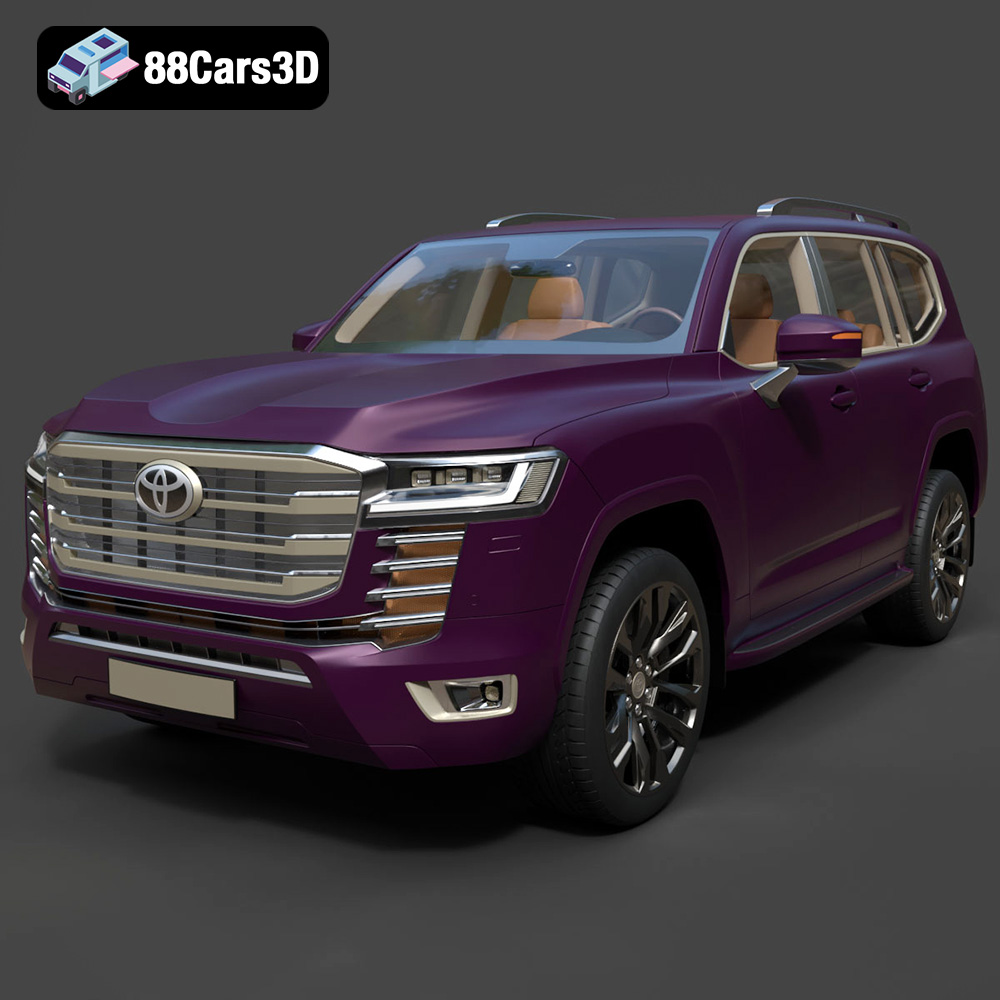
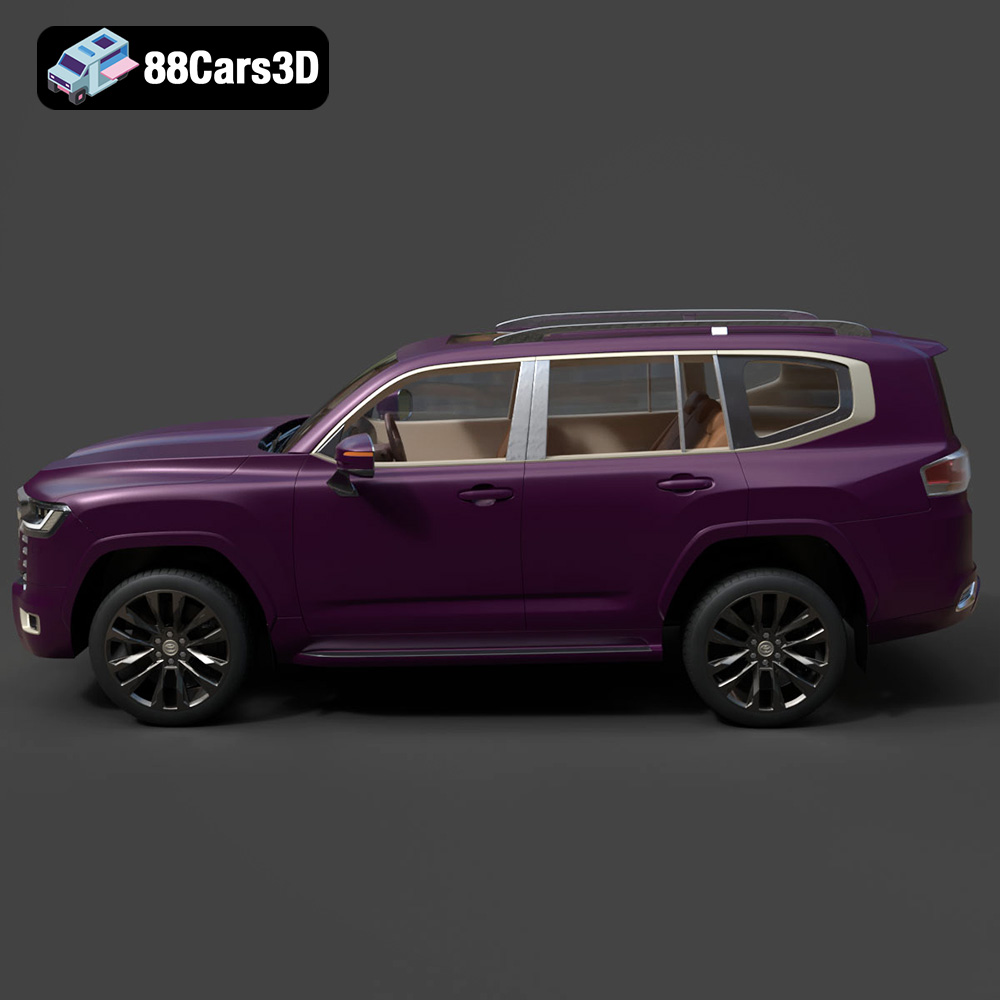
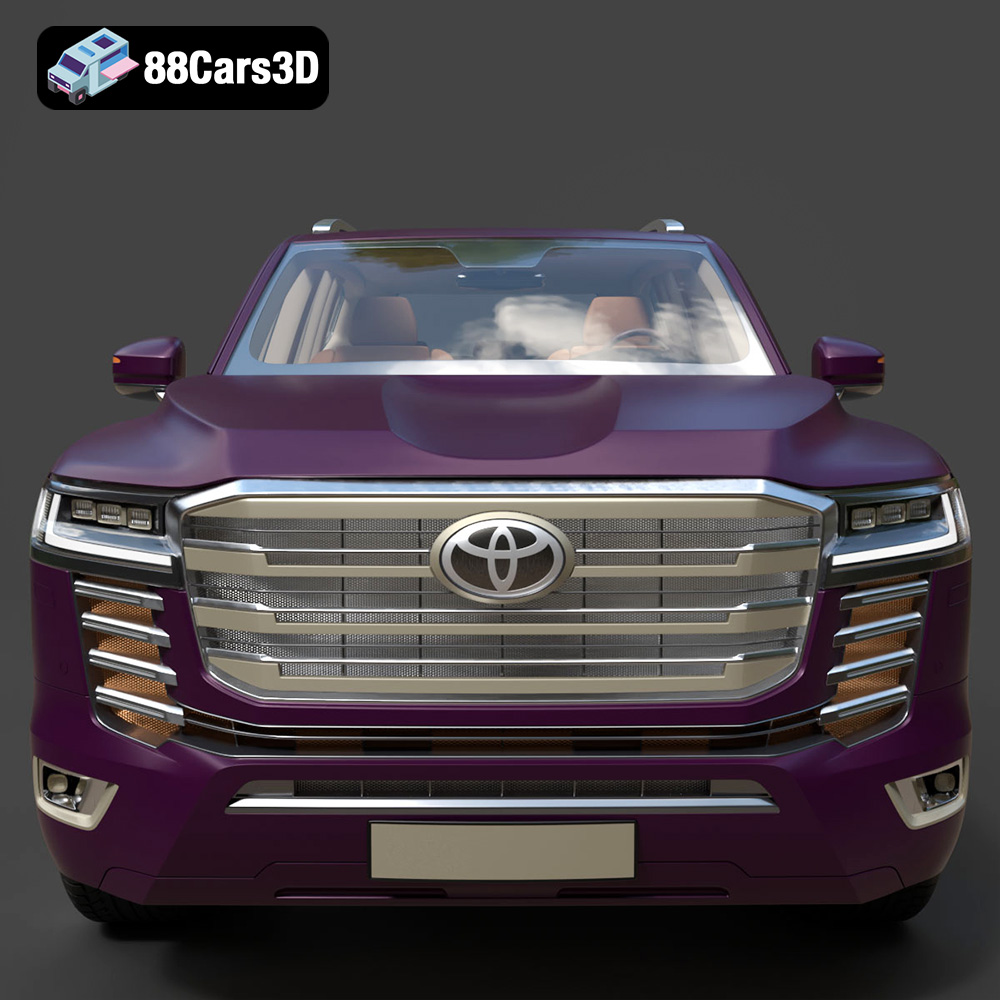
At the core of any exceptional 3D model is its geometry. The Land Cruiser 300 model boasts accurate frame geometry and proportions, directly reflecting the real-world vehicle’s imposing stance and aerodynamic yet muscular body lines. This isn’t just about visual appeal; it’s about authenticity. Every curve and panel gap is carefully considered to ensure a faithful representation.
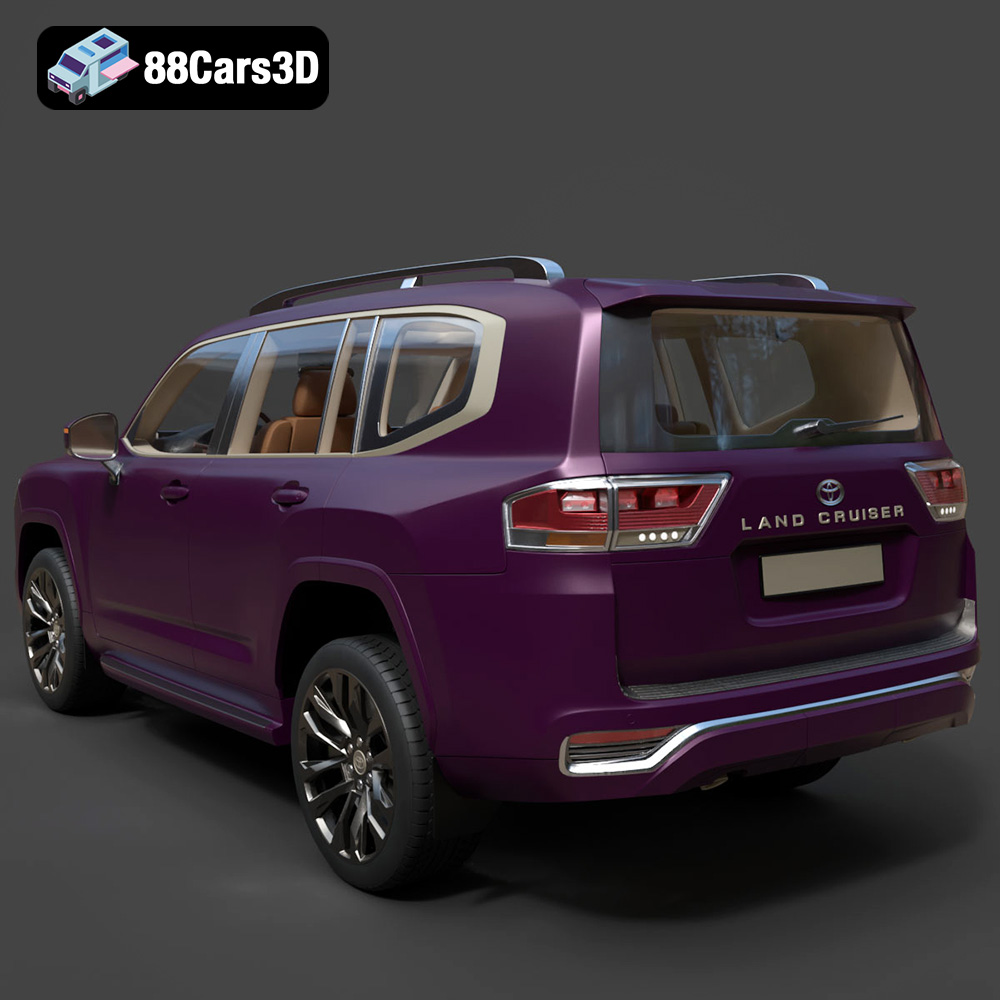
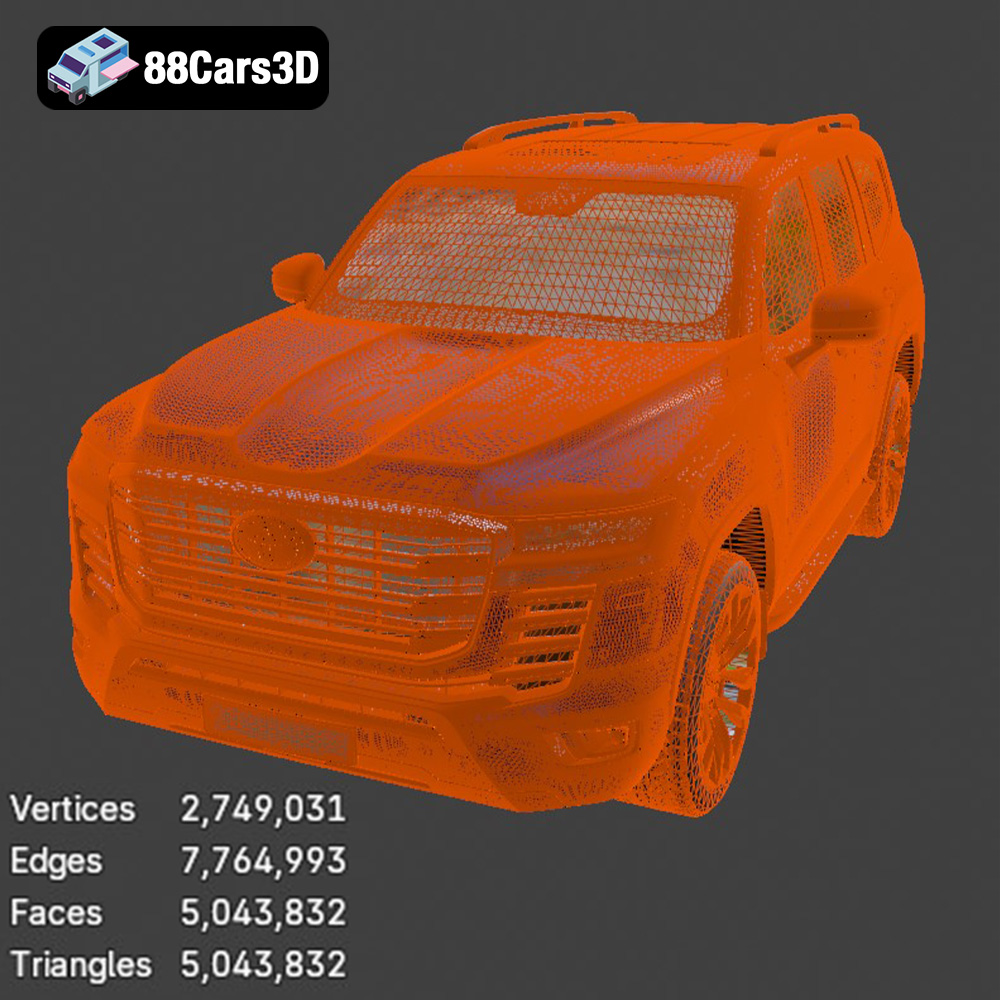
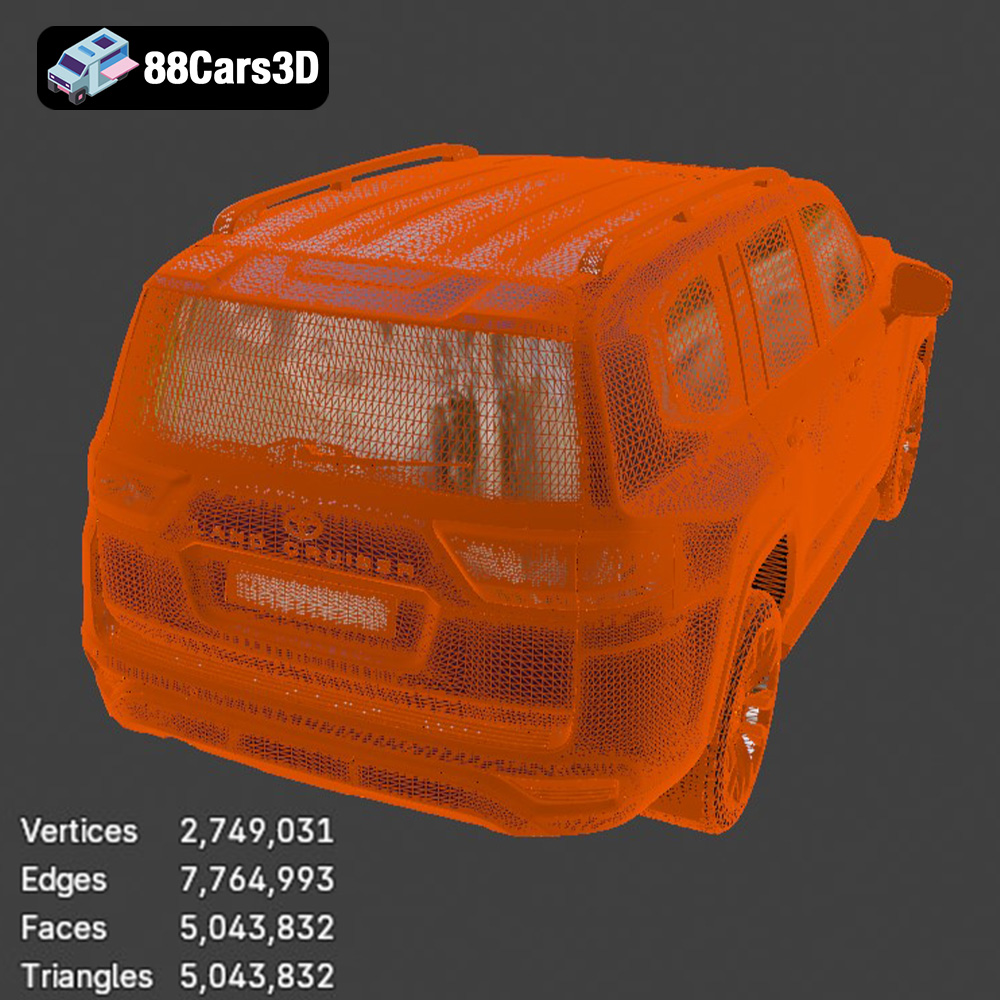
Crucially, this model is “game-ready,” a term that signifies a specific level of optimization. With approximately 180,000 triangles, it strikes a perfect balance. This poly count is low enough for efficient real-time rendering in game engines like Unreal and Unity, preventing performance bottlenecks, yet high enough to retain the intricate details that define the LC300. This optimization extends to clean edge flow and optimized UV mapping, which are vital for efficient texturing and distortion-free material application. The model includes exterior features such as a detailed engine block representing the powerful twin-turbo V6 powertrain, a realistic dual-exit exhaust system, precision quad-LED projector headlights, signature LED taillights, and intricately modeled premium alloy wheels with all-terrain tires. Even the high-clearance independent front and solid-axle rear suspension details are faithfully reproduced, adding to both realism and potential for realistic physics simulations.
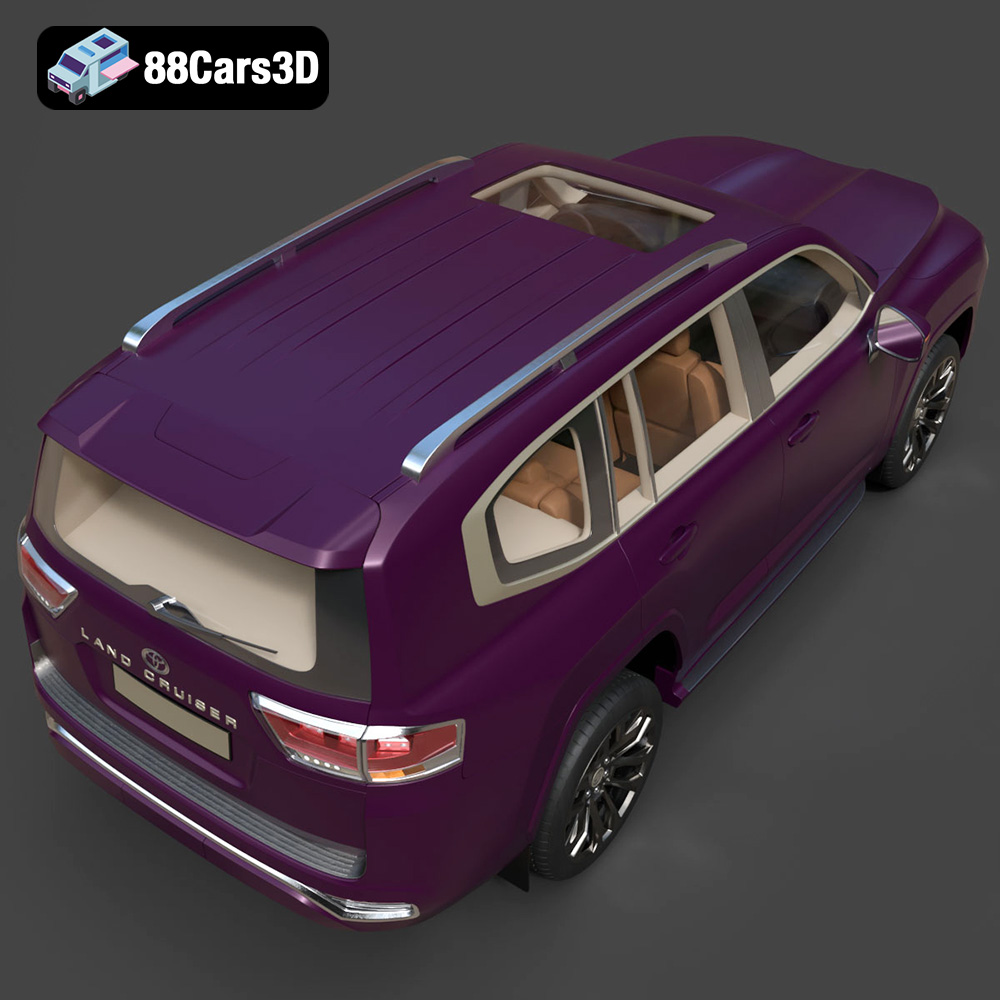
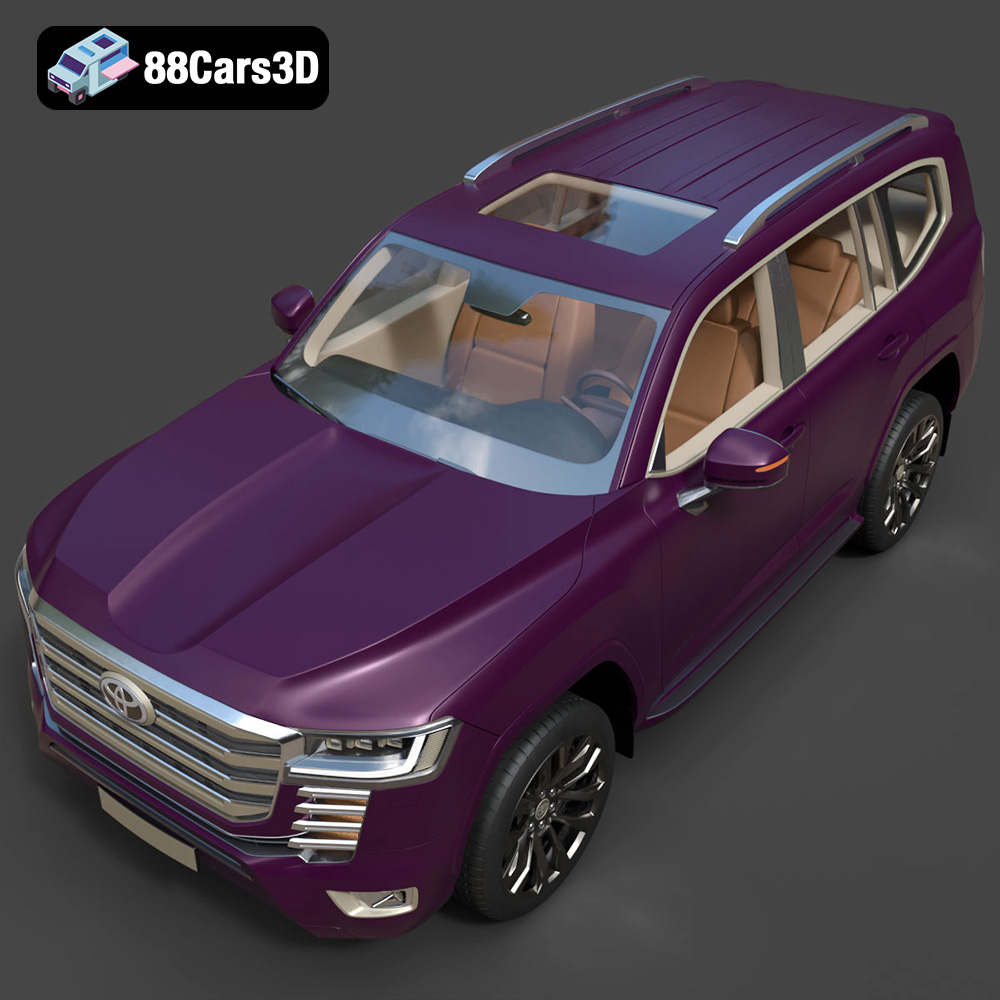
Beyond the exterior, the interior of a vehicle is often where the immersive experience truly comes alive. The Toyota Land Cruiser 300 3D model doesn’t disappoint, featuring a meticulously crafted cockpit. This includes premium leather-textured seating with accurate three-row configurations, a multi-function steering wheel with detailed tactile buttons, an accurate digital instrument cluster, and a floating infotainment display. Precise control details, such as drive-mode selectors, the shifter, and pedals, are all present, making the interior optimized for first-person POV in gaming and VR applications.
For animators and game developers, flexibility is key. This model is built with separate wheels, suspension, doors, and steering components, all ready for animation. Proper pivot setups ensure that steering, wheel rotation, and suspension travel can be realistically simulated, making it ideal for dynamic cinematics, interactive vehicle controls in games, or virtual demonstrations of the Land Cruiser’s capabilities. This thoughtful component separation significantly reduces the time and effort required for rigging and animation, allowing artists to focus on creative execution rather than tedious setup.
The true value of a premium 3D asset like the Toyota Land Cruiser 300 from 88cars3d.com lies in its seamless integration into diverse professional workflows. Its robust construction and multi-format availability ensure it can serve a wide array of creative and technical needs.
For game developers, performance is paramount, but visual fidelity cannot be sacrificed. The Land Cruiser 300’s optimized 180,000-triangle count is specifically tailored for real-time engines like Unreal Engine and Unity. This makes it an ideal “game asset” for open-world off-road simulators, racing titles, and virtual reality experiences where smooth frame rates and detailed environments are crucial. Developers can leverage the provided .fbx or .unreal formats for quick import. Once in the engine, the model’s clean UVs simplify material setup, while its pre-separated components and proper pivot points streamline the process of rigging for physics and animation. Imagine populating a vast digital landscape with a fleet of these iconic SUVs, each ready for player interaction and dynamic environments.
When it comes to creating breathtaking visuals for marketing, product showcases, or architectural scenes, rendering quality is king. The Land Cruiser 300 3D model excels in this arena, providing the foundational detail required for stunning output. Using software like 3ds Max (.max format) or Blender (.blend format), artists can set up elaborate studio lighting, integrate the vehicle into realistic environments, and produce photorealistic renders. The model’s clean topology ensures smooth reflections and accurate shading, essential for depicting metallic finishes and complex body curves. It’s perfect for brand campaigns, lifestyle visualizations, and integrating a luxury vehicle into an architectural rendering scene, adding context and aspiration to a design. Customization options, such as changing body colors, modifying tire textures, or adjusting material finishes (matte, gloss, metallic), provide endless possibilities for tailoring the vehicle to specific client briefs or artistic visions.
The rise of augmented reality (AR) and virtual reality (VR) has opened new avenues for interactive 3D content. The Land Cruiser 300 3D model is perfectly suited for these emerging platforms, especially with its .glb format. Optimized for efficient loading and display in web browsers and mobile AR/VR applications, it can power immersive virtual showrooms where customers can explore the vehicle in a 360-degree environment. Imagine a prospective buyer walking around a virtual Land Cruiser, opening doors, and even sitting inside, all from the comfort of their home. For configurators, the model’s customizable materials allow users to experiment with different paint colors, wheel options, and interior trims in real-time, providing a rich and engaging pre-purchase experience.
While digital visualization is a primary use case, the versatility of this 3D model extends into the physical realm through 3D printing. For hobbyists, collectors, or even designers needing a tangible prototype, the ability to convert a high-quality digital asset into a physical object opens up exciting possibilities.
The .stl (Stereolithography) format is the cornerstone of 3D printing. The Toyota Land Cruiser 300 3D model can be easily converted to .stl, making it ready for slicing software. However, successful 3D printing requires careful consideration of settings. Recommended scales typically range from 1:12 to 1:24, offering a balance between manageable size and retaining fine details. For optimal results, especially with intricate parts like the detailed engine block or exhaust system, resin printing is highly recommended over FDM (Fused Deposition Modeling) due to its superior resolution and ability to reproduce minute features. Layer heights of 0.04–0.12 mm are ideal for achieving smooth surfaces and crisp details.
Technical aspects like wall thickness (1.2–2.0 mm) and infill (20–30%) are critical for structural integrity without excessive material usage. Supports are almost always required for complex overhangs, such as mirrors, handlebars, or the dual-exit exhaust system. Strategic print orientation is also key; for instance, printing the frame angled can enhance structural integrity, while wheels are best printed separately to capture their distinct details. The .ply format, with its ability to store precision mesh data, can also be useful for specific printing scenarios where more detailed mesh information is beneficial for certain slicing software or industrial-grade printers.
Once printed, the physical model of the Land Cruiser 300 offers another layer of customization. Post-processing steps like sanding are often necessary to smooth layer lines or support marks. Applying a primer prepares the surface for painting, allowing hobbyists to recreate authentic factory colors with metallic finishes, or even invent custom liveries. The detailed geometry ensures that even at smaller scales, the iconic look of the LC300 is preserved, creating impressive display-scale models that truly stand out. This blend of digital precision and physical craftsmanship provides a unique way to appreciate the legendary vehicle.
In today’s fast-paced digital environment, investing in high-quality, versatile assets is a strategic decision that pays dividends in efficiency, quality, and creative freedom. The Toyota Land Cruiser 300 3D model from 88cars3d.com is designed with this long-term value in mind.
The model’s inherent flexibility through its included file formats and optimized structure means it’s not a static asset, but a dynamic foundation. We’ve highlighted various customization options: changing body colors to match specific brand aesthetics or personal preferences; modifying tire textures to switch between rugged off-road variants and sleek street versions; and adjusting material finishes to achieve matte, gloss, or metallic looks. Furthermore, adapting the lighting for different environments allows the vehicle to seamlessly integrate into any scene, from a desolate desert landscape to a sophisticated urban setting.
This level of adaptability ensures that the Land Cruiser 300 can be repeatedly deployed across different projects without appearing repetitive or requiring extensive re-modeling. It’s a versatile tool that can embody various roles and narratives, always maintaining its core identity while adapting to specific project demands.
Purchasing a premium 3D model like this is an investment in efficiency. It saves countless hours of modeling, texturing, and optimization that would otherwise be spent creating a vehicle from scratch. For studios, freelancers, and large development teams, time saved translates directly into cost savings and accelerated project timelines. Moreover, the guaranteed quality and technical readiness of an asset from a reputable marketplace like 88cars3d.com provide peace of mind, ensuring consistency and reliability across your digital productions. You’re not just buying a model; you’re acquiring a meticulously engineered component that elevates the professionalism and visual impact of your work, making your creative vision a tangible reality, whether on screen or as a 3D print.
The digital realm offers boundless opportunities for creativity, but the foundation of any outstanding project lies in the quality of its assets. The Toyota Land Cruiser 300 3D model stands as a testament to what a meticulously crafted, technically optimized asset can achieve. From its precise geometry and game-ready poly count to its detailed interior and animation-friendly components, it is engineered for excellence across every application.
Whether your goal is to push the boundaries of realism in automotive rendering, create immersive experiences in game development, pioneer new frontiers in AR/VR, or even bring a legendary vehicle to life through 3D printing, this model offers the versatility and fidelity required. Its comprehensive suite of file formats ensures compatibility with virtually any professional workflow, making it a truly indispensable resource.
Embrace the power of premium 3D car models and elevate your projects to new heights. Explore this exceptional Toyota Land Cruiser 300 3D Model and a vast selection of other high-quality digital assets at 88cars3d.com, where craftsmanship meets digital innovation.
The Toyota Land Cruiser 300 is the ultimate evolution of the legendary off-road SUV, combining decades of rugged heritage with modern luxury and advanced technology. This highly detailed 3D model captures the imposing stance, bold front grille, sleek LED projector headlights, and aerodynamic yet muscular body lines that define the LC300. Every detail, from the twin-turbo engine layout to the refined exhaust system, has been carefully crafted to represent the pinnacle of 4×4 capability and prestige. Crafted with meticulous attention to detail, this game-ready 3D model boasts optimized topology (approximately 180,000 triangles), ensuring a perfect balance between high visual fidelity and real-time performance. The model features clean edge flow and optimized UV mapping, making it meticulously prepared for seamless integration into game development, immersive AR/VR experiences, high-end architectural visualization, and dynamic animations. Perfect for open-world off-road simulators, luxury virtual showrooms, architectural rendering scenes, and cinematic automotive animations.
$19.99
.4×4
.blend
.fbx
.glb
.max
.obj
.ply
.rendering
.stl
.toyota
.unreal
car-3d-model
game asset
game-ready
land-cruiser
land-cruiser-300
low-poly
off-road
optimized
SUV
VR/AR