Get 20% OFF All Premium 3D & STL Models!

In the dynamic world of digital content creation, the demand for photorealistic and performant 3D assets continues to surge. From cutting-edge video games and immersive virtual reality experiences to high-fidelity architectural visualizations and cinematic renders, a meticulously crafted 3D model forms the bedrock of visual excellence. Among these, 3D car models stand out as particularly challenging and rewarding assets, requiring a blend of artistic skill and technical precision to accurately capture the intricate details and sleek contours of real-world vehicles.
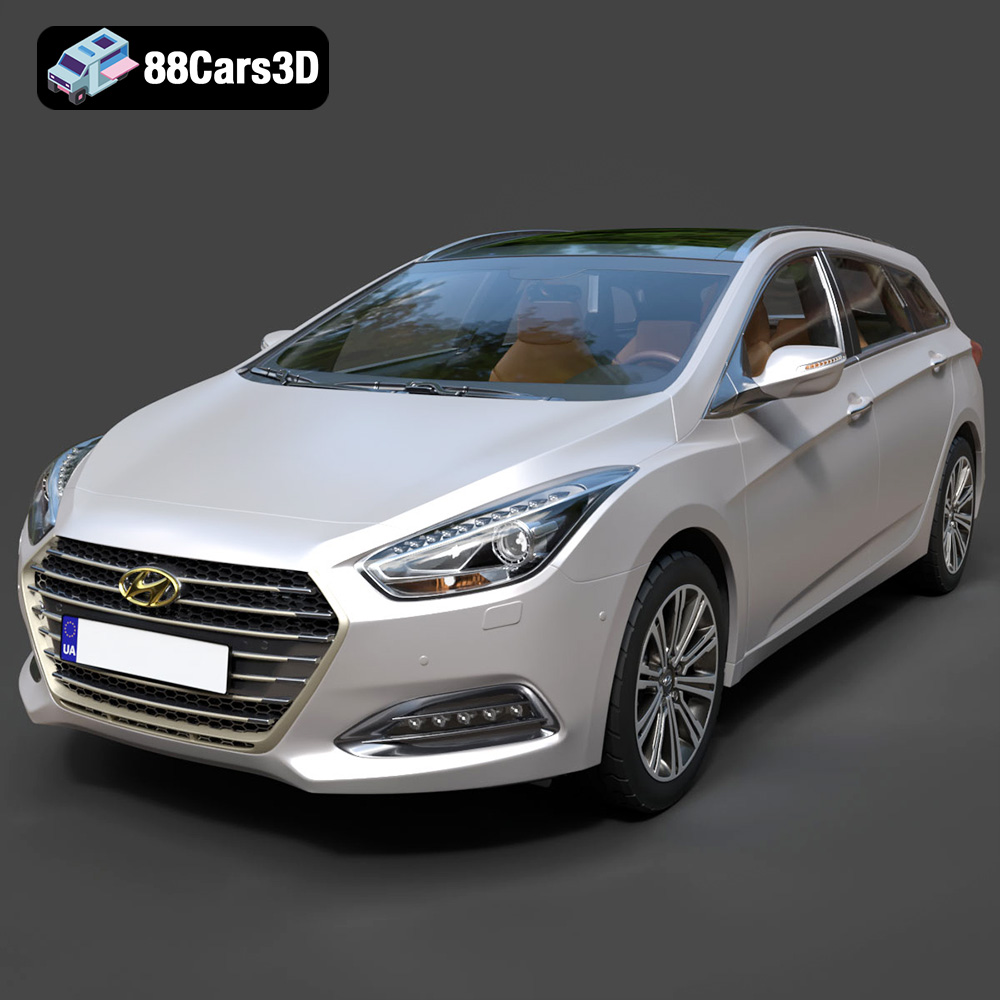
Every curve, every reflection, and every subtle material difference must be painstakingly replicated to achieve a truly convincing digital counterpart. This pursuit of perfection is precisely what drives platforms like 88cars3d.com, which offers a curated selection of premium 3D vehicle assets designed to elevate professional projects. A prime example of such an asset is the Hyundai i40 Wagon 2015 3D Model. This carefully crafted digital representation of the popular estate vehicle provides an exceptional foundation for a myriad of applications, embodying the critical balance between visual fidelity and optimized performance that today’s artists and developers require.
This article will delve into the technical intricacies, professional workflows, and diverse applications of high-quality 3D car models, using the Hyundai i40 Wagon 2015 3D Model as a consistent point of reference. We’ll explore why clean geometry, realistic materials, and robust file format support are indispensable, and how these elements combine to unlock unparalleled creative possibilities in automotive rendering, game development, and beyond.
Creating a truly high-quality 3D car model is far more than just extruding polygons. It’s an intricate process demanding a deep understanding of automotive design, topology, material science, and optimization techniques. The goal is not just to replicate the form but to capture the essence and functionality of the vehicle, ensuring it performs flawlessly across various digital environments.
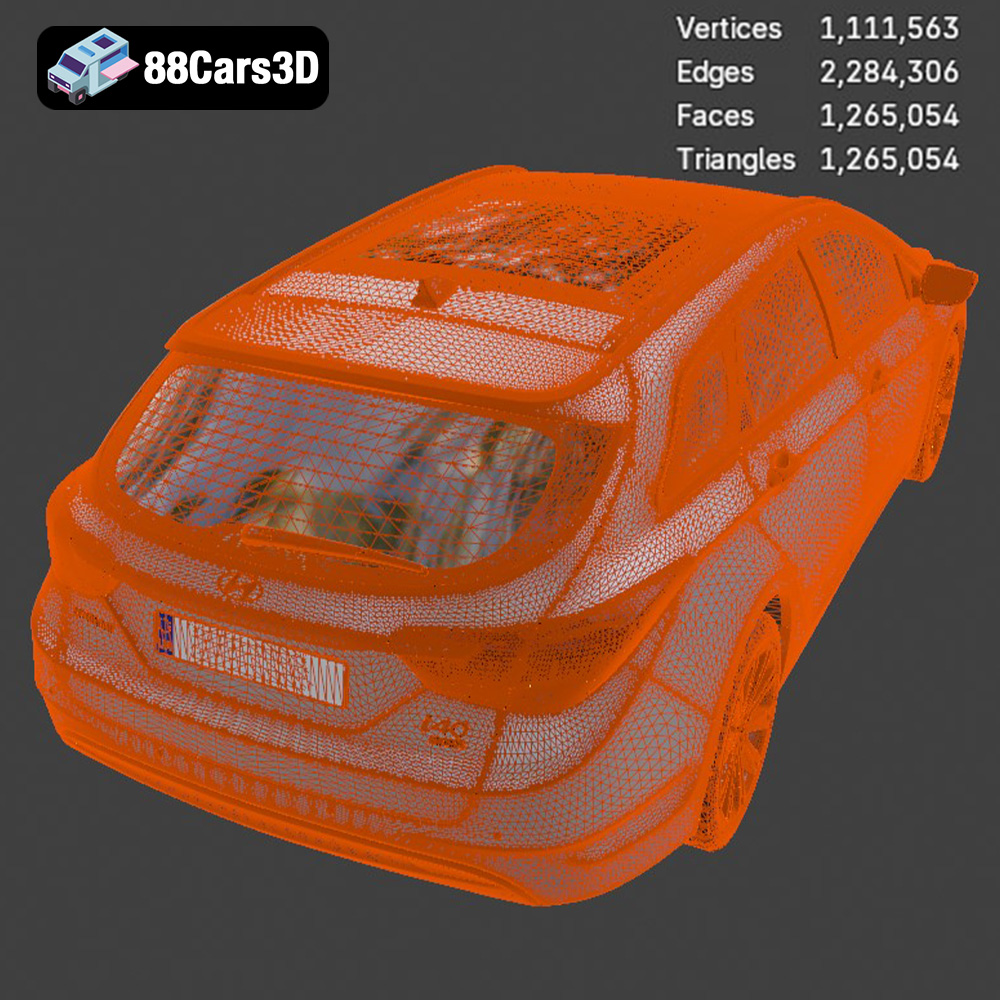
The journey begins with precision modeling. A professional 3D car model, such as the Hyundai i40 Wagon 2015 3D Model, is built with clean, quad-based topology. This means the mesh consists primarily of four-sided polygons, which is crucial for smooth subdivision and deformation, making it ideal for animation and rendering. Irregular triangles or N-gons (polygons with more than four sides) can cause shading artifacts, particularly in areas of high curvature like body panels. Expert modelers meticulously craft every panel, ensuring that edge loops flow naturally along the vehicle’s design lines, supporting crisp creases and smooth surfaces. This meticulous approach to topology also makes the model easier to modify, unwrap for texturing, and optimize for different levels of detail (LODs).
Beyond the raw geometry, materials and textures are what breathe life into a 3D car model. Photorealistic automotive rendering hinges on physically based rendering (PBR) materials, which accurately simulate how light interacts with surfaces in the real world. This involves creating a suite of textures – albedo (color), metallic, roughness, normal, ambient occlusion – that define everything from the paint’s metallic flake and clear coat reflectivity to the subtle texture of plastic trim and tire rubber. The Hyundai i40 Wagon 2015 3D Model, with its “realistic materials,” suggests this level of detail. High-resolution texture maps, often 4K or even 8K, are essential to capture fine details without pixelation, even on close-up shots. UV mapping, the process of flattening the 3D model’s surface into a 2D space for texture application, must be clean and organized to prevent stretching or seams, allowing for seamless texture application and optimal performance.
While visual fidelity is paramount, especially for automotive rendering, performance optimization is equally critical, particularly for game assets, AR/VR experiences, and real-time simulations. A high-quality 3D car model isn’t just about high poly counts; it’s about intelligent poly distribution. The overall polygon count should be balanced to maintain detail where it matters (e.g., body panels, wheel arches) while reducing it in less visible areas. This often involves creating multiple Levels of Detail (LODs) – lower polygon versions of the model that are swapped in at greater distances from the camera. Furthermore, efficient material setups, optimized texture atlases, and carefully managed draw calls contribute to smoother frame rates and a better user experience, ensuring that assets like the Hyundai i40 Wagon 2015 3D Model perform exceptionally in demanding real-time environments.
The versatility of a 3D asset is heavily dependent on the range and quality of its supported file formats. Each format caters to specific use cases, software environments, and project requirements. A truly professional 3D car model, like the Hyundai i40 Wagon 2015 3D Model, is supplied in a comprehensive suite of formats, ensuring seamless integration into virtually any production pipeline. Understanding these formats is crucial for any 3D artist or developer.
The .blend format is native to Blender, the increasingly popular open-source 3D creation suite. When a model is provided in .blend format, it means you’re getting the original, fully editable scene with all its components: mesh data, materials, textures, lighting setups, cameras, and even animations. This format is ideal for artists who primarily work in Blender, offering maximum flexibility for modifications, rigging, or developing custom shaders. The Hyundai i40 Wagon 2015 3D Model’s .blend file is described as having “materials and lighting setup,” providing a ready-to-render scene out of the box for Blender users.
FBX, developed by Autodesk, is arguably the most widely used proprietary 3D file format for exchanging models, animations, and scenes between different 3D software applications and game engines. It supports mesh data, materials, textures, animations, and rigs. Its strength lies in its ability to carry a wide range of data with high fidelity, making it ideal for robust pipelines. For game development, particularly for Unreal and Unity, .fbx is often the go-to format due as it efficiently handles skeletal meshes, animations, and LODs. The Hyundai i40 Wagon 2015 3D Model’s “game-engine ready format” in .fbx ensures smooth import into these real-time environments.
OBJ, or Wavefront OBJ, is one of the oldest and most universally supported 3D file formats. It’s a simple, text-based format that primarily stores geometric data (vertices, normals, texture coordinates, faces) and references to external material files (.mtl). While it doesn’t support advanced features like animation or rigging, its widespread compatibility makes it a safe bet for basic mesh exchange between virtually any 3D software. If you need a clean mesh that can be imported anywhere, .obj is a reliable choice. The Hyundai i40 Wagon 2015 3D Model, available as .obj, guarantees compatibility across all major software.
GLB is the binary version of glTF (Graphics Library Transmission Format), a relatively newer, royalty-free specification for the efficient transmission and loading of 3D scenes and models by applications. It’s highly optimized for web-based 3D, augmented reality (AR), and virtual reality (VR) applications because it packages all assets (geometry, materials, textures, animations) into a single file, reducing HTTP requests and load times. Its compact size and ease of integration make it increasingly popular for interactive 3D content on websites and AR apps. The Hyundai i40 Wagon 2015 3D Model’s .glb format is explicitly “optimized for AR/VR and web-based visualization.”
STL (STereoLithography) is the standard file format for 3D printing and computer-aided manufacturing. It represents a 3D model as a series of connected triangles, describing only the surface geometry without any color, texture, or material information. While not suitable for rendering or animation, it’s indispensable for transforming digital models into physical prototypes or products. If you plan to 3D print a miniature version of the Hyundai i40 Wagon 2015, the .stl file is what you’ll need.
PLY (Polygon File Format or Stanford Triangle Format) is a versatile format for storing 3D data, particularly useful for scanned data and point clouds. It can store various properties beyond just geometry, such as color, transparency, normals, texture coordinates, and even reliability estimates for each point or polygon. It’s often used in scientific, engineering, and cultural heritage applications where highly detailed, accurate mesh data or point clouds are essential for analysis or high-fidelity visualization. The Hyundai i40 Wagon 2015 3D Model offers a “.ply – Detailed polygon mesh for analysis and visualization.”
While often handled via FBX, some models can be provided in an “Unreal” specific package or directly pre-configured for Unreal Engine. This typically means the asset has already undergone an optimized export process, potentially including collision meshes, proper material setups within Unreal’s shader system, and validated scaling. It signifies that the asset is truly plug-and-play, saving developers significant time and effort in setup and optimization within the engine itself. The Hyundai i40 Wagon 2015 3D Model’s “.unreal” file offers this benefit, being “Pre-configured for Unreal Engine use.”
The .max format is the native file format for Autodesk 3ds Max, a powerful 3D modeling, animation, rendering, and compositing software package widely used in architectural visualization, film, and game development. A .max file contains the complete scene data, including geometry, materials, lighting, cameras, animation, and scene settings. Providing a model in .max format ensures that artists working in 3ds Max have full access to the original scene, enabling them to easily modify, animate, or render the model using advanced rendering engines like V-Ray or Corona. The Hyundai i40 Wagon 2015 3D Model provides an “Editable 3ds Max file for rendering and animation,” making it highly valuable for professional studios.
A high-quality 3D car model, such as the Hyundai i40 Wagon 2015 from 88cars3d.com, is a versatile asset that can significantly streamline various professional workflows. Its clean geometry and diverse file format support make it adaptable to numerous demanding projects.
For stunning automotive rendering, 3ds Max combined with renderers like V-Ray or Corona is a classic and powerful choice. The .max file for the Hyundai i40 Wagon 2015 3D Model provides a perfect starting point. Artists can seamlessly open the file, which often comes with pre-calibrated PBR materials. From there, they can set up realistic lighting environments using HDRI (High Dynamic Range Image) maps for global illumination, create custom studio backdrops, or place the vehicle within a detailed street scene. The clean topology of the model ensures smooth reflections and accurate shading, crucial for capturing the paint’s metallic sheen and the subtle curves of the bodywork. Post-production in tools like Adobe Photoshop or Nuke can further enhance the render, adding lens flares, depth of field, and color grading to achieve cinematic quality.
In game development, performance is as critical as aesthetics. The Hyundai i40 Wagon 2015 3D Model, with its .fbx and .unreal formats, is perfectly tailored for game engines like Unreal Engine and Unity. Developers can import the optimized .fbx file, which typically includes the mesh, UVs, and PBR texture references. For maximum efficiency, the .unreal file often provides a pre-configured asset, saving significant setup time. Artists can then set up materials using the engine’s node-based material editors, create collision meshes, and implement LODs to manage performance across different platforms and viewing distances. This car model can serve as a drivable vehicle for open-world games, a background prop for urban environments, or even a detailed asset for virtual showrooms, ensuring smooth frame rates without compromising visual integrity.
Architectural visualization benefits immensely from realistic contextual elements, and cars are indispensable for bringing scenes to life. Placing a high-quality 3D car model like the Hyundai i40 Wagon 2015 into an archviz scene instantly adds realism, scale, and a sense of habitation. Whether it’s parked outside a photorealistic apartment building or driving down a rendered street, the model’s accurate proportions and realistic materials help to ground the architectural design in a believable environment. Artists often use .fbx or .obj formats to import the vehicle into their archviz software (e.g., 3ds Max, Blender, SketchUp, Revit), where it can be integrated with existing lighting and rendering setups. This attention to detail elevates the overall presentation of architectural projects, making them more engaging and convincing for clients.
Beyond traditional rendering and game development, high-quality 3D car models are opening doors to innovative applications across various industries. Their ability to simulate real-world physics, interact with virtual environments, and serve as accurate digital twins makes them invaluable tools for the future.
AR and VR are transforming how we interact with digital content, and 3D car models are at the forefront of this revolution. With its .glb format, the Hyundai i40 Wagon 2015 3D Model is optimized for these immersive platforms. Imagine a customer exploring a new car in their driveway using an AR app on their phone, resizing and repositioning the vehicle as if it were truly there. Or a potential buyer in VR, stepping inside the virtual interior, opening doors, and examining details with unprecedented immersion. High-quality, optimized 3D car models are essential for smooth, low-latency AR/VR experiences, providing realistic visual feedback without causing motion sickness or performance bottlenecks. This capability is vital for automotive marketing, virtual showrooms, and interactive product configurators.
The precision and realism of professional 3D car models make them ideal for advanced simulation and training applications. Driving simulators used for driver training, vehicle dynamics research, or even professional esports leverage highly accurate car models to mimic real-world physics and visual feedback. The clean geometry and well-defined materials of assets like the Hyundai i40 Wagon 2015 3D Model are critical for creating believable simulations where every visual cue matters. Such models can also be integrated into virtual training environments for mechanics, allowing them to practice repair procedures in a safe, digital space, or for emergency services to simulate accident scenarios, providing invaluable hands-on experience without real-world risks.
For automotive manufacturers and marketers, 3D car models offer unparalleled flexibility in product visualization. Before a physical prototype is even built, designers can create photorealistic renders and animations of various configurations, colors, and features. This allows for rapid iteration and cost-effective exploration of design options. For marketing, these models can be used to generate stunning advertising visuals, interactive web experiences, and animated explainers that highlight key features of the vehicle. The ability to create consistent, high-quality visuals from any angle, in any environment, gives brands immense creative control and efficiency, showcasing products like the Hyundai i40 Wagon 2015 in their best light without the expense of physical photography shoots.
In the competitive landscape of 3D content creation, the technical quality of your assets directly impacts the professionalism, performance, and overall success of your projects. Investing in high-quality 3D car models from trusted sources like 88cars3d.com isn’t just about aesthetics; it’s about robust engineering that saves time and avoids headaches down the line.
One of the most common misconceptions about 3D models is that “more polygons always means better.” While high detail often requires more polygons, the key is intelligent polygon distribution and management. A professional 3D car model, such as the Hyundai i40 Wagon 2015 3D Model, is designed with optimized polygon counts. For real-time applications, this means providing different Levels of Detail (LODs). A high-fidelity LOD0 might be used for close-up shots or cinematics, while LOD1, LOD2, and so on progressively reduce polygon count as the vehicle moves further from the camera. This ensures that resources are only used where necessary, maintaining smooth frame rates even in complex scenes with multiple vehicles. Manual LOD creation, often through careful retopology and mesh decimation, results in much cleaner and more performant assets than automated solutions, preventing visual popping or geometry flickering.
UV mapping is the invisible backbone of visual fidelity. Without clean, non-overlapping UVs, textures cannot be applied correctly, leading to stretching, blurring, or unsightly seams. A high-quality 3D car model features meticulously unwrapped UVs, allowing artists to apply high-resolution PBR texture maps (e.g., 4K or 8K) without distortion. The texture resolution itself is critical for capturing fine details like paint imperfections, tire treads, or dashboard textures. Using appropriate texture sizes ensures that the model looks crisp in close-ups while avoiding unnecessarily large files that can hog memory. Furthermore, efficient UV packing, where UV islands are arranged optimally within the 0-1 UV space, maximizes texture utilization and minimizes draw calls, further contributing to overall performance, especially in real-time engines.
A well-constructed 3D car model is a scalable asset, meaning it can be adapted and repurposed for various future projects and technological advancements. Its clean topology, adherence to PBR material standards, and multiple file format support ensure that it remains relevant. For instance, a model created today for a game might later be used in an AR experience or a photorealistic marketing campaign. The Hyundai i40 Wagon 2015 3D Model’s robust construction and format diversity mean it’s not just a single-use asset but a long-term investment. This future-proofing aspect is invaluable for studios and individual artists who need assets that can evolve with their needs and the ever-changing demands of the digital landscape, reducing the need to recreate assets from scratch and saving significant development time and costs in the long run.
The world of 3D content creation thrives on quality and efficiency, and high-quality 3D car models exemplify this perfectly. As we’ve explored, achieving digital realism requires meticulous attention to detail in modeling, materials, and optimization, coupled with robust support for diverse professional workflows and applications. Whether for captivating automotive rendering, dynamic game development, immersive AR/VR experiences, or precise architectural visualizations, a well-crafted 3D vehicle asset serves as an indispensable tool.
The Hyundai i40 Wagon 2015 3D Model stands as a testament to these principles, offering artists and developers a foundation of “clean geometry and realistic materials” across a comprehensive suite of file formats. Its versatility and technical precision make it an excellent choice for a wide array of demanding projects, empowering creators to achieve exceptional visual quality and optimized performance. For those seeking premium 3D car models that meet the highest industry standards, exploring the extensive collection at 88cars3d.com is a step towards elevating any digital project to its full potential.
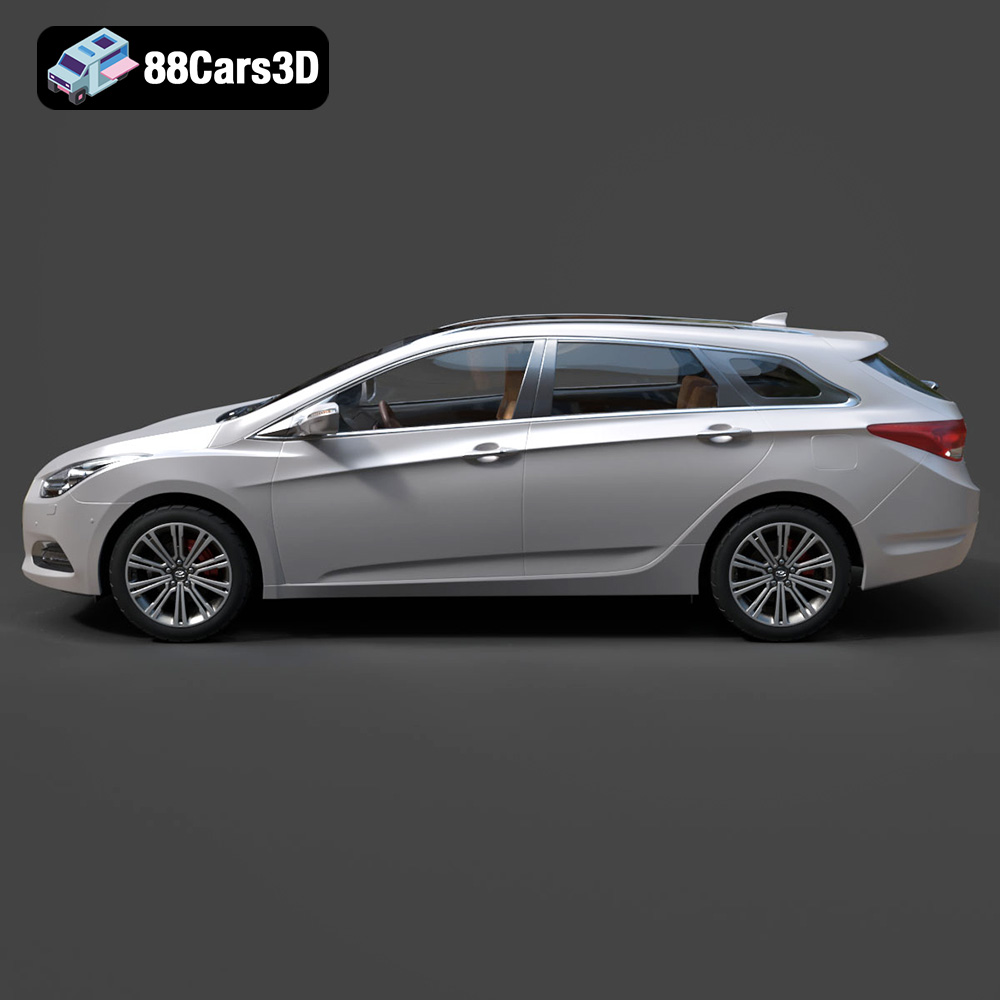
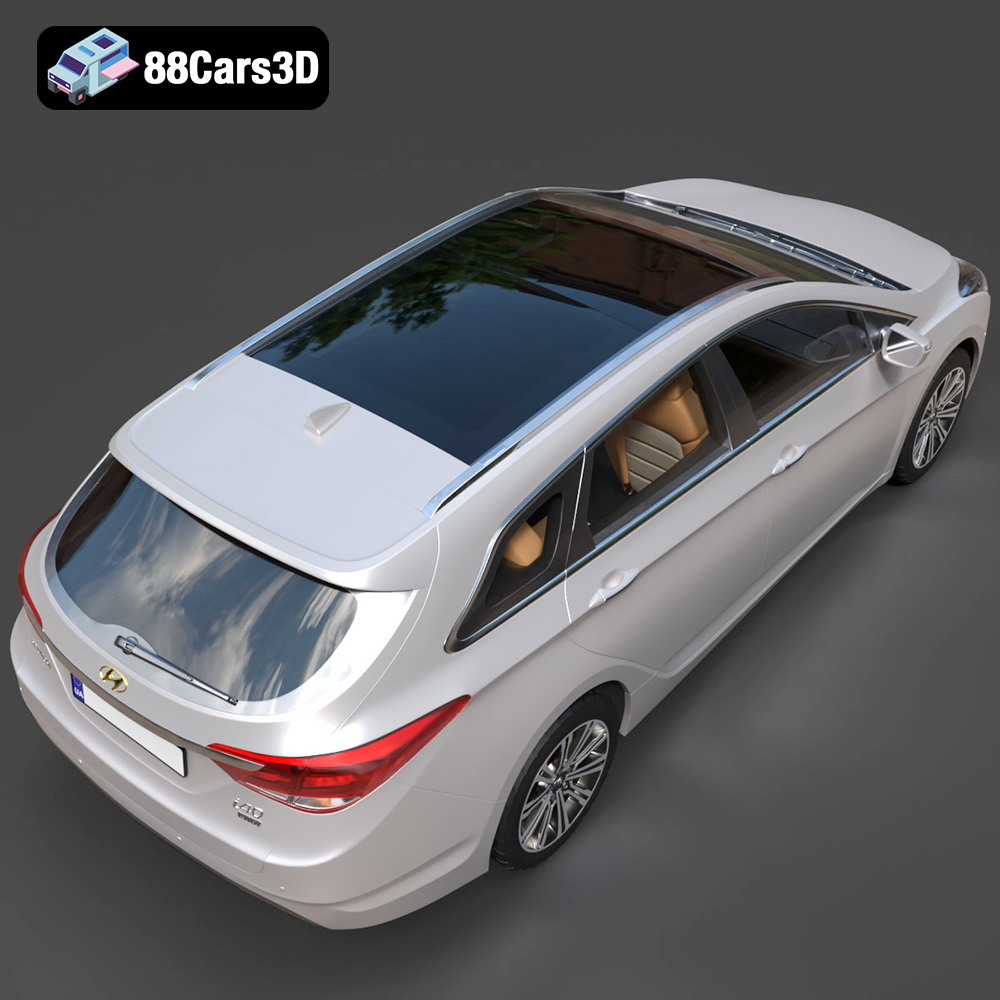
Experience true-to-life automotive design with the Hyundai i40 Wagon 2015 3D Model. Carefully crafted to represent the sleek contours and practical elegance of this popular estate vehicle, this digital asset delivers exceptional realism for any demanding project.
Constructed with professional precision, the model features clean geometry and realistic materials. The meticulously detailed exterior and well-proportioned dimensions ensure seamless integration into digital environments, offering an uncompromising visual experience while maintaining optimized performance.
Perfectly suited for a wide range of professional applications, this vehicle asset is ideal for game development, cinematic rendering, architectural visualization, and immersive AR/VR experiences. Whether deployed in dynamic interactive simulations or static professional renders, its versatile design meets the rigorous standards of 3D artists and developers.
Available in a comprehensive suite of file formats to guarantee compatibility across diverse software pipelines:
Tags:
.hyundai, .i40, .wagon, .stationwagon, .estate, .familycar, .car3dmodel, .rendering, .simulation, .gameasset, .arvr, .blend, .fbx, .obj, .glb, .stl, .ply, .unreal, .max
$39.99
.arvr
.blend
.car3dmodel
.estate
.familycar
.fbx
.gameasset
.glb
.hyundai
.i40
.max
.obj
.ply
.rendering
.simulation
.stationwagon
.stl
.unreal
.wagon