Get 20% OFF All Premium 3D & STL Models!

The digital realm has revolutionized how we interact with products, envision designs, and experience stories. At the heart of this transformation in the automotive sector lies the demand for exceptionally detailed and versatile 3D car models. From captivating marketing campaigns and immersive video games to cutting-edge AR/VR applications and precise simulations, the quality of a 3D vehicle asset directly dictates the fidelity and impact of the final output.
In this comprehensive guide, we’ll explore the intricate world of professional 3D car models, dissecting their technical intricacies, diverse applications, and the workflows that bring them to life. We’ll also shine a spotlight on a prime example of such craftsmanship: the Lexus GX460 2014 3D Model. This particular asset embodies the precision and attention to detail that professionals demand, offering a robust foundation for a myriad of creative and technical projects. Whether you’re a seasoned 3D artist, a game developer, an architect, or an enthusiast seeking the ultimate digital representation, understanding the nuances of these models is paramount.
In today’s visually driven world, a mediocre 3D model simply won’t suffice. High-quality 3D car models are not just aesthetically pleasing; they are fundamental tools that drive innovation, enhance engagement, and ensure accuracy across various industries. They are the silent workhorses behind breathtaking visuals and compelling interactive experiences.
For car manufacturers and marketing agencies, photorealistic automotive rendering is indispensable. It allows for the creation of stunning visuals long before a physical prototype exists, significantly reducing costs and accelerating design iterations. High-fidelity 3D car models enable designers to explore different paint finishes, material combinations, and lighting scenarios with unparalleled realism. Imagine a virtual showroom where potential buyers can explore every angle of a vehicle, customize its features, and even “drive” it in a simulated environment. The Lexus GX460 2014 3D Model, with its meticulously crafted exterior curves and interior elements, provides the perfect canvas for such high-end visualization projects, ensuring that every render is indistinguishable from a photograph.
The gaming industry constantly pushes the boundaries of visual fidelity, and realistic 3D car models are central to this endeavor. From open-world driving simulations to racing games and action-adventure titles, authentic vehicles add depth and believability. Game developers require assets that are not only visually impressive but also optimized for real-time performance. This involves careful consideration of polygon counts, efficient UV mapping, and well-structured materials. A premium asset like the Lexus GX460 2014 3D Model, designed with clean geometry and an optimized polygon count, seamlessly integrates into game engines, supporting features like Levels of Detail (LODs) and precise collision meshes, ensuring smooth gameplay even in graphically demanding environments.
The utility of high-quality 3D car models extends far beyond traditional screens. In augmented reality (AR) and virtual reality (VR) experiences, these models become interactive objects in digital worlds. Users can walk around, sit inside, and manipulate virtual vehicles, offering an unprecedented level of immersion for training, entertainment, or product demonstration. Furthermore, for product design, prototyping, or creating collectibles, 3D printing offers a tangible output. While requiring specific mesh preparation, a well-constructed digital model can serve as the direct input for physical replication. The Lexus GX460 2014 3D Model, for instance, provides a solid foundation for both interactive AR/VR applications and physical output, showcasing its incredible versatility.
Navigating the world of 3D assets requires a solid understanding of the various file formats available. Each format serves specific purposes, catering to different software, workflows, and output requirements. A truly professional 3D car model, such as the Lexus GX460 2014 3D Model available at 88cars3d.com, comes equipped with a diverse range of these formats to ensure maximum compatibility and flexibility across your projects. Selecting the correct format is crucial for maintaining data integrity, optimizing performance, and achieving your desired results.
The .blend format is the native file type for Blender, a powerful open-source 3D creation suite. When you acquire a .blend file, you’re not just getting the model; you’re often getting a fully editable scene. This includes the mesh data, materials, textures, lighting setups, cameras, and even animations if present. For artists working primarily in Blender, this format offers the most flexibility for customization, tweaking materials, adjusting the scene, or even using the provided lighting as a starting point for their own renders. It’s ideal for deep artistic manipulation and leveraging Blender’s robust toolset.
FBX (Filmbox) is an industry-standard 3D file format developed by Autodesk, renowned for its excellent support for inter-application data exchange. It’s particularly favored in game development for engines like Unreal Engine and Unity due to its ability to store a comprehensive range of data: geometry, materials, textures, bones, animation, and even cameras. FBX files maintain scene hierarchy and transformations effectively, making them highly reliable for transferring complex animated models between different software packages and into real-time environments where performance and precise data transfer are paramount.
The OBJ (Object) format is one of the most widely supported and universal 3D formats. It’s a simpler format compared to FBX, primarily storing geometric data like vertices, normals, and UV coordinates, along with references to external material (MTL) files for basic color and texture information. Its simplicity makes it incredibly compatible with virtually all major 3D software. While it doesn’t typically store advanced features like rigging or animation, its robustness for transferring static mesh data makes it a go-to for cross-software compatibility, ensuring that your 3D car models can be opened and worked with anywhere.
GLB (GL Transmission Format Binary) is the binary version of glTF, an increasingly popular, royalty-free specification for 3D scenes and models. GLB files are highly efficient and self-contained, embedding textures and other assets directly within a single file. This makes them incredibly optimized for web-based applications, AR/VR experiences, and any scenario where rapid loading and display are critical. Their efficiency and widespread support in modern web browsers and mobile platforms make them indispensable for interactive online presentations of 3D content, such as showcasing a Lexus GX460 in an online configurator.
STL (Stereolithography) is the standard file format used for 3D printing. It represents a 3D model as a series of connected triangles, essentially describing the surface geometry of an object without color, texture, or other advanced attributes. While not suitable for rendering or animation due to its lack of such data, it’s the bridge between the digital model and its physical manifestation. When preparing a 3D car model for printing, it’s often converted to STL, and mesh integrity (watertightness, manifold geometry) becomes paramount to ensure a successful print.
PLY (Polygon File Format) is a file format used to store 3D data from 3D scanners, CAD software, and other applications. It can store a variety of properties including color, transparency, surface normals, texture coordinates, and scalar values. PLY files are known for their precision and ability to handle complex mesh data, making them particularly useful in scientific visualization, reverse engineering, and applications where detailed geometric analysis is required, beyond what simpler formats might offer. For intricate automotive components or detailed scanned data, PLY offers a robust solution.
While not a universal file extension in the same vein as FBX or OBJ, an “.unreal” asset specifically refers to a 3D model that has been pre-configured and optimized for direct import and use within Unreal Engine. This often means the asset has appropriate material setups (PBR materials with correctly assigned textures), collision meshes, LODs, and potentially even Blueprint scripting for interactivity. For game developers or real-time visualization artists working with Unreal Engine, having a dedicated .unreal package like that provided with the Lexus GX460 2014 3D Model is a significant time-saver, ensuring smooth integration and immediate deployment without extensive setup.
The .max format is the native file type for Autodesk 3ds Max, one of the most widely used 3D software applications in architectural visualization, product design, and cinematic rendering. Similar to .blend files for Blender, a .max file contains the complete scene data, including geometry, materials (V-Ray, Corona, Arnold, etc.), textures, lighting setups, cameras, and animation. For professionals ingrained in the 3ds Max ecosystem, this format offers unparalleled flexibility for scene setup, complex material creation, advanced rendering, and intricate animations, allowing for full control over every aspect of the 3D car model.
Integrating a high-quality asset like the Lexus GX460 2014 3D Model into professional production pipelines requires an understanding of how these models are utilized within industry-standard software. The versatility of the included file formats ensures that artists, designers, and developers can leverage this model across diverse creative environments.
For professionals in architectural visualization and high-end advertising, 3ds Max remains a dominant force, often paired with rendering engines like V-Ray or Corona Renderer. The .max file provided with the Lexus GX460 2014 3D Model offers an excellent starting point. Artists can seamlessly import the model, which typically comes with pre-configured materials, into their scene. The workflow involves setting up realistic studio lighting or integrating the car into an existing environment, adjusting materials for specific reflectiveness, roughness, and metallic properties using PBR (Physically Based Rendering) principles. This allows for meticulous control over shadows, reflections, and global illumination, ultimately yielding renders that are indistinguishable from photographs. The clean geometry of the Lexus GX460 facilitates smooth subdivision for close-up shots, ensuring pristine detail without artifacts.
Blender’s rise as a comprehensive 3D suite makes the .blend file format invaluable. Artists can open the Lexus GX460 2014 3D Model directly in Blender, accessing its geometry, textures, and often a basic lighting setup. From here, they can enhance materials using Blender’s Cycles or Eevee render engines, perhaps adding a dirt layer or custom decals to the SUV. The model can be integrated into larger scenes, such as an off-road environment or an urban street, allowing for dynamic camera animations and storytelling. Blender’s robust animation tools also allow for simple rigging of wheels or doors, bringing the vehicle to life in short animations or product showcases. The model’s optimized topology ensures it performs well even in complex Blender scenes.
The gaming and real-time visualization industries heavily rely on Unreal Engine for its unparalleled visual fidelity and performance. The Lexus GX460 2014 3D Model’s .fbx and .unreal formats are specifically tailored for this environment. Importing the .unreal package means much of the setup is already done: materials are correctly assigned, textures are linked, and often collision meshes and LODs (Levels of Detail) are in place. Developers can then easily integrate the SUV into a virtual world, set up vehicle physics using Unreal Engine’s native systems, and even implement interactive elements using Blueprints. For example, a user could open the doors, turn on the headlights, or even “drive” the Lexus GX460 within a virtual showroom or an open-world game, thanks to the engine-ready preparation of the asset. The optimized polygon count is critical here, ensuring smooth framerates even with multiple instances of the vehicle.
The true value of a professional 3D car model lies not just in its visual appeal, but in the underlying technical quality that makes it adaptable and efficient across diverse applications. The Lexus GX460 2014 3D Model is a testament to these principles.
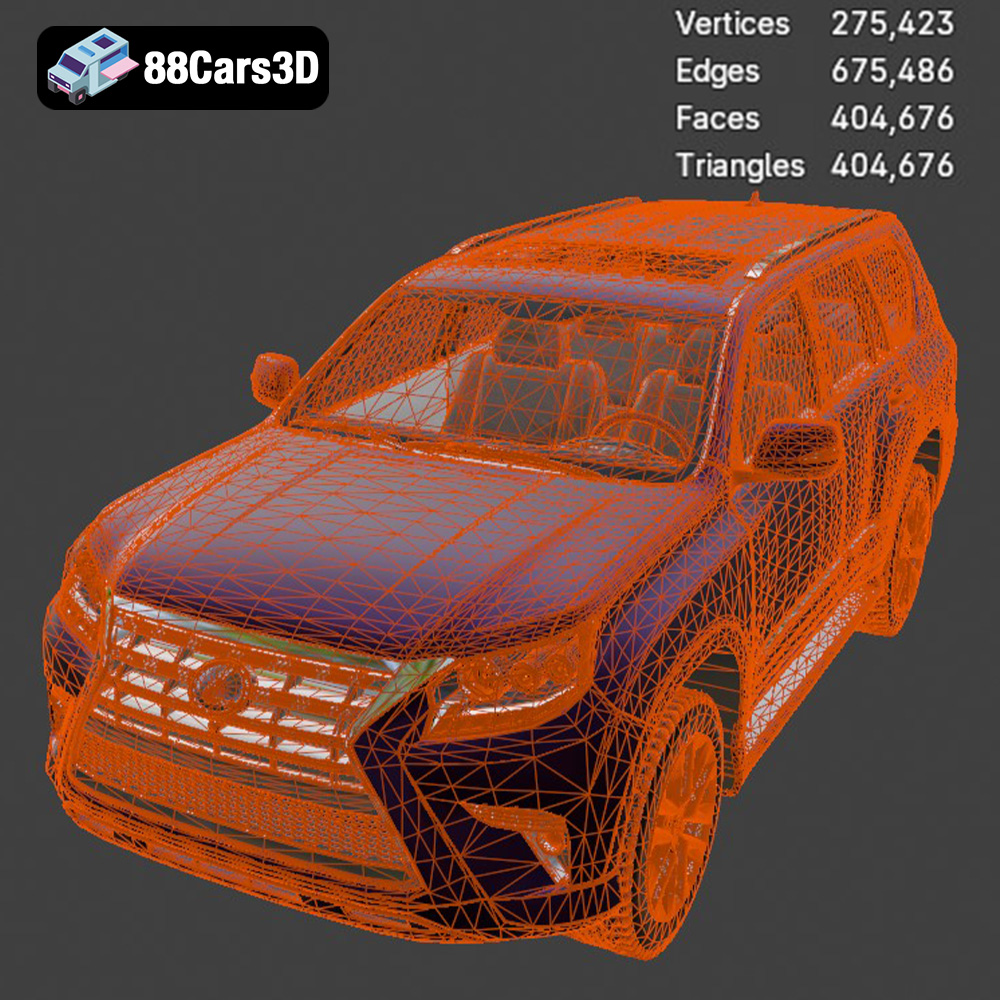
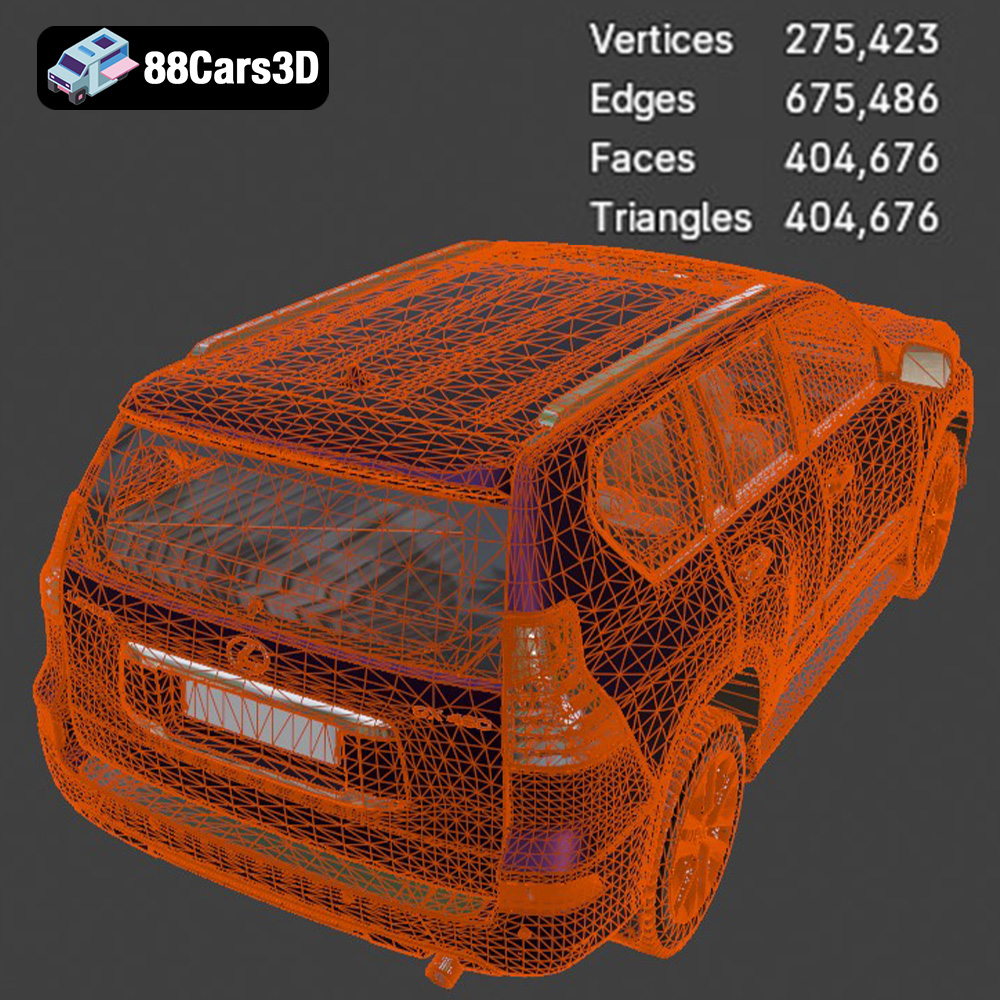
A “clean geometry” signifies a mesh free of common modeling issues such as n-gons (polygons with more than four sides), non-manifold edges, or overlapping faces. These issues can cause rendering artifacts, problems with subdivision surfaces, and difficulties in animation. The Lexus GX460 2014 3D Model boasts clean, quad-based topology, which is ideal for smooth subdivision and easy editing. An “optimized polygon count” means the model has enough detail to look realistic without being excessively heavy, which can hinder performance in real-time applications or inflate render times. Striking this balance is an art, and it ensures the model is both visually rich and functionally efficient.
UV mapping is the process of flattening the 3D surface of a model into a 2D space, allowing textures to be painted or applied accurately. A premium 3D car model features clean, non-overlapping UVs, which are crucial for consistent texture application and preventing seams or distortions. The Lexus GX460 2014 3D Model comes fully textured, leveraging Physically Based Rendering (PBR) workflows. This means it includes separate maps for albedo (base color), roughness, metallic, normal, and potentially ambient occlusion. These textures, when combined, create incredibly realistic surface properties, from the sheen of the paint to the subtle grain of interior plastics, reacting accurately to light in any PBR-compliant renderer or game engine.
While the product description for the Lexus GX460 2014 3D Model focuses on its visual accuracy, high-quality 3D car models are often prepared for animation. This involves rigging the vehicle with a skeletal structure for components like wheels, doors, steering, and suspension. While not explicitly detailed for this specific model, a professionally prepared asset often includes pivots correctly placed for rotation and potential hierarchy for simple animations. This allows artists to easily animate the vehicle for cinematic sequences, interactive showcases, or driving simulations, enhancing its utility significantly. The clean topology also makes rigging a more straightforward process for those who wish to add advanced animation capabilities.
The versatility of a well-crafted 3D car model like the Lexus GX460 2014 extends across numerous professional sectors, providing invaluable tools for creativity, marketing, and technical development.
In the highly competitive automotive industry, engaging potential buyers is key. High-quality 3D car models form the backbone of interactive product configurators on manufacturer websites, allowing customers to customize colors, wheels, interior options, and accessories in real-time. The Lexus GX460 2014 3D Model could be deployed to allow prospective buyers to explore different trims, see the car in various environments, or even place it in their driveway via AR apps. This interactive experience significantly boosts engagement and provides a compelling alternative to traditional static images, driving purchasing decisions. 88cars3d.com provides assets that are perfectly suited for these dynamic marketing initiatives.
Beyond entertainment, 3D car models are critical in professional driving simulators used for driver training, vehicle testing, and even autonomous vehicle development. Accurate vehicle dynamics and visual representation are paramount for these applications. The precise geometry and realistic proportions of the Lexus GX460 2014 3D Model would make it an ideal candidate for simulating real-world driving scenarios, allowing for safe and repeatable testing of driver responses or new automotive technologies. From emergency vehicle training to virtual test tracks, these models offer a cost-effective and controlled environment for critical development.
Filmmakers and commercial producers frequently utilize 3D car models for visual effects, whether it’s for creating impossible stunts, augmenting live-action footage, or developing entirely CG sequences. A model with the fidelity of the Lexus GX460 2014 allows VFX artists to seamlessly integrate it into any scene, matching lighting, camera angles, and rendering styles to achieve complete realism. From a car chase sequence to a sleek product reveal commercial, a high-detail 3D car model ensures that the digital vehicle holds up under the scrutiny of the big screen, blending perfectly with live-action elements.
The demand for high-quality 3D car models continues to grow exponentially across diverse industries, from automotive design and cinematic rendering to immersive gaming and interactive AR/VR experiences. The intricate balance of aesthetic fidelity and technical optimization is what truly distinguishes a professional-grade asset, enabling seamless integration and superior final output in any demanding production pipeline.
The Lexus GX460 2014 3D Model stands as an excellent example of such an asset. Its meticulous detail, clean geometry, optimized polygon count, and comprehensive range of industry-standard file formats – including .blend, .fbx, .obj, .glb, .stl, .ply, .unreal, and .max – make it an incredibly versatile and invaluable addition to any digital library. Whether you’re aiming for photorealistic renders in 3ds Max, dynamic scenes in Blender, or real-time performance in Unreal Engine, this model provides the robust foundation you need.
For artists, developers, and designers seeking to elevate their projects with top-tier digital vehicles, investing in expertly crafted 3D car models is a strategic choice. Explore the extensive collection of high-quality assets available at 88cars3d.com to find the perfect vehicle for your next groundbreaking project. The journey to creating stunning digital worlds begins with the right tools, and a premium 3D model is undeniably one of them.
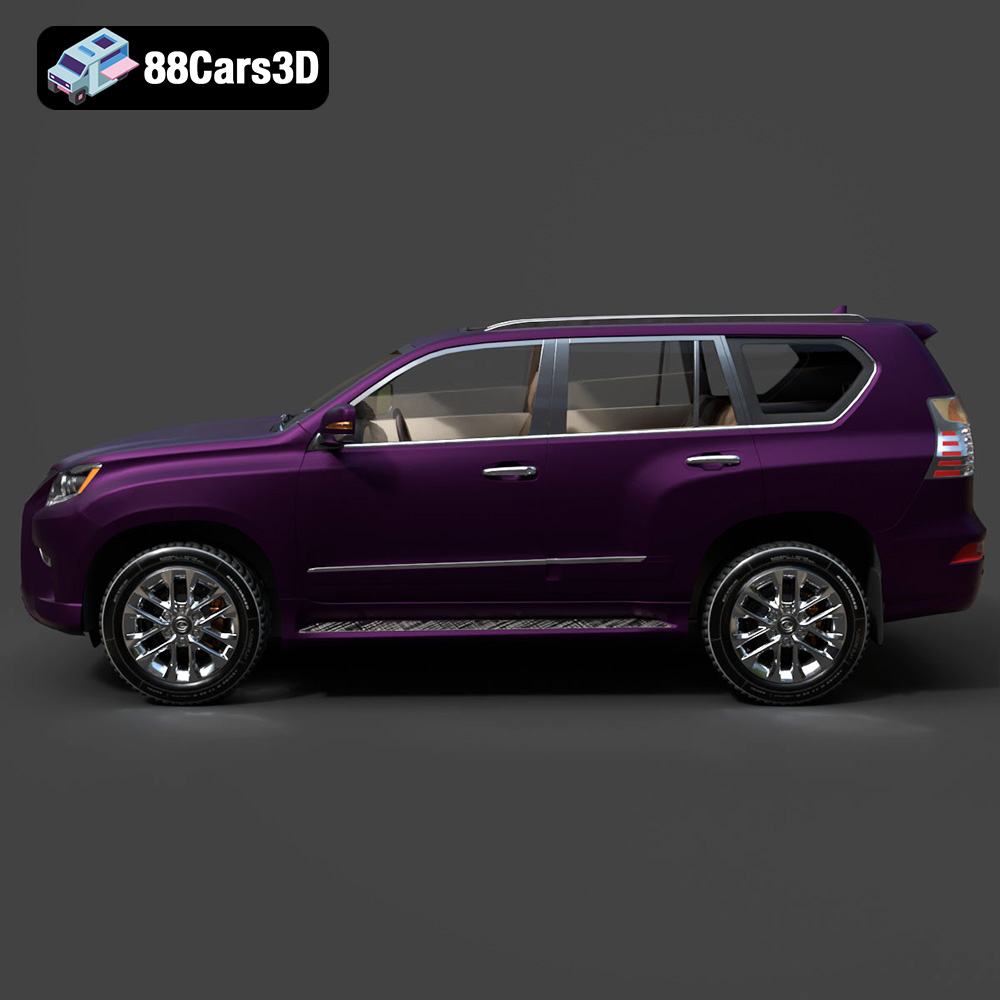
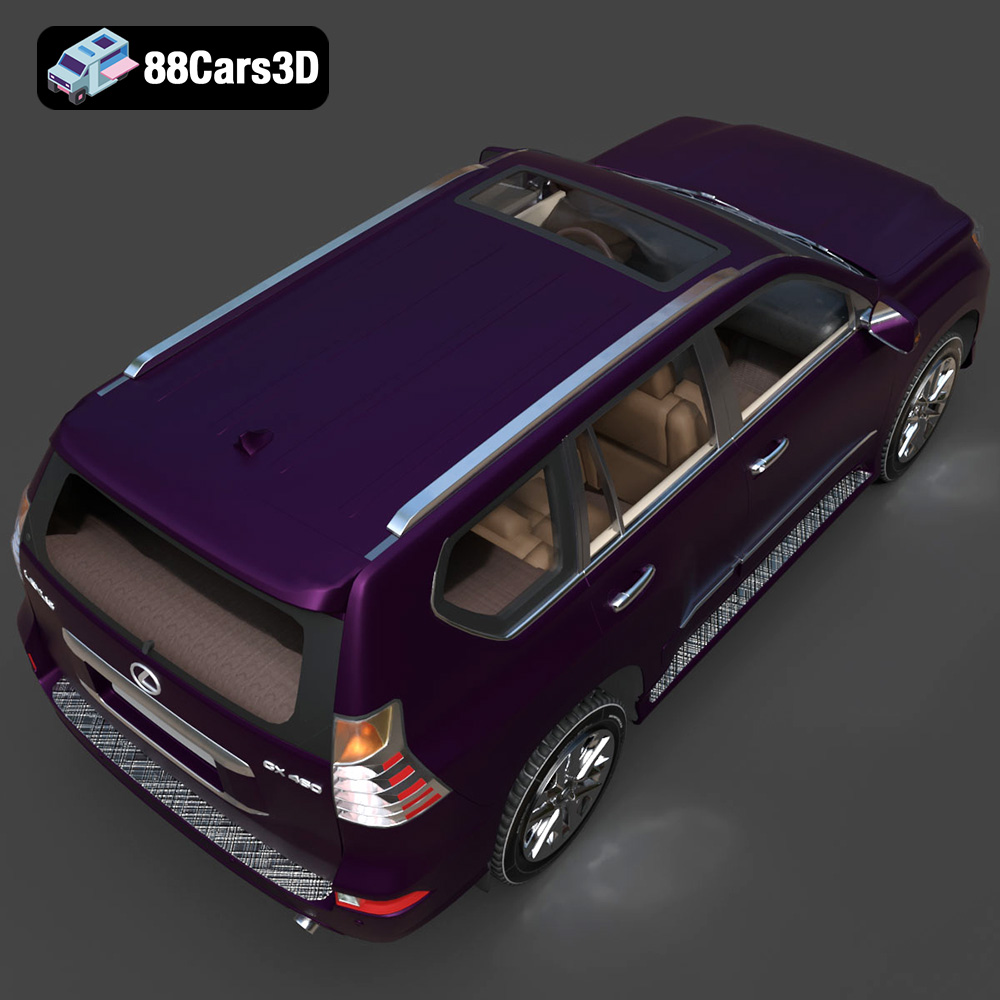
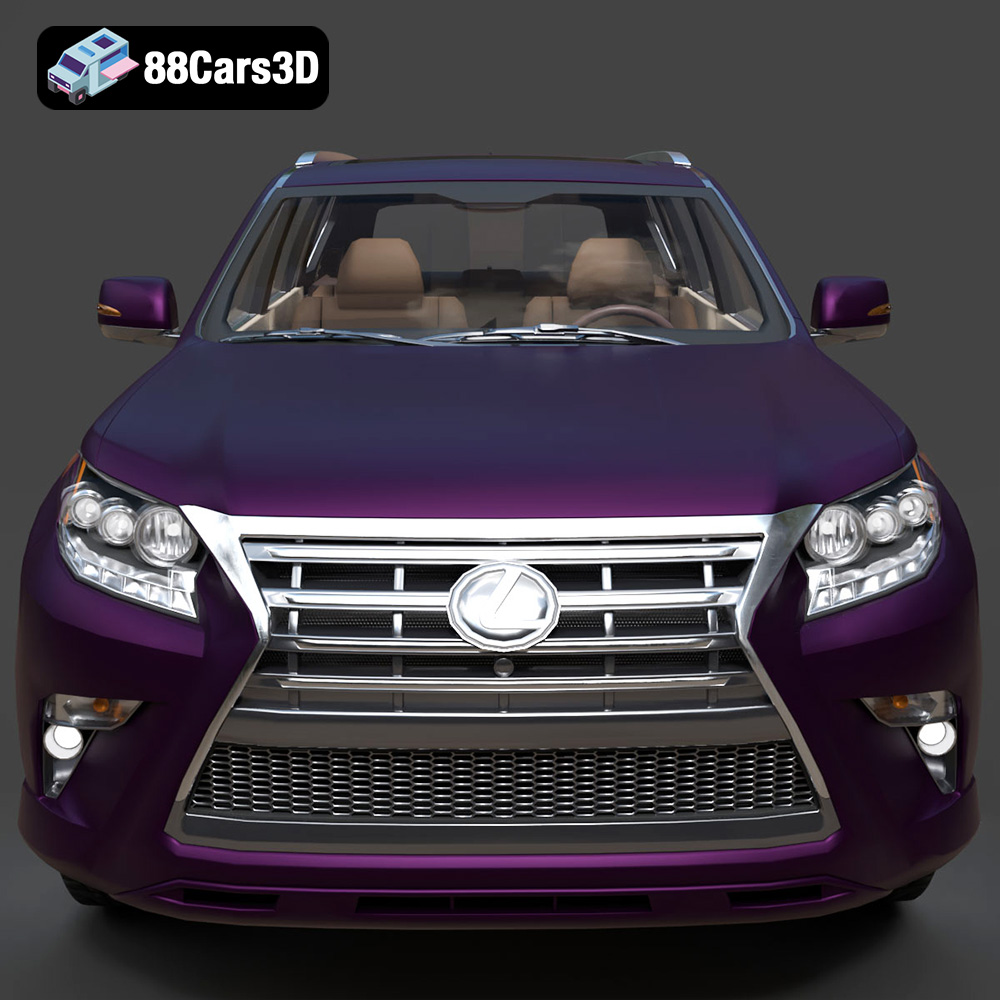
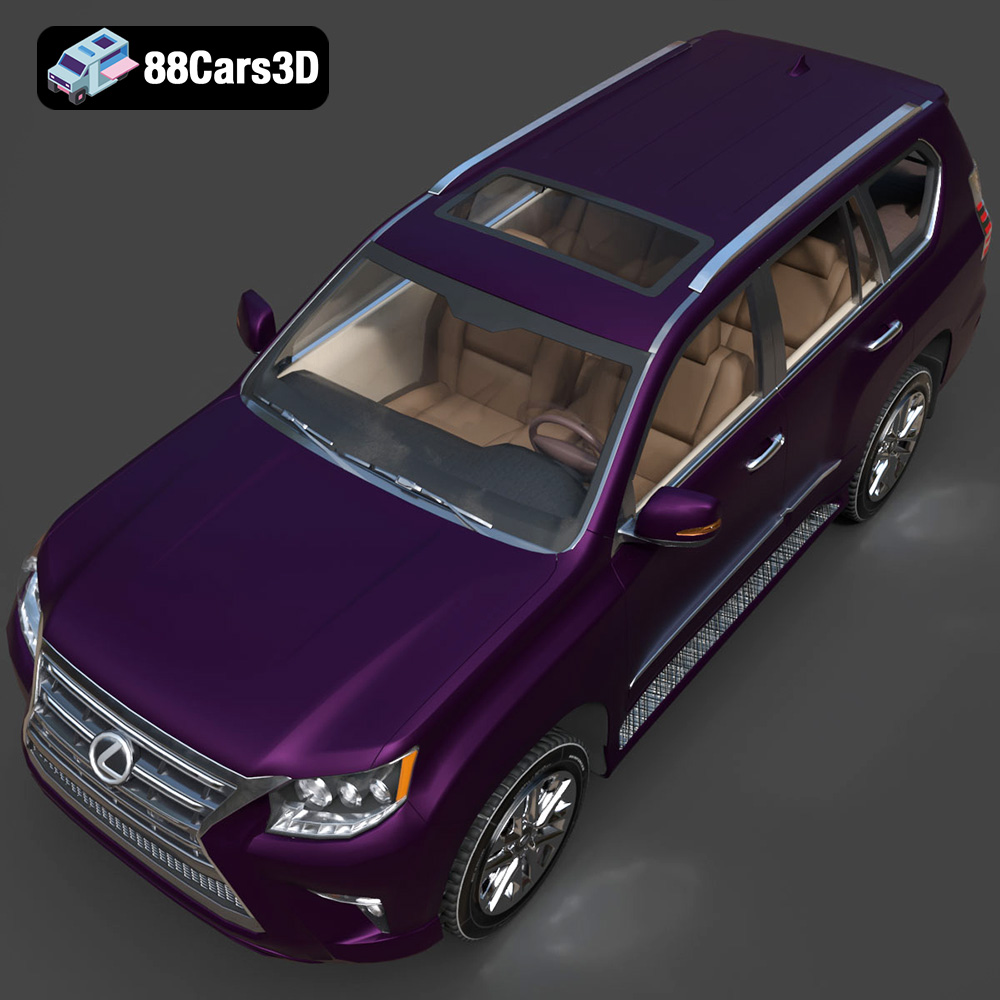
Discover the exceptional realism and precision of the Lexus GX460 2014 3D Model. Crafted with meticulous attention to detail, this digital asset perfectly replicates the powerful stance and luxurious design of the iconic SUV, making it an outstanding addition to your digital library. Designed for optimal performance, this model features clean geometry, realistic materials, and an optimized polygon count. Every exterior curve and interior element has been modeled to deliver professional quality results. The asset is fully textured and ready for immediate deployment in your chosen software. Whether you are developing an immersive video game, creating photorealistic architectural visualizations, producing interactive AR/VR experiences, or conducting automotive simulations, this versatile 3D model adapts seamlessly to any demanding production environment. This comprehensive package includes multiple industry-standard file formats to ensure maximum compatibility: .blend, .fbx, .obj, .glb, .stl, .ply, .unreal, .max.
$39.99
.arvr
.blend
.car3dmodel
.fbx
.gameasset
.glb
.gx460
.lexus
.luxury
.max
.obj
.offroad
.ply
.rendering
.simulation
.stl
.unreal
SUV