Get 20% OFF All Premium 3D & STL Models!

In the expansive and ever-evolving realm of 3D visualization, the demand for high-fidelity assets has never been greater. From blockbuster games and photorealistic architectural renders to immersive AR/VR experiences and cinematic productions, the quality of a 3D model can be the defining factor in a project’s success. Automotive models, in particular, stand as a testament to the artist’s skill, requiring meticulous attention to detail, accurate proportions, and convincing material representation. They are not merely static objects but vital components that breathe life into digital worlds.
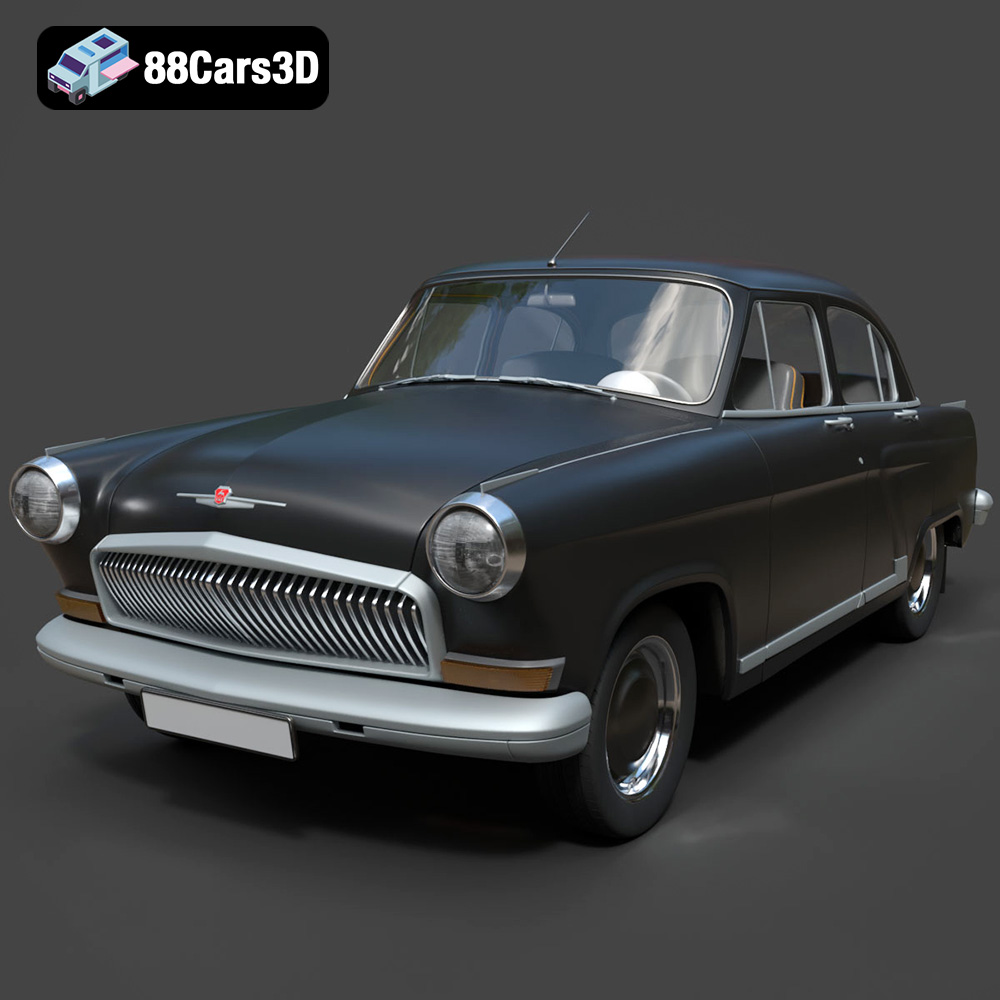
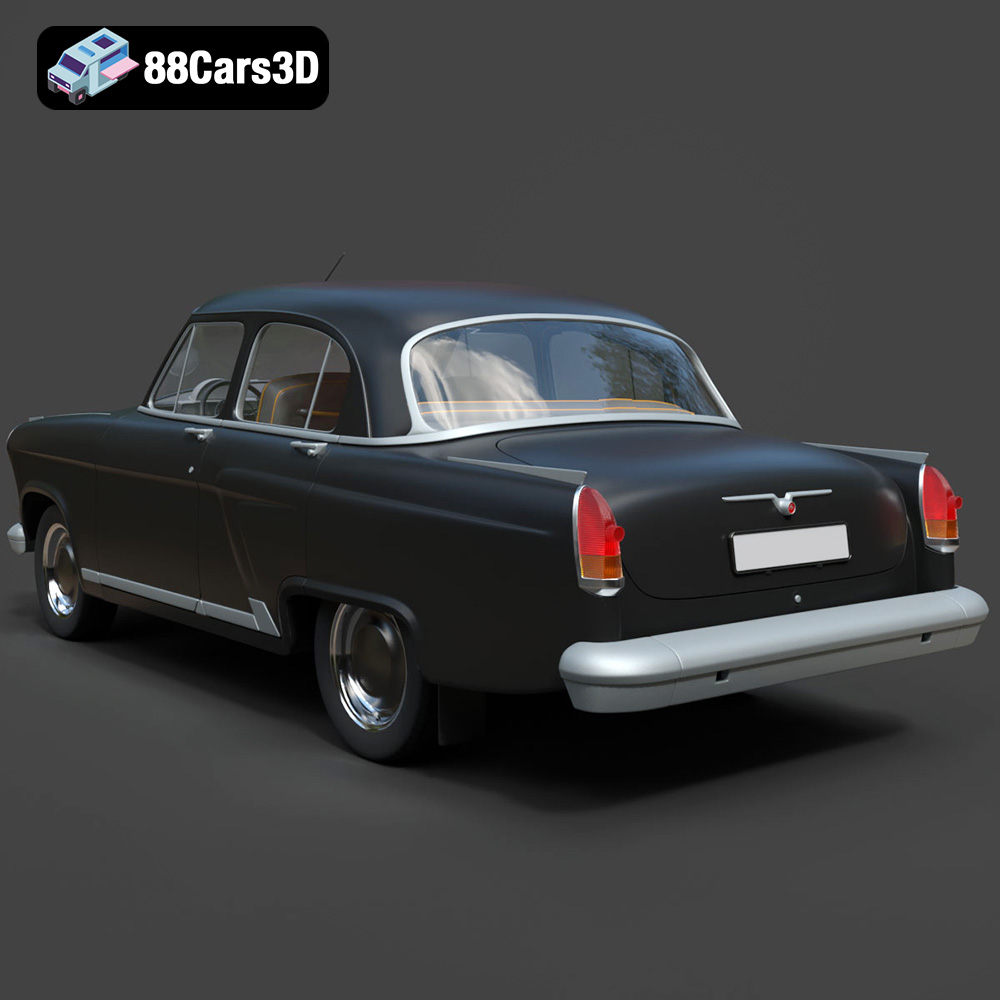
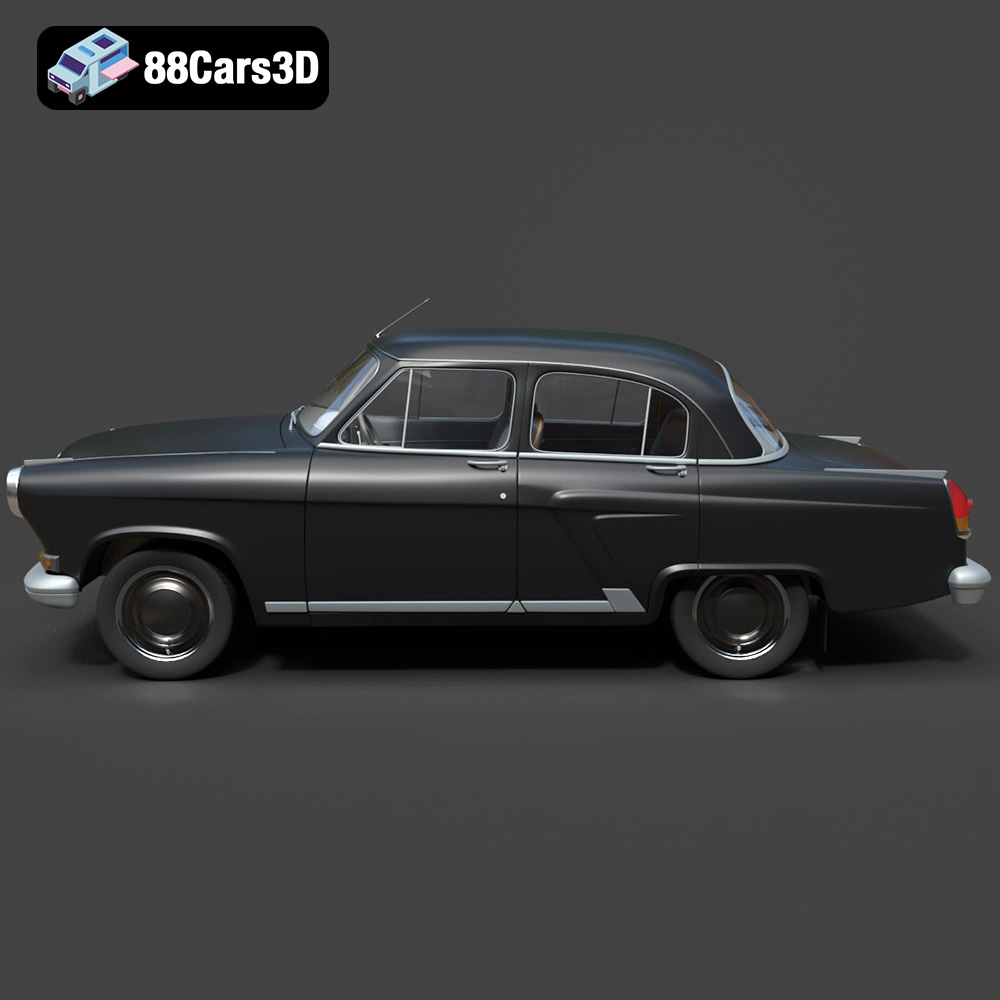
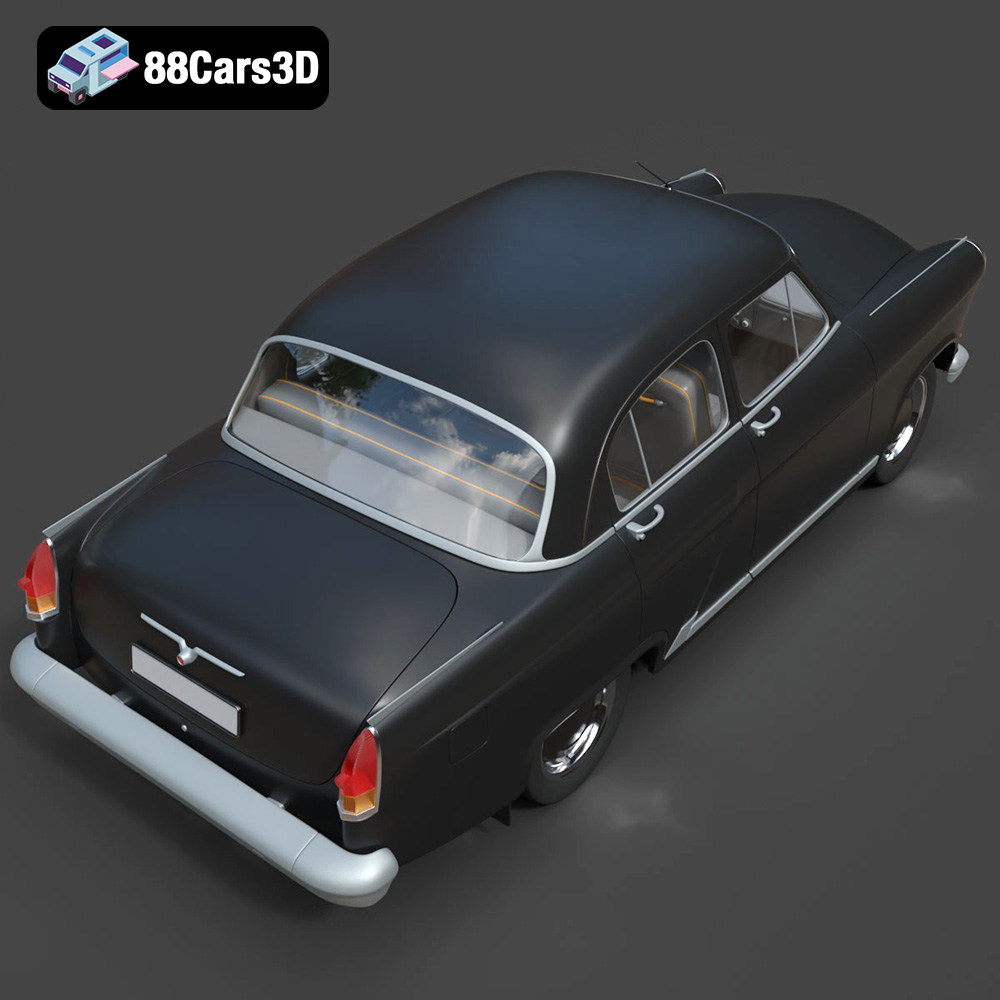
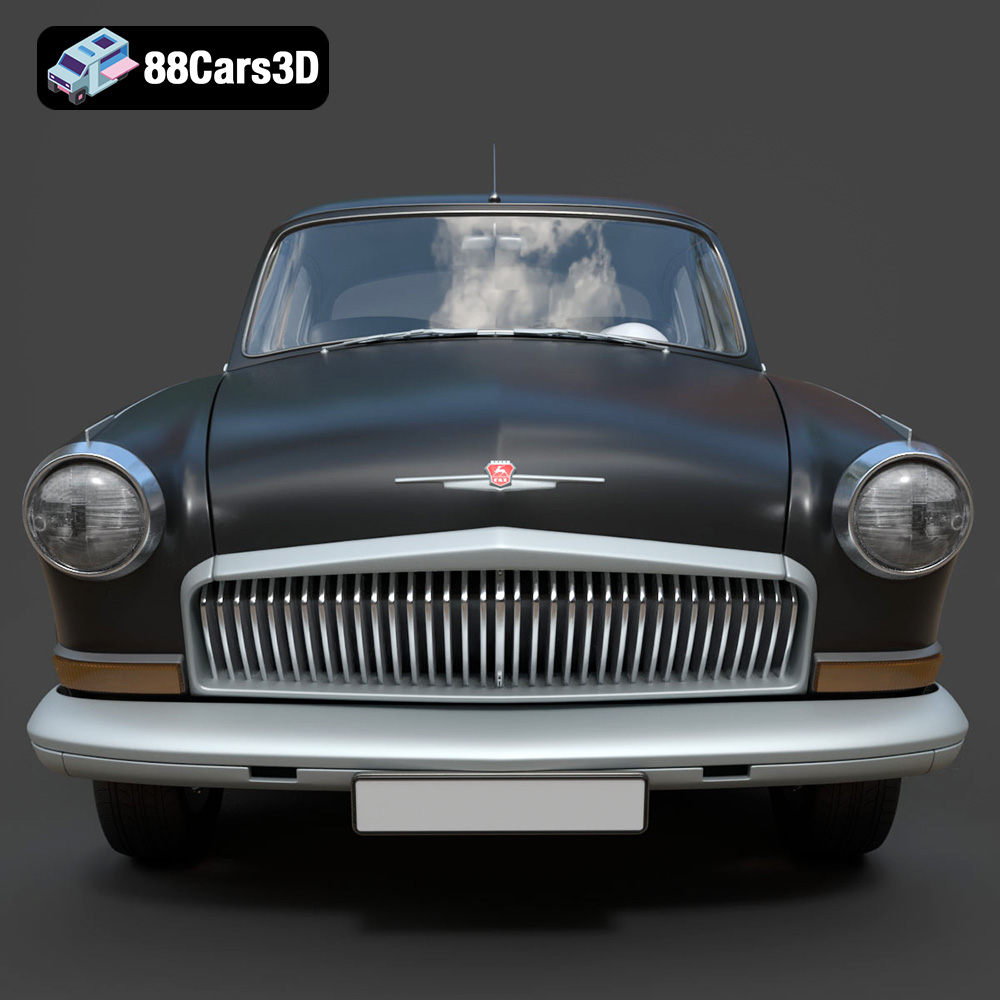
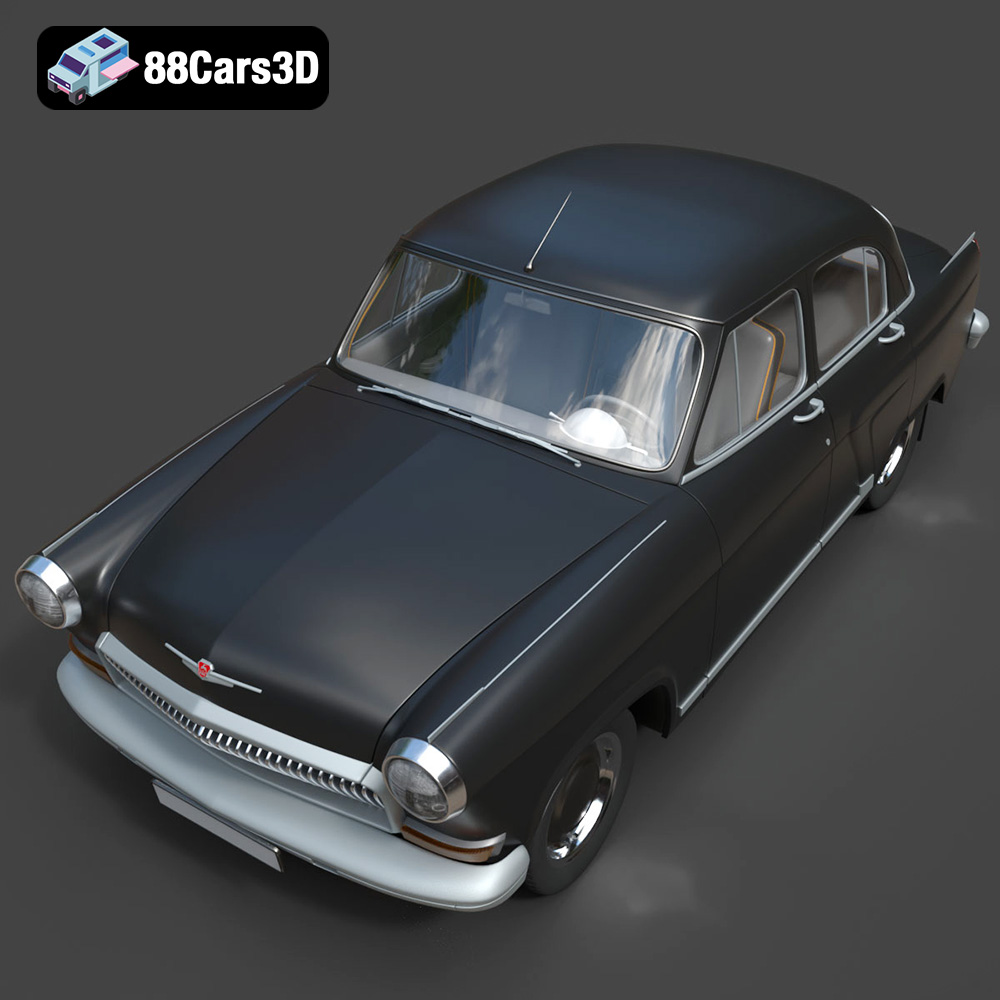
At the heart of many compelling digital narratives lies a vehicle that evokes emotion, tells a story, or simply serves as a benchmark for visual excellence. Today, we’re diving deep into the technical intricacies and versatile applications of such an asset – the GAZ 21-001 3D Model, available on 88cars3d.com. This iconic classic car, renowned for its elegance and historical significance, has been brought to life in the digital sphere with an impressive level of precision and realism, making it a cornerstone for a myriad of professional projects. Whether you’re an automotive designer, a game developer, or a visualization artist, understanding the nuances of a high-quality 3D car model is paramount to leveraging its full potential.
Choosing the correct file format for a 3D model is a critical decision that impacts workflow efficiency, compatibility, and the ultimate output of your project. Each format serves a specific purpose, designed with particular applications in mind. The GAZ 21-001 3D Model, recognizing this necessity, is offered in a comprehensive range of formats, ensuring seamless integration into virtually any professional pipeline. Let’s explore these essential formats in detail.
The .blend format is the native file type for Blender, the powerful open-source 3D creation suite. When you acquire the GAZ 21-001 in this format, you’re not just getting the model; you’re gaining access to a fully editable Blender scene. This includes all materials, textures, lighting setups, camera positions, and potentially even animation data or modifiers applied to the mesh. For Blender users, this offers unparalleled flexibility, allowing for deep customization, scene composition, and direct rendering within Blender’s Cycles or Eevee engines without any conversion or re-setup. It’s the ideal choice for those who wish to dissect, modify, or build upon the original asset directly within its creation environment.
Autodesk’s .fbx (Filmbox) format is arguably the most widely adopted interchange format in the 3D industry. It’s revered for its ability to store not just geometry, but also materials (often PBR-compatible, though sometimes requiring re-linking textures), textures, animations, skinning information, cameras, and lights. The .fbx format is the go-to for transferring assets between different Digital Content Creation (DCC) applications like Maya, 3ds Max, Blender, and crucially, for importing into real-time game engines such as Unreal Engine and Unity. Its robust nature makes it an ideal choice for the GAZ 21-001 when targeting game development or complex animation pipelines where maintaining integrity across software is paramount.
Wavefront’s .obj (Object) format is one of the oldest and most universal 3D file formats. It’s a simple, human-readable (ASCII) text file that primarily stores geometric data: vertices, normals, UV coordinates, and faces. Material information is typically stored in a separate companion file with a .mtl (Material Template Library) extension, which references texture maps. While it doesn’t support animation or rigging, its simplicity and widespread compatibility mean almost every 3D software can import and export .obj files. For the GAZ 21-001, .obj is perfect for scenarios where you need a clean mesh for sculpting, retopology, or simply to ensure maximum compatibility across diverse software environments without complex dependencies.
The .glb (GL Transmission Format Binary) is an increasingly vital format, particularly for modern web-based 3D applications, augmented reality (AR), and virtual reality (VR) experiences. It’s a binary container format that bundles all necessary assets—3D model, materials, textures, and even animations—into a single, compact file. This “all-in-one” approach makes .glb incredibly efficient for streaming and loading in web browsers and mobile AR applications, minimizing load times and simplifying distribution. For showcasing the GAZ 21-001 in an interactive web viewer, integrating it into a mobile AR app, or deploying it in a VR environment, .glb is the definitive choice due to its optimization for real-time performance and portability.
The .stl (Stereolithography) format is the ubiquitous standard for additive manufacturing, commonly known as 3D printing. Unlike other formats, .stl only describes the surface geometry of a 3D object as a collection of unconnected triangles, forming a mesh. It contains no color, texture, or material information. For the GAZ 21-001, an .stl file would represent the car as a purely physical form, ready to be sliced by a 3D printer’s software. The key requirement for a functional .stl is that the mesh must be “watertight,” meaning it has no holes or gaps, ensuring a continuous surface for the printer to interpret. This format is crucial for creating physical prototypes, scale models, or custom parts of the classic vehicle.
The .ply (Polygon File Format) is a versatile format often used for storing 3D data derived from 3D scanners or high-precision modeling. It can store a wider range of properties than .obj or .stl, including color, transparency, normals, texture coordinates, and even confidence values for each vertex or face. This makes it particularly useful for scientific visualization, reverse engineering, and applications where highly detailed, often colored, mesh data is paramount. While less common for general interchange than .fbx or .obj, the .ply format for the GAZ 21-001 would be valuable for analytical purposes or specialized rendering pipelines demanding extreme mesh fidelity and additional per-vertex data.
The designation .unreal, in the context of commercial 3D assets, typically signifies a pre-configured and optimized asset package specifically tailored for Unreal Engine. This isn’t a single file extension in the traditional sense, but rather a collection of Unreal Engine native asset files (.uasset, .umap, etc.) organized within a project structure. This means the GAZ 21-001 model comes ready-to-use within Unreal: meshes are correctly imported, PBR materials are set up with appropriate textures, collision volumes might be defined, and possibly even basic LODs (Levels of Detail) are configured. For Unreal Engine developers, this eliminates significant setup time, allowing for immediate integration and deployment of the classic car within their interactive environments.
Similar to .blend for Blender, the .max format is the native project file for Autodesk 3ds Max, a leading software in architectural visualization, animation, and game development. A .max file of the GAZ 21-001 contains the complete 3ds Max scene, including all geometry, modifiers, intricate V-Ray or Corona Renderer materials, lighting rigs, camera setups, and animation data. This format provides 3ds Max users with the highest level of control and flexibility, enabling them to make precise adjustments, re-render, or integrate the model into existing 3ds Max scenes with maximum fidelity to the artist’s original vision.
The availability of the GAZ 21-001 3D Model in such a diverse array of formats ensures that professionals across various disciplines can seamlessly incorporate this high-quality asset into their specific workflows, maximizing efficiency and creative potential.
Automotive rendering is a specialized discipline that marries artistic vision with technical precision. Achieving photorealistic results for vehicles like the GAZ 21-001 requires an understanding of physical properties, lighting principles, and advanced rendering techniques. A well-crafted 3D model forms the foundation, but its true potential is unlocked through expert rendering.
The realism of a 3D car model is largely dictated by its materials. The GAZ 21-001 3D Model features realistic materials, ensuring that every surface, from the glossy paintwork to the chrome accents and interior fabrics, reacts authentically to light. This is achieved through physically based rendering (PBR) workflows, where material properties such as albedo (base color), roughness, metallic, normal maps, and ambient occlusion are accurately defined. These maps simulate how light interacts with different surfaces, creating the illusion of real-world materials. High-resolution textures are crucial for close-up shots, capturing minute details like subtle paint imperfections or leather grain, which elevate the visual fidelity significantly.
Lighting is the soul of any render. For automotive rendering, skilled lighting can highlight the elegant lines of the GAZ 21-001, emphasize its iconic silhouette, and create specific moods. Techniques often involve the use of High Dynamic Range Images (HDRIs) to provide realistic environmental lighting and reflections, simulating everything from a sunny outdoor scene to an overcast day. Complementary studio lighting setups, using virtual softboxes and spotlights, can further accentuate specific features or create dramatic effects, much like in professional automotive photography. The quality of the GAZ 21-001 model’s geometry and materials means it will respond beautifully to these advanced lighting techniques, allowing artists to achieve stunning visual results.
In game development, a balance between visual fidelity and performance is critical. While a model must look convincing, it also needs to run smoothly within a real-time engine. The GAZ 21-001 3D Model is designed with this balance in mind, making it an excellent game asset.
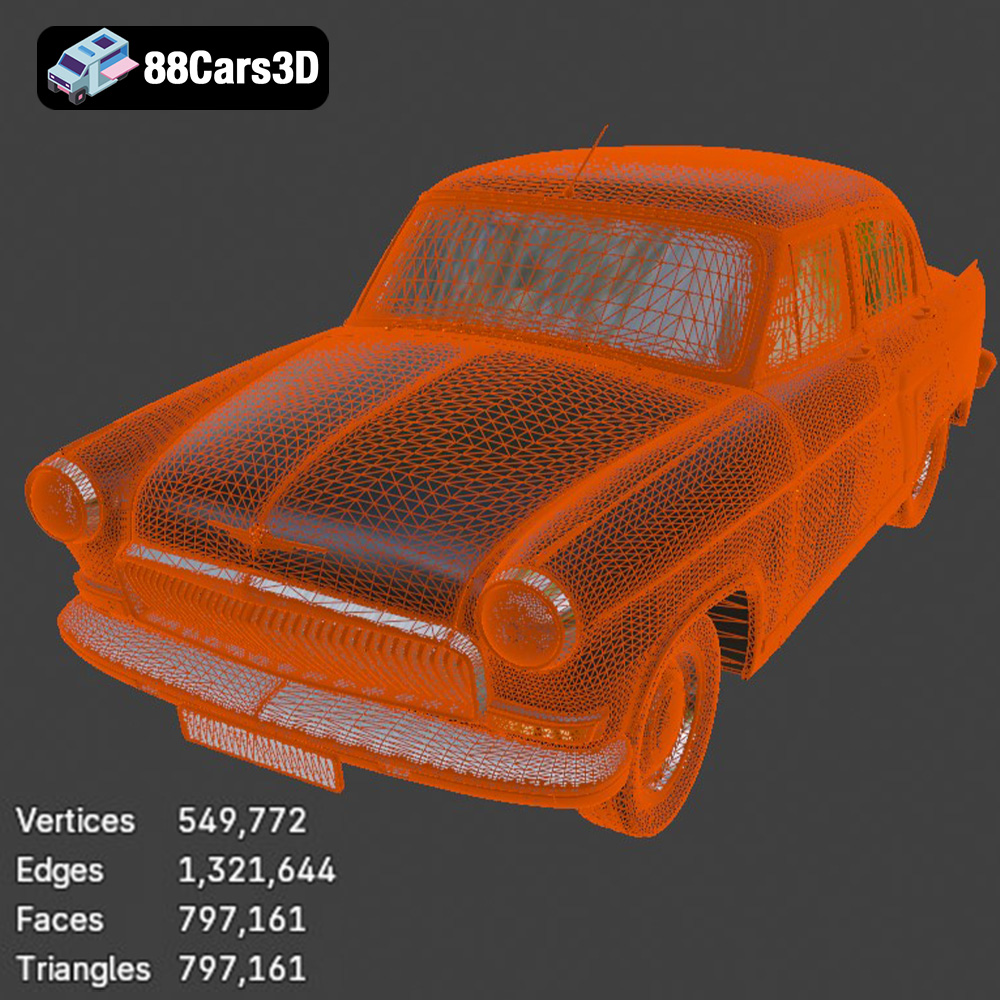
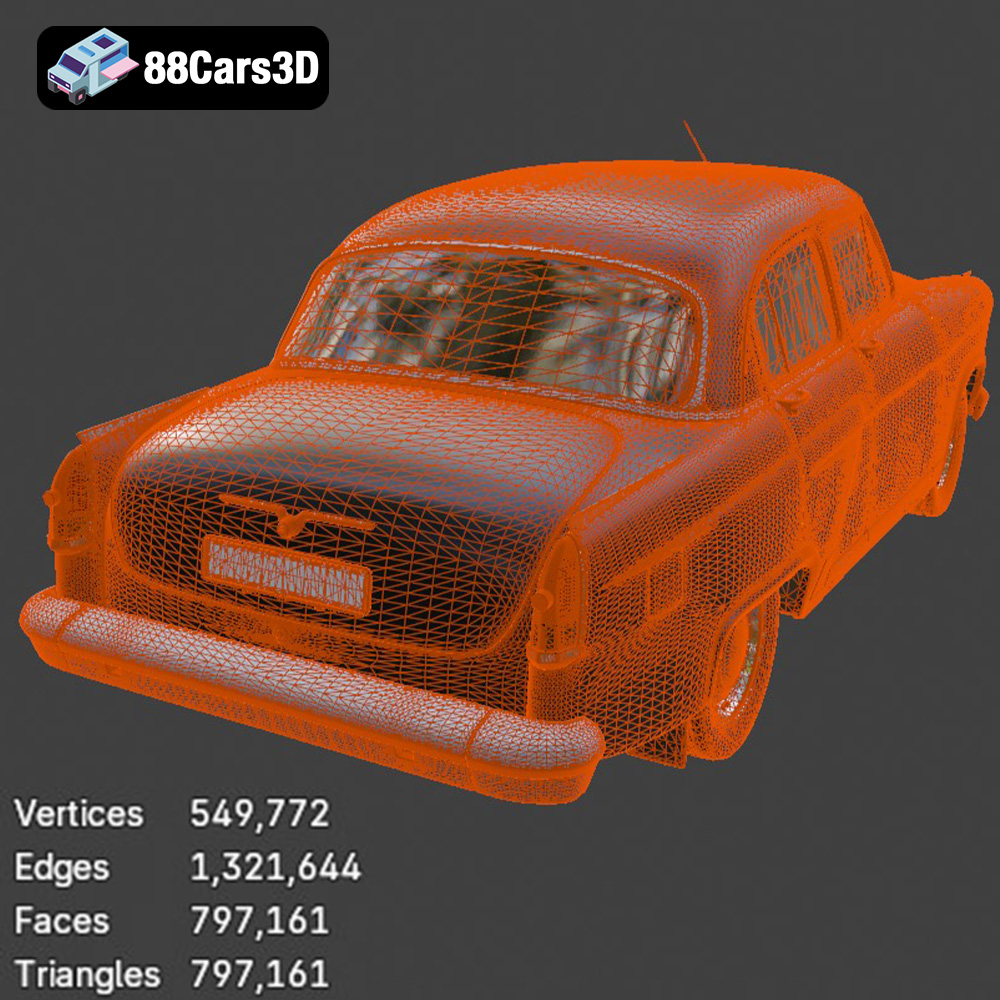
A “clean geometry” is paramount for game assets. This means the model’s mesh is optimized, typically using quads where possible, with efficient edge flow that supports deformation and reduces unnecessary polygon counts. The GAZ 21-001 boasts such topology, ensuring optimal performance. For varying distances from the camera, Levels of Detail (LODs) are indispensable. Multiple versions of the same model, each with a progressively lower polygon count, are created. When the player is far away, the engine loads a low-poly LOD, saving precious processing power. As the player gets closer, higher-detail LODs are swapped in. This intelligent system allows for rich, detailed environments without crippling performance, a feature often expected from professional 3D car models.
The availability of the GAZ 21-001 3D Model in .fbx and .unreal formats specifically caters to game developers using Unreal Engine and Unity. Importing the .fbx into either engine is a straightforward process, typically involving dragging and dropping the file, then configuring materials within the engine’s PBR shader system. For Unreal Engine users, the .unreal format means the asset is potentially pre-configured, reducing setup time significantly. This can include pre-assigned materials, collision meshes, and even basic physics assets, allowing developers to drop the classic car directly into their levels and begin testing almost immediately. This level of preparation exemplifies the professional construction of assets found on platforms like 88cars3d.com.
Augmented Reality (AR) and Virtual Reality (VR) are transforming how we interact with digital content, offering immersive experiences that were once the realm of science fiction. High-quality 3D models like the GAZ 21-001 are central to delivering these compelling realities.
The optimized .glb format of the GAZ 21-001 3D Model is a game-changer for AR/VR applications. This single-file format is perfectly suited for quick loading and display in web browsers and mobile AR apps, allowing users to instantly view the classic car overlaid on their real-world environment or explore it within a virtual showroom. Imagine pointing your phone at a surface and having a photorealistic GAZ 21-001 appear, ready for inspection from all angles. This level of accessibility and immersion is driving innovation in fields from automotive sales to educational tools.
Beyond simple viewing, high-fidelity 3D car models power sophisticated interactive experiences. Automotive brands use them in online configurators, allowing potential buyers to customize every aspect of a vehicle in real-time. For industries requiring detailed training, the GAZ 21-001 could be integrated into a VR simulation to teach mechanics about classic vehicle maintenance or to provide driving simulations for historical context. The model’s “accurate proportions and professional detailing” ensure that such applications are both visually convincing and functionally precise, providing invaluable tools for learning and engagement.
While often associated with screen-based output, 3D models also bridge the gap to the physical world through 3D printing. The GAZ 21-001 3D Model, with its “clean geometry,” is also a viable candidate for physical reproduction.
The .stl and .ply formats provided for the GAZ 21-001 are essential for 3D printing. To ensure a successful print, the 3D model must be a “watertight” mesh, meaning it has no holes or non-manifold geometry. Professional 3D models are typically constructed with mesh integrity in mind, reducing the need for extensive repair before printing. Once prepared, the model can be scaled to any desired size, from a small desk ornament to a large-scale prototype, offering a tangible representation of the digital asset.
For designers and engineers, 3D printing from a detailed model like the GAZ 21-001 offers rapid prototyping capabilities. This allows for quick iteration on design ideas, testing physical fit, or simply creating impressive scale models for display. The ability to move from a digital concept to a physical object quickly accelerates design cycles and provides invaluable tactile feedback. Whether it’s for an automotive enthusiast creating a custom model or an engineer needing a physical reference, the versatility of the GAZ 21-001 3D Model extends far beyond the digital screen.
In a saturated market of digital assets, distinguishing between high-quality and subpar models is critical for professional success. Opting for meticulously crafted 3D car models, such as the GAZ 21-001 from 88cars3d.com, offers significant advantages.
Creating a detailed 3D car model from scratch is an incredibly time-consuming and skill-intensive process. For most projects, the efficiency of purchasing a pre-made, professionally crafted asset far outweighs the effort of building it in-house. A model like the GAZ 21-001, with its “clean geometry,” “realistic materials,” and “professional construction,” means less time spent on mesh clean-up, material setup, and re-modeling. This allows artists and developers to focus their valuable time and resources on creative aspects like scene composition, animation, or game logic, significantly accelerating project timelines.
The consistency and fidelity of your assets directly impact the overall quality and professionalism of your project. Using a high-quality model ensures that your renders are photorealistic, your game runs smoothly, and your AR/VR experiences are truly immersive. The accurate proportions and detailed representation of the GAZ 21-001 guarantee that the vehicle will look authentic and believable in any context, contributing to a polished final product. Trusting a reputable source like 88cars3d.com for your 3D car models ensures you receive assets that meet the highest industry standards.
The journey from concept to a fully realized 3D asset is complex, but the impact of a high-quality model on digital projects is undeniable. The GAZ 21-001 3D Model stands as a prime example of an asset engineered for versatility, precision, and performance across the entire spectrum of digital creation. Whether your goal is to produce breathtaking automotive renders, develop immersive game worlds, craft engaging AR/VR experiences, or even bring digital designs into the physical realm through 3D printing, this meticulously crafted classic car model provides the robust foundation needed for professional results.
Its availability across multiple essential file formats—from editable Blender and 3ds Max scenes to game-engine-ready .fbx and .unreal packages, web-optimized .glb, and print-ready .stl—underscores its adaptability and value. By investing in such a professionally constructed asset, creators can save invaluable time, maintain exceptional visual fidelity, and ensure their projects stand out in today’s competitive digital landscape. Explore the possibilities and elevate your next project with the remarkable GAZ 21-001 3D Model, available at 88cars3d.com.
Experience precision and realism with the GAZ 21-001 3D Model. This meticulously modeled digital asset delivers an accurate representation of the iconic classic vehicle, offering realistic materials, accurate proportions, and professional detailing suitable for a wide variety of digital projects. Key features include clean geometry for optimal performance, realistic materials that accurately reflect light and environment, and professional construction that ensures seamless integration into any scene. The model’s topology is carefully planned, making it ideal for close-up shots as well as dynamic background placement. Perfect for diverse applications, this model excels in game development, architectural rendering, AR/VR experiences, film production, and visual simulations. Whether you are building an interactive environment or producing realistic still visualizations, this asset provides the necessary fidelity and ease of use. Available file formats include: .blend – Editable Blender file with materials and lighting setup, .fbx – Game-engine ready format for Unreal Engine and Unity, .obj – Standard 3D model format compatible with all major software, .glb – Optimized for AR/VR and web-based visualization, .stl – Suitable for 3D printing and prototyping, .ply – Detailed polygon mesh for analysis and visualization, .unreal – Pre-configured for Unreal Engine use, .max – Editable 3ds Max file for rendering and animationMercedes Benz CLS 500 3D Model 3D Printable STL
$39.99
.21001
.arvr
.blend
.car3dmodel
.classiccar
.fbx
.gameasset
.gaz
.glb
.max
.obj
.ply
.rendering
.sedan
.simulation
.stl
.unreal
.vintagecar