Get 20% OFF All Premium 3D & STL Models!

In the rapidly evolving landscape of 3D visualization, the demand for high-quality, meticulously crafted digital assets is insatiable. From breathtaking cinematic renders to immersive real-time game experiences and precise architectural visualizations, a well-engineered 3D car model is often the centerpiece that defines the scene’s realism and impact. Professionals across various industries constantly seek assets that not only look authentic but are also technically robust, optimized for diverse pipelines, and ready for immediate deployment.
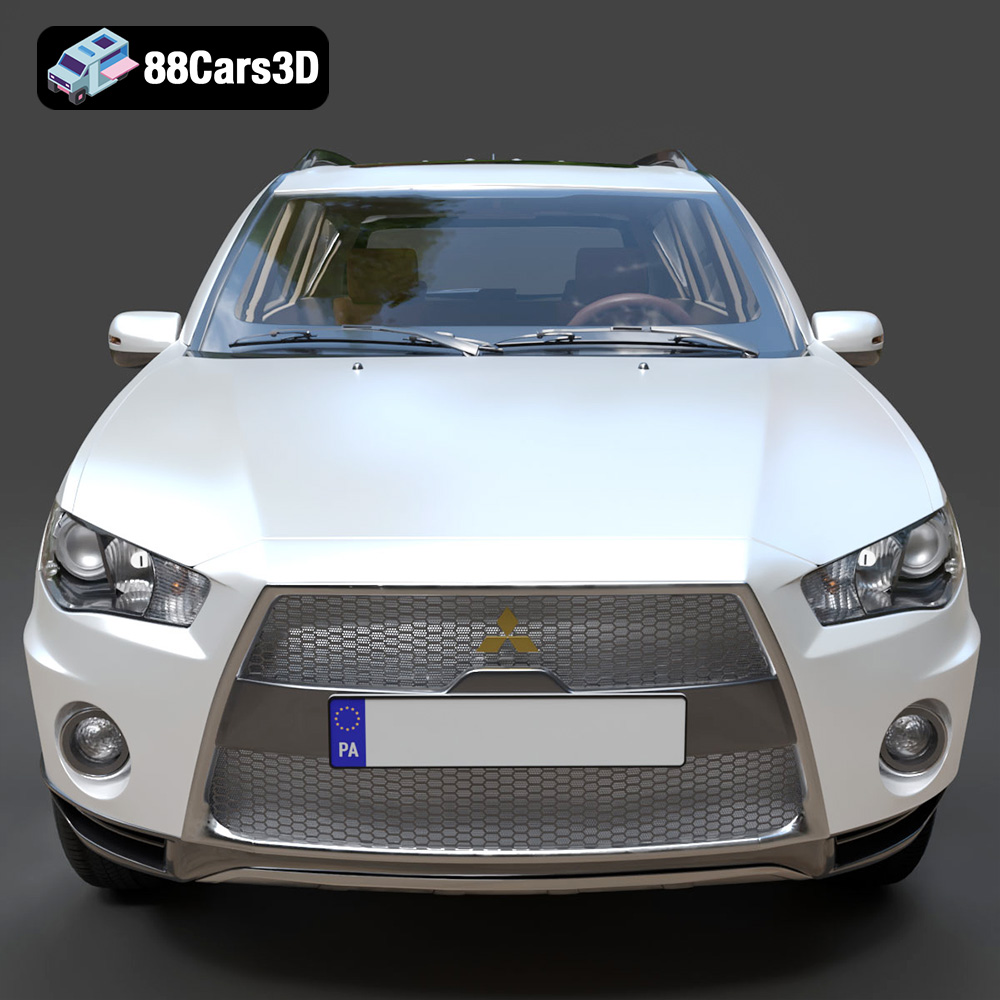
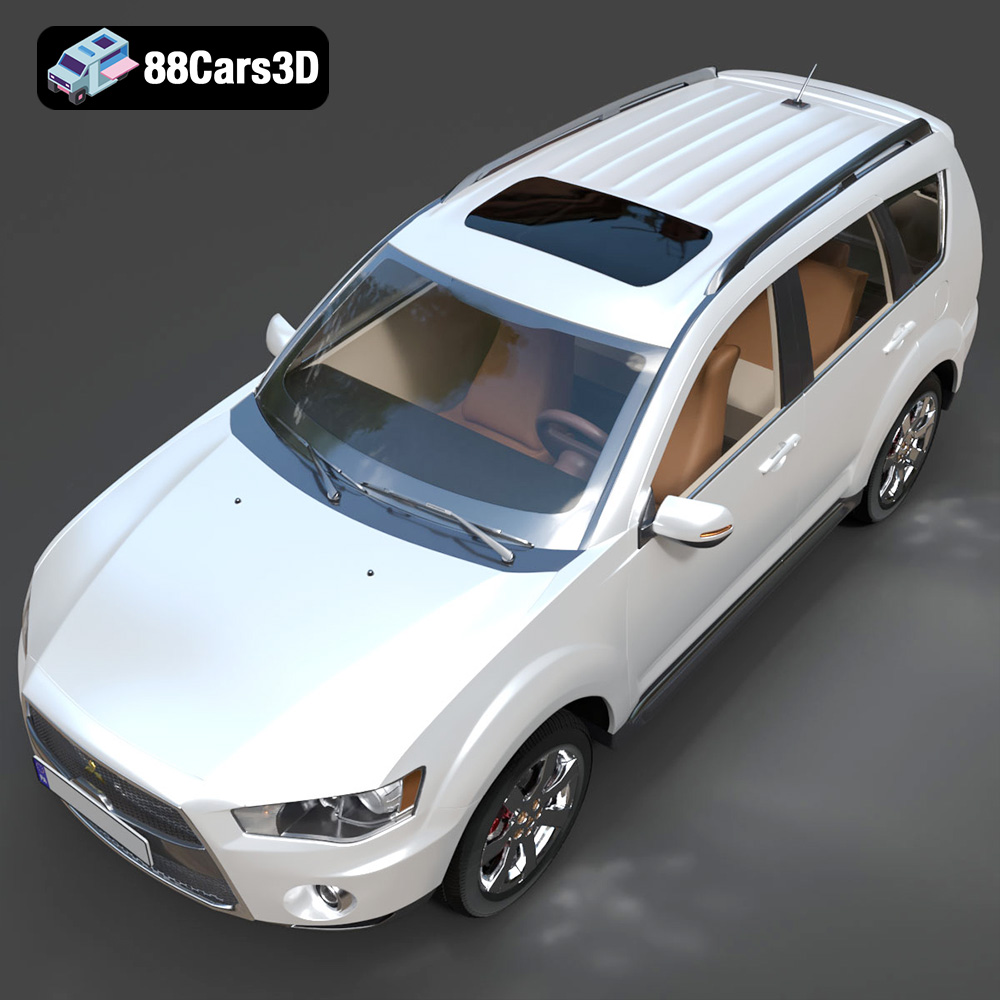
Today, we’re taking a closer look at what makes a professional 3D car model indispensable, using the exceptional Mitsubishi Outlander GT 2010 3D Model as a prime example. This particular model, available on 88cars3d.com, encapsulates the blend of artistic detail and technical optimization that modern projects demand. Its accurate recreation of the dynamic 2010 Mitsubishi Outlander GT, complete with its ‘Jet Fighter’ grille and V6 engine profile, makes it a compelling asset for anyone serious about automotive realism in their digital projects. We’ll explore the technical nuances, workflow applications, and the strategic advantages of integrating such a high-fidelity model into your creative arsenal.
The versatility of a 3D model often hinges on its availability in various file formats, each serving specific purposes and catering to different software ecosystems and end-use applications. For a model as comprehensive as the Mitsubishi Outlander GT 2010, understanding these formats is crucial for seamless integration into any professional workflow. The included formats with this model cover a broad spectrum, ensuring maximum compatibility and utility.
The .blend format is Blender’s native file type, offering a complete and editable scene. When you download the Mitsubishi Outlander GT 2010 3D model in .blend format, you gain access to the entire project file, including the mesh geometry, materials, textures, lighting, camera setups, and even animation data if present. This is invaluable for Blender users who want to modify the model, re-rig it, adjust materials, or integrate it deeply into their existing Blender scenes without any data loss during import/export. It provides the highest level of flexibility for artists working within the Blender environment, allowing for detailed customization of the premium leather-appointed seating, the accurate instrument cluster, or even the underlying topology that contributes to the model’s game-ready optimization.
The .fbx (Filmbox) format is arguably the most widely adopted proprietary file format for 3D data exchange, especially prevalent in game development (Unreal Engine, Unity) and animation pipelines. It supports geometry, materials, textures, bone rigs, animations, and more. For the Mitsubishi Outlander GT, the .fbx version is ideal for transferring the optimized mesh and properly pivoted components (like separate wheels, suspension, and steering) into game engines or other DCC software like Maya or 3ds Max. Its robust handling of complex scene data ensures that the model’s ~180,000 triangle count and accurate real-world scale are preserved, making it a plug-and-play solution for real-time environments.
The .obj (Wavefront Object) format is a classic, universal standard for exchanging 3D geometry data. While it handles mesh data (vertices, normals, UVs, polygons) exceptionally well, it typically stores material information in a separate .mtl file and does not natively support animations or rigging. Despite this, its widespread compatibility across virtually all 3D software makes it a reliable choice for the Mitsubishi Outlander GT when cross-software transfer is paramount, especially for static renders or initial modeling stages where geometry is the primary concern. It’s perfect for importing into niche software that might struggle with more complex formats, serving as a robust fallback.
The .glb (GL Transmission Format Binary) format is increasingly vital for web-based 3D applications, augmented reality (AR), and virtual reality (VR) experiences. It’s a binary version of .gltf, embedding all assets (models, textures, animations) into a single file, making it incredibly efficient for streaming and display on platforms like Google’s 3D Viewer or various AR frameworks. For showcasing the Mitsubishi Outlander GT in an immersive virtual showroom or a mobile AR configurator, the .glb format offers excellent performance and visual quality with minimal loading times.
The .stl (Stereolithography) format is the de facto standard for 3D printing. It represents a 3D model as a series of connected triangles, defining only the surface geometry without color, texture, or material information. The Mitsubishi Outlander GT 2010 model’s availability in .stl allows enthusiasts and professionals to bring the digital asset into the physical realm. The product description provides specific 3D print settings, such as recommended scales (1:12, 1:18, 1:24) and support requirements, highlighting its readiness for physical fabrication, particularly with resin printing for fine details like the bi-xenon HID headlights and LED taillights.
The .ply (Polygon File Format) is another popular format for storing 3D data, particularly scan data and meshes from laser scanners or photogrammetry. It supports additional properties like color, transparency, and normal vectors per vertex or face, which can be useful for precision engineering, CAD integration, or detailed mesh analysis. While less common for direct game asset use, its inclusion for the Mitsubishi Outlander GT suggests its suitability for applications requiring highly precise mesh representation, potentially for reverse engineering or integrating into industrial design pipelines.
Specifically tailored for Unreal Engine, the .unreal format implies a highly optimized, engine-ready asset. This isn’t a standard public file extension but rather refers to the asset being pre-configured and exported for direct integration into an Unreal Engine project. This would mean proper collision meshes, material setups, LODs (Levels of Detail), and potentially even basic blueprints for vehicle movement, all designed to maximize performance and visual fidelity within Unreal’s powerful real-time rendering framework. For game developers using Unreal, this direct compatibility for the Outlander GT significantly reduces setup time and streamlines the integration process, offering a truly plug-and-play solution.
The .max format is the native scene file for Autodesk 3ds Max, one of the leading digital content creation software packages for architectural visualization, design, and animation. Similar to .blend, it contains the complete scene data, allowing 3ds Max users to leverage the Mitsubishi Outlander GT 2010 model with all its original hierarchies, modifiers, and material definitions intact. This provides immense flexibility for advanced rendering projects, complex animation sequences, or detailed scene compositions within a 3ds Max-centric pipeline.
The availability of the Mitsubishi Outlander GT 2010 3D model in such a diverse array of formats underscores its professional-grade quality and the foresight of its creators. This multi-format approach ensures that no matter your software of choice or your project’s final destination, you have an optimized and accessible version of this exceptional automotive asset.
Creating a truly professional 3D car model, such as the Mitsubishi Outlander GT 2010 found on 88cars3d.com, is a multifaceted discipline that combines artistic skill with rigorous technical execution. It goes far beyond simply mimicking real-world shapes; it involves meticulous attention to detail, efficient topology, and a deep understanding of how these assets perform in various digital environments.
The foundation of any high-quality 3D car model lies in its geometry. For the Outlander GT, this means accurately recreating its distinctive Lancer Evolution-inspired ‘Jet Fighter’ front grille, the robust V6 engine profile, and every curve of its sporty aesthetic. Professional models adhere to real-world scale accuracy, ensuring that the vehicle sits correctly within any virtual environment. Crucially, the topology – the arrangement of vertices, edges, and faces – must be optimized. A clean, efficient quad-based topology is ideal for deformation (animation), subdividing cleanly, and ensuring consistent shading. The ~180,000 triangle count of the Outlander GT strikes a perfect balance, providing high visual fidelity for rendering while remaining performant enough for real-time game engines. This optimization is key to avoiding visual artifacts and maintaining smooth framerates.
Beyond the mesh, materials and textures breathe life into the model. Professional 3D car models utilize physically based rendering (PBR) materials, which accurately simulate how light interacts with surfaces in the real world. This involves meticulously crafted textures for color (albedo), roughness, metallic properties, normal maps for fine surface details, and ambient occlusion. For the Outlander GT, this translates to realistic paint finishes, the texture of the 18-inch alloy wheels, and the premium leather-appointed seating inside. Proper UV unwrapping is essential here, ensuring that textures map correctly and without distortion. Overlapping UVs are avoided unless intentional for texture reuse, and UV islands are packed efficiently to maximize texture resolution and minimize memory footprint, especially vital for game assets and AR/VR applications.
A static model is useful, but a truly professional car model is designed for dynamic interaction. The Mitsubishi Outlander GT 2010 model excels here with separate wheels, suspension, and steering components. This modularity is not just for aesthetic accuracy but is fundamental for animation and real-time physics. Each component requires a proper pivot setup, allowing for realistic steering rotation, wheel spin, and suspension travel. This level of detail enables the creation of complex driving animations, realistic physics simulations in games, or interactive configurators where users can explore different driving scenarios. The detailed engine block and dual-tip exhaust system, while not typically animated in basic driving, add to the overall realism and are crucial for close-up renders or virtual showroom experiences.
The demands of modern game development push the boundaries of 3D asset optimization. A professional-grade 3D car model like the Mitsubishi Outlander GT 2010 is a game-changer, designed from the ground up to integrate seamlessly into popular engines like Unreal and Unity.
The specified ~180,000 triangle count for the Outlander GT is a testament to its “game-ready” status. This figure represents a sweet spot, providing enough detail for compelling visuals without overburdening the game engine’s rendering pipeline. For larger open-world games or racing titles, additional optimization layers are typically employed, such as Levels of Detail (LODs). LODs are progressively lower-polygon versions of the model that automatically switch based on the camera’s distance, ensuring performance without sacrificing visual quality up close. Implementing a comprehensive LOD system for the Outlander GT would further enhance its versatility in demanding game environments.
Beyond visual representation, game assets must interact realistically with their environment. This involves creating accurate collision meshes – simplified versions of the model used for physics calculations – that allow the Outlander GT to bounce, slide, and collide authentically. The separate, properly pivoted components (wheels, suspension, steering) are critical for robust vehicle physics systems, enabling realistic handling, damage modeling, and dynamic suspension behavior. Furthermore, elements like opening doors, working headlights (bi-xenon HID) and taillights (LED), and interactive interior components (multifunction steering wheel, gear shifter) can be wired into the game engine through scripting, providing a rich, immersive player experience.
For game developers, an asset described as “.unreal” or optimized for Unity/Unreal significantly streamlines production. This means the asset is likely pre-packaged with appropriate material instances, texture maps, and potentially even simple blueprint setups for rapid integration. Importing the Outlander GT’s .fbx or .unreal format into either engine would typically involve setting up PBR materials, configuring light sources to interact with the model’s surfaces, and integrating it into the game’s vehicle physics system. The realistic control details and optimized geometry for first-person POV in gaming mean that players can fully immerse themselves in the driving experience, whether it’s an urban simulator or an off-road adventure.
For artists and designers focused on creating stunning static images or cinematic animations, the Mitsubishi Outlander GT 2010 3D model offers unparalleled realism and flexibility within rendering and visualization pipelines.
Both 3ds Max (with its .max format) and Blender (with its .blend format) are powerhouses for high-end rendering. When using the Mitsubishi Outlander GT 2010 model within these environments, artists can leverage advanced rendering engines like V-Ray, Corona Renderer, Octane, Redshift (in 3ds Max), or Cycles and Eevee (in Blender). The model’s accurate geometry and PBR-ready materials shine here. Setting up realistic studio lighting, utilizing high dynamic range image (HDRI) environments for natural reflections, and fine-tuning material properties for metallic flakes in the paint, subtle imperfections on the glass, or the sheen of the leather-appointed seating can yield incredibly photorealistic results. The detailed engine block and authentic dual-tip exhaust system, even if not fully visible, contribute to the overall authenticity that discerning clients expect in automotive renders.
Beyond dedicated automotive renders, high-quality 3D car models are essential for architectural visualization (ArchViz) and lifestyle imagery. Placing the Mitsubishi Outlander GT 2010 within a meticulously designed digital building exterior or a serene suburban street scene instantly adds realism, scale, and context. The vehicle transforms a static architectural render into a dynamic narrative, hinting at the lifestyle associated with the building. Its sporty aesthetic and crossover SUV appeal make it perfect for urban driving simulators, virtual automotive showrooms, and high-end lifestyle rendering projects. Artists can use the model to populate car parks, driveways, or streetscapes, breathing life into otherwise sterile environments and helping clients visualize the full potential of a space.
For automotive brands or marketing agencies, the Mitsubishi Outlander GT 2010 3D model is an invaluable asset for creating compelling brand campaigns. It allows for limitless creative control over camera angles, lighting conditions, and environments that might be impossible or prohibitively expensive to achieve with physical photography. Virtual studio lighting setups can highlight specific design elements like the striking LED taillights or the aggressive front grille. Different vehicle configurations or custom finishes can be rendered quickly, providing diverse marketing materials without the need for physical prototypes or elaborate photoshoots. The ability to change body colors, modify tire textures, or adjust material finishes described in the product details offers unmatched flexibility for marketing teams.
The utility of a versatile 3D asset extends far beyond traditional screen-based applications, venturing into the interactive realms of augmented reality (AR), virtual reality (VR), and even physical fabrication through 3D printing.
The optimized nature of the Mitsubishi Outlander GT 2010 model makes it an ideal candidate for immersive AR/VR applications. Using formats like .glb, the model can be seamlessly integrated into virtual showrooms, allowing prospective buyers to explore the vehicle’s accurate exterior and detailed interior from any angle. Imagine stepping into a VR environment and walking around the Outlander GT, opening its doors, examining the premium leather-appointed seating, or even configuring custom finishes in real-time. For AR, the model can be projected onto a real-world surface via a smartphone or tablet, allowing users to “place” the car in their driveway or office, assessing its scale and presence. These experiences offer unprecedented levels of engagement and can significantly enhance product understanding and sales for automotive brands. The model’s real-world scale accuracy is paramount for convincing AR/VR applications.
The inclusion of the .stl and .ply formats specifically for 3D printing opens up a fascinating avenue for hobbyists, collectors, and design professionals. The Mitsubishi Outlander GT 2010 model can be transformed from pixels into a tangible object, a miniature replica of the acclaimed crossover SUV. The product description provides highly specific 3D print settings, which are crucial for success:
This capability allows designers to create physical prototypes, collectors to add unique pieces to their collections, or educators to use tactile models for teaching automotive design principles. It bridges the gap between the virtual and physical, demonstrating the profound versatility of a well-prepared 3D asset.
In professional pipelines, time is money. Leveraging pre-made, high-quality 3D car models like the Mitsubishi Outlander GT 2010 from 88cars3d.com can be a strategic decision, significantly enhancing efficiency and project quality.
Developing a complex 3D vehicle from scratch is an incredibly time-consuming and resource-intensive endeavor, often requiring specialized modeling, texturing, and rigging artists. By acquiring a ready-to-use, optimized asset like the Outlander GT, studios can bypass this lengthy initial phase, allowing their artists to focus on integrating the model, customizing it to specific project needs, and refining the overall scene. This accelerates production timelines, reduces costs, and ensures a consistent level of quality for foundational assets. The “plug-and-play solution” aspect mentioned in the product description directly addresses this need, freeing up valuable development cycles.
A professional asset isn’t just about being ready-to-use; it’s about being ready-to-adapt. The Mitsubishi Outlander GT 2010 model offers various customization options, which are crucial for fitting it into diverse creative briefs:
These options provide artists with the flexibility to tailor the Outlander GT to virtually any project, ensuring it always looks its best and serves the narrative effectively. The detail in the cockpit and interior, with premium leather-appointed seating and accurate control details, means that even close-up interior shots can be customized with specific material variations to match a design brief.
The journey through the technical intricacies and versatile applications of a professional 3D car model, epitomized by the Mitsubishi Outlander GT 2010 3D Model, highlights the profound impact such assets have on modern digital content creation. From its meticulously optimized topology and real-world scale accuracy to its availability across a multitude of industry-standard file formats, this model stands as a testament to the blend of artistry and engineering required in today’s 3D landscape.
Whether you’re developing an immersive game, crafting a photorealistic automotive rendering, visualizing an architectural masterpiece, creating an interactive AR/VR experience, or even bringing a digital design to life through 3D printing, the Outlander GT offers a robust and flexible solution. Its game-ready optimization, detailed exterior and interior features, and extensive customization options ensure it meets the stringent demands of professionals. By integrating such high-quality 3D car models into your workflows, you not only elevate the visual fidelity of your projects but also significantly streamline production, saving invaluable time and resources.
For artists, developers, and designers seeking top-tier 3D car models that deliver on both aesthetic realism and technical performance, platforms like 88cars3d.com serve as an essential resource, providing assets like the Mitsubishi Outlander GT 2010 that are truly ready to drive your projects forward.
Discover the dynamic and versatile 2010 Mitsubishi Outlander GT, a highly acclaimed crossover SUV known for its aggressive Lancer Evolution-inspired ‘Jet Fighter’ front grille and advanced S-AWC all-wheel-drive system. Our meticulously crafted 3D model perfectly captures the vehicle’s sporty aesthetic, featuring accurate exterior lines, a robust V6 engine profile, and its signature dual exhaust setup. Engineered with highly optimized topology and an efficient triangle count, this game-ready asset guarantees exceptional visual fidelity without compromising real-time performance. Designed to meet the stringent demands of modern 3D engines, it acts as a plug-and-play solution for game development, AR/VR experiences, animation, and architectural visualization. Perfect for urban driving simulators, off-road racing titles, virtual automotive showrooms, and high-end lifestyle rendering projects.
$39.99
.2010
.blend
.crossover
.fbx
.glb
.max
.mitsubishi
.obj
.outlander
.ply
.rendering
.stl
.unreal
car-3d-model
game asset
game-ready
low-poly
optimized
outlander-gt
SUV
VR/AR