Get 20% OFF All Premium 3D & STL Models!

The roar of a powerful engine, the glint of chrome under a neon glow, the sheer presence of an automotive icon – these sensations are what drive enthusiasts and artists alike. In the digital realm, capturing the essence of a legendary vehicle like the Dodge Charger requires more than just polygons; it demands precision, performance, and an intimate understanding of both vehicle design and 3D art principles. For creators in game development, cinematic visualization, AR/VR experiences, and high-fidelity automotive rendering, having access to meticulously crafted 3D car models is not just a convenience, it’s a necessity for delivering truly immersive and authentic experiences.
Enter the Dodge Charger 3D Model – a prime example of professional-grade digital asset creation. This model isn’t merely a static representation; it’s a dynamic, optimized, and highly detailed digital twin of an American muscle legend, designed to drop seamlessly into the most demanding creative pipelines. From its aggressive wide stance to the meticulously recreated V8 engine block, every curve and component has been developed with technical accuracy and artistic integrity, ensuring that whether you’re building a high-octane racing game or rendering a breathtaking lifestyle scene, your Dodge Charger stands out.
The versatility of a 3D model often hinges on the range and quality of its supported file formats. Each format serves a specific purpose, excelling in different stages of the 3D pipeline and catering to distinct software ecosystems. Understanding these distinctions is crucial for selecting the right asset for your project. The Dodge Charger 3D Model from 88cars3d.com comes with an extensive array of formats, ensuring broad compatibility and optimal performance across various applications.
Blender’s native file format, .blend, is far more than just a mesh container; it’s a complete scene archive. It meticulously preserves everything within a Blender project: 3D models (including the Dodge Charger’s detailed geometry), materials with their complex node setups, textures, lighting, camera settings, animation data (armatures, keyframes, constraints), physics simulations, and even the user interface layout. This makes it ideal for artists working exclusively or primarily within Blender, allowing for a seamless continuation of their workflow without any data loss during export/import cycles. The file is highly optimized for Blender’s internal data structures, ensuring quick loading and saving. For artists downloading the Dodge Charger 3D Model in .blend, it means immediate access to a fully rigged and textured asset within their preferred environment, ready for rendering or further modification.
Developed by Autodesk, .fbx (Filmbox) is arguably the most prevalent exchange format in the 3D industry, particularly within game development and animation. It’s renowned for its ability to store not just geometry, materials, and textures, but also complex scene data like skeletal animations, blend shapes, lights, and cameras. Its robust nature makes it ideal for transferring animated 3D car models, like the Dodge Charger, between different software packages such as Maya, 3ds Max, Cinema 4D, and directly into game engines like Unreal Engine and Unity. While it can be proprietary, its widespread adoption ensures excellent compatibility and makes it a go-to for complex animated assets.
.obj (Wavefront OBJ) is one of the oldest and most universally supported 3D file formats. It’s a simple, text-based format primarily used for transferring geometric data (vertices, normals, texture coordinates, and faces). While it doesn’t typically store animation or rigging data, it’s excellent for static mesh exchange. It often comes paired with an .mtl (material template library) file, which defines basic material properties like color and texture maps. For the Dodge Charger 3D Model, .obj offers a reliable, no-frills option for importing the core mesh into virtually any 3D software for further texturing and setup, serving as a solid fallback when more complex formats are not fully supported.
.glb (GL Transmission Format Binary) is the binary version of glTF, a royalty-free specification for the efficient transmission and loading of 3D scenes and models by applications. It’s a relatively newer format gaining significant traction due to its optimization for real-time applications, especially in augmented reality (AR), virtual reality (VR), and web-based 3D viewers. A .glb file packages all necessary data—geometry, materials, textures, animations—into a single, compact file, making it incredibly easy to share and embed. For showcasing the Dodge Charger in an interactive web configurator or an AR experience on a mobile device, .glb is the superior choice for its efficiency and native support across modern platforms.
.stl (STereoLithography) is the de facto standard file format for 3D printing. It represents a 3D model as a series of connected triangles, describing only the surface geometry without color, texture, or other CAD attributes. While it lacks visual detail in its native form, its simplicity is precisely why it’s universally accepted by 3D printers and slicing software. When downloading the Dodge Charger 3D Model in .stl, artists can bring the digital asset into the physical world, creating scale models for display or prototyping. The provided model’s optimization for 3D printing, including recommended settings, highlights its readiness for tangible output.
.ply (Polygon File Format, also Stanford Triangle Format) is a versatile format for storing 3D data, particularly popular in academic research, 3D scanning, and CAD applications. It supports properties like color, transparency, normals, texture coordinates, and even confidence values for scanned data, making it more robust than .obj for certain applications. While less common for general-purpose model exchange than .fbx or .obj, .ply is excellent when high precision and additional per-vertex or per-face data are critical, often used in scientific visualization or reverse engineering workflows. The inclusion of .ply for the Dodge Charger underscores its suitability for rigorous technical analysis.
While not a traditional file extension in the same vein as .fbx or .obj, “unreal” typically signifies an asset specifically pre-configured and optimized for direct import into Unreal Engine. This could mean a prepared .fbx with correct material assignments, collision meshes, LODs (Levels of Detail), and pivot points, or even a pre-packaged Unreal Asset (e.uasset file) ready to be dropped into a project’s content browser. For the Dodge Charger 3D Model, an “unreal” version implies that critical steps for game engine integration—like proper scaling, UV mapping, PBR material setup, and collision geometry—have already been addressed, saving developers significant time and ensuring optimal performance within the engine.
.max is the native file format for Autodesk 3ds Max, a powerful 3D modeling, animation, and rendering software widely used in architectural visualization, game development, and film. Similar to .blend for Blender, a .max file preserves an entire 3ds Max scene, including all geometry, modifiers, materials, textures, lights, cameras, animation keyframes, and render settings. For professionals operating within the 3ds Max ecosystem, receiving the Dodge Charger 3D Model in this format means instant access to the source file, allowing for complete control over every aspect of the model, from adjusting polygon density with modifiers to tweaking material parameters or integrating it into complex animation sequences.
The allure of the Dodge Charger lies in its aggressive stance, muscular lines, and an undeniable aura of power. Recreating this digitally is a challenging feat, demanding meticulous attention to detail and a profound understanding of automotive design. The Dodge Charger 3D Model from 88cars3d.com rises to this challenge, offering a highly accurate and optimized representation that serves a myriad of professional applications.
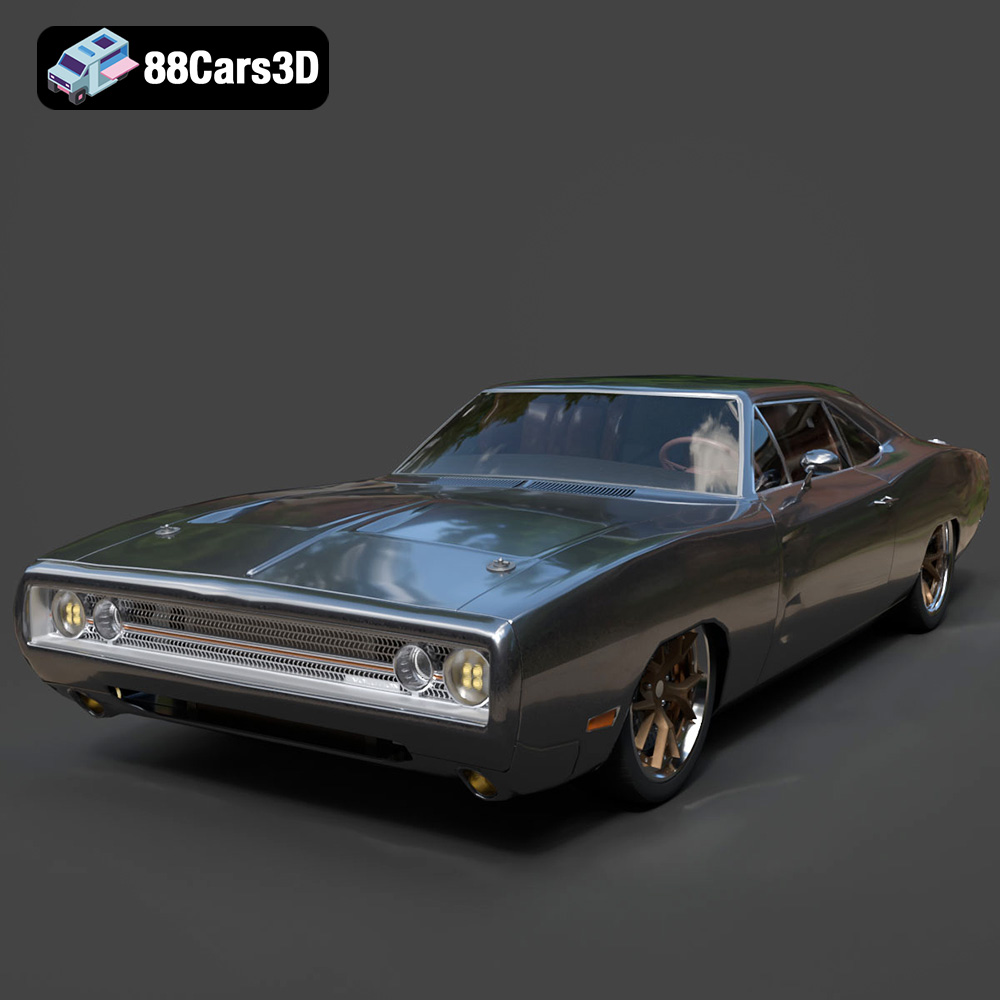
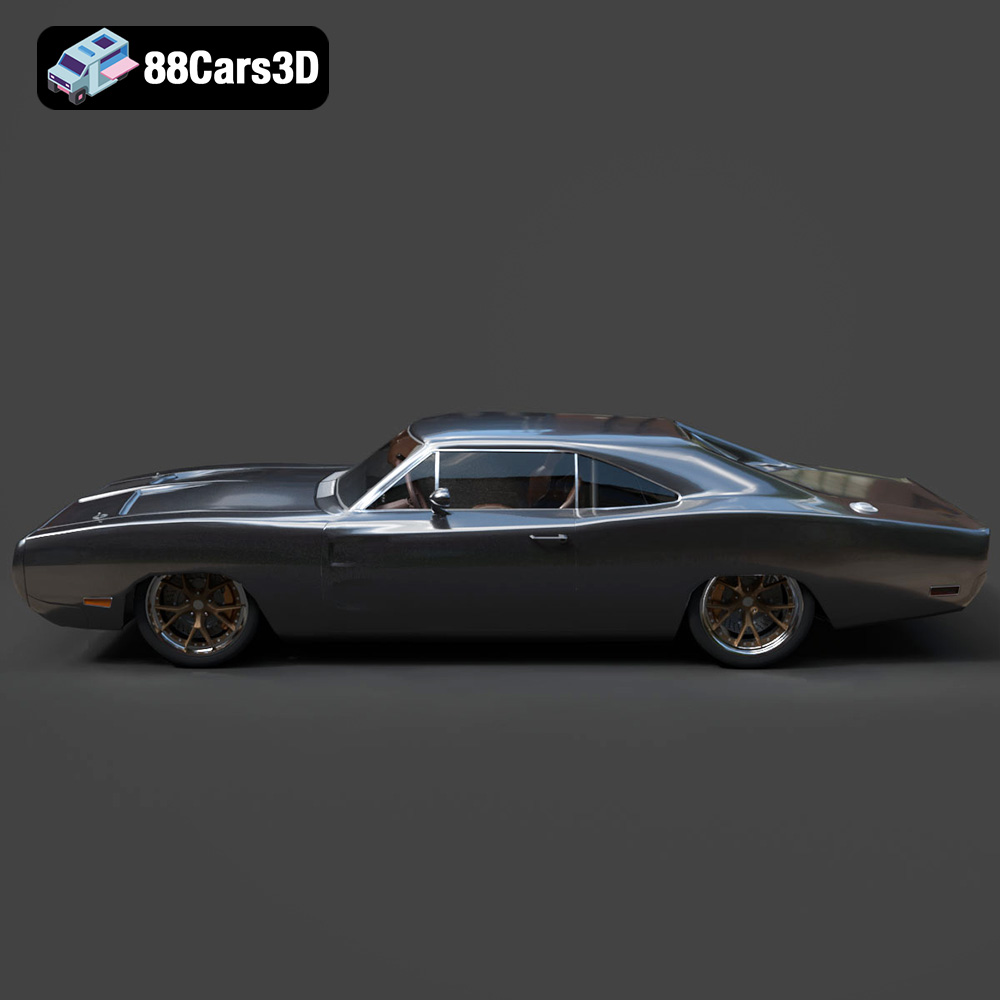
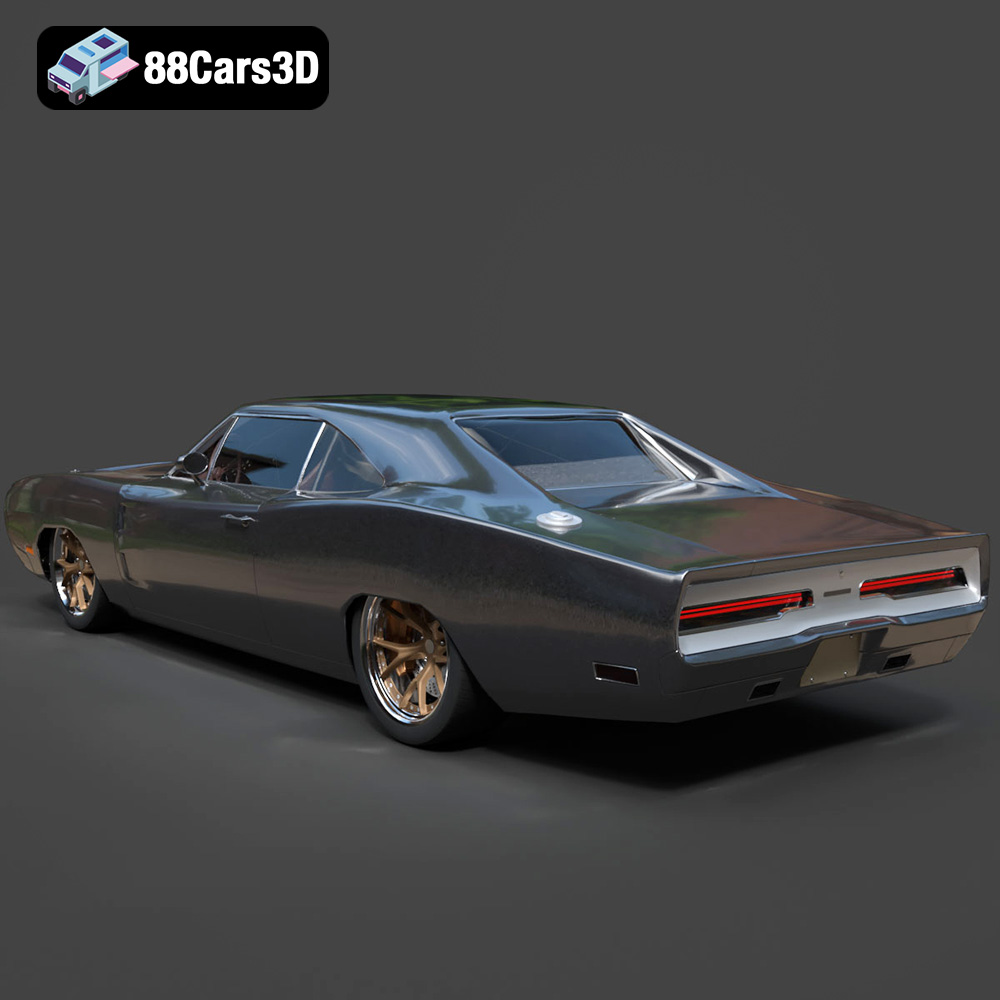
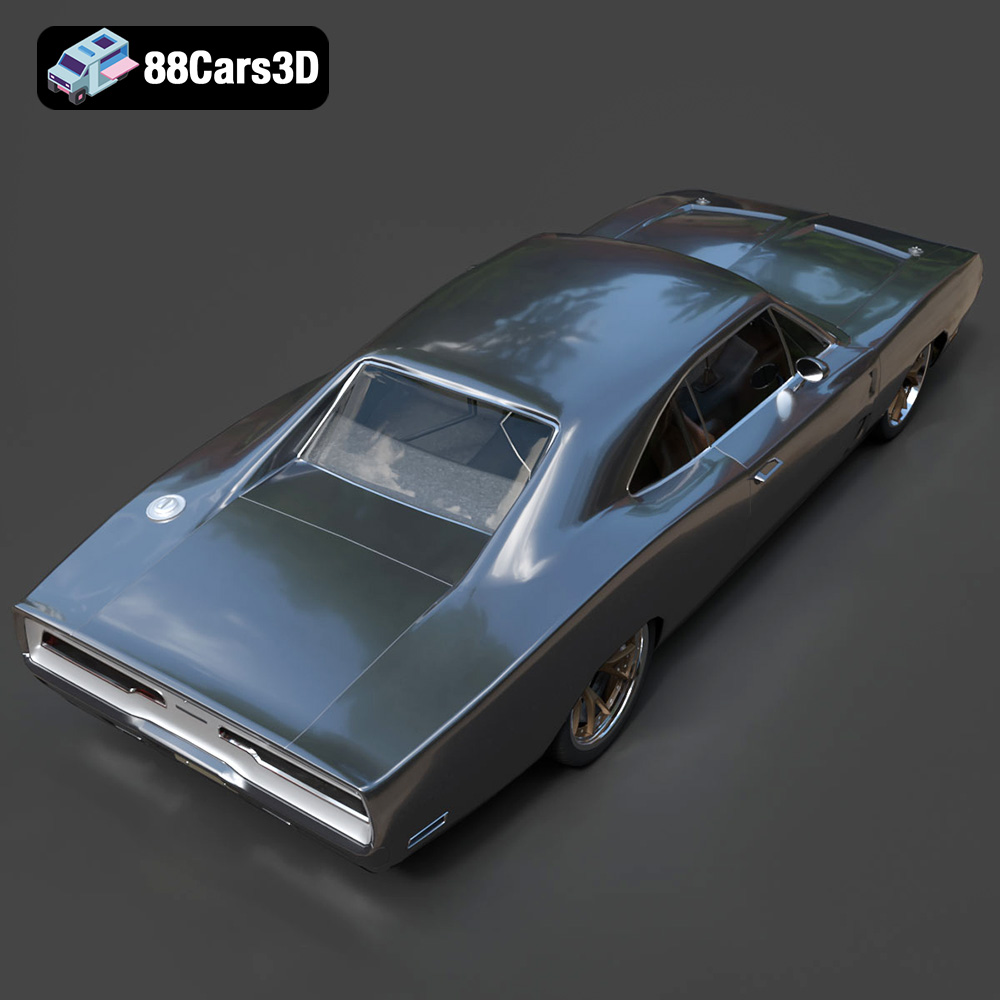
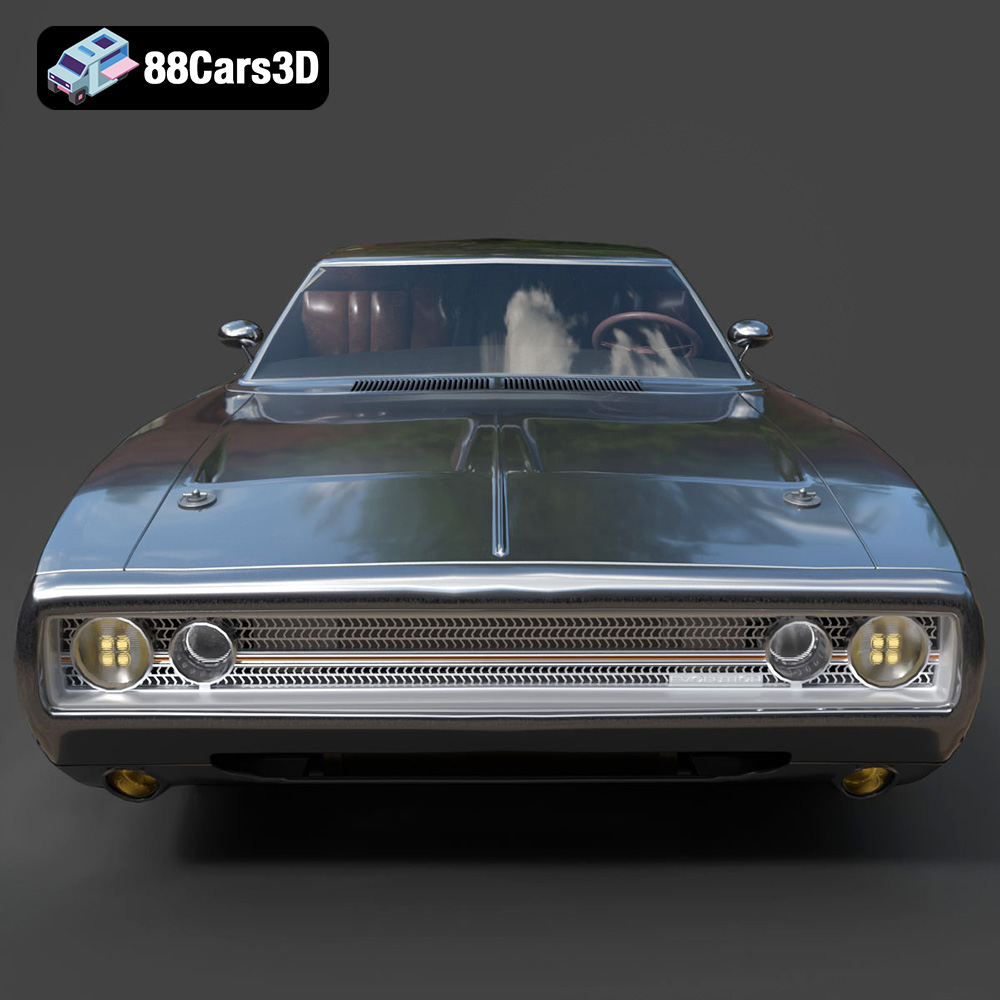
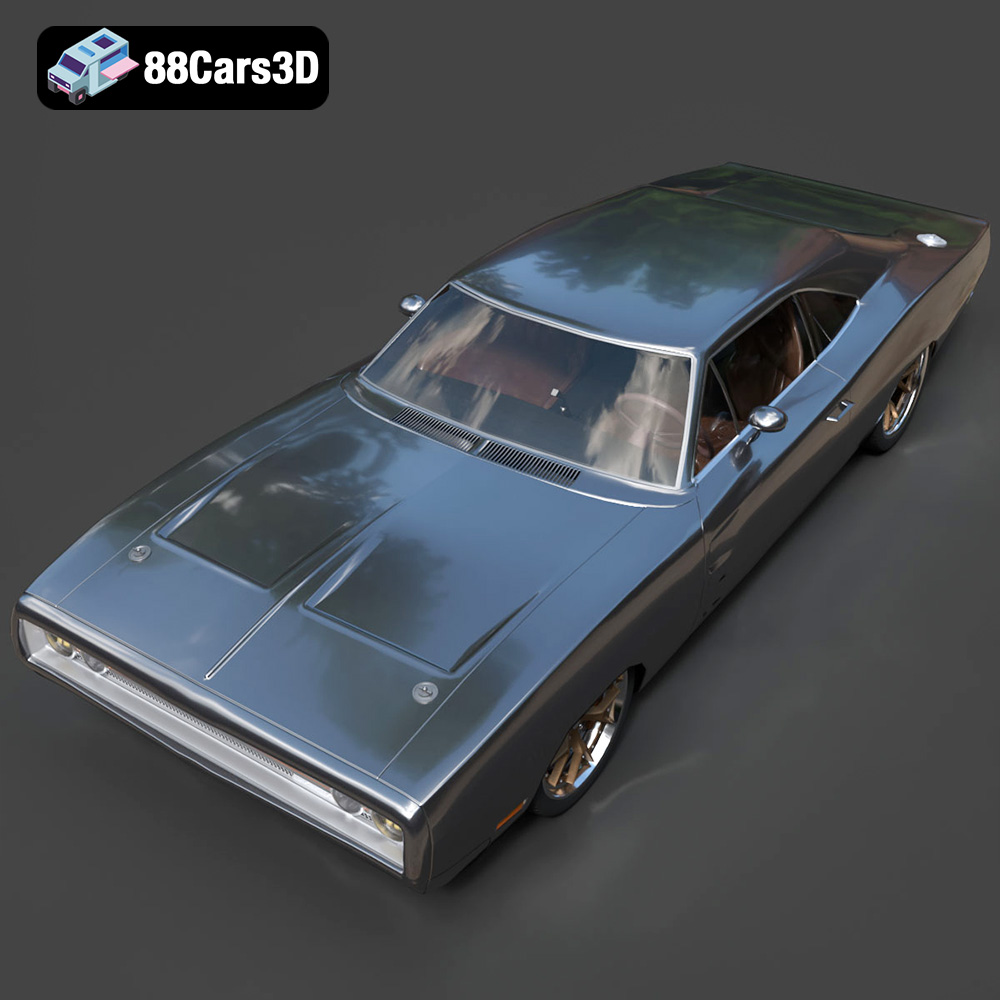
The first impression of any vehicle is its exterior, and this model does not disappoint. The accurate Dodge Charger frame geometry and proportions immediately convey the vehicle’s legendary presence. From the iconic front grille layout to the aggressive dual exhaust system and rear diffuser elements, every aspect has been meticulously crafted. Crucially for animators and game developers, the model features separate wheels, suspension, and steering components. This modularity is vital for implementing realistic physics and animation sequences, allowing for accurate steering, wheel rotation, and suspension travel without complex rigging workarounds. Authentic lighting details, including the signature grille-integrated headlights and distinct taillight arrangements, further enhance its realism for automotive rendering and visualization projects.
While the exterior captures attention, a truly great 3D car model also excels in its interior detail, especially for applications like racing games or AR/VR tours where first-person perspectives are common. The Dodge Charger 3D Model includes a highly detailed cockpit with performance bucket seats featuring accurate stitching. The sport-oriented steering wheel, intricate center badging, legible instrument cluster, and center console screens are all recreated with precision. Even subtle control details like metallic pedals, turn signal levers, and the heavy-duty shifter are present. This optimized interior geometry ensures that whether a player is gripping the wheel in a virtual race or a client is exploring a virtual showroom, the experience remains fully immersive and believable.
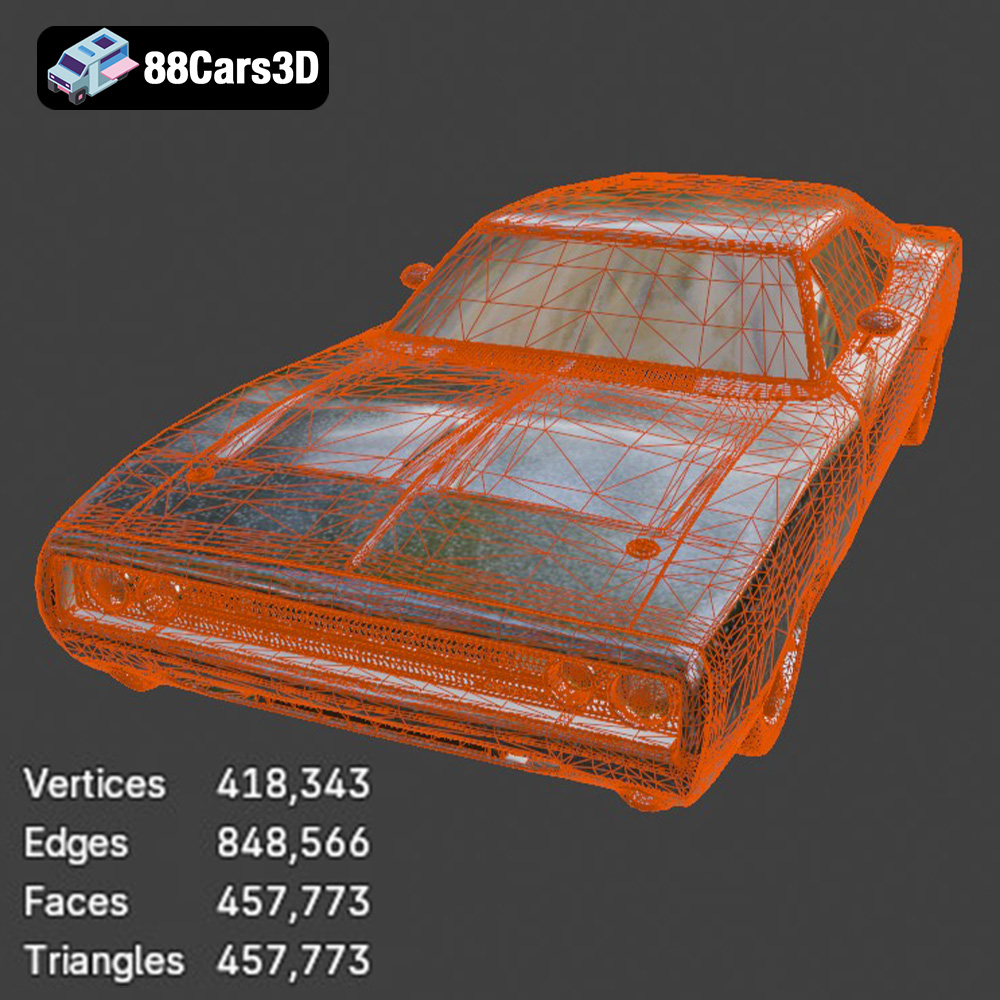
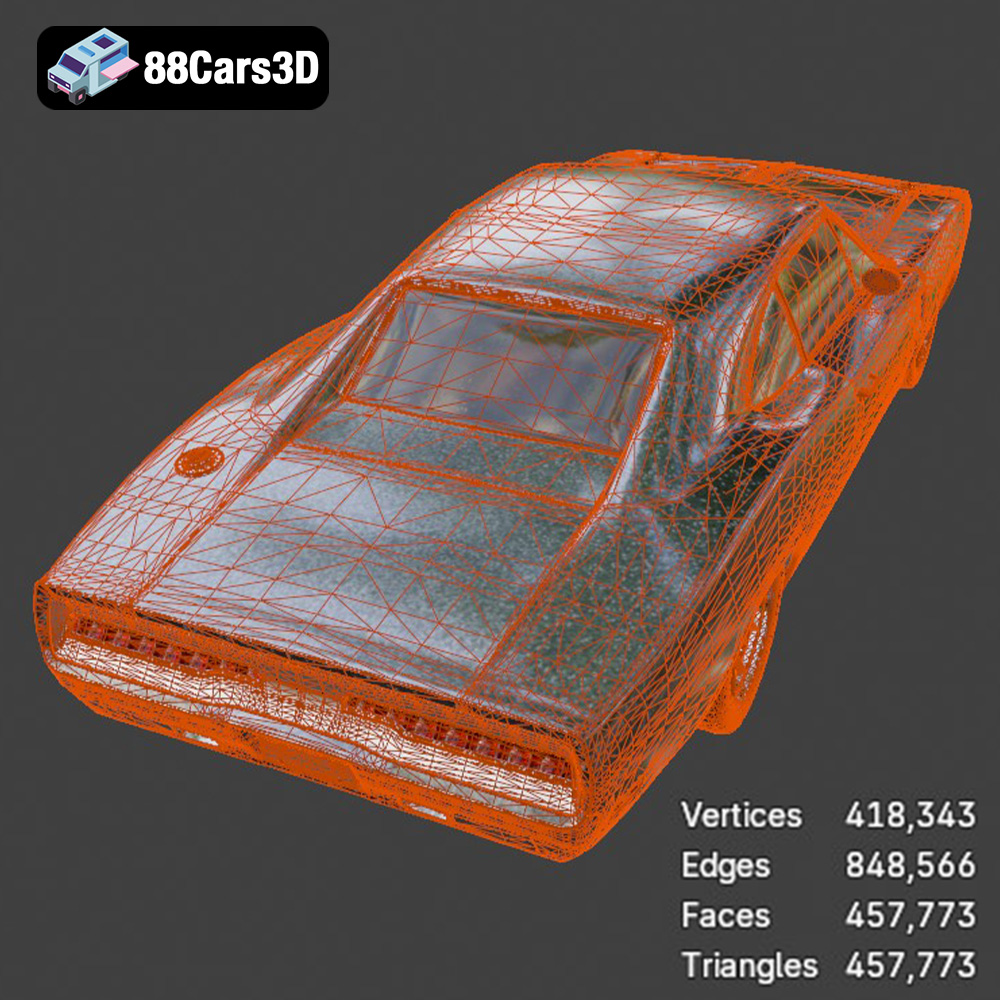
Technical specifications are the backbone of any professional 3D asset. This Dodge Charger 3D Model strikes a perfect balance with approximately 250,000 triangles. This polycount is ‘game-ready’ – meaning it’s optimized for real-time engines like Unreal and Unity, ensuring high-end visual realism without compromising frame rates. Furthermore, the model boasts real-world scale accuracy, based on actual vehicle chassis dimensions. This is critical for seamless integration into existing scenes or virtual environments, maintaining correct spatial relationships with other assets. Proper pivot setup for steering, wheel rotation, and suspension travel further enhances its utility, making it a highly adaptable and efficient asset for any digital pipeline.
The true power of a high-quality 3D car model, such as the Dodge Charger from 88cars3d.com, lies in its seamless integration into diverse professional workflows. Whether you’re a cinematic artist, a game developer, or an architectural visualizer, these assets are designed to accelerate and enhance your projects.
For artists leveraging 3ds Max or Blender, the inclusion of native .max and .blend files means immediate access to a fully prepared scene. In 3ds Max, you can open the .max file and find the Dodge Charger ready with its materials, textures, and pivot points correctly configured. This allows for direct integration into complex animation sequences – perhaps a dynamic car chase through a city, or a detailed product showcase in a virtual studio. The separated components (wheels, suspension, steering) are prepped for rigging or linking, making complex vehicle animations straightforward. Similarly, in Blender, the .blend file provides a complete environment. Artists can easily link or append the Charger into their existing scenes, utilize Blender’s powerful Cycles or Eevee renderers for photorealistic output, or even modify the topology further using its comprehensive modeling toolset. The consistency of scale and optimized mesh topology ensures a smooth experience across both platforms, minimizing clean-up work and maximizing creative output for automotive rendering.
The ‘game-ready’ optimization of the Dodge Charger 3D Model truly shines in real-time environments like Unreal Engine and Unity. With an optimized polycount of around 250,000 triangles, the model maintains high visual fidelity without being a performance bottleneck. When importing the .fbx or the specific .unreal asset, developers can expect correctly unwrapped UVs, PBR (Physically Based Rendering) material setups, and appropriate collision meshes. In Unreal Engine, this means dragging the asset into your level, applying the provided materials, and potentially using the pivot setup for a vehicle blueprint. You can quickly set up advanced car physics, implement custom destruction states, or even build interactive showrooms. Unity users will find similar ease of integration, where the .fbx can be imported, materials assigned, and quickly incorporated into racing game prototypes, driving simulators, or interactive AR/VR experiences. The model’s adherence to real-world scale and pivot points simplifies the physics and animation setup, cutting down development time significantly for game assets.
The versatility of a well-crafted 3D car model extends far beyond static imagery. The Dodge Charger 3D Model is engineered to be a flexible asset, serving a diverse range of interactive and physical applications, pushing the boundaries of what’s possible in digital and physical creation.
Game development demands performance and visual consistency. The Dodge Charger 3D Model, with its optimized 250,000 triangle count, is perfectly suited for open-world games, racing titles, and vehicle simulators. This balanced polycount ensures detailed visuals that stand up to close scrutiny while maintaining the high frame rates essential for an engaging gaming experience. Its separated components – wheels, suspension, steering – are ideal for implementing realistic vehicle physics and animation systems. Imagine a player customizing this legendary muscle car in a virtual garage, then taking it for a high-speed chase, seeing every reflection off its sculpted body, or feeling the impact of every bump through accurate suspension articulation. The model’s robust topology and clean UVs facilitate easy texture modifications, allowing game developers to create a multitude of variants, from showroom-fresh to battle-scarred street machines, truly enhancing the immersive gameplay.
Augmented Reality (AR) and Virtual Reality (VR) are transforming how we interact with digital content, offering unparalleled immersion. The Dodge Charger 3D Model is an excellent candidate for these burgeoning technologies. Its optimized geometry and inclusion of the .glb format make it perfect for creating virtual showrooms where potential buyers can explore the vehicle in 1:1 scale, change colors, or even look under the hood in a VR environment. For mobile AR experiences, the lightweight .glb format allows users to place a virtual Charger in their driveway, walk around it, and inspect its details as if it were truly there. The accurate interior also supports compelling first-person experiences, allowing users to “sit inside” the car and interact with its cockpit in a fully immersive VR setting, making it invaluable for virtual configurators and training simulations.
Bridging the gap between the digital and physical, the Dodge Charger 3D Model is also convertible to .stl format, making it suitable for 3D printing. This opens up possibilities for hobbyists, collectors, and designers to create tangible display-scale models. The product description provides detailed 3D print settings, including recommended scales (1:12 / 1:18 / 1:24), layer height (0.04–0.12 mm for resin printing), wall thickness, infill, and crucial support requirements for intricate parts like exhausts and mirrors. It even advises on print orientation for structural integrity. Post-processing suggestions like sanding, primer, and authentic factory colors with metallic finishes ensure that the physical print truly reflects the digital fidelity. This capability allows artists to hold their digital creation in their hands, offering a unique dimension to project delivery or personal collection.
A professional 3D car model isn’t just about static realism; it’s about providing a foundation for limitless creative expression. The Dodge Charger 3D Model offers extensive customization options, empowering artists to tailor it to their precise project needs, making it a versatile asset for any scenario.
The beauty of a well-structured 3D model lies in its ability to be transformed. Artists can easily change the body and tank colors to match factory specifications, custom finishes, or entirely fantastical schemes. This involves tweaking material parameters within their chosen 3D software – adjusting diffuse colors, specular values, metallic properties, and roughness maps. The optimized UVs (implied by ‘game-ready’ and professional-grade topology) ensure that textures wrap seamlessly around the model, allowing for high-resolution decals, livery applications, or even weathered effects. Modifying tire textures from standard street variants to aggressive off-road treads or slick racing compounds is straightforward, adapting the car’s character to different environments. The ability to adjust material finishes, switching between matte, gloss, or metallic looks, provides profound control over the vehicle’s appearance under various lighting conditions, enhancing its presence in automotive rendering projects.
Beyond visual customization, the Dodge Charger 3D Model is built for animation. Its separate components – wheels, suspension, and steering – are not merely aesthetic details; they are functional elements that enable realistic motion. With proper pivot points already set up, animators can quickly rig these parts to simulate steering, wheel rotation, and authentic suspension travel over uneven terrain. This is crucial for creating dynamic cinematic sequences, believable cutscenes in games, or interactive driving experiences. Imagine a low-angle shot of the Charger’s suspension compressing as it takes a sharp turn, or the subtle bounce of its chassis over a bumpy road – these details bring the model to life. The robust topology also supports potential deformation or damage systems in real-time engines, allowing for visually impactful crash sequences or wear and tear over time, cementing its value as a powerful game asset.
In the fast-evolving landscape of digital content creation, the demand for high-quality, technically sound 3D car models remains constant. From the exhilarating world of game development to the cutting edge of AR/VR, and from photorealistic automotive rendering to the tangible output of 3D printing, a meticulously crafted asset can be the difference between a project that merely exists and one that truly captivates. The Dodge Charger 3D Model exemplifies this principle, offering an unparalleled blend of accuracy, optimization, and versatility.
Its comprehensive file format support—ranging from .blend and .max for native software users to .fbx for universal exchange, .glb for AR/VR, and .stl for 3D printing—ensures that this iconic American muscle car can be seamlessly integrated into virtually any professional workflow. With its game-ready polycount, real-world scale, and detailed interior and exterior features, this model is not just an asset; it’s a foundation for creative excellence. Whether you’re a seasoned professional or an aspiring artist, investing in such a robust 3D model accelerates your projects, saves valuable time, and elevates the quality of your final output.
For those seeking to infuse their digital worlds with the raw power and unmistakable presence of legendary vehicles, exploring the curated selection of high-fidelity 3D car models available at 88cars3d.com is an essential step. The Dodge Charger 3D Model stands as a testament to the quality and technical expertise offered, ready to drive your next big project.
Experience the raw power and unmistakable presence of the legendary Dodge Charger. Renowned for its bold, aggressive styling, wide stance, and rich American muscle car heritage, this vehicle is the epitome of automotive strength. The model beautifully captures the iconic front grille layout, deep-dish muscle wheels, and the sweeping aggressive lines that define the Charger’s legacy. Whether depicting the classic roaring V8 era or modern high-performance street dominance, every detail from the aerodynamic curves to the dual-exhaust tips has been meticulously recreated. Designed with professional-grade topology and striking a balance around 250,000 triangles, this game-ready 3D model ensures exceptional visual fidelity without compromising real-time performance. Its optimized geometry makes it highly adaptable for diverse digital pipelines, from high-octane gaming environments to immersive AR/VR applications and photorealistic animations. Perfect for street racing games, cinematic car chases, virtual automotive showrooms, and lifestyle rendering scenes.
$19.99
.blend
.charger
.dodge
.fbx
.glb
.max
.obj
.ply
.rendering
.stl
.unreal
american-muscle
car-3d-model
classic-car
game asset
game-ready
low-poly
muscle-car
optimized
VR/AR