Get 20% OFF All Premium 3D & STL Models!

In the dynamic world of digital design, the ability to flawlessly recreate iconic vehicles in three dimensions is a testament to both artistic skill and technical precision. From the sleek lines of modern supercars to the rugged charm of vintage workhorses, 3D car models serve as fundamental building blocks for everything from immersive video games to photorealistic architectural visualizations. These digital assets are not merely static representations; they are intricate constructions designed to perform across diverse platforms, demanding an understanding of geometry, materials, and real-time optimization.
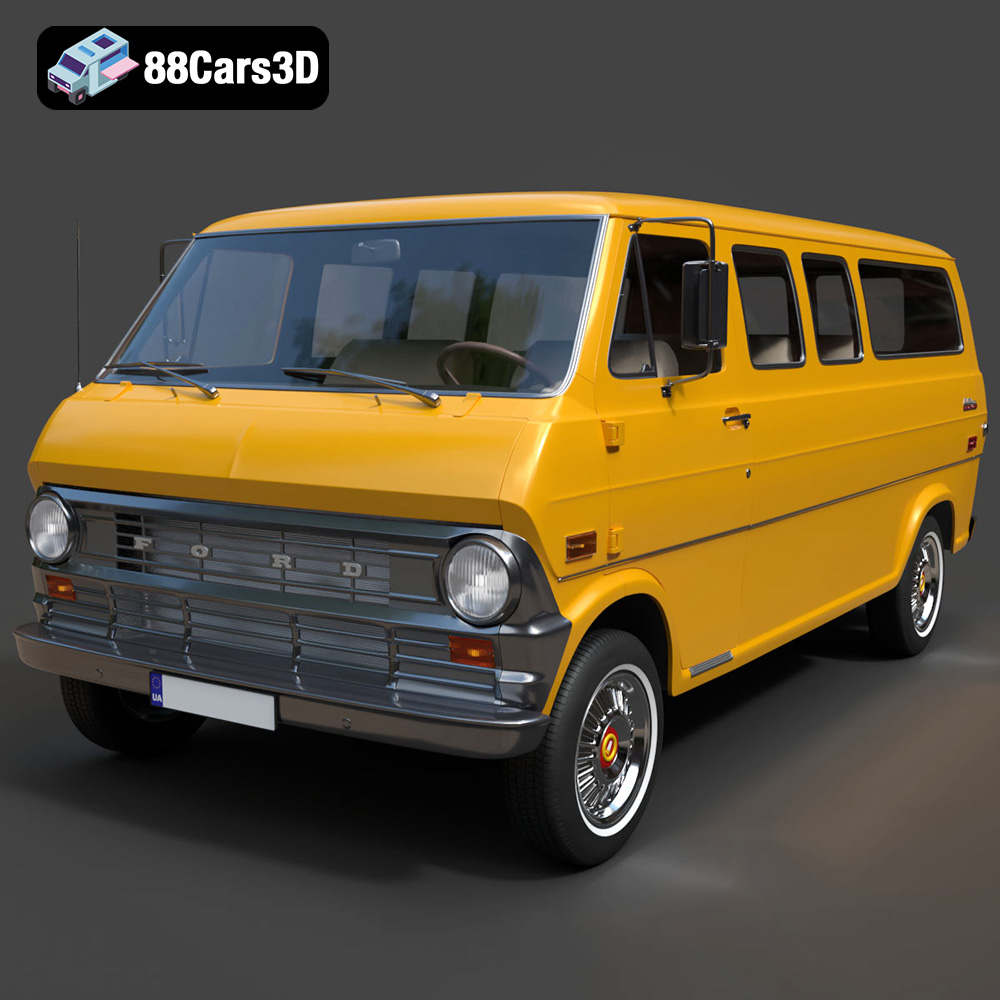
Today, we’re diving into a piece of true Americana that perfectly embodies this blend of history and digital craftsmanship: the 1971 Ford E-Series Econoline Club Wagon. This isn’t just any van; it’s a symbol of road trips, commercial utility, and a bygone era of automotive design. Capturing its distinctive flat nose, bold round headlights, and spacious interior in a high-fidelity 3D model presents unique challenges and opportunities. For professionals seeking game-ready assets, stunning visualization pieces, or even detailed models for 3D printing, the availability of such a meticulously crafted model, like the one offered at 88cars3d.com, is invaluable. This particular 3D model of the Ford E-Series Econoline Club Wagon isn’t just accurate; it’s engineered for performance, designed to integrate seamlessly into complex digital environments and professional pipelines.
The journey of a 3D model from concept to application is heavily reliant on its file format. Each format serves a specific purpose, excelling in different scenarios, and understanding their nuances is crucial for any 3D artist, developer, or enthusiast. The 1971 Ford E-Series Econoline Club Wagon 3D model, for instance, comes in a comprehensive array of formats, ensuring its versatility across virtually any project. Let’s break down the most common and important ones.
The .blend file is the native format for Blender, a powerful and increasingly popular open-source 3D creation suite. When you download a .blend file, you’re getting a fully editable Blender scene. This means it includes not just the mesh geometry, but also materials (with their node setups), textures, lighting, camera positions, animations, and even physics simulations if they’ve been set up. For artists working primarily in Blender, this is the most convenient format, offering maximum flexibility for customization, rigging, or further detailing the Ford E-Series Econoline Club Wagon.
Similar to .blend, the .max file is the proprietary project format for Autodesk 3ds Max, a long-standing industry staple for modeling, animation, and rendering, particularly in architectural visualization and game development. A .max file contains the complete scene, including complex hierarchies, modifiers, animation keyframes, and advanced material setups often leveraging renderers like V-Ray or Corona. For studios and artists entrenched in the Autodesk ecosystem, this format provides full access to the original project data for the Econoline, allowing for intricate adjustments and integration into existing Max-based workflows.
The Filmbox (.fbx) format, also owned by Autodesk, has become the de facto standard for interoperability between different 3D software applications and game engines like Unreal and Unity. .fbx excels at preserving crucial data like mesh geometry, UV mapping, skinning (rigging and weights), animation keyframes, and even cameras and lights. While it doesn’t always perfectly translate complex material nodes between software, it’s invaluable for moving animated 3D car models from a DCC (Digital Content Creation) tool like Blender or 3ds Max into a real-time environment, ensuring the Econoline’s wheels, suspension, and steering components retain their animation-ready pivots.
The Wavefront OBJ (.obj) format is one of the oldest and most universally supported 3D file formats. It’s excellent for storing pure geometric data – vertices, edges, faces, and UV coordinates. Its strength lies in its simplicity and widespread compatibility, making it a reliable choice for transferring basic mesh information between almost any 3D software. However, .obj files typically don’t store animation, rigging, or advanced material properties (though they can reference an accompanying .mtl file for basic material definitions). For simple mesh imports or archival purposes of the Ford Econoline’s body, .obj is a solid, albeit limited, choice.
GL Transmission Format (.glb) is the binary version of glTF (GL Transmission Format), a relatively newer, royalty-free specification designed for efficient transmission and loading of 3D scenes and models by applications. .glb files are highly optimized for web-based 3D, AR (Augmented Reality), and VR (Virtual Reality) experiences. They package all necessary assets, including geometry, materials, textures, and even animations, into a single, compact file, making them ideal for quickly displaying the Econoline in a browser, a mobile AR app, or a lightweight VR showroom.
Stereolithography (.stl) is the standard file format for 3D printing. An .stl file represents a 3D model as a series of connected triangles, describing only the surface geometry of the object. It does not contain any color, texture, or material information. When you want to bring the Ford E-Series Econoline Club Wagon into the physical world through 3D printing, this is the format you’ll use. It’s a pure mesh format, optimized for layer-by-layer fabrication.
The Polygon File Format (.ply) is often used for storing 3D data from 3D scanners, CAD software, and other precision applications. Like .obj and .stl, it describes the geometry of a 3D object, but it can also store additional properties such as color, transparency, and even normal vectors per vertex or face. This makes .ply suitable for applications where high fidelity and additional data associated with the mesh are important, such as scientific visualization or detailed engineering analysis of the Econoline’s structure.
While technically not a universal file *format* in the same vein as .fbx or .obj, the inclusion of “.unreal” indicates that the asset has been specifically prepared and optimized for direct import and use within the Unreal Engine. This typically means the model (likely an .fbx internally) has undergone specific adjustments for Unreal’s material system, collision setups, level of detail (LOD) generation, and potentially even blueprint integration. For developers, this signifies a streamlined workflow, ensuring the Ford Econoline Club Wagon is ready to drop into an Unreal project with minimal additional setup, respecting its game-ready polycount and pivot setup.
The enduring appeal of classic vehicles like the 1971 Ford E-Series Econoline Club Wagon lies not just in their history, but in their distinctive design and character. Translating this character into a high-fidelity 3D model requires meticulous attention to detail, a deep understanding of automotive anatomy, and the technical prowess to optimize it for various digital applications. This particular model stands out as an exceptional example of digital craftsmanship.
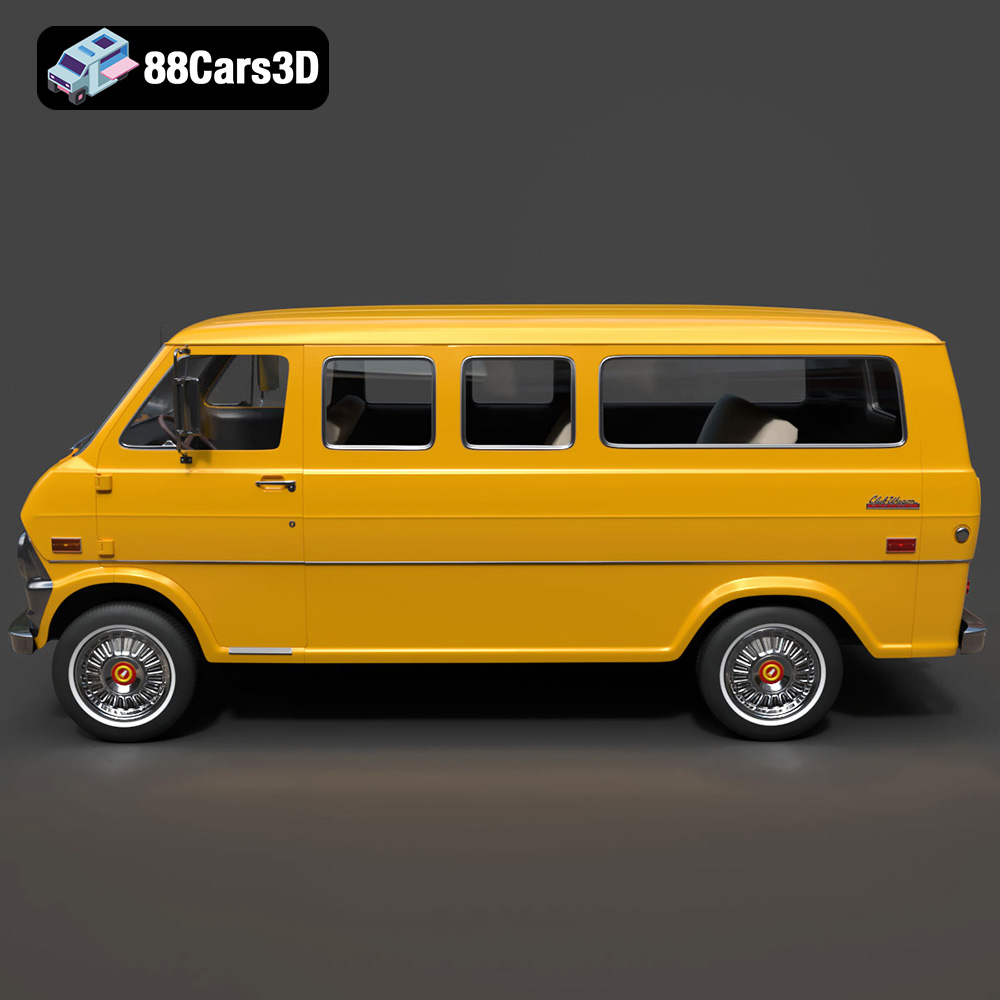
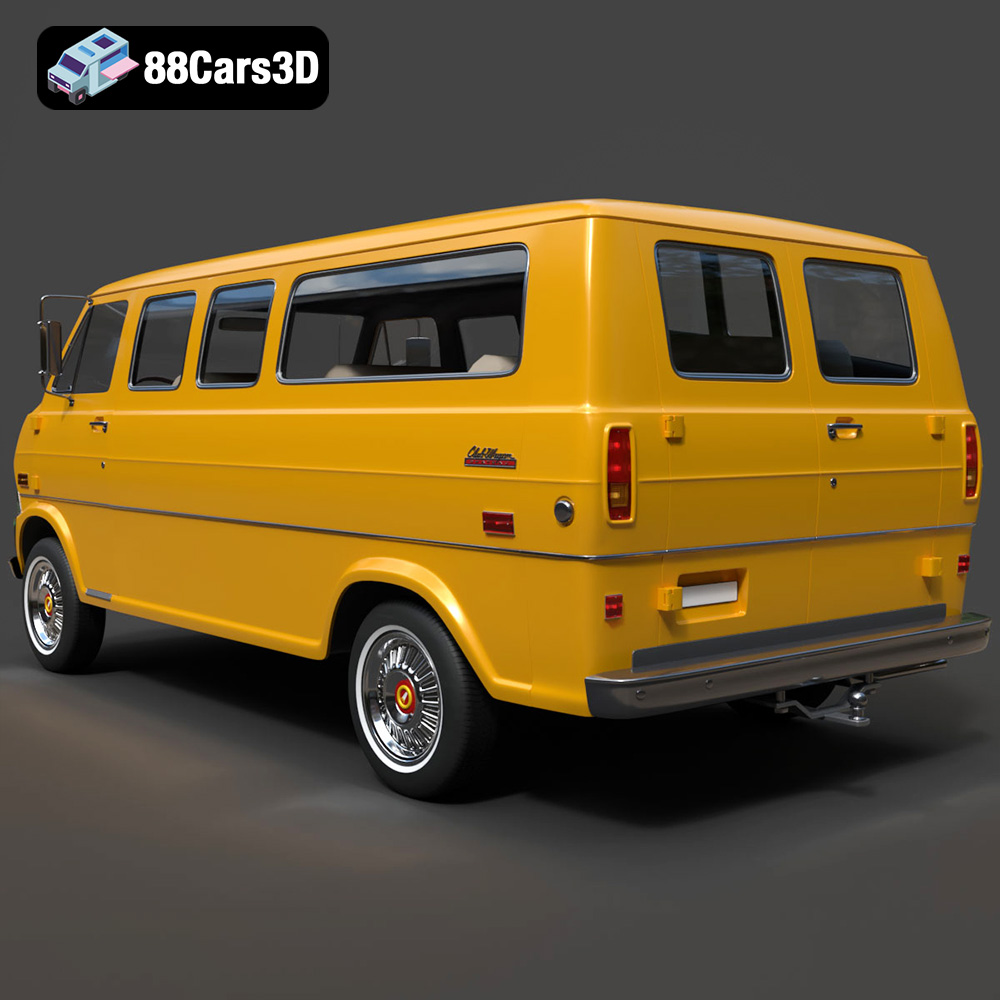
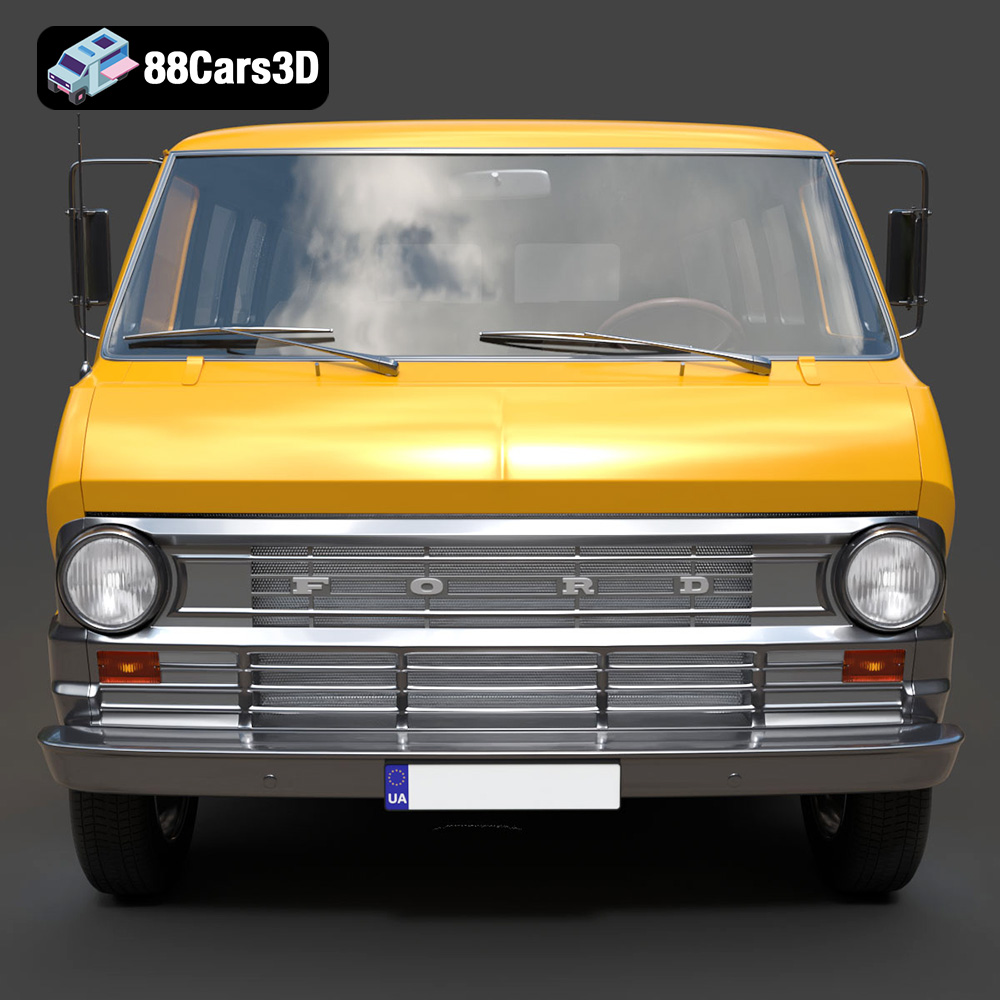
The defining features of the 1971 Econoline—its unmistakable flat nose, the prominent circular headlights that gaze out from its front fascia, and the classic chrome bumpers—have been accurately rendered. The model boasts precise frame geometry and proportions, mirroring the real-world vehicle chassis. Beyond the immediate aesthetics, the detailed classic Ford engine block and period-correct exhaust system add an incredible layer of realism, essential for close-up renders or even under-the-hood inspections in a virtual garage. Even the classic steel wheels with chrome hubcaps and the leaf spring rear suspension details are faithfully reproduced, offering a true sense of authenticity. This level of detail extends to practical considerations, with separate wheels, suspension, and steering components engineered for smooth and accurate animation.
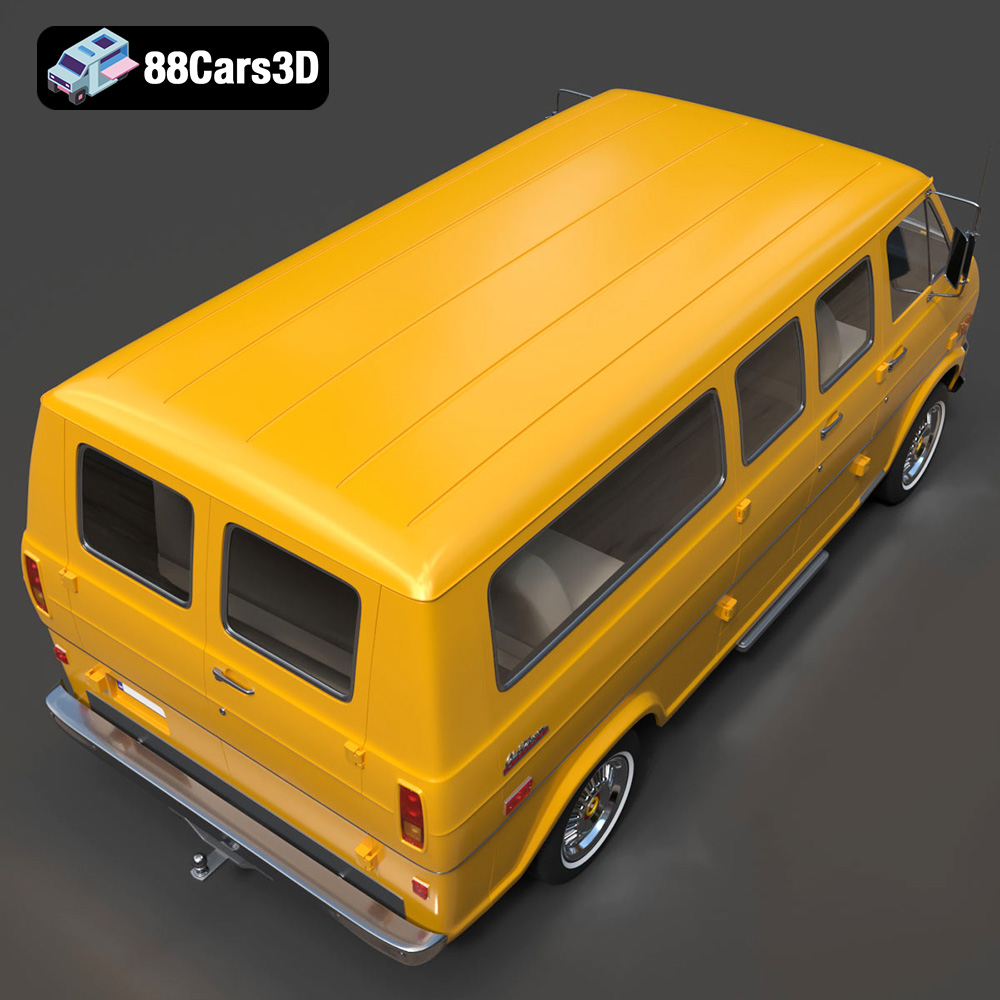
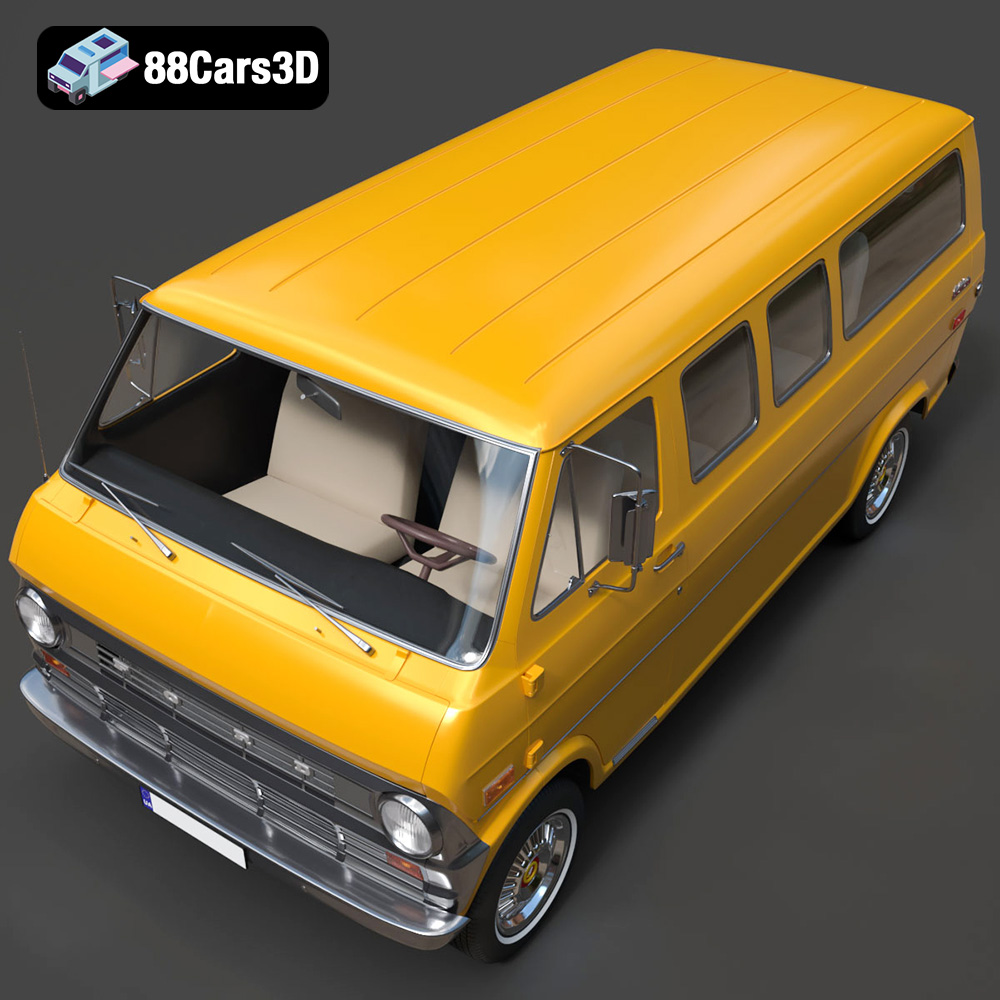
Stepping inside the virtual Econoline reveals an equally impressive level of detail. The spacious multi-row bench seating immediately evokes the van’s original purpose as a passenger or family hauler. The vintage steering wheel and column shifter are period-correct, contributing to an authentic driving experience in simulations or games. Key elements like the classic analog instrument cluster, accurate foot pedals, window cranks, and door handles are all present and accounted for. This meticulous interior modeling is not just for show; its optimized geometry is specifically designed for first-person perspective (POV) in gaming, ensuring a convincing and immersive experience for players. This attention to both exterior grandeur and interior functionality is what elevates a good 3D model to an excellent one.
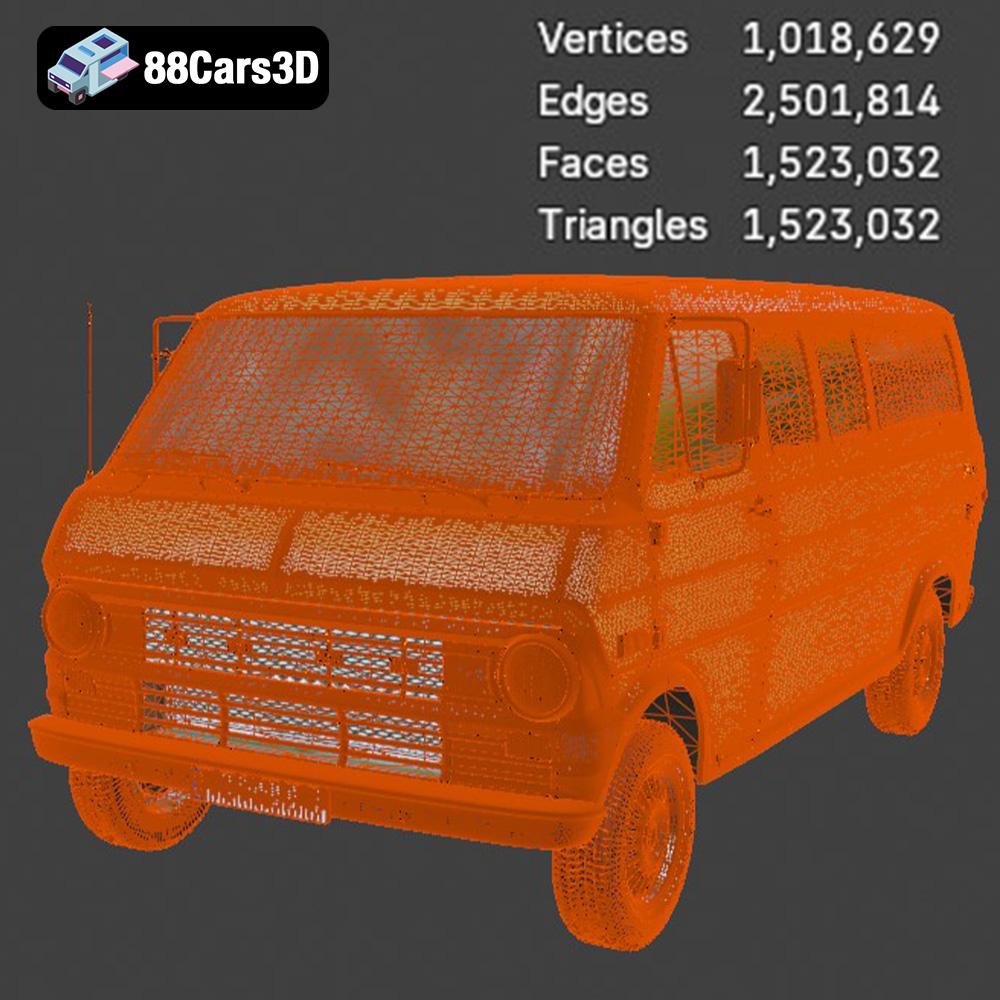
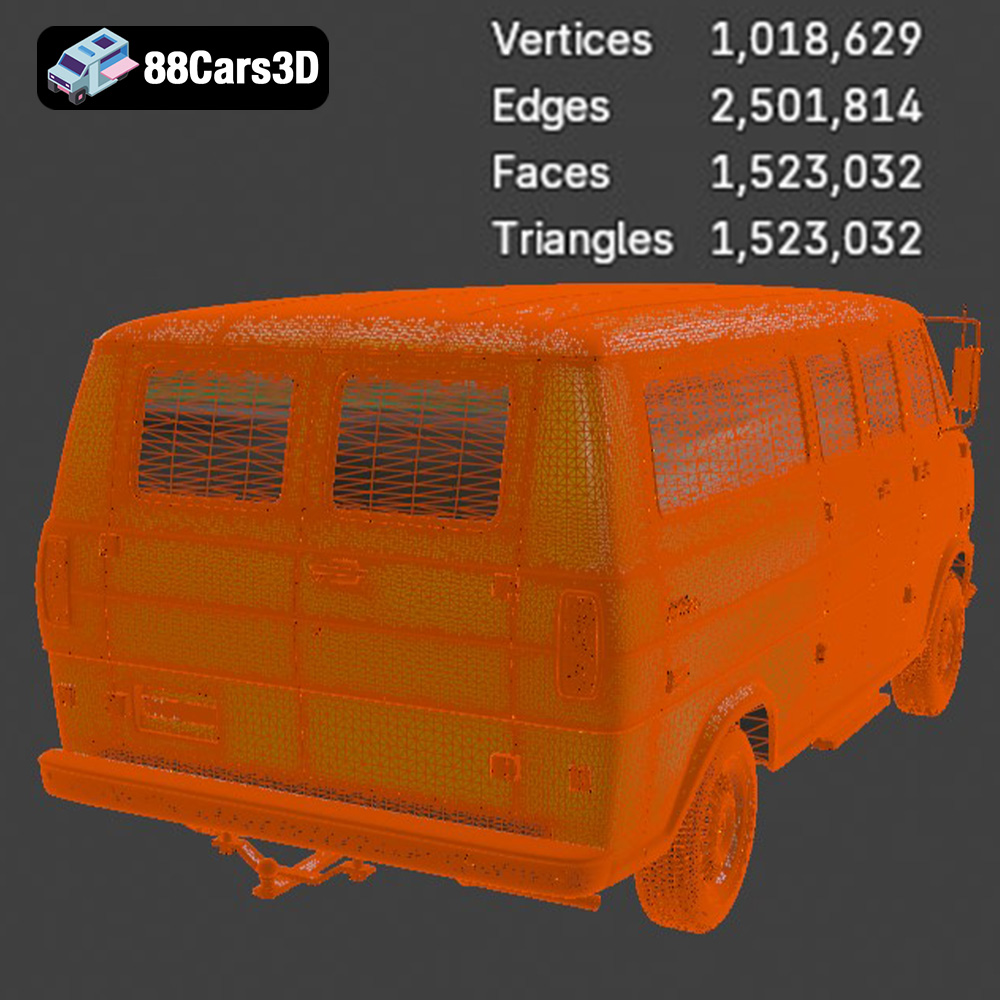
Beyond aesthetics, the technical underpinnings of this model are its true strength. Boasting approximately 150,000 triangles, the Ford E-Series Econoline Club Wagon model strikes a perfect balance between visual realism and performance efficiency. This optimized polycount makes it “game-ready,” ideal for real-time engines like Unreal and Unity, where frame rates are paramount. The model is built to real-world scale, based on actual vehicle chassis dimensions, ensuring accurate integration into any scene. Crucially, proper pivot setups for steering, wheel rotation, and suspension travel are included, which are indispensable for animating the vehicle realistically. This comprehensive technical consideration ensures that whether the model is destined for a cutting-edge video game or a high-fidelity architectural visualization, it performs flawlessly.
The versatility of a well-crafted 3D car model like the 1971 Ford E-Series Econoline Club Wagon makes it an indispensable asset across numerous professional disciplines. From the fast-paced world of game development to the precision of architectural visualization, this model provides a robust foundation, saving countless hours of manual creation.
For game developers, the availability of a game-ready asset is a significant advantage. The Ford Econoline model, with its optimized polycount of around 150,000 triangles, is perfectly suited for integration into open-world games, racing titles, and realistic simulators. The “game-ready” designation means it’s been engineered for performance, ensuring smooth frame rates even with multiple vehicles on screen. Its accurate real-world scale and properly set up pivots for animation (wheels, steering, suspension) mean less time spent on setup and more time on gameplay mechanics. Imagine this classic van as a drivable vehicle in a retro-themed racing game, a background prop in an apocalyptic survival game, or even a customizable camper van in a life simulation title. Its inclusion as a .fbx or .unreal format streamlines the import process into engines like Unreal Engine and Unity, minimizing friction and maximizing efficiency.
The burgeoning fields of Augmented Reality (AR) and Virtual Reality (VR) demand highly optimized 3D assets that can render seamlessly on various devices. The Econoline model excels here, making it perfect for immersive virtual showrooms, interactive configurators, and mobile AR experiences. Imagine walking around the 1971 Ford Econoline Club Wagon in an AR app on your phone, seeing it parked on your driveway, or exploring its detailed interior in a VR headset. The optimized geometry and the inclusion of the .glb format, specifically designed for efficient web and AR/VR transmission, make this model an ideal candidate for creating engaging, interactive experiences that bring the past into the present. Its meticulous detailing ensures a high level of fidelity, critical for convincing users they are interacting with a real object.
In the realm of rendering and visualization, photorealism is key. This 3D model of the Ford E-Series Econoline Club Wagon offers exceptional visual fidelity, making it excellent for brand campaigns, lifestyle scenes, and studio lighting setups. For automotive rendering artists, it provides a perfect subject for practicing lighting techniques, material shaders, and environmental integration. Whether it’s a vintage-themed advertisement, a background element in an architectural visualization of a retro diner, or a central piece in a nostalgic short film, the model’s accurate proportions, detailed features, and high-quality materials (which can be further enhanced in software like 3ds Max or Blender) allow for stunning, lifelike imagery. The comprehensive file formats like .blend and .max ensure maximum flexibility for artists to fine-tune every aspect for their specific rendering pipeline.
The utility of a robust 3D model extends far beyond digital screens. For hobbyists, collectors, and even professional designers, the ability to physically manifest a digital creation through 3D printing offers a unique tactile experience. The 1971 Ford E-Series Econoline Club Wagon 3D model is designed with this capability in mind, offering a pathway to owning a miniature piece of automotive history.
Converting a high-detail digital model for 3D printing requires specific considerations. The inclusion of the .stl format directly addresses this need, as it’s the industry standard for 3D printers. This format represents the model’s surface geometry as a triangulated mesh, which slicing software can then use to generate the layers for printing. However, merely having an STL file isn’t enough; successful printing depends on understanding the model’s characteristics and applying appropriate print settings.
The creation of a high-quality 3D car model is a delicate balance between artistic vision and technical constraints. For assets like the 1971 Ford E-Series Econoline Club Wagon, achieving both stunning visuals and seamless performance requires expert optimization at every stage.
The approximately 150,000 triangles boasted by this model represent a sweet spot for modern real-time applications. While photorealistic offline renders can handle millions of polygons, game engines and AR/VR environments demand efficiency. A polycount of 150K is low enough to ensure excellent frame rates on most gaming hardware, even with multiple instances of the vehicle, while being high enough to maintain rich visual detail for close-up shots. This “game-ready” optimization is crucial; it means the model has likely undergone careful retopology, where complex CAD or high-poly sculpts are converted into a cleaner, lower-polygon mesh that is easier for graphics cards to process, without sacrificing the vehicle’s iconic silhouette and intricate features.
While not explicitly listed, the mention of “game-ready” and “optimized” strongly implies meticulous UV mapping. UVs (stands for Unitized Vertices) are flattened 2D representations of a 3D model’s surface, acting as a map for applying textures. Efficient UV layouts minimize wasted space on the texture atlas, prevent stretching, and allow for the use of PBR (Physically Based Rendering) textures which greatly enhance realism. For a model like the Econoline, proper UVs enable artists to apply high-resolution diffuse, normal, roughness, metallic, and ambient occlusion maps, making the classic paintwork, worn tires, and chrome accents truly come alive. Clean UVs are also vital for customization options, allowing artists to easily swap out textures or apply decals.
A critical technical advantage of this model is its proper pivot setup. In 3D animation, pivots define the rotation and scaling points of objects. For a vehicle, correctly positioned pivots for wheels, steering, and suspension components are non-negotiable. This foresight by the modeler dramatically simplifies the rigging and animation process. Artists can immediately animate the Econoline’s steering wheel, make its wheels spin, or simulate realistic suspension travel over uneven terrain without having to manually correct pivot points, saving countless hours and ensuring more convincing motion in games or animated sequences. This level of preparation highlights a professional-grade asset ready for direct integration into complex animated scenes.
A truly versatile 3D asset provides more than just a static representation; it offers a canvas for creative exploration. The 1971 Ford E-Series Econoline Club Wagon 3D model is designed with customization in mind, empowering artists and developers to tailor its appearance to perfectly fit their unique vision.
The ability to easily change body colors is fundamental for any vehicle model. This allows the Econoline to seamlessly transition from a pristine factory retro tone, perhaps a classic two-tone blue and white scheme, to a weathered, post-apocalyptic survivor van, or even a sleek, modernized custom build. Material finishes can also be adjusted significantly. Imagine transforming the body from a high-gloss showroom shine to a matte, rugged finish, or altering the metallic sheen of the chrome components. These adjustments are typically made by modifying shader parameters within your chosen 3D software (Blender, 3ds Max) or game engine (Unreal, Unity), allowing for endless variations to suit any project’s aesthetic demands.
Beyond the main body, details like tire textures offer another layer of customization. Swapping out classic street tires for more aggressive modern radials can dramatically change the vehicle’s character, transforming it from a city cruiser to an off-road adventurer. Adjusting lighting is also crucial for integration. The model is designed to adapt to different lighting environments, meaning it will respond realistically whether placed under a harsh desert sun, the soft glow of a studio, or the dynamic illumination of a game world. This adaptability ensures that the Ford Econoline Club Wagon always looks its best, regardless of the scene’s mood or setting. These customization options, coupled with the detailed geometry, provide artists with the freedom to tell diverse stories and create unique visual narratives around this iconic van.
The digital landscape thrives on high-quality assets that blend historical accuracy with technical prowess. The 1971 Ford E-Series Econoline Club Wagon 3D model stands as a prime example, offering an exquisitely detailed and optimized recreation of an American classic. Its meticulous design, ranging from the period-correct exterior details to the fully realized interior, ensures a high degree of authenticity for any project.
Furthermore, the model’s comprehensive technical specifications – including an optimized 150,000 triangle polycount, real-world scale, and animation-ready pivot setups – make it a versatile workhorse for professional workflows. Whether you’re a game developer integrating it into an open-world title, an AR/VR creator building immersive experiences, a visualization artist crafting photorealistic renders, or a hobbyist bringing it to life through 3D printing, this asset provides a robust and flexible foundation. The wide array of included file formats (.blend, .fbx, .obj, .glb, .stl, .ply, .unreal, .max) ensures seamless compatibility across virtually all major 3D software and real-time engines, demonstrating a commitment to professional needs.
For those seeking premium 3D car models that truly elevate their projects, 88cars3d.com offers a curated selection of assets that meet rigorous quality standards. The 1971 Ford E-Series Econoline Club Wagon is more than just a model; it’s a testament to the art of digital preservation, ready to drive your creative visions forward.
The 1971 Ford E-Series Econoline Club Wagon represents an iconic era of American vans, blending utility with a classic 70s aesthetic. This vintage passenger van features a distinctive flat nose, bold round headlights, prominent chrome bumpers, and a spacious multi-passenger cabin that made it legendary among road trippers and commercial fleets alike.
This highly detailed 3D model boasts exceptional topology with an optimized triangle count of approximately 150,000 triangles, making it fully game-ready. The model preserves pristine visual fidelity, perfect for close-up shots and real-time rendering environments, catering to game development, AR/VR experiences, animation, and architectural visualization.
Perfect for classic car collections, retro street environments, camper van conversions, and vintage lifestyle renders.
.blend, .fbx, .obj, .glb, .stl, .ply, .unreal, .max
Tags:
ford, e-series, econoline, club-wagon, 1971, classic-van, passenger-van, retro, classic-car, car-3d-model, game-ready, low-poly, optimized, game-asset, rendering, vr-ar, blend, fbx, obj, glb, stl, ply, unreal, maxMercedes Benz CLS 500 3D Model 3D Printable STL
$19.99
.blend
.e-series
.fbx
.ford
.glb
.max
.obj
.ply
.rendering
.retro
.stl
.unreal
1971
car-3d-model
classic-car
classic-van
club-wagon
econoline
game asset
game-ready
low-poly
optimized
passenger-van
VR/AR