Get 20% OFF All Premium 3D & STL Models!

In the vibrant world of 3D visualization, the demand for authentic and meticulously crafted assets continues to grow. From cinematic masterpieces to hyper-realistic gaming environments, the ability to breathe digital life into iconic vehicles is paramount. Few eras capture the imagination quite like the 1970s, a period defined by distinctive design and a spirit of adventure. It’s within this context that the Ford E-Series Econoline Club Wagon 1971 3D Model emerges as a stellar example of premium digital artistry.
This particular model isn’t just a collection of polygons; it’s a meticulously recreated slice of automotive history, optimized for a vast array of applications. Whether you’re a game developer seeking authentic game assets, a visualization artist crafting a period-correct scene for automotive rendering, or an AR/VR enthusiast building immersive experiences, this digital replica of the classic short-nose forward-control van offers unparalleled detail and versatility. It encapsulates the utilitarian charm and bold styling of an era, ready to be integrated into any professional workflow.
Creating a high-quality 3D car model is a fusion of artistic skill and technical precision. It demands an intimate understanding of automotive design, historical accuracy, and the demanding specifications of various digital platforms. The process is intricate, ensuring that the final asset is both visually stunning and functionally robust across different applications.
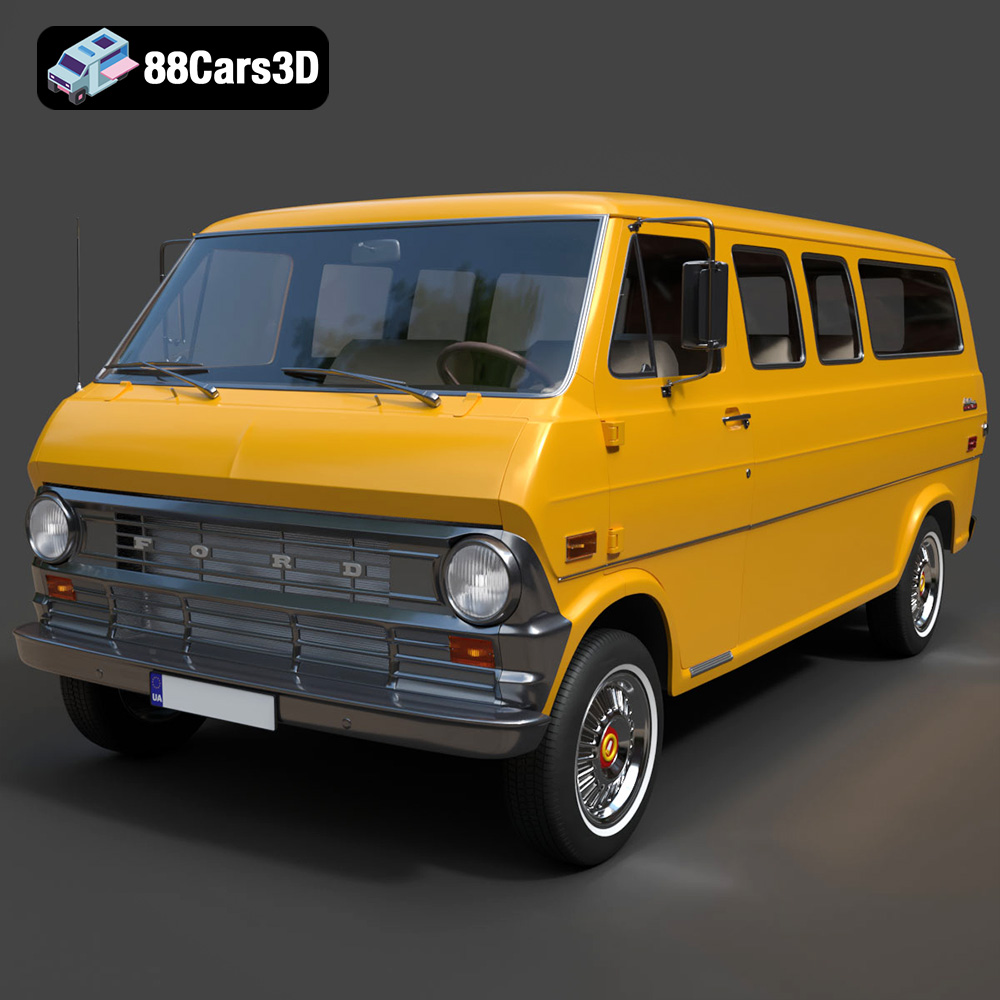
The journey begins long before the first vertex is placed. Extensive research is crucial, involving historical blueprints, vintage photographs, and detailed schematics of the actual vehicle. For a model like the 1971 Ford E-Series Econoline Club Wagon, this means pouring over details of its “short-nose” design, its distinctive round headlights, and the specific contours of its elongated body. Artists meticulously translate these real-world references into a digital wireframe, ensuring accurate proportions and an authentic silhouette. Every panel, every curve, and every subtle design cue is carefully observed and replicated. This foundational stage dictates the model’s fidelity and its ability to truly represent its real-world counterpart.
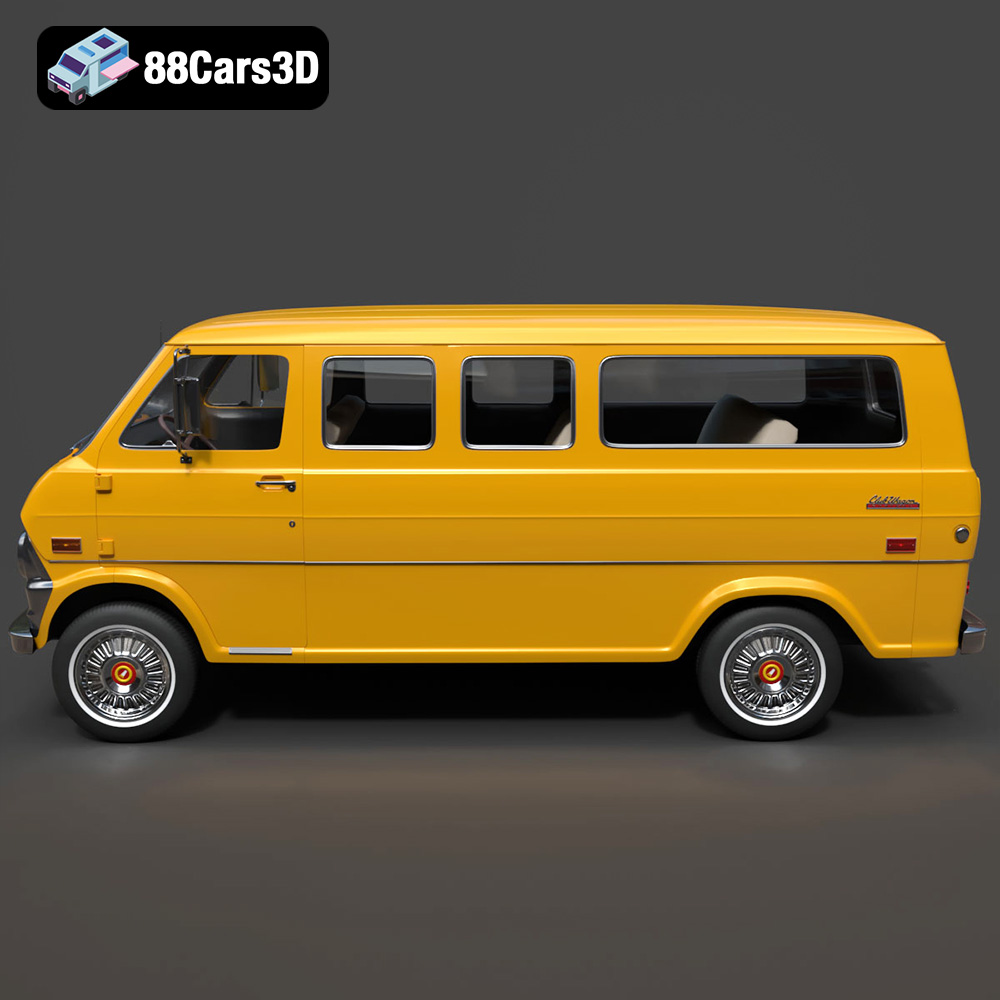
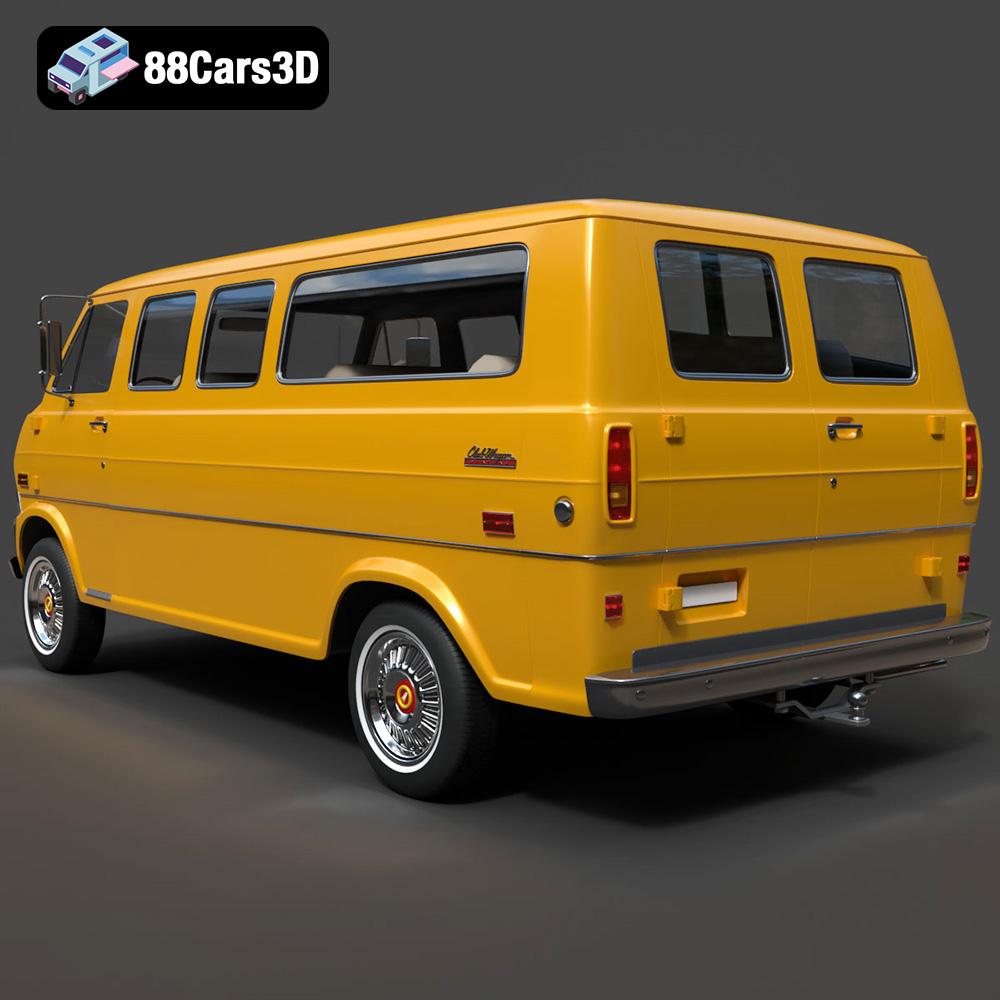
Once the basic form is established, the detailing begins. This includes crafting the bold utilitarian front grille, the classic steel wheels with chrome hubcaps, and the expansive passenger windows. Even the interior features are considered, such as the spacious multi-row passenger seating, the authentic two-spoke steering wheel, and the retro utilitarian instrument cluster. Structural elements like the robust chassis, engine placement, and period-correct exhaust routing are represented, providing a comprehensive and accurate foundation for any project.
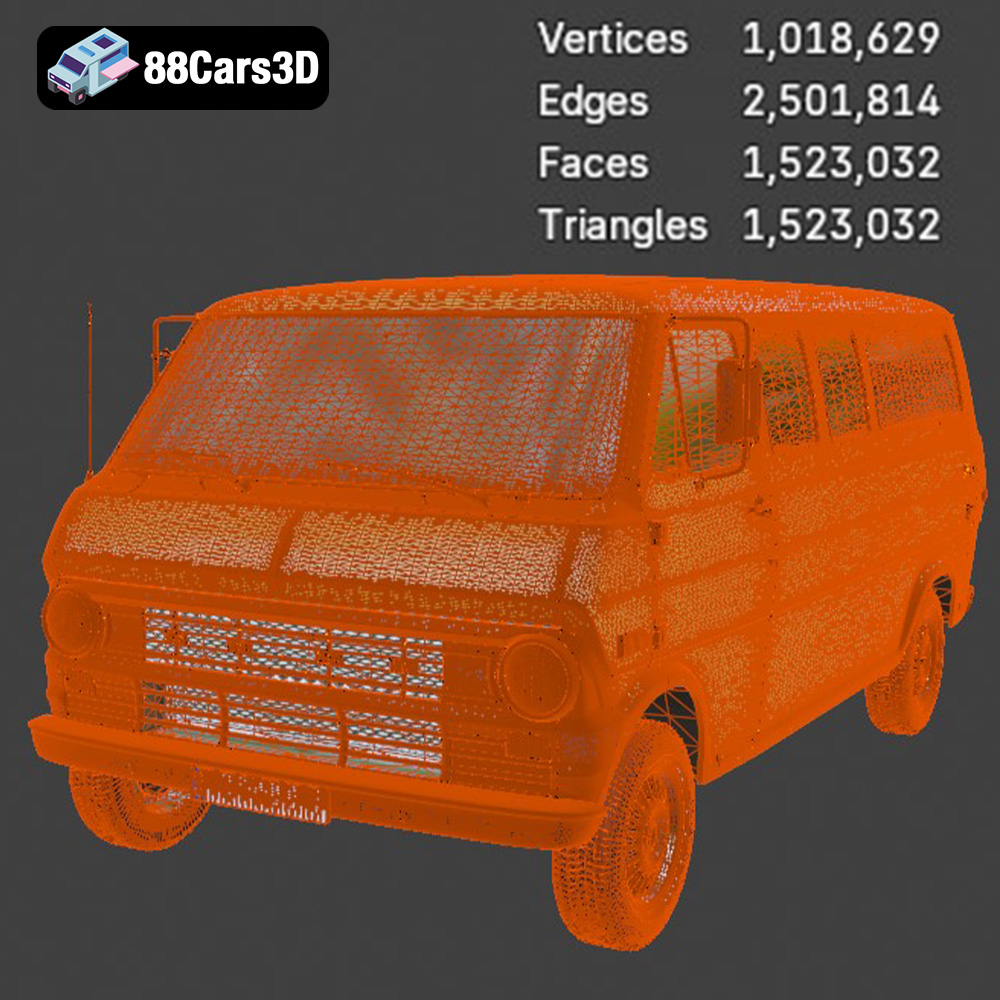
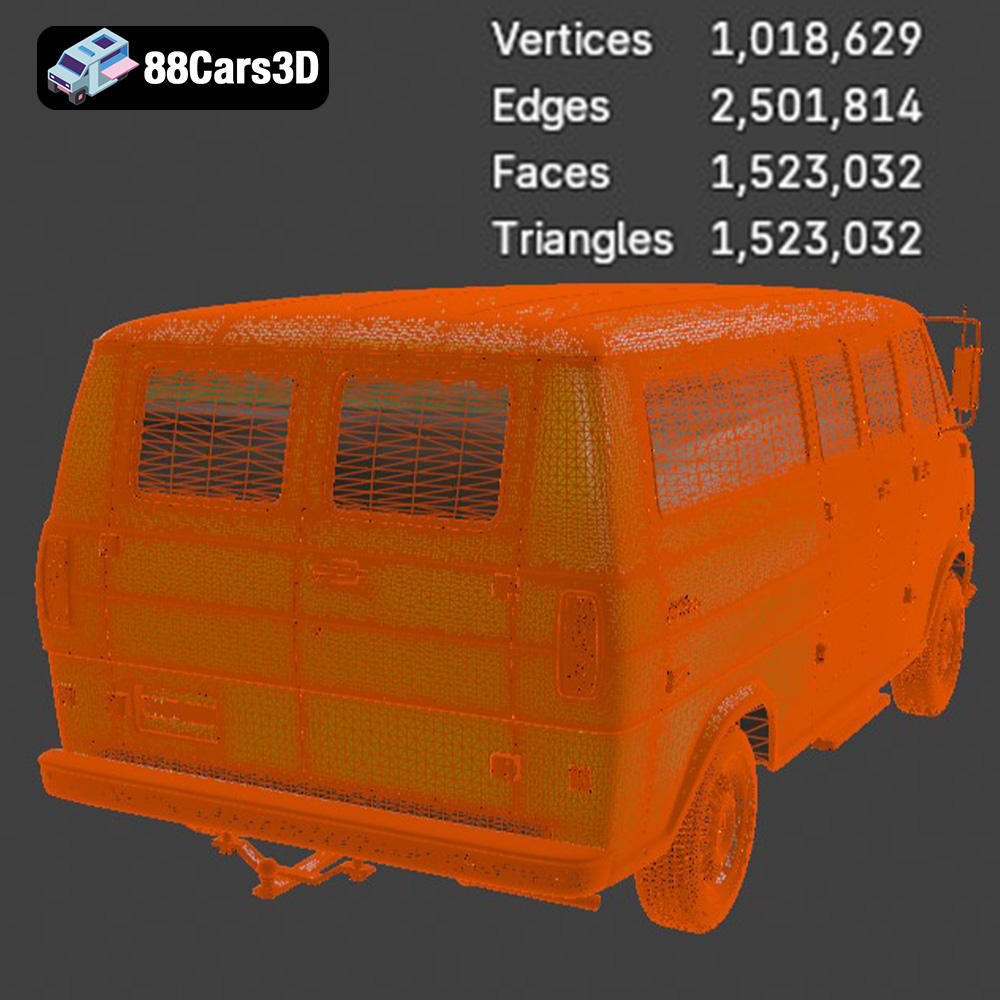
Beyond visual accuracy, professional 3D car models must be expertly optimized. This involves striking a delicate balance between high-end visual fidelity and efficient performance, particularly for real-time applications like games or AR/VR. The Ford E-Series Econoline Club Wagon 1971 3D Model, for instance, boasts an optimized topology of approximately 250,000 triangles. This poly count is carefully chosen to ensure the model maintains its high-end visual realism without unnecessarily taxing system resources, making it ideal for both real-time engines and high-resolution offline rendering.
Clean topology, proper UV mapping, and efficient material setup are critical aspects of optimization. Every surface is meticulously modeled to ensure accurate reflections and smooth shading, enhancing the model’s visual integrity. The inclusion of separate components for animation, such as wheels, suspension, and steering, along with a proper pivot setup, further enhances its utility, allowing for realistic movement and interaction within simulations and interactive experiences.
The versatility of a 3D model is often defined by the file formats it supports. Each format is designed with specific use cases and technical considerations in mind, making the choice of format crucial for successful integration into various pipelines. A premium asset like the Ford E-Series Econoline Club Wagon 1971 3D Model from 88cars3d.com is provided in a comprehensive suite of formats, ensuring maximum compatibility and utility for professional artists and developers.
The .blend format is Blender’s native file type, offering a complete and fully editable scene. When you download a .blend file, you gain access to the entire project as it was constructed by the artist, including all mesh data, materials, textures, lighting, camera setups, and even animation data. This makes it an invaluable format for users who wish to dive deep into the model’s construction, modify its topology, customize materials, or re-rig components for specific animation needs. For the Ford Econoline, having the .blend file allows for extensive customization, such as fine-tuning body colors, adjusting material finishes, or adapting the lighting for unique rendering scenarios within Blender’s powerful Cycles or Eevee renderers.
.fbx (Filmbox) is arguably the most widely adopted 3D file format for exchanging models between different software applications and real-time engines. Developed by Autodesk, it supports geometry, materials, textures, animations, and skeletal data, making it ideal for game development in platforms like Unreal Engine and Unity. Its robust nature ensures that complex assets, including character rigs and vehicle animations, transfer cleanly between programs. For the 1971 Ford E-Series Club Wagon, the .fbx format is the go-to for importing the vehicle directly into a game engine, where its optimized polycount and pre-set pivots for wheels and suspension can be leveraged instantly.
The .obj (Wavefront OBJ) format is a universal standard for 3D geometry exchange, recognized by virtually every 3D software package. While it primarily stores polygonal geometry, UV coordinates, and material group information, it doesn’t typically embed textures or animation data directly. Instead, it often refers to external .mtl (material) files and texture maps. The .obj format is highly reliable for ensuring cross-software compatibility when the focus is primarily on the mesh data itself. It’s an excellent choice for static renders, exporting for sculpting, or as a fallback option when other formats encounter compatibility issues. For the Ford Econoline, .obj provides a clean, raw mesh that can be easily imported into any application for basic manipulation or re-texturing.
.glb (GL Transmission Format Binary) is the binary version of glTF, a royalty-free specification for the efficient transmission and loading of 3D scenes and models by applications. .glb files consolidate all necessary data – geometry, materials, textures, animations – into a single, self-contained file, making them incredibly convenient for web-based 3D, augmented reality (AR), and virtual reality (VR) applications. Its efficiency and compact size make it perfect for showcasing 3D car models in virtual showrooms or interactive web configurators, ensuring quick loading times and broad platform support. The Ford Econoline in .glb format allows for seamless integration into mobile AR experiences or browser-based virtual environments.
The .stl (STereoLithography) format is the standard file type for 3D printing. It represents a 3D model as a series of connected triangles, describing only the surface geometry of an object without color, texture, or other CAD attributes. While it lacks visual detail, its simplicity is precisely what makes it ideal for additive manufacturing. For the Ford E-Series Econoline Club Wagon 3D Model, the .stl format enables hobbyists and professionals to bring the classic van into the physical world as a display-scale model. Specific print settings, like recommended scale (1:12, 1:18, 1:24), layer height, and support requirements, are crucial for a successful print, leveraging the model’s robust geometry for physical output.
The .ply (Polygon File Format or Stanford Triangle Format) is another common format for storing 3D data from 3D scanners. It can store various properties for each vertex and face, including color, transparency, and normal vectors. While less common for artistic exchange than .fbx or .obj, it is frequently used in scientific, engineering, and CAD applications where precise mesh data, often derived from real-world scans, is paramount. For complex analyses or specific industrial design workflows, the .ply format offers a robust and detailed representation of the Ford Econoline’s geometry.
The .unreal format refers to assets specifically configured and optimized for direct import and use within Unreal Engine. This often implies not just the mesh, but also pre-configured materials, collision meshes, LODs (Levels of Detail), and sometimes even blueprint setups for interactive functionality. While .fbx is the primary import route, an “.unreal” package suggests that the asset has already undergone a significant amount of the preparation work required to function optimally within the engine. This makes the Ford Econoline model an instant drop-in game asset, saving developers considerable time in the integration process.
The .max format is the native file type for Autodesk 3ds Max, a leading software in professional 3D modeling, animation, and rendering. Similar to .blend for Blender, a .max file contains the complete scene, including geometry, materials, textures, lighting, cameras, animation keyframes, and plugins used. This format provides maximum flexibility for artists working in 3ds Max who need to make extensive modifications, create complex animations, or leverage advanced rendering engines like V-Ray or Corona. For the Ford Econoline, the .max file allows for detailed automotive rendering projects, where artists can animate suspension, doors, or steering, and create bespoke studio lighting setups to showcase the vehicle’s classic aesthetics.
The true value of a premium 3D car model lies in its seamless integration into diverse professional workflows. Whether you’re an independent artist or part of a large studio, efficiency and quality are paramount. High-quality 3D car models, such as those found on 88cars3d.com, are designed to accelerate production across various platforms and purposes.
For artists focused on detailed automotive rendering, animation, or highly customized visualization projects, working with native scene files like .blend (for Blender) and .max (for 3ds Max) offers unparalleled control. The 1971 Ford E-Series Econoline Club Wagon 3D model, provided in these formats, gives artists the freedom to manipulate every aspect.
In Blender, artists can leverage its powerful modeling tools to refine any part of the van, from tweaking the interior to adding custom accessories. The .blend file allows for easy modification of materials and textures, enabling artists to create bespoke finishes – perhaps a period-correct two-tone factory paint job or a rusty, post-apocalyptic patina. Rigging and animation are also streamlined; with separate wheels, suspension, and steering components, artists can create dynamic sequences showing realistic vehicle movement, tire rotation, and suspension travel. Blender’s Cycles renderer can then produce breathtakingly realistic images and animations, capturing every subtle reflection and surface detail of the vintage van.
Similarly, 3ds Max users can import the .max file to unlock its full potential. This allows for advanced scene assembly, complex lighting setups using renderers like V-Ray or Corona, and sophisticated character integration. The precision modeling of the Ford Econoline ensures that even close-up renders of the detailed engine block representation or the retro instrument cluster will hold up under scrutiny, making it perfect for high-end advertising or cinematic visualization.
For game developers, the primary concern is often balancing visual fidelity with real-time performance. This is where optimized game assets shine. The 1971 Ford E-Series Econoline Club Wagon 3D model is specifically designed to be “game-ready,” featuring an optimized ~250,000 triangle count that ensures smooth frame rates in demanding real-time environments like Unreal Engine and Unity.
Using the .fbx or .unreal formats, developers can seamlessly import the vehicle into their game engine. Once in Unreal Engine, for example, the model’s real-world scale accuracy and proper pivot setup for steering and wheel rotation allow for straightforward implementation of vehicle physics and control systems. PBR (Physically Based Rendering) materials can be quickly applied and adjusted, bringing the classic van to life with realistic lighting and reflections. Developers can also generate LODs (Levels of Detail) from the base mesh to further optimize performance for distant objects, ensuring the van looks great from all angles and distances without sacrificing game responsiveness. Collision meshes can be easily generated or imported, providing accurate physical interactions within the game world.
Whether it’s an open-world driving game, a period-piece adventure, or a simulator, a well-optimized 3D car model like this one dramatically reduces development time and enhances the overall player experience. The detailed engine block representation and undercarriage, even if not directly visible to the player, add a layer of authenticity that contributes to the overall immersion.
The utility of a high-fidelity 3D car model extends far beyond traditional rendering and game development. These assets are powerful tools across a spectrum of industries, enabling innovative approaches to storytelling, product visualization, and interactive experiences.
In the realm of film, television, and advertising, accurate 3D car models are indispensable for creating believable environments and narratives. A model like the 1971 Ford E-Series Econoline Club Wagon can serve as a pivotal element in a period-piece film, instantly establishing the setting and evoking a specific era. Imagine this classic van parked outside a retro diner or cruising down a sun-drenched highway; its distinctive silhouette and vintage charm add significant production value.
For architectural visualization, integrating vehicles helps to humanize and contextualize a scene. Placing a vintage Ford Econoline within a rendered streetscape or a garage scene can transform a sterile architectural rendering into a vibrant, lived-in environment. The model’s meticulously captured exterior features, including authentic lighting details and classic steel wheels, ensure it stands up to close-up shots and high-resolution output, perfectly complementing the realism of the surrounding architecture.
Augmented Reality (AR) and Virtual Reality (VR) are revolutionizing how we interact with digital content. High-quality 3D car models are at the forefront of this revolution. Utilizing formats like .glb, the Ford Econoline model can be deployed in immersive virtual showrooms, allowing potential buyers or enthusiasts to explore the van from every angle, customize its features, and even “sit inside” without ever being near a physical vehicle. Imagine walking around the classic van in your living room via an AR app, inspecting the detailed leaf-spring suspension or the spacious multi-row passenger seating. The model’s optimized geometry and real-world scale accuracy make it ideal for these interactive and mobile AR experiences, providing a compelling and engaging user journey.
Furthermore, 3D printing offers a tangible output for these digital assets. The .stl format provided for the Ford E-Series Econoline Club Wagon allows hobbyists and collectors to 3D print a physical replica. This opens up possibilities for custom dioramas, model kits, or desktop displays. The product description for this model even includes detailed 3D print settings, such as recommended scales (1:12, 1:18, 1:24), layer height, wall thickness, infill, and support requirements. The advice to print detailed parts like the exhaust, mirrors, and steering wheel separately, and to angle the frame for structural integrity, demonstrates the expertise embedded in the asset’s design for physical reproduction.
In a competitive market, access to reliable, high-quality resources is a significant advantage. For professionals seeking premium 3D car models, an online marketplace like 88cars3d.com stands out by offering assets that combine artistic excellence with technical robustness.
When you purchase a 3D model, you’re not just buying polygons; you’re investing in the expertise and meticulous effort of professional artists. The 1971 Ford E-Series Econoline Club Wagon 3D model is a prime example of the quality assurance that 88cars3d.com prioritizes. Its detailed product description highlights the accurate 1971 Ford E-Series Econoline Club Wagon frame geometry, period-correct undercarriage, vintage exhaust system, and authentic lighting details. These are not superficial additions but integral parts of a model designed for true realism.
The optimized geometry (~250,000 triangles) ensures it’s “game-ready” while maintaining high-end visual realism. Features like real-world scale accuracy, proper pivot setup for animation, and compatibility across major 3D software platforms are testaments to its technical excellence. Furthermore, the inclusion of extensive customization options—from changing body colors to adjusting material finishes—empowers artists to adapt the model to their unique project requirements, ensuring maximum flexibility and creative control.
Developing a complex 3D car model from scratch is an incredibly time-consuming and labor-intensive process, often requiring hundreds of hours of work for a single vehicle. For studios and individual artists on tight deadlines, sourcing pre-made, high-quality 3D car models is a strategic decision that dramatically accelerates project timelines. Instead of spending weeks or months on modeling, texturing, and optimization, professionals can acquire production-ready assets like the Ford E-Series Econoline Club Wagon and integrate them into their projects almost immediately.
This efficiency allows teams to focus their resources on other critical aspects of their production, such as scene composition, animation, coding, or unique creative elements. 88cars3d.com serves as a valuable resource for a diverse range of 3D car models, from classic vans to modern supercars, providing artists with a reliable library of assets that meet professional standards and are optimized for various applications, from automotive rendering to building robust game assets.
The digital realm offers unprecedented opportunities to explore and recreate the world around us, and classic vehicles like the 1971 Ford E-Series Econoline Club Wagon hold a special place in this landscape. Through the meticulous efforts of expert 3D artists, this iconic van has been brought to life in exquisite detail, offering a versatile and high-performance asset for a multitude of professional applications.
From captivating automotive rendering projects and immersive game environments to cutting-edge AR/VR experiences and even tangible 3D prints, the Ford E-Series Econoline Club Wagon 1971 3D Model stands as a testament to the power of premium digital assets. Its optimized topology, accurate detailing, and comprehensive file format support ensure it seamlessly integrates into virtually any professional pipeline. Whether you’re enhancing a period-piece film, populating an open-world game with authentic game assets, or creating a virtual showroom, this model provides the quality and flexibility needed to bring your visions to life. Explore this exceptional model and a diverse collection of other high-quality 3D car models by visiting 88cars3d.com today and elevate your next project.
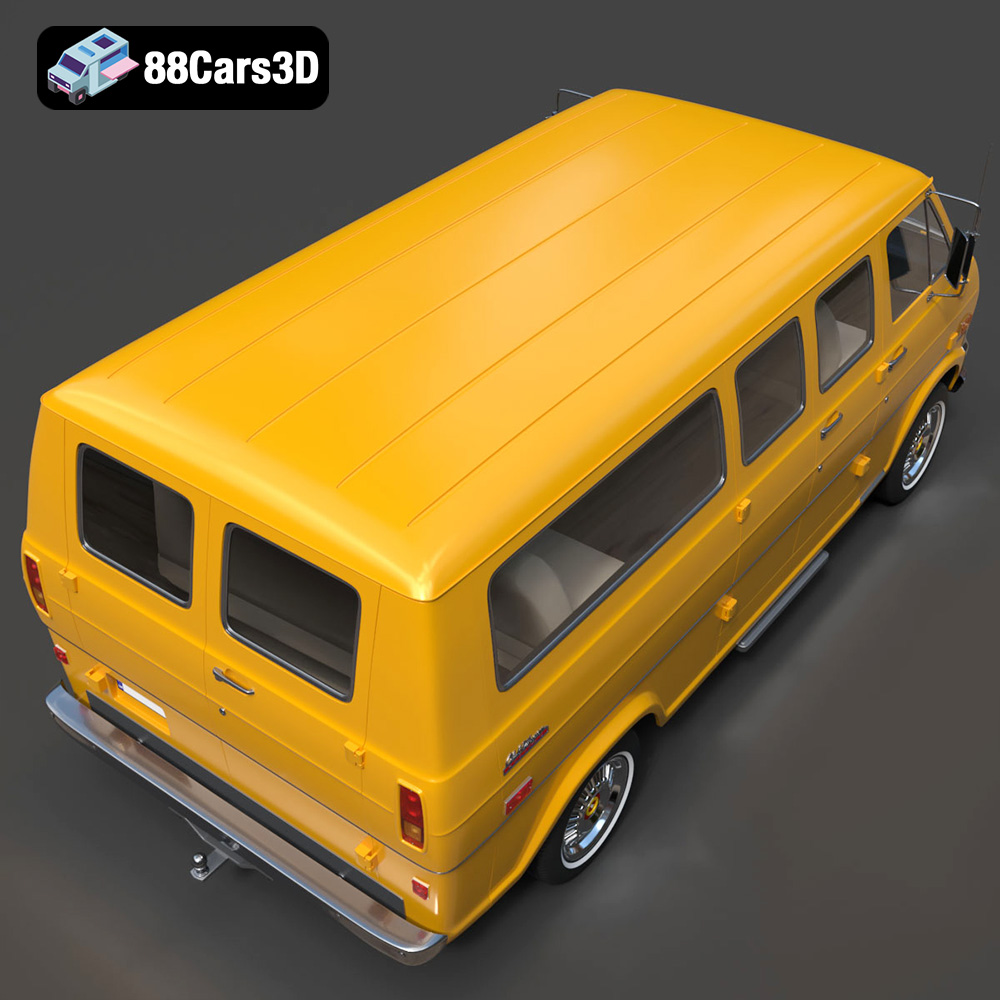
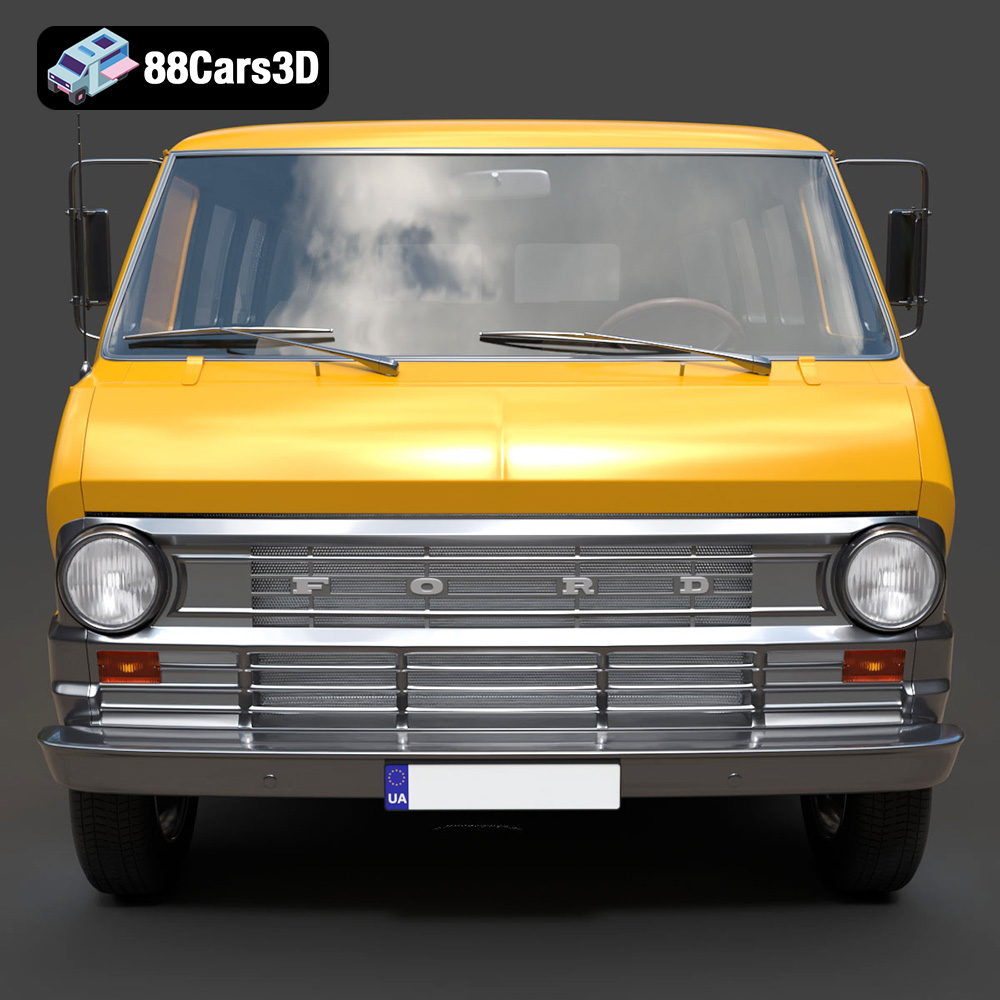
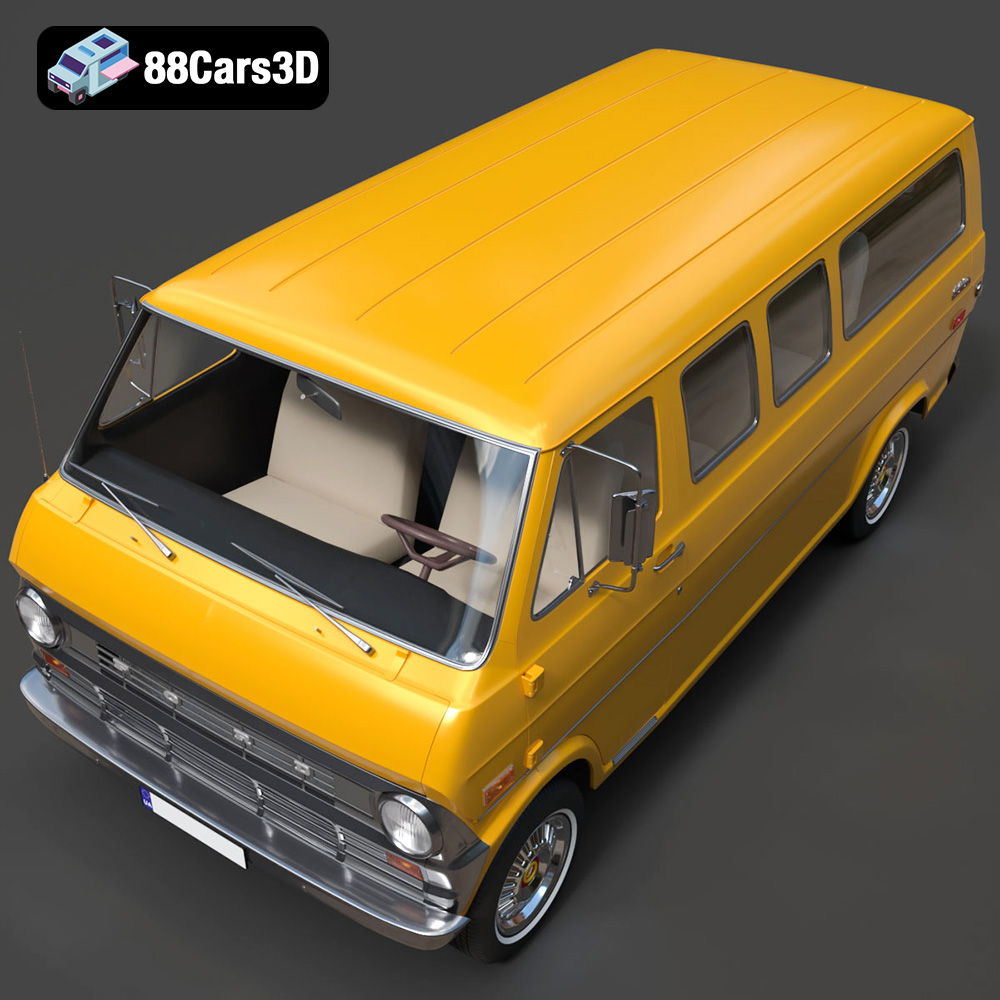
Experience the vintage charm of the 1971 Ford E-Series Econoline Club Wagon with this highly accurate 3D model. Known for its iconic “short-nose” forward-control design, this classic passenger van represents a golden era of American road trips and family travel. The model captures the quintessential retro styling cues of the early 70s, including the bold, utilitarian front grille, distinct round headlights, classic steel wheels with chrome hubcaps, and the elongated body design fitted with expansive passenger windows. Underneath, it features structural representations of its robust chassis and classic Ford V8 or inline-six engine placement, complete with period-correct exhaust routing. Crafted with an optimized topology of approximately 250,000 triangles, this 3D model offers the perfect balance between high-end visual fidelity and game-ready performance. Every surface has been meticulously modeled to ensure accurate reflections and smooth shading, making it an ideal asset for real-time engines like Unreal Engine and Unity, as well as high-resolution offline rendering. Whether deployed in an interactive VR showroom, an animated sequence, or a heavy game environment, the model maintains its structural integrity without sacrificing frame rates. Perfect for 1970s period-piece films, retro lifestyle visualizations, classic car garage scenes, and open-world vintage driving games.
$19.99
.blend
.e-series
.fbx
.ford
.glb
.max
.obj
.ply
.rendering
.stl
.unreal
1971
car-3d-model
classic-van
club-wagon
econoline
game asset
game-ready
low-poly
optimized
passenger-van
retro-vehicle
van-3d-model
VR/AR