Get 20% OFF All Premium 3D & STL Models!

In the dynamic landscape of digital content creation, the demand for high-fidelity 3D assets is more critical than ever. From blockbuster video games and immersive AR/VR experiences to compelling architectural visualizations and cutting-edge automotive design showcases, the quality of a 3D model can make or break a project. At the heart of this evolving industry lies the precision and artistry of creating believable 3D car models – assets that not only look stunning but are also technically optimized for diverse applications.
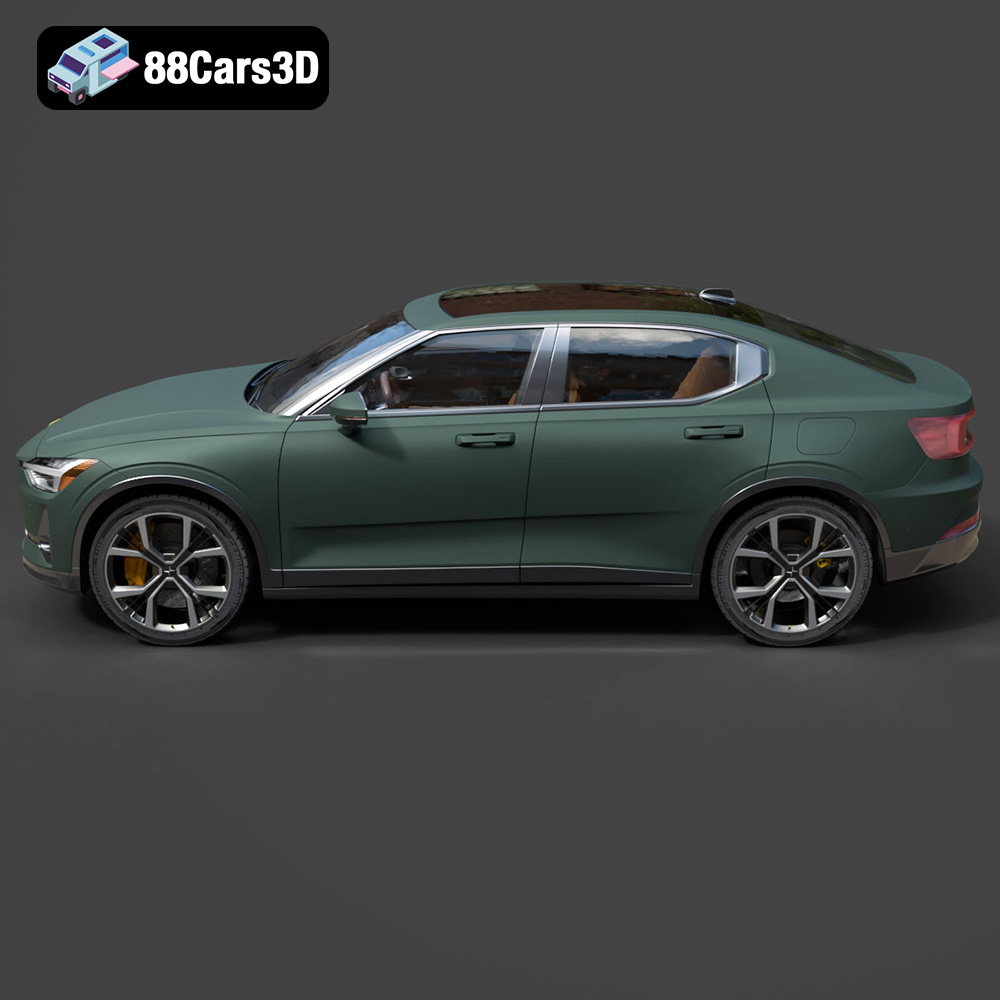
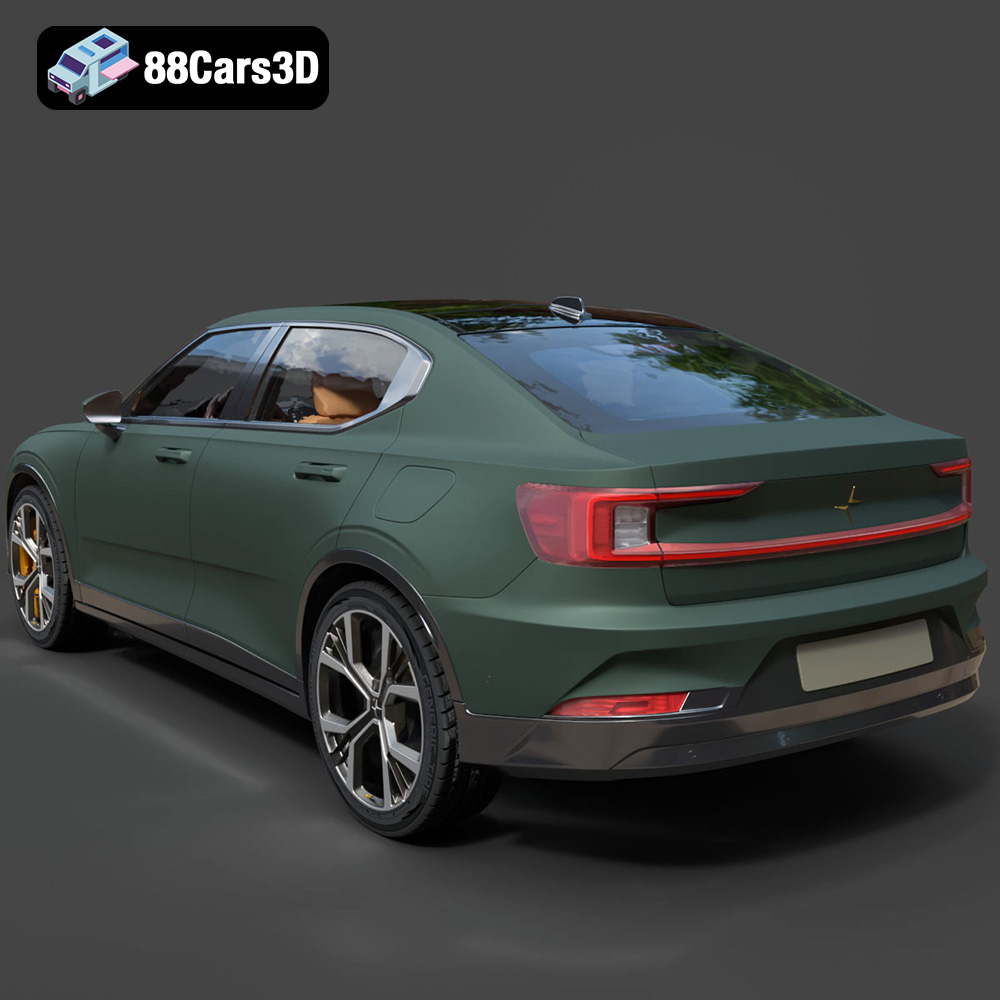
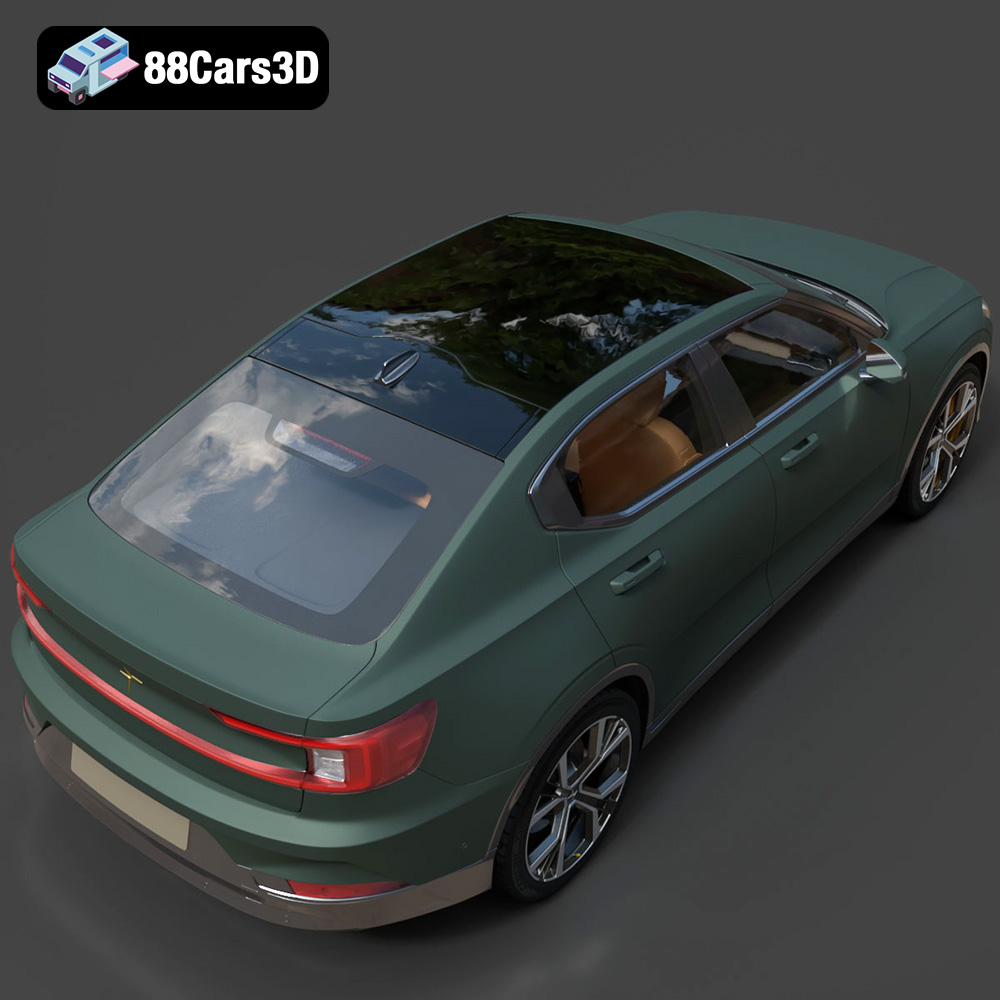
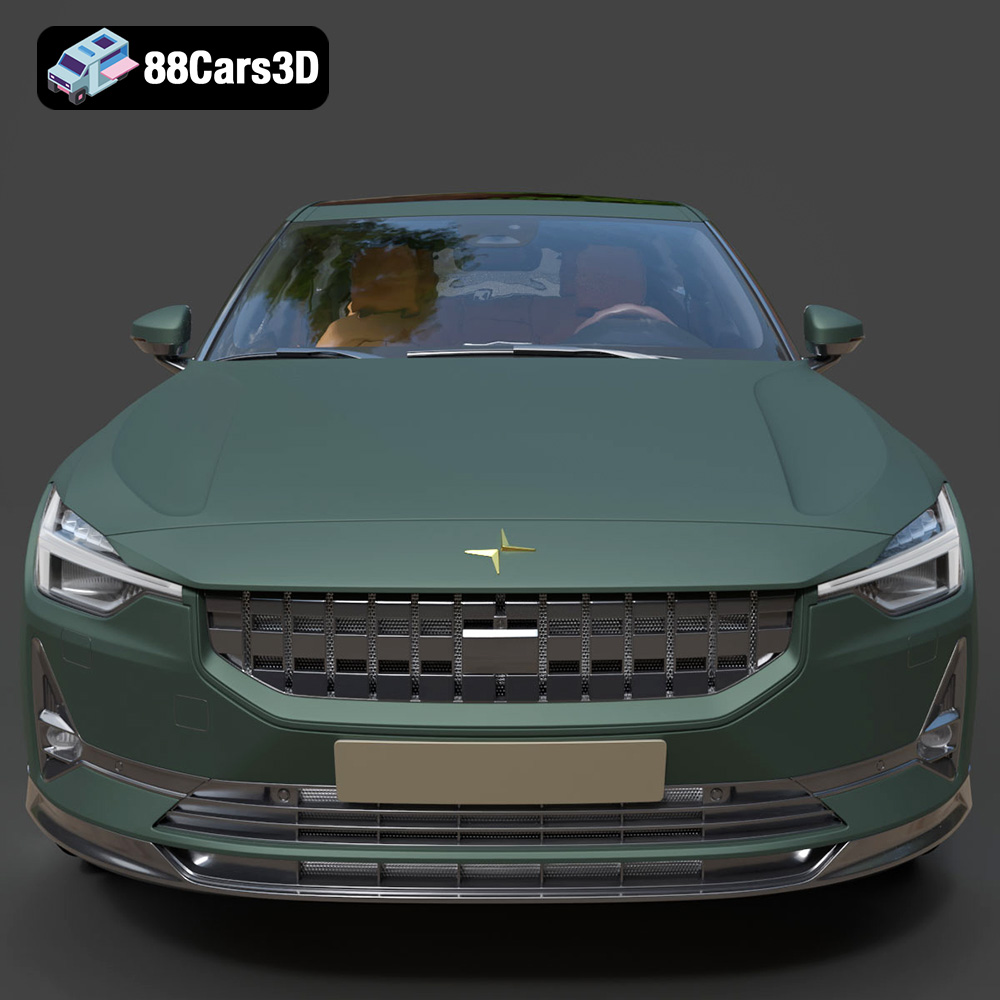
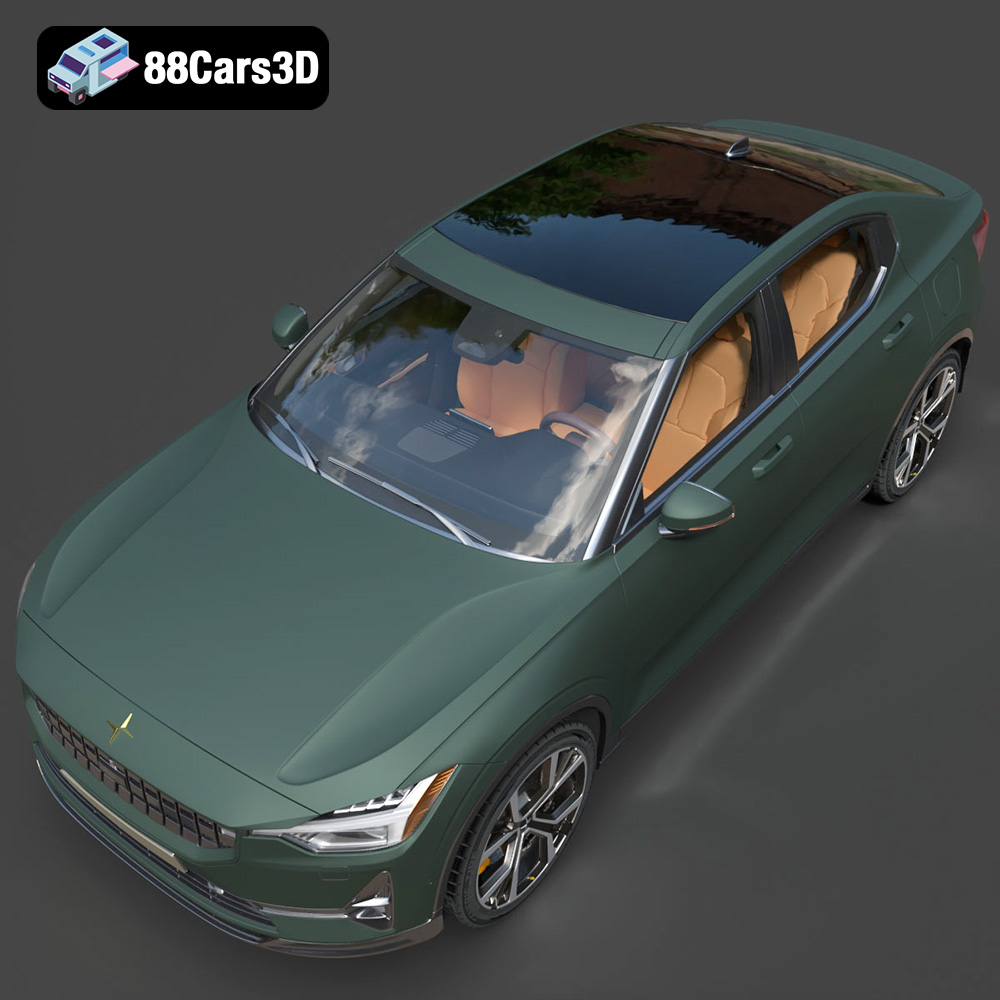
Today, we’re diving deep into the intricate world of automotive 3D modeling, exploring the technical nuances, workflow considerations, and the sheer power that a meticulously crafted asset brings to the table. We’ll specifically highlight a standout example: the Polestar 2 2020 3D Model available on 88cars3d.com. This premium all-electric fastback, known for its Scandinavian minimalist design and sustainable performance, has been digitally recreated with exceptional attention to detail, making it a perfect case study for understanding what makes a truly professional 3D car asset.
The versatility of a 3D model hinges significantly on the file formats it supports. Different formats are optimized for specific use cases, software compatibility, and pipeline requirements. Understanding these distinctions is crucial for anyone working with 3D assets, ensuring smooth integration and optimal performance. The Polestar 2 2020 3D Model, for instance, offers a comprehensive suite of formats, catering to virtually any professional workflow.
The .blend format is the native file type for Blender, a powerful open-source 3D creation suite. A .blend file typically includes not just the mesh geometry but also materials, textures, lighting, cameras, animation data, and even physics simulations. For artists and developers working within Blender, this format provides the most flexibility for customization. With the Polestar 2 model provided in .blend, users can delve into the full scene, modify materials, adjust the intricate lighting setup, or even re-rig components for bespoke animations directly within their familiar environment. It’s the ideal starting point for extensive modifications and deep integration into Blender-centric pipelines.
.fbx (Filmbox) is arguably the most widely adopted proprietary file format for 3D data interchange, especially prevalent in game development (Unreal Engine, Unity) and animation studios. It supports comprehensive data, including geometry, materials, textures, bones, skinning, and animation. Its strength lies in its ability to transfer complex animated scenes between different 3D software applications and real-time engines while preserving as much data as possible. For the Polestar 2, the .fbx format ensures that the optimized mesh, real-world scale, proper pivot setups for steering and wheels, and any pre-configured materials are readily available for immediate use in game engines or animation software, making it a true game-ready asset.
The .obj (Wavefront OBJ) format is a simple, universal geometry definition file. It primarily stores 3D geometry data—vertices, normals, texture coordinates, and faces—and can link to external material (.mtl) files. While it doesn’t support animation or rigging, its widespread compatibility across almost every 3D software makes it invaluable for basic mesh transfer. If you need to bring the Polestar 2 model into an application that might not support .fbx or specific native formats, .obj is a reliable fallback, ensuring that the core sculptural integrity of the car remains intact.
.glb (GLB, Binary GL Transmission Format) is an efficient, single-file format designed for the transmission of 3D scenes and models. It bundles geometry, materials, textures, and animation into one self-contained binary file, making it ideal for web-based 3D viewers, AR/VR applications, and mobile experiences where file size and loading speed are critical. The Polestar 2 model in .glb is perfect for virtual showrooms, interactive product configurators on websites, or bringing the car to life in augmented reality on a smartphone, showcasing its sleek design in an accessible, performance-friendly manner.
.stl (Stereolithography) is the de facto standard file format for 3D printing. It represents 3D surfaces as a series of connected triangles, essentially describing only the surface geometry of a 3D object without color, texture, or other CAD attributes. While simple, it’s precisely what 3D printers need to slice and build a physical object. The Polestar 2 model, convertible to .stl, allows enthusiasts and designers to bring the digital car into the physical world, printing highly detailed scale models for display or prototyping. The product description even includes recommended print settings, from layer height to support structures, guiding users to achieve the best possible physical replica.
The .ply (Polygon File Format, or Stanford Triangle Format) is often used for storing 3D data from 3D scanners and for CAD applications. It can store a variety of properties including color, transparency, surface normals, and texture coordinates for each vertex or face. While less common for general animation or game assets, it offers a robust solution for transferring precise mesh data, making it valuable for engineering analysis or highly detailed manufacturing pipelines. For the Polestar 2, a .ply export ensures that every curve and contour is preserved with high precision, suitable for detailed inspection or integration into specialized design software.
The inclusion of an .unreal specific file (often referring to a pre-packaged Unreal Engine asset or project file structure) signifies that the model is specifically prepared for the Unreal Engine environment. This means it often comes with materials already configured using Unreal’s physically based rendering (PBR) system, potentially with proper collision meshes, LODs (Levels of Detail), and blueprint setups. For game developers or real-time visualization artists using Unreal, this format drastically reduces setup time, allowing for immediate drag-and-drop integration of the Polestar 2 into their projects, leveraging its optimized polycount and real-world scale.
Finally, the .max format is the native file type for Autodesk 3ds Max, a leading software for 3D modeling, animation, rendering, and visualization. Similar to .blend, a .max file contains the complete scene data, including geometry, lights, cameras, materials, textures, and animation. For professionals working within 3ds Max, having the Polestar 2 model in its native .max format offers maximum flexibility for further editing, animation, and integration into complex rendering pipelines, such as those used for high-end automotive advertisements or product configurators.
This diverse range of formats ensures that the Polestar 2 2020 3D Model is not just a high-quality asset but a highly adaptable one, ready for virtually any digital application.
Creating a premium 3D car model is a delicate balance between artistic interpretation and meticulous technical engineering. It’s about capturing the essence of a vehicle’s design while ensuring its digital representation performs flawlessly across various platforms.
Automotive design is an intricate blend of aesthetics, aerodynamics, and brand identity. When translating a vehicle like the Polestar 2 into 3D, artists must grasp its core design philosophy. The Polestar 2’s “sleek and innovative” Scandinavian minimalist design, its “signature pixel LED headlights,” and “striking full-width taillight blade” are not just features but defining characteristics. A truly exceptional 3D model accurately replicates these elements, ensuring every curve, panel gap, and material transition mirrors the real-world counterpart. This includes nuanced details like frameless mirrors and the distinct aerodynamic profile, which contribute significantly to the car’s visual identity and overall digital authenticity.
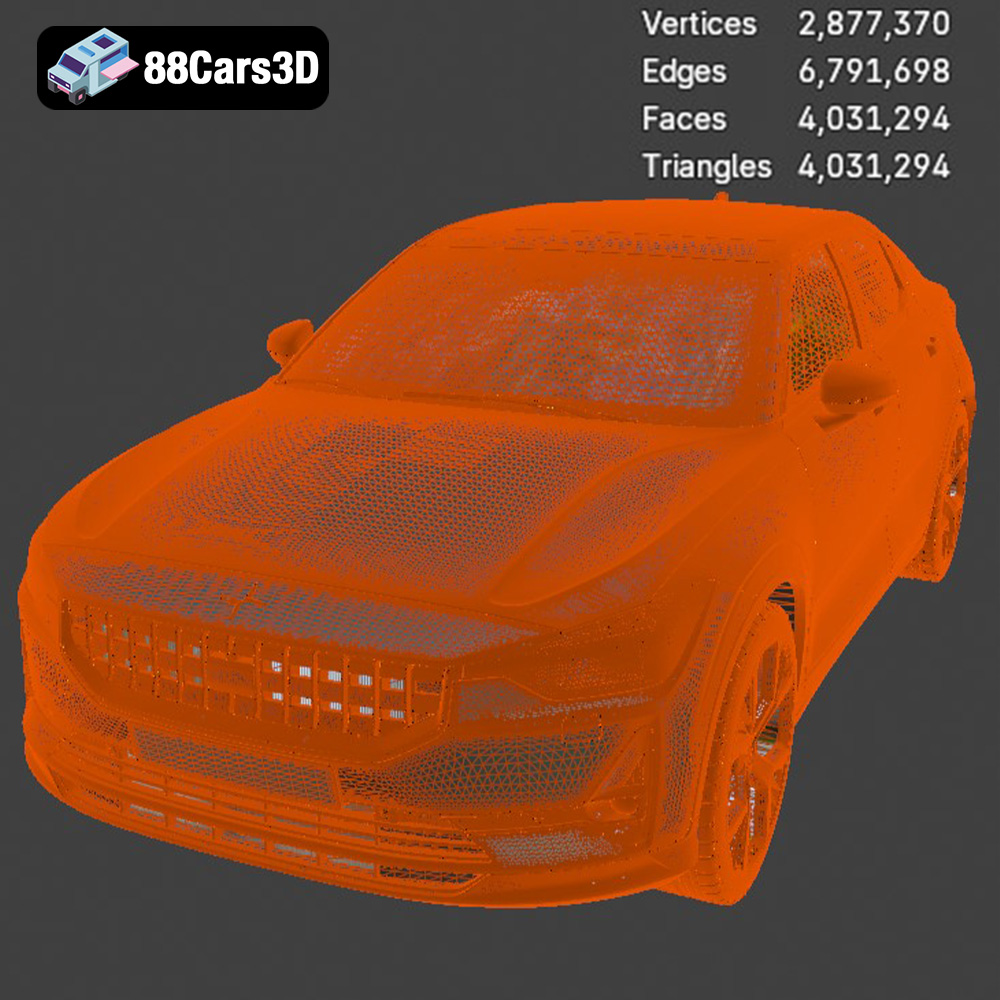
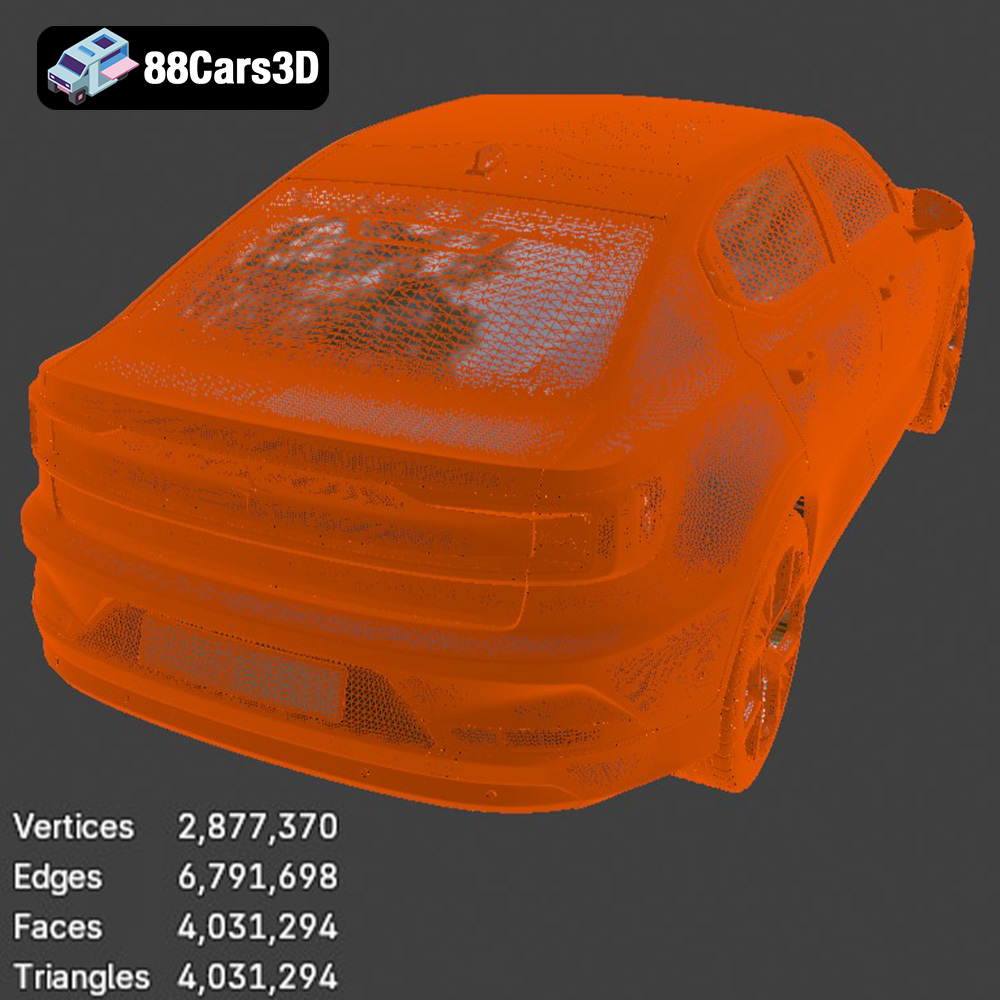
Beyond visual accuracy, technical precision is paramount. Topology refers to the arrangement of polygons (triangles and quads) that form the mesh. An optimized topology, like the ~120,000 triangle count of the Polestar 2 model, strikes a crucial balance. It’s detailed enough for “high-end visual fidelity” in close-up renders, yet efficient enough for “game-ready performance” in real-time engines. This optimization involves minimizing unnecessary polygons while maintaining crucial edge loops for smooth deformations and accurate shading. Furthermore, accurate real-world scale and proper pivot setups for animated components (wheels, steering, suspension) are engineering necessities that ensure the model behaves correctly in interactive environments or animations, setting professional assets apart from amateur creations.
A high-quality 3D car model like the Polestar 2 2020 isn’t just a pretty object; it’s a versatile tool that powers a multitude of digital experiences across industries. Its optimized design and rich detail make it suitable for diverse professional applications, underscoring the value of a meticulously crafted asset from providers like 88cars3d.com.
For game developers, the Polestar 2 model is a ready-to-integrate asset for open-world games, racing titles, and simulators. The “optimized polycount” (~120,000 triangles) is critical for real-time engines like Unreal and Unity, where performance directly impacts gameplay experience. A well-optimized model minimizes draw calls and memory usage without sacrificing visual quality. Imagine the Polestar 2 navigating virtual cityscapes, participating in high-speed races, or serving as a detailed vehicle in a driving simulation. Its detailed exterior and interior, including the “optimized geometry for first-person POV in gaming,” allow for immersive cockpit views, crucial for realistic driving experiences. The separate components for wheels, suspension, and steering also mean it’s ready for advanced physics simulations and animation, offering unparalleled realism.
The capabilities of the Polestar 2 3D model extend significantly into augmented and virtual reality. For “immersive virtual showrooms” and “configurators,” the model can be used to create interactive experiences where potential buyers can explore the car’s features, customize colors and materials, and even “walk around” it in a virtual space. The .glb format, optimized for AR/VR, ensures smooth performance on mobile devices and VR headsets. Imagine using AR to place a virtual Polestar 2 in your driveway, or stepping into a VR environment to experience its “minimalist Scandinavian vegan interior design” and “central portrait-oriented infotainment touchscreen display” as if you were truly inside the vehicle.
Beyond interactive applications, the Polestar 2 model excels in “rendering & visualization.” Marketing agencies can leverage this model for “brand campaigns” and “lifestyle scenes,” placing the car in photorealistic environments to generate stunning promotional material. Architectural visualization studios can integrate the Polestar 2 into their renders to bring life and context to their proposed buildings, showcasing how a modern EV fits into contemporary urban or suburban landscapes. The ability to “change body colors,” “modify tire textures,” and “adjust material finishes” provides immense flexibility for creative directors to align the digital asset perfectly with their vision, achieving “hyper-realistic visualization” for advertisements, brochures, and online content.
Finally, the Polestar 2 model bridges the digital and physical worlds through “3D Printing.” By converting the model to .stl format, hobbyists and designers can create tangible replicas. The provided “3D Print Settings” are invaluable, detailing recommended scales (1:12 / 1:18 / 1:24), optimal layer heights, wall thickness, infill, and crucial support requirements. This level of guidance ensures that even complex parts like the “mirrors, lightblades, and steering wheel” can be printed successfully, allowing for “post-processing” like sanding, priming, and applying “authentic factory colors with metallic finishes” to produce a stunning physical model.
The true value of a premium 3D model lies in its underlying technical specifications and the meticulous craftsmanship that ensures its versatility and longevity across various platforms. The Polestar 2 2020 3D Model exemplifies this approach, offering features that make it a cornerstone asset for any professional.
As highlighted, the model boasts an “optimized topology with an estimated triangle count of 120,000.” This isn’t an arbitrary number; it’s a carefully chosen sweet spot. For real-time applications like games or AR/VR, a lower polycount translates to better frame rates and smoother experiences. However, going too low sacrifices visual detail. 120,000 triangles allow for the accurate representation of the Polestar 2’s intricate curves, the sharp edges of its “signature pixel LED headlights,” and the subtle aerodynamic details, while remaining highly performant. This balance is critical for maintaining visual realism without bogging down real-time engines, making it genuinely “Game-Ready & Optimized.”
The model is built with “real-world scale accuracy based on actual vehicle chassis.” This ensures that when the Polestar 2 is dropped into a scene—be it an architectural render or a game level—it fits proportionally alongside other real-world objects. This attention to detail extends to its animation capabilities. With “proper pivot setup for steering, wheel rotation, and suspension travel,” animators and game developers can instantly integrate the model into physics engines or animation rigs without tedious adjustments. The “separate wheels, suspension, and steering components for animation” further enhance this, allowing for realistic vehicle dynamics and complex cinematics.
A truly complete car model encompasses both exterior and interior. The Polestar 2 model excels here, providing a fully realized vehicle. “Accurate Polestar 2 2020 fastback body geometry” is complemented by a “detailed EV battery pack placement and undercarriage,” which is crucial for authenticity, especially in engineering visualizations or undercarriage camera shots in games. The interior is equally impressive, with a “minimalist Scandinavian vegan interior design,” “accurately modeled steering wheel and digital instrument cluster,” and a “central portrait-oriented infotainment touchscreen display.” This level of interior detail means the model is suitable for “first-person POV in gaming” and high-fidelity virtual tours, offering a complete and immersive experience from every angle.
Seamless integration is key to maximizing efficiency in any 3D production pipeline. The availability of the Polestar 2 2020 3D Model in multiple industry-standard formats ensures it can be dropped into various workflows with minimal friction, empowering artists and developers to focus on creativity rather than compatibility issues.
For users of Blender and 3ds Max, the native .blend and .max files offer the ultimate flexibility. Artists can open the full scene, inspect the model’s construction, and make extensive modifications. This is invaluable for projects requiring bespoke elements, such as custom paint jobs beyond the “factory EV colors,” unique material shaders (matte, gloss, metallic), or integrating the car into highly specific animated sequences. The ability to “adapt lighting for different environments” directly within the native scene files allows for sophisticated studio renders or environmental setups, ensuring the Polestar 2 looks perfect under any condition.
Game developers primarily leveraging Unreal Engine or Unity will find the .fbx and .unreal formats particularly useful. The .fbx format ensures that all geometry, UVs, and materials are transferred correctly, ready for shader setup within the game engine’s PBR workflow. For Unreal, a dedicated .unreal asset often means even more streamlined integration, potentially including pre-configured materials, LODs (Levels of Detail), and physics assets, significantly reducing setup time. The optimized polycount and separate animatable components are perfectly suited for game physics and character interaction, allowing for immediate placement and interaction in virtual worlds.
For augmented reality, virtual reality, and web-based applications, the .glb format is indispensable. Its single-file, optimized nature makes deployment straightforward. Developers can quickly integrate the Polestar 2 into web viewers (e.g., using Three.js or Babylon.js), mobile AR apps (e.g., using ARCore or ARKit), or VR experiences. This enables rapid prototyping of interactive configurators or virtual showrooms, allowing audiences to explore the car from anywhere with an internet connection or a compatible device. The focus here is on efficient delivery and smooth interaction, capabilities intrinsic to the .glb format.
The .stl format, coupled with the detailed 3D print settings provided in the product description, creates a clear pathway from digital model to physical object. Users can simply load the .stl into their slicing software, apply the recommended settings (layer height, supports, infill), and print a scaled replica. This is not just for hobbyists; product designers and engineers can use this for rapid prototyping or creating physical mock-ups for presentations. The specific guidance on “print orientation” and “post-processing” demonstrates a thorough understanding of the 3D printing workflow, ensuring successful results.
In the evolving digital landscape, high-quality 3D assets are no longer a luxury but a fundamental necessity for achieving professional-grade results across various industries. From hyper-realistic automotive rendering to immersive game development and groundbreaking AR/VR experiences, the precision, optimization, and versatility of a well-crafted 3D model are paramount.
The Polestar 2 2020 3D Model stands as a testament to this commitment to excellence. Its meticulous detailing, optimized topology, and availability in a comprehensive range of file formats—from .blend and .max for extensive customization, to .fbx and .unreal for real-time engines, and .glb for web and AR/VR, all the way to .stl for 3D printing—make it an exceptionally adaptable and valuable asset. It’s designed to seamlessly integrate into diverse professional workflows, saving countless hours of development and ensuring top-tier visual fidelity in any application.
Whether you’re an architect enhancing a visualization, a game developer building an open-world environment, a marketing specialist crafting a compelling campaign, or an AR/VR innovator designing the next interactive experience, a premium 3D car model like the Polestar 2 offers an unparalleled foundation. By choosing meticulously crafted assets from trusted marketplaces like 88cars3d.com, you invest not just in a model, but in efficiency, quality, and the limitless potential of your creative projects.
Discover the sleek and innovative Polestar 2 2020, a premium all-electric fastback that redefines Scandinavian minimalist design and sustainable performance. This cutting-edge EV features iconic visual elements such as signature pixel LED headlights, a striking full-width taillight blade, frameless mirrors, and a distinctively aerodynamic profile that sets it apart in the modern electric vehicle market.
This premium 3D model boasts an optimized topology with an estimated triangle count of 120,000, striking the perfect balance between high-end visual fidelity and game-ready performance. Crafted with exceptional attention to detail, it is perfectly suited for high-end game development, interactive AR/VR experiences, animation, and hyper-realistic visualization.
Perfect for urban racing games, sustainable tech showcases, architectural visualizations, and virtual showrooms.
.blend, .fbx, .obj, .glb, .stl, .ply, .unreal, .max
Tags:
polestar, polestar-2, ev, electric-car, fastback, game-ready, low-poly, optimized, car-3d-model, game-asset, rendering, vr-ar, blend, fbx, obj, glb, stl, ply, unreal, maxVespa VNB 125-B 3D Model 3D Printable STL
$39.99
.blend
.ev
.fastback
.fbx
.glb
.max
.obj
.ply
.polestar
.rendering
.stl
.unreal
car-3d-model
electric-car
game asset
game-ready
low-poly
optimized
polestar-2
VR/AR