Get 20% OFF All Premium 3D & STL Models!

In the high-octane world of digital content creation, the demand for unparalleled realism and technical precision is constant. Whether you’re crafting a cutting-edge racing game, a stunning architectural visualization, or an immersive virtual reality experience, the quality of your 3D assets forms the bedrock of your project’s success. Automotive models, in particular, present a unique challenge, requiring an intricate balance of artistic accuracy and technical optimization.
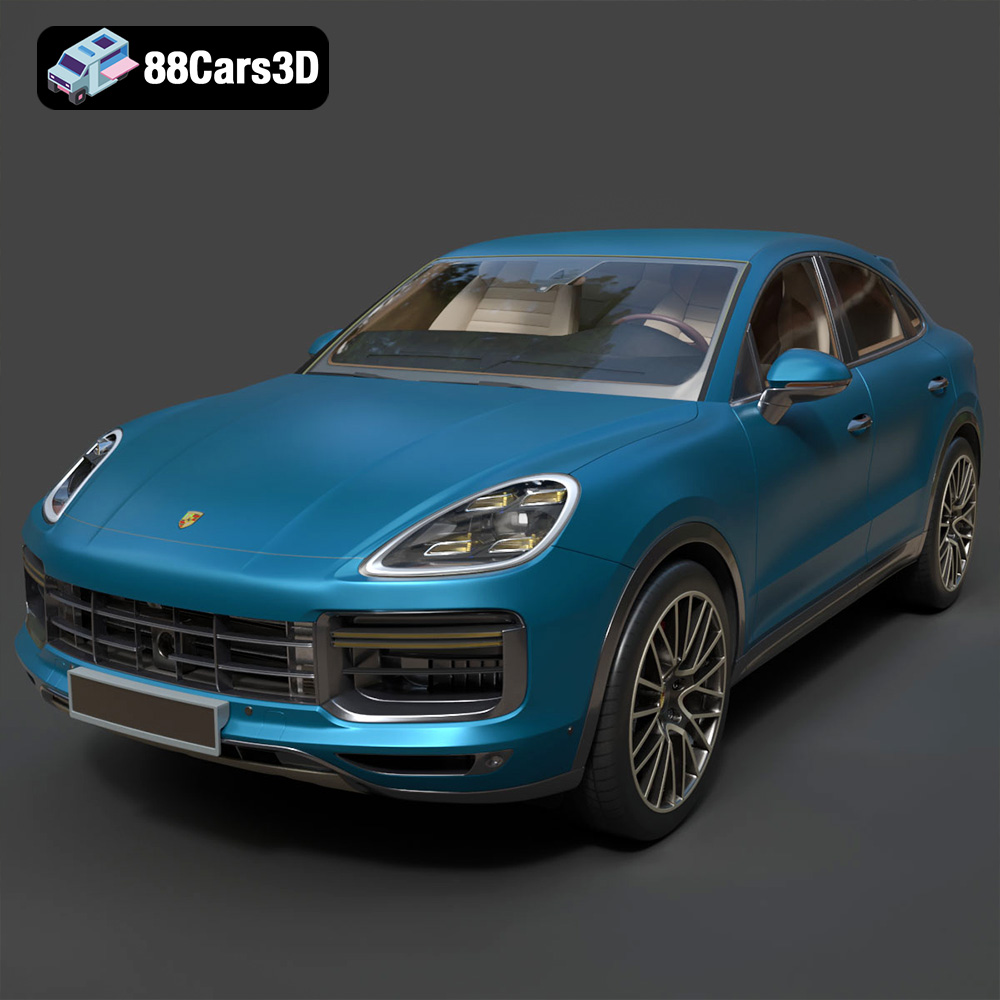
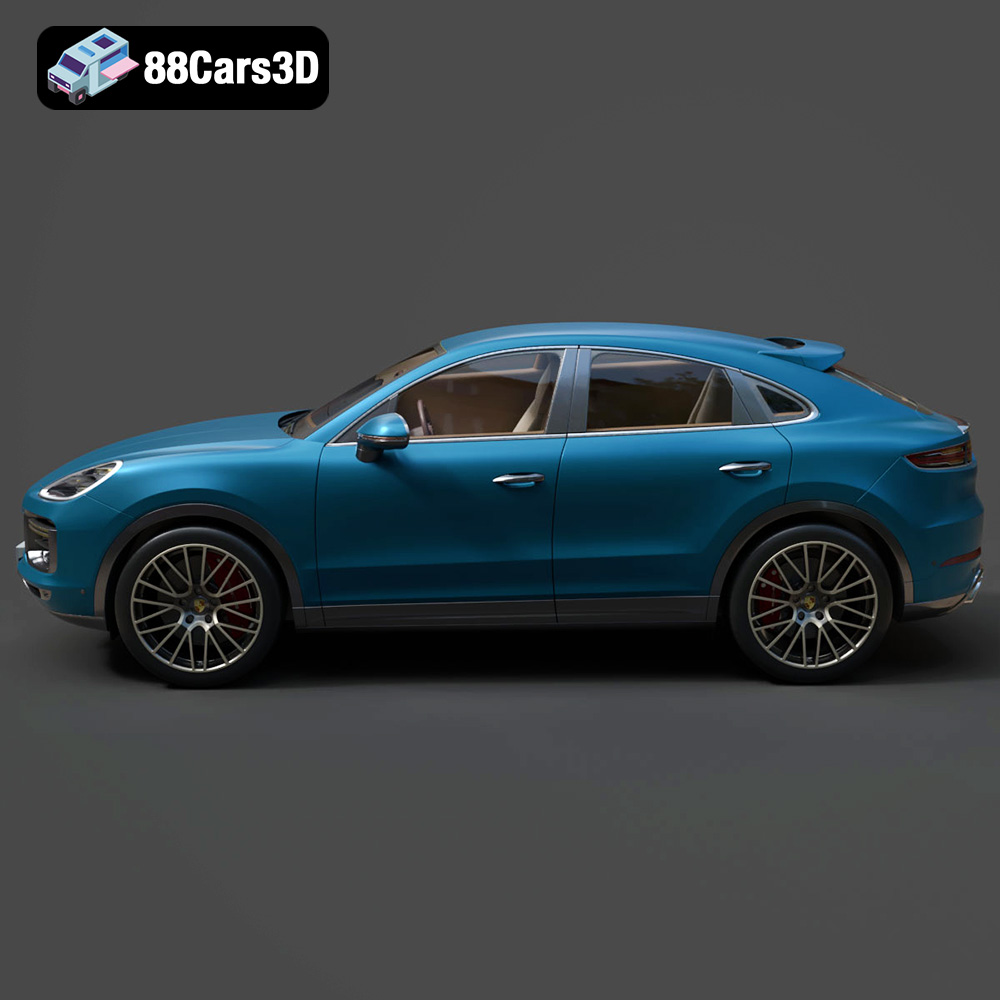
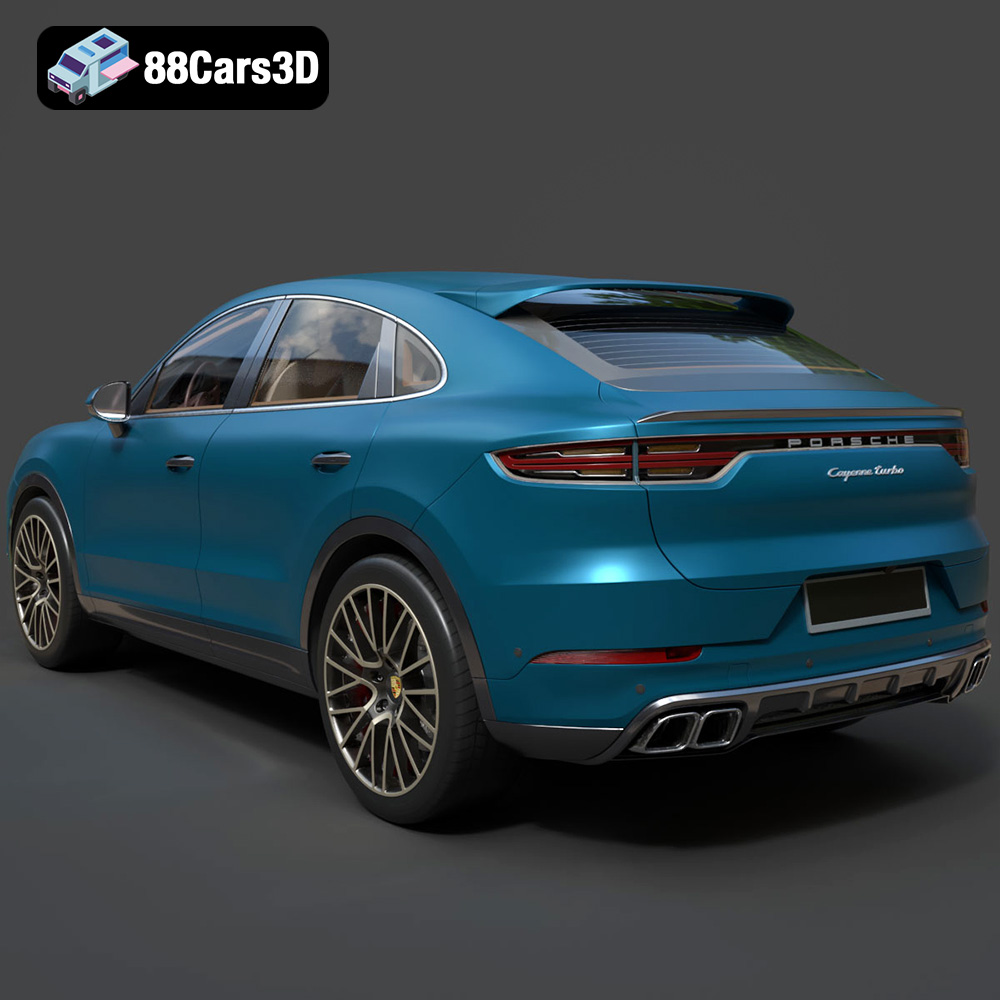
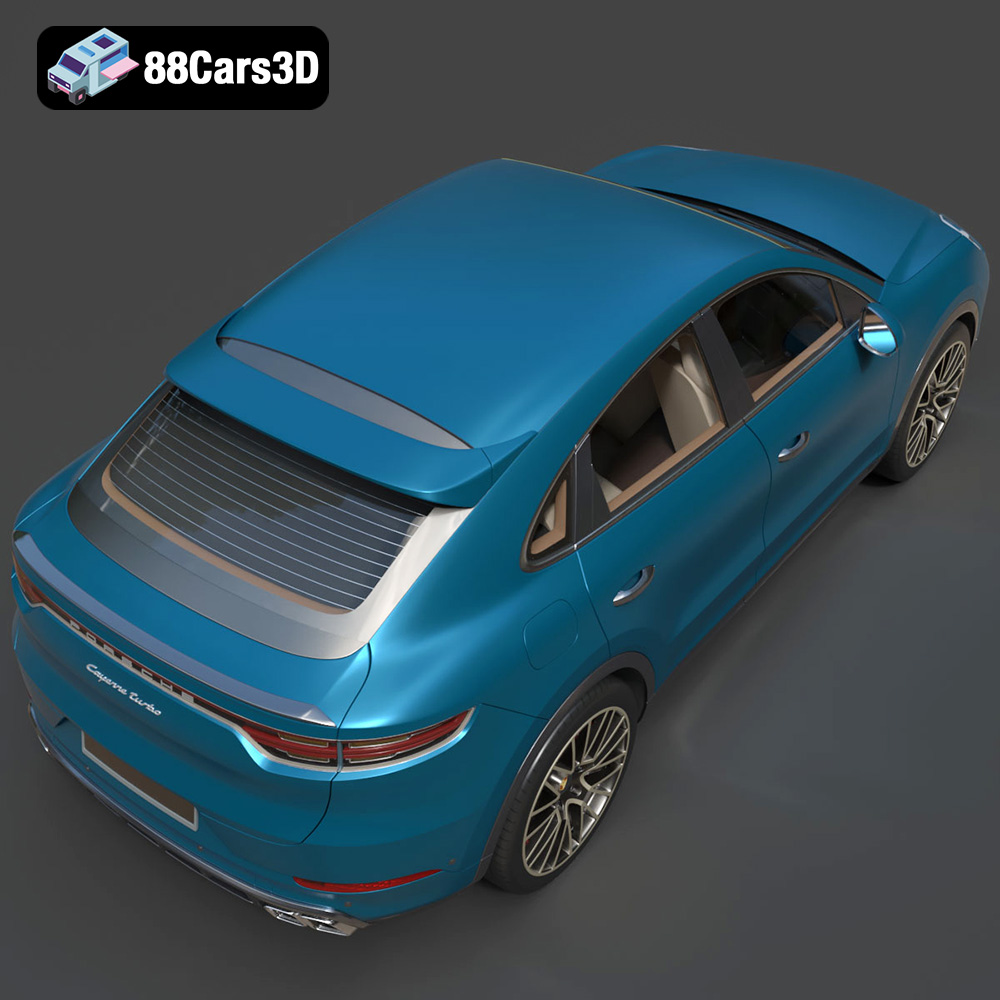
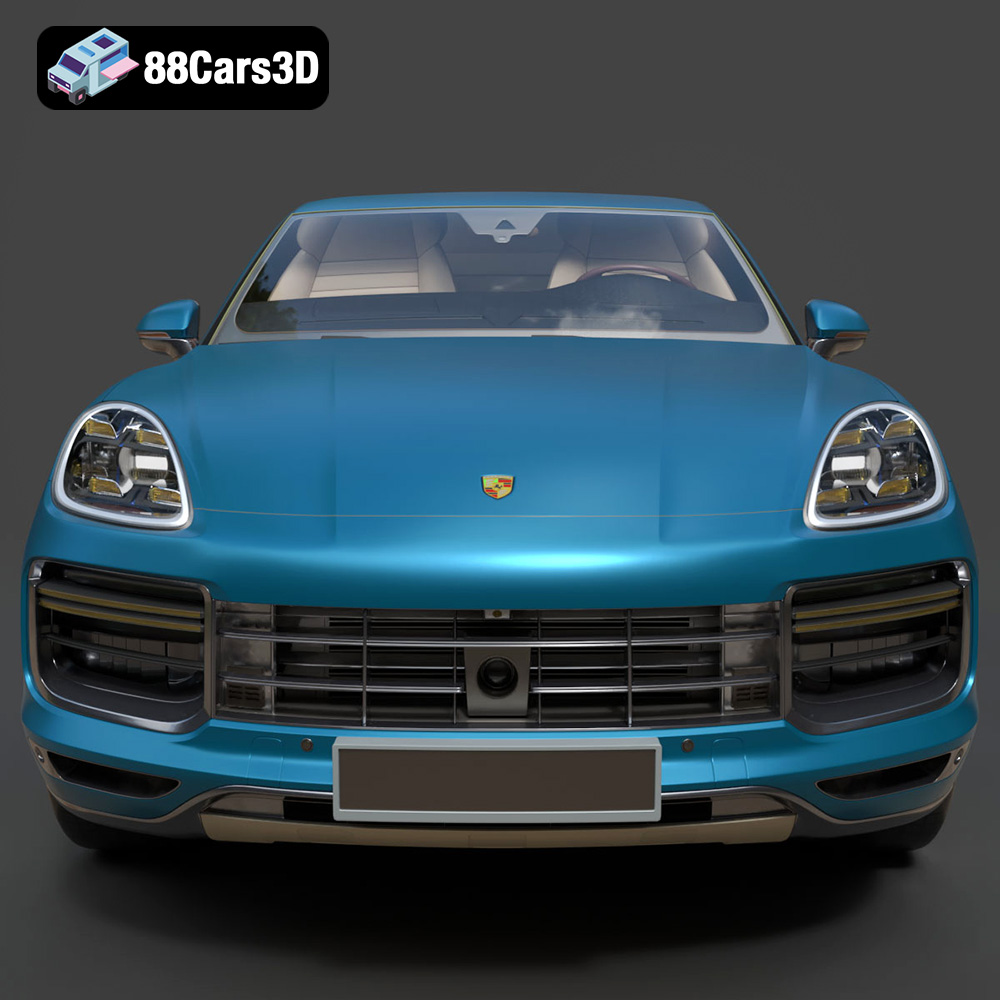
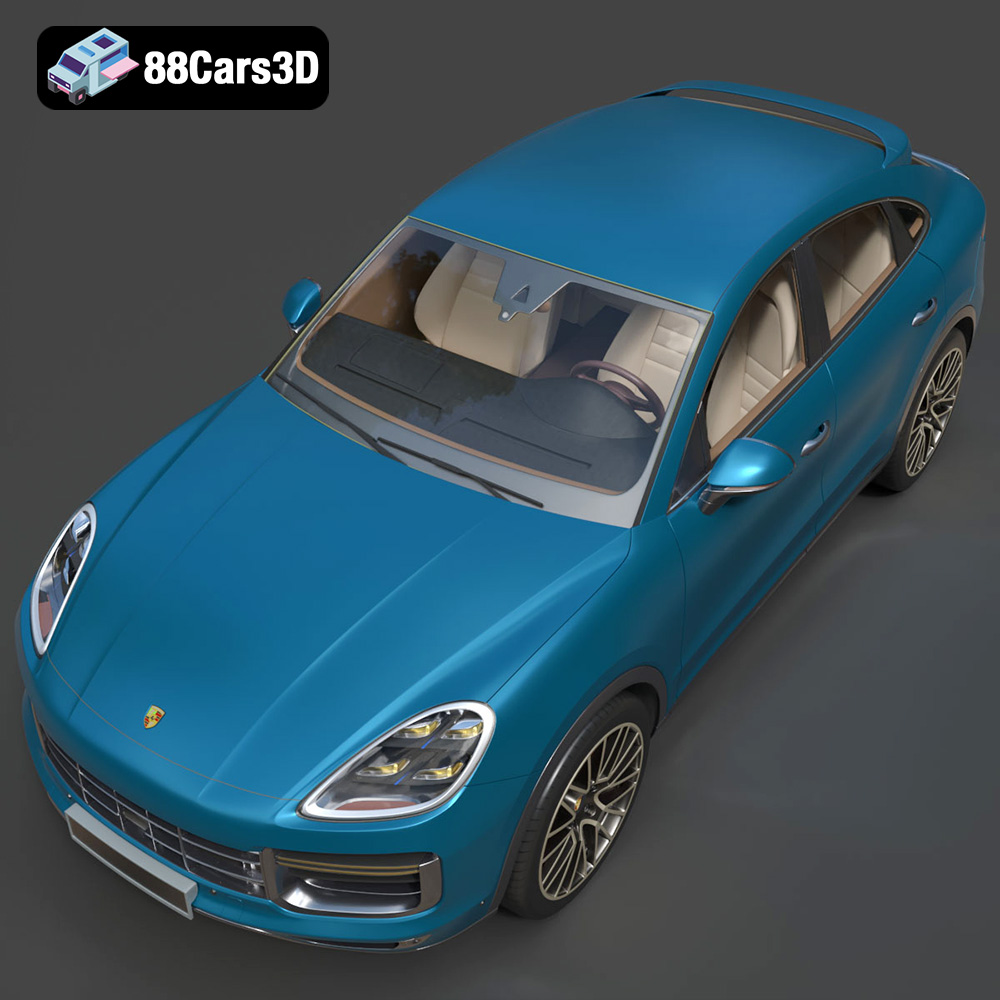
Few vehicles embody the fusion of luxury, performance, and striking aesthetics quite like the Porsche Cayenne Turbo Coupe 2020. Its athletic stance, dramatically sloping roofline, and legendary design DNA make it a captivating subject for any digital artist or developer. Capturing such an iconic vehicle in a 3D model demands meticulous attention to detail, from its prominent front air intakes to the dynamic active rear spoiler and signature continuous LED taillight strip. This is precisely where professional-grade assets, such as the Porsche Cayenne Turbo Coupe 2020 3D Model available on 88cars3d.com, become indispensable. This comprehensive model is engineered not just for visual fidelity, but for seamless integration into the most demanding production pipelines, making it a cornerstone for serious automotive rendering and game asset development.
Creating a digital replica of a modern automobile is far more complex than simply sculpting its shape. It involves a deep understanding of industrial design, material science, and computational geometry. A truly professional 3D car model goes beyond surface aesthetics, encompassing structural integrity, physical accuracy, and technical readiness for various applications.
The first critical step in developing any 3D car model is achieving absolute accuracy in its proportions and design language. Automotive manufacturers invest countless hours in styling, aerodynamics, and ergonomic design. A high-quality 3D model must reflect these efforts flawlessly. The Porsche Cayenne Turbo Coupe 2020 3D Model, for instance, replicates the vehicle’s accurate frame geometry and aerodynamic proportions, ensuring that its digital counterpart conveys the same sense of power and elegance as the physical car. This includes everything from the subtle curvature of the body panels to the precise angles of the headlights and the intricate design of the distinctive 22-inch alloy wheels. Such fidelity is crucial for projects where authenticity is paramount, such as brand marketing or automotive configurators.
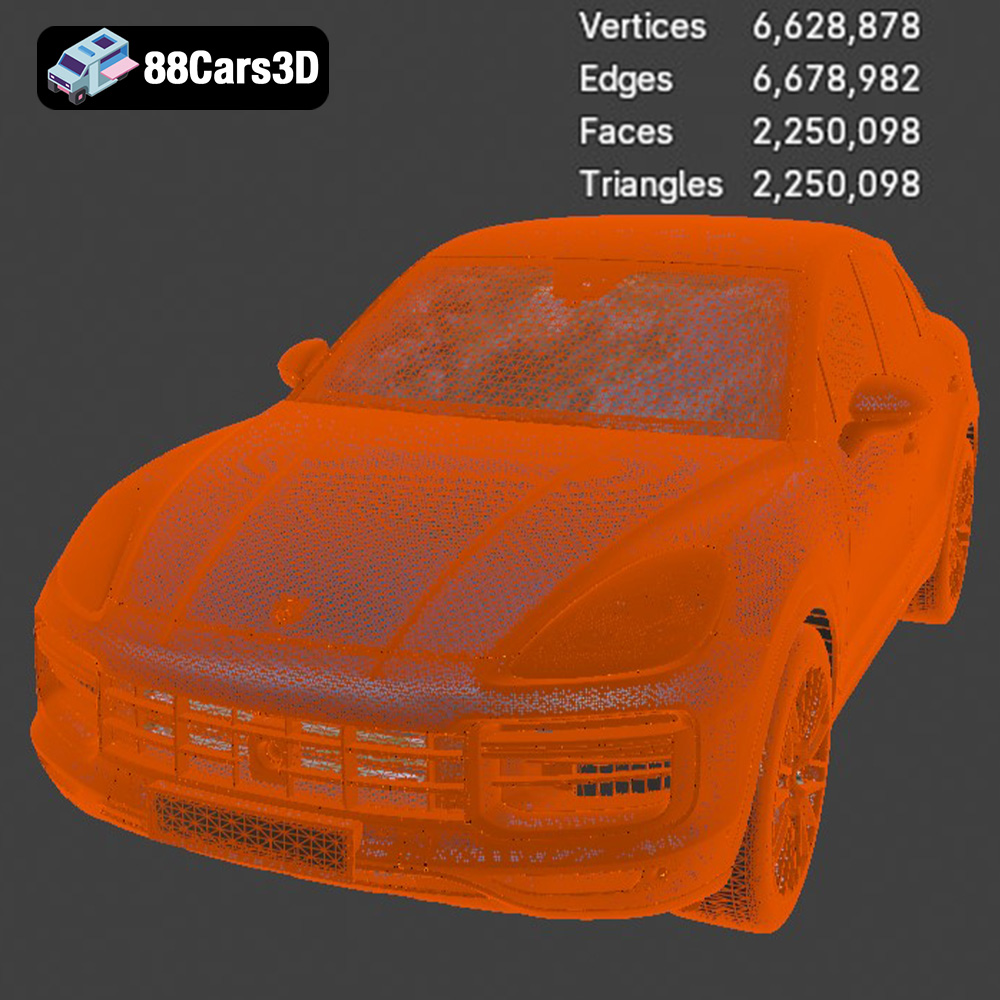
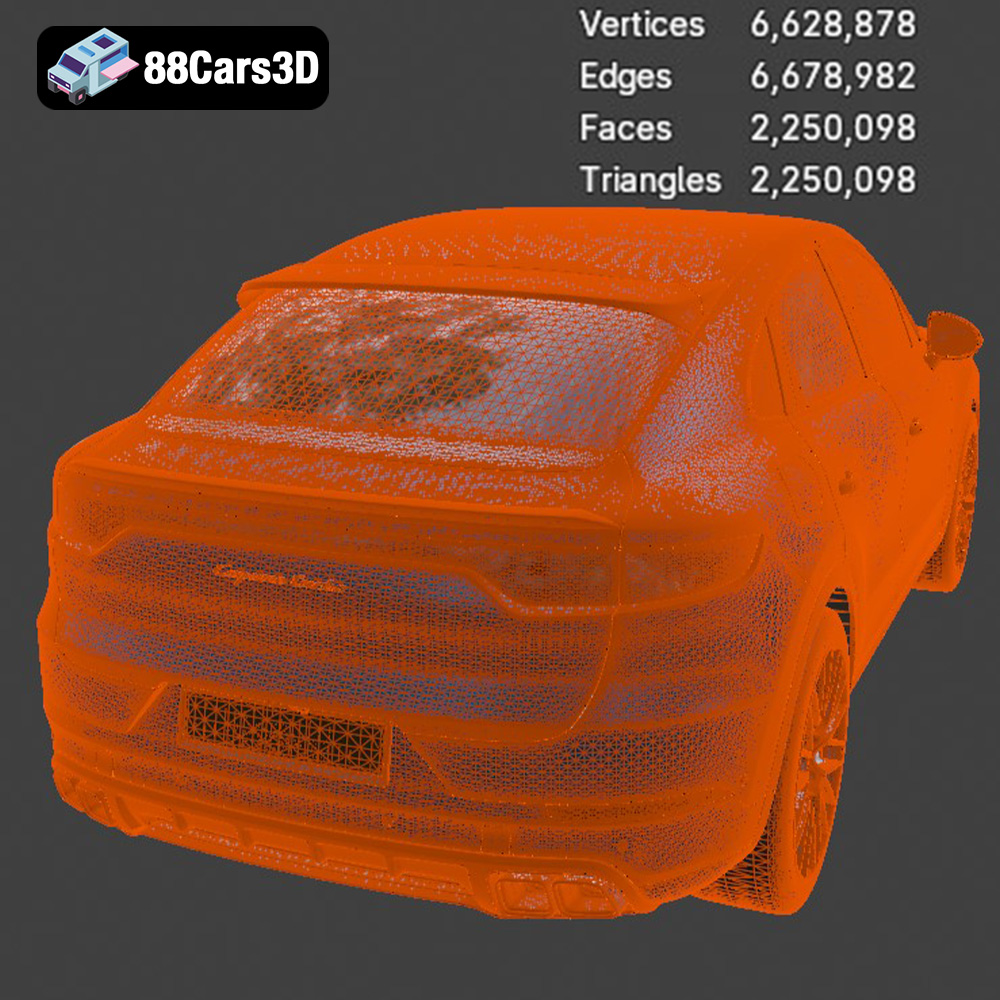
While accuracy is key, it must be coupled with smart technical execution. A raw CAD model, though geometrically perfect, is often unsuitable for real-time applications or even efficient rendering due to its extremely high polygon count and often triangulated, non-optimized topology. Professional 3D artists expertly retopologize these models, creating clean, quad-based meshes that are both efficient and aesthetically pleasing under subdivision surfaces. The Porsche Cayenne Turbo Coupe 2020 3D Model exemplifies this balance with an optimal triangle count of approximately 450,000. This “game-ready” optimization strikes a perfect balance, delivering spectacular visual fidelity without bogging down modern real-time engines like Unreal or Unity. The geometry is intelligently structured to reflect light precisely across its curved surfaces, a critical detail for realistic automotive rendering.
Beyond the overall form, it’s the meticulous attention to detail that elevates a good 3D model to an exceptional one. For the exterior, this includes the detailed twin-turbo V8 engine bay layout, the signature quad exhaust system, aggressive rear diffuser, high-fidelity LED Matrix headlights, and the continuous rear taillight bar. The model also features highly detailed brake calipers and cross-drilled rotors, along with accurately modeled air suspension components and undercarriage, all critical for close-up shots or animated sequences. Inside, the Porsche Cayenne Turbo Coupe 2020 3D Model boasts authentic 18-way adaptive sport seats with intricate stitching, a detailed GT sports steering wheel, and the Porsche Advanced Cockpit, complete with detailed digital instrument clusters and infotainment screens. Even the center console with its modeled shift lever and climate controls is faithfully recreated, making the interior ideal for close-up first-person POV in gaming and VR applications.
One of the most crucial aspects of working with 3D assets, especially high-quality 3D car models, is understanding the various file formats and their specific applications. Choosing the right format ensures compatibility, optimizes workflow, and guarantees the integrity of your digital assets across different software and platforms. The Porsche Cayenne Turbo Coupe 2020 3D Model provides a comprehensive suite of formats, catering to virtually every professional need.
The .blend format is native to Blender, a powerful open-source 3D creation suite. When you download a .blend file, you’re not just getting the mesh; you’re getting a fully editable Blender scene. This includes all geometry, materials, textures, lighting setups, cameras, animation data, and even modifiers and rigging. For artists primarily working within the Blender ecosystem, this format offers maximum flexibility. You can easily dissect the model, understand its construction, adjust materials, or use it as a base for custom animations and renderings without any conversion headaches. It’s the ideal choice for in-depth scene integration and modification within Blender.
FBX (Filmbox) is an industry-standard proprietary file format developed by Autodesk, widely used for exchanging 3D content between various software applications. It’s particularly favored in game development and real-time visualization due to its robust support for geometry, materials, textures, animations, and skeletal data. When importing an .fbx file into engines like Unreal Engine or Unity, you can expect excellent preservation of transforms, hierarchies, and animation data, making it the go-to format for bringing animated 3D car models into game environments. Its versatility makes it indispensable for any pipeline involving multiple software.
OBJ (or .obj) is a simple, universal geometry definition file format that has been around for decades. It’s excellent for exchanging static mesh data between almost any 3D software. An .obj file typically stores vertex positions, UV coordinates, normals, and face information. Material definitions are often stored in a separate .mtl (material) file alongside the .obj. While it doesn’t support animation or rigging, its widespread compatibility makes it a safe choice for static assets or as a fallback when other formats encounter issues. It’s a fundamental format for archival and basic cross-platform mesh transfer.
GLB is the binary version of the GL Transmission Format (glTF), an open-standard, royalty-free specification for 3D scenes and models. Often referred to as the “JPEG of 3D,” glTF and .glb are designed for efficient transmission and loading of 3D content, especially on the web and in mobile environments. A .glb file packages all assets (geometry, materials, textures, animations) into a single binary file, making it incredibly easy to share and integrate into AR/VR experiences, web viewers, and applications where file size and load times are critical. For interactive configurators or mobile AR experiences of the Porsche Cayenne Turbo Coupe 2020 3D Model, .glb is the superior choice.
STL (stereolithography) is a standard file format used for 3D printing. It represents a 3D model as a series of connected triangles (a tessellation) that define its surface geometry. Unlike other formats, .stl files typically contain no color, texture, or material information – just the raw geometry. For hobbyists, designers, or automotive collectors looking to bring the Porsche Cayenne Turbo Coupe 2020 3D Model into the physical world, the .stl format is essential. It’s directly readable by 3D slicing software, preparing the model for additive manufacturing.
PLY (Polygon File Format or Stanford Triangle Format) is another popular format for storing 3D data, particularly from 3D scanners or for CAD applications. Like .obj, it defines geometry, but it can also store a wider range of properties for each vertex, face, or edge, such as color, transparency, surface normals, texture coordinates, and confidence values. It’s often used when precision and additional data attributes are important, making it useful for scientific visualization, analysis, or scenarios where a highly detailed and data-rich mesh is required.
The .unreal format, or more accurately, assets packaged directly for Unreal Engine, represents pre-configured assets optimized for the engine’s specific requirements. This often means the model comes with proper material setups, collision meshes, LODs (Levels of Detail), and potentially even Blueprints or animation systems ready to be dropped into an Unreal project. While typically imported via .fbx, an “unreal” specific package often refers to an asset that has already undergone the engine’s import and optimization process, saving significant setup time for game developers. For a 3D car model intended for game development, this pre-optimized state is invaluable.
The .max format is the native file format for Autodesk 3ds Max, a leading software for 3D modeling, animation, rendering, and compositing. A .max file contains a complete 3ds Max scene, including all models, materials, textures, lighting, cameras, animations, and scene settings. For professionals using 3ds Max for high-end automotive rendering and complex animations, the .max file provides full editability and access to the original scene setup, allowing for advanced customization, integration into existing scenes, and leveraging specific 3ds Max features and renderers like V-Ray or Corona.
The true value of a versatile 3D asset lies in its ability to seamlessly integrate into diverse professional workflows. The Porsche Cayenne Turbo Coupe 2020 3D Model is engineered with this principle at its core, offering optimization and compatibility across leading software and engines.
For architectural visualization studios and advertising agencies requiring photorealistic imagery, the .max file format is a powerhouse. Artists can load the model into 3ds Max and leverage advanced rendering engines like V-Ray or Corona Renderer. The model’s premium topology and intelligent geometry structure ensure that light interacts accurately with its surfaces, producing stunning reflections and refractions. Designers can easily set up studio lighting, place the vehicle in dynamic environments, and experiment with material finishes (matte, gloss, metallic, carbon fiber accents) to match iconic Porsche factory paints like Carmine Red or Lava Orange. The real-world scale accuracy ensures the car fits perfectly within scene environments, making it ideal for creating high-end lifestyle scenes, dramatic studio lighting setups, and compelling automotive brand campaigns.
The realm of game development demands assets that are not only visually impressive but also highly optimized for real-time performance. With approximately 450,000 triangle count, the Porsche Cayenne Turbo Coupe 2020 3D Model strikes a crucial balance, offering high-end visual realism suitable for AAA titles while remaining efficient for modern game engines. The included .fbx and .unreal formats are critical here. The model comes with proper pivot setups for steering, wheel rotation, suspension travel, and active aero deployment, allowing game developers to animate these components seamlessly. This modularity is vital for implementing realistic physics, driving mechanics, and in-game customizations. Whether building open-world racing games, detailed car simulators, or even populating virtual cities with realistic traffic, this model provides a robust foundation for game assets that perform and impress.
The burgeoning fields of Augmented Reality (AR), Virtual Reality (VR), and browser-based 3D experiences require lightweight, efficient models that can load quickly and run smoothly on diverse hardware, including mobile devices. The .glb format included with the Porsche Cayenne Turbo Coupe 2020 3D Model is specifically optimized for these applications. Its single-file nature and efficient data compression make it perfect for immersive virtual showrooms, where customers can explore the car in a 360-degree environment, or for interactive configurators that allow real-time customization of colors, wheels, and interior features. Mobile AR applications can overlay this detailed model onto the real world, providing dynamic and engaging product showcases that would be impossible with heavier, less optimized assets.
The versatility of a truly professional 3D model extends beyond digital screens, offering tangible outputs and endless creative freedom. The Porsche Cayenne Turbo Coupe 2020 3D Model embraces this, providing options for physical creation and extensive digital customization.
For automotive enthusiasts, collectors, or product designers, the ability to 3D print a detailed replica of their favorite vehicle is a significant advantage. The inclusion of the .stl format makes the Porsche Cayenne Turbo Coupe 2020 3D Model perfectly suited for this. The product description provides comprehensive 3D print settings, recommending scales like 1:12, 1:18, or 1:24. It emphasizes the benefits of resin printing (SLA/DLP) for capturing fine exterior details due to its precision. Critical parameters like layer height (0.04–0.12 mm), wall thickness (1.2–2.0 mm), and infill (20–30%) are suggested, ensuring a robust print. Furthermore, guidance on supports for intricate parts like the exhaust, side mirrors, and wheels, along with print orientation strategies for structural integrity, empowers users to achieve high-quality physical models. Post-processing suggestions, including sanding, priming, and applying authentic Porsche factory colors, further enhance the realism of the printed model.
Digital artists and developers rarely use an asset “as is” without some degree of personalization. The Porsche Cayenne Turbo Coupe 2020 3D Model is designed with extensive customization in mind. Users can effortlessly change body colors to match any iconic Porsche factory paint or even apply custom wraps, allowing for unique visual branding or thematic adaptation. The ability to modify tire textures between high-performance street tread and winter tire variants adds a layer of realism and context, crucial for diverse scenes or game environments. Adjusting material finishes — whether matte, gloss, metallic, or integrating carbon fiber accents — allows for precise aesthetic control. Furthermore, adapting lighting for daytime running lights, nighttime beams, and braking scenarios provides dynamic control over the vehicle’s appearance in different conditions, making it an incredibly flexible asset for any creative project.
The practical application of a high-quality 3D car model spans numerous industries, demonstrating its indispensable role in modern digital content creation. The Porsche Cayenne Turbo Coupe 2020 3D Model from 88cars3d.com can be found at the heart of many professional endeavors.
Leading automotive brands and advertising agencies constantly seek ways to showcase new vehicles before physical prototypes are ready, or to create stunning visuals for marketing campaigns that go beyond traditional photography. This 3D model is ideal for generating high-impact renders and animations for commercials, online configurators, and interactive marketing experiences. Imagine a detailed fly-around animation of the Cayenne Turbo Coupe, rendered with breathtaking realism, highlighting its features and performance in a digital environment – all without the need for a physical car or expensive photoshoot logistics. This delivers unparalleled creative control and cost efficiency.
Architectural visualization studios frequently need to populate their urban or residential scene renders with realistic vehicles to convey a sense of scale, activity, and luxury. The Porsche Cayenne Turbo Coupe 2020 3D Model, with its real-world scale and high fidelity, is perfect for this. Placing it in front of a luxury home or on a vibrant streetscape instantly elevates the realism and aspirational quality of the visualization. In urban planning, these models can simulate traffic flow or demonstrate the visual impact of new developments, adding a layer of authenticity to planning proposals and presentations.
Beyond entertainment, high-fidelity 3D car models are crucial for professional simulators used in driver training, engineering analysis, and even autonomous vehicle development. The optimized geometry and accurate physical properties of the Cayenne Turbo Coupe 2020 3D Model make it an excellent candidate for creating immersive driving experiences where vehicle dynamics and visual realism are critical. For engineering firms, such models can be used to study vehicle behavior in virtual environments, test new designs, or develop advanced control systems without the need for expensive physical prototypes, accelerating innovation and reducing development costs.
In the dynamic landscape of 3D content creation, the availability of technically sound, visually stunning, and highly versatile assets is paramount. The journey from concept to a polished digital product is often paved with challenges, but with the right tools, these obstacles transform into opportunities for innovation. The Porsche Cayenne Turbo Coupe 2020 3D Model stands as a testament to the meticulous craftsmanship and technical expertise required for professional-grade 3D car models.
From its accurate design and optimized topology to its comprehensive suite of file formats and extensive customization options, this model is a robust solution for a wide array of applications. Whether you are aiming for photorealistic automotive rendering in 3ds Max, seamless integration into a game engine like Unreal, or creating engaging AR/VR experiences, this asset is designed to meet and exceed professional expectations. Even for those looking to bridge the digital and physical divide through 3D printing, the model offers specific guidance to achieve tangible, high-quality replicas.
Investing in high-quality 3D car models like the Porsche Cayenne Turbo Coupe 2020 is not merely about acquiring an asset; it’s about empowering your creative and development teams with precision-engineered tools that accelerate workflows, enhance visual fidelity, and ultimately deliver superior results. Explore this exceptional model and many other professional-grade game assets and rendering solutions today at 88cars3d.com, and take your projects to the next level of realism and performance.
Experience the ultimate fusion of sports car performance and SUV versatility with the Porsche Cayenne Turbo Coupe 2020. This exceptional 3D model captures the striking athletic stance, the dramatically sloping coupe-style roofline, and the legendary Porsche design DNA. From its prominent front air intakes to the dynamic active rear spoiler and signature continuous LED taillight strip, every iconic visual element has been meticulously recreated to honor this high-performance luxury powerhouse. Crafted with premium topology and an optimal triangle count, this 3D model delivers spectacular visual fidelity while maintaining exceptional game-ready optimization. The geometry is intelligently structured to reflect light precisely across its curved surfaces, making it a highly versatile asset for developers and artists. Whether you are building an interactive configurator or placing background traffic in a cinematic sequence, the model’s efficient polycount ensures smooth performance in modern real-time engines. Perfect for open-world racing games, luxury architectural visualizations, high-end commercial rendering, and immersive virtual reality showrooms.
$39.99
.blend
.fbx
.glb
.luxury suv
.max
.obj
.ply
.porsche
.rendering
.stl
.unreal
car-3d-model
cayenne-turbo-coupe-2020
game asset
game-ready
low-poly
optimized
performance suv
VR/AR