Mastering Automotive 3D: From Classic Renders to Game-Ready Assets
In the dynamic world of 3D design and digital content creation, the allure of automotive subjects remains timeless. From hyper-realistic visualizations for marketing campaigns to meticulously optimized vehicles for immersive gaming experiences, the demand for high-quality 3D car models is constant. Capturing the essence of a vehicle, whether a modern supercar or a vintage icon, requires a blend of artistic skill and technical precision. It’s about more than just shapes; it’s about conveying history, engineering, and character through polygons and textures.
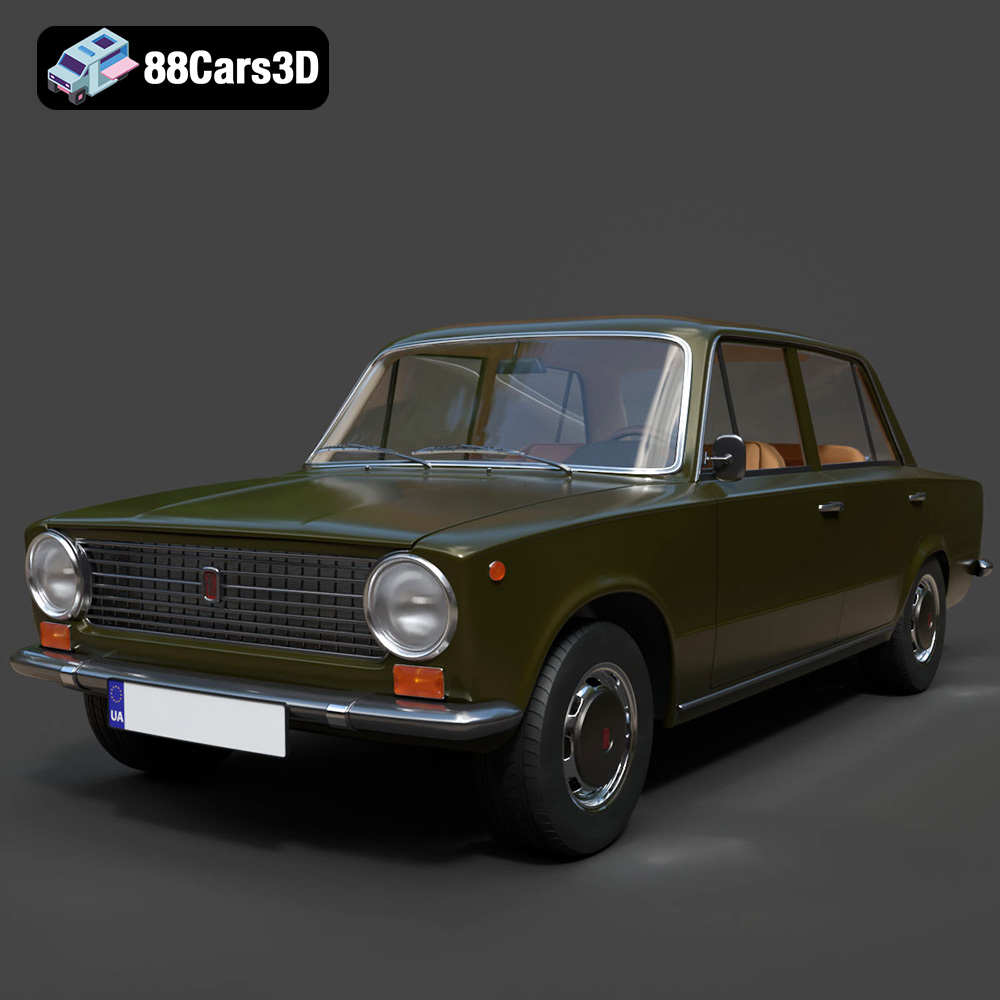
Today, we delve into the intricate process of creating, optimizing, and utilizing premium 3D vehicle assets, focusing on a true classic that epitomizes mid-century Italian design: the Fiat 124 Mk1 1966. This iconic sedan, celebrated for its “boxy but elegant styling” and revolutionary lightweight construction, offers a perfect case study for understanding what makes a truly exceptional 3D car model. Whether you’re a game developer seeking authentic period vehicles, an architect looking to populate a historical scene, or a visualization artist aiming for photorealism, models like the Fiat 124 Mk1 1966 3D Model found on platforms like 88cars3d.com provide an invaluable foundation for your projects.
The Art of Digital Preservation: Capturing Automotive Heritage in 3D
The journey of bringing a classic car into the digital realm is a meticulous process of historical research, artistic interpretation, and technical execution. It’s an act of digital preservation, ensuring that the legacy of iconic automobiles endures in interactive and visually stunning forms. The Fiat 124 Mk1, with its distinctive silhouette and engineering innovations, presents a fascinating challenge and opportunity for 3D artists.
Recreating Icons: The Fiat 124 Mk1 1966 Example
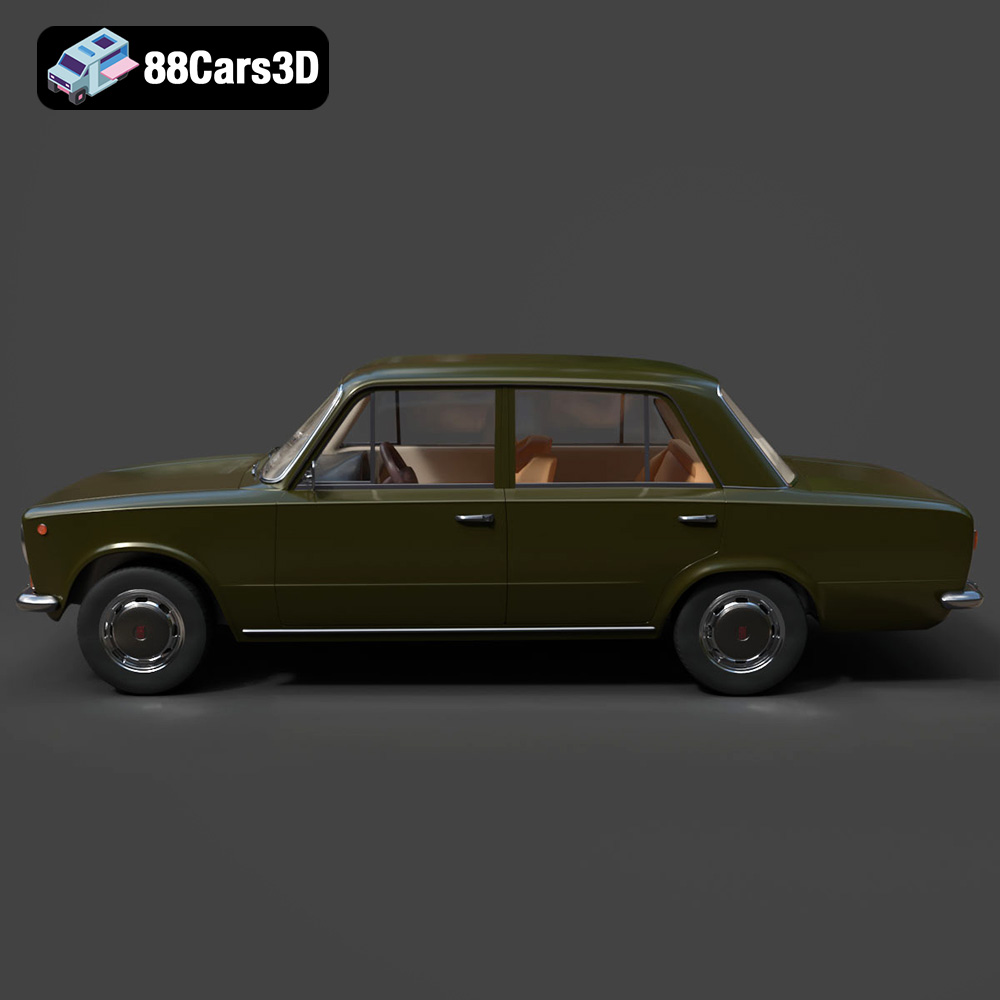
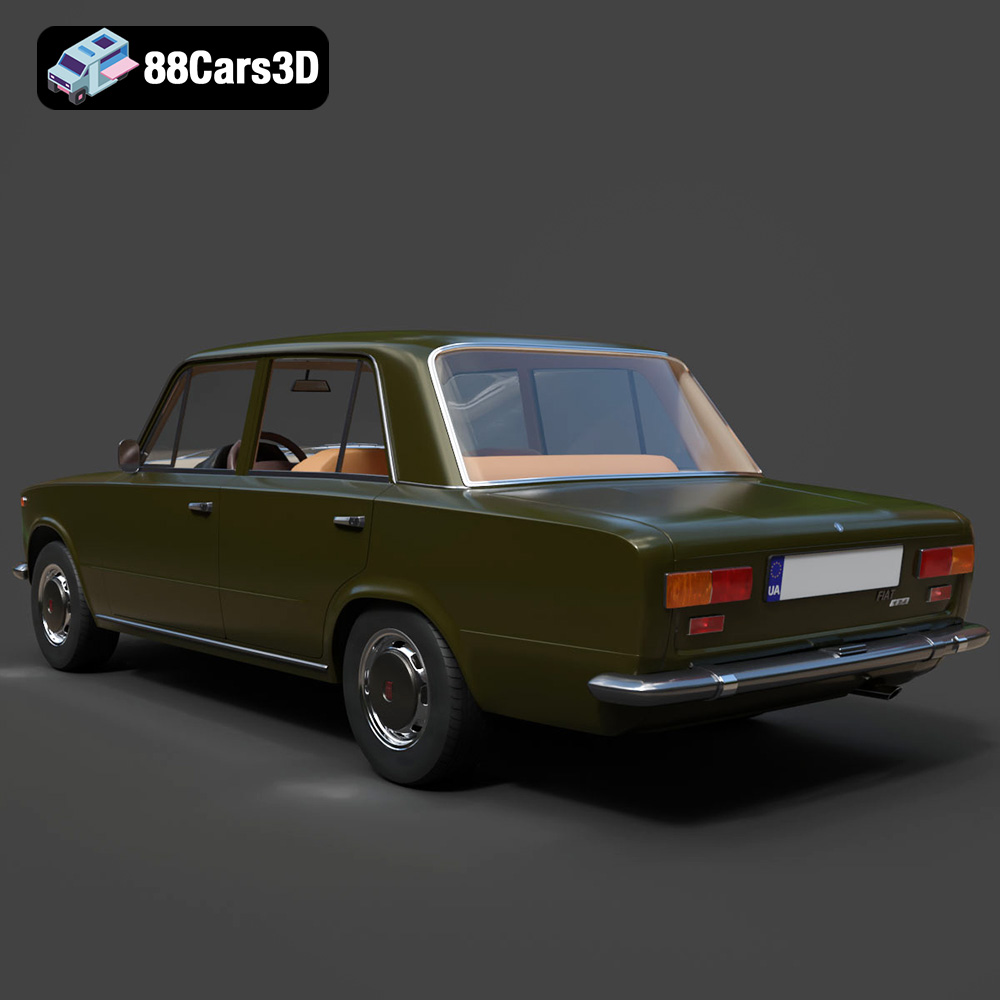
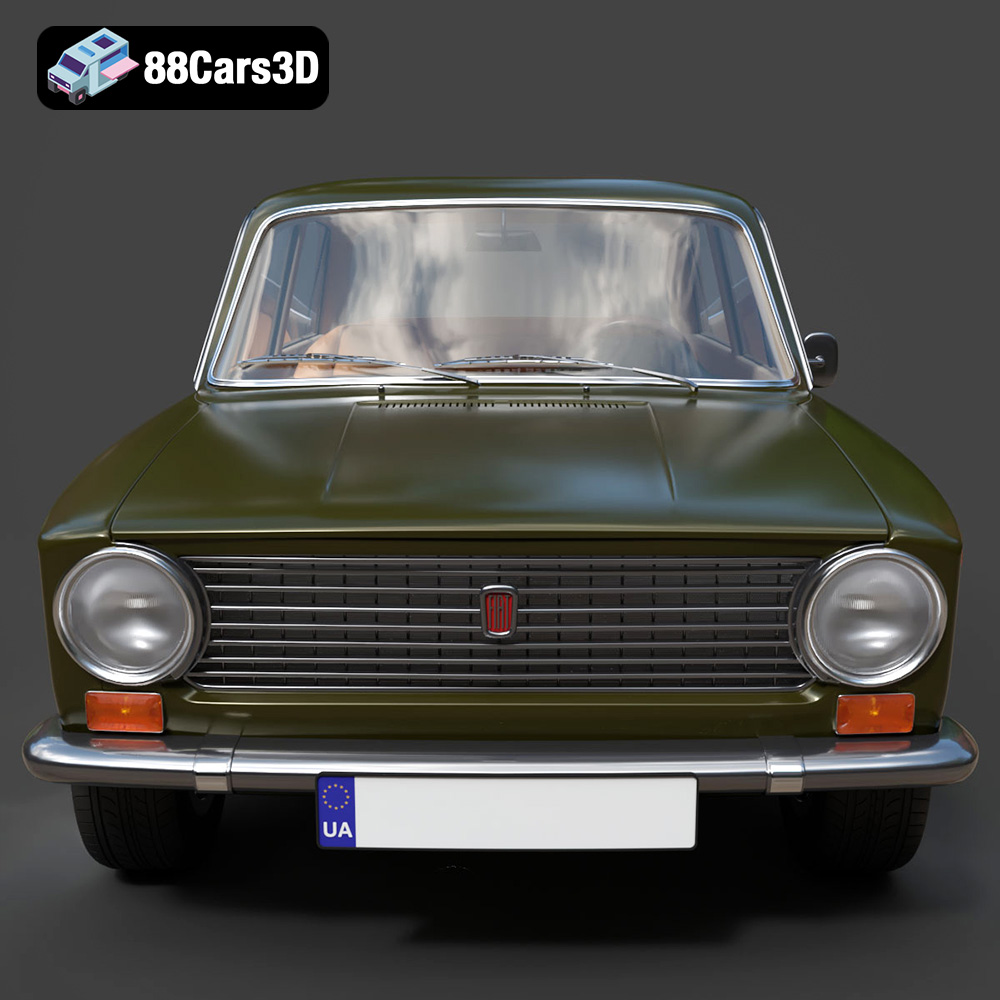
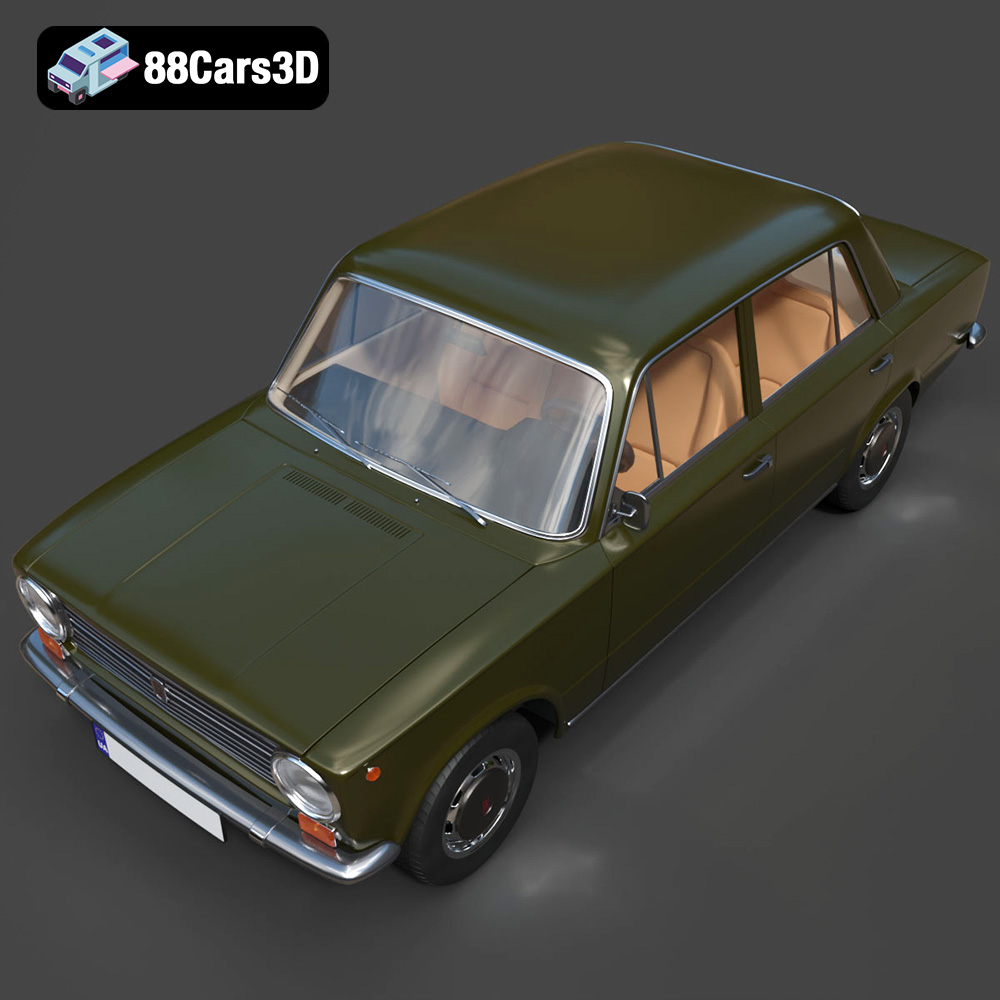
The Fiat 124 Mk1 1966, introduced as a spacious yet compact family sedan, quickly became a symbol of accessible motoring in its era. Its design, while seemingly simple, was a masterclass in functional aesthetics. Recreating such an icon in 3D involves an unparalleled commitment to accuracy. For the Fiat 124 Mk1 1966 3D Model, this means capturing every nuance, from its signature round headlamps and chrome grille to its classic rear-wheel-drive stance and period-correct exhaust system. The goal is to provide an asset that feels authentically Fiat, allowing artists to tell stories that resonate with historical accuracy. Imagine this car navigating the winding roads of a historical European city in a game, or gracing a vintage-themed architectural visualization – its digital presence is as evocative as the real thing.
Beyond Aesthetics: Precision and Authenticity
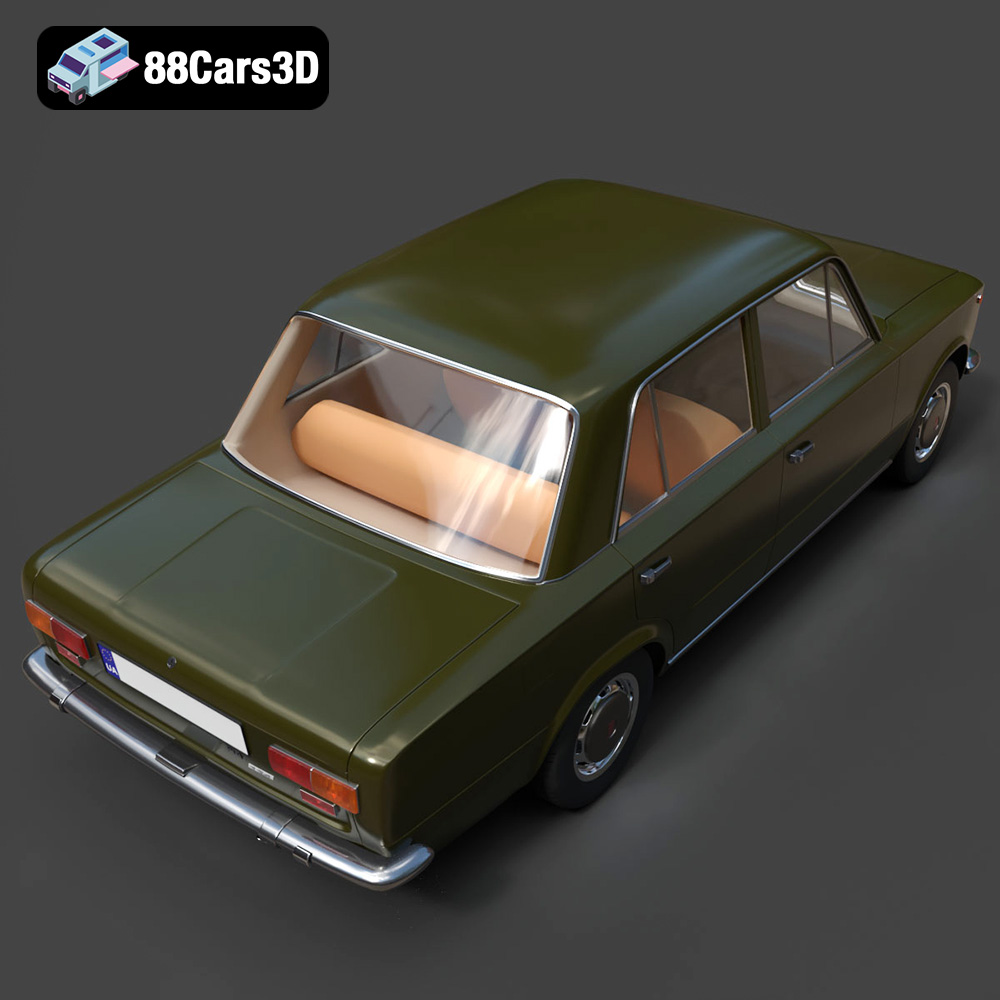
True value in a 3D car model extends beyond mere visual resemblance. It lies in the underlying precision and authenticity that allows for versatile use across different applications. For the Fiat 124 Mk1 1966 3D Model, this translates to real-world scale accuracy, based on actual vehicle chassis dimensions. Details like the classic Fiat OHV inline-four engine block, the accurately modeled coil spring suspension, and the solid rear axle components are not just for show; they allow for realistic animation and physics simulations in game engines. Inside the cockpit, classic horizontally ribbed vinyl seats, an authentic twin-spoke steering wheel, and a minimalist analog instrument cluster are all meticulously replicated, even optimized for first-person POV in gaming. This level of detail ensures that whether the model is viewed up close in a high-resolution render or as part of a dynamic scene in a game, its integrity and realism hold strong.
Understanding 3D Model File Formats
One of the most crucial aspects of working with 3D car models is understanding the various file formats available and when to use each. The right format ensures compatibility, preserves data integrity, and streamlines your workflow. The Fiat 124 Mk1 1966 3D Model, for instance, comes with an impressive array of formats, offering maximum flexibility for any project.
- .blend (Blender): This is Blender’s native file format, offering a complete scene file with all associated data, including meshes, materials, textures, animations, and even rigging. For those working within the Blender ecosystem, a .blend file is ideal as it provides full editability and access to the original project structure. It’s perfect for artists who need to make extensive modifications, re-texture, or re-rig the model within Blender before exporting to other platforms.
- .fbx (Filmbox): Developed by Autodesk, FBX is the industry-standard interchange format, particularly favored for game development and animation pipelines. It excels at preserving complex data like skeletal animations, blend shapes, lights, and cameras, alongside geometry and PBR materials. .fbx files are highly compatible with game engines like Unreal Engine and Unity, as well as major DCC (Digital Content Creation) software such as 3ds Max, Maya, and Cinema 4D. When exporting animated or rigged “game assets,” FBX is often the go-to choice due to its robust data transfer capabilities.
- .obj (Wavefront OBJ): A universal format, OBJ is widely supported across almost all 3D software. It primarily stores geometry (vertices, normals, texture coordinates, and faces) and can link to an accompanying .mtl (material) file for basic material properties and texture references. While it doesn’t support animation or rigging, .obj is excellent for transferring static meshes with basic UV mapping between different applications, making it a reliable choice for cross-software compatibility.
- .glb (GL Transmission Format Binary): GLB is the binary version of glTF, a royalty-free specification for the efficient transmission and loading of 3D scenes and models by applications. Optimized for web, AR, and VR, .glb files are single-file assets that embed all data (geometry, materials, textures, animations) within themselves. This makes them incredibly convenient for fast loading and deployment in browser-based experiences, mobile AR applications, and virtual environments where file size and performance are critical.
- .stl (Stereolithography): This format is the ubiquitous standard for 3D printing. An .stl file represents a 3D model as a series of connected triangles, defining only the surface geometry without color, texture, or material information. It’s purely for defining the shape to be printed. When converting a detailed 3D car model like the Fiat 124 Mk1 for physical production, .stl is the necessary output, often requiring careful manifold mesh preparation and scale adjustments.
- .ply (Polygon File Format): Also known as the Stanford Triangle Format, PLY is often used for storing 3D data from 3D scanners, CAD software, and other applications that require high-precision mesh data. It can store a wider range of properties than .obj or .stl, including color per vertex, normal information, transparency, and sometimes even confidence values. While less common for general “game assets,” it’s valuable in scientific visualization or when dealing with highly accurate scanned data.
- .unreal (Unreal Engine Asset): This isn’t a generic interchange format but rather a specific Unreal Engine asset. When a 3D model is imported into Unreal Engine and saved, it becomes an .uasset file. Providing an “.unreal” file specifically implies a pre-configured asset, potentially with proper materials, collision meshes, LODs, and possibly even Blueprints, directly ready for drag-and-drop use within an Unreal Engine project. This saves immense setup time for developers.
- .max (3ds Max): Autodesk 3ds Max’s native file format. Similar to .blend, a .max file contains the complete scene, including all models, lights, cameras, materials (especially those specific to renderers like V-Ray or Corona), animations, and modifiers. It’s essential for users who want to work within 3ds Max for advanced “automotive rendering,” animation, or custom modifications, providing full control over the original project.
The availability of such a diverse range of formats for the Fiat 124 Mk1 1966 3D Model highlights its versatility and caters to virtually every professional workflow, from game development to 3D printing, making it a truly adaptable asset.
Game Development & Real-time Applications: Performance Meets Fidelity
In game development, the challenge is always to strike a delicate balance between visual fidelity and real-time performance. High-quality 3D car models are crucial for creating immersive environments, but they must also be optimized to run smoothly on various hardware.
Optimizing 3D Car Models for Game Engines
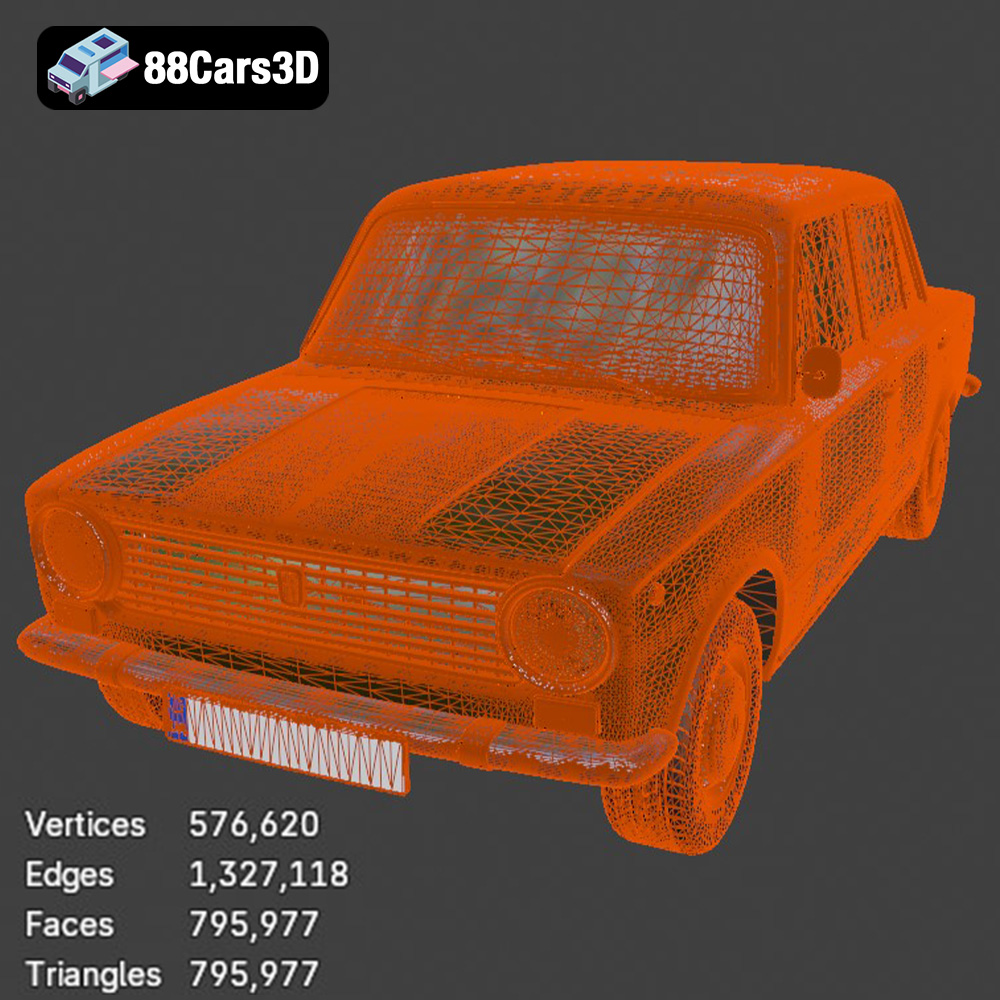
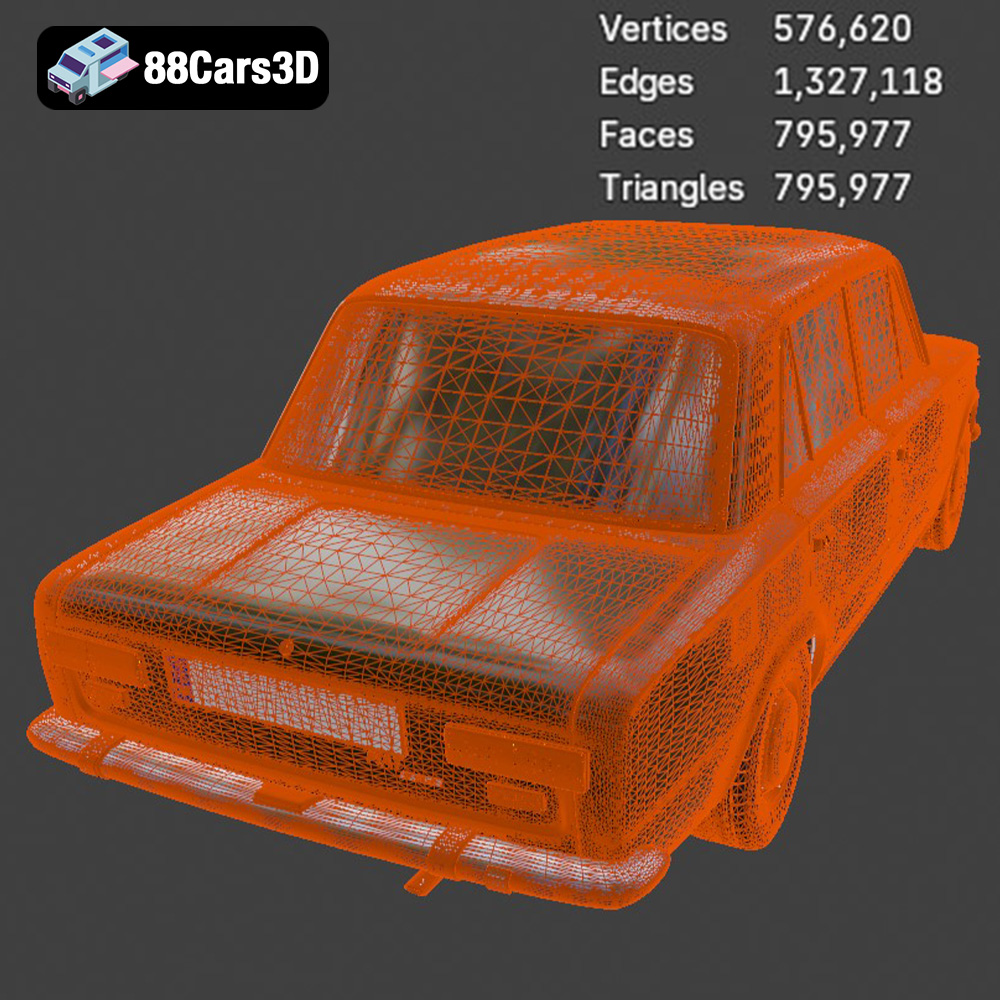
The Fiat 124 Mk1 1966 3D Model exemplifies smart optimization. With approximately 200,000 triangles, it achieves an ideal balance for real-time engines like Unreal and Unity, maintaining high-end visual realism without bogging down performance. Key optimization techniques include:
- Poly Count Management: A carefully managed triangle count ensures the model is detailed enough up close but light enough for multiple instances in a scene.
- Clean Topology: Efficient edge flow and quad-based geometry (before triangulation for export) are crucial for proper deformation, UV mapping, and baking normal maps.
- UV Mapping: Well-laid-out UVs allow for efficient texture packing, leading to better performance and visual quality.
- Game-Ready Features: This model includes a proper pivot setup for steering, wheel rotation, and suspension travel, essential for realistic vehicle physics and animation in games. Separate meshes for wheels, suspension, and steering further enhance animatability.
- LODs (Levels of Detail): While not explicitly stated as included in this product’s description, premium “game assets” typically come with multiple LODs, which are lower-polygon versions of the model that automatically switch in at greater distances from the camera, further optimizing performance.
Immersive Experiences: AR/VR and Virtual Showrooms
The demand for immersive content is skyrocketing, and 3D car models play a central role in AR/VR applications. Imagine exploring the classic Fiat 124 Mk1 in a virtual showroom, rotating it, peering inside, or even placing it in your driveway via augmented reality. Optimized assets are vital here. The .glb format, included with the Fiat 124 Mk1 1966 3D Model, is particularly well-suited for these applications due to its efficient, single-file structure and web-friendliness. These models are perfect for:
- Virtual Showrooms: Allowing potential buyers or enthusiasts to interact with historical or concept vehicles in a fully immersive digital space.
- Historical Simulations: Recreating past eras with period-correct vehicles for educational or entertainment purposes.
- Interactive Configurators: Enabling users to customize car features in real-time before production.
Mastering Automotive Rendering and Visualization
For advertising, film, and product design, “automotive rendering” is where 3D car models truly shine. Achieving photorealism is paramount, and it relies heavily on the quality of the base model, materials, lighting, and rendering techniques.
Achieving Photorealism in Studio and Environmental Renders
High-fidelity 3D car models like the Fiat 124 Mk1 1966 are the foundation for stunning visualizations. Renderers such as V-Ray, Corona, Arnold, and Cycles leverage the detailed geometry and PBR (Physically Based Rendering) materials to create lifelike images. Key aspects of achieving photorealism include:
- PBR Materials: Accurately defined metallic, roughness, and normal maps simulate how light interacts with surfaces, from the glossy paintwork to the textured vinyl seats and chrome accents.
- Realistic Lighting: Studio HDRIs (High Dynamic Range Images) or meticulously crafted environmental lighting setups are crucial for mimicking real-world illumination.
- Camera Settings: Using real-world camera parameters (focal length, depth of field, aperture) adds a cinematic quality to renders.
- Customization Options: The ability to easily change body/tank colors, modify tire textures, or adjust material finishes (matte, gloss, metallic) provides artists with immense creative control to match brand campaigns or artistic visions.
Case Studies: From Advertising to Architectural Visualization
“Automotive rendering” is a powerful tool across various industries:
- Advertising: Creating stunning visuals for car launches, brochures, and digital campaigns without the cost and logistical challenges of physical photography. The Fiat 124 Mk1 could be featured in a retro-themed lifestyle advertisement.
- Film and Television: Generating realistic vehicles for visual effects, background elements, or period-accurate scene dressing.
- Architectural Visualization: Integrating vehicles into architectural renders brings life and scale to buildings and urban environments. A classic car like the Fiat 124 Mk1 provides perfect period-correct context for visualizing a mid-century street scene or a historical preservation project. Its presence tells a story and grounds the architecture in a tangible reality.
The Rise of 3D Printing: Bringing Digital Classics to Life
The intersection of digital design and physical fabrication has opened up new possibilities for enthusiasts and professionals alike. 3D printing allows for the tangible creation of digital models, turning virtual assets into physical collectibles, prototypes, or display pieces.
Preparing 3D Models for Physical Production
Converting a 3D car model, such as the Fiat 124 Mk1 1966 3D Model, for 3D printing requires specific considerations. The included .stl format is ideal for this purpose, but proper preparation is key:
- Scale and Detail: The recommended scales (1:12 / 1:18 / 1:24) for this model ensure a good balance between size and detail. Resin printing is often recommended for finer details like the exhaust system, mirrors, and steering wheel, thanks to its ability to achieve very low layer heights (0.04–0.12 mm).
- Structural Integrity: Considerations like wall thickness (1.2–2.0 mm) and print orientation (frame angled for strength, wheels printed separately) are crucial for a successful print.
- Supports and Infill: Detailed parts inevitably require supports, and appropriate infill (20–30%) provides structural stability without excessive material use.
- Post-processing: Achieving a showroom-quality finish on a 3D printed model often involves sanding, priming, and painting with authentic factory colors, perhaps even metallic finishes to mimic the original.
Beyond Hobbyists: Prototyping and Scale Models
While 3D printing is popular among hobbyists, it also serves professional applications:
- Design Prototyping: Automotive designers use 3D prints for rapid prototyping of components or scale models to validate forms and ergonomics before costly physical production.
- Collector-Grade Models: Creating highly detailed, custom scale models that might not be available commercially.
- Educational Tools: Producing tangible representations of complex designs for teaching and demonstration.
Streamlining Your Workflow with Premium 3D Assets
In a fast-paced creative industry, time is a precious commodity. Relying on premium, pre-optimized 3D car models can dramatically accelerate project timelines and elevate the quality of your output.
The Value of Pre-Optimized, Rig-Ready Models
Investing in assets like the Fiat 124 Mk1 1966 3D Model from 88cars3d.com offers significant advantages:
- Time Savings: No need to model from scratch, saving hundreds of hours of painstaking work.
- Consistent Quality: Professional-grade assets ensure consistent detail, clean topology, and accurate scale, eliminating potential issues down the line.
- Animation Ready: Features like separate wheels, suspension, and steering components, along with proper pivot setups, mean the model is ready for animation right out of the box, whether for a game or a cinematic sequence.
- Broad Compatibility: The extensive list of included file formats (.blend, .fbx, .obj, .glb, .stl, .ply, .unreal, .max) ensures the model integrates seamlessly into virtually any professional workflow.
Finding the Right 3D Car Models for Your Project
The market for “3D car models” is vast, but quality varies greatly. For critical projects, it’s essential to source assets that meet professional standards for accuracy, optimization, and versatility. Platforms like 88cars3d.com specialize in providing high-quality “game assets” and “automotive rendering” solutions, ensuring that you get assets that are not only visually appealing but also technically sound. The Fiat 124 Mk1 1966 3D Model stands as a prime example of such a product, offering a detailed, optimized, and ready-to-use asset that can slot into diverse applications from game development to high-end visualization and even 3D printing.
Conclusion
The world of 3D modeling offers unparalleled opportunities to bring vehicles to life, whether they are classic icons like the Fiat 124 Mk1 1966 or cutting-edge concepts. Mastering the art of creating and utilizing “3D car models” requires an understanding of diverse file formats, optimization techniques for real-time engines, and the nuances of photorealistic “automotive rendering.” For game developers, architectural visualization artists, animators, and even 3D printing enthusiasts, high-quality, versatile “game assets” are not just a convenience; they are a necessity for producing outstanding work efficiently.
The Fiat 124 Mk1 1966 3D Model serves as an excellent illustration of how a meticulously crafted digital asset can bridge various creative disciplines, offering game-ready optimization, stunning detail for renders, and print-ready versatility. By choosing premium assets from reputable sources like 88cars3d.com, artists and developers can significantly enhance their workflows, reduce development time, and focus on unleashing their creative vision with confidence.
Featured 3D Model
Fiat 124 Mk1 1966 3D Model Download STL FBX OBJ GLB Blend
Detailed Product Description:
Step into automotive history with the Fiat 124 Mk1 1966, a defining icon of mid-century Italian motoring. Introduced as a spacious yet compact family sedan, the 124 Mk1 is celebrated for its boxy but elegant styling, revolutionary lightweight construction, and peppy inline-four engine. This meticulously crafted 3D model captures the timeless charm of the original, from its distinctive round headlamps and signature chrome grille to the classic rear-wheel-drive stance and period-correct exhaust system.
Constructed with exceptional attention to detail, this 3D model features game-ready optimization with an ideal triangle count that ensures peak performance without sacrificing visual fidelity. The clean topology guarantees seamless integration into game engines like Unreal and Unity, making it a perfect asset for developers, animators, and visualization artists seeking authentic mid-century vehicles.
Perfect for historical city environments, classic car rally simulations, architectural visualizations, and immersive VR automotive showrooms.
Exterior Features:
- Accurate Fiat 124 Mk1 1966 frame geometry and classic sedan proportions
- Detailed engine block featuring the classic Fiat OHV inline-four design
- Authentic single tailpipe exhaust system
- Signature round headlights and rectangular taillights with realistic glass texturing
- Period-correct steel wheels equipped with detailed chrome hubcaps and vintage tread tires
- Accurately modeled coil spring suspension and solid rear axle components
- Separate wheels, suspension, and steering components for animation
Cockpit & Interior Features:
- Classic horizontally ribbed vinyl seats and bench-style rear seating
- Authentic twin-spoke steering wheel with the original Fiat horn ring
- Period-correct minimalist analog instrument cluster and dashboard layout
- Detailed manual floor shifter, pedals, and classic handbrake lever
- Optimized geometry for first-person POV in gaming
Technical Specifications & Advantages:
- Game-Ready & Optimized: Approx. 200,000 triangles strikes perfect balance for real-time engines (Unreal, Unity) while maintaining high-end visual realism
- Real-world scale accuracy based on actual vehicle chassis
- Proper pivot setup for steering, wheel rotation, and suspension travel
- Compatible with major 3D software platforms and real-time rendering engines
Applications:
- Game Development: Ideal for open-world games, racing titles, and simulators due to optimized polycount
- AR/VR: Perfect for immersive virtual showrooms, configurators, and mobile AR experiences
- Rendering & Visualization: Excellent for brand campaigns, lifestyle scenes, and studio lighting setups
- 3D Printing: Convertible to .stl format for display-scale hobbyists
3D Print Settings:
- Recommended scale: 1:12 / 1:18 / 1:24
- Layer height: 0.04–0.12 mm (Resin printing recommended for fine details)
- Wall thickness: 1.2–2.0 mm
- Infill: 20–30%
- Supports: Required for detailed parts like exhaust, mirrors, steering wheel
- Print orientation: Frame printed angled for structural integrity; wheels printed separately
- Post-processing: Sanding, primer, and authentic factory colors with metallic finishes
Customization Options:
- Change body/tank colors (e.g., factory colors, custom finishes)
- Modify tire textures (off-road vs. street variants)
- Adjust material finishes (matte, gloss, metallic)
- Adapt lighting for different environments
Included File Formats:
.blend, .fbx, .obj, .glb, .stl, .ply, .unreal, .max
Tags:
fiat, 124, mk1, 1966, classic-car, sedan, vintage-car, game-ready, low-poly, optimized, car-3d-model, game-asset, rendering, vr-ar, blend, fbx, obj, glb, stl, ply, unreal, maxMercedes Benz CLS 500 3D Model 3D Printable STL
$19.99
View This Model
Related Tags
.1966
.blend
.fbx
.fiat
.glb
.max
.mk1
.obj
.ply
.rendering
.sedan
.stl
.unreal
124
car-3d-model
classic-car
game asset
game-ready
low-poly
optimized
vintage-car
VR/AR