Get 20% OFF All Premium 3D & STL Models!

In the dynamic world of 3D visualization, from cinematic automotive rendering to immersive game development and sophisticated architectural visualization, the quality of your foundational assets can make or break a project. The demand for meticulously crafted 3D car models has never been higher, serving as the backbone for creating believable environments, engaging user experiences, and stunning visual campaigns. These assets aren’t just pretty pictures; they are complex digital constructs, each optimized for specific applications and demanding a deep understanding of technical specifications and artistic integrity.
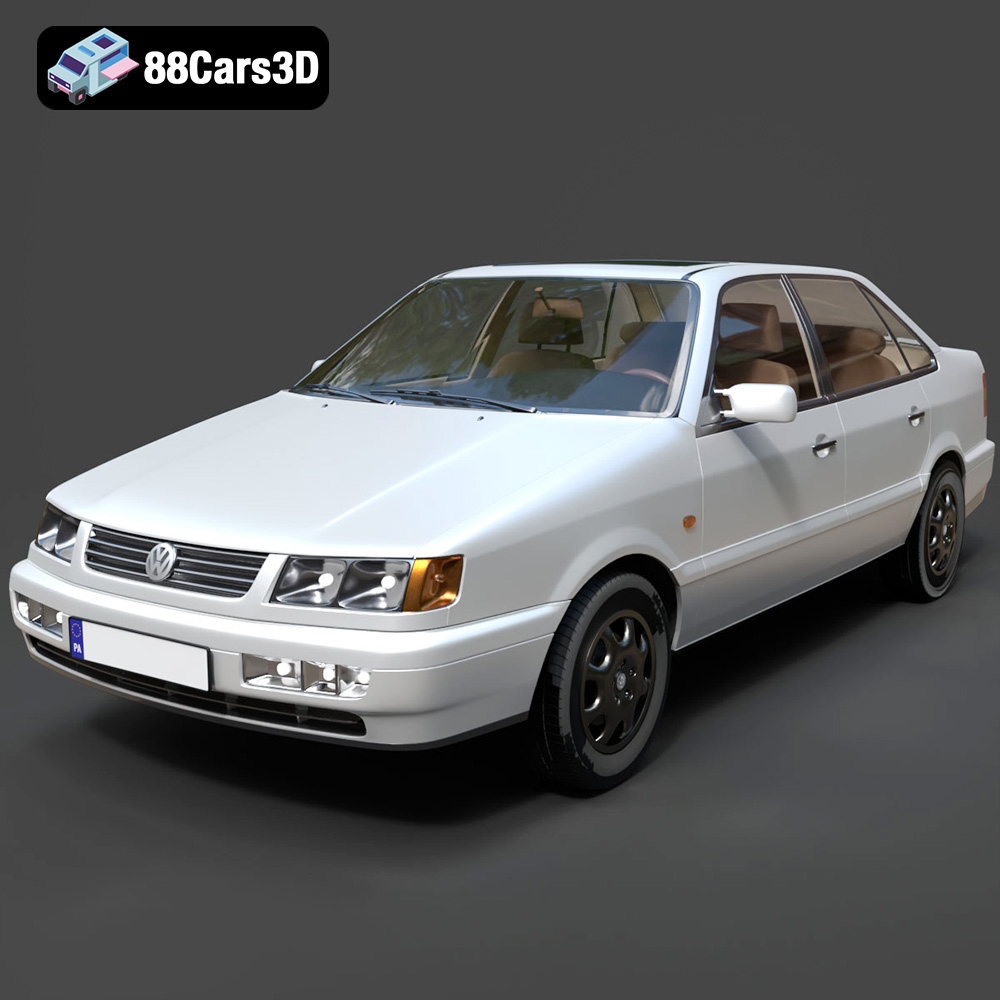
Today, we’re going to explore the critical aspects of integrating high-quality 3D vehicles into professional pipelines, using a fantastic example from the golden era of practical design: the Volkswagen Passat Mk4 B4 Sedan 1993 3D Model. This model, available on 88cars3d.com, is an excellent case study to illustrate the versatility and technical prowess required in modern 3D asset creation.
The 1993 Volkswagen Passat Mk4 (B4) Sedan holds a special place in automotive history. It represents a pragmatic yet stylish approach to family transport, a true workhorse that also introduced a more traditional front grille, distinguishing it from its B3 predecessor. Capturing this blend of utilitarian charm and distinctive 90s European styling in a 3D model requires both a keen eye for detail and robust technical execution. A high-quality 3D car model of such a classic vehicle is invaluable for recreating period-accurate scenes, historical simulations, or simply adding a touch of nostalgic realism to any digital project.
The real-world Passat B4 was known for its reliable engineering and understated aesthetic, a testament to German automotive design principles of the era. Its clean lines, distinct halogen headlight housings, and classic factory wheel options define mid-90s Volkswagen styling. For digital artists, having access to an accurate representation of such a vehicle allows for unparalleled authenticity. Whether it’s a nostalgic street scene in a video game, an architectural rendering featuring a car from a specific decade, or a historical documentary visualization, the correct automotive presence is crucial.
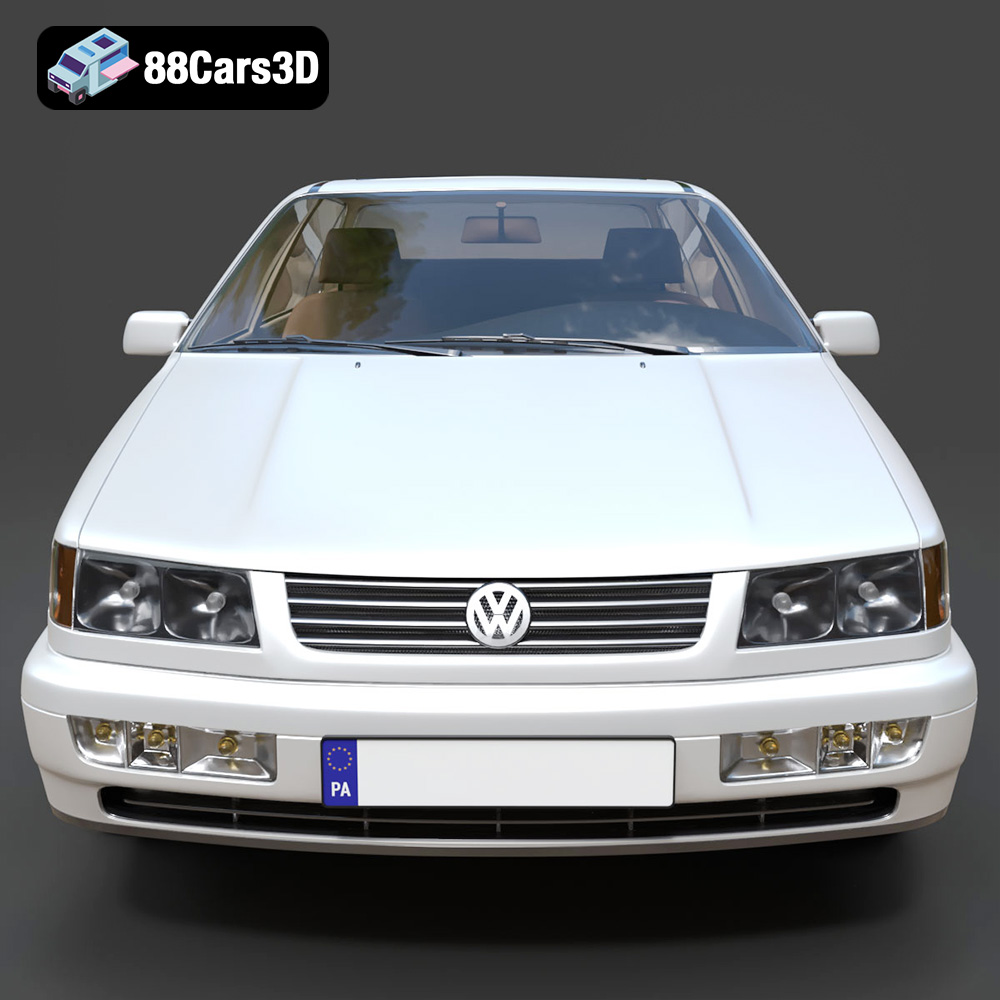
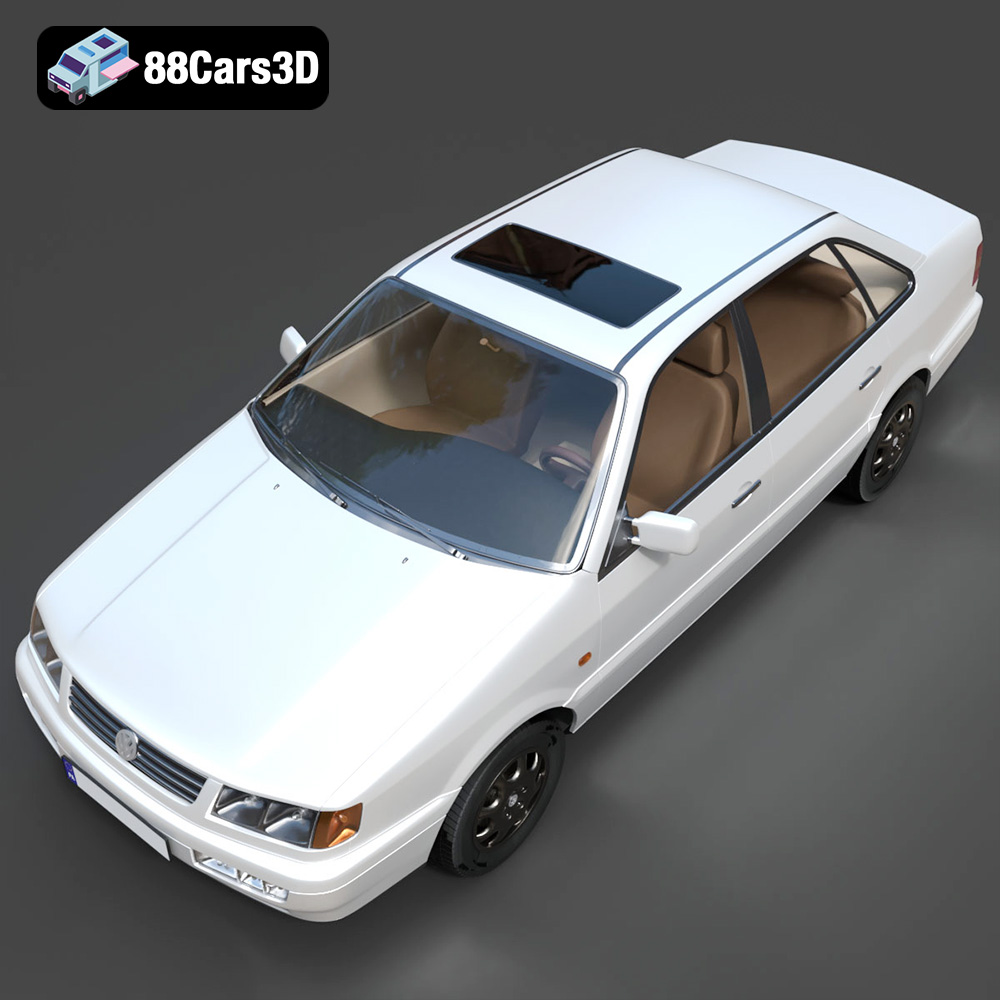
The Volkswagen Passat Mk4 B4 Sedan 1993 3D Model from 88cars3d.com excels in this regard. Its geometry meticulously replicates the accurate sedan chassis and proportions, from the detailed classic 90s front fascia to the authentic taillight clusters and period-correct wheel designs. Even subtle details like the factory-accurate exhaust tip and specific suspension components beneath the undercarriage are present. For game developers and animators, the inclusion of separate wheels, suspension, and steering components ensures that the model is ready for full animation, providing a level of control that goes beyond static imagery. The interior, too, is a faithful recreation, featuring accurate 90s European seating, the classic four-spoke steering wheel, and an authentic analog instrument cluster, making it suitable even for first-person perspectives in gaming.
Choosing the correct 3D model file format is a critical decision that impacts workflow efficiency, compatibility, and the fidelity of your digital assets across different platforms. Each format serves a specific purpose, carrying varying levels of data from geometry and materials to animation and scene information. Understanding these distinctions is fundamental for any professional working with 3D car models.
The .blend format is Blender’s native file type, offering a comprehensive package of all scene data. This includes not just the mesh, but also materials, textures, lighting, cameras, animation, physics simulations, and even custom scripts or add-ons used within Blender. For artists whose primary DCC (Digital Content Creation) tool is Blender, the .blend file is the most robust and editable option. It allows for full non-destructive editing, easy modification of modifiers, rigging adjustments, and iteration on materials. When working with the Volkswagen Passat Mk4 B4 Sedan 1993, having the .blend file means you can delve deep into its construction, learn from its setup, or customize it extensively within the Blender ecosystem, making it ideal for individual artists or studios heavily invested in Blender.
.fbx (Filmbox) is arguably the most widely adopted 3D asset exchange format, especially prominent in game development and real-time pipelines like Unreal Engine and Unity. Developed by Autodesk, FBX supports geometry, materials, textures, animations, skinning, and rigging, making it incredibly versatile. It’s designed for interoperability between different 3D software applications. When you need to move a 3D car model from, say, 3ds Max to Unreal Engine, FBX is typically the go-to. Its robust support for animation data is particularly valuable for complex car rigs. For the Passat model, an FBX file ensures seamless integration into game engines or other DCC software, maintaining the integrity of its optimized geometry and material assignments.
The .obj (Wavefront Object) format is a universal standard known for its simplicity and widespread compatibility. It primarily stores geometric data – vertices, normals, UV coordinates, and faces – along with references to external material files (.mtl). Unlike FBX, OBJ does not typically support animation, rigging, or scene hierarchy in a complex manner. However, its straightforward structure makes it an excellent choice for basic mesh exchange when you need to ensure maximum compatibility across almost any 3D software. For simple static renders or as a fallback format, the OBJ version of the Volkswagen Passat Mk4 B4 is reliable, ensuring that the core geometry can be imported and utilized in virtually any 3D application.
.glb (GL Transmission Format Binary) is an increasingly important format optimized for efficient transmission and loading of 3D scenes and models in web, augmented reality (AR), and virtual reality (VR) environments. It’s a self-contained file, embedding textures, animations, and other data directly within the single file, reducing HTTP requests and simplifying deployment. This makes it perfect for displaying the Passat model directly in a web browser, an AR application on a mobile device, or within a lightweight VR experience without complex setups. Its optimization for real-time rendering on various devices is a significant advantage.
The .stl (Stereolithography) format is the standard for 3D printing. It represents a 3D model as a raw, unstructured triangular mesh, without color, texture, or other model attributes. Its sole purpose is to describe the surface geometry of an object for fabrication. When preparing the Passat model for physical production on a 3D printer, converting it to STL is the essential step. The quality of the STL directly impacts print fidelity, requiring a watertight mesh and appropriate resolution to capture fine details.
The .ply (Polygon File Format) is a versatile format for storing 3D data, particularly useful for scanned data, CAD applications, and scientific visualization. It can store a wider range of properties than STL, including color information (per vertex or per face), transparency, and even confidence data from scanning. While not as universally adopted as OBJ or FBX for general asset exchange, PLY offers higher precision for mesh representation and is valuable for specialized applications where detailed surface information or CAD compatibility is paramount.
The inclusion of .unreal typically refers to assets specifically prepared or packaged for Unreal Engine. While Unreal Engine primarily imports FBX files, the .unreal designation implies that the asset has been thoroughly tested, optimized, and potentially packaged as a UAsset or part of an Unreal Engine project. This means the materials might already be set up with PBR (Physically Based Rendering) shaders, collision meshes implemented, and LODs (Levels of Detail) configured, saving considerable time for developers. For the Volkswagen Passat, this format would allow for rapid deployment into Unreal Engine projects, bypassing many setup steps.
Similar to .blend for Blender, the .max format is the native project file for Autodesk 3ds Max. It stores the complete scene, including all objects, materials, textures, lighting, animation, camera setups, and even modifier stacks and complex rigs specific to 3ds Max. For artists and studios heavily reliant on 3ds Max for architectural visualization, high-end rendering, or complex animation, the .max file provides the most comprehensive and editable version of the Passat model. It allows for advanced customization and integration into existing 3ds Max workflows without data loss or conversion artifacts.
By offering this comprehensive suite of formats, 88cars3d.com ensures that the Volkswagen Passat Mk4 B4 Sedan 1993 3D Model is ready for virtually any professional application, from the initial modeling and animation stages to final rendering, real-time deployment, and physical fabrication.
The true value of a high-quality 3D car model lies in its adaptability across various professional contexts. An artist creating a game asset has different requirements than someone preparing a model for a high-resolution print advertisement or an architectural visualization. The Volkswagen Passat Mk4 B4 Sedan 1993 3D Model from 88cars3d.com is designed with this versatility in mind, striking a delicate balance between visual fidelity and performance efficiency.
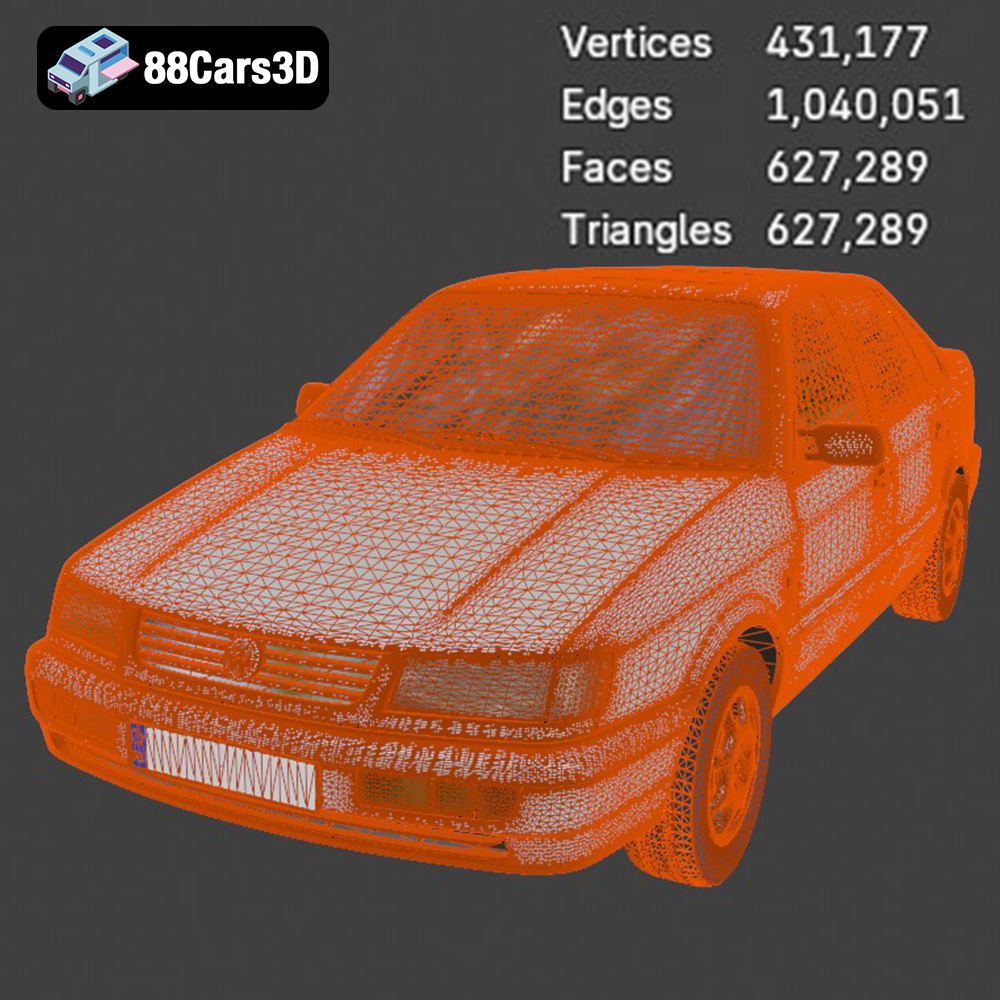
For game developers, performance is paramount. Every polygon, texture, and shader instruction counts towards maintaining smooth framerates. The Passat model is explicitly labeled as “Game-Ready & Optimized,” featuring a triangle count of 50,000-80,000. This range is ideal for modern real-time engines like Unreal Engine and Unity, providing enough detail for compelling visuals without burdening the engine. Technical advantages like real-world scale accuracy and proper pivot setup for steering, wheel rotation, and suspension travel are critical for creating realistic physics and animation in driving simulators or open-world games. Developers can import the FBX or .unreal version, set up PBR materials, add collision meshes, and potentially generate LODs (Levels of Detail) to further optimize performance for varying distances. Imagine the Passat as realistic background traffic, a playable vehicle in a retro driving game, or an interactive element in an educational simulation – its optimized geometry ensures seamless integration.
When the goal is photorealism for still images or cinematic animations, the emphasis shifts slightly from raw polygon count to the quality of topology, UV mapping, and material definition. For automotive rendering in software like 3ds Max, Blender, Cinema 4D, or Maya, using renderers such as V-Ray, Corona, or Cycles, precise surface detail and accurate reflections are crucial. The Passat model’s optimized topology ensures crisp reflections and accurate proportions, which are vital for achieving realistic studio lighting setups or blending seamlessly into a detailed architectural visualization scene. Artists can leverage the .max or .blend files to further refine materials, add specific lighting rigs, or integrate the vehicle into complex environments – perhaps a nostalgic suburban driveway or a city street from the 90s, enhancing the scene’s storytelling and realism.
Beyond traditional rendering and game development, high-quality 3D car models are becoming indispensable for emerging technologies like Augmented Reality (AR) and Virtual Reality (VR), as well as more established fields like 3D printing and industrial design. The Volkswagen Passat Mk4 B4 Sedan 1993 3D Model demonstrates remarkable flexibility across these diverse applications.
Immersive experiences demand highly optimized assets that can load quickly and render smoothly on a wide range of devices, from high-end VR headsets to mobile phones. The inclusion of the .glb format is particularly beneficial here. GLB models are compact and self-contained, embedding textures and animations, making them ideal for virtual showrooms, interactive car configurators, or mobile AR experiences where users can place a realistic 3D Passat into their real-world environment. The optimized geometry and clean topology of this 3D car model ensure that even on less powerful hardware, the Passat will look authentic and interactive without performance bottlenecks, providing engaging and accessible user experiences.
For hobbyists, model makers, or even designers exploring scale prototypes, 3D printing offers a tangible output for digital models. The Passat model, convertible to the .stl format, opens up possibilities for creating physical replicas. The product description provides detailed 3D print settings, recommending scales like 1:12, 1:18, or 1:24, and specifics on layer height, wall thickness, infill, and crucially, support requirements. It even advises on print orientation and post-processing steps like sanding, priming, and painting with authentic factory colors. While this specific model is aimed more at hobbyist display, the underlying principles of preparing watertight meshes and understanding print tolerances are universal, showcasing how a single 3D car model can bridge the gap between digital art and physical manufacturing.
In any professional 3D project, time is a valuable commodity. Building every asset from scratch is often impractical, especially when deadlines loom. This is where a reliable source of high-quality, pre-optimized 3D car models becomes indispensable. 88cars3d.com positions itself as a crucial resource for studios and individual artists seeking to enhance their projects with meticulously crafted automotive assets.
The core advantage of acquiring models like the Volkswagen Passat Mk4 B4 Sedan 1993 3D Model from 88cars3d.com is the immediate time and cost savings. Creating a highly detailed, game-ready car model from scratch can take weeks, involving extensive modeling, UV unwrapping, texturing, and optimization. By contrast, a pre-optimized model provides an instant, production-ready asset. The Passat model’s specified triangle count (50,000-80,000), real-world scale accuracy, and proper pivot setups mean less work for your team, allowing them to focus on unique project-specific elements. Furthermore, the availability of multiple file formats (blend, fbx, obj, glb, stl, ply, unreal, max) ensures broad compatibility, minimizing conversion issues and potential data loss across different software environments.
While pre-made, these assets are not static. High-quality 3D car models are designed for flexibility. The Passat model, for instance, offers extensive customization options. Artists can easily change body colors to match factory finishes or create custom looks, modify tire textures for different road conditions, adjust material finishes (matte, gloss, metallic, plastic trims), and adapt lighting setups for various environmental moods. This adaptability is critical for projects requiring variations of the same model or integrating the vehicle seamlessly into diverse artistic directions. Whether you need a pristine, showroom-quality Passat or a weathered, street-worn version, the underlying model provides a solid foundation for endless creative possibilities.
The world of 3D visualization thrives on detail, efficiency, and artistic freedom. High-quality 3D car models are fundamental to achieving these goals across a spectrum of professional applications, from the intricacies of game development to the stunning realism of automotive rendering and the tangible output of 3D printing. The Volkswagen Passat Mk4 B4 Sedan 1993 3D Model stands as a testament to the versatility and technical excellence demanded in today’s digital landscape. Its meticulous detail, optimized topology, and comprehensive file format support make it an invaluable asset for any project seeking to capture the authentic charm of 90s European motoring.
By understanding the nuances of different file formats, appreciating the importance of optimization, and recognizing the value of pre-made, adaptable assets, professionals can significantly streamline their workflows and elevate the quality of their final output. Whether you’re a game developer, an arch-viz artist, an automotive renderer, or a 3D printing enthusiast, investing in quality 3D car models can save countless hours and unlock new creative potential. Explore the extensive library of high-quality 3D car models and elevate your next project by visiting 88cars3d.com today.
The 1993 Volkswagen Passat Mk4 (B4) Sedan represents a pivotal moment in German automotive design, blending practical family hauling capabilities with robust, reliable engineering. Known for its clean, understated aesthetic and the distinct introduction of a traditional front grille compared to its B3 predecessor, this classic sedan has cemented its legacy as an icon of 90s European motoring. The model captures the quintessential utilitarian charm, featuring the accurate sedan roofline, distinctive halogen headlight housings, and classic factory wheel options that defined mid-90s Volkswagen styling. This 3D model boasts exceptional quality with optimized topology and a game-ready triangle count. The geometry strikes the ideal balance between high visual fidelity and performance efficiency, ensuring seamless integration into modern real-time engines. Whether utilized for background traffic generation, interactive configurators, or detailed close-up rendering, the model maintains crisp reflections and accurate proportions across the board. Perfect for 90s-themed street scenes, retro driving simulators, architectural visualizations, and immersive virtual environments.
$39.99
.blend
.fbx
.glb
.max
.obj
.passat
.ply
.rendering
.sedan
.stl
.unreal
.volkswagen
1993
b4
car-3d-model
classic-car
family-car
game asset
game-ready
low-poly
mk4
optimized
VR/AR