Get 20% OFF All Premium 3D & STL Models!

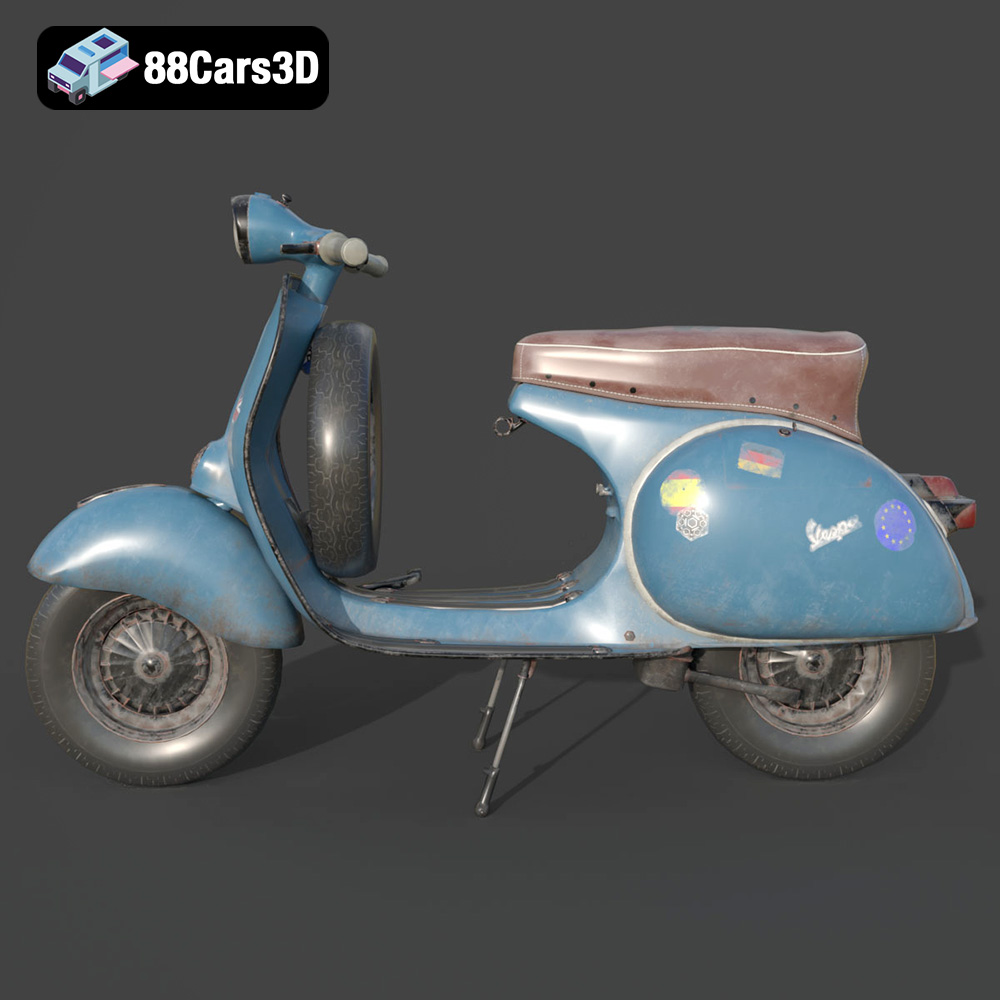
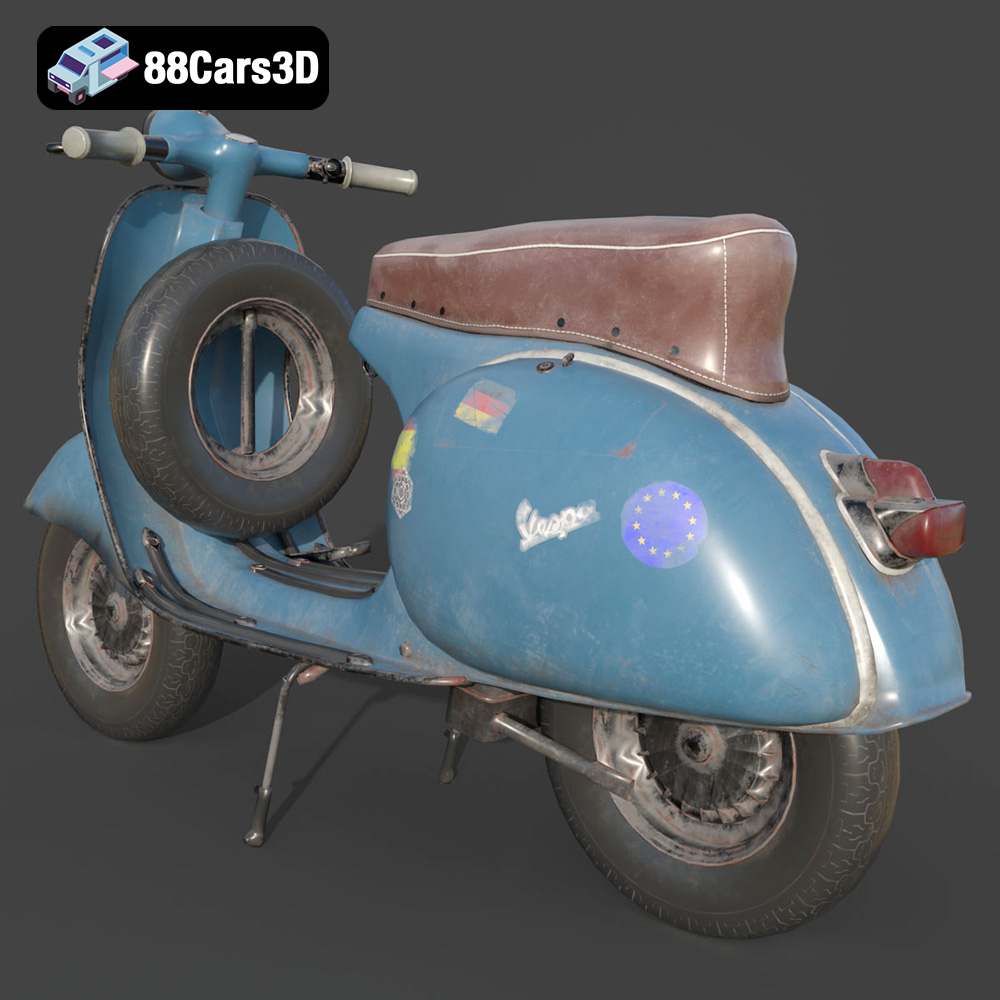
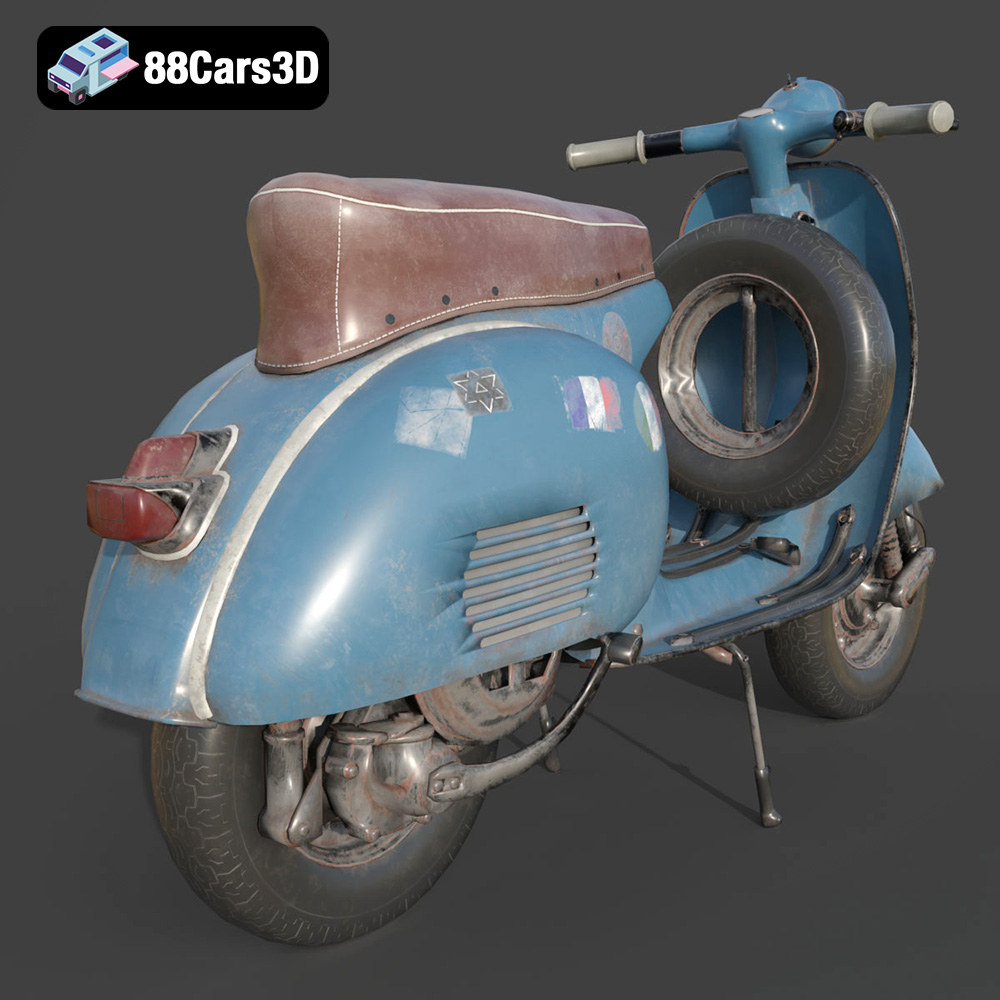
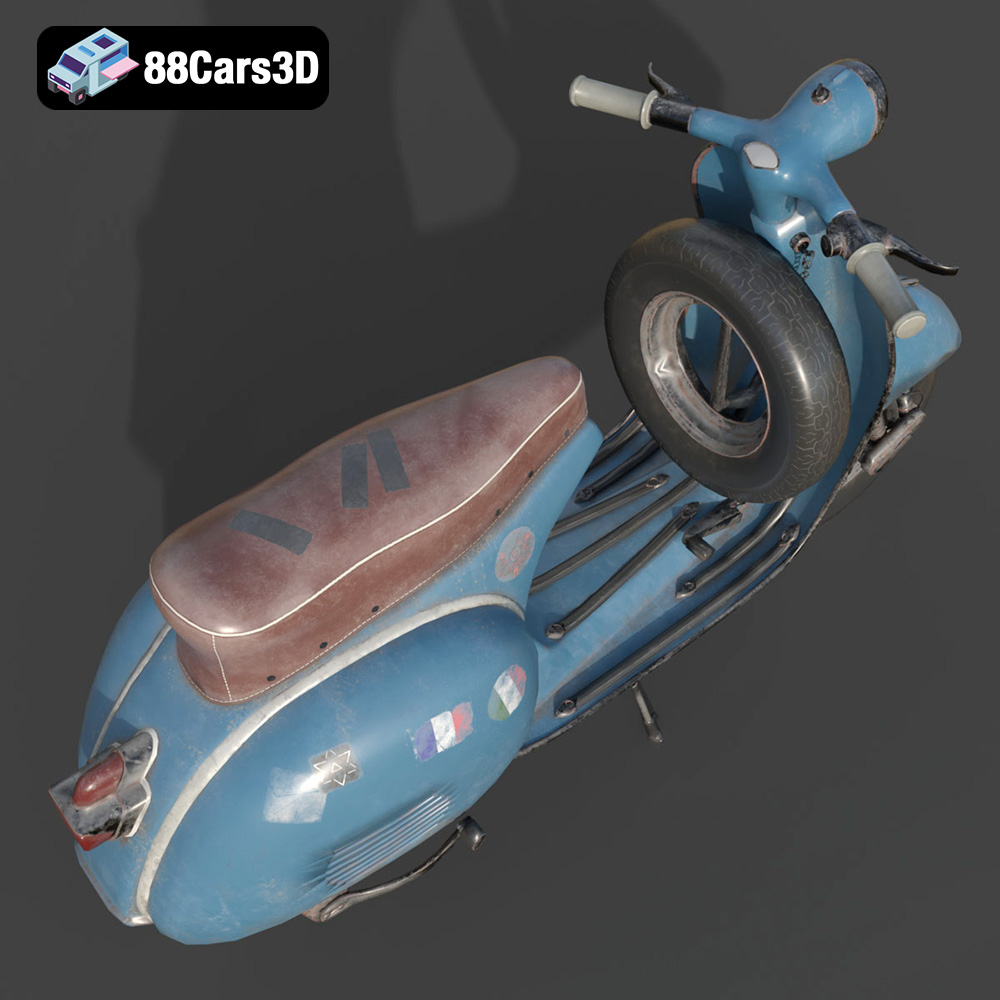
Few vehicles capture the essence of style, freedom, and iconic design quite like the Vespa GS 150. More than just a scooter, it’s a cultural phenomenon, a symbol of post-war Italian elegance and engineering ingenuity. Its graceful lines, powerful 150cc engine, and reputation as the first mass-market sports Vespa cemented its place in automotive history. For 3D artists, game developers, automotive designers, and visualization specialists, accurately recreating such a legendary machine in a digital environment is both a challenge and an opportunity. A high-quality 3D model of the Vespa GS 150 isn’t merely a static object; it’s a versatile asset capable of breathing life into virtual worlds, adding authenticity to historical scenes, or serving as the centerpiece for breathtaking renders. This article delves into the technical intricacies and creative possibilities offered by a meticulously crafted model like the Vespa GS 150 3D model available on 88cars3d.com, exploring how it integrates into diverse professional workflows and elevates digital projects.
The Gran Sport 150, or GS 150, represented a pivotal moment for Piaggio, pushing the boundaries of scooter design and performance. Its distinctive unibody construction, characteristic leg shield, and the iconic “wasp” silhouette made it instantly recognizable and highly coveted. Translating this classic into a robust 3D model requires an understanding of both its historical significance and its underlying mechanical beauty.
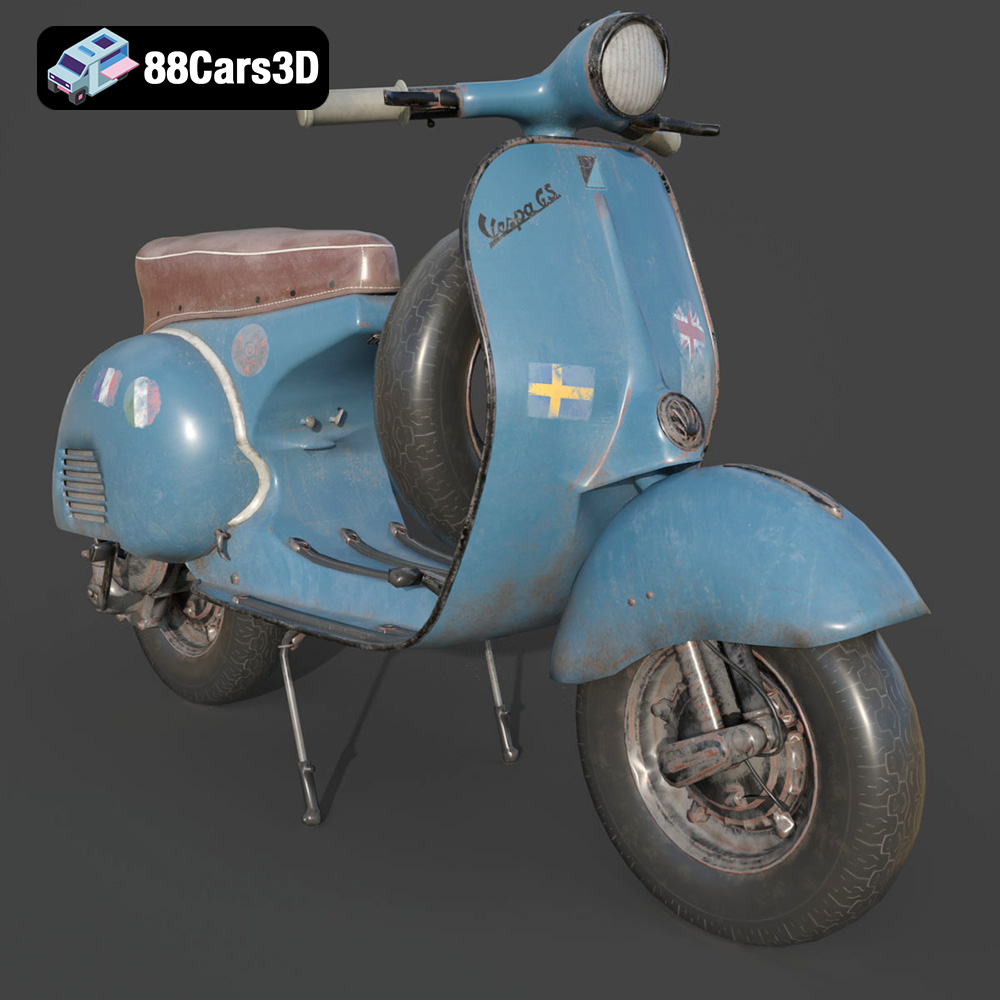
Historical accuracy is paramount when dealing with iconic vehicles. A superior 3D model doesn’t just look like the real thing; it embodies its spirit through faithful reproduction of proportions, curves, and unique features. For the Vespa GS 150, this means meticulously replicating the aerodynamic bodywork, the subtle flair of the side panels, and the signature front trailing-link suspension. Every detail, from the classic round headlamp to the sleek teardrop taillight, must be observed and recreated with precision. This level of detail ensures that whether the model is placed in a vintage Italian street scene or featured in a museum-quality render, its authenticity shines through, appealing to enthusiasts and historical purists alike.
The GS 150’s design philosophy was rooted in elegance and functionality. It wasn’t just transportation; it was a statement. The digital recreation of this scooter must capture this artistic intent. The detailed engine block with its 150cc 2-stroke casing and cooling fins, the classic sweeping exhaust system, and the authentic muffler details all contribute to this visual narrative. Inside the cockpit, features like the dual saddle or long bench seat, the tubular handlebars with integrated speedometer, the original Piaggio-style instrument cluster, and the accurate hand grips and levers are not just polygons; they are elements that tell the story of a bygone era, making the Vespa GS 150 3D model a powerful storytelling tool for any project.
The versatility of a 3D model is often defined by the range of file formats it supports. Different industries, software packages, and target applications demand specific formats, each with its own advantages and technical nuances. A comprehensive package, like the Vespa GS 150 3D model which includes a multitude of formats, ensures maximum compatibility and utility for professionals across various disciplines. Understanding these formats is crucial for optimizing workflows and achieving desired outcomes.
The `.blend` format is native to Blender, one of the most popular open-source 3D creation suites. When a model is provided in `.blend` format, it means you’re getting a complete Blender scene. This includes not only the mesh geometry but also all associated materials, textures, lighting setups, cameras, and potentially even animation data or modifiers. For artists working primarily in Blender, this format offers unparalleled flexibility. You can directly open the file and immediately begin editing, retexturing, animating, or adapting the model without any loss of data or complex import procedures. It’s the ideal starting point for anyone looking to deeply customize the Vespa GS 150 within Blender’s powerful ecosystem.
FBX (Filmbox) is a proprietary file format owned by Autodesk, widely regarded as the industry standard for exchanging 3D data between different software applications. Its strength lies in its ability to store not just geometry but also animation, rigging, skinning, materials, and even light and camera information. For game development, particularly with engines like Unreal Engine and Unity, `.fbx` is the go-to format. It’s robust, well-supported, and optimized for real-time applications, allowing game developers to import the Vespa GS 150 3D model with its proper pivot points, hierarchy, and potentially even initial animation setups for wheels and steering, streamlining the asset integration process.
OBJ (Object) is one of the oldest and most universally supported 3D file formats. It’s a simple, text-based format primarily used to store 3D geometry (vertices, normals, texture coordinates, and faces) and references to external material files (.mtl). While it doesn’t typically store advanced features like animation or rigging, its widespread compatibility makes it an excellent choice for basic mesh exchange between virtually any 3D software, from Maya and 3ds Max to ZBrush and SketchUp. If you need a reliable way to get the core geometry of the Vespa GS 150 into a niche application or ensure broad compatibility, `.obj` is the safe bet, though materials might need to be re-setup.
GLB (GL Transmission Format Binary) is the binary version of glTF, an open-standard 3D file format designed for efficient transmission and loading of 3D scenes and models by applications. It’s rapidly becoming the standard for web-based 3D, augmented reality (AR), and virtual reality (VR) experiences due to its compact size and ability to embed textures and animations directly within a single file. For developers building immersive virtual showrooms for the Vespa GS 150, or interactive AR experiences for mobile devices, the `.glb` format is invaluable, offering optimized performance and ease of deployment across various platforms.
STL (Stereolithography) is another veteran format, specifically designed for 3D printing and CAD software. It represents a 3D model as a series of connected triangles, forming the surface geometry. Unlike other formats, `.stl` doesn’t contain color or texture information; it’s purely about the shape. When you’re ready to bring the Vespa GS 150 3D model into the physical world, the `.stl` format is what your 3D printer slicing software will require. It’s crucial for hobbyists and professionals looking to create physical replicas, ensuring the mesh is manifold and watertight for successful fabrication.
PLY (Polygon File Format or Stanford Triangle Format) is a file format designed to store 3D data, particularly from 3D scanners. It can store various properties for each vertex (such as color, normals, transparency) and face (such as color), making it more versatile than `.stl` for certain applications. While less common for general asset exchange than `.fbx` or `.obj`, `.ply` is often favored in scientific, engineering, and CAD contexts where precise geometric data and additional attributes are important for analysis or complex manufacturing processes. It offers a robust alternative for certain precise uses of the Vespa GS 150 3D model.
The `.unreal` format, often referring to a cooked or packaged asset within an Unreal Engine project, signifies an asset specifically optimized and ready for direct integration into Unreal Engine. While `.fbx` is used for initial import, a `.unreal` asset implies it has gone through Unreal’s internal processing, including LOD generation, material setup, collision geometry, and packaging. This format drastically reduces the setup time for game developers using Unreal Engine, allowing them to drop the Vespa GS 150 directly into their scenes with all its attributes correctly configured for the engine’s real-time rendering pipeline.
The `.max` format is the native file format for Autodesk 3ds Max, a powerful 3D modeling, animation, rendering, and compositing software. Similar to `.blend` for Blender, a `.max` file provides a complete 3ds Max scene. This means if you are a 3ds Max user, you get full access to the original project file, including all geometry, materials, textures, lights, cameras, modifiers, and potentially animation. This offers the highest level of editability and allows users to leverage all of 3ds Max’s features for high-end automotive rendering, detailed animation sequences, or extensive customization of the Vespa GS 150.
The true value of a premium 3D asset lies in its seamless integration into diverse professional pipelines. A model like the Vespa GS 150 from 88cars3d.com, delivered with optimized topology and multiple file formats, is designed to empower artists and developers, allowing them to focus on creativity rather than troubleshooting.
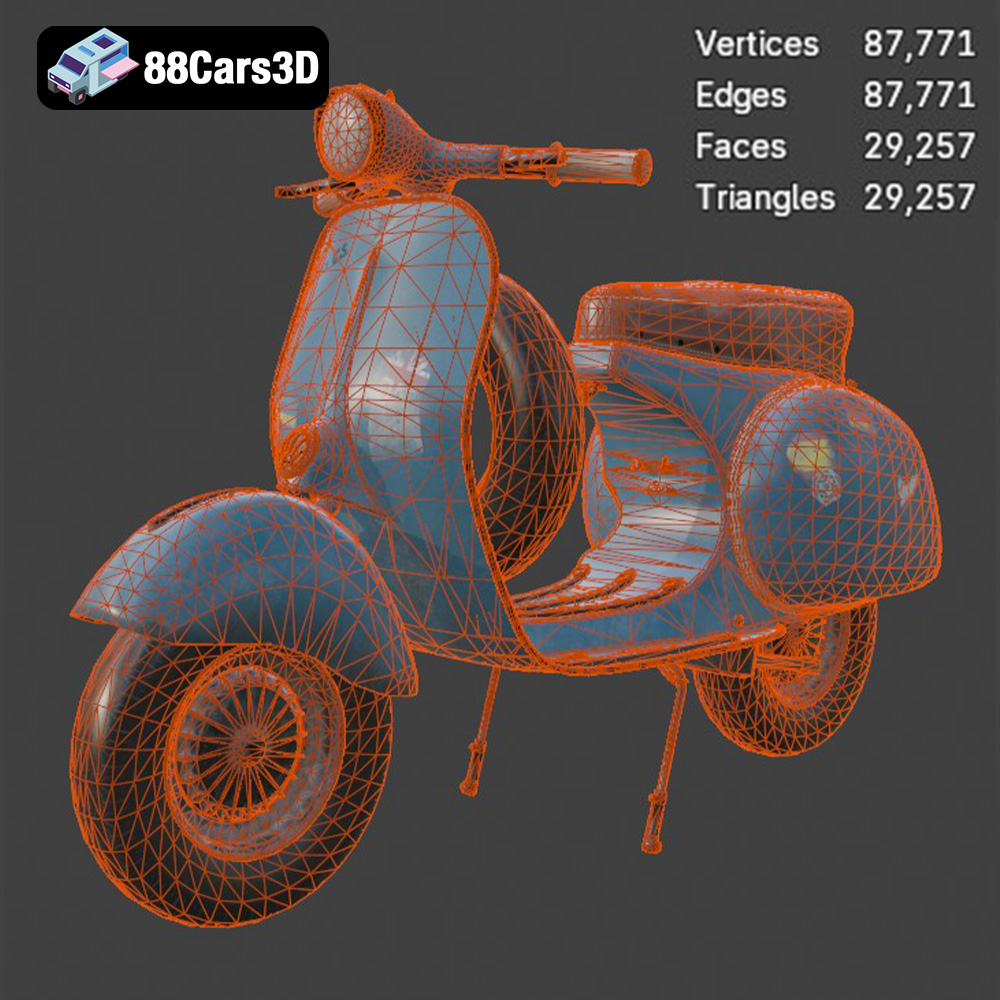
For game developers, performance is paramount. The Vespa GS 150 3D model, with its optimized topology of approximately 200,000 triangles, strikes an excellent balance between visual fidelity and game-ready performance. This polycount is sufficiently detailed for close-up views and cinematic sequences within a game, while remaining efficient enough for inclusion in open-world environments or racing titles without significantly impacting frame rates. The inclusion of `.fbx` and `.unreal` formats, coupled with proper pivot setups for steering, wheel rotation, and suspension travel, means that developers can quickly import the model, apply physics, and animate it for dynamic gameplay. Imagine a classic racing game where players zip through detailed European streets on a historically accurate Vespa, or an open-world adventure where this iconic scooter serves as a memorable mode of transport.
When the goal is photorealistic rendering for marketing campaigns, virtual showrooms, or product visualization, the raw quality of the 3D model is critical. The Vespa GS 150 model, with its accurate unibody frame geometry, detailed engine block, and refined cockpit features, provides an exceptional foundation. Artists working in 3ds Max or Blender can leverage the native `.max` or `.blend` files to fully customize materials, set up studio lighting, and craft breathtaking renders. The separate components for wheels, suspension, and steering also allow for advanced animation, ideal for showcasing the scooter’s mechanics or creating dynamic advertising visuals. Automotive rendering demands precision, and this model delivers, offering the quality expected for high-end visualization projects.
The burgeoning fields of Augmented Reality (AR) and Virtual Reality (VR) demand efficient, high-quality 3D assets. The `.glb` format included with the Vespa GS 150 3D model is perfectly optimized for these applications. Its compact size and embedded textures make it ideal for immersive virtual showrooms where customers can interact with a life-sized Vespa, explore its details, or even change colors in real-time. For mobile AR experiences, users could project the scooter onto their driveway, allowing for unprecedented product engagement. This model’s balance of detail and optimization makes it an excellent choice for developing interactive product configurators or captivating virtual museum exhibits.
The true craftsmanship in 3D modeling lies in the balance between visual appeal and technical efficiency. A high-quality model, such as the Vespa GS 150, exhibits meticulous attention to topology, material setup, and animation readiness.
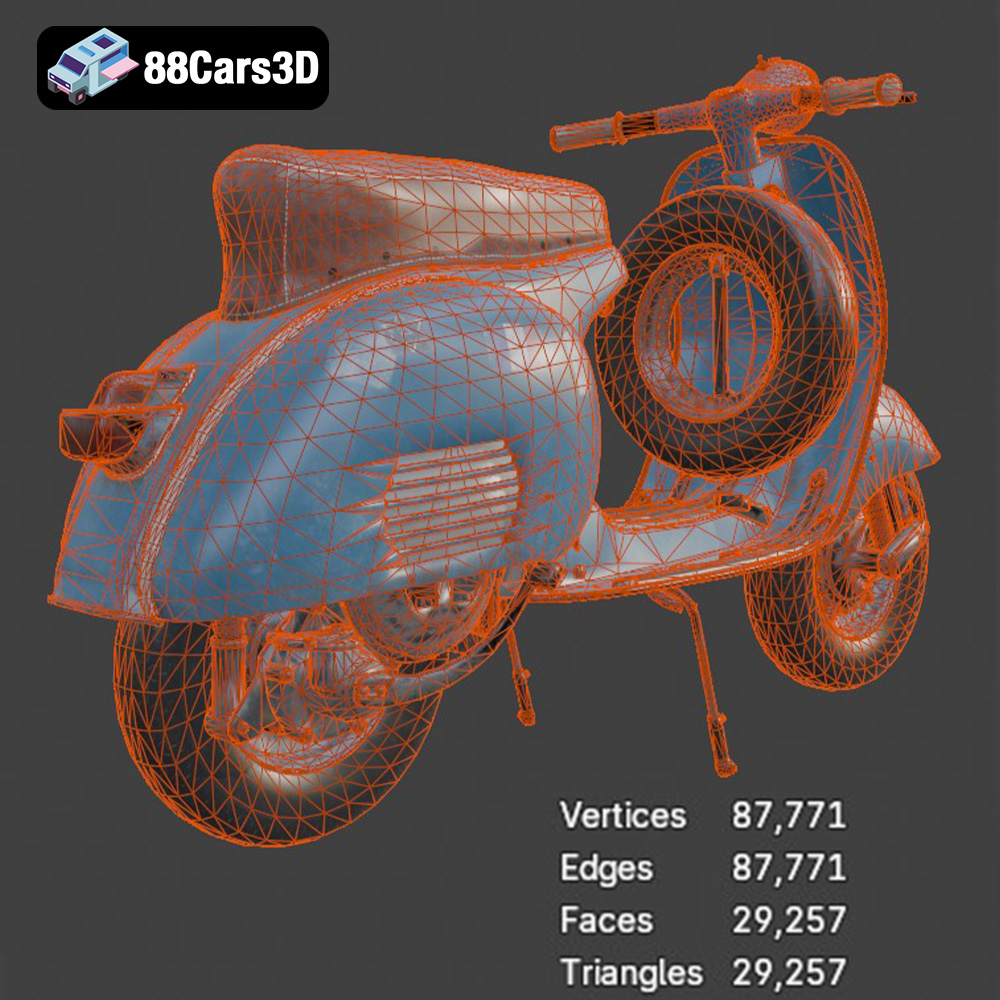
The stated ~200,000 triangles represent a carefully chosen polygon budget. For complex objects like vehicles, achieving realism often necessitates a high polycount, but for real-time applications, this must be managed. This specific count ensures that the iconic curves and intricate details of the Vespa GS 150 – from the swept-back leg shield to the engine cooling fins – are smoothly rendered without appearing blocky, while still being performant enough for game engines. Clean topology, often employing quad-based meshes, ensures smooth deformations during animation and allows for efficient UV mapping and subdivision if higher detail is required for extreme close-ups or cinematic shots.
Modern rendering engines rely heavily on Physically Based Rendering (PBR) workflows to achieve photorealism. While specific texture resolutions aren’t detailed, a high-quality model implies a PBR-ready material setup, including maps for albedo (color), roughness, metallic, normal, and potentially ambient occlusion. These textures, applied over optimized UVs (unwrapped in a way that minimizes distortion and maximizes texture space utilization), give the Vespa GS 150 3D model its lifelike appearance. Customization options, such as changing body/tank colors or adjusting material finishes (matte, gloss, metallic), typically leverage these PBR material systems, allowing artists to easily adapt the scooter’s look to various environments or brand requirements.
A static model can only go so far. For dynamic scenes or interactive experiences, the ability to animate is crucial. The Vespa GS 150 3D model’s design with “separate wheels, suspension, and steering components for animation” is a significant advantage. This modularity, combined with “proper pivot setup for steering, wheel rotation, and suspension travel,” means that animators can quickly set up complex motions. Whether it’s the gentle sway of the suspension over a bump, the tilt of the handlebars during a turn, or the simple rotation of the wheels as the scooter moves, these pre-configured elements drastically reduce setup time and enhance the realism of any animated sequence.
The digital realm offers endless possibilities, but there’s a unique satisfaction in holding a physical representation of a beloved 3D model. The Vespa GS 150 3D model extends its utility into the world of 3D printing, allowing enthusiasts to bring this classic scooter to life as a tangible collectible.
The `.stl` format is the gateway to 3D printing, converting the digital mesh into a printable format. The product description provides excellent guidance for this process:
Following these guidelines ensures a successful print that faithfully translates the digital model’s details into a physical object.
The journey doesn’t end when the print finishes. Post-processing transforms a raw 3D print into a display-worthy model. This typically involves:
The combination of a high-detail `.stl` model and careful post-processing results in a museum-quality miniature, a testament to both digital craftsmanship and physical fabrication.
A truly valuable 3D asset provides a foundation, not a limitation. The Vespa GS 150 3D model offers extensive customization options, allowing artists to adapt it to an endless array of creative visions.
The ability to personalize the model is a significant advantage. Artists can:
These modifications enable the Vespa GS 150 to transcend its historical context, making it suitable for modern art installations, futuristic concepts, or period-accurate renderings.
Beyond the model itself, its versatility shines in how easily it integrates into different scenes. Artists can:
Whether it’s the sole focal point or a supporting element in a grander scene, the Vespa GS 150 3D model from 88cars3d.com offers the flexibility and quality required to elevate any project. It’s an investment in a highly adaptable game asset and rendering workhorse, perfect for creating compelling digital narratives.
The Vespa GS 150 is more than just a historical vehicle; it’s a piece of art on wheels. Its digital counterpart, a meticulously crafted 3D model, carries that same legacy into the virtual world, offering unparalleled detail, technical optimization, and broad compatibility. From powering real-time game environments and creating breathtaking cinematic renders to facilitating immersive AR/VR experiences and even producing tangible 3D prints, this model stands out as an indispensable asset for any professional in the 3D industry. Its rich feature set, comprehensive file format support, and focus on both fidelity and performance make it a versatile tool for storytelling, visualization, and interactive design. For anyone seeking to infuse their projects with a touch of classic Italian elegance and robust technical quality, investing in a model like the Vespa GS 150 3D model available on 88cars3d.com is a decision that will undoubtedly elevate their creative output.
The Vespa GS 150 (Gran Sport) is an iconic scooter known for its elegant aerodynamic curves and historical significance. This high-quality 3D model captures its essence with a well-optimized topology (~200,000 triangles) for exceptional visual fidelity and game-ready performance. Perfect for close-up renders, real-time engines, AR/VR, and 3D printing, it includes accurate geometry, detailed engine and cockpit features, and is ready for animation. Available in multiple formats for broad compatibility across major 3D software and real-time rendering engines.
$39.99
.blend
.fbx
.glb
.max
.obj
.ply
.rendering
.scooter
.stl
.unreal
.vespa
classic-scooter
game asset
game-ready
gs-150
low-poly
motorcycle-3d-model
optimized
retro-scooter
scooter-3d-model
VR/AR