Get 20% OFF All Premium 3D & STL Models!

The world of 3D modeling has revolutionized how we interact with design, engineering, and entertainment. From the breathtaking realism of modern video games to the precision of architectural visualizations, high-quality 3D assets are the backbone of digital innovation. In the realm of automotive design, this holds especially true. Capturing the essence of a luxury vehicle in digital form requires meticulous attention to detail, technical expertise, and an understanding of its underlying engineering.
Few vehicles embody sophisticated luxury and aggressive elegance quite like the 2018 Lexus LS 500. A true masterpiece of Japanese automotive craftsmanship, it boasts a distinctive spindle grille, a sleek coupe-like silhouette, and an interior sculpted with traditional Takumi artistry. Recreating such a complex and revered machine in the digital space is a formidable task, yet one that, when executed flawlessly, provides invaluable assets for a myriad of industries. This comprehensive guide will delve into the technical intricacies of premium 3D car models, using the Lexus LS 500 2018 3D Model as our prime example, exploring its utility across diverse professional workflows, from game development to advanced automotive rendering and beyond. We’ll uncover how such a meticulously crafted asset, like those found on 88cars3d.com, becomes an indispensable tool for designers, artists, and developers.
When sourcing or creating 3D car models, one of the most critical aspects to consider is the file format. Each format serves specific purposes, offers distinct advantages, and dictates compatibility across various 3D software and real-time engines. The Lexus LS 500 2018 3D Model from 88cars3d.com is provided in a comprehensive suite of formats, ensuring its adaptability for nearly any project pipeline. Understanding these formats is crucial for optimizing your workflow and achieving your desired results.
The provision of these diverse formats with the Lexus LS 500 2018 3D Model underscores its versatility. Whether your project demands real-time performance in Unreal Engine via .fbx, deep customization in Blender via .blend, or physical replication through .stl, this asset from 88cars3d.com ensures you have the right tool for the job.
Translating the physical elegance and intricate engineering of a luxury sedan like the Lexus LS 500 into a digital asset is a true testament to the skill of 3D artists. It’s not merely about copying shapes; it’s about understanding design language, material properties, and the subtle cues that define its real-world presence. The Lexus LS 500 2018 3D Model stands as an exemplar of this intricate craft.
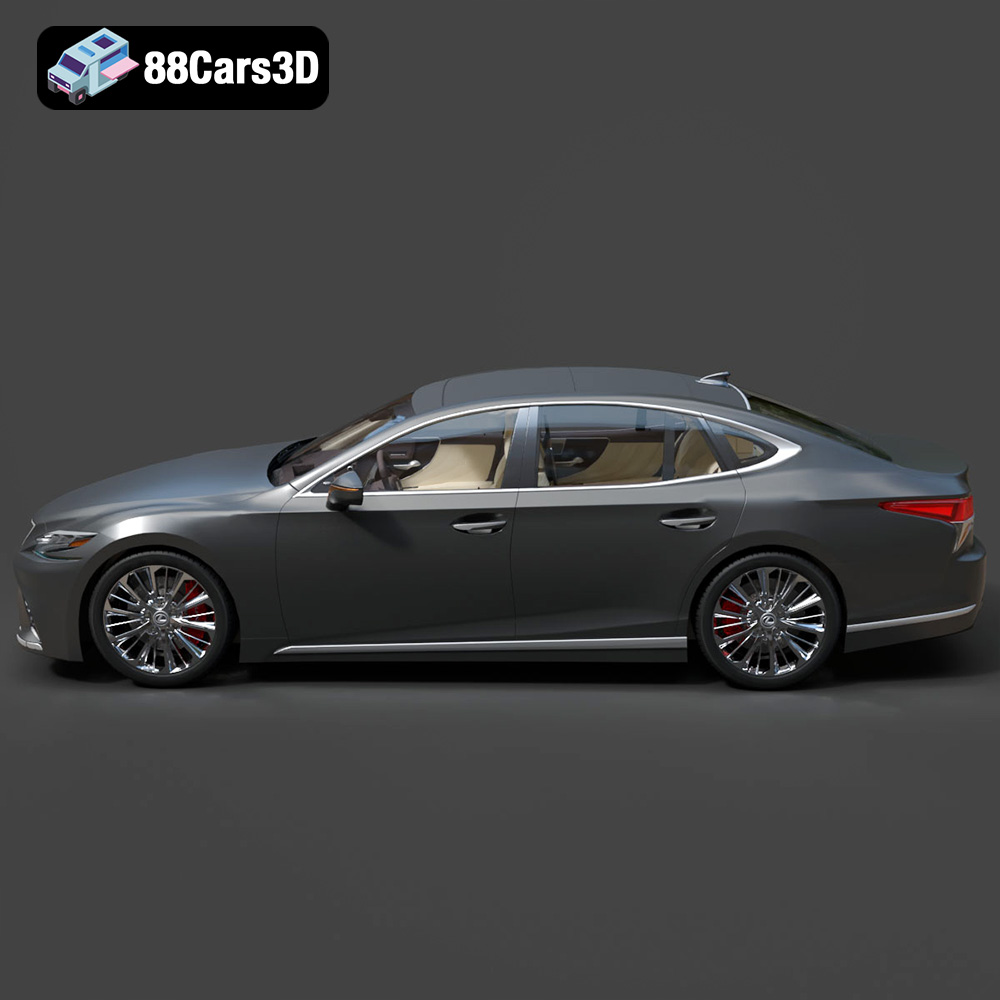
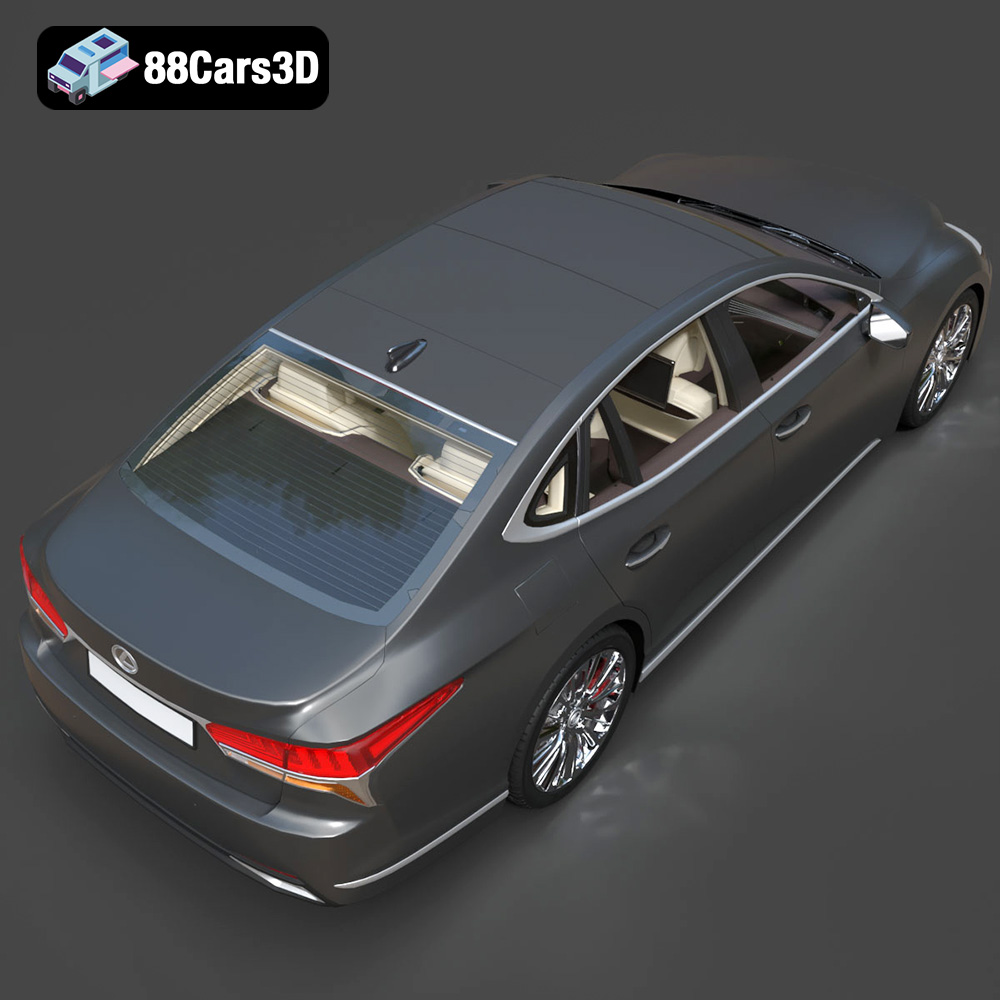
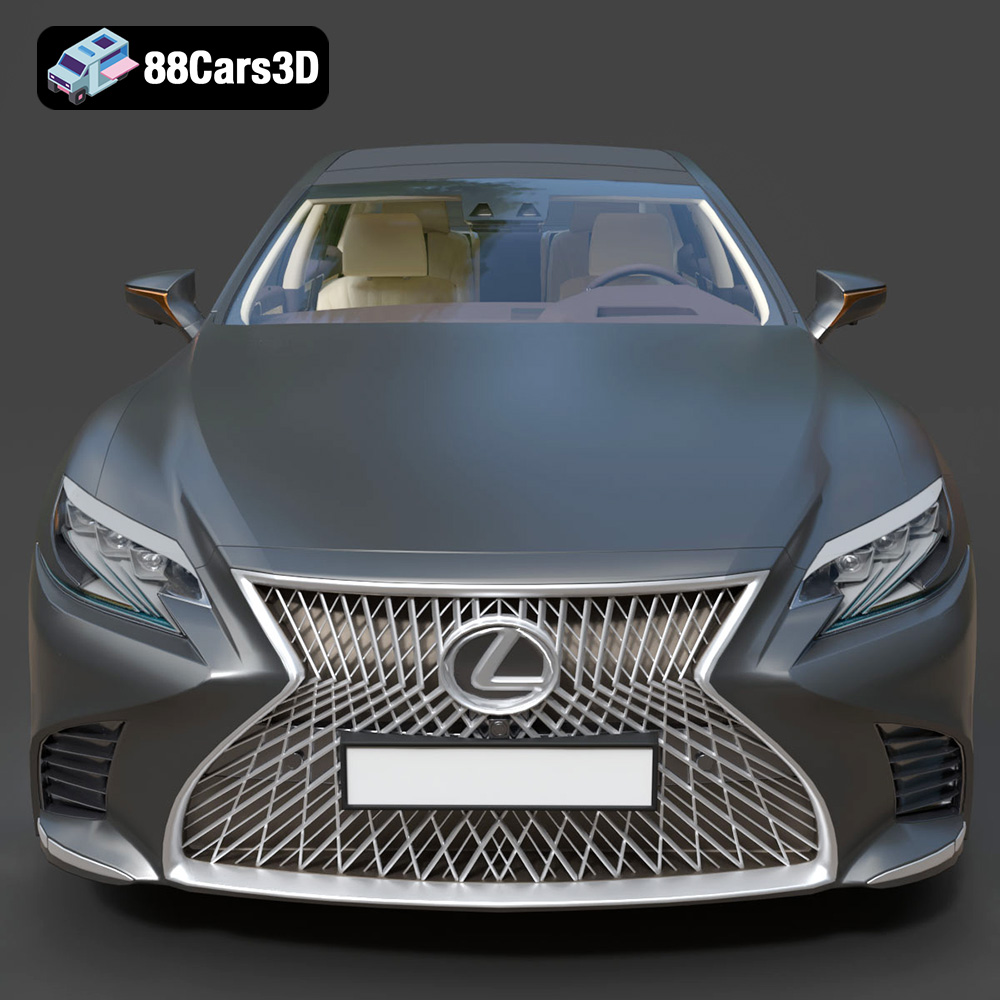
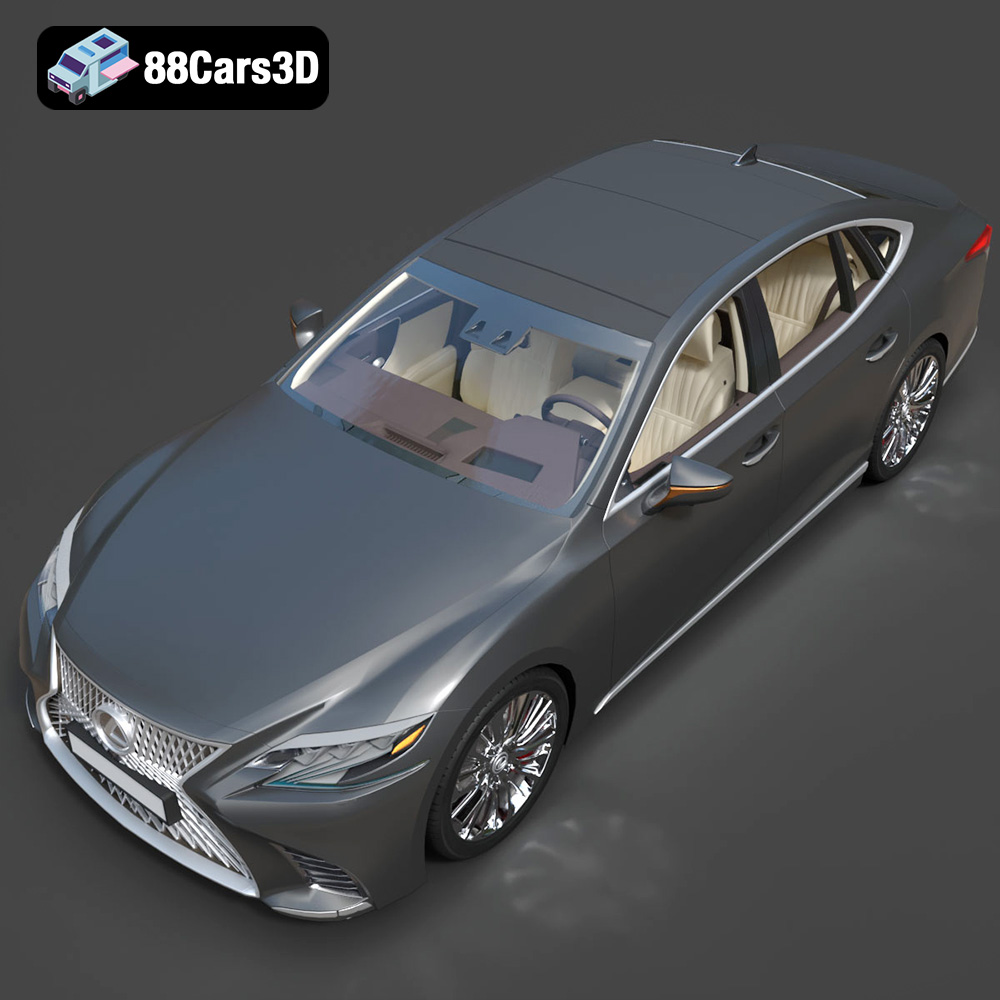
The 2018 Lexus LS 500 is instantly recognizable by its bold design elements. The signature spindle grille, a complex interplay of lines and mesh, demands painstaking accuracy in its 3D recreation. Any deviation from its original geometry would compromise the vehicle’s identity. This model features a meticulously detailed grille, complete with accurate mesh geometry, reflecting the vehicle’s aggressive yet refined styling. Similarly, the unique Z-shaped LED headlights and L-shaped taillights, with their internal projector detailing, are crucial for conveying authenticity. The overall coupe-like silhouette, a challenging form to balance with sedan practicality, is flawlessly replicated, capturing the flowing lines and dynamic road presence that define the LS 500. Even the dual exhaust finishers with chrome detailing and the precisely modeled 19-inch/20-inch alloy wheels with their low-profile tires and detailed brake calipers contribute to the overall photorealism. This level of exterior fidelity is what elevates a good 3D car model to an exceptional one, ready for high-end automotive rendering.
While the exterior captures immediate attention, the interior is where the true luxury experience of the LS 500 unfolds. For digital applications like AR/VR experiences, virtual showrooms, or even first-person perspectives in games, an accurately modeled interior is paramount. The Lexus LS 500 2018 3D Model excels here, boasting luxurious leather-trimmed seating with intricate quilting and stitching details that convey the Takumi craftsmanship. The detailed steering wheel, complete with integrated controls and paddle shifters, the high-resolution digital instrument cluster, and the center infotainment display screen are all carefully reproduced. Accurately placed center console controls, the trackpad, shifter, and pedals ensure that the cockpit geometry is optimized not just for visual appeal but also for immersive first-person POV in gaming and virtual simulations. This level of interior detail transforms the model from a simple visual asset into an interactive experience.
In the fast-paced world of game development and real-time visualization, raw detail must be balanced with performance. A high-quality game asset like the Lexus LS 500 2018 3D Model is engineered to deliver stunning visuals without bogging down the rendering engine. This optimization is a key differentiator for professional-grade assets.
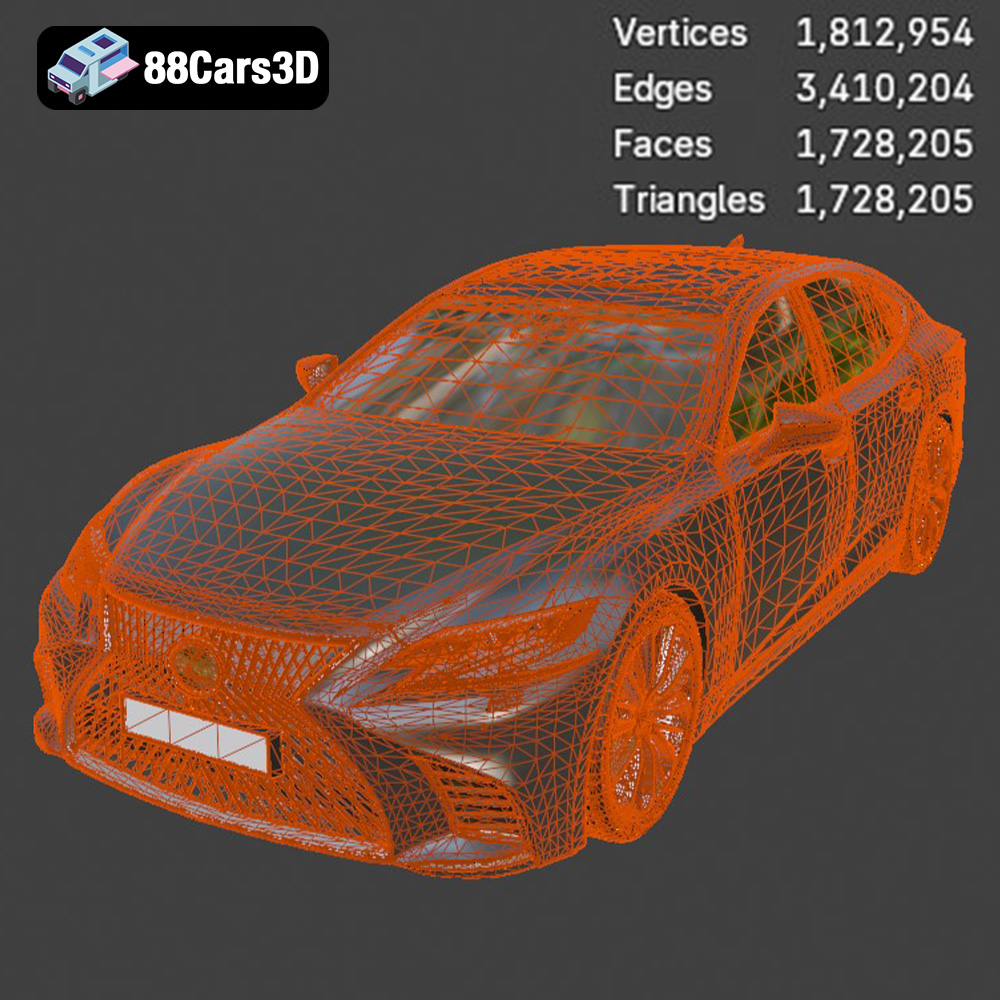
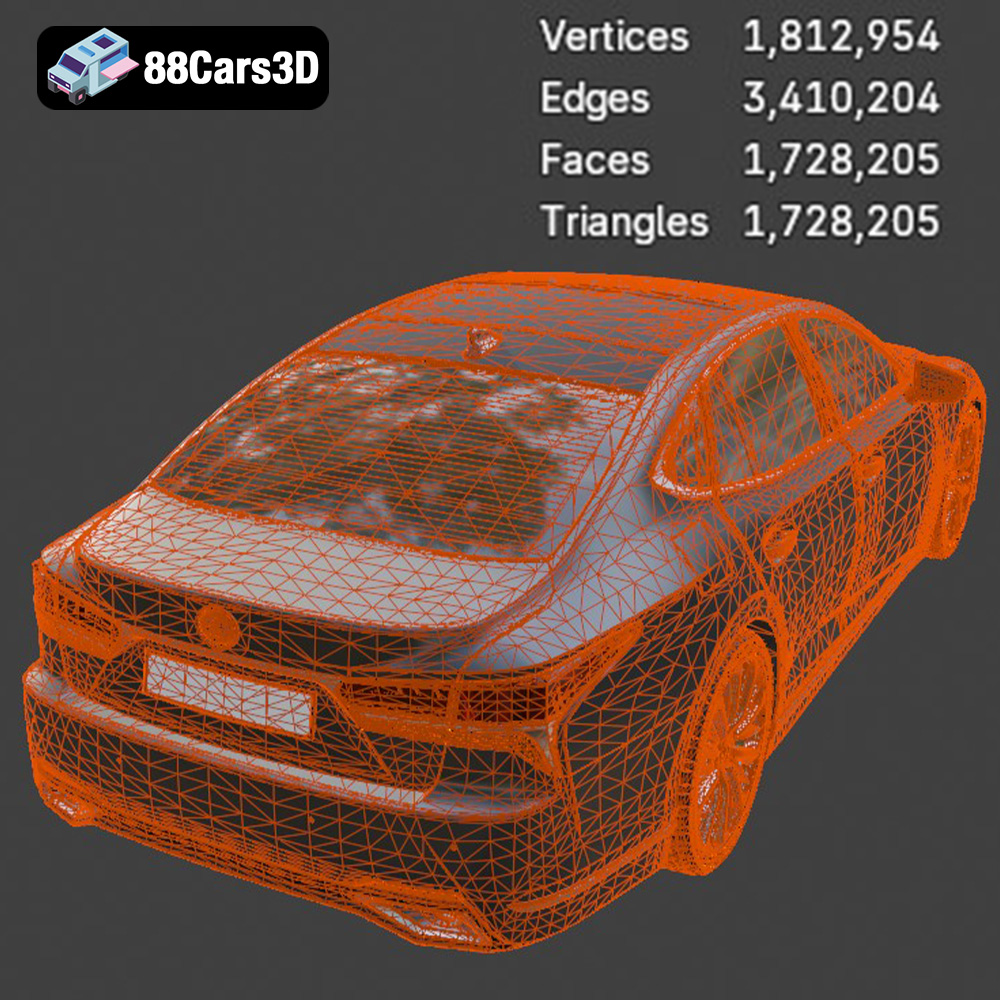
The Lexus LS 500 2018 3D Model boasts an optimized topology of approximately 200,000 triangles. This specific polycount is not arbitrary; it represents a carefully considered balance. For real-time engines such as Unreal Engine and Unity, a model with excessively high polycount can severely impact frame rates, leading to a poor user experience. Conversely, too few triangles result in a blocky, unrealistic appearance. At around 200,000 triangles, this model strikes a perfect equilibrium, maintaining top-tier visual fidelity crucial for photorealistic outcomes while remaining highly efficient for real-time performance. This makes it ideal for open-world games where many vehicles might be present, for racing titles demanding smooth frame rates, and for immersive AR/VR experiences where every millisecond counts.
Integrating a complex 3D car model into a game engine involves more than just dragging and dropping. It requires proper setup, material application, and often, specific rigging. The Lexus LS 500 2018 model is provided in formats like .fbx and specifically optimized for .unreal, making this process significantly smoother. Developers can import the .fbx file into Unreal Engine or Unity, leveraging physically-based rendering (PBR) workflows to set up realistic car paint, glass, and chrome materials. The model’s real-world scale accuracy ensures it fits seamlessly into virtual environments, and its proper pivot setup for steering, wheel rotation, and suspension travel is a critical advantage. This pre-configured rigging allows animators and developers to quickly implement realistic vehicle dynamics, accelerating the development cycle and enabling believable driving experiences without needing to spend valuable time on fundamental setup.
Beyond interactive real-time applications, the demand for photorealistic automotive rendering in static images and cinematic animations is ever-present. From architectural visualization to high-end product showcases, a premium 3D car model transforms a scene, adding life, luxury, and context. The Lexus LS 500 2018 3D Model is perfectly suited for these demanding applications.
For artists working with industry-standard renderers like V-Ray or Arnold in 3ds Max, or Cycles and Eevee in Blender, the quality of the base 3D model is paramount. The clean geometry, precise details, and high-resolution textures of the Lexus LS 500 2018 provide an exceptional foundation. In 3ds Max, artists can leverage the included .max file to access pre-configured scene elements or apply their own advanced material shaders, utilizing complex car paint setups that simulate metallic flakes, clear coats, and reflections. In Blender, the .blend file allows for similar flexibility with Cycles, employing its powerful node-based materials to craft stunningly realistic finishes. Setting up studio lighting environments or integrating the car into an HDRI (High Dynamic Range Image) background becomes a straightforward process, enabling the creation of breathtaking promotional imagery, virtual studio shots, or lifestyle renders that are indistinguishable from real-world photography.
The applications for such a high-fidelity model are vast. In architectural visualization, integrating the Lexus LS 500 into exterior or interior renders of luxury homes, commercial spaces, or urban landscapes instantly adds a layer of realism and aspiration. Imagine a sleek LS 500 parked outside a modernist villa, enhancing the overall scene’s aesthetic and narrative. For automotive brands, this model is invaluable for creating virtual showrooms or interactive configurators, allowing potential buyers to explore color options, interior trims, and features in a dynamic, engaging way. Furthermore, for cinematic animations, the separated wheels, doors, suspension, and steering components enable animators to craft realistic sequences, whether it’s a dramatic reveal, a smooth drive-by, or a detailed breakdown of the vehicle’s mechanics. The model’s quality ensures that even under close-up shots and dynamic camera movements, it retains its photorealistic integrity, making it a compelling game asset for any visual project.
While digital visualization is powerful, the ability to bring a 3D model into the physical world through 3D printing offers unique possibilities for hobbyists, designers, and collectors. The Lexus LS 500 2018 3D Model supports this tangible transition, provided in the widely used .stl format.
Converting a high-detail rendering model into a printable .stl file requires specific considerations to ensure structural integrity and detail preservation. The .stl format represents objects as a series of interconnected triangles, and for successful printing, the model must be “manifold” – meaning it’s a completely watertight mesh with no holes or inversions. The Lexus LS 500 2018 model is structured to facilitate this. Recommended scales like 1:12, 1:18, or 1:24 allow for various display sizes. Key settings for 3D printing, such as layer height (0.04–0.12 mm, with resin printing often recommended for fine details), wall thickness (1.2–2.0 mm), and infill (20–30%), are provided to guide users towards optimal results. Crucially, supports are required for intricate parts like the grille, exhaust outlets, mirrors, and specific suspension components, while print orientation, such as printing the frame angled and wheels separately, maximizes structural integrity and print quality. This attention to 3D print settings transforms a digital luxury car into a tangible collectible.
Once printed, the physical Lexus LS 500 model undergoes a crucial post-processing phase to achieve its final, display-ready quality. This typically involves sanding to smooth out layer lines, applying primer to create an even surface, and then meticulously painting the model with authentic factory colors, often utilizing metallic or pearl finishes to mimic the original vehicle’s luxurious appeal. Enthusiasts can even add small details like window tinting or tiny chrome accents. This process allows hobbyists to create highly detailed, display-scale models of their favorite luxury sedan, fulfilling a passion for automotive design through hands-on craftsmanship. It’s an excellent way to bridge the gap between digital assets and physical admiration, showcasing the versatility of professional 3D car models.
A truly valuable 3D car model offers more than just out-of-the-box quality; it provides the flexibility for artists and developers to tailor it to their unique creative visions and project requirements. The Lexus LS 500 2018 3D Model from 88cars3d.com is designed with this adaptability in mind, empowering users to customize various aspects to fit their scene or game.
The ability to customize a 3D asset significantly extends its lifespan and utility across multiple projects. With the Lexus LS 500 2018 3D Model, users can easily modify body colors, choosing from a palette of authentic factory colors or experimenting with custom metallic, matte, or pearl finishes. This is critical for visual configurators or for matching the car’s aesthetic to a specific brand identity or scene mood. Beyond color, the model allows for adjustments to material finishes, enabling shifts between matte, gloss, or chrome looks for different components, adding nuanced realism. Tire textures can be swapped to represent street-legal or performance variants, influencing both visual appeal and perceived function. Furthermore, adapting lighting for different environments—whether simulating bright daylight, dramatic night driving, or a clean studio setup—is essential for evoking the right atmosphere. The included .blend and .max formats provide the deepest level of access for these modifications, allowing artists to dive into the shader networks and geometry with full creative control.
Let’s consider a practical example for automotive rendering in Blender. An artist might start by importing the .blend file for the Lexus LS 500 2018 3D Model. First, they would set up a classic studio environment: a seamless backdrop, a key light, a fill light, and a rim light to highlight the car’s contours. Next, they would select the car paint material and, using Blender’s node editor, adjust parameters such as the metallic value, roughness, clear coat thickness, and even the subtle metallic flake density, to perfectly capture the sheen of a luxury vehicle. The glass materials would be refined for optimal transparency and reflections. Once the materials are dialed in, they might experiment with different camera angles and focal lengths to emphasize the LS 500’s elegant lines. Finally, rendering with Cycles, Blender’s physically accurate path tracer, would produce a high-resolution, photorealistic image ready for a marketing campaign or portfolio. This straightforward workflow demonstrates how a well-prepared 3D car model simplifies complex rendering tasks.
The journey from a meticulously designed luxury vehicle like the 2018 Lexus LS 500 to a versatile, high-fidelity 3D car model is one that demands precision, technical expertise, and an understanding of diverse industry applications. As we’ve explored, a premium asset like the Lexus LS 500 2018 3D Model is not merely a digital representation; it’s a multifaceted tool that empowers professionals across game development, AR/VR, architectural visualization, cinematic rendering, and even 3D printing.
Its optimized polycount ensures real-time performance, while its detailed geometry and PBR-ready materials deliver photorealistic results for high-end visualizations. The comprehensive suite of file formats – from .blend and .max for deep customization to .fbx for game engines and .stl for physical output – guarantees seamless integration into virtually any professional workflow. Whether you’re crafting an immersive open-world game, designing a compelling advertising campaign, or bringing a physical model to life, the quality and adaptability of this Lexus LS 500 2018 model make it an indispensable game asset and rendering tool. For those seeking professional-grade 3D car models that meet the highest standards of realism and technical excellence, resources like 88cars3d.com offer a curated selection that truly stands out.
The 2018 Lexus LS 500 is the pinnacle of Japanese luxury, featuring a striking spindle grille, elegant coupe-like silhouette, and a powerful twin-turbo V6 engine. Known for its meticulous Takumi craftsmanship, whisper-quiet ride, and aggressive yet refined styling, the LS 500 represents the intersection of executive comfort and cutting-edge automotive design. From its complex front fascia to the dual exhaust outlets, every curve is captured to convey its dynamic road presence.
This highly detailed, game-ready 3D model boasts optimized topology (approximately 200,000 triangles), ensuring top-tier visual fidelity without sacrificing real-time performance. Designed with clean geometry and high-resolution textures, it delivers photorealistic results ideal for modern game development, immersive AR/VR experiences, high-end animation, and architectural visualization.
Perfect for luxury car configurators, urban open-world games, cinematic architectural renderings, and high-end brand showcases.
.blend, .fbx, .obj, .glb, .stl, .ply, .unreal, .max
Tags:
lexus, ls-500, 2018, luxury-sedan, executive-car, game-ready, low-poly, optimized, car-3d-model, game-asset, rendering, vr-ar, blend, fbx, obj, glb, stl, ply, unreal, maxBMW 328 Mille Miglia Touring Coupe 3D Model 3D Printable STL
$39.99
.2018
.blend
.fbx
.glb
.lexus
.max
.obj
.ply
.rendering
.stl
.unreal
car-3d-model
executive-car
game asset
game-ready
low-poly
ls-500
luxury-sedan
optimized
VR/AR