Get 20% OFF All Premium 3D & STL Models!

In the rapidly evolving landscape of digital visualization, the demand for high-quality 3D assets is more prevalent than ever. From blockbuster video games to cutting-edge augmented reality experiences and photorealistic architectural renderings, detailed models form the bedrock of immersive digital worlds. Among these, 3D car models hold a special place, embodying a unique blend of engineering precision and aesthetic design. They are not merely objects but digital canvases that convey power, luxury, and history.
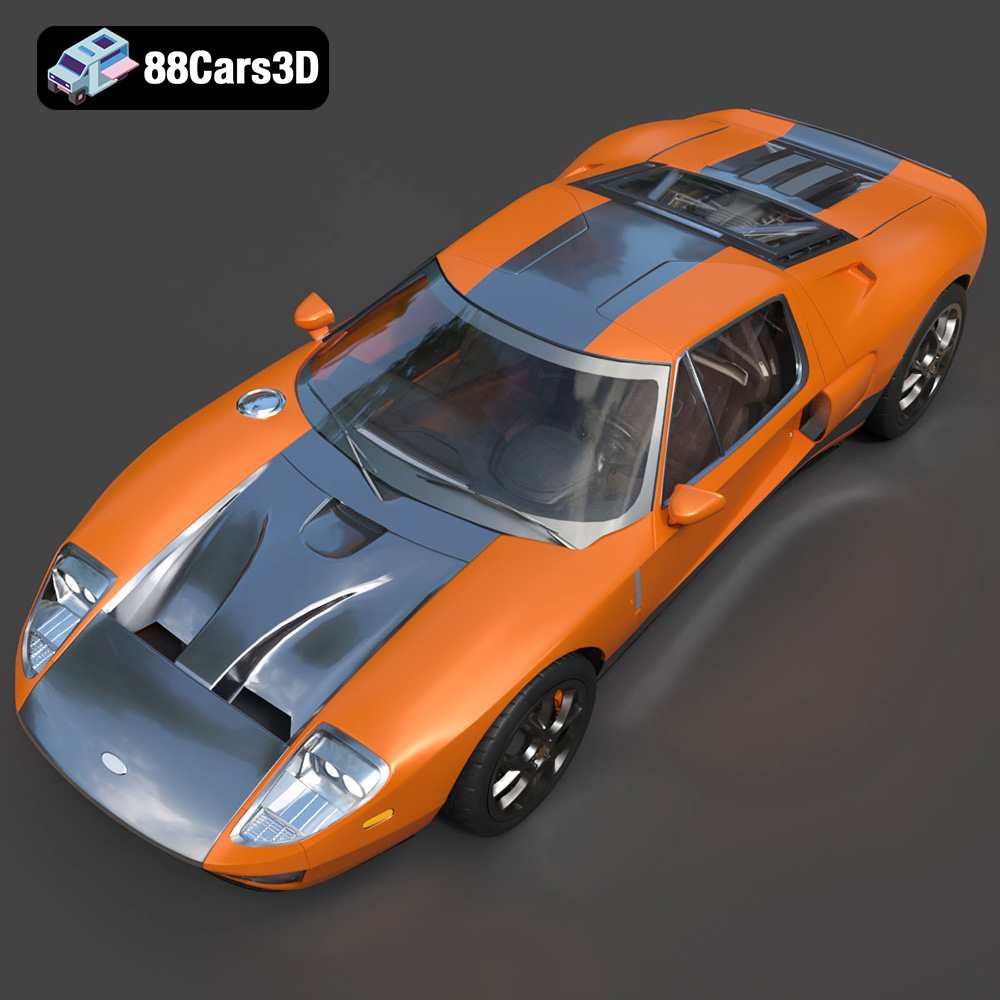
Today, we’re diving deep into the technical intricacies and creative potential offered by professionally crafted automotive assets, exemplified by the iconic Ford GT 2005 3D model. This isn’t just a digital replica; it’s a meticulously engineered asset designed to push the boundaries of realism and performance across a spectrum of professional applications. Whether you’re a game developer seeking an optimized hero vehicle, an automotive designer visualizing a new concept, or an animator bringing dynamic scenes to life, understanding the nuances of such models is crucial. Let’s explore how assets like the Ford GT 2005 model from 88cars3d.com empower creators to achieve unparalleled visual fidelity and interactive experiences.
The versatility of a 3D model often hinges on the array of file formats it supports. Each format serves specific purposes, catering to different software ecosystems, project requirements, and delivery platforms. Understanding these distinctions is paramount for any professional working with 3D assets. The Ford GT 2005 3D model download from 88cars3d.com, for instance, comes with an extensive suite of formats, ensuring broad compatibility and optimal use cases.
The .blend file format is the native format for Blender, a powerful and widely used open-source 3D creation suite. When you receive a .blend file, you’re getting a fully editable Blender scene. This includes not just the mesh geometry, but also materials, textures, lighting setups, cameras, animation data, and even modifiers. For artists who primarily work in Blender, this format offers the most flexibility for customization and integration into existing projects. You can easily modify the topology, adjust materials, rig components, or set up complex render scenes without any loss of data that might occur during format conversion.
FBX (Filmbox) is arguably the most widely adopted proprietary file format for 3D data exchange, particularly crucial for game development and real-time pipelines like Unreal Engine and Unity. Developed by Autodesk, FBX excels at preserving a wide range of data, including mesh geometry, materials, textures, animation, rigs, and even camera and light information, across different 3D software applications. Its robustness makes it ideal for exporting animated characters or complex models like the Ford GT 2005, ensuring that all components (wheels, suspension, steering) retain their proper hierarchy and pivot points when imported into a game engine. This is critical for animation and interactive control.
OBJ (Wavefront Object) is one of the oldest and most universally supported 3D file formats. It’s a simple, text-based format primarily used to store 3D geometry (vertices, normals, texture coordinates, and faces) and material references (.mtl file). While it doesn’t typically store animation or rigging data, its widespread compatibility makes it an excellent choice for cross-software collaboration and general asset sharing. If you need a clean mesh of the Ford GT 2005 model for sculpting, retopology, or import into less common 3D applications, OBJ is often the safest bet due to its broad support.
GLB (GL Transmission Format Binary) is an increasingly vital format, especially for web-based 3D, augmented reality (AR), and virtual reality (VR) applications. GLB is the binary version of glTF, designed to be compact and efficient for quick loading and rendering. It embeds all necessary data—geometry, materials, textures, animations—into a single file, making it incredibly convenient for distribution and deployment on platforms that support WebGL. For creating interactive virtual showrooms or mobile AR experiences with the Ford GT 2005, GLB offers superb performance and ease of integration.
STL (STereoLithography) is the de facto standard file format for 3D printing. It represents the surface geometry of a 3D object using a collection of interconnected triangles, without any color, texture, or material information. While it simplifies the model, this triangulation is precisely what 3D printers understand. The Ford GT 2005 3D model, when converted to .stl, becomes a physical possibility, allowing hobbyists and professionals to fabricate display models at recommended scales like 1:12 or 1:18, as specified in the product description.
PLY (Polygon File Format) is a file format for storing 3D data, particularly useful for high-resolution scan data, scientific applications, and CAD. Like OBJ, it primarily focuses on geometry, but it can also store color, transparency, normals, and texture coordinates per vertex or per face. It’s often used when precision and detailed mesh information are critical, such as for reverse engineering or complex simulations, offering an alternative to OBJ for highly accurate static models.
While not a universal file extension in the traditional sense like FBX, a “.unreal” file typically refers to an asset or package specifically prepared and optimized for direct import or use within Unreal Engine. This could be an FBX already imported and configured as a Static Mesh or Skeletal Mesh asset, or an Unreal Engine native asset package containing material instances, textures, and blueprints that wrap around the core mesh. For models like the Ford GT 2005, this means it’s pre-configured to leverage Unreal Engine’s advanced rendering capabilities, with materials set up for physically based rendering (PBR), ensuring stunning reflections and lighting.
Similar to .blend for Blender, .max is the native file format for Autodesk 3ds Max, another industry-leading 3D modeling, animation, and rendering software. A .max file contains the complete scene, including geometry, materials, lighting, cameras, animation, and any specific 3ds Max modifiers or plugins used. For professionals working within the Autodesk ecosystem, this format provides full editability and access to all scene parameters, making it ideal for high-end cinematic rendering and complex animation tasks.
The true value of a professional 3D car model lies not just in its visual appeal but in its underlying technical structure and optimization. A truly high-fidelity model, such as the Ford GT 2005 3D model, is a marvel of technical craftsmanship, designed to perform efficiently across various demanding applications.
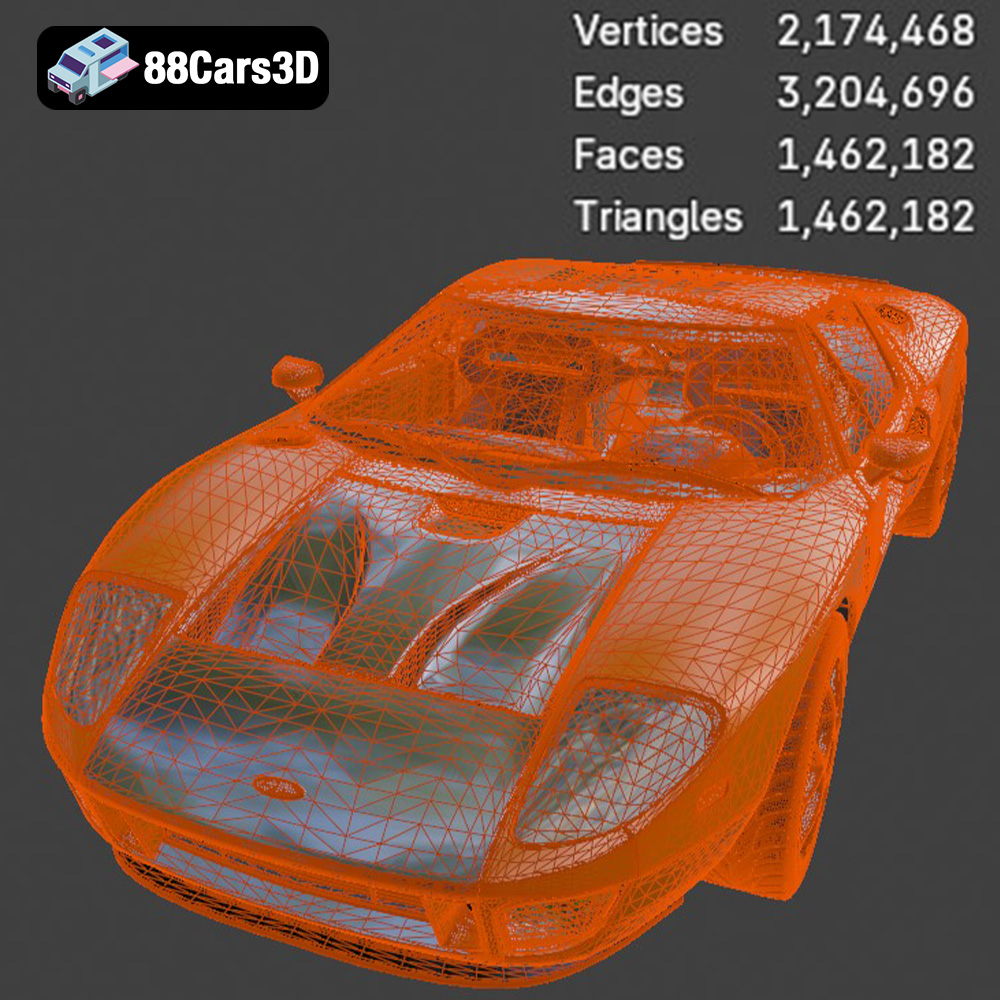
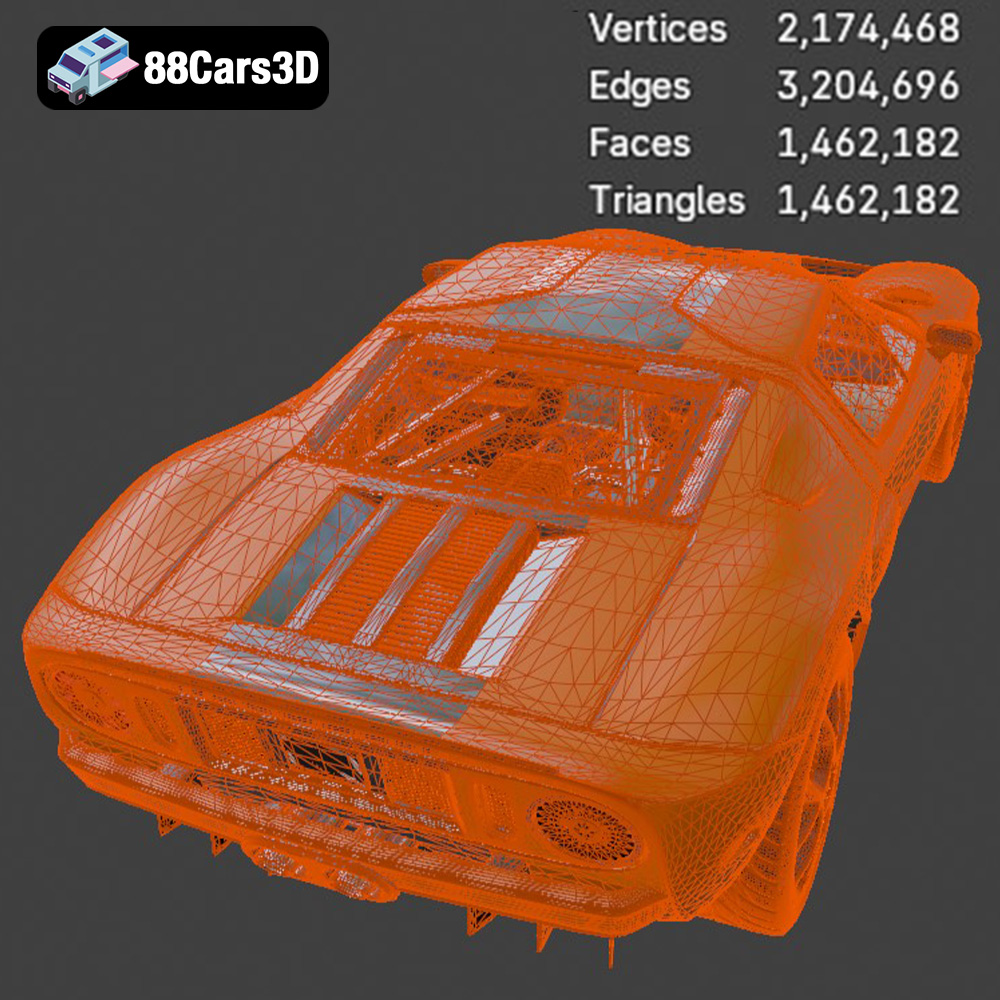
One of the most critical aspects of any 3D asset is its polycount (or triangle count) and topology. For the Ford GT 2005, a “game-ready & optimized” ~150,000 triangles strikes a perfect balance. In the world of real-time rendering, every triangle consumes computational resources. Too many, and your game or VR experience will suffer from low frame rates. Too few, and the model will look blocky and unrealistic. This specific polycount ensures that the Ford GT 2005 maintains a high-end visual realism, capturing its aerodynamic curves and iconic silhouette without overwhelming the GPU in environments like Unreal Engine or Unity.
Beyond the raw count, clean geometry and well-structured topology are paramount. This means the mesh flows logically, minimizing distortions during deformation (if animated) and ensuring proper shading. Artists meticulously craft meshes with attention to quads (four-sided polygons) where possible, converting to triangles for efficiency when necessary, to facilitate smooth subdivision and robust material application. This careful construction prevents visual artifacts and ensures the model performs optimally, whether it’s the hero asset in a racing game or a background element in a cinematic.
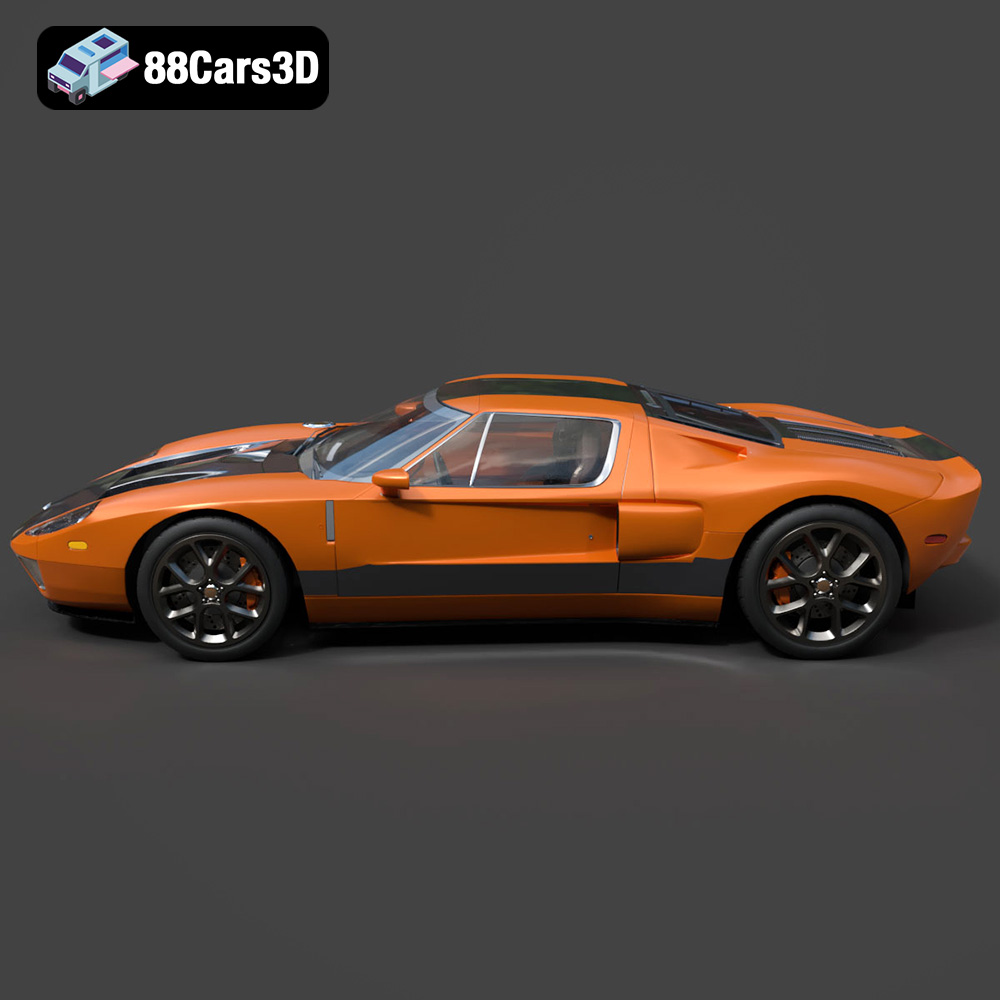
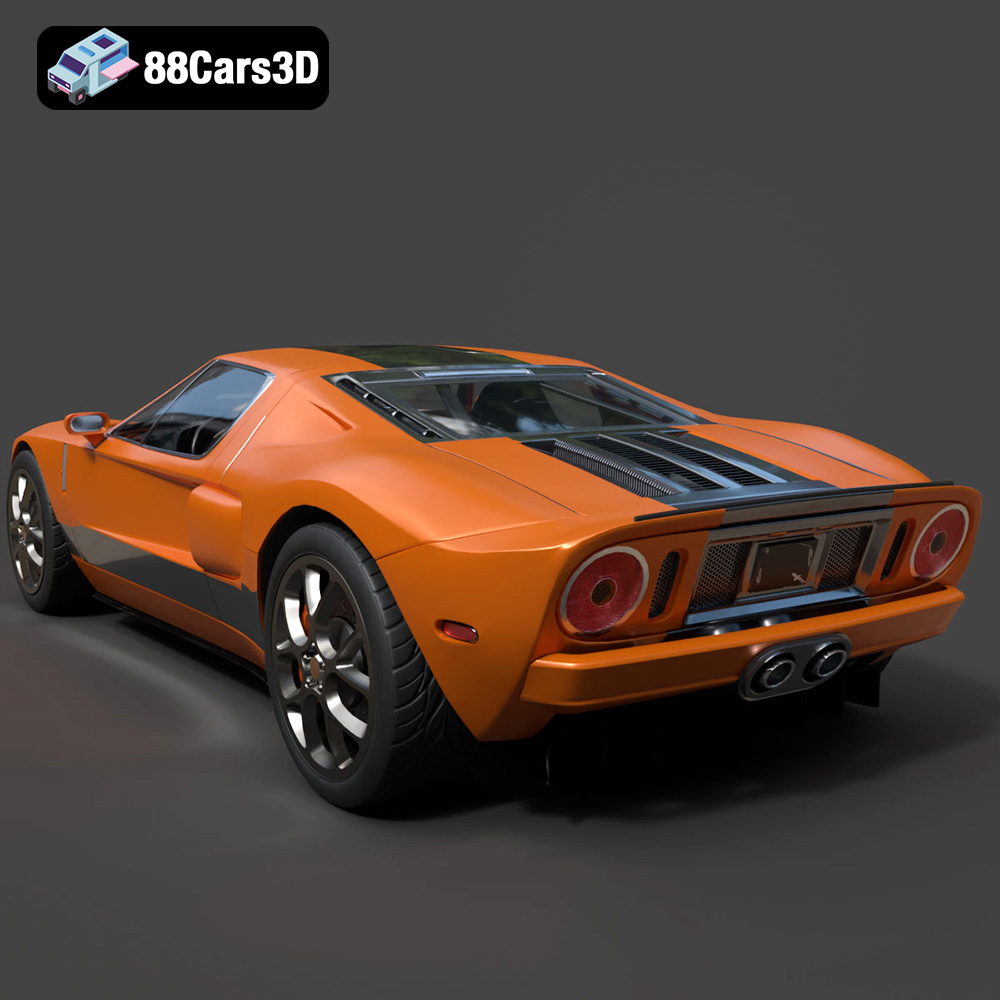
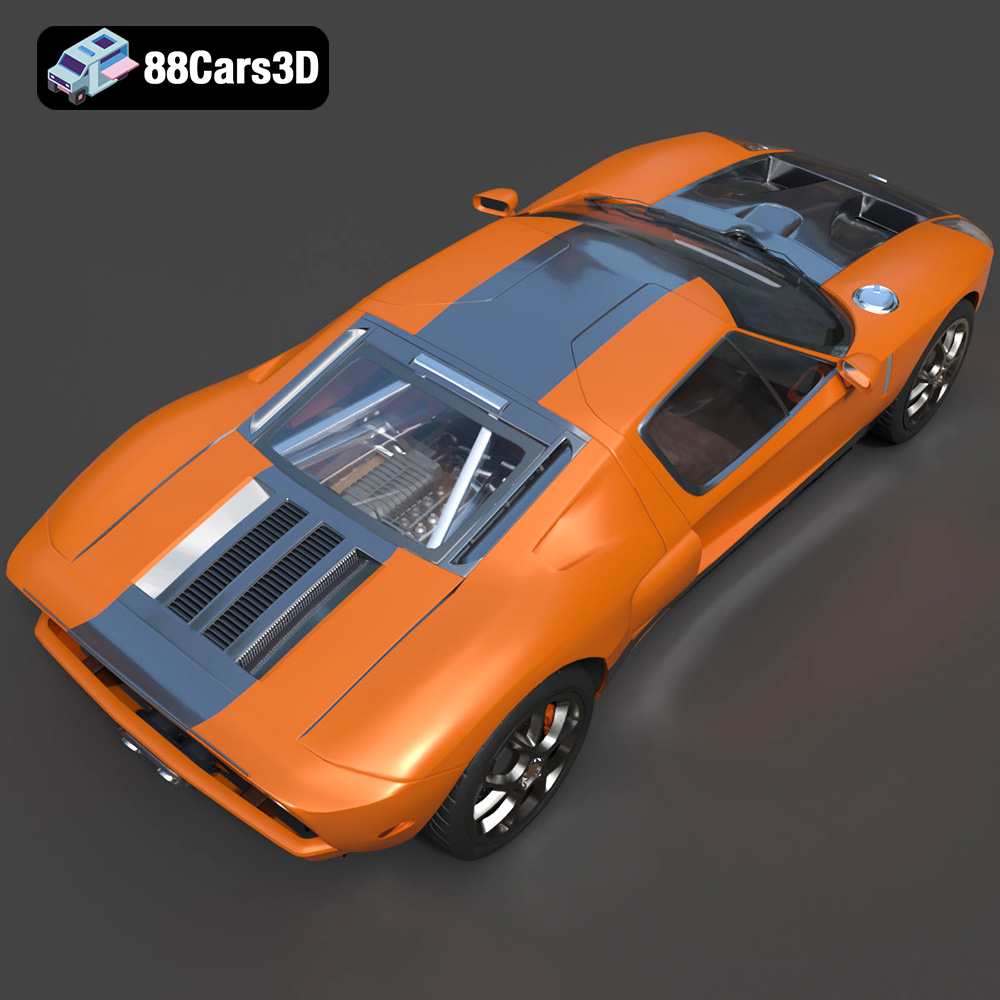
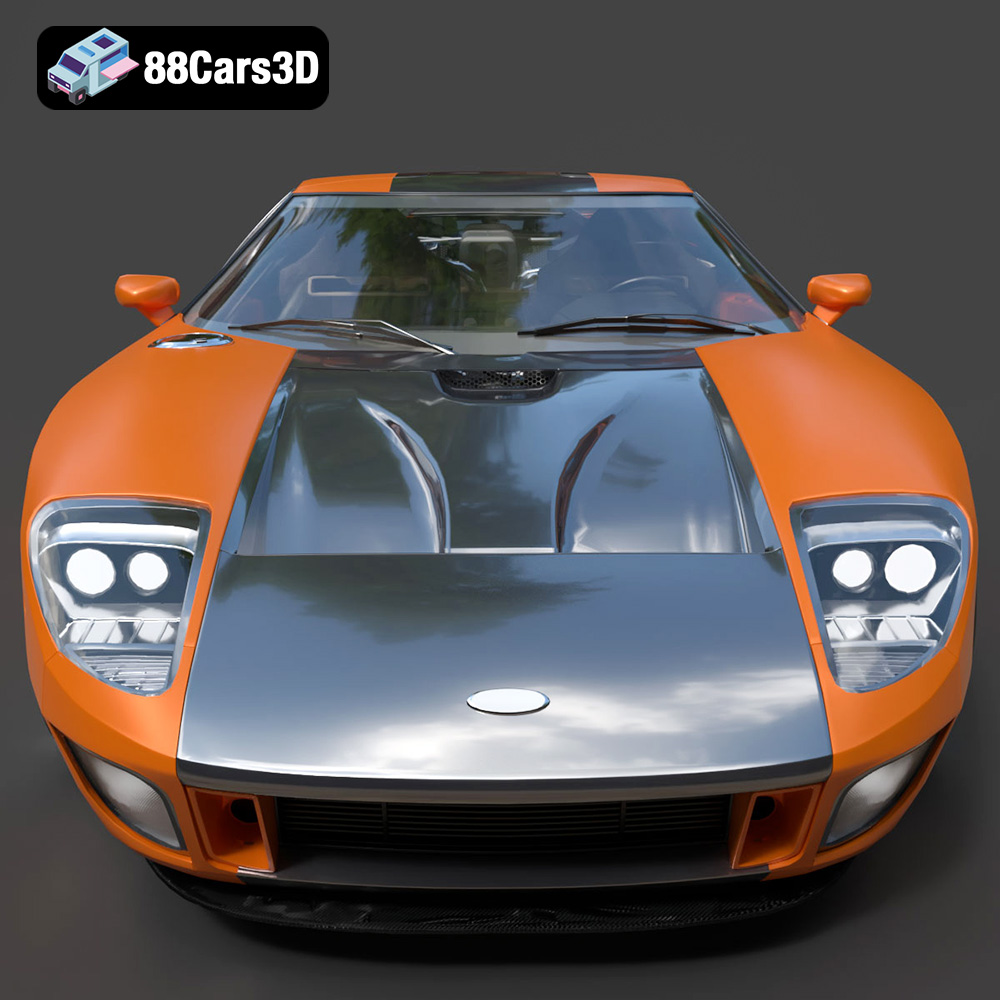
The allure of an iconic car like the Ford GT 2005 lies in its unique details. A professional 3D model goes to great lengths to capture these with accuracy. From the “accurate Ford GT 2005 frame geometry, aerodynamic curves, and proportions” to the “detailed 5.4L supercharged V8 engine block visible beneath the rear glass,” every element is considered.
A superior 3D car model is designed for seamless integration into diverse professional workflows. Whether your goal is a photorealistic render for an advertisement or a responsive asset for a game, the Ford GT 2005 model provides the foundational quality required.
For high-end automotive visualization and studio lighting setups, software like 3ds Max and Blender are industry mainstays. The .max and .blend file formats included with the Ford GT 2005 model provide artists with a head start. In 3ds Max, artists can leverage powerful renderers like V-Ray or Corona to achieve breathtaking realism. The model’s “clean geometry and well-structured material setups” translate directly into stunning reflections, accurate refractions for glass elements, and realistic shadows. The “separate wheels, suspension, and steering components for animation” mean you can easily rig and animate the car for cinematic sequences, demonstrating suspension travel over bumps or precise steering maneuvers.
Blender users benefit from similar flexibility, utilizing Cycles or Eevee for rendering. The .blend file includes native materials that can be quickly adapted or enhanced. Artists can create elaborate studio environments, apply sophisticated lighting schemes, and even simulate complex paint finishes. The real-world scale accuracy of the model ensures that physical camera settings and lighting distances behave as they would in reality, streamlining the visualization process for brand campaigns and lifestyle scenes.
For real-time applications, particularly game development, optimization is king. The Ford GT 2005 3D model is explicitly “game-ready,” featuring a polycount that “strikes perfect balance for real-time engines (Unreal, Unity).” When imported via FBX into Unreal Engine, the model’s clean topology and proper UV mapping ensure efficient material setup and texture application. The included “.unreal” format hints at an asset prepared specifically to leverage the engine’s PBR workflow, resulting in realistic metallic reflections, tire grip, and dynamic lighting responses.
In Unity, similar principles apply. The FBX import maintains hierarchies and pivot points, crucial for implementing vehicle physics and character interaction. The “proper pivot setup for steering, wheel rotation, and suspension travel” is invaluable for developers, saving significant setup time. This allows for immediate integration into open-world racing games, simulators, or even as an interactive asset in a virtual showroom. The optimized nature means developers can focus on gameplay mechanics and engine performance without being bogged down by unoptimized geometry.
The utility of a meticulously crafted 3D car model extends far beyond simple rendering, offering transformative potential across various industries.
The primary application for game-ready assets like the Ford GT 2005 is, naturally, game development. Its optimized polycount (~150,000 triangles) is perfectly suited for modern racing games, open-world environments, and driving simulators. Developers can integrate this model as a playable vehicle, an AI opponent, or even a detailed background asset without compromising frame rates. The separate, animatable components (wheels, suspension, steering) are crucial for implementing realistic vehicle physics and responsive controls, creating an engaging and authentic driving experience. The model’s stunning visual fidelity ensures it can serve as a hero asset, capturing player attention and adding significant value to the game’s overall aesthetic.
AR/VR represent a rapidly growing frontier for 3D models. The Ford GT 2005 is “perfect for immersive virtual showrooms, configurators, and mobile AR experiences.” Using formats like .glb, the model can be seamlessly integrated into web-based AR applications, allowing users to place a virtual Ford GT 2005 in their driveway via a smartphone. In VR, the detailed interior, “optimized geometry for first-person POV,” creates an incredibly immersive experience, letting users sit inside the car, explore its dashboard, and even interact with toggle switches. Automotive brands can utilize such models for virtual product launches, interactive car configurators, or engaging educational content, offering potential buyers an unprecedented level of interaction before a physical vehicle even exists.
The ability to convert a digital asset into a physical object opens up new avenues for creators. The Ford GT 2005 3D model is “convertible to .stl format for display-scale hobbyists,” making it accessible for 3D printing. This means enthusiasts can create their own tangible replicas of this legendary supercar. The detailed product description even provides specific “3D Print Settings” — recommending resin printing for fine details, specific layer heights (0.04–0.12 mm), wall thickness, infill, and crucial support placements for complex parts. This capability extends beyond hobbyists; designers and engineers can use such models for rapid prototyping, creating physical mock-ups, or even producing collector’s items. The precision of the original digital model directly translates to the quality of the physical print.
While the out-of-the-box quality of a model like the Ford GT 2005 from 88cars3d.com is exceptional, its true power lies in its adaptability. Professionals rarely use an asset exactly as it comes; customization is key to fitting it into a unique vision.
The Ford GT 2005 model offers extensive customization options, allowing artists to tailor its appearance to specific project needs. The most common modification is changing body colors. This can range from applying authentic factory colors, perhaps even recreating the iconic Heritage Blue/Orange racing livery, to experimenting with custom finishes like matte, gloss, or various metallic flakes. Adjusting material finishes isn’t limited to the body; tire textures can be swapped between track and street variants, interior leather can be re-colored, and chrome accents can be toned down or polished to a mirror sheen. These adjustments, facilitated by well-organized UVs and material IDs, allow for a broad range of visual styles, from hyper-realistic to stylized.
Beyond surface appearance, the model’s adaptability to various lighting conditions and environments is crucial. A car render in a sun-drenched desert will require different material properties and lighting setups than one parked in a moody, rain-slicked city at night. Artists can easily adapt the model’s materials to react realistically to global illumination, adjust reflections to match ambient light, and even simulate dirt or wear for a more lived-in look. The clean topology ensures that these environmental interactions are rendered accurately, reflecting the model’s quality. This flexibility makes the Ford GT 2005 suitable for a vast array of scenarios, from promotional imagery to cinematic cutscenes, ensuring it always looks its best in any given context.
The world of 3D modeling is a dynamic blend of artistry and technical prowess, and nowhere is this more evident than in the creation and application of high-quality 3D car models. As we’ve explored with the exceptional Ford GT 2005 3D model, these assets are not just static representations; they are versatile, optimized tools designed to excel across demanding professional pipelines.
From its meticulously crafted geometry and game-ready optimization to its broad file format compatibility, including .blend, .fbx, .obj, .glb, .stl, .ply, .unreal, and .max, this model serves as a testament to the level of detail and technical thought required in modern 3D asset development. Whether you’re integrating it into Unreal Engine for a high-octane racing title, rendering it in 3ds Max for a stunning automotive visualization, fabricating a physical replica through 3D printing, or deploying it for an immersive AR experience, the Ford GT 2005 offers unparalleled fidelity and performance.
For creators seeking to elevate their projects with premium 3D car models, resources like 88cars3d.com provide access to these expertly engineered assets, enabling you to focus on your creative vision while leveraging the foundational quality of industry-standard models. Invest in quality, and unlock the full potential of your digital automotive endeavors.
Experience the legendary performance and retro-futuristic styling of the 2005 Ford GT with this high-fidelity 3D model. Built as a tribute to the four-time Le Mans-winning GT40, this iconic mid-engine supercar boasts a timeless design characterized by its aerodynamic silhouette, cantilevered doors that cut into the roofline, and the muscular presence of its 5.4-liter supercharged V8 visible through the rear clamshell. The model perfectly captures its distinctive dual central exhausts, aggressive stance, and the classic twin racing stripes that define its American racing heritage.
$19.99
.blend
.fbx
.ford
.glb
.max
.obj
.ply
.rendering
.sports car
.stl
.supercar
.unreal
car-3d-model
classic-car
game asset
game-ready
gt-2005
low-poly
optimized
VR/AR