Get 20% OFF All Premium 3D & STL Models!

In the rapidly evolving landscape of digital content creation, the demand for hyper-realistic and performance-optimized 3D assets has never been higher. From the cinematic quality of modern video games to the immersive experiences of virtual reality, and the precision required for automotive design visualization, the backbone of these applications lies in exceptionally crafted 3D models. A premium 3D car model isn’t just a digital representation; it’s a meticulously engineered asset that bridges the gap between concept and reality, enabling creators to push boundaries and captivate audiences.
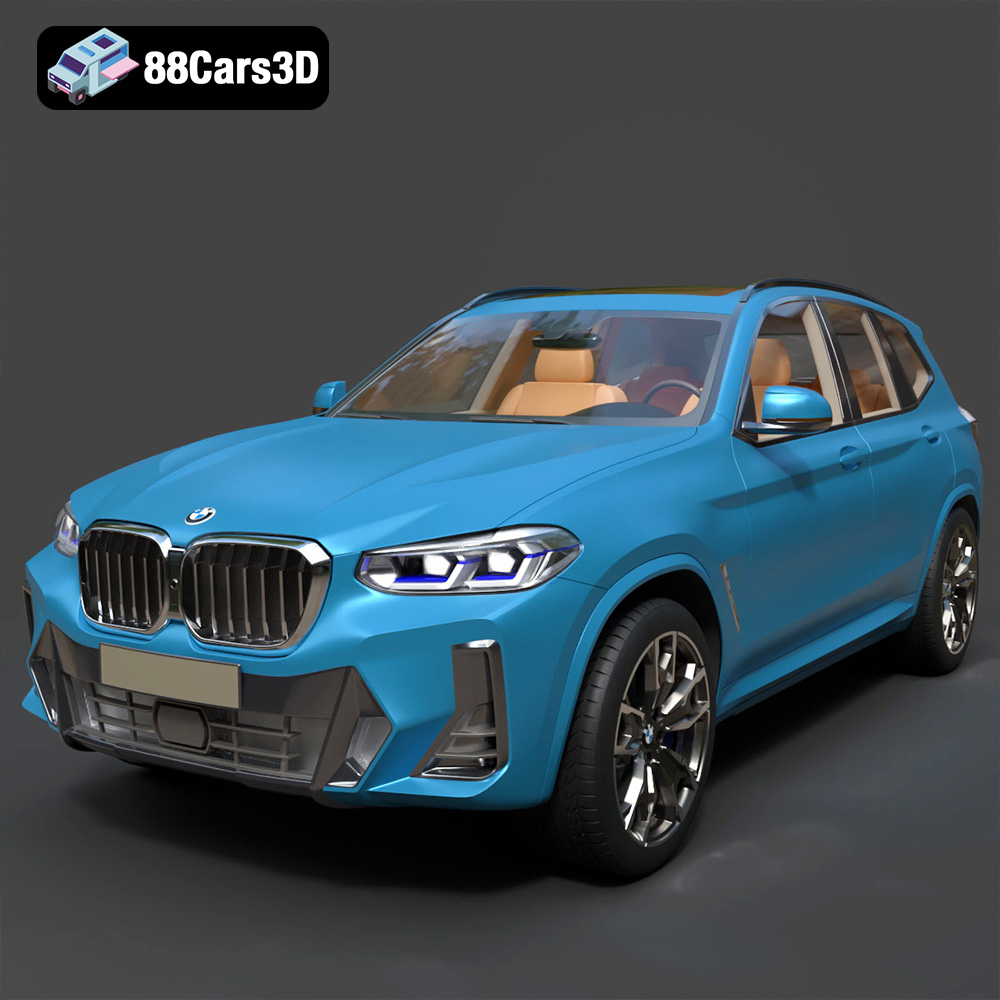
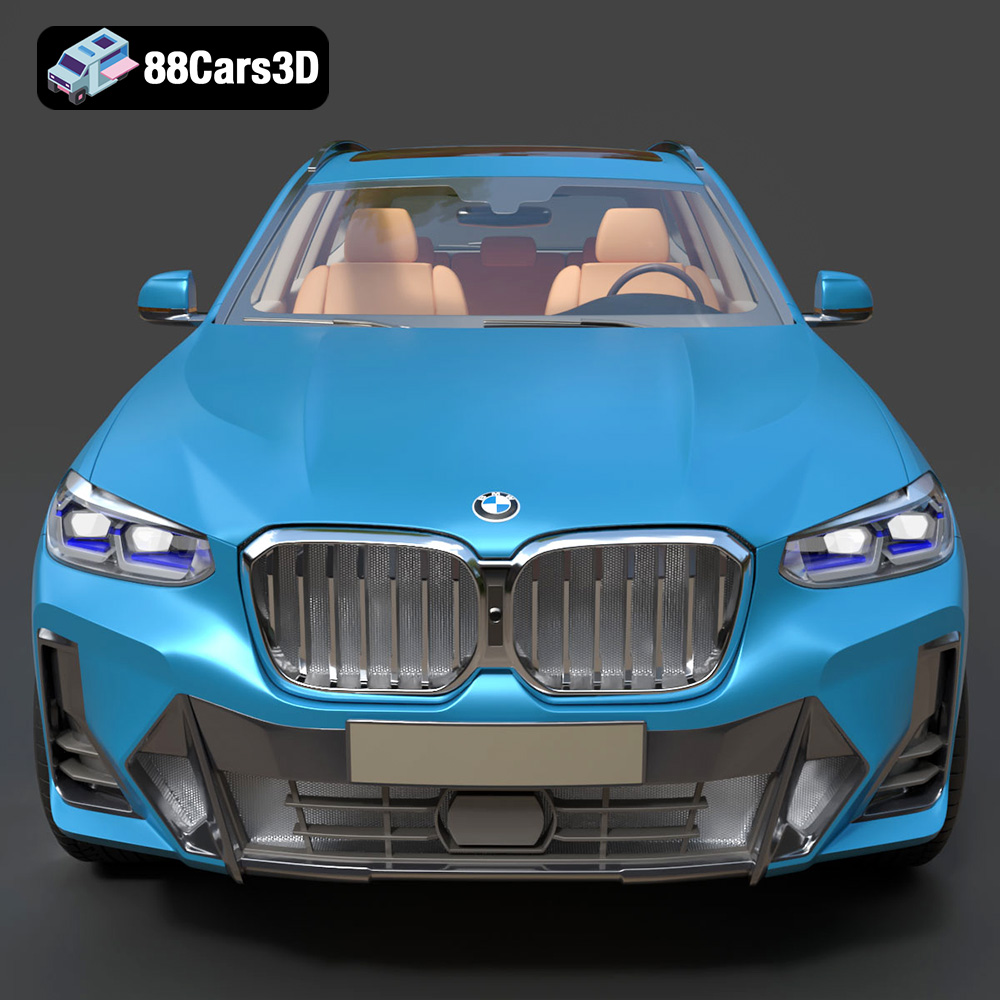
This pursuit of perfection is exemplified by models such as the BMW X3 2024 3D Model available at 88cars3d.com. This asset is a testament to the blend of artistic skill and technical precision, designed to meet the rigorous demands of today’s professional workflows. It embodies the confident stance and sharp aerodynamic profile of its real-world counterpart, capturing every nuance from the iconic kidney grille to the sophisticated LED lighting. Whether destined for an open-world racing game, an architectural visualization project, or a high-end brand rendering, such a model provides an unparalleled foundation for compelling digital experiences.
The automotive industry has long been at the forefront of adopting cutting-edge technology, and 3D modeling is no exception. Historically, physical prototypes were the only way to visualize new designs, a process that was both time-consuming and expensive. Today, high-fidelity 3D models allow designers to iterate rapidly, test concepts virtually, and present ideas with photorealistic accuracy long before any physical components are manufactured. This digital shift has dramatically accelerated development cycles and fostered greater innovation.
Modern vehicle design heavily relies on 3D software for every stage, from initial sketches and clay modeling to engineering detailed components and simulating performance. A comprehensive 3D model like the BMW X3 2024 allows designers to explore variations in trim, color, and features, providing an interactive and dynamic canvas. This process not only saves significant resources but also ensures a cohesive vision from concept to production.
Once a vehicle is designed, 3D models become invaluable tools for marketing and sales. Photorealistic renderings and interactive configurators enable potential buyers to explore a car in exquisite detail, customizing it to their preferences. For agencies creating advertisements or virtual showrooms, having access to an accurate and optimized 3D car model, such as those offered on 88cars3d.com, is crucial for producing high-impact visuals that resonate with discerning customers.
The world of 3D modeling is vast, and a critical aspect for any professional is understanding the various file formats and their specific applications. The BMW X3 2024 3D model, for instance, comes equipped with a comprehensive suite of formats, each tailored for different stages of the digital production pipeline. Choosing the right format is paramount for ensuring compatibility, efficiency, and the integrity of your 3D data across diverse software and platforms.
The `.blend` file format is native to Blender, the popular open-source 3D creation suite. When you download a `.blend` file, you’re getting a fully editable Blender scene, complete with all its associated data: meshes, materials, textures, lighting, cameras, animations, and even physics simulations. This format is ideal for users who primarily work within Blender, offering unparalleled flexibility for modifications, rigging, and rendering within the same environment. For a model like the BMW X3 2024, the `.blend` file would be the go-to for artists wanting to dive deep into its structure, customize materials, or adapt it for specific Blender-based projects.
`.fbx` (Filmbox) is arguably the most widely adopted proprietary 3D file format for data exchange between different 3D software applications and game engines. Developed by Autodesk, FBX can store comprehensive scene data, including geometry, materials, textures, animations, and camera information. It excels in real-time pipelines, making it the preferred choice for exporting assets to game engines like Unreal Engine and Unity. The `.fbx` format is robust, efficient, and ensures that complex data, such as the separate animated components of the BMW X3 2024 (wheels, suspension, steering), are transferred accurately, preserving pivot points and hierarchical structures.
`.obj` (Wavefront OBJ) is a universal, open-standard format renowned for its simplicity and wide cross-software compatibility. It primarily stores geometry (vertices, normals, texture coordinates, and faces) and references external material files (`.mtl`). While it doesn’t support animation or scene data, its straightforward structure makes it an excellent choice for basic mesh transfer between virtually any 3D software. For models like the BMW X3 2024, `.obj` serves as a reliable fallback for static mesh integration into applications that might not fully support more complex formats, ensuring broad accessibility.
`.glb` (GL Transmission Format Binary) is the binary version of glTF, an open-standard, royalty-free format designed for the efficient transmission and loading of 3D scenes and models by applications. It’s quickly becoming the “JPEG of 3D” due to its optimization for AR, VR, and browser-based display. A `.glb` file embeds all necessary assets (geometry, materials, textures, animations) into a single, self-contained file, making it incredibly easy to share and integrate into web-based 3D viewers, mobile AR apps, and metaverse platforms. For showcasing the BMW X3 2024 in an immersive virtual showroom or a product configurator on a website, `.glb` offers unmatched performance and convenience.
`.stl` (Stereolithography) is the de facto standard format for 3D printing. It represents a 3D model as a series of connected triangles, describing only the surface geometry of an object. While it contains no color or texture information, its simplicity makes it universally compatible with 3D printing software (slicers). The BMW X3 2024 3D model’s inclusion of `.stl` makes it convertible for physical prototyping, allowing hobbyists and professionals alike to bring a tangible representation of the vehicle to life, adhering to specific print settings for optimal results.
`.ply` (Polygon File Format, also known as Stanford Triangle Format) is a file format for storing 3D data from 3D scanners and other sources. It’s capable of storing a wider range of properties than `.obj` or `.stl`, including color, transparency, and even specific normal directions per vertex, which can be useful for precision mesh analysis or CAD applications. For engineers or designers requiring a highly accurate geometric representation of the BMW X3 2024 for analytical purposes or integration into specific CAD systems, `.ply` offers a robust solution.
While not a universal file format in the same vein as FBX or OBJ, `.unreal` signifies an asset specifically prepared and optimized for direct import into the Unreal Engine. This often implies that the model has already undergone crucial steps such as proper material setup, collision mesh generation, LOD (Level of Detail) implementation, and potentially even blueprint integration. Receiving a `.unreal` version of the BMW X3 2024 means a significantly streamlined workflow for game developers, saving countless hours of preparation time when bringing the model into their real-time environments.
`.max` is the native file format for Autodesk 3ds Max, a powerful 3D modeling, animation, and rendering software widely used in architectural visualization, game development, and film production. Similar to `.blend` for Blender, a `.max` file contains the entire scene, including all geometry, materials, textures, lighting, cameras, and animation data. For professionals working within the 3ds Max ecosystem, the `.max` file provides complete control and editability of the BMW X3 2024 model, allowing for advanced rendering setups, complex animations, or integration into existing 3ds Max scenes with native fidelity.
The BMW X3 2024 3D model stands out as a prime example of what a high-quality, game-ready automotive asset should be. It meticulously replicates the physical vehicle’s characteristics, providing a digital twin that is both visually stunning and technically sound. This level of detail and optimization makes it an invaluable resource for a myriad of digital applications.
The exterior of the BMW X3 2024 is where its premium nature truly shines. The model faithfully reproduces the vehicle’s dynamic proportions and accurate frame geometry. From the signature BMW kidney grille, rendered with striking aggression, to the high-definition LED headlight clusters and distinctive 3D taillights, every element contributes to a sense of authenticity. Even the muscular wheel arches, the meticulously recreated alloy wheels with realistic tire treads, and the twin dual-exhaust system setup are rendered with precision, ensuring that the model holds up under close scrutiny and diverse lighting conditions.
A critical advantage of this model for dynamic simulations is its structured hierarchy. The separate wheels, suspension, and steering components are designed for independent animation. This means developers can easily rig the vehicle for realistic driving physics, including steering input, wheel rotation, and suspension travel, significantly enhancing the immersive quality of racing games and driving simulators. The proper pivot setup ensures that these animations behave as expected, reflecting real-world mechanics.
Beyond the striking exterior, the BMW X3 2024 3D model delivers a high level of interior detail, making it suitable for first-person perspectives in games and VR experiences. The premium contoured seat details feature realistic stitching patterns, adding to the luxurious feel. The accurate multifunctional steering wheel, central column, high-resolution digital instrument cluster, and integrated infotainment screen are all faithfully recreated. Even the precise control details, including the gear selector, pedals, and center console buttons, are present, offering a truly immersive cockpit experience for players or viewers.
Despite its visual richness, the interior geometry is optimized for first-person POV in gaming. This means that while details are abundant, the underlying mesh is efficient, minimizing performance overhead in real-time engines. This balance between visual fidelity and optimization is a hallmark of truly professional game assets.
The true value of a premium 3D car model, such as the BMW X3 2024 from 88cars3d.com, lies in its seamless integration into various professional pipelines. Its “game-ready” optimization and versatile file formats make it an indispensable asset for diverse creative and technical fields.
For game developers, the BMW X3 2024 model is an ideal asset for open-world games, racing titles, and simulators. Its optimized topology, at approximately 250,000 triangles, strikes a perfect balance between high-end visual realism and real-time engine performance. This poly count is efficient enough for modern game engines like Unreal Engine and Unity to render multiple instances without significant frame rate drops, while still retaining enough detail for close-up shots and high-definition environments.
When integrated into Unreal Engine, the `.fbx` or `.unreal` formats allow for quick import. Materials can be set up using physically-based rendering (PBR) workflows, utilizing textures for albedo, roughness, metallic, and normal maps to achieve photorealistic surfaces. Collision meshes can be automatically generated or custom-designed for realistic vehicle physics. Similarly, in Unity, the `.fbx` file allows for straightforward import, material assignment, and integration with its comprehensive physics system, making the BMW X3 2024 ready for dynamic gameplay scenarios. The model’s real-world scale accuracy further simplifies integration, ensuring it fits naturally into game environments.
Augmented Reality (AR) and Virtual Reality (VR) are transforming how we interact with products, especially in the automotive sector. The BMW X3 2024 3D model is perfect for creating immersive virtual showrooms, interactive configurators, and mobile AR experiences. Using the `.glb` format, the model can be effortlessly deployed on web-based AR platforms or integrated into VR applications, allowing users to explore the vehicle from any angle, customize colors, and even “sit” inside to experience the interior.
Imagine a potential buyer using a smartphone to place a virtual BMW X3 2024 in their driveway, or walking around it in a VR showroom, changing paint colors and wheel options in real-time. These experiences, powered by optimized 3D car models, offer unparalleled levels of engagement and can significantly influence purchasing decisions, providing a distinct competitive edge.
For architectural visualization artists, advertising agencies, and product rendering specialists, the BMW X3 2024 model offers exceptional quality for brand campaigns, lifestyle scenes, and studio lighting setups. Its high-fidelity details and accurate proportions mean it can be placed seamlessly into photorealistic environments, enhancing the visual appeal of architectural renders or automotive advertisements.
Utilizing the `.max` or `.blend` files, artists can leverage advanced rendering engines like V-Ray, Corona Renderer, or Cycles. They can manipulate every aspect of the materials – from the metallic flakes in the paint to the reflectivity of the windows and the subtle sheen of the interior leather. Custom lighting setups can highlight specific design features, creating breathtaking visuals that are indistinguishable from professional photography. The customization options, such as changing body colors, modifying tire textures, and adjusting material finishes (matte, gloss, metallic), provide endless creative possibilities for diverse visual narratives.
The utility of a comprehensive 3D model extends far beyond digital screens. For enthusiasts, educators, or even product designers, the ability to convert a digital asset into a physical object via 3D printing opens up a new realm of possibilities. The BMW X3 2024 3D model, with its included `.stl` format, embraces this tangible dimension.
The `.stl` file provided with the BMW X3 2024 3D model allows for the creation of physical scale models. This is particularly exciting for hobbyists who wish to collect detailed replicas of their favorite vehicles or for educators using physical models to explain complex automotive design principles. The precise geometry of the digital model translates directly into an accurate physical form.
To achieve the best possible print quality, specific settings are recommended. For the BMW X3 2024, recommended scales are 1:12, 1:18, or 1:24, offering a good balance between detail and manageable print size. For fine details, resin printing (SLA/DLP) is highly recommended over FDM, with a layer height of 0.04–0.12 mm. Optimal wall thickness of 1.2–2.0 mm and an infill of 20–30% ensure structural integrity without excessive material usage. Supports are typically required for intricate parts like exhaust systems, mirrors, and door handles, and careful print orientation (e.g., frame angled, wheels printed separately) is crucial for structural integrity and minimizing support artifacts. Post-processing, including sanding, priming, and painting with authentic factory colors, can elevate the printed model to a display-worthy piece.
Beyond hobbyist applications, 3D printing of detailed car models serves valuable purposes in prototyping and education. Designers can print smaller-scale versions to quickly assess proportions and ergonomics. Educational institutions can use these models to teach students about automotive mechanics, aerodynamics, or even paint finishes, providing a tactile learning experience that complements digital instruction.
In the competitive world of real-time graphics, performance is as crucial as visual quality. A truly professional 3D car model, like the BMW X3 2024, is engineered from the ground up to excel in both. This balance is achieved through careful attention to technical specifications and optimization strategies.
The BMW X3 2024 3D model boasts an optimized topology of approximately 250,000 triangles. This specific polycount is a deliberate design choice, representing the “sweet spot” for modern game development. It’s high enough to convey the intricate curves and sharp lines of the BMW X3 with photorealistic detail, avoiding any blockiness or low-polygon artifacts. Yet, it’s efficient enough to be rendered in real-time environments without overburdening the GPU, even when multiple instances of the vehicle are present on screen. This optimization is critical for maintaining smooth frame rates in demanding game engines.
While not explicitly detailed in the product description, a game-ready asset of this caliber implies meticulously crafted UV maps. Efficient UV mapping ensures that textures are applied without distortion, maximizing texture resolution and minimizing visual artifacts. The model would typically come with a comprehensive set of PBR textures (Albedo/Base Color, Metallic, Roughness, Normal, Ambient Occlusion) that allow for physically accurate material rendering in any modern engine or renderer.
Accuracy is paramount. The BMW X3 2024 3D model is built with real-world scale accuracy, based on actual vehicle chassis dimensions. This ensures that when imported into an environment, it appears correctly proportioned relative to other assets, characters, and architectural elements. Furthermore, the proper pivot setup for steering, wheel rotation, and suspension travel is a crucial technical detail often overlooked in lesser models. Correct pivots mean that a developer doesn’t have to spend precious time adjusting origins, allowing for immediate rigging and animation without headaches, saving valuable production time.
The model’s compatibility with major 3D software platforms (3ds Max, Blender) and real-time rendering engines (Unreal, Unity) through its diverse file format offerings (FBX, OBJ, GLB, etc.) underscores its versatility. This broad compatibility ensures that teams with varied software preferences can seamlessly integrate the model into their existing pipelines without conversion issues or loss of data integrity.
Investing in a premium 3D car model like the BMW X3 2024 is not merely a purchase; it’s an investment in efficiency, quality, and creative freedom. For professionals, time is money, and starting with a high-quality, pre-optimized asset can drastically reduce production timelines and costs.
Creating a detailed, game-ready 3D car model from scratch requires hundreds, if not thousands, of hours of skilled labor, from meticulous modeling and UV unwrapping to texturing, rigging, and optimization. By acquiring a professionally made asset from 88cars3d.com, developers and artists can bypass these initial stages entirely, freeing up their valuable time to focus on unique project-specific elements, gameplay mechanics, or creative storytelling.
The quality of an end product is only as good as its foundational assets. A low-quality or poorly optimized 3D model can lead to visual inconsistencies, performance bottlenecks, and a general lack of polish that detracts from the overall experience. Premium models, like the BMW X3 2024, are crafted by experts who understand the nuances of topology, material definition, and real-time performance, guaranteeing a professional-grade starting point for any project.
Whether you’re an independent game developer, part of a large studio, an architectural visualizer, or a marketing professional, a versatile 3D car model is an indispensable tool. Its applications span across entertainment, design, education, and commerce, making it a valuable asset that can be repurposed and adapted for countless creative endeavors. The breadth of included file formats ensures that this adaptability is truly universal, allowing the model to fit into virtually any digital pipeline.
The digital realm is increasingly demanding assets that are both visually stunning and technically robust. High-fidelity 3D car models are at the forefront of this demand, serving as critical components in everything from immersive games and virtual reality experiences to photorealistic renderings and tangible 3D prints. The BMW X3 2024 3D Model exemplifies this synthesis of artistry and engineering, offering unparalleled detail, optimization, and versatility across a wide spectrum of professional workflows.
From its precisely replicated exterior and detailed interior, to its game-ready polycount and comprehensive file format support, this model is designed to empower creators. Its availability in formats like `.blend`, `.fbx`, `.obj`, `.glb`, `.stl`, `.ply`, `.unreal`, and `.max` ensures that it is ready for immediate integration into virtually any production pipeline, whether for real-time applications, cinematic rendering, or physical fabrication. By choosing such a premium asset from 88cars3d.com, artists and developers gain a significant advantage, saving valuable time and resources while elevating the quality and realism of their projects. This BMW X3 2024 model isn’t just a digital car; it’s a gateway to limitless creative possibilities in the ever-expanding universe of 3D.
The BMW X3 is the epitome of the premium compact luxury SUV, combining sporty driving dynamics with versatile, everyday practicality. This exceptionally detailed 3D model captures its confident stance, sharp aerodynamic profile, and the iconic, aggressive kidney grille paired with sleek LED lighting elements. Every visual cue, from the muscular wheel arches to the integrated exhaust system, reflects the true heritage of BMW’s ultimate driving machines. Engineered with an optimized topology of approximately 250,000 triangles, this game-ready asset delivers high-end visual fidelity without compromising real-time performance. Its meticulously structured geometry ensures seamless integration into major game engines like Unreal Engine and Unity, providing both efficiency and hyper-realistic detail. Perfect for open-world racing games, architectural visualization, immersive VR showrooms, and high-end brand rendering.
$19.99
.2024
.blend
.bmw
.fbx
.glb
.luxury suv
.max
.obj
.ply
.rendering
.stl
.unreal
.x3
car-3d-model
game asset
game-ready
low-poly
optimized
SUV
VR/AR