Get 20% OFF All Premium 3D & STL Models!

In the fast-paced world of digital content creation, where photorealism and immersive experiences are paramount, the demand for high-quality 3D assets is ever-growing. Automotive design, game development, and visualization projects frequently require detailed vehicle models that not only look authentic but are also technically optimized for various applications. While futuristic concepts and sleek modern cars often grab the spotlight, there’s an undeniable charm and historical significance in classic vehicles that continues to captivate audiences and creators alike.
Bringing the nostalgia and distinctive aesthetics of yesteryear into today’s digital landscapes requires exceptional craftsmanship. This is where meticulously crafted 3D car models truly shine. Imagine capturing the essence of the late 1970s, a period defined by unique design philosophies and a burgeoning sense of American style. A prime example of such digital artistry is the Plymouth Volare Coupe 1977 3D Model. This iconic representation of classic American automotive design offers digital artists, game developers, and visualization specialists a perfectly balanced asset, ready for everything from cinematic rendering to real-time game engines. Whether you’re crafting a period-accurate scene or developing a retro-themed game, integrating such a detailed and optimized model can significantly elevate your project’s authenticity and visual appeal.
When working with 3D models, especially detailed assets like the Plymouth Volare Coupe 1977, understanding the various file formats available is crucial. Each format serves a specific purpose, offering different levels of compatibility, optimization, and feature retention across diverse software and platforms. The Plymouth Volare Coupe 1977 3D Model, for instance, comes in a comprehensive suite of formats, ensuring maximum flexibility for any professional workflow.
The .blend format is the native file type for Blender, the popular open-source 3D creation suite. When you download a .blend file, you’re getting a fully editable Blender scene, complete with materials, textures, lighting setups, and any associated rigging or animation. This format is ideal for users who primarily work in Blender and need full control over the model’s components, allowing for intricate modifications, re-texturing, or integrating it into complex Blender scenes with minimal friction. It retains all scene data, making it a powerful choice for detailed project work and customization within the Blender ecosystem.
.fbx (Filmbox) is a proprietary file format owned by Autodesk, widely recognized as an industry standard for 3D data interchange. Its strength lies in its ability to store a vast array of 3D data, including geometry, materials, textures, animations, and camera setups, in a single file. This makes .fbx incredibly versatile for transferring models between different 3D software applications, such as 3ds Max, Maya, Blender, and particularly for real-time engines like Unreal Engine and Unity. For game developers working with 3D car models, .fbx is often the go-to format for its robust support for animations, enabling separate wheels, suspension, and steering components to be easily imported and rigged in-engine.
.obj (Wavefront OBJ) is one of the oldest and most universally supported 3D file formats. While it’s simpler than .fbx, typically storing only geometry (vertices, normals, texture coordinates) and material references (via an accompanying .mtl file), its widespread compatibility makes it a safe bet for cross-software sharing. Almost every 3D application can import and export .obj files, making it excellent for basic model transfer where complex animations or advanced scene data aren’t required. It’s a reliable choice for initial modeling, sculpting, or when you need a clean mesh for further development in a different software package.
.glb (GLB format, based on glTF) is a relatively newer format designed specifically for the efficient transmission and loading of 3D scenes and models by applications. It’s a self-contained single file that includes geometry, materials, textures, and even animations, all in a compact binary format. This makes .glb highly optimized for real-time applications, augmented reality (AR), virtual reality (VR), and browser-based 3D viewers. For projects involving immersive virtual showrooms or mobile AR experiences with 3D car models, .glb provides excellent performance and ease of integration, ensuring quick loading times and broad compatibility across modern platforms.
.stl (STereoLithography) is the de facto standard file format for 3D printing. It represents a 3D model as a series of connected triangles (a tessellation of the surface) without any color, texture, or material information. This simplicity makes it perfect for describing the surface geometry required by 3D printers. For hobbyists or professionals looking to bring the Plymouth Volare Coupe 1977 3D Model into the physical world, the .stl format is essential, allowing for accurate physical replication at various scales.
.ply (Polygon File Format) is another format for storing 3D data, particularly useful for scanned data, CAD models, or applications requiring precise mesh information. It can store more complex properties than .stl, such as color per vertex, normal information, and transparent faces, though it’s less commonly used for general asset exchange than .fbx or .obj. For specialized applications like scientific visualization or detailed geometric analysis, .ply offers a robust way to represent complex polygonal models.
The .unreal designation often refers to assets specifically packaged or optimized for direct import and use within Unreal Engine. This might imply pre-configured materials, collision meshes, LODs (Levels of Detail), and pivot points set up for immediate functionality within the engine’s ecosystem. While typically based on an .fbx import, an “unreal” specific file or package suggests that the groundwork for engine integration has already been laid, saving developers significant setup time for game assets.
Similar to .blend for Blender, the .max format is the native file type for Autodesk 3ds Max. It contains all the scene information, including geometry, modifiers, materials, lights, cameras, and animations. This format is indispensable for users of 3ds Max who require full editing capabilities, complex rendering setups (with V-Ray or Corona), and detailed animation sequences. For high-end automotive rendering or architectural visualization, working with the .max file provides the most control within its native environment.
Creating a 3D model that faithfully represents an iconic classic like the 1977 Plymouth Volare Coupe is a testament to meticulous craftsmanship and a deep understanding of automotive design. The goal isn’t just to replicate shapes but to capture the very essence and character of the vehicle, making it instantly recognizable and evoking a sense of nostalgia.
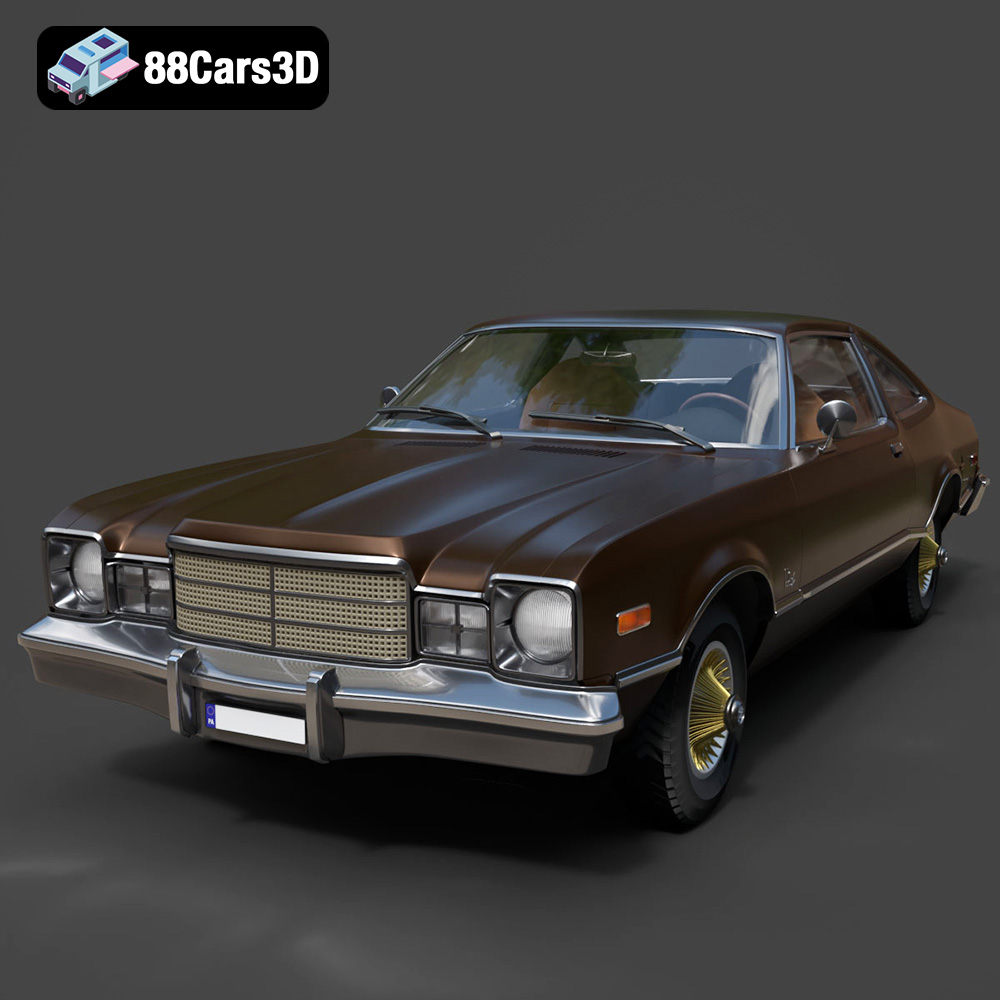
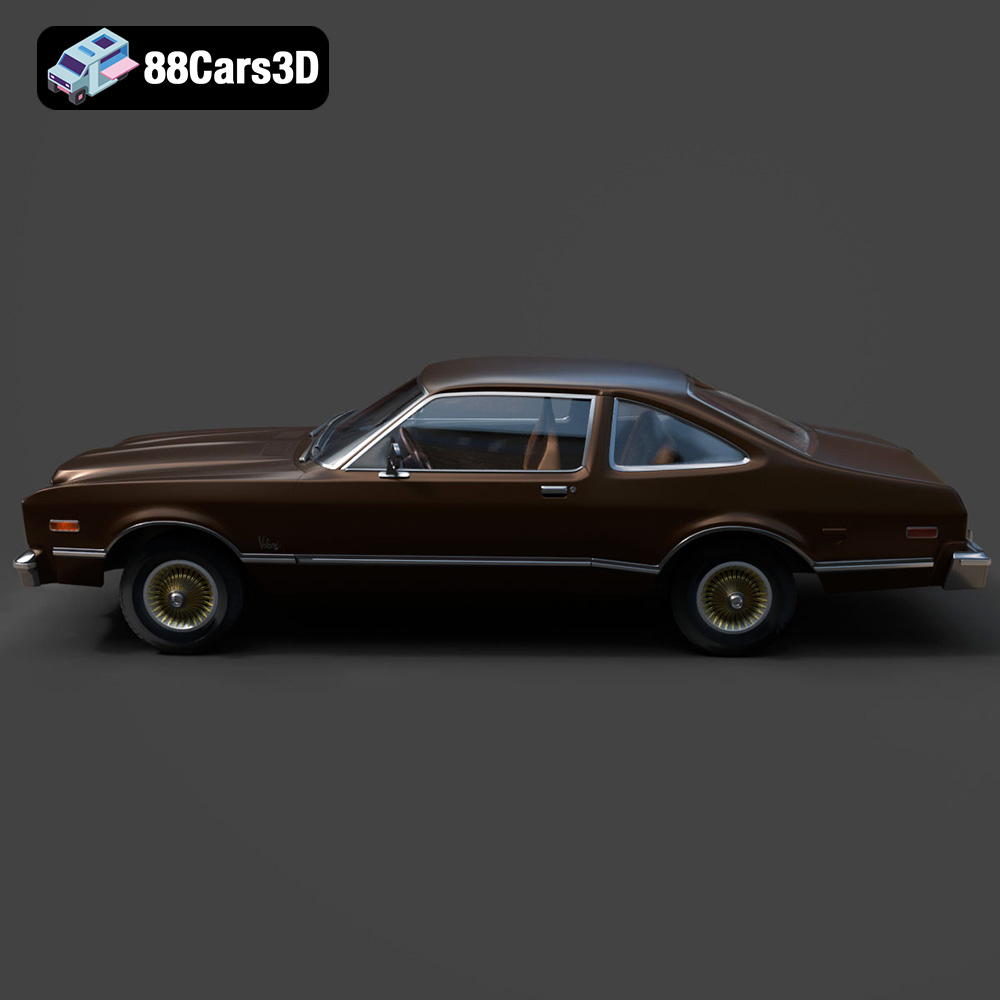
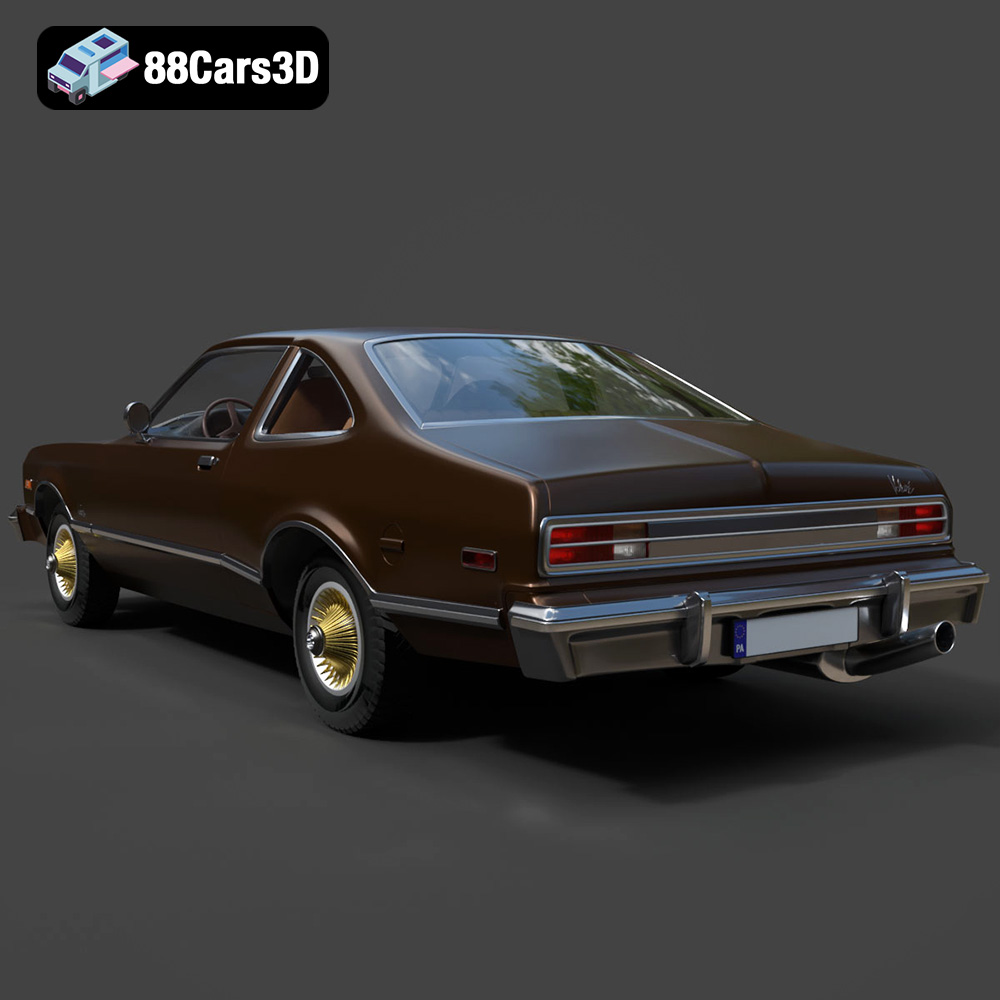
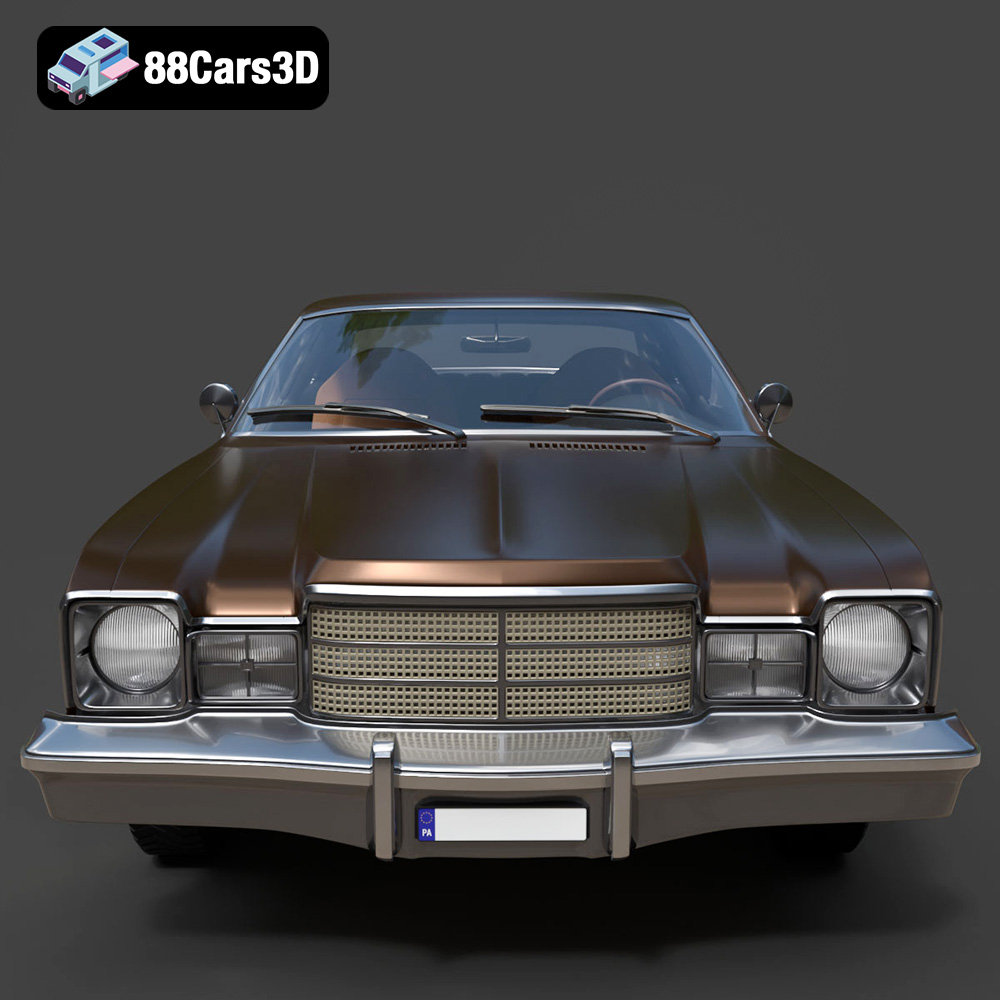
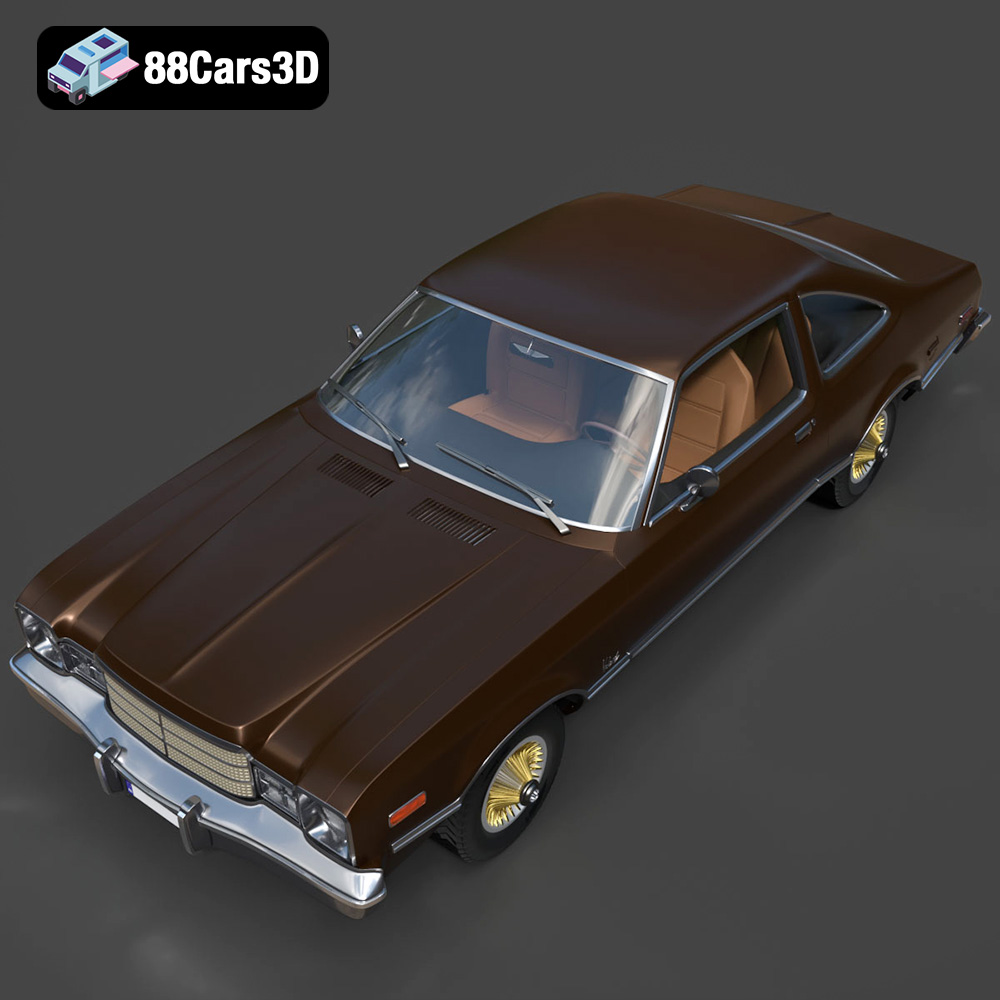
The exterior of the Plymouth Volare Coupe 1977 model is where its retro appeal truly shines. Every detail, from the iconic square headlights to the intricately designed vintage taillights, has been carefully recreated. The model boasts an accurate frame geometry and proportions, true to the original F-body platform, ensuring that the classic long-hood/short-deck profile is perfectly preserved. The detailed grille, chrome bumpers, and period-correct single exhaust system contribute significantly to its authenticity. Furthermore, features like realistic suspension geometry and undercarriage details provide a comprehensive representation, while separate wheels, suspension, and steering components are designed for seamless animation, critical for game development and animated sequences.
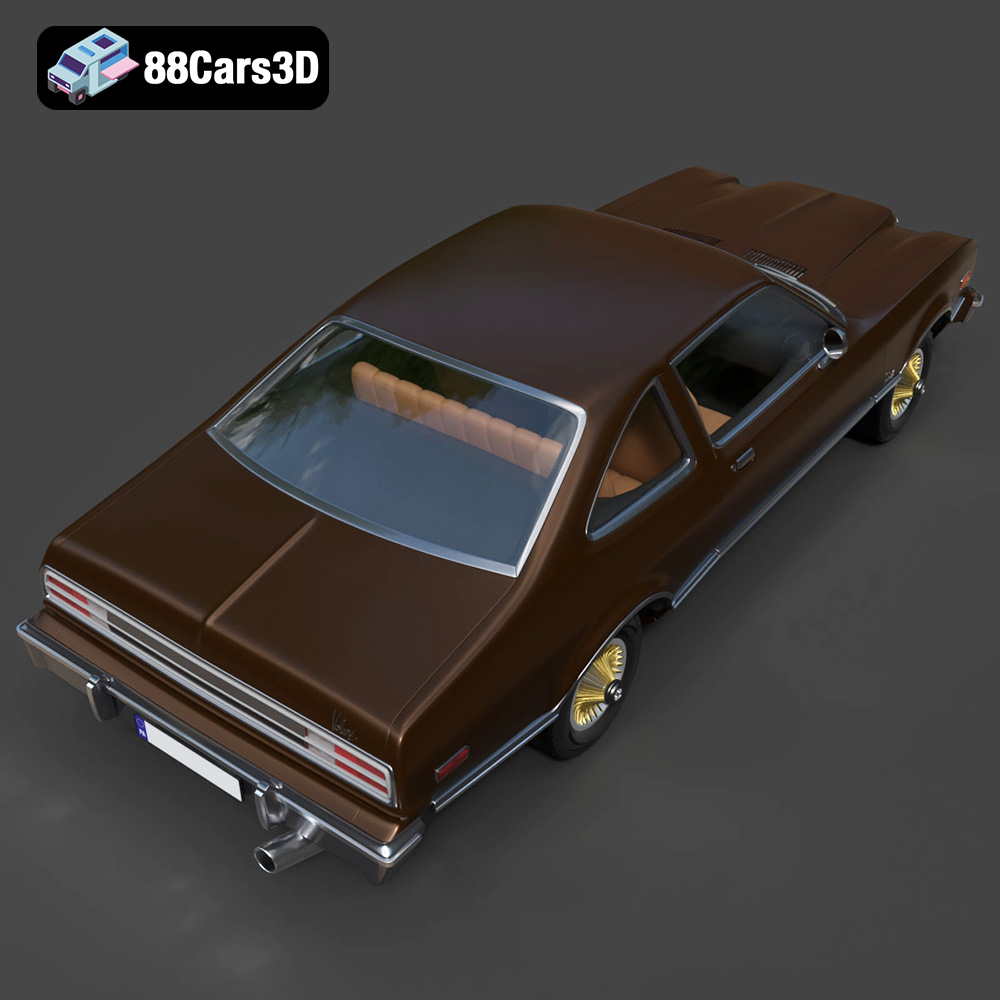
Beyond the impressive exterior, the interior of the Volare Coupe 1977 3D model offers a delightful journey back to the 70s. The classic plush seating and detailed upholstery immediately set the tone, perfectly capturing the era’s automotive comfort. A vintage two-spoke steering wheel with an accurate column layout dominates the driver’s side, complemented by a period-accurate analog instrument cluster and dashboard layout. Even smaller elements like detailed foot pedals, the gear shifter, and interior door panels have been meticulously crafted. This level of interior detail is not just for show; its optimized geometry makes it ideal for first-person POV in gaming scenarios, enhancing player immersion significantly.
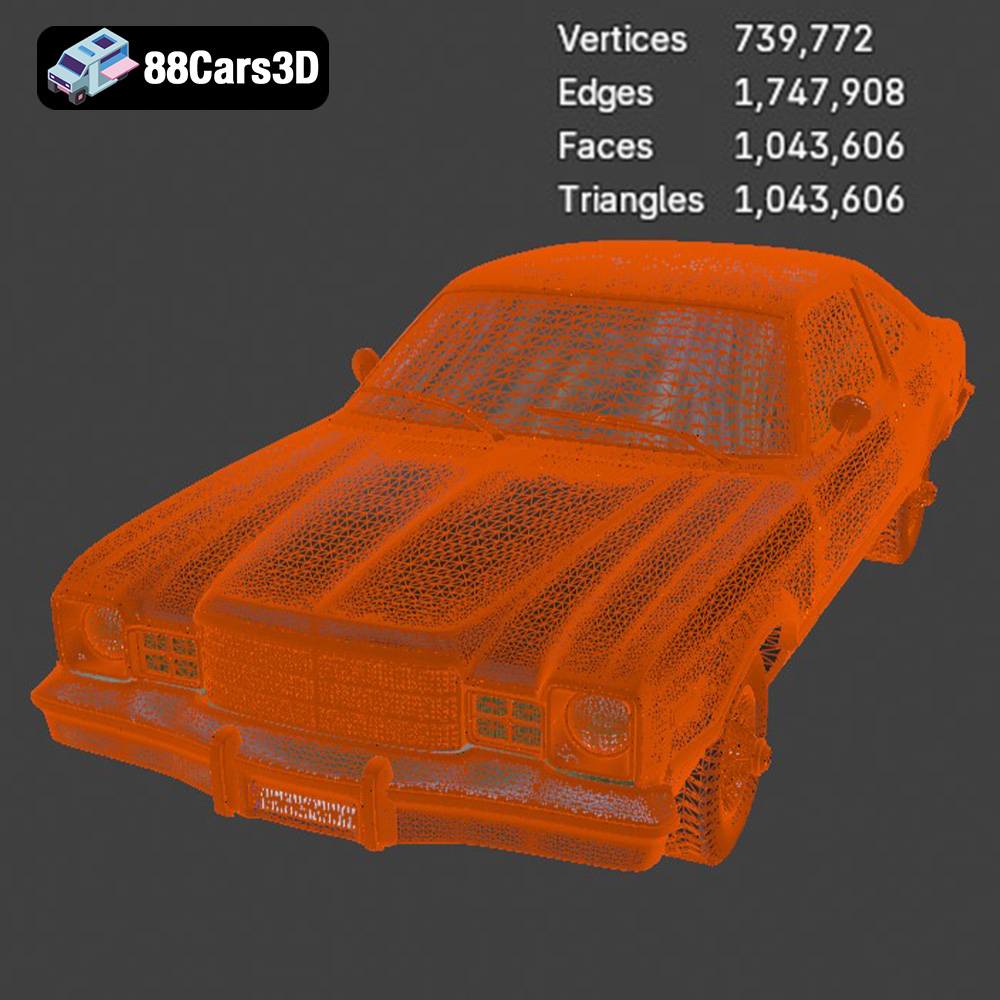
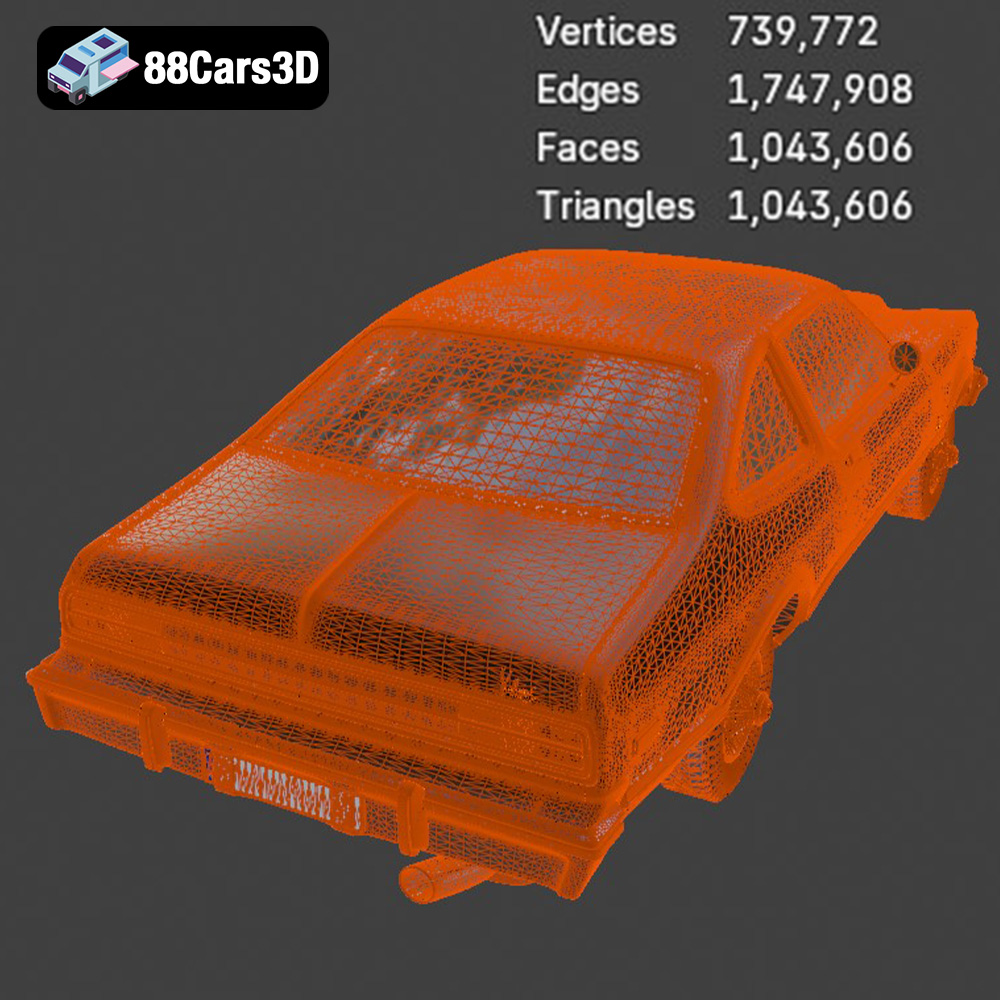
Achieving visual fidelity without compromising performance is a delicate balance, especially for game-ready assets. The Plymouth Volare Coupe 1977 3D Model hits this sweet spot with an optimized topology of approximately 120,000 triangles. This polycount strikes a perfect balance, delivering high-end visual realism suitable for rendering and visual effects, while remaining highly performant for real-time engines like Unreal and Unity. The model is built to real-world scale accuracy, based on actual vehicle chassis measurements, ensuring it integrates flawlessly into any scene. Proper pivot setups for steering, wheel rotation, and suspension travel further enhance its technical advantages, making it truly animation-ready and easy to implement in interactive environments.
The versatility of a well-crafted 3D car model like the Plymouth Volare Coupe 1977 extends across numerous professional applications. From interactive game worlds to breathtaking cinematic renders, understanding how to integrate such an asset efficiently is key.
For game developers, the Plymouth Volare Coupe 1977 3D Model is an ideal game asset. Its optimized polycount of ~120,000 triangles is perfect for ensuring smooth performance in open-world games, racing titles, and driving simulators without sacrificing visual quality. Developers can import the .fbx or .unreal format directly into engines like Unreal Engine or Unity. The separate components for wheels, suspension, and steering allow for advanced physics and animation setups. For example, in a retro-themed open-world game set in the late 70s, the Volare could serve as a primary player vehicle or an NPC car, driving authenticity. Developers would typically import the FBX, set up material instances for customizable paint jobs, create a vehicle blueprint for physics and controls, and implement the separate parts for realistic suspension and steering animations. The included LODs (Levels of Detail, if applicable in the .fbx/.unreal package) would further optimize rendering based on distance from the player, ensuring excellent performance across various platforms.
When it comes to high-end automotive rendering and visualization, precision and photorealism are paramount. Artists working in studios for brand campaigns, lifestyle scenes, or product showcases will find the .max or .blend versions of the Volare model incredibly useful. These formats retain all the intricate details, allowing for sophisticated material adjustments and studio lighting setups. Imagine rendering the Volare in a sleek virtual studio, experimenting with authentic Malaise-era factory colors or custom metallic finishes. Using software like 3ds Max with V-Ray or Corona Renderer, or Blender with Cycles, artists can apply physically based rendering (PBR) materials, set up complex lighting environments with HDRI maps, and create stunning visual narratives. The accurate real-world scale and detailed geometry ensure that reflections, refractions, and shadows behave realistically, resulting in truly captivating automotive rendering.
The burgeoning fields of Augmented Reality (AR) and Virtual Reality (VR) offer new frontiers for showcasing vehicles. The .glb format of the Volare model is perfectly suited for these immersive environments. Its optimization for real-time display makes it excellent for virtual showrooms, interactive configurators, and mobile AR experiences. A potential application could be an interactive VR museum exhibit where users can virtually walk around, inspect, and even “sit inside” the Volare. For mobile AR, users could project the 1977 Plymouth Volare Coupe into their real-world environment via a smartphone app. Developers would leverage ARKit or ARCore, importing the .glb file, and ensuring the model is optimized for mobile performance, with careful consideration for polycount and texture resolution to maintain smooth frame rates on consumer devices.
The tangibility of a 3D print brings an entirely new dimension to digital models. For enthusiasts and model makers, converting a high-quality 3D car model into a physical object offers immense satisfaction. The Plymouth Volare Coupe 1977 3D Model, provided in .stl format, is ready for this transformation.
Before hitting print, crucial considerations are scale, layer height, and wall thickness. For the Plymouth Volare, recommended scales are 1:12, 1:18, or 1:24, offering a good balance between detail and printability. A layer height of 0.04–0.12 mm is suggested, with resin printing highly recommended for capturing the fine details like the grille and chrome accents. Wall thickness should be between 1.2–2.0 mm to ensure structural integrity and prevent brittle parts, especially for a larger model. Infill of 20–30% generally provides sufficient strength without excessive material usage.
Complex geometries, typical of a car model, will invariably require support structures during 3D printing. Detailed parts like the exhaust system, side mirrors, and bumpers will benefit significantly from strategically placed supports to prevent warping or collapse during the printing process. Optimal print orientation is also vital; for the Volare, printing the main frame angled can enhance structural integrity and reduce visible layer lines on critical surfaces. Wheels are best printed separately to capture their intricate designs and allow for easier post-processing and assembly.
Once printed, the physical model enters the post-processing phase. This usually involves carefully removing supports, followed by sanding to smooth out any layer lines or imperfections. A good primer coat prepares the surface for painting. To truly capture the retro aesthetic, authentic factory colors from the Malaise era, complete with metallic finishes, are highly recommended. Attention to detail with chrome paint for bumpers and trim, and meticulous tire detailing (including whitewall options), will elevate the final model from a simple print to a collector’s piece, reflecting the stunning craftsmanship of the original 3D asset.
Beyond its inherent quality, a truly valuable 3D model offers extensive customization options, allowing artists to tailor it precisely to their project’s unique vision. The Plymouth Volare Coupe 1977 is no exception, providing a flexible foundation for creative exploration.
One of the most significant advantages of working with a well-structured 3D car model is the ability to easily change its appearance. Artists can experiment with a wide array of body colors, ranging from authentic Malaise-era factory hues to vibrant custom finishes, instantly transforming the vehicle’s mood. Tire textures can be modified to feature standard street profiles or classic whitewall variants, adding another layer of period correctness or customized flair. Furthermore, material finishes can be adjusted from matte to gloss, metallic, or classic chrome, allowing for nuanced reflections and surface qualities that elevate the visual realism for automotive rendering and visualization projects.
The versatility of the Volare model extends to how it interacts with its environment. Artists can adapt its lighting and materials to suit different scenarios, whether it’s bathed in the warm glow of a sunset, parked under harsh studio lights, or cruising through a dimly lit street in a game. This flexibility ensures that the model can be seamlessly integrated into diverse environmental conditions, enhancing storytelling and visual impact. Proper material setup allows for realistic interactions with global illumination, reflections, and shadows, making it a dynamic asset in any digital scene.
The world of 3D content creation thrives on quality, precision, and versatility. For automotive enthusiasts, game developers, visualization artists, and AR/VR creators, sourcing high-fidelity 3D car models is a cornerstone of success. The Plymouth Volare Coupe 1977 3D Model stands as a shining example of such an asset, meticulously crafted to capture the iconic essence of a classic American cruiser while being technically optimized for a multitude of modern workflows.
From its accurate exterior details and immersive interior to its game-ready polycount and comprehensive file format support, this model offers immense value. Whether you’re animating it in 3ds Max, rendering it in Blender, driving it in Unreal Engine, or even 3D printing it for your collection, its adaptability and technical prowess simplify complex pipelines and elevate your creative output. In an industry where time is money and quality is king, investing in such a versatile and detailed 3D model from a reputable source like 88cars3d.com is a smart move, ensuring your projects stand out with unparalleled authenticity and visual appeal.
The 1977 Plymouth Volare Coupe is an iconic representation of late 70s American automotive design. Known for its distinct F-body platform, classic long-hood/short-deck proportions, and unmistakable square headlights, this vehicle captures the true essence of classic American cruisers. From its detailed grille and chrome bumpers to the authentic vintage styling cues, this model brings retro nostalgia and classic craftsmanship to life in stunning detail. This highly detailed 3D model boasts an optimized topology of approximately 120,000 triangles, perfectly balancing high-end visual fidelity with game-ready performance. It is expertly crafted for real-time engines, rendering, and visual effects, ensuring seamless integration into modern workflows whether you are developing a game, rendering a film, or designing an immersive VR environment. Perfect for classic car driving simulators, period-accurate film previz, retro-themed open-world games, and high-end automotive visualization.
$39.99
.blend
.fbx
.glb
.max
.obj
.ply
.plymouth
.rendering
.stl
.unreal
.volare
american-muscle
car-3d-model
classic-car
game asset
game-ready
low-poly
optimized
retro-car
vintage-car
volare-coupe
VR/AR