Get 20% OFF All Premium 3D & STL Models!

In the fast-paced world of digital creation, the demand for highly detailed and technically sound 3D assets has never been greater. From blockbuster video games and immersive virtual reality experiences to stunning architectural visualizations and high-fidelity product showcases, the quality of a 3D model can make or break a project. Automotive design, in particular, stands at the forefront of this digital revolution, requiring models that capture the intricate aesthetics and engineering prowess of real-world vehicles with unparalleled accuracy.
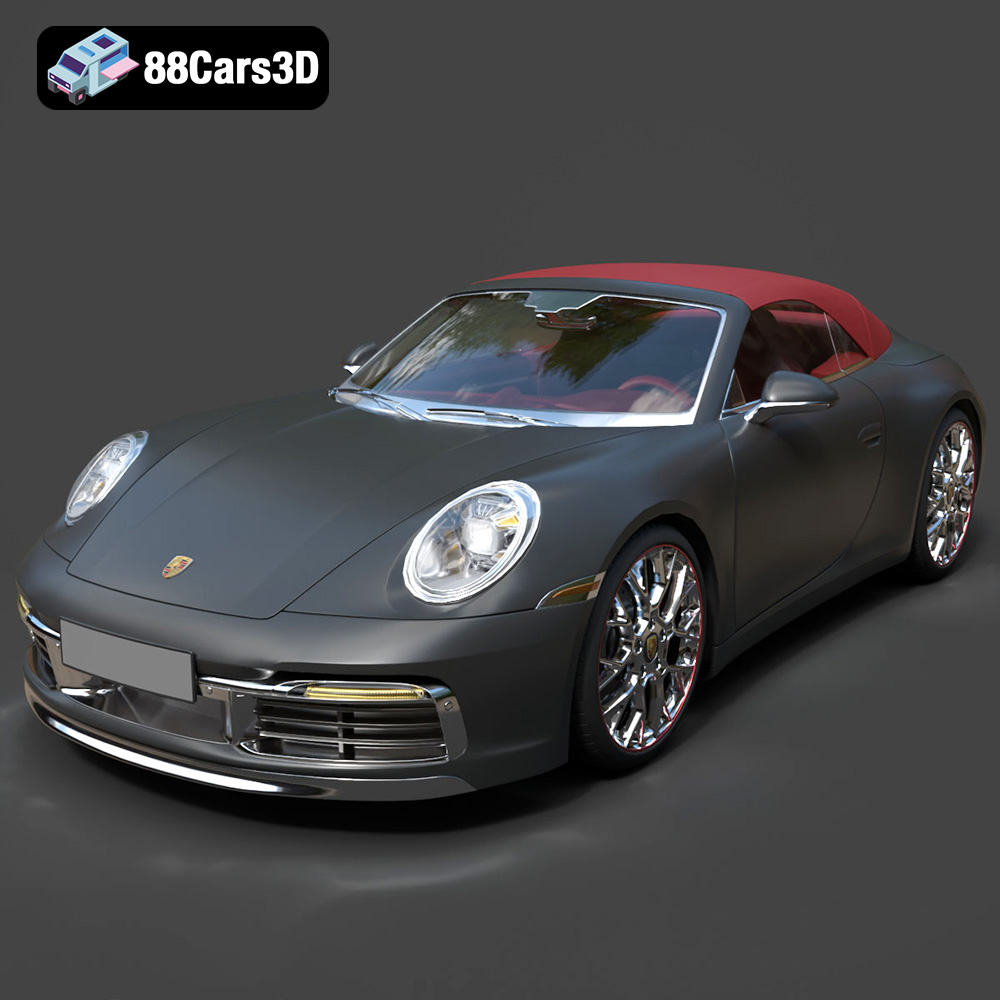
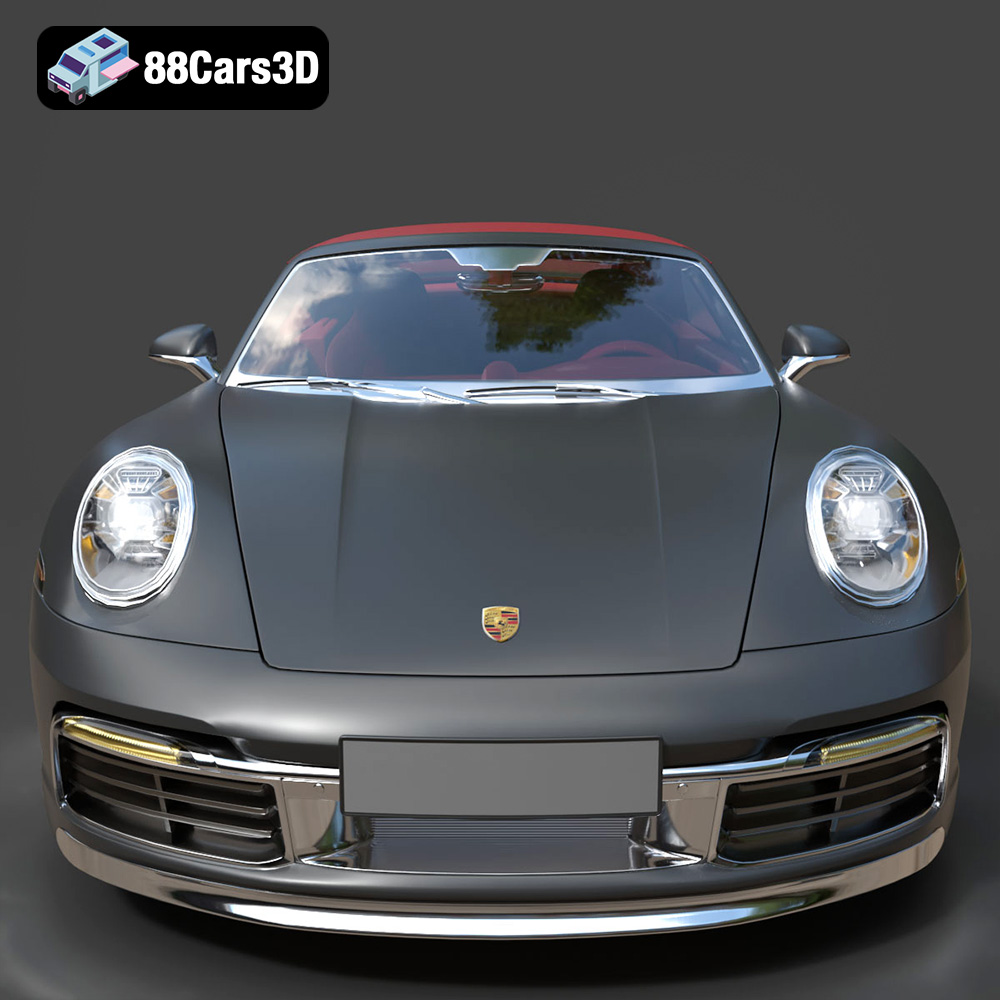
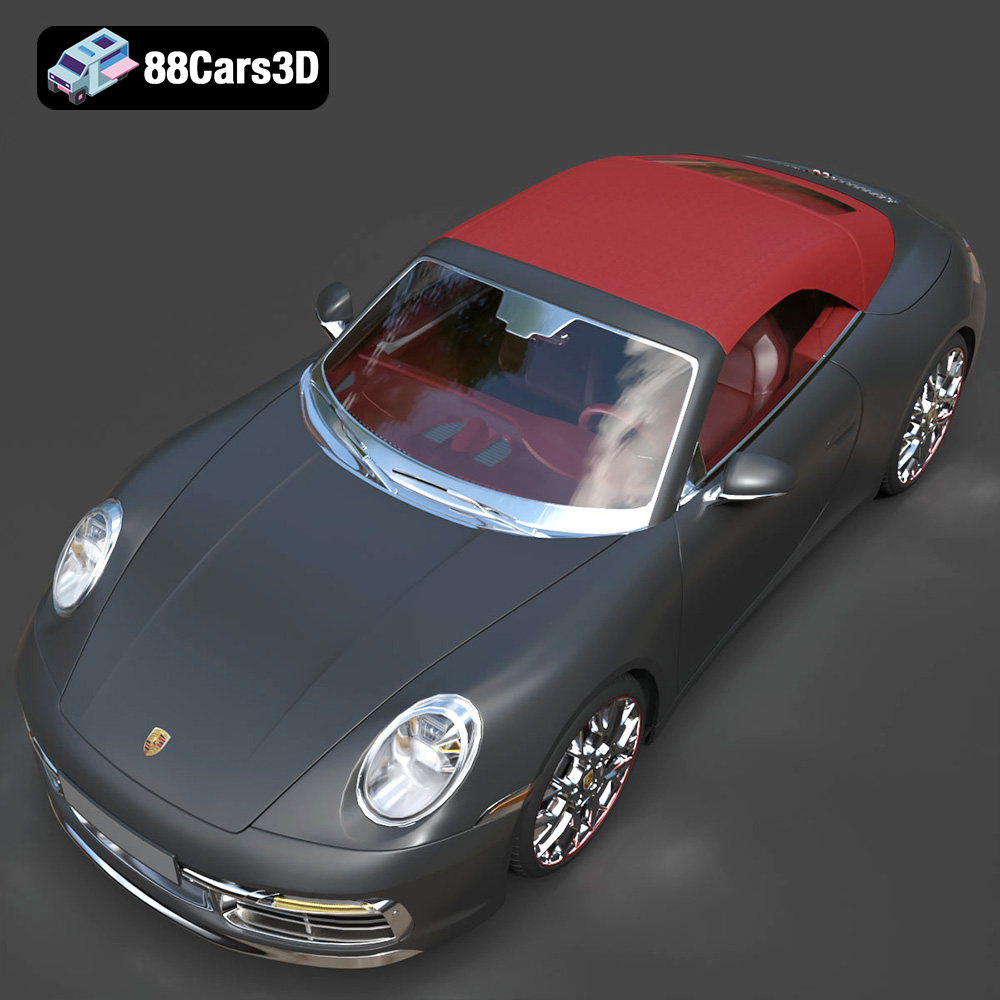
Imagine bringing the thrill of a luxury sports car to life in a game, or showcasing a vehicle’s design in a virtual showroom with photorealistic precision. This level of fidelity is only achievable through expertly crafted 3D car models. Today, we’re diving deep into the technical specifications, diverse applications, and workflow integrations that make a premium 3D vehicle asset truly invaluable. Our exploration will frequently reference a prime example of such excellence: the Porsche 911 Carrera Cabriolet 2019 3D Model, a stellar asset available at 88cars3d.com, perfectly illustrating how precision engineering translates into a versatile digital counterpart for any creative endeavor.
The versatility of a 3D car model is significantly defined by the range of file formats it supports. Each format is designed with specific use cases and software ecosystems in mind, making the availability of multiple options crucial for professional workflows. The Porsche 911 Carrera Cabriolet 2019 3D Model, for instance, offers a comprehensive suite of formats, ensuring seamless integration into virtually any pipeline. Understanding the strengths of each is paramount for maximizing your project’s potential.
The .blend format is the native file type for Blender, an incredibly powerful and increasingly popular open-source 3D creation suite. When you receive a .blend file, you’re getting a fully editable Blender scene, complete with materials, textures, lighting setups, and even animation data if included. This format is ideal for users who primarily work within Blender, offering direct access to all model components, modifiers, and non-destructive workflows. For artists looking to dissect, customize, or re-render the Porsche 911 Carrera Cabriolet 2019 using Blender’s Cycles or Eevee renderers, the .blend file provides the ultimate starting point, ensuring all original data and configurations are preserved.
FBX (Filmbox) is a proprietary file format developed by Autodesk, serving as a widely accepted standard for 3D data exchange across different software applications, particularly in game development. Its strength lies in its ability to store not just geometry, but also materials, textures, cameras, lights, and crucially, animation data including rigs and skinning. This makes .fbx files ideal for exporting complex animated assets to game engines like Unreal Engine and Unity. When integrating the Porsche 911 Carrera Cabriolet 2019 into a real-time environment, the .fbx format ensures that elements like separate wheels and suspension components, along with their pivot points, transfer accurately, ready for animation and physics simulation.
The .obj (Wavefront OBJ) format is one of the oldest and most universally supported 3D formats, making it excellent for cross-software compatibility. It primarily stores geometric data – vertices, normals, UV coordinates, and faces – along with references to external material files (.mtl) and textures. While it doesn’t typically support animation or complex scene data, its simplicity and widespread adoption make it a robust choice for transferring static mesh data between almost any 3D application. For situations where you need to import the Porsche model’s core geometry into a less common software or simply wish to work with a clean mesh, .obj is a reliable fallback.
GLB (GL Transmission Format Binary) is a relatively newer format, rapidly gaining traction for its efficiency and suitability for web-based 3D applications, augmented reality (AR), and virtual reality (VR) experiences. It’s a binary variant of glTF, which is essentially a “JPEG for 3D” – a highly optimized, compact format designed for fast loading and rendering on various platforms. A .glb file packages all necessary data, including textures and materials, into a single file, making it incredibly easy to share and embed. The Porsche 911 Carrera Cabriolet 2019 in .glb format is perfect for integrating into mobile AR apps, browser-based car configurators, or VR showrooms, offering excellent performance without compromising visual quality.
STL (Stereolithography) is the de facto standard file format for 3D printing. It represents a 3D model’s surface geometry using a series of connected triangles. While it doesn’t store color or texture information, its focus on pure surface geometry makes it perfect for additive manufacturing. The availability of the Porsche 911 Carrera Cabriolet 2019 in .stl format means enthusiasts can bring a physical replica of this iconic car to life on their 3D printers, whether for display-scale models or intricate prototypes. The provided 3D print settings further guide users to achieve optimal results, emphasizing features like recommended scales, layer height, and support requirements.
PLY (Polygon File Format), sometimes called the Stanford Triangle Format, is primarily used to store 3D data from 3D scanners, CAD applications, and scientific analysis. Like .obj, it represents geometric data, but it can also store a wider range of properties, including color, transparency, and normal vectors per vertex, rather than just per face. This makes it a valuable format for applications requiring precise mesh data, often used in reverse engineering, quality control, or academic research involving complex 3D scans. While less common for general rendering, its inclusion for the Porsche 911 Carrera Cabriolet 2019 model speaks to its robustness for highly specialized engineering or analytical tasks.
While not a universal file extension in the same vein as .fbx or .obj, the inclusion of an “.unreal” file or asset often implies a model that has been specifically prepared and optimized for Unreal Engine. This typically means the asset has been imported, materials have been set up using Unreal’s physically based rendering (PBR) system, collision meshes might be generated, and LODs (Levels of Detail) could be configured. Such a file provides an engine-ready asset, saving significant setup time for game developers and real-time visualization artists. For the Porsche 911 Carrera Cabriolet 2019, an Unreal-ready asset would greatly expedite its integration into racing simulations, architectural walk-throughs, or cinematic sequences within the engine.
The .max format is the native project file for Autodesk 3ds Max, a leading software for 3D modeling, animation, and rendering. A .max file contains the entire scene, including geometry, materials, textures, lighting, cameras, animation keyframes, and any specific modifiers or plugins used. This format offers maximum flexibility for artists working in 3ds Max, allowing for full modification, re-texturing, re-rigging, or rendering using powerful renderers like V-Ray or Corona. For professionals aiming to integrate the Porsche 911 Carrera Cabriolet 2019 into high-end animated sequences or detailed architectural scenes using 3ds Max, the .max file provides an uncompromised foundation.
Creating a truly exceptional 3D car model goes far beyond simply replicating a vehicle’s shape. It involves a meticulous balance of artistic vision, technical precision, and optimization tailored for a myriad of end-use cases. The Porsche 911 Carrera Cabriolet 2019 3D Model exemplifies this synthesis, offering a perfect blend for game developers, visualization artists, and AR/VR creators alike.
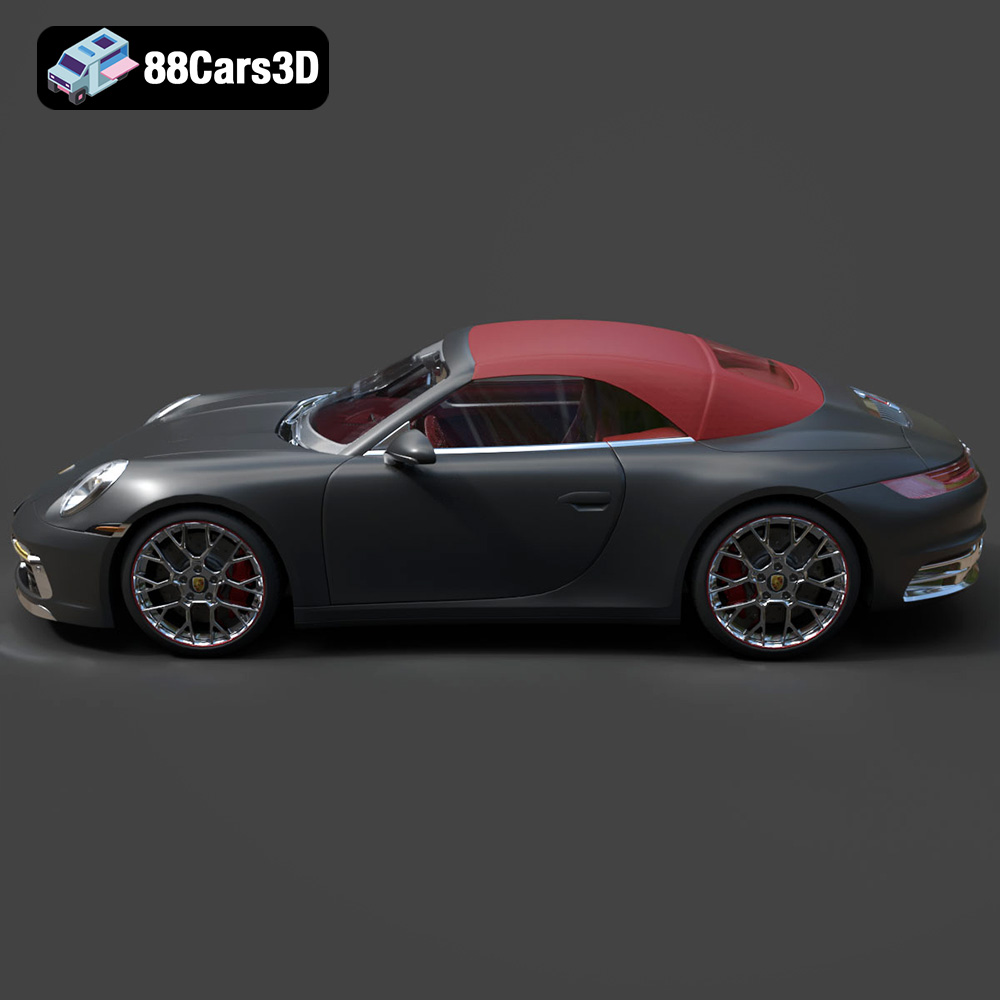
At the core of any high-quality automotive 3D model is accurate geometry. The Porsche 911 Carrera Cabriolet 2019 model boasts “accurate Porsche 911 Carrera Cabriolet (992) frame geometry and proportions” and “real-world scale accuracy.” This isn’t just about looking good; it’s critical for realistic physics simulations in games, believable camera perspectives in renders, and correct sizing in AR experiences. Every curve of its “timeless silhouette,” from the “sleek muscular fenders” to the “wide rear track,” is faithfully recreated, capturing the essence of the iconic 992 generation. Such attention to detail ensures that the digital representation is indistinguishable from its physical counterpart.
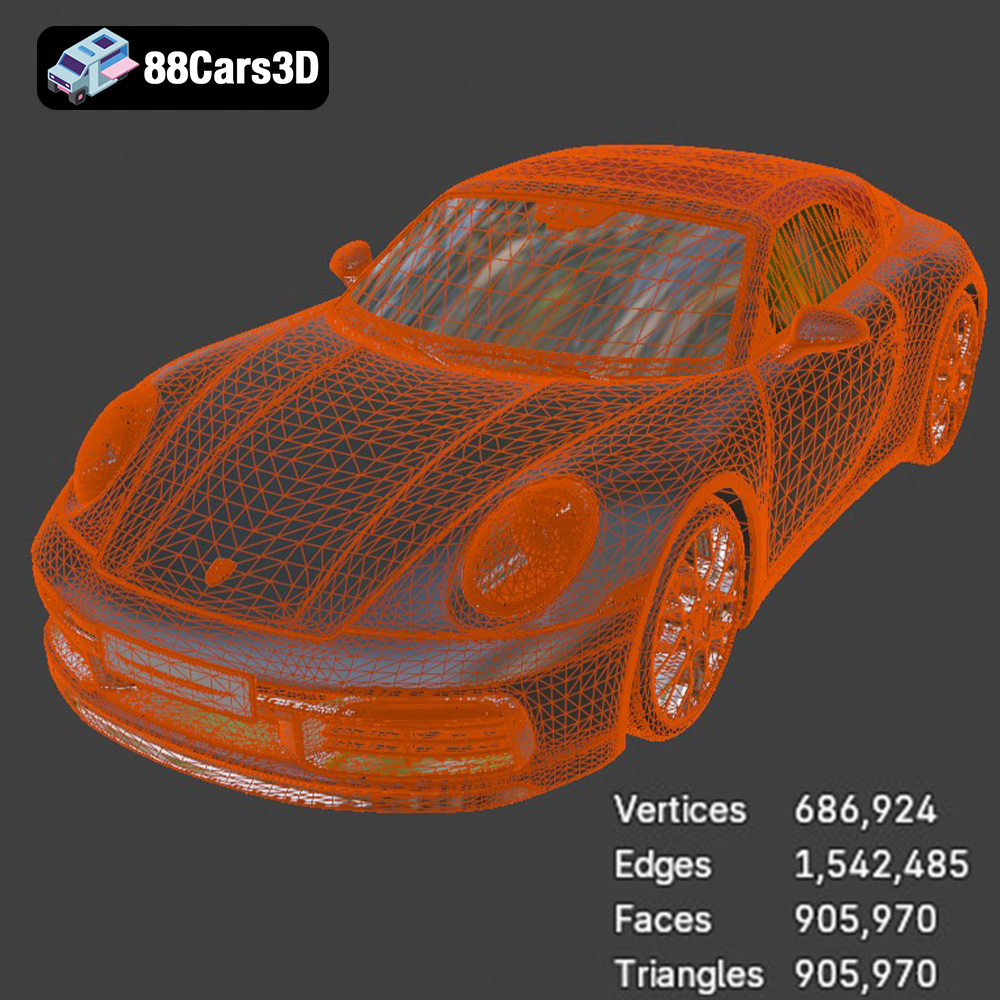
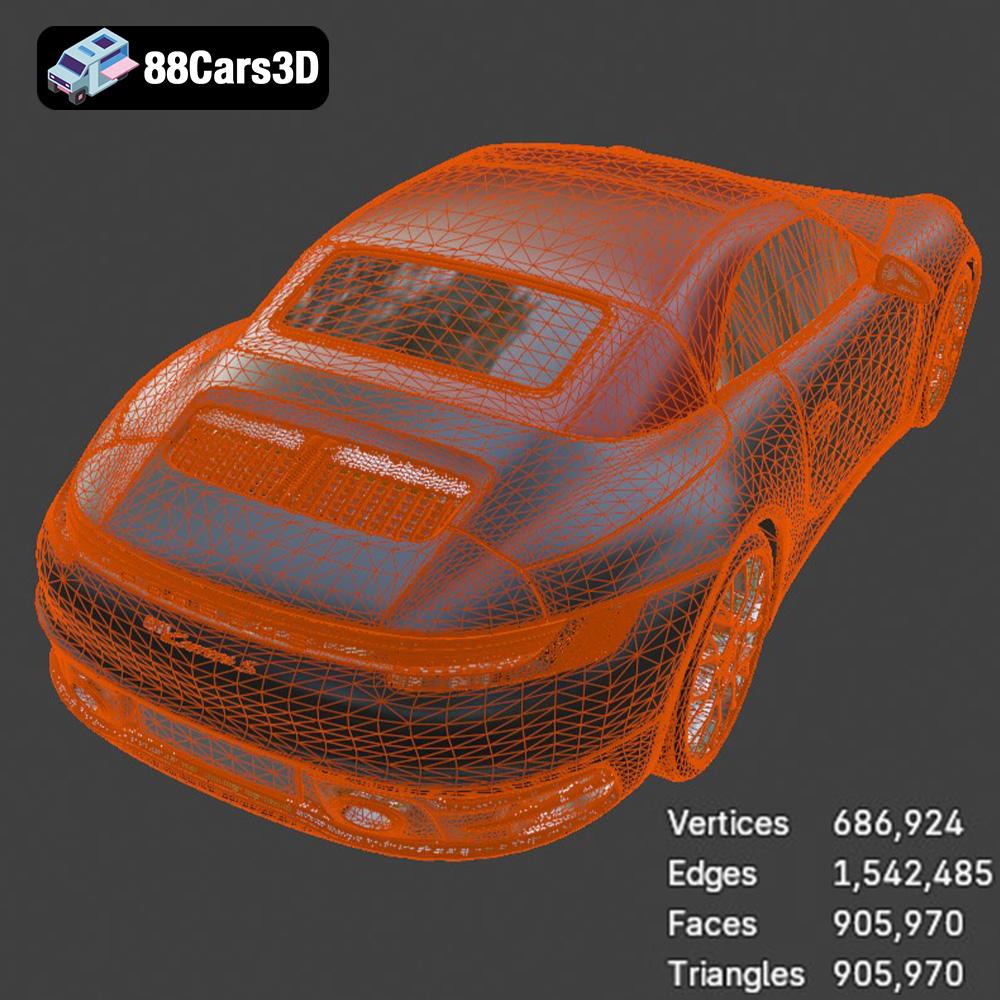
One of the most challenging aspects of 3D modeling is striking the right balance between visual fidelity and performance. The Porsche model achieves this with an “optimized triangle count of approximately 450k.” This “game-ready” polycount is a sweet spot, providing enough detail for high-end close-ups and dynamic reflections without bogging down real-time engines. For game developers working on open-world titles or racing simulators, an optimized asset like this means faster render times, smoother gameplay, and reduced memory footprint. The clean topology also makes UV unwrapping and texturing more efficient, leading to sharper textures and less distortion.
A truly immersive 3D car model provides depth that extends beyond its polished exterior. The Porsche 911 Carrera Cabriolet 2019 model excels here, featuring “detailed engine bay hinting at the twin-turbo flat-six layout,” “dual-exit exhaust system with realistic metallic shading,” and “signature LED matrix headlights.” Crucially, the interior is just as meticulously crafted: “premium leather-upholstered sports seats with meticulous stitching details,” a “multifunction GT sports steering wheel,” and the “iconic central analog tachometer flanked by high-resolution digital displays.” This level of detail ensures the model is not only suitable for exterior shots but also for first-person perspectives in gaming or virtual tours in AR/VR, where users can truly appreciate the “wind-in-the-hair luxury” it represents.
The true value of a versatile 3D asset, like the Porsche 911 Carrera Cabriolet 2019, lies in its seamless integration into various professional pipelines. Whether you’re a seasoned 3ds Max artist, a Blender enthusiast, or an Unreal Engine developer, these models provide a solid foundation that accelerates production and enhances visual quality.
For high-end animation and cinematic rendering, software like 3ds Max and Blender are indispensable. The availability of native .max and .blend files for the Porsche 911 Carrera Cabriolet 2019 ensures that artists can immediately dive into advanced work.
In 3ds Max, the model’s “proper pivot setup for steering, wheel rotation, and suspension travel” is invaluable. This means animators don’t need to spend hours rigging the vehicle from scratch. They can instantly animate the car driving, turning, and reacting to terrain with realistic suspension dynamics. Coupled with its detailed geometry, artists can leverage powerful renderers like V-Ray or Corona to create photorealistic advertisements, product visualizations, or even short films that showcase the car’s elegance and performance. Customizable body colors, tire textures, and material finishes further allow artists to match branding guidelines or specific scene requirements.
Blender users benefit from the fully editable .blend scene, allowing for full control over materials and the ability to integrate the car into complex environmental scenes. Using Blender’s robust animation tools, artists can choreograph dynamic sequences, explore different lighting scenarios, and achieve stunning renders with Cycles or real-time previews with Eevee, all while having access to the model’s underlying structure and components.
Game development demands optimized assets that perform efficiently without sacrificing visual appeal. The “game-ready & optimized” nature of the Porsche 911 Carrera Cabriolet 2019 3D Model, with its ~450k triangles, is perfectly suited for modern game engines like Unreal Engine and Unity.
For Unreal Engine, the provision of an “.unreal” file or a well-prepared .fbx simplifies the import process dramatically. Developers can drag and drop the asset, knowing that materials are correctly set up for PBR (Physically Based Rendering), UVs are optimized, and the mesh is suitable for collision detection. The “separate wheels, suspension, and steering components for animation” are crucial for implementing realistic vehicle physics. Imagine this model in a high-speed racing title, where every drift and bump is visually convincing, or as a key vehicle in an open-world environment, interacting dynamically with the game world.
Unity developers will find similar advantages with the .fbx format. Unity’s powerful asset pipeline easily handles .fbx imports, allowing for quick integration into racing simulations, driving mechanics tests, or interactive showcases. The “optimized geometry for first-person POV in gaming” further ensures that whether players are behind the wheel or simply viewing the car from a distance, the visual experience remains consistently high-quality.
The utility of high-quality 3D car models extends far beyond traditional rendering and game development. With the rise of immersive technologies and accessible manufacturing, assets like the Porsche 911 Carrera Cabriolet 2019 are finding innovative applications in augmented reality, virtual reality, and 3D printing.
Augmented Reality (AR) and Virtual Reality (VR) are transforming how we interact with products, especially in the automotive sector. The Porsche 911 Carrera Cabriolet 2019 3D Model is “perfect for immersive virtual showrooms, configurators, and mobile AR experiences.”
In VR, customers can explore the car’s interior and exterior in a true-to-scale, 360-degree environment, feeling as though they are actually standing next to it or sitting inside. This level of immersion is invaluable for automotive brands, allowing potential buyers to customize colors, wheels, and interior trims in real-time, all before a physical prototype exists. The model’s detailed interior features, like the “premium leather-upholstered sports seats” and the “iconic central analog tachometer,” become critical selling points in such virtual interactions.
For AR, imagine placing the Porsche 911 Carrera Cabriolet 2019 directly onto your driveway via a smartphone or tablet. The .glb format, optimized for AR/VR and browser-based display, ensures that these experiences are smooth, high-performing, and visually stunning. This technology allows for unprecedented visualization of how a vehicle might look in a real-world setting, making it a powerful tool for marketing and sales.
The ability to convert a digital model into a tangible object opens up a world of possibilities for enthusiasts, designers, and educators. The inclusion of the .stl format, specifically for “3D Printing: Convertible to .stl format for display-scale hobbyists,” is a testament to the model’s comprehensive utility.
For hobbyists, printing a 1:12 or 1:18 scale model of the Porsche 911 Carrera Cabriolet 2019 offers a unique collectible. The detailed “exterior features” and “accurate geometry” ensure that the printed replica retains the iconic look. The provided “3D Print Settings” are extremely helpful, guiding users on optimal layer height (0.04–0.12 mm, recommending resin printing for fine details), wall thickness, infill, and crucially, where to apply supports for intricate parts like the exhaust and mirrors. Post-processing suggestions, such as sanding, priming, and applying authentic factory colors, empower users to create a museum-quality miniature. This feature alone makes the model from 88cars3d.com an excellent value for those looking to bridge the gap between digital design and physical craftsmanship.
The journey from a blank canvas to a fully realized, optimized 3D car model is paved with technical considerations. Understanding these nuances is what elevates a good model to an indispensable asset.
The ~450k triangle count of the Porsche 911 Carrera Cabriolet 2019 3D Model is described as striking “perfect balance for real-time engines while maintaining high-end visual realism.” This balance is crucial. A model with too many polygons will cripple performance, especially in games or AR/VR, while too few will result in a blocky, unrealistic appearance. Professional 3D car models often employ Level of Detail (LOD) systems, where lower-polygon versions of the model are automatically swapped in when the car is further from the camera, further optimizing performance. While the base model is already optimized, the clean topology of the Porsche asset makes generating these LODs straightforward, ensuring scalability across different platforms and hardware specifications.
Beyond geometry, the realism of a 3D model hinges on its materials. Modern workflows almost exclusively rely on Physically Based Rendering (PBR), which accurately simulates how light interacts with surfaces based on real-world material properties. The Porsche 911 Carrera Cabriolet 2019 model would be expected to come with PBR-ready materials, featuring textures for albedo (base color), roughness, metallic, normal maps, and potentially ambient occlusion. These textures, combined with accurate UV mapping, ensure that surfaces like the “metallic shading” of the exhaust, the reflectivity of the paint, and the subtle variations in the “premium leather-upholstered sports seats” are rendered with stunning realism across various rendering engines, from V-Ray in 3ds Max to Unreal Engine’s native renderer.
The “separate wheels, suspension, and steering components for animation” along with “proper pivot setup for steering, wheel rotation, and suspension travel” are significant technical advantages. This modularity means the model isn’t just a static display piece; it’s a dynamic asset ready for interaction. Animators can easily simulate steering input, wheel spin, and the compression and extension of the suspension as the car navigates terrain. This level of preparation saves countless hours of rigging and setup, allowing artists to focus on creative animation rather than technical configuration. Furthermore, the “optimized geometry for first-person POV” means developers can confidently place players inside the cockpit, knowing that the experience will be highly detailed and immersive.
In the expansive and demanding landscape of digital content creation, the value of a meticulously crafted 3D car model cannot be overstated. From the high-stakes world of game development and cutting-edge AR/VR experiences to the refined aesthetics of architectural visualization and even the tangible realm of 3D printing, a premium asset acts as a catalyst for innovation and efficiency.
The Porsche 911 Carrera Cabriolet 2019 3D Model stands as a testament to this principle. Its exceptional topology, comprehensive detail from exterior to interior, real-world accuracy, and optimized performance metrics ensure it’s not just a beautiful render but a robust, game-ready asset for virtually any professional pipeline. The expansive range of included file formats—from .blend and .max for native software excellence, to .fbx and .unreal for seamless game engine integration, .glb for web and AR/VR, and .stl for physical production—underscores its unparalleled versatility.
Investing in high-quality 3D car models, such as those found on 88cars3d.com, is an investment in your project’s success. It means leveraging pre-built excellence to accelerate workflows, enhance visual fidelity, and deliver truly immersive and impactful experiences. Whether you’re building the next great racing simulator, creating a captivating automotive advertisement, or designing an interactive virtual showroom, a well-engineered 3D vehicle asset provides the foundation you need to drive your vision forward.
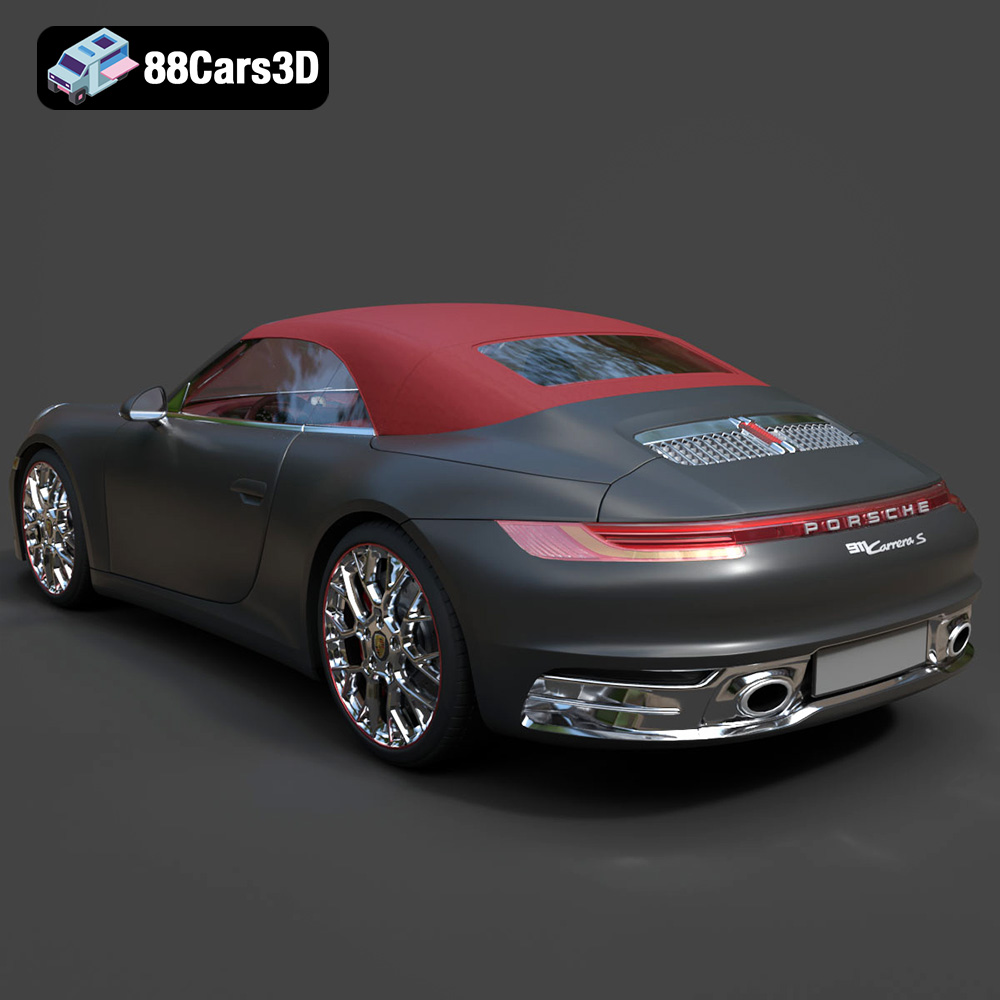
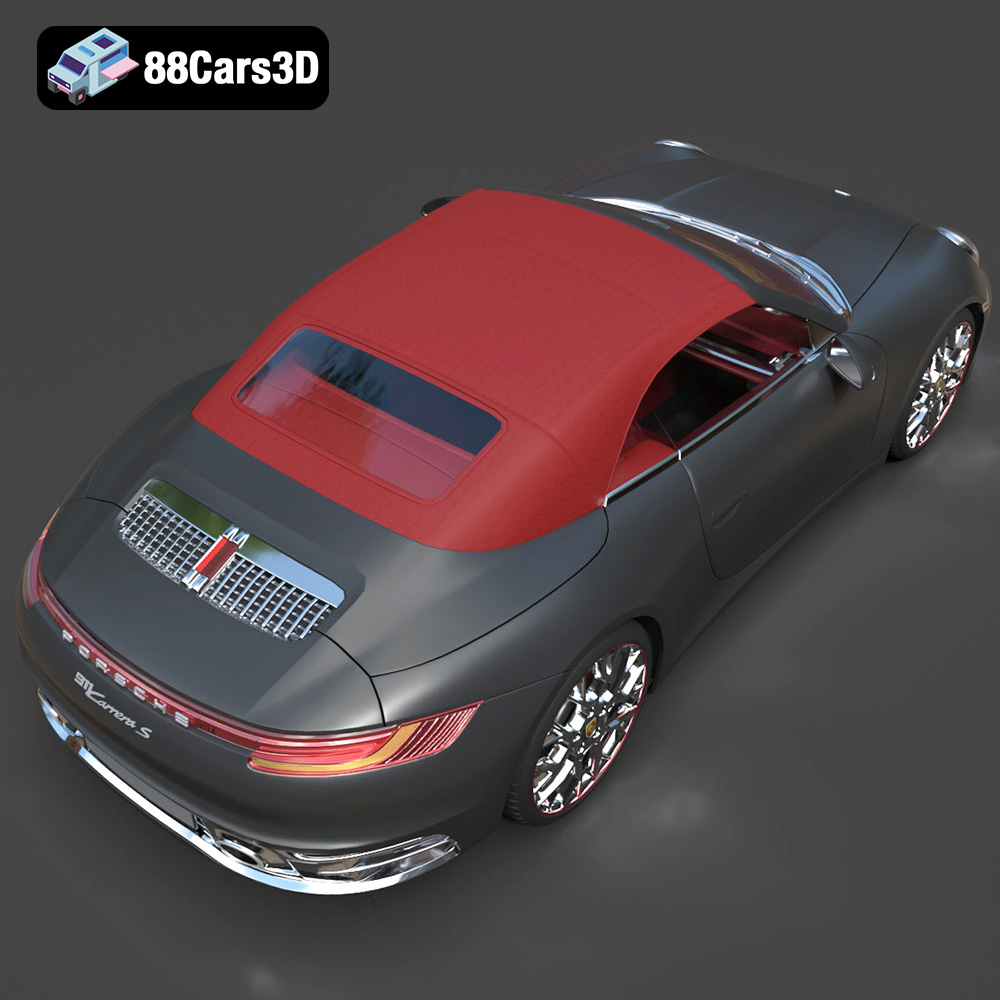
Experience the epitome of open-top motoring with the Porsche 911 Carrera Cabriolet 2019. Representing the iconic 992 generation, this German masterpiece combines a timeless silhouette with modern aerodynamics. Powered by a potent twin-turbo flat-six engine, the Cabriolet offers a perfect blend of high-performance thrills and wind-in-the-hair luxury. Key visual elements include its signature continuous rear LED light bar, sleek muscular fenders, wide rear track, and refined exhaust system integrated seamlessly into the rear fascia. This 3D model boasts exceptional topology with an optimized triangle count of approximately 450k, ensuring it is game-ready without compromising on visual fidelity. Designed to meet the highest industry standards, the model provides a flawless balance for use in real-time game engines, immersive AR/VR applications, high-end animation, and architectural or lifestyle visualization. Perfect for luxury lifestyle scenes, coastal driving simulations, high-speed racing titles, and interactive automotive configurators.
$19.99
.blend
.convertible
.fbx
.glb
.max
.obj
.ply
.porsche
.rendering
.sports car
.stl
.unreal
911-carrera-cabriolet-2019
car-3d-model
game asset
game-ready
low-poly
optimized
VR/AR