Get 20% OFF All Premium 3D & STL Models!

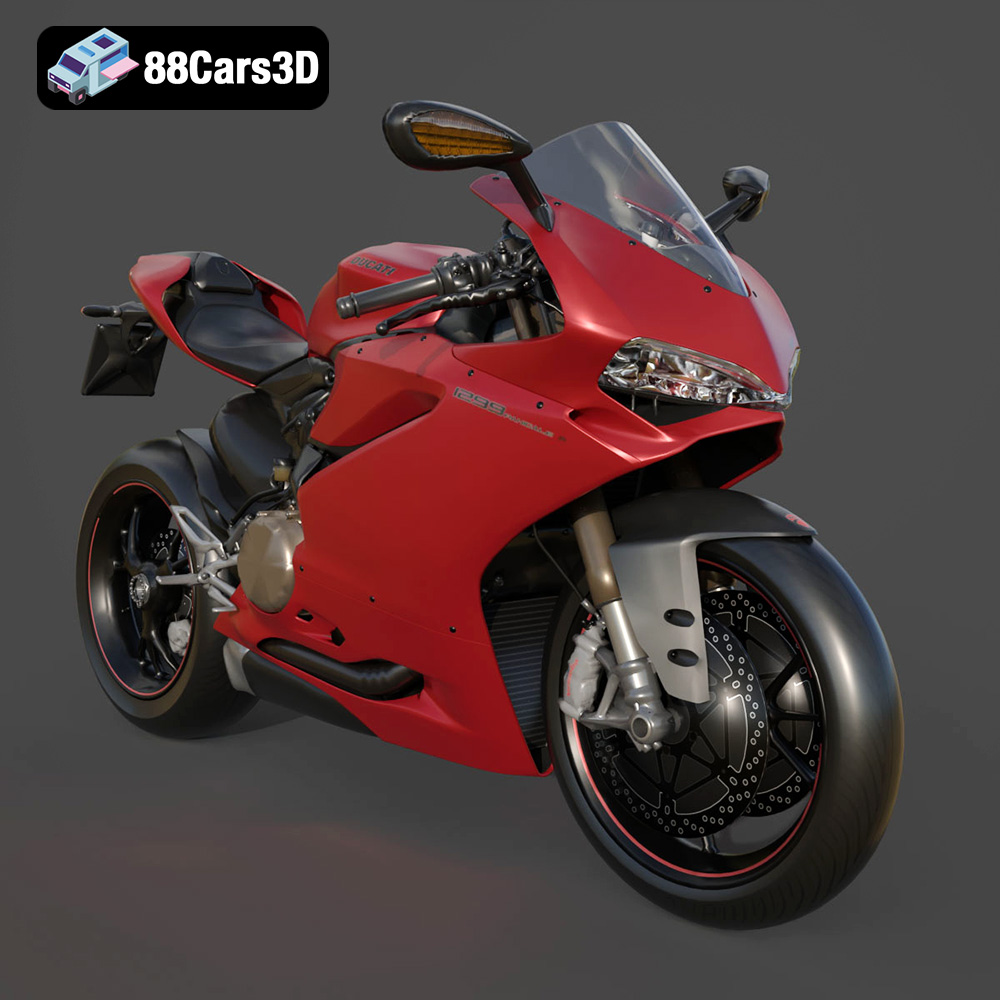
In the vibrant realm of digital creation, where imagination takes tangible form, the demand for exceptionally detailed and versatile 3D models continues to accelerate. From breathtaking cinematic sequences to hyper-realistic game environments and immersive virtual reality experiences, high-quality assets are the bedrock of any successful project. Today, we delve into the intricate world of digital automotive artistry, exploring how meticulously crafted 3D car models elevate projects to unparalleled heights, focusing on a prime example of Italian engineering: the Ducati 1299 Panigale S 2017.
The quest for photorealism and functional accuracy in digital representations of vehicles is a continuous journey. Whether you’re a seasoned game developer, an architectural visualizer, or a product designer, the right 3D asset can dramatically cut production time and enhance visual fidelity. The Ducati 1299 Panigale S 2017 3D model stands as a testament to this pursuit, offering an optimized, highly detailed, and game-ready asset that captures the raw aggression and elegance of the physical superbike. This model isn’t just a static object; it’s a dynamic digital twin ready to be integrated into diverse professional workflows, from high-octane racing simulations to interactive AR showrooms, available through trusted marketplaces like 88cars3d.com.
Navigating the landscape of 3D modeling requires a fundamental understanding of various file formats, each serving specific purposes across different software and platforms. The choice of format is crucial for compatibility, performance, and the integrity of your digital assets. The Ducati 1299 Panigale S 2017 3D model, for instance, comes in a comprehensive suite of formats, ensuring its adaptability for virtually any project requirement.
The .blend format is the native file type for Blender, the powerful open-source 3D creation suite. When you receive a model in .blend format, you’re getting a fully editable Blender scene. This includes not just the mesh geometry, but also materials, textures, lighting setups, animation data, camera views, and even physics simulations. For artists deeply integrated into the Blender ecosystem, this format offers unparalleled flexibility for further modifications, rigging, animation, and rendering directly within Blender. It’s the go-to for artists who want to delve into the model’s construction, adjust materials, or prepare it for a specific Blender-centric project.
.fbx (Filmbox) is arguably the most widely adopted proprietary file format for 3D content interchange. Developed by Autodesk, it excels at transferring 3D data between different software applications like Maya, 3ds Max, Unity, and Unreal Engine. An FBX file can store not only mesh data but also critical information such as hierarchies, materials, textures (often embedded or referenced), animations, skinning, and camera data. It’s the ideal choice for game development, particularly for Unreal and Unity, where its robust support for animation and hierarchy is indispensable for real-time pipelines. For a game-ready asset like the Ducati Panigale S, .fbx ensures seamless integration into major game engines.
The .obj (Wavefront Object) format is one of the oldest and most universally supported file types for 3D geometry. It’s a simple, text-based format that primarily stores vertex positions, UV coordinates, normals, and polygon faces. While it doesn’t typically store animation or rigging data, its widespread compatibility makes it an excellent choice for cross-software transfers of static mesh data. Coupled with an accompanying .mtl (Material Template Library) file, it can also define basic material properties and texture references. For maximum compatibility and fundamental mesh transfer, .obj remains a reliable option.
.glb (GLB format for glTF) is a relatively newer, but rapidly gaining traction, format optimized for efficient transmission and loading of 3D scenes and models in web and mobile applications. It’s the binary version of glTF (Graphics Language Transmission Format), designed to be a “JPEG for 3D.” .glb files package all necessary assets (geometry, materials, textures, animations) into a single, self-contained file, making them perfect for AR/VR experiences, interactive product configurators on websites, and browser-based 3D viewers. Its compact size and ease of integration are key advantages for real-time web delivery, a perfect fit for showcasing the Panigale S in an interactive virtual showroom.
.stl (STereoLithography) is the de facto standard file format for 3D printing and CAD software. It represents a 3D model as a series of connected triangles, describing only the surface geometry of an object without color, texture, or other CAD attributes. While simple, its ubiquity in the additive manufacturing world makes it indispensable for bringing digital models into the physical realm. The Ducati 1299 Panigale S 3D model, convertible to .stl, allows enthusiasts to print miniature replicas of this iconic superbike, as described in its detailed product offering.
The .ply (Polygon File Format, or Stanford Triangle Format) is another format for storing 3D data, particularly useful for scanned data and high-precision mesh representations. Unlike .stl, .ply can store a wider range of properties for each vertex and face, including color, transparency, normals, texture coordinates, and confidence values. It’s often used in academic research, 3D scanning, and applications requiring highly detailed mesh analysis or direct integration into CAD environments where precision is paramount.
The .unreal format, or more accurately, assets packaged for Unreal Engine (.uasset files), represents models specifically prepared and imported into Unreal Engine projects. While you typically import an .fbx into Unreal and the engine creates its own .uasset, the inclusion of “unreal” in the available formats implies a pre-optimized, engine-ready asset with potentially pre-configured materials, LODs, and collision setups. This means less setup time and more direct integration for developers using Unreal Engine for their projects, whether for games, cinematic renders, or architectural walkthroughs.
Similar to .blend for Blender, the .max format is the native scene file for Autodesk 3ds Max. This format contains an entire 3ds Max scene, including all geometry, textures, materials, lighting, cameras, animations, and render settings. For professionals working within a 3ds Max pipeline, having the .max file provides the highest level of editability and control over the model, allowing for advanced rendering setups, complex animations, or integrating the Ducati into detailed architectural visualizations or product showcases.
Understanding these formats empowers digital artists and developers to choose the right tool for the job, ensuring seamless workflows and optimal performance for any 3D project, especially when working with versatile assets like the Ducati 1299 Panigale S 2017 3D model from 88cars3d.com.
The true value of a premium 3D model lies in its meticulous attention to detail and its technical optimization. The Ducati 1299 Panigale S 2017 3D model exemplifies this, offering a highly detailed yet game-ready asset that balances visual fidelity with performance efficiency. This is not merely a surface representation; it’s a deep dive into the engineering and aesthetic prowess of one of the world’s most iconic superbikes.
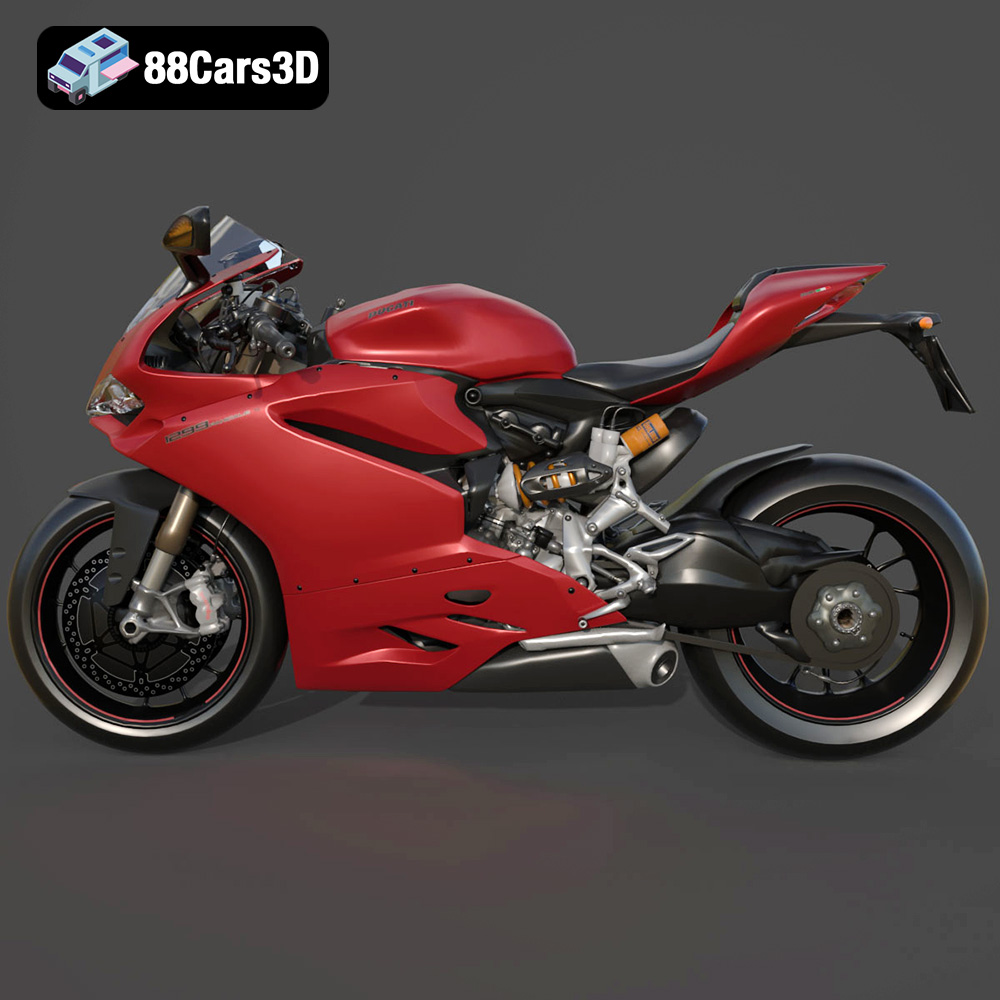
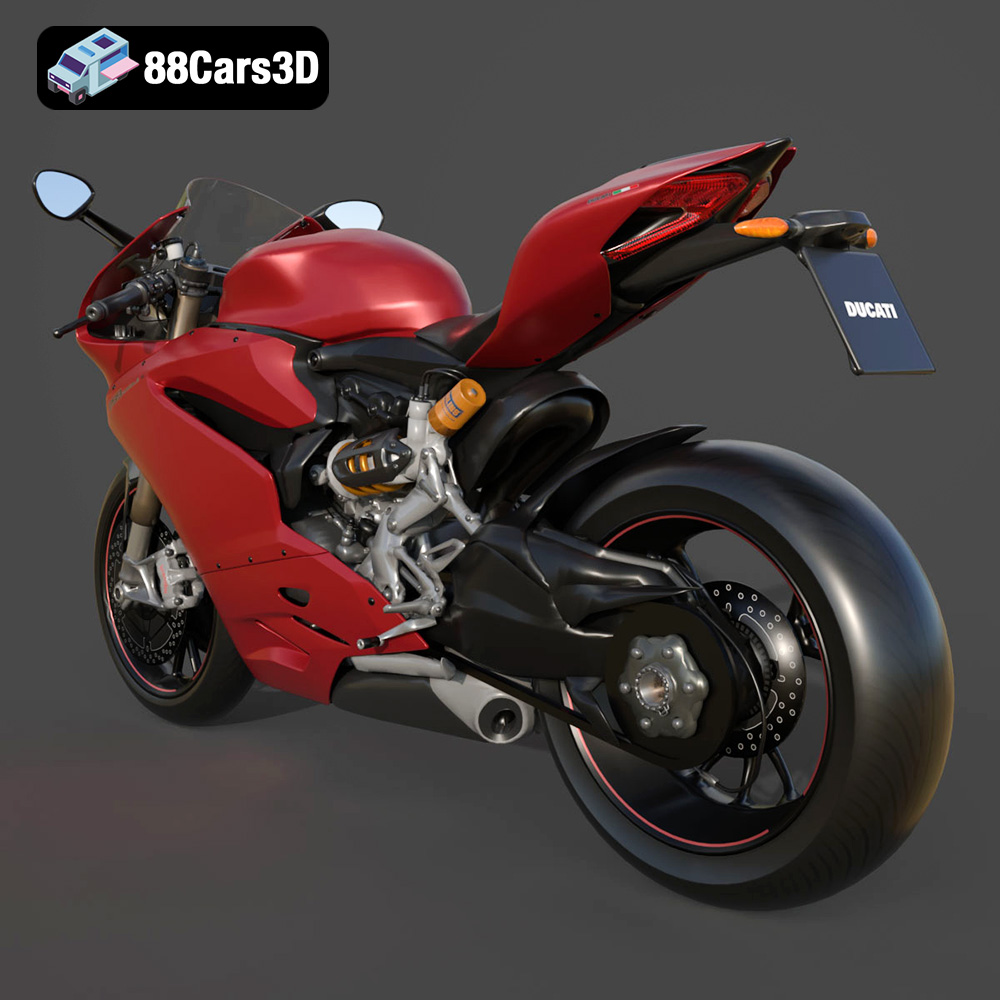
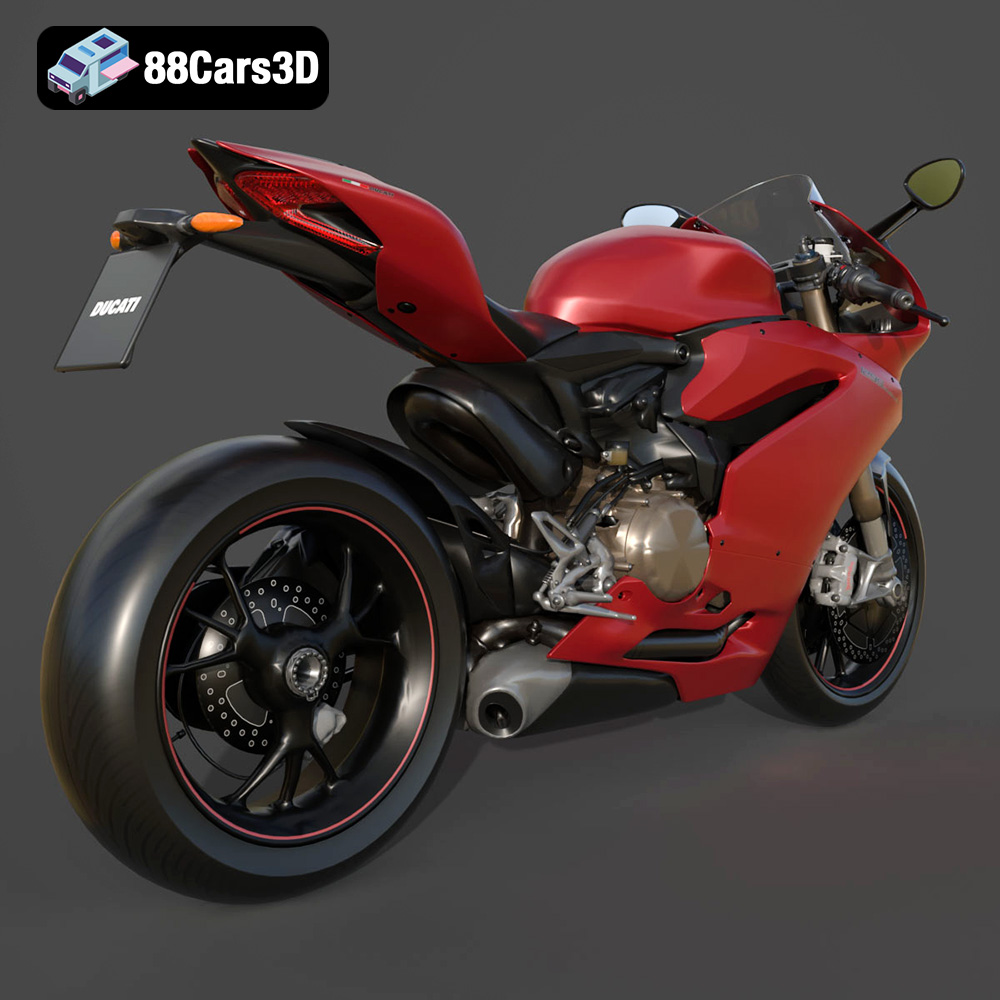
The Ducati 1299 Panigale S is a masterpiece of Italian design and performance, and its 3D model accurately reflects this. Key visual elements such as its aerodynamic fairings, the distinctive monocoque chassis structure, and the legendary Superquadro L-twin engine have been modeled with impressive precision. From the aggressive split LED headlights that define its face to the elegant single-sided swingarm and the signature under-engine exhaust system, every aspect contributes to capturing the raw aggression and elegance of the physical motorcycle. This level of detail extends to the forged alloy wheels, meticulously recreated after Marchesini designs, and the highly detailed Öhlins electronic front forks and rear shock suspension.
For rendering professionals, this means a model that holds up under close scrutiny, enabling breathtaking hero shots and dynamic motion sequences. For game developers, it translates into an authentic in-game experience, where players can appreciate the nuances of a premium motorcycle.
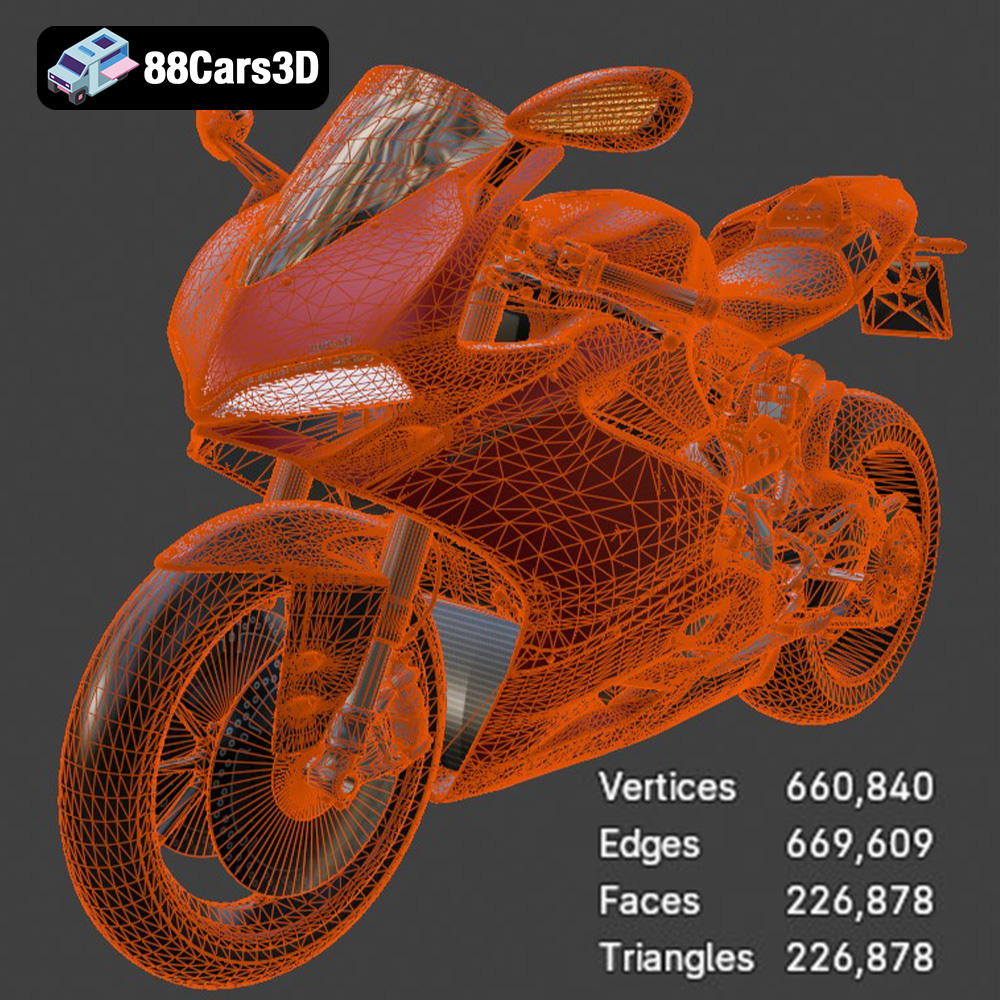
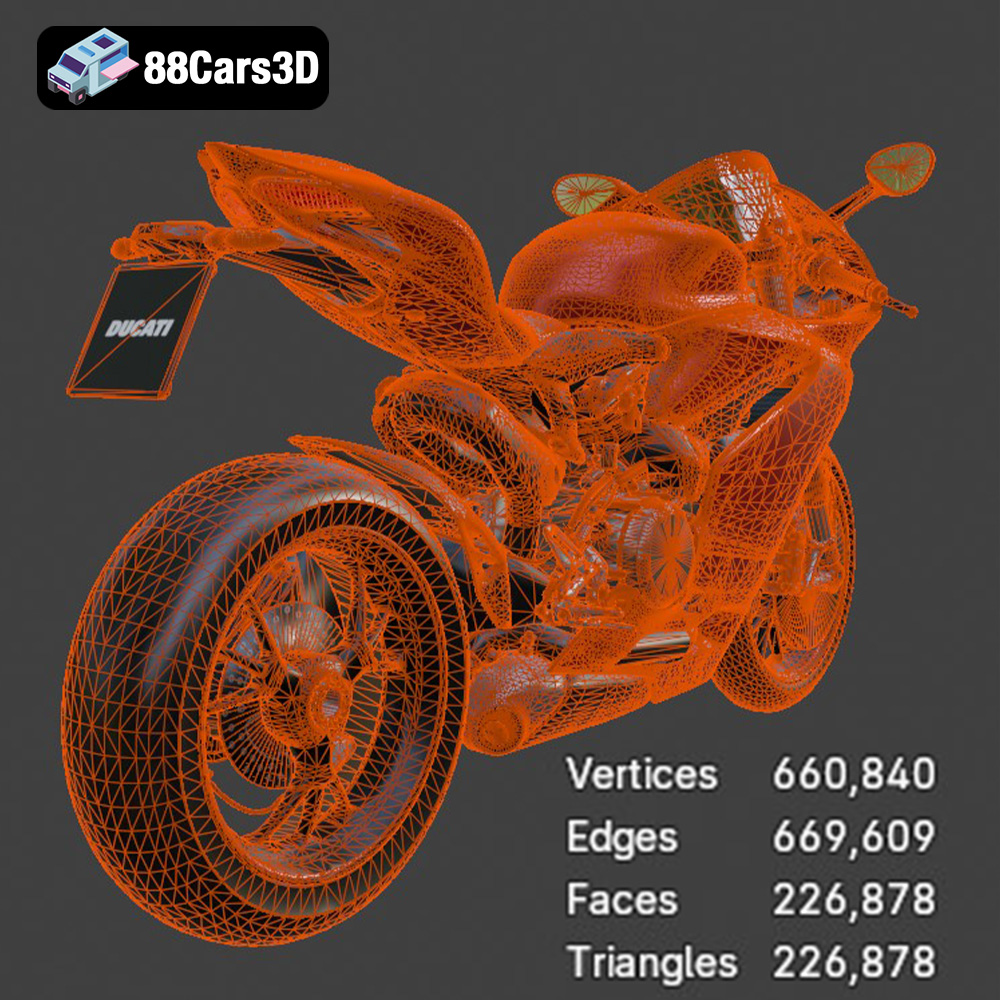
A crucial technical aspect for any modern 3D asset, especially for real-time applications, is its topology. The Ducati 1299 Panigale S 2017 3D model is constructed with an optimized topology of approximately 280,000 triangles. This figure represents a sweet spot, providing breathtaking visual fidelity without compromising real-time performance. This optimization is critical for game development, AR/VR experiences, and interactive visualizations where frame rates and loading times are paramount.
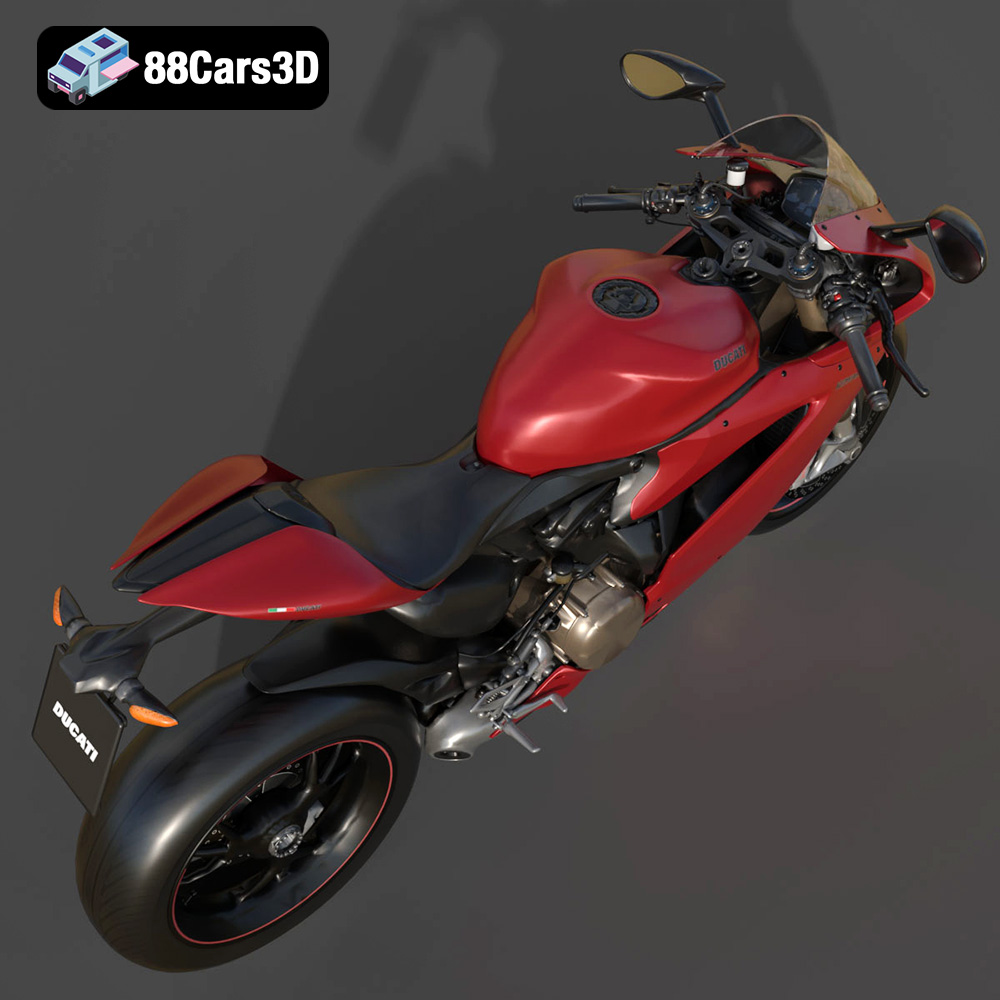
The interior, or cockpit, of any vehicle model is equally vital for a complete immersive experience. The Ducati model features an authentic contoured rider saddle with precise stitching details, track-oriented clip-on handlebars with highly detailed grips and switchgear, and a replicated TFT full-color digital instrument cluster. Accurate control details, including clutch and brake levers, rearsets, and the gear shifter, are also present. This level of detail is particularly beneficial for immersive first-person POV in gaming and VR, allowing players to feel truly connected to the machine. Furthermore, separate wheels, suspension components, and steering assemblies are configured for seamless animation, making it a dream asset for cinematics and dynamic simulations.
The modern game industry thrives on realism and performance, and premium 3D car models are central to achieving both. The Ducati 1299 Panigale S 2017 3D model is specifically engineered for next-gen game development, offering features that streamline integration and enhance the player experience in engines like Unreal and Unity.
For developers, time is a critical resource. An asset like the Ducati 1299 Panigale S, supplied in formats like .fbx and potentially pre-packaged for Unreal Engine (.unreal), significantly reduces the setup phase. The optimized ~280k triangle count means it can be dropped into a game scene without causing performance bottlenecks, even in open-world environments or racing titles where multiple vehicles might be present. Its real-world scale ensures it fits perfectly alongside other game assets, eliminating the need for tedious resizing and repositioning.
Workflow in Unreal Engine:
This streamlined process means developers can focus on gameplay mechanics and world-building, rather than spending valuable hours optimizing and rigging a sub-par asset. The Ducati model is truly ideal for open-world games, racing titles, and motorcycle simulators.
Beyond raw performance, the detailed visual fidelity of the Ducati Panigale S model enhances immersion. The accurate recreation of exterior features – from the distinctive fairing geometry to the detailed Superquadro L-twin engine block – allows for captivating third-person views. The meticulously modeled cockpit, with its authentic rider saddle, detailed clip-on handlebars, and replicated TFT full-color digital instrument cluster, is specifically optimized for immersive first-person POV. Players can experience the thrill of riding this superbike, with responsive controls and realistic visual feedback from the digital dash.
Consider a racing simulation where every glance at the instrument cluster, every shift of the gear lever, and every lean into a turn feels authentic. The precise technical details and animation-ready components of the Ducati 1299 Panigale S 3D model empower developers to build these profound experiences.
While game development is a primary application, the versatility of the Ducati 1299 Panigale S 2017 3D model extends far beyond. Its high fidelity and optimization make it a powerful asset for various other professional domains, including augmented reality, virtual reality, high-end rendering, and architectural or product visualization.
Augmented Reality (AR) and Virtual Reality (VR) are transforming how we interact with digital content, and detailed 3D models are their cornerstone. The Ducati Panigale S model is perfectly suited for immersive virtual showrooms, vehicle configurators, and interactive mobile AR experiences. Imagine a customer exploring the superbike in full 3D from the comfort of their home, using an AR app to place it realistically in their driveway, or a VR experience where they can virtually sit on the bike, interact with its controls, and customize its features in real-time.
The .glb format, included with the model, is particularly advantageous here. Its optimization for web and mobile environments ensures quick loading and smooth interaction, crucial for delivering a fluid AR/VR experience. The ability to customize colors, material finishes, and even tire textures adds another layer of interactivity, making it an excellent tool for marketing and sales presentations.
For product visualization, advertising, and architectural walkthroughs, stunning visuals are non-negotiable. The Ducati 1299 Panigale S 3D model provides the necessary detail and realism for producing photorealistic renders. Whether showcasing the bike in a dramatic studio lighting setup, integrating it into a luxurious architectural scene, or featuring it in a brand campaign, its accuracy ensures a compelling visual narrative.
Workflow in 3ds Max/Blender for Rendering:
This makes the model an excellent asset for brand campaigns, lifestyle scenes, and dramatic studio lighting setups, offering incredible value for designers and marketers.
Beyond the digital screen, the advent of 3D printing has opened new avenues for bringing virtual models into the physical world. The Ducati 1299 Panigale S 2017 3D model is not only designed for digital consumption but is also convertible to .stl format, making it suitable for 3D printing, a fantastic opportunity for hobbyists and collectors.
Imagine holding a meticulously detailed replica of the Ducati 1299 Panigale S, a miniature masterpiece printed right from its digital counterpart. The inclusion of the .stl format, alongside specific 3D print settings, caters directly to this growing community of makers. Enthusiasts can print the bike at recommended scales like 1:12, 1:18, or 1:24, transforming the digital asset into a tangible display piece.
The product description provides crucial print settings:
These detailed guidelines are invaluable for ensuring a successful print, enabling both novice and experienced 3D printing enthusiasts to produce stunning models. This capability adds immense value, making the Ducati 1299 Panigale S 2017 3D model a versatile asset for display-scale hobbyists and superbike collectors alike.
A truly professional 3D model is not just a static representation; it’s a flexible foundation for creative exploration and adaptation. The Ducati 1299 Panigale S 2017 3D model offers extensive customization options, ensuring it remains relevant and adaptable for future projects and evolving aesthetic demands.
The ability to customize a 3D model without compromising its underlying quality is a significant advantage. The Ducati model provides several avenues for personalization:
These customization options empower artists and developers to integrate the Ducati Panigale S into a wide array of visual contexts, ensuring it aligns perfectly with their project’s specific aesthetic and functional requirements.
Investing in high-quality 3D car models is about more than just current project needs; it’s about future-proofing your asset library. A well-optimized and flexible model like the Ducati 1299 Panigale S 2017 3D model retains its value over time. Its inclusion of various industry-standard file formats (.blend, .fbx, .obj, .glb, .stl, .ply, .unreal, .max) guarantees compatibility with a diverse and evolving ecosystem of 3D software and real-time engines. As new rendering techniques emerge or engine updates roll out, this model’s clean topology and organized material separation will make it easy to adapt and upgrade. This ensures that the investment you make in a premium asset from 88cars3d.com today will continue to pay dividends in projects for years to come.
The journey through the intricate world of 3D automotive modeling reveals the profound impact that high-quality assets have on digital creation. The Ducati 1299 Panigale S 2017 3D model stands out as a prime example of engineering and artistic precision, offering unparalleled detail, technical optimization, and versatility across a myriad of applications. From its meticulously recreated aesthetics, capturing the raw aggression and elegance of the physical superbike, to its game-ready topology of approximately 280,000 triangles, every aspect is designed for professional use.
Whether your workflow centers on real-time game development in Unreal Engine, crafting stunning visualizations in 3ds Max or Blender, developing immersive AR/VR experiences, or even bringing the digital to life through 3D printing, this model is built to excel. Its comprehensive suite of file formats ensures seamless integration, while its extensive customization options provide the creative freedom necessary for any project. Investing in such a robust and flexible asset accelerates production, enhances visual fidelity, and ultimately elevates the entire creative output.
For artists, developers, and enthusiasts seeking the very best in 3D car models, the Ducati 1299 Panigale S 2017 3D model represents a pinnacle of digital automotive artistry, ready to drive your next project forward. Explore this and other exceptional 3D models at 88cars3d.com and unlock the full potential of your digital visions.
Experience the apex of Italian engineering with this highly detailed 3D model of the Ducati 1299 Panigale S 2017. Renowned for its stunning aesthetics and blistering track performance, this superbike boasts iconic visual elements such as its aerodynamic fairings, monocoque chassis structure, and the legendary Superquadro L-twin engine. Distinctive features like the aggressive split LED headlights, single-sided swingarm, and under-engine exhaust system have been meticulously modeled to capture the raw aggression and elegance of the physical motorcycle.
$19.99
.2017
.blend
.ducati
.fbx
.glb
.max
.obj
.ply
.rendering
.sportbike
.stl
.superbike
.unreal
1299-panigale-s
game asset
game-ready
low-poly
motorcycle-3d-model
optimized
VR/AR