Get 20% OFF All Premium 3D & STL Models!

In the dynamic world of digital creation, the demand for realistic, high-performance 3D automotive models is ever-growing. From high-octane racing games and immersive virtual reality experiences to stunning architectural visualizations and intricate industrial designs, a meticulously crafted 3D car model is often the linchpin of a successful project. It’s not just about aesthetics; it’s about technical precision, optimization, and seamless integration into diverse workflows.
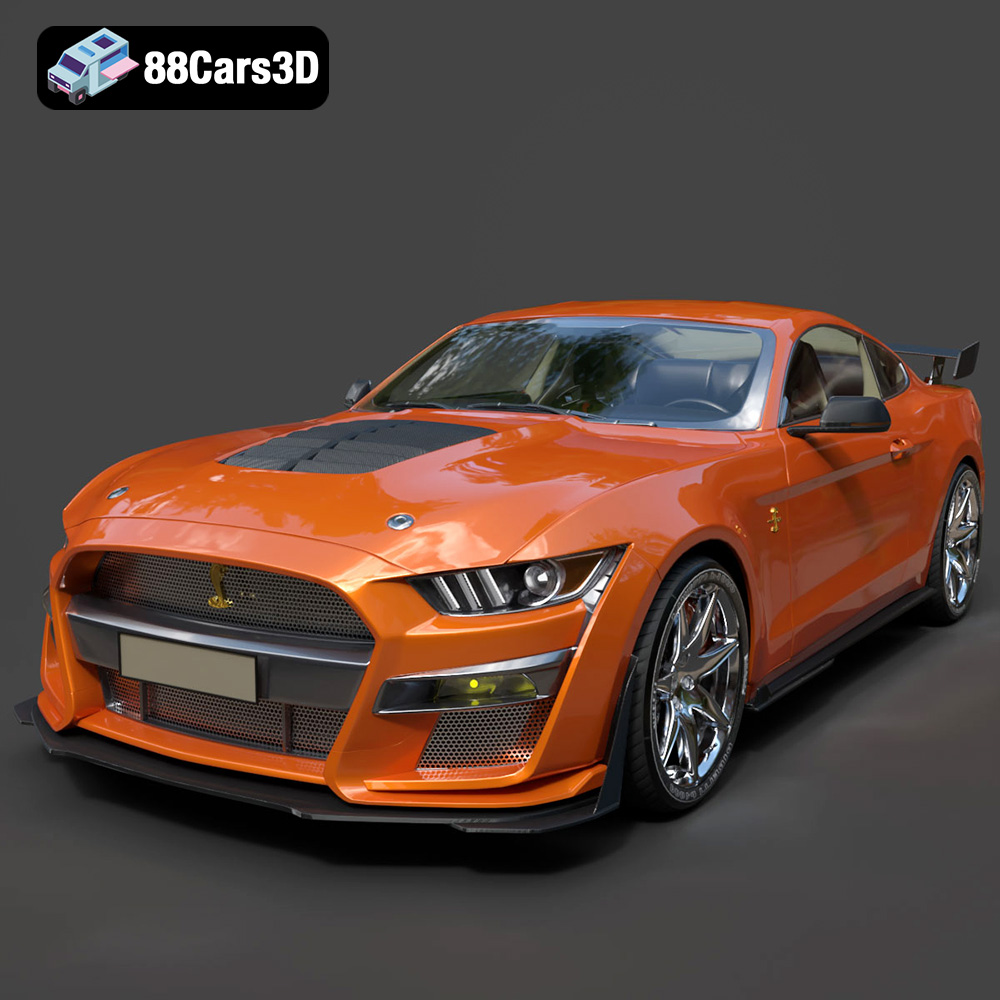
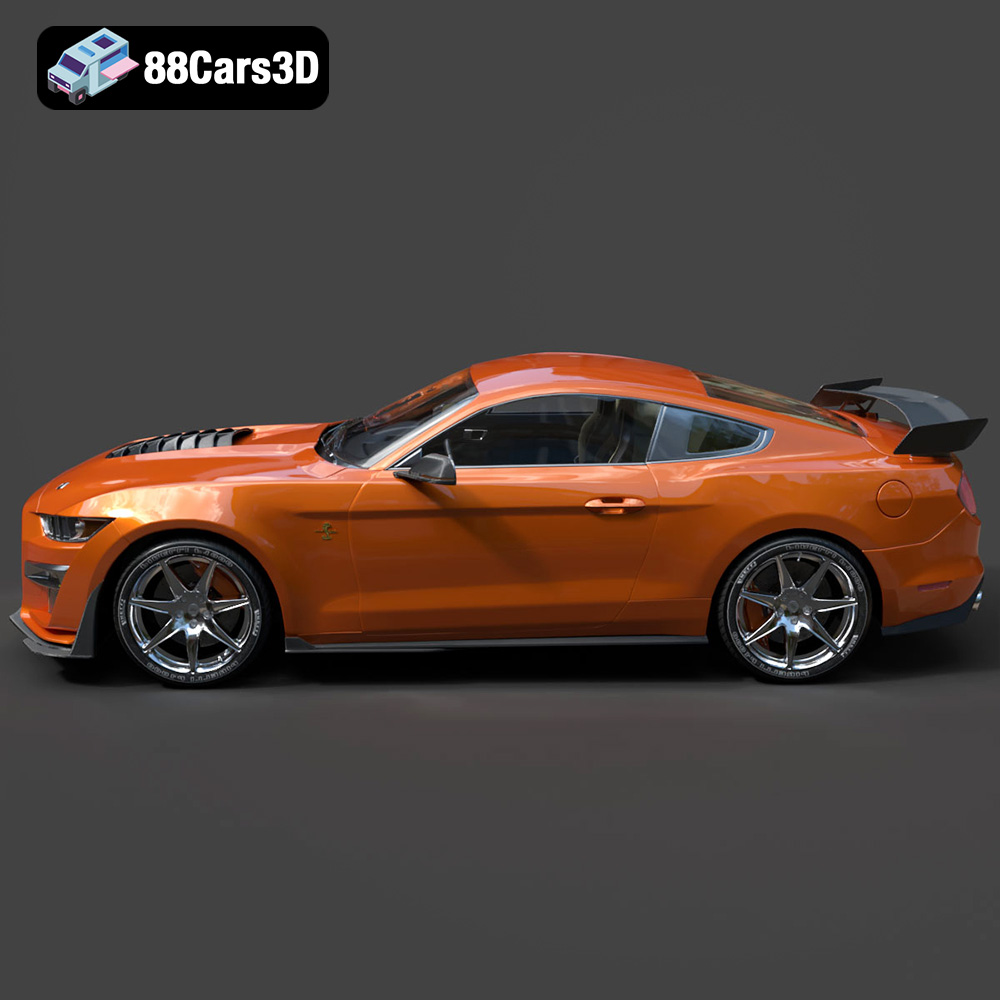
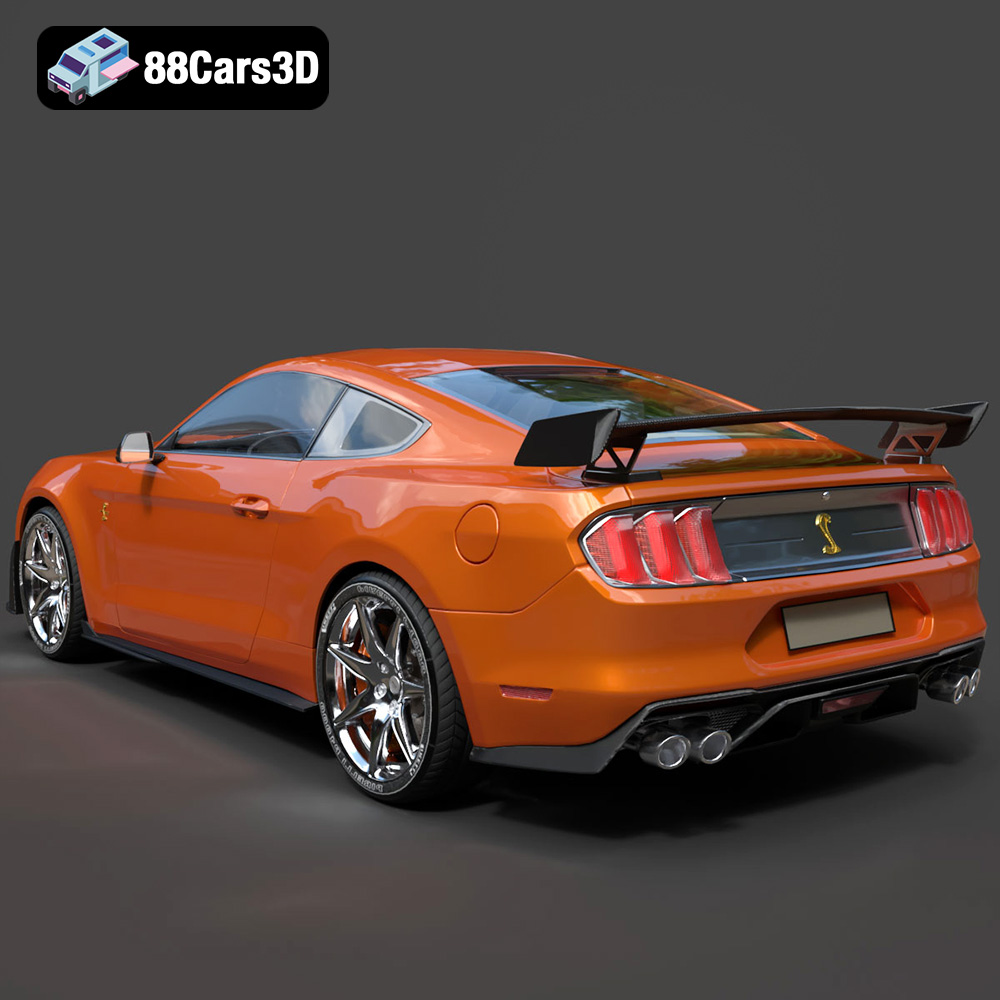
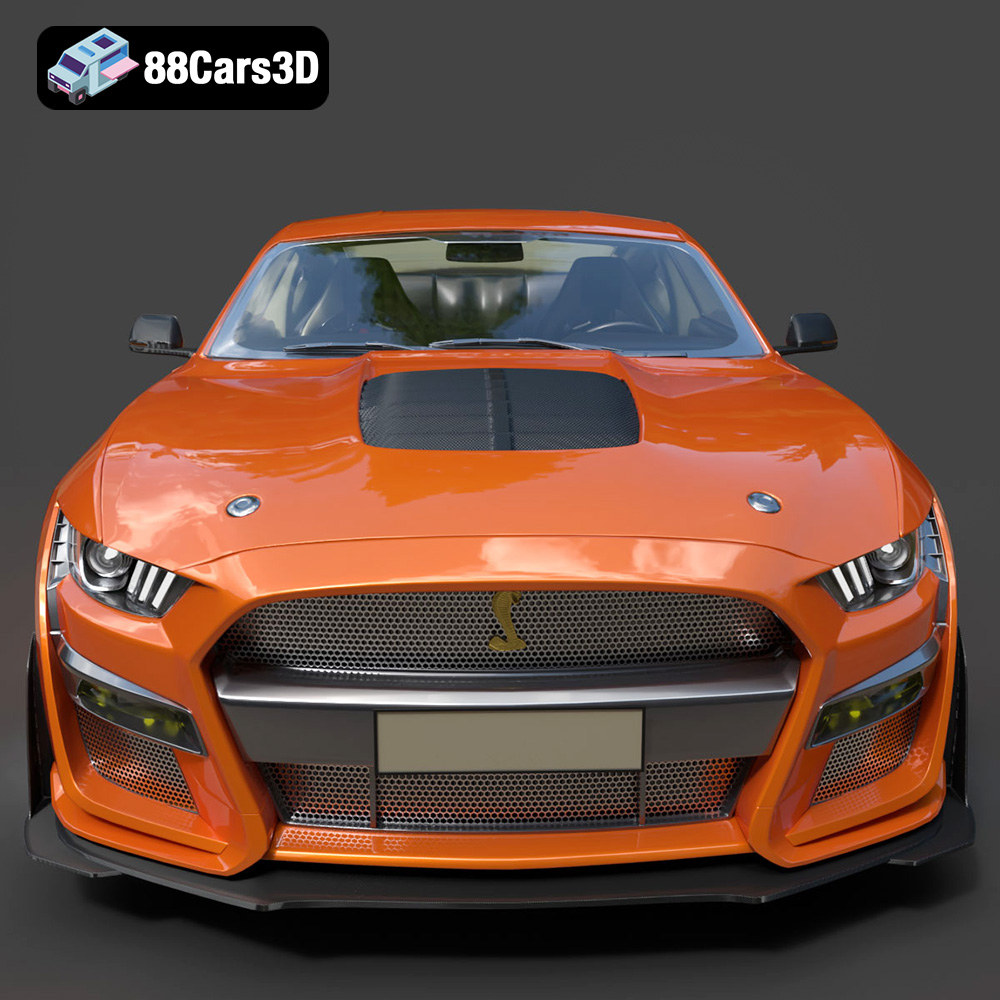
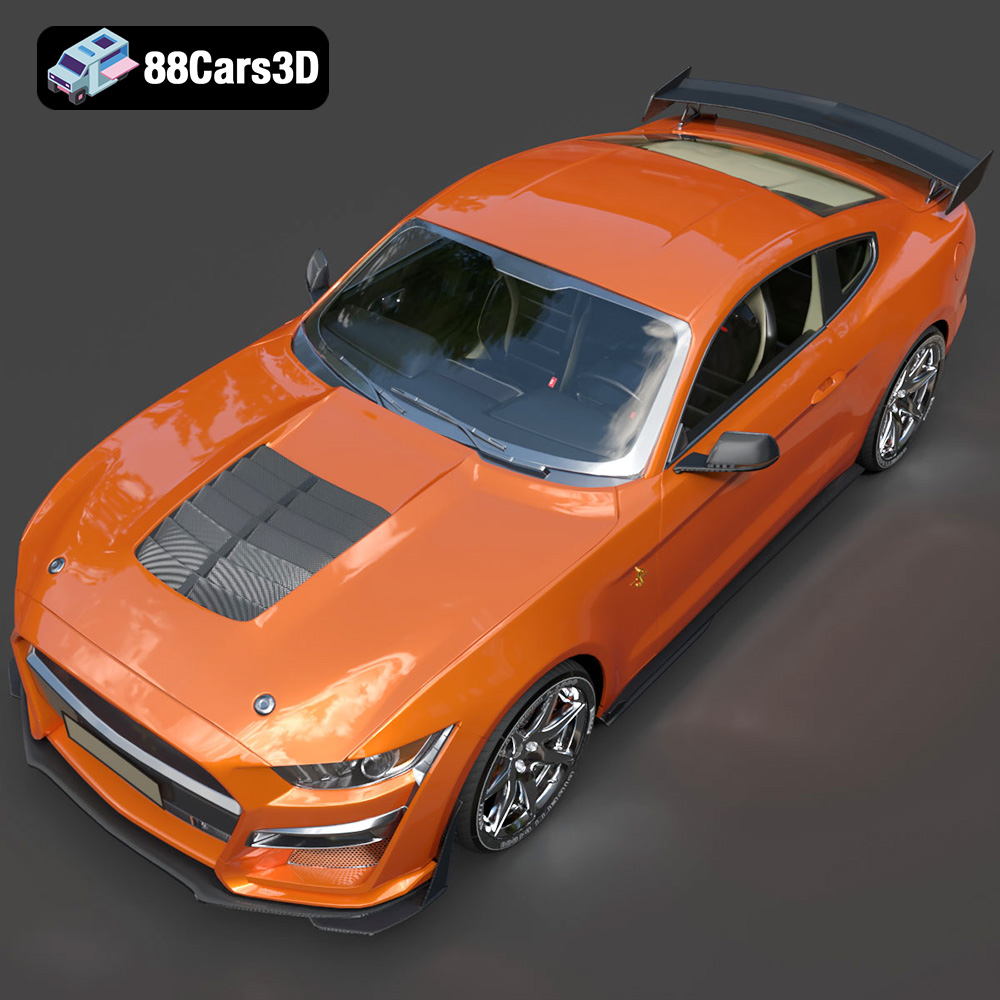
Imagine bringing the raw power and iconic design of a legendary American muscle car to life in your next project. We’re talking about a vehicle that commands attention, a true marvel of engineering and design: the 2020 Ford Mustang Shelby GT500. This machine, celebrated for its aggressive stance, supercharged 5.2L V8 engine, and track-honed aerodynamics, is a prime example of automotive excellence. Translating such a complex vehicle into a versatile 3D model requires a deep understanding of geometry, materials, and target applications. The 2020 Ford Mustang Shelby GT500 3D model, available at 88cars3d.com, encapsulates this very philosophy, offering an unparalleled level of detail and optimization for a wide range of professional uses.
Choosing the correct file format for your 3D car model is paramount to a smooth workflow and successful project execution. Each format serves specific purposes, with its own strengths and limitations regarding compatibility, data preservation, and performance. Understanding these distinctions is crucial for anyone working with 3D assets, especially something as intricate as a premium automotive model like the Ford Mustang Shelby GT500 2020.
The .blend format is Blender’s native file type, offering a comprehensive and fully editable scene with all associated data. When you download a .blend file, you’re not just getting the mesh; you’re receiving the entire Blender project. This includes materials (often PBR setups), textures (packed or linked), lighting, cameras, animation data, modifiers, and even custom node setups. It’s ideal for Blender users who need full control over the asset, allowing for deep customization, adjustments to the material graph, or further optimization specific to their Blender-based pipeline. For the Ford Mustang Shelby GT500 2020 model, the .blend file would provide the most flexible starting point for artists working within Blender’s ecosystem.
FBX (Filmbox) is a proprietary file format owned by Autodesk and is widely considered the industry standard for exchanging 3D data between various software applications, including 3ds Max, Maya, Blender, Unreal Engine, and Unity. It’s particularly ideal for real-time pipelines because it efficiently stores not only mesh data but also animation, rigging, PBR materials, lightmaps, cameras, and scene hierarchy. When exporting to Unreal or Unity, an .fbx file ensures that the model, its pivot points (crucial for wheel rotation and suspension), and basic material assignments translate correctly. Its robust nature makes it indispensable for transferring complex animated assets, making it a go-to for the game-ready 2020 Ford Mustang Shelby GT500 model.
OBJ (Wavefront Object) is one of the oldest and most universally supported 3D file formats. It’s excellent for exporting static mesh data, including vertices, normals, UV coordinates, and faces. While it doesn’t store animation or advanced material properties directly (materials are typically referenced via an accompanying .mtl file, and textures are external), its widespread compatibility makes it a safe choice for cross-software transfers when animation isn’t a primary concern. The .obj format is reliable for importing the core geometry of the Ford Mustang Shelby GT500 into virtually any 3D application for rendering or further processing.
GLB (GL Transmission Format Binary) is a relatively newer format specifically designed for efficient transmission and loading of 3D scenes and models in web, augmented reality (AR), and virtual reality (VR) applications. It’s a self-contained, binary format that bundles everything—mesh data, PBR materials, textures, and animations—into a single file. This ‘single-file-delivery’ approach minimizes HTTP requests, making it incredibly fast for browser-based viewers, mobile AR experiences, and platforms like Facebook 3D posts. For showcasing the 2020 Ford Mustang Shelby GT500 in an interactive virtual showroom or a mobile AR app, .glb is the format of choice due to its optimization for performance and ease of deployment.
STL (Standard Tessellation Language or Stereolithography) is almost exclusively used for 3D printing. It represents a 3D model as a series of connected triangles, describing only the surface geometry without color, texture, or other properties. While it simplifies the model, it’s the universally accepted input for 3D slicer software. The Ford Mustang Shelby GT500 3D model can be converted to .stl, allowing enthusiasts to print physical replicas. However, preparing an .stl for printing often requires specific optimizations like ensuring watertight meshes, appropriate wall thickness, and adding supports, as detailed in the product description.
PLY (Polygon File Format or Stanford Triangle Format) is a versatile format capable of storing a wide range of data, including color, transparency, surface normals, and even confidence values for each vertex or face. It’s commonly used in applications requiring high precision, such as 3D scanning, CAD (Computer-Aided Design), and scientific visualization. While less common for general game assets, it provides a robust, detailed representation of the mesh, which can be useful for specific engineering or analysis tasks related to the Ford Mustang Shelby GT500’s geometry.
While not a universal file format in the traditional sense, a “.unreal” file often refers to a packaged asset specifically prepared for Unreal Engine. This typically means an .fbx or other format has been imported, processed, had materials assigned, and potentially includes Blueprint setups or other engine-specific configurations. When a model is provided in an “unreal” format, it implies it’s ready to be dropped directly into an Unreal Engine project with minimal setup, preserving PBR material definitions, proper pivot points, and possibly even collision geometry. This level of pre-preparation is incredibly valuable for accelerating development with the Ford Mustang Shelby GT500 in high-fidelity real-time environments.
The .max format is the native file type for Autodesk 3ds Max, a leading software for 3D modeling, animation, and rendering. Like .blend, it stores the entire scene, including geometry, lights, cameras, materials (often V-Ray, Corona, or physical renders), animation, and modifiers. For professionals working in 3ds Max, the .max file of the Ford Mustang Shelby GT500 2020 offers the most comprehensive access to the original scene setup, allowing for advanced rendering setups, complex animations, or integration into existing 3ds Max pipelines.
Creating a truly exceptional 3D car model is a meticulous process that blends artistic vision with technical prowess. It goes far beyond simply mimicking real-world shapes; it involves a deep understanding of surface continuity, material science, and performance optimization. For a vehicle as iconic as the Ford Mustang Shelby GT500 2020, every curve, every vent, and every interior detail must be rendered with absolute precision.
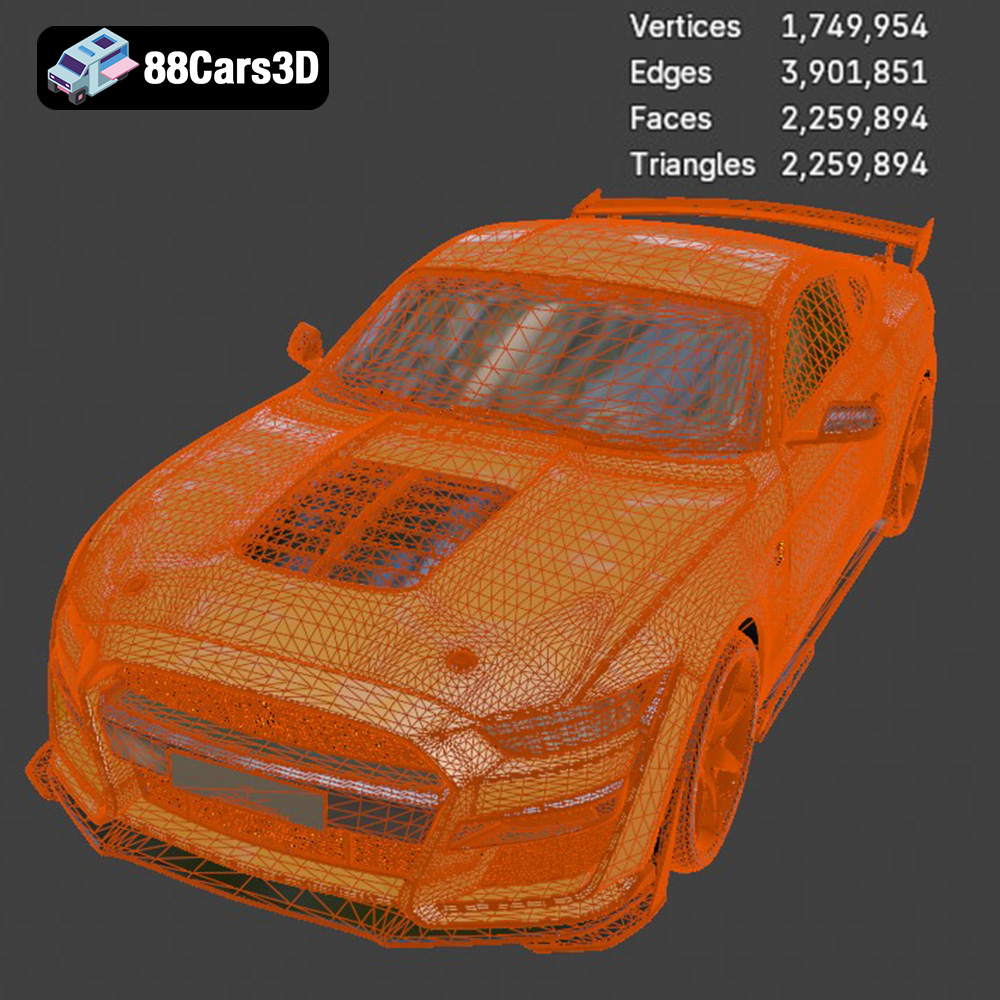
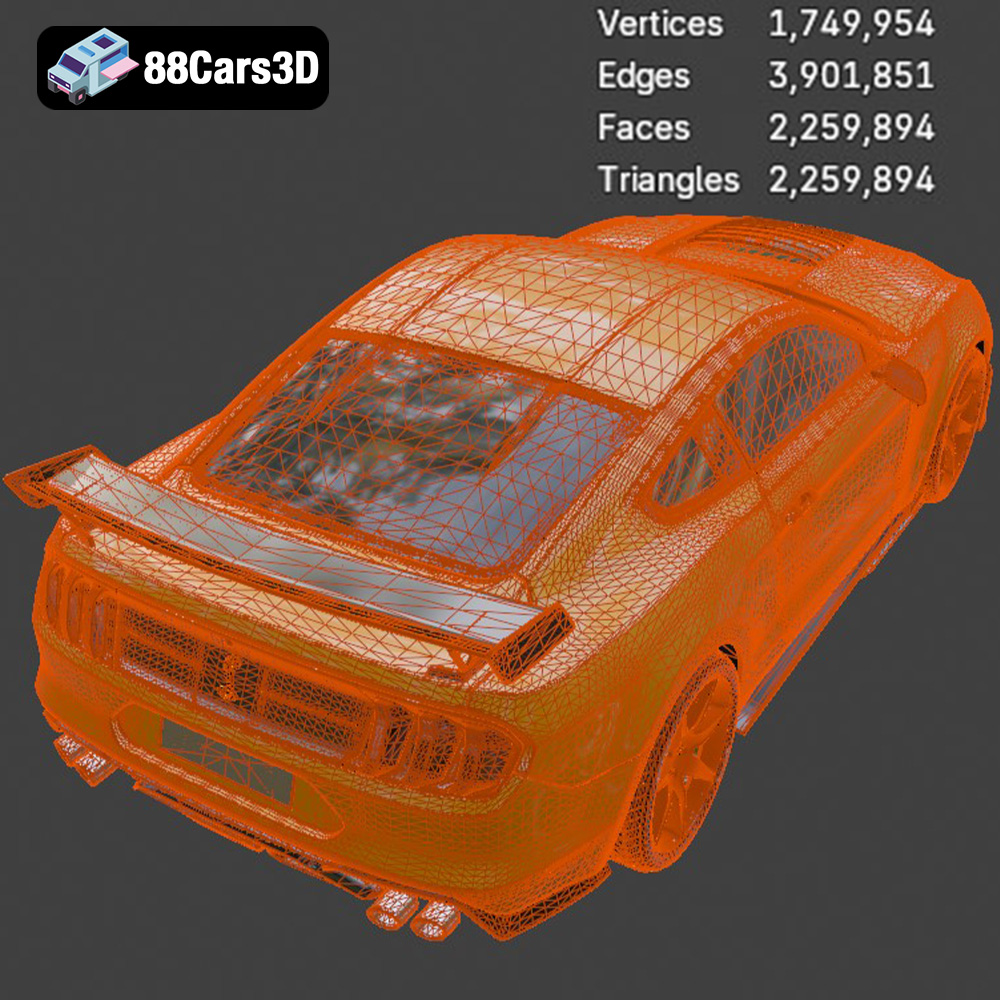
The foundation of any high-quality 3D model is its mesh topology. For automotive subjects, this means a clean, efficient quad-based mesh that allows for smooth subdivision while maintaining sharp edges where needed. The Ford Mustang Shelby GT500 2020 3D model, with its approximately 200,000 triangles, exemplifies this balance. This polycount is optimized to be “game-ready,” meaning it delivers exceptional visual fidelity without bogging down real-time engines. Such optimization involves careful edge flow, minimizing stretched polygons, and ensuring that UV maps are clean and distortion-free. This level of precision is critical for the vehicle’s complex body panels, aerodynamic elements, and intricate engine components.
Modern 3D rendering relies heavily on Physically Based Rendering (PBR) materials. These materials simulate how light interacts with surfaces in the real world, leading to incredibly photorealistic results. For the Ford Mustang Shelby GT500, this translates to textures for the metallic paint, carbon fiber accents, glass, tire rubber, and detailed interior surfaces like Alcantara and leather. High-resolution PBR textures – including Albedo (color), Normal (surface detail), Roughness (specularity), Metallic (reflectivity), and Ambient Occlusion – are meticulously crafted to capture the nuances of each material, from the subtle sheen of the paint to the intricate weave of the carbon-fiber style wheels. This attention to detail elevates the model from a simple mesh to a vibrant, lifelike asset.
Game development demands a unique blend of visual quality and performance efficiency. A premium 3D car model like the Ford Mustang Shelby GT500 2020 is designed to meet these stringent requirements, offering a seamless integration into leading game engines like Unreal Engine and Unity.
For Unreal Engine developers, importing the 2020 Ford Mustang Shelby GT500 3D model typically starts with the .fbx file. Upon import, Unreal’s powerful material editor allows artists to connect the PBR textures (Albedo, Normal, Roughness, Metallic, AO) to create sophisticated materials that react realistically to light. The optimized 200k triangle count is crucial here, as it ensures high framerates even in complex open-world environments. Proper pivot setups for wheels, steering, and suspension components, as provided with this model, are essential for implementing realistic vehicle physics and animation blueprints in Unreal. Developers can then leverage Unreal’s robust vehicle physics system, Niagara particle effects for exhaust, and cinematic tools to bring the GT500 to life in a racing simulator or action-adventure game.
Unity, another powerhouse in game development, also benefits greatly from high-quality .fbx imports. The optimization for game-ready polycount and PBR materials makes the Shelby GT500 model a perfect fit for Unity’s Universal Render Pipeline (URP) or High Definition Render Pipeline (HDRP). Developers can easily set up car controllers, add custom physics, and integrate the model into a wide array of racing genres or interactive experiences. The clear mesh structure also facilitates the creation of LOD (Level of Detail) models, further enhancing performance for distant vehicles while maintaining high quality up close. The detailed interior, with its accurate Recaro seats and digital instrument cluster, is specifically optimized for first-person POV, making it ideal for immersive driving simulators.
Automotive visualization is an art form that demands absolute photorealism. Architects, advertisers, and industrial designers rely on impeccably rendered 3D car models to convey emotion, showcase products, or complement environments. The Ford Mustang Shelby GT500 2020 3D model provides the perfect canvas for such high-end rendering.
Using the .max file, 3ds Max users gain access to the complete scene, allowing for advanced rendering setups. This often involves intricate studio lighting configurations, such as HDR (High Dynamic Range) environments combined with targeted area lights to highlight the vehicle’s curves and reflections. Renderers like V-Ray or Corona are frequently used to achieve cinematic quality. Artists can fine-tune every aspect of the PBR materials, from the precise metallic flakes in the paint to the subtle reflectivity of the glass and the texture of the Alcantara steering wheel. The model’s accurate proportions and detailed geometry, including visible MagneRide components and Brembo brake calipers, shine through in these high-resolution renders, making it indispensable for advertising campaigns or virtual configurators.
Blender artists, leveraging the .blend file, have immense creative control. With render engines like Cycles (for unbiased photorealism) or Eevee (for real-time PBR rendering), they can produce stunning visuals. Cycles, known for its physically accurate light transport, can render the GT500 with breathtaking realism, capturing intricate reflections and refractions. Eevee, on the other hand, allows for rapid iteration and stunning results in real-time, perfect for quick previews or stylized renders. The flexibility to adjust body colors, modify tire textures, and adapt material finishes (matte, gloss, metallic, carbon fiber) directly within Blender empowers artists to tailor the 2020 Ford Mustang Shelby GT500 to any client brief or creative vision.
The versatility of a well-made 3D car model extends beyond traditional games and renders. Emerging technologies like AR/VR and established niche markets such as 3D printing offer exciting new applications for high-quality assets like the Ford Mustang Shelby GT500 2020.
The optimized polycount and high-quality PBR materials of the Ford Mustang Shelby GT500 make it an ideal candidate for immersive AR/VR experiences. Imagine a virtual showroom where potential buyers can walk around, inspect, and even customize the GT500 in real-time. Using the .glb format, the model can be seamlessly integrated into web-based AR viewers or mobile AR applications, allowing users to place the virtual car in their driveway via their smartphone. For full VR experiences, the model can be brought into platforms like Unity or Unreal Engine, creating detailed virtual environments where users can sit inside the cockpit, examine the Recaro racing seats, and interact with the digital instrument cluster. This interactive capability offers a powerful tool for marketing, training, and customer engagement.
For enthusiasts and collectors, the ability to 3D print a physical replica of their favorite car is incredibly appealing. The Ford Mustang Shelby GT500 2020 3D model, convertible to the .stl format, provides this opportunity. While 3D printing requires specific considerations—such as ensuring a watertight mesh, proper wall thickness, and strategic support placement—the detailed geometry of the model ensures a high-quality physical output. Resin printing is recommended for capturing the fine details, such as the aggressive quad exhaust system and performance tire tread patterns. Post-processing with sanding, primer, and authentic factory colors can result in a stunning display-scale model, bringing the digital asset into the tangible world.
In a saturated market, the quality and versatility of your 3D assets can be a significant differentiator. Sourcing premium 3D car models from reputable marketplaces like 88cars3d.com offers a substantial competitive advantage, saving countless hours of modeling and optimization while guaranteeing top-tier results.
Creating a highly detailed, game-ready 3D car model from scratch, especially one as complex as the Ford Mustang Shelby GT500 2020, can take hundreds of hours for even experienced artists. The cost of such an endeavor can be prohibitive for many projects. By purchasing a pre-made, optimized model, developers and artists can drastically reduce development time and costs. This allows them to focus resources on other critical aspects of their project, such as gameplay mechanics, environmental design, or complex animations, knowing that their primary vehicle asset is already perfect.
When you acquire a 3D model from a specialized marketplace, you expect a certain level of quality and technical accuracy. The 2020 Ford Mustang Shelby GT500 3D model from 88cars3d.com offers precisely this: real-world scale accuracy, optimized geometry (200k triangles), clean PBR materials, and proper pivot setups for animation. This attention to technical detail ensures that the model performs flawlessly across various applications, from real-time game engines to high-fidelity rendering software, without requiring extensive clean-up or rework.
A truly professional 3D car model is designed with versatility in mind. The Ford Mustang Shelby GT500 model’s inclusion of various file formats (.blend, .fbx, .obj, .glb, .stl, .ply, .unreal, .max) ensures compatibility with virtually any professional workflow. Furthermore, the ability to easily customize body colors, tire textures, material finishes, and lighting environments means the model can be adapted to a wide array of creative briefs, from showcasing different trim levels in a configurator to placing it in diverse cinematic scenes. This inherent flexibility makes it a powerful asset for any digital artist or developer.
The journey of a high-quality 3D car model, from initial concept to deployment across multiple digital platforms, is a testament to the intricate balance of artistic skill and technical mastery. The Ford Mustang Shelby GT500 2020 3D model stands as a premier example of this fusion, offering unparalleled detail, optimization, and versatility for game development, photorealistic rendering, AR/VR experiences, and even 3D printing. Understanding the nuances of different file formats and leveraging the specific advantages of each for your project will empower you to maximize the potential of such an asset.
Whether you’re an indie game developer aiming for immersive realism, an automotive visualization artist seeking to capture every intricate detail, or an enthusiast wanting to bring a digital legend to life through 3D printing, investing in a meticulously crafted model like the 2020 Ford Mustang Shelby GT500 from 88cars3d.com is a decision that pays dividends in quality, efficiency, and creative freedom. Elevate your projects with assets that truly represent the pinnacle of digital automotive design.
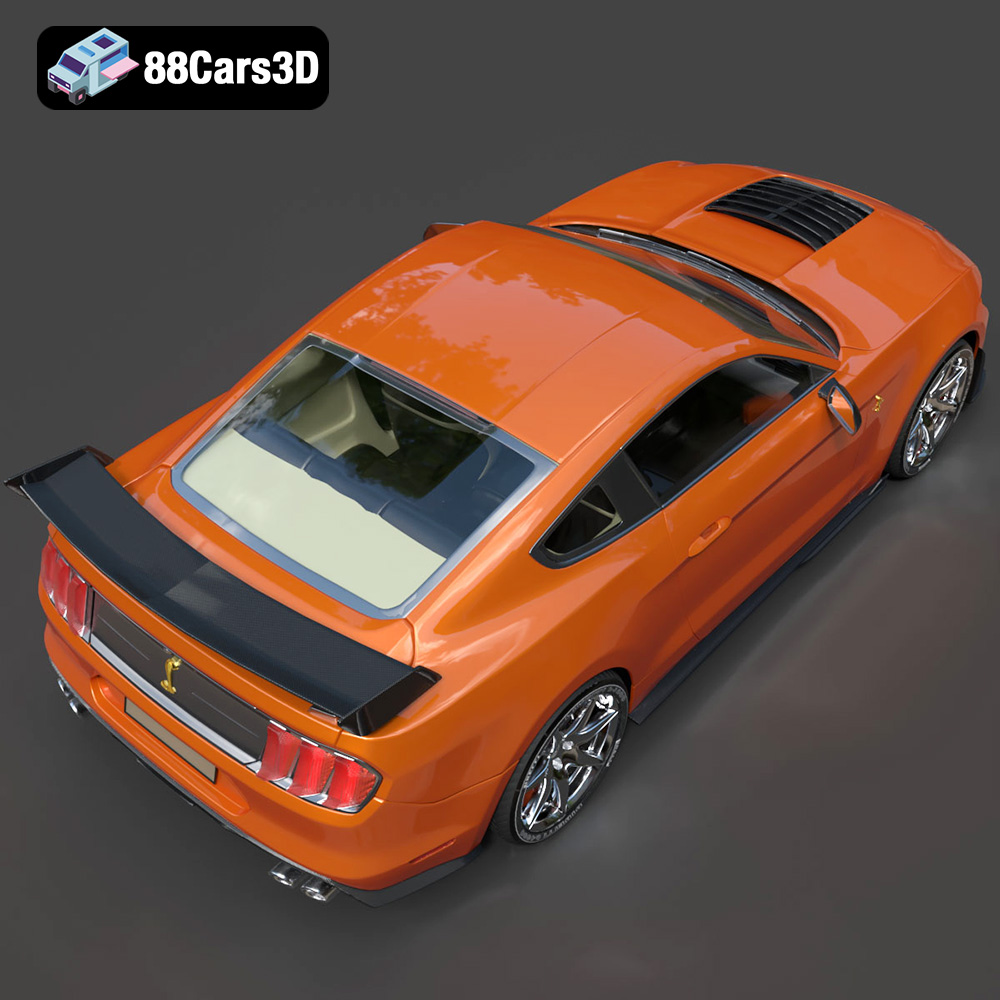
The 2020 Ford Mustang Shelby GT500 represents the pinnacle of modern American muscle, combining brute force with track-focused aerodynamics. This 3D model captures its iconic aggressive styling, from the massive front grille and louvered hood to the imposing rear wing and quad exhaust system, highlighting the legacy of the legendary supercharged 5.2L V8 engine. Crafted with a highly optimized topology of approximately 200,000 triangles, this game-ready asset ensures exceptional visual fidelity without compromising real-time performance. The clean mesh structure and detailed PBR materials make it perfectly suited for high-end gaming, interactive VR/AR experiences, and photorealistic cinematic animations.
$19.99
.2020
.blend
.fbx
.ford
.glb
.max
.obj
.ply
.rendering
.sports car
.stl
.unreal
car-3d-model
game asset
game-ready
low-poly
muscle-car
mustang-shelby-gt500
optimized
VR/AR