Get 20% OFF All Premium 3D & STL Models!

The world of automotive design has always been at the forefront of innovation, pushing boundaries in engineering, aesthetics, and performance. In recent years, this evolution has accelerated dramatically with the advent of electric vehicles, fundamentally reshaping our perception of mobility. Harley-Davidson, a brand synonymous with heritage and raw power, made a bold leap into this future with the LiveWire – an electric motorcycle that combines the thrill of two-wheeled performance with cutting-edge sustainable technology.
Capturing the essence of such a groundbreaking machine in the digital realm requires more than just a simple scan; it demands meticulous craftsmanship and technical precision. For designers, game developers, visualization artists, and engineers, a high-fidelity 3D model of an iconic vehicle like the LiveWire is an indispensable asset. It’s a foundational piece that allows for immersive experiences, detailed simulations, and stunning visualizations, bridging the gap between concept and digital reality. This is where premium 3D models, such as the Harley Davidson LiveWire 3D Model available on 88cars3d.com, become absolutely critical.
In today’s fast-paced digital landscape, high-fidelity 3D vehicle models are more than just static representations; they are dynamic tools that drive innovation across multiple industries. From conceptual design and engineering validation to marketing and entertainment, the demand for exceptionally detailed and technically sound 3D car models, and indeed, motorcycle models, has never been greater.
A superior 3D model acts as a universal language for various professional disciplines. Automotive designers use them for rapid prototyping and iteration, while engineers can leverage them for aerodynamic simulations or stress analysis. Marketing teams employ them to create captivating configurators and advertisements, allowing potential customers to explore vehicles in unprecedented detail before they even hit the showroom floor. Game developers integrate these assets to build realistic and immersive virtual worlds, providing players with authentic driving or riding experiences.
Precision is paramount. Every curve, every joint, every surface finish must be accurately translated into the digital model to convey the designer’s original intent. For a bike like the Harley Davidson LiveWire, this means capturing the aggressive lines of its streetfighter stance, the intricate details of its Revelation electric powertrain, and the ergonomic sophistication of its cockpit. Such accuracy ensures that renders are photorealistic, simulations are reliable, and user experiences are genuinely immersive. This is especially important for brands like Harley-Davidson, where every detail contributes to a powerful brand identity.
Different industries have unique technical requirements. Game development prioritizes optimized poly counts and clean topology for real-time performance. High-end rendering demands intricate detail and flawless UV mapping for realistic material application. AR/VR experiences require models that are lightweight yet visually rich. A truly versatile 3D asset, like the LiveWire model, is built with these diverse needs in mind, providing a robust foundation that can be adapted and deployed across various platforms without compromising quality.
The versatility of a 3D model is often defined by the array of file formats it supports. Each format serves specific purposes, catering to different software, pipelines, and end-use applications. Understanding these formats is crucial for any professional working with 3D assets, as selecting the right one can significantly impact workflow efficiency, model fidelity, and compatibility. The Harley Davidson LiveWire 3D model, for instance, comes with a comprehensive suite of formats, ensuring broad applicability across various projects.
The .blend format is the native file type for Blender, a powerful and increasingly popular open-source 3D creation suite. A .blend file saves the entire scene, including geometry, materials, textures, lighting, cameras, animations, and even UI layouts. This makes it ideal for users who primarily work in Blender, offering a fully editable, self-contained project file. For professionals who use Blender for automotive rendering or game asset creation, the .blend file provides maximum flexibility for customization, rigging, and further development of the Harley Davidson LiveWire model.
.fbx (Filmbox) is a proprietary file format owned by Autodesk, widely regarded as the industry standard for 3D asset exchange, especially in animation, games, and real-time environments like Unreal Engine and Unity. It supports geometry, materials, textures, animations, skeletons, and blend shapes, making it incredibly versatile for transferring complex assets between different software packages. For integrating the LiveWire into a game engine or an animated sequence, .fbx is often the go-to choice due to its robust support for crucial asset data.
.obj (Wavefront OBJ) is a simpler, more universal file format that has been around for decades. It primarily stores geometry (vertices, normals, texture coordinates, and faces) and can reference external material (.mtl) and texture files. While it doesn’t support animation or advanced rigging, its widespread compatibility across virtually all 3D software makes it an excellent choice for basic mesh transfer. If you need a clean, universal mesh for the LiveWire to import into a less common software or for foundational mesh work, .obj is highly reliable.
.glb (GLB format) is the binary version of glTF (GL Transmission Format), designed for efficient transmission and loading of 3D scenes and models by applications. It’s quickly becoming the standard for web-based 3D, AR, and VR experiences due to its compact size and ability to embed textures and animations directly within a single file. For showcasing the Harley Davidson LiveWire in an interactive web viewer, an augmented reality app, or a virtual showroom, the .glb format offers unparalleled optimization and ease of deployment.
.ply (Polygon File Format) is primarily used for storing 3D data from 3D scanners. It can store various properties for each vertex and face, including color, normals, and texture coordinates. While less common for general 3D asset exchange, it’s a robust format for precision mesh data, often used in scientific or CAD applications where exact geometry and topology are paramount for analysis or manufacturing processes.
.stl (Stereolithography) is the most widely supported file format for 3D printing. It represents a 3D model as a series of connected triangles (a triangular mesh), without color or texture information. When converting the LiveWire model for 3D printing, the .stl format is essential, ensuring the model’s geometry is ready for slicing and physical fabrication. The product description highlights its suitability for display-scale hobbyists.
.max is the native file format for Autodesk 3ds Max, one of the leading 3D modeling, animation, and rendering software packages. Similar to .blend, a .max file contains the entire scene data, offering full editability and access to all modifiers, materials, and rigging within 3ds Max. For professionals entrenched in the Autodesk ecosystem, the .max file provides the most comprehensive starting point for animation, high-end rendering, or further detailed customization of the LiveWire motorcycle.
The inclusion of an .unreal format, while not a standard extension (often referring to assets exported specifically for Unreal Engine projects, usually FBX or other engine-native package forms), signifies that the asset is meticulously prepared and optimized for direct integration into Unreal Engine. This typically means the asset comes with proper material setups, optimized LODs (Levels of Detail), collision meshes, and potentially even blueprint configurations, significantly streamlining the workflow for game developers and real-time visualization specialists using Unreal Engine.
The Harley Davidson LiveWire 3D model is a testament to meticulous digital craftsmanship, specifically engineered to meet the stringent demands of professional workflows. Its design captures the essence of the electric motorcycle while adhering to critical technical specifications that ensure versatility and performance.
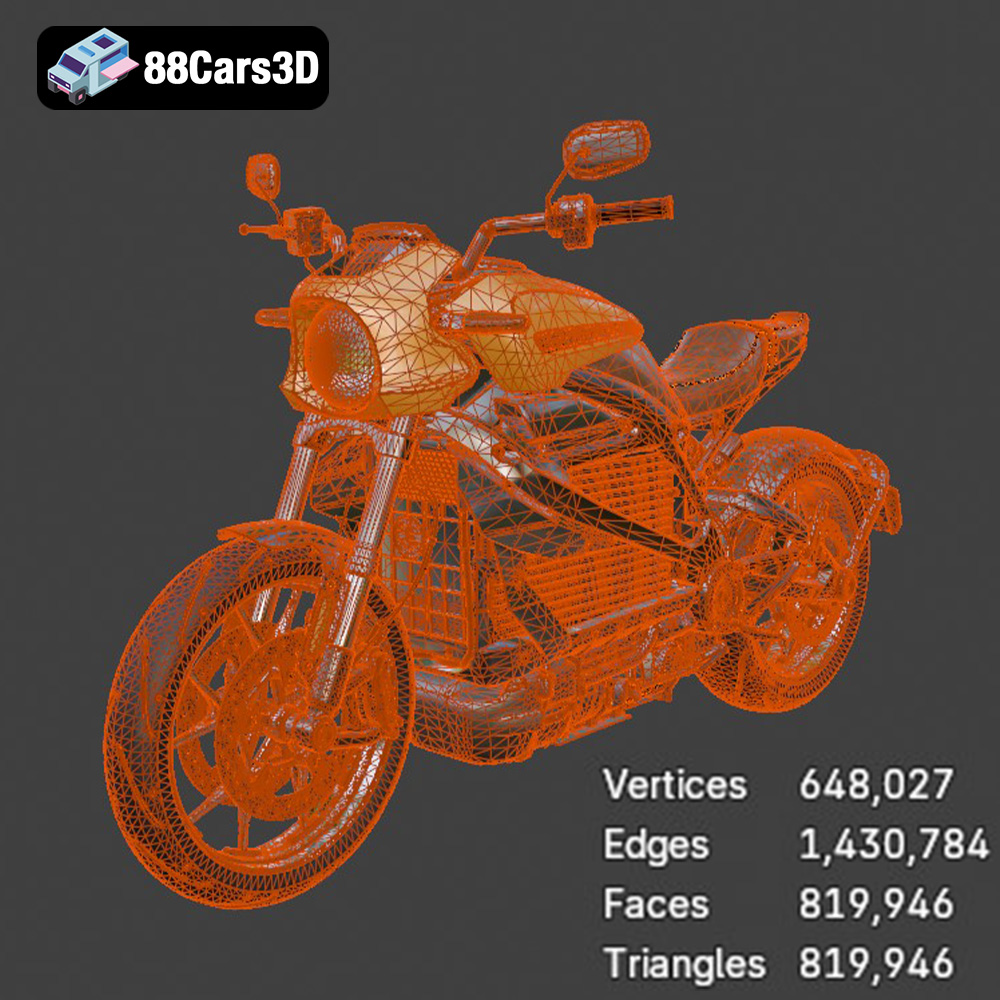
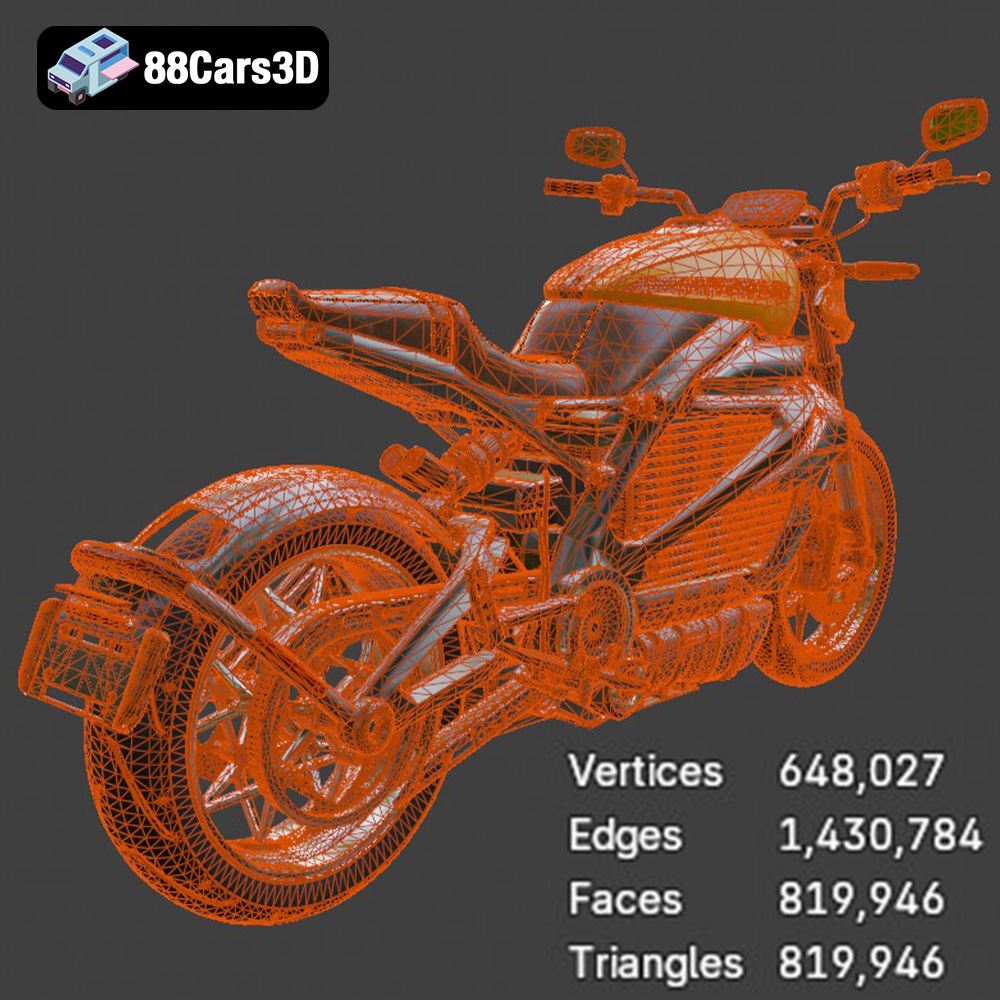
A crucial aspect of any high-quality 3D asset, especially for game development and AR/VR, is its topology and poly count. The LiveWire model boasts an optimized topology with approximately 250,000 triangles. This figure strikes a perfect balance: it’s detailed enough to achieve stunning visual fidelity in close-up renders and cinematic sequences, yet efficient enough to perform exceptionally well in real-time rendering environments like Unreal Engine or Unity. Such optimization minimizes computational overhead, leading to smoother frame rates and more responsive interactive experiences without sacrificing visual realism.
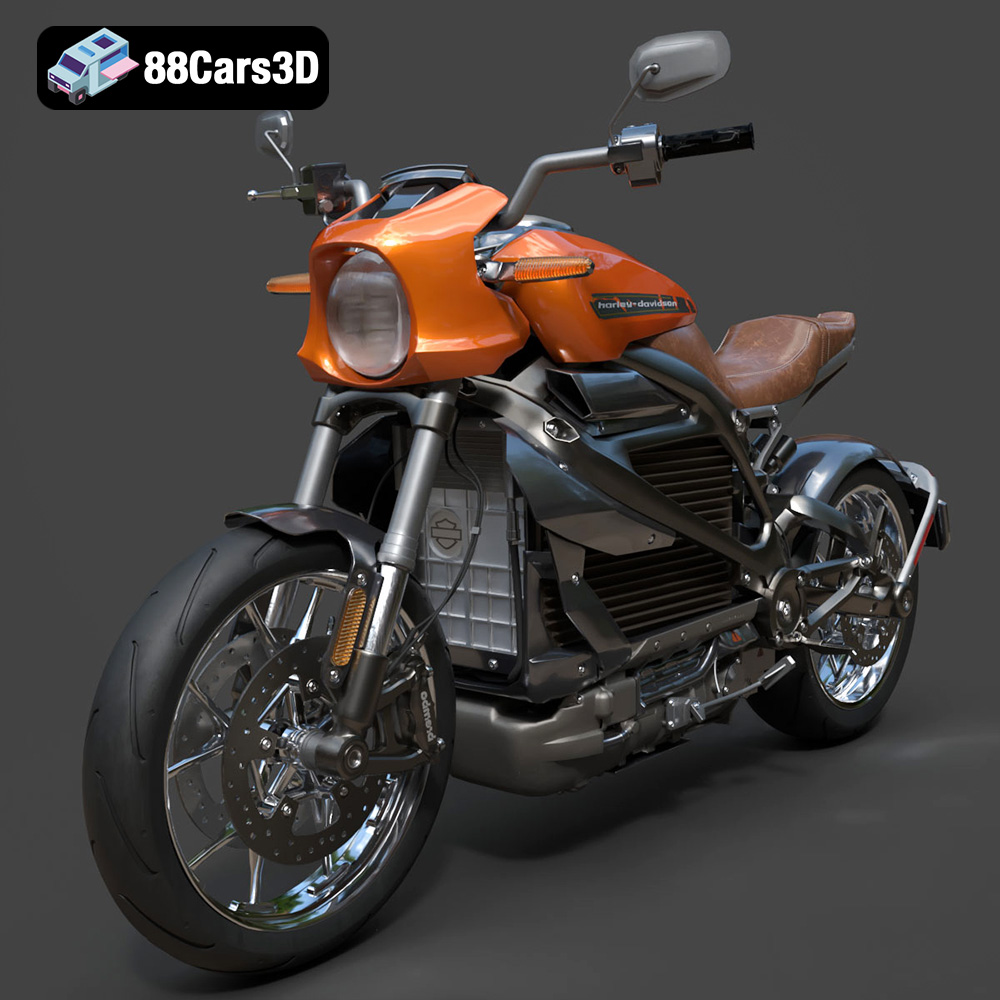
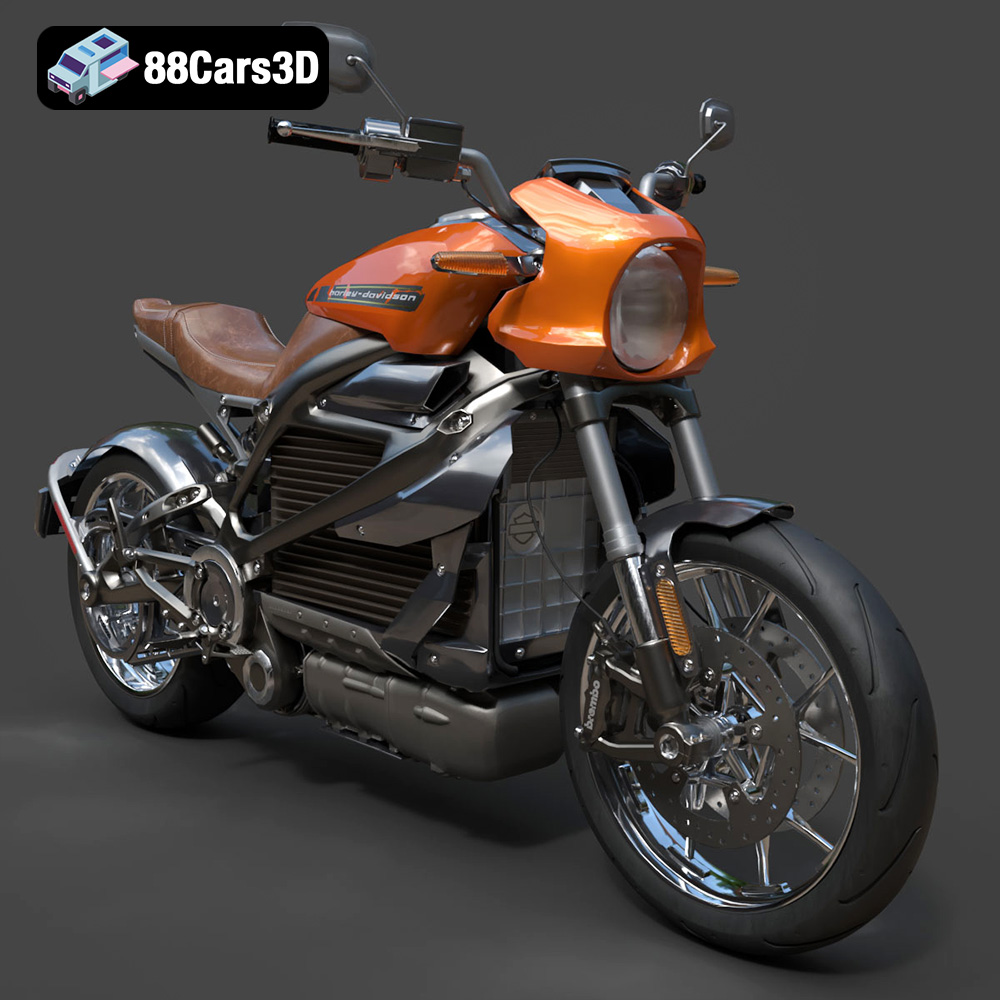
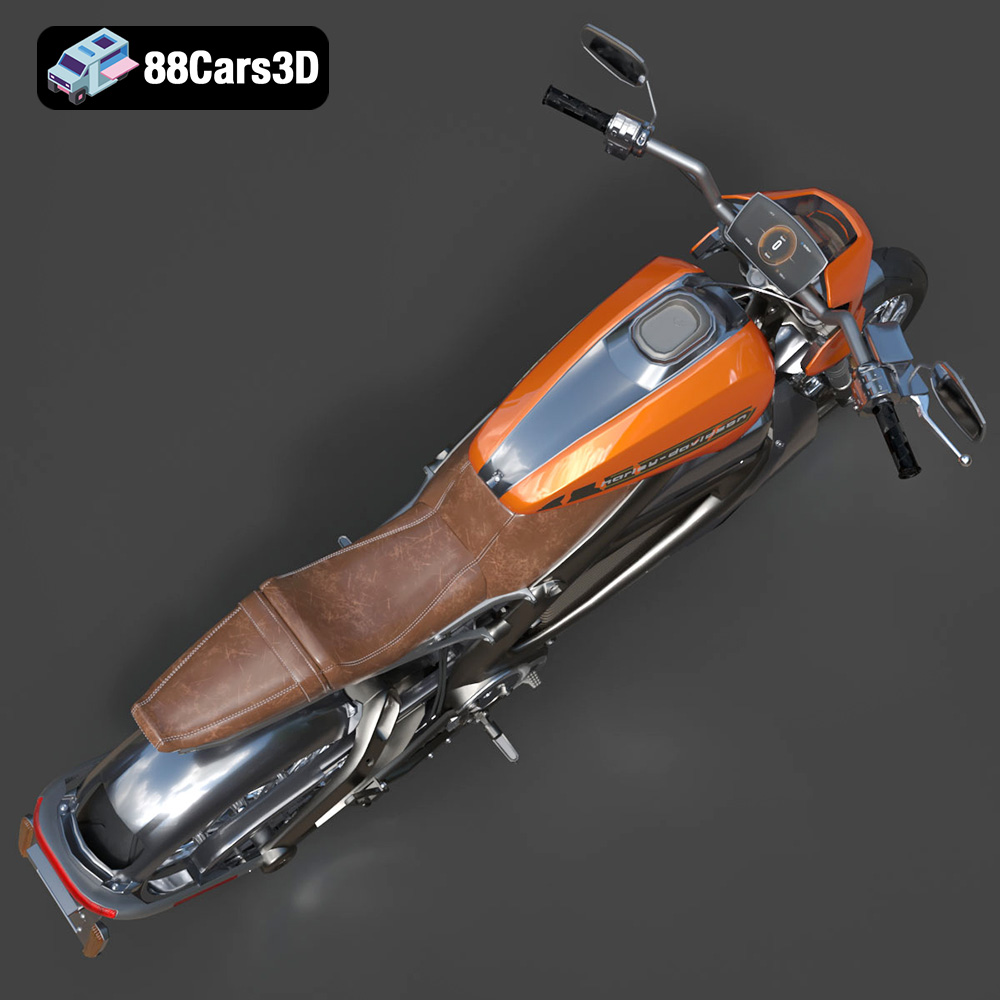
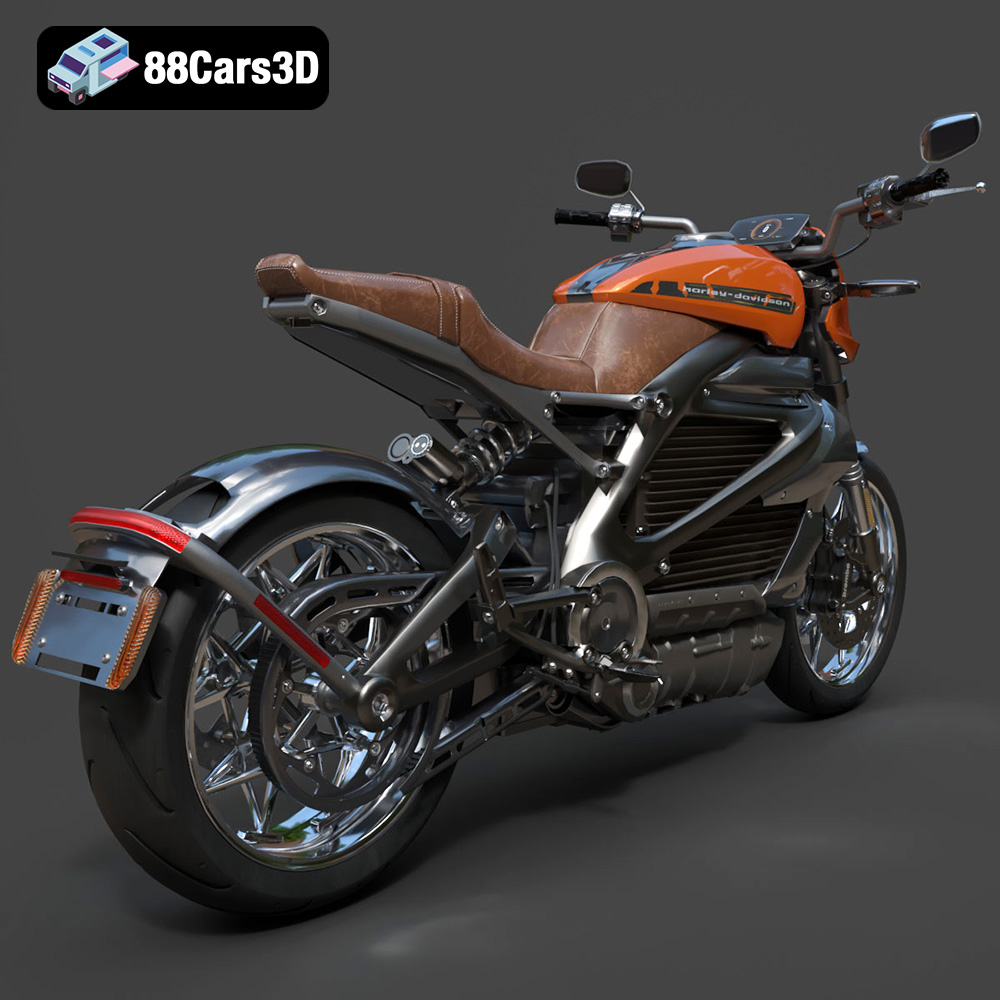
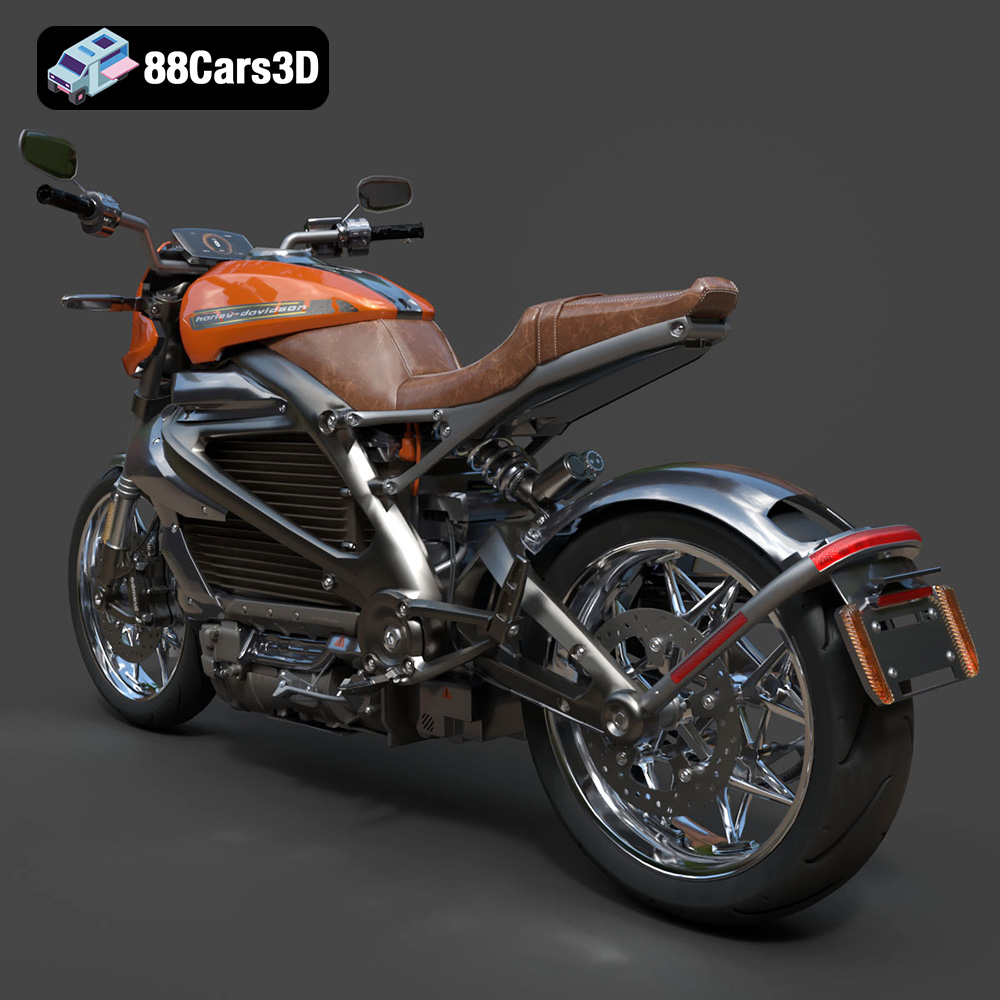
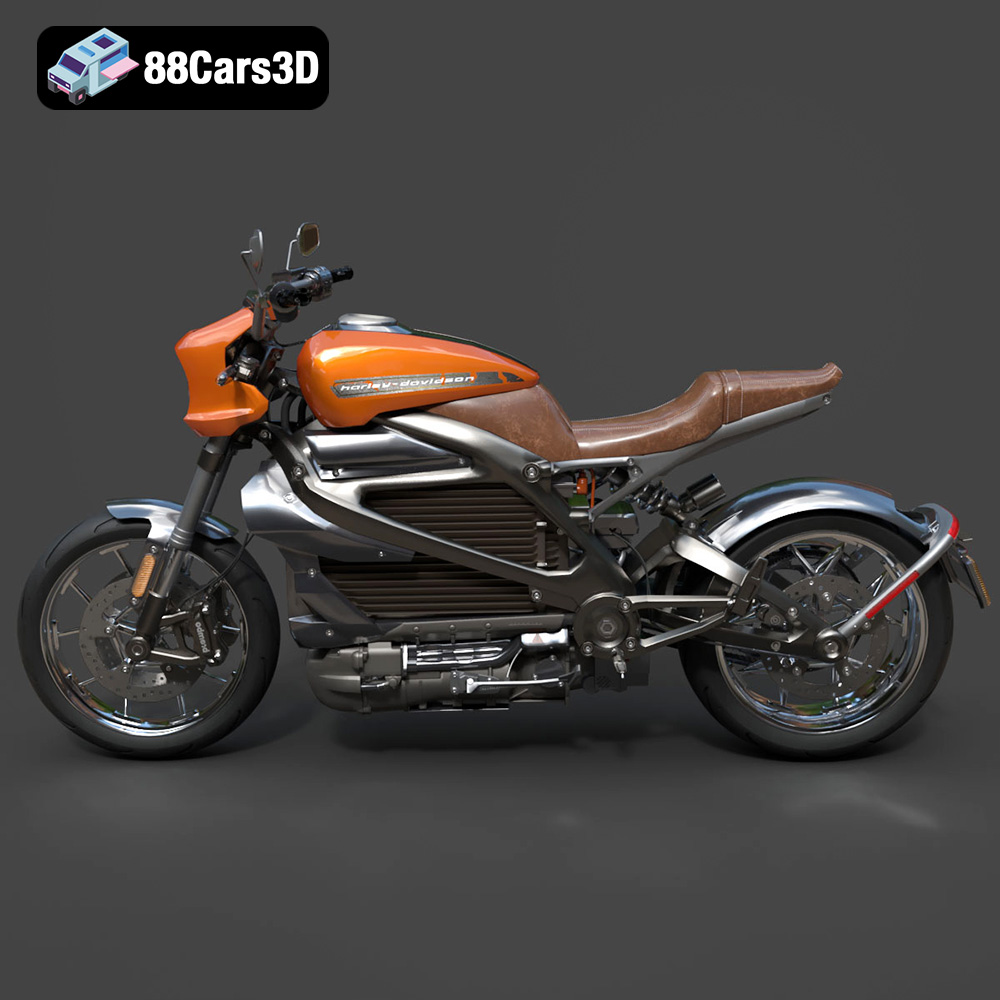
The product description highlights an “exceptional attention to detail,” and this is evident in every facet of the model. The distinctive Revelation electric motor powertrain, with its finely-finned longitudinal battery casing and sleek integrated cooling fins, is accurately replicated. Exterior features like the cast aluminum frame, signature LED headlamp assembly, and split 5-spoke wheels are all faithfully represented. Inside the cockpit, details extend to the ergonomic stepped two-up sport seat with realistic stitching, aggressive streetfighter-style handlebars, and a detailed full-color TFT touchscreen instrument cluster, complete with accurate switchgear and footpegs. This level of granular detail ensures that whether viewed from a distance or in a first-person POV in a game, the model holds up under scrutiny.
For any vehicle 3D model, animation capability is paramount. The Harley Davidson LiveWire model is designed with “separate wheels, suspension, and steering components for animation,” and boasts “proper pivot setup for steering, wheel rotation, and suspension travel.” This foresight allows animators to quickly rig and animate the motorcycle for dynamic scenes, realistic simulations, or interactive configurators. Furthermore, the “real-world scale accuracy based on actual vehicle chassis” ensures that any animations or physics simulations will behave predictably and authentically, maintaining the structural integrity and true proportions of the iconic LiveWire.
The true value of a versatile 3D asset lies in its seamless integration into diverse professional pipelines. The Harley Davidson LiveWire 3D model, with its robust technical specifications and multiple file formats, is built to excel across various applications, from AAA game titles to cutting-edge AR/VR experiences.
For game developers, the LiveWire model is “Game-Ready & Optimized” with its 250,000 triangle count, making it an ideal candidate for open-world games, racing titles, and simulators. In Unreal Engine, the included .unreal (or highly optimized .fbx) format streamlines the import process. Developers can leverage Unreal’s advanced material editor to apply PBR (Physically Based Rendering) textures for hyper-realistic surfaces – from the matte finishes of the frame to the metallic sheen of the Revelation motor. The model’s separate, pivot-ready components mean it can be quickly integrated with vehicle physics systems, allowing for realistic handling, suspension compression, and steering animations. Similarly, Unity users will find the .fbx format equally robust for scene assembly, scripting interaction, and real-time rendering, making it a powerful “game asset” right out of the box.
When it comes to creating stunning marketing visuals, the LiveWire model shines in high-end rendering software. In 3ds Max, artists can utilize the .max file to access the full scene, apply complex V-Ray or Corona Renderer materials, and set up intricate studio lighting. The model’s clean geometry and meticulous details allow for realistic reflections and refractions, showcasing the bike’s premium finishes and muscular aesthetic in brand campaigns or lifestyle scenes. Blender users benefit from the native .blend file, enabling them to dive directly into Cycles or Eevee, leveraging Blender’s powerful procedural shading and animation tools to create breathtaking renders. The accuracy of the model, combined with high-quality textures (which can be easily integrated), ensures that every render captures the LiveWire’s electric energy and sophisticated design, serving as an exceptional 3D car model for automotive visualization.
The future of product interaction increasingly involves Augmented Reality (AR) and Virtual Reality (VR). The LiveWire model, particularly with its .glb format, is perfectly suited for these immersive applications. Imagine a virtual showroom where potential buyers can walk around, inspect, and even customize the bike in real-time. The optimized geometry ensures smooth performance on VR headsets or mobile AR devices, providing a seamless and interactive experience. For an interactive configurator, the model’s customization options – changing body colors, modifying tire textures, or adjusting material finishes – can be dynamically controlled, allowing users to personalize their dream electric motorcycle. This transforms a static product image into an engaging, interactive journey, driving consumer interest and engagement.
The utility of a detailed 3D model extends beyond digital screens, offering a tangible connection to the physical world through 3D printing. The Harley Davidson LiveWire 3D model provides this exciting capability, allowing enthusiasts and professionals alike to bring a physical replica of this electric icon to life.
Converting a digital 3D model into a physical object requires careful preparation, particularly for a detailed vehicle. The inclusion of the .stl format is crucial here, as it’s the standard for 3D printing. Before printing, the model needs to be rigorously checked for watertightness, manifold geometry, and appropriate wall thickness. The description suggests recommended scales (1:12 / 1:18 / 1:24), which are ideal for hobbyists seeking display-quality models. Splitting the model into printable parts, such as the frame and wheels, ensures structural integrity and easier post-processing, as recommended for the LiveWire.
To achieve the best results, especially for fine details like mirrors, handlebars, and footpegs, resin printing is highly recommended with a layer height between 0.04–0.12 mm. This ensures that the intricate components of the LiveWire – from its LED headlamp to the Showa suspension details – are faithfully reproduced. Supports will be necessary for overhangs and complex geometries. Once printed, a meticulous post-processing workflow is essential: sanding to smooth layer lines, applying primer for an even surface, and finally, painting with authentic factory colors and metallic finishes to truly capture the premium look of the actual motorcycle. This hands-on process transforms the digital asset into a cherished physical collectible or a detailed prototype.
A truly professional 3D asset provides more than just a static representation; it offers a foundation for endless creative possibilities. The Harley Davidson LiveWire 3D model is designed with customization at its core, ensuring it remains a valuable asset for evolving project needs and artistic visions.
The ability to “Change body/tank colors” and “Modify tire textures” is a powerful feature for any 3D car model or motorcycle asset. Artists can experiment with the LiveWire’s factory color palette or push creative boundaries with custom finishes, matte or gloss textures, and even unique metallic treatments. This flexibility is invaluable for marketing campaigns requiring varied aesthetics, for game environments needing different vehicle variants, or for AR/VR configurators where user choice is paramount. The meticulous material setup ensures that these changes can be applied easily and render realistically, maintaining the premium feel of the LiveWire.
Beyond aesthetic changes, the model’s robust construction and separated components facilitate deeper modifications. Animators can adapt lighting for different environments, from cyberpunk cityscapes to futuristic garage settings, enhancing the bike’s presence. Should a project demand, the modular nature allows for potential additions of custom accessories or modifications to fit specific narratives. This inherent adaptability ensures that the LiveWire 3D model isn’t just a one-time use asset but a long-term investment that can grow and evolve alongside your creative projects, offering enduring value across multiple iterations and applications.
The Harley Davidson LiveWire represents a pivotal moment in motorcycle history, blending iconic heritage with an electric future. Capturing this significance in the digital realm requires a 3D model that is as technically sophisticated as the bike itself. The Harley Davidson LiveWire 3D Model stands out as an exemplary asset, engineered with an optimized poly count, meticulous detail, and animation-ready components.
From its broad file format compatibility, catering to professionals in game development, automotive rendering, AR/VR, and even 3D printing, to its comprehensive customization options, this model offers unparalleled versatility. It provides a robust foundation for creating hyper-realistic visualizations, immersive interactive experiences, and engaging physical replicas. Whether you’re building the next-gen racing simulator, designing a cutting-edge automotive configurator, or crafting a stunning marketing visualization, this LiveWire model empowers you to achieve professional-grade results.
Embrace the future of digital asset creation and elevate your projects with models that meet the highest standards of quality and technical precision. Explore this exceptional Harley Davidson LiveWire 3D model and a wide range of other high-quality 3D car models and assets at 88cars3d.com, your trusted source for premium digital automotive content.
Experience the thrilling future of two-wheeled performance with the Harley Davidson LiveWire 3D model. As the legendary brand’s groundbreaking entry into the electric vehicle market, the LiveWire is characterized by its muscular streetfighter stance, premium finishes, and the unmistakable, finely-finned Revelation electric powertrain. This model captures every aggressive line, from the faux-teardrop tank profile to the distinctive LED headlamp and sleek tail section, perfectly translating the bike’s raw, electric energy into the digital realm.
$19.99
.blend
.fbx
.glb
.livewire
.max
.obj
.ply
.rendering
.stl
.streetfighter
.unreal
electric-motorcycle
game asset
game-ready
harley-davidson
low-poly
motorcycle-3d-model
naked-bike
optimized
VR/AR