Get 20% OFF All Premium 3D & STL Models!

In the vast landscape of 3D content creation, historical accuracy and technical precision are paramount, especially when depicting iconic machinery from bygone eras. For artists, game developers, and visualization specialists, the quest for highly detailed, optimized, and versatile assets is continuous. Today, we’re diving deep into an exceptional example of digital craftsmanship: the M31 Recovery Vehicle 3D model, a legendary piece of World War II military engineering now available for download. This model offers an unparalleled blend of historical fidelity and modern technical prowess, making it an indispensable asset for a myriad of applications, from gripping battlefield simulations to stunning cinematic renders. Available through marketplaces like 88cars3d.com, such high-quality 3D car models and military assets empower creators to achieve new levels of realism and immersion.
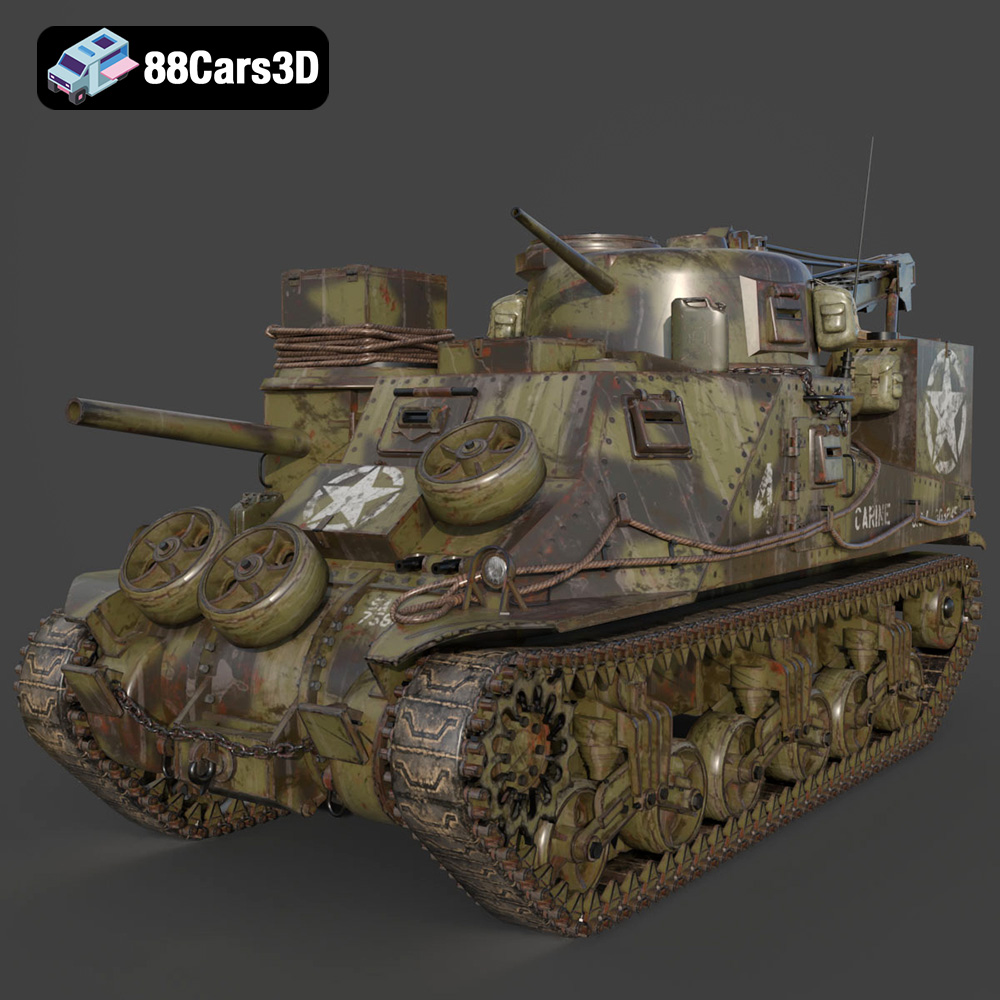
The M31 Recovery Vehicle, often known as the T2 Tank Recovery Vehicle, played a crucial, albeit often unsung, role in the Allied war effort. Built on the sturdy chassis of the M3 Lee medium tank, this armored recovery vehicle (ARV) was a vital workhorse, designed to retrieve disabled tanks and heavy equipment from the treacherous battlefields of WWII. Its distinctive dummy turret and 75mm gun were not for combat, but rather a clever deception, intended to make it appear as a fighting tank to enemy observers, thus protecting its crew while it performed its critical recovery duties. The meticulous recreation of such a vehicle in 3D demands a deep understanding of its original design and purpose.
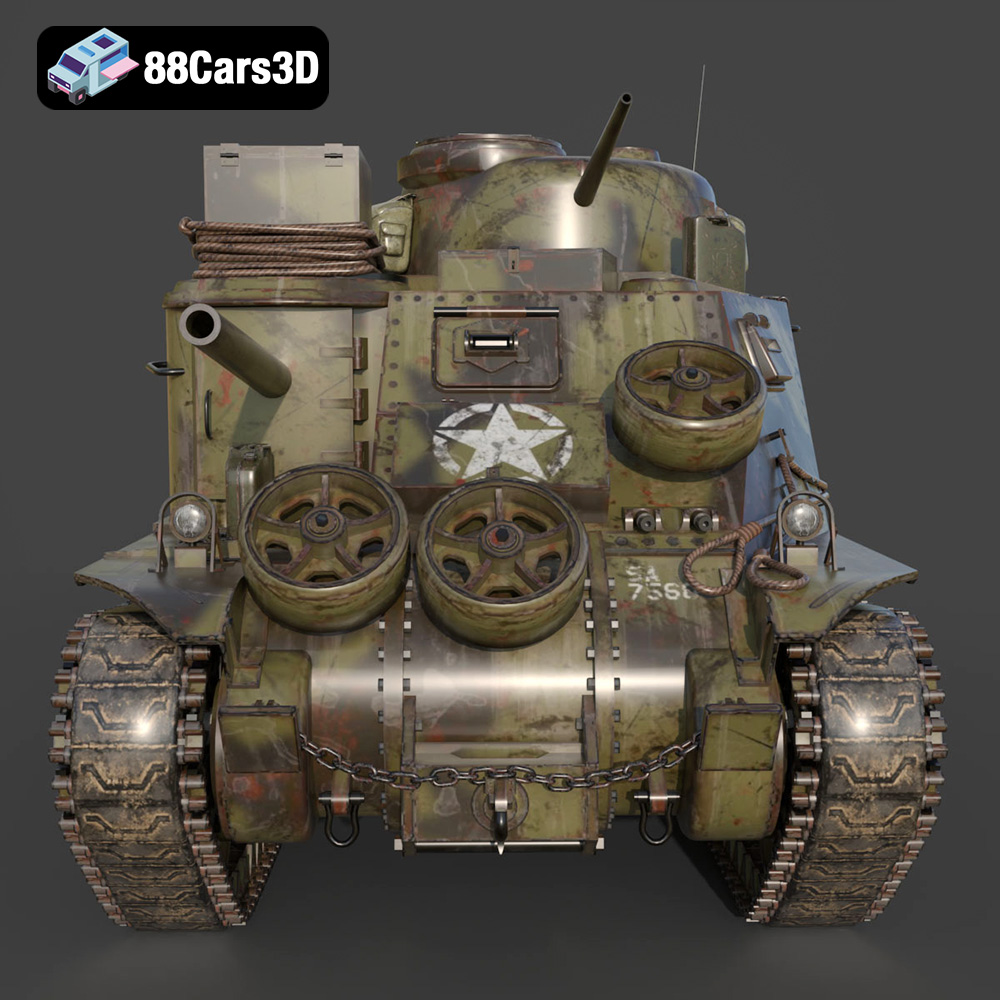
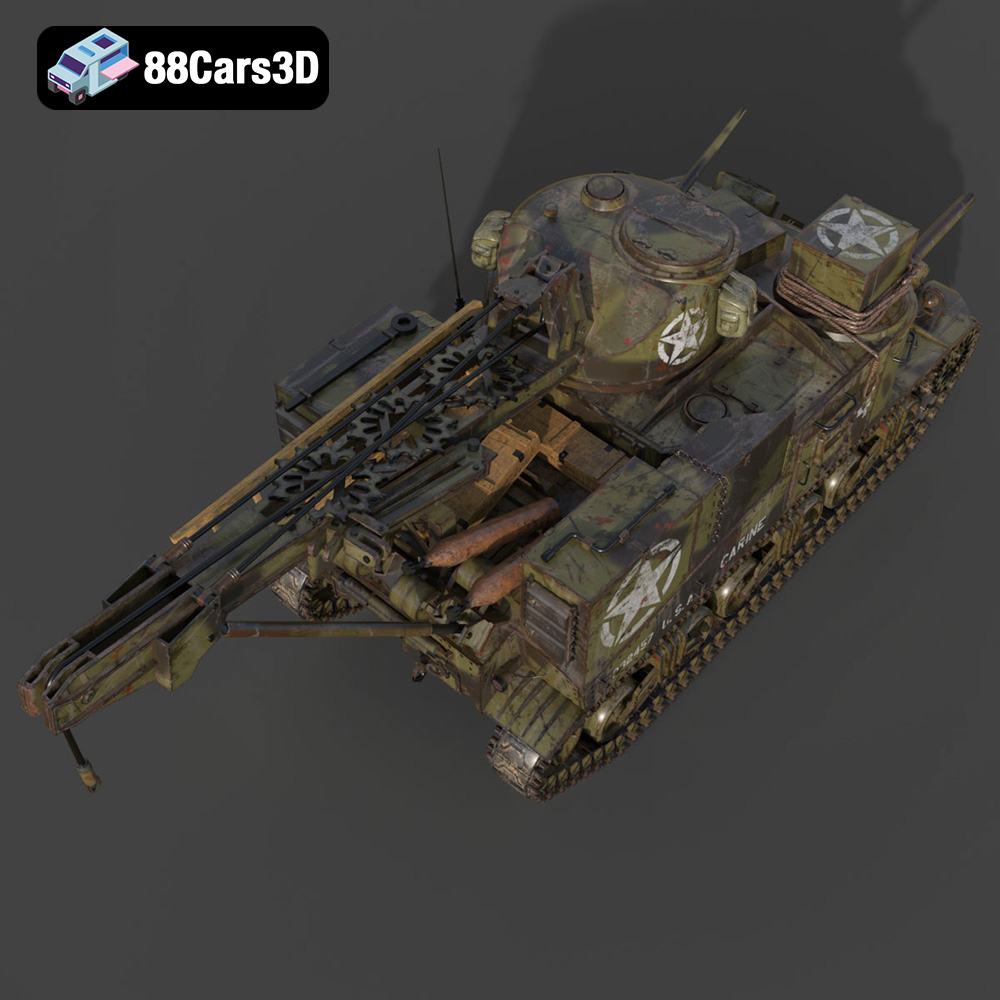
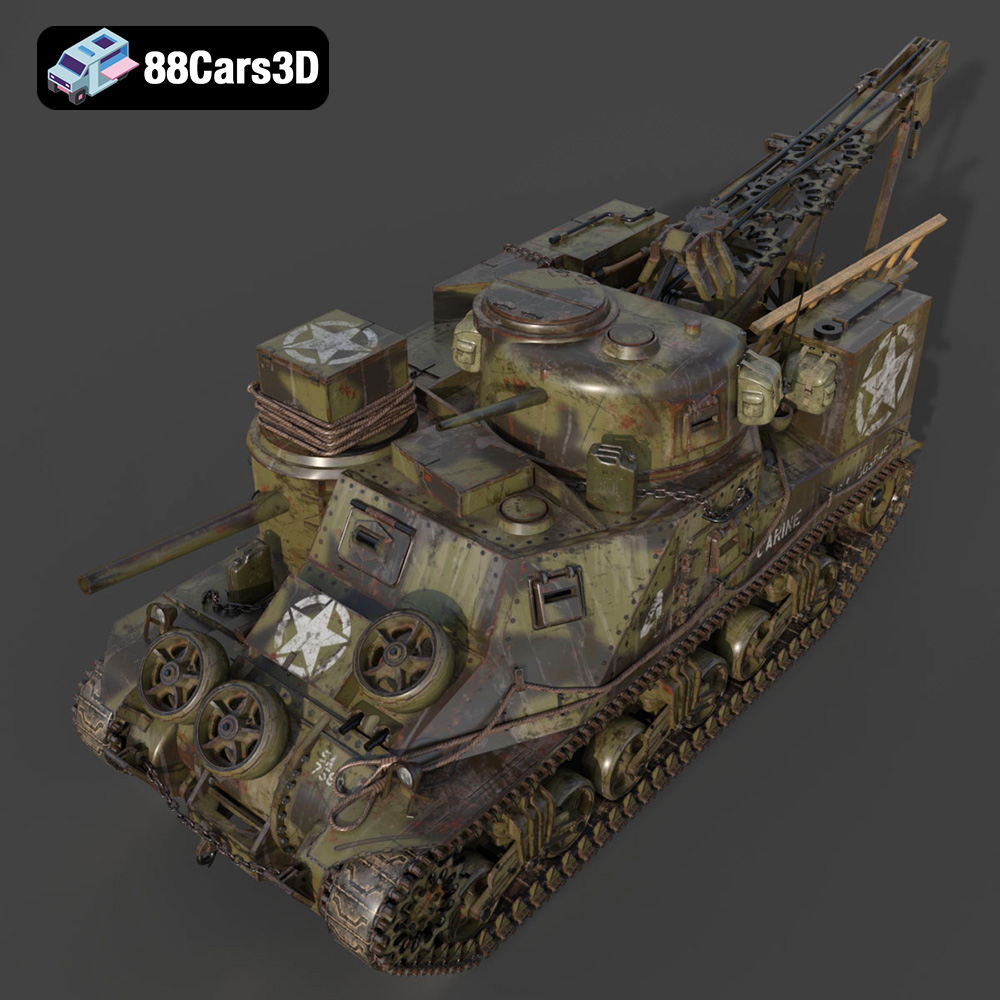
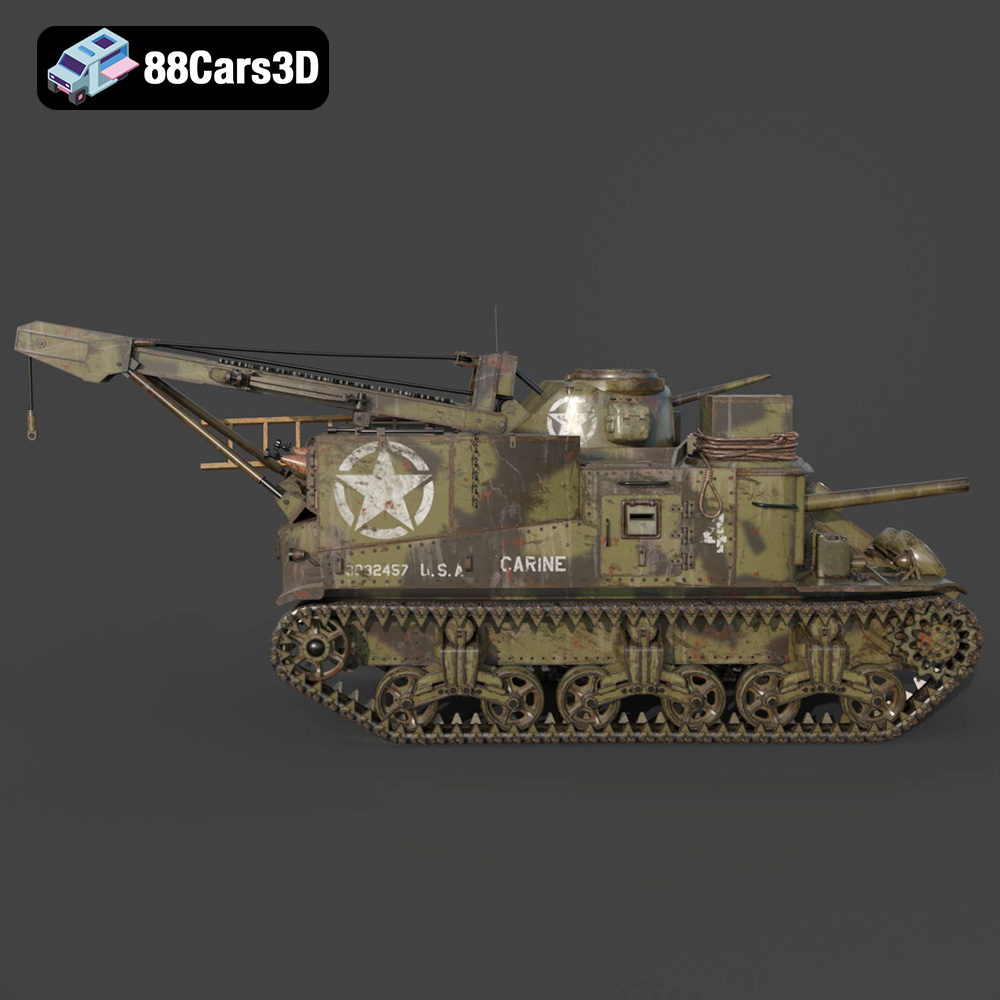
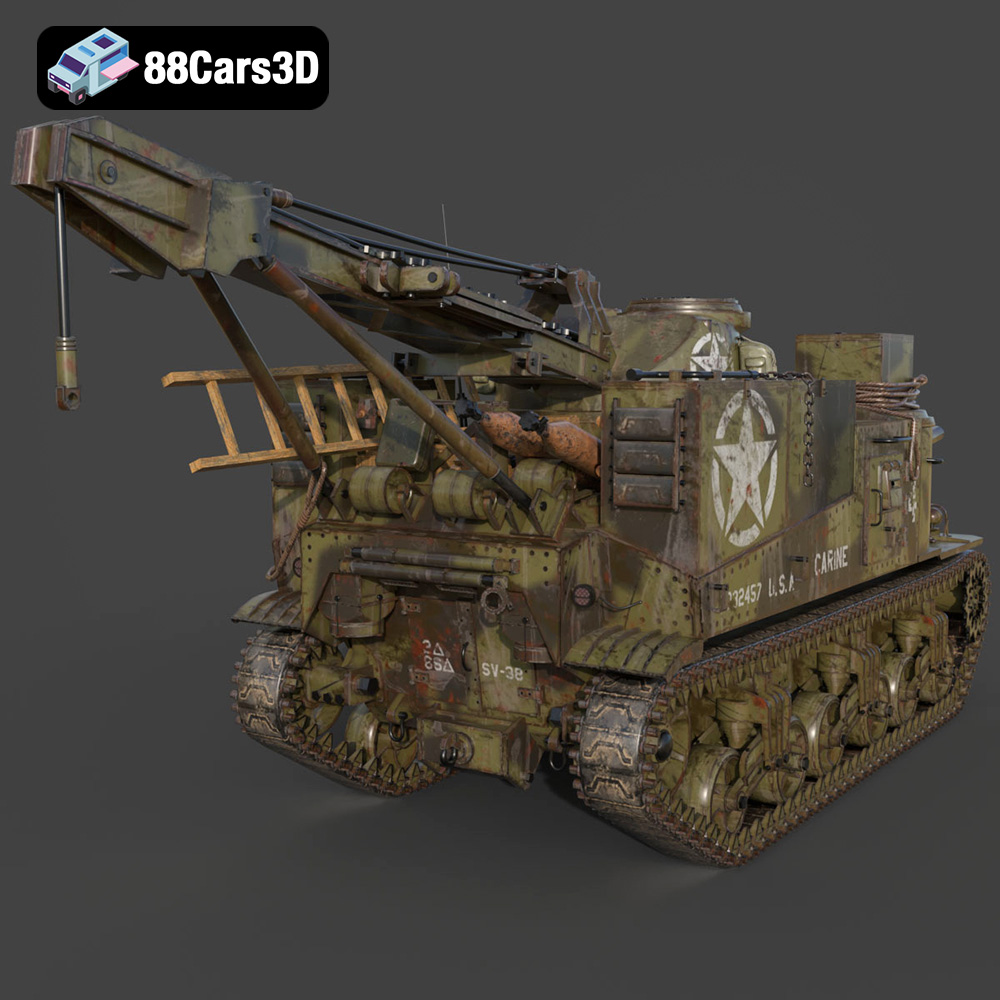
A truly exceptional 3D model goes beyond mere visual representation; it encapsulates the spirit and function of the original. The M31 Recovery Vehicle 3D model meticulously captures its riveted hull, the robust heavy crane boom mechanism, and the distinctive rear winch setup. These aren’t just aesthetic details; they are functional elements that hint at the vehicle’s history of service and its heavy-duty capabilities. For creators seeking authentic WWII military vehicles, the accuracy of these details is what elevates a good model to an outstanding one. The model’s adherence to real-world scale and proportions ensures it integrates seamlessly into historical scenes, maintaining consistency across various virtual environments.
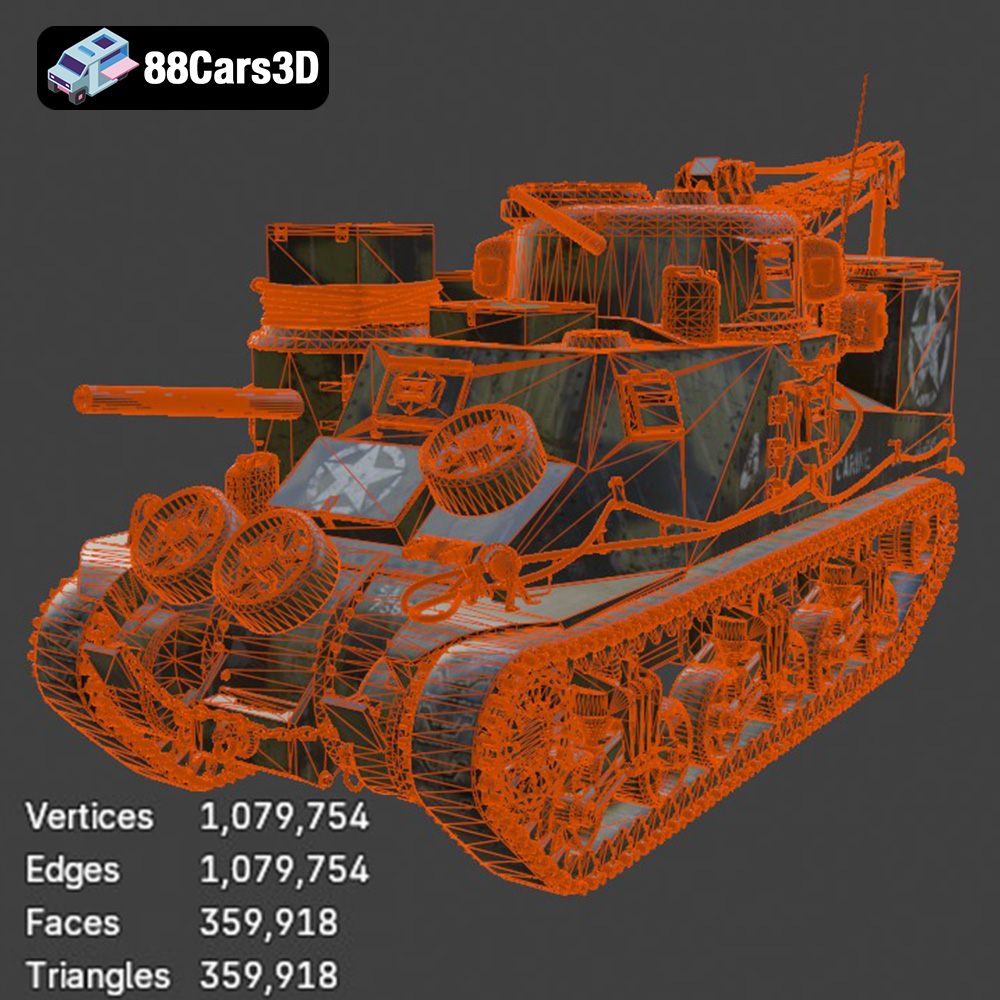
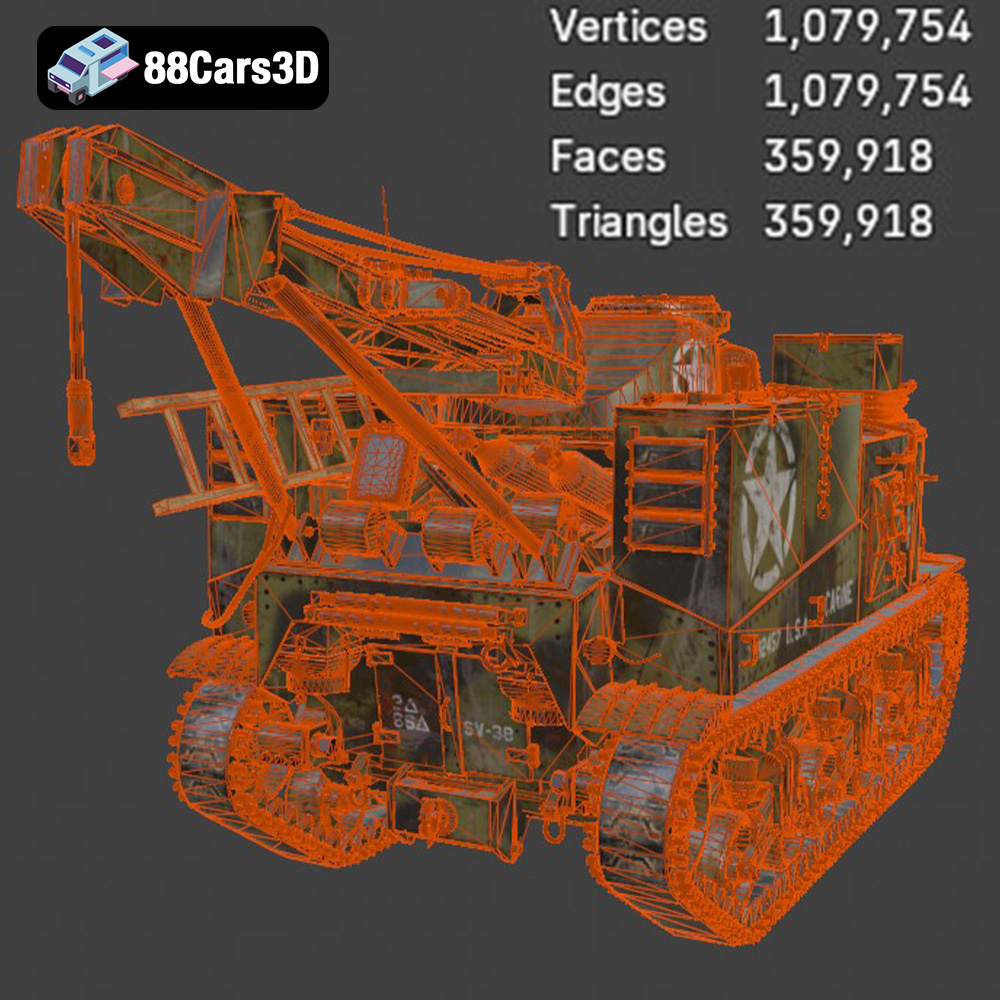
In the world of 3D, striking the right balance between visual detail and performance optimization is a constant challenge. This M31 model excels in this regard, crafted with optimized topology that maintains exceptional visual fidelity with a triangle count of approximately 200,000. This “game-ready” optimization is crucial for real-time applications like historical simulators and VR environments, where frame rates are critical. Yet, its clean geometry ensures stunning close-up rendering for high-end animation projects and cinematics. This versatility means you’re not choosing between beauty and function; you’re getting both.
The choice of file format is a fundamental decision in any 3D workflow, dictating compatibility, feature retention, and the ultimate utility of a 3D model. The M31 Recovery Vehicle 3D model, with its comprehensive suite of included formats, offers unparalleled flexibility for diverse projects. Understanding each format’s strengths and ideal use cases is crucial for maximizing your creative potential.
The .blend format is native to Blender, the powerful open-source 3D creation suite. When you download a .blend file, you’re getting a fully editable Blender scene, complete with materials, textures, lighting, camera setups, and any associated rigging or animation data. This format is ideal for users deeply integrated into the Blender ecosystem, offering the most comprehensive and uncompromised access to the model’s underlying structure. Artists can easily modify geometry, adjust materials, re-texture, or even repurpose components of the M31 Recovery Vehicle within Blender. For those who prefer a non-destructive workflow and want maximum control, .blend is the go-to choice.
.fbx (Filmbox) stands as one of the most widely adopted proprietary file formats for 3D content interchange, particularly favored in game development and animation pipelines. Its strength lies in its ability to encapsulate not just mesh data, but also animation, rigging, textures, and even basic material properties. This makes .fbx ideal for transferring complex animated models between various software packages like 3ds Max, Maya, Blender, and directly into game engines such as Unreal Engine and Unity. When integrating the M31 Recovery Vehicle into a real-time environment, an .fbx file ensures that elements like separate tracks, wheels, and crane components, crucial for animation, are preserved, allowing for dynamic battlefield scenarios.
The .obj (Wavefront OBJ) format is a venerable, universally recognized text-based format primarily used for exchanging 3D geometry data. While it excels at storing vertices, faces, normals, and UV coordinates, it typically separates material and texture information into accompanying .mtl (material) files. This simplicity makes .obj an incredibly robust and compatible choice for cross-software workflows, ensuring that the core mesh of the M31 Recovery Vehicle can be imported into virtually any 3D application, from CAD software to rendering engines. It’s a fundamental format for archival and ensuring baseline compatibility across the industry.
.glb (GL Transmission Format Binary) is the binary version of glTF, an open-standard, royalty-free format designed for efficient transmission and loading of 3D scenes and models by applications. What sets .glb apart is its ability to embed all assets – geometry, textures, animations, and materials – into a single binary file. This makes it highly optimized for real-time applications, especially in augmented reality (AR), virtual reality (VR), and browser-based 3D viewers. For showcasing the M31 Recovery Vehicle in an interactive web application or an immersive mobile AR experience, the .glb format provides a streamlined, high-performance solution.
.stl (Stereolithography) is the de facto standard format for 3D printing. It represents a 3D model as a series of connected triangles, describing only the surface geometry without color, texture, or other properties. While simplistic, this makes it perfect for conveying the essential form needed for additive manufacturing. When preparing the M31 Recovery Vehicle for physical production on a 3D printer, converting it to .stl is the necessary step. The M31’s design, with its detailed components, makes it an excellent candidate for physical replicas, and the .stl format facilitates this transition.
The .ply (Polygon File Format or Stanford Triangle Format) is another widely supported format for storing 3D data, particularly useful for scanned data, point clouds, and precision meshes. It can store a wider range of properties than .obj, including color, transparency, and even specific data for each vertex or face. While less common for animated game assets, .ply is a valuable format for academic research, CAD applications, or when the M31 model might undergo advanced structural analysis, ensuring that the model’s exact geometry and any associated attributes are preserved with high fidelity.
The inclusion of an .unreal file (often referring to a direct asset import or project setup compatible with Unreal Engine’s native asset structure) signifies an asset that has been specifically prepared and optimized for Epic Games’ powerful real-time engine. This could mean pre-configured materials, collision meshes, LODs (Levels of Detail), and pivot points correctly set up for immediate integration. For developers working with the M31 Recovery Vehicle in Unreal Engine, this format streamlines the import process significantly, allowing them to drop the asset directly into their project and begin immediate utilization without extensive re-configuration.
The .max format is native to Autodesk 3ds Max, a leading software for 3D modeling, animation, rendering, and visualization. Similar to .blend for Blender, a .max file offers a complete 3ds Max scene, including all scene objects, modifiers, materials, lights, cameras, and animation data. This format is invaluable for professionals whose primary workflow revolves around 3ds Max, providing full editability and access to all the features and tools within the software. For complex rendering setups, intricate animation sequences, or detailed architectural visualization projects involving the M31 Recovery Vehicle, the .max file provides the highest level of creative control within this specific professional environment.
The true value of a premium 3D asset lies in its meticulous attention to detail and its practical utility across various creative domains. This M31 Recovery Vehicle 3D model exemplifies this, offering a comprehensive package of features designed to meet the highest industry standards.
The exterior of the M31 model is a testament to historical research and careful modeling. It boasts accurate M31 Recovery Vehicle (M3 Lee) frame geometry and proportions, ensuring it looks right in any historical context. Critical components like the heavy-duty crane boom and its rigging system are not only visually precise but also designed for animation, with separate parts allowing for realistic movement. The functional rear-mounted Gar Wood winch assembly and the historically accurate dummy turret and 75mm gun barrel reinforce its authenticity. Furthermore, intricate VVSS (Vertical Volute Spring Suspension) bogies and authentic World War II era tracks and drive sprockets are all individually modeled, offering creators the flexibility to animate suspension travel or track movement, a crucial detail for automotive rendering and dynamic game assets.
While an exterior view is often sufficient, a detailed interior can elevate an experience, especially for first-person perspectives in games or close-up cinematic shots. The M31 model includes detailed commander and driver access hatches, through which interior structural cues are visible. Inside, authentic WW2-era dashboard gauges and instrumentation, along with rugged military-grade control levers and pedals, are present. This optimized geometry for first-person POV makes it perfect for immersive game development or interactive VR experiences where players might interact with or operate the vehicle.
Beyond aesthetics, the technical specifications are where this model truly shines. Its game-ready optimization, with ~200,000 triangles, strikes a perfect balance for real-time engines like Unreal and Unity, ensuring smooth performance without sacrificing high-end visual realism. The model adheres to real-world scale accuracy, based on actual vehicle chassis, which is vital for consistency in large-scale environments. Crucially, proper pivot setups are included for crane rotation, track movement, and suspension travel. This pre-configuration saves countless hours for animators and riggers, allowing for immediate implementation into complex scenes and animations. The compatibility with major 3D software platforms and real-time rendering engines further underscores its versatility.
A high-quality 3D asset should not merely exist; it should integrate seamlessly into established professional workflows, enhancing efficiency and expanding creative possibilities. The M31 Recovery Vehicle 3D model is designed precisely for this purpose across various industries.
For game developers, the M31 model is a dream asset. Its optimized polycount (~200,000 triangles) makes it ideal for open-world games, tank simulators, and racing titles where performance is key. Developers working in Unreal Engine or Unity can leverage the included .fbx and .unreal formats for quick integration. The separate, animatable components (tracks, wheels, crane) allow for dynamic vehicle interactions, realistic movement, and even destruction physics. Imagine the M31 pulling a damaged Sherman from a muddy battlefield, its crane slowly extending, tracks grinding – these are the details that bring historical games to life. This model functions as a core game asset, ready for collision meshes, LODs, and material instances.
The potential for the M31 Recovery Vehicle in AR/VR is immense. For immersive virtual showrooms or historical exhibits, the detailed exterior and optimized geometry make it perfect. Picture a user walking around the M31 in a VR headset, examining its riveted hull up close, or deploying it in an AR environment to see it overlaid onto their living room floor. The .glb format is particularly beneficial here, optimized for efficient loading in mobile AR and web-based VR applications. Training simulations for military historians or even enthusiasts can benefit from its accurate representation and interactive components.
Beyond real-time, the M31 model is a powerhouse for high-end rendering and visualization. For military history documentaries, cinematic shorts, or even brand campaigns requiring a robust, industrial aesthetic, the model’s clean geometry ensures stunning close-up rendering. Artists using 3ds Max or Blender can utilize the .max or .blend files to fully control lighting, camera angles, and material finishes. Imagine a dramatic scene with the M31 silhouetted against a setting sun, recovering a tank in a dusty landscape – the visual fidelity of this model allows for such powerful storytelling. Its accurate detail translates directly into compelling visual narratives, making it a stellar example of automotive rendering in a historical context.
The utility of 3D models extends beyond digital screens, offering a tangible connection to the virtual world through 3D printing. The M31 Recovery Vehicle 3D model is perfectly suited for this, allowing enthusiasts, model makers, and educators to bring this historical marvel into the physical realm.
The inclusion of the .stl format is a direct nod to the 3D printing community. This format is the universal language for additive manufacturing, encoding the model’s surface geometry for precise fabrication. For display-scale hobbyists, printing the M31 offers a unique opportunity to own a piece of history. The intricate details, from the crane boom to the VVSS suspension, translate beautifully into a physical model, especially when utilizing modern resin printing techniques for maximum resolution.
To achieve the best results, specific print settings are crucial. The recommended scales of 1:35, 1:48, or 1:72 offer flexibility for different display needs. A layer height between 0.04 and 0.12 mm is advised, with resin printing highly recommended for capturing the fine details and crisp edges of the vehicle. Optimal wall thickness (1.2–2.0 mm) and infill (20–30%) ensure structural integrity. Supports will be required for complex overhangs, particularly for the crane boom, dummy gun, and suspension components, emphasizing a well-planned print orientation for stability. Post-processing, including sanding, priming, and applying authentic factory colors with metallic finishes, will transform the raw print into a museum-worthy replica. This attention to detail in the provided print settings ensures even novice 3D printers can achieve impressive results.
While historical accuracy is a cornerstone, creative freedom through customization is equally vital. The M31 Recovery Vehicle 3D model is designed to be highly adaptable, allowing artists to tailor its appearance to specific project requirements or artistic visions.
The ability to change hull colors is a powerful customization option. From classic Olive Drab for European theater scenes to winter camouflage for the Ardennes or desert schemes for North Africa, the model can be dynamically re-textured. This allows for a single base model to serve multiple narrative purposes without requiring new assets. Furthermore, modifying track and mud textures allows for variations between battle-damaged, weathered appearances and pristine, factory-fresh looks, adding another layer of realism depending on the scene’s context. Adjusting material finishes, from matte military paint to rusted metal, further enhances the visual storytelling capabilities. This level of customization makes the M31 an incredibly versatile asset for any creative endeavor.
Beyond surface textures, adapting lighting for different environments is a core aspect of 3D visualization. The M31 model’s robust geometry and clean UVs (implied by “clean geometry” and “stunning close-up rendering”) ensure that it reacts realistically to various lighting conditions, whether it’s the harsh midday sun of a desert, the soft overcast light of a European autumn, or the artificial glow of a studio render. This adaptability ensures the model always looks its best, regardless of the scene it inhabits, making it an excellent example of high-quality 3D car models for diverse applications.
In a saturated market of 3D assets, distinguishing truly professional-grade content is key. The M31 Recovery Vehicle 3D model, alongside other premium offerings on 88cars3d.com, represents the pinnacle of digital craftsmanship and utility. Investing in such meticulously crafted assets offers significant advantages for creators across all disciplines.
Developing a complex 3D model like the M31 Recovery Vehicle from scratch requires hundreds, if not thousands, of hours of skilled labor. From historical research and blueprint analysis to high-poly modeling, retopology, UV mapping, texturing, and optimization, the process is incredibly demanding. By acquiring a pre-made, high-quality asset from 88cars3d.com, artists and studios can save immense amounts of time and financial resources, allowing them to focus on their core creative tasks such as scene composition, animation, or game logic, rather than asset creation.
The models available on 88cars3d.com are developed to professional standards, ensuring clean geometry, optimized topology, accurate scale, and broad compatibility across major 3D software and game engines. The M31 model, for example, comes with a comprehensive range of file formats (.blend, .fbx, .obj, .glb, .stl, .ply, .unreal, .max), guaranteeing seamless integration into virtually any pipeline. This professional-grade quality minimizes potential issues like messy topology, incorrect scaling, or missing textures, which can plague lower-quality free or inexpensive models.
Ultimately, high-quality assets empower creativity. When you have a reliable, detailed, and optimized 3D model at your fingertips, you’re free to experiment, innovate, and push the boundaries of your projects. Whether it’s crafting an immersive historical game, a stunning automotive rendering, a compelling VR experience, or a detailed 3D print, the M31 Recovery Vehicle 3D model provides a robust foundation upon which to build your vision. It’s more than just a model; it’s a catalyst for unparalleled digital storytelling and visual excellence.
The M31 Recovery Vehicle stands as a testament to ingenuity and resilience, a true legend of World War II. Its digital counterpart, available as a meticulously crafted 3D model, continues this legacy, offering unparalleled detail, technical optimization, and versatility for modern creative workflows. From its accurate exterior features and functional components to its detailed interior and diverse file format support, this model is a powerhouse for game development, AR/VR experiences, high-end rendering, and even 3D printing. The approximately 200,000 triangles strike the perfect balance between visual fidelity and real-time performance, making it an ideal game asset.
For professionals and enthusiasts alike, investing in such high-quality 3D car models and military assets from reputable sources like 88cars3d.com not only streamlines production but also elevates the overall quality and historical authenticity of projects. The M31 Recovery Vehicle 3D model is more than just a collection of polygons; it’s a gateway to recreating history with stunning realism and engaging interactivity. Unleash its potential in your next project and bring a piece of WWII history to life with unmatched detail and performance.
The M31 Recovery Vehicle, also known as the T2 Tank Recovery Vehicle, is a legendary piece of World War II military engineering. Built upon the rugged and proven chassis of the M3 Lee medium tank, this specialized armored recovery vehicle (ARV) features its iconic dummy turret and dummy 75mm gun, deliberately designed to deceive enemy forces while functioning as a heavy-duty battlefield lifter. The 3D model meticulously captures its riveted hull, heavy crane boom mechanism, and distinctive rear winch setup.
This highly detailed 3D model is expertly crafted with optimized topology, maintaining an exceptional balance of visual fidelity and performance with a triangle count of approximately 200,000. The clean geometry guarantees stunning close-up rendering while remaining perfectly game-ready for historical simulators, VR environments, and high-end animation projects.
Perfect for WWII battleground scenes, military history documentaries, tank simulator games, and tactical VR experiences.
$19.99
.blend
.fbx
.glb
.max
.obj
.ply
.rendering
.stl
.tank
.unreal
.ww2
game asset
game-ready
low-poly
m31
military-3d-model
military-vehicle
optimized
recovery-vehicle
VR/AR